

The verdict
A struggling sports car, strong on ownership and held back by efficiency.
The 2018 Toyota 86 (sold before the GR86 name arrived in 2022) is one of the purest, most entertaining driver's cars you could buy for about $27,350 new: light, balanced, rear-drive and offered with a slick six-speed manual. It also holds its value unusually well and has a strong reliability record. The trade-offs are serious, though: only 205 hp, a dated cabin with no Apple CarPlay or Android Auto, no driver-assist safety tech at all, a firm and noisy ride, and almost no room for passengers or luggage. Buy it as a fun second car or a budget enthusiast's daily, not as your only practical vehicle.
Jump to scoresStrengths
- Among the most fun-to-drive cars at any price
- Exceptional resale value and low cost to own
- Strong reliability record
What holds it back
- No driver-assist safety features at all
- Dated infotainment with no phone mirroring
- Modest power and a soft midrange
Top alternatives
Cars shoppers cross-shop with the Toyota GR86 1.68D
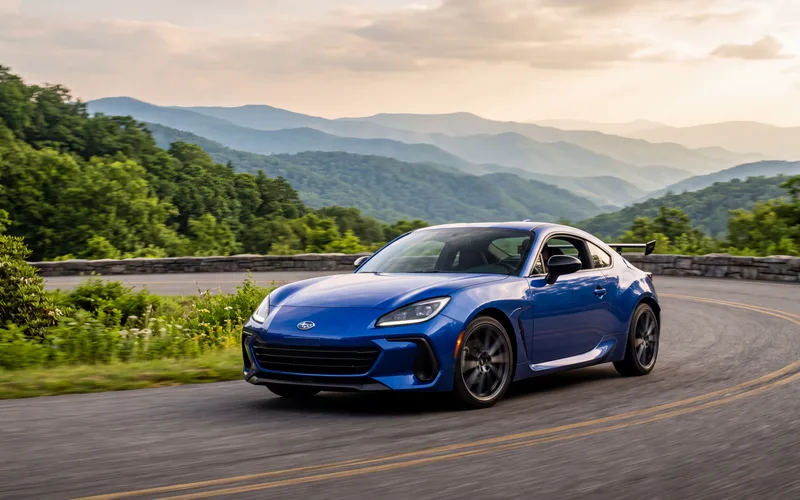 Subaru BRZSports CarBetter at: Ride comfort
It is the same car underneath with a marginally softer ride, so it comes down to which dealer and which residual value you prefer.
Compare 2.47C+
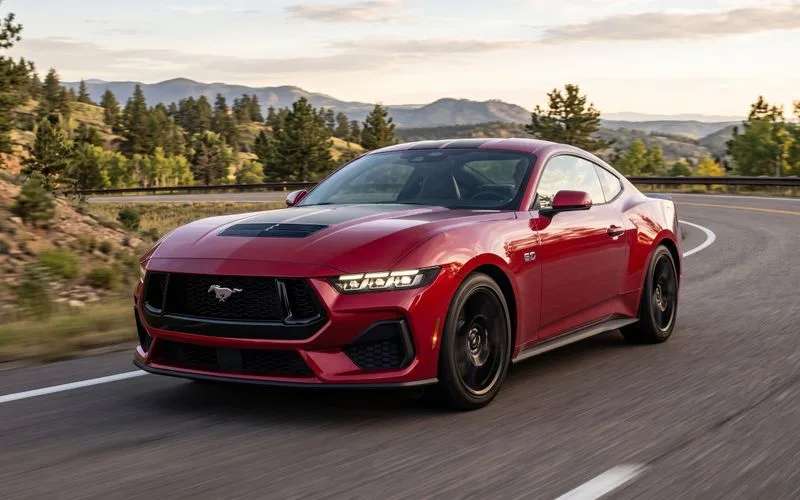 Ford MustangSports CarBetter at: Power and space
For similar money it offers far more power, a usable trunk, and a much wider range of engines and trims.
Compare 1.92C-
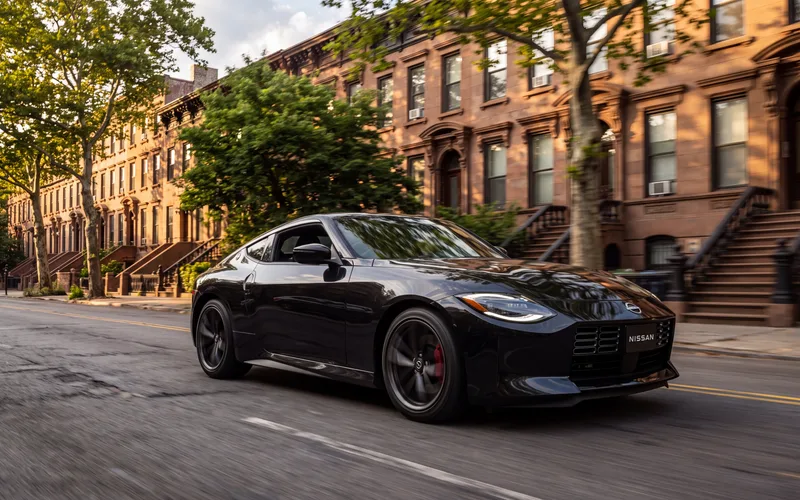 Nissan ZSports CarBetter at: Straight-line speed
If 228 hp feels thin, the Z's 400-hp twin-turbo V6 delivers the speed the GR86 never chases.
CompareHow it's evolved
9 scored model years · 2017–2026
Subject scores by year
Hover or tap a score to see what moved it versus the year before. A corner mark flags a big swing.
| Year | Performance | Efficiency | Safety | Space | Cost | Reliability | Tech | Use-case | Driving | Value |
|---|---|---|---|---|---|---|---|---|---|---|
| 2026 | 39 | 14 | 61 | 36 | 82 | 76 | 49 | 36 | 76 | 72 |
| 2025 | 39 | 14 | 61 | 34 | 82 | 76 | 45 | 35 | 76 | 72 |
| 2024 | 39 | 11 | 59 | 35 | 82 | 76 | 49 | 35 | 75 | 75 |
| 2023 | 39 | 11 | 55 | 34 | 81 | 73 | 48 | 33 | 74 | 73 |
| 2022 | 39 | 11 | 55 | 34 | 82 | 70 | 46 | 33 | 74 | 74 |
| 2020 | 34 | 16 | 26 | 34 | 75 | 80 | 27 | 28 | 73 | 54 |
| 2019 | 33 | 16 | 28 | 34 | 75 | 77 | 20 | 27 | 73 | 55 |
| 2018 | 34 | 16 | 25 | 33 | 77 | 77 | 19 | 28 | 74 | 60 |
| 2017 | 33 | 14 | 25 | 34 | 80 | 76 | 17 | 24 | 68 | 61 |
Compare two years
Best fit & conditions
Higher scores mean a better fit for that use case. Learn more about use-case fit →
Subject profile
Academic Probation · NHTSA safety recalls
Jul 29, 2021Fuel system, gasoline: delivery: fuel pumpThe low-pressure fuel pump inside the fuel tank may fail.
Defect
Subaru of America, Inc. (Subaru) is recalling certain 2019-2020 Ascent, 2018 Forester, 2018-2020 Impreza, Legacy, Outback, 2018-2019 BRZ, WRX, and Toyota 86 vehicles. The low-pressure fuel pump inside the fuel tank may fail.
Risk
Fuel pump failure can cause an engine stall while driving, increasing the risk of a crash.
Remedy
Dealers will replace the low-pressure fuel pump, free of charge. Owner notification letters were mailed September 24, 2021. Subaru and Toyota owners may call customer service at 1-844-373-6614. Subaru's number for this recall is WRG-21.
NHTSA campaign 21V587000 ↗Manufacturer no. WRG-21175,968 vehicles potentially affected (all models in the campaign)Owners notified Sep 24, 2021Filed by Subaru of America, Inc.Filed as 86
4 recalls on other model years of the GR86 (2017, 2022–2024)
Jul 23, 2024Equipment: other: labelsThe load carrying capacity modification label may display inaccurate added weight values. As such, these vehicles fail to comply with the requirements of Federal Motor Vehicle Safety Standard number 110, "Tire Selection and Rims."
Defect
Gulf States Toyota, Inc. (GST) is recalling certain Toyota 2023 GR Supra, 2024 4 Runner, Corolla, Grand Highlander, Grand Highlander Hybrid, Land Cruiser Hybrid, Tacoma, Tacoma Hybrid, 2023-2024 BZ4X, Corolla Cross Hybrid, GR Corolla, GR86, Highlander, Highlander Hybrid, Prius, Prius Prime, Sequoia Hybrid, Tundra, Tundra Hybrid, Venza Hybrid, 2023-2025 Crown, and 2025 Camry Hybrid vehicles equipped with GST accessories. The load carrying capacity modification label may display inaccurate added weight values. As such, these vehicles fail to comply with the requirements of Federal Motor Vehicle Safety Standard number 110, "Tire Selection and Rims."
Risk
A vehicle with an incorrect maximum capacity weight value may be overloaded, which can increase the risk of a crash.
Remedy
GST will mail new labels to owners, free of charge. Owner notification letters were mailed September 16, 2024. Owners may contact GST customer service at 1-800-444-1074. GST's number for this recall is 24R2.
NHTSA campaign 24V548000 ↗Manufacturer no. 24R233,848 vehicles potentially affected (all models in the campaign)Owners notified Sep 16, 2024Filed by Gulf States Toyota, Inc.Filed as GR86Aug 31, 2023Exterior lighting: turn signalThe rear turn signals may intermittently become inoperative.
Defect
Subaru of America, Inc. (Subaru) is recalling certain 2022 BRZ and Toyota GR86 vehicles. The rear turn signals may intermittently become inoperative.
Risk
Inoperative rear turn signals may not notify other drivers of a turning vehicle, increasing the risk of a crash.
Remedy
Dealers will replace both rear combination lamp assemblies, free of charge. Owner notification letters were mailed January 8, 2024. Subaru owners may contact Subaru's customer service at 1-844-373-6614. Toyota owners may contact Toyota customer service at 1-800-331-4331. Subaru's number for this recall is WRM-23.
NHTSA campaign 23V609000 ↗Manufacturer no. WRM-238,915 vehicles potentially affected (all models in the campaign)Owners notified Jan 8, 2024Filed by Subaru of America, Inc.Filed as GR86May 2, 2017Tires: temporary/emergency spare tireThe spare tire air pressure was not adjusted to the proper pressure as stated on the Tire Pressure Label.
Defect
Gulf States Toyota, Inc. (Gulf States) is recalling certain 2017 4Runner , 86, Avalon, Camry, Camry Hybrid, Corolla, Corolla iM, Highlander, Highlander Hybrid, Prius, Prius C, RAV4, RAV4 Hybrid, Sienna and Yaris vehicles. The spare tire air pressure was not adjusted to the proper pressure as stated on the Tire Pressure Label.
Risk
A spare tire that is not inflated to the proper value may not perform as intended, increasing the risk of a crash.
Remedy
Gulf States will notify owners, and dealers will inspect the spare tires, adjusting their pressure as necessary, free of charge. The recall began June 15, 2017. Owners may contact Gulf States customer service at 1-800-444-1074. Toyota's number for this recall is 17R2.
NHTSA campaign 17V295000 ↗Manufacturer no. 17R2409 vehicles potentially affected (all models in the campaign)Owners notified Jun 15, 2017Filed by Gulf States Toyota, Inc.Filed as 86Dec 21, 2016Electrical system: ignition · Power train: automatic transmissionVehicles with a push-to-start button or manual transmission are not affected. In the affected vehicles, it may be possible to remove the ignition key without the transmission being in the "Park" position. As such, these vehicles fail to conform to the requirements of Federal Motor Vehicle Safety Standard number 114, "Theft Protection and Rollaway Prevention."
Defect
Toyota Motor Company (Toyota) is recalling certain model year 2017 Toyota 86 vehicles manufactured July 1, 2016 through August 11, 2016 equipped with an automatic transmission and ignition key. Vehicles with a push-to-start button or manual transmission are not affected. In the affected vehicles, it may be possible to remove the ignition key without the transmission being in the "Park" position. As such, these vehicles fail to conform to the requirements of Federal Motor Vehicle Safety Standard number 114, "Theft Protection and Rollaway Prevention."
Risk
If the key can be removed from the ignition when the transmission is not in the "Park" position, the vehicle could roll away increasing the risk of a crash and occupant or pedestrian injuries.
Remedy
Toyota will notify owners, and dealers will inspect the ignition key/transmission interlock wiring connections, correcting them as necessary, free of charge. The recall began in January 31, 2017. Owners may contact Toyota customer service at 1-800-331-4331. Toyota's number for this recall is G0E.
NHTSA campaign 16V920000 ↗Manufacturer no. G0E94 vehicles potentially affected (all models in the campaign)Owners notified Jan 31, 2017Filed by Toyota Motor Engineering & ManufacturingFiled as 86
Source: NHTSA Office of Defects Investigation recall database, model years 2017–2026. Recalls are listed by model year as the manufacturer filed them; whether a specific car is affected depends on its VIN — check a VIN at nhtsa.gov ↗. NHTSA model names matched to this page: 86, GR86.
Detailed scoring by subject
1Performance & PowertrainGrades near the bottom of the scale.0.23F
MY2018 is the second US year of the first-generation (ZN6, 2013–2020 in this registry's 2013 generation) car under the Toyota 86 name — the 'GR86' badge only arrived with the 2022 redesign — and a carry-over powertrain year: the FA20 2.0L naturally aspirated boxer-four keeps the 205 hp manual / 200 hp automatic split introduced for 2017. 2018's news was trim-level (the new 86 GT and GT Black, plus the TRD Special Edition), not mechanical. 205 hp sits near the floor of the coupe band.
The FA20 is a high-revving NA engine with modest peak torque, and that peak arrives late (6,400–6,800 rpm on the manual). 156 lb-ft is among the lowest figures in the coupe segment.
No instrumented test of a 2018-model car was found, but the powertrain and curb weight are unchanged from the 2017 car that was tested; the Motor Trend figure is used as the representative manual time. The automatic is markedly slower.
Throttle response is sharp and the boxer loves to rev, but the FA20's widely discussed mid-range torque dip (around 3,500–4,500 rpm) makes everyday acceleration feel flat until the top of the tach, and the engine is coarse when worked hard. Lack of low and mid-range punch is the usual complaint about this generation.
The volume six-speed manual has a short, precise throw and well-placed pedals for heel-and-toe work, and is widely praised; the optional six-speed automatic is a conventional torque-converter unit with paddles and a Sport mode that rev-matches downshifts, competent but slower. A Torsen limited-slip differential is standard.
Rear-wheel drive only on every trim, by design — the car is a front-engine, rear-drive sports coupe. No AWD exists anywhere in the lineup.
One engine — the 2.0L FA20 boxer — with a choice of manual or automatic transmission only. No turbo, hybrid or electrified option; take-it-or-leave-it.
2Efficiency & RangeThe GR86's lowest-graded category.0.00F
The 2018 car is the first-generation (ZN6) Toyota 86 with the 2.0L FA20 — a carry-over powertrain year. The volume six-speed manual's 24 MPG combined is low for a small coupe; there is no stop-start or hybrid assist, and the automatic's taller gearing is worth 3 MPG.
EPA city rating for the volume manual. A high-compression NA engine geared for revs gives nothing back in stop-and-go driving.
The manual's short gearing keeps highway economy modest; the automatic rates 4 MPG better on the highway cycle.
EPA publishes no range for gasoline cars, so this is the 13.2-gallon tank times the EPA combined rating for the volume manual. A small tank and modest economy make it short-legged; MEDIUM because it is a calculation from confirmed inputs.
Middling economy combined with EPA's premium-fuel price assumption pushes the manual past the top of the coupe cost band. The figure tracks EPA's current fuel-price assumption, which is applied retroactively to older records.
Premium unleaded is required for the FA20's 12.5:1 compression, which puts the item in the 'premium fuel required' band. It sits at the top of that band because nothing more exotic is involved — no E85, diesel or charging setup.
3SafetyOne of the GR86's weakest categories.0.00F
NHTSA tested the 2018 Toyota 86's frontal crash (4 stars driver and passenger) and rollover (5 stars, 7.1% risk) but published no side-impact result, so no combined overall rating exists; the 4-star frontal result is used as the representative figure, consistent with the 2017 scorecard.
Good in moderate overlap front, side, roof strength and head restraints, but only Acceptable in the driver-side small overlap test, where the side curtain airbag lacked forward coverage and the dummy's head was vulnerable to forward side structure; no Top Safety Pick award for 2018.
No AEB, lane keeping, adaptive cruise, blind-spot or rear cross-traffic system was offered on either the 2018 86 or the new-for-2018 86 GT; a rearview camera and stability control are the only aids.
No forward-collision warning or automatic emergency braking was offered on any 2018 trim, so there is no AEB performance to rate.
Blind-spot monitoring and rear cross-traffic alert were not available on the 2018 86 at any trim, including the GT.
No lane departure warning or lane keep assist was offered on the 2018 86.
Only conventional cruise control was fitted; adaptive cruise was not offered on any trim.
No hands-free highway driving system exists for this vehicle or generation.
IIHS published no headlight rating for the 2018 86; LED headlights were standard after the 2017 refresh but with no auto high beams or adaptive function, so a middling estimate is used absent a direct rating.
Very low seating position, thick rear pillars and a small rear window create notable rear-quarter blind zones; the standard backup camera helps only when reversing, and there is no blind-spot monitoring.
IIHS rates LATCH ease of use Marginal, and the 2+2 coupe's tiny rear seat and long doors with no rear openings make installing a child seat awkward.
4Space & ComfortGrades near the bottom of the scale.0.18F
MY2018 is a carry-over year of the first-generation (ZN6) Toyota 86; the GR86 name arrived with the 2022 redesign. It is a 2+2 fastback coupe: four belts, but the rear pair is emergency-only.
Low roofline gives tight-but-typical sports-coupe front headroom, near the low end of the coupe band.
Mid-pack front legroom for a coupe; the low-slung driving position accommodates tall drivers reasonably well.
Adequate on paper for a 2+2, though the sloping fastback means adult heads meet the rear glass.
29.9 in is token space in absolute terms, usable only when the front seats are pulled well forward, but mid-pack among 2+2 coupes.
A small trunk with a narrow opening; the one-piece folding rear seatback is famously sized to swallow four spare wheels for track days, but the base volume is near the bottom of the coupe band.
Small door pockets, a shallow console bin, slim cupholders and a small glovebox. The fold-down rear seatback that extends the trunk is the only practical trick.
The base 86's cloth sport seats are well bolstered and hold occupants firmly in corners, but are firmly padded with limited adjustment (manual, driver height adjust) and unheated; heated leather-trimmed front seats are GT-only. Rear seats are unusable for adults beyond short hops.
Firm and busy over broken pavement, a deliberate trade for sharp handling. The 2017 refresh's retuned dampers took a little edge off, but it remains a stiff-riding car.
Thin sound deadening admits plenty of road and tire roar plus boxer-engine drone at highway speed, typical of an affordable sports coupe.
The base 86 has manual air conditioning, no heated seats, cruise control and a tilt/telescoping wheel; dual-zone automatic climate control and heated front seats are GT-trim additions.
5Cost of OwnershipThe GR86's best-graded category.3.25B+
The 2018 Toyota 86 (the GR86's first-generation predecessor, sold as the '86' after Scion's 2016 wind-down) opens at $26,455 for the base six-speed manual plus Toyota's $895 delivery charge — among the cheapest rear-drive sports cars on sale in 2018.
The base car is taken as the volume configuration: it carried the model alone in 2017, and the new-for-2018 GT (heated leather/Alcantara seats, dual-zone climate, push-button start, LED fogs) arrived mid-cycle as the step-up at ~$1,900 more.
Estimates for this car diverge widely, so the value sits between the low-cost repair-shop averages and Edmunds' high maintenance projection. The naturally aspirated FA20 with no turbo is cheap to service and ToyotaCare covers the first two years of scheduled maintenance, but summer tires, brakes and the early-production valve-spring recall history push real-world costs up.
KBB's tracked history for the 2018 86 puts its private-party value near $20,600 at five years old against a ~$28,085 original value — roughly 72–74% retained, well above the coupe band ceiling and in line with the twin BRZ's ~76%. Enthusiast demand for cheap rear-drive manuals keeps these cars' values firm.
Standard Toyota bumper-to-bumper coverage, at the floor of the segment band and two years short of Hyundai/Kia.
Toyota's standard 5-year/60,000-mile powertrain term, at the bottom of the segment band and level with the Subaru BRZ twin.
As a Toyota-badged car from 2017 on, the 86 gets ToyotaCare — normal factory-scheduled maintenance for 2 years/25,000 miles plus 2 years of unlimited-mileage 24-hour roadside assistance — an advantage over the identical Subaru BRZ, which includes no scheduled maintenance. Held mid-band because the term is short and there are no other meaningful perks in 2018 (the NASA track-day membership arrived with the second generation).
$27,350 volume-trim price minus its estimated resale value after 5 years (72% retained, or about $19,692) leaves about $7,658 in depreciation. Add the projected $4,500 in 5-year maintenance and repairs, and owning this vehicle for 5 years costs about $12,158 in total.
6Reliability & QualityOne of the GR86's strongest categories.3.22B+
The 2018 Toyota 86 (sold as the '86'; the GR86 name arrived with the second generation for 2022) is a carry-over year of the first-generation ZN6 car that was refreshed for 2017. That 2017 car came first in Consumer Reports' model reliability rankings, and 2018 has the same simple layout: a naturally aspirated boxer with a 6-speed manual or automatic. J.D. Power did not rate the 86, so the evidence comes mainly from one source.
In the 2018 period Toyota was in the top tier of both Consumer Reports' brand reliability rankings and J.D. Power's Vehicle Dependability Study. The car is engineered and built by Subaru at Gunma, so the Toyota badge somewhat overstates its share in the brand's record.
There is exactly one NHTSA campaign on the 2018 86: the Denso low-pressure fuel pump recall shared across many Subaru-built 2018–2020 models. A failed pump can stall the engine, so it is safety-relevant, but it came from a supplier and is not systemic to this car. The 2013–2016 valve-spring recall does not reach this model year.
By 2018 the naturally aspirated 2.0L FA20 (4U-GSE; 205 hp with the manual since the 2017 update) and its Aisin 6-speed transmissions had several years of fleet history with no widespread failure pattern. The known issues are minor: a chirping high-pressure fuel pump, oil consumption on some engines, and synchro wear under hard driving. The supplier fuel-pump recall lowers the score slightly.
The 2017 refresh, carried into 2018, added a soft-touch 'Granlux' dash insert and a new steering wheel. Reviewers still fault the hard, scratchy plastics on the doors, console and lower dash, so the cabin is acceptable for the price rather than competitive with nicer cabins.
The car shares its Subaru Gunma-built body with the BRZ. Owners report scattered interior rattles and trim buzzes, but there is no pattern of panel-gap or assembly defects, and the strong reliability survey results argue against widespread problems. No model-specific initial-quality score was found.
After Scion was folded into Toyota for 2017, the 86 is sold and serviced through Toyota's dense US network of roughly 1,200 dealers. The drivetrain is Subaru-designed, but routine service is ordinary Toyota dealer work.
Parts are shared across the 86, Scion FR-S and Subaru BRZ, so they are cheap and plentiful, and the platform has one of the largest aftermarkets of any modern sports car. Routine maintenance costs are in line with mainstream compacts.
7Technology & InfotainmentOne of the GR86's weakest categories.0.00F
Every 2018 86, including the base trim, gets a 7-inch touchscreen audio unit: larger than the twin BRZ Premium's 6.2-inch screen, but right at the floor of the coupe band.
The Pioneer-sourced head unit is functional but dated even for 2018: small icons, slow menus and no smartphone projection to fall back on. Reviewers consistently call it the weakest part of the cabin.
No Apple CarPlay or Android Auto on any 2018 trim, wired or wireless; only Aha app integration. Projection did not arrive until the 2020 model year's new audio unit.
Basic voice commands for phone/audio are standard, but there is no built-in navigation on the base car (navigation relied on a smartphone app link). Neither is competitive.
An unbranded eight-speaker system with HD Radio is decent for the price but unremarkable, and the cabin's road noise blunts it. No premium audio option.
The base car uses analog gauges with a small info display; the 4.2-inch TFT multi-information display with lap timer, g-meter and power/torque curves is a GT-trim feature.
No over-the-air software update capability; the head unit is a fixed, dealer-update system.
No embedded telematics, Safety Connect or Toyota remote app support; there is no modem to talk to.
A single USB-A media port plus a 12V outlet; no USB-C, no wireless charging, no rear ports.
The base car has remote keyless entry with a conventional key ignition; push-button start is GT-only.
A standard rearview camera shown on the touchscreen is the only parking aid; no sensors or surround view on any trim.
No head-up display on any 2018 trim.
8Use-Case FitGrades near the bottom of the scale.0.00F
Two doors, a narrow rear opening and 29.9 in of rear legroom make car-seat installation and daily kid loading genuinely difficult; IIHS rates LATCH ease of use Marginal.
Crashworthiness is decent (IIHS Good in moderate overlap, side, roof and head restraints; Acceptable small overlap; NHTSA 4-star frontal), but there is no AEB, lane departure, blind-spot or any driver-assist system on any trim.
Two doors, near-unusable rear seats and a 6.9 cu ft trunk leave no realistic multi-occupant road-trip capability.
Compact footprint, light controls and good forward sightlines make it easy to place in traffic, but the firm ride, road noise and the volume manual gearbox add fatigue in stop-and-go commuting; rear-three-quarter visibility is limited.
24 mpg combined (manual) / 27 mpg (automatic) is about average for a sports coupe, but premium fuel is required; mainstream-badge insurance and maintenance costs are moderate.
Short overall length, a tight ~36 ft turning circle and a standard backup camera make it easy to park, offset slightly by thick rear pillars.
No tow rating, a tiny trunk and low ground clearance: essentially no work capability.
Not a work vehicle in any sense and has no fleet/work-duty record; scored low because the use case is inapplicable rather than for any specific fragility.
No bed, tie-downs, power outlets of note or upfit ecosystem, and negligible cargo space.
Supportive seats and a 13.2-gal tank give roughly 300+ miles of range, but the firm ride, road noise and lack of adaptive cruise or any driver assist make long highway stints tiring.
Rear-wheel drive only, low ground clearance and no roof rails or tow rating make it pavement-bound.
The fold-down rear seatback extends the small trunk for longer items (famously four track tires), but 6.9 cu ft and no roof rails cap what it can realistically carry.
9Driving ExperienceOne of the GR86's strongest categories.3.01B
Low center of gravity from the boxer engine, near 53/47 balance, ~2,800 lb curb weight and modest-grip tires give agile, adjustable, low-roll handling; a benchmark for affordable rear-drive coupes. The 2017 refresh added stiffer springs and retuned dampers.
Quick (13.1:1), well-weighted electric steering with unusually good feedback for its era; repeatedly singled out by reviewers.
Standard four-wheel ventilated discs offer strong, linear stops and good pedal feel for the car's light weight; no Brembo option on the volume 86 (that came only on the limited 860/TRD editions).
Sharp throttle and a willing rev to 7,400 rpm, but the FA20's well-known midrange torque dip (around 3,500-4,500 rpm) makes everyday acceleration feel flat; the manual shifts crisply.
Characterful boxer growl that enthusiasts enjoy, piped in via a sound tube, but coarse and droning near redline and at highway cruise.
Tight turning circle for a rear-drive coupe, in the better half of the coupe band (lower is better).
Low, well-placed seat, a small-diameter wheel and well-spaced pedals for heel-toe make an ideal sports-car driving position; dated switchgear and poor rear-three-quarter visibility are the compromises.
One of the most engaging affordable sports cars of its era: light, balanced, manual-equipped and playful at legal speeds. Fun is the entire point of the car.
10Value & Market PositionMid-pack among this car's ten categories.2.01C
The base 86 includes a Torsen limited-slip differential, LED headlights, 17-inch wheels, a rearview camera and a 7-inch touchscreen, but no Apple CarPlay/Android Auto, cloth seats with no heating, and single-zone manual climate — heated seats, dual-zone climate and push-button start require the GT. Competitive for the money but sparse by mainstream standards.
A ~$27K delivered front-engine, rear-drive, limited-slip-equipped sports coupe with chassis tuning praised as among the best at any price is standout bang-for-buck, shared with its BRZ twin; the 205-hp flat-four is the only real compromise against pricier V8 pony cars.
For 2018 the lineup grew from a single trim to base and GT (plus a GT Black styling package), each with 6-speed manual or 6-speed automatic — a narrow spread with one body, one engine and no higher-performance variant.
US sales fell about 40% in 2018 to roughly 4,100 units, continuing the decline after the Scion FR-S launch years — a slow seller even within the niche small-sports-car class.
Toyota's brand brings reliability and resale credibility, and the 86 drew a loyal enthusiast following, but in 2018 Toyota's mainstream image was not a sporting one (pre-GR sub-brand in the US) and the car still carried Scion-orphan baggage.
With sales down ~40% year-over-year, dealers had room to discount and Toyota financing offers applied, so modest-to-moderate deals were available — but this remained a low-volume specialty car rather than a fire-sale model.
2018 is year six of the first generation (US launch MY2013), one year after the 2017 refresh that brought revised styling, a 205-hp manual tune and the Toyota rebadge — current but aging, with the redesigned GR86 arriving for 2022.
Widely praised for steering feel, balance and affordability, but routinely criticized for modest power and a dated cabin, so it rarely wins head-to-head tests against more powerful rivals.