

The verdict
A struggling sports car, strong on ownership and held back by efficiency.
Overall 1.89 (C-) across 10 graded subjects. Its strongest is cost of ownership at 3.56 (A-), its weakest efficiency & range at 0.00 (F). 5 of 10 subjects grade at C− or better.
Jump to scoresStrengths
- Cost of Ownership
- Reliability & Quality
- Value & Market Position
What holds it back
- Efficiency & Range
- Space & Comfort
- Use-Case Fit
Top alternatives
Cars shoppers cross-shop with the Toyota GR86 1.68D
1.68D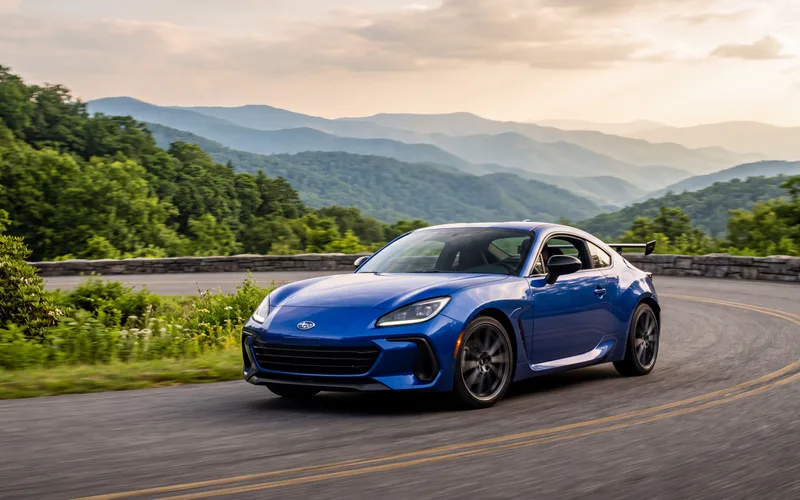 Subaru BRZSports CarBetter at: Ride comfort
It is the same car underneath with a marginally softer ride, so it comes down to which dealer and which residual value you prefer.
Compare 2.47C+
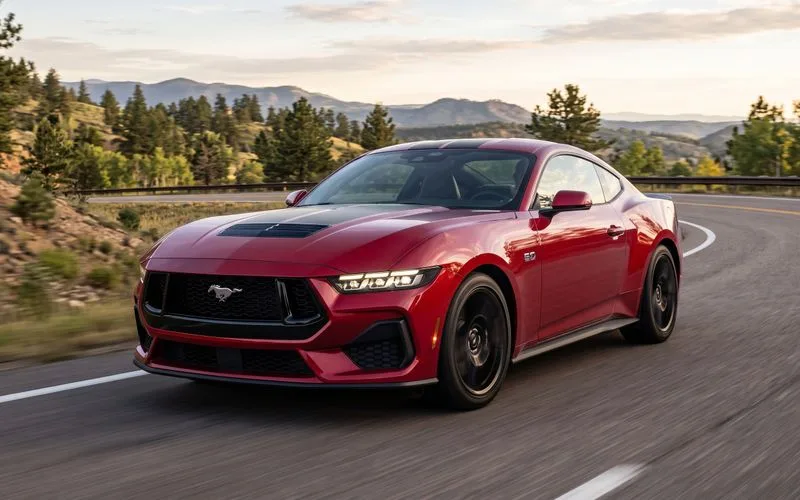 Ford MustangSports CarBetter at: Power and space
For similar money it offers far more power, a usable trunk, and a much wider range of engines and trims.
Compare 1.92C-
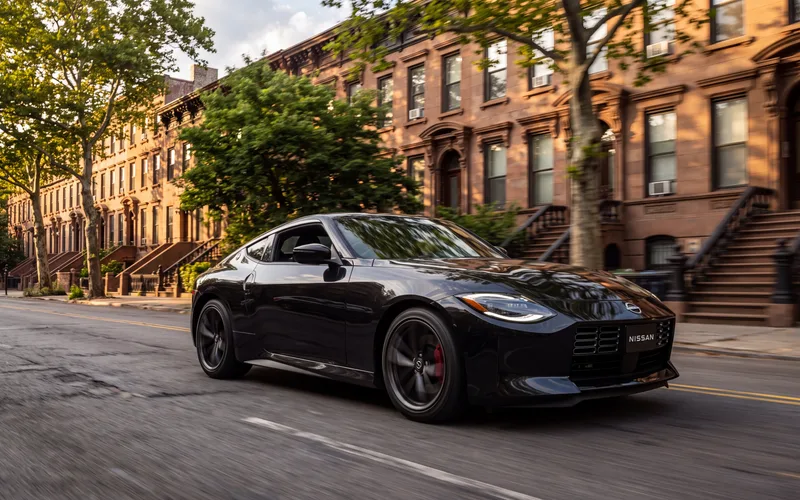 Nissan ZSports CarBetter at: Straight-line speed
If 228 hp feels thin, the Z's 400-hp twin-turbo V6 delivers the speed the GR86 never chases.
CompareHow it's evolved
4 scored model years · 2023–2026
Subject scores by year
Hover or tap a score to see what moved it versus the year before. A corner mark flags a big swing.
| Year | Performance | Efficiency | Safety | Space | Cost | Reliability | Tech | Use-case | Driving | Value |
|---|---|---|---|---|---|---|---|---|---|---|
| 2026 | 39 | 14 | 61 | 36 | 82 | 76 | 49 | 36 | 76 | 72 |
| 2025 | 39 | 14 | 61 | 34 | 82 | 76 | 45 | 35 | 76 | 72 |
| 2024 | 39 | 11 | 59 | 35 | 82 | 76 | 49 | 35 | 75 | 75 |
| 2023 | 39 | 11 | 55 | 34 | 81 | 73 | 48 | 33 | 74 | 73 |
Compare two years
Best fit & conditions
Higher scores mean a better fit for that use case. Learn more about use-case fit →
Subject profile
Detailed scoring by subject
1Performance & PowertrainGrades near the bottom of the scale.0.55F
All three 2024 grades — GR86, GR86 Premium and the 860-unit TRUENO Edition — share the same naturally-aspirated 2.4L FA24 flat-four at identical output, on both the 6-speed manual and the 6-speed automatic. 2024 is a carry-over year for the powertrain; the changes were the TRUENO Edition, the new SACHS/Brembo Performance Package and the GR86 Active Safety Suite extended to manual cars.
184 lb-ft peaking at 3,700 rpm from the naturally-aspirated boxer — modest against turbocharged and larger-displacement coupe rivals, and identical across all three 2024 grades and both transmissions. Toyota's own brochure torque curve highlights the gain over the previous-generation FA20's 156 lb-ft peak.
Toyota publishes 6.1 s for the volume 6-speed manual and 6.6 s for the automatic, identical across all three grades. Instrumented results run well below the claim — Car and Driver recorded 5.4 s for the ZN8/ZD8 twins — so the manufacturer figure is used as the conservative, cross-vehicle-comparable number.
The FA24 is eager and completely lag-free with far more mid-range grunt than the old 2.0L, but reviewers of the ZN8 car consistently describe it as coarse and thrashy toward the 7,500 rpm redline. 2024 specifically predates the revised throttle mapping and engine torque control Toyota fitted for 2025, so response is a touch less linear than the later car — hence a notch below the 58 carried by the 2025/2026 GR86 and the BRZ twin.
The standard short-throw close-ratio 6-speed manual (TL70) is a segment benchmark — short, precise throws, a well-judged clutch and pedals placed for heel-and-toe — and is the volume configuration and the reference for this rating. The optional 6-speed torque-converter automatic with paddles is competent but noticeably duller; rated a notch below the 2025/2026 car, whose revised throttle mapping makes rev-matched downshifts easier.
Rear-wheel drive only across GR86, Premium and TRUENO Edition — no all-wheel-drive configuration exists anywhere in the 2024 lineup. That is intrinsic to the car's rear-drive purpose, but it scores at the bottom of this rubric; the standard Torsen limited-slip differential is partial mitigation.
One engine, take it or leave it — the 228 hp 2.4L naturally-aspirated boxer in all three 2024 grades, with the only drivetrain decision being 6-speed manual versus 6-speed automatic. No turbo, hybrid, PHEV or EV variant is offered; the new-for-2024 Performance Package adds SACHS dampers and Brembo brakes but no powertrain change.
2Efficiency & RangeThe GR86's lowest-graded category.0.00F
The 2024 GR86 carries over the second-generation ZN8 car's 2.4L naturally-aspirated FA24 flat-four (228 hp @ 7000 rpm, 184 lb-ft @ 3700 rpm) across all three grades — GR86, GR86 Premium and the limited TRUENO Edition — so 2024's news was content (EyeSight now standard on manual cars, an optional SACHS damper / Brembo brake Performance Package) rather than powertrain. The EPA label did move, though: the automatic slipped from 25 to 24 MPG combined for 2024. The volume 6-speed manual's 22 MPG combined sits exactly on the floor of the 22–60 MPG coupe band.
EPA city rating for the volume 6-speed-manual GR86, sitting exactly on the bottom of the 20–60 MPG coupe city band and unchanged from 2023. The naturally-aspirated 12.5:1 boxer has to be revved to make power and there is no hybrid assist, cylinder deactivation or stop-start to recover anything in stop-and-go traffic.
The 2024 GR86 manual is rated 26 MPG highway, one MPG below the 2023 car (the automatic dropped from 31 to 30 the same year), so 2024 is not a clean carry-over on the EPA label despite the unchanged powertrain. That puts the volume 6MT exactly on the floor of the 26–58 MPG coupe highway band, and the automatic's taller top gear is now worth 4 MPG on the highway cycle — buyers who mostly cruise pay a real economy penalty for choosing the enthusiast transmission.
Range is derived from the 13.2-gallon tank and the EPA combined rating for the volume 6MT, since EPA publishes no range figure for gasoline vehicles (record 47556 lists range 0). A small tank paired with modest economy makes this one of the shorter-legged cars in the segment on a single fill, and the premium-only requirement makes each stop costlier as well as more frequent. Confidence is MEDIUM because the figure is a calculation rather than a published rating — both inputs are manufacturer/EPA-confirmed, but real usable range runs lower than tank × combined.
A low 22 MPG combined plus the premium-fuel price assumption is a double penalty that puts the volume manual well past the top ($2,800) of the coupe cost band, so the item bottoms out. Note this figure tracks EPA's fuel-price assumption as much as the car — the 2024 label's implied premium price is about $5.06/gal — so it is not a clean comparison against scorecards built on a different model year's label, and the mechanically identical Subaru BRZ's lower figure at MY2026 reflects that assumption changing rather than a more efficient car.
Premium is genuinely required, not merely recommended: Toyota's own spec table lists a '93 or more' octane rating for every grade and states the 228 hp rating is achieved on it, with performance decreasing if premium is not used. That places the item in the 0–49 'premium fuel required' band. It sits at the top of that band rather than the floor because nothing exotic is involved — no E85, diesel or home-charging setup — and 91–93 octane is available at essentially every US pump.
3SafetyMid-pack among this car's ten categories.2.00C
NHTSA published no overall star rating for the 2024 GR86 — the nameplate has never been selected for NCAP testing at its low US volume, and the NHTSA vehicle page carries safety-equipment and recall data only. Estimated at 4 stars from the ZN8 Subaru Global Platform structure (50% more torsional rigidity than the ZN6) and the car's Good IIHS frontal crashworthiness results.
Every crashworthiness result IIHS currently publishes for this car is Good — Good small overlap front on both driver and passenger sides and Good in the original moderate overlap front test — and the injury measures behind them are clean (HIC-15 of 99 driver-side, no hard head contact, 25 mm chest compression). But the 2024 GR86 holds no current award and the published set is thin: only two crashworthiness tests appear on its ratings page, with the updated side test and the updated (rear-passenger) moderate overlap test both unrated, and IIHS tightened the 2024 criteria to require exactly those two. The generation's Top Safety Pick+ is a 2022 result, not a 2024 one. All-Good where tested but half-measured against the current protocol — mid-band.
Re-scored down: the prior pass credited the manual with the full automatic-transmission suite, which Toyota's own 2024 release does not support. 2024 is still the change year — the stereo-camera Active Safety Suite reached six-speed manual GR86s for the first time, so every 2024 car has Pre-Collision Braking, Adaptive Cruise Control, Lane Departure Warning with Sway Warning and Lead Vehicle Start Alert as standard, alongside seven airbags and the Star Safety System. But Toyota lists Pre-Collision Throttle Management only under the automatic's suite, there is no lane keep assist or centering at any price, Blind Spot Detection stays a Premium/TRUENO item the $30,395 base car cannot be ordered with, and rear parking sensors with reverse automatic braking remain automatic-only. Core standard, key items still gated or missing — mid-upper band, not the top one, which requires LKA and BSM standard on every trim.
IIHS rates the standard EyeSight Pre-Collision Braking System Superior for daytime pedestrian front crash prevention, and the underlying track numbers are strong: collisions avoided outright with a crossing adult at both 12 and 25 mph and with a parallel adult at 25 mph, a 35 mph speed reduction in the 37 mph parallel-adult run with the warning issued 3.3 seconds out, and a 23 mph reduction in the hardest case (crossing child at 25 mph). Held out of the 80s because IIHS publishes no nighttime pedestrian result and no vehicle-to-vehicle front crash prevention rating for this car, so much of the current AEB picture is simply unmeasured. Corrected from the prior pass, which read the pedestrian track speeds as vehicle-to-vehicle results.
Blind Spot Detection with Rear Cross-Traffic Alert is standard from the Premium trim up (and on the 2024-only TRUENO Edition) but cannot be ordered at all on the base GR86 — a real gap given the fastback's shallow, steeply raked rear glass. Coverage is alert-only with no braking or steering intervention, no surround-view camera is offered at any price, and the only active rear system, reverse automatic braking, is tied to the automatic transmission.
The 2024 GR86 has no lane keeping or centering function at all, only warnings. The Active Safety Suite brings Lane Departure Warning with Lane Sway Warning to every 2024 car including manuals, but the GR86 deliberately deletes the assisted-steering element of the donor EyeSight system to suit the car's sporting character — nothing will nudge or hold it in lane, and there is no Lane Tracing Assist as fitted to Toyota Safety Sense models elsewhere in the lineup. Warning-only coverage belongs in the 'absent lane assistance' band rather than the 'functional keeping/centering' one; scored at the top of that band because the warnings themselves are camera-based, standard on every trim for the first time in 2024, and include sway detection.
2024 is the year adaptive cruise reached the manual GR86 — on the stick it engages at 20 mph and above in second through sixth gear and stays live through clutch actuation and gearchanges, a genuine step up from the 2023 automatic-only arrangement. It stays mid-band because there is no highway-assist package pairing ACC with lane centering, manual cars cannot creep in stop-and-go traffic the way the 6AT can, and the camera-only sensing drops out in heavy fog, rain or low direct sun.
No hands-free highway driving is offered on the 2024 GR86 at any trim or option level. Toyota's limited hands-off capability was confined to a handful of Lexus flagships, and a driver-focused sports coupe whose ADAS deliberately omits steering assist is the last place it would appear.
IIHS evaluates four separate headlight configurations on this car — base and Premium, each with the manual and the automatic package — and rates all four Good, so a Good-rated system really is standard across the range. The Premium's curve-adaptive LED projectors are the best of them: good low-beam visibility on both sides of the straightaway and in all four curve tests, with glare limits never exceeded. Trimmed slightly from the prior pass, which recorded high-beam assist as standard on every 2024 trim — IIHS characterizes high-beam assist as present only on the automatic-equipped variants and Toyota's own 2024 release lists Automatic High Beams under the automatic's suite, though cars.com reports it line-wide, so the sources disagree. The base car also forgoes the curve-adaptive function and drops to fair low-beam visibility on three of four curves.
The low cowl, low beltline and short hood give forward and over-the-nose sightlines that are genuinely excellent for a sports car and a repeated point of praise for this generation. Rearward and over-the-shoulder views are the weak point: the fastback glass is shallow, the C-pillars are thick, and compensation is limited to a standard backup camera (plus rear sonar on automatics) — no surround-view option exists at any price and blind-spot monitoring is unavailable on the base car.
The 2024 GR86 has two complete sets of LATCH connectors and IIHS rates ease of use Acceptable — the second-highest grade — with easy-to-find tether anchors on the rear deck, light attachment forces and no confusable hardware, but lower anchors marked down for sitting too deep in the seat and no contrasting label near either tether. Hardware aside, the practical reality drags this into the low band: everything must be threaded through a two-door aperture after folding and sliding a front seat, and with roughly 29.9 in of rear legroom in the 2+2 body a rear-facing seat cannot be fitted without pushing the front passenger seat to an unusable position.
4Space & ComfortOne of the GR86's weakest categories.0.27F
The 2024 GR86 is the second-generation ZN8 2+2 fastback coupe with a fixed four-seat layout across all three trims (Base, Premium, TRUENO Edition); the rear bench is token seating used mainly as an extra cargo shelf.
2024 is a carry-over year for the ZN8 body — the notable 2024 changes were EyeSight extended to manual-transmission cars and the limited TRUENO Edition, not any dimensional revision. No sunroof is offered on any trim, so a single figure covers the range.
Front legroom is mid-pack for the coupe band and genuinely adequate for tall drivers despite the small footprint — the very low seating position buys back the space the fastback roofline takes away.
The fastback roofline cuts rear headroom to 33.5 in, a full 1.5 in below the floor of the coupe band — adults cannot sit upright in the back at all.
At 29.9 in the rear seat is well under the coupe band floor of 32 in; reviewers treat the GR86's back seat as effectively unusable for passengers and useful mainly as padded luggage space.
The trunk is well under half the 10 cu ft coupe band floor and is further hampered by a shallow opening. The redeeming detail is the fold-down rear seatback, engineered to swallow four wheels and tires for track days. Value refined from 6.3 to Toyota's own 6.26 figure.
In-cabin storage is genuinely sparse — a small glovebox, a tiny center console bin and shallow door pockets, with no underfloor or hidden cubbies and no covered console storage of consequence. The purposeful fold-flat rear seatback sized for a set of track wheels is the one clever touch and keeps this off the floor of the band. Sits just below the identical-bodied BRZ (38); the difference is within noise for what is the same cabin.
The front sport buckets are a real strength — reviewers single out the improved upper-back bolstering that holds without pinching, and taller drivers get more room to adjust than in a Miata. Held down by six-way manual-only adjustment on every trim with no lumbar or memory, an unusable rear bench, and reviewers reporting the jittery ride makes long stints wearing after about an hour.
Body control is excellent and the car is composed on smooth pavement, but Toyota tuned the ZN8 firmer than the Subaru twin and it is a handful on broken surfaces — reviewers describe a stiff, choppy ride with constant motion and jittering that wears on the driver. That lands it just inside the 'harsh or busy' band despite genuinely good control. The TRUENO Edition's standard ZF SACHS dampers sharpen control rather than add compliance.
Road and tire roar is the GR86's most consistently criticized comfort trait — near constant and very loud at highway speed, with engine drone more coarse than evocative, and in the pursuit of lightness Toyota was deliberately sparing with sound insulation. Confirmed this run that Toyota fits summer tires on every 2024 trim (Primacy HP on Base, Pilot Sport 4 on Premium/TRUENO), so the GR86 has no quieter all-season fitment to fall back on and sits below the otherwise identical BRZ, whose volume trim wears all-seasons.
Dual-zone automatic climate control is confirmed standard on all three 2024 trims including Base — generous at this price and unusual in a lightweight sports coupe — and two-level heated Ultrasuede sport seats arrive on Premium and TRUENO, so the key comfort features are present from the mid trim up. Nothing beyond that exists: no ventilated seats, no heated steering wheel, no remote pre-conditioning and no rear climate on any trim.
5Cost of OwnershipThe GR86's best-graded category.3.56A-
The 2024 GR86 base carries a $29,300 MSRP plus $1,095 destination, a modest bump over 2023 and $650 less than the 2025 car. It remains the cheapest new rear-drive sports car sold in the US and sits near the bottom of the coupe price band.
Premium is the mainstream volume grade at $31,900 plus $1,095 destination, adding the duckbill spoiler, adaptive LED headlights, 18-inch wheels with Michelin Pilot Sport 4 tires, heated leather/Ultrasuede seats and an eight-speaker system. The 860-unit Trueno Edition tops the range at $35,815 delivered.
Published estimates for this car diverge by more than 6x, so the value is set at the median of the three credible ones rather than above it as the prior pass had it: Edmunds' 2024 True Cost to Own totals $10,077, KBB implies ~$5,030 (~$1,006/yr), and CarEdge projects $1,571. Landing at the median is further supported by ToyotaCare covering all scheduled service for the first two years — a cost Edmunds' maintenance line ignores — offset against the summer performance tires and brake wear this car's owners actually invite.
iSeeCars rates the GR86 the best-retaining sports car it tracks, at 14.0% depreciation over five years against 27.3% for the sports-car class and 41.5% for all vehicles — ahead of its own BRZ twin, the MX-5 Miata and the Camaro. CarEdge independently projects 76.9% residual, so the two credible sources bracket 77–86%, both far above the 65% ceiling of the coupe band. Held at MEDIUM because the second-generation nameplate only dates to MY2022, so this reflects a supply-constrained enthusiast market rather than a completed five-year cycle for a 2024 car.
Standard Toyota bumper-to-bumper coverage, level with most mainstream brands but two years short of Hyundai/Kia's 5-year basic term and at the floor of the segment band.
Toyota's standard 5-year/60,000-mile powertrain term sits at the bottom of the segment band — half of Hyundai/Kia's 10-year/100,000-mile coverage, though level with Subaru, Ford and Nissan. Notably, Toyota declined to extend engine coverage despite the publicized FA24 engine-failure cases on this generation.
ToyotaCare covers all factory-scheduled maintenance for 2 years/25,000 miles plus 2 years of unlimited-mileage roadside assistance — coverage the mechanically identical Subaru BRZ does not get at all, and the clearest ownership-cost edge the GR86 holds over its twin. Every 2024 GR86 buyer also receives a one-year full-benefit NASA membership with a complimentary one-day HPDE track event, an unusually well-matched perk for this audience. Held below the top band only because the included-maintenance term is two years rather than three or more.
$32,995 volume-trim price minus its estimated resale value after 5 years (86% retained, or about $28,376) leaves about $4,619 in depreciation. Add the projected $5,000 in 5-year maintenance and repairs, and owning this vehicle for 5 years costs about $9,619 in total.
6Reliability & QualityOne of the GR86's strongest categories.3.13B
The 2024 GR86 is the third year of the ZN8 generation, so the FA24 boxer and both transmissions are past their launch shakedown; the year's changes (optional ZF SACHS/Brembo Performance Package, EyeSight extended to the manual) add no powertrain risk. Two-plus years on the road have produced an unusually quiet field record, but a low-volume nameplate yields thin survey samples and the only complaints on file cluster on a single unresolved issue, so this is not a verified top-tier result.
Toyota sat at or near the top of both major dependability indices for the 2024 cycle — best mass-market brand in the J.D. Power VDS by a wide margin over an industry average that worsened year over year, and third in Consumer Reports' brand ranking behind Subaru and its own Lexus division. Toyota Motor Corporation also took the most model-level VDS awards of any automaker. The caveat worth naming is that this record is earned by Toyota-built Camrys and Corollas, while the GR86 itself is designed and assembled by Subaru.
The 2024 model year carries exactly one NHTSA recall, and it is a mislabeled load-capacity sticker on Gulf States Toyota accessory cars — the generation's only substantive campaign, the rear turn-signal lamp failure, stops at 2022 builds. What keeps it out of the top band is what is NOT under recall: every 2024-model-year complaint on file describes fuel lines chafing in the engine bay, which dealers are addressing with protective foam on a case-by-case basis rather than via a bulletin, and the generation's oil-pickup/RTV theme is being litigated rather than recalled.
The 228-hp naturally aspirated 2.4L FA24 runs relatively unstressed and sidesteps the turbo and head-gasket failure modes of older Subaru flat-fours, with a proven Aisin six-speed automatic and the TL70-family manual behind it. The ceiling is a documented oil-starvation weakness — an asymmetric pickup and shallow pan bleed pressure under sustained right-hand cornering load, and factory RTV debris can clog the pickup screen and spin a bearing — which matters directly to the track-day buyers this car courts, and which remains unresolved: 2024 is inside the affected build range, there is no factory fix, and the response has been a class action plus a cottage industry of aftermarket remedies.
The cabin is deliberately austere: reviewers describe mediocre materials and a sparsely appointed, near-monotone black interior, with hard plastics through the lower dash and doors and an infotainment unit that already looked dated in 2024. The Premium trim's Ultrasuede-and-leather sport seats lift the volume configuration to acceptable-for-the-price, but nothing here is class-leading.
Assembly at Subaru's Ōta, Gunma plant is consistently solid — reviewers describe the 2024 car as well put together and structurally tight — and the model year has drawn only three NHTSA complaints in two-plus years on sale. Scattered owner reports of interior rattles and easily marked trim, plus loud road and tire noise that exposes the light structure, keep it out of the top band.
Toyota runs one of the densest US service networks at roughly 1,200 dealers, so a GR86 owner is rarely far from factory service even in rural markets, and two years of included maintenance softens early ownership. Marked down from the prior pass because the item weighs service reputation alongside density and Toyota's CSI result is merely average — 855 against an 851 industry mean, more than 20 points behind the mass-market leaders and behind the Subaru dealers who service its mechanically identical twin.
The GR86 shares one of the largest enthusiast aftermarkets in the modern car world with the Subaru BRZ across two generations, so wear and performance parts are abundant and cheap, and the mechanicals are conventional with no exotic or dealer-only assemblies. Routine maintenance is inexpensive; the reservation is that a starved FA24 is a genuinely expensive event and some model-specific OEM trim can lag on a low-volume car.
7Technology & InfotainmentGrades below the middle of the scale.1.29D
The second-generation (ZN8) GR86 uses a single 8.0-inch center touchscreen on every 2024 trim, with no larger display offered at any price — small against a coupe segment whose normalization band runs to 15.5 inches.
The GR86 runs the older Subaru-built 8-inch head unit rather than Toyota's newer Audio Multimedia system — dated graphics and modest resolution — but the menu structure is shallow and physical controls for audio and dual-zone climate remain, which keeps it usable at speed.
Apple CarPlay and Android Auto are standard on all three 2024 trims but wired only — the factory Subaru-sourced unit offers no wireless projection at any trim or option level, and the only USB ports are USB 2.0.
No factory native navigation is offered on any 2024 GR86 trim and voice control is limited to basic embedded commands — mapping is entirely a phone-projection job, which works but leaves the car dependent on a cable and cell signal.
Base GR86 gets a six-speaker system; Premium and TRUENO Edition step to eight speakers. There is no branded premium audio option at any price — the only bass upgrade is a dealer-installed subwoofer accessory — and the road and exhaust noise inherent to a lightweight coupe limits what the hardware achieves.
A 7.0-inch full-TFT GR digital gauge cluster is standard on every 2024 trim, with Normal, Sport and Track layouts that reposition the tachometer and add a shift indicator — genuinely useful for the car's mission, though the panel is small and configurable only via those presets.
Re-scored upward: the GR86 Audio head unit does receive over-the-air software updates, which the prior score treated as absent. Scope is narrow, though — infotainment only, no vehicle-system updates, and delivery is by owner-initiated Wi-Fi hotspot rather than the car's cellular DCM, with the process taking over an hour of idling.
Connected Services are standard on every 2024 trim including the base car, giving Toyota-app lock/unlock, vehicle locate and status via the DCM, but each service is a one-year trial then a paid subscription, remote start is app-only and automatic-transmission-only, and there is no digital/phone key.
Re-scored downward on confirmed detail: the two front ports are USB 2.0 Type-A at 2.1A, not USB-C fast charging, and there is no wireless charging pad on any trim, no rear-seat power and no household outlet — the only other source is a 12V socket tucked in the glovebox.
Keyless entry with GR push-button start is standard from the base 2024 GR86 up, and owners confirm the door handles support proximity unlock with the fob on you. No phone-as-key, no hands-free trunk release and no key-fob remote start keep it out of the top band.
Re-scored upward: the prior entry claimed no parking sensors at any trim, but Toyota does fit Rear Parking Sonar with Reverse Automatic Braking on automatic-transmission cars, alongside a standard backup camera with projected path and blind-spot detection on Premium and TRUENO. Still no surround-view, no front sensors and no park assist, and manual-transmission buyers get no sonar at all.
No head-up display is offered on any 2024 GR86 trim, including the limited TRUENO Edition — a real omission for a driver's car whose rivals (Corvette, Mustang, GR Supra) all offer one.
8Use-Case FitOne of the GR86's weakest categories.0.30F
The 2024 GR86 is the ZN8 2+2 coupe: two complete LATCH sets exist and IIHS rates their ease of use Acceptable, but every child load means tipping and sliding a front seat through a two-door aperture, and 29.9 in of rear legroom will not clear a rear-facing seat behind an average-height driver. The 6.3 cu-ft trunk cannot take a full-size stroller.
2024 is the change year that matters here: the EyeSight-based Active Safety Suite (pre-collision braking with pedestrian detection and throttle management, adaptive cruise, lane departure with sway warning, lead vehicle start alert, high beam assist) became standard on manual cars for the first time, so every 2024 GR86 has AEB and ACC rather than just the automatics — and IIHS rates that system Superior for daytime pedestrian front crash prevention with Good headlights on all four trim/transmission combinations. Nudged up from the prior pass on that corroboration, but it stays mid-band because EyeSight here deletes the steering-assist function so there is no lane keep assist at any price, blind-spot monitor with rear cross-traffic alert starts at Premium and cannot be ordered on the base car, rear sonar with reverse automatic braking is still automatic-only, there is no rear-occupant reminder, and the 2024 GR86 holds no IIHS award because the updated side and updated moderate-overlap tests have not been run on it.
Functionally a two-seater for anyone past toddler size — 33.5 in of rear headroom and 29.9 in of rear legroom under a fastback roofline, with no rear vents, no rear USB and no rear climate. Luggage space with four aboard is the 6.3 cu-ft trunk, roughly two soft duffels, and there is no rear-seat entertainment or amenity of any kind on the 2024 Base, Premium or TRUENO grades.
A 2,833 lb, 167.9 in coupe with light controls, a docile low-rpm 2.4L flat-four, a benchmark shifter and excellent forward sightlines is far more livable daily than most sports cars, and 2024 brings two livability gains — manual buyers finally get adaptive cruise for stop-and-go relief, and the newly available Performance Package fits Gazoo-tuned SACHS dampers that owners and testers report ride markedly better on the highway and absorb small-to-medium undulations more cleanly than the standard shocks. That package is a $1,500–$2,020 option (standard only on TRUENO), so the volume Base/Premium car still rides on the stiff standard tune, which is why this moves only slightly. Held below the 2025 car because Toyota's revised throttle mapping and engine torque control for smoother, more linear low-speed response are a 2025 change; against it either year are a low hip point that makes ingress/egress a daily chore, sparse cabin storage and near-constant road roar.
EPA rates the 2024 GR86 at 20/26/22 mpg with the volume six-speed manual and 21/30/24 with the automatic — respectable for a naturally aspirated rear-drive coupe but nothing more, and the FA24 requires premium fuel, which adds roughly a dollar a gallon over the segment's regular-fuel commuters. Consumables lean expensive too: the Premium and TRUENO grades ride on 18-in performance tires. A base price under $30k keeps it out of the bottom of the band.
167.9 in long, 69.9 in wide, 2,833 lb, with a 35.4 ft turning circle and a low cowl — it slots into city spaces most modern cars cannot, and a backup camera is standard to cover the shallow rear glass. Costs are the 5.1 in ground clearance over urban ramps and driveways, thick C-pillars, and rear parking sensors with reverse automatic braking being automatic-transmission-only with no surround-view camera offered at any 2024 trim.
Toyota publishes no US tow rating for the 2024 GR86, there is no payload utility beyond two adults and a 6.3 cu-ft trunk, and the high-revving naturally aspirated boxer makes its 184 lb-ft at 3,700 rpm with nothing underneath for load hauling. Not meaningfully work-capable by any measure this item tracks.
The Toyota badge and the FA24 boxer earn a reasonable durability presumption, and the ZN8 chassis has a genuine hard-use track record in one-make racing and driving schools. But an aluminum-roof-and-hood coupe with 5.1 in of ground clearance, cloth or leather/synthetic-suede sport seats and no wear-friendly interior option has no commercial-fleet history at all.
No bed, no factory roof rails or published roof-load rating, no trailer wiring or hitch, no 110V outlet, no tie-downs and no washable surfaces. The Toyota accessories catalog for the 2024 GR86 is performance and appearance parts only; the folding rear seatback is the single cargo provision.
The front sport buckets are genuinely good, 2024 is the first year every GR86 — manual included — has adaptive cruise, which road-trip testers credit with making long freeway slogs measurably less fatiguing, and the new-for-2024 SACHS damper package meaningfully calms the highway ride for buyers who tick it. Against that: minimal sound deadening in the name of lightness, near-constant tire roar, a boxer buzzing around 3,000 rpm at 75 mph, a jittery ride on the standard dampers the volume car wears, and only ~290 mi of range from the 13.2-gal tank on the manual (~317 mi on the automatic) with premium fuel at every stop.
Rear-wheel drive only with a Torsen limited-slip diff, 5.1 in of ground clearance, no tow rating, no factory roof rails and no published roof-load figure for bike, ski or kayak carriers — the aluminum roof panel actively discourages even aftermarket crossbars. Winter tires make it usable in snow; that is the whole of its off-pavement story.
6.3 cu ft is tiny in absolute terms and short in height, but the fold-down rear seatbacks open a pass-through Toyota deliberately sized to swallow a full set of four track wheels and tires — unusually flexible packaging for a coupe and the reason this sits above the bottom band rather than in it. There are no roof rails, no factory hitch and no underfloor storage beyond the spare well.
9Driving ExperienceGrades above the middle of the scale.3.06B
A carry-over chassis year for the second-generation (ZN8) GR86 — the shock-absorber retune arrives for 2025, not 2024 — but the underlying formula is still class-leading: a 2,811 lb base curb weight, a low-mounted flat-four, 53/47 balance and rear drive give exceptionally neutral cornering with tight body control. 2024's substantive dynamic addition is the new GR86 Performance Package (TGR-tuned ZF SACHS dampers plus Brembo brakes), standard on the TRUENO Edition and optional elsewhere, which sharpens body control further; the volume Premium on standard dampers is still stiffly damped enough to get busy on broken pavement.
One of the most communicative electric racks sold at any price — immediate off-center response, natural weighting and genuine road feedback, enabled by how little mass sits over the front axle. Scored a notch below the 2025 car because the EPS retune Toyota applied for 2025 (explicitly for 'a more responsive handling feel and an improved sense of direct contact with the road') is not yet present on the 2024 calibration.
Street stopping power is strong for the class and the firm, progressive pedal is well calibrated for heel-and-toe work. The volume Base/Premium cars keep 12-in front / 11-in rear rotors with single-piston front calipers that will fade under sustained track use; 2024 is the first year a factory answer exists, in the Performance Package's Brembo four-piston front / two-piston rear setup (standard on the TRUENO Edition). Very good as delivered on the volume trim, excellent only once optioned.
The 2.4-liter FA24 boxer (228 hp at 7,000 rpm, 184 lb-ft at 3,700 rpm) revs eagerly and the 6-speed manual is a highlight in its own right — precise throw, light clutch, ideal pedal spacing for rev-matching. Two things cap it, and neither is addressed in 2024: a midrange torque dip that the 2.4 mitigated but did not erase, and the dated 6-speed torque-converter automatic, whose tall gearing drops the engine out of its powerband on every shift and which is nearly a second slower to 60 mph. Toyota's added engine torque control for more linear throttle response and easier blipping is a 2025 change, so the 2024 calibration is a touch less polished than the following year's.
Refinement is the clearest casualty of the lightweight, low-cost formula, and Edmunds' verdict on the 2024 car is blunter than the item's mid-band allows: the engine note is 'more annoying than evocative', not merely audible-but-inoffensive. The FA24 boxer is entertaining when extended, but the Active Sound Control piped into the cabin turns droney from roughly 5,000 rpm up, and at a steady highway cruise there is constant engine and tire noise plus vibration through the controls. Scored down 4 points from the previous pass: the sourcing moved from owner/forum accounts to a named primary review of this exact model year, and it is harsher. Held at the bottom of the 50–79 band rather than below it because the noise is at least characterful under load, not the coarse thrash of a genuinely bad engine. No sound-insulation changes were made for 2024.
Published turning circle is 10.80 m — 35 ft 5 in, i.e. 35.4 ft curb-to-curb — and it is unchanged across every trim and both transmissions, including the TRUENO Edition, as expected for a car with no variation in track or steering rack. That lands in the better half of the 34–40 ft coupe band and makes the car genuinely easy to place in city parking and U-turns.
A textbook sports-car cockpit — wheel, pedals and shifter in natural alignment, a low hip point, tilt-and-telescoping wheel, well-bolstered front seats that accommodate tall drivers, a low unobtrusive dash and a legible digital cluster with physical toggle switches for climate. The deductions are structural rather than fixable: the car sits low enough that you drop into it and hoist yourself out, rear sightlines are compromised by the high deck and thick C-pillars, and the rear seats are effectively unusable as seats.
The benchmark affordable driver's car and the item where the GR86 is essentially unbeatable at its price — the definition of a 'take the long way home' car. Car and Driver put the GR86/BRZ twins on its 2024 10Best list for the third consecutive year explicitly for how they drive rather than what they measure, and 2024 adds a factory Performance Package plus the 860-unit AE86-homage TRUENO Edition for enthusiasts who want more.
10Value & Market PositionOne of the GR86's strongest categories.3.09B
The $29,300 base 2024 GR86 includes the hardware that matters for the mission — 228-hp FA24 boxer, 6-speed manual, Torsen limited-slip differential, 17-in alloys, LED headlights and an 8-in touchscreen with Apple CarPlay/Android Auto — and 2024 is the year the EyeSight-based active-safety suite (pre-collision, lane departure alert, adaptive cruise, automatic high beams) became standard on manual cars for the first time rather than automatic-only, a genuine no-cost content gain. Comfort content on the base car is thin, though: 4-speaker audio, single-zone manual climate, no blind-spot monitor, no heated seats, all of which require the $31,900 Premium. Competitive for the price rather than loaded, and a notch better than the mechanically identical BRZ mainly because the GR86's entry price is lower.
Dollar-for-dollar this is the strongest driving-thrills-per-dollar proposition on sale: a rear-drive, naturally aspirated, LSD-equipped, manual-transmission sports coupe from $29,300 that Car and Driver judged 'often just as quick through the challenging sections as more powerful and more expensive contenders'. The only cars that beat it on pure entertainment cost far more (Nissan Z ~$42k, GR Supra ~$46k, 718 Cayman ~$65k+), and the one true price rival — the $28,985 MX-5 Miata — gives up two seats, a usable trunk and 47 hp. Resale reinforces the value case: iSeeCars puts 5-year GR86 depreciation at ~14% against 27.3% for the sports-car category. Held below 90 because the money buys dynamics rather than refinement, equipment or space.
Effectively a two-trim lineup — base and Premium — plus the 860-unit TRUENO Edition that most buyers will never see on a lot, with a manual-or-automatic choice on all three and the newly available Performance Package as the one meaningful standalone option. There is a single engine, a single drivetrain (RWD) and one body style, so budget flexibility spans roughly $29k–$36k with no real configuration decisions inside it. Slightly narrower than the BRZ's Premium/Limited/tS walk-up, which adds an STI-tuned range-topper as a regular-production trim.
The clear volume leader among affordable sports cars and one of very few nameplates in the segment growing rather than shrinking: 11,078 US units in calendar 2023 and 11,426 in 2024 (+3.1%) while overall sports-car sales fell sharply, outselling the mechanically identical BRZ roughly five to one and beating the GR Supra, BRZ and Nissan Z combined. Held below the 80s because the ceiling is niche in absolute terms — the Mustang still moves roughly four times as many cars, so this is segment dominance, not market-wide volume.
Toyota brings the strongest mainstream combination of reliability reputation and residual strength — KBB named Toyota the best-resale-value brand for 2024 — and the GR sub-brand (GR Corolla, GR Supra, WRC and Le Mans programs) supplies an enthusiast halo the 86 nameplate did not have in its Scion FR-S days. The AE86/Initial D lineage adds real cultural pull with younger buyers. Short of the 80s only because Toyota's image is fundamentally sensible-and-dependable rather than aspirational in the way a Porsche or even a Mustang badge is.
By the 2024 model year supply had normalized and the pandemic-era markups had largely evaporated — buyers reported transacting roughly $1,000–$1,500 under MSRP on base and Premium cars, including Premium examples with the Performance Package — but Toyota puts essentially no factory cash on the hood of the GR86 and incentive trackers show nothing meaningful available. So the car is buyable at or a little under sticker with patience, which is better than the BRZ's near-universal MSRP transactions, yet there are no real deals to chase and the 860-unit TRUENO commanded adjustments.
Squarely mid-cycle: the second-generation ZN8 debuted in April 2021 and went on sale for MY2022, making 2024 the third model year of the generation on a platform derived from the current Subaru Global Platform with modern infotainment and driver assistance. 2024 is not a carry-over year — it adds the EyeSight suite on manual cars, the SACHS/Brembo Performance Package and the TRUENO Edition — but the substantive chassis work (retuned dampers and EPS, added engine torque control) lands for 2025, and no redesign has been announced, so there is no near-term replacement risk for a 2024 buyer.
About as well-reviewed as an affordable car gets: Car and Driver put the GR86/BRZ twins on its 2024 10Best Cars list — a third consecutive win — and US News scored the 2024 car 9.3/10, near the top of the sports-car class. The twins are the habitual reference point and frequent winner in affordable-sports-car comparison tests, and the IIHS awarded the platform Top Safety Pick+. The reservations are consistent and narrow rather than damning — cabin noise, ride firmness and a poorly matched automatic — which is what keeps this shy of a perfect-consensus score.