

The verdict
A struggling sports car, strong on ownership and held back by efficiency.
The 2022 GR86 launched the second generation and is still one of the most enjoyable cars you can buy for under $30,000. It has a 228-hp 2.4L engine, rear-wheel drive, a superb six-speed manual and handling that earned it a Car and Driver 10Best award. The trade-offs are real: it is loud and firm, has a 6.26 cu ft trunk and a back seat for bags rather than people, needs premium fuel, and offers no automatic emergency braking on manual cars. As the first-year car with the new engine, it also carries the most engine-failure reports of the generation, and its 5-year/60,000-mile powertrain warranty is running out, so a used buyer should check its history carefully.
Jump to scoresStrengths
- Among the most fun cars at any price
- Holds its value remarkably well
- A manual gearbox worth seeking out
What holds it back
- Thirsty, premium-only and short-legged
- No driver assists on manual cars
- Tiny trunk and a token back seat
Top alternatives
Cars shoppers cross-shop with the Toyota GR86 1.68D
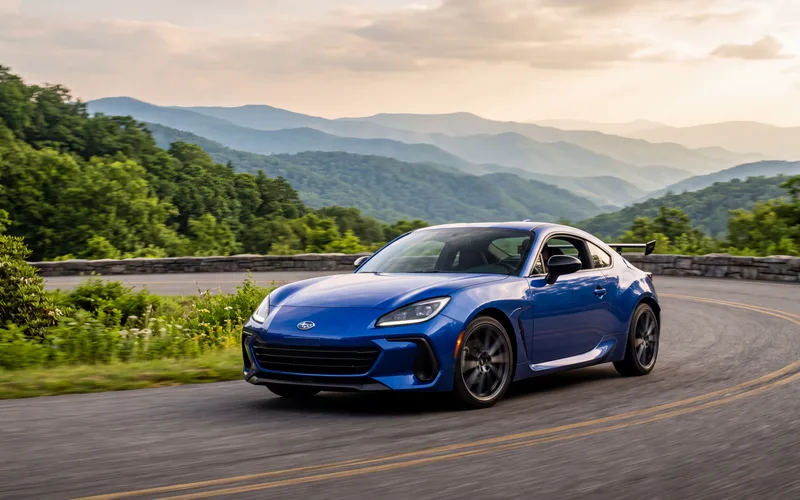 Subaru BRZSports CarBetter at: Ride comfort
It is the same car underneath with a marginally softer ride, so it comes down to which dealer and which residual value you prefer.
Compare 2.47C+
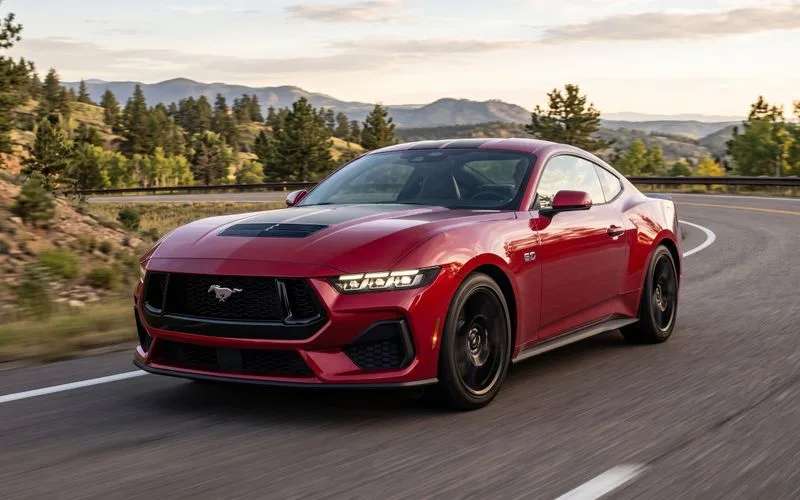 Ford MustangSports CarBetter at: Power and space
For similar money it offers far more power, a usable trunk, and a much wider range of engines and trims.
Compare 1.92C-
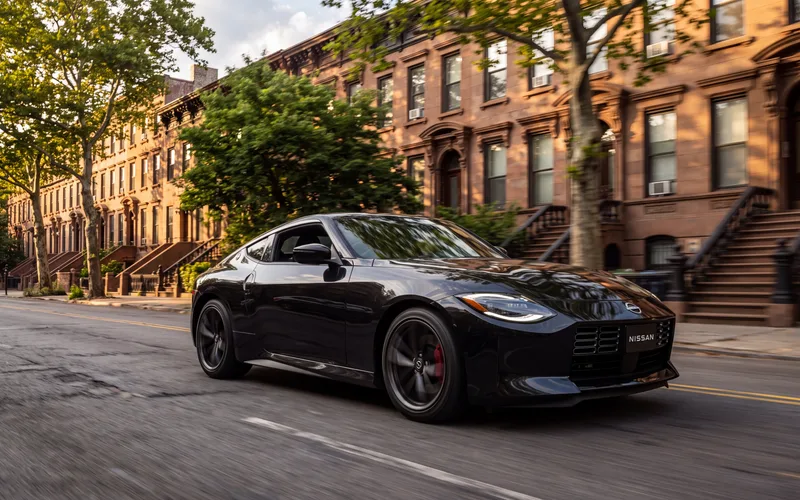 Nissan ZSports CarBetter at: Straight-line speed
If 228 hp feels thin, the Z's 400-hp twin-turbo V6 delivers the speed the GR86 never chases.
CompareHow it's evolved
9 scored model years · 2017–2026
Subject scores by year
Hover or tap a score to see what moved it versus the year before. A corner mark flags a big swing.
| Year | Performance | Efficiency | Safety | Space | Cost | Reliability | Tech | Use-case | Driving | Value |
|---|---|---|---|---|---|---|---|---|---|---|
| 2026 | 39 | 14 | 61 | 36 | 82 | 76 | 49 | 36 | 76 | 72 |
| 2025 | 39 | 14 | 61 | 34 | 82 | 76 | 45 | 35 | 76 | 72 |
| 2024 | 39 | 11 | 59 | 35 | 82 | 76 | 49 | 35 | 75 | 75 |
| 2023 | 39 | 11 | 55 | 34 | 81 | 73 | 48 | 33 | 74 | 73 |
| 2022 | 39 | 11 | 55 | 34 | 82 | 70 | 46 | 33 | 74 | 74 |
| 2020 | 34 | 16 | 26 | 34 | 75 | 80 | 27 | 28 | 73 | 54 |
| 2019 | 33 | 16 | 28 | 34 | 75 | 77 | 20 | 27 | 73 | 55 |
| 2018 | 34 | 16 | 25 | 33 | 77 | 77 | 19 | 28 | 74 | 60 |
| 2017 | 33 | 14 | 25 | 34 | 80 | 76 | 17 | 24 | 68 | 61 |
Compare two years
Best fit & conditions
Higher scores mean a better fit for that use case. Learn more about use-case fit →
Subject profile
Academic Probation · NHTSA safety recalls
Aug 31, 2023Exterior lighting: turn signalThe rear turn signals may intermittently become inoperative.
Defect
Subaru of America, Inc. (Subaru) is recalling certain 2022 BRZ and Toyota GR86 vehicles. The rear turn signals may intermittently become inoperative.
Risk
Inoperative rear turn signals may not notify other drivers of a turning vehicle, increasing the risk of a crash.
Remedy
Dealers will replace both rear combination lamp assemblies, free of charge. Owner notification letters were mailed January 8, 2024. Subaru owners may contact Subaru's customer service at 1-844-373-6614. Toyota owners may contact Toyota customer service at 1-800-331-4331. Subaru's number for this recall is WRM-23.
NHTSA campaign 23V609000 ↗Manufacturer no. WRM-238,915 vehicles potentially affected (all models in the campaign)Owners notified Jan 8, 2024Filed by Subaru of America, Inc.Filed as GR86
4 recalls on other model years of the GR86 (2017–2019, 2023–2024)
Jul 23, 2024Equipment: other: labelsThe load carrying capacity modification label may display inaccurate added weight values. As such, these vehicles fail to comply with the requirements of Federal Motor Vehicle Safety Standard number 110, "Tire Selection and Rims."
Defect
Gulf States Toyota, Inc. (GST) is recalling certain Toyota 2023 GR Supra, 2024 4 Runner, Corolla, Grand Highlander, Grand Highlander Hybrid, Land Cruiser Hybrid, Tacoma, Tacoma Hybrid, 2023-2024 BZ4X, Corolla Cross Hybrid, GR Corolla, GR86, Highlander, Highlander Hybrid, Prius, Prius Prime, Sequoia Hybrid, Tundra, Tundra Hybrid, Venza Hybrid, 2023-2025 Crown, and 2025 Camry Hybrid vehicles equipped with GST accessories. The load carrying capacity modification label may display inaccurate added weight values. As such, these vehicles fail to comply with the requirements of Federal Motor Vehicle Safety Standard number 110, "Tire Selection and Rims."
Risk
A vehicle with an incorrect maximum capacity weight value may be overloaded, which can increase the risk of a crash.
Remedy
GST will mail new labels to owners, free of charge. Owner notification letters were mailed September 16, 2024. Owners may contact GST customer service at 1-800-444-1074. GST's number for this recall is 24R2.
NHTSA campaign 24V548000 ↗Manufacturer no. 24R233,848 vehicles potentially affected (all models in the campaign)Owners notified Sep 16, 2024Filed by Gulf States Toyota, Inc.Filed as GR86Jul 29, 2021Fuel system, gasoline: delivery: fuel pumpThe low-pressure fuel pump inside the fuel tank may fail.
Defect
Subaru of America, Inc. (Subaru) is recalling certain 2019-2020 Ascent, 2018 Forester, 2018-2020 Impreza, Legacy, Outback, 2018-2019 BRZ, WRX, and Toyota 86 vehicles. The low-pressure fuel pump inside the fuel tank may fail.
Risk
Fuel pump failure can cause an engine stall while driving, increasing the risk of a crash.
Remedy
Dealers will replace the low-pressure fuel pump, free of charge. Owner notification letters were mailed September 24, 2021. Subaru and Toyota owners may call customer service at 1-844-373-6614. Subaru's number for this recall is WRG-21.
NHTSA campaign 21V587000 ↗Manufacturer no. WRG-21175,968 vehicles potentially affected (all models in the campaign)Owners notified Sep 24, 2021Filed by Subaru of America, Inc.Filed as 86May 2, 2017Tires: temporary/emergency spare tireThe spare tire air pressure was not adjusted to the proper pressure as stated on the Tire Pressure Label.
Defect
Gulf States Toyota, Inc. (Gulf States) is recalling certain 2017 4Runner , 86, Avalon, Camry, Camry Hybrid, Corolla, Corolla iM, Highlander, Highlander Hybrid, Prius, Prius C, RAV4, RAV4 Hybrid, Sienna and Yaris vehicles. The spare tire air pressure was not adjusted to the proper pressure as stated on the Tire Pressure Label.
Risk
A spare tire that is not inflated to the proper value may not perform as intended, increasing the risk of a crash.
Remedy
Gulf States will notify owners, and dealers will inspect the spare tires, adjusting their pressure as necessary, free of charge. The recall began June 15, 2017. Owners may contact Gulf States customer service at 1-800-444-1074. Toyota's number for this recall is 17R2.
NHTSA campaign 17V295000 ↗Manufacturer no. 17R2409 vehicles potentially affected (all models in the campaign)Owners notified Jun 15, 2017Filed by Gulf States Toyota, Inc.Filed as 86Dec 21, 2016Electrical system: ignition · Power train: automatic transmissionVehicles with a push-to-start button or manual transmission are not affected. In the affected vehicles, it may be possible to remove the ignition key without the transmission being in the "Park" position. As such, these vehicles fail to conform to the requirements of Federal Motor Vehicle Safety Standard number 114, "Theft Protection and Rollaway Prevention."
Defect
Toyota Motor Company (Toyota) is recalling certain model year 2017 Toyota 86 vehicles manufactured July 1, 2016 through August 11, 2016 equipped with an automatic transmission and ignition key. Vehicles with a push-to-start button or manual transmission are not affected. In the affected vehicles, it may be possible to remove the ignition key without the transmission being in the "Park" position. As such, these vehicles fail to conform to the requirements of Federal Motor Vehicle Safety Standard number 114, "Theft Protection and Rollaway Prevention."
Risk
If the key can be removed from the ignition when the transmission is not in the "Park" position, the vehicle could roll away increasing the risk of a crash and occupant or pedestrian injuries.
Remedy
Toyota will notify owners, and dealers will inspect the ignition key/transmission interlock wiring connections, correcting them as necessary, free of charge. The recall began in January 31, 2017. Owners may contact Toyota customer service at 1-800-331-4331. Toyota's number for this recall is G0E.
NHTSA campaign 16V920000 ↗Manufacturer no. G0E94 vehicles potentially affected (all models in the campaign)Owners notified Jan 31, 2017Filed by Toyota Motor Engineering & ManufacturingFiled as 86
Source: NHTSA Office of Defects Investigation recall database, model years 2017–2026. Recalls are listed by model year as the manufacturer filed them; whether a specific car is affected depends on its VIN — check a VIN at nhtsa.gov ↗. NHTSA model names matched to this page: 86, GR86.
Detailed scoring by subject
1Performance & PowertrainGrades near the bottom of the scale.0.55F
2022 is the launch year of the second-generation (ZN8) GR86, which replaced the first-generation 86's 2.0L FA20 with the naturally-aspirated 2.4L FA24 flat-four. Both 2022 grades — GR86 and GR86 Premium — carry the same output on either transmission, modest against turbocharged and V8 coupe rivals.
184 lb-ft from the naturally-aspirated boxer, identical across both 2022 grades and both transmissions. The real gain over the outgoing 2.0L car is where it arrives: the brochure's torque curve plots the new 3,700 rpm peak against the previous generation's 156 lb-ft at 6,400–6,600 rpm.
Toyota publishes 6.1 s for the volume 6-speed manual and 6.6 s for the automatic on both grades. Instrumented tests of the 2022 manual run quicker (Car and Driver ~5.4 s), but the manufacturer figure is used as the conservative, cross-vehicle-comparable number.
The FA24 is lag-free and removes the first-generation car's notorious mid-range torque dip, so the 2022 car pulls far more willingly out of corners. Reviewers still describe the boxer as coarse and unmusical near its 7,500 rpm redline, and Toyota's revised throttle mapping and engine torque control did not arrive until 2025 — so 2022 shares the 55 of the mechanically identical 2023/2024 cars.
The standard short-throw close-ratio 6-speed manual — the volume and reference configuration — is a segment benchmark for precise throws, a well-weighted clutch and heel-and-toe pedal placement. The optional 6-speed torque-converter automatic with paddles and Dynamic Rev Management is competent but duller and 0.5 s slower to 60 by Toyota's own figures.
Rear-wheel drive only on both 2022 grades; no all-wheel-drive configuration exists. Intrinsic to the car's purpose but at the bottom of this rubric, with the standard Torsen limited-slip differential as partial mitigation.
One engine — the 228 hp 2.4L naturally-aspirated boxer — in both 2022 grades, with the only choice being 6-speed manual versus 6-speed automatic. No turbo, hybrid, PHEV or EV variant.
2Efficiency & RangeThe GR86's lowest-graded category.0.00F
2022 is the launch year of the second-generation GR86 and its 2.4L FA24 boxer; the volume 6-speed manual is rated 22 MPG combined with no hybrid assist, cylinder deactivation or stop-start to lift it. The automatic's taller gearing earns 25 MPG.
EPA city rating for the volume manual. A high-compression naturally aspirated boxer making peak power at 7,000 rpm has little to give in stop-and-go driving, and EPA confirms no cylinder deactivation or stop-start.
27 MPG highway for the volume manual, barely above the bottom of the coupe band; the automatic gains 4 MPG on this cycle. The 2022 and 2023 labels match (the manual dropped to 26 highway for 2024).
EPA publishes no range for gasoline vehicles (record 44615 lists range 0), so this is derived from Toyota's 13.2-gallon tank and the EPA combined rating for the volume manual. A small tank and modest economy make the GR86 short-legged on a single fill; MEDIUM because the figure is a calculation from confirmed inputs rather than a published rating.
22 MPG combined on required premium fuel puts the volume manual well past the top of the coupe cost band. The figure tracks EPA's current fuel-price assumption (fueleconomy.gov re-prices old records), which is why it reads higher than figures captured earlier for the mechanically identical 2023 car.
Toyota lists premium as required ('93 or more' octane) and states performance decreases without it, placing the item in the 'premium required' band. It sits at the top of that band because the 2022 disclosure permits 89 AKI where 93 is unavailable, and nothing exotic (E85, diesel, charging) is involved.
3SafetyMid-pack among this car's ten categories.1.71C-
NHTSA published no overall, frontal or side star rating for the 2022 GR86, the launch year of the second-generation (ZN8) car — the nameplate has never been selected for NCAP testing at its low US volume. Estimated at 4 stars from the new Subaru Global Platform-derived structure (Wikipedia: 50% more torsional rigidity than the ZN6) and the car's all-Good IIHS frontal, roof and head-restraint results.
The 2022 GR86 earned a Top Safety Pick+ in its own launch year under the then-current 2022 criteria, with every published crashworthiness rating Good: small overlap front driver and passenger side, moderate overlap front, roof strength and head restraints/seats. Held near the floor of the top band because the award is conditional on the optional front crash prevention, which on this car means the automatic transmission — a manual GR86, roughly half of sales, cannot meet the crash-avoidance criterion at any price — and because the updated side and rear-passenger moderate overlap tests were never run on this generation.
In the 2022 launch year the entire GR86 Active Safety Suite — Pre-Collision Braking, Pre-Collision Throttle Management, Adaptive Cruise with Lead Vehicle Start Alert, Lane Departure Warning with Sway Warning and Automatic High Beams — is automatic-transmission-only on both grades, so the six-speed manual (about half of sales) has no AEB, ACC or lane warning at any price. Blind Spot Detection with RCTA is Premium-only. Standard across the range are seven airbags including a driver knee bag, VSC with Track Mode, TRAC, ABS/EBD/Brake Assist, Hill Start Assist, backup camera with projected path and TPMS. Top of the bottom band: AEB is unavailable on roughly half the cars sold, but the automatic gets a comprehensive suite as standard.
Where fitted, the EyeSight-based Pre-Collision Braking System rates Superior in both IIHS evaluations run on it — vehicle-to-vehicle (collision avoided at both 12 and 25 mph) and daytime pedestrian. Held just below the top band because no nighttime pedestrian result exists and because the system is optional via the automatic transmission only, so this performance describes only about half the cars sold.
Blind Spot Detection with Rear Cross-Traffic Alert is standard on the 2022 GR86 Premium on either transmission, but the base GR86 cannot be ordered with it — a real gap behind the fastback's shallow rear glass and thick C-pillars. Coverage is alert-only, no surround-view camera is offered, and there is no Special Edition grade yet in 2022, so availability is exactly one of two grades. Rear parking sonar with reverse braking is automatic-only.
No lane keeping or centering function exists on the 2022 GR86, and on the manual there is no lane warning either. Lane Departure Warning with Sway Warning is part of the automatic-only Active Safety Suite and is warning-only — this generation deliberately deletes EyeSight's assisted-steering element.
Adaptive Cruise Control with Lead Vehicle Start Alert is automatic-only in 2022; on the six-speed automatic it is a full-speed-range EyeSight system that can follow to a stop and resume. There is no highway-assist pairing with lane centering at any price, camera-only sensing degrades in fog, heavy rain and low sun, and the manual (about half of sales) gets no adaptive function at all.
No hands-free highway driving is offered on the 2022 GR86 at any trim or option level; the assist package has no steering component at all.
IIHS rates all four headlight variations (base and Premium, each manual and automatic) Good, so a Good-rated system is standard across the 2022 range and underpins the TSP+. Held short of the top because the Premium's curve-adaptive AFS lamps outperform the base car's fixed auto-leveling LED projectors on curves, and Automatic High Beams follow the automatic transmission.
Low cowl, low beltline and short hood give excellent forward sightlines, widely praised in launch reviews of the second-generation car. Rearward views suffer from the shallow fastback glass and thick C-pillars, with thin compensation: a backup camera with projected path is standard, but blind-spot monitoring is Premium-only, rear sonar is automatic-only and no surround-view camera is offered.
Two complete LATCH sets with an IIHS ease-of-use rating of Acceptable (lower anchors too deep in the seat), but seats must be threaded through a two-door aperture and the ~29.9 in of rear legroom in the 2+2 body leaves a rear-facing seat incompatible with a usable front passenger position.
4Space & ComfortOne of the GR86's weakest categories.0.26F
2022 is the launch year of the second-generation (ZN8) GR86, a 2+2 fastback coupe with a fixed four-seat layout on both 2022 grades (GR86 and GR86 Premium); the rear bench is token seating that reviewers treat as extra cargo space.
The ZN8 body is unchanged from its 2022 launch through 2023, and no sunroof is offered on either 2022 grade, so a single figure covers the range. 37.0 in sits at the low end of the coupe band.
Front legroom is mid-pack for the coupe band and adequate for tall drivers — the low hip point buys back space the fastback roofline takes away.
The fastback roofline cuts rear headroom to 33.5 in — adults cannot sit upright in the back at all.
29.9 in of rear legroom is middling against the wide coupe band but practically unusable behind an average-height driver; reviewers treat the back seat as padded luggage space.
A tiny, shallow trunk with a high liftover; the redeeming detail is the one-piece folding rear seatback, engineered so the car can swallow four wheels and tires for a track day.
Storage is sparse: a fixed center console with a covered compartment, two front cup holders (plus one open cup holder on automatic cars) and two USB 2.0 ports — no underfloor cubbies, no rear cup holders, no wireless charging pad, and seatback pockets only on the Premium. The fold-flat rear seatback sized for a set of track wheels is the one clever touch.
The front sport buckets are a real strength — well bolstered yet soft enough for long stints, with room for tall drivers. Held down by manual-only adjustment on both grades with no lumbar, power or memory, a rear bench unusable for adults, and a stiff ride that wears after about an hour.
Body control is excellent, but Toyota tuned the GR86 firmer than the Subaru twin and it gets busy on broken pavement, with constant motion that wears on the driver. No damper upgrade exists for 2022 — every car runs the same GR circuit-tuned springs and shocks.
Road and tire roar is the GR86's most consistently criticized comfort trait, intrusive above 65 mph, with coarse engine drone — Toyota was sparing with insulation to save weight. Both 2022 grades ship on summer tires; no quieter all-season fitment is offered.
Dual-zone automatic climate control is standard on both 2022 grades — generous for a lightweight sports coupe — and two-stage heated seats come on the Premium. Nothing beyond that exists at any price: no ventilated seats, heated wheel, rear climate or remote pre-conditioning.
5Cost of OwnershipThe GR86's best-graded category.3.56A-
The launch-year 2022 GR86 opened at $27,700 for the base six-speed manual plus Toyota's $1,025 delivery fee — $700 below the 2023 car and the cheapest rear-drive sports coupe on sale in the US that year. It sits low in the coupe price band.
Premium is the volume grade at $30,300 plus $1,025 destination, adding 18-inch wheels on Michelin Pilot Sport 4 tires, a duckbill spoiler, heated leather/Ultrasuede seats and eight-speaker audio. There was no special edition in 2022, so Premium automatic tops the range.
Published estimates for this generation diverge widely, so the value is set at the median of the credible ones. ToyotaCare covers scheduled service for the first two years/25,000 miles, while summer tires and brake wear push owners' costs up; the 2022 car is mechanically the same FA24 / ZN8 platform as the 2023–2024 cars, so the same figure holds.
The 2022 car now has nearly five years of real market history: KBB's current private-party value for a 2022 Premium ($28,400) is about 87% of its $32,825 delivered MSRP, and the base car ($26,200) holds a similar share, after values rose ~$2,600 in the last year. Allowing for the remaining months to the five-year mark and CarEdge's more conservative 77% projection, ~82% is the defensible figure — far above the 65% ceiling of the coupe band either way.
Standard Toyota bumper-to-bumper coverage — level with most mainstream brands but two years short of Hyundai/Kia, and at the floor of the segment band.
Toyota's 5-year/60,000-mile powertrain term sits at the bottom of the segment band — level with Subaru, Ford and Nissan but half of Hyundai/Kia's coverage. Relevant given the publicized FA24 engine-failure cases on early cars of this generation.
ToyotaCare covers factory-scheduled maintenance for 2 years/25,000 miles plus two years of unlimited-mileage roadside assistance — coverage the twin Subaru BRZ lacks. Every 2022 GR86 buyer also got a one-year NASA membership with a free High Performance Driving Event, a perk well matched to the audience. Held below the top band because included maintenance is only two years.
$31,325 volume-trim price minus its estimated resale value after 5 years (82% retained, or about $25,687) leaves about $5,639 in depreciation. Add the projected $5,000 in 5-year maintenance and repairs, and owning this vehicle for 5 years costs about $10,639 in total.
6Reliability & QualityGrades above the middle of the scale.2.77B-
2022 is the launch year of the second-generation ZN8 GR86 with an all-new FA24 engine, so predictors had no track record to rate and the field record since has been the weakest of the generation. J.D. Power declined to assign a model-specific quality score for the redesign at launch, and later data places it at average. NHTSA complaint volume for 2022 is the highest of any GR86 year, dominated by engine failures from early-build RTV sealant.
Toyota is a perennial top-tier dependability brand and placed near the top of the mass market in the J.D. Power VDS published for the 2022 model year. That record is built on Toyota-designed vehicles, though, and the GR86 is a Subaru design built at Subaru's Gunma plant, so the brand standing transfers to it only partly.
There is one formal recall, and it is minor and non-powertrain: rear combination lamps that could lose their turn signals intermittently. The bigger problem is outside the recall system. Excess RTV sealant on early-build oil pans was handled case by case at dealers rather than through a campaign, and a Subaru service bulletin covers spark-plug tube seals that leak oil on the shared FA24.
The naturally aspirated FA24 runs unstressed and avoids turbo and head-gasket failure modes, and it is paired with a proven Aisin automatic or a six-speed manual. But 2022 is its first year and the model year at the centre of the RTV oil-starvation problem: owners report failures at street speeds and low mileage, not only on track. The engine class action names this year and no factory fix has been issued.
The redesigned cabin is deliberately austere, with hard plastic across the dash and door tops and a near-monotone black scheme. Reviewers call it cheap but appropriate for a sub-$30,000 sports car. The Premium trim's Ultrasuede-and-leather sport seats are the one good-feeling surface and lift it to acceptable for the price.
Assembly at Subaru's Gunma plant is generally tight, and the new SGP-derived shell is markedly stiffer than its predecessor. It scores slightly below the later carry-over years because launch-year builds carried the early-production defects: excess RTV sealant in the engine, and rear lamp assemblies that later needed a recall.
Toyota runs one of the densest US service networks, about 1,245 franchised dealers, and ToyotaCare covers early maintenance. It stays out of the top band because service satisfaction is ordinary mass-market, and owners report inconsistent dealer handling of RTV and engine-failure warranty claims.
The GR86 shares a very large enthusiast aftermarket with the Subaru BRZ across two generations, its mechanicals are conventional, and routine maintenance is cheap. The tail risk is a starved FA24: a 2022 car is now near or past the 5-year/60,000-mile powertrain warranty, and a rebuild costs five figures.
7Technology & InfotainmentGrades below the middle of the scale.1.09D
Both 2022 grades use a single 8.0-inch center touchscreen, with no larger display at any price — small against the coupe band.
The Subaru-sourced Denso head unit has dated graphics and modest resolution, but a shallow menu structure, and physical audio and dual-zone climate controls keep it usable at speed.
Apple CarPlay and Android Auto are standard on both 2022 grades but wired only, via USB 2.0 Type-A; no wireless projection is offered.
No factory navigation on either 2022 grade and no cloud voice assistant; mapping and voice are left to phone projection over a cable.
Six speakers on the base car, eight on the Premium; no branded premium audio at any price, and road and exhaust noise limit what the hardware achieves. SiriusXM with a 3-month trial is standard.
A 7.0-inch TFT GR digital cluster is standard on both grades with Normal, Sport and Track layouts (Track repositions the tach and adds a lap timer) — useful for the mission, though small and preset-only.
The GR86 Audio head unit can take infotainment-only OTA updates over a Wi-Fi hotspot, and owners of 2022 cars have received them, but there are no vehicle-system updates and early fixes arrived as dealer reflashes under a TSB.
2022 Connected Services are thinner than later years: only Safety Connect (SOS, collision notification, stolen-vehicle locator) with a 1-year trial and a 3-month Wi-Fi Connect hotspot trial. Remote Connect (app lock/unlock, remote start) and Service Connect are not listed for 2022, and there is no digital key.
Two front USB 2.0 Type-A ports, no USB-C, no wireless charging pad, no rear power and no household outlet.
Smart Key proximity entry and GR push-button start are standard on both grades. No phone-as-key, no hands-free trunk and, for 2022, no remote start of any kind (Remote Connect is not offered).
A backup camera with projected path is standard and the Premium adds Blind Spot Detection with Rear Cross-Traffic Alert, but no parking sonar appears on any 2022 grade (it arrived for 2023, automatic-only), and there is no surround view or park assist.
No head-up display is offered on either 2022 grade or as an accessory — an omission for a driver's car whose rivals (GR Supra, Mustang, Corvette) offer one.
8Use-Case FitOne of the GR86's weakest categories.0.19F
Nominally four seats with LATCH lower anchors on both outboard rear positions, but every child load means folding a front seat through a two-door aperture, 29.9 in of rear legroom will not clear a rear-facing seat behind an average driver, and the 6.26 cu-ft trunk cannot take a full-size stroller.
Crashworthiness is genuine — IIHS Top Safety Pick+ for 2022 with Good ratings across the board — but the entire Active Safety Suite (AEB, adaptive cruise, lane departure warning, auto high beams) is automatic-transmission-only, so manual buyers get no AEB at any price, and BSD/RCTA is Premium-only. No NHTSA star rating was published.
Functionally a two-seater for anyone past toddler size, with no rear vents, rear USB or rear amenities, and only the 6.26 cu-ft trunk for luggage with four aboard.
Light, compact (167.9 in, ~2,800 lb), with light controls, a docile flat-four and good forward sightlines — more livable than most sports cars. Held back by the stiff ride, road roar, low ingress, sparse storage, no adaptive cruise on manual cars, and summer tires on both grades that need a winter set in cold climates.
EPA 20/27/22 mpg (manual) and 21/31/25 (automatic) on required premium fuel is merely respectable, and summer tires wear fast. The low $28,725 delivered base price — the cheapest of this generation — keeps it out of the bottom of the band.
167.9 in long and 69.9 in wide with a 35.4 ft turning circle and 2.5 turns lock-to-lock — it fits spaces most cars cannot, and a backup camera is standard. Costs: 5.1 in ground clearance, thick C-pillars and no parking sonar on any 2022 grade.
No published tow rating and no payload utility beyond passengers (~870 lb GVWR minus curb on the base manual) and a 6.26 cu-ft trunk. Not work-capable.
Toyota/Subaru build quality and a hard-use track record in one-make racing earn some durability credit, but an aluminum-roof coupe with 5.1 in clearance, sport seats and summer tires has no work-duty history.
No bed, roof rails, roof-load rating, hitch, trailer wiring, 110V outlet or washable surfaces; onboard power is two USB 2.0 ports.
Good front seats and Premium's heated seats help, but adaptive cruise is automatic-only, tire roar and boxer drone are constant at highway speed, the ride is stiff, range is ~290 mi (MT) on premium fuel, and there is no spare — only a repair kit.
Rear-drive only (Torsen LSD), 5.1 in ground clearance, no tow rating, no roof rails, and summer tires on both grades. Pavement-bound.
The trunk is tiny, but the folding rear seatback opens a pass-through sized for a full set of track wheels and tires — unusually flexible for a coupe. The seatback is one-piece (no split), and there are no roof rails, hitch or underfloor storage.
9Driving ExperienceOne of the GR86's strongest categories.3.02B
The launch year of the ZN8: GR circuit-tuned springs and dampers, iron front knuckles, a standard Torsen LSD, ~2,800 lb and a low boxer for 53/47 balance give exceptionally neutral, adjustable cornering near 1 g. The Premium's Pilot Sport 4s add grip. No factory chassis upgrade exists in 2022, and the stiff damping gets busy on broken pavement.
The GR circuit-tuned electric rack is among the most communicative at any price — 2.5 turns lock-to-lock, immediate off-center response and genuine feedback. The 2025 EPS retune is not present.
Strong street stopping and a firm, progressive pedal well spaced for heel-and-toe, but the 11.6/11.4-in rotors fade within a few hot laps and no factory big-brake option exists for 2022.
The new-for-2022 2.4L FA24 (228 hp, 184 lb-ft at 3,700 rpm) revs eagerly and the short-throw 6-speed manual is a highlight. Capped by a residual midrange torque dip and a dated, tall-geared 6-speed automatic that is noticeably slower to 60.
Refinement is the casualty of the lightweight formula: the boxer is characterful when extended but droney at cruise, with electronically augmented induction sound over constant road roar.
Toyota publishes a 5.4 m turning radius (10.8 m / 35.4 ft diameter) for both 2022 grades — the better half of the coupe band.
A textbook sports-car cockpit — wheel, pedals and shifter well aligned, low hip point, tilt/telescopic wheel, bolstered buckets and physical controls. Deductions: a low seat you drop into, compromised rear sightlines and an unusable rear seat.
The benchmark affordable driver's car — Car and Driver named the GR86/BRZ twins to its 10Best list in their 2022 debut year — delivering throttle-adjustable balance and engagement no rival matches at its price.
10Value & Market PositionOne of the GR86's strongest categories.2.99B-
The $27,700 base 2022 GR86 includes everything central to the mission — the 228-hp 2.4L FA24 boxer, 6-speed manual, Torsen limited-slip differential, 17-in alloys, an 8-in touchscreen with Apple CarPlay/Android Auto and dual-zone automatic climate control. The gap is safety content: the EyeSight-based GR86 Safety Suite (pre-collision braking, adaptive cruise, lane-departure warning) comes only with the automatic, so manual buyers get no driver assistance, and blind-spot monitoring with rear cross-traffic alert requires the $30,300 Premium.
At $27,700 the 2022 car was the cheapest way to buy a naturally aspirated, rear-drive, limited-slip manual sports coupe with a usable back seat and trunk, and the second-generation's 2.4L fixed the old car's torque dip. Rivals compromise elsewhere: the MX-5 Miata gives up two seats and ~47 hp, the Mustang EcoBoost is heavier and less engaging, and the next step up in fun (Nissan Z, GR Supra) costs $40k+. Exceptional residuals reinforce the value; held below 90 because the money buys chassis, not refinement or equipment.
Two trims — base and Premium — with manual or automatic as the only real decision; one engine, RWD only, one body style, no special edition and no performance package in 2022. A ~$27.7k–$31.8k span with little to configure inside it.
A strong launch year: about 12,000 US units in calendar 2022 against 3,345 for the Subaru BRZ (~3.6:1), making it the best-selling affordable import sports car despite chip-shortage supply limits. Held in the high 70s because this is still niche volume, well below the Mustang.
Toyota couples the strongest mainstream reliability reputation with class-leading residuals, and the Gazoo Racing sub-brand gives the GR86 an enthusiast halo the Scion FR-S lacked, backed by the new TGR GR86/BRZ Cup from 2022 and AE86 heritage. Short of the 80s because Toyota's core image is sensible rather than aspirational.
2022 was the worst year to negotiate: a hyped launch met chip-shortage-era inventory, Toyota offered no factory cash or subvented financing, and dealer markups of several thousand dollars were common. MSRP-only dealers existed for patient buyers, but paying sticker or above was the norm.
2022 is the launch year of the all-new second-generation ZN8, on a Subaru Global Platform-derived structure with ~50% more torsional rigidity, a new 2.4L engine, aluminum roof/hood/fenders and a modern 8-in touchscreen. Brand new rather than cutting-edge — manual cars still lacked driver assistance — but no redesign risk for buyers.
A near-universal critical hit at launch: the GR86/BRZ twins made Car and Driver's 10Best for 2022, took The Drive's Best Car Under $40K for 2022, and earned an IIHS Top Safety Pick+. Reviewers made it the reference point for affordable sports cars; consistent criticisms are road noise, firm ride, a plain interior and the automatic.