

The verdict
A struggling sports car, strong on reliability and held back by efficiency.
The 2020 car, still sold as the Toyota 86 rather than the GR86, is one of the purest and most affordable rear-drive sports coupes you can buy. It starts at about $28,000 delivered, handles brilliantly, holds its value exceptionally well and is cheap to keep running. The trade-offs are big ones. Its 205 hp engine feels slow, it has no driver-assist safety tech at all, the rear seats are token and the trunk holds only 6.9 cu ft. Buy it as a fun second car or a dedicated driver's car, not as a do-everything daily.
Jump to scoresStrengths
- Among the most fun cars at any price
- Exceptional resale value and low ownership cost
- Proven, simple mechanicals
What holds it back
- No driver-assist safety tech at all
- Underpowered, peaky engine
- Barely practical as a daily car
Top alternatives
Cars shoppers cross-shop with the Toyota GR86 1.68D
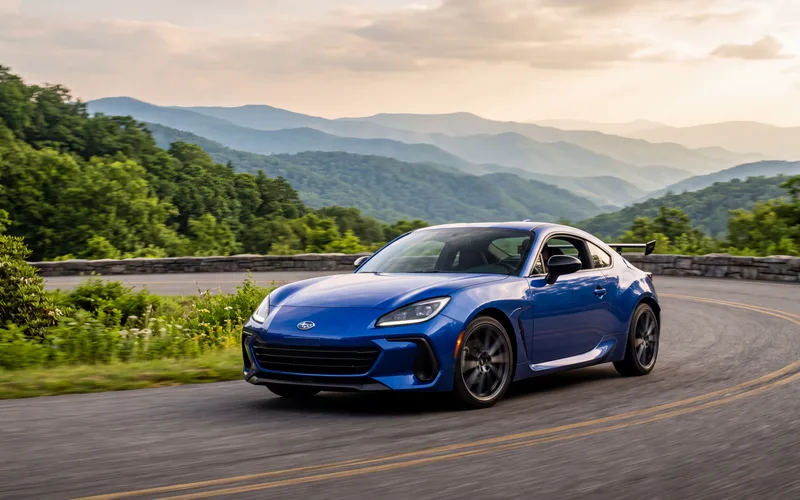 Subaru BRZSports CarBetter at: Ride comfort
It is the same car underneath with a marginally softer ride, so it comes down to which dealer and which residual value you prefer.
Compare 2.47C+
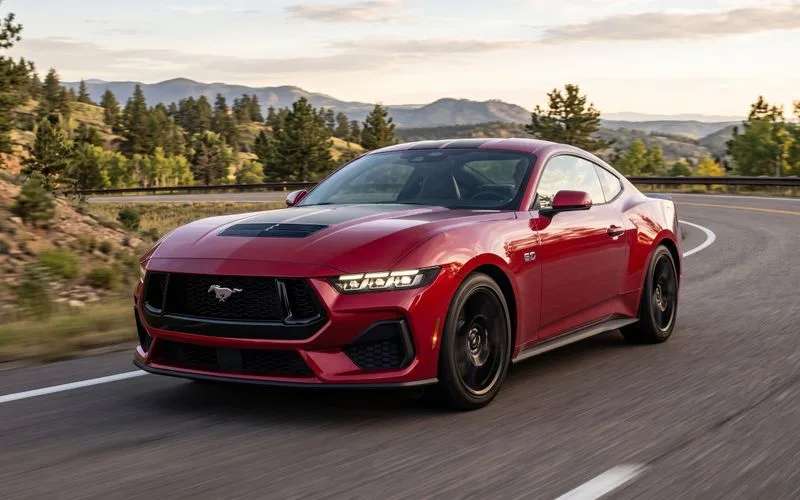 Ford MustangSports CarBetter at: Power and space
For similar money it offers far more power, a usable trunk, and a much wider range of engines and trims.
Compare 1.92C-
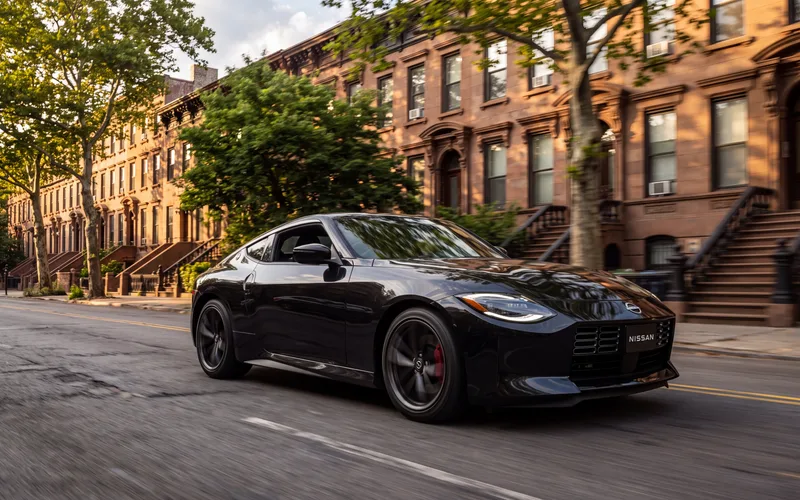 Nissan ZSports CarBetter at: Straight-line speed
If 228 hp feels thin, the Z's 400-hp twin-turbo V6 delivers the speed the GR86 never chases.
CompareHow it's evolved
9 scored model years · 2017–2026
Subject scores by year
Hover or tap a score to see what moved it versus the year before. A corner mark flags a big swing.
| Year | Performance | Efficiency | Safety | Space | Cost | Reliability | Tech | Use-case | Driving | Value |
|---|---|---|---|---|---|---|---|---|---|---|
| 2026 | 39 | 14 | 61 | 36 | 82 | 76 | 49 | 36 | 76 | 72 |
| 2025 | 39 | 14 | 61 | 34 | 82 | 76 | 45 | 35 | 76 | 72 |
| 2024 | 39 | 11 | 59 | 35 | 82 | 76 | 49 | 35 | 75 | 75 |
| 2023 | 39 | 11 | 55 | 34 | 81 | 73 | 48 | 33 | 74 | 73 |
| 2022 | 39 | 11 | 55 | 34 | 82 | 70 | 46 | 33 | 74 | 74 |
| 2020 | 34 | 16 | 26 | 34 | 75 | 80 | 27 | 28 | 73 | 54 |
| 2019 | 33 | 16 | 28 | 34 | 75 | 77 | 20 | 27 | 73 | 55 |
| 2018 | 34 | 16 | 25 | 33 | 77 | 77 | 19 | 28 | 74 | 60 |
| 2017 | 33 | 14 | 25 | 34 | 80 | 76 | 17 | 24 | 68 | 61 |
Compare two years
Best fit & conditions
Higher scores mean a better fit for that use case. Learn more about use-case fit →
Subject profile
Academic Probation · NHTSA safety recalls
No NHTSA safety recall is on record for the 2020 Toyota GR86. Other model years of the GR86 have 5 — listed below.
5 recalls on other model years of the GR86 (2017–2019, 2022–2024)
Jul 23, 2024Equipment: other: labelsThe load carrying capacity modification label may display inaccurate added weight values. As such, these vehicles fail to comply with the requirements of Federal Motor Vehicle Safety Standard number 110, "Tire Selection and Rims."
Defect
Gulf States Toyota, Inc. (GST) is recalling certain Toyota 2023 GR Supra, 2024 4 Runner, Corolla, Grand Highlander, Grand Highlander Hybrid, Land Cruiser Hybrid, Tacoma, Tacoma Hybrid, 2023-2024 BZ4X, Corolla Cross Hybrid, GR Corolla, GR86, Highlander, Highlander Hybrid, Prius, Prius Prime, Sequoia Hybrid, Tundra, Tundra Hybrid, Venza Hybrid, 2023-2025 Crown, and 2025 Camry Hybrid vehicles equipped with GST accessories. The load carrying capacity modification label may display inaccurate added weight values. As such, these vehicles fail to comply with the requirements of Federal Motor Vehicle Safety Standard number 110, "Tire Selection and Rims."
Risk
A vehicle with an incorrect maximum capacity weight value may be overloaded, which can increase the risk of a crash.
Remedy
GST will mail new labels to owners, free of charge. Owner notification letters were mailed September 16, 2024. Owners may contact GST customer service at 1-800-444-1074. GST's number for this recall is 24R2.
NHTSA campaign 24V548000 ↗Manufacturer no. 24R233,848 vehicles potentially affected (all models in the campaign)Owners notified Sep 16, 2024Filed by Gulf States Toyota, Inc.Filed as GR86Aug 31, 2023Exterior lighting: turn signalThe rear turn signals may intermittently become inoperative.
Defect
Subaru of America, Inc. (Subaru) is recalling certain 2022 BRZ and Toyota GR86 vehicles. The rear turn signals may intermittently become inoperative.
Risk
Inoperative rear turn signals may not notify other drivers of a turning vehicle, increasing the risk of a crash.
Remedy
Dealers will replace both rear combination lamp assemblies, free of charge. Owner notification letters were mailed January 8, 2024. Subaru owners may contact Subaru's customer service at 1-844-373-6614. Toyota owners may contact Toyota customer service at 1-800-331-4331. Subaru's number for this recall is WRM-23.
NHTSA campaign 23V609000 ↗Manufacturer no. WRM-238,915 vehicles potentially affected (all models in the campaign)Owners notified Jan 8, 2024Filed by Subaru of America, Inc.Filed as GR86Jul 29, 2021Fuel system, gasoline: delivery: fuel pumpThe low-pressure fuel pump inside the fuel tank may fail.
Defect
Subaru of America, Inc. (Subaru) is recalling certain 2019-2020 Ascent, 2018 Forester, 2018-2020 Impreza, Legacy, Outback, 2018-2019 BRZ, WRX, and Toyota 86 vehicles. The low-pressure fuel pump inside the fuel tank may fail.
Risk
Fuel pump failure can cause an engine stall while driving, increasing the risk of a crash.
Remedy
Dealers will replace the low-pressure fuel pump, free of charge. Owner notification letters were mailed September 24, 2021. Subaru and Toyota owners may call customer service at 1-844-373-6614. Subaru's number for this recall is WRG-21.
NHTSA campaign 21V587000 ↗Manufacturer no. WRG-21175,968 vehicles potentially affected (all models in the campaign)Owners notified Sep 24, 2021Filed by Subaru of America, Inc.Filed as 86May 2, 2017Tires: temporary/emergency spare tireThe spare tire air pressure was not adjusted to the proper pressure as stated on the Tire Pressure Label.
Defect
Gulf States Toyota, Inc. (Gulf States) is recalling certain 2017 4Runner , 86, Avalon, Camry, Camry Hybrid, Corolla, Corolla iM, Highlander, Highlander Hybrid, Prius, Prius C, RAV4, RAV4 Hybrid, Sienna and Yaris vehicles. The spare tire air pressure was not adjusted to the proper pressure as stated on the Tire Pressure Label.
Risk
A spare tire that is not inflated to the proper value may not perform as intended, increasing the risk of a crash.
Remedy
Gulf States will notify owners, and dealers will inspect the spare tires, adjusting their pressure as necessary, free of charge. The recall began June 15, 2017. Owners may contact Gulf States customer service at 1-800-444-1074. Toyota's number for this recall is 17R2.
NHTSA campaign 17V295000 ↗Manufacturer no. 17R2409 vehicles potentially affected (all models in the campaign)Owners notified Jun 15, 2017Filed by Gulf States Toyota, Inc.Filed as 86Dec 21, 2016Electrical system: ignition · Power train: automatic transmissionVehicles with a push-to-start button or manual transmission are not affected. In the affected vehicles, it may be possible to remove the ignition key without the transmission being in the "Park" position. As such, these vehicles fail to conform to the requirements of Federal Motor Vehicle Safety Standard number 114, "Theft Protection and Rollaway Prevention."
Defect
Toyota Motor Company (Toyota) is recalling certain model year 2017 Toyota 86 vehicles manufactured July 1, 2016 through August 11, 2016 equipped with an automatic transmission and ignition key. Vehicles with a push-to-start button or manual transmission are not affected. In the affected vehicles, it may be possible to remove the ignition key without the transmission being in the "Park" position. As such, these vehicles fail to conform to the requirements of Federal Motor Vehicle Safety Standard number 114, "Theft Protection and Rollaway Prevention."
Risk
If the key can be removed from the ignition when the transmission is not in the "Park" position, the vehicle could roll away increasing the risk of a crash and occupant or pedestrian injuries.
Remedy
Toyota will notify owners, and dealers will inspect the ignition key/transmission interlock wiring connections, correcting them as necessary, free of charge. The recall began in January 31, 2017. Owners may contact Toyota customer service at 1-800-331-4331. Toyota's number for this recall is G0E.
NHTSA campaign 16V920000 ↗Manufacturer no. G0E94 vehicles potentially affected (all models in the campaign)Owners notified Jan 31, 2017Filed by Toyota Motor Engineering & ManufacturingFiled as 86
Source: NHTSA Office of Defects Investigation recall database, model years 2017–2026. Recalls are listed by model year as the manufacturer filed them; whether a specific car is affected depends on its VIN — check a VIN at nhtsa.gov ↗. NHTSA model names matched to this page: 86, GR86.
Detailed scoring by subject
1Performance & PowertrainGrades near the bottom of the scale.0.21F
In 2020 this nameplate was the first-generation (ZN6) Toyota 86, not yet the GR86. It used the 2.0L FA20 naturally aspirated boxer-four, rated 205 hp with the volume 6-speed manual and 200 hp with the automatic, on the 86, 86 GT and the Hakone Edition alike. 2020 is a carry-over year for the powertrain: the 205 hp manual rating dates from the 2017 update, and the year's only news was the Hakone Edition appearance package.
156 lb-ft is at the bottom of the coupe field, and it peaks very high in the rev range. That late peak is the FA20's best-known weakness, and the next-generation 2.4L moved its peak down to 3,700 rpm to fix it. The automatic is rated 151 lb-ft.
Toyota's 6.4 s claim for the manual is used as the conservative, comparable figure, the same approach as the later GR86 years. Car and Driver's instrumented 2020 86 GT run came in slightly quicker at 6.2 s and a 14.8 s quarter-mile at 94 mph. That is roughly 0.8 s behind the 2.4L GR86 that replaced it.
The FA20 responds sharply and has no turbo lag. But it is coarse and droney, and its well-known mid-range torque dip around 4,000 rpm means the car has to be revved hard to make progress. Reviewers routinely criticize its sound and lack of low-end flexibility. It rates a notch below the 2.4L GR86 (55), which fixed the torque dip.
The standard close-ratio 6-speed manual is the volume and enthusiast choice. It has short, mechanical throws and pedals well placed for heel-and-toe, and its gearing keeps the peaky engine in its powerband. The optional 6-speed automatic with paddles is competent but blunts the car. This rates slightly below the second-generation car's revised shifter (84).
The 86 is rear-wheel drive only on every 2020 trim (86, GT, Hakone Edition), with no AWD configuration offered. That suits the car's purpose but scores at the bottom of this rubric. The limited-slip differential is partial mitigation.
There is one engine, the 2.0L naturally aspirated boxer, across all three 2020 trims. The only choice is the 6-speed manual or the 6-speed automatic, and the automatic is even slightly down on power. No turbo, hybrid or electrified variant is offered.
2Efficiency & RangeThe GR86's lowest-graded category.0.00F
The EPA combined rating for the volume 6-speed-manual 2020 Toyota 86 (2.0L FA20) is 24 MPG. That is 2 MPG better than the 2.4L GR86 that replaced it, but still near the bottom of the gas-coupe band. It has no stop-start or hybrid assist. The automatic's taller gearing is worth 3 MPG.
This is the EPA city rating for the volume manual. A high-revving naturally aspirated engine with a high torque peak gains little in stop-and-go traffic.
This is the EPA highway rating for the volume manual, just above the floor of the coupe highway band. The automatic's overdrive gearing adds 4 MPG on the highway cycle.
EPA publishes no range for gasoline vehicles (record 41950 lists range 0), so this figure is calculated from the 13.2-gallon tank and the EPA combined rating for the volume manual. The small tank keeps the car near the bottom of the band. Confidence is MEDIUM because the figure is a calculation, not a published rating.
A 24 MPG combined rating plus EPA's premium-fuel price assumption puts the volume manual above the top of the coupe cost band, so the item bottoms out. The figure tracks EPA's current fuel-price assumption as much as it tracks the car.
The FA20 is specified for premium unleaded, and EPA rates both transmissions on premium gasoline. That puts the car in the 'premium required' band. It sits at the top of that band because nothing exotic is involved: no E85, diesel or charging setup.
3SafetyOne of the GR86's weakest categories.0.00F
NHTSA never ran the full five-star program on the first-generation 86/BRZ twins, so the 2020 Toyota 86 has no overall rating; the 4-star frontal result is used as the best available proxy.
Good in moderate overlap, side, roof strength and head restraints, with an Acceptable driver-side small overlap result (dummy's head slid off the airbag); no passenger-side small overlap test and no award, since no front crash prevention was offered.
The 2020 Toyota 86 (86, GT, GT Black, Hakone Edition) offered no AEB, forward collision warning, adaptive cruise, lane keeping, blind-spot or rear cross-traffic system at any trim — Toyota Safety Sense was never fitted to the first-generation 86. A backup camera is the only aid.
No AEB or forward collision warning was offered on any 2020 86, so there is no performance to rate.
Neither blind-spot monitoring nor rear cross-traffic alert was standard or optional on any 2020 86 trim.
No lane departure warning or lane keep assist was available on the first-generation 86 in any model year.
Only conventional cruise control was fitted; adaptive cruise arrived with the second-generation GR86 (automatic only, 2023+).
No hands-free driving system was offered; the car lacked even the ACC and lane-keeping prerequisites.
LED headlights were standard on every trim after the 2017 refresh, but IIHS never published a headlight rating for the 2020 86 and no automatic high beams were offered, so the hardware is competent but unverified and non-adaptive.
A low cowl and thin pillars give good forward and side sightlines, but the shallow fastback rear window limits the view rearward, offset only by a standard backup camera with no blind-spot assist.
Two rear positions carry full LATCH hardware, but IIHS rates it Marginal because the lower anchors sit too deep in the seat, and the cramped 2+2 rear is reached only by folding the front seats of a two-door coupe.
4Space & ComfortGrades near the bottom of the scale.0.21F
MY2020 is the last full year of the first-generation (ZN6) car, still sold as the 'Toyota 86'; the GR86 name arrived with the 2022 redesign. It is a 2+2 coupe, so four seats in name, but the rear pair is for emergencies, which puts it at the floor of the coupe band. The body carries over unchanged from 2019.
Front headroom is low, as expected under a low sports-coupe roofline. 2020 is a carry-over body with figures identical to the 2017–2019 cars and the Subaru BRZ twin.
Front legroom is mid-pack for the coupe segment, and tall drivers fit with the seat set low.
On paper, 35.0 in of rear headroom is mid-pack among coupes, but the sloping roof makes it hard to use for adults.
29.9 in of rear legroom is very tight in absolute terms, and the seat is unusable behind a tall front occupant. It still sits about mid-band against other 2+2 coupes with similarly token rear seats.
The trunk is small, near the bottom of the coupe band. A one-piece fold-down rear seatback opens a pass-through that famously fits four track tires.
Interior storage is sparse: small door pockets, a shallow console bin, a small glovebox and awkwardly placed cupholders. The fold-down rear seatback is the one practical trick. Nothing changed for 2020.
The sport bucket front seats are well bolstered and supportive for spirited driving, but firmly padded and manually adjusted. The GT and Hakone Edition add leather bolsters with Alcantara or Grandlux inserts and two-stage heating. The rear seats are unusable for adults beyond very short trips.
The ride is firm and busy over broken pavement, a deliberate trade for sharp handling. The optional TRD Handling Package's SACHS dampers and 18-in wheels stiffen it further, but the volume car keeps the standard setup.
Thin sound deadening lets in plenty of road and wind noise, and the boxer engine is loud and coarse at highway speeds. The cabin is notably loud even for the segment.
The base 86 gets manual air conditioning and no heated seats. Dual-zone automatic climate control and two-stage heated front seats are reserved for the GT and Hakone Edition. There is no heated steering wheel, remote start or ventilation on any grade.
5Cost of OwnershipOne of the GR86's strongest categories.3.06B
For 2020 the car was still sold as the first-generation Toyota 86 (the GR86 name arrived with the 2022 second generation); the base manual coupe is the cheapest configuration, up from $27,585 delivered in 2019.
The GT (leather/Alcantara heated seats, push-button start, rear spoiler) is taken as the typically-equipped volume configuration; GT manual price derived from the published $29,910 GT automatic less the $720 automatic premium.
Mechanically unchanged from 2019: simple naturally aspirated FA20 boxer and RWD drivetrain keep costs moderate, and the first two years of scheduled service are covered by ToyotaCare.
The 86/GR86 nameplate holds value far better than the sports-car average; the first-generation 86 is estimated somewhat below the current GR86's outlier figure, consistent with the 2019 model year.
Standard Toyota basic coverage, at the short end of the segment band.
Standard Toyota powertrain coverage, at the short end versus rivals offering 10-year terms.
ToyotaCare covers factory scheduled maintenance for 2 years/25,000 miles plus 2 years of unlimited-mileage 24-hour roadside assistance — an advantage over the Subaru BRZ twin, which includes none; the later GR86's NASA track-membership perk did not yet exist.
$30,145 volume-trim price minus its estimated resale value after 5 years (72% retained, or about $21,704) leaves about $8,441 in depreciation. Add the projected $5,500 in 5-year maintenance and repairs, and owning this vehicle for 5 years costs about $13,941 in total.
6Reliability & QualityThe GR86's best-graded category.3.41B+
The 2020 Toyota 86 (sold as the '86', not yet the GR86) is a late carry-over year of the first-generation ZN6 twin of the Subaru BRZ, which ran until the second generation arrived for 2022. It uses a naturally aspirated boxer engine with a conventional 6-speed manual or 6-speed automatic, and has no turbo, CVT or hybrid hardware. Owner reliability ratings are above average, but there is no formal J.D. Power predicted-reliability score to confirm them.
In 2020 Toyota was in the top five of J.D. Power's dependability study and near the top of Consumer Reports' brand reliability rankings, and it collected more segment awards than any other brand. The car is engineered and built by Subaru, so the Toyota badge somewhat overstates its share in the brand's record.
NHTSA's recall database lists no campaigns at all for the 2020 Toyota 86. The Denso low-pressure fuel pump recall (21V587000) covers only the 2018–2019 86, and the valve-spring and interlock campaigns hit earlier years. Known TSB-level issues are minor: high-pressure fuel pump chirp and clutch release-bearing noise.
By 2020 the naturally aspirated 2.0L FA20 (4U-GSE) and the Aisin 6-speed transmissions had eight model years of fleet history with no widespread failure pattern. The turbo FA20DIT's ringland problems do not apply to this engine. Minor known issues are a high-pressure fuel pump chirp and synchro wear when the car is driven hard.
The cabin is the 86's consistent weak point for reviewers. Hard, scratchy plastics cover the doors and lower dash, and the switchgear feels basic. The GT trim's suede-trimmed dash and the 2020 Hakone Edition's tan upholstery help only partly.
Owner reviews and forums for this generation show no pattern of panel-gap, rattle or assembly complaints, and the Subaru Gunma plant had built the car since 2012. This score rests on the absence of complaints, because no model-specific initial-quality score was found.
The 86 was sold and serviced through Toyota's network of roughly 1,200 US dealers, one of the densest in the country. Its mechanicals are Subaru-designed, but the car's routine service is ordinary Toyota dealer work.
The 86/BRZ/FR-S platform has one of the largest aftermarket ecosystems of any modern sports car, and parts are shared across three badges, so they are cheap and plentiful. Routine maintenance and repair costs are in line with mainstream compacts.
7Technology & InfotainmentOne of the GR86's weakest categories.0.00F
Every 2020 86 grade uses a new 7-inch Multimedia Audio touchscreen. The size is unchanged from 2019 and sits at the floor of the coupe band.
2020 brought a new head unit. Its native interface is still small and basic, and it trades the volume knob for buttons, but CarPlay and Android Auto now let owners bypass it. That makes daily use far better than the Pioneer-sourced 2019 unit. Physical climate controls remain.
Apple CarPlay and Android Auto are standard on every 2020 grade, new for the year, but only by USB cable. Wireless projection is not offered.
There is no native navigation on the 2020 unit, and its own voice control is limited to Bluetooth phone functions. Siri and Google Assistant voice and navigation apps are available through phone projection.
An eight-speaker system with Clari-Fi compressed-audio restoration is standard on every grade, which is respectable for the price. No premium upgrade is offered.
The gauges are analog, led by a large central tachometer. The GT and Hakone Edition add a 4.2-inch TFT multi-information display with a G-meter, power curves and temperatures; the base car gets a simpler readout.
The 2020 86 has no over-the-air update capability; its head unit and vehicle software are updated by the dealer only.
There is no embedded telematics and no Toyota companion-app remote function (remote start, lock, locate) for the Subaru-built 86.
Device power is a single USB-A media and charging port plus a 12V outlet. There is no USB-C, no wireless charging pad and no rear-seat power.
The base 86 uses remote keyless entry and a turn key. Smart-key proximity entry with push-button start is standard on the GT and Hakone Edition, and no grade offers remote start or phone-as-key.
A low-resolution backup camera shown on the 7-inch screen is the only parking aid, with no sensors or surround view on any grade.
No head-up display is offered on any 2020 86 grade.
8Use-Case FitGrades near the bottom of the scale.0.00F
Two doors, a cramped rear-seat opening and 29.9 in of rear legroom make car-seat installation and daily loading of kids genuinely difficult. The outboard LATCH anchors exist but are a struggle to use.
IIHS crash results for the shared 86/BRZ body are decent, but no 2020 grade offers AEB, blind-spot monitoring, lane assist or adaptive cruise, and NHTSA never assigned an overall star rating.
Near-unusable rear seats, a 6.9 cu ft trunk, a loud cabin and no rear amenities leave no realistic road-trip capacity for four.
The small footprint, light clutch and good forward sightlines make it easy to place in traffic, and standard CarPlay/Android Auto (new for 2020) makes phone navigation simpler on the commute. The firm ride, noisy cabin, low seating and manual-majority mix still add fatigue in stop-and-go driving.
EPA ratings of 24 mpg combined for the manual and 27 for the automatic are about average for a sports coupe. Premium fuel is recommended, while Toyota maintenance and insurance costs stay modest.
A compact footprint of about 167 in, a 36.1 ft turning circle and a standard backup camera make it easy to park. The low seating and lack of sensors are minor drawbacks.
There is no tow rating, cargo space is negligible and ground clearance is low, so it has essentially no work capability.
This low-slung sports coupe has no work or fleet track record. The low score reflects that the use case does not apply, not a specific fragility.
It has no tie-downs, bed, onboard power or upfit ecosystem, and negligible cargo space.
Supportive front seats and a 13.2-gal tank give roughly 315 miles of highway range with the manual, and phone-projected navigation now helps on trips. The firm ride, intrusive road and engine noise, and lack of adaptive cruise or any driver assist still make long hauls tiring.
Rear-wheel drive only, about 4.9 in of ground clearance, and no roof rails or tow rating leave it pavement-bound. A dealer roof-rack accessory is about the only provision.
The fold-down rear seatback opens a long pass-through, famously big enough for a set of four spare wheels and tires, but the 6.9 cu ft trunk, small opening and lack of roof rails or hitch limit what it can carry.
9Driving ExperienceOne of the GR86's strongest categories.2.98B-
A low centre of gravity, 53/47 weight split, roughly 2,800 lb curb weight, a standard limited-slip differential and strut-tower bracing give sharp, adjustable, well-balanced handling. It is a benchmark among affordable RWD coupes, despite modest-grip tires on the volume car. New for 2020, an optional TRD Handling Package for manual cars adds SACHS dampers and Michelin Pilot Sport 4 tires.
The quick, naturally weighted electric steering, at 2.48 turns lock to lock, is precise and unusually communicative. Reviewers consistently single it out as a highlight.
The standard ventilated discs give linear, firm pedal feel and good stopping power for a light car. Brembo brakes with 12.83-in front rotors come only in the optional TRD Handling Package, not on the volume trim.
The naturally aspirated FA20 responds crisply with no lag. However, a well-documented torque dip around 4,000 rpm disrupts its delivery, and the engine must be revved hard to make progress. The engine carries over unchanged for 2020.
The flat-four has some character, helped by a sound tube that pipes induction noise into the cabin, but it turns coarse and thrashy at high rpm and drones at highway cruise.
Toyota's published 36.1 ft turning circle is on the tight side of the coupe band, where lower is better.
A low hip point, a small-diameter wheel with tilt and telescope, and well-placed pedals for heel-toe give an excellent sports-car driving position. The low roof complicates entry, exit and the over-shoulder view, and the new head unit's button-only volume control is a small step back.
The enthusiast press widely regards it as one of the purest, most engaging affordable sports cars on sale. It is light, balanced and playful at legal speeds, and the new TRD Handling Package sharpens it further for buyers who want it.
10Value & Market PositionGrades below the middle of the scale.1.59D
The base 86 includes a Torsen limited-slip differential, LED headlights, 7-inch touchscreen with backup camera and 17-inch wheels for about $28,000 delivered; there is no driver-assist suite on the manual car, and heated seats and push-button start still require the GT.
Still one of the cheapest manual RWD sports coupes on sale and roughly $15,000+ under the new 2020 GR Supra, but its 205 hp trails the similarly priced Mustang EcoBoost and Camaro on power per dollar, and the price crept up again for 2020.
Three trims (base, GT, limited Hakone Edition), each with manual or automatic, but a single engine, single body and RWD only — a narrow lineup typical of the niche.
A low-volume niche seller in steep decline late in its generation — down about 27% from 2019 — and outsold even by the far pricier GR Supra in its first months on sale.
Toyota's reputation for durability and resale supports the car, and the 86 carries an AE86-derived enthusiast following, though the Toyota badge itself is not an aspirational sports-car brand.
Falling sales in the final years of the generation and the pandemic-year market gave dealers room to discount the 86, but no specific 2020 manufacturer incentive records were retrieved.
2020 is the eighth model year of the first generation (launched for 2013, lightly refreshed for 2017); the second-generation BRZ debuted in November 2020 and the all-new GR86 followed for 2022, so redesign risk was imminent.
Reviewers still praised its balance, steering and slick manual, but consistently faulted the underpowered, coarse FA20 and its midrange torque dip; by 2020 it was an enthusiast favorite rather than a comparison-test winner.