
The verdict
A mixed-report compact hatchback, strong on efficiency and held back by performance.
The 2025 Prius is the efficiency benchmark, and it's now good-looking and quick enough that you aren't giving much up for it. It returns 52 MPG combined on the volume XLE (57 on the base LE), carries Toyota's reliability and resale record, and earned a 2025 IIHS Top Safety Pick+. The trade-offs come from the swoopy shape: a tight back seat, poor rear visibility and a cabin that gets loud on the highway. If you mostly carry one or two people and want low running costs, it's very hard to beat.
Jump to scoresStrengths
- Fuel economy no gas hatchback can touch
- Top-tier crash protection and standard safety tech
- Reliability you can bank on
What holds it back
- Cramped back seat
- Noisy at highway speed
- The good tech is saved for the Limited
Top alternatives
Cars shoppers cross-shop with the Toyota Prius 2.46C+
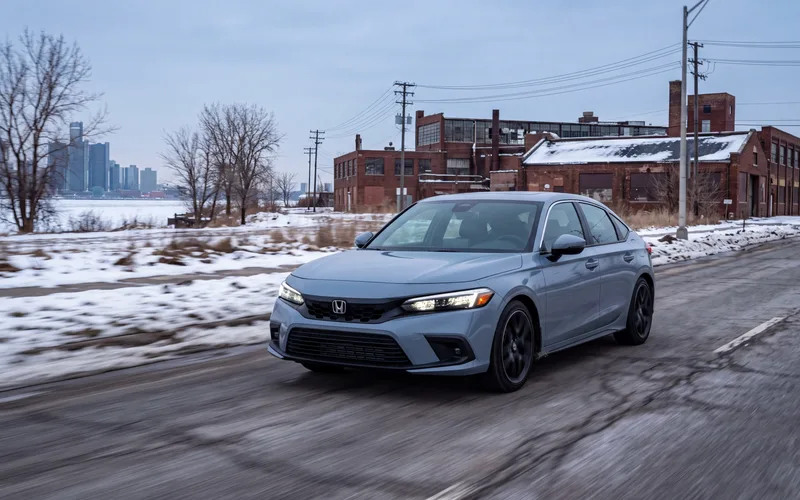 Honda Civic HatchbackCompact HatchbackBetter at: Rear-seat space
It is the same idea with a usable back seat and better visibility, at a small fuel-economy cost, and reviewers now rate the Civic Hybrid above the Prius overall.
Compare 2.25C
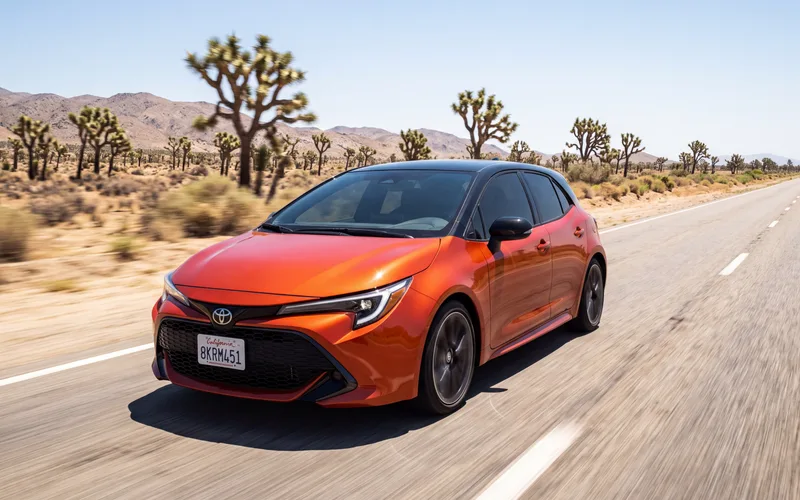 Toyota Corolla HatchbackCompact HatchbackBetter at: Purchase price
About $4,000 less up front with the same Toyota reliability and warranty, for buyers whose annual mileage never repays the hybrid premium.
Compare 2.57C+
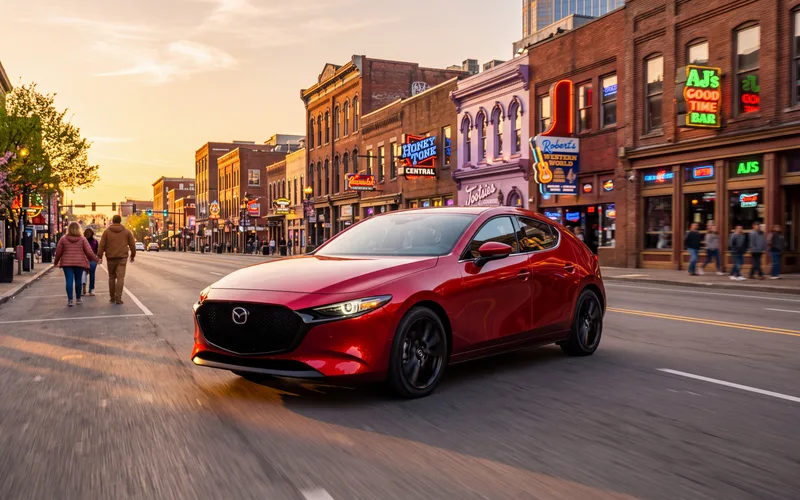 Mazda Mazda3 HatchbackCompact HatchbackBetter at: Driving feel
A far more engaging car with a genuinely premium-feeling cabin and available all-wheel drive, if you can live with roughly double the fuel bill.
CompareHow it's evolved
10 scored model years · 2017–2026
Subject scores by year
Hover or tap a score to see what moved it versus the year before. A corner mark flags a big swing.
| Year | Performance | Efficiency | Safety | Space | Cost | Reliability | Tech | Use-case | Driving | Value |
|---|---|---|---|---|---|---|---|---|---|---|
| 2026 | 40 | 93 | 79 | 59 | 67 | 82 | 63 | 59 | 69 | 71 |
| 2025 | 40 | 92 | 79 | 59 | 67 | 82 | 63 | 59 | 68 | 73 |
| 2024 | 40 | 92 | 78 | 59 | 67 | 80 | 63 | 59 | 69 | 75 |
| 2023 | 40 | 92 | 80 | 58 | 68 | 82 | 63 | 59 | 69 | 73 |
| 2022 | 23 | 92 | 68 | 66 | 71 | 85 | 44 | 57 | 56 | 56 |
| 2021 | 24 | 92 | 70 | 67 | 72 | 86 | 45 | 59 | 60 | 61 |
| 2020 | 25 | 92 | 71 | 66 | 74 | 85 | 41 | 59 | 62 | 62 |
| 2019 | 25 | 92 | 67 | 65 | 74 | 83 | 34 | 58 | 62 | 63 |
| 2018 | 18 | 92 | 68 | 64 | 70 | 81 | 35 | 56 | 60 | 66 |
| 2017 | 18 | 92 | 71 | 66 | 68 | 83 | 34 | 57 | 61 | 69 |
Compare two years
Best fit & conditions
Higher scores mean a better fit for that use case. Learn more about use-case fit →
Subject profile
Trims & configurations
4 trimsScores above reflect the volume trim. Per-trim specs and scores are rolling out — the full lineup:
Academic Probation · NHTSA safety recalls
Jan 28, 2026Electrical system: wiring: switches/knobs/buttons · Latches/locks/linkages: doors: latchWater may enter the rear door switch and cause a short circuit, allowing an unlocked rear door to open unexpectedly.
Defect
Toyota Motor Engineering & Manufacturing (Toyota) is recalling certain 2023-2024 Prius Prime, 2023-2026 Prius, and 2025-2026 Prius Plug-in Hybrid vehicles. Water may enter the rear door switch and cause a short circuit, allowing an unlocked rear door to open unexpectedly.
Risk
A door that unexpectedly opens while the vehicle is moving increases the risk of injury.
Remedy
Dealers will modify the rear door switch circuits, free of charge. Owner letters were mailed July 13, 2026. Owners may contact Toyota's customer service at 1-800-331-4331. Toyota's numbers for this recall are 26TB03 and 26TA03. This recall expands and replaces NHTSA recall number 24V274. Vehicles repaired under the previous recall will need to have the new remedy performed.
NHTSA campaign 26V049000 ↗Manufacturer no. 26TB03 / 26TA03141,286 vehicles potentially affected (all models in the campaign)Owners notified Jul 13, 2026Filed by Toyota Motor Engineering & ManufacturingFiled as PRIUS, PRIUS PLUG-IN HYBRID, PRIUS PRIMEOct 30, 2025Back over prevention: display functionPlease see the recall report for a complete list of models. A software error may cause the rearview camera to freeze or display a blank screen when the vehicle is in reverse. As such, these vehicles fail to comply with the requirements of Federal Motor Vehicle Safety Standard (FMVSS) number 111, "Rear Visibility."
Defect
Toyota Motor Engineering & Manufacturing (Toyota) is recalling certain 2022-2026 Toyota, Lexus, and Subaru Solterra vehicles equipped with a Panoramic View Monitor (PVM) system. Please see the recall report for a complete list of models. A software error may cause the rearview camera to freeze or display a blank screen when the vehicle is in reverse. As such, these vehicles fail to comply with the requirements of Federal Motor Vehicle Safety Standard (FMVSS) number 111, "Rear Visibility."
Risk
A rearview camera that fails to display an image can reduce the driver's view behind the vehicle, increasing the risk of a crash.
Remedy
Dealers will update the parking assist software, free of charge. Owner letters were mailed January 2, 2026. Owners may contact Toyota's customer service at 1-800-331-4331. Toyota's numbers for this recall are 25TB13 and 25LB06. Subaru's number for this recall is WRE25.
NHTSA campaign 25V744000 ↗Manufacturer no. 25TB13/25LB06/WRE251,024,407 vehicles potentially affected (all models in the campaign)Owners notified Dec 5, 2025Filed by Toyota Motor Engineering & ManufacturingFiled as PRIUS, PRIUS PLUG-IN HYBRID, PRIUS PRIME
9 recalls on other model years of the Prius (2017–2020, 2022–2024)
Jul 23, 2024Equipment: other: labelsThe load carrying capacity modification label may display inaccurate added weight values. As such, these vehicles fail to comply with the requirements of Federal Motor Vehicle Safety Standard number 110, "Tire Selection and Rims."
Defect
Gulf States Toyota, Inc. (GST) is recalling certain Toyota 2023 GR Supra, 2024 4 Runner, Corolla, Grand Highlander, Grand Highlander Hybrid, Land Cruiser Hybrid, Tacoma, Tacoma Hybrid, 2023-2024 BZ4X, Corolla Cross Hybrid, GR Corolla, GR86, Highlander, Highlander Hybrid, Prius, Prius Prime, Sequoia Hybrid, Tundra, Tundra Hybrid, Venza Hybrid, 2023-2025 Crown, and 2025 Camry Hybrid vehicles equipped with GST accessories. The load carrying capacity modification label may display inaccurate added weight values. As such, these vehicles fail to comply with the requirements of Federal Motor Vehicle Safety Standard number 110, "Tire Selection and Rims."
Risk
A vehicle with an incorrect maximum capacity weight value may be overloaded, which can increase the risk of a crash.
Remedy
GST will mail new labels to owners, free of charge. Owner notification letters were mailed September 16, 2024. Owners may contact GST customer service at 1-800-444-1074. GST's number for this recall is 24R2.
NHTSA campaign 24V548000 ↗Manufacturer no. 24R233,848 vehicles potentially affected (all models in the campaign)Owners notified Sep 16, 2024Filed by Gulf States Toyota, Inc.Filed as PRIUS, PRIUS PRIMEApr 17, 2024Electrical system: wiring: switches/knobs/buttons · Latches/locks/linkages: doors: latchWater may enter the rear door switch and cause a short circuit, allowing an unlocked rear door to open unexpectedly.
Defect
Toyota Motor Engineering & Manufacturing (Toyota) is recalling certain 2023-2024 Prius and Prius Prime vehicles. Water may enter the rear door switch and cause a short circuit, allowing an unlocked rear door to open unexpectedly.
Risk
A door that unexpectedly opens while the vehicle is moving or during a crash increases the risk of injury.
Remedy
Dealers will replace both right and left rear door opener switches, free of charge. Owner letters were mailed August 9, 2024. Owners may contact Toyota customer service at 1-800-331-4331. Toyota's numbers for this recall are 24TB06 and 24TA06.
NHTSA campaign 24V274000 ↗Manufacturer no. 24TB06 / 24TA0655,690 vehicles potentially affected (all models in the campaign)Owners notified Sep 9, 2024Filed by Toyota Motor Engineering & ManufacturingFiled as PRIUS, PRIUS PRIMESep 22, 2021Engine and engine cooling: engine: engine control module (ecu/ecm): software · Hybrid propulsion systemThe Engine Control Unit (ECU) software may falsely detect an error and shut down the hybrid system, causing a loss of drive power.
Defect
Toyota Motor Engineering & Manufacturing (Toyota) is recalling certain 2022 Prius and Prius Prime vehicles. The Engine Control Unit (ECU) software may falsely detect an error and shut down the hybrid system, causing a loss of drive power.
Risk
A loss of drive power increases the risk of a crash.
Remedy
Dealers will update the ECU software, free of charge. Owner notification letters were mailed November 18, 2021. Owners may contact Toyota customer service at 1-800-331-4331. Toyota's number for this recall is 21TB07/21TA07.
NHTSA campaign 21V734000 ↗Manufacturer no. 21TB07 / 21TA078,411 vehicles potentially affected (all models in the campaign)Owners notified Nov 18, 2021Filed by Toyota Motor Engineering & ManufacturingFiled as PRIUS, PRIUS PRIMEDec 11, 2019Electrical system: instrument cluster/panelAn electrical short circuit in the combination meter could occur, causing the speedometer, the odometer, and the fuel gauge to go blank. As such, these vehicles fail to comply with the requirements of Federal Motor Vehicle Safety Standard (FMVSS) number 101, "Controls and Displays."
Defect
Toyota Motor Engineering & Manufacturing (Toyota) is recalling certain 2019 Prius vehicles. An electrical short circuit in the combination meter could occur, causing the speedometer, the odometer, and the fuel gauge to go blank. As such, these vehicles fail to comply with the requirements of Federal Motor Vehicle Safety Standard (FMVSS) number 101, "Controls and Displays."
Risk
A blank main display will not show important information like vehicle speed or fuel level. Driving with an inoperative display can increase the risk of a crash.
Remedy
Toyota will notify owners, and dealers will inspect the flash memory chip (ROM) production date, and if necessary, replace it along with the combination meter circuit board, free of charge. The recall began February 7, 2020. Owners may contact Toyota customer service at 1-888-270-9371. Toyota's numbers for this recall are 19TA21 and 19TB21.
NHTSA campaign 19V876000 ↗Manufacturer no. 19TA21 / 19TB213,751 vehicles potentially affected (all models in the campaign)Owners notified Feb 7, 2020Filed by Toyota Motor Engineering & ManufacturingFiled as PRIUSJul 24, 2019Electronic stability control (esc) · Service brakesThe brake booster pump may fail causing a deactivation of the Vehicle Stability Control system and a loss of braking assist. As such, these vehicles fail to comply with the requirements of Federal Motor Vehicle Safety Standard (FMVSS) number 126, "Electronic Stability Control Systems."
Defect
Toyota Motor Engineering & Manufacturing (Toyota) is recalling certain 2019 Lexus LS500, LC500, ES300h, UX250h, LS500h, Toyota Prius, RAV4 HV, 2019-2020 Toyota Prius Prime, and 2020 Corolla HV vehicles. The brake booster pump may fail causing a deactivation of the Vehicle Stability Control system and a loss of braking assist. As such, these vehicles fail to comply with the requirements of Federal Motor Vehicle Safety Standard (FMVSS) number 126, "Electronic Stability Control Systems."
Risk
Deactivation of the vehicle stability control system or a loss of braking assist increases the risk of a crash.
Remedy
Toyota will notify owners, and dealers will inspect and, if necessary, replace the brake booster pump, free of charge. The recall began September 20, 2019. Toyota owners may contact Toyota customer service at 1-888-270-9371 and Lexus owners may contact Lexus customer service at 1-800-255-3987. Toyota's numbers for this recall are K1L/K0L. Lexus' numbers for this recall are K2F/KLF.
NHTSA campaign 19V544000 ↗Manufacturer no. K1L/K0L, K2F/KLF6,925 vehicles potentially affected (all models in the campaign)Owners notified Sep 20, 2019Filed by Toyota Motor Engineering & ManufacturingFiled as PRIUS, PRIUS PRIMEMar 27, 2019Equipment: other: labelsThe text on the load capacity label may become illegible. As such, these vehicles fail to comply with the requirements of Federal Motor Vehicle Safety Standard (FMVSS) number 110, "Tire Selection and Rims."
Defect
Gulf States Toyota (GST) is recalling certain 2019 C-HR, 4Runner, Avalon, Avalon Hybrid, Camry, Camry Hybrid, Highlander, Land Cruiser, Prius, RAV4, Sequoia, Tacoma, Sienna, Tundra and Yaris vehicles. The text on the load capacity label may become illegible. As such, these vehicles fail to comply with the requirements of Federal Motor Vehicle Safety Standard (FMVSS) number 110, "Tire Selection and Rims."
Risk
If the driver cannot read the label, they may unknowingly overload the vehicle, increasing the risk of a crash.
Remedy
GST will notify owners, and dealers will provide corrected load carrying capacity modification labels, free of charge. The recall began May 24, 2019. Owners may contact GST customer service at 1-800-444-1074. GST's number for this recall is 19R1.
NHTSA campaign 19V244000 ↗Manufacturer no. 19R13,634 vehicles potentially affected (all models in the campaign)Owners notified May 24, 2019Filed by Gulf States Toyota, Inc.Filed as PRIUSSep 5, 2018Electrical system: wiringA portion of the engine wire harness connected to the hybrid Power Control Unit (PCU), could contact the cover at this connection and wear, causing an electrical short circuit.
Defect
Toyota Motor Engineering & Manufacturing (Toyota) is recalling certain 2016-2018 Toyota Prius vehicles. A portion of the engine wire harness connected to the hybrid Power Control Unit (PCU), could contact the cover at this connection and wear, causing an electrical short circuit.
Risk
An electrical short can increase the risk of a fire.
Remedy
Toyota will notify owners, and dealers will inspect the engine wire harness assembly and replace it if damage is found. A protective sleeve or protective tape will be included to prevent any future damage. These repairs will be performed free of charge. The recall began October 30, 2018. Owners may contact Toyota customer service at 1-888-270-9371. Toyota's number for this recall is J0T.
NHTSA campaign 18V579000 ↗Manufacturer no. J0T192,347 vehicles potentially affected (all models in the campaign)Owners notified Oct 30, 2018Filed by Toyota Motor Engineering & ManufacturingFiled as PRIUSMay 2, 2017Tires: temporary/emergency spare tireThe spare tire air pressure was not adjusted to the proper pressure as stated on the Tire Pressure Label.
Defect
Gulf States Toyota, Inc. (Gulf States) is recalling certain 2017 4Runner , 86, Avalon, Camry, Camry Hybrid, Corolla, Corolla iM, Highlander, Highlander Hybrid, Prius, Prius C, RAV4, RAV4 Hybrid, Sienna and Yaris vehicles. The spare tire air pressure was not adjusted to the proper pressure as stated on the Tire Pressure Label.
Risk
A spare tire that is not inflated to the proper value may not perform as intended, increasing the risk of a crash.
Remedy
Gulf States will notify owners, and dealers will inspect the spare tires, adjusting their pressure as necessary, free of charge. The recall began June 15, 2017. Owners may contact Gulf States customer service at 1-800-444-1074. Toyota's number for this recall is 17R2.
NHTSA campaign 17V295000 ↗Manufacturer no. 17R2409 vehicles potentially affected (all models in the campaign)Owners notified Jun 15, 2017Filed by Gulf States Toyota, Inc.Filed as PRIUSOct 14, 2016Parking brakeThe affected vehicles are equipped with a foot-operated parking brake system that has a parking brake cable that may disengage.
Defect
Toyota Motor Engineering & Manufacturing (Toyota) is recalling certain model year 2016-2017 Prius vehicles manufactured August 6, 2015, to October 3, 2016. The affected vehicles are equipped with a foot-operated parking brake system that has a parking brake cable that may disengage.
Risk
If the parking brake cable disengages from the mechanism and the transmission is left in a gear other than 'Park' while the ignition is on and the driver leaves the vehicle, the vehicle may roll unexpectedly, increasing the risk of a crash.
Remedy
Toyota will notify owners, and dealers will install a clip at the parking brake cable end to prevent the cable from disengaging, free of charge. The recall began November 10, 2016. Owners may contact Toyota customer service at 1-888-270-9371. Toyota's number for this recall is G01.
NHTSA campaign 16V741000 ↗Manufacturer no. G0191,585 vehicles potentially affected (all models in the campaign)Owners notified Nov 10, 2016Filed by Toyota Motor Engineering & ManufacturingFiled as PRIUS
Source: NHTSA Office of Defects Investigation recall database, model years 2017–2026. Recalls are listed by model year as the manufacturer filed them; whether a specific car is affected depends on its VIN — check a VIN at nhtsa.gov ↗. NHTSA model names matched to this page: PRIUS, PRIUS PLUG-IN HYBRID, PRIUS PRIME.
Detailed scoring by subject
1Performance & PowertrainThe Prius's lowest-graded category.0.64F
The 2025 Prius, the third model year of the fifth (XW60) generation and a carry-over powertrain year, pairs the 2.0L M20A-FXS with THS 5 for 194 net hp in front-drive form; the rear e-motor lifts AWD models to 196 hp. Strong for a Prius but low in a hatchback band set by hot hatches and performance liftbacks.
Toyota rates the Atkinson-cycle 2.0L at 139 lb-ft and, as with its other hybrids, publishes no net system torque, so the engine figure is the authoritative one. Motor torque makes the car feel livelier off the line than the number suggests, but it sits near the bottom of the hatchback band.
Toyota quotes an estimated 7.2 seconds for front-drive models and 7.0 for AWD, and instrumented tests of this generation land around 7.1 seconds — brisk for an economy hybrid and over three seconds quicker than the fourth generation, but mid-pack in the hatchback band.
In town the hybrid system is seamless — silent EV creep, imperceptible engine restarts and immediate motor-driven response with no turbo lag. Under load the 2.0L gets loud and raspy on freeway merges and highway grades, the one place the drivetrain feels strained.
The planetary-gear eCVT never hunts, shift-shocks or hesitates, which makes everyday driving very clean. It loses points for rubber-band rev flare and drone under full throttle, with no simulated steps.
Electronic On-Demand AWD (E-Four) with a driveshaft-free rear motor is optional on every 2025 hybrid grade — LE, XLE, Nightshade and Limited. It is a traction aid rather than a capability system: small, speed-limited rear motor, no low range or terrain modes (the Snow Extra mode only arrived for 2026).
No gas-only or full-EV Prius, but two genuinely distinct electrified drivetrains: the 194/196-hp hybrid in FWD or AWD, and the 220-hp Prius Plug-in Hybrid with up to 45 miles of EV range. A real choice, but narrower than rivals spanning gas, turbo, hybrid and EV.
2Efficiency & RangeThe Prius's best-graded category.4.00A+
The volume XLE FWD is EPA-rated 52 mpg combined; the LE FWD tops the lineup at 57 and even the least efficient AWD XLE/Limited manages 49 — beyond any non-hybrid compact hatchback.
52 mpg city on the volume XLE and 57 on the LE FWD reflect a hybrid system that runs much of stop-and-go traffic on the motor.
The Prius holds its city figure on the highway — 52 mpg on the XLE FWD, 56 on the LE FWD — thanks to a low-drag body, so the efficiency advantage carries over to road trips.
EPA total range is 588 miles for the FWD XLE/Limited from an 11.3-gallon tank and 644 for the LE FWD; AWD models use a 10.5-gallon tank and drop to 567 (LE) and 514 (XLE/Limited).
EPA estimates $1,300 a year to fuel the volume XLE FWD at 15,000 miles on regular, with the LE FWD at $1,200 — among the cheapest gasoline vehicles to run.
Every 2025 Prius hybrid grade runs on 87-octane regular with no premium recommendation, and as a conventional hybrid it needs no charging equipment at all.
3SafetyOne of the Prius's strongest categories.3.34B+
NHTSA rates the 2025 Prius 5 stars overall, with 5-star frontal and side results and a 4-star rollover rating (10.2% rollover risk) — the same structure carried across the fifth generation.
The 2025 Prius is a 2025 IIHS Top Safety Pick+ under the tougher 2025 criteria, with Good ratings in small overlap driver and passenger, the updated moderate overlap (rear-passenger) test and the updated side test; headlights are the only Acceptable line.
Toyota Safety Sense 3.0 is standard on every 2025 trim — pre-collision with pedestrian/cyclist detection, full-speed-range Dynamic Radar Cruise Control, Lane Departure Alert with steering assist, Lane Tracing Assist, Road Sign Assist, auto high beams and Proactive Driving Assist — and Blind Spot Monitor with Rear Cross-Traffic Alert is also standard lineup-wide.
IIHS rates the standard pre-collision system Good for pedestrian front crash prevention (the TSP+ 2025 requirement, which includes night pedestrian testing). The 2025 model had not yet been evaluated under the updated vehicle-to-vehicle protocol, so the top band is reached on pedestrians only.
Blind Spot Monitor with Rear Cross-Traffic Alert is standard on every 2025 trim, above the segment norm, but it is alert-only — no active blind-spot steering, no safe-exit assist — and the Panoramic View Monitor is reserved for the Limited.
Lane Departure Alert with steering assist and Lane Tracing Assist are standard and generally hold the lane well, but reviewers note it occasionally picks an unnatural line in curves, resists manual inputs, and can be confused by highway ramps.
Full-Speed Range Dynamic Radar Cruise Control with stop-and-go is standard on all trims and pairs with Lane Tracing Assist for competent highway assist; the cruise half is smooth, the centering half carries the curve/ramp wobbles.
No hands-free driving is offered on any 2025 Prius trim; Lane Tracing Assist is a hands-on system and Toyota's Teammate Advanced Drive is not available on the Prius.
IIHS rates the LED projector headlights Acceptable on every trim, with auto high beams standard — consistent across the range with no Marginal variant, but short of a Good rating.
The low roofline, steeply raked windshield with thick A-pillars, heavy C-pillars and small rear window aperture restrict sightlines; the digital rear-view mirror and Panoramic View Monitor that compensate are limited to the Limited trim, not the volume LE/XLE.
IIHS rates LATCH Good+ with two complete outboard positions and center borrowing, and lower anchors sit under easy flaps; the limiter is rear space — 36.4 in headroom under the sloping roof, no practical three-across, and tether anchors that take some digging.
4Space & ComfortOne of the Prius's weakest categories.1.95C-
The 2025 Prius (third model year of the fifth XW60 generation) is a five-passenger liftback on every grade — LE, XLE, the new Nightshade and Limited — in FWD and AWD form.
38.0 in of front headroom is mid-band for a compact hatchback; the same figure is published for every 2025 grade, including the Limited with its fixed glass roof.
43.2 in of front legroom is generous for the class — the stretched 108.3-in wheelbase is spent mostly on the front row.
36.4 in is near the bottom of the hatchback band, and the steeply raked fastback roof makes it play tighter than the number for taller adults.
34.8 in of rear legroom trails compact-hatch benchmarks like the Civic Hatchback (~37 in), and the low rear cushion offers little under-thigh support.
Scored on the volume XLE at 20.3 cu ft behind the rear seat, upper half of the hatchback band; the base LE's different underfloor packaging gives 23.8 cu ft.
Competent hatchback practicality — wide liftback, 60/40 fold with center armrest from XLE, tonneau cover, wireless charging pad from XLE — but shallow console and door bins and no standout storage idea; the low roof also limits load height versus the previous Prius.
Front seats are supportive on long drives, with an 8-way power driver's seat with power lumbar from XLE, but the low, flat rear bench pulls the average into mid-band.
The fifth generation's sportier tuning trades compliance for body control; firm rather than harsh, composed on good roads but busy over broken pavement, particularly on the 19-in wheels of the volume XLE.
Below class expectations: highway wind noise, road noise mixing with hybrid-system thrum, and eCVT drone under hard acceleration — unchanged hardware for 2025.
Heated front seats and heated steering wheel arrive at the volume XLE; ventilated seats, driver memory and the heated-rear-seat option are Limited-only, and there are no rear vents or rear climate zone.
5Cost of OwnershipMid-pack among this car's ten categories.2.51C+
The 2025 LE starts at $28,350 before freight, a modest bump over 2024, and lands in the lower half of the hatchback band despite carrying a 194-hp hybrid powertrain as standard. AWD is a flat $1,400 on every grade.
The mid-grade XLE is where most buyers land — it adds SofTex-trimmed heated seats, a power driver's seat and parking assist without Nightshade or Limited money. Volume-trim identification rests on dealer-mix reporting rather than a published trim split.
The Prius's eCVT, chain-driven Atkinson engine and regen-assisted brakes keep the routine bill to fluids, filters and tires. KBB and Edmunds both project about $5,600 including tires and dealer-rate service, while RepairPal/CarEdge run far lower; the figure blends toward the two major projections.
KBB projects only $12,510 of depreciation over five years on the 2025 Prius, about 42% of its $29,485 starting price, and used-market studies (iSeeCars, CarEdge) show the Prius beating hatchback and hybrid-compact averages. Consistent with the Camry (57%) and Corolla (60%) scorecards.
Toyota's 36-month/36,000-mile basic coverage is the industry floor — level with Honda and Mazda but two years behind Hyundai and Kia.
The headline powertrain term is the standard 5 yr/60,000 mi, at the bottom of the band, though the hybrid-specific parts buyers worry about carry 8 yr/100,000 mi and the traction battery 10 yr/150,000 mi.
ToyotaCare's 2 yr/25,000 mi of factory-scheduled maintenance plus roadside assistance is a genuine multi-year plan that most hatchback rivals don't match (Honda and Mazda offer none, Hyundai 3 yr/36k), and the 2025 car carries connected-service trials (Safety Connect, Service Connect). No meaningful extra perks push it into the top band.
$32,930 volume-trim price minus its estimated resale value after 5 years (58% retained, or about $19,099) leaves about $13,831 in depreciation. Add the projected $4,500 in 5-year maintenance and repairs, and owning this vehicle for 5 years costs about $18,331 in total.
6Reliability & QualityOne of the Prius's strongest categories.3.57A-
The 2025 Prius is a carry-over third year of the fifth-generation (XW60, 2023–) car, and Consumer Reports rates it more reliable than other 2025 cars. That builds on an excellent launch year for 2023. It sits just below the Corolla Hatchback because J.D. Power's owner-reported quality-and-reliability score of 75/100 is good rather than exceptional, and the 2025 plug-in sibling is only about average.
In the model year's window, Toyota is near the top of both major studies. It was third among mass-market brands in J.D. Power's 2025 VDS, well better than the industry average, and it is a perennial top-three brand in Consumer Reports' rankings, taking first in CR's December 2025 rankings.
Recalls are the weak line on an otherwise strong record. The 2025 Prius is covered by the repeated rear-door-switch campaign: water can short the switch and let an unlocked rear door open while driving. Toyota first recalled it as 24V274 and later expanded it to 2023–2026 cars, affecting about 141,000 Priuses, after the original remedy proved insufficient. It also has the generation's rearview-camera freeze software recall. Both are electrical faults rather than structural ones, but a safety recall that came back still puts this well below the Corolla Hatchback.
This is the best-proven powertrain in the segment. The 2025 car keeps the 2.0-liter M20A-FXS Atkinson-cycle four and the fifth-generation Toyota Hybrid System (196 hp FWD), unchanged from 2023. Its planetary power-split eCVT has no belts, clutches or shift elements to wear, and Prius hybrid drivetrains routinely pass 200,000 miles. Early-build EGR-cooler leak reports keep it out of the mid-90s.
The gen-5 cabin is a clear step up from the fourth-generation Prius in design and in the switchgear drivers touch most, and SofTex synthetic leather is standard above the LE. But reviewers consistently note large areas of hard plastic and doors that sound tinny when shut. It sits below the Corolla Hatchback and well behind the class-leading Mazda3.
US-market Priuses are built at Toyota's Tsutsumi plant, which has built the Prius since 2003, and assembly consistency is not a complaint theme for this generation. The flimsy-feeling doors reviewers mention and the body and electrical items in the NHTSA complaint file hold it just under the Corolla Hatchback.
Toyota has one of the densest franchised service networks in the US, with above-average service satisfaction. After 25 years of the nameplate, Prius hybrid service is routine work at any Toyota dealer rather than a specialist job.
Running costs are among the lowest of any car: about $408 a year in repairs and maintenance against a $526 class average, and a deeper independent hybrid-parts ecosystem than any other nameplate. It sits below the Corolla Hatchback because an out-of-warranty traction battery still costs thousands at a dealer, though the 10 yr/150,000 mi battery warranty puts that outside a typical ownership period.
7Technology & InfotainmentMid-pack among this car's ten categories.2.26C
The volume XLE comes with the 8.0-inch Toyota Audio Multimedia unit; the 12.3-inch screen is an option on XLE and Nightshade and standard only on the Limited.
Toyota Audio Multimedia is quick and logically laid out, and the Prius keeps physical climate controls and a volume knob. The 8-inch volume-trim panel is small in its housing and some audio settings are buried.
Wireless Apple CarPlay and Android Auto are standard on every 2025 grade and both screen sizes.
"Hey, Toyota" Intelligent Assistant and Cloud Navigation via Drive Connect are capable, but on the 8-inch volume XLE they require a paid subscription; the 12.3-inch unit includes a trial.
LE, XLE and Nightshade get a basic six-speaker system; the 8-speaker JBL Premium Audio is Limited-only and cannot be added to the volume XLE.
A fully digital 7-inch top-mount cluster with customizable settings is standard on every grade, but it is small and its high mounting can be partly hidden by the wheel rim.
OTA covers the Toyota Audio Multimedia head unit and cloud map data only; there are no whole-vehicle or ADAS updates.
The Toyota app offers remote lock/unlock, remote start and vehicle locate, and Digital Key is available on XLE/Nightshade and standard on Limited. Remote Connect becomes a paid subscription after the trial, and Digital Key needs it.
Six USB-C ports (two front, two console, two rear) are standard on every grade and Qi wireless charging is standard from XLE up; no household AC outlet on the hybrid.
The volume XLE has Smart Key on both front doors and the hatch with push-button start, plus available phone-as-key; the LE gets driver-door proximity entry only, and there is no hands-free liftgate.
Backup camera standard everywhere and Front/Rear Parking Assist with Automatic Braking standard from XLE, but the 360-degree Panoramic View Monitor and Advanced Park are limited to the Limited Premium Package.
No head-up display is offered on any 2025 grade; the fifth generation replaced the prior car's available color HUD with the top-mount cluster.
8Use-Case FitOne of the Prius's weakest categories.1.95C-
Good LATCH hardware and a hatch that swallows a stroller, but the raked roofline and low seat height make leaning in to buckle a child awkward, and 34.8 in of rear legroom leaves little room behind a rear-facing seat.
Top-tier crash credentials and a full standard ADAS suite with blind-spot monitoring, Safe Exit Alert and rear-seat reminder on the base LE that families actually buy.
Luggage for four fits and rear passengers get two USB-C ports, but the back seat is tight under the sloping roof, there are no rear vents, heated rear seats are Limited-only, and highway noise is above average.
Near-ideal in stop-and-go — silent electric creep, light controls, and 194 hp that makes merging easy — held back by a firm ride and poor rearward visibility with no rear wiper.
Class-leading running costs: 52 MPG combined on the volume trim (57 on LE) on regular fuel, around $1,300 a year in fuel, and low routine maintenance helped by regenerative braking.
A 35.4-ft turning circle on the volume XLE and a manageable footprint help, and XLE gets front/rear parking sensors with auto braking, but rear visibility is poor and the 360-degree camera is Limited-only.
Not a work vehicle: no US tow rating and Toyota advises against fitting a hitch; the only asset is a 20.3 cu ft hatch with folding seats.
The hybrid powertrain is about as fleet-proven as anything sold, through decades of taxi and rideshare use, but the body is a low-slung passenger car with no work-grade trim.
Provisions amount to a hatch, folding seats, six USB-C ports and dealer roof racks — no 120V outlet, no tie-down system of note, and no hitch-based upfit path.
Near-600-mile range, supportive front seats and standard full-speed adaptive cruise with lane centering make it an easy mile-eater; wind noise and eCVT drone under load keep it out of the top band.
Electronic On-Demand AWD on every grade helps on snow and wet gravel, but the low body, no tow rating for hitch bike racks, no factory roof rails and no AC outlet keep it pavement-oriented; the 2026 Snow Extra mode had not yet arrived.
A liftback, 60/40 fold and 20.3 cu ft (23.8 on LE) handle normal luggage well, but the raked hatch caps load height, space shrank versus the prior Prius, and no hitch means no cargo-tray fallback.
9Driving ExperienceMid-pack among this car's ten categories.2.57C+
The low center of gravity of the fifth-gen TNGA-C platform gives genuinely composed cornering with little body roll and quick turn-in; tuned for security rather than engagement, on efficiency-biased tires.
Quick and accurate enough to place the car precisely, but light and short on feedback — precise rather than communicative.
Four-wheel discs (12-in fronts on the 19-in-wheel XLE) stop well for a hybrid on low-rolling-resistance tires and the regen-to-friction blend is smooth; some testers find the pedal touchy at the top.
THS 5 is close to exemplary in daily driving — silent EV creep, imperceptible engine restarts, instant motor response with no lag or steps — docked for rubber-band rev flare at full throttle.
Near-silent in EV mode and subdued at a steady cruise, but loud and raspy on freeway merges and grades as the eCVT holds a droning rev plateau.
Scored on the volume XLE at 35.4 ft, on the tight side of the compact-hatchback band; the 17-in-wheel LE turns in 34.4 ft.
The low, supportive seat and low dash help, but the high-mounted cluster is partly hidden by the wheel rim for many drivers, the low roof makes entry awkward, and rear vision through the shallow backlight is poor with no rear wiper.
No longer an appliance — sharp looks, ~7-second 0–60 and composed cornering — but no sound or engagement worth seeking out; pleasant rather than an enthusiast pick.
10Value & Market PositionGrades above the middle of the scale.2.97B-
The 2025 LE comes with Toyota Safety Sense 3.0, Blind Spot Monitor with Rear Cross-Traffic Alert, an 8-inch touchscreen with wireless Apple CarPlay/Android Auto, a 7-inch digital cluster and six USB-C ports — competitive for the price. Heated seats, power driver's seat and the 12.3-inch screen still need XLE money.
194 hp (196 with AWD), a 57-mpg EPA rating and Toyota residuals for $29,485 delivered is strong content-for-price, and AWD costs only $1,400 on any trim. The Elantra Hybrid undercuts it by several thousand dollars, and the low roofline costs rear headroom, so it stops short of outright bargain.
Four hybrid grades — LE, XLE, the new-for-2025 Nightshade and Limited — each available in FWD or e-AWD, plus a separate Prius Plug-in Hybrid line (SE, XSE, XSE Premium), give a wide, well-spaced ladder from about $28k to the low $40s.
The fifth generation reversed a long decline: US deliveries climbed to 56,488 in calendar 2025 from 44,711 in 2024, a ~26% gain — a clearly rising nameplate, though still well behind compact-class volume leaders.
Toyota's reputation for reliability and resale is among the strongest in the market, and the gen-5 redesign turned the Prius from a punchline into a car people want to look at — a halo that props up both satisfaction and residuals.
Subvented financing (4.99% APR/60 mo), $500–$1,000 loyalty cash, some dealer cash and $500 college-grad/military rebates are available on the 2025 car, but there is no meaningful consumer cash-back and transaction prices sit near MSRP.
2025 is the third year of the XW60 generation launched for 2023, freshened only by the new Nightshade grade; it remains current in platform and powertrain but is mid-cycle, with a refreshed 2027 model to follow.
The generation won Car and Driver 10Best and KBB Best New Model at launch, and the 2025 car tops KBB's Best Hybrid Cars of 2025 and is a U.S. News Best Hybrid Car for the Money finalist — but U.S. News ranks it behind the Civic Hybrid and Elantra Hybrid, so it is not the consistent class pick.