
The verdict
A mixed-report compact hatchback, strong on efficiency and held back by performance.
The 2021 Prius is still the benchmark for cheap, drama-free motoring: 52 MPG combined (56 in the L Eco), about $1,300 a year in fuel, top-tier reliability and a class-leading 27.4 cu ft cargo hold for about $26,700 delivered as the LE. In return you accept a 121-hp powertrain that takes nearly 10 seconds to reach 60 mph, a dated 7-inch infotainment screen, tight rear legroom and Toyota's bare-minimum 3-year warranty. It's the sixth year of a design replaced for 2023, so it makes most sense as a used buy for commuters who value running costs over everything else.
Jump to scoresStrengths
- Outstanding fuel economy
- Proven, long-lasting reliability
- Cheap to buy and to keep
What holds it back
- Very slow acceleration
- Dated infotainment
- Bare-minimum warranty
Top alternatives
Cars shoppers cross-shop with the Toyota Prius 2.46C+
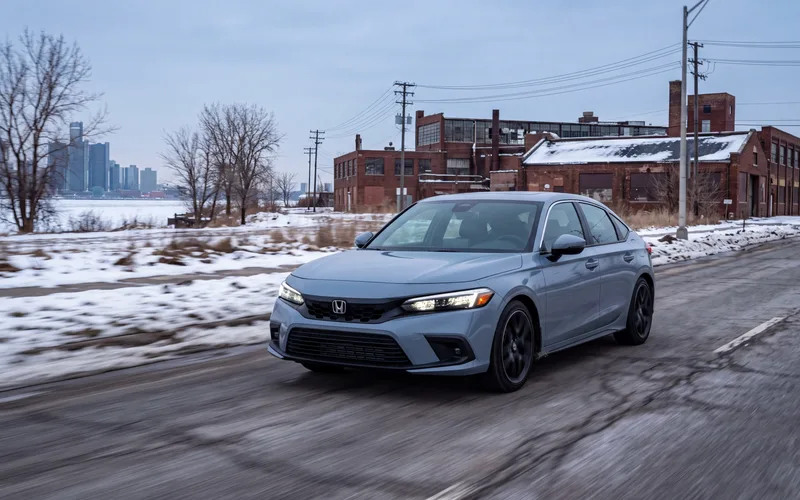 Honda Civic HatchbackCompact HatchbackBetter at: Rear-seat space
It is the same idea with a usable back seat and better visibility, at a small fuel-economy cost, and reviewers now rate the Civic Hybrid above the Prius overall.
Compare 2.25C
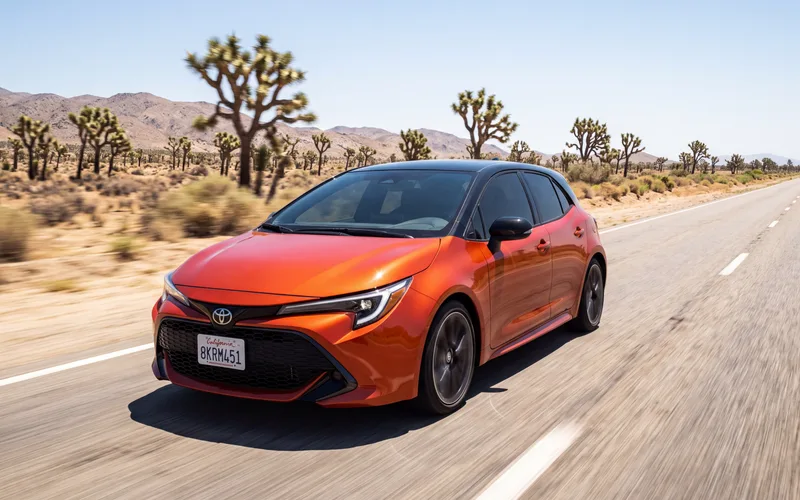 Toyota Corolla HatchbackCompact HatchbackBetter at: Purchase price
About $4,000 less up front with the same Toyota reliability and warranty, for buyers whose annual mileage never repays the hybrid premium.
Compare 2.57C+
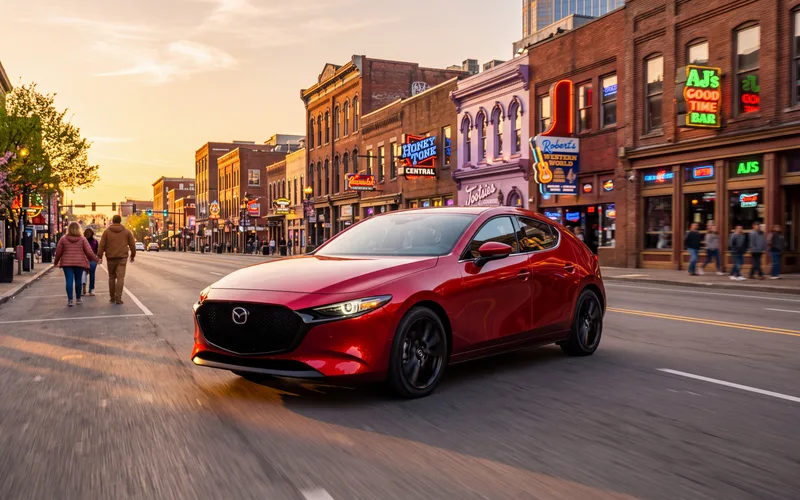 Mazda Mazda3 HatchbackCompact HatchbackBetter at: Driving feel
A far more engaging car with a genuinely premium-feeling cabin and available all-wheel drive, if you can live with roughly double the fuel bill.
CompareHow it's evolved
10 scored model years · 2017–2026
Subject scores by year
Hover or tap a score to see what moved it versus the year before. A corner mark flags a big swing.
| Year | Performance | Efficiency | Safety | Space | Cost | Reliability | Tech | Use-case | Driving | Value |
|---|---|---|---|---|---|---|---|---|---|---|
| 2026 | 40 | 93 | 79 | 59 | 67 | 82 | 63 | 59 | 69 | 71 |
| 2025 | 40 | 92 | 79 | 59 | 67 | 82 | 63 | 59 | 68 | 73 |
| 2024 | 40 | 92 | 78 | 59 | 67 | 80 | 63 | 59 | 69 | 75 |
| 2023 | 40 | 92 | 80 | 58 | 68 | 82 | 63 | 59 | 69 | 73 |
| 2022 | 23 | 92 | 68 | 66 | 71 | 85 | 44 | 57 | 56 | 56 |
| 2021 | 24 | 92 | 70 | 67 | 72 | 86 | 45 | 59 | 60 | 61 |
| 2020 | 25 | 92 | 71 | 66 | 74 | 85 | 41 | 59 | 62 | 62 |
| 2019 | 25 | 92 | 67 | 65 | 74 | 83 | 34 | 58 | 62 | 63 |
| 2018 | 18 | 92 | 68 | 64 | 70 | 81 | 35 | 56 | 60 | 66 |
| 2017 | 18 | 92 | 71 | 66 | 68 | 83 | 34 | 57 | 61 | 69 |
Compare two years
Best fit & conditions
Higher scores mean a better fit for that use case. Learn more about use-case fit →
Subject profile
Trims & configurations
4 trimsScores above reflect the volume trim. Per-trim specs and scores are rolling out — the full lineup:
Academic Probation · NHTSA safety recalls
No NHTSA safety recall is on record for the 2021 Toyota Prius. Other model years of the Prius have 11 — listed below.
11 recalls on other model years of the Prius (2017–2020, 2022–2026)
Jan 28, 2026Electrical system: wiring: switches/knobs/buttons · Latches/locks/linkages: doors: latchWater may enter the rear door switch and cause a short circuit, allowing an unlocked rear door to open unexpectedly.
Defect
Toyota Motor Engineering & Manufacturing (Toyota) is recalling certain 2023-2024 Prius Prime, 2023-2026 Prius, and 2025-2026 Prius Plug-in Hybrid vehicles. Water may enter the rear door switch and cause a short circuit, allowing an unlocked rear door to open unexpectedly.
Risk
A door that unexpectedly opens while the vehicle is moving increases the risk of injury.
Remedy
Dealers will modify the rear door switch circuits, free of charge. Owner letters were mailed July 13, 2026. Owners may contact Toyota's customer service at 1-800-331-4331. Toyota's numbers for this recall are 26TB03 and 26TA03. This recall expands and replaces NHTSA recall number 24V274. Vehicles repaired under the previous recall will need to have the new remedy performed.
NHTSA campaign 26V049000 ↗Manufacturer no. 26TB03 / 26TA03141,286 vehicles potentially affected (all models in the campaign)Owners notified Jul 13, 2026Filed by Toyota Motor Engineering & ManufacturingFiled as PRIUS, PRIUS PLUG-IN HYBRID, PRIUS PRIMEOct 30, 2025Back over prevention: display functionPlease see the recall report for a complete list of models. A software error may cause the rearview camera to freeze or display a blank screen when the vehicle is in reverse. As such, these vehicles fail to comply with the requirements of Federal Motor Vehicle Safety Standard (FMVSS) number 111, "Rear Visibility."
Defect
Toyota Motor Engineering & Manufacturing (Toyota) is recalling certain 2022-2026 Toyota, Lexus, and Subaru Solterra vehicles equipped with a Panoramic View Monitor (PVM) system. Please see the recall report for a complete list of models. A software error may cause the rearview camera to freeze or display a blank screen when the vehicle is in reverse. As such, these vehicles fail to comply with the requirements of Federal Motor Vehicle Safety Standard (FMVSS) number 111, "Rear Visibility."
Risk
A rearview camera that fails to display an image can reduce the driver's view behind the vehicle, increasing the risk of a crash.
Remedy
Dealers will update the parking assist software, free of charge. Owner letters were mailed January 2, 2026. Owners may contact Toyota's customer service at 1-800-331-4331. Toyota's numbers for this recall are 25TB13 and 25LB06. Subaru's number for this recall is WRE25.
NHTSA campaign 25V744000 ↗Manufacturer no. 25TB13/25LB06/WRE251,024,407 vehicles potentially affected (all models in the campaign)Owners notified Dec 5, 2025Filed by Toyota Motor Engineering & ManufacturingFiled as PRIUS, PRIUS PLUG-IN HYBRID, PRIUS PRIMEJul 23, 2024Equipment: other: labelsThe load carrying capacity modification label may display inaccurate added weight values. As such, these vehicles fail to comply with the requirements of Federal Motor Vehicle Safety Standard number 110, "Tire Selection and Rims."
Defect
Gulf States Toyota, Inc. (GST) is recalling certain Toyota 2023 GR Supra, 2024 4 Runner, Corolla, Grand Highlander, Grand Highlander Hybrid, Land Cruiser Hybrid, Tacoma, Tacoma Hybrid, 2023-2024 BZ4X, Corolla Cross Hybrid, GR Corolla, GR86, Highlander, Highlander Hybrid, Prius, Prius Prime, Sequoia Hybrid, Tundra, Tundra Hybrid, Venza Hybrid, 2023-2025 Crown, and 2025 Camry Hybrid vehicles equipped with GST accessories. The load carrying capacity modification label may display inaccurate added weight values. As such, these vehicles fail to comply with the requirements of Federal Motor Vehicle Safety Standard number 110, "Tire Selection and Rims."
Risk
A vehicle with an incorrect maximum capacity weight value may be overloaded, which can increase the risk of a crash.
Remedy
GST will mail new labels to owners, free of charge. Owner notification letters were mailed September 16, 2024. Owners may contact GST customer service at 1-800-444-1074. GST's number for this recall is 24R2.
NHTSA campaign 24V548000 ↗Manufacturer no. 24R233,848 vehicles potentially affected (all models in the campaign)Owners notified Sep 16, 2024Filed by Gulf States Toyota, Inc.Filed as PRIUS, PRIUS PRIMEApr 17, 2024Electrical system: wiring: switches/knobs/buttons · Latches/locks/linkages: doors: latchWater may enter the rear door switch and cause a short circuit, allowing an unlocked rear door to open unexpectedly.
Defect
Toyota Motor Engineering & Manufacturing (Toyota) is recalling certain 2023-2024 Prius and Prius Prime vehicles. Water may enter the rear door switch and cause a short circuit, allowing an unlocked rear door to open unexpectedly.
Risk
A door that unexpectedly opens while the vehicle is moving or during a crash increases the risk of injury.
Remedy
Dealers will replace both right and left rear door opener switches, free of charge. Owner letters were mailed August 9, 2024. Owners may contact Toyota customer service at 1-800-331-4331. Toyota's numbers for this recall are 24TB06 and 24TA06.
NHTSA campaign 24V274000 ↗Manufacturer no. 24TB06 / 24TA0655,690 vehicles potentially affected (all models in the campaign)Owners notified Sep 9, 2024Filed by Toyota Motor Engineering & ManufacturingFiled as PRIUS, PRIUS PRIMESep 22, 2021Engine and engine cooling: engine: engine control module (ecu/ecm): software · Hybrid propulsion systemThe Engine Control Unit (ECU) software may falsely detect an error and shut down the hybrid system, causing a loss of drive power.
Defect
Toyota Motor Engineering & Manufacturing (Toyota) is recalling certain 2022 Prius and Prius Prime vehicles. The Engine Control Unit (ECU) software may falsely detect an error and shut down the hybrid system, causing a loss of drive power.
Risk
A loss of drive power increases the risk of a crash.
Remedy
Dealers will update the ECU software, free of charge. Owner notification letters were mailed November 18, 2021. Owners may contact Toyota customer service at 1-800-331-4331. Toyota's number for this recall is 21TB07/21TA07.
NHTSA campaign 21V734000 ↗Manufacturer no. 21TB07 / 21TA078,411 vehicles potentially affected (all models in the campaign)Owners notified Nov 18, 2021Filed by Toyota Motor Engineering & ManufacturingFiled as PRIUS, PRIUS PRIMEDec 11, 2019Electrical system: instrument cluster/panelAn electrical short circuit in the combination meter could occur, causing the speedometer, the odometer, and the fuel gauge to go blank. As such, these vehicles fail to comply with the requirements of Federal Motor Vehicle Safety Standard (FMVSS) number 101, "Controls and Displays."
Defect
Toyota Motor Engineering & Manufacturing (Toyota) is recalling certain 2019 Prius vehicles. An electrical short circuit in the combination meter could occur, causing the speedometer, the odometer, and the fuel gauge to go blank. As such, these vehicles fail to comply with the requirements of Federal Motor Vehicle Safety Standard (FMVSS) number 101, "Controls and Displays."
Risk
A blank main display will not show important information like vehicle speed or fuel level. Driving with an inoperative display can increase the risk of a crash.
Remedy
Toyota will notify owners, and dealers will inspect the flash memory chip (ROM) production date, and if necessary, replace it along with the combination meter circuit board, free of charge. The recall began February 7, 2020. Owners may contact Toyota customer service at 1-888-270-9371. Toyota's numbers for this recall are 19TA21 and 19TB21.
NHTSA campaign 19V876000 ↗Manufacturer no. 19TA21 / 19TB213,751 vehicles potentially affected (all models in the campaign)Owners notified Feb 7, 2020Filed by Toyota Motor Engineering & ManufacturingFiled as PRIUSJul 24, 2019Electronic stability control (esc) · Service brakesThe brake booster pump may fail causing a deactivation of the Vehicle Stability Control system and a loss of braking assist. As such, these vehicles fail to comply with the requirements of Federal Motor Vehicle Safety Standard (FMVSS) number 126, "Electronic Stability Control Systems."
Defect
Toyota Motor Engineering & Manufacturing (Toyota) is recalling certain 2019 Lexus LS500, LC500, ES300h, UX250h, LS500h, Toyota Prius, RAV4 HV, 2019-2020 Toyota Prius Prime, and 2020 Corolla HV vehicles. The brake booster pump may fail causing a deactivation of the Vehicle Stability Control system and a loss of braking assist. As such, these vehicles fail to comply with the requirements of Federal Motor Vehicle Safety Standard (FMVSS) number 126, "Electronic Stability Control Systems."
Risk
Deactivation of the vehicle stability control system or a loss of braking assist increases the risk of a crash.
Remedy
Toyota will notify owners, and dealers will inspect and, if necessary, replace the brake booster pump, free of charge. The recall began September 20, 2019. Toyota owners may contact Toyota customer service at 1-888-270-9371 and Lexus owners may contact Lexus customer service at 1-800-255-3987. Toyota's numbers for this recall are K1L/K0L. Lexus' numbers for this recall are K2F/KLF.
NHTSA campaign 19V544000 ↗Manufacturer no. K1L/K0L, K2F/KLF6,925 vehicles potentially affected (all models in the campaign)Owners notified Sep 20, 2019Filed by Toyota Motor Engineering & ManufacturingFiled as PRIUS, PRIUS PRIMEMar 27, 2019Equipment: other: labelsThe text on the load capacity label may become illegible. As such, these vehicles fail to comply with the requirements of Federal Motor Vehicle Safety Standard (FMVSS) number 110, "Tire Selection and Rims."
Defect
Gulf States Toyota (GST) is recalling certain 2019 C-HR, 4Runner, Avalon, Avalon Hybrid, Camry, Camry Hybrid, Highlander, Land Cruiser, Prius, RAV4, Sequoia, Tacoma, Sienna, Tundra and Yaris vehicles. The text on the load capacity label may become illegible. As such, these vehicles fail to comply with the requirements of Federal Motor Vehicle Safety Standard (FMVSS) number 110, "Tire Selection and Rims."
Risk
If the driver cannot read the label, they may unknowingly overload the vehicle, increasing the risk of a crash.
Remedy
GST will notify owners, and dealers will provide corrected load carrying capacity modification labels, free of charge. The recall began May 24, 2019. Owners may contact GST customer service at 1-800-444-1074. GST's number for this recall is 19R1.
NHTSA campaign 19V244000 ↗Manufacturer no. 19R13,634 vehicles potentially affected (all models in the campaign)Owners notified May 24, 2019Filed by Gulf States Toyota, Inc.Filed as PRIUSSep 5, 2018Electrical system: wiringA portion of the engine wire harness connected to the hybrid Power Control Unit (PCU), could contact the cover at this connection and wear, causing an electrical short circuit.
Defect
Toyota Motor Engineering & Manufacturing (Toyota) is recalling certain 2016-2018 Toyota Prius vehicles. A portion of the engine wire harness connected to the hybrid Power Control Unit (PCU), could contact the cover at this connection and wear, causing an electrical short circuit.
Risk
An electrical short can increase the risk of a fire.
Remedy
Toyota will notify owners, and dealers will inspect the engine wire harness assembly and replace it if damage is found. A protective sleeve or protective tape will be included to prevent any future damage. These repairs will be performed free of charge. The recall began October 30, 2018. Owners may contact Toyota customer service at 1-888-270-9371. Toyota's number for this recall is J0T.
NHTSA campaign 18V579000 ↗Manufacturer no. J0T192,347 vehicles potentially affected (all models in the campaign)Owners notified Oct 30, 2018Filed by Toyota Motor Engineering & ManufacturingFiled as PRIUSMay 2, 2017Tires: temporary/emergency spare tireThe spare tire air pressure was not adjusted to the proper pressure as stated on the Tire Pressure Label.
Defect
Gulf States Toyota, Inc. (Gulf States) is recalling certain 2017 4Runner , 86, Avalon, Camry, Camry Hybrid, Corolla, Corolla iM, Highlander, Highlander Hybrid, Prius, Prius C, RAV4, RAV4 Hybrid, Sienna and Yaris vehicles. The spare tire air pressure was not adjusted to the proper pressure as stated on the Tire Pressure Label.
Risk
A spare tire that is not inflated to the proper value may not perform as intended, increasing the risk of a crash.
Remedy
Gulf States will notify owners, and dealers will inspect the spare tires, adjusting their pressure as necessary, free of charge. The recall began June 15, 2017. Owners may contact Gulf States customer service at 1-800-444-1074. Toyota's number for this recall is 17R2.
NHTSA campaign 17V295000 ↗Manufacturer no. 17R2409 vehicles potentially affected (all models in the campaign)Owners notified Jun 15, 2017Filed by Gulf States Toyota, Inc.Filed as PRIUSOct 14, 2016Parking brakeThe affected vehicles are equipped with a foot-operated parking brake system that has a parking brake cable that may disengage.
Defect
Toyota Motor Engineering & Manufacturing (Toyota) is recalling certain model year 2016-2017 Prius vehicles manufactured August 6, 2015, to October 3, 2016. The affected vehicles are equipped with a foot-operated parking brake system that has a parking brake cable that may disengage.
Risk
If the parking brake cable disengages from the mechanism and the transmission is left in a gear other than 'Park' while the ignition is on and the driver leaves the vehicle, the vehicle may roll unexpectedly, increasing the risk of a crash.
Remedy
Toyota will notify owners, and dealers will install a clip at the parking brake cable end to prevent the cable from disengaging, free of charge. The recall began November 10, 2016. Owners may contact Toyota customer service at 1-888-270-9371. Toyota's number for this recall is G01.
NHTSA campaign 16V741000 ↗Manufacturer no. G0191,585 vehicles potentially affected (all models in the campaign)Owners notified Nov 10, 2016Filed by Toyota Motor Engineering & ManufacturingFiled as PRIUS
Source: NHTSA Office of Defects Investigation recall database, model years 2017–2026. Recalls are listed by model year as the manufacturer filed them; whether a specific car is affected depends on its VIN — check a VIN at nhtsa.gov ↗. NHTSA model names matched to this page: PRIUS, PRIUS PLUG-IN HYBRID, PRIUS PRIME.
Detailed scoring by subject
1Performance & PowertrainThe Prius's lowest-graded category.0.00F
The fourth-generation (XW50) Prius carries over unchanged for 2021 with Toyota's 1.8L 2ZR-FXE Atkinson-cycle four and two motor-generators for a 121-hp net system output on every grade, FWD or AWD-e. That sits below the bottom of the hatchback band and is low even for a mainstream compact.
Toyota quotes 105 lb-ft for the gas engine and does not publish a combined system torque; the traction motor's 120 lb-ft at low speed is what gives the Prius its adequate around-town response. On the published figure it falls below the hatchback band.
Car and Driver's instrumented tests of the unchanged XW50 FWD powertrain run 9.6–9.8 s to 60 mph, among the slowest new cars of its day and outside the hatchback band. Merging and passing at highway speed take planning.
Engine stop/start and EV-to-hybrid transitions in Hybrid Synergy Drive are well-damped and nearly imperceptible at city speeds, but the 1.8L becomes loud and coarse when worked hard on on-ramps and grades. Smooth when driven as intended, strained when pushed.
The planetary power-split e-CVT never shifts or hunts and is perfectly smooth in traffic, but hard throttle pins engine revs and produces the familiar CVT drone. No manual mode beyond the B regen position.
AWD-e is offered on the LE and XLE grades only, using a small rear electric motor that assists from launch up to about 43 mph — useful for traction in snow but not a mechanical AWD system, and absent from L Eco and Limited.
The Prius hatchback itself has a single 1.8L hybrid powertrain in FWD or AWD-e form; the only alternative is the separately badged Prius Prime plug-in hybrid. No gas-only, performance or EV variant.
2Efficiency & RangeThe Prius's best-graded category.4.00A+
The volume LE FWD is EPA-rated 52 mpg combined; the L Eco reaches 56 and the AWD-e grades 49. Every configuration beats any non-hybrid compact hatchback of 2021.
54 mpg city on the volume trim reflects the hybrid system's ability to run on electric power in stop-and-go traffic.
50 mpg highway on the volume trim, helped by the slippery liftback body, keeps the advantage on long trips.
A small 11.3-gallon tank combined with 52 mpg gives roughly 588 miles of range on the volume LE FWD; AWD-e models carry a 10.6-gallon tank and lose some range.
EPA's annual fuel cost estimate for the volume FWD Prius is $1,300 on regular gasoline, among the lowest of any gasoline vehicle of the period.
Every 2021 Prius grade runs on 87-octane regular, with no premium recommendation, and as a conventional hybrid it needs no charging infrastructure at all.
3SafetyGrades above the middle of the scale.2.73B-
NHTSA rated the 2021 Prius 5 stars overall in both FWD and AWD-e form, held back slightly by 4-star driver frontal and rollover scores.
All crashworthiness tests were rated Good except passenger-side small overlap (Acceptable). The 2021 model earned no Top Safety Pick because every headlight variant was rated only Acceptable.
Toyota Safety Sense is standard on every trim, including AEB with pedestrian detection, full-speed dynamic radar cruise, lane departure alert with steering assist and auto high beams. Blind-spot monitor and rear cross-traffic alert are standard on the volume LE and above but missing from the base L Eco.
The standard pre-collision system earned IIHS's top Superior rating for both vehicle-to-vehicle and daytime pedestrian crash prevention. IIHS did not evaluate nighttime pedestrian performance for this model year.
Blind-spot monitor and rear cross-traffic alert are standard from the volume LE trim up. They only warn the driver: there is no rear cross-traffic braking and no safe-exit assist, and the L Eco omits both systems.
Lane departure alert with steering assist is standard, but it only nudges the car back near the lane edge. The 2021 Prius had no true lane-centering (Lane Tracing Assist), which rivals were adopting by then.
Full-speed-range dynamic radar cruise control is standard on every trim and follows smoothly. Without lane centering it cannot act as an integrated highway assist.
No hands-free driving system was offered on any 2021 Prius trim.
Both headlight variants, the base LED projectors and the curve-adaptive LEDs on Limited/XLE Advanced Tech, rated only Acceptable. High-beam assist is standard on both.
Forward visibility is decent, but the split rear glass with a horizontal spoiler bar cuts across the rear view, and reviewers flag thick rear pillars. A backup camera and front/rear sonar from LE partly compensate, and no 360-degree camera was offered.
IIHS rated the LATCH hardware Good+, its top rating. There are full LATCH sets in both outboard positions plus a center position that can borrow the inner anchors, and the rear doors are wide for the class.
4Space & ComfortMid-pack among this car's ten categories.2.55C+
The XW50 Prius liftback seats five on every 2021 grade, the maximum for the hatchback segment.
Generous front headroom for a low-slung aero liftback, near the top of the hatchback band.
Long front legroom accommodates tall drivers comfortably.
Rear headroom is mid-pack; the sloping roofline is tighter for tall rear passengers than the front.
Rear legroom trails compact rivals like the Civic hatchback (~37 in); adults fit but knee room is modest.
The volume LE FWD's tire-repair-kit floor yields a class-leading 27.4 cu ft cargo hold under the liftback.
The floating center console with a large bin underneath, deep two-tier console box and wide, low liftback opening make for practical everyday storage, though nothing beyond competitive.
Front seats are supportive enough for commuting with a fabric-covered manual seat on the LE; reviewers note the rear bench is flat and the low hip point limits long-trip comfort.
The TNGA platform with double-wishbone rear suspension gives the fourth-gen Prius a notably more composed, compliant ride than its predecessor; 15-in wheels with tall sidewalls on the LE soak up bumps well.
Quiet at city speeds in EV mode, but road and wind noise at highway speed and engine drone under acceleration are commonly noted.
Automatic climate control is standard, but heated front seats arrive only on XLE and up (heated wheel and SofTex on XLE/Limited); no ventilated seats or rear vents worth noting.
5Cost of OwnershipOne of the Prius's strongest categories.2.91B-
The 2021 carry-over XW50 Prius opened at $25,520 delivered for the L Eco, near the bottom of the hatchback band and roughly $4,000 below where the fifth-generation car later started.
The LE was the volume grade of the late XW50 Prius — it adds blind-spot monitoring and rear cross-traffic alert over the L Eco without the XLE's SofTex and smart-key upgrades — and lands in the lowest part of the hatchback band.
The Hybrid Synergy Drive drivetrain has no conventional transmission wear items, a timing chain and regen-extended brake life, so routine costs are oil, filters, tires and the occasional inverter-coolant service. The blended figure discounts Edmunds' dealer-rate projection while sitting slightly above the 2026 car's estimate to reflect an older, higher-mileage-skewed generation.
The 2021 Prius held value very well — the 2021–2022 used-car shortage and fuel-price spikes kept used hybrid demand strong — so it retains well above the hatchback norm; 60% is set conservatively against the used-market studies and consistent with the Toyota family scorecards.
Toyota's 36-month/36,000-mile basic coverage is the industry floor — matching Honda and Mazda but two years behind Hyundai/Kia.
The headline powertrain term is Toyota's standard 5 yr/60,000 mi, at the bottom of the band, though the hybrid-specific parts carry 8 yr/100,000 mi and — from MY2020 onward — the traction battery 10 yr/150,000 mi, which covers the components buyers actually worry about.
ToyotaCare covers factory-scheduled maintenance for 2 yr/25,000 mi with 2 yr/unlimited-mile roadside assistance — a genuine multi-year plan, but without the enhanced 3-year Prius roadside or long connected-service trials Toyota added in later years.
$26,730 volume-trim price minus its estimated resale value after 5 years (60% retained, or about $16,038) leaves about $10,692 in depreciation. Add the projected $4,200 in 5-year maintenance and repairs, and owning this vehicle for 5 years costs about $14,892 in total.
6Reliability & QualityOne of the Prius's strongest categories.3.85A+
The 2021 Prius is a carry-over year of the 2016-2022 XW50 generation. Both J.D. Power and Consumer Reports rate it at the top of the segment for reliability. The main owner-reported trouble spots are minor exhaust and heat-shield complaints.
Toyota has ranked near the top of Consumer Reports brand reliability tables and J.D. Power VDS mass-market rankings year after year, alongside Lexus.
NHTSA lists no recall campaigns that cover the 2021 model year. The XW50 generation had only scattered, mostly low-volume campaigns, and none was a systemic powertrain or fire problem for this year.
The 1.8L 2ZR-FXE Atkinson engine and eCVT are a mature, proven powertrain. Prius hybrid systems are known for high-mileage durability (taxi and rideshare fleets past 300k miles), and the hybrid components carry a 10-year/150k-mile warranty from 2020 on.
The cabin is durable and well screwed together, but reviewers regularly criticize the abundance of hard plastics and the glossy white trim on lower trims. Material quality is around average for a mainstream compact.
Assembly is consistent and complaints about rattles or panel gaps are rare. The car scores strongly on J.D. Power quality and on long-term dependability.
Toyota runs one of the densest US dealer networks (~1,200 dealers), and hybrid service expertise is widespread after more than two decades of Prius sales. ToyotaCare covers 2 years/25k miles of scheduled maintenance.
Parts are plentiful and shared across the Toyota hybrid family (Corolla Hybrid, C-HR). The aftermarket and salvage supply for hybrid batteries and inverters is large, and average annual repair costs are below the segment norm.
7Technology & InfotainmentOne of the Prius's weakest categories.0.97F
The volume LE uses a 7-in touchscreen at the bottom of the band; the 11.6-in portrait screen is Limited-only.
The Entune 3.0 Audio system is simple and has physical knobs, but its graphics and response feel dated; most owners rely on phone projection.
Apple CarPlay and Android Auto are standard on every grade, but wired only; no wireless projection offered.
The LE has no native navigation (nav is on Limited's Premium Audio system); basic voice recognition plus Alexa compatibility via app.
The six-speaker base system is adequate; a 10-speaker JBL system is available only on Limited.
All grades use center-mounted dual 4.2-in color TFT displays for gauges and hybrid info — fully digital but low-resolution, offset from the driver and minimally configurable.
The 2021 Prius has no meaningful over-the-air software update capability; updates are dealer-performed.
Toyota Connected Services offers Safety Connect and Service Connect trials, but Remote Connect (remote start/lock) is limited to upper grades and subscription-gated; no digital key.
USB-A media port and charge ports with a 12V outlet; Qi wireless charging is XLE and up; no USB-C or household outlet.
Smart Key proximity entry with push-button start is standard on all grades; remote start is app-based on upper trims only and there is no phone-as-key or power liftgate.
Backup camera standard; the LE adds parking sensors and blind-spot monitoring with rear cross-traffic alert; no surround-view camera, and Advanced Park/Simple Park Assist only on Limited.
A color head-up display is offered, but only on the top Limited grade.
8Use-Case FitOne of the Prius's weakest categories.1.97C-
Wide rear doors, LATCH on the outboard seats and a large, low-liftover cargo hold suit strollers, but the low seating height and 33.4 in of rear legroom make rear-facing seats a squeeze.
Toyota Safety Sense P (pre-collision with pedestrian detection, lane departure alert with steering assist, full-speed radar cruise, auto high beams) is standard on every grade, and the LE adds blind-spot monitoring; crash ratings for the XW50 are strong.
Huge cargo hold and long range help, but rear amenities are thin (no rear vents or rear USB on LE) and rear legroom is limited for teens.
Smooth EV-mode creep, seamless hybrid transitions, light controls, radar cruise to a stop and good visibility make it an effortless commuter despite slow acceleration.
Roughly 52–56 MPG combined is among the best of any non-plug-in car sold in 2021, with cheap tires and Toyota's low maintenance costs.
A 180-in footprint, tight ~33.5-ft turning circle, backup camera and LE parking sensors make it easy in town, though the split rear window hampers rearward view.
Toyota provides no tow rating for the US Prius and the 121-hp hybrid struggles under load; only the generous liftback cargo hold has light-delivery utility.
The Prius hybrid system has a proven taxi and rideshare durability record with high-mileage fleets, though the light-duty interior isn't built for abuse.
No onboard power outlet, no hitch provision and no work-focused accessories; cargo tie-downs are basic.
Roughly 550–600 miles per tank and full-speed radar cruise reduce stops and fatigue, but highway noise and modest seat support limit it as a mile-eater.
AWD-e on LE/XLE helps on snowy or gravel roads, but ~5 in of ground clearance, no tow rating and no factory roof rails keep it pavement-oriented.
A big hatch opening, 60/40 split-fold rear seats and ~65 cu ft seats-down swallow plenty of luggage, but there are no roof rails or hitch for bikes and boxes.
9Driving ExperienceMid-pack among this car's ten categories.2.06C
The TNGA chassis and double-wishbone rear make the XW50 far more composed than earlier Prius generations, but low-rolling-resistance 15-in tires give up grip early.
Electric steering is light and accurate enough, but offers little feedback.
Regen-to-friction blending is smoother than older Prius models, though pedal feel is still somewhat artificial and stopping distances are average on eco tires.
Engine start/stop and EV-hybrid transitions are nearly imperceptible and tip-in is smooth, but response is leisurely and the engine flares to high revs under hard throttle.
Silent in EV mode and calm when cruising, but the 1.8L becomes loud and buzzy with e-CVT drone when pushed on ramps and grades.
A tight turning diameter on the volume trim's 15-in wheels makes U-turns and parking easy.
Good front head- and legroom and a tilt/telescope wheel, but center-mounted gauges, the dash-mounted shift nub and a split rear window that cuts rear visibility draw complaints.
The fourth-gen Prius handles better than its reputation, but slow acceleration and a single-minded efficiency focus make it an appliance to drive.
10Value & Market PositionMid-pack among this car's ten categories.2.08C
Every 2021 Prius gets Toyota Safety Sense P (pre-collision with pedestrian detection, lane departure alert with steering assist, adaptive cruise, auto high beams), a 7-inch touchscreen with Apple CarPlay, Android Auto and Alexa, smart key on the LE and up, and LE adds blind-spot monitor and rear cross-traffic alert. Small screen, cloth seats and no heated seats below XLE keep it in the competitive rather than generous band.
56 MPG combined (L Eco) and a roomy liftback for about $26,000 delivered is a strong efficiency-per-dollar case, but 121 hp and ~10-second 0–60 runs mean performance per dollar is poor, and the Hyundai Ioniq Hybrid and Corolla Hybrid matched the mileage for less money.
L Eco, LE, XLE and Limited span about $25.5k to $33.6k, with AWD-e on LE and XLE and the separately badged Prius Prime PHEV beside it — a well-spaced ladder, though AWD is barred from the base and top trims and there is a single powertrain.
Prius sales had been sliding for years as buyers moved to crossovers like the RAV4 Hybrid; 2021 posted a supply-driven bump over a weak 2020 but remained far below the 2012 peak above 230,000 (Prius family) and a fraction of Corolla or Civic volume.
Toyota's reliability and resale reputation is a real halo, but the fourth-generation Prius's polarizing styling and appliance image made the nameplate more punchline than aspiration in this era, a step below the regard the 2023 redesign later earned.
Early in the 2021 model year Toyota offered subvented APR and lease specials on the aging Prius, but the 2021 chip shortage and fuel-price climb thinned inventory and pushed transaction prices to MSRP or above for much of the model year.
2021 is the sixth model year of the XW50 generation launched for 2016, with only the 2019 facelift and AWD-e addition since; the fifth-generation redesign arrived for 2023, so 2021 buyers got an aging car two years from replacement.
Reviewers credited the 2021 Prius's efficiency, reliability and practicality but marked it down for sluggish acceleration, a noisy engine under load, a dated infotainment system and polarizing looks; it won no major comparison tests or 10Best/Top Pick-style awards and trailed the Insight and Ioniq in many hybrid rankings.