
The verdict
A mixed-report compact hatchback, strong on efficiency and held back by performance.
The 2017 Prius is still a benchmark for cheap, drama-free miles. It gets 52 MPG combined (56 in the Two Eco), its Toyota hybrid system has an excellent reliability record, every trim comes with automatic emergency braking and radar cruise, and the 24.6 cu ft hatch beats most compact rivals. The trade-offs are just as clear: 121 hp and a 10.3-second 0–60 run, an infotainment system with no Apple CarPlay or Android Auto, a cramped 33.4-inch rear seat and only front-wheel drive. Buy it for low running costs and long-term dependability, not for driving enjoyment or the latest tech.
Jump to scoresStrengths
- Outstanding fuel economy
- Proven, long-lived hybrid powertrain
- Strong crash ratings and standard safety tech
What holds it back
- Slow, with little reserve power
- Dated infotainment with no CarPlay or Android Auto
- Minimal warranty coverage
Top alternatives
Cars shoppers cross-shop with the Toyota Prius 2.46C+
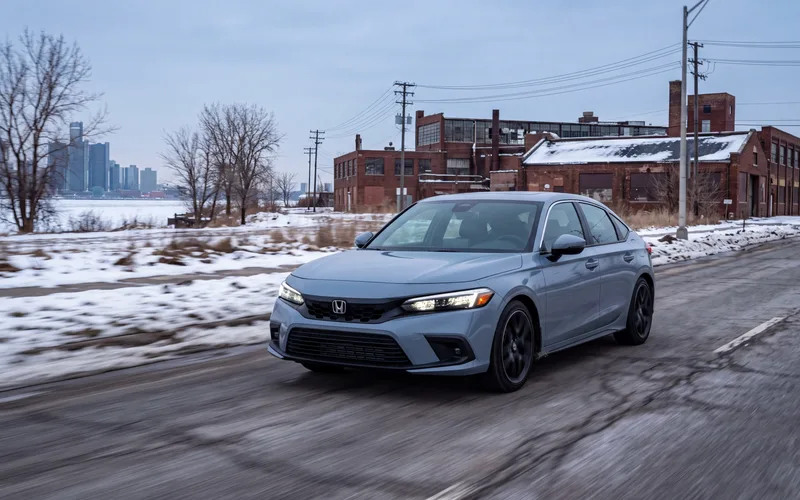 Honda Civic HatchbackCompact HatchbackBetter at: Rear-seat space
It is the same idea with a usable back seat and better visibility, at a small fuel-economy cost, and reviewers now rate the Civic Hybrid above the Prius overall.
Compare 2.25C
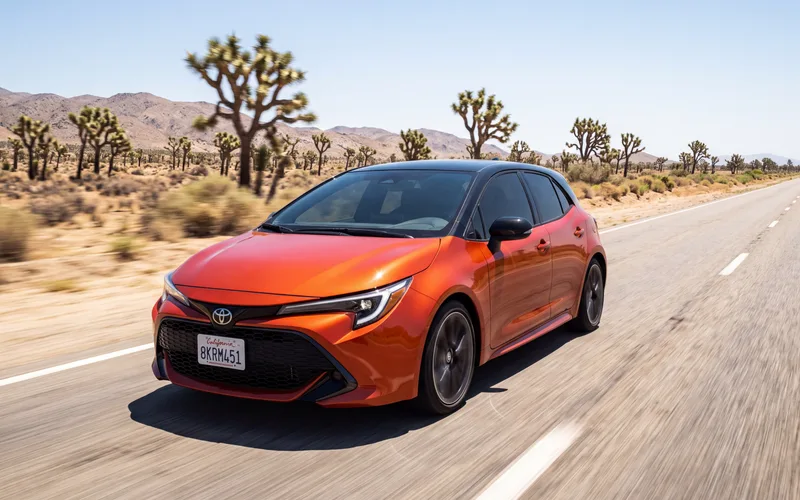 Toyota Corolla HatchbackCompact HatchbackBetter at: Purchase price
About $4,000 less up front with the same Toyota reliability and warranty, for buyers whose annual mileage never repays the hybrid premium.
Compare 2.57C+
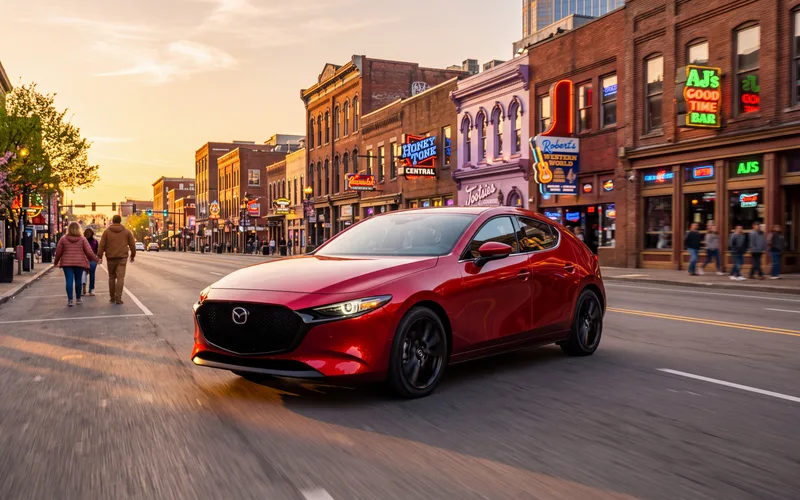 Mazda Mazda3 HatchbackCompact HatchbackBetter at: Driving feel
A far more engaging car with a genuinely premium-feeling cabin and available all-wheel drive, if you can live with roughly double the fuel bill.
CompareHow it's evolved
10 scored model years · 2017–2026
Subject scores by year
Hover or tap a score to see what moved it versus the year before. A corner mark flags a big swing.
| Year | Performance | Efficiency | Safety | Space | Cost | Reliability | Tech | Use-case | Driving | Value |
|---|---|---|---|---|---|---|---|---|---|---|
| 2026 | 40 | 93 | 79 | 59 | 67 | 82 | 63 | 59 | 69 | 71 |
| 2025 | 40 | 92 | 79 | 59 | 67 | 82 | 63 | 59 | 68 | 73 |
| 2024 | 40 | 92 | 78 | 59 | 67 | 80 | 63 | 59 | 69 | 75 |
| 2023 | 40 | 92 | 80 | 58 | 68 | 82 | 63 | 59 | 69 | 73 |
| 2022 | 23 | 92 | 68 | 66 | 71 | 85 | 44 | 57 | 56 | 56 |
| 2021 | 24 | 92 | 70 | 67 | 72 | 86 | 45 | 59 | 60 | 61 |
| 2020 | 25 | 92 | 71 | 66 | 74 | 85 | 41 | 59 | 62 | 62 |
| 2019 | 25 | 92 | 67 | 65 | 74 | 83 | 34 | 58 | 62 | 63 |
| 2018 | 18 | 92 | 68 | 64 | 70 | 81 | 35 | 56 | 60 | 66 |
| 2017 | 18 | 92 | 71 | 66 | 68 | 83 | 34 | 57 | 61 | 69 |
Compare two years
Best fit & conditions
Higher scores mean a better fit for that use case. Learn more about use-case fit →
Subject profile
Trims & configurations
4 trimsScores above reflect the volume trim. Per-trim specs and scores are rolling out — the full lineup:
Academic Probation · NHTSA safety recalls
Sep 5, 2018Electrical system: wiringA portion of the engine wire harness connected to the hybrid Power Control Unit (PCU), could contact the cover at this connection and wear, causing an electrical short circuit.
Defect
Toyota Motor Engineering & Manufacturing (Toyota) is recalling certain 2016-2018 Toyota Prius vehicles. A portion of the engine wire harness connected to the hybrid Power Control Unit (PCU), could contact the cover at this connection and wear, causing an electrical short circuit.
Risk
An electrical short can increase the risk of a fire.
Remedy
Toyota will notify owners, and dealers will inspect the engine wire harness assembly and replace it if damage is found. A protective sleeve or protective tape will be included to prevent any future damage. These repairs will be performed free of charge. The recall began October 30, 2018. Owners may contact Toyota customer service at 1-888-270-9371. Toyota's number for this recall is J0T.
NHTSA campaign 18V579000 ↗Manufacturer no. J0T192,347 vehicles potentially affected (all models in the campaign)Owners notified Oct 30, 2018Filed by Toyota Motor Engineering & ManufacturingFiled as PRIUSMay 2, 2017Tires: temporary/emergency spare tireThe spare tire air pressure was not adjusted to the proper pressure as stated on the Tire Pressure Label.
Defect
Gulf States Toyota, Inc. (Gulf States) is recalling certain 2017 4Runner , 86, Avalon, Camry, Camry Hybrid, Corolla, Corolla iM, Highlander, Highlander Hybrid, Prius, Prius C, RAV4, RAV4 Hybrid, Sienna and Yaris vehicles. The spare tire air pressure was not adjusted to the proper pressure as stated on the Tire Pressure Label.
Risk
A spare tire that is not inflated to the proper value may not perform as intended, increasing the risk of a crash.
Remedy
Gulf States will notify owners, and dealers will inspect the spare tires, adjusting their pressure as necessary, free of charge. The recall began June 15, 2017. Owners may contact Gulf States customer service at 1-800-444-1074. Toyota's number for this recall is 17R2.
NHTSA campaign 17V295000 ↗Manufacturer no. 17R2409 vehicles potentially affected (all models in the campaign)Owners notified Jun 15, 2017Filed by Gulf States Toyota, Inc.Filed as PRIUSOct 14, 2016Parking brakeThe affected vehicles are equipped with a foot-operated parking brake system that has a parking brake cable that may disengage.
Defect
Toyota Motor Engineering & Manufacturing (Toyota) is recalling certain model year 2016-2017 Prius vehicles manufactured August 6, 2015, to October 3, 2016. The affected vehicles are equipped with a foot-operated parking brake system that has a parking brake cable that may disengage.
Risk
If the parking brake cable disengages from the mechanism and the transmission is left in a gear other than 'Park' while the ignition is on and the driver leaves the vehicle, the vehicle may roll unexpectedly, increasing the risk of a crash.
Remedy
Toyota will notify owners, and dealers will install a clip at the parking brake cable end to prevent the cable from disengaging, free of charge. The recall began November 10, 2016. Owners may contact Toyota customer service at 1-888-270-9371. Toyota's number for this recall is G01.
NHTSA campaign 16V741000 ↗Manufacturer no. G0191,585 vehicles potentially affected (all models in the campaign)Owners notified Nov 10, 2016Filed by Toyota Motor Engineering & ManufacturingFiled as PRIUS
8 recalls on other model years of the Prius (2019–2020, 2022–2026)
Jan 28, 2026Electrical system: wiring: switches/knobs/buttons · Latches/locks/linkages: doors: latchWater may enter the rear door switch and cause a short circuit, allowing an unlocked rear door to open unexpectedly.
Defect
Toyota Motor Engineering & Manufacturing (Toyota) is recalling certain 2023-2024 Prius Prime, 2023-2026 Prius, and 2025-2026 Prius Plug-in Hybrid vehicles. Water may enter the rear door switch and cause a short circuit, allowing an unlocked rear door to open unexpectedly.
Risk
A door that unexpectedly opens while the vehicle is moving increases the risk of injury.
Remedy
Dealers will modify the rear door switch circuits, free of charge. Owner letters were mailed July 13, 2026. Owners may contact Toyota's customer service at 1-800-331-4331. Toyota's numbers for this recall are 26TB03 and 26TA03. This recall expands and replaces NHTSA recall number 24V274. Vehicles repaired under the previous recall will need to have the new remedy performed.
NHTSA campaign 26V049000 ↗Manufacturer no. 26TB03 / 26TA03141,286 vehicles potentially affected (all models in the campaign)Owners notified Jul 13, 2026Filed by Toyota Motor Engineering & ManufacturingFiled as PRIUS, PRIUS PLUG-IN HYBRID, PRIUS PRIMEOct 30, 2025Back over prevention: display functionPlease see the recall report for a complete list of models. A software error may cause the rearview camera to freeze or display a blank screen when the vehicle is in reverse. As such, these vehicles fail to comply with the requirements of Federal Motor Vehicle Safety Standard (FMVSS) number 111, "Rear Visibility."
Defect
Toyota Motor Engineering & Manufacturing (Toyota) is recalling certain 2022-2026 Toyota, Lexus, and Subaru Solterra vehicles equipped with a Panoramic View Monitor (PVM) system. Please see the recall report for a complete list of models. A software error may cause the rearview camera to freeze or display a blank screen when the vehicle is in reverse. As such, these vehicles fail to comply with the requirements of Federal Motor Vehicle Safety Standard (FMVSS) number 111, "Rear Visibility."
Risk
A rearview camera that fails to display an image can reduce the driver's view behind the vehicle, increasing the risk of a crash.
Remedy
Dealers will update the parking assist software, free of charge. Owner letters were mailed January 2, 2026. Owners may contact Toyota's customer service at 1-800-331-4331. Toyota's numbers for this recall are 25TB13 and 25LB06. Subaru's number for this recall is WRE25.
NHTSA campaign 25V744000 ↗Manufacturer no. 25TB13/25LB06/WRE251,024,407 vehicles potentially affected (all models in the campaign)Owners notified Dec 5, 2025Filed by Toyota Motor Engineering & ManufacturingFiled as PRIUS, PRIUS PLUG-IN HYBRID, PRIUS PRIMEJul 23, 2024Equipment: other: labelsThe load carrying capacity modification label may display inaccurate added weight values. As such, these vehicles fail to comply with the requirements of Federal Motor Vehicle Safety Standard number 110, "Tire Selection and Rims."
Defect
Gulf States Toyota, Inc. (GST) is recalling certain Toyota 2023 GR Supra, 2024 4 Runner, Corolla, Grand Highlander, Grand Highlander Hybrid, Land Cruiser Hybrid, Tacoma, Tacoma Hybrid, 2023-2024 BZ4X, Corolla Cross Hybrid, GR Corolla, GR86, Highlander, Highlander Hybrid, Prius, Prius Prime, Sequoia Hybrid, Tundra, Tundra Hybrid, Venza Hybrid, 2023-2025 Crown, and 2025 Camry Hybrid vehicles equipped with GST accessories. The load carrying capacity modification label may display inaccurate added weight values. As such, these vehicles fail to comply with the requirements of Federal Motor Vehicle Safety Standard number 110, "Tire Selection and Rims."
Risk
A vehicle with an incorrect maximum capacity weight value may be overloaded, which can increase the risk of a crash.
Remedy
GST will mail new labels to owners, free of charge. Owner notification letters were mailed September 16, 2024. Owners may contact GST customer service at 1-800-444-1074. GST's number for this recall is 24R2.
NHTSA campaign 24V548000 ↗Manufacturer no. 24R233,848 vehicles potentially affected (all models in the campaign)Owners notified Sep 16, 2024Filed by Gulf States Toyota, Inc.Filed as PRIUS, PRIUS PRIMEApr 17, 2024Electrical system: wiring: switches/knobs/buttons · Latches/locks/linkages: doors: latchWater may enter the rear door switch and cause a short circuit, allowing an unlocked rear door to open unexpectedly.
Defect
Toyota Motor Engineering & Manufacturing (Toyota) is recalling certain 2023-2024 Prius and Prius Prime vehicles. Water may enter the rear door switch and cause a short circuit, allowing an unlocked rear door to open unexpectedly.
Risk
A door that unexpectedly opens while the vehicle is moving or during a crash increases the risk of injury.
Remedy
Dealers will replace both right and left rear door opener switches, free of charge. Owner letters were mailed August 9, 2024. Owners may contact Toyota customer service at 1-800-331-4331. Toyota's numbers for this recall are 24TB06 and 24TA06.
NHTSA campaign 24V274000 ↗Manufacturer no. 24TB06 / 24TA0655,690 vehicles potentially affected (all models in the campaign)Owners notified Sep 9, 2024Filed by Toyota Motor Engineering & ManufacturingFiled as PRIUS, PRIUS PRIMESep 22, 2021Engine and engine cooling: engine: engine control module (ecu/ecm): software · Hybrid propulsion systemThe Engine Control Unit (ECU) software may falsely detect an error and shut down the hybrid system, causing a loss of drive power.
Defect
Toyota Motor Engineering & Manufacturing (Toyota) is recalling certain 2022 Prius and Prius Prime vehicles. The Engine Control Unit (ECU) software may falsely detect an error and shut down the hybrid system, causing a loss of drive power.
Risk
A loss of drive power increases the risk of a crash.
Remedy
Dealers will update the ECU software, free of charge. Owner notification letters were mailed November 18, 2021. Owners may contact Toyota customer service at 1-800-331-4331. Toyota's number for this recall is 21TB07/21TA07.
NHTSA campaign 21V734000 ↗Manufacturer no. 21TB07 / 21TA078,411 vehicles potentially affected (all models in the campaign)Owners notified Nov 18, 2021Filed by Toyota Motor Engineering & ManufacturingFiled as PRIUS, PRIUS PRIMEDec 11, 2019Electrical system: instrument cluster/panelAn electrical short circuit in the combination meter could occur, causing the speedometer, the odometer, and the fuel gauge to go blank. As such, these vehicles fail to comply with the requirements of Federal Motor Vehicle Safety Standard (FMVSS) number 101, "Controls and Displays."
Defect
Toyota Motor Engineering & Manufacturing (Toyota) is recalling certain 2019 Prius vehicles. An electrical short circuit in the combination meter could occur, causing the speedometer, the odometer, and the fuel gauge to go blank. As such, these vehicles fail to comply with the requirements of Federal Motor Vehicle Safety Standard (FMVSS) number 101, "Controls and Displays."
Risk
A blank main display will not show important information like vehicle speed or fuel level. Driving with an inoperative display can increase the risk of a crash.
Remedy
Toyota will notify owners, and dealers will inspect the flash memory chip (ROM) production date, and if necessary, replace it along with the combination meter circuit board, free of charge. The recall began February 7, 2020. Owners may contact Toyota customer service at 1-888-270-9371. Toyota's numbers for this recall are 19TA21 and 19TB21.
NHTSA campaign 19V876000 ↗Manufacturer no. 19TA21 / 19TB213,751 vehicles potentially affected (all models in the campaign)Owners notified Feb 7, 2020Filed by Toyota Motor Engineering & ManufacturingFiled as PRIUSJul 24, 2019Electronic stability control (esc) · Service brakesThe brake booster pump may fail causing a deactivation of the Vehicle Stability Control system and a loss of braking assist. As such, these vehicles fail to comply with the requirements of Federal Motor Vehicle Safety Standard (FMVSS) number 126, "Electronic Stability Control Systems."
Defect
Toyota Motor Engineering & Manufacturing (Toyota) is recalling certain 2019 Lexus LS500, LC500, ES300h, UX250h, LS500h, Toyota Prius, RAV4 HV, 2019-2020 Toyota Prius Prime, and 2020 Corolla HV vehicles. The brake booster pump may fail causing a deactivation of the Vehicle Stability Control system and a loss of braking assist. As such, these vehicles fail to comply with the requirements of Federal Motor Vehicle Safety Standard (FMVSS) number 126, "Electronic Stability Control Systems."
Risk
Deactivation of the vehicle stability control system or a loss of braking assist increases the risk of a crash.
Remedy
Toyota will notify owners, and dealers will inspect and, if necessary, replace the brake booster pump, free of charge. The recall began September 20, 2019. Toyota owners may contact Toyota customer service at 1-888-270-9371 and Lexus owners may contact Lexus customer service at 1-800-255-3987. Toyota's numbers for this recall are K1L/K0L. Lexus' numbers for this recall are K2F/KLF.
NHTSA campaign 19V544000 ↗Manufacturer no. K1L/K0L, K2F/KLF6,925 vehicles potentially affected (all models in the campaign)Owners notified Sep 20, 2019Filed by Toyota Motor Engineering & ManufacturingFiled as PRIUS, PRIUS PRIMEMar 27, 2019Equipment: other: labelsThe text on the load capacity label may become illegible. As such, these vehicles fail to comply with the requirements of Federal Motor Vehicle Safety Standard (FMVSS) number 110, "Tire Selection and Rims."
Defect
Gulf States Toyota (GST) is recalling certain 2019 C-HR, 4Runner, Avalon, Avalon Hybrid, Camry, Camry Hybrid, Highlander, Land Cruiser, Prius, RAV4, Sequoia, Tacoma, Sienna, Tundra and Yaris vehicles. The text on the load capacity label may become illegible. As such, these vehicles fail to comply with the requirements of Federal Motor Vehicle Safety Standard (FMVSS) number 110, "Tire Selection and Rims."
Risk
If the driver cannot read the label, they may unknowingly overload the vehicle, increasing the risk of a crash.
Remedy
GST will notify owners, and dealers will provide corrected load carrying capacity modification labels, free of charge. The recall began May 24, 2019. Owners may contact GST customer service at 1-800-444-1074. GST's number for this recall is 19R1.
NHTSA campaign 19V244000 ↗Manufacturer no. 19R13,634 vehicles potentially affected (all models in the campaign)Owners notified May 24, 2019Filed by Gulf States Toyota, Inc.Filed as PRIUS
Source: NHTSA Office of Defects Investigation recall database, model years 2017–2026. Recalls are listed by model year as the manufacturer filed them; whether a specific car is affected depends on its VIN — check a VIN at nhtsa.gov ↗. NHTSA model names matched to this page: PRIUS, PRIUS PLUG-IN HYBRID, PRIUS PRIME.
Detailed scoring by subject
1Performance & PowertrainThe Prius's lowest-graded category.0.00F
The fourth-gen (XW50) Hybrid Synergy Drive makes 121 hp net combined on every 2017 trim (Two through Four Touring, including Two Eco), which is well below the hatchback band floor.
Toyota quotes 105 lb-ft for the 2ZR-FXE engine and publishes no combined system torque figure, so the published number sits below the hatchback band. The traction motor helps at low speeds.
Instrumented tests put the 2016–2017 Prius at roughly 10–10.5 s to 60 mph, slower than the hatchback band's slow end.
Engine start/stop transitions are smoother and better isolated than in the previous generation, and electric assist makes city driving quiet. The engine still turns coarse and loud under hard acceleration or on grades.
The power-split eCVT never shifts or hunts, and it is smooth in normal driving. Under heavy throttle it holds high engine revs, giving the classic rubber-band drone.
The 2017 Prius was front-wheel drive only. The electric rear-motor AWD-e system did not arrive in the US until the 2019 model year.
Every 2017 Prius liftback uses the same 121-hp hybrid; the Two Eco differs only in weight and tires. A plug-in version was available only as the separately styled Prius Prime, launched late 2016 as a 4-seat 2017 model.
2Efficiency & RangeThe Prius's best-graded category.4.00A+
This is the EPA combined rating for the volume (non-Eco) 2017 Prius. The lighter Two Eco trim is rated 56 MPG.
This is the EPA city rating for the volume 2017 Prius trims.
This is the EPA highway rating for the volume 2017 Prius trims.
Calculated as the 11.3-gallon tank times the 52 MPG EPA combined rating. EPA does not publish a range figure for conventional hybrids.
This is the EPA annual fuel cost estimate for the volume 2017 Prius, using fueleconomy.gov's current standard assumptions.
It runs on regular unleaded on every trim and never needs plugging in, which makes it the cheapest and simplest kind of energy requirement.
3SafetyOne of the Prius's strongest categories.2.79B-
The 2017 Prius liftback carries NHTSA's top 5-star overall rating, though its frontal and rollover sub-ratings are 4 stars.
It earned a 2017 Top Safety Pick+ with Good ratings in every crashworthiness test. The award covers only cars built after August 2016, which got revised LED projector headlights.
For 2017, Toyota Safety Sense P became standard on every trim: AEB with pedestrian detection, lane departure alert with steering assist, full-speed radar cruise and auto high beams. Blind-spot monitoring and rear cross-traffic alert are standard only on the Four and Four Touring, so the volume Two trim goes without.
IIHS rated the standard Pre-Collision System Superior, and it avoided collisions in both the 12 and 25 mph tests. Pedestrian detection is daytime-oriented, and that era had no nighttime pedestrian evaluation, so it sits at the top of the mid band.
Blind-spot monitoring and rear cross-traffic alert are alert-only and limited to the two top trims (Four and Four Touring). The volume Two trim has neither, and no rear auto-braking or safe-exit warning was offered.
TSS-P's Lane Departure Alert with Steering Assist gives only a corrective nudge near the lane line, and there is no lane centering (Lane Tracing Assist came later). Reviewers describe it as basic departure prevention.
Full-Speed Dynamic Radar Cruise Control is standard on every trim and brakes to a stop in traffic. Resuming takes a button or pedal input, and with no lane centering there is no combined highway-assist mode.
No hands-free driving system was offered on the 2017 Prius.
Cars built after August 2016 have LED projector headlights that IIHS rates Acceptable, and auto high beams are standard. Earlier builds of the model year were rated Poor for glare.
The split rear hatch glass puts a spoiler bar across the rear view, and the thick, raked A-pillars create blind zones. A backup camera is standard, but there is no surround view.
IIHS gives the LATCH hardware its top G+ rating: two full sets of anchors plus a center tether position that can borrow lower anchors. The rear doors open wide, though the rear seat is compact-width.
4Space & ComfortMid-pack among this car's ten categories.2.47C+
Every 2017 Prius liftback seats five. Only the separate Prius Prime plug-in was cut to four seats in this generation.
The front headroom is generous for a compact hatchback, even with the XW50's lower roofline.
Front legroom is good for the class and gives tall drivers room to stretch.
Rear headroom is average for the segment. The fastback roof is lower than the previous generation's, but it still clears most adults.
The published rear legroom is near the bottom of the hatchback band, although the flat rear floor makes it feel less cramped than the figure suggests.
The liftback's cargo bay is among the largest in the compact hatchback class. The Two Eco trades its spare tire for extra underfloor space.
The floating center console has an open tray beneath it, and there is a usable armrest bin and a shallow cargo underfloor. The white-trimmed console tray is prone to scratches, and the storage is competitive rather than innovative.
The redesigned XW50 front seats were a clear improvement, and reviewers found them supportive over long drives. The volume trims have manual adjustment and no lumbar support (driver power seat only on the Four Touring), and the rear cushion is low.
The TNGA platform and new double-wishbone rear suspension give a compliant, well-damped ride that reviewers rated a big step up. The 17-inch Touring wheels add some firmness over sharp bumps.
The cabin is quiet around town and quieter than the previous Prius at cruise. Tire noise and engine drone under hard acceleration remain noticeable.
Automatic climate control is standard. Heated front seats appear only from the Three Touring up, and there is no heated steering wheel, ventilated seats, rear vents or remote preconditioning, so the volume Two and Three trims are sparse.
5Cost of OwnershipMid-pack among this car's ten categories.2.62C+
The 2017 liftback, in the second model year of the XW50 generation, opened at $24,685 before freight — a modest hybrid premium over a conventional compact hatchback and low in the hatchback band. Prices rose an average of $374 (1.4%) over 2016 while Toyota Safety Sense P became standard on every grade.
The Three is the grade most 2017 Prius buyers landed on — it adds Entune Premium Audio with navigation, Smart Key on three doors and Qi wireless charging over the Two for about $2,000. The ~$400 allowance above sticker covers typical port accessories and premium paint.
The Prius is among the cheapest cars in any segment to keep running: the eCVT has no clutches or belts to service, the engine uses a timing chain, and regenerative braking extends pad life, so the routine bill is oil, filters, tires and a 12V battery. The blended figure sits between CarEdge's low projection and the dealer-rate totals in industry TCO tables.
A 2017 Prius bought new hit its five-year mark in 2022, when the used-car shortage and $4+ gasoline drove used hybrid prices far above what residual guides had projected — a windfall, not a property of the car. The figure blends the conservative launch-era forecast (gas near $2, Prius demand falling) with that realized market, landing slightly above the hatchback average on the strength of Toyota hybrid resale.
Toyota's 36-month/36,000-mile basic coverage is the industry floor, matching the Civic and Mazda3 of 2017 but two years behind Hyundai and Kia.
The headline powertrain term is Toyota's standard 5 yr/60,000 mi, the bottom of the band. The hybrid-specific parts — battery, inverter, power control — carry 8 yr/100,000 mi, so the components buyers worry about are covered longer; the 10 yr/150,000 mi battery term did not arrive until MY2020.
ToyotaCare's 2 yr/25,000 mi of factory-scheduled maintenance plus 2 yr/unlimited-mile roadside assistance is a genuine multi-year plan that most 2017 rivals (Civic, Mazda3, Ioniq) did not match. Below the top band because the perks stop there — no extended roadside and no meaningful connected-service package.
$28,000 volume-trim price minus its estimated resale value after 5 years (52% retained, or about $14,560) leaves about $13,440 in depreciation. Add the projected $3,500 in 5-year maintenance and repairs, and owning this vehicle for 5 years costs about $16,940 in total.
6Reliability & QualityOne of the Prius's strongest categories.3.66A-
The 2017 Prius, the second model year of the fourth-generation XW50 car, has a strong owner-reported record from both major sources: Consumer Reports rates it more reliable than other cars of its model year, and J.D. Power owners give it a 'Great' 85/100 for quality and reliability. The trouble spots owners do report are scattered rather than systemic, so it scores just above the Corolla Hatchback benchmark band and well clear of the segment median.
In the period that judges the 2017 car, Toyota sat at the top of the dependability tables. J.D. Power's 2020 VDS, which surveys three-year-old 2017 models, put Toyota fifth overall and among the best mass-market brands, at 113 PP100 against a 134 PP100 industry average. Consumer Reports ranked Toyota and Lexus at the head of its brand reliability rankings in the same era. That is consistently top-5 standing.
NHTSA lists three campaigns for the 2017 Prius. Two are minor: spare-tire pressure, and a parking-brake cable that can disengage on early builds. The third is serious: a 192,347-unit engine wire harness recall covering 2016–2018 cars, where the harness at the hybrid PCU connection could chafe and short, raising fire risk. One fire-risk electrical campaign keeps this in typical territory rather than the clean 80s, but none of these is a repeated or powertrain-wide pattern.
The 2017 Prius pairs the 1.8-liter 2ZR-FXE Atkinson-cycle four with the fourth-generation Hybrid Synergy Drive, 121 hp net. It is a refinement of the engine family and planetary power-split eCVT that earlier Prius generations proved over hundreds of thousands of taxi and fleet miles, and the eCVT has no belt, clutch packs or shift elements to wear. The gen-4 car drops the head-gasket and EGR-clogging complaints that dogged some third-generation 2ZR engines, which leaves among the best durability reputations in the segment.
The gen-4 cabin was widely criticized at launch. Most surfaces are hard plastic, the glossy white trim panels on the center console and steering wheel look cheap and show scuffs, and the overall feel matches an economy car, not its price. Soft-touch coverage trails the Mazda3 and Corolla, so it lands at the low end of competitive.
US-market Prius liftbacks were built at Toyota's Tsutsumi plant in Toyota City, which has built the Prius since 2003. Assembly consistency is not a complaint theme for this model year, and the stiffer TNGA body shell cut squeaks and rattles compared with the gen-3 car. Owner complaints sit in electrical accessories and suspension wear rather than panel fit, which supports a solid initial-quality grade.
Toyota has one of the densest franchised service networks in the US, about 1,200+ dealers, and after two decades of the nameplate every Toyota store treats Prius hybrid service as routine. Service satisfaction is good but not class-topping, so this scores strong nationwide coverage below the very top.
A nine-year-old Prius is one of the cheapest cars to keep running. Annual repair and maintenance costs run below the class average, parts are shared across a huge Toyota hybrid fleet, and a whole independent industry rebuilds and replaces Prius NiMH traction packs for well under dealer prices. That makes the one big-ticket wear item affordable when it falls outside warranty.
7Technology & InfotainmentOne of the Prius's weakest categories.0.21F
The volume Two trim has a 6.1-inch Entune Audio touchscreen, below the band floor. A 7-inch Entune Premium navigation unit is standard from the Three upward.
The Entune system of that era was slow, had dated graphics and relied on clunky app-suite integration. It does keep physical volume and tuning knobs.
Apple CarPlay and Android Auto were not offered on any 2017 Prius, wired or wireless. Toyota added CarPlay to the Prius only for the 2020 model year.
The volume Two has no native navigation. Three and above get Entune Premium navigation with basic command-style voice recognition, so most owners rely on their phones.
The six-speaker base system is adequate. A 10-speaker JBL upgrade is available only on the Four Touring.
Every trim has a center-mounted dual 4.2-inch color TFT display for speed, efficiency and hybrid-flow information, so the gauges are fully digital as standard. The screens are small, off-axis and only lightly configurable.
The car has no over-the-air vehicle or infotainment updates. Map updates are dealer or USB based.
The Entune app only fed apps into the head unit. There was no remote start, remote lock or digital key from a phone app on the 2017 liftback.
There is a single front USB-A port plus a 12V outlet, with no rear USB. Qi wireless charging is standard from the Three upward, an early inclusion for the class.
Smart Key proximity entry with push-button start is standard on every 2017 Prius, which was generous for the segment. Remote start, a hands-free liftgate and phone-as-key were not offered.
A backup camera is standard. Intelligent Clearance Sonar and Intelligent Park Assist are offered only on the Four and Four Touring, and there is no surround-view camera.
A color head-up display was offered, unusual for a mainstream compact in 2017, but only on the top Four and Four Touring trims.
8Use-Case FitOne of the Prius's weakest categories.1.84C-
Five doors, a 24.6 cu ft hatch that swallows a stroller and two sets of LATCH anchors make it workable for a young family. The modest 33.4-inch rear legroom and sloping roofline make rear-facing seats and loading tighter than in larger hatches.
With Toyota Safety Sense P standard on every trim, a 2017 IIHS Top Safety Pick+ and a 5-star NHTSA rating, the trims families actually buy are well covered. Blind-spot monitoring is limited to the top trims.
The large hatch carries a family's luggage, and the ride is comfortable. Rear passengers get no vents, USB ports or heated seats, and limited legroom constrains teens and adults.
Silent EV creep in traffic, a smooth eCVT, standard full-speed radar cruise, light controls and good visibility make it a relaxed commuter. It runs out of punch when merging.
At 52 MPG combined (56 MPG for the Two Eco), it was the benchmark for cheap per-mile running costs in 2017, with long brake life thanks to regenerative braking and inexpensive tires.
A compact footprint, a tight ~33.5 ft turning circle on 15-inch wheels and a standard backup camera make it easy in the city. The split rear window and thick rear pillars hurt rearward visibility.
Toyota gives the 2017 Prius no US tow rating, and 121 hp leaves little headroom under load. Only the hatch area provides any utility.
The Hybrid Synergy Drive is famously long-lived and the Prius is a taxi and rideshare fleet staple. The interior plastics and light-duty chassis are not built for abuse.
There is no onboard AC power, no hitch and only basic cargo hooks. Aside from rideshare use there is little upfit ecosystem.
A roughly 11.3-gallon tank at 50 MPG highway gives a 550+ mile range, and standard radar cruise eases long drives. Engine drone on grades and only basic lane-departure steering assist limit it.
It is front-wheel drive only, with about 5.1 inches of ground clearance, no tow rating and no factory roof rails, so it is pavement-bound. Gravel roads are fine, but there is little outdoor utility.
The wide liftback opening, 60/40 split-folding rear seat and roughly 62.7–65.5 cu ft with the seats folded handle bulky items well for a compact. There are no roof rails or hitch, and the folded floor is not fully flat.
9Driving ExperienceMid-pack among this car's ten categories.2.13C
TNGA's lower center of gravity and new double-wishbone rear suspension make the XW50 far more composed than earlier Priuses. Low-rolling-resistance tires still cap grip well short of the class's sporty hatches.
The electric power steering is accurate and more natural than before, but it offers little feedback.
The blend between regenerative and friction braking is smoother than in earlier Priuses, and stops are adequate. Pedal feel is still somewhat artificial, and the eco tires lengthen stopping distances.
Engine start and stop transitions are nearly seamless and low-speed tip-in is smooth. Response under hard throttle is leisurely, and the eCVT flares revs before speed builds.
It is near-silent at low speed. The 1.8L four drones loudly under full throttle and on grades, though that is better isolated than in the previous generation.
The turning circle on the volume trim's 15-inch wheels is tight, beating the hatchback band's best end. The Touring trims' 17-inch wheels widen it.
The seating is lower and more natural than before, and the wheel tilts and telescopes. The center-mounted gauges, the bisected rear window and the console placement of some controls draw complaints.
It is better balanced than earlier Priuses but remains an efficiency appliance, with 121 hp, a droning eCVT and eco tires. Driving it for fun means chasing fuel-economy numbers.
10Value & Market PositionMid-pack among this car's ten categories.2.65C+
For 2017 Toyota made Toyota Safety Sense P standard on every Prius grade — pre-collision with pedestrian detection, lane departure alert with steering assist, auto high beams and full-speed radar cruise — at a time when most compact rivals charged for those systems or did not offer them. Smart Key, a backup camera, dual-zone automatic climate and a 6.1-in touchscreen also come standard, though the base Two's infotainment is basic.
A ~$27,600 Prius Three delivers 52 MPG combined, standard active-safety suite and very low running costs, which is strong content for the money. Against it, the hybrid premium over a Civic or Corolla takes years to pay back at 2017's ~$2 gasoline, and the new Hyundai Ioniq Hybrid undercut it on price with comparable mileage and a longer warranty.
Six well-spaced grades from Two to Four Touring span about $5,300, plus the efficiency-tuned Two Eco. But every one shares the same 121-hp hybrid and front-wheel drive — AWD-e did not arrive until 2019 — so configuration choice is trim and equipment only.
Still the best-selling hybrid in America, but 2017 was the fifth straight year of decline and a steep one: cheap gas and the shift to crossovers cut the Prius family roughly in half from its 2012 peak, with Toyota's own RAV4 Hybrid absorbing buyers.
Toyota's reputation for durability and resale gives the Prius a strong halo, and the nameplate is synonymous with hybrids. The fourth generation's polarizing angular styling drew widespread criticism, though, and the Prius image as an appliance limits aspirational appeal.
With demand sliding 20% in a cheap-gas market, 2017 Prius inventory gave buyers real negotiating leverage, and Toyota's typical response in that position is cash-back and subvented financing rather than fire-sale pricing. Specific 2017 offer amounts were not retrieved.
MY2017 is the second year of the fourth-generation XW50, the first Prius on Toyota's TNGA platform with a lower centre of gravity, stiffer structure and independent rear suspension, and the generation still had years left before its 2019 refresh.
Reviewers credited the XW50 with real gains in ride, handling and economy and IIHS rated it a Top Safety Pick+, but it was rarely a comparison winner; critics faulted its styling, slow acceleration and noisy engine under load, and the Hyundai Ioniq challenged it on economy.