

The verdict
A mixed-report compact luxury sedan, strong on safety and held back by efficiency.
The 2024 Volvo S60 is the last one — Volvo ended North American production in June 2024 — and it goes out as the calm, safe, beautifully finished alternative to a BMW 330i rather than a rival to it. Five NHTSA stars, City Safety automatic braking and blind-spot monitoring standard on the cheapest trim, front seats reviewers call best-in-class, and a library-quiet cabin are the reasons to buy it; 247 horsepower, an 11.6-cubic-foot trunk (among the smallest in the class), 35.2 inches of rear legroom and 28 MPG on required premium fuel are the reasons buyers kept choosing something else. Because it is a discontinued final-year car, discounts are real — CarEdge tracked buyers paying roughly 14% under sticker, $6,100–$8,500 off — but the same softness shows up again at trade-in, with only about 47% of MSRP left after five years. Buy it for the seats, the silence and the safety record; skip it if you need space, speed or strong resale.
Jump to scoresStrengths
- A genuinely excellent safety record, and it starts on the base trim
- The best seats and the quietest cabin in the segment
- Interior materials that punch above the price
What holds it back
- The trunk and the back seat are the smallest problems you'll notice daily
- Expensive to fuel for what you get
- Volvo's dependability standing is near the bottom of the industry
Top alternatives
Cars shoppers cross-shop with the Volvo S60 3.07B
3.07B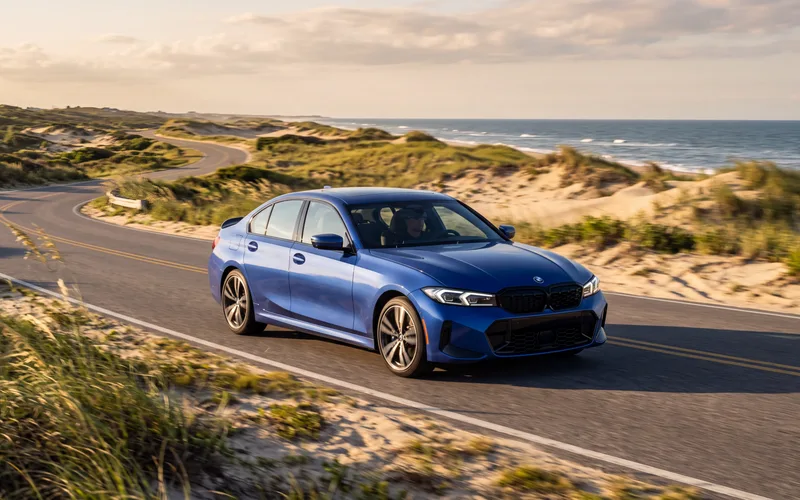 BMW 3 SeriesCompact Luxury SedanBetter at: Driving dynamics
The default cross-shop: quicker, better to drive, and a roughly five-cubic-foot bigger trunk for money the S60 was discounting to match.
Compare 2.71B-
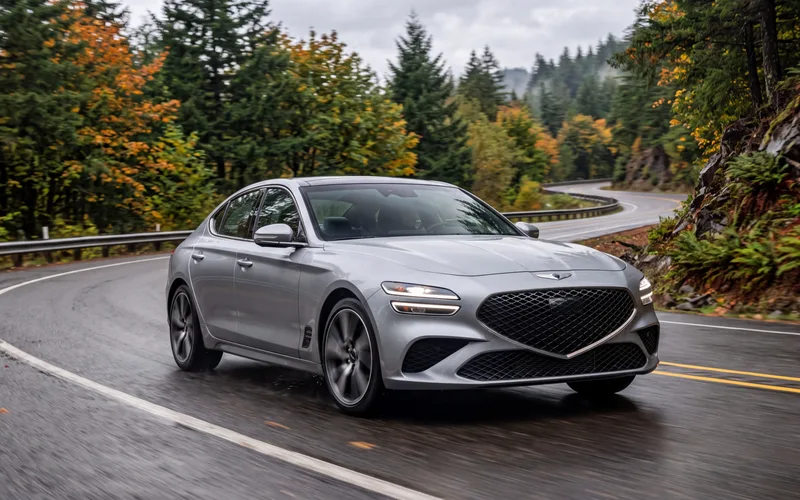 Genesis G70Compact Luxury SedanBetter at: Warranty and value
More power for less money with a 10-year/100,000-mile powertrain warranty against Volvo's 4-year/50,000-mile term.
Compare 2.53C+
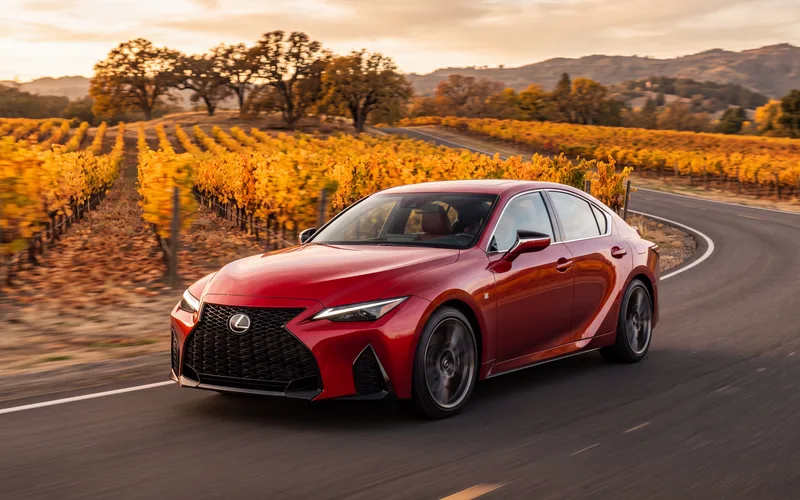 Lexus ISCompact Luxury SedanBetter at: Resale value
Trades the S60's tech and seat comfort for the dependability and resale value Volvo's bottom-of-the-industry rankings can't promise.
CompareHow it's evolved
8 scored model years · 2017–2024
Subject scores by year
Hover or tap a score to see what moved it versus the year before. A corner mark flags a big swing.
| Year | Performance | Efficiency | Safety | Space | Cost | Reliability | Tech | Use-case | Driving | Value |
|---|---|---|---|---|---|---|---|---|---|---|
| 2024 | 53 | 37 | 77 | 59 | 47 | 65 | 71 | 54 | 65 | 62 |
| 2023 | 53 | 45 | 77 | 57 | 36 | 64 | 70 | 49 | 64 | 63 |
| 2022 | 53 | 45 | 78 | 57 | 51 | 65 | 59 | 49 | 64 | 65 |
| 2021 | 53 | 33 | 78 | 57 | 49 | 67 | 59 | 49 | 63 | 70 |
| 2020 | 54 | 34 | 72 | 57 | 60 | 49 | 58 | 48 | 71 | 69 |
| 2019 | 56 | 36 | 68 | 56 | 60 | 49 | 54 | 48 | 71 | 67 |
| 2018 | 50 | 55 | 72 | 57 | 60 | 65 | 30 | 47 | 65 | 53 |
| 2017 | 49 | 56 | 73 | 57 | 56 | 59 | 40 | 47 | 66 | 58 |
Compare two years
Best fit & conditions
Higher scores mean a better fit for that use case. Learn more about use-case fit →
Subject profile
Academic Probation · NHTSA safety recalls
Dec 23, 2025Back over prevention: softwareThe rearview camera image may not display when the vehicle is placed in reverse. As such, these vehicles fail to comply with the requirements of Federal Motor Vehicle Safety Standard number 111, "Rear Visibility."
Defect
Volvo Car USA, LLC (Volvo Car) is recalling certain 2021-2025 XC40, 2022 V90, 2022-2024 C40BEV, 2022-2025 S90, V90CC, XC60, 2023-2025 S60, V60, V60CC, XC90, and 2025 EC40, and EX40 vehicles. The rearview camera image may not display when the vehicle is placed in reverse. As such, these vehicles fail to comply with the requirements of Federal Motor Vehicle Safety Standard number 111, "Rear Visibility."
Risk
A rearview camera image that does not display reduces the driver's view behind the vehicle, increasing the risk of a crash.
Remedy
The software will be updated by a dealer or through an over-the-air (OTA) update, free of charge. Owner notification letters were mailed February 24, 2026. Owners may contact Volvo Carâs customer service at 1-800-458-1552. Volvo Car's number for this recall is R10333. Vehicle Identification Numbers (VINs) involved in this recall will be searchable on NHTSA.gov beginning February 16, 2026. This recall replaces previous NHTSA recall number 25V282. Vehicles previously repaired under recall 25V282 will need to have the new remedy performed.
NHTSA campaign 25V908000 ↗Manufacturer no. R10333413,151 vehicles potentially affected (all models in the campaign)Owners notified Mar 2, 2026Filed by Volvo Car USA, LLCFiled as S60Jun 12, 2025Service brakes · Service brakes, hydraulic: power assist: electric: control module: softwareIn certain driving scenarios while coasting down a hill and using "B" mode or "One Pedal Drive," the vehicle may lose brake function.
Defect
Volvo Car USA, LLC (Volvo Car) is recalling certain 2023 Volvo C40 BEV, 2025 EC40, 2023-2024 XC40 BEV, 2020-2026 XC90 PHEV, 2022-2026 XC60 PHEV, 2023-2025 S60 PHEV, 2024-2025 V60 PHEV, and 2025-2026 EX40 and 2025 S90 PHEV vehicles. In certain driving scenarios while coasting down a hill and using "B" mode or "One Pedal Drive," the vehicle may lose brake function.
Risk
A loss of brake function increases the risk of a crash.
Remedy
Owners are advised not to use "B" Mode (for plug-in hybrid vehicles) or "One Pedal Drive" (for pure electric vehicles) until the repair has been completed. The brake module software will be updated over-the-air (OTA) or by a dealer, free of charge. Owner notification letters were mailed July 15, 2025. Owners may contact Volvo Car's customer service at 1-800-458-1552. Volvo Car's number for this recall is R10329.
NHTSA campaign 25V392000 ↗Manufacturer no. R1032911,469 vehicles potentially affected (all models in the campaign)Owners notified Jul 15, 2025Filed by Volvo Car USA, LLCFiled as S60PHEVMay 8, 2025Back over prevention: softwareThe rearview camera image may not display when the vehicle is placed in reverse. As such, these vehicles fail to comply with the requirements of Federal Motor Vehicle Safety Standard number 111, "Rear Visibility."
Defect
Volvo Car USA, LLC (Volvo Car) is recalling certain 2021-2025 XC40, 2022 V90, 2022-2025 S90, V90CC, C40, XC60, 2023-2025 S60, V60, V60CC, XC90, and 2025 EC40 and EX40 vehicles. The rearview camera image may not display when the vehicle is placed in reverse. As such, these vehicles fail to comply with the requirements of Federal Motor Vehicle Safety Standard number 111, "Rear Visibility."
Risk
A rearview camera image that does not display reduces the driver's view of what is behind the vehicle, increasing the risk of a crash.
Remedy
The software will be updated by a dealer or through an over-the-air (OTA) update, free of charge. Owner notification letters were mailed June 27, 2025. Owners may contact Volvo Car customer service at 1-800-458-1552. Volvo Car's number for this recall is R10320.
NHTSA campaign 25V282000 ↗Manufacturer no. R10320413,151 vehicles potentially affected (all models in the campaign)Owners notified Jun 27, 2025Filed by Volvo Car USA, LLCFiled as S60Nov 21, 2023Air bags: frontalThe passenger air bag may not be secured properly, which can cause the air bag to deploy improperly.
Defect
Volvo Car USA, LLC. (Volvo Car) is recalling certain 2019-2024 S60 vehicles. The passenger air bag may not be secured properly, which can cause the air bag to deploy improperly.
Risk
An air bag that does not deploy properly in a crash increases the risk of injury.
Remedy
Dealers will inspect and tighten the bolts securing the passenger air bag, as necessary, free of charge. Owner notification letters were mailed January 5, 2024. Owners may contact Volvo Car customer service at 1-800-458-1552. Volvo Car's number for this recall is R10254.
NHTSA campaign 23V780000 ↗Manufacturer no. R10254346 vehicles potentially affected (all models in the campaign)Owners notified Jan 5, 2024Filed by Volvo Car USA, LLCFiled as S60
14 recalls on other model years of the S60 (2017–2023)
Mar 24, 2025Electrical system: propulsion system: traction battery · Electrical system: softwareThe high-voltage battery may experience a short circuit within the battery module when the battery is fully charged and the vehicle is parked.
Defect
Volvo Car USA, LLC (Volvo Car) is recalling certain 2020-2021 S90, 2020-2022 S60, V60, XC60, XC90, and 2022 V90 plug-in hybrid vehicles. The high-voltage battery may experience a short circuit within the battery module when the battery is fully charged and the vehicle is parked.
Risk
A short circuit in a high-voltage battery increases the risk of a fire.
Remedy
Owners are advised not to charge their vehicles until the remedy has been completed. Dealers will inspect and replace the high-voltage battery module as necessary. In addition, dealers will update the software to monitor the battery. All repairs will be performed free of charge. Owner notification letters were mailed May 28, 2025. Owners may contact Volvo Car's customer service at 1-800-458-1552. Volvo Car's number for this recall is R10312.
NHTSA campaign 25V179000 ↗Manufacturer no. R103127,483 vehicles potentially affected (all models in the campaign)Owners notified May 14, 2025Filed by Volvo Car USA, LLCFiled as S60Oct 23, 2024Service brakes, hydraulic: pedals and linkagesThe pushrod screw joint, connecting to the brake pedal to the hydraulic brake unit, may be loose.
Defect
Volvo Car USA, LLC (Volvo Car) is recalling certain 2020 S60, V60, S90I, XC60 and XC90 hybrid vehicles. The pushrod screw joint, connecting to the brake pedal to the hydraulic brake unit, may be loose.
Risk
A loose brake pedal can result in a loss of braking function, increasing the risk of a crash.
Remedy
Dealers will tighten the brake pedal pushrod screw joint, free of charge. Owner notification letters were mailed December 17, 2024. Owners may contact Volvo Car customer service at 1-800-458-1552. Volvo's number for this recall is R10289.
NHTSA campaign 24V788000 ↗Manufacturer no. R10289291 vehicles potentially affected (all models in the campaign)Owners notified Dec 17, 2024Filed by Volvo Car USA, LLCFiled as S60PHEVMar 22, 2023Electrical systemA diagnostic trouble code (DTC) may be falsely detected for the emergency call system (e-call) and display "e-Call Service Required" in the driver information module (DIM).
Defect
Volvo Car USA, LLC (Volvo Car) is recalling certain 2023 S60, V60CC, XC60, XC90, XC40, and C40 vehicles. A diagnostic trouble code (DTC) may be falsely detected for the emergency call system (e-call) and display "e-Call Service Required" in the driver information module (DIM).
Risk
The false warning message could prevent the detection of an actual e-call system failure, which could delay an emergency response during a crash, increasing the risk of injury.
Remedy
Dealers will update the telematics and connectivity antenna module (TCAM) software, free of charge. Owner notification letters are expected to be mailed May 16, 2023. Owners may contact Volvo Car's customer service 1-800-458-1552. Volvo Car's number for this recall is R10225.
NHTSA campaign 23V188000 ↗Manufacturer no. R10225393 vehicles potentially affected (all models in the campaign)Owners notified Apr 21, 2023Filed by Volvo Car USA, LLCFiled as S60Jan 19, 2023Service brakes, hydraulicA diagnostic error in the Brake Control Module 2 (BCM2) may cause a loss of Antilock Brake System (ABS), Electronic Stability Control (ESC), and traction control.
Defect
Volvo Car USA, LLC (Volvo Car) is recalling certain 2023 S60, V60, V60CC, V90CC, XC60, XC90, XC40, and C40 vehicles. A diagnostic error in the Brake Control Module 2 (BCM2) may cause a loss of Antilock Brake System (ABS), Electronic Stability Control (ESC), and traction control.
Risk
A reduction in brake support functions can increase the risk of a crash.
Remedy
Volvo will release an over-the-air (OTA) BCM2 software update, free of charge. Owner notification letters are expected to be mailed March 15, 2023. Owners may contact Volvo Car customer service at 1-800-458-1552. Volvo Car's number for this recall is R10217.
NHTSA campaign 23V012000 ↗Manufacturer no. R1021727,457 vehicles potentially affected (all models in the campaign)Owners notified Feb 27, 2023Filed by Volvo Car USA, LLCFiled as S60Oct 20, 2022Engine and engine cooling: engine: engine control module (ecu/ecm)An electronic control module (ECM) software error may prevent the combustion engine from starting, causing a loss of drive power.
Defect
Volvo Car USA, LLC (Volvo Car) is recalling certain 2022-2023 S60, V60, S90L, XC60, and XC90 vehicles. An electronic control module (ECM) software error may prevent the combustion engine from starting, causing a loss of drive power.
Risk
The vehicle may lose drive power as the high voltage battery is depleted, increasing the risk of a crash.
Remedy
Dealers will update the ECM software, free of charge. Owner notification letters are expected to be mailed December 8, 2022. Owners may contact Volvo Car's customer service at 1-800-458-1552. Volvo Car's number for this recall is R10198.
NHTSA campaign 22V793000 ↗Manufacturer no. R1019815,674 vehicles potentially affected (all models in the campaign)Owners notified Dec 9, 2022Filed by Volvo Car USA, LLCFiled as S60Sep 1, 2021Seat belts · Seat belts: front: retractor · Seat belts: rear/other: retractorThe seat belt automatic locking retractors may deactivate early, which can prevent the child restraint system from securing properly. As such, these vehicles fail to comply with the requirements of Federal Motor Vehicle Safety Standard number 208, "Occupant Crash Protection."
Defect
Volvo Car USA, LLC (Volvo Car) is recalling certain 2021 XC40, XC 40 Recharge, V60CC, V90, V90CC, XC90, and 2021-2022 V60, XC60, S60 vehicles. The seat belt automatic locking retractors may deactivate early, which can prevent the child restraint system from securing properly. As such, these vehicles fail to comply with the requirements of Federal Motor Vehicle Safety Standard number 208, "Occupant Crash Protection."
Risk
An unsecured child restraint system can increase the risk of injury during a crash.
Remedy
Dealers will inspect and replace the seat belt assemblies, as necessary, free of charge. Owner notification letters were mailed October 13, 2021. Owners may contact Volvo Car customer service at 1-888-458-1552. Volvo Car's number for this recall is R10111.
NHTSA campaign 21V682000 ↗Manufacturer no. R1011119,149 vehicles potentially affected (all models in the campaign)Owners notified Oct 12, 2021Filed by Volvo Car USA, LLCFiled as S60Jun 2, 2021Electrical system: wiring: fuses and circuit breakers · Fuel system, gasoline: delivery: fuel pumpThe low-pressure fuel pump can blow a fuse and fail.
Defect
Volvo Car USA, LLC (Volvo Car) is recalling certain 2019-2020 V90, XC60, S60, V60, V60CC, S90, V90CC, S90L, and XC90 vehicles. The low-pressure fuel pump can blow a fuse and fail.
Risk
Failure of the low-pressure fuel pump can cause a stall, increasing the risk of a crash.
Remedy
Dealers will replace the fuse, free of charge. Owner notification letters were mailed July 2, 2021. Owners may contact Volvo Car customer service at 1-888-458-1552. Volvo Car's number for this recall is R10100.
NHTSA campaign 21V414000 ↗Manufacturer no. R1010085,550 vehicles potentially affected (all models in the campaign)Owners notified Jul 2, 2021Filed by Volvo Car USA, LLCFiled as S60Jun 30, 2020Seat belts: frontThe flexible steel cable that connects the seat belt to the front outboard seating positions may fatigue over time, causing the seat belt to not secure the occupant in the event of a crash.
Defect
Volvo Cars of N.A., LLC (Volvo) is recalling certain 2008-2016 V70 and XC70, 2007-2016 S80, 2011-2018 S60 and V60, 2016-2018 S60 Cross Country, 2014-2020 S60L, 2009-2015 S80L, 2009-2016 XC60 and 2015-2018 V60 Cross Country vehicles. The flexible steel cable that connects the seat belt to the front outboard seating positions may fatigue over time, causing the seat belt to not secure the occupant in the event of a crash.
Risk
An unsecured occupant has an increased risk of injury in the event of a crash.
Remedy
Volvo will notify owners, and dealers will replace the seat belt anchor cable for both front seats. The recall began December 10, 2020. Owners may contact Volvo customer service at 1-800-458-1552. Volvo's number for this recall is R10029.
NHTSA campaign 20V378000 ↗Manufacturer no. R10029308,260 vehicles potentially affected (all models in the campaign)Owners notified Dec 10, 2020Filed by Volvo Car USA LLCFiled as S60Mar 12, 2020Forward collision avoidance: automatic emergency braking · Forward collision avoidance: software: pedestrian/cyclist/object/obstacle/ recognitionDue to a software/hardware incompatibility, the Automatic Emergency Brake (AEB) system may not detect obstacles and engage as intended.
Defect
Volvo Cars USA LLC (Volvo Cars) is recalling certain 2019-2020 S60, V60, V60 Cross Country, S90L, V90, V90 Cross Country, XC40, XC60, and XC90 vehicles. Due to a software/hardware incompatibility, the Automatic Emergency Brake (AEB) system may not detect obstacles and engage as intended.
Risk
If the automatic emergency braking system does not engage as intended, it can increase the risk of a crash.
Remedy
Volvo will notify owners, and dealers will update the Active Safety Domain Master (ASDM) software, free of charge. The recall began April 9, 2020. Owners may contact Volvo customer service at 1-800-458-1552. Volvo's number for this recall is R29998.
NHTSA campaign 20V144000 ↗Manufacturer no. R29998121,605 vehicles potentially affected (all models in the campaign)Owners notified Apr 9, 2020Filed by Volvo Car USA LLCFiled as S60Nov 26, 2019Latches/locks/linkages: doors: latchA component within the door latches may break, making the doors difficult to latch and/or leading the driver or a passenger to believe a door is securely closed when, in fact, it is not.
Defect
Volvo Car of USA LLC (Volvo) is recalling certain 2011-2017 S60, S60I, V60, S60CC and V60CC vehicles. A component within the door latches may break, making the doors difficult to latch and/or leading the driver or a passenger to believe a door is securely closed when, in fact, it is not.
Risk
A door that is not securely latched could open while the vehicle is in motion, increasing the risk of injury to a vehicle occupant.
Remedy
Volvo will notify owners, and dealers will replace all four door latches, free of charge. The recall began April 9, 2020. Owners may contact Volvo customer service at 1-800-458-1552. Volvo's number for this recall is R89978.
NHTSA campaign 19V849000 ↗Manufacturer no. R89978144,937 vehicles potentially affected (all models in the campaign)Owners notified Apr 9, 2020Filed by Volvo Car USA LLCFiled as S60Apr 25, 2019Suspension: rearThe rear suspension toe link flange lock nuts may not have been properly tightened, possibly resulting in a sudden change in vehicle handling.
Defect
Volvo Car USA LLC (Volvo) is recalling certain 2019 S60 vehicles. The rear suspension toe link flange lock nuts may not have been properly tightened, possibly resulting in a sudden change in vehicle handling.
Risk
A sudden change in vehicle handling can increase the risk of a crash.
Remedy
Volvo will notify owners, and dealers will inspect the rear toe link flange bolts and lock nuts, replacing them if necessary, free of charge. The recall began June 6, 2019. Owner's my contact Volvo Customer Service at 1-800-458-1552. Volvo's number for this recall is R19938.
NHTSA campaign 19V327000 ↗Manufacturer no. R199388,266 vehicles potentially affected (all models in the campaign)Owners notified Jun 6, 2019Filed by Volvo Car USA LLCFiled as S60Mar 1, 2017Air bagsThe affected vehicles have driver and front passenger seat side mounted side air bags (SAB) with inflator initiators that may fail to ignite during a crash. As such, these vehicles fail to comply with the requirements of Federal Motor Vehicle Safety Standard (FMVSS) number 208, "Occupant Crash Protection" and number 214, "Side Impact Protection."
Defect
Volvo Car USA LLC (Volvo) is recalling certain 2017 S60, S60CC, V60, V60 Cross Country, and XC60 vehicles. The affected vehicles have driver and front passenger seat side mounted side air bags (SAB) with inflator initiators that may fail to ignite during a crash. As such, these vehicles fail to comply with the requirements of Federal Motor Vehicle Safety Standard (FMVSS) number 208, "Occupant Crash Protection" and number 214, "Side Impact Protection."
Risk
If the air bag inflator initiator fails to ignite, the air bag will not deploy, increasing the risk of injury.
Remedy
Volvo will notify owners, and dealers will inspect and, if necessary, replace the front seat side air bags, free of charge. The recall began March 31, 2017. Owners may contact Volvo customer service at 1-800-458-1552. Volvo's number for this recall is R89712. Note: This recall is an expansion of recall 16V-918.
NHTSA campaign 17V127000 ↗Manufacturer no. R89712112 vehicles potentially affected (all models in the campaign)Owners notified Apr 21, 2017Filed by Volvo Car USA LLCFiled as S60Dec 21, 2016Air bagsThe affected vehicles have driver and front passenger seat side mounted side air bags (SAB) with inflator initiators that may fail to ignite during a crash. As such, these vehicles fail to comply with the requirements of Federal Motor Vehicle Safety Standard (FMVSS) number 208, "Occupant Crash Protection" and number 214, "Side Impact Protection."
Defect
Volvo Car USA LLC (Volvo) is recalling certain model year 2017 S60 and S60 Cross Country, V60 and V60 Cross Country, and XC60 vehicles manufactured August 16, 2016, through October 21, 2016. The affected vehicles have driver and front passenger seat side mounted side air bags (SAB) with inflator initiators that may fail to ignite during a crash. As such, these vehicles fail to comply with the requirements of Federal Motor Vehicle Safety Standard (FMVSS) number 208, "Occupant Crash Protection" and number 214, "Side Impact Protection."
Risk
If the air bag inflator initiator fails to ignite, the air bag will not deploy, increasing the risk of injury.
Remedy
Volvo will notify owners, and dealers will inspect and, if necessary, replace the front seat side air bags, free of charge. The recall is expected to begin on February 13, 2017. Owners may contact Volvo customer service at 1-800-458-1552. Volvo's number for this recall is R89712.
NHTSA campaign 16V918000 ↗Manufacturer no. R89712376 vehicles potentially affected (all models in the campaign)Owners notified Feb 13, 2017Filed by Volvo Car USA LLCFiled as S60Nov 2, 2016Seat belts: front: buckle assemblyOn the affected vehicles, the front passenger seat belt buckle attaching stud may loosen, allowing the buckle to separate from the seat belt bracket. As such, these vehicles fail to comply with the requirements of Federal Motor Vehicle Safety Standard (FMVSS) number 210, "Seat Belt Assembly Anchorages" and number 209, "Seat Belt Assemblies."
Defect
Volvo Car USA LLC (Volvo) is recalling certain model year 2016-2017 XC90, S90, XC60, V60 Cross Country, V60, S60 Cross Country, S60, and S60 Inscription vehicles manufactured February 16, 2015, to August 22, 2016. On the affected vehicles, the front passenger seat belt buckle attaching stud may loosen, allowing the buckle to separate from the seat belt bracket. As such, these vehicles fail to comply with the requirements of Federal Motor Vehicle Safety Standard (FMVSS) number 210, "Seat Belt Assembly Anchorages" and number 209, "Seat Belt Assemblies."
Risk
If the seat belt buckle separates from the bracket, the front seat passenger may not be adequately restrained in the event of a crash, increasing their risk of injury in the event of a crash.
Remedy
Volvo will notify owners, and dealers will inspect the front passenger seat belt buckle stud, replacing the seat belt buckle as needed, free of charge. The recall began January 2017. Owners may contact Volvo customer service at 1-800-458-1552. Volvo's number for this recall is R89708.
NHTSA campaign 16V798000 ↗Manufacturer no. R8970874,027 vehicles potentially affected (all models in the campaign)Owners notified Dec 16, 2016Filed by Volvo Car USA LLCFiled as S60
Source: NHTSA Office of Defects Investigation recall database, model years 2017–2024. Recalls are listed by model year as the manufacturer filed them; whether a specific car is affected depends on its VIN — check a VIN at nhtsa.gov ↗. NHTSA model names matched to this page: S60, S60PHEV.
Detailed scoring by subject
1Performance & PowertrainOne of the S60's weakest categories.1.57D
For 2024 the US S60 dropped all non-electrified engines: the volume B5 is a 2.0L turbo four with a 48-volt mild-hybrid integrated starter-generator rated 247 hp, identical in FWD and AWD form across Core, Plus and Ultimate. Only the T8 Recharge PHEV sits above it.
The B5's 350 N·m (258 lb-ft) plateau arrives at 1,800 rpm and holds to 4,800 rpm, which is why the car feels adequate in traffic despite modest peak output. The mild-hybrid ISG adds a brief low-rpm assist but is not counted in the rating.
Manufacturer-claimed figure for the B5 AWD, the representative volume configuration (AWD is optional on Core/Plus and standard on Ultimate). Mid-6s is mid-pack for a compact luxury sedan — quicker than a Lexus IS 300 but well behind a BMW 330i.
The 48V mild hybrid fills low-rpm gaps and largely masks turbo lag in steady driving, but reviewers and owners consistently flag hesitation on tip-in and a coarse auto stop-start restart — the S60's powertrain is the least polished part of an otherwise serene car, behind BMW's B48 and Mercedes' M254 four-cylinders.
The eight-speed torque-converter automatic shifts unobtrusively in normal driving and rarely hunts, but it is slow to answer paddle requests and needs Dynamic mode to hold gears — competent and comfort-tuned rather than crisp, well short of ZF-equipped German rivals.
All-wheel drive is optional on B5 Core and Plus, standard on B5 Ultimate, and standard on the T8 Recharge — so it is reachable at every price point rather than locked to the top of the range. It is a conventional on-demand system with no locking modes, low range or terrain settings, which caps it below the 80+ band.
Two distinct powertrains in 2024 — the B5 mild hybrid in FWD or AWD, and the 455-hp T8 Recharge PHEV with 41 miles of electric range — and both are electrified, since Volvo deleted the plain gas engines from the US lineup for 2023. There is no EV, no six-cylinder, no diesel and no manual, and the final US model year brought no additions.
2Efficiency & RangeThe S60's lowest-graded category.0.44F
For 2024 the US S60 offered no non-electrified engine: the volume B5 is a 2.0L turbo four with a 48-volt mild-hybrid ISG, scored here as a gas car because a 48V MHEV cannot drive on electricity. AWD costs 2 MPG combined against the FWD car, and 28 MPG is mid-pack among premium-fuel compact luxury sedans — behind a 330i xDrive's 29 but ahead of a C300 4MATIC's 27.
The 48V system's stop-start and brief launch assist lift city economy only marginally over a conventional turbo four — 25 MPG is ordinary for the class rather than a hybrid-grade figure, and one MPG behind the FWD B5.
33 MPG highway is where the tall 8-speed automatic and low-drag sedan body pay off, and it is the S60's best efficiency showing — competitive with a 330i xDrive but short of the FWD B5's 35 MPG.
The gen-3 S60 carries a 60-litre (15.9-gal) tank, which at the AWD B5's 28 MPG combined yields roughly 445 miles — adequate but unremarkable, since the modest tank offsets respectable economy. EPA publishes no range figure for gas cars, so this is tank × combined MPG, the same basis used across the sedan set.
Middling economy plus a 91-octane requirement makes this an expensive car to fuel — EPA puts it at $2,700 a year, $600 above a 2024 330i RWD and roughly $4.53 per 25 miles. It is the weakest part of the S60's efficiency case.
The B5 requires 91-octane premium — EPA lists it as required rather than recommended — and there is no E85, diesel or flex-fuel path, nor any plug on the mild hybrid, so every mile is bought at the most expensive pump grade. Scored alongside the equally premium-bound 330i and C300; only the separate T8 Recharge escapes this by plugging in, and it still wants premium once the engine runs.
3SafetyThe S60's best-graded category.3.20B+
NHTSA tested the 2024 S60 B5 in both FWD and AWD form and awarded 5 stars overall; the only sub-5 result is the 4-star frontal composite, driven by a 4-star passenger-side frontal against a 5-star driver side.
Every IIHS crashworthiness test the third-generation S60 has taken comes back Good — driver and passenger small overlap, moderate overlap, original side, roof strength and head restraints — but the car is not a 2024 award winner, and that is the honest headline. It was Top Safety Pick+ for 2021 and 2022, then dropped off the list entirely for 2023 and 2024 because IIHS never subjected it to the updated side test or the moderate-overlap rear-passenger test that the newer criteria require. Strong legacy results, an incomplete modern record.
Volvo makes an unusually deep set standard on every 2024 S60 — City Safety AEB with pedestrian, cyclist and large-animal detection, lane keeping aid, BLIS blind-spot monitoring, cross-traffic alert, rear automatic braking, run-off-road mitigation, oncoming-lane mitigation and driver alert control. The one gap is the one the scoring band cares most about: adaptive cruise is not on the base Core trim at all, since ACC arrives only bundled inside Pilot Assist from Plus upward. Standard blind-spot monitoring and standard rear AEB are both better than the compact-luxury norm, which is why this sits at the top of the middle band rather than the bottom.
City Safety earned Superior in both IIHS front-crash-prevention evaluations it faced — vehicle-to-vehicle and daytime pedestrian — avoiding the 12 mph vehicle target outright and cutting 22 mph from the 25 mph run. It falls short of the top band only because the system has never been put through the nighttime pedestrian test or the higher-speed 2024-onward front crash prevention protocol, so its after-dark performance is unverified rather than proven.
BLIS with Steer Assist is standard on every trim and actively nudges the wheel rather than only lighting a mirror icon, and cross-traffic alert plus rear automatic braking are standard as well — so the reversing case gets intervention, not just a chime. Standard active blind-spot coverage on a base-trim luxury compact is ahead of the segment, where BSM is routinely an option package.
On the volume Plus trim, Pilot Assist's lane centering is genuinely good — reviewers describe it holding the middle of the lane, reading broken pavement markings and shrugging off low-sun glare without ping-ponging. The demerit is the always-on Lane Keeping Aid underneath it, which reviewers repeatedly call busy and intrusive enough that some drivers switch it off, and the fact that centering requires stepping up from Core.
Pilot Assist bundles full-speed-range adaptive cruise with stop-and-go and lane centering into one well-integrated highway assist, standard on the volume Plus and on Ultimate. Two things keep it out of the top band: it is unavailable on the Core trim, so a buyer at the bottom of the range cannot get adaptive cruise at any price, and the system's following behavior is tuned conservatively with unhurried resumes.
There is no hands-free highway system on the 2024 S60 at any trim or price. Pilot Assist is a hands-on system that tolerates only brief periods off the wheel before nagging, and Volvo's unsupervised-highway ambitions (Ride Pilot) were tied to the EX90, never the outgoing S60.
Good-rated headlights on every trim with no lesser variant to fall into — curve-adaptive LED reflectors with high-beam assist standard, glare never exceeding limits in any IIHS measurement. The only weakness is the gradual left curve, where low-beam reach was rated inadequate and the high-beam assist has to compensate.
Typical modern compact-luxury sedan sightlines: an upright, low-cowl forward view that reviewers rate well thanks to Volvo's high seating position and slim A-pillars, undercut by a high rear deck, shallow rear glass and thick C-pillars. The volume Plus trim's standard 360-degree surround-view camera plus front and side parking sensors compensate meaningfully in tight spaces, but the base Core makes do with a rear camera and rear sensors only.
IIHS rates the S60's child-seat anchors only Acceptable, and the rear bench is the constraint: two outboard LATCH positions in a compact cabin with 35.2 inches of rear legroom, where reviewers describe the center position as fit for short trips or small passengers. Workable for one or two seats with some fiddling; three across is not realistic.
4Space & ComfortMid-pack among this car's ten categories.1.98C-
Every 2024 S60 is a five-seat sedan with a three-place rear bench, from B5 Core through the T8 Recharge; the final US model year brought no seating changes.
Volvo publishes a single 37.4-inch front headroom figure for the 2024 S60; the panoramic moonroof is standard across the US range, so there is no separate no-sunroof figure to quote. That is a good result for a compact luxury sedan.
42.3 inches is mid-pack for the segment — enough for tall drivers, and the volume B5 trims all carry power front seats with driver memory, so finding a position is easy even if the raw number trails a BMW 3 Series.
The published 37.2 inches reads well on paper, but the coupe-influenced roofline means the number flatters real-world fit: reviewers report needing to duck under the sloping header on entry and taller passengers touching the headliner.
35.2 inches is the S60's weakest passenger dimension — adequate for two average-height adults but tight for three abreast, and the narrow rear door apertures make loading child seats or older passengers awkward.
At 11.6 cubic feet the S60's trunk is among the smallest in the compact luxury class — roughly five cubic feet behind a BMW 3 Series — though a tall, deep opening down to the bumper and one-touch folding seatbacks (standard from Plus up) make the space that exists easy to use.
The layout is tidy and thoughtfully shaped — a covered console tray, a bin under the armrest, usable door pockets and a 12V outlet in the cargo area on Ultimate — but every one of those cubbies is shallow, and there is no signature clever solution to offset the small trunk.
Volvo's front seats remain the S60's standout feature — power-adjustable with driver memory on every trim, extendable thigh support and four-way power lumbar on Ultimate, and consistently singled out by reviewers as best-in-class over long distances. The rear bench is well shaped but held back by the tight legroom, which keeps this out of the top band.
The B5 volume trims ride on passive dampers — no adaptive or air suspension is offered outside the Polestar Engineered T8 — and the tune is firm in the European sport-sedan idiom, but well damped: sharp impacts are absorbed rather than transmitted. The optional 19-inch wheels on Black Edition cars audibly coarsen it.
Isolation is a genuine strength: reviewers describe the S60's cabin as library-quiet at highway speed, with road noise notably well suppressed for the class. The only intrusion of note is the B5's four-cylinder under hard throttle and the occasional stop-start restart.
Volvo standardizes the things rivals charge for — panoramic moonroof and power front seats with memory on every trim, plus an air purifier from Plus up and four-zone climate on Ultimate. But heated front seats and a heated steering wheel are still a paid Climate Package on Core and Plus, and ventilated seats are not offered on any 2024 US S60 at all, which is a real omission in a $43k–$51k luxury sedan.
5Cost of OwnershipOne of the S60's weakest categories.1.12D
For 2024 the US S60 lineup was mild-hybrid-only (B5) plus the T8 Recharge PHEV, with the FWD Core Dark Theme as the entry point. Volvo's model-page pricing was quoted with destination folded in, putting the cheapest 2024 S60 just under $44k — mid-pack for a compact luxury sedan, undercutting a BMW 330i and Mercedes C 300 but above a Cadillac CT4 or Genesis G70.
Plus is the mainstream S60 trim — it adds the leather-free/leather seating upgrade, panoramic roof, Harman Kardon audio and the driver-assist content most buyers actually want — and AWD is the common choice in this segment, making B5 AWD Plus the representative configuration. That lands the typical transaction near $49k, roughly $5,300 above the stripped Core.
The first three years/30,000 miles of scheduled service are on Volvo and the 4-year/50,000-mile warranty absorbs most repairs, so an average-mileage owner pays out of pocket mainly in years four and five — at European parts and labor rates. Published S60 estimates cluster low ($3,095 CarEdge, ~$3,750 implied by RepairPal), but those understate a 5-year/67k-mile owner facing brakes, tires and post-comp services, so the figure is set modestly above them and well below the larger XC60.
Two independent residual sources converge near 47–48%, which is unremarkable for a luxury compact sedan and well behind Lexus or Genesis. Volvo ended North American S60 production in June 2024, and a nameplate withdrawn from the market usually softens residuals — though iSeeCars conversely flags 2024 as the S60's best model-year value, so the discontinuation has not yet shown up as a penalty in the data.
Volvo's 4-year/50,000-mile new-vehicle limited warranty is a year longer than the German standard (BMW, Mercedes and Audi all run 4/50 as well, but mainstream rivals run 3/36) and is one of the S60's better ownership arguments. Corrosion coverage runs 12 years/unlimited miles.
Volvo does not publish a longer powertrain warranty; the engine, transmission and 48V mild-hybrid system are covered by the same 4-year/50,000-mile basic term that covers everything else. That is a real gap against Hyundai/Genesis (10 yr/100k) and even against Cadillac's 6 yr/70k, and it is why this item bottoms out the band.
Volvo covers factory scheduled maintenance for the first three years — one service per year, capped at every 10,000 miles and 30,000 miles total — plus four years of unlimited-mileage roadside assistance and 12 years of corrosion coverage, and the 2024 S60's Google built-in infotainment ships with a complimentary data/services period. That is materially better than Mercedes' single-visit or Audi's one-year plan and comparable to BMW's 3-year Ultimate Care, held short of the top band only by the 30,000-mile ceiling, which an average-mileage driver hits in year two.
$48,945 volume-trim price minus its estimated resale value after 5 years (47% retained, or about $23,004) leaves about $25,941 in depreciation. Add the projected $4,500 in 5-year maintenance and repairs, and owning this vehicle for 5 years costs about $30,441 in total.
6Reliability & QualityMid-pack among this car's ten categories.2.40C+
Signals are consistently average rather than good: J.D. Power rates the 2024 S60 71/100 for quality & reliability (JDP's own 70–80 = "Average") and Consumer Reports predicts about-average reliability for the closely related 2025 car off 2023–2024 data. The model-specific picture is better than the brand's, because by 2024 the sixth-year SPA sedan was fully mature and the B5 is the simplest powertrain Volvo still offered — the 247-hp 2.0L four carries the lowest NHTSA complaint density of any third-gen S60 engine.
Volvo's dependability standing has fallen to the bottom of the industry: 296 PP100 in the J.D. Power 2026 VDS, second-to-last of all brands ahead of only Volkswagen, and 258 PP100 in the 2025 IQS against a 230 PP100 premium-brand average. Consumer Reports is less damning at 15th for new-car reliability and 7th for used-car reliability — the older, simpler mechanical Volvos still hold up — but the recent record is software-and-electronics driven and the S60 rides on the same Sensus/TCAM stack that produced it.
The formal recall record is light and low-severity — NHTSA lists three campaigns against the 2024 S60, but two are the same rearview-camera FMVSS 111 software non-compliance (25V908 supersedes and re-remedies 25V282), leaving two distinct defects, both fixed by a bolt inspection or a software flash and neither touching powertrain, structure or fire risk. What holds the score out of the top band is the TSB and service-campaign pattern rather than the recalls: SPA-platform electrical and infotainment faults, TCAM telematics modules, and a well-documented 12V AGM parasitic drain that throws "Start/Stop battery service required" within the first couple of years.
The B5's B420-series 2.0L VEA turbo four had a decade of US service behind it by 2024 and is paired with the Aisin AWF8F35 eight-speed torque-converter automatic, a conventional and widely used unit with no systemic failure pattern — no supercharger, no plug-in hardware, the least complex driveline in the 2024 lineup. Points come off only for the newer 48V hardware layered on top (ISG, MVBM module, 48V battery), whose faults are rare but leave the car in limp mode when they occur, and for the VEA family's earlier reputation for oil consumption and wet-belt-driven water pumps on high-mileage examples.
Materials are the S60's strongest suit and remain class-leading for the money even in the car's final year: Nappa leather or the wool-blend upholstery, matte open-pore wood, the Orrefors crystal shift knob, a machined volume knob, and carpet running up the transmission tunnel where rivals fit brittle plastic. The deductions are the piano-black console trim that scratches and marks quickly, and a cabin design that by 2024 was six years old against a freshly redesigned C-Class and 3 Series.
Physical assembly out of the Ridgeville, South Carolina plant is genuinely good — reviewers describe tight, solid construction with no rattle or misalignment complaints of note, and by the sixth and final year of production the build was thoroughly sorted. It falls short of the top band on measured initial quality rather than craftsmanship: Volvo sits near the bottom of J.D. Power's IQS, though the reported problems concentrate in infotainment, connectivity and OTA updates rather than panel gaps or trim fit.
Volvo runs roughly 280 US retailers — thinner than BMW, Mercedes-Benz or Audi and concentrated in coastal and metro markets, so owners in the interior US routinely drive well past a nearer German or Japanese luxury dealer. Service satisfaction is mid-pack and slipping, and there is an S60-specific wrinkle: North American sales ended with 2024, making it an orphan nameplate, though it is mechanically a V60/XC60 underneath so parts and technician familiarity persist at any Volvo store.
Running costs are unusually reasonable for a European luxury sedan — RepairPal puts average annual repair at about $750 and CarEdge models roughly $9,737 over ten years, a few hundred below the luxury-sedan norm — and Volvo enjoys a stronger independent-specialist and aftermarket parts ecosystem than most premium European brands. Against that, Consumer Reports still ranks Volvo near the bottom of the industry on maintenance and repair cost, SPA electronic modules are effectively dealer-only because they need software commissioning, and North American discontinuation after 2024 will thin aftermarket volume over time.
7Technology & InfotainmentOne of the S60's strongest categories.2.83B-
Every 2024 S60 uses the SPA1-generation 9.0-inch portrait center display; the larger 11.2-inch panel Volvo introduced on the refreshed XC60/XC90 and the EX-series never reached the S60 before US production ended in June 2024, so there is no bigger screen at any price.
Google built-in (Android Automotive) gives the S60 genuinely good search, destination entry and app handling with crisp graphics, but the 9-inch portrait panel is small by 2024 luxury-sedan standards, climate and defrost live on-screen with almost no physical switchgear, and reviewers repeatedly flag menu depth and a learning curve.
Apple CarPlay and Android Auto are both standard on every trim, but the S60 is wired-only — a USB cable is required for projection, and no trim or option adds wireless. Volvo's factory wireless CarPlay in this era was limited to the newer EX90/EX30/2025 XC40, so the S60 sits squarely in the middle band rather than the top.
With Google built-in the native navigation IS Google Maps — live traffic, current POI data, no stale onboard map database — and Google Assistant handles natural-language destination, climate and media requests. This is the reference implementation for the item and one of very few areas where the aging S60 beats newer rivals; owners have little reason to bypass it for phone projection.
The base 10-speaker system is competent, the Ultimate's 14-speaker Harman Kardon setup is a genuine step up, and the 15-speaker Bowers & Wilkins upgrade is among the best systems fitted to any compact luxury sedan. It falls short of the top of the band only because the very best audio is a $3,200 option confined to the most expensive trim.
A 12.3-inch fully digital driver display is standard on all three trims and can show full-cluster Google Maps, which is exactly what this item rewards. It lands below the top of the band because the layout is far less configurable than what BMW and Mercedes offer at this price and the graphics are a generation behind Volvo's own EX-series.
Volvo's Android-based cars get real over-the-air updates that go well beyond maps — the S60 was still receiving feature-adding releases years after this model year, including the 5.0.5 drop that replaced the entire driver- and center-display UI and added app functions. It stops short of the top band because the cadence is slower than a Tesla or Rivian and this end-of-line SPA1 car is late in its update curve.
The Volvo Cars app covers the full core set — remote lock/unlock, trunk-only unlock, remote engine start with climate preconditioning, car locator with flash-and-honk, send-to-car and service booking — bundled with the car's connected-services term rather than sold separately. It sits mid-upper band because phone-as-key/digital-key sharing is a newer-platform Volvo feature the 2024 S60 does not get.
Volvo moved the 60-series to USB-C alongside the Google infotainment switch, so front and rear occupants get modern ports and a Qi wireless charging pad sits in the tunnel console on better-equipped cars. It is adequate rather than abundant: roughly four ports total, no household AC outlet, and no high-wattage device power anywhere in the cabin.
Remote keyless entry with push-button start is standard on every trim and remote start with climate preconditioning runs through the Volvo Cars app rather than the fob. It stays in the upper-middle band because there is no phone-as-key on this platform and, as a sedan, there is no hands-free power tailgate to earn the convenience points an SUV would.
Parking sensors and a rear camera are standard fleet-wide and the 360-degree surround-view camera with front/side/rear park assist becomes standard one step up the range on Plus — so the volume buyer is not reaching for the top trim to get it. Image resolution is the weak spot; the camera hardware dates to this generation's 2018 launch and looks soft next to 2024 rivals.
A windshield-projected color head-up display is offered but only arrives on the range-topping Ultimate, which is exactly the 'limited to top trims' case this item's middle band describes. The unit itself is clear and well-positioned but conventional in size next to the large AR-style displays appearing elsewhere by 2024.
8Use-Case FitGrades below the middle of the scale.1.61D
Two outboard LATCH positions rated only Acceptable by IIHS, 35.2 in of rear legroom, and rear door apertures reviewers describe as a squeeze make daily car-seat duty workable but never easy. The 11.6 cu ft trunk is the real constraint — among the smallest in the luxury compact class, it swallows a stroller only at the expense of everything else, which is why this lands below the Audi A4 (55) and well under the 3 Series (75) despite matching the BMW's rear legroom on paper.
This is the S60's strongest use-case argument: a 5-star NHTSA overall result, Good in every IIHS crashworthiness test, and — crucially for the item's "trims families actually buy" test — City Safety AEB with pedestrian, cyclist and large-animal detection, BLIS with Steer Assist, cross-traffic alert with rear auto-braking, Good-rated adaptive LED headlights and a rear seat reminder all standard on the cheapest Core. Only Pilot Assist's adaptive cruise is withheld from Core, and the Acceptable LATCH rating keeps it out of the 90s.
The occupant experience is genuinely good — a library-quiet cabin, front seats reviewers rate best-in-class, pillar-mounted rear vents, a pair of rear USB-C ports, heated rear outboard seats via the Climate Package and four-zone climate on Ultimate. What sinks it is luggage with the seats occupied: 11.6 cu ft will not take four people's bags for a week, and the rear center seat is short-trip-only, so a genuine five-up family trip is off the table.
Volvo optimized this car for exactly this mission: power front seats with driver memory on every trim, the segment's best seats, a hushed cabin, light steering and Pilot Assist's stop-and-go adaptive cruise from Plus up. Two documented annoyances hold it below the German benchmarks — hesitation on throttle tip-in pulling into traffic, and a harsh jolt when the auto stop-start restarts the engine at a light.
The B5 mild hybrid returns 28 MPG combined in the volume AWD form on mandatory 91-octane, which EPA prices at $2,700 a year and $4.53 per 25 miles — expensive per commuting mile even by premium-sedan standards, and the 48V system is not a hybrid in the fuel-saving sense. Three years of Volvo-paid scheduled service and a 4-year/50,000-mile warranty offset the early years, but Volvo's bottom-tier dependability standing makes the out-of-warranty commute a risk.
At about 188 in long on a 37-ft curb-to-curb turning circle the S60 is a touch bigger than a 3 Series or A4 and needs a full-size urban space, but the camera support is better than either: rear camera and parking sensors are standard fleet-wide and the 360-degree surround-view with front/side/rear park assist arrives on the volume Plus trim rather than being an option. Thick rear pillars and a shallow rear window are the offsetting weakness.
A compact luxury sedan is not a work tool, but the S60 is not quite a zero either: unlike the A4 or 3 Series it carries an actual US tow rating of 2,000 lb with the factory hitch and a 200 lb tongue limit, enough for a small utility or jet-ski trailer. There is no bed, no payload spec, the trunk is 11.6 cu ft, and 247 hp with a modest cooling package means towing at the limit is an occasional-use proposition.
Mechanically the hardware is conservative — the B420-series 2.0L VEA turbo four had a decade of US service by 2024 and drives an Aisin eight-speed torque-converter automatic, not a dual-clutch — and Ridgeville build quality is solid. Everything around it argues against work duty: wool-blend or Nappa upholstery and a carpeted trunk with no washable surfaces, no US fleet or work-oriented variant, Volvo second-to-last in J.D. Power dependability, and North American production ended in June 2024, which thins long-term parts and service support.
No bed, no 120V outlet anywhere in the car, a 12V socket in the cargo area only on Ultimate, and nothing beyond trunk hooks for tie-downs. It edges above the A4 and 3 Series only because Volvo actually sells a factory hitch with wiring plus roof load carriers for the sedan, so a light-duty rack or small trailer is a catalog part rather than an aftermarket improvisation.
This is what the S60 is for. Front seats with extendable thigh support that reviewers single out as best-in-class over long distances, a cabin described as library-quiet at speed, Pilot Assist's full-range adaptive cruise plus genuinely good lane centering standard from Plus up, and Google Maps as the native navigation with live traffic. Range is the limit rather than comfort: a 15.9-gal tank at 28 MPG combined gives roughly 445 miles, there are no ventilated seats on any 2024 S60, and the small trunk caps how much can come along.
Better equipped for the outdoors than its German rivals without being remotely off-road capable: AWD is optional on Core and Plus and standard on Ultimate, and Volvo's accessory catalog covers the sedan with roof load carriers, a ski/snowboard holder, a hitch bike rack for up to four bikes and the factory towbar backed by a real 2,000 lb rating. Against that, ground clearance is about 6 in, there are no terrain or off-road drive modes, no low range, no skid plates, and no 120V power for camping.
The 11.6 cu ft trunk is the smallest in the compact luxury class and the rear seat splits only 60/40 rather than the 40/20/40 the A4 and 3 Series use, so the flexibility ceiling is low. What partly rescues it: a through-load hatch in the backrest takes skis with both rear seats still usable, the opening is tall and drops to the bumper height, Ultimate adds power-folding seatbacks, and factory roof carriers plus a hitch give an outlet for what the trunk cannot take.
9Driving ExperienceOne of the S60's strongest categories.2.41C+
The SPA-platform S60 is secure and tidy — minimal lean, predictable grip, and AWD traction — but it is tuned for comfort rather than agility and every US outlet places it behind the 3 Series, A4 and Giulia in this segment. 2024 is a carry-over final US model year with no chassis changes, and the standard passive suspension (no adaptive damping on the volume B5) caps how sharp it can be.
Accurate enough to place the car and adjustable for weight through the drive modes, but slow off-centre and essentially devoid of feedback — the single most-criticized dynamic trait of the S60 across its run. It sits below the Mercedes CLA and C-Class here and far below the Cadillac CT4 and Genesis G70.
Stopping power is ample for a 3,900-lb sedan and the B5's mild-hybrid regeneration is light enough that the pedal stays conventional — none of the grabby blending that afflicts Volvo's T8 PHEV. The deduction is for a soft, feedback-light pedal that makes smooth low-speed stops harder than they should be.
The 48-volt ISG fills the 2.0T's low-rpm hole and the eight-speed torque-converter automatic shifts unobtrusively in normal driving, but tip-in hesitation pulling into traffic and a rough auto stop-start restart are recurring complaints. Consistent with the 66 assigned to powertrain refinement in category 1.
Well isolated at a cruise — the S60's cabin quietness is one of its strengths (rated 84 in category 4) — but the 2.0-liter four is plainly a four-cylinder when extended, with a flat, buzzy note under hard throttle and audible tire roar on 19-inch wheels over coarse surfaces. No six-cylinder alternative existed by 2024.
Mid-pack for a compact sedan — tighter than the Mercedes CLA (37.7 ft) and Audi A4 (38.7 ft), but well short of the Lexus IS. The figure is unchanged across B5 FWD, B5 AWD and T8 Recharge.
Volvo's front seats remain a segment benchmark — long travel, power adjustment with extendable cushion and lumbar, generous wheel telescope, and a clean, low-clutter dash. Marks come off for the thick rear pillars and small rear window that hurt over-the-shoulder visibility, and for climate and most secondary functions living inside the 9-inch portrait touchscreen with few physical shortcuts.
A calm, quiet, quick-enough cruiser rather than a car anyone takes the long way home in: 247 hp, no manual, no adaptive dampers on the volume trim, an anonymous four-cylinder soundtrack and steering that discourages pushing. Enthusiast interest in the third-gen S60 attaches to the 455-hp T8 Recharge, not the B5 scored here.
10Value & Market PositionMid-pack among this car's ten categories.2.20C
At $42,450 the B5 Core Dark Theme undercuts a BMW 330i and Mercedes C 300 while including content those cars charge for — a panoramic moonroof, 9-inch Google built-in infotainment with wireless hotspot, a 12.3-inch digital cluster, LED headlights with auto high beams, rain-sensing wipers, power memory front seats and the full City Safety/BLIS/lane-keeping suite. It falls short of the top band because heated front seats, a heated wheel, Pilot Assist lane centering, the 360-degree camera and the head-up display all require Plus or Ultimate — heated seats absent at base on a Volvo is a conspicuous omission.
Content per dollar is genuinely good — the whole B5 range spans $42,450–$50,300 with equipment a German rival would price several thousand higher, and the T8 Recharge bundles 455 hp and 41 miles of electric range for around $56k. What holds it to fair-value rather than bargain territory is everything downstream of the window sticker: 247 hp and 6.2 seconds to 60 is behind a cheaper 330i, and roughly 47% five-year residual value plus a 4-year/50,000-mile powertrain warranty mean the S60 gives back at resale and in years four and five what it saved at purchase.
Three B5 trims (Core, Plus, Ultimate) with a front- or all-wheel-drive choice on the first two, Dark Theme and Bright Theme styling variants, a Plus Black Edition, and the T8 Recharge above — seven distinct B5 configurations spanning about $7,900, which is reasonable spacing. It sits mid-band because Volvo sells trims rather than options: content arrives in fixed bundles with only a handful of standalone packages, there is no entry point below $42k, AWD is mandatory on Ultimate, and buyers wanting a wagon must cross to the separate V60 nameplate.
The S60 sold roughly 10,000 US units a year at the end of its life against a BMW 3 Series several times that and Volvo's own XC60 at more than three times the volume, and the trend was down from a third-generation peak near 16,000 in 2019. The market's verdict was decisive enough that Volvo ended North American production in June 2024 rather than replace the car — a nameplate withdrawn mid-model-year is the clearest case this item's bottom band describes.
Volvo carries real and distinctive brand equity — a safety reputation no rival can buy and Scandinavian design goodwill that draws buyers who actively do not want a German badge. But it is not aspirational in the way BMW, Mercedes or Porsche are in the US, it sits among the lowest premium brands in J.D. Power's APEAL and dependability studies, and its residuals trail Lexus and Genesis, so the badge neither lifts nor drags the S60 much beyond neutral.
Scoring the buyer's benefit, the 2024 S60 is close to a best case: a final-model-year car from a nameplate being withdrawn transacts well under sticker, Volvo layered $2,000–$3,000 lease bonuses onto the B5 and a $7,500 credit onto the T8 Recharge, and nothing about the car ever commanded a market adjustment. It stops short of the 90s only because the discounts are clearance on a discontinued model rather than a healthy standing program, and the depreciation that makes the deal is the same depreciation the buyer eventually eats.
2024 is the sixth and final model year of a third generation that entered production in September 2018, and the last substantive changes came in 2022–23 with the mild-hybrid B5, the larger T8 battery and the deletion of the plain gas engines. The SPA1 platform never received the 11.2-inch screen or facelift Volvo gave the refreshed XC60 and XC90, and the replacement risk buyers face here is not a redesign but cancellation — US production ended in June 2024 with no successor sedan planned.
Reviewers like the S60 without ever picking it: Edmunds scores it 8.0/10 and calls it underrated, praising materials, seat comfort and ride, and US News placed the S60 mid-pack in Luxury Small Cars (8.1/10, #11 for 2023; 8.6/10, #7 for 2025). It has no 10Best, no NACTOY and — unlike the 2021 and 2022 cars — no IIHS award for 2024, since IIHS publishes only carried-over 2019 test results with no side, roof or front-crash-prevention rating. In comparison tests it consistently concedes dynamics to the 3 Series and A4 while winning on comfort and safety.