

The verdict
A mixed-report mid-size luxury sedan, strong on performance and held back by ownership.
The 2025 Volvo S90 T8 is a 455-hp plug-in hybrid executive sedan with the best rear seat in its class — 40.4 inches of legroom, three to four inches more than a BMW 5 Series or Audi A6 — wrapped in an interior of open-pore wood and Nappa leather that still feels worth $67,000 nine years into the design. Volvo's full safety suite is standard on the entry trim rather than optioned, and 38 miles of electric range means a home charger turns most commutes gas-free. The catch is everything that happens after you sign: KBB projects only about 37% of the sticker survives five years, Volvo ranks second-to-last in J.D. Power dependability, four NHTSA recalls touch this car including a brake-software campaign naming the PHEV by name, and 2025 is the final US model year for a China-built sedan Volvo has already withdrawn. Buy it as a lease or a deliberately depreciated used car, not as a long-term hold.
Jump to scoresStrengths
- Limousine rear legroom in a mid-size body
- The full safety suite is standard, not an option box
- Seats and cabin materials that punch above the price
What holds it back
- Depreciation is the single biggest cost of owning one
- Volvo's dependability record is going the wrong way
- A 13.5 cu ft trunk — the smallest in the class
Top alternatives
Cars shoppers cross-shop with the Volvo S90 3.11B
3.11B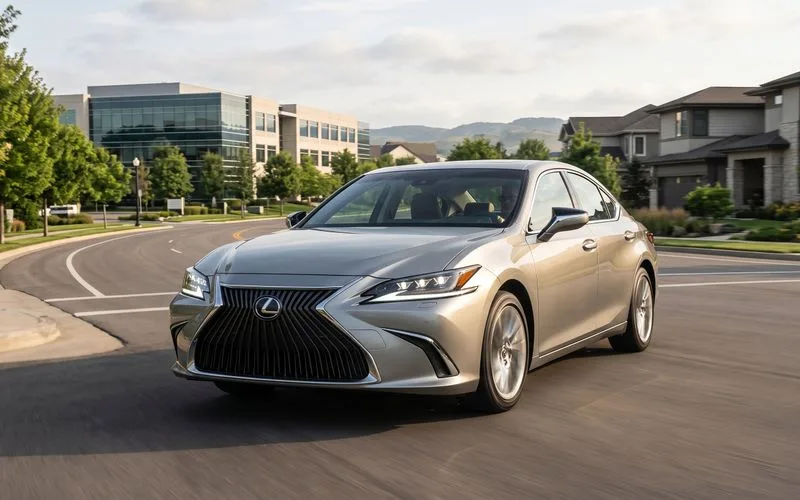 Lexus ESMid-Size Luxury SedanBetter at: Ownership cost
If the S90's appeal is a quiet, comfortable, well-equipped luxury sedan, the ES delivers that with roughly 44 MPG on regular fuel, a bigger trunk and none of the depreciation or reliability risk.
Compare 3.21B+
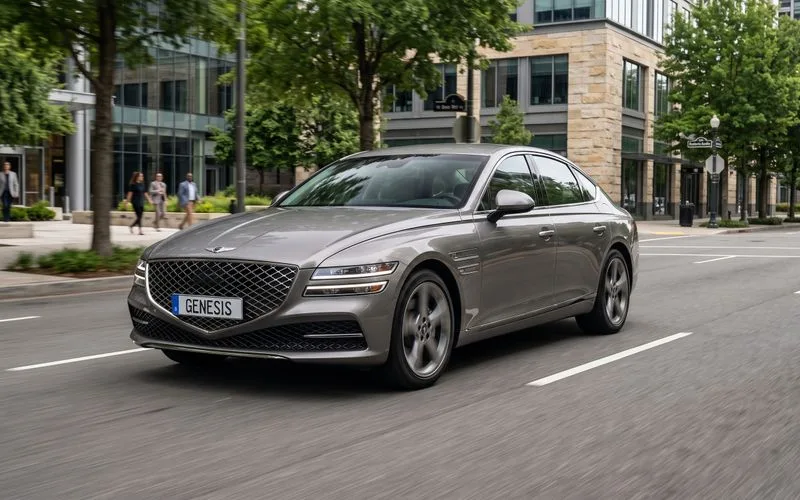 Genesis G80Mid-Size Luxury SedanBetter at: Long-term value
Nearly the same standard-content-for-the-money argument the Volvo makes, but with a stronger warranty, a real V6 option and a nameplate that is not being withdrawn from the market.
Compare 3.27B+
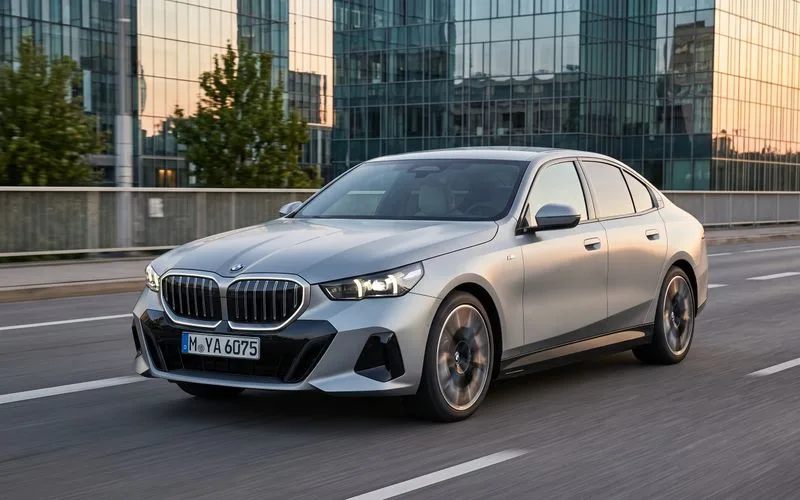 BMW 5 SeriesMid-Size Luxury SedanBetter at: Driving dynamics
For a buyer who actually drives the car themselves, the 5 Series is a far better chassis with a 18.4 cu ft trunk and resale value that holds.
CompareHow it's evolved
9 scored model years · 2017–2025
Subject scores by year
Hover or tap a score to see what moved it versus the year before. A corner mark flags a big swing.
| Year | Performance | Efficiency | Safety | Space | Cost | Reliability | Tech | Use-case | Driving | Value |
|---|---|---|---|---|---|---|---|---|---|---|
| 2025 | 79 | 53 | 72 | 72 | 20 | 50 | 70 | 59 | 65 | 55 |
| 2024 | 79 | 57 | 72 | 72 | 20 | 58 | 70 | 54 | 65 | 56 |
| 2023 | 78 | 56 | 75 | 72 | 20 | 57 | 70 | 54 | 65 | 55 |
| 2022 | 74 | 43 | 75 | 71 | 34 | 53 | 67 | 53 | 64 | 58 |
| 2021 | 73 | 43 | 75 | 71 | 34 | 52 | 58 | 52 | 63 | 60 |
| 2020 | 72 | 43 | 60 | 70 | 27 | 52 | 56 | 51 | 63 | 60 |
| 2019 | 73 | 42 | 60 | 71 | 20 | 56 | 56 | 51 | 62 | 60 |
| 2018 | 74 | 37 | 72 | 70 | 20 | 55 | 55 | 50 | 60 | 63 |
| 2017 | 57 | 22 | 70 | 64 | 33 | 56 | 51 | 49 | 59 | 63 |
Compare two years
Best fit & conditions
Higher scores mean a better fit for that use case. Learn more about use-case fit →
Subject profile
Academic Probation · NHTSA safety recalls
Dec 23, 2025Back over prevention: softwareThe rearview camera image may not display when the vehicle is placed in reverse. As such, these vehicles fail to comply with the requirements of Federal Motor Vehicle Safety Standard number 111, "Rear Visibility."
Defect
Volvo Car USA, LLC (Volvo Car) is recalling certain 2021-2025 XC40, 2022 V90, 2022-2024 C40BEV, 2022-2025 S90, V90CC, XC60, 2023-2025 S60, V60, V60CC, XC90, and 2025 EC40, and EX40 vehicles. The rearview camera image may not display when the vehicle is placed in reverse. As such, these vehicles fail to comply with the requirements of Federal Motor Vehicle Safety Standard number 111, "Rear Visibility."
Risk
A rearview camera image that does not display reduces the driver's view behind the vehicle, increasing the risk of a crash.
Remedy
The software will be updated by a dealer or through an over-the-air (OTA) update, free of charge. Owner notification letters were mailed February 24, 2026. Owners may contact Volvo Carâs customer service at 1-800-458-1552. Volvo Car's number for this recall is R10333. Vehicle Identification Numbers (VINs) involved in this recall will be searchable on NHTSA.gov beginning February 16, 2026. This recall replaces previous NHTSA recall number 25V282. Vehicles previously repaired under recall 25V282 will need to have the new remedy performed.
NHTSA campaign 25V908000 ↗Manufacturer no. R10333413,151 vehicles potentially affected (all models in the campaign)Owners notified Mar 2, 2026Filed by Volvo Car USA, LLCFiled as S90Jun 12, 2025Service brakes · Service brakes, hydraulic: power assist: electric: control module: softwareIn certain driving scenarios while coasting down a hill and using "B" mode or "One Pedal Drive," the vehicle may lose brake function.
Defect
Volvo Car USA, LLC (Volvo Car) is recalling certain 2023 Volvo C40 BEV, 2025 EC40, 2023-2024 XC40 BEV, 2020-2026 XC90 PHEV, 2022-2026 XC60 PHEV, 2023-2025 S60 PHEV, 2024-2025 V60 PHEV, and 2025-2026 EX40 and 2025 S90 PHEV vehicles. In certain driving scenarios while coasting down a hill and using "B" mode or "One Pedal Drive," the vehicle may lose brake function.
Risk
A loss of brake function increases the risk of a crash.
Remedy
Owners are advised not to use "B" Mode (for plug-in hybrid vehicles) or "One Pedal Drive" (for pure electric vehicles) until the repair has been completed. The brake module software will be updated over-the-air (OTA) or by a dealer, free of charge. Owner notification letters were mailed July 15, 2025. Owners may contact Volvo Car's customer service at 1-800-458-1552. Volvo Car's number for this recall is R10329.
NHTSA campaign 25V392000 ↗Manufacturer no. R1032911,469 vehicles potentially affected (all models in the campaign)Owners notified Jul 15, 2025Filed by Volvo Car USA, LLCFiled as S90PHEVMay 8, 2025Back over prevention: softwareThe rearview camera image may not display when the vehicle is placed in reverse. As such, these vehicles fail to comply with the requirements of Federal Motor Vehicle Safety Standard number 111, "Rear Visibility."
Defect
Volvo Car USA, LLC (Volvo Car) is recalling certain 2021-2025 XC40, 2022 V90, 2022-2025 S90, V90CC, C40, XC60, 2023-2025 S60, V60, V60CC, XC90, and 2025 EC40 and EX40 vehicles. The rearview camera image may not display when the vehicle is placed in reverse. As such, these vehicles fail to comply with the requirements of Federal Motor Vehicle Safety Standard number 111, "Rear Visibility."
Risk
A rearview camera image that does not display reduces the driver's view of what is behind the vehicle, increasing the risk of a crash.
Remedy
The software will be updated by a dealer or through an over-the-air (OTA) update, free of charge. Owner notification letters were mailed June 27, 2025. Owners may contact Volvo Car customer service at 1-800-458-1552. Volvo Car's number for this recall is R10320.
NHTSA campaign 25V282000 ↗Manufacturer no. R10320413,151 vehicles potentially affected (all models in the campaign)Owners notified Jun 27, 2025Filed by Volvo Car USA, LLCFiled as S90Feb 19, 2025Visibility: glass, side/rear · Visibility: windshieldThe windows may be improperly secured and detach.
Defect
Volvo Car USA, LLC (Volvo) is recalling certain 2025 S90 vehicles. The windows may be improperly secured and detach.
Risk
Windows that detach can create a road hazard and increase the risk of a crash or injury. In addition, the front windshield may not properly support a passenger air bag deployment, increasing the risk of injury during a crash.
Remedy
Dealers will remove and reinstall the windows, free of charge. Owner notification letters were mailed March 24, 2025. Owners may contact Volvo's customer service at 800-458-1552. Volvo's number for this recall is R10307.
NHTSA campaign 25V104000 ↗Manufacturer no. R1030715 vehicles potentially affected (all models in the campaign)Owners notified Mar 24, 2025Filed by Volvo Car USA, LLCFiled as S90
11 recalls on other model years of the S90 (2017–2023)
Mar 24, 2025Electrical system: propulsion system: traction battery · Electrical system: softwareThe high-voltage battery may experience a short circuit within the battery module when the battery is fully charged and the vehicle is parked.
Defect
Volvo Car USA, LLC (Volvo Car) is recalling certain 2020-2021 S90, 2020-2022 S60, V60, XC60, XC90, and 2022 V90 plug-in hybrid vehicles. The high-voltage battery may experience a short circuit within the battery module when the battery is fully charged and the vehicle is parked.
Risk
A short circuit in a high-voltage battery increases the risk of a fire.
Remedy
Owners are advised not to charge their vehicles until the remedy has been completed. Dealers will inspect and replace the high-voltage battery module as necessary. In addition, dealers will update the software to monitor the battery. All repairs will be performed free of charge. Owner notification letters were mailed May 28, 2025. Owners may contact Volvo Car's customer service at 1-800-458-1552. Volvo Car's number for this recall is R10312.
NHTSA campaign 25V179000 ↗Manufacturer no. R103127,483 vehicles potentially affected (all models in the campaign)Owners notified May 14, 2025Filed by Volvo Car USA, LLCFiled as S90Oct 23, 2024Service brakes, hydraulic: pedals and linkagesThe pushrod screw joint, connecting to the brake pedal to the hydraulic brake unit, may be loose.
Defect
Volvo Car USA, LLC (Volvo Car) is recalling certain 2020 S60, V60, S90I, XC60 and XC90 hybrid vehicles. The pushrod screw joint, connecting to the brake pedal to the hydraulic brake unit, may be loose.
Risk
A loose brake pedal can result in a loss of braking function, increasing the risk of a crash.
Remedy
Dealers will tighten the brake pedal pushrod screw joint, free of charge. Owner notification letters were mailed December 17, 2024. Owners may contact Volvo Car customer service at 1-800-458-1552. Volvo's number for this recall is R10289.
NHTSA campaign 24V788000 ↗Manufacturer no. R10289291 vehicles potentially affected (all models in the campaign)Owners notified Dec 17, 2024Filed by Volvo Car USA, LLCFiled as S90PHEVOct 20, 2022Engine and engine cooling: engine: engine control module (ecu/ecm)An electronic control module (ECM) software error may prevent the combustion engine from starting, causing a loss of drive power.
Defect
Volvo Car USA, LLC (Volvo Car) is recalling certain 2022-2023 S60, V60, S90L, XC60, and XC90 vehicles. An electronic control module (ECM) software error may prevent the combustion engine from starting, causing a loss of drive power.
Risk
The vehicle may lose drive power as the high voltage battery is depleted, increasing the risk of a crash.
Remedy
Dealers will update the ECM software, free of charge. Owner notification letters are expected to be mailed December 8, 2022. Owners may contact Volvo Car's customer service at 1-800-458-1552. Volvo Car's number for this recall is R10198.
NHTSA campaign 22V793000 ↗Manufacturer no. R1019815,674 vehicles potentially affected (all models in the campaign)Owners notified Dec 9, 2022Filed by Volvo Car USA, LLCFiled as S90Sep 15, 2021Service brakes, hydraulic · Service brakes, hydraulic: antilock/traction control/electronic limited slipAn improperly welded rotor and shaft may separate within the integrated brake system.
Defect
Volvo Car USA, LLC (Volvo Car) is recalling certain 2021 S90L, 2020-2021 XC60, and XC90 vehicles. An improperly welded rotor and shaft may separate within the integrated brake system.
Risk
Separation of the rotor and shaft may cause a reduction in braking assistance and a loss of the Antilock Brake System (ABS) and Electronic Stability Control (ESC), increasing the risk of a crash.
Remedy
Dealers will replace the hydraulic unit, free of charge. Owner notification letters were mailed October 22, 2021. Owners may contact Volvo Car customer service at 1-888-458-1552. Volvo Car's number for this recall is R10120.
NHTSA campaign 21V716000 ↗Manufacturer no. R101209 vehicles potentially affected (all models in the campaign)Owners notified Oct 22, 2021Filed by Volvo Car USA, LLCFiled as S90Jun 2, 2021Electrical system: wiring: fuses and circuit breakers · Fuel system, gasoline: delivery: fuel pumpThe low-pressure fuel pump can blow a fuse and fail.
Defect
Volvo Car USA, LLC (Volvo Car) is recalling certain 2019-2020 V90, XC60, S60, V60, V60CC, S90, V90CC, S90L, and XC90 vehicles. The low-pressure fuel pump can blow a fuse and fail.
Risk
Failure of the low-pressure fuel pump can cause a stall, increasing the risk of a crash.
Remedy
Dealers will replace the fuse, free of charge. Owner notification letters were mailed July 2, 2021. Owners may contact Volvo Car customer service at 1-888-458-1552. Volvo Car's number for this recall is R10100.
NHTSA campaign 21V414000 ↗Manufacturer no. R1010085,550 vehicles potentially affected (all models in the campaign)Owners notified Jul 2, 2021Filed by Volvo Car USA, LLCFiled as S90Mar 12, 2020Forward collision avoidance: automatic emergency braking · Forward collision avoidance: software: pedestrian/cyclist/object/obstacle/ recognitionDue to a software/hardware incompatibility, the Automatic Emergency Brake (AEB) system may not detect obstacles and engage as intended.
Defect
Volvo Cars USA LLC (Volvo Cars) is recalling certain 2019-2020 S60, V60, V60 Cross Country, S90L, V90, V90 Cross Country, XC40, XC60, and XC90 vehicles. Due to a software/hardware incompatibility, the Automatic Emergency Brake (AEB) system may not detect obstacles and engage as intended.
Risk
If the automatic emergency braking system does not engage as intended, it can increase the risk of a crash.
Remedy
Volvo will notify owners, and dealers will update the Active Safety Domain Master (ASDM) software, free of charge. The recall began April 9, 2020. Owners may contact Volvo customer service at 1-800-458-1552. Volvo's number for this recall is R29998.
NHTSA campaign 20V144000 ↗Manufacturer no. R29998121,605 vehicles potentially affected (all models in the campaign)Owners notified Apr 9, 2020Filed by Volvo Car USA LLCFiled as S90Mar 20, 2019SeatsThe driver and passenger front seat rail rear flange nuts may not have been installed during assembly.
Defect
Volvo Car USA LLC (Volvo) is recalling certain 2018-2019 XC60 and S90 vehicles. The driver and passenger front seat rail rear flange nuts may not have been installed during assembly.
Risk
If the nuts are missing, in the event of a crash, the front seat structure and position may be affected, increasing the risk of injury.
Remedy
Volvo will notify owners, and dealers will inspect the front seat rails for missing flange nuts, installing them as necessary, free of charge. The recall began May 7, 2019. Owners may contact Volvo customer service at 1-800-458-1552. Volvo's number for this recall is R19931.
NHTSA campaign 19V220000 ↗Manufacturer no. R199312,297 vehicles potentially affected (all models in the campaign)Owners notified May 7, 2019Filed by Volvo Car USA LLCFiled as S90Nov 13, 2018Electrical system: softwareThe software installed in the Vehicle Connectivity Module (VCM) may have an error causing the Telematics and Driver Support Systems to function improperly. As a result, the GPS will not provide location information to emergency personnel in the event of an emergency.
Defect
Volvo Car USA LLC (Volvo) is recalling certain 2017-2019 Volvo XC90, S90, V60, V60 Cross Country, V90, XC40, XC60, and V90 Cross Country vehicles. The software installed in the Vehicle Connectivity Module (VCM) may have an error causing the Telematics and Driver Support Systems to function improperly. As a result, the GPS will not provide location information to emergency personnel in the event of an emergency.
Risk
If the GPS location is not provided to emergency personnel it can inhibit emergency response in the event of a crash or injury.
Remedy
Volvo will notify owners, and dealers will correct the software, free of charge. The recall began December 26, 2018. Owners may contact Volvo customer service at 1-800-458-1552. Volvo's number for this recall is R39917.
NHTSA campaign 18V800000 ↗Manufacturer no. R3991717,548 vehicles potentially affected (all models in the campaign)Owners notified Dec 26, 2018Filed by Volvo Car USA LLCFiled as S90Feb 16, 2017Air bags: side/windowThe bolts that secure the Inflatable Curtain (IC) air bags in place may break, possibly resulting in the IC air bag deploying improperly in the event of a crash. As, such, these vehicles fail to comply with the requirements of Federal Motor Vehicle Safety Standard (FMVSS) number 226, "Ejection Mitigation."
Defect
Volvo Car USA LLC (Volvo) is recalling certain 2017 XC90, S90, and V90 Cross Country vehicles. The bolts that secure the Inflatable Curtain (IC) air bags in place may break, possibly resulting in the IC air bag deploying improperly in the event of a crash. As, such, these vehicles fail to comply with the requirements of Federal Motor Vehicle Safety Standard (FMVSS) number 226, "Ejection Mitigation."
Risk
If the IC air bags do not deploy properly in the event of a crash, the vehicle occupants have an increased risk of injury.
Remedy
Volvo will notify owners, and dealers will inspect and replace the bolts, as necessary, free of charge. The recall is expected to begin April 1, 2017. Owners may contact Volvo customer service at 1-800-458-1552. Volvo's number for this recall is R89714.
NHTSA campaign 17V104000 ↗Manufacturer no. R8971410,476 vehicles potentially affected (all models in the campaign)Owners notified Apr 14, 2017Filed by Volvo Car USA LLCFiled as S90Nov 2, 2016Seat belts: front: buckle assemblyOn the affected vehicles, the front passenger seat belt buckle attaching stud may loosen, allowing the buckle to separate from the seat belt bracket. As such, these vehicles fail to comply with the requirements of Federal Motor Vehicle Safety Standard (FMVSS) number 210, "Seat Belt Assembly Anchorages" and number 209, "Seat Belt Assemblies."
Defect
Volvo Car USA LLC (Volvo) is recalling certain model year 2016-2017 XC90, S90, XC60, V60 Cross Country, V60, S60 Cross Country, S60, and S60 Inscription vehicles manufactured February 16, 2015, to August 22, 2016. On the affected vehicles, the front passenger seat belt buckle attaching stud may loosen, allowing the buckle to separate from the seat belt bracket. As such, these vehicles fail to comply with the requirements of Federal Motor Vehicle Safety Standard (FMVSS) number 210, "Seat Belt Assembly Anchorages" and number 209, "Seat Belt Assemblies."
Risk
If the seat belt buckle separates from the bracket, the front seat passenger may not be adequately restrained in the event of a crash, increasing their risk of injury in the event of a crash.
Remedy
Volvo will notify owners, and dealers will inspect the front passenger seat belt buckle stud, replacing the seat belt buckle as needed, free of charge. The recall began January 2017. Owners may contact Volvo customer service at 1-800-458-1552. Volvo's number for this recall is R89708.
NHTSA campaign 16V798000 ↗Manufacturer no. R8970874,027 vehicles potentially affected (all models in the campaign)Owners notified Dec 16, 2016Filed by Volvo Car USA LLCFiled as S90Sep 26, 2016Air bags · Equipment: appliance: air conditionerIn the affected vehicles, the drain hose for the air conditioning may leak into the passenger compartment due to a drain hose installation error during manufacturing.
Defect
Volvo Cars of North America, LLC (Volvo) is recalling certain model year 2016-2017 Volvo XC90 and S90 vehicles manufactured April 15, 2015 through September 19, 2016. In the affected vehicles, the drain hose for the air conditioning may leak into the passenger compartment due to a drain hose installation error during manufacturing.
Risk
Significant water drainage into the passenger compartment may adversely affect air bag deployment in the event of a crash, increasing the risk of occupant injury.
Remedy
Volvo will notify owners, and dealers will inspect the air conditioning drain hose for proper installation, replacing the hose as necessary, free of charge. The recall is expected to begin on November the 14, 2016. Owners may contact Volvo at 1-800-458-1552. Volvo's number for this campaign is R89707.
NHTSA campaign 16V690000 ↗Manufacturer no. R8970743,766 vehicles potentially affected (all models in the campaign)Owners notified Nov 21, 2016Filed by Volvo Car USA LLCFiled as S90
Source: NHTSA Office of Defects Investigation recall database, model years 2017–2025. Recalls are listed by model year as the manufacturer filed them; whether a specific car is affected depends on its VIN — check a VIN at nhtsa.gov ↗. NHTSA model names matched to this page: S90, S90PHEV.
Detailed scoring by subject
1Performance & PowertrainThe S90's best-graded category.3.35B+
The scored powertrain is the T8 AWD plug-in hybrid: a 2.0L four-cylinder driving the front axle plus a rear electric motor, rated 455 hp combined — unchanged for 2025, which was a nomenclature-only model year (Recharge badging dropped, Ultimate trim renamed Ultra). That figure is well above the 255–300 hp volume trims of the mid-size luxury sedan set.
Combined system torque of 523 lb-ft exceeds the top of the sedan normalization band, reflecting the rear electric motor's instant contribution stacked on the boosted four-cylinder. Rolling response is the T8's strongest objective trait.
Volvo's own 4.6-second estimate for the T8 AWD is echoed across U.S. News, Edmunds and CarBuzz; independent figures cluster 4.5–4.7 s, so the manufacturer number is representative rather than optimistic. That undercuts the E 350 (6.1 s) and 530i (5.9 s) volume trims by well over a second.
Reviewers consistently describe the T8 as quiet and near-vibration-free with well-blended EV-to-engine handoffs and unusually natural brake blending for a plug-in hybrid; power arrives linearly the moment the pedal moves thanks to the rear motor. It scores with — not above — the segment's best sixes because the underlying unit is still a hard-working boosted four rather than an inherently smooth I6, and the effortless character depends on battery state of charge.
The Aisin-sourced 8-speed automatic is smooth and unobtrusive at cruise and shifts cleanly under light load, but reviewers repeatedly flag a beat of hesitation before it kicks down for a passing move — the recurring complaint that keeps it a step behind the ZF 8HP in the 5 Series and the 9G-TRONIC in the E-Class.
All-wheel drive is standard on every 2025 S90 — both B6 and T8, Plus and Ultra — with no front-drive or rear-drive version sold, which is stronger coverage than the BMW 5 Series or E-Class where AWD is an option on the base car. It sits just below the mechanical quattro/HTRAC systems because the T8 achieves AWD through the road via an electric rear axle with no driveshaft, so rear-axle assist tapers with battery state of charge, and there are no terrain modes, low range or torque vectoring.
Two electrified choices are offered for 2025 — the B6 48-volt mild hybrid (295 hp) and the T8 plug-in hybrid (455 hp) — which covers the mainstream and the performance end but from a single 2.0L four-cylinder architecture, with no six-cylinder, no diesel and no battery-electric S90 (that role passes to the separate ES90). Rivals scoring higher field three genuinely distinct engines: the G80's I4, twin-turbo V6 and full EV, or the 5 Series' I4 MHEV, I6 MHEV and PHEV.
2Efficiency & RangeOne of the S90's weakest categories.1.54D
Charge-sustaining figure for the volume T8 AWD plug-in hybrid — the 2.0L turbo/supercharged four running with the 18.8 kWh pack depleted. Its charge-depleting rating is a far stronger 66 MPGe, but that side of the powertrain is credited at 2.2.3. 2025 is the final US model year (Chinese-built S90 dropped after production ended in late 2024) and carries over 2024's powertrain unchanged.
EPA city rating in charge-sustaining mode. The T8 is a heavy AWD executive sedan carrying a battery and a rear drive motor, so once the pack is empty its city number is only modestly better than a conventional turbo four.
EPA highway rating in charge-sustaining mode — the number that governs a long trip, where the 38-mile battery is spent in the first half hour and the engine does the rest of the work.
EPA's total range for the T8: 38 electric miles plus roughly 460 gasoline miles from the 15.9-gallon tank. Respectable in absolute terms, but short against plug-in rivals that pair a bigger battery with a similar tank.
The 18.8 kWh pack is EPA-rated at 38 electric miles, enough that the agency assigns 66% of the T8's miles to electricity — a genuine one-charge commuter, though a step behind the 40–50 mile plug-in leaders.
EPA's blended annual cost assumes the owner plugs in and takes 66% of miles on electricity. An owner who never charges pays $2,600/yr instead, since the engine needs premium — the gap between those two numbers is the whole ownership case for this car.
Split verdict: cheap electric miles (a full charge in about 5 hours on a 240V outlet, $1.87 per 25 miles) sit against an engine that requires premium unleaded, not merely recommends it. A garage-charging commuter gets most of the benefit; anyone without a plug is buying a 29-MPG car that drinks 91 octane. There is no DC fast-charge capability, so the 240V outlet is the only practical way to refill the pack.
3SafetyOne of the S90's strongest categories.2.87B-
NHTSA has never crash-tested the S90 in any model year of this generation; the 2025 T8 plug-in hybrid entry exists in the SafetyRatings database but every rating field reads "Not Rated". The 4.5★ placeholder follows the convention used for other untested luxury sedans in this dataset (A8, G90, LS, Panamera), reflecting that low-volume flagship sedans go untested rather than that they perform poorly.
Every crashworthiness result IIHS holds for the S90 is Good — driver- and passenger-side small overlap front, with Good structure and Good injury measures throughout — and the car was a Top Safety Pick+ in 2021, 2022 and 2023. But its file is frozen at the old protocols: the 2025 page carries only small overlap (from 2017 and 2018 tests), with no updated moderate overlap, no updated side test and no roof-strength entry, and the S90 appears on neither the 2024 nor the 2025 award list. Several shopping sites still repeat a "2025 Top Safety Pick+" claim; iihs.org contradicts it and wins. Scored at the top of the no-award band — genuinely good structure, but unverified against the tests that separate today's leaders.
Volvo's practice of making the safety suite standard rather than optional holds on the 2025 S90: the base Plus trim already includes City Safety AEB with pedestrian, cyclist and large-animal detection, BLIS blind-spot monitoring, cross-traffic alert, rear automatic braking, lane-keeping aid with lane-departure warning, road-sign recognition, driver-alert monitoring, Pilot Assist (adaptive cruise plus lane centering) and a 360-degree surround-view camera. Nothing on the safety list is paywalled behind the Ultra trim — one of the broadest standard suites in the mid-size luxury class, on par with the Genesis G80 and ahead of the German rivals that still option adaptive cruise.
IIHS rates the standard Collision Warning with Full Autobrake system Advanced — the middle tier — in the daytime pedestrian test, not Superior. It avoided the crossing adult at both 12 and 25 mph and the parallel adult at 25 mph, but only cut 12 mph off the 25-mph crossing-child impact and 8 mph off the 37-mph parallel-adult run. There is no nighttime pedestrian result and no rating under the current vehicle-to-vehicle protocol, so the strongest-performing part of a modern AEB evaluation is simply unmeasured here.
BLIS with steering support and cross-traffic alert with autobrake are standard on both trims, so the coverage includes active intervention rather than warning alone, and rear automatic braking backs it up when reversing. Marked down slightly against best-in-class because Volvo does not fit a rear-occupant safe-exit warning of the kind Genesis and Hyundai group brands now include.
Pilot Assist's centering is the weakest link in an otherwise strong suite. Reviewers and owners consistently describe it as over-eager to center-seek, producing a perceptible side-to-side rock in the lane, and it disengages readily where lane markings are faded or inconsistent. Lane-keeping aid and lane-departure warning are standard and work as intended, but the centering quality trails the BMW and Genesis systems that reviewers actually leave switched on.
The adaptive-cruise half of Pilot Assist is the good half: full-speed-range with stop-and-go, standard on every trim, and smooth in following distance and resume. Combined highway assist is where it slips — the steering component's inconsistency means the package is less trusted as a single integrated system than BMW's Driving Assistant Professional or Genesis Highway Driving Assist II, and it offers no lane-change assist.
No hands-free capability of any kind. Pilot Assist is a hands-on system that nags and then disengages if torque is not detected at the wheel. Volvo's announced Ride Pilot was scoped to the EX90 and California only, and had not been activated for customers as of the 2025 model year, so it was never on the table for a China-built sedan in its final year.
IIHS rates the S90's LED reflector headlamps Acceptable — and, unlike rivals where only the base trim disappoints, that single Acceptable rating applies to all trims, so there is no better lamp to buy up to. Low beams were rated inadequate on the right side of the straightaway and on the gradual left curve, with high-beam assist earning back some credit. Curve-adaptive lighting and automatic high beams are standard, which is why it clears Marginal, but this is below the segment's Good-rated norm.
Average sightlines heavily compensated by cameras. The steeply raked windshield brings thick A-pillars, the beltline and cowl are high, and the fastback-influenced rear pillars restrict the over-shoulder view — typical of the class rather than unusually bad. A 360-degree surround-view camera is standard rather than optional, and Volvo's angled mirror mounts preserve the forward quarter-window, so low-speed maneuvering is well covered even though the natural view rearward is not.
Workable but not effortless, and IIHS rates it Acceptable rather than Good. Two outboard positions have complete LATCH hardware with visible anchors needing no measurable pull force; the center position gets a tether only. IIHS flags that it is difficult to maneuver around the anchors, and a hands-on car-seat check found the top-tether strap's metal connector wedging under the fixed rear head restraint during a forward-facing install. The long-wheelbase body's generous rear legroom is the redeeming factor — a rear-facing convertible fits without pushing the front passenger forward.
4Space & ComfortOne of the S90's strongest categories.2.86B-
The S90 is a five-seat sedan across both 2025 trims (T8 Plus and T8 Ultra); the optional Lounge package adds a rear armrest but does not change capacity to a four-seat layout. That tops the sedan normalization band.
37.8 in is mid-pack for the segment and is measured with the panoramic moonroof that is standard on every 2025 S90, so there is no sunroof-delete figure to quote — the number buyers get is the number published. Adequate rather than airy.
42.2 in sits comfortably above the segment midpoint, and the Ultra's power cushion extender (plus 12-way power adjustment with memory standard from Plus) makes the space usable for tall drivers rather than merely measurable.
Unusually for a low-roof executive sedan, rear headroom matches the front at 37.8 in and lands in the upper part of the sedan band; the S90's flat roofline aft of the B-pillar preserves rear-seat height where more coupe-profiled rivals taper it away.
This is the S90's defining space advantage: the US car has been the China-built long-wheelbase body — stretched 4.7 in behind the B-pillar — since the 2018 model year, so 40.4 in of rear legroom beats the BMW 5 Series, E-Class and A6 by roughly three to four inches and approaches full-size territory. Reviewers single it out as room for five adults rather than four plus a jump seat.
13.5 cu ft is one of the smallest trunks in the mid-size luxury class and the clear weak point of the package — the long wheelbase bought rear legroom, not luggage space. The T8 is not penalized further because Volvo's SPA platform carries the plug-in battery in the center tunnel rather than under the trunk floor, so the PHEV matches the mild-hybrid figure; a wide opening and 60/40 folding seatbacks partly offset the volume.
Small-item storage is the S90's most consistently criticized practical trait: the center console bin is shallow enough that reviewers report it will not swallow a pair of sunglasses, and there is little else up front beyond a wireless charging pad and reasonable door pockets. Nothing here qualifies as a clever solution — no underfloor bins, no fold-flat surfaces, no onboard power beyond the PHEV's charging hardware — so it scores below the segment's competent-but-plain norm rather than merely at it.
Volvo's chairs are a segment benchmark and the S90's are repeatedly called out as such front and rear, with 12-way power, driver memory and heat standard from the Plus, passenger lumbar and a cushion extender on Ultra, and front massage via the Ultra's Lounge package. The long-wheelbase rear bench is genuinely a place adults sit for hours rather than a nominal three-across. It trails only the S-Class/7 Series tier and edges past the 5 Series and E-Class here.
The S90 is deliberately tuned toward comfort, and the long wheelbase plus soft primary springing absorbs big impacts and city-street coarseness well; the optional four-corner air suspension (Ultra only) turns it genuinely plush in Comfort mode. It stops short of the class best because the standard passive setup keeps a trace of firmness and reviewers rate it as not quite the most compliant in the segment — and on the volume T8 Plus the air springs are not available.
Highway refinement is good — reviewers describe the cabin as very quiet, and the T8's ability to run on battery power for its first ~38 miles removes engine noise from most commuting entirely. It lands mid-pack rather than high because the S90 is not as thoroughly isolated as the German and Lexus benchmarks, and the four-cylinder is audible and a little coarse when the hybrid system calls for full power.
The comfort equipment is rich and, crucially, mostly standard rather than optional: even the entry T8 Plus includes four-zone climate control, heated front AND rear seats, a heated steering wheel and a panoramic moonroof, with ventilated front seats and Nappa leather standard on Ultra and front massage plus ventilated rear seats in the Lounge package. As a plug-in hybrid it can also pre-condition the cabin on wall power via the app. Only the lack of any rear-seat comfort package below Ultra keeps it out of the top band.
5Cost of OwnershipThe S90's lowest-graded category.0.00F
The T8 plug-in hybrid is the scored configuration and its entry grade lists at $66,845 delivered — roughly $7,350 above the mild-hybrid B6 Plus that opens the S90 range. That is $12,000 past the top of the sedan pricing band, so the item floors regardless of which end of the T8 walk you take.
The T8 is a two-grade walk and the Ultra carries the equipment S90 buyers actually order — head-up display, ventilated Nappa front seats, upgraded audio, crystal shifter — for a $5,550 step. As a China-built PHEV the 2025 S90 also earns no federal purchase credit (final assembly is in Daqing), so nothing offsets the sticker.
Volvo's three years/36,000 miles of complimentary factory scheduled maintenance absorbs most routine service through year three, but premium-fuel European service rates, 19–20-inch tire fitments and the T8's added plug-in hardware push the back half up. Estimates diverge widely, so this sits between KBB's model-year figure and CarEdge's much milder nameplate projection, nudged up for PHEV complexity.
The single biggest cost of owning this car. Nameplate residual sources cluster near 47–48%, but KBB's model-year-specific projection for the 2025 car is far harsher at 37%, and the T8 carries three extra drags: luxury PHEV powertrains discount hardest on the used market, the nameplate was discontinued for North America after 2025, and no federal purchase credit ever propped up its transaction prices. Splitting toward the model-year figure.
Volvo's New Vehicle Limited Warranty runs a year longer than the 3/36 mainstream norm and matches the German luxury standard, with 24/7 Roadside Assistance Plus running the same term.
The plug-in hardware carries the federally mandated 8-year/100,000-mile floor, which is what earns the score here. Volvo publishes no standalone powertrain warranty in the US, so the T8's engine, transmission and AWD hardware fall out of coverage at 50,000 miles — well short of rivals with separate 5–10 year powertrain terms.
The strongest line in the category and a genuine advantage over the German mid-size luxury sedans, which include no scheduled maintenance at all: Volvo covers the first three services (10k/20k/30k miles) within 3 years/36,000 miles, pairs it with 4 years/50,000 miles of Roadside Assistance Plus, and bundles Google built-in with a multi-year connected-services term. It stops short of 90-plus because there is no charging credit or EV-style perk for the T8, and Volvo cut the program to 2 years/20,000 miles for MY2026 — 2025 is the last year of the longer term.
$72,395 volume-trim price minus its estimated resale value after 5 years (42% retained, or about $30,406) leaves about $41,989 in depreciation. Add the projected $6,600 in 5-year maintenance and repairs, and owning this vehicle for 5 years costs about $48,589 in total.
6Reliability & QualityOne of the S90's weakest categories.1.38D
Genuinely mixed signals, which is what puts it mid-band rather than low. The two model-specific reads are average — J.D. Power scores the 2025 S90 78/100 for quality and reliability, and Consumer Reports calls it "about average" — and a ninth-year carry-over design in its final model year is usually a sorted one. Against that, CR has no detailed trouble-spot data for the car at all (sample too small to be statistically confident), so the model-level read rests on thin evidence, and every brand-level signal points down. The scored T8 is also the configuration J.D. Power singles out as the worst-performing powertrain type.
Volvo is bottom-third in every current dependability and initial-quality study, and is trending worse rather than better: 242 PP100 (23rd of 31) in the 2025 VDS became 296 PP100 in the 2026 VDS — second-worst of 31 brands, beaten only by Volkswagen. Initial quality is no better, second-to-last at 258 PP100 against a 203 PP100 premium-brand average. The failures are concentrated in software and electronics rather than mechanicals, which is a real mitigation for catastrophic-failure risk but not for the ownership experience this item measures. A brand that built its marketing on dependability now ranks next to last.
Four NHTSA campaigns touch the 2025 S90, and this item's low band fits on both counts it names — major and repeated. The brake campaign (25V392) explicitly lists "2025 S90 PHEV", i.e. the exact configuration scored here: coasting downhill in B mode for over 100 seconds could cause a loss of brake function, serious enough that NHTSA issued its own urgent public warning telling owners to stop using regenerative braking, and a crash was reported afterward. The rearview-camera campaign then had to be re-issued in December 2025 because the first remedy did not work, so cars already repaired needed a second visit. Held above the floor only because every defect is software or assembly-process, remedied free and mostly over the air — none is an engine, fire or structural failure.
Split verdict between the engine and the electrification bolted to it. The 2.0-litre VEA four has been in service since 2015 with no systemic failure mode and a real high-mileage record, but in T8 form it is compound-charged (turbo plus supercharger) for 455 hp of system output — the most stressed state of tune the family sees — and it carries a rubber timing belt with a 10-year/100,000-mile replacement interval where a tensioner or idler failure is an interference-engine writeoff. The plug-in hardware is where the documented failures cluster: electric rear axle drive (ERAD) units and high-voltage packs, with owners reporting pack failure shortly past the 8-year/100,000-mile coverage and $10,000–$15,000 to replace. Mixed history, not a known-bad powertrain, so the low end of the middle band.
The best thing about the car and the reason it still reads as a $70,000 vehicle nine years into its life: open-pore wood, genuine or Nappa leather, brushed metal, finely grained plastics and the Orrefors crystal shifter, with the good materials present on the entry Plus grade rather than reserved for Ultra. Short of the top of the band because the cabin architecture dates to 2016 and the US never received the April 2025 second facelift that brought the newer front end and 11.2-inch screen to other markets, so rivals have moved the presentation on even where they have not moved the material quality.
Physically the assembly is good — reviewers and owners of the Daqing-built car report no rattles, squeaks or creaks and consistent panel work — but this item also cites initial-quality reports, and there Volvo is second-to-last in the industry at 258 PP100. Those complaints are overwhelmingly infotainment and connectivity rather than trim misalignment, which is why this lands mid-band rather than low, but the 2025 car does carry one genuine assembly-process defect: recall 25V104, windows not properly secured and able to detach from the body. Solid hardware, poor measured initial quality.
Adequate rather than good. 281 retailers across 48 states is nationwide coverage but thin against BMW's and Mercedes' networks, and thin enough that rural owners of a low-volume flagship travel for warranty work. Service satisfaction is measurably below the premium average — 860 against 878 in the 2025 CSI, in a segment where only five brands beat the average and Volvo was not one of them. The specific drag for this car is that the S90 was discontinued in North America after 2025 over poor sales and the tariffs on Chinese-built vehicles, so a retailer network already unfamiliar with the nameplate will see fewer of them every year.
Normal for the class, which is the bottom of the middle band rather than the low band. RepairPal puts the S90 at $976/yr in scheduled maintenance plus unscheduled repair — exactly the luxury full-size car average — and Volvo has an unusually healthy independent parts ecosystem for a European brand (IPD, FCP Euro, Skandix) that Alfa Romeo and Jaguar owners do not enjoy. Pulling the other way: Volvo's brand average of $769/yr means the S90 costs more to keep than a typical Volvo, the T8's high-voltage pack is a $10,000–$15,000 exposure once the 8-year term lapses, and a China-built nameplate now withdrawn from the US market with tariffs on its parts pipeline is a long-run supply risk no other mid-size luxury sedan here carries.
7Technology & InfotainmentGrades above the middle of the scale.2.77B-
The US-market 2025 S90 is the final model year of the SPA-generation car and keeps the original 9-inch vertically oriented center display on every trim; the 11.2-inch screen from the April 2025 second facelift was never offered in North America because the S90 was discontinued here.
Google built-in (Android Automotive) gives the S90 genuinely good software — Google Maps, Assistant and Play Store apps native on the head unit — but the hardware around it is dated for a mid-size luxury sedan: a 9-inch portrait tablet, climate and seat functions buried in on-screen menus, few physical shortcuts, and occasional cold-boot lag reviewers note on the older SPA infotainment module.
Both Apple CarPlay and Android Auto are standard on the 2025 S90 — CarPlay was added to Google built-in cars by over-the-air update and has since gained driver-display map projection — but both require a USB cable. Volvo's factory wireless CarPlay is limited to the newer EX90, EX30 and 2025 XC40, not the SPA-platform S90.
Native navigation is Google Maps itself, with live traffic and over-the-air map updates, and voice control is Google Assistant — natural-language, capable of climate, media, phone and destination commands. This is the strongest native voice/nav combination in the segment; most owners have no reason to fall back on phone projection.
The top-end Bowers & Wilkins 1,410-watt 19-speaker system is one of the best factory audio installations sold at any price, and the 600-watt 14-speaker Harman Kardon middle step is standard on Ultra and optional on Plus. The 220-watt 10-speaker base system in the volume Plus trim is only adequate for a $65k luxury sedan, which keeps this short of the top band.
A 12.3-inch full-digital driver display is standard on both trims and is crisp and legible, with Google Maps and (post-update) Apple Maps able to render in it. Configurability is limited compared with BMW/Audi/Mercedes clusters — Volvo offers a small set of fixed layouts rather than freely arrangeable widgets.
S90s from model year 2022 on are OTA-capable, and Volvo ships updates roughly quarterly that go well beyond maps — the 2025 Volvo Car UX release rewrote the interface for ~2.5 million cars, and Volvo is now selling driver-assistance features and preparing Gemini via the same channel. It stops short of Tesla-grade whole-vehicle updating (chassis/powertrain calibrations still need a workshop visit on this platform).
The Volvo Cars app covers the core set well and adds PHEV-specific value: remote start and preconditioning, lock/unlock, vehicle locate, charging status and departure/charge timers, send-to-car destinations, and service booking. Owner reports of sluggish or failed connections are common, and there is no true phone-as-key on the S90, so it sits below the polished-plus-digital-key top band.
Wireless phone charging is standard on both trims and USB-C ports are provided front and in the rear seat, which covers a four-passenger sedan adequately. There is no household AC outlet and the port count is modest next to rivals that fit four or more USB-C outlets plus 115V power.
Proximity key with push-button start and remote start are standard on both trims, and power trunk operation is available on Ultra. Phone-as-key is not offered on the SPA-platform S90 — Volvo's digital key arrived with the newer EX-series — which caps this in the mid band.
A 360-degree surround-view camera is standard rather than optional on both trims, alongside front, rear and side park-assist sensors and Pilot Assist for traffic. Camera resolution is the older SPA-era hardware and is noticeably softer than the latest BMW/Mercedes systems, and there is no fully automated parking on the volume trim.
A head-up display is standard on the Ultra but is not available on the volume T8 Plus trim, so a buyer must step up roughly $5,500 to get it. It is a good unit when fitted — it now shows CarPlay call information after the OTA update — but it is a top-trim-only item.
8Use-Case FitMid-pack among this car's ten categories.2.00C
The best rear-seat real estate in the segment does most of the work here: the US-market S90 has been the long-wheelbase body since 2018, and its 40.4 in of rear legroom (cat4.1.5 = 84) beats every mid-size luxury rival — G80 38.7, A6 and 5 Series 37.4 — which is exactly the margin that decides whether a rear-facing seat forces the front passenger forward. Rear headroom matches the front at 37.8 in, the doors on the stretched body open wide, and LATCH usability rates 72 in cat3.3.3. What pulls it back from the ES's 76-plus territory is the 13.5 cu ft trunk (cat4.2.1 = 35), the smallest in the peer group — a full-size stroller plus a weekly shop is a real squeeze, and there is no hatch to fall back on.
Volvo's traditional strength and the S90's strongest family argument: the full driver-assist suite is standard on the entry T8 Plus rather than optioned onto a higher trim, which is why cat3.2.1 (standard ADAS breadth) rates 92 — the highest in the real-scored mid-size luxury sedan set — with blind-spot and cross-traffic coverage at 86. Every crashworthiness result IIHS holds for the car is Good. It falls short of a clean 88-plus because those results are frozen at the pre-2022 protocols: no updated moderate-overlap, side or roof entry, no 2024 or 2025 Top Safety Pick, and NHTSA has never crash-tested the car in this generation. Excellent standard equipment, unverified current crash credentials.
Rear-seat provision is genuinely class-leading — quad-zone automatic climate, power rear-window sunshades and rear USB-C charging are standard, heated rear seats come with the Ultra, and the panoramic moonroof is fitted to every car; cat4 rates climate & comfort features 88 and front seat comfort 88. Combined with 40.4 in of rear legroom, four adults tour in it comfortably. The ceiling is the luggage: 13.5 cu ft is roughly two large cases, so a family of four packing for a week travels with bags in the cabin or on a roof box, and that is what separates it from the ES (16.8) and 5 Series (18.4).
A plug-in hybrid is at its best in exactly this mission: 38 EPA electric miles cover most American round-trip commutes without the engine starting at all, so the daily experience is a silent, single-speed torque delivery with the 523 lb-ft rear motor doing the low-speed work, plus Pilot Assist for stop-and-go. Seat comfort rates 88 and the long 120.5-in wheelbase smooths broken pavement (ride 78). It sits below the Lexus ES's 90 because the T8's engine-to-motor handoffs are its known rough edge once the battery depletes — cat1 rates transmission behavior 74 and powertrain refinement 78, the weakest pair in this peer group — and because the 9.0-in portrait screen (cat7.1.1 = 24) puts more daily functions behind a touch interface than rivals do.
Split verdict, and which half applies depends entirely on whether the owner can charge at home. With a nightly plug the 38-mile battery covers a typical commute on electricity and the EPA's blended annual energy bill lands near $1,650 — cheaper per mile than any non-hybrid rival here. Without one, the charge-sustaining figure is 29 MPG combined on required premium fuel, which is merely average for the class and worse than the ES 300h's ~44 MPG on regular. Consumables push it down further: this is a 4,650 lb AWD car on staggered premium tires, insurance runs about $3,250/yr, and five-year maintenance and repair is roughly $6,600. Good, conditionally — not the outright cheap commuter the Lexus is.
The long-wheelbase body the US gets is the problem: 200.4 in overall on a 120.5-in wheelbase makes it longer than the 5 Series (199.2) and A6 (195) and nearly as long as the redesigned ES, so it overhangs a standard city space and needs the full width of a garage aisle. The 38.7 ft turning diameter is respectable for that length, and the camera and parking provision is good — cat7 rates camera & parking aids 80, with a 360-degree system and park assist — but outward visibility is only average at 70 because of the high beltline and thick rear pillars. Manageable with the cameras, never easy.
Not a work vehicle in any meaningful sense. There is no bed, no factory tow package offered through Volvo's US accessory catalog for the sedan, and payload provision ends at the segment's smallest trunk — 13.5 cu ft, behind the G80's 13.1 only by a rounding margin and well behind the 5 Series' 18.4. Third-party spec sources do list a nominal light rating (1,650–2,000 lb depending on source, versus the 2,100 kg braked figure European and Australian markets publish for the T8 with a factory towbar the US does not get), which is technically more than the zero-rated A6, ES and 5 Series carry — but a sub-2,000-lb rating with no factory hitch means a small utility trailer at most. The 455-hp powertrain has effortless capacity under load; nothing else about the car does.
The weakest work-durability case in the mid-size luxury sedan set, and the data in this vehicle's own reliability category is why. Volvo sits bottom-third and is trending worse in dependability — 242 PP100 in the 2025 VDS, 296 PP100 in 2026 — and four NHTSA campaigns touch the 2025 S90, one of which names the PHEV configuration explicitly. The T8 stacks a turbocharged-and-supercharged 2.0L, an 18.8 kWh pack and a rear electric axle, which is more to break under abuse than the ES's proven Toyota hybrid (52) or even the G80's 2.5T (42). The base VEA four has a real high-mileage record and the cabin materials are excellent, but leather, open-pore wood and a nine-year-old low-volume flagship's parts pipeline are the opposite of fleet-proof.
Essentially nothing on offer. No bed, no factory hitch, no roof rails (the accessory load carrier clamps to the door frames rather than to fitted rails), no onboard 110V outlet, no washable surfaces anywhere — the S90's interior is Nappa leather or a wool blend over open-pore wood. Cargo access is trunk-only through a conventional lid, which rules out most jobsite loads regardless of volume. The power-folding rear seatbacks and 12V outlet are the entire list of work-adjacent provisions.
The mission the S90 was built for. Volvo's front seats are the segment benchmark and rate 88 in cat4 — orthopaedically shaped, with available massage and ventilation on the Ultra — and the long wheelbase plus quad-zone climate and rear sunshades keep all four occupants fresh for a full day. Total range is around 500 miles on a 15.9-gal tank plus the battery, so it is a genuine two-stop cross-country car. It stops short of the 5 Series' 90 and the ES's 89 on two counts also visible in the other categories: cabin quietness is good but not class-best at 76, and Pilot Assist's lane centering rates only 66 — it is a lane-keeping aid that pings back to the driver rather than the confident hands-on centering BMW and Genesis offer for fatigue relief.
Better than the pavement-bound norm for the class, without pretending to be a Cross Country. All-wheel drive is standard on every T8 — not an upcharge as on the ES — via a dedicated rear electric axle, and cat1 rates AWD provision 82. Ground clearance of 5.9 in is above the 5 Series' 5.5, enough for a rutted trailhead road or an unplowed driveway, and Volvo's Nordic-market accessory ecosystem means a proper load carrier, roof box, bike and ski carriers are all cataloged for the sedan. A nominal sub-2,000 lb rating covers a small utility or teardrop trailer in markets that fit the hitch. What it is not is capable off pavement: a 4,650 lb low-slung sedan on 19–20 in wheels with no drive modes for loose surfaces and no underbody protection.
The S90's most consistent practical weakness, and the reason Volvo sold a V90 wagon alongside it. At 13.5 cu ft the trunk is the smallest of the real-scored mid-size luxury sedans — behind the A6 (14.6), ES (16.8) and 5 Series (18.4) — and no amount of shape compensates, though reviewers do note the space is wide and low so what is there gets used. The redeeming features are real but modest: power-folding 60/40 rear seatbacks are standard rather than optional, opening a pass-through for skis or lumber, and a roof box is available. There is no hatch, no underfloor bin of consequence, and the PHEV packaging leaves no spare-tire well storage.
9Driving ExperienceMid-pack among this car's ten categories.2.40C+
The T8 is secure and well-tied-down — double-wishbone front/multi-link rear geometry, standard AWD and enough roll stiffness to avoid float mean it holds a line with no drama — but the US long-wheelbase body carries roughly 4,700 lb of curb weight and a comfort-biased tune, and reviewers consistently note it resists direction changes more than its rivals. That places it with the Lexus ES and Genesis G80 rather than the 5 Series or A6, whose chassis were engineered to be enjoyed as well as endured.
Accurate and consistent off-center, but deliberately isolated: reports split between decent on-center weight with mild fatigue on long drives and steering that is simply light and short of road feel. Either way there is no feedback to work with, which is the same numb-but-precise verdict the ES and G80 earn and a clear step behind the A6's 80.
Volvo's blending in the later Recharge-era T8 is genuinely good — testers cannot detect the regen-to-friction handover, which is the hard part of a plug-in hybrid brake pedal and something earlier T8s were criticized for. It stops short of the top band because there is no published instrumented 60-0 figure for this car, the mass being arrested is substantial, and Volvo hands the friction system the job entirely below roughly 3 mph and above 93 mph as well as in any hard stop, so pedal effort is not perfectly uniform across a panic application.
In steady driving the rear motor gives linear thrust from the instant the pedal moves and electric-to-hybrid handoffs pass unnoticed, which is why reviewers call it near-vibration-free. Two calibration flaws keep it out of the 80s that the ES and E-Class occupy: the first engine wake-up out of pure-EV running is rough and delayed, and the 8-speed automatic hesitates before kicking down outside Power mode, so full thrust is not always there on demand.
Silent on battery and hushed at a cruise, with no vibration reaching the controls — consistent with the 76 this car earns for cabin quietness. What holds it to the middle of the segment is character rather than volume: a twincharged 2.0-liter four making 455 hp sounds like a hard-working four when extended, and reviewers note the sound and feel differ from the inline-sixes rivals use at this price.
38.7 ft is near the wide end of the sedan band, and the reason is structural: every US S90 since 2018 is the long-wheelbase body, 120.5 in between the axles and 200.4 in overall, so it turns about 1.3 ft wider than the 37.4 ft short-wheelbase car sold in Europe. Unlike the E-Class and A6, no rear-axle or all-wheel steering option is offered to claw any of it back.
Three of the four things this item measures are strengths — Volvo's seats are among the best in the industry with a wide adjustment range (a power cushion extender on Ultra), the dash lays out cleanly ahead of the driver, and sightlines and ingress are good for a low sedan. The deduction is control placement: climate and even seat, mirror and wheel adjustment live in the portrait touchscreen, with common functions several menus deep, so routine tasks pull the driver's eyes off the road in a way the ES's and G80's physical controls do not.
The 455-hp T8 is genuinely quick — 4.6 s to 60 mph, quicker than any volume-trim rival here — but speed is not the same as involvement, and every reviewer reaches for the same vocabulary: calm, serene, a cruiser. Numb steering, a hesitant downshift and a four-cylinder that sounds industrious rather than charismatic mean nobody takes the long way home in one. It sits above nothing-happening appliances but below the G80 and well below the 5 Series.
10Value & Market PositionMid-pack among this car's ten categories.1.70C-
The strongest line in the category: the entry Plus grade already includes standard AWD, panoramic moonroof, leather, heated front AND rear seats, heated steering wheel, four-zone climate, power-folding second row, remote start, wireless charging, an 11-speaker premium system, Google built-in, and the full ADAS suite (Pilot Assist, BLIS, rear cross-traffic alert, surround-view camera, rear automatic braking). A 530i or E 350 charges extra for AWD, the pano roof, surround view and adaptive cruise individually. It stops short of the 90s because Car and Driver's own demerit list for the 2025 car reads "lacks luxurious features" — no massaging seats, no rear-seat entertainment, and air suspension confined to an option pack.
At the register the T8 argues well — $66,845 buys 455 hp, 523 lb-ft, standard AWD, plug-in capability and near-loaded equipment, undercutting a 550e or E 450 by several thousand while beating both on output. The case collapses over the ownership horizon: as a China-built PHEV it earns no federal purchase credit, KBB projects only ~37% residual on the 2025 car, and iSeeCars already has the nameplate depreciating faster than its luxury mid-size class. Strong content-for-price, poor value-retention-for-price, so it lands mid-band rather than above it.
Four configurations total — B6 Plus, B6 Ultra, T8 Plus, T8 Ultra — in one body style, one wheelbase and AWD only, spanning $59,495 to $72,395. The two powertrains and the $5,550 Plus-to-Ultra step are sensibly spaced, but there is no rear-drive entry car, no six-cylinder, no BEV, no performance variant and only a handful of standalone packages, where the 5 Series and E-Class each field three engines plus M/AMG grades and a far deeper options sheet. Take-it-or-leave-it by segment standards.
Effectively a rounding error in its own segment. Sources bracket recent annual US volume between 405 and 1,364 units — either figure is one to two orders of magnitude below the ~35,000–40,000 the 5 Series, E-Class and Lexus ES each move, and the trend is a long slide from 2,545 units in 2019. Volume was low enough that Volvo cited it alongside tariffs when cancelling US orders, so this is a model the market declined to accept rather than a steady mid-pack seller.
Volvo carries a genuine, decades-deep safety halo and real design credibility, and its US business is healthy on the SUV side — but it is a respected alternative brand rather than an aspirational one, without the badge pull of BMW, Mercedes or Porsche in this segment. Two things hold it to just above neutral: recent dependability studies have gone against the brand (second-worst in J.D. Power's 2026 VDS at 296 PP100; 15th in Consumer Reports' 2025 reliability list, well below Lexus, BMW and Acura), and for MY2025 the S90 itself did not carry an IIHS award, so even the safety halo is brand-level rather than earned by this model.
A slow-selling, run-out sedan negotiates well: TrueCar shows an average transaction roughly $2,950 under sticker (~5%), Edmunds forum data reports MY2025 lease allowances from $1,250 to $6,500 depending on configuration, and a Volvo Loyalty Bonus stacks on top. What keeps it out of the top band is that Volvo publicly pulled back incentives on US inventory as the China tariffs landed, so the deal environment tightened over the model year rather than deepening into the usual final-year clearance.
The worst line in the category. 2025 is the ninth model year of a generation launched for MY2017 on the original SPA platform, and the last US update was the MY2021 facelift — four years stale. The second facelift, revealed 17 April 2025 with a new front end and an 11.2-inch screen, was deliberately withheld from the US, Canada, Europe and Australia; production ended in late 2024 and 2025 is the final US model year, with the electric ES90 taking the slot. A buyer is purchasing an aging platform whose replacement is already announced and whose dealer and parts support becomes orphan support.
Solidly well-reviewed and never the pick of the class — the textbook middle of this band. Car and Driver rates it 8/10, U.S. News scores it 8.6/10 but ranks it only #8 among luxury mid-size cars and KBB #9, and reviewers converge on the same shape of verdict: outstanding interior materials and full-size rear space, undercut by an unrefined ride, imprecise steering, controls buried in the touchscreen and a 14-cubic-foot trunk. Awards are absent for this model year — no IIHS Top Safety Pick, no 10Best, no NACTOY.