

The verdict
A mixed-report mid-size luxury sedan, strong on performance and held back by ownership.
The 2024 S90 Recharge is a quiet, comfortable plug-in sedan with 455 hp, 38 miles of electric range, and more rear legroom (40.4 in) than its German rivals. It also comes with a long list of standard safety and comfort equipment. The downsides are money and age. It costs $66,745–$72,295, keeps only about 39% of its value after five years, and has a 13.5 cu ft trunk. It is also an eight-year-old design from a brand with weak dependability scores, and Volvo stopped selling it in the US after 2025. It makes most sense for commuters who can charge at home and who value rear-seat space and calm cruising over resale value.
Jump to scoresStrengths
- Rear seat that rivals full-size sedans
- Strong plug-in hybrid power
- Full safety suite standard on every trim
What holds it back
- Very costly to own
- Poor fuel economy once the battery runs out
- Small trunk and little cabin storage
Top alternatives
Cars shoppers cross-shop with the Volvo S90 3.11B
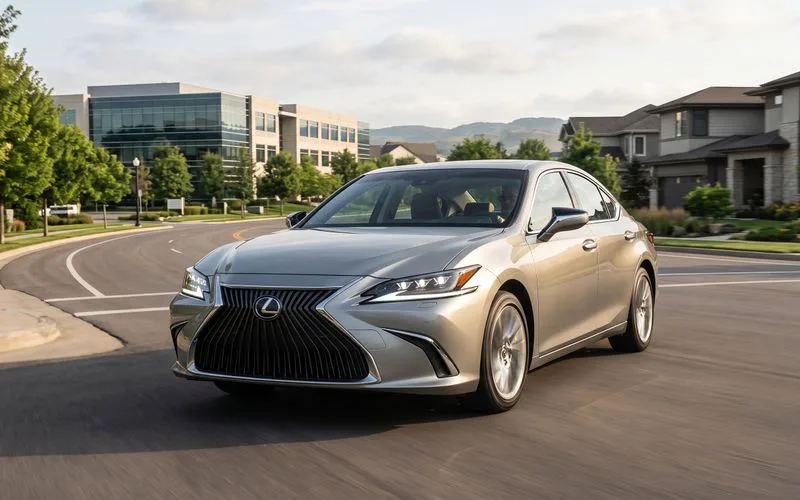 Lexus ESMid-Size Luxury SedanBetter at: Ownership cost
If the S90's appeal is a quiet, comfortable, well-equipped luxury sedan, the ES delivers that with roughly 44 MPG on regular fuel, a bigger trunk and none of the depreciation or reliability risk.
Compare 3.21B+
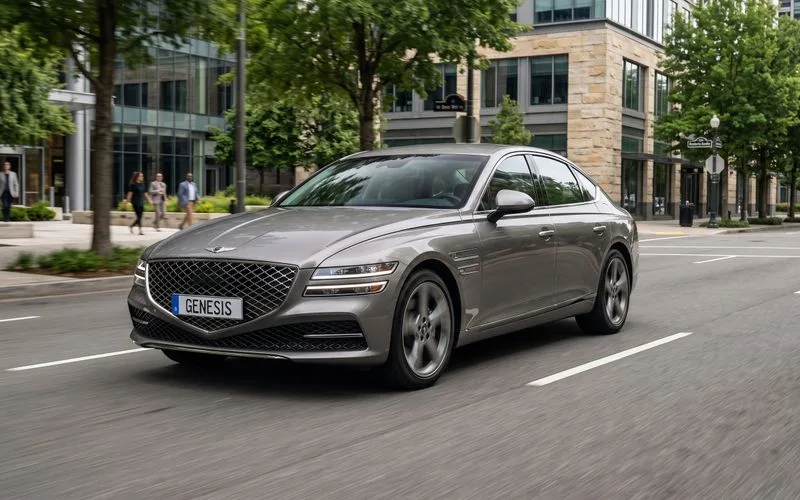 Genesis G80Mid-Size Luxury SedanBetter at: Long-term value
Nearly the same standard-content-for-the-money argument the Volvo makes, but with a stronger warranty, a real V6 option and a nameplate that is not being withdrawn from the market.
Compare 3.27B+
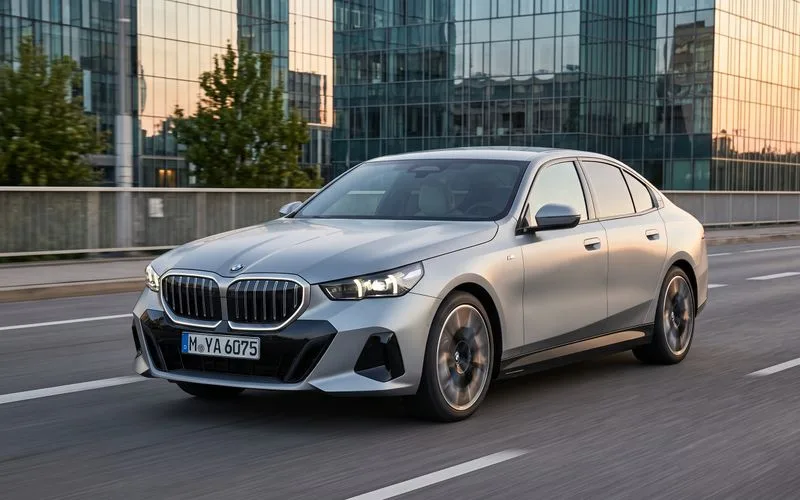 BMW 5 SeriesMid-Size Luxury SedanBetter at: Driving dynamics
For a buyer who actually drives the car themselves, the 5 Series is a far better chassis with a 18.4 cu ft trunk and resale value that holds.
CompareHow it's evolved
9 scored model years · 2017–2025
Subject scores by year
Hover or tap a score to see what moved it versus the year before. A corner mark flags a big swing.
| Year | Performance | Efficiency | Safety | Space | Cost | Reliability | Tech | Use-case | Driving | Value |
|---|---|---|---|---|---|---|---|---|---|---|
| 2025 | 79 | 53 | 72 | 72 | 20 | 50 | 70 | 59 | 65 | 55 |
| 2024 | 79 | 57 | 72 | 72 | 20 | 58 | 70 | 54 | 65 | 56 |
| 2023 | 78 | 56 | 75 | 72 | 20 | 57 | 70 | 54 | 65 | 55 |
| 2022 | 74 | 43 | 75 | 71 | 34 | 53 | 67 | 53 | 64 | 58 |
| 2021 | 73 | 43 | 75 | 71 | 34 | 52 | 58 | 52 | 63 | 60 |
| 2020 | 72 | 43 | 60 | 70 | 27 | 52 | 56 | 51 | 63 | 60 |
| 2019 | 73 | 42 | 60 | 71 | 20 | 56 | 56 | 51 | 62 | 60 |
| 2018 | 74 | 37 | 72 | 70 | 20 | 55 | 55 | 50 | 60 | 63 |
| 2017 | 57 | 22 | 70 | 64 | 33 | 56 | 51 | 49 | 59 | 63 |
Compare two years
Best fit & conditions
Higher scores mean a better fit for that use case. Learn more about use-case fit →
Subject profile
Academic Probation · NHTSA safety recalls
Dec 23, 2025Back over prevention: softwareThe rearview camera image may not display when the vehicle is placed in reverse. As such, these vehicles fail to comply with the requirements of Federal Motor Vehicle Safety Standard number 111, "Rear Visibility."
Defect
Volvo Car USA, LLC (Volvo Car) is recalling certain 2021-2025 XC40, 2022 V90, 2022-2024 C40BEV, 2022-2025 S90, V90CC, XC60, 2023-2025 S60, V60, V60CC, XC90, and 2025 EC40, and EX40 vehicles. The rearview camera image may not display when the vehicle is placed in reverse. As such, these vehicles fail to comply with the requirements of Federal Motor Vehicle Safety Standard number 111, "Rear Visibility."
Risk
A rearview camera image that does not display reduces the driver's view behind the vehicle, increasing the risk of a crash.
Remedy
The software will be updated by a dealer or through an over-the-air (OTA) update, free of charge. Owner notification letters were mailed February 24, 2026. Owners may contact Volvo Carâs customer service at 1-800-458-1552. Volvo Car's number for this recall is R10333. Vehicle Identification Numbers (VINs) involved in this recall will be searchable on NHTSA.gov beginning February 16, 2026. This recall replaces previous NHTSA recall number 25V282. Vehicles previously repaired under recall 25V282 will need to have the new remedy performed.
NHTSA campaign 25V908000 ↗Manufacturer no. R10333413,151 vehicles potentially affected (all models in the campaign)Owners notified Mar 2, 2026Filed by Volvo Car USA, LLCFiled as S90May 8, 2025Back over prevention: softwareThe rearview camera image may not display when the vehicle is placed in reverse. As such, these vehicles fail to comply with the requirements of Federal Motor Vehicle Safety Standard number 111, "Rear Visibility."
Defect
Volvo Car USA, LLC (Volvo Car) is recalling certain 2021-2025 XC40, 2022 V90, 2022-2025 S90, V90CC, C40, XC60, 2023-2025 S60, V60, V60CC, XC90, and 2025 EC40 and EX40 vehicles. The rearview camera image may not display when the vehicle is placed in reverse. As such, these vehicles fail to comply with the requirements of Federal Motor Vehicle Safety Standard number 111, "Rear Visibility."
Risk
A rearview camera image that does not display reduces the driver's view of what is behind the vehicle, increasing the risk of a crash.
Remedy
The software will be updated by a dealer or through an over-the-air (OTA) update, free of charge. Owner notification letters were mailed June 27, 2025. Owners may contact Volvo Car customer service at 1-800-458-1552. Volvo Car's number for this recall is R10320.
NHTSA campaign 25V282000 ↗Manufacturer no. R10320413,151 vehicles potentially affected (all models in the campaign)Owners notified Jun 27, 2025Filed by Volvo Car USA, LLCFiled as S90
13 recalls on other model years of the S90 (2017–2023, 2025)
Jun 12, 2025Service brakes · Service brakes, hydraulic: power assist: electric: control module: softwareIn certain driving scenarios while coasting down a hill and using "B" mode or "One Pedal Drive," the vehicle may lose brake function.
Defect
Volvo Car USA, LLC (Volvo Car) is recalling certain 2023 Volvo C40 BEV, 2025 EC40, 2023-2024 XC40 BEV, 2020-2026 XC90 PHEV, 2022-2026 XC60 PHEV, 2023-2025 S60 PHEV, 2024-2025 V60 PHEV, and 2025-2026 EX40 and 2025 S90 PHEV vehicles. In certain driving scenarios while coasting down a hill and using "B" mode or "One Pedal Drive," the vehicle may lose brake function.
Risk
A loss of brake function increases the risk of a crash.
Remedy
Owners are advised not to use "B" Mode (for plug-in hybrid vehicles) or "One Pedal Drive" (for pure electric vehicles) until the repair has been completed. The brake module software will be updated over-the-air (OTA) or by a dealer, free of charge. Owner notification letters were mailed July 15, 2025. Owners may contact Volvo Car's customer service at 1-800-458-1552. Volvo Car's number for this recall is R10329.
NHTSA campaign 25V392000 ↗Manufacturer no. R1032911,469 vehicles potentially affected (all models in the campaign)Owners notified Jul 15, 2025Filed by Volvo Car USA, LLCFiled as S90PHEVMar 24, 2025Electrical system: propulsion system: traction battery · Electrical system: softwareThe high-voltage battery may experience a short circuit within the battery module when the battery is fully charged and the vehicle is parked.
Defect
Volvo Car USA, LLC (Volvo Car) is recalling certain 2020-2021 S90, 2020-2022 S60, V60, XC60, XC90, and 2022 V90 plug-in hybrid vehicles. The high-voltage battery may experience a short circuit within the battery module when the battery is fully charged and the vehicle is parked.
Risk
A short circuit in a high-voltage battery increases the risk of a fire.
Remedy
Owners are advised not to charge their vehicles until the remedy has been completed. Dealers will inspect and replace the high-voltage battery module as necessary. In addition, dealers will update the software to monitor the battery. All repairs will be performed free of charge. Owner notification letters were mailed May 28, 2025. Owners may contact Volvo Car's customer service at 1-800-458-1552. Volvo Car's number for this recall is R10312.
NHTSA campaign 25V179000 ↗Manufacturer no. R103127,483 vehicles potentially affected (all models in the campaign)Owners notified May 14, 2025Filed by Volvo Car USA, LLCFiled as S90Feb 19, 2025Visibility: glass, side/rear · Visibility: windshieldThe windows may be improperly secured and detach.
Defect
Volvo Car USA, LLC (Volvo) is recalling certain 2025 S90 vehicles. The windows may be improperly secured and detach.
Risk
Windows that detach can create a road hazard and increase the risk of a crash or injury. In addition, the front windshield may not properly support a passenger air bag deployment, increasing the risk of injury during a crash.
Remedy
Dealers will remove and reinstall the windows, free of charge. Owner notification letters were mailed March 24, 2025. Owners may contact Volvo's customer service at 800-458-1552. Volvo's number for this recall is R10307.
NHTSA campaign 25V104000 ↗Manufacturer no. R1030715 vehicles potentially affected (all models in the campaign)Owners notified Mar 24, 2025Filed by Volvo Car USA, LLCFiled as S90Oct 23, 2024Service brakes, hydraulic: pedals and linkagesThe pushrod screw joint, connecting to the brake pedal to the hydraulic brake unit, may be loose.
Defect
Volvo Car USA, LLC (Volvo Car) is recalling certain 2020 S60, V60, S90I, XC60 and XC90 hybrid vehicles. The pushrod screw joint, connecting to the brake pedal to the hydraulic brake unit, may be loose.
Risk
A loose brake pedal can result in a loss of braking function, increasing the risk of a crash.
Remedy
Dealers will tighten the brake pedal pushrod screw joint, free of charge. Owner notification letters were mailed December 17, 2024. Owners may contact Volvo Car customer service at 1-800-458-1552. Volvo's number for this recall is R10289.
NHTSA campaign 24V788000 ↗Manufacturer no. R10289291 vehicles potentially affected (all models in the campaign)Owners notified Dec 17, 2024Filed by Volvo Car USA, LLCFiled as S90PHEVOct 20, 2022Engine and engine cooling: engine: engine control module (ecu/ecm)An electronic control module (ECM) software error may prevent the combustion engine from starting, causing a loss of drive power.
Defect
Volvo Car USA, LLC (Volvo Car) is recalling certain 2022-2023 S60, V60, S90L, XC60, and XC90 vehicles. An electronic control module (ECM) software error may prevent the combustion engine from starting, causing a loss of drive power.
Risk
The vehicle may lose drive power as the high voltage battery is depleted, increasing the risk of a crash.
Remedy
Dealers will update the ECM software, free of charge. Owner notification letters are expected to be mailed December 8, 2022. Owners may contact Volvo Car's customer service at 1-800-458-1552. Volvo Car's number for this recall is R10198.
NHTSA campaign 22V793000 ↗Manufacturer no. R1019815,674 vehicles potentially affected (all models in the campaign)Owners notified Dec 9, 2022Filed by Volvo Car USA, LLCFiled as S90Sep 15, 2021Service brakes, hydraulic · Service brakes, hydraulic: antilock/traction control/electronic limited slipAn improperly welded rotor and shaft may separate within the integrated brake system.
Defect
Volvo Car USA, LLC (Volvo Car) is recalling certain 2021 S90L, 2020-2021 XC60, and XC90 vehicles. An improperly welded rotor and shaft may separate within the integrated brake system.
Risk
Separation of the rotor and shaft may cause a reduction in braking assistance and a loss of the Antilock Brake System (ABS) and Electronic Stability Control (ESC), increasing the risk of a crash.
Remedy
Dealers will replace the hydraulic unit, free of charge. Owner notification letters were mailed October 22, 2021. Owners may contact Volvo Car customer service at 1-888-458-1552. Volvo Car's number for this recall is R10120.
NHTSA campaign 21V716000 ↗Manufacturer no. R101209 vehicles potentially affected (all models in the campaign)Owners notified Oct 22, 2021Filed by Volvo Car USA, LLCFiled as S90Jun 2, 2021Electrical system: wiring: fuses and circuit breakers · Fuel system, gasoline: delivery: fuel pumpThe low-pressure fuel pump can blow a fuse and fail.
Defect
Volvo Car USA, LLC (Volvo Car) is recalling certain 2019-2020 V90, XC60, S60, V60, V60CC, S90, V90CC, S90L, and XC90 vehicles. The low-pressure fuel pump can blow a fuse and fail.
Risk
Failure of the low-pressure fuel pump can cause a stall, increasing the risk of a crash.
Remedy
Dealers will replace the fuse, free of charge. Owner notification letters were mailed July 2, 2021. Owners may contact Volvo Car customer service at 1-888-458-1552. Volvo Car's number for this recall is R10100.
NHTSA campaign 21V414000 ↗Manufacturer no. R1010085,550 vehicles potentially affected (all models in the campaign)Owners notified Jul 2, 2021Filed by Volvo Car USA, LLCFiled as S90Mar 12, 2020Forward collision avoidance: automatic emergency braking · Forward collision avoidance: software: pedestrian/cyclist/object/obstacle/ recognitionDue to a software/hardware incompatibility, the Automatic Emergency Brake (AEB) system may not detect obstacles and engage as intended.
Defect
Volvo Cars USA LLC (Volvo Cars) is recalling certain 2019-2020 S60, V60, V60 Cross Country, S90L, V90, V90 Cross Country, XC40, XC60, and XC90 vehicles. Due to a software/hardware incompatibility, the Automatic Emergency Brake (AEB) system may not detect obstacles and engage as intended.
Risk
If the automatic emergency braking system does not engage as intended, it can increase the risk of a crash.
Remedy
Volvo will notify owners, and dealers will update the Active Safety Domain Master (ASDM) software, free of charge. The recall began April 9, 2020. Owners may contact Volvo customer service at 1-800-458-1552. Volvo's number for this recall is R29998.
NHTSA campaign 20V144000 ↗Manufacturer no. R29998121,605 vehicles potentially affected (all models in the campaign)Owners notified Apr 9, 2020Filed by Volvo Car USA LLCFiled as S90Mar 20, 2019SeatsThe driver and passenger front seat rail rear flange nuts may not have been installed during assembly.
Defect
Volvo Car USA LLC (Volvo) is recalling certain 2018-2019 XC60 and S90 vehicles. The driver and passenger front seat rail rear flange nuts may not have been installed during assembly.
Risk
If the nuts are missing, in the event of a crash, the front seat structure and position may be affected, increasing the risk of injury.
Remedy
Volvo will notify owners, and dealers will inspect the front seat rails for missing flange nuts, installing them as necessary, free of charge. The recall began May 7, 2019. Owners may contact Volvo customer service at 1-800-458-1552. Volvo's number for this recall is R19931.
NHTSA campaign 19V220000 ↗Manufacturer no. R199312,297 vehicles potentially affected (all models in the campaign)Owners notified May 7, 2019Filed by Volvo Car USA LLCFiled as S90Nov 13, 2018Electrical system: softwareThe software installed in the Vehicle Connectivity Module (VCM) may have an error causing the Telematics and Driver Support Systems to function improperly. As a result, the GPS will not provide location information to emergency personnel in the event of an emergency.
Defect
Volvo Car USA LLC (Volvo) is recalling certain 2017-2019 Volvo XC90, S90, V60, V60 Cross Country, V90, XC40, XC60, and V90 Cross Country vehicles. The software installed in the Vehicle Connectivity Module (VCM) may have an error causing the Telematics and Driver Support Systems to function improperly. As a result, the GPS will not provide location information to emergency personnel in the event of an emergency.
Risk
If the GPS location is not provided to emergency personnel it can inhibit emergency response in the event of a crash or injury.
Remedy
Volvo will notify owners, and dealers will correct the software, free of charge. The recall began December 26, 2018. Owners may contact Volvo customer service at 1-800-458-1552. Volvo's number for this recall is R39917.
NHTSA campaign 18V800000 ↗Manufacturer no. R3991717,548 vehicles potentially affected (all models in the campaign)Owners notified Dec 26, 2018Filed by Volvo Car USA LLCFiled as S90Feb 16, 2017Air bags: side/windowThe bolts that secure the Inflatable Curtain (IC) air bags in place may break, possibly resulting in the IC air bag deploying improperly in the event of a crash. As, such, these vehicles fail to comply with the requirements of Federal Motor Vehicle Safety Standard (FMVSS) number 226, "Ejection Mitigation."
Defect
Volvo Car USA LLC (Volvo) is recalling certain 2017 XC90, S90, and V90 Cross Country vehicles. The bolts that secure the Inflatable Curtain (IC) air bags in place may break, possibly resulting in the IC air bag deploying improperly in the event of a crash. As, such, these vehicles fail to comply with the requirements of Federal Motor Vehicle Safety Standard (FMVSS) number 226, "Ejection Mitigation."
Risk
If the IC air bags do not deploy properly in the event of a crash, the vehicle occupants have an increased risk of injury.
Remedy
Volvo will notify owners, and dealers will inspect and replace the bolts, as necessary, free of charge. The recall is expected to begin April 1, 2017. Owners may contact Volvo customer service at 1-800-458-1552. Volvo's number for this recall is R89714.
NHTSA campaign 17V104000 ↗Manufacturer no. R8971410,476 vehicles potentially affected (all models in the campaign)Owners notified Apr 14, 2017Filed by Volvo Car USA LLCFiled as S90Nov 2, 2016Seat belts: front: buckle assemblyOn the affected vehicles, the front passenger seat belt buckle attaching stud may loosen, allowing the buckle to separate from the seat belt bracket. As such, these vehicles fail to comply with the requirements of Federal Motor Vehicle Safety Standard (FMVSS) number 210, "Seat Belt Assembly Anchorages" and number 209, "Seat Belt Assemblies."
Defect
Volvo Car USA LLC (Volvo) is recalling certain model year 2016-2017 XC90, S90, XC60, V60 Cross Country, V60, S60 Cross Country, S60, and S60 Inscription vehicles manufactured February 16, 2015, to August 22, 2016. On the affected vehicles, the front passenger seat belt buckle attaching stud may loosen, allowing the buckle to separate from the seat belt bracket. As such, these vehicles fail to comply with the requirements of Federal Motor Vehicle Safety Standard (FMVSS) number 210, "Seat Belt Assembly Anchorages" and number 209, "Seat Belt Assemblies."
Risk
If the seat belt buckle separates from the bracket, the front seat passenger may not be adequately restrained in the event of a crash, increasing their risk of injury in the event of a crash.
Remedy
Volvo will notify owners, and dealers will inspect the front passenger seat belt buckle stud, replacing the seat belt buckle as needed, free of charge. The recall began January 2017. Owners may contact Volvo customer service at 1-800-458-1552. Volvo's number for this recall is R89708.
NHTSA campaign 16V798000 ↗Manufacturer no. R8970874,027 vehicles potentially affected (all models in the campaign)Owners notified Dec 16, 2016Filed by Volvo Car USA LLCFiled as S90Sep 26, 2016Air bags · Equipment: appliance: air conditionerIn the affected vehicles, the drain hose for the air conditioning may leak into the passenger compartment due to a drain hose installation error during manufacturing.
Defect
Volvo Cars of North America, LLC (Volvo) is recalling certain model year 2016-2017 Volvo XC90 and S90 vehicles manufactured April 15, 2015 through September 19, 2016. In the affected vehicles, the drain hose for the air conditioning may leak into the passenger compartment due to a drain hose installation error during manufacturing.
Risk
Significant water drainage into the passenger compartment may adversely affect air bag deployment in the event of a crash, increasing the risk of occupant injury.
Remedy
Volvo will notify owners, and dealers will inspect the air conditioning drain hose for proper installation, replacing the hose as necessary, free of charge. The recall is expected to begin on November the 14, 2016. Owners may contact Volvo at 1-800-458-1552. Volvo's number for this campaign is R89707.
NHTSA campaign 16V690000 ↗Manufacturer no. R8970743,766 vehicles potentially affected (all models in the campaign)Owners notified Nov 21, 2016Filed by Volvo Car USA LLCFiled as S90
Source: NHTSA Office of Defects Investigation recall database, model years 2017–2025. Recalls are listed by model year as the manufacturer filed them; whether a specific car is affected depends on its VIN — check a VIN at nhtsa.gov ↗. NHTSA model names matched to this page: S90, S90PHEV.
Detailed scoring by subject
1Performance & PowertrainThe S90's best-graded category.3.35B+
The scored configuration is the 2024 S90 Recharge T8 AWD — a twincharged (turbo + supercharged) 2.0L four driving the front axle plus a rear electric motor, rated 455 hp combined and offered in Plus and Ultimate trims. 2024 is a carry-over year for the SPA-based first generation (2017–), so the figure is unchanged from 2023 and identical to 2025. It sits far above the 255–300 hp volume engines of the mid-size luxury sedan set.
Combined system torque of 523 lb-ft clears the top of the sedan normalization band, because the rear motor's instant output stacks on the boosted four's plateau. Rolling response is the T8's strongest objective trait and the reason reviewers describe highway merging as effortless.
Volvo's 4.6-second claim for the T8 AWD is repeated by U.S. News, CarBuzz and multiple dealer spec sheets, with independent figures clustering 4.5–4.7 s, so the manufacturer number is representative rather than optimistic. It undercuts the volume E 350 (≈6.1 s) and 530i (≈5.9 s) by well over a second, though it trails the 4.1-second PHEV rivals arriving the following model year.
In electric running the T8 is silent and silky, and the rear motor gives immediate, linear response with unusually natural brake blending for a plug-in hybrid — but the combustion half is a hard-working twincharged four rather than an inherently smooth six, and reviewers of this exact 2024 car flag roughness at idle, coarseness as revs climb, and an audible thump when the engine restarts on a depleted battery. That mix of seamless EV delivery and occasional coarse notes under load is the top of the 50–79 band, not the 80+ band, and the effortless character depends on state of charge.
The Aisin-sourced 8-speed torque-converter automatic is smooth and unobtrusive at cruise and shifts cleanly under light load, suiting the car's relaxed brief; the recurring complaint is a beat of hesitation before it kicks down for a passing move, which keeps it a step behind the ZF 8HP in the 5 Series and the 9G-TRONIC in the E-Class. Manual control via the paddleless shifter is an afterthought.
All-wheel drive is standard on every 2024 S90 — B6 Plus, B6 Ultimate, T8 Recharge Plus and T8 Recharge Ultimate — with no front- or rear-drive version sold in the US, broader coverage than the 5 Series or E-Class where AWD is an option on the base car. It stops short of the 90s because the T8 makes AWD through the road via an electric rear axle with no driveshaft, so rear-axle assist tapers as the battery depletes, and there is no low range, terrain mode or torque vectoring.
Two electrified choices are offered for 2024 — the B6 48-volt mild hybrid (295 hp, from $58,300) and the T8 Recharge plug-in hybrid (455 hp, from $65,650, newly reachable in the Plus trim rather than Ultimate only) — covering the mainstream and performance ends, but both come from the same 2.0L four-cylinder architecture, with no six, no diesel and no battery-electric S90 (that role passes to the separate SPA2-based ES90). Rivals scoring higher field three genuinely distinct engines: the G80's turbo four, twin-turbo V6 and full EV, or the 5 Series' I4 mild hybrid, I6 mild hybrid and PHEV.
2Efficiency & RangeMid-pack among this car's ten categories.1.80C-
Per the PHEV convention this is the charge-sustaining figure for the scored T8 AWD Recharge: 30 MPG combined once the 18.8 kWh battery is depleted, from a twincharged (turbo + supercharged) 2.0L four hauling a ~4,800 lb executive sedan. 2024 is a mechanical carry-over — the only changes were the Recharge gaining the lower-cost Plus trim (now the volume Recharge) and a Vapour Gray paint swap — so the 2023 certification governs. It lands near the bottom of the PHEV sedan band because the engine alone must move the car plus the battery's weight, even though the electric side (66 MPGe) is competitive; the same T8 in the heavier XC90 manages only 27 MPG / 58 MPGe.
City charge-sustaining economy of 28 MPG shows the T8's hybrid system still recovers meaningful energy in stop-start traffic — it gives up only 2 MPG to its combined figure rather than the 5–7 MPG a non-hybrid luxury sedan would. In practice a commuter operating inside the 38-mile electric range never sees this number, which is exactly what the separate 2.2.3 item captures.
33 MPG on the highway is the T8's best charge-sustaining number and the one that matters most on a road trip, where the battery is gone inside the first 38 miles — a tall, heavy AWD sedan holding 33 MPG at cruise is respectable, and notably the 2025 turbo-only T8 that replaced this twincharged version fell to 31. It still sits low in the PHEV sedan band, where the reference cars are lighter plug-in mid-sizers.
EPA's blended total range for this powertrain is 520 miles — a full charge plus a full 15.9-gallon tank of premium. That clears any real touring need, but it is modest for a plug-in: rivals do better because they carry a similar tank on top of a more efficient engine, so the S90's total is limited by its 30 MPG charge-sustaining economy rather than by tank size.
38 EPA electric miles from the 18.8 kWh extended-range pack covers the great majority of US daily commutes, so an owner who plugs in nightly runs mostly on electricity and the 30 MPG gas figure rarely applies — Cars.com's test car returned 49 mostly-electric miles, beating the label. It is mid-band rather than strong because the best plug-in sedans of this era clear 50 miles, though it comfortably beats the same powertrain's 33 miles in the heavier 2024 XC90.
The EPA label figure for this powertrain is $1,600/yr combining electricity and gasoline at 15,000 miles — well under the $3,050/yr EPA assigns the non-plug-in 2024 S90 B6, and EPA credits the T8 with saving $3,000 in fuel over five years versus an average new vehicle. The value is entirely contingent on charging: an owner who never plugs in pays roughly $2,550/yr, because every mile then runs on 30 MPG premium.
Genuinely mixed, which puts it mid-band: the twincharged T8 requires premium unleaded with no regular-grade option, so every gas mile carries the premium surcharge and a long road trip is an expensive one — but the plug-in side is cheap and undemanding, since 38 electric miles come off a plain 240V outlet in about five hours (roughly three on a 40-amp circuit feeding the 6.4 kW onboard charger) at about a third the cost of the equivalent gas miles. There is no DC fast-charge capability, which is normal and largely unimportant for a PHEV but removes any away-from-home top-up. Scored above the premium-required floor for the charging story and below the regular-fuel plug-ins in this dataset (Wrangler 4xe 78, Ramcharger 88), which have real cheap-fuel flexibility this car lacks entirely — no E85, no regular-grade fallback.
3SafetyOne of the S90's strongest categories.2.86B-
NHTSA has never crash-tested the S90 in any model year of this generation — the 2024 S90 Recharge exists in the SafetyRatings database but every frontal, side and rollover field reads "Not Rated". The 4.5★ placeholder follows the convention used for the other untested luxury sedans in this dataset (A8, G90, LS, Panamera): a low-volume China-built flagship goes untested because of its volume, not because it performs badly.
Every crashworthiness result IIHS holds for the 2024 S90 is Good — driver- and passenger-side small overlap front plus the original moderate overlap front test, with Good structure and Good injury measures in all three — and the car was a Top Safety Pick+ as recently as 2023. But the file is frozen at the old protocols: the results come from 2017 and 2018 tests, there is no updated side test, no updated moderate overlap and no roof-strength or head-restraint entry, and the S90 appears on neither the 2024 nor the 2025 award list (the XC90 plug-in hybrid was the only Volvo to take a 2024 award). Scored at the top of the no-award band — genuinely sound structure, but unverified against the tests that now separate the class leaders.
Volvo's practice of making the safety suite standard rather than optional holds on the 2024 S90 Recharge: the base Plus trim already includes City Safety AEB with pedestrian, cyclist and large-animal detection, BLIS blind-spot monitoring, cross-traffic alert, rear automatic braking, lane-keeping aid with lane-departure warning, road-sign recognition, driver-alert monitoring, Pilot Assist (adaptive cruise plus lane centering) and a 360-degree surround-view camera. Nothing on the safety list is paywalled behind Ultimate — one of the broadest standard suites in the mid-size luxury class and ahead of the German rivals that still charge for adaptive cruise.
IIHS rates the standard Collision Warning with Full Autobrake system Advanced — the middle tier — in the daytime pedestrian test, not Superior. It avoided the crossing adult at both 12 and 25 mph and the parallel adult at 25 mph, but only cut 12 mph off the 25-mph crossing-child impact and 8 mph off the 37-mph parallel-adult run. There is no nighttime pedestrian result and no rating under the current vehicle-to-vehicle protocol, so the part of a modern AEB evaluation where the strongest systems now separate themselves is simply unmeasured on this car.
BLIS with steering support and cross-traffic alert are standard on both 2024 trims, so the coverage includes active intervention rather than warning alone, and standard rear automatic braking backs it up when reversing — reviewers specifically single out blind-spot warning being included here when rivals option it. Marked down against best-in-class only because Volvo fits no rear-occupant safe-exit warning of the kind the Genesis and Hyundai group brands now include.
The centering is the weak link in an otherwise strong suite, and the 2024 test-drive record is blunt about it: a week-long review found the system failed to hold the car centered, was tripped up by ordinary highway surfaces and got confused by short breaks in lane lines, and the reviewer stopped using it altogether on day three. Lane-keeping aid and lane-departure warning are standard and do their narrow job, but a centering function testers switch off is worth little, and this trails the BMW and Genesis systems reviewers actually leave engaged.
The adaptive-cruise half of Pilot Assist is the good half: full-speed-range with stop-and-go, standard on both trims, and unobtrusive in following distance and resume. The combined highway assist is where it slips — the steering component's unreliability (see 3.2.4) means the package is not trusted as one integrated system the way BMW's Driving Assistant Professional or Genesis HDA II are, there is no lane-change assist, and even the controls annoy: a tap of the cruise buttons moves the set speed 5 mph and you must press and hold for 1 mph.
No hands-free capability of any kind. Pilot Assist is a hands-on system that nags and then disengages if it detects no torque at the wheel. Volvo's announced Ride Pilot was scoped to the EX90 and to California only and had not been activated for any customer by the 2024 model year, so it was never on the table for a China-built sedan two years from the end of its run.
IIHS rates the S90's LED reflector headlamps Acceptable — and unlike rivals where only the base trim disappoints, that single Acceptable applies to all trims, so there is no better lamp to buy up to. Low-beam visibility was fair on the left of the straightaway, inadequate on the right, and inadequate on the gradual left curve; curve-adaptive lighting and high-beam assist are standard and claw back credit on the straightaway and all four curves, which is what keeps it clear of Marginal. Still below the Good-rated norm in this segment.
Average sightlines heavily compensated by cameras. The steeply raked windshield brings thick A-pillars that reviewers flag by name, the beltline and cowl are high, and the fastback-influenced rear pillars restrict the over-shoulder view — typical of the class rather than unusually bad. The 360-degree surround-view camera is standard rather than optional and standard blind-spot warning covers the lane beside you, so low-speed maneuvering is well handled even though the natural view rearward is not.
Workable but not effortless, and IIHS rates it Acceptable rather than Good. The two outboard positions have complete LATCH hardware with anchors that are visible and need no measurable pull force; the center position gets a tether only, so three-across with LATCH is out. IIHS flags that it is difficult to maneuver around the anchors, and a hands-on car-seat check of this body found the top-tether strap's metal connector wedging under the fixed rear head restraint on a forward-facing install. The long-wheelbase body's generous rear legroom is the redeeming factor — a rear-facing convertible fits without pushing the front passenger forward.
4Space & ComfortOne of the S90's strongest categories.2.86B-
The 2024 S90 is a five-seat sedan across the whole US lineup (B6 Plus/Ultimate and Recharge T8 Plus/Ultimate); the Ultimate-only Lounge package adds a rear armrest and rear comfort content but does not convert the car to a four-seat layout. Five seats tops the sedan normalization band.
37.8 in is mid-pack for a mid-size luxury sedan, and because the panoramic moonroof is standard on every 2024 trim there is no sunroof-delete figure to quote — the published number is the number buyers get. Consumer Guide separately flags that the small front door openings, not headroom, are what makes the S90 awkward for larger occupants.
42.2 in sits modestly above the segment midpoint, and the standard 12-way power front seats with driver memory (plus the Ultimate's power cushion extender) make the space genuinely usable for tall drivers rather than merely measurable.
Rear headroom matches the front at 37.8 in and lands in the upper part of the sedan band, which is unusual for a low-slung executive sedan: the S90's roofline stays flat aft of the B-pillar where more coupe-profiled rivals taper it away.
This is the S90's defining packaging advantage. Since the 2018 model year the US car has been the China-built long-wheelbase body — stretched 4.7 in behind the B-pillar — so 40.4 in of rear legroom beats the 5 Series, E-Class and A6 by roughly three inches and reaches into full-size territory. Reviewers describe it as limo-like rather than adequate.
13.5 cu ft is one of the smallest trunks in the mid-size luxury class and the clear cost of the package — the long wheelbase bought rear legroom, not luggage room. The T8 is not penalized further because Volvo's SPA platform carries the plug-in battery in the center tunnel rather than under the trunk floor, so the PHEV matches the mild hybrid; a wide, low floor and 60/40 folding seatbacks partly offset the volume, but Consumer Guide notes the opening itself is small.
Small-item storage is the S90's most consistently criticized practical trait: the center console bin is shallow enough that reviewers report it will not swallow a pair of sunglasses, and there is little else up front beyond a wireless charging pad and decent door pockets. Nothing here qualifies as a clever solution — no underfloor bins, no fold-flat surfaces, no onboard power beyond the PHEV's charging hardware — and the touchscreen-first console leaves fewer usable physical cubbies, so it sits below the segment's competent-but-plain norm rather than at it.
Volvo's chairs are a segment benchmark and the 2024 S90's are repeatedly called out as such front and rear: 12-way power front seats with driver memory and heat standard from the Plus, ventilated Nappa with passenger lumbar and a cushion extender on Ultimate, and front massage in the Ultimate's $1,500 Lounge package. The long-wheelbase rear bench is somewhere adults actually sit for hours rather than a nominal three-across. It trails only the S-Class/7 Series tier; the small front door openings that Consumer Guide criticizes are an access complaint, not a seat one, and keep it out of the very top band.
The S90 is tuned unambiguously for comfort, and the long wheelbase plus soft primary springing takes big impacts and coarse pavement well; the Ultimate-only Active Chassis option ($1,200, adaptive dampers with rear air springs) makes it genuinely plush and helps mask the standard 20-inch wheels. It stops short of the class best for two reasons: reviewers rate the passive setup a step behind rivals like the Genesis G80 on outright refinement, and on the volume T8 Plus the air-sprung chassis is not even orderable.
Highway refinement is a strength — testers report no meaningful wind noise at speed, and the T8's ability to cover its first ~38 miles on battery power removes engine noise from most commuting outright. It lands mid-pack rather than at the top because the S90 is not as comprehensively isolated as the German and Lexus benchmarks, and the compound-charged four-cylinder is audible and coarse when it fires up or when the hybrid system is asked for full power.
The comfort equipment is rich and, importantly, standard rather than optional: even the entry Recharge T8 Plus includes quad-zone automatic climate control, heated front AND rear seats, a heated steering wheel and a panoramic moonroof, with ventilated Nappa leather and a head-up display on Ultimate and front massage plus a rear armrest in the Ultimate's Lounge package. As a plug-in hybrid it can also pre-condition the cabin on wall power from the app. Only the fact that rear-seat comfort content and massage require the top trim keeps it out of the highest band.
5Cost of OwnershipThe S90's lowest-graded category.0.00F
The T8 plug-in hybrid is the scored configuration, and 2024 is the year Volvo added a Plus grade beneath the previously Ultimate-only Recharge — it lists at $65,650 plus $1,095 destination, about $7,950 above the mild-hybrid B6 Plus that opens the lineup. Even at that new lower entry point the car sits roughly $12,000 past the top of the sedan pricing band, so the item floors no matter which end of the T8 walk you take.
Recharge volume still concentrated in the Ultimate for 2024 — it was the only T8 grade offered through 2023, so the order book and dealer stock were built around it, and the new Plus had only one model year to shift the mix before North American sales ended. Options push it further: Consumer Guide's representative Ultimate reached $78,195 with the Lounge package, Bowers & Wilkins audio and rear air suspension. As a Daqing-built PHEV the S90 also earns no federal purchase credit, so nothing offsets the sticker.
Volvo's complimentary factory scheduled maintenance absorbs the 10k/20k/30k-mile services inside the first three years, which is why the S90 lands well below the $8,200–$9,200 the German mid-size luxury sedans carry here. The back half is where it costs: premium-fuel European service rates, 19–20-inch tire fitments and the T8's extra plug-in hardware all land after the free period ends. Estimates diverge nearly two-to-one, so this sits above the Edmunds/CarEdge cluster and below KBB's harsher projection.
The largest single cost of owning this car, and the plug-in hybrid is the worst-retaining S90 variant. Three drags stack up: luxury PHEV powertrains discount hardest on the used market, no federal credit ever propped up transaction prices on a China-built car, and Volvo confirmed the S90 leaves North America after 2025, which thins future demand and parts confidence. Weighted toward the powertrain-specific figures rather than the gentler nameplate-wide averages.
Volvo's New Vehicle Limited Warranty runs a year longer than the 3/36 mainstream norm and matches the German luxury standard, with roadside assistance carried alongside it. It falls short of the 5-year terms Genesis and the Korean brands use to lead this item.
The scored value is the plug-in hardware's federally mandated 8-year/100,000-mile floor, which is what earns the mid-band score here. Volvo publishes no standalone powertrain warranty in the US, so the T8's twincharged engine, 8-speed automatic and rear drive unit fall out of coverage at 50,000 miles — well short of rivals carrying separate 5-to-10-year powertrain terms.
The strongest line in the category and a real advantage over the German mid-size luxury sedans, which include no scheduled maintenance at all: Volvo covers one factory service per year for the first three years (the 10k/20k/30k-mile intervals), pairs it with four years of roadside assistance and four years of connected services through the Volvo Cars app and Google built-in. It stops short of the 90s because the T8 gets no charging credit or other EV-specific perk, the mileage cap is a modest 30,000, and Volvo cut the program to 2 years/20,000 miles from MY2026 — so this is among the last years of the longer term.
$72,295 volume-trim price minus its estimated resale value after 5 years (39% retained, or about $28,195) leaves about $44,100 in depreciation. Add the projected $5,400 in 5-year maintenance and repairs, and owning this vehicle for 5 years costs about $49,500 in total.
6Reliability & QualityMid-pack among this car's ten categories.1.89C-
Genuinely mixed signals rather than a clear verdict, which is what puts it mid-band. Consumer Reports has no rating at all for the 2024 S90 — the owner sample is too small for statistical confidence — so the model-specific read rests on thin evidence, and every brand-level signal points down: Volvo finished 30th of 31 brands in the J.D. Power study of 2024-model-year cars, and the scored T8 is a plug-in hybrid, the second-worst-performing powertrain type in the dependability data. Pulling the other way, this is the eighth year of an unchanged design with a carry-over 2024 configuration, and two years into the field the car itself has a clean record — one software defect and zero owner complaints filed with NHTSA.
Volvo is bottom-third in every recent quality and dependability study and trending worse, not better. In the study of this car's own model year it placed 30th of 31 at 242 PP100 against a 195 PP100 average; three-year dependability then went from 242 PP100 (23rd of 31) in the 2025 VDS to 296 PP100 in the 2026 VDS, second-worst of 31 brands and with no segment-level awards at all. The failures cluster in software, electronics and infotainment rather than mechanicals, which is a real mitigation against catastrophic-failure risk but not against the ownership experience this item measures. A brand that marketed itself on dependability now ranks next to last.
The 2024 S90 has one defect against it — a rearview-camera image that may fail to display, an FMVSS 111 non-compliance remedied by a free software update over the air or at a dealer. Nothing powertrain, fire or structural, and NHTSA has logged zero owner complaints for the model year. Two things keep it out of the top band: the camera remedy did not work and had to be re-issued in December 2025, so cars already repaired need a second visit, and the low sales volume means a quiet record is partly a small-sample artifact. Worth noting what the 2024 car escaped — the June 2025 brake-failure campaign that swept up Volvo's PHEV range names the 2025 S90 PHEV but not the 2024, even while covering 2020–2026 XC90 PHEV and 2022–2026 XC60 PHEV. TSB patterns were not reviewed beyond owner-forum reports, hence MEDIUM.
A split verdict, but a better one than earlier T8s earned. The 2.0-litre VEA four has been in service since 2015 with no systemic failure mode, though in T8 form it is compound-charged — turbocharger plus supercharger for 455 hp of system output, the most stressed tune the family sees — and runs a rubber timing belt on a 10-year/100,000-mile interval where a tensioner failure is an interference-engine writeoff. The electric rear axle drive, historically the T8's signature failure, was completely redesigned for 2022.5 as ERAD3: the failure-prone clutch pack is replaced by a permanently engaged planetary gearbox, and the 2024 car has that unit. What remains is the high-voltage pack as a long-tail financial exposure once the 8-year/100,000-mile coverage lapses. Mixed history with the known defect engineered out, so above the middle of the band but not near the top.
The best thing about the car and the reason a design entering its eighth year still reads as a $70,000 vehicle: open-pore wood, leather or Nappa, brushed metal, finely grained plastics and the Orrefors crystal shifter, with the good materials present on the Plus grade that was newly added to the Recharge lineup for 2024 rather than reserved for Ultimate. Reviewers single out the restraint — everything "thoughtfully considered" — rather than surface flash. Short of the top of the band because the cabin architecture dates to 2016 and the secondary display graphics are visibly of that era, so rivals have moved the presentation on even where they have not moved the material quality.
Physically the assembly holds up — no rattle, squeak or panel-gap complaints in reviews or owner reports of the Daqing-built car, and unlike the 2025 model year there is no assembly-process recall against it. But this item also cites initial-quality reports, and there the 2024 cohort measures badly: Volvo placed 30th of 31 brands at 242 PP100 in the study of 2024-model-year vehicles. Those complaints are overwhelmingly infotainment and connectivity rather than trim misalignment, which is why this sits mid-band rather than low; owner reports match that shape, with Bluetooth reconnection and navigation niggles alongside a few genuine trim gripes such as rear-glass rubber gaskets beginning to break down.
Adequate rather than good. Roughly 281 retailers across 48 states is nationwide coverage but thin against BMW's or Mercedes' networks — thin enough that a rural owner of a low-volume flagship travels for warranty work — and measured service satisfaction is poor: 849 against an 866 premium average in the 2024 CSI, 13th of 14 premium brands after falling five places in a single year. The specific drag on this car is that the S90 was withdrawn from North America after 2025 over weak sales and the tariffs on Chinese-built vehicles, so a network already unfamiliar with the nameplate will see fewer of them every year.
Normal for the class, which is the middle of the band rather than the low one. RepairPal puts the S90 at $522/yr in unscheduled repair with only about half a shop visit per year and a 9% chance any given visit is a severe one, and Volvo has an unusually healthy independent parts ecosystem for a European brand — FCP Euro, IPD, Skandix — that Alfa Romeo and Jaguar owners do not enjoy. Pulling the other way: the Volvo brand average of $769/yr is characterised as above-average ownership cost, the T8's high-voltage pack is a five-figure exposure once the 8-year term lapses, and a China-built nameplate since withdrawn from the US carries a long-run parts-supply and tariff risk no other mid-size luxury sedan here has.
7Technology & InfotainmentGrades above the middle of the scale.2.74B-
The 2024 S90 is a carry-over year in the first-facelift SPA car and keeps the original 9-inch vertically oriented center display on every trim, with no larger panel offered at any price. The 11.2-inch screen from the second facelift arrived in April 2025 and never reached North America. A 9-inch screen is the smallest in the mid-size luxury sedan class by a wide margin.
The software is genuinely good and the hardware around it is not. Google built-in (Android Automotive) means real Google Maps, Assistant and Play Store apps native to the head unit, which reviewers rate highly for search and destination entry. Against that, the 2024 car shipped with the pre-Volvo-Car-UX interface on a 9-inch portrait tablet, climate and seat functions live in on-screen menus with almost no physical switchgear, and testers describe the deeper settings layers as genuinely poor — plus a recurring Bluetooth reconnection fault. Mid-band, in line with the mechanically identical 2024 S60.
Squarely the middle band: projection is present but wired-only, and for this model year it was also incomplete at delivery. Apple CarPlay reached Google built-in Volvos by over-the-air update and requires a USB cable; Android Auto did not arrive on these cars until a software release dated 18 November 2024, so early-build 2024 S90s spent months as CarPlay-only. Factory wireless projection was confined to Volvo's newer EX90, EX30 and 2025 XC40 — the SPA-platform S90 never got it at any trim or option price.
The strongest part of the car's tech and one of the few places an eight-year-old design beats newer rivals. The native navigation IS Google Maps — live traffic, current POI data, no stale onboard map database — and the voice assistant is Google Assistant, handling natural-language destination, climate, media and phone commands. Owners have little reason to fall back on phone projection, which is exactly what the top band describes.
The optional Bowers & Wilkins 19-speaker system is a genuine reference-grade installation — a reviewer who tested it called it among the best he has heard in any vehicle at any price — and the 14-speaker Harman Kardon middle step is standard on Ultimate and orderable on the volume Plus. What holds it out of the very top is the 10-speaker base system, which is merely adequate in a $65,000 luxury sedan, and the $3,200 asking price for the B&W upgrade.
A full-digital 12.3-inch driver display is standard on both trims — no analog fallback, no upper-trim gate — and it renders full-cluster Google Maps, which is precisely what this item rewards. It sits below the top of the band because Volvo offers a small set of fixed layouts rather than the freely arrangeable widgets BMW, Mercedes and Audi provide at this price, and the graphics are a generation behind Volvo's own EX-series.
Real feature-adding over-the-air updates, not maps-only. The 2024 S90 falls inside Volvo's OTA-capable window (MY2022 onward) and has since received substantive releases through that channel — Android Auto in November 2024 and the whole Volvo Car UX interface rewrite, both free. It stops short of the top band because the cadence is roughly quarterly rather than continuous, and chassis and powertrain calibrations on this platform still need a workshop visit.
The Volvo Cars app covers the full core set and adds PHEV-specific value the gas cars do not need: remote lock/unlock, remote start with cabin preconditioning, car locator with flash-and-honk, send-to-car destinations, charging status and departure/charge timers, and service booking, bundled with the car's connected-services term rather than billed monthly. It falls short of the top band on two counts — there is no phone-as-key on the SPA-platform S90, and owner reports of sluggish or failed app connections are common.
Adequate rather than abundant. Volvo moved this generation entirely to USB-C: two ports under the center display and two more in the rear of the tunnel console, so both rows are served with modern connectors, and wireless phone charging is listed as standard on the volume Plus trim. Four ports total, no household AC outlet and no high-wattage device power keep it out of the top band, and one instrumented test of an Ultimate reported no wireless pad in that car — a trim-packaging inconsistency that caps confidence at MEDIUM.
Proximity key with push-button start is standard fleet-wide, remote start with climate preconditioning runs through the Volvo Cars app, and a hands-free foot-activated power trunk is available — unusual convenience content for a sedan. It stays in the upper-middle rather than the top band because phone-as-key is not offered on this platform at any price, arriving only with Volvo's newer EX-series.
A 360-degree surround-view camera is standard equipment on both trims rather than an upper-trim option, alongside front and rear parking sensors, park assist and Pilot Assist — the volume buyer is not reaching for the top trim to get any of it. Two things keep it below the top band: the camera hardware dates to this generation's launch and resolves noticeably softer than 2024 BMW and Mercedes systems, and there is no fully automated parking function.
The textbook 'limited to top trims' case. The graphical head-up display is standard equipment on the Ultimate and is not part of the volume T8 Plus, so a buyer reaches roughly $5,500 up the range for it; some dealer trim comparisons imply it can be optioned onto the Plus, but it is nowhere in that trim's standard content. The unit itself is clear and well-positioned but conventional in size next to the large AR-style displays rivals were fitting by 2024 — hence MEDIUM, since the Plus optional status is not cleanly confirmed.
8Use-Case FitOne of the S90's weakest categories.1.63D
The long-wheelbase body is the family asset here — 40.4 in of rear legroom means a rear-facing convertible installs without shoving the front passenger forward, which is where most mid-size luxury sedans fail. Against that: IIHS rates the LATCH hardware only Acceptable and flags anchors that are hard to maneuver around, the center position is tether-only so three-across with LATCH is impossible, a hands-on car-seat check had the forward-facing tether connector wedge under the fixed rear head restraint, and Consumer Guide singles out surprisingly small door openings — the exact thing that makes loading a toddler daily tiresome. A 13.5 cu ft trunk also swallows a full-size stroller grudgingly.
The equipment case is close to best-in-class: nothing on the safety list is paywalled, so the entry Recharge T8 Plus already has City Safety AEB with pedestrian/cyclist/large-animal detection, BLIS with steering support, cross-traffic alert, rear automatic braking, lane-keeping aid, Pilot Assist and a 360-degree camera — while German rivals still charge for adaptive cruise. What holds it out of the top band is the verification, not the hardware: IIHS's file is frozen on 2017–18 tests under retired protocols with no updated side or moderate-overlap result, the TSP+ streak ends at 2023 with no 2024 or 2025 award, NHTSA has never crash-tested the car, AEB rates only Advanced with no nighttime-pedestrian result, headlights are Acceptable across all trims, and there is no rear-occupant reminder of the sort Genesis and Hyundai now fit.
For four people over several hours this is one of the better sedans in the class. Quad-zone automatic climate, heated rear seats and a panoramic moonroof are standard from the Plus rather than optional, two rear USB-C ports sit in the tunnel console, and reviewers describe the rear bench as somewhere adults over six feet actually stretch out — Consumer Guide graded room and comfort an A for long-trip use. The ceiling is the luggage: 13.5 cu ft is among the smallest trunks in the segment, so four occupants plus a week's bags is a real squeeze, and there is no rear entertainment, no rear seat recline and no rear window shades outside the Ultimate's Lounge package.
The bones of an excellent commuter: light, direct steering that reviewers say makes the car easy to place, seats called among the best in any car, a soft comfort-first ride, standard full-range adaptive cruise, and — the plug-in's real trick — 38 miles of silent electric running that covers most commutes without the engine ever firing. It falls short of effortless on the interface and the edges of the powertrain: drive-mode changes are buried in infotainment submenus, common functions take several taps on the 9-inch portrait screen, the transmission pauses before kicking down, the engine restarts on a depleted battery with an audible thump, cruise buttons move the set speed in 5 mph jumps unless you press and hold, and the lane centering is unreliable enough that a week-long tester quit using it on day three.
Energy cost per commuting mile is genuinely low for a $67,000 executive sedan — EPA puts the blended annual bill at $1,600 against $3,050 for the non-plug-in B6, and 25 miles costs $1.87 on a charge versus $4.23 on gas, so a driver inside the 38-mile electric range commutes on electricity almost exclusively (Cars.com's test car managed 49 mostly-electric miles). The consumables are the other half of the item and they are expensive: premium unleaded is required with no regular-grade fallback for the days the battery is gone, insurance runs around $3,200/yr, five-year maintenance and repairs land near $5,400, and it rides on 20-inch tires. Cheap to fuel, costly to keep — mid-to-upper band, not top.
The footprint is the problem and the technology is the mitigation. At 200.4 in long on a 120.5 in wheelbase this is a big car for a city garage, and thick A-pillars from the raked windshield plus a high beltline and restricted over-shoulder view mean the natural sightlines are ordinary. Working the other way: the 38.7 ft turning circle is tidy for the length, the steering is light and direct in a way reviewers say makes parking easy, and a 360-degree surround-view camera and park assist are standard rather than optional. Manageable with camera help — squarely the middle band.
Not a work vehicle in any sense the item measures. Volvo does not offer the Tow Pack on the S90 in North America, so there is no factory-rated towing capability at all in this market — the 3,500 lb figure owners cite comes from European order guides — and there is no published payload rating beyond ordinary passenger-car GVWR headroom. Cargo is a 13.5 cu ft sealed trunk with no bed, no flat load floor and no van-style volume. The 455 hp powertrain would pull well under load if the car were rated to, which it is not.
Luxury-oriented in exactly the way this item penalizes. There is no fleet or commercial track record for the S90, Volvo's brand reliability standing is poor in the US surveys, and the specific hardware is the fragile kind under abuse: a twincharged 2.0L four with both a supercharger and a turbo, an 18.8 kWh high-voltage pack, optional rear air springs, 20-inch wheels on low-profile tires, and Nappa leather with no wear-friendly vinyl or rubber-floor option anywhere in the range. Parts cost and a thin service network compound it. Nothing about the car is built to be used hard and repaired cheaply.
Essentially no work-oriented provisions. Despite a plug-in powertrain the S90 has no vehicle-to-load export power and no 120V household outlet — the high-voltage pack feeds the car only — so onboard power is a 12V socket and USB-C ports. There is no bed, no bed access hardware, no factory hitch in North America to hang a carrier or platform from, and no upfit ecosystem of any kind for a China-built executive sedan. The trunk offers cargo hooks and a net; every interior surface is leather or wood veneer, so there is nothing washable.
This is what the S90 is actually for, and it is very good at it. EPA blended range is 520 miles on a charge plus a 15.9-gallon tank, so touring stops are dictated by the driver rather than the car; the front seats carry an American Chiropractic Association endorsement and reviewers call them among the best in any car; the long wheelbase and optional rear air springs give a ride described as sublime with no wind noise at highway speed; and adaptive cruise is standard on both trims. Two things keep it out of the very top: the lane-centering half of Pilot Assist is unreliable enough that testers disengage it, which is precisely the fatigue-reduction function this item credits, and premium fuel plus a 13.5 cu ft trunk cap how cheaply and how loaded you can cover the distance.
One real asset and a list of absences. All-wheel drive is standard on every 2024 S90 with no front-drive version sold, and with heated front and rear seats, a heated wheel and standard adaptive headlights it is a credible ski-trip car on plowed roads. Beyond that it is pavement-bound: roughly 5.6 in of ground clearance and a long 120.5 in wheelbase rule out anything rougher than a graded gravel road, there is no factory tow hitch in North America to mount a bike or cargo carrier, the sedan has no roof rails so a load carrier is an aftermarket clamp-on, there is no AC outlet for camping, no terrain or off-road drive mode, no low range, and the rear seats fold to a stepped surface rather than flat. The T8's rear axle is electric-only, so its all-wheel traction also tapers as the battery depletes.
Better than the raw number suggests but still restrictive. The trunk is only 13.5 cu ft — among the smallest in the mid-size luxury class, the price of spending the long wheelbase on rear legroom — yet the space itself is wide and low with a broad opening and low liftover, and Cars.com listed it as a pro rather than a con; the 60/40 power-folding rear seatbacks and head restraints open a pass-through for skis or long boxes. The PHEV is not penalized further because the SPA platform carries the battery in the center tunnel rather than under the trunk floor. What it lacks is the flexibility half of the item: a fixed sedan aperture no bulky item can clear, no roof rails, no factory hitch, no underfloor bins, and cabin storage so poor that reviewers report the console will not hold sunglasses.
9Driving ExperienceMid-pack among this car's ten categories.2.37C+
The 2024 S90 Recharge T8 is a carry-over year of the 2017-on SPA-platform car. It is secure and composed, with double-wishbone front and multi-link rear suspension plus standard AWD. But the US-only long-wheelbase body weighs about 4,700 lb and runs a comfort-biased tune, and 2024 testers agree it doesn't want to change direction. That puts it with the Genesis G80 and Lexus ES, not the 5 Series.
The steering is light, direct and accurate, and it makes parking easy. But it is deliberately isolated and gives little road feel. That is the precise-but-numb verdict of the 50–79 band, level with the ES and G80 and behind the sportier German rivals.
Testers of the 2024 car say the regenerative-to-friction blend is natural and linear, which many plug-in hybrids get wrong, and that the pedal is strong enough to trust in a panic stop. It stays below 80 because no instrumented 60–0 distance has been published for the T8, and it has a lot of mass to stop.
The rear motor gives immediate, linear thrust, and in steady driving the car pulls effortlessly without fuss. Two things hold it back. With a depleted battery the gas engine starts noticeably, and it can be rough at idle. The 8-speed automatic also hesitates briefly before kicking down, so it falls short of the seamless-calibration band.
The car is silent on battery power and quiet at a cruise. The weak point is character: the twincharged 2.0L four sounds coarse as revs climb, and rivals at this price use inline-sixes. Audible but inoffensive, mid-band.
Every US S90 since 2018 uses the long-wheelbase body (120.5-in wheelbase), so it turns wider than the European short-wheelbase car. It also has no rear-axle steering option, so 38.7 ft sits near the wide end of the sedan band.
The seats are superb and adjust over a wide range, the dash is clean, and outward visibility is good for a sedan. The deduction is controls: climate and many routine functions live in the portrait Sensus touchscreen, and some buttons, such as cruise control, work in counterintuitive ways.
At 455 hp and 4.6 s to 60 mph, the T8 is quick. But reviewers of the 2024 car describe it as a serene cruiser, not something to seek out a twisty road in. Numb steering, reluctance to change direction and an industrious-sounding four-cylinder make it pleasant but forgettable. It sits below the G80 and well below the 5 Series.
10Value & Market PositionOne of the S90's weakest categories.1.73C-
The entry T8 Plus comes with nearly everything: standard eAWD, panoramic moonroof, leather, driver memory, heated front AND rear seats, heated steering wheel, four-zone climate, a power-folding rear headrest row, remote start, wireless charging, Wi-Fi hotspot, and a full driver-assist suite including adaptive cruise, pedestrian-detecting AEB and blind-spot monitoring. A 530e or E-Class charges extra for several of those. It stays out of the 90s because massaging seats, Bowers & Wilkins audio and the rear air suspension are extra-cost packages on the Ultimate grade.
At purchase the T8 Plus is good value: $66,745 buys 455 hp, 523 lb-ft, standard AWD, plug-in capability and near-loaded equipment, costing less than and out-powering a similarly equipped BMW 550e or Mercedes E 450. Ownership costs pull the score back. As a China-built PHEV it gets no federal purchase credit, and Edmunds projects $43,785 of five-year depreciation, over 60% of the sticker. So fair value, not a bargain.
There are four configurations: B6 mild-hybrid and T8 plug-in hybrid, each in Plus or Ultimate trim. All share one long-wheelbase body and all are AWD. Moving from Plus to Ultimate costs about $5,550. The lineup has no rear-drive entry car, no six-cylinder, no performance grade and only a few option packages, while the 5 Series and E-Class each offer several engines plus M/AMG versions. By segment standards it is a take-it-or-leave-it range.
US sales are tiny for this segment. Sources put calendar-2024 volume at somewhere between about 400 and 1,364 units. Rivals like the 5 Series, E-Class and Lexus ES each sell tens of thousands a year, and the S90 has been declining steadily since 2019. Poor sales were one of the two stated reasons it was pulled from the US after the 2025 model year.
Volvo has a long-standing reputation for safety and Scandinavian design, and its US SUVs sell well. Still, buyers see it as a respected alternative rather than an aspirational badge like BMW, Mercedes or Porsche. Its dependability standing in the J.D. Power and Consumer Reports surveys is middling to weak. For 2024 the S90 itself did not carry an IIHS award, so the safety image comes from the brand rather than from this model.
This slow-selling, aging sedan is easy to negotiate on. Buying programs routinely show more than $3,000 off MSRP, Volvo offers a Loyalty Bonus on top, and dealers who lease it post monthly offers. Model-year 2024 inventory was sold before Volvo cut US incentives in response to the 2025 tariffs. Discounts are real but not clearance-level, so it lands at the top of the mid band.
2024 is the eighth model year of a generation that launched for 2017 on the original SPA platform. Its last US update was the 2021 facelift. Production ended in late 2024, the second facelift was never sold in the US, and 2025 was the last US model year. That makes a 2024 buyer's car effectively the second-to-last of an orphaned line. It scores slightly above the 2025 car only because the replacement had not yet been announced when the 2024 went on sale.
Reviewers like it but rarely pick it over rivals. U.S. News gives the 2024 S90 Recharge 8.4/10, and reviews agree on its strengths: a beautiful interior, rear space close to a full-size sedan, and strong PHEV thrust. They also agree on its flaws: an unpolished ride, controls buried in the touchscreen and a small trunk. It won no major awards for 2024: no IIHS Top Safety Pick, no 10Best, no NACTOY.