

The verdict
A struggling compact luxury suv, strong on value and held back by technology.
Overall 1.42 (D) across 10 graded subjects. Its strongest is value & market position at 3.56 (A-), its weakest technology & infotainment at 0.35 (F). 4 of 10 subjects grade at C− or better.
Jump to scoresStrengths
- Value & Market Position
- Driving Experience
- Use-Case Fit
What holds it back
- Technology & Infotainment
- Space & Comfort
- Efficiency & Range
Top alternatives
Cars shoppers cross-shop with the Alfa Romeo Stelvio 2.79B-
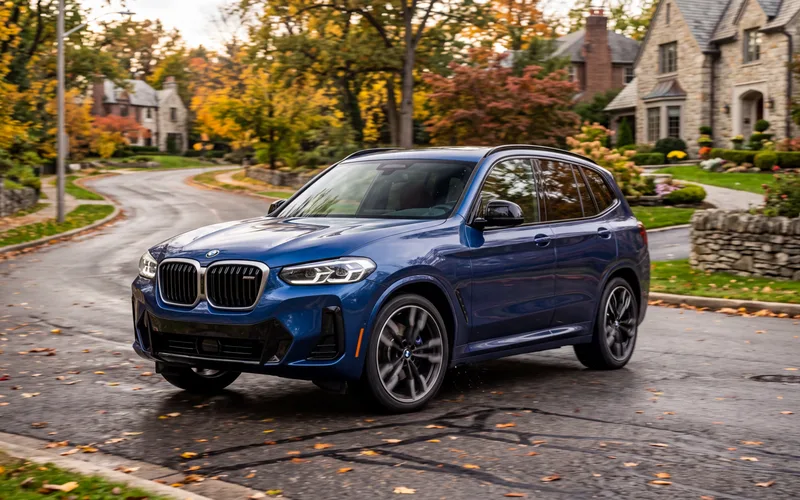 BMW X3Compact Luxury SUV
The Stelvio out-steers the X3 and matches its base-engine acceleration while undercutting it on price, but the X3 counters with more rear legroom, ~10 cu ft more max cargo, a 4,400-lb tow rating, available mild-hybrid and PHEV powertrains, and dramatically better predicted reliability and resale value.
Compare 2.74B-
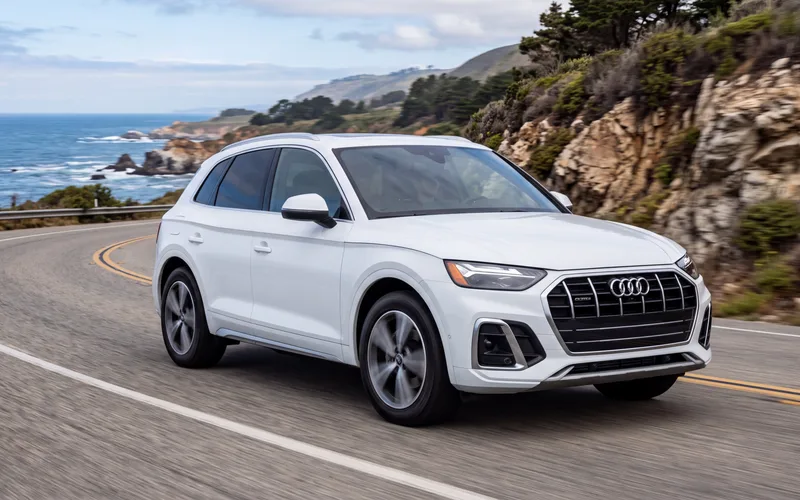 Audi Q5Compact Luxury SUV
Both are compact luxury SUVs with standard AWD in the low $50k range; the Stelvio offers sharper handling and a quicker 0-60, while the Q5 wins on cabin material quality, back-seat space, cargo volume, PHEV availability, dealer network, and long-term ownership costs.
Compare 2.72B-
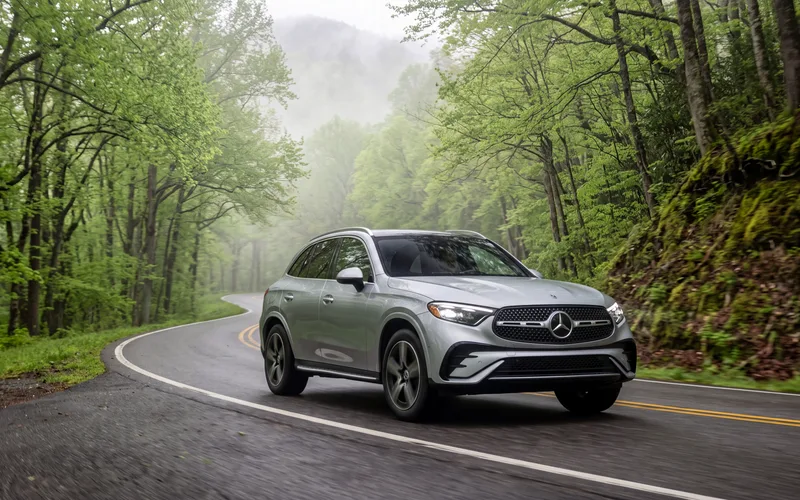 Mercedes-Benz GLCCompact Luxury SUV
The GLC has moved to a larger touchscreen, hybrid-assisted powertrains, and a plusher, quieter cabin — clear wins for comfort and daily livability — while the Stelvio counters with more communicative steering, more standard content at a lower base price, and a more driver-focused character.
CompareHow it's evolved
9 scored model years · 2018–2026
Subject scores by year
Hover or tap a score to see what moved it versus the year before. A corner mark flags a big swing.
| Year | Performance | Efficiency | Safety | Space | Cost | Reliability | Tech | Use-case | Driving | Value |
|---|---|---|---|---|---|---|---|---|---|---|
| 2026 | 50 | 45 | 59 | 37 | 24 | 44 | 64 | 61 | 79 | 61 |
| 2025 | 51 | 43 | 57 | 41 | 39 | 61 | 55 | 57 | 76 | 63 |
| 2024 | 54 | 41 | 43 | 42 | 14 | 56 | 56 | 59 | 81 | 73 |
| 2023 | 55 | 38 | 51 | 41 | 23 | 62 | 56 | 57 | 81 | 66 |
| 2022 | 53 | 47 | 71 | 39 | 30 | 58 | 53 | 58 | 79 | 71 |
| 2021 | 55 | 49 | 54 | 40 | 28 | 47 | 51 | 59 | 78 | 74 |
| 2020 | 55 | 43 | 56 | 41 | 29 | 46 | 55 | 59 | 79 | 75 |
| 2019 | 55 | 44 | 42 | 39 | 32 | 40 | 39 | 56 | 73 | 75 |
| 2018 | 55 | 41 | 43 | 39 | 43 | 43 | 36 | 56 | 80 | 82 |
Compare two years
Best fit & conditions
Higher scores mean a better fit for that use case. Learn more about use-case fit →
Subject profile
Academic Probation · NHTSA safety recalls
Sep 9, 2025Fuel system, gasoline: delivery: fuel pumpThe fuel pump may fail, which can result in a loss of fuel flow and loss of drive power.
Defect
Chrysler (FCA US, LLC) is recalling certain 2017-2019 Alfa Romeo Giulia and 2018-2019 Alfa Romeo Stelvio vehicles. The fuel pump may fail, which can result in a loss of fuel flow and loss of drive power.
Risk
A loss of drive power increases the risk of a crash.
Remedy
Dealers will replace the fuel delivery module, free of charge. Interim notification letters, notifying owners of the safety risk, were mailed October 7, 2025. Additional letters will be sent once the final remedy is available, anticipated July 2026. Owners may contact FCA customer service at 1-800-853-1403. FCA's number for this recall is 93C. Vehicle Identification Numbers (VINs) involved in this recall will be searchable on NHTSA.gov beginning September 16, 2025. The information in your report suggests that Chrysler (FCA US, LLC) may have been aware of this issue more than five business days before filing a report with NHTSA. Please be reminded that under Federal law, this agency is to be notified of all safety defect and/or noncompliance decisions within five business days. 49 CFR 573.6 Significant civil penalties can be assessed for this violation.
NHTSA campaign 25V586000 ↗Manufacturer no. 93C53,849 vehicles potentially affected (all models in the campaign)Owners notified Jul 30, 2026Filed by Chrysler (FCA US, LLC)Filed as STELVIOJul 3, 2024Air bags: frontal · Seat belts: frontA seat belt buckle switch sensor may be improperly connected, preventing the front seat air bag from deploying as intended.
Defect
Chrysler (FCA US, LLC) is recalling certain 2017-2024 Alfa Romeo Giulia, 2018-2025 Alfa Romeo Stelvio, 2019-2023 Fiat 500X, Jeep Renegade, and 2024 Fiat 500E vehicles. A seat belt buckle switch sensor may be improperly connected, preventing the front seat air bag from deploying as intended.
Risk
A front seat air bag that does not deploy as intended can increase the risk of injury in a crash.
Remedy
Dealers will repair the connection, free of charge. Owner notification letters were mailed beginning August 27, 2024. Owners may contact FCA US, LLC customer service at 1-800-853-1403. FCA US, LLC's number for this recall is 82B.
NHTSA campaign 24V510000 ↗Manufacturer no. 82B337,128 vehicles potentially affected (all models in the campaign)Owners notified Aug 27, 2024Filed by Chrysler (FCA US, LLC)Filed as STELVIOMay 30, 2023Service brakes, hydraulicDuring certain driving maneuvers, the brake system may exert an excessive clamp force that may fracture the rotor, decreasing the brake performance.
Defect
Chrysler (FCA US, LLC) is recalling certain 2017-2020 Alfa Romeo Giulia and 2018-2020 Alfa Romeo Stelvio vehicles equipped with carbon ceramic matrix brakes. During certain driving maneuvers, the brake system may exert an excessive clamp force that may fracture the rotor, decreasing the brake performance.
Risk
An unexpected decrease in brake performance increases the risk of a crash.
Remedy
Dealers will update the brake system module (BSM) software, free of charge. Owner notification letters were mailed July 20, 2023. Owners may contact FCA US, LLC customer service at 1-800-853-1403. FCA US, LLC's number for this recall is 68A.
NHTSA campaign 23V382000 ↗Manufacturer no. 68A719 vehicles potentially affected (all models in the campaign)Owners notified Jul 20, 2023Filed by Chrysler (FCA US, LLC)Filed as STELVIOJul 25, 2019Electrical system: instrument cluster/panelThe Body Control Module (BCM) may indicate an inaccurate fuel level that displays higher than the actual amount.
Defect
Alfa Romeo (FCA US LLC) is recalling certain 2018-2019 Giulia and Stelvio vehicles. The Body Control Module (BCM) may indicate an inaccurate fuel level that displays higher than the actual amount.
Risk
The vehicle may be operated without enough fuel in the tank causing a stall, increasing the risk of a crash.
Remedy
Alfa Romeo will notify owners, and dealers will update the BCM software, free of charge. The recall began August 12, 2019. Owners may contact Alfa Romeo customer service at 1-800-853-1403. Alfa Romeo's number for this recall is V84.
NHTSA campaign 19V551000 ↗Manufacturer no. V8421,914 vehicles potentially affected (all models in the campaign)Owners notified Aug 12, 2019Filed by Chrysler (FCA US LLC)Filed as STELVIOMar 1, 2019Forward collision avoidance: adaptive cruise control · Service brakes, hydraulic: antilock/traction control/electronic limited slip: control unit/moduleThe Brake System Module (BSM) software may prevent the driver from disabling the Adaptive Cruise Control (ACC) after the traction control system detects a specific wheel slip.
Defect
FCA US LLC (Alfa Romeo) is recalling certain 2018-2019 Alfa Romeo Stelvio and 2017-2019 Giulia vehicles. The Brake System Module (BSM) software may prevent the driver from disabling the Adaptive Cruise Control (ACC) after the traction control system detects a specific wheel slip.
Risk
The driver's inability to deactivate the ACC can increase the risk of crash.
Remedy
Alfa Romeo has notified owners, and dealers will update the BSM software, free of charge. The recall began March 25, 2019. Owners may contact Alfa Romeo customer service 1-800-853-1403. The Alfa Romeo number for this recall is V27.
NHTSA campaign 19V148000 ↗Manufacturer no. V2719,114 vehicles potentially affected (all models in the campaign)Owners notified Mar 25, 2019Filed by Chrysler (FCA US LLC)Filed as STELVIOSep 14, 2018Electrical system: wiring · Engine and engine cooling: engineThese engines may misfire causing the catalytic converter to overheat, possibly resulting in damage to the nearby wiring and engine components.
Defect
Chrysler (FCA US LLC) is recalling certain 2017-2018 Alfa Romeo Giulia and 2018 Alfa Romeo Stelvio vehicles, equipped with 2.0L engines. These engines may misfire causing the catalytic converter to overheat, possibly resulting in damage to the nearby wiring and engine components.
Risk
Heat damage to the engine compartment wiring or components can increase the risk of a fire or it can cause an engine stall, increasing the risk of a crash.
Remedy
Chrysler will notify owners, and dealers will inspect the vehicles for diagnostic codes, and update the engine control module software, free of charge. The recall began October 10, 2018. Owners may contact Chrysler customer service at 1-844-253-2872. Chrysler's number for this recall is UA4.
NHTSA campaign 18V636000 ↗Manufacturer no. UA434,357 vehicles potentially affected (all models in the campaign)Owners notified Oct 10, 2018Filed by Chrysler (FCA US LLC)Filed as STELVIOSep 14, 2018Engine and engine cooling: cooling system: hoses/lines/piping/fittingsThe engine cooling hose may have inadequate webbing material allowing a coolant leak.
Defect
Chrysler (FCA US LLC) is recalling certain 2018-2019 Alfa Romeo Stelvio Quadrifoglio vehicles. The engine cooling hose may have inadequate webbing material allowing a coolant leak.
Risk
A loss of coolant can cause the engine to overheat and the vehicle to stall, increasing the risk of a crash.
Remedy
Chrysler will notify owners, and dealers will replace the coolant hose, free of charge. The recall began October 10, 2018. Owners may contact Chrysler customer service at 1-800-853-1403. Chrysler's number for this recall is U99.
NHTSA campaign 18V635000 ↗Manufacturer no. U99674 vehicles potentially affected (all models in the campaign)Owners notified Oct 10, 2018Filed by Chrysler (FCA US LLC)Filed as STELVIOMar 29, 2018Equipment: electricalWater may leak into the body control module and its connectors, causing corrosion. This corrosion can cause illumination of one or more malfunction indicator lamps, a loss of windshield wiper function, a loss of exterior lighting, a loss of horn function and/or unintended turn signal activation.
Defect
Chrysler (FCA US LLC) is recalling certain 2018 Alfa Romeo Stelvio vehicles. Water may leak into the body control module and its connectors, causing corrosion. This corrosion can cause illumination of one or more malfunction indicator lamps, a loss of windshield wiper function, a loss of exterior lighting, a loss of horn function and/or unintended turn signal activation.
Risk
Electrical malfunctions such as windshield wipers that may not work in the rain and lights that may not work at night increase the risk of a crash.
Remedy
Chrysler will notify owners, and dealers will install additional sealing protection to prevent water from entering the body control module and its connectors. The recall began on April 25, 2018. Owners may contact Chrysler customer service at 1-800-853-1403. Chrysler's number for this recall is U36.
NHTSA campaign 18V205000 ↗Manufacturer no. U3612,595 vehicles potentially affected (all models in the campaign)Owners notified Apr 25, 2018Filed by Chrysler (FCA US LLC)Filed as STELVIOMar 29, 2018Structure: body: hatchback/liftgateWater may Leak into the wiring connectors for the rear liftgate and the liftgate-opening switch, causing corrosion.
Defect
Chrysler (FCA US LLC) is recalling certain 2018 Alfa Romeo Stelvio vehicles. Water may Leak into the wiring connectors for the rear liftgate and the liftgate-opening switch, causing corrosion.
Risk
Corrosion at the connectors may cause the liftgate to unintentionally open while moving at speeds of less than 3 miles per hour, allowing cargo to fall out of the vehicle, creating a road hazard and increasing the risk of a crash.
Remedy
Chrysler will notify owners, and dealers will install additional protection against water leaking into the liftgate wiring connectors and switch, free of charge. The recall began April 25, 2018. Owners may contact Chrysler customer service at 1-800-853-1403. Chrysler's number for this recall is U34.
NHTSA campaign 18V203000 ↗Manufacturer no. U3412,595 vehicles potentially affected (all models in the campaign)Owners notified Apr 25, 2018Filed by Chrysler (FCA US LLC)Filed as STELVIOMar 6, 2018Visibility: windshield wiper/washer: motorThe software for the wiper motor may incorrectly interpret the wiper motor as overheating, limiting the windshield wipers to operating only at the low-speed setting. As such, these vehicles fail to comply with the requirements of Federal Motor Vehicle Safety Standard (FMVSS) number 104, "Windshield Wiping and Washing Systems."
Defect
Chrysler (FCA US LLC) is recalling certain 2018 Alfa Romeo Stelvio vehicles. The software for the wiper motor may incorrectly interpret the wiper motor as overheating, limiting the windshield wipers to operating only at the low-speed setting. As such, these vehicles fail to comply with the requirements of Federal Motor Vehicle Safety Standard (FMVSS) number 104, "Windshield Wiping and Washing Systems."
Risk
Limited wiper function can reduce the driver's visibility, increasing the risk of a crash.
Remedy
Chrysler will notify owners, and dealers will replace the wiper motor, free of charge. The recall began on April 25, 2018. Owners may contact Chrysler customer service at 1-800-853-1403. Chrysler's number for this recall is U24.
NHTSA campaign 18V147000 ↗Manufacturer no. U241,505 vehicles potentially affected (all models in the campaign)Owners notified Apr 25, 2018Filed by Chrysler (FCA US LLC)Filed as STELVIODec 20, 2017Service brakes, hydraulicThe braking system on these vehicles may have been filled with contaminated brake fluid, possibly damaging the system and affecting its performance.
Defect
Chrysler (FCA US LLC) is recalling certain 2018 Alfa Romeo Giulia and Stelvio vehicles. The braking system on these vehicles may have been filled with contaminated brake fluid, possibly damaging the system and affecting its performance.
Risk
A reduction in braking performance can increase the risk of a crash.
Remedy
Alfa Romeo will notify owners, and dealers will inspect the braking system, replacing it as necessary, free of charge. The recall began February 1, 2018. Owners may contact Alfa Romeo customer service at 1-844-253-2872. Chrysler's number for this recall is T84.
NHTSA campaign 17V823000 ↗Manufacturer no. T84216 vehicles potentially affected (all models in the campaign)Owners notified Feb 1, 2018Filed by Chrysler (FCA US LLC)Filed as STELVIO
7 recalls on other model years of the Stelvio (2019–2025)
Oct 7, 2025Back over prevention: display functionThe printed circuit board and software for the rearview camera may contain defects that cause the rearview camera image not to display properly. As such, these vehicles fail to comply with the requirements of Federal Motor Vehicle Safety Standard (FMVSS) number 111, "Rear Visibility."
Defect
Chrysler (FCA US, LLC) is recalling certain 2020-2025 Alfa Romeo Giulia and Alfa Romeo Stelvio vehicles. The printed circuit board and software for the rearview camera may contain defects that cause the rearview camera image not to display properly. As such, these vehicles fail to comply with the requirements of Federal Motor Vehicle Safety Standard (FMVSS) number 111, "Rear Visibility."
Risk
A rearview image that does not display properly reduces the driver's view behind the vehicle, increasing the risk of a crash.
Remedy
Dealers will inspect and replace the radio, as necessary. In addition, dealers will update the rearview camera software, as necessary. All repairs will be performed free of charge. Owner notification letters were mailed November 25, 2025. Owners may contact Chrysler customer service at 800-853-1403. Chrysler's number for this recall is A2C. Vehicle Identification Numbers (VINs) involved in this recall will be searchable on NHTSA.gov on October 14, 2025.
NHTSA campaign 25V667000 ↗Manufacturer no. A2C62,910 vehicles potentially affected (all models in the campaign)Owners notified Nov 25, 2025Filed by Chrysler (FCA US, LLC)Filed as STELVIODec 19, 2024Service brakes, hydraulic: pedals and linkagesThe fastener that connects the brake pedal and the brake booster may have been improperly assembled during manufacturing, which can cause the brake pedal to detach from the brake booster.
Defect
Chrysler (FCA US, LLC) is recalling certain 2019-2020 Alfa Romeo Giulia and Alfa Romeo Stelvio vehicles. The fastener that connects the brake pedal and the brake booster may have been improperly assembled during manufacturing, which can cause the brake pedal to detach from the brake booster.
Risk
Brake pedal detachment can cause a loss of brake function and increase the risk of a crash.
Remedy
Dealers will inspect and repair, the brake booster connection, as necessary, free of charge. Owner notification letters were mailed March 18, 2025. Owners may contact FCA customer service at 1-800-853-1403. FCA's number for this recall is E0B.
NHTSA campaign 24V943000 ↗Manufacturer no. E0B2,021 vehicles potentially affected (all models in the campaign)Owners notified Mar 18, 2025Filed by Chrysler (FCA US, LLC)Filed as STELVIONov 14, 2024Equipment: other: labelsThe tire size information on the tire placard is incorrect. As such, these vehicles fail to comply with the requirements of Federal Motor Vehicle Safety Standard number 110, "Tire Selection and Rims."
Defect
Chrysler (FCA US, LLC) is recalling certain 2023 Alfa Romeo Stelvio vehicles that were previously remedied under NHTSA recall number 24V-512. The tire size information on the tire placard is incorrect. As such, these vehicles fail to comply with the requirements of Federal Motor Vehicle Safety Standard number 110, "Tire Selection and Rims."
Risk
Incorrect tire information can result in installing the incorrect-size tires, increasing the risk of a crash.
Remedy
FCA will mail corrected tire placard labels. Owners may bring the label into a dealer for free installation. Owner notification letters were mailed December 12, 2024. Owners may contact FCA US customer service at 1-800-853-1403. FCA US's number for this recall is C3B. Vehicles previously repaired under recall 24V-512 will need to have the new remedy completed.
NHTSA campaign 24V857000 ↗Manufacturer no. C3B204 vehicles potentially affected (all models in the campaign)Owners notified Dec 12, 2024Filed by Chrysler (FCA US, LLC)Filed as STELVIOJul 3, 2024Equipment: other: labelsThe tire pressure and size information on the tire placard and manufacturer labels are incorrect. As such, these vehicles fail to comply with the requirements of Federal Motor Vehicle Safety Standard number 110, "Tire Selection and Rims."
Defect
Chrysler (FCA US, LLC) is recalling certain 2017-2024 Alfa Romeo Giulia and 2021-2024 Alfa Romeo Stelvio vehicles. The tire pressure and size information on the tire placard and manufacturer labels are incorrect. As such, these vehicles fail to comply with the requirements of Federal Motor Vehicle Safety Standard number 110, "Tire Selection and Rims."
Risk
Incorrect tire information can result in under-inflated tires or installing the incorrect-size tires, increasing the risk of a crash.
Remedy
FCA will mail corrected tire placards and manufacturer overlay labels. Owners may bring the labels into a dealer for free installation. Some interim notification letters, notifying owners of the safety risk, were mailed August 27, 2024. Owner notification letters were mailed August 5, 2024 through November 1, 2024. Owners may contact FCA US, LLC customer service at 1-800-853-1403. FCA US, LLC's number for this recall is 81B.
NHTSA campaign 24V512000 ↗Manufacturer no. 81B9,037 vehicles potentially affected (all models in the campaign)Owners notified Aug 5, 2024Filed by Chrysler (FCA US, LLC)Filed as STELVIONov 12, 2021Fuel system, gasoline: delivery: hoses, lines/piping, and fittings · Fuel system, gasoline: delivery: pressure sensorThe fuel line sensor housing may crack and leak fuel.
Defect
Chrysler (FCA US, LLC) is recalling certain 2020-2021 Alfa Romeo Stelvio, and Alfa Romeo Giulia vehicles. The fuel line sensor housing may crack and leak fuel.
Risk
A fuel leak may cause an engine stall, increasing the risk of a crash. A fuel leak also increases the risk of fire in the presence of an ignition source.
Remedy
Dealers will inspect and replace the fuel line sensor housing, as necessary, free of charge. Owner notification letters were mailed on January 11, 2022. Owners may contact FCA US, LLC customer service at 1-800-853-1403. FCA US, LLC's number for this recall is Y91.
NHTSA campaign 21V878000 ↗Manufacturer no. Y9111,419 vehicles potentially affected (all models in the campaign)Owners notified Jan 11, 2022Filed by Chrysler (FCA US, LLC)Filed as STELVIOMay 4, 2021Service brakes, hydraulicHard braking may cause the Anti-Lock Brake System (ABS) Hydraulic Control Unit (HCU) rotor shaft to separate, a reduction of braking assist, and a loss of ABS.
Defect
Chrysler (FCA US, LLC) is recalling certain 2019-2021 Alfa Romeo Stelvio and 2020-2021 Alfa Romeo Giulia vehicles. Hard braking may cause the Anti-Lock Brake System (ABS) Hydraulic Control Unit (HCU) rotor shaft to separate, a reduction of braking assist, and a loss of ABS.
Risk
The loss of braking assistance and ABS functionality can reduce overall braking performance, increasing the risk of a crash.
Remedy
Dealers will replace the ABS HCU, free of charge. Owner notification letters were mailed on June 29, 2021. Owners may contact FCA US LLC customer service at 1-800-853-1403.
NHTSA campaign 21V309000 ↗Manufacturer no. Y249 vehicles potentially affected (all models in the campaign)Owners notified Jun 29, 2021Filed by Chrysler (FCA US, LLC)Filed as STELVIOMar 30, 2021Air bags · Air bags: side/window: curtainAn improperly crimped clamp may allow the side curtain air bag cushion and inflator to separate, causing an incomplete deployment or preventing the deployment of the air bag.
Defect
Chrysler (FCA US, LLC) is recalling certain 2021 Alfa Romeo Stelvio vehicles. An improperly crimped clamp may allow the side curtain air bag cushion and inflator to separate, causing an incomplete deployment or preventing the deployment of the air bag.
Risk
An incomplete deployment or non-deployment of the side curtain air bag increases the risk of injury in the event of a crash.
Remedy
Chrysler will notify owners, and dealers will replace the side air bag inflatable curtain assembly, free of charge. The recall is expected to begin May 19, 2021. Owners may contact FCA US LLC customer service at 1-800-853-1403. Chrysler's number for this recall is Y15.
NHTSA campaign 21V221000 ↗Manufacturer no. Y151,222 vehicles potentially affected (all models in the campaign)Owners notified May 6, 2021Filed by Chrysler (FCA US, LLC)Filed as STELVIO
Source: NHTSA Office of Defects Investigation recall database, model years 2018–2026. Recalls are listed by model year as the manufacturer filed them; whether a specific car is affected depends on its VIN — check a VIN at nhtsa.gov ↗. NHTSA model names matched to this page: STELVIO.
Detailed scoring by subject
1Performance & PowertrainMid-pack among this car's ten categories.1.72C-
The volume Stelvio and Stelvio Ti use the 280-hp turbocharged 2.0-liter four-cylinder; the low-volume Quadrifoglio raises the model-range maximum to 505 hp.
The standard 2.0-liter turbo makes a strong 306 lb-ft from just 2,000 rpm.
The volume 2.0T is exceptionally quick for a four-cylinder compact luxury SUV, matching Alfa's claim in independent testing.
The turbo four delivers strong, smooth response with very little lag and a subdued growl. Its unusually low redline can interrupt manual-mode acceleration, keeping it short of flawless.
The ZF eight-speed is quick, smooth, and intelligently programmed, with excellent manual response when paddles are fitted.
The factory rating is useful for a small trailer but modest within the SUV class.
Q4 all-wheel drive is standard throughout the 2018 U.S. lineup and actively varies front-axle torque, though it lacks low range or dedicated terrain programs.
Standard AWD and 8.1 inches of clearance support snow and mild dirt-road use, but the Stelvio is pavement-focused with no low range, locker, skid-plate package, or off-road trim.
The U.S. range offered two distinctly tuned gas engines: the mainstream 280-hp 2.0T and the 505-hp 2.9-liter twin-turbo Quadrifoglio V6. There was no hybrid, diesel, or alternative drivetrain in the U.S. lineup.
2Efficiency & RangeOne of the Stelvio's weakest categories.0.69F
The volume 2.0T AWD configuration earns an EPA combined rating of 24 mpg.
EPA city economy for the representative 2.0T AWD model is 22 mpg.
EPA highway economy for the representative 2.0T AWD model is 28 mpg.
EPA combined consumption with the factory 16.9-gallon tank yields about 406 miles, conventionally rounded to roughly 410 miles.
Premium fuel makes annual energy cost relatively high despite mid-pack fuel economy.
The 2.0-liter turbo requires premium unleaded, imposing a persistent cost penalty and offering no regular-fuel flexibility.
3SafetyGrades near the bottom of the scale.0.83F
NHTSA did not publish an Overall Vehicle Score for the 2018 Stelvio, nor is a tested U.S. model year available from this generation. The required numeric value is therefore a conservative estimate, not a claimed crash-test result.
IIHS did not crash-test the 2018 Stelvio, leaving it without a Top Safety Pick award or a U.S. crashworthiness rating slate. The score reflects missing verification rather than a demonstrated structural failure.
The volume Stelvio Ti made all five rubric technologies optional through two driver-assistance packages; none formed a comprehensive standard suite. Buyers could add AEB, full-stop ACC, blind-spot monitoring and rear cross-path detection, but the lane feature was warning-only rather than lane keeping.
Forward Collision Warning-Plus with automatic braking was optional on the volume trim and received no IIHS vehicle-to-vehicle or pedestrian evaluation. Contemporary reporting describes low-speed emergency braking, with no documented pedestrian or nighttime capability.
Blind-spot monitoring and Rear Cross Path detection were available together on the volume Ti but were not standard. Both were alert systems, without active steering intervention, rear automatic braking, safe-exit assistance or trailer-aware coverage.
The 2018 system only warned when the vehicle departed its lane; it provided neither steering-based lane keeping nor lane centering. Lane-departure warning was also optional on the volume trim.
Optional Adaptive Cruise Control Plus could operate to a full stop, a useful stop-and-go capability for 2018. It was not standard, lacked lane centering for integrated highway assistance, and period owner reporting noted late braking.
No hands-free highway-driving system was offered for the 2018 Stelvio. Even fully optioned vehicles lacked lane centering, so there was no basis for hands-free operation.
Bi-xenon headlamps, automatic activation and adaptive forward lighting were standard, giving the volume trim stronger hardware than basic halogens. Automatic high beams cost extra, however, and IIHS did not publish a Stelvio headlight rating to verify illumination performance.
The curving body, small rear window, rear pillars and sizable rear head restraints materially obstruct rearward sightlines. A standard backup camera and parking sensors help while reversing, but there was no 360-degree camera to compensate comprehensively.
Two child seats fit, but oddly positioned lower anchors and the space consumed by a rear-facing infant seat reduce usability. The Stelvio could not accommodate three child seats across in Cars.com's standardized check.
4Space & ComfortOne of the Stelvio's weakest categories.0.60F
The two-row Stelvio seats five in every regular 2.0T configuration.
Front headroom is generous for a compact luxury SUV.
The manufacturer's published SAE-style figure is unusually low relative to compact-SUV norms.
Second-row headroom is competitive despite the tapered roof.
Rear knee room is tight and near the bottom of the SUV normalization range.
There is no third row; this is strictly a five-seat SUV.
The stylish rear body leaves substantially less occupied-seat cargo room than most compact SUVs.
Maximum space just clears the bottom of the SUV normalization band.
Everyday bins are adequate rather than inventive; an adjustable cargo rail, net and 115V outlet required the Convenience package.
Standard power leather seats are supportive, but the optional Sport bolsters can feel narrow and the tight rear bench limits long-haul comfort.
The aluminum-intensive suspension combines pleasing compliance with unusually disciplined body control, though 20-inch Sport wheels add firmness.
Cruising refinement is respectable, but road noise and the four-cylinder's subdued growl keep it from the luxury-class quietness leaders.
Dual-zone climate and leather are standard, while heated seats, heated wheel and richer seat choices arrive on Ti or in packages; ventilation was not offered.
5Cost of OwnershipGrades near the bottom of the scale.0.85F
The all-new 2018 Stelvio started at $41,995 before its mandatory $995 destination charge. This is the entry 280-hp 2.0T/Q4 AWD model, not the low-volume Quadrifoglio.
Edmunds identifies the Ti with Sport package as its recommended 2018 configuration; it combines the mainstream 280-hp gas engine with the larger display, heated features, sport seats, 20-inch wheels and paddle shifters. Official launch pricing was $43,995 for Ti plus $995 destination and $2,500 for the Ti Sport package.
No archived trim-specific Edmunds TCO table remains accessible for the 2018 Stelvio, so this is a conservative industry-estimate synthesis for the 2.0T Q4 volume trim. Premium consumables, dealer labor and first-year-model repair exposure put it toward the expensive end of the SUV band, partly offset by the included first service.
The Stelvio is projected to lose 54.9% in five years, leaving 45.1% retained, below the luxury-compact-SUV norm. KBB's current used values also confirm unusually heavy long-run depreciation for the 2018 launch-year vehicle.
Four years is mid-band coverage and matched the established luxury-brand norm for 2018.
The unusually generous 100,000-mile cap helps high-mileage owners, but the rubric normalizes the five-year duration at the bottom of its 5-to-10-year band.
Alfa included the inaugural scheduled-maintenance visit during the first year/10,000 miles plus roadside assistance during warranty coverage. That is useful but brief, placing it in the lower half of the rubric's short-maintenance/basic-perks band rather than alongside multi-year luxury programs.
$47,490 volume-trim price minus its estimated resale value after 5 years (45.1% retained, or about $21,418) leaves about $26,072 in depreciation. Add the projected $7,500 in 5-year maintenance and repairs, and owning this vehicle for 5 years costs about $33,572 in total.
6Reliability & QualityGrades near the bottom of the scale.0.83F
Consumer Reports lacks enough owner-survey responses to publish a detailed reliability result for the 2018 Stelvio, but the launch-year model's extensive recall record and recurring electrical, fuel-system, and drivability concerns put the available evidence below average. The absence of a numeric CR result prevents a more definitive bottom-band score.
Alfa Romeo had a bottom-tier U.S. brand standing when this first-year Stelvio was sold, rather than the established multi-year dependability record of leading luxury makes. Its small U.S. fleet also frequently left it unranked in reliability studies, limiting favorable contrary evidence.
Eleven recalls are exceptionally heavy for one model year, and multiple campaigns address serious loss-of-power, fire, braking, and driver-assistance risks. The TSB record also includes recurring no-start, battery-drain, oil leak/consumption, and electronic-throttle concerns, indicating broad launch-year teething problems.
The volume 280-hp 2.0-liter turbo and eight-speed automatic have aged better than the high-strung Quadrifoglio hardware, and the ZF-based transmission has broad industry use. However, this first-year application has documented fuel-pump, catalyst-overheating, no-start, battery-voltage, and electronic-throttle issues, leaving only a mixed durability record.
Standard leather and aluminum accents provide genuine upscale touches, but the launch-year cabin uses conspicuously cheap-looking plastics and falls behind richer compact-luxury rivals. This is the pre-2020 interior, before Alfa revised the console, controls, and perceived quality.
Contemporary testing found tangible assembly defects rather than merely subjective styling complaints. A trembling power seat and loose rear-seat cushion are unusually poor fit-and-finish findings for a new luxury SUV and support a well-below-average launch-year score.
Alfa Romeo maintains an authorized U.S. network, but its coverage is sparse compared with established luxury competitors, especially outside large metropolitan areas. That matters more for a launch-year vehicle needing brand-specific diagnostics and recall work.
Routine wear parts are obtainable, but low U.S. volume, specialized diagnostics, and Alfa-specific body and electronic components make repairs costlier and less convenient than for mainstream or higher-volume luxury SUVs. The volume four-cylinder is less expensive to support than the Quadrifoglio, but it still has a thin aftermarket.
7Technology & InfotainmentThe Stelvio's lowest-graded category.0.35F
The volume base trim uses a 6.5-inch display operated by the console controller, not a touchscreen; Ti upgrades to 8.8 inches.
The rotary controller preserves physical interaction, but the small, non-touch, early-generation interface has plain graphics and cumbersome menus.
Wireless projection was unavailable. Wired CarPlay/Android Auto appeared on later-build 2018 hardware, while early production cars lacked compatible hardware, so it was not consistent across the model year.
Voice command and optional native navigation cover basics, but neither had natural-language sophistication and navigation was not standard on the base system.
The standard eight-speaker system is adequate and an optional 14-speaker Harman Kardon system provides a credible premium upgrade.
Analog tachometer and speedometer flank a useful 7-inch color TFT, but it is not a full-digital configurable cluster.
The 2018 architecture offers no documented whole-vehicle OTA feature updates; software and map servicing relied on dealer or manual media updates.
The model predates Alfa Connect's modern rich app ecosystem, with no phone-as-key and little documented app-based vehicle control.
Four USB ports, including two rear charge-only ports, were good for 2018; all are legacy USB-A, and wireless charging was absent, though a 115V outlet was optional.
Push-button start, remote start and a power liftgate are standard; passive entry and hands-free liftgate depend on optional equipment, with no phone key.
A rear camera and rear sensors are standard and front sensors are included on Ti, but no surround-view camera or automated parking was offered.
No head-up display was offered for the 2018 Stelvio.
8Use-Case FitOne of the Stelvio's strongest categories.1.75C-
Two-row seating and LATCH anchors handle a small family, but 31.9-inch rear legroom and only 18.5 cubic feet behind the bench make rear-facing seats and strollers a squeeze.
Euro NCAP awarded five stars and IIHS crashworthiness results were strong where tested, but U.S. 2018 family trims made blind-spot monitoring, adaptive cruise, AEB and lane warning package-dependent and lacked lane centering.
Good front seats and controlled ride suit four-person trips, but tight rear legroom, modest luggage space and limited rear amenities reduce family endurance.
Compact dimensions, a smooth quick-shifting automatic and standard AWD make daily driving easy, though the brake-by-wire system and early infotainment require acclimation.
EPA economy is reasonable for a 280-hp AWD luxury SUV, but premium fuel, luxury tires and Alfa service costs prevent low per-mile running costs.
A 184.6-inch body, 38.55-foot turning circle, standard rear camera and sensors are manageable in cities; thick rear quarters and lack of surround view demand care.
The 280-hp AWD drivetrain and 3,000-pound tow rating handle light trailers, but small cargo capacity and luxury-focused packaging limit serious work use.
A complex first-year Italian luxury crossover with delicate cabin finishes and no fleet-duty reputation is poorly suited to sustained abuse.
There is no bed, onboard power system or meaningful commercial upfit ecosystem; even the cargo rail and 115V outlet require the Convenience package.
Compliant ride, supportive seats, a 16.9-gallon tank and 28-mpg EPA highway rating support roughly 470 theoretical highway miles, but tight rear space and optional adaptive cruise cap the score.
Standard Q4 AWD, 8.1 inches of clearance, roof-rail availability and 3,000-pound towing make it capable on gravel and for light outdoor toys, though it lacks low range and trail protection.
A folding rear bench, roof rails, hitch capability and 56.5-cubic-foot maximum provide basic flexibility, but 18.5 cubic feet with seats up is restrictive.
9Driving ExperienceOne of the Stelvio's strongest categories.3.47B+
The rear-biased Giorgio platform, low mass for the class, quick responses and excellent body control make the regular Stelvio one of the compact luxury SUV handling benchmarks.
Very quick, precise steering gives the Stelvio unusually eager turn-in and genuine driver involvement, though some drivers may find it nervous at first.
The integrated brake-by-wire system produces strong stops, and the Stelvio calibration has a firm, linear, easily modulated pedal.
The 280-hp turbo four has strong low-midrange torque and minimal lag, while the ZF eight-speed shifts smoothly and quickly with intelligent programming.
The turbo four's subdued growl adds some character and vibration isolation is respectable, but it is less cultured under load than the class's six-cylinder options.
The turning diameter is mid-pack for an SUV and acceptable for its compact footprint.
A supportive power seat, excellent steering-wheel relationship, tall sightline and physical controller create a driver-centered cockpit; the awkward electronic shifter and limited rear visibility detract.
Even the volume 2.0T combines brisk acceleration, rear-biased AWD, vivid steering and an unusually playful chassis; it is an enthusiast recommendation without requiring Quadrifoglio power.
10Value & Market PositionThe Stelvio's best-graded category.3.56A-
The $42,990 base vehicle included 280 hp, Q4 AWD, leather, bi-xenon lamps, 18-inch wheels, power liftgate, remote start, keyless entry, power seats, a backup camera and rear parking sensors. That was unusually complete for a launch-year compact luxury SUV, although active safety and the larger infotainment screen remained optional or trim-dependent.
The Stelvio paired near-$43,000 pricing with class-leading standard power, standard AWD and sports-car-like dynamics; Ti Sport added meaningful chassis and cabin upgrades without crossing $50,000. Cabin-material, infotainment and cargo compromises prevent an elite score, but its performance-per-dollar was a launch-year standout.
Five mainstream configurations—base, Sport, Ti, Ti Sport and Ti Lusso—covered roughly $43,000-$48,000, followed by the 505-hp Quadrifoglio halo model. AWD was standard and the regular range had only one engine, but buyers could choose distinctly luxury- or sport-oriented packages.
The Stelvio quickly became Alfa Romeo's best-selling model and reached 12,043 U.S. sales in 2018, a credible launch for a returning niche brand. It was still well outside the volume leaders in the established compact-luxury-SUV class.
Italian styling, racing heritage, rarity and the Quadrifoglio/Nürburgring halo made the Stelvio highly aspirational to enthusiasts. Alfa's weak U.S. footprint and longstanding reliability concerns limited broader prestige and hurt resale relative to German rivals.
Meaningful subvented leases and dealer discounting were readily available during 2018, making the Stelvio substantially more attainable than sticker price suggested. The depth of discount also reflected weak inventory turn, so the buyer benefit is excellent even if the market signal was less flattering.
This was the first U.S. model year of the first-generation Stelvio and therefore a genuinely all-new vehicle, not a carry-over or refresh. Its Giorgio architecture, powertrains and cabin were current, with only normal first-year execution risk tempering a perfect score.
Reviewers consistently regarded the Stelvio as the driver's choice, with strong ratings and comparison praise, while the Quadrifoglio won a MotorTrend performance-SUV comparison. It was not the all-around class winner—space, interior quality, infotainment and early electrical issues kept it from dominating broader comparisons.