

The verdict
A struggling compact luxury suv, strong on driving and held back by ownership.
Overall 1.84 (C-) across 10 graded subjects. Its strongest is driving experience at 3.48 (B+), its weakest cost of ownership at 0.00 (F). 5 of 10 subjects grade at C− or better.
Jump to scoresStrengths
- Driving Experience
- Value & Market Position
- Reliability & Quality
What holds it back
- Cost of Ownership
- Efficiency & Range
- Space & Comfort
Top alternatives
Cars shoppers cross-shop with the Alfa Romeo Stelvio 2.79B-
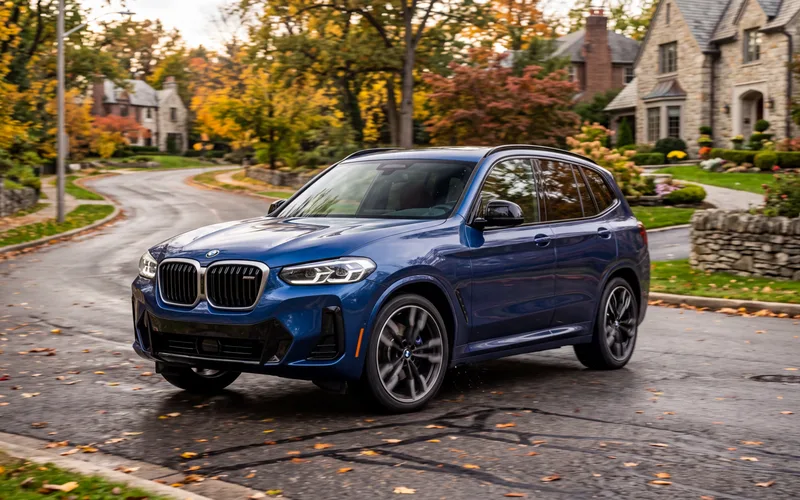 BMW X3Compact Luxury SUV
The Stelvio out-steers the X3 and matches its base-engine acceleration while undercutting it on price, but the X3 counters with more rear legroom, ~10 cu ft more max cargo, a 4,400-lb tow rating, available mild-hybrid and PHEV powertrains, and dramatically better predicted reliability and resale value.
Compare 2.74B-
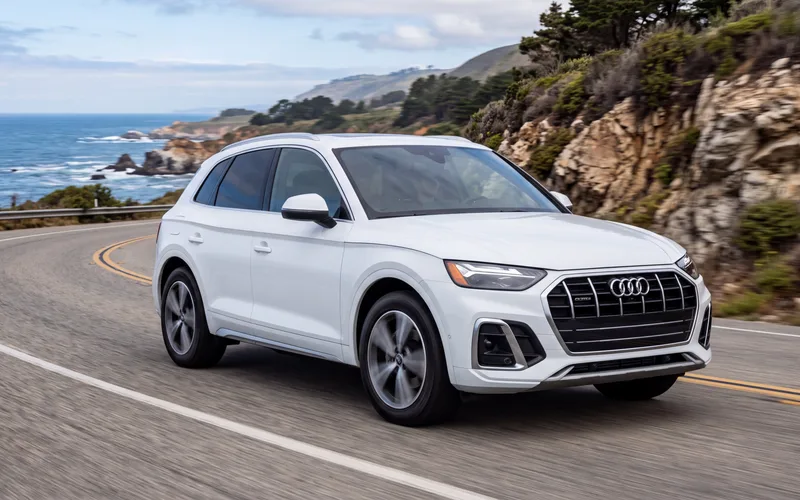 Audi Q5Compact Luxury SUV
Both are compact luxury SUVs with standard AWD in the low $50k range; the Stelvio offers sharper handling and a quicker 0-60, while the Q5 wins on cabin material quality, back-seat space, cargo volume, PHEV availability, dealer network, and long-term ownership costs.
Compare 2.72B-
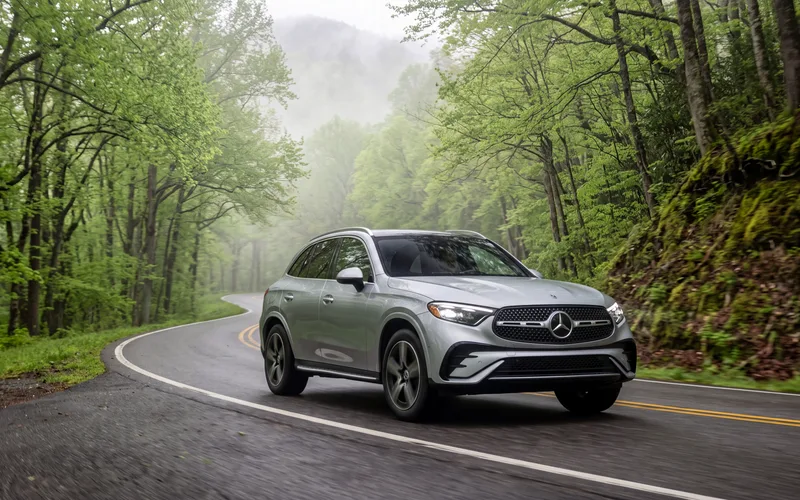 Mercedes-Benz GLCCompact Luxury SUV
The GLC has moved to a larger touchscreen, hybrid-assisted powertrains, and a plusher, quieter cabin — clear wins for comfort and daily livability — while the Stelvio counters with more communicative steering, more standard content at a lower base price, and a more driver-focused character.
CompareHow it's evolved
9 scored model years · 2018–2026
Subject scores by year
Hover or tap a score to see what moved it versus the year before. A corner mark flags a big swing.
| Year | Performance | Efficiency | Safety | Space | Cost | Reliability | Tech | Use-case | Driving | Value |
|---|---|---|---|---|---|---|---|---|---|---|
| 2026 | 50 | 45 | 59 | 37 | 24 | 44 | 64 | 61 | 79 | 61 |
| 2025 | 51 | 43 | 57 | 41 | 39 | 61 | 55 | 57 | 76 | 63 |
| 2024 | 54 | 41 | 43 | 42 | 14 | 56 | 56 | 59 | 81 | 73 |
| 2023 | 55 | 38 | 51 | 41 | 23 | 62 | 56 | 57 | 81 | 66 |
| 2022 | 53 | 47 | 71 | 39 | 30 | 58 | 53 | 58 | 79 | 71 |
| 2021 | 55 | 49 | 54 | 40 | 28 | 47 | 51 | 59 | 78 | 74 |
| 2020 | 55 | 43 | 56 | 41 | 29 | 46 | 55 | 59 | 79 | 75 |
| 2019 | 55 | 44 | 42 | 39 | 32 | 40 | 39 | 56 | 73 | 75 |
| 2018 | 55 | 41 | 43 | 39 | 43 | 43 | 36 | 56 | 80 | 82 |
Compare two years
Best fit & conditions
Higher scores mean a better fit for that use case. Learn more about use-case fit →
Subject profile
Detailed scoring by subject
1Performance & PowertrainGrades below the middle of the scale.1.68D
The mainstream Sprint, Ti, Veloce, and Estrema use the same strong 280-hp turbo four; the low-volume Quadrifoglio is the range maximum.
The volume 2.0-liter turbo provides a broad 306-lb-ft plateau, unusually stout output for a four-cylinder compact SUV.
The manufacturer-rated 5.4-second run for the representative Q4 model is quick for a mainstream compact luxury SUV and is supported by a 5.7-second Edmunds test.
The turbo four delivers urgent, responsive and generally smooth power with little sense that a larger engine is missing. Some strained sound at high rpm and occasional low-speed tentativeness keep it short of flawless.
The ZF eight-speed is quick and decisive when pressed, with excellent available column-mounted paddles. Occasional less-smooth behavior at low speed prevents a top-tier score.
A 3,000-lb ceiling handles a small recreational trailer but trails the stronger towing ratings of many compact luxury SUV rivals.
Q4 AWD is optional on the base Sprint and standard on Ti, Veloce, Estrema, and Quadrifoglio, so it is broadly available. Its active, rear-biased system can send up to 50 percent of torque forward, though it lacks low range or extensive terrain programming.
Its 8.1-inch clearance, Q4 AWD, and hill-descent control support snow and mild dirt-road use, but it is pavement-focused with no dedicated off-road trim, lockers, skid-plate package, or terrain modes.
Two genuinely distinct gas engines cover mainstream and high-performance buyers: the 280-hp turbo four and 505-hp twin-turbo V6. There is no hybrid, plug-in, EV, diesel, or mainstream alternate output in the U.S. lineup.
2Efficiency & RangeOne of the Stelvio's weakest categories.0.53F
The representative Q4 version earns 24 MPG combined, a mid-band result among gas SUVs; the base RWD model improves by 1 MPG.
The 22-MPG city result is exactly mid-band for gas SUVs despite the Stelvio's relatively high specific output.
The Q4 model's 28-MPG highway rating is average within the gas-SUV normalization band, while RWD gains 1 MPG.
EPA does not populate a total-range field for this gas model, so range is derived from the official tank capacity and EPA combined rating. The resulting range is adequate but below long-legged hybrid rivals.
Premium gasoline and merely average MPG produce a high annual fuel bill under EPA's standard 15,000-mile assumptions.
Both engines require 91-octane premium unleaded, imposing a clear per-gallon cost penalty with no regular-fuel flexibility.
3SafetyGrades below the middle of the scale.1.39D
NHTSA has never published an Overall Vehicle Score for the Stelvio in any model year, so the 2023 car receives no crash-test credit rather than borrowing a result from another model year or from Euro NCAP.
The 2023 Stelvio has no IIHS Top Safety Pick award and no published IIHS crashworthiness test set at all, so it cannot earn credit for verified Good results — though no US test failure is on record either, which keeps it at the top of the untested band.
The volume Sprint has an unusually broad standard core suite — full-speed AEB, full-stop adaptive cruise, blind-spot monitoring, rear cross-path detection, lane-departure warning and front/rear park sensors — but no lane-keep assist, which is not merely optional on Sprint but unavailable, capping it below the top band.
Full-speed forward-collision warning with automatic braking and pedestrian detection is standard on every trim, but no IIHS vehicle-to-vehicle or day/night pedestrian front-crash-prevention result exists for this model. Strong stated capability earns mid-band credit without assuming Superior test performance.
Blind-spot monitoring and rear cross-path detection are standard throughout the range including the base Sprint, the top of the alert-only band, but the standard system does not intervene: Active Blind-spot Assist requires a package unavailable on Sprint, and there is no rear automatic braking or safe-exit alert.
The volume Sprint provides lane-departure warning only — no lane-keep assist and no centering, and the package that adds them is not offered on Sprint at all. Higher trims can add hands-on Lane Keep Assist, Highway Assist and Traffic Jam Assist, which keeps this at the top of the low band rather than the floor.
Adaptive Cruise Control-Plus with Full Stop is standard even on Sprint and delivers genuine stop-and-go capability at the segment's usual quality. Integrated Highway Assist and Traffic Jam Assist are unavailable on Sprint and packaged on higher trims, so the combined highway-assist behavior the top band asks for is missing on the volume car.
No hands-free highway-driving system is offered at any trim or price; the optional Highway Assist System is a hands-on Level 2 aid requiring the driver to keep hands on the wheel.
Every 2023 US trim gets adaptive, auto-leveling bi-xenon projectors with automatic high beams — useful equipment standard across the range — but with no IIHS headlight rating to establish Good performance. This is the pre-refresh US car: the 3+3 matrix-LED headlamps of the 2023 European facelift do not reach the US until model year 2024.
The conventional two-box SUV profile gives workable forward and side sightlines while the rakish roofline and thick rear pillars pinch the rear quarters. A standard backup camera and front/rear park sensors compensate at low speed, but no surround-view camera is offered on the 2023 car.
LATCH anchors and rear child-protection locks are standard, but the compact rear cabin is only average for child-seat duty: 31.9 inches of rear legroom forces front-seat compromise behind a bulky rear-facing seat. Two seats are workable; easy three-across fit is not established.
4Space & ComfortOne of the Stelvio's weakest categories.0.73F
The volume Ti AWD has two front and three rear seating positions.
Official accommodation data provides generous front headroom.
The published SAE-style figure is unusually low but is repeated by the official sheet and Edmunds.
Second-row headroom is competitive for a compact SUV.
The rear seat is notably tight relative to compact-luxury SUV rivals.
This is strictly a two-row, five-seat SUV, so no third-row utility exists.
Cargo room with the rear seats occupied is small for the segment.
Folding the rear seats yields modest maximum capacity.
Everyday storage is average, though the phone slot, driver-knee tray, and removable console tray are useful.
Supportive leather front seats and a well-judged driving position are strengths, but tight rear legroom limits four-adult touring comfort.
The sport-oriented chassis remains composed and compliant, isolating all but the harshest impacts even on 20-inch wheels.
Noise isolation is satisfactory for the class but not repeatedly identified as a segment-leading strength.
The volume Ti is richly equipped with heated front and rear seats, heated wheel, dual-zone climate, rear vents, and remote start, though ventilated seats are absent.
5Cost of OwnershipThe Stelvio's lowest-graded category.0.00F
The rear-drive Sprint was the entry 2023 U.S. Stelvio. Its all-in starting price was high even among compact luxury SUVs.
The Ti AWD is the representative volume configuration; Edmunds specifically recommends it for its standard AWD, upgraded cabin, and option access.
Edmunds' current model-specific projection is exceptionally costly and assumes 15,000 miles annually. The figure is for the selected 2023 Ti AWD, not the much costlier Quadrifoglio.
The Stelvio is projected to lose 54.9% in five years, retaining 45.1%. That trails the luxury compact SUV category, which the same study says loses 48.8%.
Alfa's comprehensive coverage is typical for a luxury-brand vehicle and better than the three-year coverage common among mainstream makes.
The 2023 warranty booklet provides no separate longer powertrain warranty, so engine and transmission coverage ends with the 4-year/50,000-mile basic warranty. This is short against the five-year segment floor used by CarScore.
One scheduled service during the first year/10,000 miles is useful but brief; four years of unlimited-mile roadside assistance and a six-month SiriusXM trial add modest value. It falls well short of brands offering two or three years of maintenance.
$53,780 volume-trim price minus its estimated resale value after 5 years (45.1% retained, or about $24,255) leaves about $29,525 in depreciation. Add the projected $15,532 in 5-year maintenance and repairs, and owning this vehicle for 5 years costs about $45,057 in total.
6Reliability & QualityOne of the Stelvio's strongest categories.2.17C
The mature 2023 Stelvio scores strongly in verified-owner quality data, but the long-term picture is less conclusive because Consumer Reports does not publish a numerical reliability prediction for this year. Its four-recall record also keeps it below the top tier.
Alfa Romeo's 2023 initial quality was excellent, but that was a sharp one-year reversal from a poor 2022 result rather than a consistent multi-year dependability record. The brand is often omitted from longer-term CR and J.D. Power rankings for insufficient sample size, so a mid-pack score is more defensible than treating one IQS win as proven durability.
Four NHTSA campaigns are more than ideal for a mature model year. Two concern tire-information labels and one is a rear-camera fault, but the seat-belt-buckle electrical connection can prevent frontal-airbag deployment and is materially safety-related.
The volume trim's 2.0-liter turbo four and ZF 8HP50 eight-speed had been in Stelvio service since launch, giving the 2023 model several years of field history. The widely used ZF transmission is a positive, while the Alfa-specific turbo/MultiAir engine has only a mixed rather than class-leading long-term reputation.
Leather, metallic trim, and generally good touch-point materials suit the luxury positioning, but reviewers find the aging cabin less plush and the infotainment execution weaker than leading German rivals. This is competitive rather than class-leading material quality.
The 2023 Stelvio delivered unusually strong initial assembly quality for its class, although scattered reviewer and owner comments still mention imperfect fit and finish. The segment-leading IQS result warrants an above-average score without implying flawless long-term assembly.
Alfa Romeo has a sparse U.S. footprint compared with mainstream brands and major luxury rivals, making authorized service inconvenient outside larger markets. Dealer experience itself is rated average, but geographic coverage is the decisive weakness.
The common ZF transmission and multi-year production help, but Alfa's low U.S. volume, thin specialist network, and premium imported components constrain availability and aftermarket choice. Repair costs are well above the all-brand average.
7Technology & InfotainmentMid-pack among this car's ten categories.1.76C-
The sole center display is small by 2023 luxury-SUV standards.
The attractive widget interface supports both touch and a useful rotary controller, but is dated and native navigation can alert too late.
Both projection systems are standard but require a USB cable; neither is wireless.
Native navigation is standard and functional, but phone maps are preferable because alerts can arrive too late.
An adequate eight-speaker base system is standard, with a desirable 14-speaker Harman Kardon upgrade available on Ti.
The U.S. 2023 retains analog gauges with a small central TFT; the 12.3-inch full-digital cluster arrived for U.S. model year 2024.
OTA capability updates the information and entertainment system, not the whole vehicle or feature set.
Alfa Connect provides remote start, locks, locate, horn/lights, smartwatch access and stolen-vehicle help, though no digital key is offered.
The Ti has USB connectivity and standard wireless charging, but lacks extensive high-power or household-outlet capability.
Proximity entry, keyless ignition, remote start and a hands-free liftgate cover the major conveniences, without phone-as-key.
A rear camera and front/rear sensors are standard, but no surround-view camera or meaningful automated parking system is offered.
No head-up display was offered on the 2023 Stelvio lineup.
8Use-Case FitMid-pack among this car's ten categories.1.87C-
Five seats, LATCH anchors and a useful liftgate make family duty viable, but the 31.9-inch rear legroom and 18.5-cu-ft cargo hold constrain bulky seats and strollers.
Strong standard ADAS includes AEB, adaptive cruise and blind-spot monitoring, but the 2023 Stelvio lacks published NHTSA/IIHS crash-test results and advanced lane-centering costs extra.
Supportive seats, compliant ride and rear heat/vents help four-person travel, while tight rear space and small luggage capacity impose limits.
Smooth responsive power, a comfortable driving position, manageable dimensions and standard adaptive cruise make commuting pleasant; quick steering takes acclimation.
The Ti AWD earns a middling 24 mpg combined and requires premium fuel, increasing commuting cost versus efficient rivals.
Compact length and standard parking sensors help, but a 39.4-ft turning circle and absence of surround view make tight spaces less effortless.
The 280-hp AWD powertrain and 3,000-lb tow rating manage light duty, but limited cargo volume and luxury focus prevent serious work use.
The leather-lined luxury cabin and performance-oriented chassis are not wear-friendly or fleet-proven for repeated jobsite abuse.
Apart from ordinary cargo tie-down utility and roof/hitch possibilities, there is no onboard power, washable cabin, or meaningful upfit ecosystem.
Supportive seats, composed ride, responsive power and roughly 406 miles of combined-rated range make it a good tourer, though rear/cargo space and premium-fuel economy limit it.
Standard Ti AWD, hill-descent control, 8.1-inch clearance and 3,000-lb towing suit gravel roads, snow and small recreational trailers.
A folding rear seat, roof/hitch options and 56.5-cu-ft maximum space handle normal gear, but the 18.5-cu-ft occupied-seat volume is restrictive.
9Driving ExperienceThe Stelvio's best-graded category.3.48B+
Exceptional body control, balance and engagement place the Stelvio at the top of the compact-luxury SUV class.
Light but unusually quick, accurate and communicative steering gives the crossover immediate responses.
Large Brembo hardware provides strong stopping power, though the brake-by-wire pedal can feel less natural than a conventional system.
The 280-hp turbo four and eight-speed automatic deliver eager response and smooth power in daily driving.
The turbo four is audible under load but its raspy, enthusiastic character suits the vehicle without being notably coarse.
The turning diameter is on the wide side for a compact SUV.
Supportive power seats, broad adjustment and driver-focused physical controls create an excellent driving position.
Responsive power, a lively exhaust note, quick steering and standout chassis balance make even the volume four-cylinder Stelvio genuinely special to drive.
10Value & Market PositionOne of the Stelvio's strongest categories.2.48C+
Even Sprint includes leather, navigation, wireless charging, heated front and rear seats and steering wheel, a hands-free liftgate, bi-xenon adaptive lights, Brembo front brakes, and key active-safety features. Adaptive cruise and lane-centering remain bundled above the base trim, preventing a top-band score.
The Ti gives buyers standard AWD, 280 hp, rich convenience equipment, and class-leading driver engagement, but its $53,780 price exceeded newer and more practical rivals such as the Genesis GV70. Strong performance value is offset by an aging small-screen cabin and weak resale.
Six trims—Sprint, Ti, Veloce, Estrema, Lusso, and Quadrifoglio—span comfort, sport, and 505-hp halo roles, with RWD or AWD on Sprint and AWD thereafter. Several four-cylinder variants overlap substantially, and there is no alternative volume powertrain.
U.S. sales fell 31% to only 5,340 in 2023, leaving the Stelvio a niche seller well below leading compact luxury SUVs. The decline continued the nameplate's retreat from its 2018 high.
Alfa Romeo's Italian styling and motorsport heritage give the Stelvio distinctive enthusiast appeal, reinforced by the acclaimed Quadrifoglio halo. Limited U.S. brand scale, reliability concerns, and poor residuals keep it below the strongest premium marques.
A small dealer network and soft demand made Stelvios meaningfully negotiable, with subsidized financing and discounts commonly used to move inventory. That benefits a new buyer, though the incentives also contribute to weak resale.
The 2023 U.S. model remained on the generation introduced for 2018 with the older 7-inch gauge display and bi-xenon lamps. The facelift with 3+3 LED lighting and a 12.3-inch digital cluster was already imminent but did not reach the U.S. until model year 2024.
Reviewers consistently celebrate the steering, chassis, styling, and power, but the 2023 Stelvio rarely wins the overall class verdict because of aging tech and limited passenger/cargo space. Car and Driver rated it 7.5/10 and ranked it tenth in the segment.