

The verdict
A struggling compact luxury suv, strong on driving and held back by ownership.
Overall 1.68 (D) across 10 graded subjects. Its strongest is driving experience at 3.31 (B+), its weakest cost of ownership at 0.00 (F). 3 of 10 subjects grade at C− or better.
Jump to scoresStrengths
- Driving Experience
- Value & Market Position
- Use-Case Fit
What holds it back
- Cost of Ownership
- Space & Comfort
- Reliability & Quality
Top alternatives
Cars shoppers cross-shop with the Alfa Romeo Stelvio 2.79B-
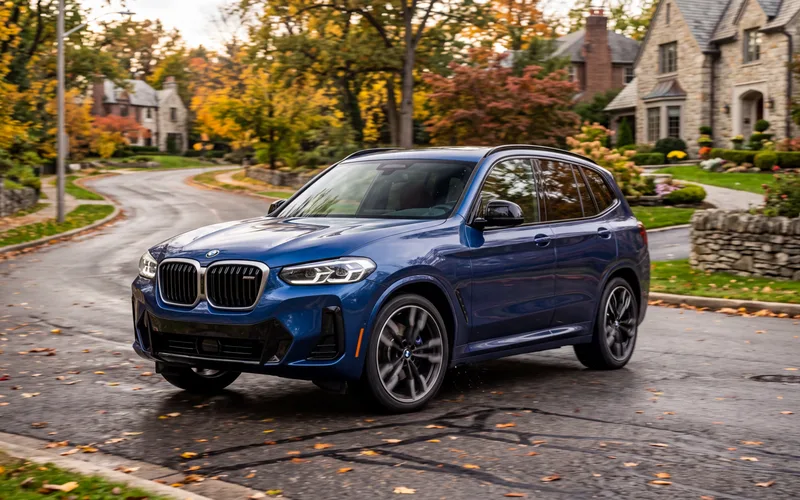 BMW X3Compact Luxury SUV
The Stelvio out-steers the X3 and matches its base-engine acceleration while undercutting it on price, but the X3 counters with more rear legroom, ~10 cu ft more max cargo, a 4,400-lb tow rating, available mild-hybrid and PHEV powertrains, and dramatically better predicted reliability and resale value.
Compare 2.74B-
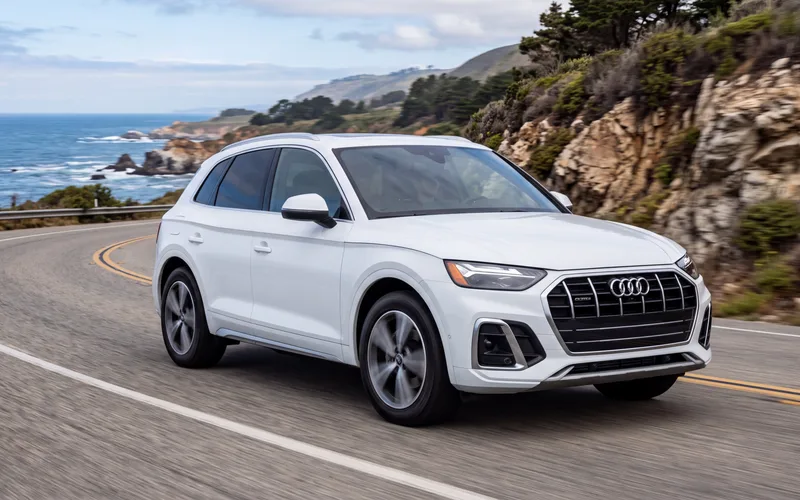 Audi Q5Compact Luxury SUV
Both are compact luxury SUVs with standard AWD in the low $50k range; the Stelvio offers sharper handling and a quicker 0-60, while the Q5 wins on cabin material quality, back-seat space, cargo volume, PHEV availability, dealer network, and long-term ownership costs.
Compare 2.72B-
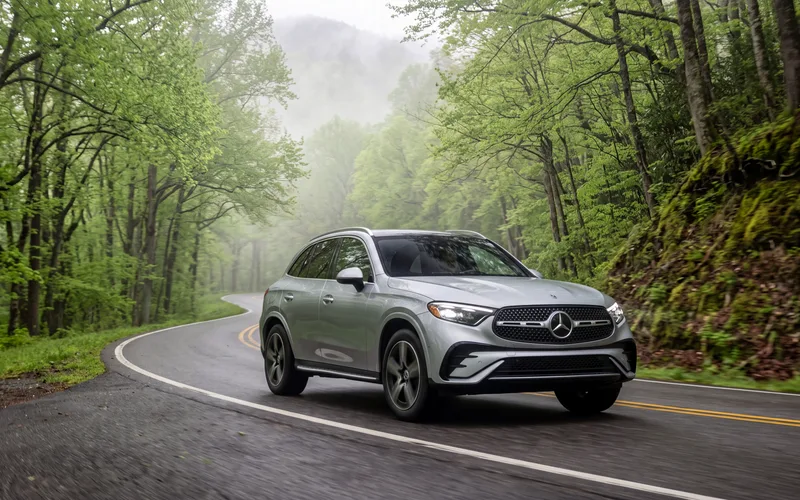 Mercedes-Benz GLCCompact Luxury SUV
The GLC has moved to a larger touchscreen, hybrid-assisted powertrains, and a plusher, quieter cabin — clear wins for comfort and daily livability — while the Stelvio counters with more communicative steering, more standard content at a lower base price, and a more driver-focused character.
CompareHow it's evolved
9 scored model years · 2018–2026
Subject scores by year
Hover or tap a score to see what moved it versus the year before. A corner mark flags a big swing.
| Year | Performance | Efficiency | Safety | Space | Cost | Reliability | Tech | Use-case | Driving | Value |
|---|---|---|---|---|---|---|---|---|---|---|
| 2026 | 50 | 45 | 59 | 37 | 24 | 44 | 64 | 61 | 79 | 61 |
| 2025 | 51 | 43 | 57 | 41 | 39 | 61 | 55 | 57 | 76 | 63 |
| 2024 | 54 | 41 | 43 | 42 | 14 | 56 | 56 | 59 | 81 | 73 |
| 2023 | 55 | 38 | 51 | 41 | 23 | 62 | 56 | 57 | 81 | 66 |
| 2022 | 53 | 47 | 71 | 39 | 30 | 58 | 53 | 58 | 79 | 71 |
| 2021 | 55 | 49 | 54 | 40 | 28 | 47 | 51 | 59 | 78 | 74 |
| 2020 | 55 | 43 | 56 | 41 | 29 | 46 | 55 | 59 | 79 | 75 |
| 2019 | 55 | 44 | 42 | 39 | 32 | 40 | 39 | 56 | 73 | 75 |
| 2018 | 55 | 41 | 43 | 39 | 43 | 43 | 36 | 56 | 80 | 82 |
Compare two years
Best fit & conditions
Higher scores mean a better fit for that use case. Learn more about use-case fit →
Subject profile
Detailed scoring by subject
1Performance & PowertrainGrades below the middle of the scale.1.68D
The volume 2.0-liter turbo-four produces 280 hp; only the low-volume Quadrifoglio uses the 505-hp V6.
The volume 2.0-liter turbo delivers a strong 306 lb-ft from a low 2,000 rpm.
The tested AWD four-cylinder Stelvio reaches 60 mph in 5.4 seconds, notably quick for the mainstream powertrain in a compact luxury SUV.
The turbo-four supplies urgent, responsive and generally smooth power with little sense that a larger engine is needed. Minor low-speed tentativeness keeps it below the very best luxury drivetrains.
The eight-speed automatic is sporty, quick and well matched to the turbo engine, with effective manual control. Occasional less-smooth low-speed behavior prevents a top-tier score.
Its 3,000-lb maximum is useful for a small trailer but modest for an SUV.
Q4 AWD is optional on the Sprint and standard on Ti, Ti Sport and Quadrifoglio, making it broadly available and effectively standard on the volume upper trims. The rear-biased system is performance-oriented but lacks low range and extensive terrain modes.
An 8.1-inch clearance figure, Q4 AWD and hill-descent control permit light gravel or snow use, but there is no low range, locker, all-terrain mode, protection package or dedicated off-road trim. Its tuning is decisively pavement-focused.
Two genuinely distinct gas powertrains cover mainstream and extreme-performance buyers: the 280-hp turbo-four and 505-hp twin-turbo V6. There was no hybrid, PHEV, EV or intermediate engine choice for 2021.
2Efficiency & RangeGrades below the middle of the scale.1.26D
The representative 2.0-liter AWD Stelvio earns 24 mpg combined, while the base RWD version improves by one mpg.
EPA city economy is 22 mpg for the volume AWD configuration, the same city figure published for RWD.
The AWD volume configuration is EPA-rated at 28 mpg highway, one mpg below RWD.
EPA figures imply about 406 miles of combined driving from the 16.9-gallon tank; published city/highway range figures are 371.8/473.2 miles.
The model-year EPA guide estimates $2,300 annually for the 2.0-liter AWD version under its standard 15,000-mile assumptions.
Regular 87-octane gasoline is acceptable, while 91-octane premium is recommended for optimal performance. That avoids a strict premium requirement but makes extracting the advertised performance costlier.
3SafetyGrades below the middle of the scale.1.61D
NHTSA did not publish an overall rating for the 2021 Stelvio or another model year of this generation. A neutral 4-star placeholder is used because the required numeric field cannot represent an untested vehicle.
The 2021 Stelvio has no IIHS crashworthiness results and no Top Safety Pick award, preventing any credit for verified Good results. Its five-star 2017 Euro NCAP result is encouraging but is not interchangeable with IIHS testing.
The volume Ti includes standard full-speed forward-collision warning/AEB and a rear camera with parking sensors, but ACC, active blind-spot/cross-path assistance, lane keeping, and highway assist require the optional Active Assist 2 package. That leaves several core systems optional on the representative trim.
Full-speed forward-collision warning with automatic emergency braking and pedestrian recognition is standard, giving the Stelvio credible baseline protection. No IIHS vehicle-to-vehicle, daytime pedestrian, or nighttime pedestrian test exists to verify performance at a higher tier.
Active blind-spot assist adds both mirror warnings and corrective steering, with cross-path detection, but it is optional through Active Assist 2 on the volume Ti. There is no documented rear cross-traffic automatic braking, safe-exit feature, or trailer-aware coverage.
Optional Active Assist 2 provides active lane keeping plus hands-on lane centering through Traffic Jam Assist and Highway Assist. The system is meaningful Level 2 assistance, but it is not standard on the Ti and lacks strong independent testing of its smoothness.
The optional package combines full-stop adaptive cruise with traffic-jam and highway lane-centering assistance, a strong capability set for 2021. Edmunds calls the adaptive cruise system good, though requiring a package on the volume Ti limits its score.
The 2021 Stelvio offers no hands-free driving system. Highway Assist and Traffic Jam Assist are SAE Level 2 hands-on systems that monitor for the driver's hands on the wheel.
All trims use 35-watt bi-xenon projectors with adaptive front lighting and auto leveling, but automatic high beams require an Active Assist package. With no IIHS photometric rating, the volume trim cannot earn Good-rated-headlight credit.
Thick roof pillars, an obstructed rear-quarter view, and a small rear window create notably poor natural visibility. Large mirrors and the standard backup camera help, but no surround-view camera is documented for the 2021 U.S. lineup.
The lower anchors are clearly marked and easy to reach behind plastic covers, and the rear seat is adequate for family use. Bulky rear-facing seats reduce front-seat travel, so it falls short of the easiest compact luxury SUVs.
4Space & ComfortOne of the Stelvio's weakest categories.0.67F
The two-row volume configuration seats five.
Front headroom is generous for a compact luxury SUV.
The published SAE-style front legroom figure is below the SUV normalization band.
Second-row headroom is competitive despite the swept roofline.
Rear legroom is tight for the class.
This is strictly a two-row SUV and offers no third row.
Behind-seat cargo capacity is notably smaller than compact-SUV norms.
Maximum cargo room only barely clears the bottom of the SUV band.
Everyday storage is adequate, with a phone slot and removable console tray, but capacity and innovation are ordinary.
Supportive and comfortable over long stints, though firm leather, hard headrests and short cushions limit plushness.
Impressively compliant for a sporty crossover, with occasional bounce on uneven concrete.
Road and tire noise are well muted for a performance-oriented SUV, but it is not class-leading isolation.
The volume Ti adds heated front seats and offers useful luxury upgrades, while richer rear-seat features remain optional.
5Cost of OwnershipThe Stelvio's lowest-graded category.0.00F
The renamed entry-level Sprint kept the Stelvio competitively priced for a compact luxury SUV, though it was not inexpensive in absolute terms.
The Ti AWD was identified as the most popular 2021 trim and adds meaningful comfort equipment over the Sprint.
Projected service and repair expense is exceptionally high even by luxury-SUV standards.
Stelvio retention trails the compact-luxury-SUV class, making depreciation a substantial ownership cost.
Coverage exceeds the common three-year term but matches many premium rivals.
The powertrain is covered only for the basic-warranty term, shorter than the five-year mainstream norm.
One scheduled-service visit and connected-service trial are useful but fall short of the multi-year maintenance programs offered by the best luxury brands.
$49,095 volume-trim price minus its estimated resale value after 5 years (45.1% retained, or about $22,142) leaves about $26,953 in depreciation. Add the projected $15,071 in 5-year maintenance and repairs, and owning this vehicle for 5 years costs about $42,024 in total.
6Reliability & QualityOne of the Stelvio's weakest categories.1.13D
Consumer Reports does not currently publish a numeric reliability result for the 2021 Stelvio because it lacks sufficient survey data, while its earlier new-car prediction for this generation was worse than average. Verified-owner reviews are more favorable, but the thin sample and six-recall history keep the model below average rather than at the bottom of the class.
At the time of this model year, Alfa Romeo was at the bottom of Consumer Reports' brand ranking and lacked sufficient representation in J.D. Power's dependability rankings. More recent studies often still omit the low-volume brand for insufficient data, so there is no sustained mid-pack or top-tier US dependability record to offset that result.
Six campaigns is heavy for one model year, and the record includes safety-critical restraint/airbag and braking-system concerns, not only labels or software. Several campaigns span other Stelvio years, indicating generation-level patterns, although there is no dominant engine or transmission recall.
The volume Sprint/Ti powertrain is the established 280-hp 2.0-liter turbo four and ZF-derived eight-speed automatic used throughout the generation, and 2021 was not a redesign year. The mature transmission and absence of a systemic powertrain recall are positives, but the direct-injected turbo engine's relatively short US history and Alfa electrical/cooling complaints prevent a proven-durability score.
Leather seating, aluminum accents and available wood give the Stelvio a stylish, appropriately premium cabin. However, reviewers explicitly identify unimpressive or uninspired pieces, leaving it behind the material richness and refinement of the best compact-luxury SUVs.
The 2020 interior revision carried into 2021 and owner feedback includes well-assembled examples, but expert testing found slow Bluetooth startup, USB-media faults and inconsistent control behavior. That supports acceptable physical assembly with scattered electronic and refinement defects rather than premium-class consistency.
Alfa Romeo has a factory dealer locator and Stellantis parts infrastructure, but its dedicated US retail/service footprint is only around 135 locations and is concentrated in metropolitan areas. Coverage is therefore substantially thinner than mainstream brands and most established luxury rivals, making qualified service inconvenient in many regions.
The low-volume imported model has limited aftermarket depth and expensive component repairs. Edmunds projects more than $8,000 in repairs over five years for the volume trims, while RepairPal estimates four-figure costs for several ordinary major repairs, making ownership materially costlier than average.
7Technology & InfotainmentGrades below the middle of the scale.1.43D
Every regular Stelvio uses the same modest-size touchscreen.
Touch and a useful rotary controller provide good control redundancy, though the system trails class leaders in speed and polish.
Both projection systems are standard but require a cable; wireless projection was not offered for 2021.
Native navigation is optional on Sprint and its late prompts make phone-based maps preferable.
The eight-speaker base setup is adequate and a strong 14-speaker Harman Kardon upgrade is available.
Traditional analog gauges flank only a 7-inch TFT information display; there is no full-digital cluster.
Connected services arrived, but there is no evidence of feature-adding whole-vehicle OTA updates.
Alfa Connect/SiriusXM Guardian provides core connected remote services but requires an active subscription after the trial.
Five USB ports cover both rows and wireless charging is optional, but household power is absent.
Keyless entry/start and remote convenience are well represented, without phone-as-key.
Rear camera and parking assistance cover basics; surround view is package/trim dependent and there is no notable automated parking system.
No head-up display was offered on the 2021 Stelvio.
8Use-Case FitOne of the Stelvio's strongest categories.1.95C-
Five seats and usable rear space handle a small family, but 31.9-inch rear legroom and 18.5 cu ft of cargo constrain bulky seats and strollers.
Automatic emergency braking is standard, but lane keeping and adaptive cruise require added-cost equipment and US crash-test coverage is limited.
Supportive seats, a controlled ride and muted road noise help four occupants, but the tight rear and cargo areas cap road-trip usefulness.
Responsive power, supportive seating and clear controls make commuting pleasant, offset by thick-pillar visibility and a sensitive brake pedal.
Fuel economy is average for a powerful premium turbo-four and premium gasoline raises running cost.
The compact footprint and quick steering help, while thick rear pillars and limited rear glass demand camera assistance.
The 280-hp powertrain and 3,000-lb tow rating permit light trailers, but modest cargo volume limits serious work duty.
This is a performance-luxury crossover with premium surfaces and no strong fleet or hard-use reputation.
A fold-down rear seat and tow hitch provide basics, but there is no onboard power, washable cabin or meaningful upfit ecosystem.
Good seat support, compliant ride and restrained noise make it a credible tourer, while modest fuel economy and optional driver aids hold it back.
Q4 AWD, 8.1-inch clearance and 3,000-lb towing handle gravel roads, snow and small recreational trailers.
Folded capacity reaches 56.5 cu ft and hitch/roof solutions are available, but the 18.5-cu-ft occupied-seat cargo hold is restrictive.
9Driving ExperienceThe Stelvio's best-graded category.3.31B+
The Stelvio is a class benchmark for composure, agility and driver engagement.
Exceptionally quick and accurate steering makes this SUV feel smaller, though effort is light rather than richly weighted.
Powerful Brembo hardware inspires confidence, but the pedal is overly sensitive in everyday use.
The turbo-four and eight-speed deliver urgent response, smooth power and effortless acceleration.
The four-cylinder is audible but its raspy character suits the sporty mission rather than feeling coarse.
The turning diameter is typical rather than exceptional for a compact luxury SUV.
Supportive seats, clear controls and an excellent wheel/seat relationship are offset by thick-pillar sightlines.
Few compact SUVs combine this much responsiveness, chassis character and encouragement to take the long route.
10Value & Market PositionOne of the Stelvio's strongest categories.3.04B
Sprint includes leather, an 8.8-inch touchscreen, phone integration, power seats, adaptive bi-xenon lighting, rain-sensing wipers and forward-collision mitigation, but many driver assists and heated amenities remain optional.
A standard 280-hp engine and exceptional dynamics provide strong performance value, while the $49,095 Ti adds AWD, a sunroof, navigation and heated features at a fair segment price.
Four clearly differentiated trims, RWD or AWD on Sprint, several packages and a 505-hp halo model cover most buyer needs despite no hybrid or intermediate engine.
The Stelvio was Alfa Romeo's U.S. volume leader and grew slightly in 2021, but roughly 10,500 annual sales left it a niche compact-luxury-SUV choice.
Italian styling, rarity and a genuine performance identity make Alfa aspirational to enthusiasts, though reliability concerns and a small dealer footprint temper the halo.
Substantial factory rebates and dealer discounts made the Stelvio unusually negotiable and beneficial to buyers, albeit partly reflecting weak residual strength.
The fourth model year of the original generation was mid-cycle rather than new, but it benefited from the meaningful 2020 interior/infotainment update and 2021 lineup and equipment revisions.
Reviewers consistently celebrated its class-leading steering, handling and personality, but packaging and refinement weaknesses kept it from the top overall ranking.