

The verdict
A struggling compact luxury suv, strong on value and held back by ownership.
Overall 1.28 (D) across 10 graded subjects. Its strongest is value & market position at 3.06 (B), its weakest cost of ownership at 0.10 (F). 3 of 10 subjects grade at C− or better.
Jump to scoresStrengths
- Value & Market Position
- Driving Experience
- Use-Case Fit
What holds it back
- Cost of Ownership
- Technology & Infotainment
- Space & Comfort
Top alternatives
Cars shoppers cross-shop with the Alfa Romeo Stelvio 2.79B-
 BMW X3Compact Luxury SUV
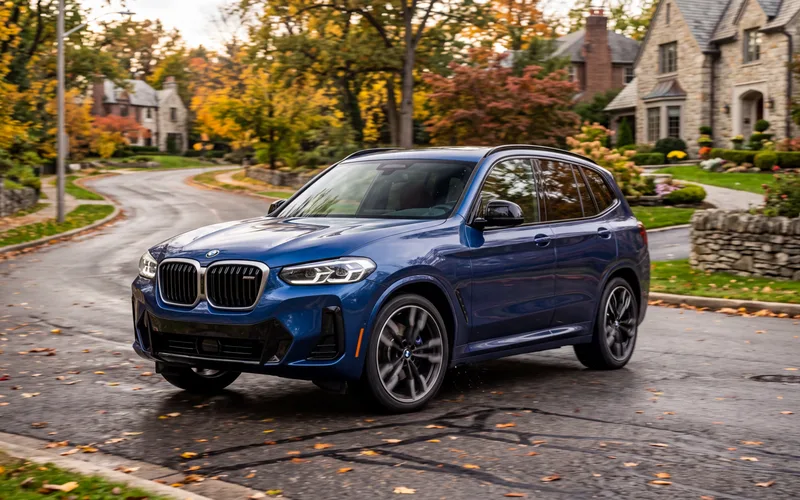
The Stelvio out-steers the X3 and matches its base-engine acceleration while undercutting it on price, but the X3 counters with more rear legroom, ~10 cu ft more max cargo, a 4,400-lb tow rating, available mild-hybrid and PHEV powertrains, and dramatically better predicted reliability and resale value.
Compare 2.74B-
 Audi Q5Compact Luxury SUV
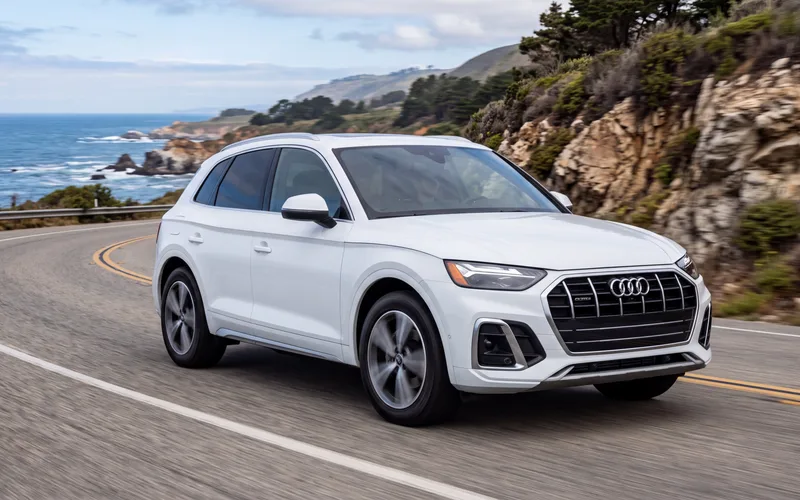
Both are compact luxury SUVs with standard AWD in the low $50k range; the Stelvio offers sharper handling and a quicker 0-60, while the Q5 wins on cabin material quality, back-seat space, cargo volume, PHEV availability, dealer network, and long-term ownership costs.
Compare 2.72B-
 Mercedes-Benz GLCCompact Luxury SUV
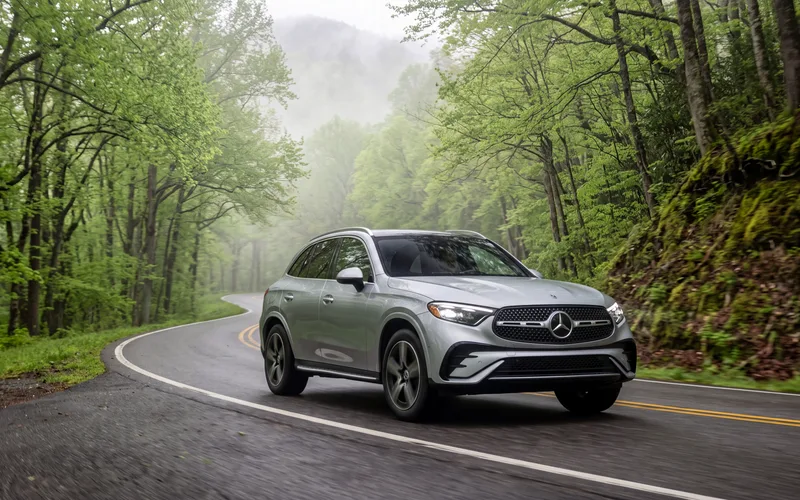
The GLC has moved to a larger touchscreen, hybrid-assisted powertrains, and a plusher, quieter cabin — clear wins for comfort and daily livability — while the Stelvio counters with more communicative steering, more standard content at a lower base price, and a more driver-focused character.
CompareHow it's evolved
9 scored model years · 2018–2026
Subject scores by year
Hover or tap a score to see what moved it versus the year before. A corner mark flags a big swing.
| Year | Performance | Efficiency | Safety | Space | Cost | Reliability | Tech | Use-case | Driving | Value |
|---|---|---|---|---|---|---|---|---|---|---|
| 2026 | 50 | 45 | 59 | 37 | 24 | 44 | 64 | 61 | 79 | 61 |
| 2025 | 51 | 43 | 57 | 41 | 39 | 61 | 55 | 57 | 76 | 63 |
| 2024 | 54 | 41 | 43 | 42 | 14 | 56 | 56 | 59 | 81 | 73 |
| 2023 | 55 | 38 | 51 | 41 | 23 | 62 | 56 | 57 | 81 | 66 |
| 2022 | 53 | 47 | 71 | 39 | 30 | 58 | 53 | 58 | 79 | 71 |
| 2021 | 55 | 49 | 54 | 40 | 28 | 47 | 51 | 59 | 78 | 74 |
| 2020 | 55 | 43 | 56 | 41 | 29 | 46 | 55 | 59 | 79 | 75 |
| 2019 | 55 | 44 | 42 | 39 | 32 | 40 | 39 | 56 | 73 | 75 |
| 2018 | 55 | 41 | 43 | 39 | 43 | 43 | 36 | 56 | 80 | 82 |
Compare two years
Best fit & conditions
Higher scores mean a better fit for that use case. Learn more about use-case fit →
Subject profile
Detailed scoring by subject
1Performance & PowertrainGrades below the middle of the scale.1.67D
The volume Ti AWD uses the standard 2.0-liter turbo four with 280 hp; the range-topping Quadrifoglio has 505 hp.
The volume Ti AWD's 2.0-liter turbo four produces a strong 306 lb-ft across a broad plateau.
The 280-hp Stelvio's quoted 5.4-second run is very quick for a standard compact luxury SUV powertrain, and Edmunds measured 5.7 seconds in an AWD test vehicle.
Reviewers found the turbo four urgent, responsive and smooth, with strong everyday response and minimal lag. It combines unusually lively delivery with good civility for the class.
The ZF eight-speed is quick, smooth and intelligently programmed, with responsive manual control rather than indecisive hunting.
A 3,000-lb maximum is useful for a small trailer but modest among luxury SUVs.
Q4 AWD was broadly available and fitted to the volume Ti AWD, while RWD remained available. The rear-biased system can transfer torque forward as needed, though there is no low range or dedicated terrain suite.
Its 8.1-inch clearance, AWD availability and hill-descent control support light-duty use, but the Stelvio is pavement-focused and lacks terrain modes, lockers, skid plates or a dedicated off-road trim.
The U.S. range offered two genuinely distinct gas engines: a 280-hp turbo four and the Quadrifoglio's 505-hp twin-turbo V6. There was no hybrid, diesel or other electrified U.S. option.
2Efficiency & RangeGrades near the bottom of the scale.0.91F
The volume Ti AWD returns 24 mpg combined, while the less popular RWD configuration gains 1 mpg.
EPA city economy for the representative 2.0T AWD configuration is 22 mpg.
The representative AWD version is EPA-rated at 28 mpg highway, one mpg below RWD.
The EPA combined rating and official tank capacity imply about 406 miles on a full tank for the volume AWD configuration.
Premium-priced fuel and 24 mpg combined produce a relatively high annual fuel bill despite competitive gasoline economy.
The owner's guide permits 87-octane regular for satisfactory operation but recommends 91-octane premium for optimal performance. That flexibility avoids a strict premium requirement, although realizing full performance costs more.
3SafetyGrades near the bottom of the scale.0.79F
NHTSA did not publish an overall rating for the 2019 Stelvio, so the required numeric value uses the dataset's neutral four-star convention rather than presenting an unearned test result.
The 2019 Stelvio received no IIHS award and has no IIHS crashworthiness results. With no demonstrated U.S. crash-test weakness but also no verified Good results, it remains below the rubric's mostly-Good band.
The volume 2.0-liter Stelvio did not include the rubric's five core ADAS features as standard: blind-spot/rear-cross-traffic equipment required the Static package, while AEB, lane-departure warning and adaptive cruise required the Dynamic Plus package. It offered lane warning only, not lane keeping.
Optional Forward Collision Warning Plus could automatically brake and included pedestrian detection, but IIHS published no vehicle-to-vehicle, daytime-pedestrian or nighttime-pedestrian performance rating. Useful documented capability earns limited credit without test validation or standard fitment.
Blind-spot monitoring and rear cross-path detection were available and reviewers found both effective, but they were alert-only options rather than standard active-intervention systems. No safe-exit or rear automatic-braking function was offered.
The optional system only warned when the vehicle departed its lane; it could neither steer the Stelvio back nor center it. This is substantially below a functional lane-keeping system.
When optioned, adaptive cruise operated down to a full stop and reviewers found it smooth. Its package-only availability and lack of lane centering prevent it from functioning as an integrated highway-assist system.
No hands-free highway-driving system was available for the 2019 Stelvio.
Bi-xenon headlights were standard and automatic high beams were available, but IIHS did not test their illumination or glare performance. The hardware is credible, though it cannot receive Good-rated credit without measured results.
Thick pillars, a small rear window and an obstructed rear-quarter view create notable blind zones. Large mirrors and the standard reversing camera help, but the 2019 volume trim lacked comprehensive camera compensation.
Two outboard LATCH positions use clearly marked plastic covers, but the anchors sit deep and high, and a rear-facing infant seat severely compromises front-passenger space. Two seats fit; three-across ease was not demonstrated.
4Space & ComfortOne of the Stelvio's weakest categories.0.55F
The 2019 Stelvio is a two-row five-passenger SUV.
Front headroom is generous for a compact luxury SUV.
The published SAE-style figure is unusually low relative to the SUV normalization band.
Second-row headroom is competitive despite the sloping roofline.
Rear legroom sits near the bottom of the SUV normalization range.
There is no third row; the Stelvio seats five in two rows.
Cargo room behind the second row is below the framework's 25-cu-ft SUV floor.
Maximum cargo volume barely clears the framework's SUV minimum.
Cubbies are numerous but mostly small, while awkward cupholder placement can obstruct controls and a USB port.
Comfortable leather seats and a satisfying driving position suit long stints, though limited rear legroom constrains taller passengers.
The ride is unusually compliant for such an agile SUV, although some surfaces can produce jitter.
The cabin is generally muted, but wind noise is less controlled than in peers and the four-cylinder can drone.
Dual-zone climate control and leather are standard, while heated front/rear seats and a heated wheel are available rather than broadly standard.
5Cost of OwnershipThe Stelvio's lowest-graded category.0.10F
A new rear-wheel-drive entry model lowered the Stelvio's starting price for 2019; this was a model-year change, not a figure carried from 2018.
The Ti AWD is the representative volume configuration: it adds the comfort and parking equipment expected in this class without stepping up to the low-volume Quadrifoglio. Edmunds likewise identifies Ti AWD, with the Sport package, as the range's sweet spot.
The published Ti cost-of-ownership estimate is extremely high for the segment, reflecting both luxury-car servicing and repair exposure. It is consistent directionally with Edmunds' adjacent-year Ti AWD estimate, though the exact 2019 breakdown comes from a secondary cost database.
Stelvio depreciation is worse than the compact-luxury-SUV norm. A second industry model is still more pessimistic, so 45.1% is a defensible but not conservative residual estimate.
Coverage matched the common premium-brand term and exceeded the three-year coverage offered by many mainstream makes.
Alfa Romeo did not provide a longer separate powertrain term; the powertrain shared the 4-year/50,000-mile new-vehicle coverage, below the five-year SUV normalization floor.
One scheduled service in the first year is useful but brief compared with multi-year luxury programs; 24/7 roadside assistance adds a basic ownership perk. The 2019 model predates the Stelvio's Alfa Connect connected-services availability.
$46,040 volume-trim price minus its estimated resale value after 5 years (45.1% retained, or about $20,764) leaves about $25,276 in depreciation. Add the projected $14,346 in 5-year maintenance and repairs, and owning this vehicle for 5 years costs about $39,622 in total.
6Reliability & QualityGrades near the bottom of the scale.0.67F
The survey evidence and accumulated history place this early Stelvio below the compact-luxury-SUV norm. Consumer Reports records eight recalls, while period testing found cabin rattles and multiple electronic-system problems; J.D. Power does not provide a Quality & Reliability score for this model year.
Alfa Romeo lacked sufficient U.S. survey volume for several contemporary reliability rankings and did not establish a mid-pack multi-year dependability record. Later evidence around these early cars remained bottom-tier, supporting a score firmly in the rubric's lower band.
Eight recalls are excessive for a low-volume model, and multiple campaigns involve consequential loss-of-control or crash hazards. The record includes adaptive cruise control that may resist cancellation, an inaccurate fuel gauge with stall risk, fuel-pump loss of drive power, airbag nondeployment, and possible brake-pedal detachment.
The volume trim's 280-hp 2.0-liter turbo four and eight-speed automatic avoid the Quadrifoglio's highly stressed hardware, and the ZF-based transmission is broadly proven. The Alfa-specific engine was still relatively new, however, and fuel-pump, electronic-throttle, cooling, and limp-mode reports prevent an average-or-better durability assessment.
Standard leather and attractive aluminum accents give the base 2.0T some genuine luxury content, but material execution is only marginally competitive. Reviewers repeatedly criticized the cheap-looking shifter, plasticky switchgear, flexible door panels, and coarse dash covering.
Assembly consistency falls below luxury-class expectations. A satisfying door-close feel is offset by observed cabin creaks and rattles, flexible panels, and problems with several electronic systems in a contemporary test vehicle.
Alfa Romeo has factory-authorized U.S. support, but its low-volume dedicated network is sparse beside BMW, Mercedes-Benz, Lexus, or mainstream Stellantis brands. Owners outside major metro areas can face long trips for Alfa-trained warranty and diagnostic work.
Routine wear items have aftermarket choices, but the small installed base and specialist network constrain sourcing for Alfa-specific electronics, trim, and drivetrain components. Costs are above the all-car average, and uncommon repairs can require dealer-supplied parts.
7Technology & InfotainmentOne of the Stelvio's weakest categories.0.55F
The volume trim uses a 6.5-inch display controlled by a console rotary dial; neither 2019 display is touch-sensitive.
The physical rotary controller is intuitive at first, but mediocre response, unclear icons and convoluted menus make the pre-refresh system frustrating.
Both projection systems are standard for 2019 but require a USB cable; wireless projection was not offered.
Voice activation is present and navigation is optional, but cumbersome destination entry and disruptive prompts make phone projection preferable.
The eight-speaker base setup is adequate and a powerful branded premium system is available.
A useful 7-inch information display sits between analog gauges, so this is a partial-digital rather than full-digital cluster.
The pre-2020 infotainment platform has no documented meaningful OTA capability.
The 2019 model predates supported Alfa connected services, leaving no meaningful factory companion-app remote controls.
Three USB ports are useful for the period, but they are older USB-A connections with no factory wireless charging or AC outlet on the volume trim.
Keyless entry/start, remote start and a power liftgate provide strong conventional convenience, without phone-as-key.
A rear camera and rear sensors are standard, with front sensors available, but there is no surround-view camera and the displayed image is small.
No head-up display was offered for the 2019 Stelvio.
8Use-Case FitOne of the Stelvio's strongest categories.1.75C-
Two car seats fit and tether anchors are easy to use, but rear-facing infant seats consume front-seat travel and cargo space is narrow.
Core airbags and a rear camera are standard, but most active safety—including AEB, blind-spot monitoring and adaptive cruise—costs extra, and no complete IIHS crash rating is available.
Four occupants get comfortable seats and a compliant ride, but 31.9-inch rear legroom, thin rear amenities and 18.5 cu ft of luggage room limit family touring.
Compact dimensions, responsive power and a smooth-shifting eight-speed generally make commuting pleasant, though stop-start and cold low-speed response can be abrupt.
The AWD volume configuration's 24-mpg combined rating is reasonable for its class, but premium fuel and luxury-car consumables raise per-mile cost.
A compact 184.6-inch footprint and 38.55-ft turning circle are manageable, aided by standard rear sensors, but the small camera image is a drawback.
The 280-hp turbo engine and 3,000-lb tow rating handle light trailers, but limited cargo volume keeps it from serious work duty.
A luxury-oriented cabin, tight utility space and an unproven contemporary reliability record make it poorly suited to repeated hard use.
Available sliding cargo tie-downs and roof rails help, but there is no onboard power, washable work interior, or meaningful upfit ecosystem.
Comfortable seats, composed ride and roughly 473 miles of EPA highway range make a good tourer, but wind noise and optional-only adaptive cruise reduce fatigue control.
Available Q4 AWD, 8.1-inch clearance, roof rails and 3,000-lb towing support gravel-road and light-adventure use, without low range or rugged underbody hardware.
A split-fold rear seat, remote releases, roof rails and hitch availability add flexibility, but the 18.5-cu-ft cargo bay is narrow and only reaches 56.5 cu ft folded.
9Driving ExperienceOne of the Stelvio's strongest categories.2.97B-
Exceptional body control, balance and agility put the Stelvio at the top of its class for cornering engagement.
Very quick, accurate steering gives the Stelvio sports-sedan immediacy and is central to its class-leading agility.
Large four-piston Brembo front brakes provide ample power, but an overly grabby pedal undermines smooth modulation.
The strong 280-hp turbo four and quick eight-speed respond eagerly, but tentative cold response and a jolting stop-start system prevent top refinement marks.
The engine is generally isolated but becomes droney in a common cruising rpm range and lacks the polish of the best luxury rivals.
The turning diameter is mid-pack for an SUV of this size.
The driving position is satisfying and controls emphasize the driver, though paddle placement, manual steering-column adjustment and infotainment menus create annoyances.
Responsive turbo power, unusually agile handling and character make the standard four-cylinder Stelvio one of the most entertaining SUVs in its class.
10Value & Market PositionThe Stelvio's best-graded category.3.06B
Even the base Stelvio included leather, xenon headlights, Brembo brakes, power front seats and liftgate, dual-zone climate control, rear parking sensors, and—newly standard for 2019—Apple CarPlay and Android Auto. Most active-safety assists still required option packages, preventing a top-band score.
At $46,040 including destination, the Ti AWD paired rich comfort content with a class-strong 280-hp engine and genuinely standout handling. Its dated infotainment, mixed cabin materials, limited practicality, and optional driver-assistance tech kept it from being a segment bargain.
The lineup covered base, Sport, Ti, Ti Lusso, Ti Sport, Ti Sport Carbon and Quadrifoglio, with RWD newly offered on the lower models and Q4 AWD widely available. Numerous appearance and performance packages provided flexibility, although the regular range had only one engine-transmission combination.
The Stelvio remained Alfa Romeo's U.S. volume leader but was a niche compact-luxury-SUV seller, and 2019 volume fell sharply in only its second model year. That trajectory signals weak acceptance relative to established German and Japanese rivals.
Alfa Romeo supplied distinctive Italian styling, motorsport heritage and rarity that gave the Stelvio more emotional appeal than many peers. A thin U.S. dealer footprint, reliability concerns and exceptionally weak depreciation restrained that halo.
Falling sales and plentiful inventory made 2019 Stelvios highly negotiable, with transaction examples showing roughly $8,000 off sticker. That was a substantial immediate buyer benefit, albeit one connected to weak demand and future resale.
2019 was only the second U.S. model year of the generation, and it added a lower-priced RWD configuration, standard smartphone integration, new packages and minor option/color changes. It retained the launch cabin and infotainment, with the substantive interior/technology update not arriving until model year 2020.
Reviewers consistently regarded the Stelvio as one of the segment's most engaging choices, and the Quadrifoglio won a major five-way performance-SUV comparison. The volume four-cylinder model was strongly reviewed but not an across-the-board class winner because technology, utility and quality lagged.