

The verdict
A mixed-report mid-size luxury sedan, strong on space and held back by ownership.
The 2017 BMW 5 Series is the launch year of the seventh-generation G30, and it is a genuinely lovely car to sit in and travel in — serene ride, a 486-mile cruising range, an 18.7 cu ft trunk that grew nearly a third over the old car, and the best infotainment system in the class at the time. What it is not is a bargain: the $52,195 sticker buys a car with no heated seats, no rearview camera and no blind-spot monitoring, all of which live in packages that push a realistic 530i xDrive to roughly $59,500. Nine years on it depreciates harder than its rivals and its repair bills run about $968 a year against a $652 industry average, which is why it grades so poorly on cost of ownership. As a used luxury sedan bought with eyes open — and a budget for the fourth-year service cliff — it is a lot of car for the money; as a cheap way into a BMW badge, it is a trap.
Jump to scoresStrengths
- Rides and travels like a car costing much more
- A road-trip car first and foremost
- Infotainment and audio that still hold up
What holds it back
- The cost of ownership is brutal
- Safety gear you'd expect as standard costs thousands extra
- Premium fuel, ordinary economy, no efficient alternative
Top alternatives
Cars shoppers cross-shop with the BMW 5 Series 3.21B+
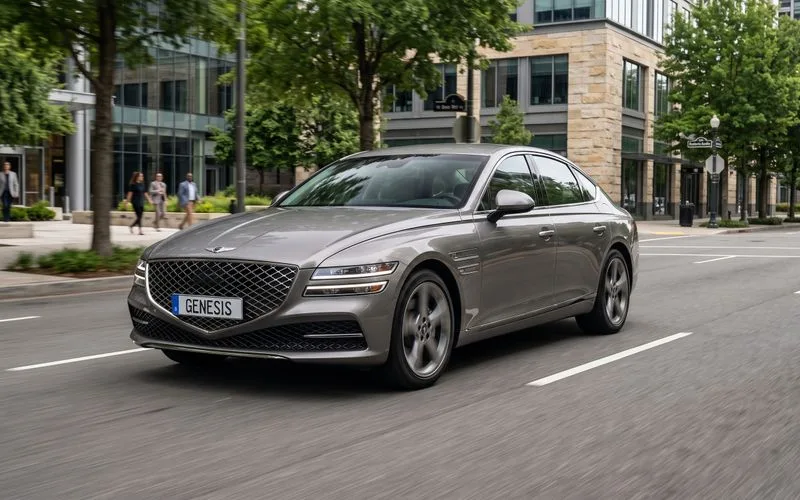 Genesis G80Mid-Size Luxury SedanBetter at: Value
Roughly $10,000 less for more standard equipment, more rear legroom, included maintenance and a far longer powertrain warranty — the strongest counter-argument to the 5 Series' ownership costs.
Compare 2.87B-
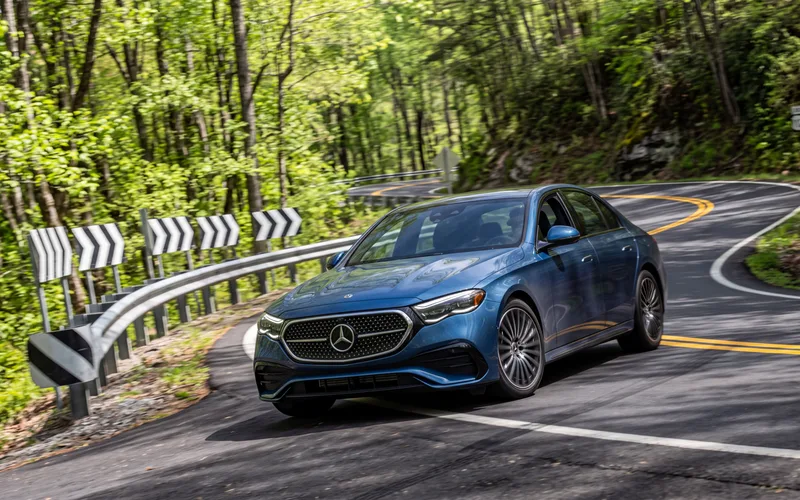 Mercedes-Benz E-ClassMid-Size Luxury SedanBetter at: Rear-seat comfort
The direct cross-shop, with a more spacious and more indulgent rear seat for buyers who spend time back there.
Compare 3.11B
3.11B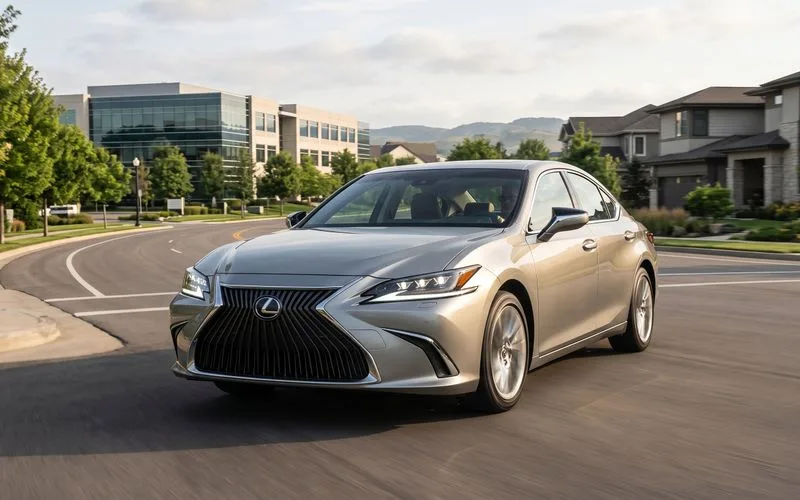 Lexus ESMid-Size Luxury SedanBetter at: Ownership cost
Substantially cheaper to buy and to keep, with hybrid economy and better-than-BMW reliability and dealer service scores.
CompareHow it's evolved
10 scored model years · 2017–2026
Subject scores by year
Hover or tap a score to see what moved it versus the year before. A corner mark flags a big swing.
| Year | Performance | Efficiency | Safety | Space | Cost | Reliability | Tech | Use-case | Driving | Value |
|---|---|---|---|---|---|---|---|---|---|---|
| 2026 | 62 | 50 | 87 | 76 | 12 | 78 | 86 | 62 | 72 | 80 |
| 2025 | 63 | 48 | 80 | 76 | 18 | 66 | 85 | 59 | 72 | 74 |
| 2024 | 63 | 47 | 69 | 74 | 20 | 66 | 85 | 52 | 77 | 78 |
| 2023 | 61 | 35 | 76 | 74 | 24 | 76 | 81 | 56 | 75 | 68 |
| 2022 | 61 | 35 | 77 | 74 | 22 | 71 | 81 | 56 | 75 | 66 |
| 2021 | 61 | 39 | 76 | 68 | 22 | 63 | 80 | 51 | 72 | 70 |
| 2020 | 61 | 39 | 73 | 74 | 20 | 68 | 77 | 50 | 71 | 68 |
| 2019 | 61 | 39 | 73 | 74 | 25 | 70 | 63 | 49 | 71 | 73 |
| 2018 | 61 | 39 | 62 | 72 | 21 | 68 | 64 | 48 | 71 | 76 |
| 2017 | 56 | 39 | 60 | 74 | 26 | 66 | 65 | 50 | 70 | 69 |
Compare two years
Best fit & conditions
Higher scores mean a better fit for that use case. Learn more about use-case fit →
Subject profile
Academic Probation · NHTSA safety recalls
Apr 29, 2020Air bags · Air bags: frontal · Air bags: frontal: driver side: inflator module · Air bags: frontal: passenger side: inflator modulePrior exposure to excessive levels of humidity within the driver and passenger head air bag inflators may affect the proper deployment of the head air bags.
Defect
BMW of North America, LLC (BMW) is recalling certain 2017 530i, 530i xDrive, 540i and 540i xDrive and 2017-2018 530e xDrive vehicles. Prior exposure to excessive levels of humidity within the driver and passenger head air bag inflators may affect the proper deployment of the head air bags.
Risk
In the event of a crash of sufficient severity, deployment of the head air bag may be impaired and/or the igniter could separate from the inflator, increasing the risk of injury.
Remedy
BMW will notify owners, and dealers will replace the left or right head air bag, free of charge. The recall began June 24, 2020. Owners may contact BMW customer service at 1-800-525-7417.
NHTSA campaign 20V243000 ↗33 vehicles potentially affected (all models in the campaign)Owners notified Jun 24, 2020Filed by BMW of North America, LLCFiled as 530E, 530I, 540IDec 20, 2016Air bagsThe affected vehicles have seat- mounted side air bag inflator initiators that may fail to ignite during a crash.
Defect
BMW of North America, LLC (BMW) is recalling certain model year 2017 BMW 640i, 640i xDrive, 650i, 650i xDrive, M6, 535i, 535i xDrive, 430i, 430i xDrive, 440i, 440i xDrive, M4, X1 sDrive28i, X1 xDrive28i, i3, i8, Rolls-Royce Dawn, Mini Clubman Cooper, Clubman Cooper S, Cooper All4, Cooper S All4, Mini 4-Door Cooper, Cooper S, Mini 2-Door Cooper, Cooper S, John Cooper Works and 2016 BMW 528i, 528i xDrive, 535i, 535i xDrive, 550i, 550i xDrive, M5 and 535d vehicles. The affected vehicles have seat- mounted side air bag inflator initiators that may fail to ignite during a crash.
Risk
If the air bag inflator initiator fails to ignite, the seat-mounted air bag will not deploy, increasing the risk of injury.
Remedy
BMW will notify owners, and dealers will replace the air bag modules, free of charge. The recall began February 6, 2017. Owners may contact BMW customer service at 1-800-525-7417.
NHTSA campaign 16V914000 ↗3,506 vehicles potentially affected (all models in the campaign)Owners notified Feb 10, 2017Filed by BMW of North America, LLCFiled as 535I
26 recalls on other model years of the 5 Series (2018–2026)
Jul 8, 2026Electrical system: starter assembly: relayThe engine starter relay may corrode, causing the relay to overheat and short circuit.
Defect
BMW of North America, LLC (BMW) is recalling certain 2018-2020 530e xDrive, 2017-2019 740Le xDrive, 2018-2020 530e iPerformance, 2016-2018 330e iPerformance vehicles. The engine starter relay may corrode, causing the relay to overheat and short circuit.
Risk
A short circuit in the starter relay may increase the risk of a fire.
Remedy
Owners are advised to park outside and away from structures until the remedy is complete. Dealers will replace the engine starter, free of charge. Owner notification letters were mailed September 30, 2026. Owners may contact BMW customer service at 1-800-525-7417. Vehicle Identification Numbers (VINs) involved in this recall will become searchable on NHTSA.gov beginning August 28, 2026.
NHTSA campaign 26V441000 ↗29,119 vehicles potentially affected (all models in the campaign)Owners notified Sep 30, 2026Filed by BMW of North America, LLCFiled as 530E IPERFORMANCE, 530E XDRIVE IPERFORMANCEJul 1, 2026Electronic stability control (esc) · Service brakes, hydraulic: power assist: electric: control moduleThe integrated brake (IB) system may malfunction and result in a loss of power brake assist or cause the Antilock Brake (ABS) and Dynamic Stability Control (DSC) systems to not function properly.
Defect
BMW of North America, LLC (BMW) is recalling certain 2025 Mini Cooper S, Mini Countryman S All4, X2, 2024 Rolls-Royce Spectre, 2023-2025 i7, 7 Series, X7, 2024-2025 i5, 5 Series, 2023-2024 XM, X1, 2024-2025 X6, and X5 vehicles. The integrated brake (IB) system may malfunction and result in a loss of power brake assist or cause the Antilock Brake (ABS) and Dynamic Stability Control (DSC) systems to not function properly.
Risk
A loss of power brake assist can extend the distance required to stop the vehicle. Additionally, malfunctioning ABS and/or DSC systems can cause a loss of vehicle control. Either of these scenarios can increase the risk of a crash.
Remedy
The Integrated brake system will be inspected and, if necessary, replaced, free of charge. Owner notification letters are expected to be mailed August 21, 2026. Owners may contact BMW customer service at 1-800-525-7417 or Rolls-Royce customer service at 1-877-877-3735. Vehicle Identification Numbers (VINs) involved in this recall will become searchable on NHTSA.gov beginning August 21, 2026. Vehicles previously repaired under recall 24V739 or 24V104 will need to have the new remedy completed.
NHTSA campaign 26V422000 ↗428 vehicles potentially affected (all models in the campaign)Owners notified Aug 25, 2026Filed by BMW of North America, LLCFiled as 530I, 530I XDRIVE, 540I XDRIVEFeb 19, 2026Electrical system: wiringThe electrical wiring harness for the air conditioning system may become damaged during replacement of the cabin air filter.
Defect
BMW of North America, LLC (BMW) is recalling certain 2025 M5 Sportswagon, 2025-2026 M5, 2024-2025 750e xDrive, 2025-2026 550e xDrive, 2023-2025 I7, 2023-2025 7 Series, 2024-2026 i5, and 5 Series vehicles. The electrical wiring harness for the air conditioning system may become damaged during replacement of the cabin air filter.
Risk
A damaged wiring harness can short-circuit, increasing the risk of a fire.
Remedy
Dealers will inspect and replace the air conditioning systemâs electrical wiring harness and add a retaining strap/bracket to the harness, as necessary, free of charge. Owner notification letters were mailed April 16, 2026. Owners may contact BMW customer service at 1-800-525-7417. Vehicle Identification Numbers (VINs) involved in this recall will be searchable on NHTSA.gov beginning April 13, 2026.
NHTSA campaign 26V096000 ↗58,713 vehicles potentially affected (all models in the campaign)Owners notified Apr 16, 2026Filed by BMW of North America, LLCFiled as 550E XDRIVEJan 30, 2026Electrical system: starter assemblyPlease see the recall report for a complete list of all models. The engine starter may overheat and catch fire due to wear on an internal component.
Defect
BMW of North America, LLC (BMW) is recalling certain 2021-2023 Toyota Supra, 2022-2023 2 Series Coupe, 2021-2024 5 Series (xDrive), 2021-2022 Z4, 2022-2024 4 Series (Gran Coupe), 2021-2024 4 Series (Convertible and xDrive Convertible), 2021-2023 4 Series (Coupe), 2021-2024 3 Series, 2021-2023 X4, 2021-2024 X3 vehicles. Please see the recall report for a complete list of all models. The engine starter may overheat and catch fire due to wear on an internal component.
Risk
Fire increases the risk of injury.
Remedy
Dealers will replace the engine starter, free of charge. Owner notification letters were mailed July 21, 2026. Owners may contact BMW customer service at 1-800-525-7417 or Toyota's customer service at 1-800-331-4331. Vehicle Identification Numbers (VINs) involved in this recall will be searchable on NHTSA.gov beginning March 24, 2026.
NHTSA campaign 26V056000 ↗87,394 vehicles potentially affected (all models in the campaign)Owners notified Mar 27, 2026Filed by BMW of North America, LLCFiled as 530ISep 23, 2025Electrical system: starter assembly: relayThe engine starter relay may corrode, causing the relay to overheat and short circuit.
Defect
BMW of North America, LLC (BMW) is recalling certain 2019-2021 BMW 330i, 2019-2022 BMW Z4, 2020-2022 BMW 530i, X3, X4, Toyota Supra, 2021-2022 BMW 430i, 430i Convertible, and 2022 BMW 230i vehicles. The engine starter relay may corrode, causing the relay to overheat and short circuit.
Risk
A short circuit in the starter relay may increase the risk of a fire.
Remedy
Owners are advised to park their vehicles outside and away from structures until the remedy is complete. Dealers will replace the engine starter, free of charge. Owner notification letters were mailed February 6, 2026. Owners may contact BMW customer service at 1-800-525-7417. Vehicle Identification Numbers (VINs) involved in this recall became searchable on NHTSA.gov November 14, 2025.
NHTSA campaign 25V636000 ↗199,674 vehicles potentially affected (all models in the campaign)Owners notified Feb 6, 2026Filed by BMW of North America, LLCFiled as 530IApr 1, 2025Electrical system: alternator/generator/regulator · Electrical system: starter assemblyThe electrical connection between the starter-generator and battery may come loose.
Defect
BMW of North America, LLC (BMW) is recalling certain 2025 330i, 330i xDrive, 530i, 530i xDrive, 4 Series Coupe (430i, 430i xDrive), 4 Series Convertible (430i, 430i xDrive), 4 Series Gran Coupe (430i, 430i xDrive) and X3 30 xDrive vehicles. The electrical connection between the starter-generator and battery may come loose.
Risk
A loose starter-generator connection can result in an engine stall, increasing the risk of a crash. In addition, the wiring may overheat, increasing the risk of a fire.
Remedy
Dealers will inspect and replace the starter-generator and positive battery cable as necessary, free of charge. Interim owner letters notifying owners of the safety risk were mailed May 28, 2025. Second letters will be sent once the remedy is available. Owners may contact BMW customer service at 1-800-525-7417.
NHTSA campaign 25V202000 ↗4,557 vehicles potentially affected (all models in the campaign)Owners notified Aug 8, 2025Filed by BMW of North America, LLCFiled as 530I, 530I XDRIVENov 19, 2024Air bags: air bag/restraint control moduleThe air bag control unit may have been manufactured incorrectly, which can result in the air bags not deploying as intended.
Defect
BMW of North America, LLC (BMW) is recalling certain 2025 530i and 540i xDrive vehicles. The air bag control unit may have been manufactured incorrectly, which can result in the air bags not deploying as intended.
Risk
Air bags that do not deploy as intended during a crash increases the risk of injury.
Remedy
Dealers will replace the air bag control unit, free of charge. The vehicles have not been sold from dealer inventory and therefore no owner letters will be mailed. Owners may contact BMW customer service at 1-800-525-7417.
NHTSA campaign 24V870000 ↗3 vehicles potentially affected (all models in the campaign)Owners notified Dec 5, 2024Filed by BMW of North America, LLCFiled as 530I, 540I XDRIVEOct 2, 2024Electronic stability control (esc) · Service brakes, hydraulic: power assist: electric: control modulePlease see the recall report for a complete list of models and model years. The integrated brake (IB) system may malfunction and result in a loss of power brake assist or cause the Antilock Brake (ABS) and Dynamic Stability Control (DSC) systems to not function properly.
Defect
BMW of North America, LLC. (BMW) is recalling certain 2023-2024 X1, X5, X6, X7, XM, 530i, i5, 740i, 760i, i7, and 750e vehicles. Please see the recall report for a complete list of models and model years. The integrated brake (IB) system may malfunction and result in a loss of power brake assist or cause the Antilock Brake (ABS) and Dynamic Stability Control (DSC) systems to not function properly.
Risk
A loss of power brake assist can extend the distance required to stop the vehicle. Additionally, malfunctioning ABS and/or DSC systems can cause a loss of vehicle control. Either of these scenarios can increase the risk of a crash.
Remedy
Dealers will replace the integrated brake module, free of charge. Interim owner notification letters notifying owners of the safety risk are expected to be mailed November 22, 2024. Second letters will be mailed once the parts are available. Owners may contact BMW customer service at 1-800-525-7417. Vehicles in this recall were previously repaired under recall number 24V-104 and will need to have the new remedy completed.
NHTSA campaign 24V739000 ↗11,579 vehicles potentially affected (all models in the campaign)Owners notified Nov 27, 2024Filed by BMW of North America, LLCFiled as 530I, 530I XDRIVESep 25, 2024Steering: linkages: knuckle: spindle: armThe steering spindle may break requiring a greater steering effort to control the vehicle.
Defect
BMW of North America (BMW) is recalling certain 2024-2025 530i xDrive, 540i xDrive, 2024-2025 i5 eDrive40, i5 M60 xDrive, 2025 i5 xDrive40, 2024 740i xDrive, 760i xDrive, 750e xDrive, i7 eDrive50, i7 xDrive60, and i7 M70 xDrive vehicles. The steering spindle may break requiring a greater steering effort to control the vehicle.
Risk
A sudden increase in required steering effort increases the risk of a crash.
Remedy
Dealers will replace the steering spindle's double universal joint, free of charge. Owner notification letters were mailed November 22, 2024. Owners may contact BMW Customer Service at 1-800-525-7417.
NHTSA campaign 24V714000 ↗982 vehicles potentially affected (all models in the campaign)Owners notified Nov 22, 2024Filed by BMW of North America, LLCFiled as 530I XDRIVE, 540I XDRIVESep 18, 2024Electronic stability control (esc): control module · Service brakes, hydraulic: antilock/traction control/electronic limited slip: control unit/modulePlease refer to the recall report for the complete list of models. The welds in the servomotor of the integrated brake control module may break, causing a loss of power brake assist and rear brake function. In addition, the Antilock Brake System (ABS) and Dynamic Stability Control (DSC) system may not function.
Defect
BMW of North America (BMW) is recalling certain 2023-2024 X1, 2024-2025 X5, 2025 X6, 2023-2025 X7, 740i, 760i, 2024 XM, 530i, 540i, i7, 750e, X2, 2024-2025 i5, 2024 Rolls Royce Spectre, 2025 MINI Countryman S ALL4, JCW Countryman ALL4, and 2025 MINI Hardtop 2 Door (Cooper, Cooper S) vehicles. Please refer to the recall report for the complete list of models. The welds in the servomotor of the integrated brake control module may break, causing a loss of power brake assist and rear brake function. In addition, the Antilock Brake System (ABS) and Dynamic Stability Control (DSC) system may not function.
Risk
A loss of brake power assist or rear brake function can result in extended stopping distance. A loss of ABS or DSC can cause a loss of vehicle handling and control. Either of these scenarios can increase the risk of a crash.
Remedy
Dealers will replace the integrated brake system, free of charge. Owner notification letters were mailed November 13, 2024. Owners can contact BMW Customer Service at 1-800-525-7417.
NHTSA campaign 24V697000 ↗309 vehicles potentially affected (all models in the campaign)Owners notified Nov 13, 2024Filed by BMW of North America, LLCFiled as 530I, 540IAug 8, 2024Engine and engine cooling: exhaust system: emission control: gas recirculation valve (egr valve)The exhaust gas recirculation (EGR) cooler may leak internally, causing coolant to mix with diesel engine soot, which could result in smoldering particles and a melting intake manifold.
Defect
BMW of North America, LLC. (BMW) is recalling certain 540d xDrive vehicles that were previously repaired under recall number 22V-614. The exhaust gas recirculation (EGR) cooler may leak internally, causing coolant to mix with diesel engine soot, which could result in smoldering particles and a melting intake manifold.
Risk
An EGR valve with smoldering particles and a melting intake manifold increases the risk of an engine fire.
Remedy
Dealers will inspect and replace the EGR module and the intake manifold as necessary, free of charge. Owner notification letters were mailed October 7, 2024. Owners may contact BMW customer service at 1-800-525-7417.
NHTSA campaign 24V588000 ↗15 vehicles potentially affected (all models in the campaign)Owners notified Oct 7, 2024Filed by BMW of North America, LLCFiled as 540DFeb 12, 2024Electronic stability control (esc) · Service brakes, hydraulic: power assist: electric: control modulePlease see the recall report for a complete list of models and model years. The integrated brake (IB) system may malfunction and result in a loss of power brake assist or cause the Antilock Brake (ABS) and Dynamic Stability Control (DSC) systems to not function properly.
Defect
BMW of North America, LLC. (BMW) is recalling certain 2023-2025 BMW, MINI, and Rolls-Royce vehicles. Please see the recall report for a complete list of models and model years. The integrated brake (IB) system may malfunction and result in a loss of power brake assist or cause the Antilock Brake (ABS) and Dynamic Stability Control (DSC) systems to not function properly.
Risk
A loss of power brake assist can extend the distance required to stop the vehicle. Additionally, malfunctioning ABS and/or DSC systems can cause a loss of vehicle control. Either of these scenarios can increase the risk of a crash.
Remedy
Dealers will replace the integrated brake system, free of charge. Owner notification letters were mailed between June and December 2024. Owners may contact BMW customer service at 1-800-525-7417 or Rolls Royce customer service at 1-877-877-3735.
NHTSA campaign 24V104000 ↗266,716 vehicles potentially affected (all models in the campaign)Owners notified Jun 28, 2024Filed by BMW of North America, LLCFiled as 530I, 550E XDRIVEDec 6, 2023Power train: automatic transmission: control module (tcm/pcm/tecm)The weld seam of the integrated transmission control unit's cover may not have been manufactured properly, which could allow automatic transmission oil to leak into the transmission control unit.
Defect
BMW of North America, LLC (BMW) is recalling certain 2023 Toyota GR Supra, 3 Series Sedan (330i xDrive, M340i xDrive, M3), 5 Series Sedan (530i, 530i xDrive, M5), 4 Series Gran Coupe (430i, 430i xDrive), 4 Series Coupe (430i, 430i xDrive, M440i xDrive), 4 Series Convertible (430i, 430i xDrive, M440i xDrive), 8 Series Coupe (840i, M850i xDrive, M8), 8 Series Convertible (840i, M850i xDrive, M8), 8 Series Gran Coupe (850i xDrive, M8), X3 SAV (X3 xDrive30i, X3M), X4 SAV (X4 xDrive30i), X5 SAV (X5 xDrive40i, X5 M50i, X5M), X6 SAV (X6 xDrive40i, X6 M50i, X6M), and Z4 sDrive30i, Z4 M40i vehicles. The weld seam of the integrated transmission control unit's cover may not have been manufactured properly, which could allow automatic transmission oil to leak into the transmission control unit.
Risk
Transmission oil that leaks into the control unit can lead to a seizure of the transmission gears, causing a sudden loss of drive power and increasing the risk of a crash.
Remedy
Dealers will replace the transmission mechatronics module and the automatic transmission fluid, as necessary, free of charge. Owner notification letters were mailed January 26, 2024. Owners may contact BMW customer service at 1-800-525-7417.
NHTSA campaign 23V821000 ↗Manufacturer no. Toyota - 23TA14552 vehicles potentially affected (all models in the campaign)Owners notified Jan 26, 2024Filed by BMW of North America, LLCFiled as 5 SERIESOct 18, 2023Electrical system: adas: driver monitoring: camera/sensorThe ground connection to the steering wheel may not have been attached correctly, resulting in an inoperative hands-on detection system.
Defect
BMW of North America, LLC (BMW) is recalling certain 2023-2024 740i, 740i xDrive, 760i xDrive, i7 eDrive50, i7 xDrive60, i7 M70, 2024 750e xDrive, 530i, 530i xDrive, i5 eDrive40, and i5 M60 vehicles. The ground connection to the steering wheel may not have been attached correctly, resulting in an inoperative hands-on detection system.
Risk
An inoperative hands-on detection system may fail to detect when the driver's hands are not on the steering wheel and therefore not engage the emergency stopping assistant system, increasing the risk of a crash.
Remedy
Dealers will inspect and reattach the ground connection as necessary, free of charge. Owner notification letters were mailed December 8, 2023. Owners may contact BMW customer service at 1-800-525-7417.
NHTSA campaign 23V700000 ↗12,296 vehicles potentially affected (all models in the campaign)Owners notified Dec 8, 2023Filed by BMW of North America, LLCFiled as 530IAug 10, 2022Engine and engine cooling: exhaust system: emission control: gas recirculation valve (egr valve)The EGR cooler may leak internally, causing coolant to mix with diesel engine soot, which could result in smoldering particles and a melting intake manifold.
Defect
BMW of North America, LLC. (BMW) is recalling certain 2018 540d xDrive vehicles equipped with an Exhaust Gas Recirculation (EGR) module with an integrated cooler. The EGR cooler may leak internally, causing coolant to mix with diesel engine soot, which could result in smoldering particles and a melting intake manifold.
Risk
A melting intake manifold increases the risk of fire.
Remedy
Dealers will replace the EGR module, and the intake manifold will be inspected and replaced, if necessary, free of charge. Interim owner notification letters were mailed on October 7, 2022. Owner notification letters were mailed December 30, 2022. Owners may contact BMW customer service at 1-800-525-7417.
NHTSA campaign 22V614000 ↗298 vehicles potentially affected (all models in the campaign)Owners notified Dec 30, 2022Filed by BMW of North America, LLCFiled as 540DFeb 9, 2022Power train: automatic transmissionThe mechatronics unit inside the transmission may not have been assembled properly, which could result in an internal leak.
Defect
BMW of North America, LLC (BMW) is recalling certain 2022 330i, 530i, X3 xDrive30i, and X4 xDrive30i vehicles. The mechatronics unit inside the transmission may not have been assembled properly, which could result in an internal leak.
Risk
An internal transmission leak can result in a vehicle rollaway, increasing the risk of a crash or injury.
Remedy
Dealers will replace the transmission mechatronics unit, free of charge. All of the vehicle population for this recall have been repaired. Owner notification letters were not mailed. Owners may contact BMW customer service at 1-800-525-7417.
NHTSA campaign 22V070000 ↗4 vehicles potentially affected (all models in the campaign)Owners notified Apr 4, 2022Filed by BMW of North America, LLCFiled as 530IAug 2, 2021EngineDuring engine start, the engine management software may cause loss of braking assist. Full mechanical braking (without assist) remains available.
Defect
BMW of North America, LLC (BMW) is recalling certain 2020 M340i, M340i xDrive, 540i, 540i xDrive, X3 M40i, 2020-2021 X4 M40i, 745Le xDrive, 2019-2021 Z4 M40i, and 2020-2021 Toyota Supra vehicles. During engine start, the engine management software may cause loss of braking assist. Full mechanical braking (without assist) remains available.
Risk
Loss of braking assist can increase the risk of a crash.
Remedy
Dealers will update the engine management software, free of charge. Owner notification letters were mailed on September 17, 2021. Owners may contact BMW customer service at 1-800-525-7417.
NHTSA campaign 21V598000 ↗50,024 vehicles potentially affected (all models in the campaign)Owners notified Sep 17, 2021Filed by BMW of North America, LLCFiled as 540IJul 21, 2021Seat beltsThe passenger seat belt Automatic Locking Retractor (ALR) may deactivate early, before the webbing fully retracts. As such, these assemblies fail to comply with the requirements of Federal Motor Vehicle Safety Standard number 208, "Occupant Crash Protection."
Defect
BMW of North America, LLC (BMW) is recalling certain 2021 2 Series (230i, 230i xDrive, M240i, M240i xDrive), 330e, 330e Xdrive, 4 Series Coupe (430i, 430i xDrive, M440i xDrive) M4 Coupe, M4 Competition Coupe, BMW 4 Series Convertible (430i, M440i), BMW X1 sDrive28i, xDrive28i, 2 Series Gran Coupe (228i, 228i xDrive, M235i xDrive), M2 Competition Coupe, 330i, 330i xDrive, M340i, M340i xDrive, M3, M3 Competition, 530i, 530i xDrive, 540i, 540i xDrive, MINI Hardtop 2 Door (Cooper, CooperS, JCW), X2 sDrive28i, X2 xDrive28i, X2 M35i, Z4 sDrive30i, Z4 M40i, MINI Hardtop 2 Door (Cooper SE), MINI Convertible (Cooper, Cooper S, JCW), MINI Clubman (Cooper S, Cooper S All4, JCW), MINI Countryman (Cooper, Cooper All4, Cooper S, Cooper S All4, JCW All4), Rolls Royce Ghost, MINI Countryman (Cooper S E All4), Rolls Royce Phantom, Rolls Royce Cullinan, and Toyota Supra vehicles. The passenger seat belt Automatic Locking Retractor (ALR) may deactivate early, before the webbing fully retracts. As such, these assemblies fail to comply with the requirements of Federal Motor Vehicle Safety Standard number 208, "Occupant Crash Protection."
Risk
During a crash, a seat belt retractor that does not function as intended increases the risk of injury.
Remedy
Dealers will inspect the seat belt retractors (including the seat belts) and, if necessary, replace the retractors, free of charge. Owner notification letters were mailed on September 3, 2021. Owners may contact BMW customer service at 1-800-525-7417; 1-866-825-1525 (MINI); 1-877-877-3735 (Rolls Royce); and 1-888-270-9371 (Toyota).
NHTSA campaign 21V554000 ↗21,537 vehicles potentially affected (all models in the campaign)Owners notified Sep 3, 2021Filed by BMW of North America, LLCFiled as 530I, 540IFeb 19, 2021Back over prevention: sensing system: camera · Back over prevention: softwareWhen shifting into Reverse, a small portion of the rearview image may be obscured, or the screen may not illuminate. As such, these vehicles fail to comply with the requirements of Federal Motor Vehicle Safety Standard (FMVSS) number 111, "Rear Visibility."
Defect
BMW of North America, LLC (BMW) is recalling certain 2019-2021 X3 sDrive30i, X3 xDrive30i, X3 M40i, X3M, X4 xDrive30i, X4 M40i, M550i, X4M, X5 sDrive40i, X5 xDrive40i, X5 xDrive50i, X5M, X5 M50i, X7 xDrive40i, X7 xDrive50i, X7 M50i, Alpina XB7, 330i, 330i xDrive, M340i, M340i xDrive, and 8 Series Coupe, Convertible and Grand Coupe, 840i, 840i xDrive, M850i xDrive, M8, 2020-2021 530e, 530e xDrive, 330e, 330e xDrive, 745Le, 745Le xDrive, X5 xDrive45e, X3 xDrive30e, X6 sDrive40i, X6 xDrive40i, X6 xDrive50i, X6 M50i, X6M, 530i, 530i xDrive, 540i, 540i xDrive, M550i xDrive, M5, 740i, 740Li, 740Li xDrive, M760i Drive, M760Li xDrive, 750Li xDrive Alpina, Alpina B7 xDrive, and 2021 4 Series Coupe 430i, 430i xDrive, M440i xDrive vehicles. When shifting into Reverse, a small portion of the rearview image may be obscured, or the screen may not illuminate. As such, these vehicles fail to comply with the requirements of Federal Motor Vehicle Safety Standard (FMVSS) number 111, "Rear Visibility."
Risk
If the driver relies on only the rearview camera image, the missing or reduced rearview image view can increase the risk of a crash or injury.
Remedy
BMW will notify owners, and dealers will inspect the rearview camera software and update it if necessary, free of charge. The recall began April 16, 2021. Owners may contact BMW customer service at 1-800-525-7417.
NHTSA campaign 21V096000 ↗13,858 vehicles potentially affected (all models in the campaign)Owners notified Apr 16, 2021Filed by BMW of North America, LLCFiled as 530E, 530I, 540I, M550IFeb 3, 2021Power train: driveline: driveshaftThe output shafts (left/right) which transfer power from the driveshaft to the rear wheels may break due to a heat treatment error during supplier production.
Defect
BMW of North America, LLC (BMW) is recalling certain 2020-2021 530i xDrive, 540i xDrive and 2021 740Li xDrive vehicles. The output shafts (left/right) which transfer power from the driveshaft to the rear wheels may break due to a heat treatment error during supplier production.
Risk
A broken output shaft can lead to a loss of drive power or a rollaway condition in a parked vehicle (if the parking brake is not engaged), increasing the risk of a crash.
Remedy
BMW will notify owners, and dealers will replace the output shaft(s), free of charge. The recall began March 24, 2021. Owners may contact BMW customer service at 1-800-525-7417.
NHTSA campaign 21V046000 ↗28 vehicles potentially affected (all models in the campaign)Owners notified Mar 24, 2021Filed by BMW of North America, LLCFiled as 530I, 540IDec 9, 2020Electrical system: 12v/24v/48v batteryThe connection between the 48-Volt battery and the starter-generator may not have been assembled properly, which can cause increased electrical resistance at the connections.
Defect
BMW of North America, LLC (BMW) is recalling certain 2021 M340i xDrive, M440i xDrive Coupe, 530i, 530i xDrive, 540i, 540i xDrive, 740Li, 740Li xDrive, 840i Gran Coupe, 840i xDrive Gran Coupe, X5 sDrive40i, X5 xDrive40i, X6 sDrive40i, X6 xDrive40i, and X7 xDrive40i vehicles. The connection between the 48-Volt battery and the starter-generator may not have been assembled properly, which can cause increased electrical resistance at the connections.
Risk
Increased electrical resistance can increase the risk of a fire.
Remedy
BMW will notify owners, and dealers will inspect the connection between the 48-Volt battery and the starter-generator assembly, replacing it if necessary, free of charge. The recall is expected to begin April 12, 2021. Owners may contact BMW customer service at 1-800-525-7417.
NHTSA campaign 20V761000 ↗812 vehicles potentially affected (all models in the campaign)Owners notified Mar 30, 2021Filed by BMW of North America, LLCFiled as 530I, 540ISep 30, 2020Electrical system: propulsion system: traction batteryDebris may have entered one or more of the hybrid battery cells during their production.
Defect
BMW of North America, LLC (BMW) is recalling certain 2020-2021 530e, 530e xDrive, 530e iPerformance and X3 xDrive30e and MINI Cooper Countryman All4 SE, 2020 BMW i8, and 2021 330e, 330e xDrive, 745Le xDrive and X5 xDrive45e vehicles. Debris may have entered one or more of the hybrid battery cells during their production.
Risk
The debris could result in a short-circuit, increasing the risk of fire or injury.
Remedy
BMW will inspect and, if necessary, replace the battery module free of charge. The remedy is currently being developed. Until the remedy is completed, drivers are instructed to not charge their vehicles. Drivers are instructed to not drive in manual mode, sport mode, and to not use the shift paddles. Owners were notified of the safety risk October 23, 2020. The recall began November 24, 2020. Owners may contact BMW customer service at 1-800-525-7417.
NHTSA campaign 20V601000 ↗4,509 vehicles potentially affected (all models in the campaign)Owners notified Nov 24, 2020Filed by BMW of North America, LLCFiled as 530ESep 30, 2020Back over prevention: sensing system: cameraA small portion of the rearview image may be slightly obscured. As such, these vehicles fail to comply with the requirements of Federal Motor Vehicle Safety Standard number 111, "Rear Visibility."
Defect
BMW of North America, LLC (BMW) is recalling certain 2020-2021 X3 sDrive 30i, X3 xDrive 30i, X3M 40i, X3 xDrive 30e, X4 xDrive 30i, X4M 40i, 530i, 540i, 540i xDrive, M550i xDrive, M5, 550e, 550e xDrive, and 550e iPerformance vehicles. A small portion of the rearview image may be slightly obscured. As such, these vehicles fail to comply with the requirements of Federal Motor Vehicle Safety Standard number 111, "Rear Visibility."
Risk
If the driver relies on only the rearview camera image, the reduced rearview image view can increase the risk of a crash or injury.
Remedy
BMW will notify owners, and dealers will inspect and, if necessary, program the rearview camera with updated software. The recall began November 18, 2020. Owners may contact BMW customer service at 1-800-525-7417.
NHTSA campaign 20V598000 ↗312 vehicles potentially affected (all models in the campaign)Owners notified Nov 18, 2020Filed by BMW of North America, LLCFiled as 530I, 540I, 550E, M550ISep 27, 2019Back over prevention: sensing system: cameraThe back-up camera and display settings can be adjusted such that the rear view image is no longer visible and the system will retain that setting the next time the vehicle is placed in reverse. As such, these vehicles fail to comply with the requirements of Federal Motor Vehicle Safety Standard (FMVSS) number 111, "Rearview Mirrors."
Defect
BMW of North America, LLC (BMW) is recalling certain 2018 540d, 2018-2020 530i, 530i xDrive, 540i, 540i xDrive, M550i xDrive, M5, 530e, 530e xDrive, X3 sDrive, X3 xDrive, X3 M40i, X3 M, and 2019-2020 X4 xDrive, X4 M40i, X4 M, X7 xDrive, X7 M50i, 740Li, 740Li xDrive, 750Li, 750Li xDrive, 8 Series Convertible and Coupe 840i, 840i xDrive, M850i xDrive, X5 sDrive, X5 xDrive, X5 M50i, X6 xDrive, X6 M50i, 330i, 330i xDrive, M340i, M340i xDrive, Z4 sDrive, Z4 M40i, 740Le xDrive and 745Le xDrive, 2018-2019 640i xDrive Gran Turismo and Rolls-Royce Phantom, 2019 M850i xDrive Gran Coupe and Rolls-Royce Cullinan and 2020 Toyota Supra vehicles. The back-up camera and display settings can be adjusted such that the rear view image is no longer visible and the system will retain that setting the next time the vehicle is placed in reverse. As such, these vehicles fail to comply with the requirements of Federal Motor Vehicle Safety Standard (FMVSS) number 111, "Rearview Mirrors."
Risk
The lack of an image in the back-up camera display increases the risk of a crash.
Remedy
BMW will notify owners, and dealers will update the back-up camera software, free of charge. The recall began November 8, 2019. Owners may contact BMW customer service at 1-800-525-7417 or Rolls-Royce at 1-877-877-3735. Toyota owners may contact Toyota customer service at 1-888-270-9371.
NHTSA campaign 19V684000 ↗257,473 vehicles potentially affected (all models in the campaign)Owners notified Nov 8, 2019Filed by BMW of North America, LLCFiled as 530E, 530I, 540D, 540I, M550ISep 20, 2018Equipment: electricalCapacitors within the TurboCord Portable Chargers may fail, possibly resulting in a shock hazard or a fire.
Defect
BMW of North America, LLC (BMW) is recalling certain 2018 BMW 330e iPerformance, i3 Rex, i3 Sport Rex, X5 xDrive40e, i3 BEV, i3 Sport BEV and 2019 i8 and i8 Roadster vehicles and 2018-2019 530e iPerformance, 530e xDrive iPerformance and 740Le xDrive iPerformance vehicles. Capacitors within the TurboCord Portable Chargers may fail, possibly resulting in a shock hazard or a fire.
Risk
An electrical shock or a fire can increase the risk of injury or death.
Remedy
BMW will notify owners, and dealers will inspect the charging cable, and replace it if necessary, free of charge. The recall began February 22, 2019. Owners may contact BMW customer service at 1-800-525-7417.
NHTSA campaign 18V652000 ↗3,501 vehicles potentially affected (all models in the campaign)Owners notified Feb 22, 2019Filed by BMW of North America, LLCFiled as 530EJul 11, 2018Engine and engine cooling: engineThe crankshaft sensor may be equipped with incorrect firmware, preventing the sensor from properly processing input from the crankshaft reluctor ring, possibly resulting in a vehicle stall. On September 12, 2018, BMW expanded the recall to a total of 5,309 vehicles including certain 2018-2019 BMW 540d xDrive, 230i M240i, M240i xDrive, X2 sDrive28i, X2 xDrive28i, X1 sDrive28i, X1 xDrive28i, 330i, 330i xDrive, 340i, 340i xDrive, 330i xDrive Gran Turismo, 530i, 530i xDrive, 540i, 540i xDrive, 530e, 530e xDrive, 640i xDrive Gran Turismo, 330e, 2019 430i Gran Coupe, 430i xDrive Gran Coupe, 440i Gran Coupe, 440i xDrive Gran Coupe, 430i, 430i xDrive, 440i, 440i xDrive, 740i, 740i xDrive, MINI Cooper, Cooper S, JCW, MINI Countryman (Cooper, Cooper All4, Cooper S, Cooper S All4, JCW All4), and MINI Clubman (Cooper, Cooper S, Cooper All4, Cooper S All4, JCW All4) vehicles.
Defect
BMW of North America, LLC (BMW) is recalling certain 2018 BMW 540d xDrive vehicles. The crankshaft sensor may be equipped with incorrect firmware, preventing the sensor from properly processing input from the crankshaft reluctor ring, possibly resulting in a vehicle stall. On September 12, 2018, BMW expanded the recall to a total of 5,309 vehicles including certain 2018-2019 BMW 540d xDrive, 230i M240i, M240i xDrive, X2 sDrive28i, X2 xDrive28i, X1 sDrive28i, X1 xDrive28i, 330i, 330i xDrive, 340i, 340i xDrive, 330i xDrive Gran Turismo, 530i, 530i xDrive, 540i, 540i xDrive, 530e, 530e xDrive, 640i xDrive Gran Turismo, 330e, 2019 430i Gran Coupe, 430i xDrive Gran Coupe, 440i Gran Coupe, 440i xDrive Gran Coupe, 430i, 430i xDrive, 440i, 440i xDrive, 740i, 740i xDrive, MINI Cooper, Cooper S, JCW, MINI Countryman (Cooper, Cooper All4, Cooper S, Cooper S All4, JCW All4), and MINI Clubman (Cooper, Cooper S, Cooper All4, Cooper S All4, JCW All4) vehicles.
Risk
A vehicle stall can increase the risk of a crash.
Remedy
BMW will notify owners, and dealers will replace the crankshaft sensor, free of charge. The recall began September 6, 2018. Owners may contact BMW customer service at 1-800-525-7417.
NHTSA campaign 18V465000 ↗5,309 vehicles potentially affected (all models in the campaign)Owners notified Sep 6, 2018Filed by BMW of North America, LLCFiled as 530E, 530I, 540D, 540I
Source: NHTSA Office of Defects Investigation recall database, model years 2017–2026. Recalls are listed by model year as the manufacturer filed them; whether a specific car is affected depends on its VIN — check a VIN at nhtsa.gov ↗. NHTSA model names matched to this page: 5 SERIES, 530E, 530E IPERFORMANCE, 530E XDRIVE IPERFORMANCE, 530I, 530I XDRIVE, 535I, 540D, 540I, 540I XDRIVE, 550E, 550E XDRIVE, M550I.
Detailed scoring by subject
1Performance & PowertrainMid-pack among this car's ten categories.1.80C-
2017 is the launch year of the seventh-generation G30, and the volume 530i uses BMW's B48 2.0L TwinPower turbo four making 248 hp between 5,200 and 6,500 rpm. The US sedan range topped out at the 540i's 335-hp B58 six this model year — the 456-hp M550i xDrive and 600-hp F90 M5 were both 2018 cars.
The B48 turbo four puts its full 258 lb-ft on tap from 1,450 rpm all the way to 4,800 — a flat low-rev plateau that is what makes the car feel unstrained in traffic despite an unremarkable horsepower peak. Modest against a sedan band that runs to 450 lb-ft, but ample for a 4,100-lb executive sedan.
BMW claims 5.8 seconds to 60 mph for the all-wheel-drive 530i and 6.0 flat for the rear-drive car — brisk enough that the four never feels like a downgrade in daily use, but plainly mid-pack for a mid-size luxury sedan with a 4.7-second 540i xDrive sitting above it in the same showroom.
The twin-scroll B48 is essentially lag-free from just above idle and stays quiet at a cruise, and the G30's heavy sound insulation flatters it further; launch-year reviewers consistently describe the delivery as smooth and effortless for a four-cylinder. It gives up the top-end sweetness of the 540i's inline-six, sounds busy when extended, and with no 48-volt starter-generator until the 2021 LCI its auto stop-start restarts are more obtrusive than on later cars.
Every 2017 5 Series uses the ZF eight-speed Steptronic automatic, the class benchmark: imperceptible part-throttle upshifts, prompt kickdown, sensible ratio selection and a manual mode that will actually hold a gear. No CVT drone, no dual-clutch low-speed awkwardness, and no manual gearbox was offered.
xDrive is a factory option on both 2017 sedans — 530i xDrive and 540i xDrive — so all-wheel drive is reachable across the entire range, and BMW newly allowed it to be paired with Integral Active Steering on the G30. It is a mature rear-biased road system with brake-based torque vectoring, but it is an extra-cost option on every 2017 trim rather than standard anywhere (the standard-xDrive M550i and M5 arrived for 2018), and there is no low range or terrain hardware.
The 2017 G30 sedan launched with exactly two engines — the 2.0L turbo four and the 3.0L turbo six — sharing one transmission, with rear- or all-wheel drive the only other choice. There is no electrified option anywhere in the model year: the 530e iPerformance plug-in hybrid and the M550i xDrive were announced in January 2017 but sold as 2018 cars, and the F90 M5 and 540d diesel likewise arrived for 2018, which is why this is by far the narrowest year of the generation.
2Efficiency & RangeOne of the 5 Series's weakest categories.0.60F
EPA rates the volume 530i xDrive at 27 mpg combined from the B48 turbo four and ZF eight-speed — respectable for a 4,200-lb all-wheel-drive luxury sedan and a real gain over the outgoing F10, but with no electrified variant anywhere in the 2017 range this is the best the nameplate could do that year, and it lands only mid-pack among gas sedans.
23 mpg in EPA city testing. Auto stop-start is fitted, but there is no electric assist or brake-energy recuperation on this powertrain in 2017, so stop-and-go work costs it a mpg against the rear-drive car and a wide margin against any hybrid rival.
33 mpg highway is this powertrain's strongest EPA figure — the G30 shed weight over the F10 and pairs a slippery body with tall top gears, which makes it an efficient long-distance cruiser — with the xDrive hardware costing one mpg against the rear-drive 530i's 34.
EPA puts total range at 486 miles on the G30's 18.0-gallon tank — a genuine one-tank interstate figure and the practical counterweight to the premium-fuel bill, since long legs mean fewer of those expensive stops. Comfortably above the mid-size sedan norm without reaching 600-mile territory.
EPA estimates $2,800 a year to fuel the 530i xDrive at 15,000 miles, about $4.69 per 25 miles. The premium requirement is what drives it: at 27 mpg combined the volume of fuel burned is unexceptional for the class, but the price per gallon is not, and with no diesel or plug-in offered for 2017 there is no configuration a buyer could pick to lower it.
Every 2017 5 Series is rated on premium. EPA lists it as recommended rather than strictly required, so the B48 will run on lower octane with reduced output and economy, but BMW's guidance is 91 octane and the EPA cost estimates assume it. Nothing in the 2017 range takes regular or flex fuel, and unlike 2018 there is no diesel or plug-in trim to escape to — the surcharge applies to every mile of every 5 Series sold that year.
3SafetyMid-pack among this car's ten categories.2.07C
NHTSA never ran NCAP on the G30 5 Series and 2017 is the starkest case: the agency's 2017 BMW model list contains no 5 Series sedan entry at all — only the carry-over F07 "5 Series GT", a different body on the previous generation — and the 2018 through 2022 listings that do exist all return "Not Rated" for every crash mode, so there is no US result anywhere in the generation to carry over. The proxy value is set from the prior F10 generation's 5-star NHTSA result and the G30's own 5-star Euro NCAP performance, discounted half a star because Euro NCAP's frontal protocols are not NHTSA's full-width rigid barrier and no confirmatory US test exists for this generation.
The launch-year G30 sweeps all six IIHS crashworthiness evaluations at Good — driver- and passenger-side small overlap front, moderate overlap front, side, roof strength and head restraints/seats — and earns Top Safety Pick+. It sits at the very bottom of the top band because IIHS qualifies the award as applying only to cars with the optional front crash prevention system and the specific headlights, and a 2017 530i has neither as delivered: both are separate paid packages. The structure is excellent; the award is not something a volume buyer gets by default.
A 2017 530i as it leaves the factory has none of the five features this item lists and, unlike the 2018 car, not even a rearview camera: BMW's own launch release puts Adaptive LED Headlights, Sport Seats, Active Protection and Fatigue and Focus Alert on the standard list and nothing else safety-electronic. The camera and Park Distance Control need the $1,800 Driving Assistance Package; blind-spot detection, lane departure warning and rear cross-traffic alert need Driving Assistance Plus ($1,400) stacked on top of it, and automatic braking with them. That two-tier barrier — roughly $3,200 before any collision-avoidance hardware appears — is what puts this in the bottom band. It is a few points above the floor only because everything is at least orderable on any trim rather than walled off behind a top trim.
When fitted the system is genuinely good — IIHS rates front crash prevention Superior for both the City Collision Mitigation and Extended Collision Mitigation versions on the 2017 car, avoiding collisions in both the 12 and 25 mph runs. What holds it to the middle of the band is that IIHS labels both systems optional, and on a 2017 car they sit one tier further out than on the 2018: Active Driving Assistant arrives with Driving Assistance Plus, which itself requires the base Driving Assistance Package first. The volume configuration therefore has no automatic braking at all, and no vehicle-to-pedestrian result was ever published (BMW's daytime pedestrian warning is inside the same paid package, and the IIHS nighttime protocol did not exist until 2022).
Blind Spot Detection and Rear Cross-Traffic Alert are alert-only functions, and on a 2017 car they are the content of Driving Assistance Plus — a $1,400 group that can only be ordered after the $1,800 Driving Assistance Package, so the cheapest 530i with blind-spot coverage is roughly $3,200 over base. That is the mid band, available across the range and warning-only, scored below the 2018 car (where the same functions moved into a single $1,700 package) and well below 2019, when Active Driving Assistant became standard equipment. Active intervention — side collision avoidance — and front cross-traffic alert require stepping up again to Driver Assistance Plus II.
Nothing lateral is standard on a 2017 5 Series: lane departure warning is Driving Assistance Plus content, and Active Lane Keeping Assistant with the Steering and Lane Control Assistant centering function requires the third tier, Driver Assistance Plus II. Once fitted it is one of the steadier implementations of its generation — the G30 inherited the 7 Series lateral stack, and it tracks a clearly marked highway lane in a well-damped way without the ping-ponging of cheaper systems — but it hands back on faded markings and tighter curves, and a typically-optioned 2017 car often has neither function.
BMW's Active Cruise Control with Stop & Go is a full-speed-range system that halts completely and resumes on its own, and on the launch-year G30 it arrives bundled with the Steering and Lane Control Assistant and Traffic Jam Assistant, so longitudinal and lateral control behave as one integrated highway assist rather than two features fighting each other — the refinement the top band asks for, and among the better premium implementations of the era. It sits below the later G30 years of identical hardware because the option barrier is at its highest here: ACC is the top rung of a three-tier stack (Driver Assistance Plus II above Plus above the base package), not standalone content. Note that several used-car listings describe adaptive cruise as standard on the 2017 530i; BMW's own launch equipment list does not include it.
No hands-free driving was offered on the 2017 5 Series. The Traffic Jam Assistant that comes with Driver Assistance Plus II is explicitly hands-on — it prompts the driver to grasp the wheel while remaining active — and BMW's genuinely hands-off Extended Traffic Jam Assistant depends on the infrared driver-attention camera, which reached the US on the 2019 X5 with Driving Assistance Professional and did not appear on the 5 Series until the 2021 LCI. Scored a notch above zero only because a hands-on traffic-jam function exists at all, and here it requires the full three-package stack.
Adaptive LED headlights are standard on the 2017 car and IIHS still rates them Marginal — curve-adaptive LED projectors, but no high-beam assist, which is what the protocol punishes. Good requires the $1,050 Lighting Package on a 530i or the Premium Package on a 540i, which swaps in LED reflector high beams with high-beam assist. A volume-configured car therefore leaves the lot with Marginal lights, the bottom of the mid band, and it is that restriction — together with the optional AEB — that keeps most 2017 builds outside the TSP+ the car advertises.
The G30 body gives honest sightlines for a modern executive sedan — low cowl, comparatively slim A-pillars, a large glass area and a more upright rear window than the 3 Series — and reviewers of the launch car called all-around vision quite good. It scores below the otherwise identical later G30 years because the compensation is thinnest here: a 2017 530i has no rearview camera as standard (that arrived for 2018), blind-spot monitoring is two package tiers out, and surround view needs Driver Assistance Plus, so a base car covers the rear quarter and the reversing view with mirrors and glass alone.
IIHS rates the 2017 5 Series' LATCH hardware Acceptable rather than Good: two outboard positions carry complete lower-anchor and tether hardware and the anchors do not need much force to attach, but the center position is tether-only and the lower anchors sit deep enough in the seat bight to need digging. The mid-size body helps with what IIHS does not rate — wide rear door openings and a broad bench make two seats easy — though the tall driveline hump means a third occupant in the center is a compromise. Mid-band, because the hardware itself is only Acceptable.
4Space & ComfortThe 5 Series's best-graded category.3.02B
The G30 sedan is a conventional five-seater with a three-place rear bench across every 2017 US trim. Consumer Guide notes the transmission tunnel is high enough that the middle seat is a short-trip proposition, but the belt and headrest are there and the car is homologated for five.
BMW publishes 38.8 inches of front headroom for the 2017 sedan, and because a moonroof is standard equipment on the US G30 that is the figure buyers actually get rather than a best-case sunroof-delete number. Comfortably above the mid-point of the sedan band.
41.4 inches is mid-pack rather than generous — the G30 grew 1.2 inches in the rear over the F10 but its front compartment is unchanged in the numbers, and it trails mainstream mid-size sedans that push past 42 inches. Reviewers still call front room 'very good' because the seat travel and wheel adjustment are long even if the published figure is ordinary.
37.5 inches sits in the upper half of the sedan band despite the G30's fast roofline and standard moonroof housing, and matches Consumer Reports' finding that the back seat has 'decent legroom and headroom'.
The G30 added 1.2 inches of rear legroom over the F10 on a 117.1-inch wheelbase, but 36.5 inches is only adequate for the class — testers report an adult sitting behind a tall driver feels pinched, and the long-wheelbase G38 that fixes this was never sold in the US.
18.7 cubic feet is near the top of the sedan band and a genuine standout of the generation — the F10 carried 14.0 cubic feet, so the G30's trunk grew by nearly a third. The through-loading system with a 40/20/40 split backrest is standard on US cars, so long items go in without sacrificing both outboard seats.
Everyday storage is competent and no more: a covered center console with a removable tray, usable door bins with bottle holders, a glovebox and a pair of console cupholders, plus the standard trunk pass-through. What is absent is any real innovation — no fold-flat surfaces, no underfloor bins, no onboard AC power, and the optional wireless charging cradle in the console actually eats phone-sized space rather than adding it.
Front seat comfort is a clear strength — 16-way power sport seats are standard, a 20-way Multi-contour seat with eight massage programs and three intensity settings is optional, and reviewers call the fronts 'thoroughly relaxing and supportive' over long stints. The rear bench is where it gives points back: comfortable enough for two, but flatter and short on thigh support, and the middle position is a penalty box.
Riding on a 7 Series-derived platform roughly 100 lb lighter than the F10, the G30 is the most isolated 5 Series to that point — testers repeatedly describe the ride as serene and supple and 'unfazed by pretty much any potholes'. Even M Sport cars on the lowered springs and optional Dynamic Damper Control kept body motions tight without turning brittle, which is why this generation drew the 'silky' framing.
Wind and tire noise are specifically called out as well-muted, and the heavy acoustic package inherited from the G11 7 Series is enough that the four-cylinder is barely audible at a cruise. It stops short of the class benchmark only because the B48 gets busy and coarse when extended, where a six-cylinder rival stays smooth.
The catalog is deep — dual-zone climate and ambient lighting (11 effects, six colors) standard, and heated/ventilated front seats, a heated wheel, heated rear seats, four-zone rear climate, massage and rear sunshades all reachable. The catch is that almost none of it is included: heated seats and a heated wheel live in the $800 Cold Weather Package and ventilation in the Luxury Seating Package, so a base 2017 530i is a $52,000 car with no heated seat.
5Cost of OwnershipThe 5 Series's lowest-graded category.0.00F
2017 is the launch year of the G30 generation, which reached US showrooms on 11 February 2017, and the entry car is the rear-drive 530i at $51,200 plus the $995 destination charge — $52,195 delivered. The ladder runs $53,500 for the 530i xDrive, $56,450 for the 540i and $58,750 for the 540i xDrive before destination.
The 530i xDrive is the US volume configuration in this segment and lists at $54,495 delivered, but BMW's 2017 option strategy means almost nobody bought one bare — heated seats, keyless entry, satellite radio and wireless charging sit in the $2,300 Premium Package and the active-safety suite in the $1,800 Driving Assistance Package, putting a representative window sticker near $59,500. The option catalogue runs far past that: Consumer Guide's 2017 530i xDrive test car reached $72,735.
BMW Ultimate Care covers scheduled service for 3 years/36,000 miles and the factory warranty runs 4 years/50,000 miles, so a 2017 owner pays almost nothing until roughly year four and then absorbs brakes, tires, cooling-system and electronic-module work at German dealer rates all at once. 2017 is also the first model year of the G30, which carries the usual launch-year risk on a car with more electronic content than any 5 Series before it, and it is the first year in which wear items (brake pads and rotors, wiper blades) were dropped from the complimentary program.
The 5 Series is a heavy depreciator even by luxury-sedan standards, and the 2017 car's five-year mark landed in 2022 at the peak of the used-vehicle bubble, which is the only reason retention reaches the low 40s rather than the high 30s the nameplate normally posts. KBB's own table for the 2017 car shows the slide continuing hard afterwards — under $19,000 at six years and roughly $10,000 today at nine.
BMW's New Vehicle Limited Warranty for 2017 is a flat 4-year/50,000-mile bumper-to-bumper term — a year longer than the 3-year industry baseline, but with a lower mileage cap than most rivals, so it expires on mileage first for anyone covering more than 12,500 miles a year.
BMW offers no longer powertrain warranty than its bumper-to-bumper coverage: engine, transmission and drive axles are covered for the same 4 years/50,000 miles and no more. That falls short of the 5-year/60,000-mile powertrain terms typical of mainstream brands and far short of Genesis's 10-year/100,000-mile coverage — a genuine weak point on a car whose driveline repairs are expensive.
2017 is the model year BMW replaced the old 4-year/50,000-mile BMW Maintenance Program with BMW Ultimate Care at 3 years/36,000 miles, so this car still gets real multi-year included scheduled maintenance — oil services, brake fluid, engine air and cabin filters, spark plugs, vehicle checks — alongside 4 years of unlimited-mileage roadside assistance, BMW TeleService and ConnectedDrive/BMW Assist trials. It sits at the bottom of the 80+ band precisely because 2017 is the year the program was cut: the term lost a year and 14,000 miles, wear items such as brake pads, rotors and wiper blades were dropped from coverage, the 36,000-mile cap expires before the calendar term for most drivers, and Apple CarPlay was a $300 paid option rather than a perk.
$59,500 volume-trim price minus its estimated resale value after 5 years (42% retained, or about $24,990) leaves about $34,510 in depreciation. Add the projected $7,500 in 5-year maintenance and repairs, and owning this vehicle for 5 years costs about $42,010 in total.
6Reliability & QualityMid-pack among this car's ten categories.2.49C+
The sources split, which is the mixed-signal band by definition, and 2017 carries a risk 2018 does not: it is the first model year of the G30, which went on sale in February 2017. Consumer Reports rates it below average — 'less reliable than other cars from the same model year' — with no trouble-spot detail published for the launch year. J.D. Power's cohort read is better: the 2020 Vehicle Dependability Study surveyed original owners of 2017 model-year vehicles at three years and placed BMW 8th, ahead of Audi (16th) and Mercedes-Benz (23rd). NHTSA filings resolve toward the middle and repeat the generation's two signature faults rather than isolated one-offs — passenger seat occupancy sensor / 'passenger restraint system malfunction' warnings, and cooling-system trouble — plus a 2017-specific steering-column adjustment failure that appears on both the 530i and 540i. Scored one point below the 2018 car: the better VDS cohort result is offset by launch-year exposure.
The study that actually measures this cohort — the 2020 VDS, covering 2017 model-year vehicles at three years — is BMW's strongest recent showing: 8th of roughly 31 brands against a 134 PP100 industry average, beating both direct German rivals by a wide margin (Audi 16th, Mercedes-Benz 23rd) and finishing better than the 2018 model-year cohort managed in the 2021 study. BMW also took four model-level segment awards in the 2017 Initial Quality Study, tied with General Motors for the most of any parent company. What keeps it out of the 80s is that dependability studies count problems, not what they cost to fix: independent repair data is far harsher on the brand, with RepairPal ranking BMW 30th of 32.
The recall count is genuinely low — a single NHTSA campaign against the 2017 530i and 540i alike — but it is a safety-system campaign rather than a housekeeping one: 20V243 replaces head airbag inflators that may have taken on excessive humidity, with the consequence that deployment could be impaired or the igniter separate from the inflator. One remedied airbag recall on a nine-year-old car is not a systemic pattern, so this stays comfortably out of the bottom band, but the TSB and goodwill record is where the real defect history for this year lives and it is not clean. BMW superseded the factory rubber coolant lines with braided aluminum, extended the passenger seat occupancy sensor mat warranty to 10 years/120,000 miles, and issued SIB 63 04 acknowledging dim or discolored daytime running lights while covering repairs only under the new-vehicle warranty — three acknowledged faults that never became campaigns. 2017 was also left out of the 19V684 rearview-camera recall that covered 2018–19 cars, despite owners filing camera-blackout complaints against this model year.
The volume 530i pairs BMW's B46 2.0L turbo four with the ZF 8HP eight-speed, and neither is the weak link. The B46/B48 family designed out the N20's timing-chain-guide failure and is reported by independent techs as running about as well as the B58, while the ZF 8HP has a seventeen-year production record across BMW, Chrysler, Ram and Jaguar and is routinely named one of the most durable automatics built. The risk sits in the cooling system bolted to them, and 2017 is the worst side of that: these launch-year cars left the factory with the rubber coolant lines BMW later superseded with braided aluminum, and 'Refill Coolant' warnings, radiator leaks and repeat dealer cooling repairs appear in NHTSA filings for both the 530i and the 540i — including one owner who had the system repaired multiple times under warranty and then failed again roughly 90 days after it expired. A sound powertrain family docked for a known, year-specific ancillary weakness on the first build of a new generation.
The G30 cabin arriving for 2017 was a real step up on the F10 it replaced and reviewers said so at launch — leather upholstery, soft-touch upper dash and door tops, wood and brushed-metal accents, ambient lighting, and iDrive 6 display hardware rated best in class. Edmunds calls the materials high quality and MotorTrend describes a generously overhauled cabin. It sits at the upper end of the competitive band rather than class-leading because the wood, leather and lower-order plastics still do not quite reach Audi or Mercedes-Benz standard at the same money, which is exactly the comparison a mid-size luxury sedan buyer makes.
Panel fit and assembly draw consistent praise — reviewers and owners describe the fit and finish as outstanding for the class — and BMW's 2017 Initial Quality Study showing was strong at the model level, taking four segment awards, more than any parent company except a tie with GM. Held to the mid-70s rather than higher, a notch under the 2018 car, because this is the first build year of a new generation and the electrical and hardware faults owners report read as assembly-adjacent rather than design faults: steering columns that stick at the top of their travel and refuse to lower (traced by a dealer to a faulty hall-effect sensor), a melted connection between headlight housing and daytime running lights, an instrument cluster display that shakes and blanks, and the occupancy-sensor mat that in one case took replacing the whole seat to fix.
BMW ran 344 US passenger car and Sports Activity Vehicle centers in 2017 — one of the denser luxury networks, far ahead of Genesis or Alfa Romeo and on par with Mercedes-Benz — though the footprint is metro-weighted and thin across the rural Plains and Mountain West. Service satisfaction is what caps the score rather than coverage: BMW did not place in the 2017 Customer Service Index luxury top five, sitting behind Lexus, Audi, Lincoln, Porsche and Cadillac, and complimentary maintenance over the first years keeps most owners inside that dealer network during exactly the period the survey covers.
Parts are easy to get and expensive to buy, and a 2017 car is now well past every factory warranty that used to absorb the cost. CarEdge puts the 5 Series more than $4,000 above the luxury sedan average across ten years with a 40% chance of a major repair, and RepairPal ranks the brand 30th of 32 with roughly $968 a year in repairs against a $652 industry average and more than twice the industry's rate of shop visits. This model year's signature faults are precisely the costly kind — cooling-system work is recurring dealer labor, and the seat occupancy sensor mat runs into the thousands once the 10-year/120,000-mile extension lapses, which for 2017 builds is now at or past its end. A deep independent aftermarket (FCP Euro, ECS Tuning, Turner Motorsport) and nine years of used-parts supply keep this off the floor, but nothing here makes the car cheap to keep. Scored a point below the 2018 car purely because a year more age puts more of the failure-prone hardware outside any coverage.
7Technology & InfotainmentMid-pack among this car's ten categories.2.38C+
US 5 Series sedans all shipped with the 10.25-inch high-resolution central display and navigation as standard equipment — there is no smaller base screen and no larger upgrade. Generous for 2017, but modest against a sedan band that now runs to 15.5 inches.
iDrive 6.0 in the G30 was the high-water mark of the era: a fast tile-based interface with four parallel input methods — rotary controller with handwriting touchpad, direct touch, voice, and the optional Gesture Control — so nothing forces the driver into a bad one, and physical climate and volume controls survive underneath. Reviewers noted the system's long-standing idiosyncrasies had largely been ironed out; the residual complaint is menu depth, not lag.
The 2017 5 Series was the first car on sale anywhere with wireless Apple CarPlay — a genuine first — but BMW charged $300 for it rather than fitting it as standard, and Android Auto was not offered at all this model year (or for years after). Half the buying public got no phone projection whatever, which caps this well short of the top band despite the technical lead.
Navigation is standard on every US car — not an upsell as at several rivals — with crisp 3D mapping, live traffic and a well-integrated destination search. Voice recognition handles radio, destinations and phone reliably but is command-driven rather than conversational; the natural-language BMW Intelligent Personal Assistant did not arrive until iDrive 7 two generations of software later.
The base HiFi system is already a 12-speaker, 205-watt, nine-channel setup rather than a token four-speaker unit, and the ladder above it is as good as the segment offers: a 16-speaker 600-watt Harman Kardon, then the 16-speaker 1,400-watt Bowers & Wilkins Diamond system with illuminated tweeters. Little in the class in 2017 bettered the B&W.
A 2017 530i leaves the factory with conventional analog dials flanking a colour info display; the fully digital Multifunctional Instrument Display — which reskins itself per driving mode and can host the map — is an extra-cost item, common enough on well-optioned cars that BMW sells a retrofit kit for the ones without it. Good quality when fitted, but 'upper trims only' behaviour rather than near-standard.
ConnectedDrive gives the car an embedded SIM and delivers map data over the air, which is more than most 2017 rivals managed, but that is where it stops — control-unit and feature-adding software updates still required a dealer visit. BMW's Remote Software Upgrade, which pushes whole-vehicle updates to the car or the phone app, did not reach the 5 Series until later in the generation.
The BMW Connected app covers the core set — lock/unlock, vehicle finder, send-to-car destinations, status and door/window check — and the optional Display Key with its own colour touchscreen adds a party trick nothing else offered, driving the car into and out of a parking space from outside. Against that: the remote functions are ConnectedDrive-subscription-gated after the trial, remote climate is limited on a gas car, and there is no phone-as-key.
Adequate for its day and dated now: one standard front USB-A data port plus 12-volt outlets, with additional rear charging USB ports and the wireless charging cradle arriving only inside option packages. No USB-C anywhere in the car and no household outlet.
Push-button start is standard, but Comfort Access — proximity entry and the hands-free trunk kick — sits inside the $3,500 Premium Package, so a base 2017 530i still asks the driver to pull the fob out. The optional Display Key is a genuine differentiator, and there is no phone-as-key on any 2017 trim.
The ceiling here is high — Surround View with Remote 3D View lets the owner inspect the car from a phone, Parking Assistant will parallel-park into a space only 30 inches longer than the vehicle, and Remote Control Parking drives it in driverless. The floor is low: 2017 predates the US backup-camera mandate and BMW put even the rear camera and parking sensors inside the $1,800 Driving Assistance Package, so a base car has neither.
BMW's third-generation full-colour HUD was among the best in any car in 2017 — 800×400 pixels and a projection 75 percent larger than the outgoing unit, carrying speed, navigation, ACC status and audio. It is available on the volume 530i rather than reserved for the six-cylinder cars, but it comes only bundled into the $1,800 Driving Assistance Package, not standalone or standard.
8Use-Case FitOne of the 5 Series's weakest categories.1.31D
The basics are sound — wide rear doors on a 117.1-inch wheelbase, a low sill, and an 18.7 cu ft trunk that swallows a stroller and a week of gear without folding anything. What holds it to the middle of the band is the rear bench: 36.5 inches of legroom means a rear-facing seat behind a tall driver is tight, the tall driveline tunnel makes the center position a poor place for a third child seat, and the LATCH anchors are the recessed-in-the-seam type that reviewers rate as usable rather than easy.
The crash structure is strong — IIHS rated the 2017 G30 Good across its crashworthiness tests — but the driver-assist story is exactly the 'key features cost extra' case the middle band describes: automatic emergency braking and lane departure warning come in the standard Active Driving Assistant, while the rear camera, parking sensors, blind-spot monitoring, adaptive cruise with Stop & Go and lane-keeping all sit behind $1,800–$2,650 option packages. NHTSA never crash-tested the car, and there is no rear-seat-occupant reminder.
For a family of four this is a strong long-haul car — serene ride, well-muted wind and tire noise, supportive front seats, an 18.7 cu ft trunk that holds four people's luggage with the seats still up, and optional four-zone climate, rear sunshades and rear-seat entertainment. It falls short of the top band because the amenities that make the back seat pleasant are all extra-cost, rear thigh support is thin, and 36.5 inches of legroom is merely adequate for teenagers on hour five.
This is what the G30 was engineered for. The B48 turbo four has its full 258 lb-ft from 1,450 rpm so the car never strains in traffic, the ZF eight-speed's shifts are described as imperceptible, the ride absorbs city pavement, and optional Adaptive Cruise Control with Stop & Go plus the Traffic Jam Assistant will handle a crawling commute outright. The deductions are small: the electronic shift lever is unintuitive and stop/start restarts are more obtrusive than on the later 48-volt cars.
27 MPG combined from a 4,100-lb luxury sedan is respectable engineering, but the running costs behind it are not commuter-friendly: the B48 requires premium fuel, EPA puts annual fuel spend at $2,800, and the consumables are BMW-priced — run-flat tires, expensive brake service, and a maintenance bill that is near-zero under Ultimate Care for three years and then front-loads sharply into years four and five.
A 194.6-inch executive sedan turning in 40.1 feet is a handful in tight urban work, and the base car has neither a rear camera nor parking sensors — both are inside the $1,800 Driving Assistance Package. Optioned up it transforms: Surround View, Parking Assistant that will slot into a space 30 inches longer than the car, and the optional Integral Active Steering meaningfully shrinks the low-speed turning circle. Scored on the volume configuration, that potential is mostly unbought.
A luxury sedan with no bed, no US tow rating and no meaningful payload headroom. The 18.7 cu ft trunk and fold-down rear seats will carry samples, tools or boxes for a sales route, which is the only work case it genuinely serves — anything requiring capacity, a hitch or a load floor is out of scope.
Nothing about the car is built for abuse: leatherette and wood-trimmed surfaces that mark, run-flat tires with soft sidewalls, low ground clearance, and a turbocharged direct-injection four whose out-of-warranty repair costs are exactly why this scorecard's ownership category scores in the twenties. It is a durable executive car; it is not a fleet tool.
Effectively nothing: no onboard AC power, no tie-down system beyond a trunk hook or two, no factory hitch or roof rails in the US, no washable surfaces, and no upfit ecosystem. The single provision worth naming is the standard 40/20/40 pass-through for long items.
The strongest use case by a wide margin. An 18.0-gallon tank at 27 MPG combined gives roughly 486 miles between stops, the seats are praised for long-stint support (with an optional 20-way massage chair above them), wind and tire noise are well suppressed, and the optional Driving Assistance Plus suite — ACC with Stop & Go to 130 mph, Active Lane Keeping and Traffic Jam Assistant — takes real fatigue out of an interstate day. Only the extra-cost nature of that assist suite keeps it off the ceiling.
xDrive all-wheel drive is available on both 2017 engines and it is a competent rear-biased road system, so a snowy trailhead road or a gravel forest track is within reach. Everything else argues against: sedan ride height with no protection underneath, run-flat tires, no factory hitch or roof rails in the US, no onboard power, and no way to sleep in or load bulky gear through a sedan's trunk aperture.
Volume is genuinely good for a sedan — 18.7 cu ft is near the top of the class and the 40/20/40 through-loading backrest is standard, so skis or a long box go in while three people still sit in the back. Flexibility is what is missing: a sedan trunk lid is a narrow aperture for bulky items, there is no underfloor storage, no roof rails and no hitch for a bike or cargo rack.
9Driving ExperienceOne of the 5 Series's strongest categories.2.71B-
The G30 is secure, flat and quick-witted for a 4,100-lb executive sedan — a double-wishbone front end, roughly 100 lb of weight taken out of the F10, and optional Dynamic Damper Control and Integral Active Steering that genuinely shrink the car around the driver. It sits below the class benchmarks because the tuning brief plainly shifted toward isolation: Consumer Reports found it composed but 'not as eager through curves as most BMWs', and enthusiast outlets ran the same complaint through the launch year.
The known weak point of this generation, and the reviews split on how bad it is: Consumer Reports and AAA call it short on feedback and outright numb, while BMW-focused outlets argue it is a clear step up from the F10 even if it is nowhere near E39. Accurate, well-weighted and consistent off-center — but it filters out the road surface, which is precisely what a 5 Series used to sell.
Large ventilated discs on a car that has shed weight, with a firm, progressive pedal and no fade in normal use — plus a standard pre-crash Active Protection system that pre-tensions the brakes. Rated solidly rather than at the top because published instrumented 70–0 figures for the launch-year US cars are thin, so this rests on consistent qualitative reports rather than a measured distance.
The B48/ZF eight-speed pairing is close to the best calibration in the class: full torque from 1,450 rpm makes tip-in clean and lag essentially undetectable, and the transmission's shifts are described by Consumer Reports as imperceptible with no hunting regardless of driving style. Held off the top band by the auto stop/start, which restarts more coarsely here than on the 48-volt mild-hybrid cars from 2021 onward.
Quiet and unobtrusive at a cruise — testers describe the turbo four as 'fairly quiet' and the acoustic package keeps it out of the cabin — but the B48 has no character to offer when extended, sounding busy and a little thrashy where the 540i's B58 inline-six is genuinely sweet. Good isolation, unremarkable voice.
BMW publishes 40.1 feet for the all-wheel-drive cars scored here and 39.5 for rear drive — at or just past the wide end of the sedan band, which is what a 194.6-inch executive sedan on a 117.1-inch wheelbase costs you. The optional Integral Active Steering counter-steers the rear wheels below roughly 30 mph and shrinks this noticeably, but it is an option and not part of the volume configuration.
Standard 16-way power sport seats plus a long-travel tilt/telescope column make a good position easy to find for almost any build, sightlines are clear for a modern sedan, and iDrive's rotary controller falls naturally under the right hand with real climate and volume switches left in place. The one persistent complaint is the electronic shift lever, which reviewers found unintuitive throughout this generation.
Pleasant and effortless rather than exciting. The 530i is fast enough (5.8 s to 60 with xDrive), rides beautifully and covers ground with real polish, but the numb steering and the deliberate move toward isolation left the launch-year enthusiast reception lukewarm — the M Sport car with adaptive dampers claws some of it back, and the 540i's six adds the character the four lacks. Nobody takes the long way home in a 530i for the noise.
10Value & Market PositionOne of the 5 Series's strongest categories.2.64C+
The 2017 G30 arrives well equipped on the hardware that defines the car — adaptive full-LED headlights, sport seats, Active Protection, Fatigue and Focus Alert, iDrive 6.0 with the 10.25-inch display, a rearview camera and front and rear parking sensors are all standard — but BMW's 2017 option strategy pushes an unusual amount of expected luxury-sedan content behind paid packages. Heated seats, keyless entry, satellite radio and wireless charging live in the $2,300 Premium Package, blind-spot detection and lane-departure warning in the $1,800 Driving Assistance Package, adaptive cruise with stop-and-go in the $1,400 Driving Assistance Plus, and Apple CarPlay cost $300 on top, which is a thin base spec for a $52,195 car.
What the money buys is genuinely impressive — the G30 shares the 7 Series (G11) modular platform, and a $52,195 530i carries a head-up display, gesture control, natural-language voice input and semi-autonomous driver assistance that were flagship-only a generation earlier. The problem is the climb from that number: a typically equipped 530i xDrive lands near $59,500 and a well-optioned one past $72,000, so the content-per-dollar advantage that looks strong on the base sticker evaporates on the cars people actually order, and a loaded Genesis G80 of the same year delivers comparable equipment for roughly two-thirds the outlay.
For a single body style the 2017 lineup is unusually deep: 530i and 540i each in rear-drive and xDrive form at launch, with the M550i xDrive V8 and the 530e/530e xDrive iPerformance plug-in hybrid — the first plug-in 5 Series ever — following in spring, spanning roughly $52,000 to $73,000. Sport, Luxury and M Sport design lines plus a long à la carte option list cover most budgets and tastes; the gaps are that the Touring wagon was never federalized for the US and the F90 M5 did not arrive until the 2018 model year.
The new generation reversed a steep slide: US 5 Series sales fell from 44,162 in 2015 to 32,408 in 2016 as the F10 ran out, then rebounded 25.5% to 40,658 in 2017 on the G30's arrival and kept climbing to 43,937 in 2018. That is a healthy launch and a solid mid-pack-to-strong result in the segment, but it did not restore the nameplate to its 2014–15 peak, the redesigned W213 E-Class outsold it, and the whole midsize luxury sedan class was already ceding ground to crossovers.
BMW is one of the two or three most aspirational mainstream-luxury badges in the US, and in 2017 the 5 Series sat at the centre of that image as the nameplate most associated with the brand's driver's-car reputation. The qualifier is that the enthusiast press treated this generation as a step toward comfort and away from the sharper F10/E60 character, which cost the badge a little credibility with the audience that cares most about it.
As a launch-year car arriving in February 2017 the G30 had little cash on the hood early — dealers had no reason to discount a brand-new generation while demand was building. What buyers did get was BMW Financial Services' habitually subsidized leasing, which is how most 5 Series leave the lot and which softens the transaction price materially, plus meaningful negotiability on remaining stock late in the year as the segment softened. Net: real deals exist through the lease channel rather than the sticker, which is a middling outcome for a cash buyer.
2017 is as fresh as a model year gets: the seventh-generation G30 was announced in October 2016, premiered at the Detroit auto show and went on sale in the US on 11 February 2017 as an all-new car on the 7 Series' modular platform, with a full generation ahead of it before the 2020 LCI facelift. Buyers in 2017 carried essentially no redesign risk.
The G30 was very well received and collected real hardware — What Car? named it both Best Luxury Car and outright Car of the Year 2017, it was a top-five finalist for World Luxury Car, and it took the EyesOnDesign Best Designed User Experience award at Detroit plus an iF Gold product design award. It stops short of the 90s because US reviewers were not unanimous: the recurring criticism is that the car traded the previous generation's sporting edge for comfort and that the steering, while better weighted, still lacked feedback, and it was not a clean sweep against the redesigned W213 E-Class in comparison tests.