

The verdict
A capable mid-size luxury sedan, strong on space and held back by ownership.
The 2019 BMW 5 Series is a mid-cycle G30 that trades the nameplate's old sharpness for serenity — a hushed, beautifully seated executive sedan with an 18.7 cu ft trunk, a 486-mile cruising range and, new for this year, standard automatic emergency braking and blind-spot monitoring on every car. It is also an expensive thing to own: premium fuel at an EPA-estimated $2,800 a year, roughly 42% of its $54,395 sticker left after five years, and a warranty that quits at 50,000 miles just as German repair bills start. As a used buy in 2026 that depreciation is somebody else's loss and the car is a bargain; as a car to keep long-term it is a budget commitment. Skip the base build — without the Lighting or Executive package the headlights rate Marginal, and the adaptive cruise, heated seats and digital gauges most buyers expect all sit behind packages.
Jump to scoresStrengths
- A genuinely quiet, plush place to spend an hour
- The biggest trunk in the class, and a seat that folds three ways
- A powertrain ladder for every kind of buyer
What holds it back
- Depreciation and repairs make this an expensive car to own new
- Premium fuel at $2,800 a year
- The infotainment dates this car against the 2020 and 2021 refresh
Top alternatives
Cars shoppers cross-shop with the BMW 5 Series 3.21B+
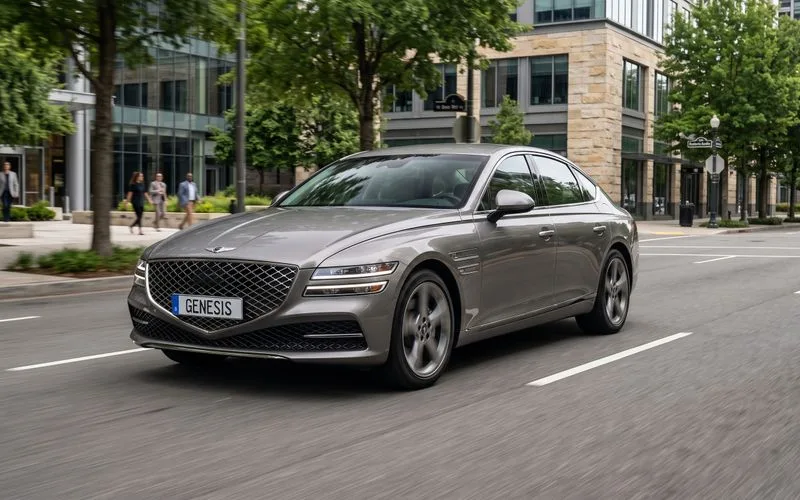 Genesis G80Mid-Size Luxury SedanBetter at: Value
Roughly $10,000 less for more standard equipment, more rear legroom, included maintenance and a far longer powertrain warranty — the strongest counter-argument to the 5 Series' ownership costs.
Compare 2.87B-
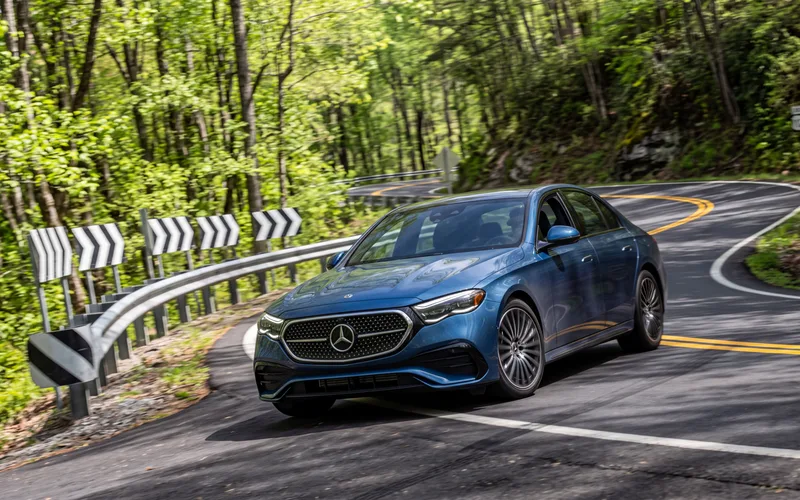 Mercedes-Benz E-ClassMid-Size Luxury SedanBetter at: Rear-seat comfort
The direct cross-shop, with a more spacious and more indulgent rear seat for buyers who spend time back there.
Compare 3.11B
3.11B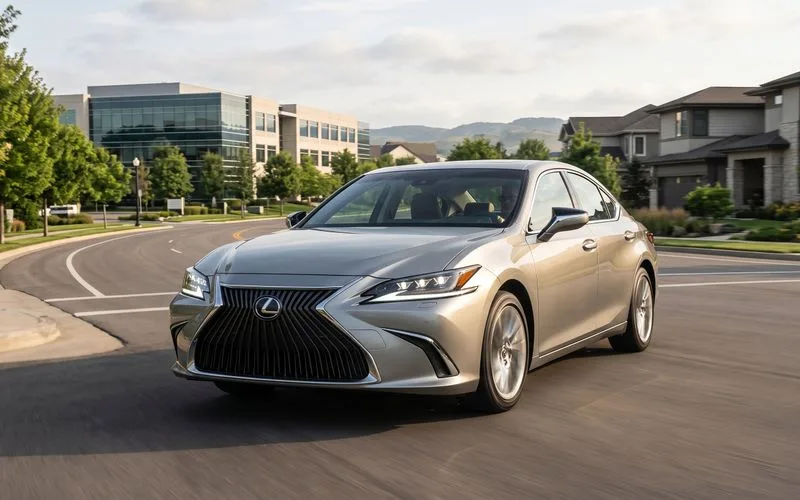 Lexus ESMid-Size Luxury SedanBetter at: Ownership cost
Substantially cheaper to buy and to keep, with hybrid economy and better-than-BMW reliability and dealer service scores.
CompareHow it's evolved
10 scored model years · 2017–2026
Subject scores by year
Hover or tap a score to see what moved it versus the year before. A corner mark flags a big swing.
| Year | Performance | Efficiency | Safety | Space | Cost | Reliability | Tech | Use-case | Driving | Value |
|---|---|---|---|---|---|---|---|---|---|---|
| 2026 | 62 | 50 | 87 | 76 | 12 | 78 | 86 | 62 | 72 | 80 |
| 2025 | 63 | 48 | 80 | 76 | 18 | 66 | 85 | 59 | 72 | 74 |
| 2024 | 63 | 47 | 69 | 74 | 20 | 66 | 85 | 52 | 77 | 78 |
| 2023 | 61 | 35 | 76 | 74 | 24 | 76 | 81 | 56 | 75 | 68 |
| 2022 | 61 | 35 | 77 | 74 | 22 | 71 | 81 | 56 | 75 | 66 |
| 2021 | 61 | 39 | 76 | 68 | 22 | 63 | 80 | 51 | 72 | 70 |
| 2020 | 61 | 39 | 73 | 74 | 20 | 68 | 77 | 50 | 71 | 68 |
| 2019 | 61 | 39 | 73 | 74 | 25 | 70 | 63 | 49 | 71 | 73 |
| 2018 | 61 | 39 | 62 | 72 | 21 | 68 | 64 | 48 | 71 | 76 |
| 2017 | 56 | 39 | 60 | 74 | 26 | 66 | 65 | 50 | 70 | 69 |
Compare two years
Best fit & conditions
Higher scores mean a better fit for that use case. Learn more about use-case fit →
Subject profile
Detailed scoring by subject
1Performance & PowertrainMid-pack among this car's ten categories.2.10C
2019 is a carry-over year within the pre-LCI G30 generation (2017–2020), and the volume 530i/530i xDrive runs BMW's 2.0L TwinPower turbo four at 248 hp — no 48V mild-hybrid assist, which did not reach the 5 Series until the 2021 LCI. Above it the 2019 range steps to 335 hp (540i) and 456 hp (M550i xDrive); the M550i's uprate to 523 hp came with the 2020 model year, from July 2019 production.
The turbo four makes 258 lb-ft (350 Nm) on a plateau from roughly 1,450 rpm, which is why the 530i feels unstrained in traffic despite a modest peak horsepower number. The 2019 six-cylinder 540i offers 332 lb-ft and the M550i's V8 480 lb-ft.
BMW claims 5.8 seconds to 60 mph for the all-wheel-drive 530i, with the rear-drive car a tenth behind; independent instrumented runs land either side of that, from 5.7 s in a good test to just over 6 s. Mid-pack for a mid-size luxury sedan, with the six- and eight-cylinder trims stacked well above it.
The twin-scroll 2.0T is effectively lag-free from low revs and stays quiet at a cruise, and reviewers of the pre-facelift G30 consistently describe its delivery as smooth for a four-cylinder. It gives up the top-end sweetness of the 540i's inline-six, sounds busy when extended, and with no 48V starter-generator in this model year its auto stop-start restarts are more obtrusive than they became on the 2021 LCI cars.
Every 2019 5 Series uses the ZF 8HP eight-speed Steptronic automatic, the class benchmark — imperceptible part-throttle upshifts, prompt kickdown, sensible ratio choices, and a manual mode that actually holds a gear on the paddles. No CVT drone and no dual-clutch low-speed awkwardness; with the diesel gone for 2019 there is no alternate gearbox in the range.
xDrive is a factory option on the 530i, 530e and 540i and standard on the M550i xDrive, so all-wheel drive is reachable across effectively the entire 2019 range. It is a mature, rear-biased road system with brake-based torque vectoring and drive modes, but it is not standard on the volume trim and there is no low range or terrain hardware.
Four genuinely distinct powertrains in the 2019 sedan: 2.0L turbo I4 (530i), plug-in hybrid (530e iPerformance, 248 hp combined), 3.0L turbo inline-six (540i, 335 hp) and the twin-turbo 4.4L V8 M550i xDrive at 456 hp. That covers efficiency, mainstream and performance buyers with a plug-in on the menu. Two things hold it just short of the 2020 car: BMW dropped the 540d xDrive diesel after the 2018 model year, so the range narrowed, and the 530e still ran the smaller 9.2 kWh pack good for only 16 EPA electric miles (the enlarged 12 kWh battery and 21-mile rating arrived for 2020). No full EV existed until the i5 for 2024.
2Efficiency & RangeOne of the 5 Series's weakest categories.0.60F
EPA rates the volume 530i xDrive at 27 mpg combined from the 2.0L turbo four and ZF eight-speed. Respectable for a ~4,100-lb all-wheel-drive luxury sedan, but with no electrification on this trim in 2019 — the 48V mild-hybrid was still two model years away — it sits behind hybrid mid-size rivals and only mid-pack among gas sedans overall.
23 mpg in EPA city testing. The engine has auto stop-start but no electric assist or 48V recuperation in this model year, so stop-and-go work costs it a mpg against the rear-drive car and far more against a full hybrid.
33 mpg highway is this powertrain's best EPA figure — tall top gears and a slippery body make it an efficient long-distance cruiser — and the xDrive hardware costs only one mpg against the rear-drive 530i's 34.
EPA puts total range at 486 miles for the 530i xDrive on its 18.0-gallon tank, a genuine one-tank interstate figure and one of this powertrain's stronger attributes. Comfortably above the mid-size sedan norm without reaching the 600-mile territory of the largest-tank cruisers.
EPA estimates $2,800 a year to fuel the 530i xDrive at 15,000 miles — about $3,000 more than the average new vehicle over five years. The premium requirement is what drives it: at 27 mpg combined the volume of fuel burned is unremarkable for the class, but the price per gallon is not.
Every gas 2019 5 Series is rated on premium. EPA lists it as recommended rather than strictly required, so the engine will run on lower octane with reduced output and economy, but BMW's guidance is 91 octane and the EPA cost estimates assume it. Nothing in the range takes regular or flex fuel — with the 540d diesel dropped after 2018, the only alternative energy path is the separate 530e plug-in trim — so the octane premium is a standing surcharge on every mile.
3SafetyOne of the 5 Series's strongest categories.2.94B-
NHTSA never ran NCAP on the G30 5 Series and 2019 is no exception: both 2019 listings return "Not Rated" for every crash mode, as do 2018 and 2020 through 2022, so there is no result anywhere in the generation to carry over. The proxy value is set from the prior F10 generation's 5-star NHTSA result and the G30's own 5-star Euro NCAP performance, discounted half a star because Euro NCAP's frontal protocols are not NHTSA's full-width rigid barrier and no confirmatory US test exists for this generation.
The 2019 5 Series sweeps all six IIHS crashworthiness evaluations at Good — driver- and passenger-side small overlap front, moderate overlap front, side, roof strength and head restraints/seats — and carries Top Safety Pick+. It sits at the lower edge of the top band rather than the middle because the award is headlight-restricted: the Good-rated lights come only with the Lighting or Executive package and every 530i/540i without one rates Marginal, so a typically-configured car does not qualify for the award it advertises. It edges ahead of the 2018 car because the qualifying front crash prevention is now standard rather than optional, leaving the headlight restriction as the only barrier.
2019 is the year the content moved: BMW deleted the $1,700 Driver Assistance Package and made Active Driving Assistant standard on every 5 Series, so the volume 530i now leaves the factory with frontal collision warning and daytime pedestrian detection, city-speed automatic emergency braking, lane departure warning, active blind spot detection and rear cross-traffic alert, plus front and rear parking sensors and a rearview camera. That is four of the five features the top band lists and a large step up from the 2018 car, where none of it was standard. It stays mid-band because Active Cruise Control with Stop & Go and any lane keeping or centering still sit behind the $1,700 Driving Assistance Plus package.
IIHS rates front crash prevention Superior for the 2019 5 Series on both the standard Frontal Collision Warning with City Collision Mitigation and the optional Extended Collision Mitigation — the standard system earning the top vehicle-to-vehicle grade is the meaningful part, since it is what a base 530i actually gets, and it is the difference from the 2018 car where the qualifying system was optional. It falls short of the upper band because IIHS published no vehicle-to-pedestrian result for this car at all: BMW fits daytime pedestrian detection, but it was never rated, and the nighttime pedestrian protocol did not exist until 2022.
Active Blind Spot Detection and Rear Cross-Traffic Alert are standard on every 2019 5 Series through Active Driving Assistant, with mirror indicators and a steering-wheel vibration when the driver signals into an occupied lane — broader standard coverage than the Audi A6 or Alfa Giulia of the same year, where it is trim- or package-locked, and a clear gain over the 2018 car where the same hardware cost $1,700. It stops short of the top band because the standard system is warning-plus-haptic only; the active side collision avoidance that actually steers, and front cross-traffic alert, both require the optional Driving Assistance Plus package.
Lane departure warning became standard for 2019 with Active Driving Assistant, while Active Lane Keeping Assistant with the Steering and Lane Control Assistant centering function comes in the Driving Assistance Plus package. When fitted, the G30's centering is one of the steadier implementations of its generation — reviewers describe confident, well-damped tracking on marked highway lanes without the ping-ponging that characterized cheaper systems — but it is a paid option rather than standard equipment, and it hands back on faded markings and tighter curves.
BMW's Active Cruise Control with Stop & Go is a full-speed-range system that comes to a complete halt and resumes automatically, and on the G30 it is bundled with the Steering and Lane Control Assistant so longitudinal and lateral control arrive as one integrated highway assist rather than two features fighting each other — the refinement the top band asks for, and consistently rated among the better premium implementations of the era for smooth, early braking. Held just below the ceiling because it is not standard: a 2019 530i has conventional cruise control until the $1,700 Driving Assistance Plus package is checked.
No hands-free driving was offered on the pre-LCI 2019 5 Series. The Traffic Jam Assistant available with Driving Assistance Plus is hands-on — it requires continuous steering-wheel torque — and BMW's genuinely hands-off Extended Traffic Jam Assistant depends on the infrared driver-attention camera in the instrument cluster, which arrived in the US on the 2019 X5 with the Driving Assistance Professional package and did not reach the 5 Series until the 2021 LCI. Driving Assistance Professional was not orderable on the G30 5 Series for 2019 at all. Scored just above the floor rather than at zero because a hands-on traffic jam function does exist.
This is the 2019 5 Series' clearest safety weakness and is unchanged from 2018 and 2020. IIHS rates the headlights Good only on cars carrying the Lighting or Executive package — LED projector low beams with LED reflector high beams, curve-adaptive and with high-beam assist — while every 530i, 540i, 530i xDrive and 540i xDrive without one rates Marginal, the curve-adaptive LED projectors going without high-beam assist. A volume-configured car therefore has Marginal lights, the bottom of the mid band, and it is the same restriction that keeps most builds outside the TSP+ award. The fix does not arrive until the 2021 facelift makes Adaptive LED headlights standard.
A low cowl, comparatively slim A-pillars and a more upright rear window give the G30 honest sightlines for a modern executive sedan, though the high beltline and thick C-pillars still leave an over-the-shoulder blind zone that the now-standard blind-spot monitor is doing real work to cover. That standard coverage is why 2019 scores above the otherwise identical 2018 car. Camera and sensor compensation is good but not comprehensive on a base car — rearview camera and front/rear parking sensors are standard, while the surround-view system requires Parking Assistance Plus.
IIHS rates the 2019 5 Series' LATCH hardware Acceptable rather than Good — the two outboard lower-anchor sets are usable but recessed enough to need digging past the seat cushion, and the tether anchor locations are not obvious. The mid-size body helps with the parts IIHS does not rate: wide rear door openings and a broad bench make two seats easy and a third workable. It lands mid-band because the hardware itself is only Acceptable and there are no lower anchors in the center position.
4Space & ComfortThe 5 Series's best-graded category.2.99B-
Standard five-seat executive-sedan layout across the entire 2019 G30 range — 530i, 530e, 540i and M550i xDrive alike — with a three-place rear bench split 40/20/40 so the centre section can drop for long items while two passengers stay seated. No four-seat or bench-front variant was offered in the US.
38.8 inches up front, measured on a car with the moonroof that BMW makes standard on the whole 2019 US range, so this is the figure every buyer actually gets rather than a best-case sunroof-delete number. Comfortably above the mid-size sedan floor and enough for tall drivers once the standard 16-way power seat is dropped to its lowest setting.
41.4 inches is only modestly above the 40-inch band floor and trails the full-size luxury sedans this car is cross-shopped against, but the G30 compensates with an unusually wide adjustment envelope — 16-way power front sport seats are standard on the 530i and the steering column adjusts for reach as well as rake under power, so the usable range is better than the raw number suggests.
37.5 inches in the second row sits in the upper half of the sedan band and is enough for six-footers — Edmunds notes "plenty of head clearance front and rear" — helped by the G30's relatively upright rear roofline, which was never given the fastback treatment applied to BMW's Gran Coupe bodies. The standard moonroof housing is what keeps it out of the top of the band.
36.5 inches is mid-band and the 5 Series' weakest interior dimension — adequate for adults on a normal journey but noticeably tighter than the stretched-wheelbase sedans Americans cross-shop, and Edmunds flags it as the cabin's one real limitation for a tall rear passenger sitting behind a tall driver. The 56-inch rear shoulder room makes three abreast a short-haul proposition.
18.7 cubic feet is among the largest trunks in the luxury mid-size class and the single strongest practicality number this car posts — a genuine four-suitcase space — and the standard 40/20/40 rear seatback folds to pass skis or long boxes through while two passengers stay seated. The scored gas 530i keeps the full volume; the 530e plug-in gives up roughly four cubic feet to its 9.2 kWh battery.
Competent rather than clever. The covered centre console with sliding armrest, decent door bins, a proper glovebox and the 40/20/40 fold-through cover everyday needs, and the optional wireless charging tray doubles as a phone cubby. But there is no underfloor trunk storage of note, no household outlet, no reconfigurable console, and the console footprint is largely consumed by the iDrive controller and the electronic shift lever — nothing here is a storage innovation, and for 2019 even the charging tray is buried in a $3,350 package.
A genuine strength, and unusually it costs nothing extra. Consumer Reports calls the standard 16-way power front seats "fantastic", singling out the four-way lumbar support and moveable bolsters, and notes cushions that balance firmness with long-trip comfort; multi-contour seats with massage sit above that in the Luxury Seating Package. Held out of the top band because the rear bench is comfortable rather than special and its 36.5 inches of legroom limits genuinely long stints for tall passengers.
Consumer Reports describes the 2019 car's suspension as delivering a "serene and supple" ride that handles bumps with ease — plush without the float that usually accompanies it. Just below the top band because the best of it costs money: the adaptive dampers come only inside the $1,950 Dynamic Handling Package on the 530i, and cars ordered with M Sport Design and its 19-inch wheels and firmer springs give up meaningful compliance on broken pavement.
The 5 Series' standout comfort attribute and near the top of the segment. Consumer Reports found the G30's extensive sound deadening mutes wind, tire and engine noise to the point of impressive cabin isolation — a real achievement in the volume trim, where a four-cylinder is normally the acoustic penalty of buying the cheap engine.
Everything is available and almost nothing is included, and 2019 is the worse year for it — heated front seats are not a standalone box at all but arrive inside the $1,400 Convenience Tier bundled with keyless entry, satellite radio and the power trunk, where the 2020 car sells them separately for $350. Dual-zone automatic climate control and heated power-folding mirrors are standard; the heated steering wheel, four-zone rear climate and rear sunshades are separate line items, and ventilated front seats are reserved for the $1,700 Luxury Seating Package.
5Cost of OwnershipThe 5 Series's lowest-graded category.0.00F
The entry 2019 5 Series is the rear-drive 530i at $53,400 plus BMW's $995 destination charge, or $54,395 delivered; the 530e iPerformance PHEV was priced identically and the 540i opened at $58,950 before destination. 2019 is a carry-over year for the G30 with no structural change to the price ladder — CarsDirect's model-year summary records "no major updates for 2019, except for some price increases" and package reshuffling.
The 530i xDrive is the US volume configuration — all-wheel drive dominates midsize luxury sedan sales in this price band — and it lists at $55,700 plus $995 destination, or $56,695 delivered. BMW's a-la-carte structure pushes nearly every buyer into the Convenience and Premium packages (heated seats and steering wheel, keyless entry, head-up display, Harman Kardon audio), putting a representative 2019 window sticker near $60,000.
BMW Ultimate Care covers scheduled service for 3 years/36,000 miles and the factory warranty runs 4 years/50,000 miles, so essentially the whole five-year outlay lands in the last 12–18 months, when out-of-warranty German service rates for brakes, tires, cooling-system work and electronic modules hit at once. Published estimates for the nameplate span a wide range ($4,535 to ~$8,000 at the five-year mark) and do not vary meaningfully by model year within the G30; $7,500 sits toward the pessimistic end because the mileage caps expire before the calendar ones for most drivers.
The 5 Series depreciates materially worse than its own class, and the 2019 car is a pre-facelift G30 that was superseded by the 2021 LCI and then the 2024 G60. Its five-year mark fell in 2024, when used prices were still elevated, so it retained a little more than the 2020 model year did — but KBB still places the 2019 5 Series in the worst quartile for depreciation among all 2019 sedans.
BMW's New Vehicle Limited Warranty for 2019 is a flat 4-year/50,000-mile bumper-to-bumper term — a year longer than the 3-year industry baseline, but with a lower mileage cap than most rivals, so it runs out on mileage first for anyone driving more than 12,500 miles a year.
BMW does not publish a longer powertrain warranty than its bumper-to-bumper coverage: engine, transmission and drive axles all expire at the same 4 years/50,000 miles. That is well short of the 5-year/60,000-mile powertrain terms typical of mainstream brands and of Genesis's 10-year/100,000-mile coverage, and it is a genuine exposure on a car whose out-of-warranty driveline repairs are expensive.
BMW Ultimate Care is standard on every 2019 BMW and covers all factory-scheduled maintenance — oil services, brake fluid, filters, spark plugs, wiper inserts — for 3 years/36,000 miles, which is real multi-year included maintenance rather than a token first service, and it pairs with 4 years of unlimited-mileage roadside assistance and BMW ConnectedDrive service trials. It lands in the top band but not near its ceiling: BMW had already cut the program from 4 years/50,000 miles to 3/36,000, the mileage cap expires before the calendar term for most drivers, and a 2019 buyer took delivery when Apple CarPlay was still a $80/year subscription after the first year (BMW only made it complimentary for the life of the vehicle in December 2019).
$60,000 volume-trim price minus its estimated resale value after 5 years (42% retained, or about $25,200) leaves about $34,800 in depreciation. Add the projected $7,500 in 5-year maintenance and repairs, and owning this vehicle for 5 years costs about $42,300 in total.
6Reliability & QualityGrades above the middle of the scale.2.72B-
2019 is a carry-over year in the pre-LCI G30 (2017–2020) and it reads better than its neighbours on owner data: Consumer Reports' verdict is that the 2019 5 Series is more reliable than other cars from the same model year — an above-average call, where the 2020 car sits at a flat 3/5 — and NHTSA complaint volume is modest for a seven-year-old car. What holds it out of the 80s is the severity rather than the frequency of what does go wrong: the CR trouble-spot entries are dominated by climate-system failures and a cracked oil filter housing dumping coolant, with owners quoting $4,000–$7,200 repairs, and BMW's brand-level dependability standing for this cohort is below the premium average.
The cohort that actually grades this model year is the 2022 J.D. Power Vehicle Dependability Study, which surveyed original owners of 2019 model-year vehicles at three years. BMW placed outside the top five premium brands there (Genesis 155, Lexus 159, Porsche 162, Cadillac 168, Lincoln 180 PP100), in a premium field averaging 204 PP100 against a 192 PP100 industry average — so above 180 and on the wrong side of the all-industry mean. Initial quality for the same year was below average too: no European marque beat the 93 PP100 industry average in the 2019 IQS. Genuinely mid-pack rather than bottom-third, and BMW does rise in later studies, but independent repair data is harsher — RepairPal ranks BMW 30th of 32 brands.
Seven years on, the 2019 gas 5 Series carries exactly one NHTSA recall — 19V-684, a backup-camera software flash that fleet-wide covers most of the BMW range and needs no hardware. The campaigns that weigh on the adjacent model years all start at 2020 or exclude this trim: the broken rear output shaft (21V-046) covers 2020–2021 530i/540i xDrive, the starter-relay fire risk (25V-636) covers 2020–2022 530i, and the TurboCord charger fire recall (18V-652) is filed against the 530e PHEV, not the gas car scored here. Nothing systemic, nothing in the powertrain, no fire risk. Held just short of the top of the band because the known G30 service pattern — oil filter housing and valve cover gaskets, coolant expansion tank, water pump — is a real out-of-warranty burden even though BMW handled it as service work rather than a defect campaign.
The volume 530i runs BMW's B46/B48 2.0L turbo four behind the ZF 8HP eight-speed — a modular family that cured the N20's timing-chain-guide failure, shares its architecture with the 500-hour-validated B58, and pairs with what is arguably the most proven automatic in production, used across BMW, Chrysler, Ram and Jaguar. It scores below the 2020 car specifically because of build timing: the revised oil filter housing arrived with the B48C/B48D variants fitted to non-hybrid G30s only from July 2019 production, so most of the 2019 model year carries the earlier part, and the two documented B48 cooling failures — oil filter housing cracking and the coolant vent line between head and expansion tank — are exactly what 2019 owners report to NHTSA and Consumer Reports, at four-figure repair cost because of where the housing sits.
For a mid-size luxury sedan the G30 cabin delivers the expected content — leather, soft-touch upper surfaces, wood and brushed-metal accents, well-damped switchgear, and electronics Edmunds calls top-notch from the central touchscreen through the gauge cluster. It sits at the upper end of the competitive band rather than class-leading because reviewers are specific that the wood trim, leather and plastics are a step behind what Audi and Mercedes-Benz put in the same price bracket.
Physical assembly out of Dingolfing is not the problem: reviewers describe panel fit as nice and there is no pattern of gap, paint or rattle complaints against the G30. The drag is first-year defect data and electronics. BMW finished below the industry average in the 2019 Initial Quality Study — no European brand beat 93 PP100 that year — and the 2019 5 Series owner-reported trouble spots that are not mechanical are in-car electronics and body hardware, including steering-wheel controls changing settings unprompted and one shattered sunroof.
BMW ran 347 US passenger-car and SAV centers in 2019 — one of the denser luxury networks, well ahead of Genesis or Alfa Romeo and comparable to Mercedes-Benz, though metro-weighted and thin across the rural Plains and Mountain West. Service satisfaction is the limiter rather than coverage: BMW placed outside the top five luxury brands in the J.D. Power 2019 Customer Service Index, behind Porsche, Lexus, Cadillac, Infiniti and Mercedes-Benz, and complimentary Ultimate Care maintenance for 3 years/36,000 miles kept most owners inside the dealer network over exactly the period that survey covers.
Parts are obtainable but expensive, and now that the 2019 car is long out of its 4-year/50,000-mile warranty the owner carries all of it: cooling components, electronic modules and sensors are largely dealer-priced OEM, BMW-competent labour runs well above mainstream rates, and the failures this generation actually has are placement-driven four-figure jobs — CR owners on this exact model year quote $4,000 for an oil filter housing and $7,200 for a climate-system repair. The strong independent aftermarket — FCP Euro, ECS Tuning, Turner, plus a deep independent-specialist base for a car this common — keeps it off the floor without making it cheap to keep.
7Technology & InfotainmentMid-pack among this car's ten categories.2.27C
BMW fits the same 10.25-inch Control Display to every 2019 5 Series with navigation standard behind it, and there is no bigger screen anywhere in the range — the 12.3-inch panel is the optional instrument cluster, not a centre display. The diagonal was competitive in 2017 and merely adequate by 2019, which is what the low normalized score reflects rather than any deficiency in the software behind it.
One of the best systems of its era. iDrive 6.0 is quick, logically laid out and — critically — offers redundant input methods, so the driver picks whichever suits the moment: rotary touchpad controller with seven programmable memory buttons, touchscreen, voice, and optional gesture control, with real physical climate switchgear left below the screen instead of buried in menus. Consumer Reports called it "well executed". It sits below the ceiling only because the tile-based OS 7.0 that succeeded it brought faster hardware and a natural-language assistant this car never receives.
Half the platform coverage, delivered unusually well. BMW's CarPlay is wireless — almost nobody else offered that in 2019 — and needs no cable or trim ladder, but Android Auto simply does not exist on this car: BMW's Android Auto rollout in July 2020 was limited to iDrive 7.0 vehicles, and the 2019 5 Series runs iDrive 6.0, so no update ever brings it. CarPlay also launched for this model year on BMW's one-year-then-$80-a-year subscription, a fee the company scrapped retroactively in December 2019, so a 2019 owner ended up with it free for life.
The navigation half is strong and the voice half is dated. BMW Navigation with real-time traffic is standard on the volume 530i rather than a package upgrade, which is rare at this price, with well-regarded route guidance and ConnectedDrive traffic data. Voice control, though, is still the command-and-keyword generation — the "Hey BMW" Intelligent Personal Assistant arrived with iDrive 7.0 and never reaches this car — so most owners default to the rotary controller or CarPlay's own voice layer.
A strong ladder with a good bottom rung. The standard HiFi system is more than adequate in an unusually quiet cabin, the 16-speaker Harman Kardon surround system is the popular mid-step, and the Bowers & Wilkins Diamond surround system is one of the genuinely excellent factory installations of its era. Not at the ceiling because the best of it is an expensive top-tier option rather than something reachable cheaply on the volume trim.
The clearest tech gap between this year and the 2020 car. A 2019 530i leaves the factory with conventional analog dials and a small centre info display; the 12.3-inch Multifunctional Instrument Display is available only inside the $5,200 Executive Tier alongside soft-close doors and adaptive headlights, so there is no affordable path to it. For 2020 BMW made the full digital cluster standard on every 5 Series.
Maps and services only, at the very bottom of that band. ConnectedDrive delivers over-the-air navigation map updates and remote-services data to this car, which is more than nothing, but BMW's Remote Software Upgrade — the mechanism that pushed whole new infotainment features including wireless Android Auto to owners' driveways — is an iDrive 7.0 capability the 2019 5 Series does not have. Any functional change here means a dealer visit.
The core remote set is present through the BMW Connected app — lock/unlock, vehicle locator and status, send-to-car destinations, remote climate on cars ordered for it — but this is the older app BMW replaced with the far better-received My BMW App in 2020, and it drew persistent complaints about connection reliability and slow response. Richer remote services depend on a ConnectedDrive subscription that lapses after the included term, and phone-as-key is out of the question: BMW Digital Key launched in July 2020 and applies only to cars built from that date.
The weakest technology item and the one that most clearly dates the pre-facelift car. Every port is USB-A — the switch to USB-C came with the 2021 LCI — so modern fast phone charging is off the table, wireless charging and the Wi-Fi hotspot are locked inside the $3,350 Premium Tier rather than sold separately or fitted as standard, and no household AC outlet is offered on the sedan at all. There are outlets front and rear plus a 12-volt socket, which is the floor rather than a feature.
Push-button start is standard, but Comfort Access proximity entry is not — for 2019 it is bundled into the $1,400 Convenience Tier with heated seats, satellite radio and the power trunk lid, so a base 530i still needs the fob in hand. That is a step behind the 2020 car, where BMW made keyless entry standard. The LCD Display Key is a further extra and phone-as-key does not exist for this model year.
The standard baseline improved for 2019 and it matters on a car this long: BMW made Park Distance Control standard across the 5 Series that year, so every car has front and rear sensors alongside the rearview camera. Surround-view cameras and Parking Assistant with automated steering into parallel and perpendicular spaces remain optional, in the relatively cheap $700 Parking Assistance Package or bundled into the $3,350 Premium Tier — affordable, but still an option rather than standard.
BMW's full-colour head-up display is one of the largest and sharpest of its generation — speed, navigation arrows, speed limits and driver-assist status projected into the sightline — and Consumer Reports singles it out in its 2019 road test. It is orderable on the volume 530i rather than reserved for the top of the range, but the price of entry is steep and getting steeper than the following year's: for 2019 it exists only inside the $3,350 Premium Tier, against $2,200 for the equivalent 2020 package.
8Use-Case FitOne of the 5 Series's weakest categories.1.29D
Workable rather than easy. The 18.7 cu ft trunk swallows a stroller and a week of gear with room to spare — the best number this car posts for family duty — and the wide rear doors of a mid-size sedan make loading a child straightforward. Against that, IIHS rates the LATCH hardware only Acceptable, with lower anchors recessed into the seat bight and unclear tether locations, there are no lower anchors in the centre seat, and 36.5 inches of rear legroom means a rear-facing seat forces the front passenger forward.
Good credentials with a real asterisk, and 2019 is the year the standard content improved: BMW deleted the old $1,700 Driver Assistance Package and made Active Driving Assistant standard, so every car has AEB with pedestrian detection, blind-spot monitoring, lane departure warning and rear cross-traffic alert, and IIHS scores all six crashworthiness tests Good. But the Top Safety Pick+ award applies only to cars fitted with the Lighting or Executive package — every other build rates Marginal headlights — adaptive cruise still costs $1,700 more, and NHTSA never crash-tested this generation at all.
Comfortable for four on a long haul and genuinely quiet — Consumer Reports found the sound deadening creates impressive cabin isolation, over a ride it calls serene and supple — with a trunk that takes the family's luggage without folding a seat. The limits are all rear-specific and, in this model year, all extra-cost: 36.5 inches of legroom and a 56-inch bench make three across a short-trip arrangement, four-zone climate and rear sunshades are separate options (the shades inside the $5,200 Executive Tier), and there is no rear-seat entertainment or rear USB-C to occupy children.
A relaxing commuter. The B48 turbo four is effectively lag-free from low revs, the ZF eight-speed shifts imperceptibly in traffic, the standard 16-way power seats and power steering column suit any driver, and the cabin's isolation does most of the fatigue-reduction work. Three things keep it out of the top band: with no 48-volt system until the 2021 LCI the auto stop-start restart is noticeable, adaptive cruise with stop-and-go is a $1,700 option, and even keyless entry — the small daily convenience of not fishing for a fob — sits behind the $1,400 Convenience Tier this model year.
Expensive per mile. 27 mpg combined is respectable for a two-ton all-wheel-drive luxury sedan — Consumer Reports measured 26 mpg overall and called it the most efficient car in its class — but it burns premium, EPA puts annual fuel at $2,800, and the consumables match: run-flat tires in 18- or 19-inch sizes, dealer-priced brakes and fluids, and German service rates once the 4-year/50,000-mile term lapses. The 530e PHEV existed at a similar list price and would score far better here, but that is a different powertrain class.
The G30 is 195 inches long on a 117-inch wheelbase and turns in a roughly 40-foot circle — one of the wider ones in the class, and the thing owners notice first in a parking structure or a three-point turn. The mitigation improved for 2019, when BMW made Park Distance Control standard alongside the rearview camera, and the $700 Parking Assistance Package adds surround-view and automated parking cheaply. Sightlines are honest for a modern sedan, but the high beltline leaves rear-quarter blind spots.
Essentially none. BMW publishes no towing rating for the US-market 5 Series sedan — the factory hitch and the European braked-trailer rating are not offered here — there is no bed, and payload is roughly 800 lb, which is four adults and their luggage rather than any kind of load. The trunk is large for a sedan but sealed, carpeted and shallow-lipped: it carries samples and a laptop bag, not materials.
The mechanicals are sound — the B48 four and the ZF 8HP are durable, well-proven units — but everything around them is the opposite of work-friendly. This is a leather-and-wood cabin with no wipe-clean trim option, a low front air dam and run-flat tires that punish rough surfaces, dense electronics, and a parts-and-labour cost structure that makes hard use financially irrational. No fleet or trade reputation exists for it in a work context.
Nothing here is aimed at work. No onboard AC power outlet, no bed or bed-access features, no cargo tie-down system beyond basic trunk hooks and a net, no washable surfaces, no factory roof rails and no upfitter ecosystem — BMW's accessory catalogue for the sedan runs to cargo liners and a bike rack, not ladder racks or shelving. The 40/20/40 fold-through is the only genuinely useful provision, and it exists for skis.
This is what the car is built for and it is genuinely excellent: 486 miles of EPA range on an 18-gallon tank, a cabin Consumer Reports calls impressively isolated, front seats it calls "fantastic", and a ride that stays serene and supple at interstate speed. It falls short of the ceiling on driver-assist economics — the adaptive cruise and lane-keeping that make a 500-mile day effortless sit behind the $1,700 Driving Assistance package, and hands-free assistance did not reach the 5 Series until the 2021 facelift.
Pavement-bound with one saving grace. xDrive all-wheel drive is a $2,300 option across the range and is the volume configuration, so a snowy trailhead road on winter tires is within reach — but ground clearance is around 5.5 inches behind a low front air dam, run-flat tires are the standard fit, there is no factory hitch or roof rail in the US, and no drive mode addresses anything looser than wet tarmac. It gets you to the mountain comfortably; it does not go up the fire road.
Good for luggage, poor for bulk. The 18.7 cu ft trunk is one of the largest in the class and the standard 40/20/40 rear seatback folds to pass skis or long boxes through while two people stay seated — genuinely more flexible than the 60/40 arrangement most rivals use. But it is a sedan aperture: bikes, furniture and tall gear will not go in, there are no factory roof rails to put them on, and no hitch for a rack. The 530e PHEV gives up several cubic feet to its battery; the scored gas car does not.
9Driving ExperienceGrades above the middle of the scale.2.78B-
Secure, composed and quietly quick across country, but this is the generation where the 5 Series stopped being the sharp one. Consumer Reports puts it plainly — capable and composed, but no longer the precise, agile car the model was historically known for — and the softening is deliberate, aimed at the comfort-first executive buyer. Edmunds reaches the same verdict, calling the 530i extremely well rounded rather than a car built on grip. The adaptive dampers that best resolve the agility/comfort trade-off are a $1,950 option on the volume trim, not standard.
Precise enough but numb — the textbook mid-band case, and the most-cited dynamic criticism of the G30 across its whole run. Reviewers consistently describe the electric rack as nicely weighted and accurate off-centre, with no vagueness or inconsistency, but essentially silent about what the front tires are doing. On a nameplate whose reputation was built on steering feedback, that is a real loss rather than a quibble.
A clear strength. Instrumented stops for this generation of 530i land near 108 feet from 60 mph — short for a two-ton luxury sedan on all-season run-flats — and the pedal is the more impressive half: firm, linear and easy to modulate smoothly in traffic, with no travel-then-bite step. No fade issues are reported, and there is no regen blending to muddy the feel on this gas trim. Confidence is MEDIUM because the tested figure comes from same-generation G30 530i testing rather than a 2019-specific instrumented run.
The twin-scroll B48 pulls cleanly from just above idle with essentially no turbo lag — Consumer Reports found "more than enough oomph" for merging and passing from 248 hp — and the ZF 8HP eight-speed is the class benchmark for calibration: imperceptible part-throttle upshifts, prompt kickdown, no hunting. What keeps it out of the top band is specific to this model year: with no 48-volt starter-generator until the 2021 LCI, the auto stop-start shuts down and restarts with a shudder that later cars smooth away entirely.
Remarkably well isolated for a four-cylinder — Consumer Reports credits extensive sound deadening with muting engine noise along with wind and tire roar, and at a cruise there is essentially nothing coming through the firewall or the controls. It sits at the bottom of the top band rather than higher because the character is absence rather than pleasure: worked hard, the B48 sounds ordinary, where the 540i's inline-six sounds genuinely good.
One of the widest turning circles in the mid-size class and the G30's most consistent everyday annoyance — a 117-inch wheelbase, a long front overhang and the xDrive front axle combine to need roughly 40 feet of road for a U-turn, which becomes a three-point turn on a residential street. US sources cluster at 39.6–40.2 ft depending on drivetrain and wheel size. There is no rear-axle steering option on the 5 Series to fix it.
Close to the segment benchmark, and it costs nothing extra: 16-way power front sport seats with four-way lumbar and moveable bolsters plus a power-adjustable steering column are standard on the volume 530i, so the range of body types that can find a genuinely good position is unusually wide. iDrive 6.0 keeps real climate switchgear below the screen and the rotary controller falls to hand on the console. Held below the ceiling by the thick C-pillars and high beltline, and by the electronic shift lever Consumer Reports says takes acclimatisation.
Pleasant, capable and slightly forgettable in this specification. The 530i is quick enough (5.8 s to 60 mph by BMW's claim), rides beautifully and covers ground at speed with no drama, but the numb steering, softened body control and characterless four-cylinder soundtrack mean it rewards arriving rather than driving — Consumer Reports' own summary is "mature, calm, and well-thought out", which is praise of a kind that is not this criterion's. Enthusiasts point at the 540i's inline-six or the 456-hp M550i for the version worth taking the long way home in.
10Value & Market PositionOne of the 5 Series's strongest categories.2.92B-
2019 is the year BMW moved real content into the base price: Active Driving Assistant became standard across the 5 Series, so the $54,395 530i now includes forward collision warning with pedestrian detection, city automatic emergency braking, lane departure warning, blind spot detection and front and rear parking sensors that had been part of a paid package in 2018, alongside Apple CarPlay, a 10.25-inch iDrive display with navigation, an 8.8-inch digital cluster, 16-way power front seats, a moonroof and 12-speaker audio. It stays mid-band rather than higher because BMW's a-la-carte structure still charges for the things buyers in this price class expect as a matter of course — leather, heated seats, head-up display, adaptive cruise, premium audio — so a car that looks generous on the base spec sheet almost always leaves the lot $4,000–6,000 above it.
Fair value rather than a bargain. What the $54,395 530i actually buys is chassis polish, cabin quality and refinement — the things this segment is purchased for — and the 530e iPerformance plug-in hybrid was priced identically to the 530i rather than at a premium, which is genuinely good value inside the lineup. Against the wider market it is unremarkable: 248 hp from a 2.0-litre four in a nearly $60,000 as-equipped car, with a Genesis G70/G80 offering comparable content for far less and the Audi A6 and E-Class asking similar money for fresher interiors.
One of the broadest ladders in any segment, and 2019 is close to its widest point: four distinct powertrains (2.0T four, 3.0T six, 4.4 twin-turbo V8 and a plug-in hybrid), rear- or all-wheel drive on almost every variant, and an M5 that itself split into standard and the new-for-2019 Competition. The option catalog runs from single boxes up to a full BMW Individual Composition with M Sport programme introduced in March 2019. Only the diesel narrowed the range, the 540d xDrive surviving into 2019 as a limited-availability leftover before BMW withdrew diesels from North America.
Still one of the strongest sellers in the midsize luxury sedan class in 2019 — BMW's own monthly sales releases described the 5 Series as the leader in its segment during the year — but the trajectory is downward: 38,709 US units, an 11.9% fall from 43,937 in 2018, in a year when BMW brand sales overall rose 4.4%. The decline is a segment story (buyers moving to the X3 and X5) rather than a rejection of this car, which keeps it in the upper half of the band.
BMW is a genuinely aspirational global luxury brand with strong badge equity and a loyal enthusiast base, and the 5 Series is the archetypal executive sedan within it — the car other midsize luxury sedans are measured against. BMW Group closed 2019 with record global sales and remained the world's leading premium carmaker. It is held below the ceiling only because badge strength is not converting into resale here, where the 5 Series depreciates worse than its own class.
Strongly buyer-favourable, which is what this inverted item rewards. Discounts of 10–11% off MSRP were routinely reported on 2019 cars, BMW Financial Services subvented leases with high residuals (60–61% on 12,000- and 10,000-mile terms), and stackable loyalty, USAA, college-graduate and BMW CCA credits sat on top. It falls short of the top of the band because these were negotiated dealer discounts and lease support rather than headline factory cash, so the outcome depended on the buyer doing the work.
Squarely mid-cycle. 2019 is the third model year of the G30 generation launched for 2017, a pure carry-over aside from price increases, added standard driver assistance and the new M5 Competition — the LCI facelift was still two years out (2021) and the G60 redesign five. So there is no imminent-replacement risk for a 2019 buyer, but the platform is no longer new and the conservative styling was already drawing criticism against the freshly redesigned E-Class and A6.
Very well reviewed and, for 2019, the class pick at the most widely-read US ranking: U.S. News placed the 5 Series at the top of the luxury midsize car class on the strength of its handling, engine range, interior space and predicted reliability. It sits below the top band because the accolades were thinning rather than accumulating — the G30 had taken Car and Driver 10Best honours earlier in the generation but was off the 2019 list, and the awards it did collect in 2019 were mostly European fleet and business-car titles rather than US comparison-test wins.