

The verdict
A capable mid-size luxury sedan, strong on technology and held back by ownership.
The 2024 5 Series is the first year of BMW's all-new eighth generation, and it arrives with the best cabin technology in the class — a standard 14.9-inch curved display, standard Harman Kardon audio, and available hands-free highway driving at up to 85 mph — wrapped around a chassis that still handles like a proper sport sedan. The catch is what it costs to live with: $58,895 to start and roughly $65,000 as most people order it, about $2,550 a year in premium fuel, roughly $8,000 in five-year maintenance and repairs, and only about 44% of the sticker left after five years. Being a launch-year car hurts too — four separate recalls of the integrated brake system, plus steering and starter-fire campaigns, are already on the books. Buy it for the drive and the tech, with eyes open about the bill.
Jump to scoresStrengths
- Class-leading standard technology
- Strong crash results and genuinely good driver aids
- Still drives like a BMW should
What holds it back
- Ownership costs are brutal
- A rough first year for recalls
- The features you actually want are extra
Top alternatives
Cars shoppers cross-shop with the BMW 5 Series 3.21B+
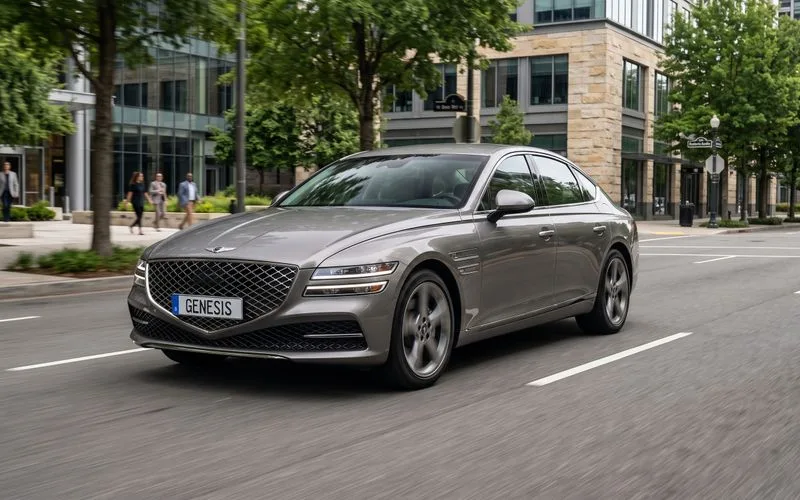 Genesis G80Mid-Size Luxury SedanBetter at: Value
Roughly $10,000 less for more standard equipment, more rear legroom, included maintenance and a far longer powertrain warranty — the strongest counter-argument to the 5 Series' ownership costs.
Compare 2.87B-
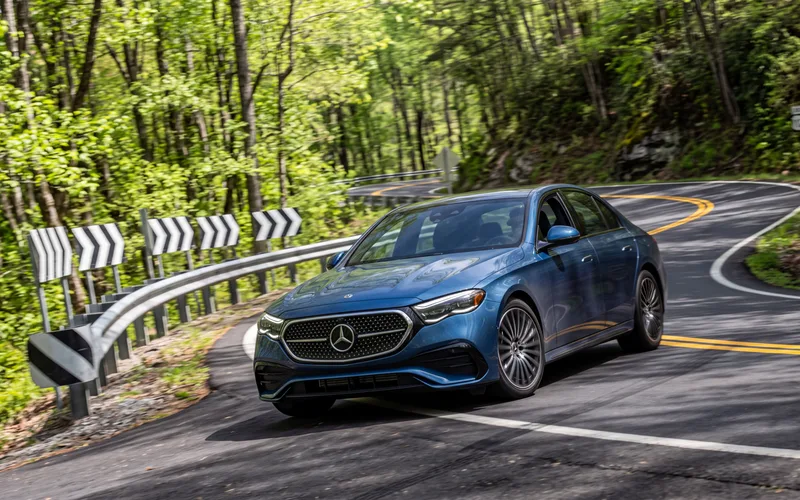 Mercedes-Benz E-ClassMid-Size Luxury SedanBetter at: Rear-seat comfort
The direct cross-shop, with a more spacious and more indulgent rear seat for buyers who spend time back there.
Compare 3.11B
3.11B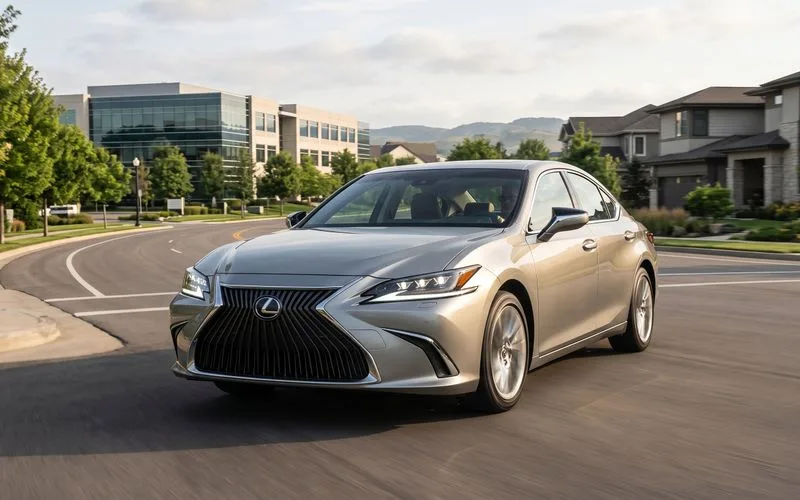 Lexus ESMid-Size Luxury SedanBetter at: Ownership cost
Substantially cheaper to buy and to keep, with hybrid economy and better-than-BMW reliability and dealer service scores.
CompareHow it's evolved
10 scored model years · 2017–2026
Subject scores by year
Hover or tap a score to see what moved it versus the year before. A corner mark flags a big swing.
| Year | Performance | Efficiency | Safety | Space | Cost | Reliability | Tech | Use-case | Driving | Value |
|---|---|---|---|---|---|---|---|---|---|---|
| 2026 | 62 | 50 | 87 | 76 | 12 | 78 | 86 | 62 | 72 | 80 |
| 2025 | 63 | 48 | 80 | 76 | 18 | 66 | 85 | 59 | 72 | 74 |
| 2024 | 63 | 47 | 69 | 74 | 20 | 66 | 85 | 52 | 77 | 78 |
| 2023 | 61 | 35 | 76 | 74 | 24 | 76 | 81 | 56 | 75 | 68 |
| 2022 | 61 | 35 | 77 | 74 | 22 | 71 | 81 | 56 | 75 | 66 |
| 2021 | 61 | 39 | 76 | 68 | 22 | 63 | 80 | 51 | 72 | 70 |
| 2020 | 61 | 39 | 73 | 74 | 20 | 68 | 77 | 50 | 71 | 68 |
| 2019 | 61 | 39 | 73 | 74 | 25 | 70 | 63 | 49 | 71 | 73 |
| 2018 | 61 | 39 | 62 | 72 | 21 | 68 | 64 | 48 | 71 | 76 |
| 2017 | 56 | 39 | 60 | 74 | 26 | 66 | 65 | 50 | 70 | 69 |
Compare two years
Best fit & conditions
Higher scores mean a better fit for that use case. Learn more about use-case fit →
Subject profile
Detailed scoring by subject
1Performance & PowertrainMid-pack among this car's ten categories.2.23C
2024 is the launch year of the eighth-generation G60, and the volume 530i / 530i xDrive uses BMW's B48 2.0L turbo I4 with a 48V mild-hybrid rated at 255 hp. Mid-band output for a sedan, with the nameplate topping out at 483 hp in the 550e PHEV.
The 530i's mild-hybrid B48 delivers 295 lb-ft from low in the rev range — modestly above the sedan-segment midpoint at the volume trim.
BMW's launch claim for the volume 530i xDrive is 5.8 seconds (5.9 s for the RWD 530i). Instrumented results bracket that figure — MotorTrend recorded 5.5 s, MotorWeek 6.0 s and Consumer Reports 6.6 s on its own methodology.
Reviewers of the launch-year G60 consistently describe the 255-hp four as energetic, refined and remarkably quiet at highway speed, with the new 48V mild-hybrid restarting the engine at stoplights with almost no shudder. It sits below the top tier only because a four-cylinder in a car this size gives up the character and top-end smoothness of BMW's own B58 inline-six.
Every internal-combustion 2024 5 Series uses the ZF 8HP eight-speed automatic, the class benchmark for conventional automatics — quick, essentially imperceptible upshifts, decisive kickdown and well-judged paddle logic. Reviewers of the launch-year car call it entirely unobtrusive.
xDrive AWD is a straightforward option on the volume 530i alongside the RWD base car, and is standard on both the 540i and the 550e — so AWD is available across effectively the whole 2024 lineup, using BMW's mature rear-biased system with brake-based torque vectoring and multiple drive modes. Short of full marks only because it is not standard on the entry trim.
The launch-year G60 offers three distinct powertrains under the 5 Series badge — turbo I4 mild hybrid (530i), turbo I6 mild hybrid (540i xDrive) and a 483-hp plug-in hybrid (550e xDrive) — with a full battery-electric sibling alongside it as the separately badged i5. Broad without being segment-leading, since there is no conventional full-hybrid or diesel option.
2Efficiency & RangeOne of the 5 Series's weakest categories.1.14D
EPA rates the launch-year 530i at 30 mpg combined, and unusually the xDrive variant carries the identical rating to the rear-drive car. The 48V mild hybrid helps, but this is a mild-hybrid turbo four, not a full hybrid.
27 mpg city for the volume 530i — the 48V system's smooth stop/start aids urban economy but does not lift the car into full-hybrid territory.
35 mpg highway is the strongest of the 530i's three EPA figures and a genuinely good number for a 4,000-lb luxury sedan, reflecting the G60's tall top gearing and low drag.
EPA publishes 477 miles of total range for the 2024 530i, consistent with the 15.9-gallon tank at the 30 mpg combined rating. Solidly mid-pack for the sedan segment — the tank is modest, and the economy rather than the capacity is doing the work.
EPA estimates $2,550 a year to fuel the 530i at 15,000 miles. Decent mpg is offset by the premium-grade price assumption, which is what pushes the figure into the upper half of the sedan band and drags this category.
EPA labels the 2024 530i 'Premium Gasoline Recommended' rather than required, and BMW specifies 91 AKI for full rated output — so the car will run on lower grades with reduced performance, but there is no regular-fuel or flex-fuel option anywhere in the lineup and real-world running costs are premium-grade. Sits at the bottom of the 'recommended but not required' band.
3SafetyMid-pack among this car's ten categories.2.66C+
NHTSA has never crash-tested the G60-generation 5 Series. Its 2024 BMW model list contains no 5 Series entry at all, and every later G60 listing returns "Not Rated" on every sub-rating. Per the framework definition of this item, 0 is the value for a vehicle never rated by NHTSA — a sentinel for absent data, not a zero-star crash result. The predecessor G30's rating cannot be carried forward: 2024 is the first year of an all-new generation on a new body-in-white, so there is no tested year of THIS generation to draw on.
IIHS lists the 2024–25 5 Series as a 2024 TOP SAFETY PICK — not TSP+, despite launch coverage in December 2023 reporting the higher award — with Good overall in every test it has taken: small overlap front driver and passenger (every sub-rating Good), moderate overlap front original test, and the updated side test. The gap to TSP+ is that IIHS has published no updated moderate overlap (rear-passenger dummy) result for the car, and the updated side test carries Acceptable torso and pelvis sub-ratings under a Good overall. Clean sheet, one award tier short of the best in the segment.
Active Driving Assistant is standard on every 2024 5 Series and is broad on the passive-warning side: AEB with pedestrian detection, lane departure warning, Active Blind Spot Detection, rear cross-traffic alert, rear automatic braking, speed limit information, safe-exit assist and a self-parking Parking Assistant with reversing camera. What keeps it out of the top band is that adaptive cruise control and lane centering are not standard on ANY trim — both live in the optional Driving Assistance Professional Package, which is exactly the "key items optional" case the 50–79 band describes. Standard rear automatic braking is above segment norm and lifts it to the top of that band.
The 5 Series earns Good — the top grade on IIHS's current pedestrian front crash prevention scale — and it did so by avoiding a collision outright in every scenario, including both nighttime tests on low beams, which is where most systems in this class give ground. The one thing holding it below the 90s is that IIHS has published no vehicle-to-vehicle front crash prevention result for the G60, so the front-to-rear half of the picture is unmeasured rather than merely weaker.
Active Blind Spot Detection, rear cross-traffic alert with braking intervention, rear automatic braking and safe-exit assist are all standard, so the active-intervention element the top band asks for is present without an option box. Active Blind Spot Protection (steering intervention) and front cross-traffic alert require the Driving Assistance Professional Package, which is what keeps it short of best-in-class.
Lane departure warning is standard but steering intervention is not — IIHS records lane departure prevention as optional, and true lane centering arrives only with the Driving Assistance Professional Package. When fitted, reviewers describe it holding the centre of the lane confidently including through curves, with an eye-tracking camera policing attention, and rate the execution as competent rather than fussy. Optional-only availability is what separates it from the 80–100 exemplars.
When equipped, Active Cruise Control with Stop & Go is a refined full-speed-range system that brakes to a standstill and resumes automatically, and it is tightly integrated with Highway Assistant on mapped highways — the behaviour the top band describes. The deduction is availability rather than quality: adaptive cruise is not standard on any 2024 5 Series trim, so a buyer who skips the Driving Assistance Professional Package is left with conventional cruise control on a $58,000 luxury sedan.
Highway Assistant is new to the 5 Series for 2024 and supports genuine hands-free driving up to 85 mph on mapped limited-access highways with eye-tracking driver monitoring, plus an Active Lane Change the driver confirms by glancing at the corresponding mirror — a capability neither Super Cruise nor BlueCruise offered at the time. It sits below the very top only because it is option-package content and BMW's mapped-road network is narrower than GM's, and because it requires a navigation destination to engage.
Both headlight variations IIHS evaluated rate Good, so every 2024 5 Series a buyer can order — with or without the Premium or Executive packages, 530i through 540i xDrive — leaves the lot with top-rated lighting. High-beam assist is fitted to both. The reason this is not higher is that neither variation is curve-adaptive, and IIHS logged "fair" visibility on one gradual curve in each configuration.
Reviewers of the 2024 car call it easy to see out of on the highway, helped by an upright glasshouse and a low cowl by current standards, but the G60 grew in every dimension over the G30 and carries the thick C-pillars and high beltline the class has converged on, so rear-quarter blind zones are real. Compensation is only partial as standard: a reversing camera and self-parking Parking Assistant are included, while the 3D surround-view system is inside the optional Parking Assistant Plus.
IIHS has published no LATCH ease-of-use rating for the 2024 5 Series, so this is scored from the car's layout rather than a test result. It carries the mid-size sedan standard of two sets of lower anchors in the outboard rear seats plus three top tethers; the G60's longer wheelbase and above-average rear legroom make seat installation easier than in the outgoing G30, and rear door apertures are wide. It sits mid-band because the lower anchors are recessed behind seat-back trim rather than exposed, and because three seats across the rear bench is a squeeze in any car of this width.
4Space & ComfortGrades above the middle of the scale.3.04B
The G60 sedan seats five in every US configuration, the top of the sedan band. Wikipedia records a long-wheelbase G68 saloon, but it is not sold in the United States and does not change seat count.
38.8 inches is comfortably above the sedan-band midpoint, and unusually the figure is measured with the moonroof BMW fits as standard equipment rather than to a hardtop roof. Published figures vary by a fraction of an inch between sources, hence MEDIUM.
41.3 inches is a low-normal number for the sedan band despite the G60 growing over the outgoing G30 — BMW spent the extra wheelbase mostly on the rear compartment. Reviewers nonetheless find the front cabin roomy, because seat travel and wheel adjustment are generous.
37.7 inches sits in the upper half of the sedan band and is a real gain from the eighth generation's taller, more upright roofline. Reviewers of the launch-year car specifically call out above-average rear headroom for six-footers.
37.0 inches lands squarely mid-band for a sedan — genuinely adult-usable and improved by the eighth generation's longer wheelbase, but short of the Mercedes E-Class and the stretched full-size luxury cars that anchor the top of this band.
18.4 cubic feet is near the top of the sedan band and one of the largest trunks in the mid-size luxury class, with a wide opening, low liftover and a 40/20/40-split rear seat that extends it for long items. The gas car keeps the full figure the i5 sacrifices to its battery packaging.
Competent rather than clever: a covered center console with a standard wireless charging tray, a reasonable glovebox, bottle holders in all four doors and a rear armrest with cupholders, plus a 40/20/40 pass-through to the trunk. Nothing here is an innovation — the console is modest for the car's footprint, there is no underfloor or frunk storage, and BMW spent the interior design effort on the Interaction Bar and screens rather than on stowage.
Sport seats are standard on every 2024 trim with power adjustment and adjustable thigh support, and reviewers repeatedly single them out — "exceptionally comfortable and supportive" with "flawless" detailing — while also finding the rear bench genuinely comfortable for adults. It stops short of the very top band only because ventilation is locked behind the Luxury Seating Package and the multi-contour massage seats that define the class benchmark are an extra-cost option.
The G60 rides notably better than its predecessor without losing body control — testers report that even with the optional M Sport suspension "ride comfort doesn't suffer in the least," and that the car stays planted through sweeping corners with minimal roll. Short of the plush-yet-controlled top band because the car is firmer than a Lexus ES or E-Class over sharp urban edges, particularly on the larger optional wheels.
Consumer Reports scores interior noise 8.24/10 and multiple launch-year reviews describe the cabin as very quiet at speed, helped by the 48V mild hybrid shutting the four-cylinder off at rest with almost no shudder. Not library-quiet by the standard of the class leaders — the 2.0-litre four is audible under hard throttle in a way an inline-six or the electric i5 is not.
The hardware is good — dual-zone climate with a separate rear zone, directional vents in the console and B-pillars, a digital rear climate panel, standard moonroof and wireless charging — but the equipment policy is not: on a $57,900 luxury sedan, heated front seats and a heated steering wheel both require the $2,550 Premium Package (or heated seats via the $750 Convenience Package), ventilation requires the $1,350 Luxury Seating Package, and remote start comes with the same packages. That is a package-gated comfort suite, which is squarely the middle band.
5Cost of OwnershipThe 5 Series's lowest-graded category.0.00F
2024 is the launch year of the eighth-generation G60, and the RWD 530i opens the US range at $57,900 plus $995 destination. That is far above the mainstream sedan normalization band (22k–55k), so purchase price normalizes to the floor.
530i xDrive is the volume configuration — AWD dominates mid-size luxury sedan sales — and lists at $60,200 plus $995 destination. Almost no example leaves a lot in base spec: the Premium Package (heated seats, head-up display, parking assistant) alone adds roughly $2,600, and M Sport or Driving Assistance Professional push typical transactions into the mid-$60Ks. Well above the sedan band ceiling of $58,000.
Kelley Blue Book's 5-year cost-to-own breakdown for the same G60 generation puts maintenance at $5,523 and repairs at $2,480 — about $8,000 combined, near the top of the sedan band. Dealer-only service, synthetic oil intervals and performance-tire brake wear are the drivers; the 3-year/36,000-mile BMW Ultimate Care coverage offsets the first two services but the fourth and fifth years are entirely out of pocket and out of warranty.
iSeeCars puts 5-year depreciation for the 5 Series at 55.9%, leaving about 44% retained — worse than the 53.6% the luxury mid-size car class averages. Heavy first-owner option content that carries no residual value, plus continued buyer migration from luxury sedans to X5/X7-class SUVs, keeps residuals soft.
BMW's New Vehicle Limited Warranty runs 4 years or 50,000 miles, whichever comes first — mid-band, better than the mainstream 3/36 but short of Genesis's 5/60.
BMW offers no powertrain coverage beyond the basic warranty: the 2.0L turbo four and its 48V mild-hybrid system in the scored 530i are covered for the same 4 years / 50,000 miles. That falls below the sedan normalization band floor of 5 years, where most rivals sit at 5–6 years and Genesis at 10.
The 2024 530i ships with BMW Ultimate Care — 3 years / 36,000 miles of complimentary scheduled maintenance (oil and filter, engine and cabin microfilters, spark plugs, brake fluid, key fob batteries, vehicle inspection) — plus 4 years of unlimited-mile roadside assistance, BMW Teleservice health monitoring, and ConnectedDrive/Digital Premium service trials. That is genuine multi-year included maintenance, held short of the top band only because wear items (brake pads, wipers) are excluded unless the buyer pays for Ultimate Care+.
$65,000 volume-trim price minus its estimated resale value after 5 years (44% retained, or about $28,600) leaves about $36,400 in depreciation. Add the projected $8,000 in 5-year maintenance and repairs, and owning this vehicle for 5 years costs about $44,400 in total.
6Reliability & QualityMid-pack among this car's ten categories.2.44C+
2024 is the FIRST model year of the all-new G60 generation (revealed May 2023, production from summer 2023), carrying a new electrical architecture, iDrive 8.5 and a new 48V mild-hybrid integration — a first-year risk profile the mature G20 3 Series does not have. Consumer Reports expects only about-average reliability, and the car's first two years have produced heavy recall activity plus recurring in-car-electronics complaints, which caps this below the segment median.
BMW sits in the upper-middle of dependability rankings — solidly ahead of Audi and Mercedes among the Germans and near the top of the premium set in J.D. Power's long-term study, but behind Lexus/Toyota and dragged down by below-average initial-quality (software-heavy defect) scores.
The 2024 5 Series has drawn an unusually heavy and genuinely systemic recall load: FOUR separate integrated-brake-system campaigns (24V104, 24V697, 24V739, 26V422), with the later ones explicitly re-remedying cars already repaired under the earlier ones — i.e. the fix did not hold. On top of that sit a steering-spindle universal joint that may break (24V714), a starter-motor overheat/fire recall (26V056), an inoperative hands-on-detection recall (23V700), and a reported ~58,000-vehicle A/C wiring-harness fire-risk campaign covering 2024–2026 5 Series/i5. Repeated safety-system recalls plus two fire-risk campaigns place this squarely in the low band.
The scored gas trims run BMW's two most proven modern engines — the 530i's B48 2.0T (255 hp) and the 540i xDrive's B58 3.0T inline-six (375 hp) — behind the industry-benchmark ZF 8HP automatic. Both routinely reach 150k–200k+ miles on disciplined maintenance. The one new element is the 48V mild-hybrid starter-generator integrated into the transmission, which is new to this nameplate for 2024 and is not yet high-mileage-proven, holding this just below a top-band score.
The G60 cabin is modern, quiet and well-appointed in the touch zones — the glass iDrive controller and metal gear toggle read as genuinely premium — but reviewers consistently flag plasticky door panels, heavy gloss-black on the center console, synthetic-looking wood and leather trim, and rough plastic at the front seat bases. Good for the class but not class-leading against an E-Class or A6 at this price.
Physical assembly is strong — reviewers describe excellent fit and finish with tight panel alignment from BMW's Dingolfing plant. The drag is software and electronics on a first-year car: owners report iDrive 8.5 freezes and black screens, wireless CarPlay dropouts, digital-key and connected-services failures after OTA updates, plus scattered suspension noise. Modern initial-quality studies count those as defects, and BMW landed below the industry average in 2024.
Roughly 340 franchised BMW dealers cover all 50 states, giving strong metro and suburban reach for a luxury brand. Service satisfaction sits in the upper-middle of the premium set — ahead of Audi and Mercedes, behind Lexus and Cadillac — and the four-year/50,000-mile warranty period keeps most first-owner work inside the network.
OEM parts flow reliably through BMW's US supply chain, but out-of-warranty cost is well above segment norms: run-flat tires, expensive brake service, dealer-only diagnostics, and — specific to this generation — the integrated brake module, a costly single dealer-replaced unit that four recalls have already had BMW swapping out. The G60 is new enough that independent-shop and aftermarket support is still thin, so this scores below the smaller, better-supported 3 Series.
7Technology & InfotainmentThe 5 Series's best-graded category.3.80A
The 14.9-inch central information display is standard equipment on all three 2024 trims, not a top-trim upgrade — near the top of the sedan band with no option box to tick.
iDrive 8.5 debuts on this car with the QuickSelect home layout that removes a level of menu diving, the graphics are fast and sharp, and — unlike most rivals — the G60 keeps the physical iDrive rotary controller alongside the touchscreen. What holds it out of the top band is the migration of climate and other everyday functions into the screen and onto glass-look capacitive controls, which reviewers flag as a step backwards for daily usability.
Both wireless Apple CarPlay and wireless Android Auto are standard on every 2024 trim from the $57,900 530i up — no wired-only base configuration and no package requirement, which is exactly the top band. It is not scored higher only because BMW gives phone projection a windowed treatment inside iDrive rather than the seamless full-screen handover a few rivals now manage.
BMW Intelligent Personal Assistant is standard and handles natural-language requests for climate, navigation and vehicle settings, and BMW Maps is a cloud-based navigation system with live traffic and cloud-computed routing that is genuinely worth using rather than bypassing for the phone. It falls short of the very top band because the assistant still misses conversational phrasing often enough that reviewers reach for the touchscreen, and the freshest map and voice-model updates depend on connected-service coverage.
The 2024 5 Series makes the Harman Kardon premium surround system standard equipment rather than an upgrade — an unusually strong base offering for the class — and a Bowers & Wilkins Diamond surround system is available above it. Standard branded premium audio plus a genuine high-end step up is the definition of the top band.
A 12.3-inch fully digital, configurable cluster is standard on every trim as the left half of the Curved Display, with crisp graphics and drive-mode-linked themes. It sits just below the top of the band because BMW's current layout pushes the speedometer and tachometer to the screen edges and offers less genuine reconfiguration — no full-screen map view, for instance — than the best systems in the class.
BMW Remote Software Upgrade is standard and is whole-vehicle rather than maps-only: BMW has shipped feature-adding updates over the air to this generation, including infotainment functions, new apps and vehicle-function improvements, delivered to the car or via the My BMW app. It is short of the very top band because BMW's cadence is a few packages a year rather than the near-continuous feature drops of the EV-native brands.
My BMW App is standard and covers lock/unlock, locate, status, remote climate and vehicle-finder, and BMW Digital Key — phone-as-key on iPhone and compatible Android handsets, with the ultra-wideband Digital Key Plus letting the car unlock without taking the phone out — is standard rather than an option. Remote engine start, however, is package content on the 530i, and some connected services move to a subscription after the included term.
Wireless phone charging is standard in the console and USB-C is fitted in both rows — two up front and two for rear passengers — so device power is well covered for four occupants without an option box. It stays out of the top band because there is no household AC outlet or onboard-power provision anywhere in the car, which the 80–100 band explicitly asks for.
Push-button start is standard and BMW Digital Key — phone-as-key, the capability the top band names explicitly — is standard equipment rather than an upgrade, which is ahead of most of the segment. It is held to the upper-middle band because Comfort Access proximity entry and remote engine start are Convenience/Premium Package content on the volume 530i rather than standard, and a sedan has no power-liftgate convenience to offer.
A reversing camera, front and rear parking sensors and a self-parking Parking Assistant with Reversing Assistant (the car retraces its last 50 metres) are all standard, which is a strong standard package. The 3D surround-view camera with remote 3D viewing lives in Parking Assistant Plus, bundled into the $2,550 Premium Package — available on the volume trim, but not included, which keeps it below the top band.
A large full-colour head-up display is orderable on the volume 530i — not restricted to the 540i — as part of the $2,550 Premium Package that most cars leave the factory with, which is the top of the 50–79 band edging into the one above. It is not higher because it remains a paid option on every 2024 trim rather than standard equipment.
8Use-Case FitOne of the 5 Series's weakest categories.1.50D
The fundamentals are sound for a sedan: two full sets of LATCH lower anchors in the rear outboard positions plus top tethers, wide rear door apertures on the longer G60 wheelbase, 37.0 in of rear legroom, and an 18.4 cu ft trunk with a low liftover that swallows a stroller easily. It stays mid-band because it is a sedan — kids must be lowered into the car rather than lifted across at hip height, the lower anchors are recessed behind seat-back trim rather than exposed, and three seats across is a squeeze in a car of this width.
The crash credentials are strong — a 2024 IIHS TOP SAFETY PICK with Good in every test taken and a Good pedestrian AEB rating earned by avoiding collisions outright, including at night on low beams. What pulls it out of the top band is exactly the pattern that band penalises: on the trims a family actually buys, adaptive cruise control and lane centering are not standard on any 2024 5 Series, requiring the $2,500 Driving Assistance Professional Package.
Four adults travel well: comfortable seats front and rear, above-average rear head- and legroom, a quiet cabin, a separate rear climate zone with B-pillar and console vents and its own digital control panel, two rear USB-C ports, and an 18.4 cu ft trunk that holds a family's luggage without folding anything down. It is not a top-band family tourer because there is no rear-seat entertainment, no third row, and rear amenities are ordinary once you look past climate and charging.
A relaxing commuter in the ways that matter: the 48V mild hybrid restarts the engine at lights almost imperceptibly, the ZF eight-speed is unobtrusive in traffic, the seats are excellent for a stop-start hour and the cabin is quiet. Two things keep it out of the top band — adaptive cruise with Stop & Go is not standard, so the single most fatigue-reducing commuter feature is a $2,500 option, and climate and other routine functions now live in the touchscreen, which is more distracting in traffic than the physical controls it replaced.
30 mpg combined is respectable for a 4,041-lb luxury sedan, but the cost per commuting mile is what this item measures and BMW's is high: the EPA puts annual fuel at $2,550 because the B48 wants 91-octane premium, and consumables on a 5 Series — tyres, brakes, and servicing once the included maintenance lapses — are luxury-priced. Below the segment midpoint for running costs, not for economy.
The G60 grew in every direction — 199 in long on a 118 in wheelbase — and that footprint is felt in a city garage, but the aids are good: a 38.4 ft turning circle is tight for the length, and a reversing camera, park sensors, self-parking Parking Assistant and a Reversing Assistant that retraces the last 50 metres are standard, with the 3D surround view available. Manageable with camera help, which is the middle band.
A luxury sedan with no bed, no meaningful payload headroom and no US towing rating — BMW does not publish a tow capacity for the 5 Series in the United States and no factory hitch is offered here. Cargo is a 18.4 cu ft sealed trunk. Not meaningfully work-capable, which is the bottom band by design rather than by defect.
Nothing about the car is aimed at abuse: leatherette and Merino-leather interiors with glass-look trim rather than washable surfaces, low ground clearance, run-flat-oriented low-profile tyres, an air-sprung or adaptively damped rear on some configurations, and a launch-year powertrain and electrical architecture with no fleet track record. Luxury-oriented for work contexts is the explicit bottom-band description.
There is no onboard AC power, no bed, no factory roof rails, no US hitch, no tie-down system beyond trunk bag hooks and no upfit ecosystem — BMW's accessory catalogue for the car is cosmetic and lifestyle-oriented. Effectively zero work-oriented provisions.
This is the car's strongest mission. EPA range is 477 miles on a tank at 35 mpg highway, the seats are singled out by reviewers as exceptional over distance, the cabin is quiet (CR 8.24/10 interior noise), and Highway Assistant offers genuine hands-free driving up to 85 mph on mapped freeways with an eye-confirmed lane change. It is not at the very top only because the hands-free system and adaptive cruise are option-package content rather than standard.
xDrive all-wheel drive is available across the lineup and standard on the 540i, which makes the car genuinely capable on snow and a well-graded gravel road, and BMW sells a roof-rack base-support system for bikes and skis. Beyond that it is pavement-bound: sedan ride height, low-profile tyres, no US tow rating for a small trailer, no camping-friendly flat-fold or onboard power, and no underbody protection.
18.4 cubic feet is one of the biggest trunks in the mid-size luxury class and the 40/20/40-split rear seat folds for skis or long items through a centre pass-through, with a wide opening and low liftover. But it is still a fixed-aperture sedan trunk: bulky or tall gear that an equivalent wagon or SUV takes without thought simply will not pass through, and there are no factory roof rails or hitch in the US to move that gear outside the car.
9Driving ExperienceOne of the 5 Series's strongest categories.3.20B+
The G60 is heavier and larger than the car it replaced, yet testers report it shrinks around the driver: remarkable balance, minimal body roll, quick turn-in and a planted feel through both sweeping and tight corners, with the optional M Sport suspension adding control without wrecking the ride. It is near but not at the top of the class because a 4,041-lb luxury sedan on the volume 530i's standard suspension and all-season tyres cannot match the sharpest cars in this band for outright agility.
Accurate and well-weighted in daily driving — reviewers say the car steers like something smaller than it is — but the electric rack is the usual modern BMW compromise: precise without much of the road texture the badge used to promise, and feedback varies between drive modes. Precise enough but numb is squarely the middle band.
MotorWeek stopped the 530i from 60 mph in 100 feet with minimal nosedive — a genuinely short distance for a 4,000-lb luxury sedan — and describes a firm pedal, with the 48V system's regenerative blending handled cleanly enough that testers only mention it as slightly touchy at the top of the travel.
The 255-hp B48 four with the new 48V mild hybrid and the ZF eight-speed is calibrated close to faultlessly: crisp tip-in, decisive kickdown, essentially imperceptible upshifts, and a stop/start restart that the mild-hybrid starter-generator makes smooth enough that reviewers say owners will never look for the defeat button. Just short of the top band because there is still a beat of turbo lag from rest and the four gives up the seamlessness of BMW's own inline-six.
Quiet and vibration-free in normal use — the mild hybrid smooths idle-stop and there is no coarseness through the controls — but the four-cylinder's voice under load is unremarkable and augmented through the speakers, which is a step down from the inline-six the badge implies. Audible but inoffensive, the top of the middle band.
38.4 feet is a workaday figure for the sedan band, unsurprising on a 199-inch car with a 118-inch wheelbase and no rear-axle steering on the volume trim. Sources disagree by more than a foot — KBB publishes 38.4/38.7 and Cars.com lists 40 — so this is MEDIUM rather than HIGH.
Standard Sport seats with wide power adjustment and adjustable thigh support, a generously adjustable wheel, a low cowl and an upright glasshouse give a driving position that suits a broad range of body sizes, and reviewers call outward visibility excellent for the class. The deduction is control layout, not posture: climate and several everyday functions have migrated into the touchscreen and onto glass-look capacitive panels, which reviewers flag as harder to use on the move than the switches they replaced.
MotorWeek's verdict — "a luxury car that remains a sport sedan at heart" — is fair: the chassis is willing, the brakes are strong and the car rewards a good road. But the volume 530i is a 4,041-lb four-cylinder with augmented engine sound and a more isolated, tech-forward character than the 5 Series badge historically carried, so it is satisfying rather than the car an enthusiast takes the long way home in. That is the top of the middle band.
10Value & Market PositionOne of the 5 Series's strongest categories.3.31B+
The launch-year 530i includes the full 12.3" + 14.9" BMW Curved Display with iDrive 8.5, wireless Apple CarPlay/Android Auto, cloud navigation, a 5G Wi-Fi hotspot, wireless charging, 19-inch wheels, a moonroof, power trunk, 8-way power sport seats, ambient lighting and Active Driving Assistant. Competitive rather than generous, because BMW keeps heated seats, ventilation, massage, head-up display and Driving Assistance Professional in option packages on a $59K car — content a Genesis G80 or Lexus ES includes standard.
At $58,895 for a 255-hp four-cylinder and roughly $65K for a typically equipped 530i xDrive, the G60 asks a clear brand premium — the Genesis G80 delivers comparable size, tech and materials for meaningfully less, and the 540i's excellent inline-six sits another $5K up. Fair value against E-Class and A6, not a bargain against the class as a whole.
Unusually wide for a mid-size luxury sedan even in its first year: 530i in RWD or xDrive with the 2.0L mild hybrid, 540i xDrive with the 375-hp inline-six, 550e xDrive PHEV, and a full battery-electric i5 family (eDrive40, xDrive40, M60) on the same G60 architecture — plus M Sport, Premium and Driving Assistance package ladders. No wagon for the US is the notable gap.
The G60's first full sales year moved about 25,300 units in North America, keeping the 5 Series among the top two or three sellers in a shrinking mid-size luxury sedan class. The i5 variant grew more than fourfold to 8,763 units and now accounts for over a third of nameplate volume — a strong reception for an all-new generation, though the segment itself keeps ceding buyers to SUVs.
BMW is a top-tier global aspirational brand with unusually strong enthusiast credibility, and the 5 Series carries 50 years of sport-sedan heritage as the class benchmark reference. Only Mercedes-Benz matches the halo effect on cross-shopping and resale within this segment.
As a first-year redesign the 2024 5 Series saw thinner deals than a run-out model: BMW Financial Services offered subvented lease rates with lease credit and loyalty/conquest cash on qualifying builds, but there was no broad cash-on-the-hood program and dealer discounting off MSRP was modest through the launch year. Buyers got occasional support rather than reliable leverage.
2024 is year one of the all-new eighth-generation G60 — new platform, new 48V mild-hybrid powertrains across the ICE range, the first-ever battery-electric i5 sibling, and iDrive 8.5 on the curved display. There is no redesign risk for a 2024 buyer; the only reservation is that BMW's QuickSelect touch-first interface was untested at launch.
The G60 took the biggest prize available to it — 2024 World Luxury Car, voted by 100 journalists from 29 countries — and earned an IIHS Top Safety Pick+ with Good ratings across all three crash tests, superior front crash prevention day and night, and Good headlights on every trim. Reviewers praise the powertrain refinement, isolation and tech breadth; the consistent criticism is that the steering is numb and the car has grown heavier and less sharp than the 5 Series once was, which keeps it a frequent runner-up rather than an automatic comparison-test winner.