

The verdict
A capable mid-size luxury sedan, strong on technology and held back by ownership.
The 2022 BMW 5 Series is a mature, superbly finished executive sedan that does the everyday things better than almost anything in its class: a hushed cabin, seats testers call fantastic for all-day use, standard twin 12.3-inch screens with wireless CarPlay and Android Auto, and an IIHS Top Safety Pick+ crash record. What it costs to own is the problem. The volume 530i xDrive stickered near $61,000 as typically equipped, drinks premium fuel to the tune of about $2,900 a year, retains only around 41% of its value after five years, and gets just a 4-year/50,000-mile warranty with no separate powertrain coverage — roughly $43,900 gone over five years. Buy it for how it drives and feels, and buy it used, where someone else has already absorbed the depreciation.
Jump to scoresStrengths
- Screens and software that still feel current
- A genuinely quiet, genuinely comfortable place to sit
- IIHS Top Safety Pick+, with the collision tech standard
What holds it back
- Depreciation is brutal — about $36,000 in five years
- Premium fuel, mid-pack economy
- The warranty runs out early and there's nothing behind it
Top alternatives
Cars shoppers cross-shop with the BMW 5 Series 3.21B+
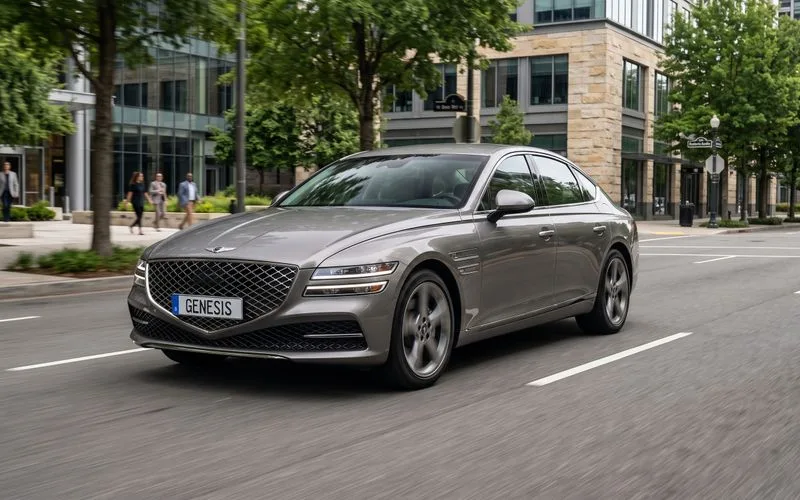 Genesis G80Mid-Size Luxury SedanBetter at: Value
Roughly $10,000 less for more standard equipment, more rear legroom, included maintenance and a far longer powertrain warranty — the strongest counter-argument to the 5 Series' ownership costs.
Compare 2.87B-
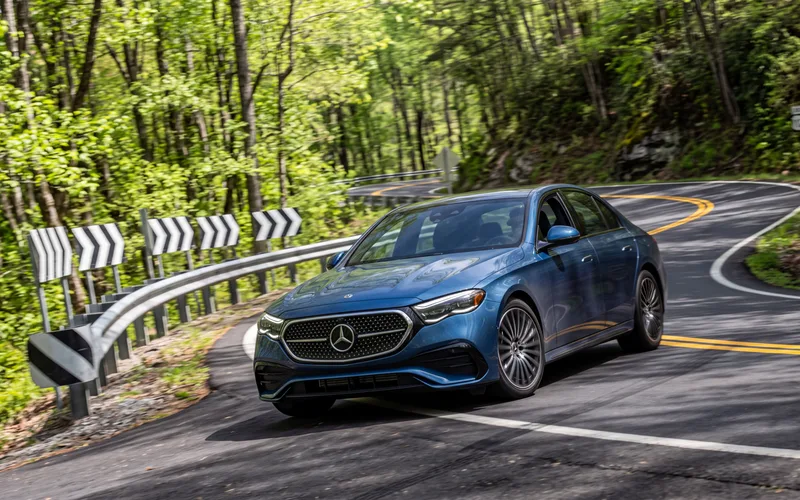 Mercedes-Benz E-ClassMid-Size Luxury SedanBetter at: Rear-seat comfort
The direct cross-shop, with a more spacious and more indulgent rear seat for buyers who spend time back there.
Compare 3.11B
3.11B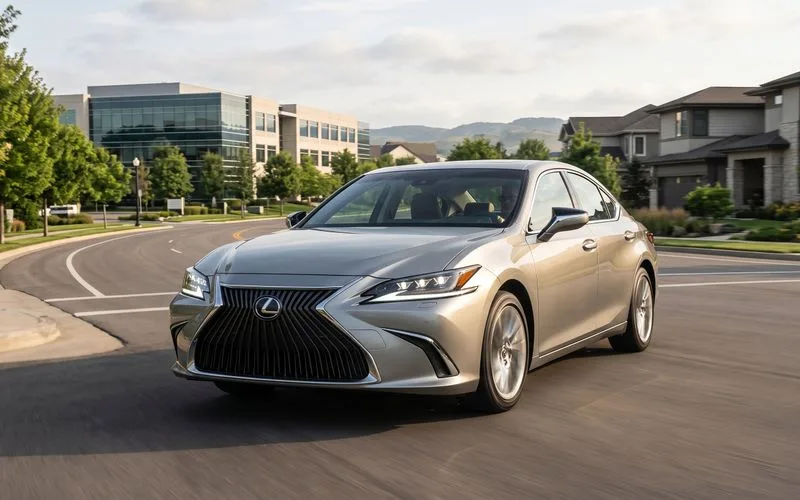 Lexus ESMid-Size Luxury SedanBetter at: Ownership cost
Substantially cheaper to buy and to keep, with hybrid economy and better-than-BMW reliability and dealer service scores.
CompareHow it's evolved
10 scored model years · 2017–2026
Subject scores by year
Hover or tap a score to see what moved it versus the year before. A corner mark flags a big swing.
| Year | Performance | Efficiency | Safety | Space | Cost | Reliability | Tech | Use-case | Driving | Value |
|---|---|---|---|---|---|---|---|---|---|---|
| 2026 | 62 | 50 | 87 | 76 | 12 | 78 | 86 | 62 | 72 | 80 |
| 2025 | 63 | 48 | 80 | 76 | 18 | 66 | 85 | 59 | 72 | 74 |
| 2024 | 63 | 47 | 69 | 74 | 20 | 66 | 85 | 52 | 77 | 78 |
| 2023 | 61 | 35 | 76 | 74 | 24 | 76 | 81 | 56 | 75 | 68 |
| 2022 | 61 | 35 | 77 | 74 | 22 | 71 | 81 | 56 | 75 | 66 |
| 2021 | 61 | 39 | 76 | 68 | 22 | 63 | 80 | 51 | 72 | 70 |
| 2020 | 61 | 39 | 73 | 74 | 20 | 68 | 77 | 50 | 71 | 68 |
| 2019 | 61 | 39 | 73 | 74 | 25 | 70 | 63 | 49 | 71 | 73 |
| 2018 | 61 | 39 | 62 | 72 | 21 | 68 | 64 | 48 | 71 | 76 |
| 2017 | 56 | 39 | 60 | 74 | 26 | 66 | 65 | 50 | 70 | 69 |
Compare two years
Best fit & conditions
Higher scores mean a better fit for that use case. Learn more about use-case fit →
Subject profile
Detailed scoring by subject
1Performance & PowertrainMid-pack among this car's ten categories.2.10C
2022 is a carry-over year in the G30 generation's post-LCI run, and the volume 530i/530i xDrive keeps the B48 2.0L TwinPower Turbo four at 248 hp. The 48V mild hybrid BMW added for 2021 stayed exclusive to the six- and eight-cylinder cars, so the four-cylinder gains nothing on output; a 248-hp base engine is modest against a mid-size luxury field whose bands run to 520 hp.
The B48 makes 258 lb-ft (350 Nm) on a plateau that opens at 1,450 rpm, which is what lets a 4,000-lb sedan feel effortless in traffic despite an unremarkable peak. Mid-pack for the segment, where the six-cylinder rivals it is cross-shopped against start above 300 lb-ft.
BMW claims 5.8 seconds for the all-wheel-drive 530i and 5.9 for the rear-drive car, and independent testing lands within a couple of tenths. Quick enough that the car never feels short of breath, but every trim above it is in a different league.
Reviewers of the G30 530i consistently describe the B48 as unusually smooth for a four-cylinder and effectively lag-free — the twin-scroll turbo has peak torque in by 1,450 rpm — and it is quiet at a cruise. It is still audibly a four under full throttle where the 540i's inline-six is sweet, and with the 48V system reserved for the larger engines the four-cylinder's stop-start restarts remain the coarsest thing about it.
Every 2022 5 Series uses the ZF 8HP eight-speed Steptronic automatic, the class benchmark — imperceptible upshifts, decisive kickdown, sensible ratio choice, and a manual mode that genuinely holds a gear on the paddles.
xDrive is optional on the 530i, 530e and 540i and standard on the M550i and M5, so all-wheel drive is orderable across effectively the entire 2022 range. It is a mature rear-biased road system with brake-based torque vectoring and drive modes, but there is no low range or terrain hardware and it is not standard on the volume trim.
Four genuinely distinct powertrains in the 2022 range: 2.0L turbo four (530i), plug-in hybrid (530e, 288 hp combined with about 20 miles of EPA electric range), 3.0L turbo inline-six with the 48V mild hybrid (540i), and a twin-turbo 4.4L V8 (M550i xDrive, with the M5 and new-for-2022 M5 CS above it). That covers efficiency, mainstream and performance buyers with an electrified option on the menu; only a full EV is missing, and no 5 Series EV existed until the i5 arrived with the next generation for 2024.
2Efficiency & RangeOne of the 5 Series's weakest categories.0.33F
EPA rates the volume 530i xDrive at 26 mpg combined from the B48 turbo four and ZF eight-speed. Respectable for a 4,000-lb all-wheel-drive luxury sedan, but the 48V mild hybrid stayed on the six- and eight-cylinder cars, so the four-cylinder gets no electrified assistance and trails the electrified rivals in the class. City and highway ratings are unchanged from 2021; the combined figure prints one mpg lower because EPA rounds combined from the unrounded test values.
23 mpg in town for the all-wheel-drive car. Auto stop-start is the only fuel-saving aid — there is no electric assist on the four-cylinder — so stop-and-go traffic costs it two mpg against the rear-drive 530i and far more against a full hybrid.
Highway is where this powertrain is at its best: 32 mpg from tall top gears and a slippery body, one mpg behind the rear-drive car and competitive with anything non-electrified in the segment.
EPA publishes 468 miles of total range for the 530i xDrive from its 18.0-gallon tank — a genuine one-tank interstate leg and one of this powertrain's better attributes, if short of what the segment's diesels and larger-tank rivals once managed.
EPA estimates $2,900 a year to fuel the 530i xDrive at 15,000 miles — $3,500 more than the average new vehicle over five years. The premium-fuel requirement is what drives that: 26 mpg combined is unremarkable rather than thirsty, but every gallon costs more.
Every gas 2022 5 Series runs on premium. BMW's guidance is 91 octane and the EPA cost figures assume it; the engine will tolerate lower octane with reduced output, but nothing in the range is specified on regular or flex fuel, making premium a permanent surcharge on every mile.
3SafetyOne of the 5 Series's strongest categories.3.22B+
NHTSA has never crash-tested the G30 5 Series. Its SafetyRatings API lists both 2022 body styles but returns 'Not Rated' for the overall rating and every frontal, side and rollover sub-rating. A 4.5-star estimate sits above the neutral 4-star default because this exact body earned Good in all six IIHS crashworthiness evaluations and a 5-star Euro NCAP result.
2022 is the award year: the 5 Series took a 2022 Top Safety Pick+ in October 2022 with Good ratings in all six crashworthiness evaluations, an upgrade from 2021, which earned no award because the pedestrian front-crash-prevention requirement went unmet. It stops short of the top of the band only because the G30 was never run through IIHS's updated side test or the updated moderate overlap test with a rear-seat dummy, so the result reflects the older protocol set.
Every 2022 5 Series ships with Active Driving Assistant: frontal collision and pedestrian warning with city collision mitigation braking, lane departure warning, active blind-spot detection, rear cross-traffic alert, rear collision preparation and fatigue/focus alert. Adaptive cruise control and any true lane centering remain locked inside the optional Driving Assistance Professional Package — a real gap for a $54K luxury sedan in 2022, when full-speed ACC was already standard on mainstream compacts.
2022 is the first model year with the complete IIHS front-crash-prevention picture for this car, and it is close to the best available: Superior vehicle-to-vehicle, Advanced vehicle-to-pedestrian by day and Superior vehicle-to-pedestrian at night — all on the standard Active Driving Assistant, with no options required on the volume 530i. Nighttime pedestrian performance at the Superior tier is the specific thing this item's top band asks for; the daytime pedestrian result one tier down is what keeps it off a perfect score.
Active Blind Spot Detection is standard on every trim and goes past alert-only — it adds a steering-wheel vibration warning and a corrective steering counter-force — with rear cross-traffic alert and rear collision preparation also standard. Front cross-traffic alert requires the Driving Assistance Professional Package, which keeps it out of the very top of the band.
Standard content is lane departure warning only — a warning, not centering; IIHS explicitly lists lane departure prevention as optional on this model year. Active Lane Keeping Assistant with side collision avoidance and the Steering and Lane Control Assistant that actually centers the car both sit in the optional Professional package, and the G30's mono-camera stack tracks well on clearly marked highways but wants regular torque input.
Active Cruise Control with Stop & Go is a refined full-speed-range system with smooth braking, and the 2022 car pairs it with a capable highway stack — Extended Traffic Jam Assistant plus Emergency Stop Assistant, which brings the car to a controlled halt if the driver stops responding. BMW's calibration is among the better ones in the segment; the deduction is that none of it is standard on the volume 530i and has to be bought as a package.
Extended Traffic Jam Assistant is genuine hands-free driving with driver-gaze monitoring, but it only runs below 40 mph, only on mapped limited-access divided highways, and only when the optional Professional package is fitted. That is a traffic-jam feature rather than the full-speed highway coverage of Super Cruise or BlueCruise.
IIHS rates the 2022 5 Series' headlights Acceptable — one tier below Good, but standard across every trim, which is exactly what satisfied the TSP+ headlight requirement. LED projectors with high-beam assist are the standard fitment and the optional adaptive LED units did not lift the published rating.
The G30 predates the tallest-beltline sedan styling and reviewers single out its generous glass area, particularly to the rear, as better than the segment norm. A rearview camera and parking sensors are standard and a 3D surround-view system is optional, but the A- and C-pillars still leave the usual junction and over-the-shoulder blind zones.
IIHS rates LATCH ease of use Acceptable: two outboard positions with complete lower-anchor hardware plus a third position with a tether anchor only, tethers reachable with the seatback in place, but lower anchors that are hard to maneuver around. Rear legroom is spacious for a mid-size sedan so installation is workable rather than cramped, and three-across remains a squeeze.
4Space & ComfortGrades above the middle of the scale.3.03B
2022 is a carry-over year in the G30's post-LCI run and the 5 Series remains a conventional five-seat executive sedan; no US trim offered an alternative seating configuration.
US sources publish 40.7 in without the glass roof and 38.8 in with it; the moonroof is standard equipment on every 2022 5 Series including the volume 530i, so 38.8 in is the figure a real buyer gets. Comfortably ample for the segment either way.
41.4 in is mid-pack for a mid-size sedan — enough for tall drivers with the 16-way seat at full travel, but well short of the 43–44 in that class leaders and full-size luxury sedans offer.
The G30's tapered roofline costs rear headroom against boxier full-size rivals, but 37.5 in still clears a six-footer in back. Sources vary between 37.5 and 38 in depending on whether the standard moonroof is accounted for.
36.5 in on a 117.1-inch wheelbase seats two adults properly for long trips but is unremarkable for the segment — a rear-facing child seat pushes the front passenger forward, and long-wheelbase full-size rivals are far clear of it.
530 litres is a large, squarely shaped boot with a wide aperture, and 2022 pairs it with a standard 40/20/40 split-folding rear seatback — one of the biggest and most usable trunks in the mid-size luxury class, and a concrete reason to take the gas 530i over the battery-compromised 530e.
Competent but conservative: a covered center bin, usable door pockets, a console tray under the climate stack, and a standard 40/20/40 split-folding rear seat that extends the trunk for long items rather than just a ski pass-through. There is no standout innovation — no underfloor bins, no oversized console, no onboard AC power — and the wireless charging cradle that fills the console tray is a package option, not standard.
The standard 16-way power front sport seats with four-way lumbar and adjustable side bolsters are singled out by testers as genuinely all-day comfortable, with optional Multi-Contour seats adding massage above them. The rear bench is supportive but flatter, and ventilation stays an extra-cost option on the volume 530i.
On its standard 18-inch run-flats the G30 rides plush yet tightly damped — reviewers call it serene and supple over broken pavement without ever floating, one of the best comfort/control balances in the class. Adaptive dampers are optional; the run-flat tires still telegraph sharp edges.
Wind and engine noise are close to eliminated at a highway cruise — testers describe the B48 as possibly the quietest four-cylinder on sale and report no wind noise at all — with only mild road roar from the run-flat tires keeping it out of the very top band.
Multi-zone automatic climate control, ambient lighting and SensaTec upholstery are standard, but the comfort items buyers actually notice are all priced separately on the 530i: heated front seats in the $600 Convenience Package, a heated steering wheel at $190, heated rear seats at $350, ventilated/Multi-Contour seats in the Luxury Seating Package, and rear sunshades in the $3,300 Executive Package. Rich availability, thin standard content for a $55k+ luxury sedan.
5Cost of OwnershipThe 5 Series's lowest-graded category.0.00F
The rear-drive 530i opens the 2022 (G30 LCI) lineup at $54,200 plus BMW's flat $995 destination charge — pricing held level with 2021 — which still clears the sedan normalization band's $55,000 ceiling, so purchase-price economics score at the floor.
530i xDrive is the US volume configuration — all-wheel drive dominates luxury mid-size sedan sales — and starts at $56,500 plus $995 destination; BMW's a-la-carte packaging means most cars leave with the Premium Package and metallic paint, landing near $61,000. Note that 2022 transaction prices frequently ran at or above sticker, so this MSRP-based figure understates what buyers actually paid.
German luxury sedan running costs sit at the high end of the sedan band even with the first three years of scheduled service covered by BMW Ultimate Care — years four and five fall outside both the 4/50 warranty and the maintenance program, when brakes, tires and B48 turbo-four ancillaries come due.
Largely observed rather than projected: a 2022 530i xDrive is four model years old in 2026 and KBB values it at about $27,200 against a roughly $61,000 as-equipped MSRP (45% retained), so a fifth year of decline lands near 41%. The 5 Series depreciates faster than its luxury-midsize class, and 2022 cars were bought at peak seller's-market prices, which makes real-world retention against what owners actually paid worse still.
BMW's New Vehicle Limited Warranty runs 4 years/50,000 miles on all 2022 models — a year longer than mainstream 3/36 coverage but short of Genesis and Jaguar's 5/60 terms, so mid-band for the segment.
BMW does not offer a separate extended powertrain warranty — engine and drivetrain on the gas 530i are covered only by the same 4-year/50,000-mile basic term, below the 5-year floor of the sedan normalization band and about half what Kia/Hyundai/Genesis provide.
The 2022 530i includes BMW Ultimate Care — 3 years/36,000 miles of complimentary factory-scheduled maintenance (oil, filters and fluids, spark plugs, wiper blades, brake fluid, multi-point inspections) — plus 4 years of unlimited-mileage 24/7 roadside assistance and BMW ConnectedDrive service trials. 2022 is the year the program got materially better: BMW made Ultimate Care coverage transferable to subsequent owners for model year 2022 and newer, removing the original-owner-only limitation that capped the 2021 car. Multi-year included maintenance ahead of Lexus (1 yr/10,000 mi), though brake pads and discs still require the paid Ultimate Care+ upgrade.
$61,000 volume-trim price minus its estimated resale value after 5 years (41% retained, or about $25,010) leaves about $35,990 in depreciation. Add the projected $7,900 in 5-year maintenance and repairs, and owning this vehicle for 5 years costs about $43,890 in total.
6Reliability & QualityGrades above the middle of the scale.2.83B-
2022 is a settled carry-over year of the G30 LCI — the 48V mild-hybrid 530i introduced for 2021 had a full year of running changes behind it — and J.D. Power puts the car in its 'Great' band at 84/100. Consumer Reports disagrees, rating the 2022 5 Series less reliable than the average car of its model year on owner surveys, with specific trouble spots in engine cooling (repeat coolant expansion-tank failures), in-car electronics (water intrusion at the roof antenna killing the GPS) and interior noise. Genuinely mixed signals between the two authorities put it just above the sedan median rather than in the top band.
BMW's dependability standing is upper-middle rather than top-tier, and the most directly relevant study is the one that surveyed this exact model year: the 2025 VDS polled three-year-old 2022 vehicles and ranked BMW 9th overall at 189 PP100, comfortably better than the 202 PP100 industry average and ahead of its German rivals — but well behind the Lexus (140) / Buick (143) tier. Initial-quality standing that year was the same shape. Cost-weighted brand ratings, which fold in repair severity rather than defect count, are much harsher and cap the score.
Five NHTSA campaigns reach the 2022 5 Series — materially fewer than the 2021 build, which additionally carries the rearview-camera, output-shaft and 48V-connection actions — but the severity mix is what holds the score down: two separate fire-risk starter campaigns and a driveline campaign that can cause loss of drive or rollaway. The transmission mechatronics recall reads alarming and is not: ZF flagged missing assembly bolts on four vehicles in total, only one of them a 2022 530i, so it is a paperwork-scale action rather than a systemic transmission fault. Typical-to-slightly-worse-than-typical activity for the segment, with fire risk pushing it below the median.
The volume 530i's 248-hp B46/B48 2.0-liter turbo four is a proven family by 2022 — the N20-inherited timing-chain weakness was resolved by the 2017 tensioner revision and further running changes from 2019 — and the ZF 8HP eight-speed behind it has the best high-mileage record of any automatic in the class. Two things keep it out of the top band: the plastic oil-filter-housing and cooling-system service that this engine reliably needs between roughly 60k and 120k miles, echoed in Consumer Reports' 2022 expansion-tank complaints, and the 48V starter-generator hardware that the two fire-risk starter campaigns target. Neither is a core block-or-gearbox fault.
The G30 cabin is richly finished for a mid-size luxury sedan — dense soft-touch upper surfaces, standard wood trim, weighty switchgear and a genuinely top-tier display/gauge package — and reviewers rate it a class-competitive interior at the 530i's price. It falls short of class-leading on one consistent criticism: the wood and leather appliqués read as synthetic to reviewers who look closely, where a contemporary E-Class or A6 pushes harder on visible material authenticity.
A mid-run Dingolfing build of a mature platform assembles well — panel fit inside and out is called out as tight by reviewers, and BMW finished 9th at 165 PP100 in the 2022 Initial Quality Study against a record-high 180 industry average, so it beat the field in the worst initial-quality year of the modern era. The persistent sunroof rattle owners report to Consumer Reports, and BMW's merely above-average rather than class-leading IQS position, keep it out of the top band.
Roughly 340 franchised BMW centers cover all 50 states, giving strong reach across metro and suburban markets, with loaner vehicles standard practice and the four-year/50,000-mile BMW Ultimate Care scheduled maintenance included on a 2022 car. Service satisfaction sits in the upper-middle of the luxury field — generally ahead of Audi and Mercedes-Benz, behind Lexus and Cadillac — and rural coverage thins, which matters for a car this dependent on dealer-level diagnostics.
OEM supply is good and the G30 has healthy independent-specialist and aftermarket support, so parts are available — they are simply expensive, and much of the diagnostic work is dealer-channel. Out-of-warranty running costs sit well above segment norms: 18-inch all-season run-flats, costly cooling-system and brake service, high labor rates, and a repair-severity profile that makes a bad year very expensive once the four-year warranty and included maintenance lapse.
7Technology & InfotainmentThe 5 Series's best-graded category.3.48B+
The 2021 LCI made the 12.3-inch Live Cockpit Professional pair standard across the range, so even the base 530i carries the largest screen BMW offered in the G30 — but it is a fixed 12.3 in with no larger option, which the G60 successor's 14.9 in curved display comfortably beats.
iDrive 7 in the G30 is quick, logically tiled and — crucially — retains the rotary controller plus physical climate and volume switchgear alongside the touchscreen, an arrangement reviewers rate among the best in the segment. Points off only for menu depth in the vehicle-settings tree and for sitting a generation behind iDrive 8.
Both Apple CarPlay and Android Auto are standard on every 2022 trim and both connect wirelessly — BMW dropped wired projection on this platform in 2020. Held just short of the ceiling because wireless-only means the phone charges only if the optional wireless charging pad is fitted.
BMW Intelligent Personal Assistant handles natural-language commands for climate, navigation and vehicle settings, and the cloud-connected native navigation with real-time traffic is good enough that owners actually use it instead of defaulting to phone maps. Short of class-best because the assistant still stumbles on compound requests.
The standard 12-speaker HiFi system is a genuinely good base setup rather than a token one, with the 16-speaker harman/kardon surround system inside the $2,400 Premium Package and the Bowers & Wilkins Diamond system above it — a full three-tier ladder topped by one of the best factory systems sold.
A 12.3-inch fully digital Live Cockpit Professional cluster is standard on every 2022 trim — crisp, mode-reactive, and able to project the navigation map into the gauge area. Its fixed layout with the reversed-sweep tachometer is less configurable than Audi's Virtual Cockpit and drew persistent criticism through this generation.
BMW Remote Software Upgrade delivers whole-vehicle over-the-air updates rather than maps-only — new features, functional improvements and quality fixes — pushed a few times a year and installable from the My BMW app, and the OS 7 G30 is squarely inside that fleet. Below the top band because BMW's drops add fewer genuinely new functions than Tesla's and the G30 was no longer the priority platform by 2022.
My BMW is a polished, reliable app covering remote lock/unlock, vehicle locate and status, climate pre-conditioning and OTA delivery, and BMW Digital Key lets a compatible phone unlock and start the car. It sits below the top band because the G30 uses the NFC-based Digital Key rather than the ultra-wideband Digital Key Plus of the i4/iX, and some remote services move to a paid subscription once the included term lapses.
USB-C ports front and rear plus a 12V outlet cover four occupants adequately, but wireless phone charging is bundled into an option package rather than standard on the volume 530i, and there is no household AC outlet anywhere in the car.
Keyless entry with push-button start and an alarm system are standard, and BMW Digital Key adds phone-as-key on compatible handsets — but remote engine start is inside the $2,400 Premium Package and the power trunk lid is a $600 Convenience Package item, so the volume trim as delivered is short of full keyless convenience.
A backup camera and Park Distance Control front/rear sensors are standard, and the optional Parking Assistance Package adds a surround-view camera with 3D view plus the self-parking function. Keeping 360-degree coverage and park automation behind an option box on a $55k+ luxury sedan holds the score down.
BMW's full-color head-up display is among the best in the industry — large, bright, and rich with navigation and ADAS content — but on the 2022 530i it is reachable only through the $2,400 Premium Package rather than as a standalone box on the volume trim.
8Use-Case FitOne of the 5 Series's weakest categories.1.79C-
Wide-opening rear doors, a flat-ish bench and an 18.7 cu ft trunk that swallows a stroller make daily kid duty workable, and the standard 40/20/40 split-folding backrest helps with awkward loads. But IIHS rates LATCH ease of use only Acceptable — lower anchors are hard to maneuver around and only two positions carry complete hardware — and 36.5 in of rear legroom means a rear-facing seat pushes the front passenger forward.
The crash record is strong — IIHS Top Safety Pick+ for 2022 — and Active Driving Assistant (forward collision warning with AEB, blind-spot monitoring, lane departure warning, speed limit info) is standard. The ADAS content families most want is not: adaptive cruise with stop-and-go and lane centering sit inside the Driving Assistance Professional Package, and NHTSA never crash-tested the car at all.
Four adults travel very well — hushed cabin, plush damping, seats testers call fantastic for all-day use, a big trunk, and roughly 470 miles between fill-ups — and rear sunshades and four-zone climate are on the options list. Rear amenities are thin as delivered though: no rear screens, and heated rear seats are a $350 extra.
The B48 four and ZF 8-speed are exceptionally well calibrated for stop-and-go — lag-free tip-in, imperceptible shifts — and light-effort steering, standard park distance control and a quiet, comfortable cabin make it a genuinely low-fatigue commuter. Only the non-48V stop/start restart and the extra-cost adaptive cruise keep it out of the top band.
26 MPG combined is respectable for a near-two-ton luxury sedan, but the car requires premium fuel — an EPA annual bill of about $2,900 — and the consumables are luxury-grade: run-flat tires, BMW-spec service intervals and out-of-warranty repair costs far above mainstream. Buyers chasing cheap miles were steered to the 530e.
At 195.8 in long with a 39-ft curb-to-curb turning circle this is a big car downtown, and both the surround-view camera and the self-parking function are optional. Good outward visibility for the class plus standard parking sensors and backup camera keep it manageable rather than awkward.
BMW publishes no US towing rating for the 5 Series sedan and offers no factory hitch here; there is no bed and no payload provision beyond normal passenger loading. The 18.7 cu ft trunk with a folding rear seat is the entire load story — this is not a work vehicle in any meaningful sense.
The B48 and ZF 8HP are durable, widely deployed hardware and the G30 chassis is proven, but everything around them is luxury-specification: SensaTec and wood trim, low-profile run-flats, electronic complexity and repair costs that punish abuse. No fleet or work-duty reputation exists for this car.
No onboard AC power, no bed, no roof rails, no upfit ecosystem and no washable surfaces — the trunk offers a carpeted floor and a couple of bag hooks. Nothing about the car is provisioned for jobsite use.
This is the mission the 5 Series is built around: a hushed cabin, plush-but-controlled damping, 16-way seats testers call all-day comfortable, and roughly 470 miles between stops (over 500 for the RWD 530i). The one deduction is that the adaptive cruise and Traffic Jam Assistant that make a 600-mile day easy are a paid package rather than standard.
xDrive all-wheel drive is orderable across effectively the whole 2022 range and is genuinely good in snow, but the car is otherwise pavement-bound: sedan ride height, low-profile run-flats, no roof rails or crossbar provision, no tow hitch and no onboard power for camping. A gravel forest road is the limit.
The 18.7 cu ft trunk is one of the largest in the class and the 40/20/40 split-folding rear seatback is standard on 2022 cars, so skis and long flat-packed items do go through. It is still a fixed-aperture sedan boot though — no hatch, no underfloor bin, no roof-rack option — so genuinely bulky gear simply will not fit.
9Driving ExperienceOne of the 5 Series's strongest categories.3.11B
The G30 disguises its size well: a double-wishbone front end, near-even weight distribution and standard 18-in run-flats give flat, secure cornering with real composure, and reviewers describe it as agile yet still comfortable on the highway. It remains a capable executive sedan rather than an outright sports sedan — the M Sport chassis and adaptive dampers sharpen it, but the volume 530i is tuned for composure over bite.
Accurate and naturally weighted with well-judged effort build-up, but the electric rack filters out the surface detail that made earlier 5 Series the benchmark — reviewers land on 'nicely weighted but somewhat numb.' Variable Sport Steering is optional and quickens the ratio without adding feedback.
Vented discs at all four corners haul a 3,765-lb (RWD) to 3,900-lb (xDrive) sedan down in roughly 108 ft from 60 mph in instrumented testing of this generation, and the pedal is firm and progressive with none of the mushy travel that afflicts electrified rivals. M Sport brakes are available above the standard setup.
The twin-scroll B48 responds essentially without lag — peak torque is in by 1,450 rpm — and the ZF 8HP shifts imperceptibly and kicks down decisively, one of the best drivetrain calibrations in the class. The 48V mild hybrid BMW fitted for 2021 stayed exclusive to the six- and eight-cylinder cars, so the four-cylinder's auto stop/start restarts are more noticeable than in newer rivals.
At a cruise the four is barely audible — testers go as far as calling it possibly the quietest four-cylinder on sale — and vibration through the controls is well isolated. Worked hard it still sounds thin and busy next to the 540i's B58 inline-six, which is the one place the volume trim's engine choice announces itself.
A 117.1-inch wheelbase under a 195.8-inch body makes for a wide arc — 39 ft curb-to-curb is poor for the sedan band and shows up in parking structures and three-point turns. Rear-axle steering was never offered on the G30 5 Series.
Standard 16-way power front sport seats with four-way lumbar and moveable side bolsters plus a wide-range tilt/telescope column suit almost any build, and the G30 keeps physical climate, volume and iDrive controls where the hand naturally falls rather than burying them in the touchscreen. Generous glazing gives better sightlines than most modern sedans; thick C-pillars are the only real complaint.
Satisfying and quietly capable — balanced chassis, strong brakes, a willing drivetrain — but the 248-hp four is more competent than charismatic and the muted steering keeps the volume 530i on the pleasant side of memorable. The 540i, M550i and the new-for-2022 M5 CS are where this lineup's enthusiast appeal actually lives.
10Value & Market PositionMid-pack among this car's ten categories.2.47C+
The 530i still covers the basics well — twin 12.3-inch displays with Live Cockpit Professional and navigation, adaptive full-LED headlights with automatic high beams, moonroof, 18-inch alloys on run-flats, park distance control with rearview camera, and a full standard driver-assistance suite (lane departure, forward collision and pedestrian warning, blind-spot detection, rear cross-traffic alert) — but 2022 is the one year the content moved backwards. Semiconductor shortages made wireless charging, the Wi-Fi hotspot and remote start unavailable, and the Parking Assistance package was restricted to higher trims, while heated seats, head-up display and Harman Kardon audio stayed behind the Premium Package and upholstery remained SensaTec leatherette at a $55K entry price.
Pricing held flat from 2021 — about $55K to start, roughly $61K as typically equipped — but the car delivered slightly less for it, with three convenience features deleted mid-cycle, and 2022 buyers routinely paid at or above sticker on top. A Genesis G80 gave more standard content for meaningfully less money. What the 5 Series buys back is chassis composure, powertrain refinement and build integrity rivals do not match at the price, so it lands as fair value rather than a bargain, a notch below the 2021 car on content-per-dollar.
The 2022 US lineup spans 530i and 530i xDrive (turbo-four), 530e and 530e xDrive plug-in hybrids, 540i and 540i xDrive (48-volt mild-hybrid turbo-six), M550i xDrive (V8) and the M5/M5 Competition, joined for this year only by the 627-hp M5 CS halo — with rear- or all-wheel drive on the volume trims and M Sport, Premium, Driving Assistance and Executive packages layered on top. A genuinely wide, well-spaced range.
22,749 US deliveries in 2022 keep the 5 Series the clear volume leader among luxury mid-size sedans, several times the Audi A6's tally, but the trajectory is a steady managed decline — 26,785 in 2020 and 24,523 in 2021 — as the segment cedes ground to SUVs. 2022 volume was additionally supply-capped rather than demand-capped: BMW brand US sales fell only 1.3% overall in a year when dealers held roughly three weeks of inventory.
BMW is among the strongest and most aspirational global luxury brands and finished 2022 as the top-selling US luxury marque for the third consecutive year; the 5 Series is the badge's long-running executive-sedan benchmark, and the brand itself supports both showroom desirability and residuals even where the model's own depreciation is unremarkable.
2022 was the worst year in recent memory to buy this car. The semiconductor shortage left dealers with about 21 days' supply, manufacturer incentives collapsed industry-wide, and luxury inventory routinely transacted at or above MSRP with addendum markups — the opposite of the run-out discounting available on the 2023 car. Scored on buyer benefit, that is squarely in the 'sells at or over MSRP, no deals to be had' band, with a few points of credit for BMW Financial Services keeping some lease support alive.
2022 is the second year after the G30's 2021 LCI facelift and the sixth of a generation launched for 2017 — a settled mid-cycle car, still presentable with its larger kidney grille, L-shaped LED headlights and 12.3-inch displays, and with no replacement yet public during its sales year (the G60 was not revealed until May 2023). The ding is that BMW had already moved its newest models to iDrive 8 and the curved display for 2022 while the 5 Series stayed on iDrive 7, so it was current but visibly no longer cutting-edge.
Reviewers rated the 5 Series highly for ride-handling balance, powertrain refinement and interior build without calling it the class pick — U.S. News scored it 7.9/10 for #5 in Luxury Midsize Cars — and its safety credentials improved on 2021: IIHS named the 2022 sedan a Top Safety Pick+, its highest award, with Good in all six crashworthiness tests. It took no Car and Driver 10Best slot, and comparison tests increasingly favored newer rivals.