

The verdict
A capable mid-size luxury sedan, strong on technology and held back by ownership.
The 2020 BMW 5 Series is a superb long-distance luxury sedan and a genuinely poor financial decision at full price. It is quiet almost to the point of eeriness, rides beautifully, carries 18.7 cubic feet of luggage in one of the biggest trunks in the class, and runs 486 miles between fill-ups — but it drinks premium at 27 mpg combined ($2,800 a year), keeps roughly 38% of its value after five years, and hands you the repair bills of a German luxury car the moment the 4-year/50,000-mile warranty lapses. As a used buy in the mid-$20,000s it is one of the great bargains in comfortable transportation; as a new $60,000 purchase it was a rough one. Enthusiasts should know up front that this generation traded the sharp steering the badge was built on for isolation.
Jump to scoresStrengths
- One of the quietest, most comfortable cabins at any price
- iDrive 7.0 still holds up, and both phone platforms are wireless
- A 18.7 cu ft trunk — bigger than most crossovers' cargo holds
What holds it back
- Brutal depreciation — roughly $37,500 gone in five years
- Premium fuel at 27 mpg costs $2,800 a year
- The warranty runs out before the expensive years start
Top alternatives
Cars shoppers cross-shop with the BMW 5 Series 3.21B+
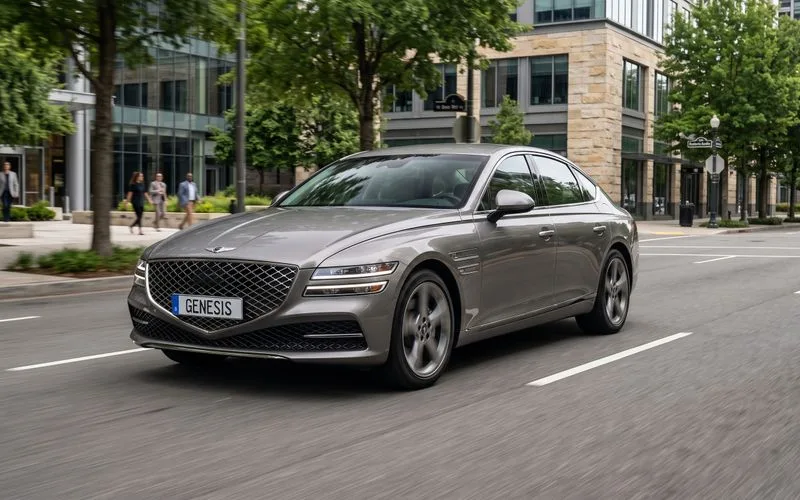 Genesis G80Mid-Size Luxury SedanBetter at: Value
Roughly $10,000 less for more standard equipment, more rear legroom, included maintenance and a far longer powertrain warranty — the strongest counter-argument to the 5 Series' ownership costs.
Compare 2.87B-
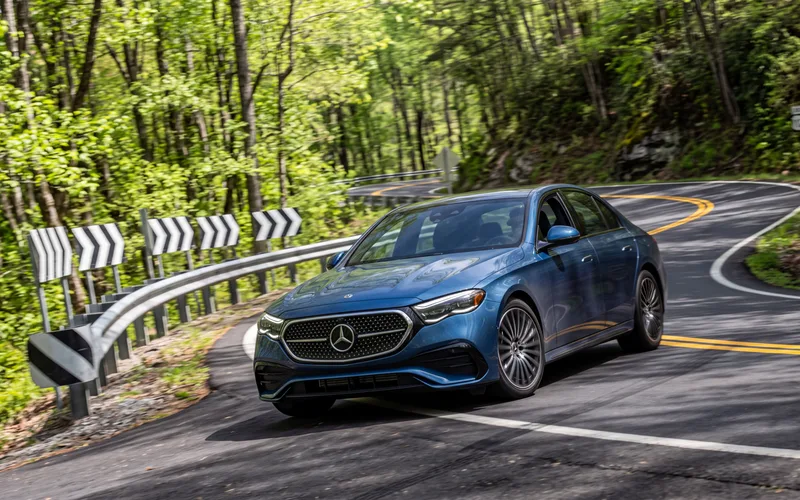 Mercedes-Benz E-ClassMid-Size Luxury SedanBetter at: Rear-seat comfort
The direct cross-shop, with a more spacious and more indulgent rear seat for buyers who spend time back there.
Compare 3.11B
3.11B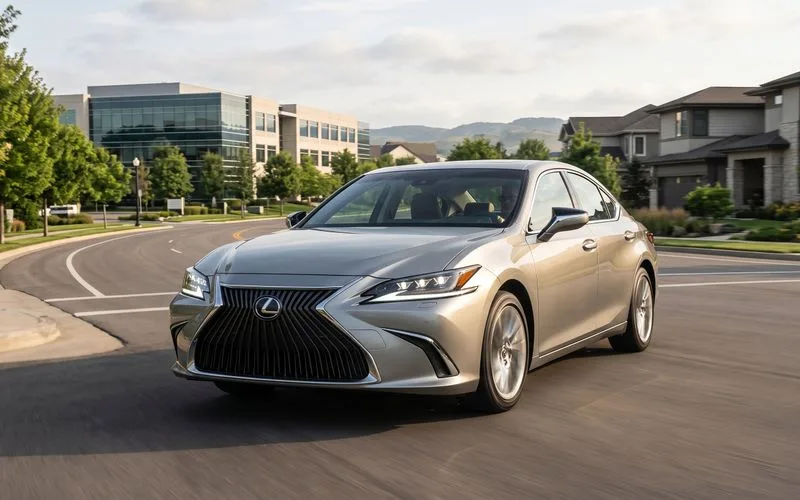 Lexus ESMid-Size Luxury SedanBetter at: Ownership cost
Substantially cheaper to buy and to keep, with hybrid economy and better-than-BMW reliability and dealer service scores.
CompareHow it's evolved
10 scored model years · 2017–2026
Subject scores by year
Hover or tap a score to see what moved it versus the year before. A corner mark flags a big swing.
| Year | Performance | Efficiency | Safety | Space | Cost | Reliability | Tech | Use-case | Driving | Value |
|---|---|---|---|---|---|---|---|---|---|---|
| 2026 | 62 | 50 | 87 | 76 | 12 | 78 | 86 | 62 | 72 | 80 |
| 2025 | 63 | 48 | 80 | 76 | 18 | 66 | 85 | 59 | 72 | 74 |
| 2024 | 63 | 47 | 69 | 74 | 20 | 66 | 85 | 52 | 77 | 78 |
| 2023 | 61 | 35 | 76 | 74 | 24 | 76 | 81 | 56 | 75 | 68 |
| 2022 | 61 | 35 | 77 | 74 | 22 | 71 | 81 | 56 | 75 | 66 |
| 2021 | 61 | 39 | 76 | 68 | 22 | 63 | 80 | 51 | 72 | 70 |
| 2020 | 61 | 39 | 73 | 74 | 20 | 68 | 77 | 50 | 71 | 68 |
| 2019 | 61 | 39 | 73 | 74 | 25 | 70 | 63 | 49 | 71 | 73 |
| 2018 | 61 | 39 | 62 | 72 | 21 | 68 | 64 | 48 | 71 | 76 |
| 2017 | 56 | 39 | 60 | 74 | 26 | 66 | 65 | 50 | 70 | 69 |
Compare two years
Best fit & conditions
Higher scores mean a better fit for that use case. Learn more about use-case fit →
Subject profile
Detailed scoring by subject
1Performance & PowertrainMid-pack among this car's ten categories.2.10C
The volume 530i/530i xDrive runs BMW's B48 2.0L TwinPower turbo four rated at 248 hp — unchanged for 2020, which is a pre-LCI carry-over year for the four-cylinder (the 48V mild-hybrid system did not reach the 5 Series until the 2021 LCI). The 2020 range steps up to 335 hp (540i) and 523 hp (M550i xDrive, uprated from 456 hp).
The B48 turbo four makes 258 lb-ft (350 Nm) on a plateau starting around 1,450 rpm, which is what makes the car feel unstrained in traffic despite a modest peak horsepower figure. Above it the 540i's inline-six offers 332 lb-ft and the M550i's twin-turbo V8 553 lb-ft.
BMW claims 5.8 seconds to 60 mph for the all-wheel-drive 530i and 5.9 for the rear-drive car; independent instrumented runs land a few tenths either side (Edmunds recorded 6.2 s for a rear-drive 530i). Mid-pack for a mid-size luxury sedan, with far quicker trims stacked above it.
The twin-scroll B48 is essentially lag-free from low revs and stays quiet at a cruise, and reviewers of the pre-facelift G30 consistently call its delivery smooth for a four-cylinder. It gives up the top-end sweetness of the 540i's inline-six, sounds busy when extended, and — with no 48V starter-generator in this model year — its auto stop-start restarts are more obtrusive than they became on the 2021 LCI cars.
Every 2020 5 Series uses the ZF 8HP eight-speed Steptronic automatic, the class benchmark — imperceptible part-throttle upshifts, prompt kickdown, sensible ratio choices, and a manual mode that actually holds a gear on the paddles. No CVT drone, no dual-clutch low-speed awkwardness.
xDrive is a factory option on the 530i, 530e and 540i and standard on the M550i xDrive, so all-wheel drive is reachable across effectively the entire 2020 range. It is a mature, rear-biased road system with brake-based torque vectoring and drive modes, but it is not standard on the volume trim and there is no low range or terrain hardware.
Four genuinely distinct powertrains in the 2020 sedan: 2.0L turbo I4 (530i), plug-in hybrid (530e, whose battery grew for 2020 and lifted EPA electric range from 16 to 21 miles), 3.0L turbo inline-six (540i, 335 hp, no 48V system this year), and the twin-turbo 4.4L V8 M550i xDrive at 523 hp. That covers efficiency, mainstream and performance buyers with a plug-in on the menu; only a full EV is missing, and no electric 5 Series existed until the i5 for 2024.
2Efficiency & RangeOne of the 5 Series's weakest categories.0.56F
EPA rates the volume 530i xDrive at 27 mpg combined from the B48 turbo four and ZF eight-speed. Solid for a 4,200-lb all-wheel-drive luxury sedan, but with no electrification on this trim in 2020 it sits behind the hybrid mid-size rivals and only mid-pack among gas sedans overall.
24 mpg in EPA city testing. The engine has auto stop-start but no electric assist or 48V recuperation in this model year, so stop-and-go work costs it a mpg against the rear-drive car and far more against a full hybrid.
31 mpg highway is this powertrain's best EPA figure — tall top gears and a slippery body make it an efficient long-distance cruiser — though the xDrive hardware costs two mpg against the rear-drive 530i's 33.
EPA puts total range at 486 miles for the 530i xDrive on its 18.0-gallon tank, a genuine one-tank interstate figure and one of this powertrain's stronger attributes. It is comfortably above the mid-size sedan norm without reaching the 600-mile territory of the largest-tank cruisers.
EPA estimates $2,800 a year to fuel the 530i xDrive at 15,000 miles. The premium requirement is what drives it: at 27 mpg combined the volume of fuel burned is unremarkable for the class, but the price per gallon is not, and the V8 M550i runs to $3,800.
Every gas 2020 5 Series is rated on premium. EPA lists it as recommended rather than strictly required, so the engine will run on lower octane with reduced output and economy, but BMW's own guidance is 91 octane and the EPA cost estimates assume it. Nothing in the range takes regular or flex fuel, which is a standing surcharge on every mile; only the 530e offers an alternative energy path, and it is a separate trim.
3SafetyOne of the 5 Series's strongest categories.2.94B-
NHTSA never ran NCAP on the G30 5 Series: the 2020 listings return "Not Rated" for every crash mode, and so do 2018, 2019, 2021 and 2022 — the whole generation is untested, so there is no result to carry over within it. The proxy value is set from the prior F10 generation's 5-star NHTSA result and the G30's own 5-star Euro NCAP performance, discounted half a star because Euro NCAP's frontal protocols are not NHTSA's full-width rigid barrier and no confirmatory US test exists for this generation.
The 2020 5 Series sweeps all six IIHS crashworthiness evaluations at Good — driver- and passenger-side small overlap front, moderate overlap front, side, roof strength and head restraints/seats — and carries a Top Safety Pick+ award. It sits at the lower edge of the top band rather than the middle because the award is headlight-restricted to an unusually narrow slice of the range: the Good-rated lights come only with the Lighting or Executive package, and every 530i/540i without one rates Marginal, so a typically-configured car does not qualify for the award it advertises.
BMW Active Driving Assistant is standard on every 2020 5 Series and covers four of the five features the top band lists — frontal collision warning with daytime pedestrian detection, city-speed automatic emergency braking, lane departure warning, blind spot detection and rear cross-traffic alert — with front and rear parking sensors standard alongside. Blind spot being standard rather than trim-locked is what lifts it above the German rivals of this year, but Active Cruise Control with Stop & Go and any lane keeping remain behind the $1,700 Driving Assistance Plus package, which is exactly the mid-band gap.
IIHS rates front crash prevention Superior for the 2020 5 Series on both the standard Frontal Collision Warning with City Collision Mitigation and the optional Extended Collision Mitigation — the standard system earning the top vehicle-to-vehicle grade is the meaningful part, since it is what a base car actually gets. It falls short of the upper band because IIHS published no vehicle-to-pedestrian result for this car at all: BMW fits daytime pedestrian detection, but unlike the 2020 3 Series it was never rated, and the nighttime pedestrian protocol did not exist until 2022.
Blind Spot Detection and Rear Cross-Traffic Alert are standard on every 2020 5 Series through Active Driving Assistant, with mirror indicators and a steering-wheel vibration when the driver signals into an occupied lane — broader standard coverage than the Audi A6 or Alfa Giulia of the same year, where it is trim- or package-locked. It stops short of the top band because the standard system is warning-plus-haptic only; the active side collision avoidance that actually steers, and front cross-traffic alert, both require the optional Driving Assistance Plus package.
Lane departure warning is standard, and Active Lane Keeping Assistant with the Steering and Lane Control Assistant centering function comes in the Driving Assistance Plus package. When fitted, the G30's centering is one of the steadier implementations of its generation — reviewers describe confident, well-damped tracking on marked highway lanes without the ping-ponging that characterized cheaper systems — but it is a paid option rather than standard equipment, and it hands back on faded markings and tighter curves.
BMW's Active Cruise Control with Stop & Go is a full-speed-range system that comes to a complete halt and resumes automatically, and on the G30 it is bundled with the Steering and Lane Control Assistant so longitudinal and lateral control arrive as one integrated highway assist rather than two features fighting each other — the refinement the top band asks for, and consistently rated among the better premium implementations of the era for smooth, early braking. Held just below the ceiling because it is not standard: a base 530i has conventional cruise until the $1,700 package is checked.
No hands-free driving was offered on the pre-LCI 2020 5 Series. The Traffic Jam Assistant available with Driving Assistance Plus is hands-on — it requires continuous steering-wheel torque — and BMW's Extended Traffic Jam Assistant, the genuinely hands-off-below-40-mph system, depends on the infrared driver-attention camera that the G30 did not receive until the 2021 LCI, arriving in the US 5 Series only with the Driving Assistance Professional package on that facelifted car. Scored just above the floor rather than at zero because a hands-on traffic jam function does exist.
This is the 2020 5 Series' clearest safety weakness. IIHS rates the headlights Good only on cars carrying the Lighting or Executive package — LED projector low beams with LED reflector high beams, curve-adaptive and with high-beam assist — while every 530i, 540i, 530i xDrive and 540i xDrive without one rates Marginal, the curve-adaptive LED projectors going without high-beam assist. A volume-configured car therefore has Marginal lights, which is the bottom of the mid band, and it is the same restriction that keeps most builds outside the TSP+ award.
Better than the 3 Series it sits above: a low cowl, comparatively slim A-pillars and a more upright rear window give the G30 honest sightlines for a modern executive sedan, though the high beltline and thick C-pillars still leave an over-the-shoulder blind zone that the standard blind-spot monitor is doing real work to cover. Camera and sensor compensation is good but not comprehensive on a base car — rearview camera and front/rear parking sensors are standard, while the surround-view system requires Parking Assistant Plus.
IIHS rates the 2020 5 Series' LATCH hardware Acceptable rather than Good — the two outboard lower-anchor sets are usable but recessed enough to need digging past the seat cushion, and the tether anchor locations are not obvious. The mid-size body helps with the parts IIHS does not rate: wide rear door openings and a broad bench make two seats easy and a third workable. It lands mid-band because the hardware itself is only Acceptable and there are no lower anchors in the center position.
4Space & ComfortOne of the 5 Series's strongest categories.3.02B
Standard five-seat executive-sedan layout across every 2020 5 Series trim, with a three-place rear bench split 40/20/40 so the centre section can drop for long items while two passengers stay seated. There is no four-seat or bench-front variant in the US range.
38.8 inches up front, measured on a car with the moonroof that BMW fits as standard to the entire 2020 US range — so unlike models where the sunroof is optional, this is the figure every buyer actually gets rather than a best-case no-roof number. Comfortably above the mid-size sedan floor and enough for tall drivers once the standard 16-way power seat is dropped to its lowest setting.
41.4 inches is only modestly above the 40-inch band floor and trails full-size luxury rivals, but the G30 compensates with an unusually wide adjustment envelope — 16-way power front seats with adjustable thigh support are standard, and the steering column is power-adjustable for reach as well as rake, so the usable range is better than the single number suggests.
37.5 inches in the second row sits in the upper half of the sedan band and is enough for six-footers, helped by the G30's relatively upright rear roofline — this generation was not given the fastback treatment applied to the 4 Series Gran Coupe. The standard moonroof's housing is what keeps it from the top of the band.
36.5 inches is mid-band and the 5 Series' weakest interior dimension — adequate for adults on a normal trip but noticeably tighter than the stretched-wheelbase sedans Americans cross-shop, and short of what the E-Class and A6 offer behind a tall driver. The 55.9-inch rear shoulder room means three abreast is a short-haul proposition.
18.7 cubic feet is among the largest trunks in the luxury mid-size class and the single strongest practicality number this car posts — it is a genuine four-suitcase or golf-bags-plus-luggage space, and the 40/20/40 rear seatback folds to pass skis or lumber through. The scored gas 530i keeps the full volume; the 530e plug-in loses over four cubic feet to its battery.
Competent rather than clever. The covered centre console with its sliding armrest, decently sized door bins, a proper glovebox and the 40/20/40 fold-through cover everyday needs, and BMW's optional wireless charging tray doubles as a phone cubby. But there is no underfloor trunk storage of note, no household outlet, no reconfigurable console, and the console footprint is partly consumed by the iDrive controller and gear selector — nothing here is a storage innovation.
A genuine strength. Consumer Reports calls the seats "exceptionally comfortable and supportive", and the hardware backs it up: 16-way power front seats with adjustable thigh support and driver memory are standard on the volume 530i, not a package upgrade, with multi-contour and massage seats available above that. Held out of the top band only because the rear bench is comfortable rather than special, and its 36.5 inches of legroom limits genuinely long stints for tall passengers.
Consumer Reports describes the ride as "serene and supple, unfazed by most bumps the road throws at it" — plush without the float that usually accompanies it, and Edmunds notes it is "relatively plush yet well damped". Just below the top band because the best of it needs money: the adaptive dampers come only in the $1,950 Dynamic Handling Package, and cars ordered with the M Sport package's 19-inch wheels and firmer springs give up meaningful compliance on broken pavement.
The 5 Series' standout comfort attribute and near the top of the segment. Consumer Reports found wind, tire and engine noise "impressively muted" thanks to the G30's extra sound deadening, and rated the B48 turbo four as possibly "the quietest four-cylinder on the market today" — a real achievement given that a four-pot is normally the acoustic penalty of the volume trim in this class.
Everything is available and almost nothing is included — the recurring complaint about BMW's 2020 a-la-carte structure. Dual-zone automatic climate control and heated power-folding mirrors are standard, but on a $55,000 car heated front seats are a $350 option or part of the $950 Convenience Package, the heated steering wheel and four-zone rear climate are separate line items, and ventilated seats are reserved for upper trims' seating packages. BMW did at least cut the heated-seat price sharply for 2020, from $850 to $350.
5Cost of OwnershipThe 5 Series's lowest-graded category.0.00F
The entry 2020 5 Series is the 530i sedan at $53,900 plus BMW's $995 destination charge, giving $54,895 delivered. The 530e PHEV was priced identically to the 530i, the 540i opened at $59,450 and the M550i xDrive at $76,650 before destination.
The 530i xDrive is the US volume configuration — AWD dominates midsize luxury sedan sales — and it lists at $56,200 plus $995 destination. Real transactions cluster higher because BMW's a-la-carte structure pushes most buyers into the Convenience and Premium packages (heated seats, adaptive cruise, head-up display, Harman Kardon), putting a representative window sticker near $60,500.
BMW Ultimate Care covers scheduled service for 3 years/36,000 miles and the factory warranty runs 4 years/50,000 miles, so almost all of the five-year outlay falls in the last 12–18 months, when out-of-warranty German service rates (brakes, tires, cooling-system and electronic-module repairs) hit hard. The 5 Series runs materially above the luxury-sedan norm on long-run service.
The 2020 model year depreciated harder than the nameplate's long-run average: it was the last pre-facelift G30, immediately superseded by the 2021 LCI and then the 2024 G60 redesign, and the used luxury sedan market has been weak throughout. The measured trajectory implies roughly 38% retention at the five-year mark.
BMW's New Vehicle Limited Warranty for 2020 is a flat 4-year/50,000-mile bumper-to-bumper term — a year longer than the 3-year industry baseline but with a lower mileage cap than most, so it expires on mileage first for anyone driving over 12,500 miles a year.
BMW does not offer a longer powertrain warranty than its bumper-to-bumper coverage: the engine, transmission and drive axles are covered for the same 4 years/50,000 miles. That is far short of the 5–6 year/60,000–70,000 mile powertrain terms typical of mainstream brands and of the 10-year/100,000-mile coverage from Genesis, and it is a genuine weak point on a car with expensive driveline hardware.
BMW Ultimate Care gives 3 years/36,000 miles of no-cost scheduled maintenance — oil services, brake fluid, filters, spark plugs and wiper inserts — which is genuine multi-year included maintenance rather than a single free first service, and it is paired with 4 years of unlimited-mileage roadside assistance and ConnectedDrive service trials. It lands in the 80+ band, but short of the top because BMW cut the program from 4 years/50,000 miles to 3/36,000 in 2017, and the mileage cap bites sooner than the calendar term for most drivers.
$60,500 volume-trim price minus its estimated resale value after 5 years (38% retained, or about $22,990) leaves about $37,510 in depreciation. Add the projected $7,500 in 5-year maintenance and repairs, and owning this vehicle for 5 years costs about $45,010 in total.
6Reliability & QualityMid-pack among this car's ten categories.2.62C+
Both major sources land the 2020 5 Series squarely at average: Consumer Reports rated the 2018–2020 G30 3/5 on reliability, and J.D. Power's quality & reliability score for the 2020 5 Series is 77/100, inside its 70–80 'Average' band. Owner-reported trouble is concentrated in electrical accessories and in-car electronics rather than the driveline, which is the more forgiving failure mode, and NHTSA complaint volume for the model year is unusually low.
The 2023 J.D. Power Vehicle Dependability Study is the cohort that matters here — it surveyed original owners of 2020 model-year vehicles at three years — and BMW came in at 184 PP100, 15th overall and marginally better than the 186 PP100 industry average, with only Lexus, Genesis and Cadillac ahead among luxury brands. That is genuine mid-pack rather than bottom-third, but independent repair data is harsher: RepairPal ranks BMW 30th of 32 brands at 2.5/5. Mid-pack with a long-term-cost caveat.
NHTSA lists five recalls against the 2020 530i, but three of them (19V-684, 20V-598, 21V-096) are the same rearview-camera software family — a software flash, not hardware. The two that carry real weight are 21V-046, a rear output shaft that can break and cause loss of drive or a rollaway, and 25V-636, a starter-relay short circuit with fire risk issued in September 2025. That is typical recall activity for a German luxury sedan with nothing systemic in the powertrain, held out of the 80s by the fire-risk and driveline campaigns; note that the fire-risk high-voltage battery recall 20V-601 applies to the 530e PHEV and not to the gas trim scored here.
The volume 530i runs BMW's B46/B48 2.0L turbo four behind the ZF 8HP eight-speed — a modular family that cured the N20's timing-chain-guide failure and shares its bottom-end architecture with the B58, which passed BMW's 500-hour durability program (roughly 200,000 real-world miles) and routinely runs past 150–200k. The ZF 8HP is among the most proven automatics in production, used across BMW, Chrysler, Ram and Jaguar. Kept below the top band by well-documented mid-life wear items — oil filter housing and valve cover gaskets, coolant expansion tank cracking, electric water pump — though 2020 builds carry the revised cooling components introduced after mid-2019.
For a $55–60k midsize luxury sedan the G30 cabin delivers: leather upholstery, soft-touch surfaces across the upper dash and door tops, real wood and brushed-metal accents, and switchgear with consistently good damping. It sits at the top of the 'competitive' band rather than class-leading because reviewers consistently note the wood and leather can read slightly synthetic and the cabin is more restrained than the Mercedes E-Class's for similar money.
Assembly out of Dingolfing is tight and reviewers describe the interior detailing as flawless, with no pattern of panel-gap, paint or rattle complaints on the G30. What keeps it out of the 80s is initial-quality data rather than physical build: BMW posted 176 PP100 in the 2020 Initial Quality Study against a 166 industry average, an 18th-place, below-average showing, and Consumer Reports' 2020 5 Series trouble spots are dominated by electronics-in-the-first-year items — infotainment, body control module, keyless entry, lighting and the wireless charging pad.
BMW ran 348 US centers in 2020 — one of the denser luxury networks, comfortably ahead of Genesis or Alfa Romeo and on par with Mercedes-Benz, though still metro-weighted and thin across the rural Plains and Mountain West. Service satisfaction is the limiter: BMW sits mid-pack in the J.D. Power Customer Service Index luxury field, behind Lexus, Cadillac, Porsche, Infiniti and Lincoln, and complimentary Ultimate Care maintenance for the first 3 years/36,000 miles keeps most owners inside the dealer network during the period the survey covers.
Parts are available but expensive: cooling-system, electronic-module and sensor components are largely dealer-only OEM at premium markup, and BMW-competent labor rates run well above mainstream. CarEdge puts the 5 Series more than $4,000 above the luxury midsize average on ten-year maintenance and repair, and RepairPal ranks the brand 30th of 32. The genuinely strong independent aftermarket — FCP Euro, ECS Tuning, Turner, plus a deep independent-specialist base — pulls the score up off the floor but does not make this a cheap car to keep.
7Technology & InfotainmentThe 5 Series's best-graded category.3.20B+
2020 is the model year the 5 Series moved to iDrive 7.0, and BMW made Live Cockpit Professional standard across the range: a 10.25-inch central display with touch, rotary-controller and voice input. It is the only size offered — there is no bigger screen further up the range — and by 2020 standards the diagonal is modest, which is what the low normalized score reflects rather than any deficiency in the software behind it.
Among the best systems of its era. iDrive 7.0 is fast, logically laid out, and — critically — offers four redundant input methods (rotary controller, touchscreen, voice, optional gesture) so the driver can use whichever suits the moment, with real physical climate switchgear left below the screen instead of buried in menus. Consumer Reports found this generation "more user friendly than before". The reservation is that OS 7.0's configurable tile home screen added visual clutter relative to the cleaner iDrive 6 it replaced, and it takes some setup to tame.
Both projection platforms are supported and both are wireless — BMW never offered a wired implementation, so there is no cable fallback but also no trim ladder to climb. Apple CarPlay is standard equipment on the 530i and BMW dropped its annual subscription fee in 2020, making it complimentary for the life of the car; wireless Android Auto followed for every iDrive 7.0 vehicle, delivered free over the air to cars built before July 2020 in the autumn 2020 upgrade campaign. Marked down slightly because Android Auto arrived after the model year began rather than at launch, and because the wireless-only approach means no charging-while-projecting without the optional charging tray.
Navigation with real-time traffic is standard on the volume 530i — not a package upgrade, which is rare at this price — and BMW's route guidance and Connected Drive traffic data were well regarded, with map data updated over the air. iDrive 7.0 also brings the "Hey BMW" Intelligent Personal Assistant, a genuine natural-language system that handles climate, navigation and vehicle settings conversationally. Kept below the top band because the assistant was still early: it mishears free-form requests often enough that most owners fall back to the rotary controller or CarPlay's own voice layer.
A strong ladder with a good bottom rung. The standard HiFi system is more than adequate in an unusually quiet cabin, the 16-speaker Harman Kardon surround system is the popular mid-step, and the Bowers & Wilkins Diamond surround system is one of the genuinely excellent factory audio systems of its era. Not at the ceiling because the best of it is an expensive top-tier option rather than something available cheaply on the volume trim.
The 12.3-inch fully digital cluster is standard on every 2020 5 Series — no analog-gauge base car exists — and it is a crisp, high-resolution panel that can host a full-width map. It lands at the bottom of the top band rather than the middle because BMW's OS 7.0 cluster design drew consistent criticism for its counter-rotating tachometer and comparatively limited layout choices next to Audi's Virtual Cockpit of the same period.
Well above maps-only but short of whole-vehicle. BMW's Remote Software Upgrade on iDrive 7.0 cars delivers infotainment software, map data and — demonstrably — new features over the air: this exact car is one of the models that gained wireless Android Auto through a free OTA campaign in autumn 2020, months after delivery. What it does not do is update chassis, powertrain or driver-assistance control units the way a Tesla does, so a functional change outside the head unit still means a dealer visit.
The core remote set is there — lock/unlock, vehicle locator, status, send-to-car destinations and remote climate or engine start on cars ordered with it — and 2020 is the year BMW replaced the aging BMW Connected app with the much better-received My BMW App. Two things hold it mid-band: the richer remote services are tied to a ConnectedDrive subscription that lapses after the included term, and phone-as-key is effectively out of reach for this model year, since BMW Digital Key launched alongside the facelifted 2021 car and only reaches vehicles produced from July 2020 with the right options.
The weakest technology item, and the one that most clearly dates the pre-facelift car. Port provision is USB-A rather than USB-C — the switch to USB-C came with the 2021 LCI — so fast charging for a modern phone is off the table, and while there are outlets front and rear plus a 12-volt socket, wireless charging is an extra-cost option bundled with the Wi-Fi hotspot rather than standard, and no household AC outlet is offered on the sedan at all.
Comfort Access keyless entry with push-button start is standard on the 2020 530i rather than a package item, which is the main thing this criterion asks about, and BMW's touch-sensitive door handles work cleanly. The hands-free power tailgate rides in the $950 Convenience Package, the LCD Display Key is an extra, and phone-as-key is not realistically available on this model year — enough to keep it below the top band.
The standard baseline is generous — rearview camera plus front and rear parking sensors on every car, which matters more than usual given the G30's long body and wide turning circle. Surround-view cameras and Parking Assistant with automated steering into parallel and perpendicular spaces are bundled in the relatively cheap $700 Parking Assistance Package, so the full kit is affordable, but it is still an option rather than standard, which is what separates this from the top band.
BMW's full-color head-up display is one of the largest and sharpest of its generation, projecting speed, navigation arrows, limits and driver-assist status directly in the sightline, and it is orderable on the volume 530i rather than reserved for the top of the range. The catch is the price of entry: it comes only inside the $2,200 Premium Package alongside gesture control, so it cannot be checked as a standalone box.
8Use-Case FitOne of the 5 Series's weakest categories.1.33D
Workable rather than easy. The 18.7 cu ft trunk swallows a stroller and a week of gear with room to spare — the best number this car posts for family duty — and the wide rear doors of a mid-size sedan make loading a child straightforward. Against that, IIHS rates the LATCH hardware only Acceptable, with lower anchors recessed into the seat bight and unclear tether locations, there are no lower anchors in the centre seat, and 36.5 inches of rear legroom means a rear-facing seat forces the front passenger forward.
Good credentials with a real asterisk. Every 2020 5 Series carries Active Driving Assistant as standard — AEB with pedestrian detection, blind-spot monitoring and rear cross-traffic alert included rather than optional, which beats several German rivals of the year — and IIHS scores all six crashworthiness tests Good with front crash prevention Superior. But the Top Safety Pick+ award applies only to cars with the Lighting or Executive package, since every other build rates Marginal headlights, adaptive cruise costs $1,700 more, and NHTSA never crash-tested this generation at all.
Comfortable for four on a long haul and genuinely quiet — Consumer Reports found wind, tire and engine noise "impressively muted" — with a trunk that takes the family's luggage without folding a seat. The limits are rear-specific: 36.5 inches of legroom and a 55.9-inch rear bench make three across a short-trip arrangement, four-zone climate and rear window shades are extra-cost, and there is no rear-seat entertainment or rear USB-C provision to occupy children.
A relaxing commuter. The B48 turbo four is effectively lag-free from low revs, the ZF eight-speed shifts imperceptibly in traffic, the standard 16-way power seat and power steering column suit any driver, and the cabin's quietness does most of the fatigue-reduction work. Two things keep it out of the top band: without the 48-volt system that arrived only with the 2021 LCI, the auto stop-start restart is more noticeable than in later cars, and adaptive cruise with stop-and-go — the single biggest traffic-fatigue feature — is a $1,700 option.
Expensive per mile. 27 mpg combined is respectable for a 4,200-lb all-wheel-drive luxury sedan, but it burns premium — EPA puts annual fuel at $2,800 — and the consumables match: run-flat tires in 18- or 19-inch sizes, dealer-priced brakes and fluids, and out-of-warranty German service rates once the 4-year/50,000-mile term lapses. CarEdge puts 5 Series maintenance more than $4,000 above the luxury mid-size average. The 530e PHEV existed at the same list price and would score far better here, but that is a different powertrain class.
The G30 is 195 inches long on a 117-inch wheelbase and turns in a roughly 40-foot circle — one of the wider ones in the class, and the thing owners notice first in a parking structure or a three-point turn. The mitigation is good rather than free: rearview camera and front and rear parking sensors are standard, and the $700 Parking Assistance Package adds surround-view and automated parking, which is inexpensive as these things go. Sightlines are honest for a modern sedan but the high beltline leaves rear-quarter blind spots.
Essentially none. BMW publishes no towing rating for the US-market 5 Series sedan — the factory hitch and the European braked-trailer rating are not offered here — there is no bed, and payload is roughly 800 lb, which is four adults and their luggage rather than any kind of load. The trunk is large for a sedan but sealed, carpeted and shallow-lipped: it carries samples and tools, not materials.
The mechanicals are sound — the B48 four and ZF 8HP are durable, well-proven units — but everything around them is the opposite of work-friendly. This is a leather-and-wood cabin with no wipe-clean trim option, a low air dam and run-flat tires that punish rough surfaces, complex electronics, and a parts-and-labor cost structure (CarEdge: over $4,000 above the luxury mid-size average) that makes hard use financially irrational. No fleet or trade reputation exists for it in a work context.
Nothing here is aimed at work. No onboard AC power outlet, no bed or bed access features, no cargo tie-down system beyond basic trunk hooks and a net, no washable surfaces, no roof rails from the factory, and no upfitter ecosystem — BMW's accessory catalogue for the sedan runs to cargo liners and a bike rack, not ladder racks or shelving. The 40/20/40 fold-through is the only genuinely useful provision, and it exists for skis.
This is what the car is built for and it is genuinely excellent: 486 miles of EPA range on an 18-gallon tank, a cabin Consumer Reports calls impressively isolated, seats it calls "exceptionally comfortable and supportive", and a ride that stays supple at interstate speed. It falls just short of the ceiling on driver-assist economics — the adaptive cruise and lane centering that make a 500-mile day effortless are behind the $1,700 Driving Assistance Plus package, and hands-free assistance did not reach this car until the 2021 facelift.
Pavement-bound with one saving grace. xDrive all-wheel drive is available across the range and is the volume configuration, so a snowy trailhead road on winter tires is within reach — but ground clearance is around 5.5 inches with a low front air dam, run-flat tires are the standard fit, there is no factory hitch or roof rail in the US, and no drive mode addresses anything looser than wet tarmac. It gets you to the mountain comfortably; it does not go up the fire road.
Good for luggage, poor for bulk. The 18.7 cu ft trunk is one of the largest in the class and the standard 40/20/40 rear seatback folds to pass skis or long boxes through while two people stay seated — genuinely more flexible than the 60/40 arrangement most rivals use. But it is a sedan aperture: bikes, furniture and tall gear will not go in, there are no factory roof rails to put them on, and no hitch for a rack. The 530e PHEV loses over four cubic feet to its battery; the scored gas car does not.
9Driving ExperienceGrades above the middle of the scale.2.81B-
Secure, composed and quietly quick across country, but this is the generation where the 5 Series stopped being the sharp one. Edmunds puts it plainly — "handling is capable and composed but no one should expect the precise, taut, and agile sedan the 5 Series was once known for" — and the softening is deliberate, aimed at the comfort-first executive buyer. The adaptive dampers that best resolve the agility/comfort trade-off are a $1,950 option rather than standard on the volume 530i.
Precise enough but numb — the textbook mid-band case, and the most-cited dynamic criticism of the G30. Reviewers consistently describe the electric rack as nicely weighted and accurate off-centre, with no vagueness or inconsistency, but essentially silent about what the front tires are doing. That is a real loss on a nameplate whose reputation was built on steering feedback.
A clear strength. A tested 530i stopped from 60 mph in 108 feet — a short distance for a two-ton luxury sedan on all-season rubber — and the pedal is the more impressive half: firm, linear and easy to modulate smoothly in traffic, with no travel-then-bite step. No fade issues are reported, and there is no regen blending to muddy the feel on this gas trim.
The twin-scroll B48 pulls cleanly from just above idle with essentially no turbo lag, and the ZF 8HP eight-speed is the class benchmark for calibration — imperceptible part-throttle upshifts, prompt kickdown, no hunting. What keeps it out of the top band is specific to this model year: with no 48-volt starter-generator until the 2021 LCI, the auto stop-start shuts down and restarts with a shudder that later cars smooth away entirely.
Remarkably well isolated for a four-cylinder — Consumer Reports went as far as calling it possibly "the quietest four-cylinder on the market today", and at a cruise there is essentially nothing coming through the firewall or the controls. It sits at the bottom of the top band rather than higher because the character is absence rather than pleasure: worked hard, the B48 sounds ordinary and slightly synthetic through the speakers, where the 540i's inline-six sounds genuinely good.
One of the widest turning circles in the mid-size class and the G30's most consistent everyday annoyance — a 117-inch wheelbase, a long front overhang and the xDrive front axle combine to need roughly 40 feet of road for a U-turn, which is a three-point turn on a residential street. US sources cluster at 39.6–40.2 ft depending on drivetrain and wheel size; the European figure for the 530i xDrive is quoted as 12.4 m. There is no rear-axle steering option on the 5 Series to fix it.
Close to the segment benchmark, and it costs nothing extra: 16-way power front seats with adjustable thigh support and driver memory plus a power-adjustable steering column are standard on the volume 530i, so the range of body types that can find a genuinely good position is unusually wide. iDrive 7.0 keeps real climate switchgear below the screen and the rotary controller falls to hand on the console, and forward sightlines over the low cowl are honest. Only the thick C-pillars and high beltline detract.
Pleasant, capable and slightly forgettable in this specification. The 530i is quick enough (5.8 s to 60 mph), rides beautifully and covers ground at speed with no drama, but the numb steering, softened body control and characterless four-cylinder soundtrack mean it rewards arriving rather than driving. Enthusiasts point at the 540i's inline-six or the 523-hp M550i for the version worth taking the long way home in — the volume trim is the executive-transport choice.
10Value & Market PositionMid-pack among this car's ten categories.2.63C+
The $54,895 530i is well equipped on paper — 12.3-inch digital cluster, 10.25-inch iDrive touchscreen with navigation, Apple CarPlay, moonroof, dual-zone climate, adaptive LED headlights, front and rear parking sensors, and a full active-safety set (AEB, blind-spot, rear cross-traffic, lane-departure), with keyless entry newly standard for 2020. It sits only mid-pack because BMW's a-la-carte culture still charges separately for heated seats, real leather (SensaTec vinyl is standard), adaptive cruise, head-up display and premium audio, so a realistically specified car runs $6,000–8,000 over base.
Fair value rather than a bargain: the 530i delivers the chassis polish, cabin materials and refinement the segment is bought for, and the 530e PHEV was priced identically to the 530i while qualifying for federal and state credits, which is real value. Against that, 248 hp for $55,000 is modest output per dollar, options inflate the transaction price quickly, and a 2020 Genesis G80 or Kia Stinger GT delivered comparable content and more power for materially less money.
One of the broadest lineups in any segment: four distinct powertrains (2.0T four, 3.0T six, 4.4 twin-turbo V8, and a plug-in hybrid), rear- or all-wheel drive on nearly every variant, and a ladder running from a $54,895 530i to a $103,595 M5 Competition. Sport Line, Luxury Line and M Sport design packages plus BMW's deep individual option catalog let a buyer land almost anywhere in that span.
US volume fell to 25,515 units in 2020, a 34.1% drop from 38,709 in 2019 — steeper than the pandemic alone explains, and part of a multi-year slide from 43,937 in 2018 as luxury buyers moved to the X3 and X5. That still leaves the 5 Series a credible mid-pack seller in the segment, but the trajectory is clearly downward and it did not lead its class.
BMW is a genuinely aspirational global luxury brand with strong badge equity and a loyal enthusiast base, and the 5 Series is the archetypal executive sedan within it — the reference point rivals are measured against. The score stops short of the ceiling only because the G30's softer, more comfort-oriented character diluted some of the 'Ultimate Driving Machine' halo the nameplate traded on.
Strongly buyer-favourable. BMW Financial Services subvented 5 Series leases heavily and stacked credits generously — dealer discounts around 6% off MSRP were routine, with lease credits, loyalty cash, OL and BMW CCA credits layering on top, and outgoing-model-year cars discounted harder still ahead of the 2021 facelift. This is normal segment practice rather than distress pricing, so it reads as real buyer benefit.
2020 is the fourth model year of the G30 generation launched for 2017, and the last one before the facelift — the LCI was revealed in May 2020, mid-model-year, bringing revised styling, the newer iDrive 7 interface, 48-volt mild-hybrid assistance on the six-cylinder cars and Android Auto. A 2020 buyer therefore purchased directly ahead of a visible update, and the whole generation was replaced by the G60 for 2024.
Consistently well reviewed and near the top of its class without being the automatic pick: U.S. News scored it 8.0/10 and ranked it #3 among 2020 luxury midsize cars, praising performance, safety and interior quality. Reviewers repeatedly noted that the G30 traded the steering feel and immediacy of earlier 5 Series for isolation, which is why it often placed behind the E-Class or A6 in comparison tests and never took a Car and Driver 10Best in this generation.