

The verdict
A struggling mid-size truck, strong on driving and held back by safety.
Overall 1.33 (D) across 10 graded subjects. Its strongest is driving experience at 2.86 (B-), its weakest safety at 0.00 (F). 5 of 10 subjects grade at C− or better.
Jump to scoresStrengths
- Driving Experience
- Value & Market Position
- Use-Case Fit
What holds it back
- Safety
- Performance & Powertrain
- Technology & Infotainment
Top alternatives
Cars shoppers cross-shop with the Chevrolet Colorado 2.12C
2.12C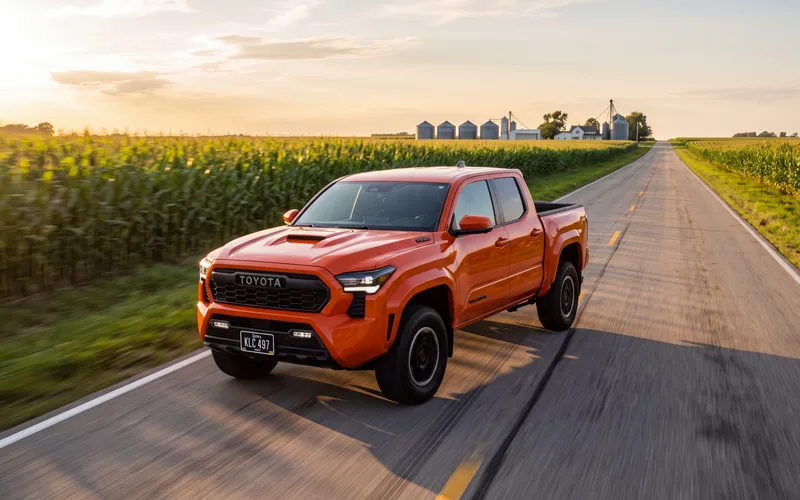 Toyota TacomaMid-Size TruckBetter at: Resale value
Better predicted reliability, standard safety tech on every trim, cab and bed choices, a hybrid option, and resale that holds roughly 65-70% at five years versus the Colorado's 56%.
Compare 1.87C-
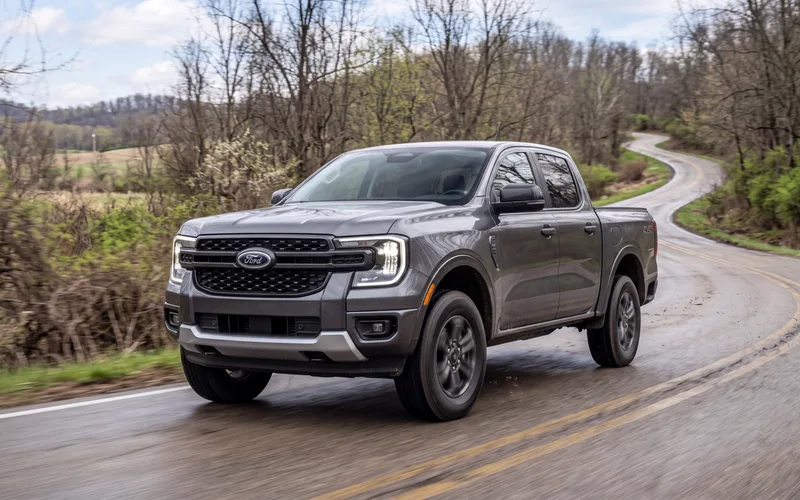 Ford RangerMid-Size TruckBetter at: Cargo and resale
Retains close to 70% of its value after five years, offers a bigger 51.5-cu-ft SuperCrew bed and more rear legroom, and sees better out of the cab.
Compare 1.97C-
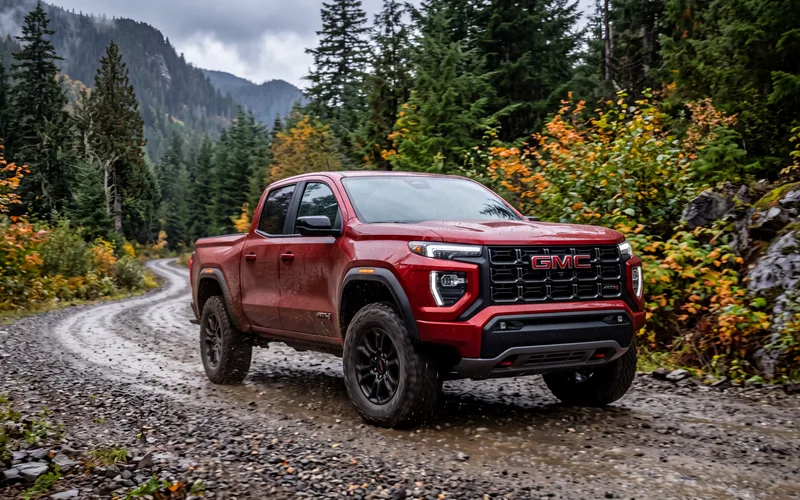 GMC CanyonMid-Size TruckBetter at: Interior quality
The identical truck with a nicer interior, standard 4WD, a standard 11-inch digital cluster and a Denali flagship with ventilated seats — worth the roughly $5,000-$7,000 premium only if materials matter to you.
CompareHow it's evolved
9 scored model years · 2017–2026
Subject scores by year
Hover or tap a score to see what moved it versus the year before. A corner mark flags a big swing.
| Year | Performance | Efficiency | Safety | Space | Cost | Reliability | Tech | Use-case | Driving | Value |
|---|---|---|---|---|---|---|---|---|---|---|
| 2026 | 46 | 40 | 56 | 50 | 55 | 62 | 72 | 63 | 69 | 72 |
| 2024 | 39 | 58 | 58 | 49 | 68 | 52 | 71 | 67 | 71 | 79 |
| 2023 | 42 | 58 | 56 | 51 | 71 | 53 | 70 | 66 | 70 | 81 |
| 2022 | 47 | 42 | 27 | 53 | 51 | 67 | 48 | 63 | 68 | 68 |
| 2021 | 46 | 42 | 24 | 51 | 57 | 62 | 48 | 65 | 68 | 67 |
| 2020 | 45 | 54 | 25 | 51 | 55 | 58 | 48 | 65 | 72 | 67 |
| 2019 | 45 | 47 | 28 | 50 | 68 | 58 | 45 | 62 | 68 | 77 |
| 2018 | 47 | 47 | 28 | 53 | 71 | 59 | 48 | 63 | 70 | 78 |
| 2017 | 47 | 50 | 28 | 53 | 70 | 52 | 45 | 65 | 71 | 74 |
Compare two years
Best fit & conditions
Higher scores mean a better fit for that use case. Learn more about use-case fit →
Subject profile
Trims & configurations
5 trimsScores above reflect the volume trim. Per-trim specs and scores are rolling out — the full lineup:
Detailed scoring by subject
1Performance & PowertrainOne of the Colorado's weakest categories.1.01D
The volume LT's representative gasoline engine is the 3.6L V6, which is also the highest-horsepower engine in the 2020 range.
The representative naturally aspirated V6 provides adequate but modest peak torque for a truck; the optional diesel's 369 lb-ft is not the scored gas configuration.
Instrumented testing of an LT crew cab matches the representative trim and powertrain and shows brisk acceleration for a 2020 midsize pickup.
The V6 is responsive, progressive and notably stronger than the coarse base four-cylinder, though it needs revs to reach its modest torque peak and is not exceptionally polished under load.
The eight-speed usually selects gears appropriately and Tow/Haul improves its logic, but occasional delayed downshifts and documented low-speed harshness keep it near the bottom of the middle band.
The scored gasoline V6 configuration is rated to tow 7,000 lb when properly equipped; the 7,700-lb model-range maximum requires the separately classified diesel powertrain.
The gasoline V6 configuration provides the 2020 Colorado's highest published payload, though the rating is modest against the full truck normalization range.
It has the essential period towing tools—Tow/Haul, standard trailer-sway control, hitch-alignment guidance and an available integrated brake controller—but lacks trailer backup steering, multi-view trailer cameras and onboard scales.
Proper part-time 4WD is broadly available on WT, LT, Z71 and ZR2, with a two-speed transfer case and low range; applicable upper trims add automatic AutoTrac operation, while ZR2 adds selectable lockers.
The ZR2 gives the lineup genuine halo-level capability through a lift, wider track, DSSV dampers, skid plates, rock sliders and independently locking front and rear differentials; Z71 supplies a milder off-road option.
Three distinct engines cover entry price, strong gasoline performance and high-torque diesel towing, an unusually broad midsize-truck spread for 2020, but there is no hybrid, PHEV or EV.
2Efficiency & RangeGrades below the middle of the scale.1.64D
The volume LT gasoline configuration is represented by the commonly fitted 3.6L V6 and 2WD. The 2020 model is a second-generation, pre-facelift Colorado; 2020 primarily brought lineup deletions, while the exterior refresh arrived for 2021.
The EPA city rating for the representative 2WD V6 LT is 18 MPG. Four-wheel-drive V6 versions fall to 17 MPG city, but they are not used as the volume configuration here.
The representative 2WD V6 LT earns a 25 MPG EPA highway rating. The comparable V6 4WD configuration is rated 24 MPG highway.
EPA-derived data lists 440 miles of total range for the 2WD 3.6L configuration. This is consistent with its 21-gallon fuel tank and EPA fuel-economy profile.
The EPA-derived annual estimate for the 20-MPG 2WD V6 configuration is about $2,200 under the standard 15,000-mile assumption. Annual-cost estimates vary as EPA fuel-price assumptions are updated, so this figure is less stable than the certified MPG ratings.
Both gasoline engines run on widely available regular unleaded, avoiding a premium-fuel cost penalty. The only limitation is that E85/FlexFuel and gasoline containing more than 15% ethanol are prohibited.
3SafetyThe Colorado's lowest-graded category.0.00F
The 2020 Colorado earned four stars overall; the tested configuration also received four stars frontal, five stars side, and three stars rollover.
The crew cab had Good results in most legacy crashworthiness tests but a Marginal passenger-side small-overlap result, and it earned no 2020 IIHS safety award. That mixed record keeps it near the bottom of the rubric's mostly-Good band.
The volume LT did not include the five core systems as standard. Its optional Safety Package provided only warnings, while AEB, ACC, lane-keeping assist, blind-spot monitoring, and rear cross-traffic alert were unavailable.
There was no automatic emergency braking to test, and no pedestrian system. IIHS awarded only Basic credit to the optional forward-collision warning system.
Blind-spot monitoring and rear cross-traffic alert were not offered, so there was no active intervention, trailer-aware coverage, or safe-exit alert.
An optional lane-departure warning could alert the driver on LT, but it provided no steering intervention or centering and was not standard.
The 2020 Colorado offered conventional cruise control only; adaptive cruise and an integrated highway-assist function were unavailable.
No hands-free highway-driving system was available for the 2020 Colorado.
IIHS rated both available halogen headlight systems Poor. Even the LT Luxury Package projector setup lacked curve adaptation and high-beam assist and produced excessive low-beam glare.
The high seating position gives a commanding forward view and a rear camera helps when reversing, but large pillars create blind zones and there was no surround-view camera to compensate.
The crew-cab volume configuration has two complete rear LATCH positions, but IIHS rated usability Marginal because tether anchors are hard to find and can be confused with other hardware. Narrow rear door openings and limited rear space add practical compromises.
4Space & ComfortGrades below the middle of the scale.1.43D
The representative, volume-oriented LT Crew Cab has front bucket seats and a three-place rear bench. The Extended Cab seats four.
The LT Crew Cab provides generous front headroom for a midsize pickup.
Front legroom reaches the top of the truck normalization band and makes the front compartment particularly spacious.
Crew Cab rear headroom is only slightly above the bottom of the truck normalization band.
The Crew Cab is usable for adults but tight by pickup standards; the Extended Cab is substantially more cramped.
The representative LT Crew Cab uses the popular short box, while a 74-inch long box was also available.
The short box is useful for a midsize pickup but modest on the all-truck scale; the long box adds 8.6 cubic feet.
A deep center-console bin and large compartment beneath the Crew Cab rear seat provide useful everyday storage, but rivals offer more space with the seats folded. There is no standout in-bed trunk, flat floor, or onboard-power system.
The firm, shaped front seats are supportive for many drivers but can feel confining and have basic adjustment. The harder rear bench has a short cushion and overly upright backrest, limiting long-trip comfort.
The LT rides smoothly on highways and handles both large bumps and small cracks better than many body-on-frame rivals. Rough pavement can still produce the choppiness and jostling typical of an unladen pickup.
Some wind, road, and engine noise reaches the cabin, but it remains subdued enough for normal conversation and the gas V6 settles at highway speed. It is quiet for the class rather than exceptional.
LT buyers could add heated front seats, a heated steering wheel, power lumbar, single-zone automatic climate control, heated mirrors, and remote start. The lineup lacked ventilated seats, heated rear seats, dual-zone climate, and rear climate controls.
5Cost of OwnershipMid-pack among this car's ten categories.1.73C-
The entry 2020 gasoline Colorado was the Base 2WD Extended Cab with the 2.5-liter four-cylinder and six-speed automatic. Wikipedia places 2020 in the North American second generation and confirms that the manual had already been discontinued during 2019; the 2021 model, not 2020, received the facelift.
Wikipedia identifies LT as the most common trim; the Crew Cab short-box 4WD gasoline V6 is the representative retail configuration. The 2020 changes were limited chiefly to deleting two Z71 body/drivetrain combinations and the RST/Redline editions, so they do not alter this LT specification.
Edmunds supplies a configuration-specific five-year projection for the representative 2020 LT V6 4WD rather than a nameplate-wide estimate. Its assumed 15,000 miles per year raises wear-item maintenance materially, but it matches the prompt's requested five-year maintenance-plus-repair measure exactly.
The model-level study estimates that a Colorado loses 37.9% over five years, equivalent to 62.1% retention. This is stronger than the vehicle-market average but below the midsize-pickup category average reported by the same source.
Chevrolet's new-vehicle limited warranty sits at the floor of the truck normalization band.
The gasoline Colorado's five-year/60,000-mile powertrain coverage is the floor of the truck normalization band.
Chevrolet included only one scheduled-maintenance visit during the first year, putting the program in the short-coverage band. Five-year/60,000-mile roadside assistance and courtesy transportation, plus connected-service trials, add useful but modest value.
$35,495 volume-trim price minus its estimated resale value after 5 years (62.1% retained, or about $22,042) leaves about $13,453 in depreciation. Add the projected $10,775 in 5-year maintenance and repairs, and owning this vehicle for 5 years costs about $24,228 in total.
6Reliability & QualityMid-pack among this car's ten categories.1.91C-
The major owner-data sources conflict: J.D. Power reports a strong quality result, while Consumer Reports rates the 2020 Colorado below its model-year peers. That supports a mixed, slightly-above-bottom-of-average score rather than either source's more extreme verdict.
Chevrolet's contemporary brand record was lower-mid-pack rather than consistently dependable: it improved substantially in Consumer Reports' 2020 ranking but still finished in the bottom half. Some Chevrolet models earned J.D. Power dependability awards, keeping this from being a uniformly poor brand showing.
No NHTSA safety recall is listed for the 2020 Colorado, a clear strength. It falls short of the cleanest band because GM issued service guidance covering 2020 trucks for eight-speed shake/shudder, plus a limited six-speed stator-shaft customer-satisfaction program.
The volume LT's naturally aspirated 3.6-liter V6 is established, but its 8L45 eight-speed carries a documented torque-converter shake/shudder pattern that extended to this model year. The engine's maturity and updated fluid remedy temper the risk, but the combined powertrain's durability reputation remains below average.
The LT cabin is functional and its infotainment is well regarded, but extensive hard plastics and cheap-feeling surfaces place material richness below the midsize-truck norm. Multiple period reviews make this a consistent weakness rather than an isolated criticism.
Low-grade materials hurt perceived quality, but reviewers distinguish that from assembly and describe the truck as solidly put together. There is no strong model-year pattern of panel-gap, squeak, or rattle failures, so fit and finish is acceptable rather than premium.
Chevrolet's dense nationwide franchise footprint gives Colorado owners excellent access to routine, warranty, and bulletin-related service. Experience varies by independently operated dealer, so geographic strength does not justify a class-leading satisfaction score by itself.
Colorado/Canyon component sharing, high U.S. sales, and broad GM dealer and aftermarket channels make parts easy to source. Costs are moderate rather than cheap: RepairPal's model average is slightly higher than the midsize-truck benchmark.
7Technology & InfotainmentOne of the Colorado's weakest categories.1.22D
The volume LT uses the 8-inch Chevrolet Infotainment 3 display; work-oriented lower trims use a 7-inch unit, and 8 inches is the largest factory screen.
Chevrolet Infotainment 3 is unusually intuitive and responsive for a 2020 midsize truck, with clear menus, useful physical controls, and strong contemporary reviewer praise.
Apple CarPlay and Android Auto are standard, but both require a USB cable; wireless phone projection was not offered on the 2020 Colorado.
The LT supports phone voice-command pass-through, while connected factory navigation is optional. It is functional but owners are better served by projected phone maps and assistants.
The standard six-speaker system is adequate, and an available seven-speaker Bose system is a worthwhile but modest premium upgrade rather than an audiophile setup.
The Colorado retains analog gauges with a small color driver-information display. The uplevel display offers selectable vehicle, audio, phone, and navigation pages, but it is not a full digital cluster.
The 2020 radio could receive over-the-air software releases, but evidence supports infotainment updates rather than broad whole-vehicle feature additions.
The myChevrolet app provides core remote start, lock/unlock, locate, diagnostics, and service functions when equipped, but remote commands depend on an active OnStar service plan and there is no digital key.
LT and upper trims provide four USB ports, available wireless charging, and useful 110-volt cabin/bed outlets, though the ports are older USB-A rather than modern USB-C.
Remote keyless entry and remote start are available on the LT, but even high trims retain a traditional keyed ignition with no passive proximity entry, push-button start, or phone-as-key.
A reversing camera is standard and rear parking assist is available or fitted on upper configurations, but there is no factory surround-view camera or automated parking system.
No head-up display was offered on any 2020 Colorado trim.
8Use-Case FitOne of the Colorado's strongest categories.2.38C+
The crew cab supplies five seats, rear LATCH points, and useful under-seat storage, but its narrow rear openings, limited rear room, high step-in, and hard-to-reach tether anchors make daily child-seat duty cumbersome.
Crash structure is mixed rather than class-leading, and the affordable LT requires an optional Safety Package for warning-only forward collision and lane departure systems; automatic emergency braking, pedestrian detection, and blind-spot monitoring are absent.
The LT crew cab has a composed ride, straightforward infotainment, smartphone integration, and available rear USB/110-volt power, but the hard, upright and space-limited rear bench is a meaningful four-person road-trip compromise.
The volume LT V6 is quick, rides well for a body-on-frame pickup, has intuitive controls, and offers a good driving position, though occasional reluctant downshifts, firm tuning, large pillars, and no stop-and-go driver assistance prevent an effortless score.
The gasoline V6's economy is respectable for a 2020 midsize pickup but still costly against car-based alternatives; ordinary truck tires and mechanical simplicity keep it from the lowest band.
It is substantially easier to place than a full-size pickup and includes a reversing camera, but the crew cab remains long and wide enough to demand care, while thick pillars and the lack of surround-view or blind-spot monitoring hurt tight-space confidence.
A properly equipped V6 LT combines strong acceleration with serious midsize-truck towing and payload, while the available long bed broadens real job usefulness; only a full-size truck offers materially more headroom.
The mature body-on-frame platform, fleet-oriented WT derivatives, sturdy simple cabin, and multiple years of field use support regular work, though evidence does not justify a best-in-class long-term durability claim.
CornerStep bumpers, a damped EZ-Lift locking tailgate, two box lengths, available spray-in liner, automatic locking differential, trailering hardware, and household-current outlets make it job-ready, though it lacks modern high-output onboard power and more elaborate full-size-truck bed systems.
A settled highway ride, supportive front seats, quiet V6 cruising, cruise control, and useful infotainment make the LT a decent mile-eater, but firm rear accommodations and rudimentary optional warning-only ADAS increase fatigue on long family trips.
Even the LT can pair four-wheel drive, low range, useful clearance, an automatic rear locker, strong towing, and a long or short bed; the broader lineup's Z71 and exceptional ZR2 show deep factory support, although those upgrades are not standard on the volume trim.
A choice of large short or long open beds, a hitch, flip-up rear seat, and substantial under-seat storage handles bulky outdoor gear exceptionally well, despite a relatively narrow high-sided bed and rear seats that do not fold flat.
9Driving ExperienceThe Colorado's best-graded category.2.86B-
The LT is unusually composed and maneuverable for a body-on-frame midsize pickup, with controlled roll and confidence on winding roads, though it still feels recognizably truck-like.
Its electric steering is crisp, direct, and appropriately responsive for a pickup, but reviews do not identify much genuine road feedback.
Routine braking is predictable and easy to meter, providing sound confidence, but no retrieved instrumented result establishes class-leading stopping performance.
The volume LT's 308-hp 3.6-liter V6 is eager and quick, and its eight-speed generally works smoothly, but occasional reluctance to downshift keeps calibration short of excellent.
The V6 remains quiet at cruise thanks to tall gearing and sounds purposeful under throttle, but noticeable engine, wind, and road noise prevent a refined-class score.
The representative crew-cab short-box LT has a compact 41.3-foot curb-to-curb diameter; choosing the long box increases it to 44.6 feet.
The high seating position, clear large controls, and LT's power driver seat work well, but large pillars, limited steering-wheel reach, firm/confining seats, and tall step-in compromise broad comfort.
Strong V6 acceleration, tidy dimensions, and confident chassis tuning make the Colorado enjoyable among mainstream pickups, though it lacks the specialist character of the ZR2 halo trim.
10Value & Market PositionOne of the Colorado's strongest categories.2.56C+
The volume LT delivered useful everyday equipment for its price, including an 8-inch touchscreen, Apple CarPlay/Android Auto, cruise control, a power driver seat, 17-inch alloys and an EZ-Lift tailgate. However, forward-collision and lane-departure warnings still required an option package, and automatic emergency braking, adaptive cruise control and blind-spot monitoring were unavailable.
A roughly $27,700 LT could be configured with a strong 308-hp V6 and tow 7,000 pounds, while the broader range offered the segment's only diesel and up to 7,700 pounds of towing. Its combination of approachable pricing, polished road manners, modern infotainment and real truck capability was compelling despite option-dependent safety equipment.
Few rivals matched the Colorado's spread from inexpensive work truck through LT and Z71 to the specialized ZR2, with extended- and crew-cab bodies, two bed lengths, 2WD or 4WD, and three engines. The loss of the manual and deletion of a few Z71 body/drivetrain combinations for 2020 trimmed choice only slightly.
Colorado remained a major segment player with 96,238 U.S. sales and 15.8% share in 2020, narrowly behind Ranger and well ahead of every midsize pickup except Ranger and Tacoma. The 21.3% year-over-year decline keeps it below the leader band.
Chevrolet's deep pickup heritage and the ZR2's enthusiast credibility gave the Colorado a stronger image than a generic mainstream compact truck. It still lacked Tacoma's loyalty and resale halo, and its dated cabin limited aspirational appeal.
Factory rebates and dealer discounts were readily available, creating meaningful buyer savings without the Colorado being a fringe seller. Some of the largest advertised totals required lease-loyalty qualification, so the full headline discount was not universal.
The 2020 truck was the sixth model year of the North American second generation and received only minor equipment changes, not a redesign or facelift. Its styling refresh was already one model year away, leaving platform and safety technology visibly behind newer rivals.
Reviewers continued to praise its smooth V6, composed road manners, excellent infotainment, towing breadth and exceptional ZR2, making it one of the class's more rounded conventional pickups. An aging interior, weak base engine and missing modern driver aids kept the 2020 model from being the unequivocal class pick, although this generation had twice won MotorTrend Truck of the Year.