

The verdict
A struggling mid-size truck, strong on driving and held back by safety.
Overall 1.36 (D) across 10 graded subjects. Its strongest is driving experience at 2.63 (C+), its weakest safety at 0.00 (F). 5 of 10 subjects grade at C− or better.
Jump to scoresStrengths
- Driving Experience
- Value & Market Position
- Use-Case Fit
What holds it back
- Safety
- Efficiency & Range
- Performance & Powertrain
Top alternatives
Cars shoppers cross-shop with the Chevrolet Colorado 2.12C
2.12C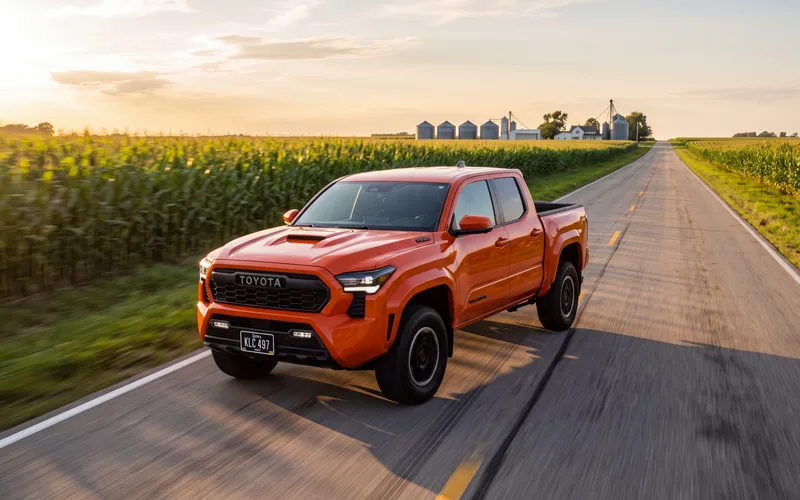 Toyota TacomaMid-Size TruckBetter at: Resale value
Better predicted reliability, standard safety tech on every trim, cab and bed choices, a hybrid option, and resale that holds roughly 65-70% at five years versus the Colorado's 56%.
Compare 1.87C-
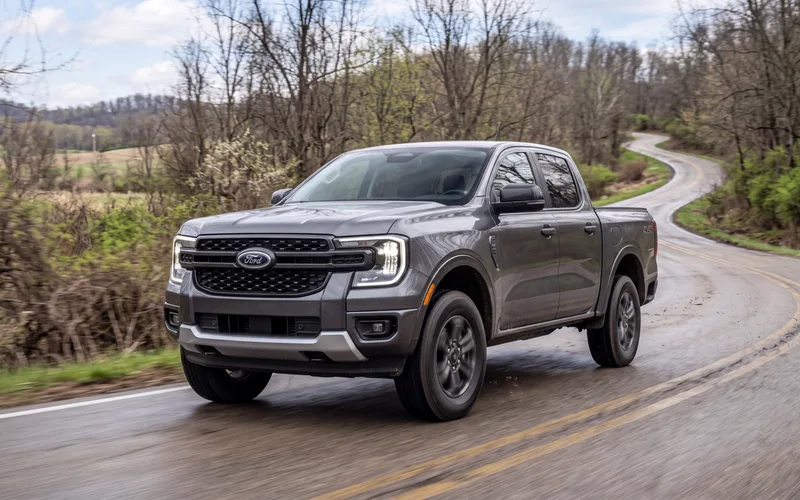 Ford RangerMid-Size TruckBetter at: Cargo and resale
Retains close to 70% of its value after five years, offers a bigger 51.5-cu-ft SuperCrew bed and more rear legroom, and sees better out of the cab.
Compare 1.97C-
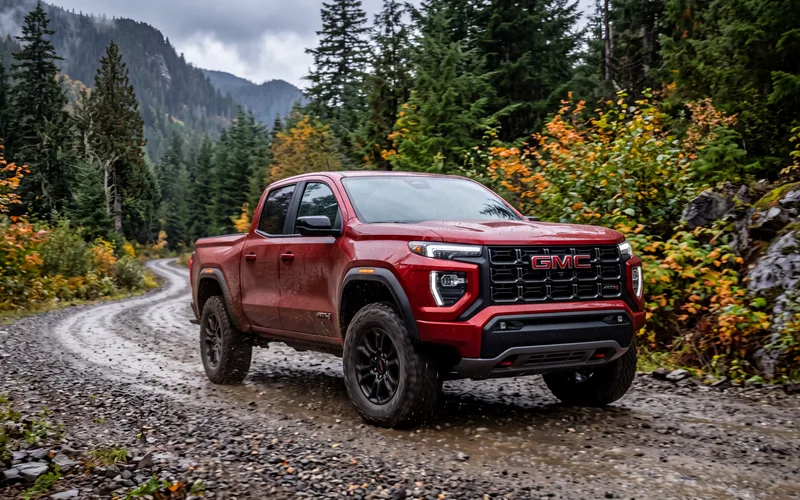 GMC CanyonMid-Size TruckBetter at: Interior quality
The identical truck with a nicer interior, standard 4WD, a standard 11-inch digital cluster and a Denali flagship with ventilated seats — worth the roughly $5,000-$7,000 premium only if materials matter to you.
CompareHow it's evolved
9 scored model years · 2017–2026
Subject scores by year
Hover or tap a score to see what moved it versus the year before. A corner mark flags a big swing.
| Year | Performance | Efficiency | Safety | Space | Cost | Reliability | Tech | Use-case | Driving | Value |
|---|---|---|---|---|---|---|---|---|---|---|
| 2026 | 46 | 40 | 56 | 50 | 55 | 62 | 72 | 63 | 69 | 72 |
| 2024 | 39 | 58 | 58 | 49 | 68 | 52 | 71 | 67 | 71 | 79 |
| 2023 | 42 | 58 | 56 | 51 | 71 | 53 | 70 | 66 | 70 | 81 |
| 2022 | 47 | 42 | 27 | 53 | 51 | 67 | 48 | 63 | 68 | 68 |
| 2021 | 46 | 42 | 24 | 51 | 57 | 62 | 48 | 65 | 68 | 67 |
| 2020 | 45 | 54 | 25 | 51 | 55 | 58 | 48 | 65 | 72 | 67 |
| 2019 | 45 | 47 | 28 | 50 | 68 | 58 | 45 | 62 | 68 | 77 |
| 2018 | 47 | 47 | 28 | 53 | 71 | 59 | 48 | 63 | 70 | 78 |
| 2017 | 47 | 50 | 28 | 53 | 70 | 52 | 45 | 65 | 71 | 74 |
Compare two years
Best fit & conditions
Higher scores mean a better fit for that use case. Learn more about use-case fit →
Subject profile
Trims & configurations
5 trimsScores above reflect the volume trim. Per-trim specs and scores are rolling out — the full lineup:
Detailed scoring by subject
1Performance & PowertrainOne of the Colorado's weakest categories.1.04D
The volume LT's standard engine in the common crew-cab configurations is the 3.6L direct-injected V6, rated at 308 hp. The base 2.5L four-cylinder makes 200 hp.
The volume LT's 3.6L V6 produces 275 lb-ft, modest torque by truck standards but substantially more than the base gas four-cylinder's 191 lb-ft.
The V6 LT is quick for a 2021 midsize pickup, reaching 60 mph in an instrumented 6.1 seconds. Heavier off-road configurations are slower.
The naturally aspirated V6 is responsive, strong, and avoids turbo lag, though it needs revs to reach its relatively modest torque peak. Reviewers considered the V6 a much better match for the truck than the coarse base four-cylinder.
The V6's eight-speed keeps revs low and generally avoids hunting on grades, but its occasional reluctance to downshift prevents a higher score. The behavior is adequate rather than class-leading.
Within the scored gas powertrain class, a non-ZR2 V6 Colorado with the Trailering Package is rated to tow 7,000 lb. The model-wide 7,700-lb headline rating requires the out-of-scope Duramax diesel.
The highest published 2021 Colorado payload is 1,550 lb, achieved by a gas V6 Crew Cab Short Box WT 4x4. The volume LT's door-jamb payload varies with cab, drivetrain, and equipment.
The Colorado provides the useful towing fundamentals: Tow/Haul mode, auto grade braking, trailer-sway control, Hitch Guidance, a seven-pin connection, and an available integrated brake controller. It lacks the multi-camera, trailer-profile, steering-assist, and onboard-scale systems of newer trucks.
Four-wheel drive is broadly available on WT, LT, and Z71 and standard on ZR2, with a proper two-speed transfer case rather than a light-duty AWD system. Upper trims add AutoTrac operation, while rear-drive remains available for buyers prioritizing cost or payload.
The ZR2 gives the range genuine off-road credibility with a two-inch lift, wider track, Multimatic DSSV dampers, skid plates, rock sliders, 31-inch tires, and selectable front and rear lockers. The Z71 also offers a locking rear differential for less extreme use.
Three distinct engines covered economy, mainstream performance, and high-torque towing: a 2.5L gas four-cylinder, 3.6L gas V6, and 2.8L turbodiesel. That was broad for a 2021 midsize pickup, but there was no hybrid, plug-in hybrid, or EV option.
2Efficiency & RangeOne of the Colorado's weakest categories.0.78F
The volume configuration is the LT Crew Cab 4WD with the 3.6L V6 and 8-speed automatic. For 2021, the second-generation Colorado received a styling refresh and a reduced four-trim lineup, but retained this powertrain.
This is the EPA city rating for the representative 3.6L V6, 8-speed automatic, four-wheel-drive LT configuration.
This is the EPA highway rating for the representative 3.6L V6, 8-speed automatic, four-wheel-drive LT configuration.
The representative truck's EPA combined rating multiplied by its published fuel capacity gives approximately 399 miles on a full tank.
The EPA annual-cost estimate reflects the 19 MPG combined rating and its standard 15,000-mile annual-use assumptions.
The gasoline Colorado runs on inexpensive regular unleaded and has no premium-fuel requirement. It is not FlexFuel and GM prohibits E85, but that does not add a routine fuel-cost penalty.
3SafetyThe Colorado's lowest-graded category.0.00F
The 2021 Colorado Crew Cab earned four stars overall. Its five-star side result is offset by a four-star frontal result and three-star rollover rating.
The crew cab has Good ratings in the driver-side small overlap, moderate overlap, side, roof-strength, and head-restraint tests, but its passenger-side small-overlap result is Marginal with a Poor structure rating. It received no IIHS safety award.
The volume LT has no standard core ADAS; its optional Safety Package adds only Forward Collision Alert and Lane Departure Warning plus Rear Park Assist. AEB, lane keeping, adaptive cruise, blind-spot monitoring, and rear cross-traffic alert are unavailable.
The optional system supplies a collision warning but cannot brake automatically, earning only IIHS Basic. Pedestrian front-crash prevention is not available.
Neither blind-spot monitoring nor rear cross-traffic alert is available on the 2021 Colorado. There is consequently no active intervention, safe-exit function, or trailer-aware blind-zone coverage.
Lane Departure Warning is optional on LT and Z71, but it only alerts the driver. No corrective lane-keep assist or lane-centering function is offered.
The 2021 Colorado offers conventional cruise control but no adaptive cruise control at any trim. Without ACC or lane centering, it also has no combined highway-assist capability.
No hands-free driving system was offered on the 2021 Colorado. The truck lacks even the adaptive cruise and lane-centering foundations needed for such a system.
IIHS rates both available headlight systems Poor. The LT's standard reflector low beams provide inadequate visibility in every tested curve, and neither system has curve adaptation or high-beam assist.
The high driving position gives a commanding forward view, but large pillars create significant blind zones and the crew cab's rear openings are narrow. A standard rear camera helps when reversing, but no surround-view camera compensates for the remaining blind spots.
IIHS rates the LT crew cab's LATCH hardware Marginal: both sets of lower anchors are buried in the seat, and all three back-wall tether anchors are hard to find and can be confused with other hardware. Narrow rear-door openings and limited rear space add installation difficulty.
4Space & ComfortGrades below the middle of the scale.1.41D
The representative LT Crew Cab has two front buckets and a three-place rear bench; Extended Cab models seat four.
The Crew Cab provides generous front headroom for a mid-size truck.
The Colorado reaches the top of the truck normalization band and has a notably spacious cockpit.
Crew Cab rear headroom is only just above the bottom of the truck scoring band.
Crew Cab rear legroom is modest, and road tests describe the back seat as tight even in the largest cab.
The representative LT Crew Cab short box is just over five feet long, while Chevrolet also offered a 6-foot-2-inch long box on the LT Crew Cab.
The short box's volume is modest in the all-truck normalization band, though it led contemporary mid-size rivals according to instrumented comparison data.
A deep console, tiered door pockets, large cupholders, and substantial under-rear-seat storage cover everyday needs, but the rear seats do not fold flat and there is no innovative large-item compartment.
The firm, shaped front seats suit some occupants but can confine larger drivers, while the harder, upright rear bench is a clear weakness for longer trips.
Most tests consider the Colorado one of the better-riding traditional mid-size pickups, smoothing both large bumps and small cracks, though some testers still found unladen choppiness on rough roads.
Some wind, road, and engine noise enters at speed, but the V6 and eight-speed combination cruises quietly enough for normal conversation.
The LT starts fairly basic but offers automatic climate control and packages with heated front seats, a heated wheel, remote start, and power driver adjustment; ventilated seats and rear climate control are absent.
5Cost of OwnershipMid-pack among this car's ten categories.1.86C-
The 2021 facelift eliminated the former Base trim, making the rear-drive WT Extended Cab the entry configuration.
The common LT Crew Cab 4WD with the gasoline V6 is the representative volume configuration; this matches the gas LT configuration used for the ownership-cost estimate.
Edmunds provides a configuration-specific five-year estimate for the volume LT Crew Cab 4WD V6, assuming 15,000 miles annually.
The model-level projection indicates above-average retention, though it is not isolated to the LT Crew Cab 4WD configuration.
Chevrolet's coverage is the segment-standard minimum and trails brands offering four- or five-year basic warranties.
The five-year term is the floor of the truck normalization band and its 60,000-mile cap is conventional rather than exceptional.
One complimentary scheduled service visit plus roadside assistance is useful but short of a multi-year maintenance plan. SiriusXM, Wi-Fi data and connected-access trials add modest value.
$35,595 volume-trim price minus its estimated resale value after 5 years (62.1% retained, or about $22,104) leaves about $13,491 in depreciation. Add the projected $10,097 in 5-year maintenance and repairs, and owning this vehicle for 5 years costs about $23,588 in total.
6Reliability & QualityMid-pack among this car's ten categories.2.16C
Owner-data sources conflict sharply: Consumer Reports places the 2021 Colorado below its model-year peers, while J.D. Power reports a strong score based on carried-over prior-year data. The direct CR owner survey and J.D. Power caveat support a mixed, low-average rating.
Chevrolet's contemporary record was mid-pack rather than consistently elite: Consumer Reports placed it 14th in 2021, while J.D. Power showed the brand above the industry average and awarded it three segment wins. The split supports a modestly above-average score.
The model year has only one NHTSA recall and it affected just 11 Colorados, which is exceptionally light activity. The seat-belt attachment risk is safety-relevant, and the broader generation has transmission service-bulletin history, so the record is strong but not spotless.
The volume LT's naturally aspirated 3.6-liter LGZ V6 and 8L45 eight-speed were mature by 2021, and the principal shudder bulletin targeted earlier builds. However, the same transmission family's established torque-converter shudder and hard-shift reputation keeps the combination from earning a clearly above-average durability score.
The LT cabin is functional and logically arranged, but extensive hard, cheap-feeling plastics put its material richness below the midsize-truck norm. Multiple contemporary reviews identify this as a central weakness despite the 2021 exterior refresh.
Reviewers distinguish the inexpensive materials from assembly quality and describe the Colorado as solidly put together. J.D. Power's high quality score supports generally sound fit and finish, though Consumer Reports owner reports of infotainment hardware faults prevent a stronger rating.
Chevrolet's dense nationwide franchise footprint gives Colorado owners excellent access to routine, warranty, and recall service. Service quality varies by independently operated store, but verified-owner dealership experience was strong for this model year.
Colorado/Canyon mechanical commonality and GM's broad dealer and aftermarket channels make parts easy to source. Repair costs are moderate rather than cheap, with the model average slightly above the midsize-truck benchmark.
7Technology & InfotainmentGrades below the middle of the scale.1.22D
The volume LT has an 8-inch Chevrolet Infotainment 3 touchscreen, which is also the largest factory screen offered. The 2021 facelift changed the exterior and trim lineup, not the screen hardware.
Chevrolet Infotainment 3 is unusually intuitive and responsive for a 2021 midsize truck, with clear menus and useful physical controls. Its small display looks dated, but daily operation drew strong contemporary praise.
Apple CarPlay and Android Auto are standard but require a USB cable. Wireless phone projection was not offered on the 2021 Colorado.
The standard LT system provides phone voice-command pass-through, while enhanced native voice recognition and Connected Navigation require the optional Infotainment 3 Plus Navigation package. The system is functional, but projected phone assistants and maps are the better everyday choice.
The standard six-speaker system is adequate, and the available seven-speaker Bose system is a worthwhile but modest premium upgrade. Reviewers liked the upgrade but noted limited maximum volume.
The LT retains analog gauges with a small central driver-information display. An enhanced 4.2-inch multi-color display is optional with navigation, but no trim offers a full-digital cluster.
The Colorado can download and install select software updates wirelessly, but evidence supports limited infotainment/software maintenance rather than broad whole-vehicle feature additions.
The myChevrolet app supplies core remote lock/unlock, start when factory-equipped, locate, diagnostics, and service functions. Remote commands depend on compatible equipment and an active OnStar plan, and there is no digital key.
The LT provides two front USB-A data ports and two rear USB-A charge-only ports, with available wireless charging and useful 110-volt power. Provision is good for its era but lacks modern USB-C fast charging.
Remote keyless entry is standard on LT and remote start is available through the LT Convenience Package, but even upper trims retain a traditional keyed ignition. There is no passive proximity entry, push-button start, or phone-as-key.
A rearview camera is standard, while an HD rear camera and rear parking sensors are available on LT through option packages. No 360-degree camera, front parking sensors, or automated parking system is offered.
No head-up display was offered on any 2021 Colorado trim.
8Use-Case FitOne of the Colorado's strongest categories.2.40C+
The volume LT crew cab provides four doors, five seats, two complete rear LATCH positions and useful under-seat storage, but narrow rear openings, limited rear room, a high step-in and awkward tether anchors make daily child-seat duty cumbersome.
A standard rear-seat reminder helps, but the affordable LT needs the optional Safety Package for forward-collision and lane-departure warnings, and it offers neither automatic emergency braking nor a modern lane-keeping system. Mixed crashworthiness and poor headlight performance further weaken the family proposition.
The LT crew cab rides comfortably, cruises at tolerable noise levels and has straightforward smartphone-integrated infotainment, but the hard, upright, space-limited rear bench is a substantial compromise for four-person trips.
The LT V6 is quick, rides well for a body-on-frame pickup, steers predictably and uses simple controls, making it agreeable in ordinary traffic. Firm seats for larger drivers, thick pillars and the absence of stop-and-go assistance keep it from feeling effortless.
The representative rear-drive V6 LT's 21-mpg combined rating is reasonable among 2021 gasoline midsize pickups but expensive beside car-based commuters; regular gasoline and conventional truck hardware keep costs from the low band.
It is easier to place than a full-size truck and includes a reversing camera, but a crew cab remains lengthy and requires care in urban spaces. Thick pillars, no surround-view camera and no blind-spot monitoring limit confidence in tight parking.
A properly equipped 308-hp V6 LT can tow 7,000 pounds, carries a useful payload and can be ordered with a 5-foot-2-inch or 6-foot-2-inch bed. That is serious midsize-truck capacity, though full-size pickups retain greater reserve.
The mature body-on-frame platform, fleet-oriented WT sibling and simple, wear-friendly cabin support regular job use. Its long production run is reassuring, but available evidence does not establish benchmark fleet durability for the V6 and eight-speed combination.
Two bed lengths, CornerStep bumper access, an EZ-Lift locking tailgate, available spray-in liner, rear locker and integrated trailer-brake control make the LT job-ready. It lacks the high-output onboard power and elaborate bed systems found on newer or full-size trucks.
A settled ride, quiet V6 cruising, supportive front-seat shape and cruise control make the LT a decent highway companion. Firm rear accommodations and rudimentary optional warning-only driver assistance raise fatigue over long family journeys.
The LT can combine four-wheel drive, low range, an automatic rear locker, strong towing and either bed length, while factory Z71 and ZR2 variants demonstrate exceptional accessory and off-road support. The volume LT does not include the specialist hardware as standard.
Large short- and long-bed choices, hitch availability, a flip-up rear bench and substantial under-seat storage make bulky gear easy to carry. Weather security requires a bed cover, and the rear seats do not create a flat interior load floor.
9Driving ExperienceThe Colorado's best-graded category.2.63C+
The volume LT has unusually tidy body control and confidence on a curving road for a body-on-frame mid-size pickup, while its manageable dimensions make it easy to place. It remains secure and athletic rather than genuinely carlike.
The steering is well mannered and accurate enough to make the Colorado easy to maneuver, but feedback and enthusiast-level communication are limited. It is a solid truck steering setup, not a standout tactile one.
Routine stopping is predictable and easy to modulate, supporting confidence in normal driving. No corroborated class-leading stopping-distance or fade result was found, so the score remains in the adequate band.
The volume LT's available and commonly selected 3.6-liter V6 is strong and responsive with the eight-speed automatic, delivering brisk acceleration without gear hunting on inclines. Occasional reluctance to downshift on level roads keeps the calibration below the top band.
The V6 settles into a quiet cruise because of tall gearing, but engine noise remains noticeable in the cabin under load. It is audible yet inoffensive rather than especially refined or characterful.
The short-box LT crew cab is the representative volume configuration and has a tight turning diameter for a mid-size pickup. The long-box LT needs appreciably more space.
A high seating position, commanding forward view, useful steering-wheel adjustment, and large, well-labeled controls work well for most drivers. Thick pillars, a tall step-in, basic seat adjustment, and confining front seats for larger occupants are meaningful compromises.
Quick V6 performance, compact-for-a-truck dimensions, and confident handling give the ordinary LT more personality than many work-focused pickups. The numb steering and merely average refinement prevent it from reaching the genuinely engaging top band.
10Value & Market PositionOne of the Colorado's strongest categories.2.56C+
The volume LT included a power driver's seat, cruise control, keyless entry, 17-inch alloys, an 8-inch touchscreen, Apple CarPlay/Android Auto, SiriusXM and rear charge-only USB ports. That was competitive basic content, but heated seats, automatic climate control and even forward-collision/lane-departure alerts required packages, while blind-spot monitoring and adaptive cruise were unavailable.
The LT paired useful infotainment with the volume 308-hp V6 configuration's strong performance and up to 7,000 pounds of towing, delivering solid capability per dollar. However, the deleted Base trim raised the entry price to $26,395 and desirable comfort and safety packages made a well-equipped crew cab less compelling.
Despite losing the Base grade, four distinct trims covered work, mainstream, off-road and extreme off-road buyers, with extended and crew cabs, short and long beds, 2WD and 4WD, and two gas engines. Configuration flexibility remained among the Colorado's clearest strengths, although some cab/bed/drivetrain combinations were restricted by trim.
The Colorado remained a substantial, well-established midsize-truck seller, but 2021 U.S. volume dropped 24.1% to 73,008 units amid semiconductor-related supply disruption. That supports solid market acceptance but not segment-leading momentum.
Chevrolet's strong U.S. truck identity and the ZR2's credible off-road halo gave Colorado more character than a generic work truck. The mainstream badge and aging cabin did not match Tacoma's loyalty and resale-led desirability, so its image was positive rather than aspirational.
Some lease and dealer promotions existed, but the 2021 chip shortage sharply reduced inventory and bargaining power, and Colorado was absent from Chevrolet's broad June 0%-for-72-month offer. Buyers therefore saw limited, inconsistent benefit rather than the strong discounts normally associated with a mainstream Chevrolet.
A new grille, front fascia and tailgate treatment gave the 2021 Colorado a visible facelift, but the underlying second generation was in its seventh model year and its powertrains and cabin were essentially carried over. With a third generation arriving for 2023, redesign risk was already meaningful.
Reviewers still regarded the Colorado as a leading all-round traditional midsize truck: Car and Driver ranked it third with an 8.5/10, Edmunds scored it 7.6/10, and MotorTrend placed it just behind Ridgeline in its 2021 class picks. Its generation retained two Truck of the Year wins and a ZR2 off-road award, but dated interior and safety technology kept it from universal class leadership.