

The verdict
A struggling mid-size truck, strong on value and held back by safety.
Overall 1.48 (D) across 10 graded subjects. Its strongest is value & market position at 3.32 (B+), its weakest safety at 0.00 (F). 5 of 10 subjects grade at C− or better.
Jump to scoresStrengths
- Value & Market Position
- Cost of Ownership
- Driving Experience
What holds it back
- Safety
- Performance & Powertrain
- Efficiency & Range
Top alternatives
Cars shoppers cross-shop with the Chevrolet Colorado 2.12C
2.12C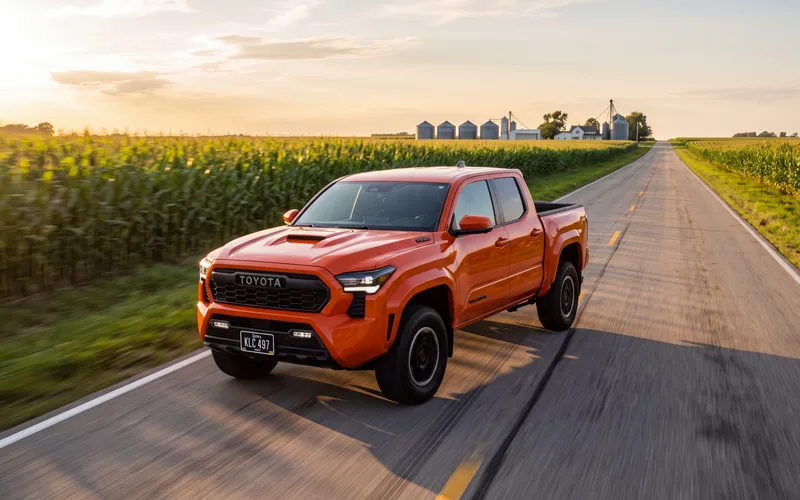 Toyota TacomaMid-Size TruckBetter at: Resale value
Better predicted reliability, standard safety tech on every trim, cab and bed choices, a hybrid option, and resale that holds roughly 65-70% at five years versus the Colorado's 56%.
Compare 1.87C-
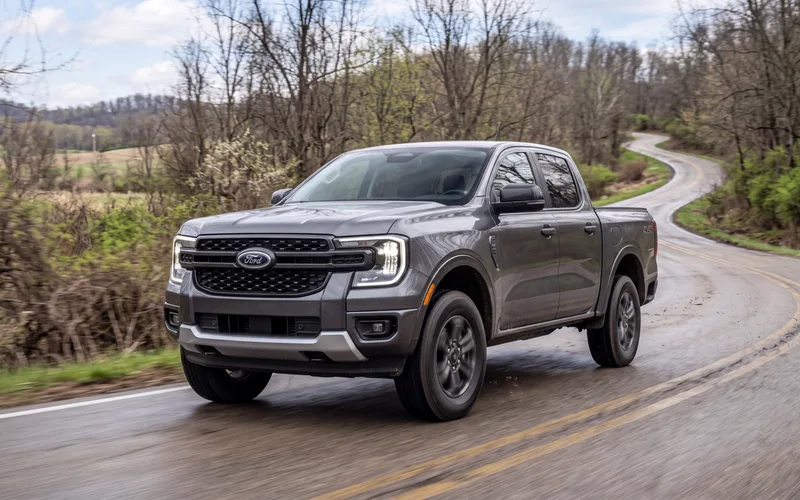 Ford RangerMid-Size TruckBetter at: Cargo and resale
Retains close to 70% of its value after five years, offers a bigger 51.5-cu-ft SuperCrew bed and more rear legroom, and sees better out of the cab.
Compare 1.97C-
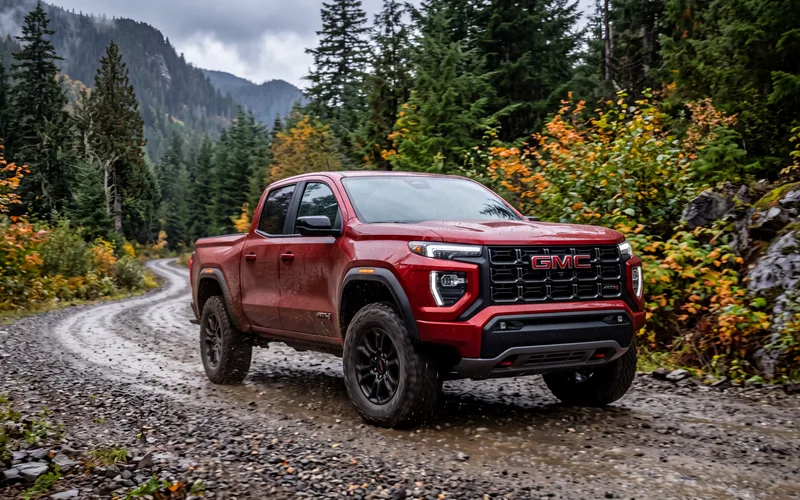 GMC CanyonMid-Size TruckBetter at: Interior quality
The identical truck with a nicer interior, standard 4WD, a standard 11-inch digital cluster and a Denali flagship with ventilated seats — worth the roughly $5,000-$7,000 premium only if materials matter to you.
CompareHow it's evolved
10 scored model years · 2017–2026
Subject scores by year
Hover or tap a score to see what moved it versus the year before. A corner mark flags a big swing.
| Year | Performance | Efficiency | Safety | Space | Cost | Reliability | Tech | Use-case | Driving | Value |
|---|---|---|---|---|---|---|---|---|---|---|
| 2026 | 46 | 40 | 56 | 50 | 55 | 62 | 72 | 63 | 69 | 72 |
| 2025 | 46 | 39 | 55 | 50 | 66 | 59 | 72 | 63 | 69 | 72 |
| 2024 | 39 | 58 | 58 | 49 | 68 | 52 | 71 | 67 | 71 | 79 |
| 2023 | 42 | 58 | 56 | 51 | 71 | 53 | 70 | 66 | 70 | 81 |
| 2022 | 47 | 42 | 27 | 53 | 51 | 67 | 48 | 63 | 68 | 68 |
| 2021 | 46 | 42 | 24 | 51 | 57 | 62 | 48 | 65 | 68 | 67 |
| 2020 | 45 | 54 | 25 | 51 | 55 | 58 | 48 | 65 | 72 | 67 |
| 2019 | 45 | 47 | 28 | 50 | 68 | 58 | 45 | 62 | 68 | 77 |
| 2018 | 47 | 47 | 28 | 53 | 71 | 59 | 48 | 63 | 70 | 78 |
| 2017 | 47 | 50 | 28 | 53 | 70 | 52 | 45 | 65 | 71 | 74 |
Compare two years
Best fit & conditions
Higher scores mean a better fit for that use case. Learn more about use-case fit →
Subject profile
Trims & configurations
5 trimsScores above reflect the volume trim. Per-trim specs and scores are rolling out — the full lineup:
Academic Probation · NHTSA safety recalls
May 31, 2018Fuel system, gasoline: delivery: fuel pumpThe high pressure fuel pump may detach from its mounting flange, possibly resulting in the pump damaging the high pressure fuel line.
Defect
General Motors LLC (GM) is recalling certain 2015-2018 GMC Canyon, 2016-2017 Buick Envision, 2016-2018 Chevrolet Colorado and Malibu, 2017-2018 GMC Acadia, 2018 Buick LaCrosse, Cadillac ATS, Chevrolet Equinox, and GMC Terrain vehicles. The high pressure fuel pump may detach from its mounting flange, possibly resulting in the pump damaging the high pressure fuel line.
Risk
A damaged fuel line can create a fuel leak, increasing the risk of a fire.
Remedy
GM will notify owners, and dealers will replace the high pressure fuel pump, and high pressure fuel pipe, free of charge. The recall began July 2, 2018. Owners may contact Buick customer service at 1-800-521-7300, Cadillac customer service at 1-800-458-8006, Chevrolet customer service at 1-800-222-1020, or GMC customer service at 1-800-462-8782. GM's number for this recall is 18188.
NHTSA campaign 18V358000 ↗Manufacturer no. 18188 18268895 vehicles potentially affected (all models in the campaign)Owners notified Jul 2, 2018Filed by General Motors LLCFiled as COLORADO
8 recalls on other model years of the Colorado (2021–2026)
Feb 26, 2026Equipment: other: owners/service/other manualGeneral Motors has decided that certain 2027 Chevrolet Bolt EV, 2025-2026 Cadillac OPTIQ, Chevrolet Colorado, Equinox EV, GMC Canyon, 2026 Buick Enclave, Envision, Cadillac CT5, Escalade, Escalade ESV, Escalade IQ, Escalade IQL, LYRIQ, VISTIQ, Chevrolet Blazer EV, Corvette Convertible, Corvette Coupe, Corvette Convertible E-Ray, Equinox, Silverado 1500, 2500, 3500, Silverado EV, Suburban 1500, Tahoe, Traverse, GMC Acadia, Hummer EV Pickup, Hummer EV SUV, Sierra 1500, 2500, 3500, Sierra EV, Terrain, Yukon, and Yukon XL vehicles. The radio may not have been set to the correct status to download the electronic owner's manual during production. As such, these vehicles fail to comply with the requirements of Federal Motor Vehicle Safety Standard number 208, âOccupant Protection.â
Defect
General Motors has decided that certain 2027 Chevrolet Bolt EV, 2025-2026 Cadillac OPTIQ, Chevrolet Colorado, Equinox EV, GMC Canyon, 2026 Buick Enclave, Envision, Cadillac CT5, Escalade, Escalade ESV, Escalade IQ, Escalade IQL, LYRIQ, VISTIQ, Chevrolet Blazer EV, Corvette Convertible, Corvette Coupe, Corvette Convertible E-Ray, Equinox, Silverado 1500, 2500, 3500, Silverado EV, Suburban 1500, Tahoe, Traverse, GMC Acadia, Hummer EV Pickup, Hummer EV SUV, Sierra 1500, 2500, 3500, Sierra EV, Terrain, Yukon, and Yukon XL vehicles. The radio may not have been set to the correct status to download the electronic owner's manual during production. As such, these vehicles fail to comply with the requirements of Federal Motor Vehicle Safety Standard number 208, âOccupant Protection.â
Risk
Without an owner's manual to consult, owners may not know how to safely use and operate the vehicle, increasing the risk of injury in a crash.
Remedy
Dealers will reset the vehicle radio, which will facilitate automatic download of the electronic ownerâs manual, free of charge. Owner notification letters were mailed April 16, 2026. Owners may contact GM customer service at 1-866-467-9700, Chevrolet customer service at 1-800-222-1020 or Cadillac customer service at 1-800-333-4223. The manufacturer's number for this recall is N252540430. Vehicle Identification Numbers (VINs) involved in this recall became searchable on NHTSA.gov on February 26, 2026.
NHTSA campaign 26V114000 ↗Manufacturer no. N2525404305,861 vehicles potentially affected (all models in the campaign)Owners notified Apr 16, 2026Filed by General Motors, LLCFiled as COLORADOSep 19, 2024Seat belts: critical fastenersThe left or right front seat may have a seat belt buckle attachment bolt that was not tightened properly.
Defect
General Motors, LLC (GM) is recalling certain 2023-2024 Chevrolet Colorado and 2023 GMC Canyon vehicles. The left or right front seat may have a seat belt buckle attachment bolt that was not tightened properly.
Risk
A loose seat belt may not properly restrain an occupant in a crash, increasing the risk of injury.
Remedy
Dealers will tighten the left and right front seat belt buckle attachment bolts, free of charge. Owner notification letters were mailed October 30, 2024. Owners may contact Chevrolet customer service at 1-800-222-1020, or GMC customer service at 1-800-462-8782. GM's number for this recall is N242453720.
NHTSA campaign 24V703000 ↗Manufacturer no. N242453720151 vehicles potentially affected (all models in the campaign)Owners notified Oct 30, 2024Filed by General Motors, LLCFiled as COLORADOJun 28, 2024Fuel system, gasoline: delivery: fuel pump: mounting plate/flange · Fuel system, gasoline: storage: tank assemblyThe lock ring that secures the fuel pump to the fuel tank assembly may not have been fully locked during assembly, which can result in a fuel leak during a crash.
Defect
General Motors, LLC (GM) is recalling certain 2024 Chevrolet Colorado and GMC Canyon vehicles. The lock ring that secures the fuel pump to the fuel tank assembly may not have been fully locked during assembly, which can result in a fuel leak during a crash.
Risk
A fuel leak in the presence of an ignition source increases the risk of a fire.
Remedy
Dealers will inspect and fully lock the fuel tank lock ring as necessary, free of charge. Owner notification letters are expected to be mailed August 13, 2024. Owners may contact Chevrolet customer service at 1-800-222-1020, or GMC Customer Call Center at (888) 988-7267. GM's number for this recall is N242451330.
NHTSA campaign 24V491000 ↗Manufacturer no. N2424513308,622 vehicles potentially affected (all models in the campaign)Owners notified Aug 6, 2024Filed by General Motors, LLCFiled as COLORADOMay 23, 2024TiresIncorrect tires may have been installed that do not match the tire label, and the tire pressure monitoring system (TPMS) may provide inaccurate information for the installed tires. As such, these vehicles fail to comply with the requirements of Federal Motor Vehicle Safety Standard numbers 110, "Tire Selection and Rims" and 138, "Tire Pressure Monitoring Systems."
Defect
General Motors, LLC (GM) is recalling certain 2024 Chevrolet Colorado vehicles. Incorrect tires may have been installed that do not match the tire label, and the tire pressure monitoring system (TPMS) may provide inaccurate information for the installed tires. As such, these vehicles fail to comply with the requirements of Federal Motor Vehicle Safety Standard numbers 110, "Tire Selection and Rims" and 138, "Tire Pressure Monitoring Systems."
Risk
A tire label that does not accurately reflect the installed tires may result in the installation of incorrectly sized tires. In addition, the TPMS may not warn the driver of a drop in tire pressure. Both of these scenarios can increase the risk of a crash.
Remedy
Dealers will inspect and replace the tires as necessary, free of charge. Owner notification letters were mailed June 19, 2024. Owners may contact Chevrolet customer service at 1-800-222-1020. GM's number for this recall is N242444030.
NHTSA campaign 24V366000 ↗Manufacturer no. N24244403056 vehicles potentially affected (all models in the campaign)Owners notified Jun 19, 2024Filed by General Motors, LLCFiled as COLORADOMar 28, 2024Wheels: lugs/nuts/bolts/studsThe front wheel hub bolts may have been over-tightened and damaged during installation.
Defect
General Motors, LLC (GM) is recalling certain 2023 Chevrolet Colorado and GMC Canyon vehicles. The front wheel hub bolts may have been over-tightened and damaged during installation.
Risk
Damaged bolts may loosen or break, which can result in a loss of vehicle control and increase the risk of a crash.
Remedy
Dealers will replace the left and right front wheel hub bolts, free of charge. Owner notification letters were mailed April 10, 2024. Owners may contact Chevrolet customer service at 1-800-222-1020 or GMC customer service at 1-800-462-8782. GM's number for this recall is N232431480.
NHTSA campaign 24V237000 ↗Manufacturer no. N23243148017 vehicles potentially affected (all models in the campaign)Owners notified Apr 10, 2024Filed by General Motors, LLCFiled as COLORADOFeb 22, 2024Electrical system: adas: driver monitoring: camera/sensor · Forward collision avoidance: automatic emergency brakingThe front camera module (FCM) system may falsely detect an obstacle, causing the automatic emergency braking (AEB) to engage unexpectedly.
Defect
General Motors, LLC (GM) is recalling certain 2023 Chevrolet Colorado and GMC Canyon vehicles. The front camera module (FCM) system may falsely detect an obstacle, causing the automatic emergency braking (AEB) to engage unexpectedly.
Risk
Unexpected automatic emergency braking can cause the vehicle to abruptly stop or slow down, increasing the risk of a crash.
Remedy
Dealers will update the front camera module (FCM) software, free of charge. Owner notification letters were mailed April 5, 2024. Owners may contact GMC customer service at 1-800-462-8782 or Chevrolet customer service at 1-800-222-1020. GM's number for this recall is A232424660.
NHTSA campaign 24V133000 ↗Manufacturer no. A23242466055,755 vehicles potentially affected (all models in the campaign)Owners notified Apr 5, 2024Filed by General Motors, LLCFiled as COLORADOMay 26, 2022Seats: critical fastenersThe front passenger seat may have a hook attachment that was not properly welded, allowing it to separate from the inboard track of the seat frame.
Defect
General Motors, LLC (GM) is recalling certain 2022 GMC Canyon and Chevrolet Colorado vehicles equipped with a manual passenger seat. The front passenger seat may have a hook attachment that was not properly welded, allowing it to separate from the inboard track of the seat frame.
Risk
An improperly welded seat frame may not properly restrain the seat occupant, increasing the risk of injury in a crash.
Remedy
Dealers will inspect the front passenger seat and replace the cushion frame, if necessary, free of charge. Owner notification letters were mailed July 6, 2022. Owners may contact GMC customer service at 1-800-462-8782 or Chevrolet customer service at 1-800-222-1020. GM's number for this recall is N222368320.
NHTSA campaign 22V375000 ↗Manufacturer no. N2223683201,631 vehicles potentially affected (all models in the campaign)Owners notified Jul 6, 2022Filed by General Motors, LLCFiled as COLORADODec 23, 2020Seat belts · Seat belts: critical fastenersIncorrect bolts may have been used at one or more fastening locations to secure the seat belts to the vehicle. If an incorrect bolt was used, the seat belt may not be properly attached to the vehicle.
Defect
General Motors, LLC (GM) is recalling certain 2020 Chevrolet Bolt EV and 2021 GMC Canyon and Sierra 1500, 2500 and 3500, Yukon, Yukon XL, Cadillac Escalade and Escalade ESV and Chevrolet Blazer, Camaro, Colorado, Equinox, Silverado 1500, 2500 and 3500, Suburban and Tahoe vehicles. Incorrect bolts may have been used at one or more fastening locations to secure the seat belts to the vehicle. If an incorrect bolt was used, the seat belt may not be properly attached to the vehicle.
Risk
If a seat belt assembly is not properly attached to the vehicle, the seat belt may not properly restrain an occupant in the event of a crash, increasing the risk of injury.
Remedy
GM will notify owners, and dealers will replace the suspect bolts, free of charge. The recall began January 29, 2021. Owners may contact GMC customer service at 1-800-462-8785, Cadillac customer service at 1-800-458-8006, or Chevrolet customer service at 1-800-222-1020. GM's number for this recall is N202322230.
NHTSA campaign 20V811000 ↗Manufacturer no. N202322230470 vehicles potentially affected (all models in the campaign)Owners notified Jan 29, 2021Filed by General Motors, LLCFiled as COLORADO
Source: NHTSA Office of Defects Investigation recall database, model years 2017–2026. Recalls are listed by model year as the manufacturer filed them; whether a specific car is affected depends on its VIN — check a VIN at nhtsa.gov ↗. NHTSA model names matched to this page: COLORADO.
Detailed scoring by subject
1Performance & PowertrainOne of the Colorado's weakest categories.1.13D
The volume LT's standard gasoline powertrain is the 3.6-liter V6. The 2018 engine range also included a 200-hp 2.5-liter gas four and an optional 181-hp diesel.
The representative LT V6 makes 275 lb-ft; the optional diesel is the range torque leader but is not the scored gasoline volume configuration.
Car and Driver's instrumented LT V6 4x4 crew-cab test matches the representative powertrain and configuration carried into 2018; Edmunds recorded 6.7 seconds in a separate LT V6 test.
The V6 is responsive, lively, and smooth at tip-in, but it needs revs for peak output and can sound coarse under load. This is solid rather than class-leading refinement.
The eight-speed is generally smooth and well matched to the V6, but reviewers also found economy-biased early upshifts and occasional hesitant downshifts or lurches. Those inconsistencies keep it in the middle band.
The range maximum is achieved by a properly equipped 2WD Duramax; the scored gas V6 can tow up to 7,000 lb. The ZR2 is limited to 5,000 lb.
Chevrolet's published range maximum is 1,574 lb with the V6; actual payload declines with passengers, options, and accessories.
It provides Tow/Haul mode, a factory hitch and seven-pin package, an available integrated brake controller, and 2018's Active Tow hitch-alignment camera. It lacks modern trailer steering assist, surround trailer cameras, and onboard scales.
Four-wheel drive was broadly optional across the main trims and used a proper two-speed transfer case; LT and Z71 offered automatic Autotrac operation, while ZR2 added selectable lockers.
The ZR2 supplies genuine halo-grade capability with a 2-inch lift, wider track, DSSV dampers, skid plates, rock sliders, off-road tires, and independently selectable front and rear lockers. Z71 also offers a useful lighter-duty off-road package.
Three distinct engines cover budget, performance, and high-torque towing needs, including a class-distinctive diesel. There was no hybrid, plug-in hybrid, or EV choice.
2Efficiency & RangeOne of the Colorado's weakest categories.1.14D
This scores the second-generation 2018 Colorado LT with its volume gas V6 and rear-wheel drive. The exact EPA record identifies the 3.6L V6, eight-speed automatic, and rear-wheel-drive configuration.
The EPA city rating for the representative 2WD LT V6 configuration is 18 MPG.
The EPA highway rating for the representative 2WD LT V6 configuration is 25 MPG.
The EPA API does not publish a populated total-range field for this gasoline record, so full-tank range is calculated from its 20 MPG combined rating and the Colorado's 21-gallon tank.
The exact EPA vehicle record supplies the annual fuel-cost estimate for this V6 2WD configuration under EPA standard assumptions.
The representative 3.6L V6 runs on regular unleaded, imposing no premium-fuel cost penalty or special fueling complication.
3SafetyThe Colorado's lowest-graded category.0.00F
The 2018 Colorado received a four-star overall federal rating, with five stars for side impact and three stars for rollover.
Crew-cab crashworthiness was Good in most tests, but the passenger-side small-overlap result was Marginal and the Colorado earned no 2018 Top Safety Pick award.
The volume LT did not include any of the five core systems as standard; even its optional Safety Package supplied warning-only forward-collision and lane-departure functions.
Automatic braking was unavailable, so the optional system could warn but could not intervene; pedestrian and nighttime AEB capability were absent as well.
The 2018 Colorado offered neither blind-spot monitoring nor rear cross-traffic alert, and therefore had no active intervention, safe-exit, or trailer-aware coverage.
Lane Departure Warning was optional only on LT and provided an alert rather than steering assistance; lane keeping and lane centering were unavailable.
Only conventional cruise control was available; there was no adaptive cruise or integrated highway-assist function.
No hands-free driving system was offered for the 2018 Colorado.
Both headlight variants were Poor, including the volume LT's standard reflector lamps and its available Luxury-package projector low beams; neither offered curve adaptation nor high-beam assist.
Forward sightlines and properly sized mirrors are useful, but very wide door pillars create meaningful oblique blind zones; the standard rear camera helps only when reversing.
The crew cab supplies two complete rear LATCH positions, but anchor usability is Marginal, tether access is difficult, and large rear-facing seats reduce front-seat travel.
4Space & ComfortGrades below the middle of the scale.1.53D
The representative LT Crew Cab has front bucket seats and a three-place rear bench. The Extended Cab's smaller rear jump seats reduce capacity to four.
The LT Crew Cab provides generous front headroom for a midsize pickup.
Front legroom reaches the top of the truck normalization band and helps give the Colorado a particularly spacious cockpit.
Crew Cab rear headroom sits only slightly above the bottom of the truck normalization band.
The Crew Cab is usable for two adults but tight for three, while the Extended Cab is substantially more cramped.
The representative LT Crew Cab uses the popular short box, while Chevrolet also offered a 74-inch long box on the Crew Cab.
The short box offers useful midsize-truck capacity, though it remains modest on the all-truck normalization scale; the optional long box adds 8.6 cubic feet.
A deep center-console bin, large under-rear-seat compartment, door pockets, overhead storage and four USB ports make the LT practical every day. It lacks a standout solution such as the Ridgeline's in-bed trunk or onboard power.
The supportive, well-shaped front seats and upright driving position work well over distance, but limited adjustment and firm cushions divide opinion. The harder, upright rear bench is less comfortable and space is tight for three adults.
The LT is compliant and controlled on highways and isolates many large bumps, but its unladen body-on-frame ride can become firm, choppy and jostling on rough pavement.
The gas V6 remains subdued enough for easy conversation and the eight-speed limits engine noise, though wind, tire and road noise become noticeable at freeway speeds. Conflicting tests keep it below the segment's quietest cabins.
The LT could be optioned with heated front seats, power lumbar, single-zone automatic climate control, heated mirrors and remote start; Z71 included most of these. No ventilated seats, heated rear seats or rear climate system was offered.
5Cost of OwnershipOne of the Colorado's strongest categories.2.79B-
The entry 2018 Colorado was the Base 2WD Extended Cab with the 2.5-liter gasoline four-cylinder and manual transmission. Its published starting MSRP was $20,200.
The common gasoline configuration is the mid-level LT Crew Cab short-box 4WD with the 308-hp 3.6-liter V6 and eight-speed automatic. The 2018 configuration table prices that exact model at $34,000.
This is a current model-line projection rather than an archived trim-specific estimate, but it directly combines maintenance and repairs over the requested five-year period. RepairPal's 2018-specific $492 annual average provides a useful reasonableness check.
The best retrieved five-year model-line estimate projects 37.9% depreciation, equivalent to 62.1% retention. It is not an archived 2018-LT-at-age-five residual, so confidence is medium.
The 2018 Colorado carried Chevrolet's standard three-year/36,000-mile new-vehicle limited warranty, the floor of the truck normalization band.
The gasoline Colorado's powertrain coverage was five years/60,000 miles, the floor of the truck normalization band.
Two included maintenance visits within two years/24,000 miles were a meaningful short-term benefit, supplemented by five-year/60,000-mile roadside assistance and Chevrolet connected-service trials. The maintenance term was useful but not long enough for the top band.
$34,000 volume-trim price minus its estimated resale value after 5 years (62.1% retained, or about $21,114) leaves about $12,886 in depreciation. Add the projected $3,348 in 5-year maintenance and repairs, and owning this vehicle for 5 years costs about $16,234 in total.
6Reliability & QualityMid-pack among this car's ten categories.2.00C
Long-term owner data places the 2018 Colorado around the middle of the market rather than among the segment's dependability leaders. J.D. Power and Consumer Reports agree on an average overall result, although owner reports identify the transmission as a recurring weakness.
Chevrolet's period record was mixed: it performed strongly in J.D. Power dependability but fell sharply in Consumer Reports' 2018 brand reliability survey. That supports a mid-pack score rather than either a top-tier or bottom-tier rating.
Only one NHTSA safety recall is favorable numerically, but it concerned a possible fuel leak and the generation has a significant transmission-shudder bulletin pattern. The repeated 8L45 guidance makes the service history worse than the recall count alone suggests.
The volume LT gas configuration uses the 3.6-liter V6 and eight-speed automatic, and the transmission has a documented shudder/torque-converter pattern. The engine itself is not the primary concern, but the known 8L45 issue materially weakens the durability outlook for this exact powertrain.
The LT cabin is functional and modern for its era, but reviewers consistently criticize its extensive hard, cheap-feeling plastics. It trails the more carlike Honda Ridgeline and does not deliver above-class material richness.
Assembly quality is appreciably better than the material choices: period evaluations describe the cabin as solidly or well put together. The average J.D. Power quality result and scattered owner complaints prevent a top-tier rating.
Chevrolet provides one of the broadest mainstream-brand dealer and service footprints in the United States, including extensive coverage outside major cities. Service quality varies by franchise, so network accessibility is stronger than the ownership-experience evidence.
A mass-market Chevrolet truck with a GMC Canyon mechanical twin has abundant OEM and aftermarket support, and routine repair costs are favorable. Transmission work can still be expensive, but the broad parts ecosystem and low reported annual maintenance cost merit a strong score.
7Technology & InfotainmentGrades below the middle of the scale.1.20D
The volume LT trim uses the larger 8-inch MyLink touchscreen; lower trims use a 7-inch unit.
MyLink was unusually intuitive and responsive for a 2018 midsize pickup, with clear menus and useful physical controls.
Both projection platforms are standard on LT, but connection is USB-wired; wireless projection was not offered.
Voice control is functional but phrase-driven, while integrated GPS navigation is optional; most users can instead use phone-projected maps.
The standard six-speaker setup is adequate, and an optional seven-speaker Bose system provides a modest branded upgrade.
LT has a useful 4.2-inch color driver-information display, but the primary speedometer and tachometer remain analog rather than fully digital.
The infotainment system supports downloading software updates over the built-in LTE or another Wi-Fi hotspot, but this is not a modern whole-vehicle feature-delivery platform.
The myChevrolet/OnStar app offered core lock, unlock, locate and equipped-vehicle remote-start functions, but they depend on equipment and service-plan eligibility and there is no digital key.
LT provides three legacy USB-A ports and 12-volt power, but lacks USB-C, factory wireless charging, and useful household-style onboard power.
LT has remote keyless entry and available remote start, but still uses a traditional key and offers neither passive proximity entry nor phone-as-key.
A rearview camera is standard, but no surround-view system or automated parking was offered and rear parking sensors were not standard on LT.
No factory head-up display was offered on any 2018 Colorado trim.
8Use-Case FitMid-pack among this car's ten categories.2.26C
The volume LT Crew Cab has four full-size doors, a folding rear bench and useful under-seat storage, but its compact rear cabin and awkward tether-anchor access make rear-facing seats less convenient than in a Ridgeline or full-size truck.
Crashworthiness is respectable, but the affordable LT did not include meaningful active safety as standard: forward-collision and lane-departure warnings required the Safety Package, and there was no automatic emergency braking or rear-occupant alert.
Front occupants get good space and the LT's 8-inch infotainment system, while the open bed carries abundant luggage. The upright, relatively tight rear bench and sparse rear amenities limit comfort for four adults over long trips.
The 308-hp V6, eight-speed automatic, manageable midsize footprint and standard rear camera make ordinary driving easy enough. Trucklike ride and seating plus the eight-speed's documented occasional shudder or harsh behavior keep it from feeling effortless.
Regular gasoline and smaller dimensions help relative to a full-size pickup, but roughly 19-20 mpg combined for the volume V6 configuration is only average for a 2018 midsize truck and leaves commuting costs well above a crossover or sedan.
The Crew Cab short-box is appreciably easier to place than a full-size pickup, and a rearview camera was standard. At about 213 inches long it remains a long, wide vehicle for urban garages, without the surround-view or automated parking aids now common elsewhere.
A properly equipped gasoline V6 can tow 7,000 pounds, and the representative LT configuration carries roughly 1,472 pounds in a six-foot-class bed. That is serious midsize-truck capability, though payload and stability still trail a full-size work truck.
The fully boxed frame, long-running fleet-oriented WT derivative and simple truck bed suit hard use. However, the 2018 V6 model's 8L45 shudder history materially weakens confidence in durability under repeated loaded operation.
Four standard bed tie-downs, 13 available tie-down locations, CornerStep bumper pockets, an EZ Lift-and-Lower tailgate and abundant Chevrolet accessories make it a useful jobsite platform. It lacks integrated high-output bed power and the deeper commercial ecosystem of a full-size pickup.
Strong V6 passing power, cruise control, supportive front accommodations and a 21-gallon tank make the LT a competent highway traveler. Modest fuel economy, imperfect seat comfort, an upright rear bench and warning-only driver assists cap its long-haul appeal.
Available 4WD, an automatic-locking rear differential, tow hardware and abundant accessories make even an LT a strong camping and trail-access vehicle; the same model year also offered the highly capable Z71 and ZR2. The volume LT lacks their factory off-road tires, protection and specialized suspension.
A 5-foot-2 or 6-foot-2 bed, folding Crew Cab rear seat with hidden storage, available hitch and rack/cargo-management accessories handle bulky recreational gear exceptionally well. The exposed bed needs a tonneau or cap for secure, weatherproof luggage.
9Driving ExperienceOne of the Colorado's strongest categories.2.73B-
The volume LT is composed and relatively agile for a body-on-frame pickup, with firm suspension tuning that controls roll and keeps the truck manageable when the unloaded rear tires lose grip. It remains top-heavy and less nimble than the lower, wider Honda Ridgeline.
The steering is accurate, appropriately weighted, and stable on-center, but artificial assistance and almost no road feedback keep it firmly in the competent-but-numb band.
Stopping performance is good for the class and the firm pedal is easy to modulate in ordinary driving. A numb feel under harder braking, visible nosedive, and fade in repeated panic stops prevent a higher rating.
The LT's 3.6L V6 and eight-speed automatic provide smooth tip-in, strong acceleration, and predictable shifts without persistent gear hunting. Modest low-rpm torque and occasional reluctance to downshift blunt otherwise good response.
The naturally aspirated V6 is generally unobtrusive in routine use and the eight-speed contains highway engine noise, but it becomes plainly audible and less polished when worked hard.
The representative LT crew-cab short-box configuration has a comparatively tidy 41.3-ft curb-to-curb turning diameter; choosing the long box expands it by 3.3 ft.
LT equipment includes a power-adjustable driver's seat and a tilt-and-telescoping leather-wrapped wheel, while the conventional controls and midsize footprint are easy to manage. The wheel's limited telescoping reach compromises the position for some drivers.
Strong V6 acceleration, tidy dimensions, and better-than-full-size handling give the LT more personality than a basic work truck. Its numb steering and top-heavy cornering keep the on-road experience pleasant rather than genuinely enthusiast-grade; the specialized ZR2 is notably more playful off-road.
10Value & Market PositionThe Colorado's best-graded category.3.32B+
The volume LT included a 308-hp V6, eight-speed automatic, 17-inch alloys, an 8-inch MyLink touchscreen, Apple CarPlay/Android Auto, keyless entry, cruise control and a power driver's seat at a competitive price. However, desirable driver-assistance features were limited and several comfort upgrades remained optional.
An LT delivered strong 308-hp V6 performance, useful technology and serious truck capability for roughly $28,095 in extended-cab 2WD form, while the range offered up to 7,000 pounds of gas-engine towing. It was a strong value, though options and crew-cab 4WD pushed an LT into the mid-$30,000s.
The lineup stretched from Base and WT through LT, Z71 and ZR2, with extended- and crew-cab bodies, short- and long-box choices, 2WD or 4WD, and multiple transmissions. Even within the scored gas class buyers could choose a 2.5-liter four-cylinder or 3.6-liter V6, making this one of the segment's most configurable trucks.
Colorado was the clear No. 2 midsize pickup in the United States in 2018 and gained substantial volume, demonstrating strong acceptance even though Tacoma remained far ahead. Its 19.3% year-over-year growth also outpaced the expanding segment overall.
Chevrolet had deep credibility and loyalty among U.S. truck buyers, while the ZR2 gave Colorado a distinctive off-road halo. The mainstream bowtie badge was respected rather than aspirational, and Colorado lacked Tacoma's exceptional resale and enthusiast following.
Buyers could find meaningful factory and dealer discounts without the model appearing distressed. Contemporary programs included several hundred dollars in lease cash, while advertised examples combined rebates and dealer discounts for several thousand dollars off sticker.
The 2018 North American Colorado was in the fourth model year of the second-generation design, so it was current but no longer new. It was largely a carry-over after the meaningful 2017 V6/eight-speed and ZR2 additions, with 2018 changes limited mainly to Active Tow, colors and a Centennial Edition.
Reviewers consistently treated the Colorado as a leading traditional midsize truck, praising its powertrain range, capability and livability, while the ZR2 earned a major off-road award. It was not an unqualified class winner because the Ridgeline was more refined and the Tacoma retained stronger market pull.