

The verdict
A struggling mid-size truck, strong on value and held back by safety.
Overall 1.34 (D) across 10 graded subjects. Its strongest is value & market position at 2.99 (B-), its weakest safety at 0.00 (F). 4 of 10 subjects grade at C− or better.
Jump to scoresStrengths
- Value & Market Position
- Driving Experience
- Cost of Ownership
What holds it back
- Safety
- Technology & Infotainment
- Performance & Powertrain
Top alternatives
Cars shoppers cross-shop with the Chevrolet Colorado 2.12C
2.12C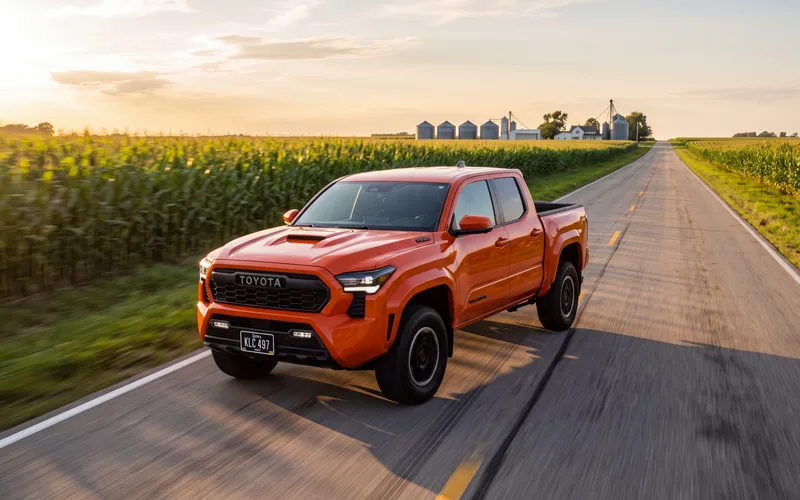 Toyota TacomaMid-Size TruckBetter at: Resale value
Better predicted reliability, standard safety tech on every trim, cab and bed choices, a hybrid option, and resale that holds roughly 65-70% at five years versus the Colorado's 56%.
Compare 1.87C-
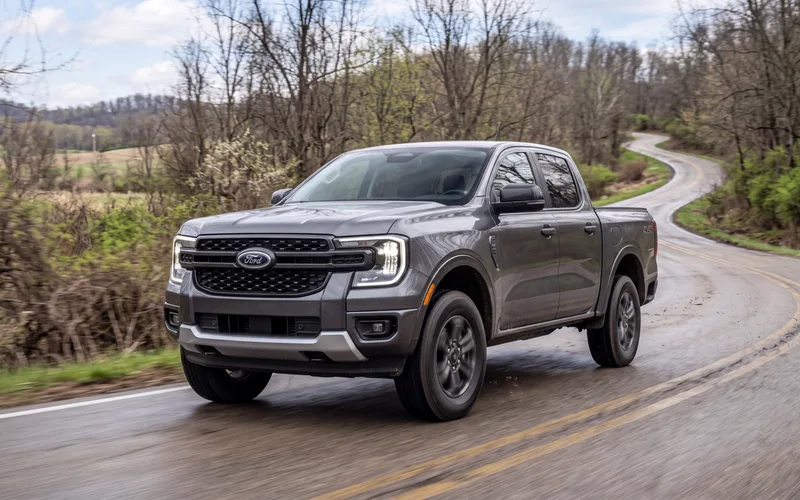 Ford RangerMid-Size TruckBetter at: Cargo and resale
Retains close to 70% of its value after five years, offers a bigger 51.5-cu-ft SuperCrew bed and more rear legroom, and sees better out of the cab.
Compare 1.97C-
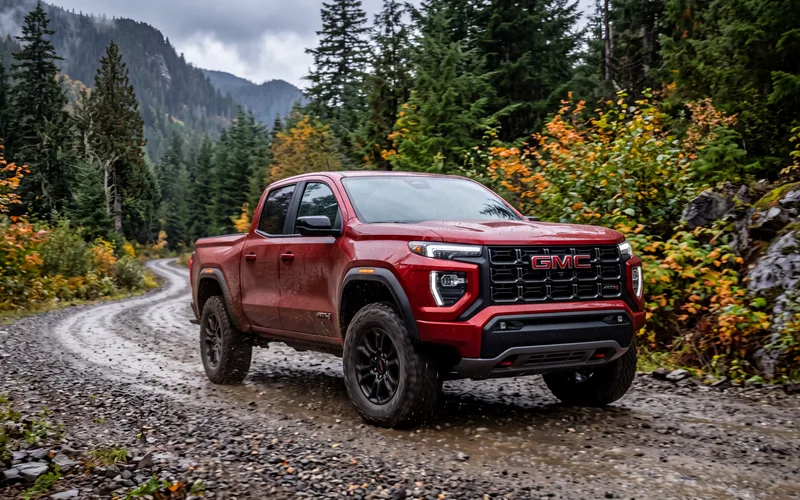 GMC CanyonMid-Size TruckBetter at: Interior quality
The identical truck with a nicer interior, standard 4WD, a standard 11-inch digital cluster and a Denali flagship with ventilated seats — worth the roughly $5,000-$7,000 premium only if materials matter to you.
CompareHow it's evolved
10 scored model years · 2017–2026
Subject scores by year
Hover or tap a score to see what moved it versus the year before. A corner mark flags a big swing.
| Year | Performance | Efficiency | Safety | Space | Cost | Reliability | Tech | Use-case | Driving | Value |
|---|---|---|---|---|---|---|---|---|---|---|
| 2026 | 46 | 40 | 56 | 50 | 55 | 62 | 72 | 63 | 69 | 72 |
| 2025 | 46 | 39 | 55 | 50 | 66 | 59 | 72 | 63 | 69 | 72 |
| 2024 | 39 | 58 | 58 | 49 | 68 | 52 | 71 | 67 | 71 | 79 |
| 2023 | 42 | 58 | 56 | 51 | 71 | 53 | 70 | 66 | 70 | 81 |
| 2022 | 47 | 42 | 27 | 53 | 51 | 67 | 48 | 63 | 68 | 68 |
| 2021 | 46 | 42 | 24 | 51 | 57 | 62 | 48 | 65 | 68 | 67 |
| 2020 | 45 | 54 | 25 | 51 | 55 | 58 | 48 | 65 | 72 | 67 |
| 2019 | 45 | 47 | 28 | 50 | 68 | 58 | 45 | 62 | 68 | 77 |
| 2018 | 47 | 47 | 28 | 53 | 71 | 59 | 48 | 63 | 70 | 78 |
| 2017 | 47 | 50 | 28 | 53 | 70 | 52 | 45 | 65 | 71 | 74 |
Compare two years
Best fit & conditions
Higher scores mean a better fit for that use case. Learn more about use-case fit →
Subject profile
Trims & configurations
5 trimsScores above reflect the volume trim. Per-trim specs and scores are rolling out — the full lineup:
Academic Probation · NHTSA safety recalls
May 31, 2018Fuel system, gasoline: delivery: fuel pumpThe high pressure fuel pump may detach from its mounting flange, possibly resulting in the pump damaging the high pressure fuel line.
Defect
General Motors LLC (GM) is recalling certain 2015-2018 GMC Canyon, 2016-2017 Buick Envision, 2016-2018 Chevrolet Colorado and Malibu, 2017-2018 GMC Acadia, 2018 Buick LaCrosse, Cadillac ATS, Chevrolet Equinox, and GMC Terrain vehicles. The high pressure fuel pump may detach from its mounting flange, possibly resulting in the pump damaging the high pressure fuel line.
Risk
A damaged fuel line can create a fuel leak, increasing the risk of a fire.
Remedy
GM will notify owners, and dealers will replace the high pressure fuel pump, and high pressure fuel pipe, free of charge. The recall began July 2, 2018. Owners may contact Buick customer service at 1-800-521-7300, Cadillac customer service at 1-800-458-8006, Chevrolet customer service at 1-800-222-1020, or GMC customer service at 1-800-462-8782. GM's number for this recall is 18188.
NHTSA campaign 18V358000 ↗Manufacturer no. 18188 18268895 vehicles potentially affected (all models in the campaign)Owners notified Jul 2, 2018Filed by General Motors LLCFiled as COLORADO
8 recalls on other model years of the Colorado (2021–2026)
Feb 26, 2026Equipment: other: owners/service/other manualGeneral Motors has decided that certain 2027 Chevrolet Bolt EV, 2025-2026 Cadillac OPTIQ, Chevrolet Colorado, Equinox EV, GMC Canyon, 2026 Buick Enclave, Envision, Cadillac CT5, Escalade, Escalade ESV, Escalade IQ, Escalade IQL, LYRIQ, VISTIQ, Chevrolet Blazer EV, Corvette Convertible, Corvette Coupe, Corvette Convertible E-Ray, Equinox, Silverado 1500, 2500, 3500, Silverado EV, Suburban 1500, Tahoe, Traverse, GMC Acadia, Hummer EV Pickup, Hummer EV SUV, Sierra 1500, 2500, 3500, Sierra EV, Terrain, Yukon, and Yukon XL vehicles. The radio may not have been set to the correct status to download the electronic owner's manual during production. As such, these vehicles fail to comply with the requirements of Federal Motor Vehicle Safety Standard number 208, âOccupant Protection.â
Defect
General Motors has decided that certain 2027 Chevrolet Bolt EV, 2025-2026 Cadillac OPTIQ, Chevrolet Colorado, Equinox EV, GMC Canyon, 2026 Buick Enclave, Envision, Cadillac CT5, Escalade, Escalade ESV, Escalade IQ, Escalade IQL, LYRIQ, VISTIQ, Chevrolet Blazer EV, Corvette Convertible, Corvette Coupe, Corvette Convertible E-Ray, Equinox, Silverado 1500, 2500, 3500, Silverado EV, Suburban 1500, Tahoe, Traverse, GMC Acadia, Hummer EV Pickup, Hummer EV SUV, Sierra 1500, 2500, 3500, Sierra EV, Terrain, Yukon, and Yukon XL vehicles. The radio may not have been set to the correct status to download the electronic owner's manual during production. As such, these vehicles fail to comply with the requirements of Federal Motor Vehicle Safety Standard number 208, âOccupant Protection.â
Risk
Without an owner's manual to consult, owners may not know how to safely use and operate the vehicle, increasing the risk of injury in a crash.
Remedy
Dealers will reset the vehicle radio, which will facilitate automatic download of the electronic ownerâs manual, free of charge. Owner notification letters were mailed April 16, 2026. Owners may contact GM customer service at 1-866-467-9700, Chevrolet customer service at 1-800-222-1020 or Cadillac customer service at 1-800-333-4223. The manufacturer's number for this recall is N252540430. Vehicle Identification Numbers (VINs) involved in this recall became searchable on NHTSA.gov on February 26, 2026.
NHTSA campaign 26V114000 ↗Manufacturer no. N2525404305,861 vehicles potentially affected (all models in the campaign)Owners notified Apr 16, 2026Filed by General Motors, LLCFiled as COLORADOSep 19, 2024Seat belts: critical fastenersThe left or right front seat may have a seat belt buckle attachment bolt that was not tightened properly.
Defect
General Motors, LLC (GM) is recalling certain 2023-2024 Chevrolet Colorado and 2023 GMC Canyon vehicles. The left or right front seat may have a seat belt buckle attachment bolt that was not tightened properly.
Risk
A loose seat belt may not properly restrain an occupant in a crash, increasing the risk of injury.
Remedy
Dealers will tighten the left and right front seat belt buckle attachment bolts, free of charge. Owner notification letters were mailed October 30, 2024. Owners may contact Chevrolet customer service at 1-800-222-1020, or GMC customer service at 1-800-462-8782. GM's number for this recall is N242453720.
NHTSA campaign 24V703000 ↗Manufacturer no. N242453720151 vehicles potentially affected (all models in the campaign)Owners notified Oct 30, 2024Filed by General Motors, LLCFiled as COLORADOJun 28, 2024Fuel system, gasoline: delivery: fuel pump: mounting plate/flange · Fuel system, gasoline: storage: tank assemblyThe lock ring that secures the fuel pump to the fuel tank assembly may not have been fully locked during assembly, which can result in a fuel leak during a crash.
Defect
General Motors, LLC (GM) is recalling certain 2024 Chevrolet Colorado and GMC Canyon vehicles. The lock ring that secures the fuel pump to the fuel tank assembly may not have been fully locked during assembly, which can result in a fuel leak during a crash.
Risk
A fuel leak in the presence of an ignition source increases the risk of a fire.
Remedy
Dealers will inspect and fully lock the fuel tank lock ring as necessary, free of charge. Owner notification letters are expected to be mailed August 13, 2024. Owners may contact Chevrolet customer service at 1-800-222-1020, or GMC Customer Call Center at (888) 988-7267. GM's number for this recall is N242451330.
NHTSA campaign 24V491000 ↗Manufacturer no. N2424513308,622 vehicles potentially affected (all models in the campaign)Owners notified Aug 6, 2024Filed by General Motors, LLCFiled as COLORADOMay 23, 2024TiresIncorrect tires may have been installed that do not match the tire label, and the tire pressure monitoring system (TPMS) may provide inaccurate information for the installed tires. As such, these vehicles fail to comply with the requirements of Federal Motor Vehicle Safety Standard numbers 110, "Tire Selection and Rims" and 138, "Tire Pressure Monitoring Systems."
Defect
General Motors, LLC (GM) is recalling certain 2024 Chevrolet Colorado vehicles. Incorrect tires may have been installed that do not match the tire label, and the tire pressure monitoring system (TPMS) may provide inaccurate information for the installed tires. As such, these vehicles fail to comply with the requirements of Federal Motor Vehicle Safety Standard numbers 110, "Tire Selection and Rims" and 138, "Tire Pressure Monitoring Systems."
Risk
A tire label that does not accurately reflect the installed tires may result in the installation of incorrectly sized tires. In addition, the TPMS may not warn the driver of a drop in tire pressure. Both of these scenarios can increase the risk of a crash.
Remedy
Dealers will inspect and replace the tires as necessary, free of charge. Owner notification letters were mailed June 19, 2024. Owners may contact Chevrolet customer service at 1-800-222-1020. GM's number for this recall is N242444030.
NHTSA campaign 24V366000 ↗Manufacturer no. N24244403056 vehicles potentially affected (all models in the campaign)Owners notified Jun 19, 2024Filed by General Motors, LLCFiled as COLORADOMar 28, 2024Wheels: lugs/nuts/bolts/studsThe front wheel hub bolts may have been over-tightened and damaged during installation.
Defect
General Motors, LLC (GM) is recalling certain 2023 Chevrolet Colorado and GMC Canyon vehicles. The front wheel hub bolts may have been over-tightened and damaged during installation.
Risk
Damaged bolts may loosen or break, which can result in a loss of vehicle control and increase the risk of a crash.
Remedy
Dealers will replace the left and right front wheel hub bolts, free of charge. Owner notification letters were mailed April 10, 2024. Owners may contact Chevrolet customer service at 1-800-222-1020 or GMC customer service at 1-800-462-8782. GM's number for this recall is N232431480.
NHTSA campaign 24V237000 ↗Manufacturer no. N23243148017 vehicles potentially affected (all models in the campaign)Owners notified Apr 10, 2024Filed by General Motors, LLCFiled as COLORADOFeb 22, 2024Electrical system: adas: driver monitoring: camera/sensor · Forward collision avoidance: automatic emergency brakingThe front camera module (FCM) system may falsely detect an obstacle, causing the automatic emergency braking (AEB) to engage unexpectedly.
Defect
General Motors, LLC (GM) is recalling certain 2023 Chevrolet Colorado and GMC Canyon vehicles. The front camera module (FCM) system may falsely detect an obstacle, causing the automatic emergency braking (AEB) to engage unexpectedly.
Risk
Unexpected automatic emergency braking can cause the vehicle to abruptly stop or slow down, increasing the risk of a crash.
Remedy
Dealers will update the front camera module (FCM) software, free of charge. Owner notification letters were mailed April 5, 2024. Owners may contact GMC customer service at 1-800-462-8782 or Chevrolet customer service at 1-800-222-1020. GM's number for this recall is A232424660.
NHTSA campaign 24V133000 ↗Manufacturer no. A23242466055,755 vehicles potentially affected (all models in the campaign)Owners notified Apr 5, 2024Filed by General Motors, LLCFiled as COLORADOMay 26, 2022Seats: critical fastenersThe front passenger seat may have a hook attachment that was not properly welded, allowing it to separate from the inboard track of the seat frame.
Defect
General Motors, LLC (GM) is recalling certain 2022 GMC Canyon and Chevrolet Colorado vehicles equipped with a manual passenger seat. The front passenger seat may have a hook attachment that was not properly welded, allowing it to separate from the inboard track of the seat frame.
Risk
An improperly welded seat frame may not properly restrain the seat occupant, increasing the risk of injury in a crash.
Remedy
Dealers will inspect the front passenger seat and replace the cushion frame, if necessary, free of charge. Owner notification letters were mailed July 6, 2022. Owners may contact GMC customer service at 1-800-462-8782 or Chevrolet customer service at 1-800-222-1020. GM's number for this recall is N222368320.
NHTSA campaign 22V375000 ↗Manufacturer no. N2223683201,631 vehicles potentially affected (all models in the campaign)Owners notified Jul 6, 2022Filed by General Motors, LLCFiled as COLORADODec 23, 2020Seat belts · Seat belts: critical fastenersIncorrect bolts may have been used at one or more fastening locations to secure the seat belts to the vehicle. If an incorrect bolt was used, the seat belt may not be properly attached to the vehicle.
Defect
General Motors, LLC (GM) is recalling certain 2020 Chevrolet Bolt EV and 2021 GMC Canyon and Sierra 1500, 2500 and 3500, Yukon, Yukon XL, Cadillac Escalade and Escalade ESV and Chevrolet Blazer, Camaro, Colorado, Equinox, Silverado 1500, 2500 and 3500, Suburban and Tahoe vehicles. Incorrect bolts may have been used at one or more fastening locations to secure the seat belts to the vehicle. If an incorrect bolt was used, the seat belt may not be properly attached to the vehicle.
Risk
If a seat belt assembly is not properly attached to the vehicle, the seat belt may not properly restrain an occupant in the event of a crash, increasing the risk of injury.
Remedy
GM will notify owners, and dealers will replace the suspect bolts, free of charge. The recall began January 29, 2021. Owners may contact GMC customer service at 1-800-462-8785, Cadillac customer service at 1-800-458-8006, or Chevrolet customer service at 1-800-222-1020. GM's number for this recall is N202322230.
NHTSA campaign 20V811000 ↗Manufacturer no. N202322230470 vehicles potentially affected (all models in the campaign)Owners notified Jan 29, 2021Filed by General Motors, LLCFiled as COLORADO
Source: NHTSA Office of Defects Investigation recall database, model years 2017–2026. Recalls are listed by model year as the manufacturer filed them; whether a specific car is affected depends on its VIN — check a VIN at nhtsa.gov ↗. NHTSA model names matched to this page: COLORADO.
Detailed scoring by subject
1Performance & PowertrainOne of the Colorado's weakest categories.1.11D
The volume LT trim's standard 2017 gas powertrain is the new 3.6-liter LGZ V6. The broader range also offered 200-hp 2.5-liter gas and 181-hp 2.8-liter diesel engines.
The LT's standard LGZ V6 makes 275 lb-ft; the optional diesel is the range torque leader but is not the scored gas volume configuration.
Car and Driver's instrumented test matches the representative LT V6, eight-speed automatic, four-wheel-drive crew-cab configuration.
The new V6 is responsive and notably lively, but its coarse sound and rougher note during cylinder-deactivation operation keep refinement in the middle band.
The new 8L45 generally shifts quickly, smoothly, and predictably with little hunting, though some tests noted delayed kickdown, preventing a top-band score.
The prompt calls for the maximum conventional rating in any properly equipped configuration, which is achieved by a Duramax model; the scored gas V6 remains rated to 7,000 lb.
This is Chevrolet's published U.S. maximum payload for the 2017 Colorado range; passengers, options, and accessories reduce usable payload.
It covers the era's core towing needs with Tow/Haul mode, a factory trailering package, seven-pin connector, and available integrated brake controller, but lacks modern trailer cameras, steering backup assist, and onboard scales.
Four-wheel drive was broadly optional across the main trims and used a proper two-speed transfer case; LT and Z71 could add automatic Autotrac operation, while ZR2 added selectable locking differentials.
The newly added 2017 ZR2 gives the range genuine halo-level off-road hardware: a lift, wider track, DSSV dampers, skid plates, rock sliders, and independently selectable front and rear lockers.
Three distinct engines cover economy, performance, and high-torque towing needs, including a class-distinctive diesel, but there is no hybrid, plug-in hybrid, or EV option.
2Efficiency & RangeGrades below the middle of the scale.1.33D
The volume gasoline configuration is represented by the common LT Crew Cab 4WD with the new-for-2017 3.6L LGZ V6 and eight-speed automatic. The rear-drive V6 improves by 1 MPG combined.
EPA rates the representative 4WD V6 configuration at 17 MPG city; choosing rear-wheel drive raises that to 18 MPG.
The representative 4WD V6 earns 24 MPG highway, while the otherwise comparable 2WD V6 reaches 25 MPG.
EPA does not publish a distinct total-range field for this gasoline pickup, so range is calculated from the 21-gallon tank and the representative configuration's 19 MPG combined rating.
This is the EPA model-year guide estimate for 15,000 annual miles in the representative V6 4WD configuration, using the fuel-price assumptions attached to the 2017 label.
The gasoline Colorado requires only widely available regular unleaded, with no premium-grade penalty. It is not FlexFuel and cannot use blends above E15, a minor flexibility limitation.
3SafetyThe Colorado's lowest-graded category.0.00F
The 2017 Colorado received a four-star overall NHTSA rating, which is mid-band for a truck on the specified 3-to-5-star scale.
The crew cab performed well in most IIHS crashworthiness tests but missed an award and had a Marginal passenger-side small-overlap result. Its structure is substantially better than the sparse crash-avoidance equipment suggests, but it does not merit the top band.
The volume LT had none of the five core ADAS functions as standard. Only forward-collision warning and lane-departure warning were bundled in an optional Safety Package, with no automatic intervention.
There was no automatic emergency braking to test; the optional system only warned the driver. That leaves the Colorado near the bottom of the low band despite earning IIHS's Basic designation for forward-collision warning.
Blind-spot monitoring, rear cross-traffic alert or braking, safe-exit warning, and trailer-aware blind-zone coverage were not offered for 2017.
Optional lane-departure warning could alert the driver, but the truck could neither steer back into its lane nor center itself. Availability only through an LT option package further limits its value.
The 2017 Colorado offered conventional electronic cruise control only, with no adaptive cruise or integrated highway-assist capability.
No hands-free driving system was available on the 2017 Colorado.
Both available headlight systems were IIHS-rated Poor, including the volume LT's reflector lamps and the optional projector lamps. Neither system had curve adaptation or high-beam assist.
The upright cab and large mirrors provide useful rearward sightlines, and a standard rearview camera helps when reversing. The mirrors themselves can obscure vehicles or pedestrians ahead and there was no surround-view camera, keeping it below the excellent band.
The crew cab provides two complete rear LATCH positions, but IIHS rated their ease of use Marginal. The center position has only a tether anchor, and confusing tether hardware reduces usability.
4Space & ComfortGrades below the middle of the scale.1.57D
The volume-oriented crew-cab configuration has two front buckets and a three-person rear bench. The less passenger-focused Extended Cab seats four.
The LT crew cab provides generous front headroom for a midsize pickup.
Front legroom reaches the top of the truck normalization band and supports the Colorado's notably spacious cockpit.
Crew-cab rear headroom is only slightly above the bottom of the truck normalization range.
The Crew Cab is usable for adults but remains tight compared with roomier crew-cab pickups; the Extended Cab is substantially tighter.
The representative LT Crew Cab uses the popular short box, while Chevrolet also offered the Crew Cab with a 74-inch long box.
The short bed's capacity is modest on the all-truck scale, although the optional long box expands useful volume.
A deep center-console bin, large under-rear-seat compartment, door storage, and multiple USB ports make daily storage competitive. It lacks a standout feature such as the Ridgeline's in-bed trunk, and the rear-seat folding arrangement drew criticism.
Supportive front seats, an excellent driving position, and a standard power driver's seat suit long drives, but the tight rear bench is less accommodating for three adults. Heated seats and power lumbar required an LT option package.
The ride is balanced and compliant on highways and generally manages rough roads, though an empty bed can produce a busy, choppy response. A light load improves composure.
Road and wind noise are unusually well suppressed for a 2017 midsize truck, though the updated gas V6 can sound coarse under acceleration. Highway cruising remains notably quiet.
LT buyers could add heated front seats, power lumbar, single-zone automatic climate control, heated mirrors, and remote start, while Z71 and ZR2 included heated seats. There were no ventilated seats, heated wheel, or rear climate controls.
5Cost of OwnershipOne of the Colorado's strongest categories.2.74B-
The 2017 entry configuration was the gasoline Base Extended Cab 2WD. Its $20,000 vehicle MSRP plus the separately listed $995 destination charge yields $20,995 delivered.
LT was the most common mid-level trim, and the Crew Cab short-box 4WD with the gasoline powertrain represents the mainstream truck configuration. The listed $33,675 MSRP plus $995 destination totals $34,670.
A model-level five-year estimate is used because an accessible exact-trim Edmunds breakdown was unavailable. The estimate includes scheduled maintenance, wear items, and expected repairs, and RepairPal's year-specific data supports the Colorado's broadly average cost profile.
The available Colorado model-level residual analysis projects 62.1% retention. Kelley Blue Book also named the 2017 Colorado a Top 10 Best Resale Value vehicle, supporting above-average retention for this exact model year.
Chevrolet's new-vehicle bumper-to-bumper warranty covered the 2017 Colorado for three years or 36,000 miles, the floor of the truck normalization band.
The gasoline Colorado's powertrain warranty was five years or 60,000 miles, the floor of the truck normalization band.
Two complimentary scheduled-service visits over two years/24,000 miles and five years/60,000 miles of roadside assistance were useful but short of a multi-year comprehensive maintenance plan. The truck also included three-month OnStar Guidance and 4G LTE data trials on equipped LT models.
$34,670 volume-trim price minus its estimated resale value after 5 years (62.1% retained, or about $21,530) leaves about $13,140 in depreciation. Add the projected $3,348 in 5-year maintenance and repairs, and owning this vehicle for 5 years costs about $16,488 in total.
6Reliability & QualityGrades below the middle of the scale.1.47D
Owner-survey evidence is below average overall, although J.D. Power's result is less negative. The disagreement keeps the score out of the lowest band, but Consumer Reports' model-year verdict prevents an average rating.
Chevrolet was not a leading dependability brand around this model year and its lineup showed broad below-average results in Consumer Reports' 2017 survey. Some Chevrolet models earned J.D. Power segment awards, making the record mixed rather than uniformly poor.
The formal recall count is low, but the single fuel-leak/fire-risk campaign is safety-relevant and the 2017 V6/eight-speed has a documented shake/shudder service-bulletin pattern. That is worse than a clean record but not a high-recall vehicle.
The volume LT's 3.6L LGZ and eight-speed automatic were new to the Colorado for 2017, and the 8L45 developed a well-documented torque-converter shudder complaint. The engine itself is not the principal concern, but the engine/transmission combination cannot be rated as proven or low-risk.
The LT cabin is functional and well textured in places, but extensive hard plastic is below the standard set by the best midsize-truck interiors. Multiple contemporary reviewers specifically criticized the material quality.
Contemporary review evidence describes respectable assembly around the dashboard and seats, without a pervasive panel-gap or rattle problem. Average J.D. Power quality results and scattered owner issues keep it from scoring higher.
Chevrolet's mainstream nationwide dealer footprint gives Colorado owners excellent geographic access to warranty, recall, and routine service. Service experience varies by franchise, so the network's density is a clearer strength than uniform satisfaction.
A high-volume domestic pickup sharing major components with the GMC Canyon benefits from broad OEM and aftermarket supply. Its estimated annual maintenance cost is moderate, supporting a strong rather than exceptional ownership-support score.
7Technology & InfotainmentOne of the Colorado's weakest categories.1.03D
The volume LT trim uses the larger 8-inch MyLink touchscreen; Chevrolet's 2017 brochure lists a 7-inch system on lower configurations.
MyLink's clear menus, responsive touch operation, and surrounding physical controls make it unusually easy to use for a 2017 truck, though it lacks the speed and polish of newer systems.
Both phone-projection platforms are standard on LT, but they require a USB cable; wireless projection was not offered.
Voice control is functional and factory GPS navigation is available on LT, but navigation is optional and the system's dated command structure is less capable than modern natural-language assistants.
LT's standard six-speaker setup is adequate, and an optional Bose seven-speaker system supplies a meaningful but modest premium upgrade.
The LT has conventional analog gauges supplemented by a useful color driver-information display, not a full-digital or broadly configurable instrument cluster.
The MyLink system can download infotainment software updates over Wi-Fi, but this is limited-scope infotainment updating rather than feature-adding whole-vehicle OTA capability.
The myChevrolet app supports vehicle location, diagnostics, destination sending, lock/unlock, and remote start on properly equipped trucks, but key functions depend on equipment and OnStar service.
LT provides multiple legacy USB-A and 12-volt connections, with two rear-console USB charging ports on crew cabs; wireless charging is limited to higher configurations and there is no USB-C or household outlet.
Remote keyless entry is standard on LT and remote start is optional in the LT Convenience Package, but the truck retains a traditional ignition key without proximity entry, push-button start, or phone-as-key.
A rear-view camera is standard, but the 2017 lineup offers neither a surround-view camera nor automated parking; assistance is basic by modern standards.
No head-up display was offered on any 2017 Colorado trim.
8Use-Case FitMid-pack among this car's ten categories.2.40C+
The representative LT Crew Cab has four full doors, a folding rear bench and useful under-seat storage, but its 35.8-inch rear legroom is tight and IIHS found the LATCH anchors only marginal for ease of use.
Crashworthiness was mostly good and the 2017 structure improved on the driver side, but passenger-side small overlap and LATCH were marginal, headlights were poor, and the optional forward-collision system only earned Basic because it warned without automatic braking.
Supportive front seats, a quiet ride and an open pickup bed suit family trips, but rear legroom is tight, the rear bench is flat, and rear-seat amenities are sparse.
The 308-hp V6, new eight-speed automatic, predictable handling, good forward visibility and standard camera make it approachable daily, though slow steering, high step-in and trucklike ride behavior add effort.
The gas V6's roughly 19-20 mpg combined consumption is ordinary for a midsize pickup but costly beside crossovers and compact commuters; conventional tires and service parts keep it from the low band.
A short-bed crew cab is much easier to place than a full-size truck, with good outward visibility and a standard camera, but its 41.3-foot turning circle and long pickup body still require care in tight garages.
The LT Crew Cab V6 is a serious midsize work tool, rated to tow 7,000 pounds and carry about 1,550 pounds while offering either a short or long bed; only full-size trucks provide materially more headroom.
Its body-on-frame chassis, leaf-spring rear suspension and work-oriented WT alternatives tolerate real use, but the first-year V6/eight-speed combination lacks a strong durability record and owner data identifies transmission trouble.
Multiple bed tie-downs, the standard CornerStep bumper, a low load height, hidden under-seat tool storage and a long-bed option make it useful at jobsites, though it lacks modern onboard export power.
A quiet ride, supportive front seats and roughly 420 miles of EPA highway range make the LT a credible tourer, but tight rear seating and the absence of adaptive cruise or active lane control cap its endurance appeal.
Available 4WD with low range, locking rear differential and substantial tow capacity readily supports trails, boats and campers; the volume LT's low nose limits approach angle, while the new-for-2017 ZR2 greatly expands the lineup's off-road ceiling.
Crew-cab buyers can choose a 5.2- or 6.2-foot bed, fold the rear seat for protected cargo, use hidden under-seat bins, and add a hitch for bulky recreational gear, giving unusually broad flexibility.
9Driving ExperienceOne of the Colorado's strongest categories.2.78B-
The volume LT V6 Crew Cab is stable, predictable, and notably easier to place than a full-size pickup, with a compliant ride and respectable grip, though its responses remain deliberately trucklike rather than sporty.
The electric steering is predictable and communicates useful information near the limit, but its light weighting and slightly slow response prevent it from feeling genuinely engaging.
Normal-road modulation is reassuring, but repeated hard stops expose substantial fade; the measured stopping distances are merely average for the class.
The new-for-2017 308-hp 3.6-liter V6 and eight-speed automatic give the volume LT unusually quick response for a midsize truck, with quick, smooth, predictable shifts, although cylinder-deactivation operation is not perfectly polished.
The eight-speed lowers cruising revs and highway noise, but the V6 sounds coarse under acceleration and becomes rougher when cylinder deactivation engages, leaving refinement below the class's smoother choices.
The representative LT Crew Cab short-box configuration turns in 41.3 ft, near the favorable end of the truck normalization band; choosing the long box increases the diameter by 3.3 ft.
The LT provides a supportive seat, tilt-and-telescoping wheel, clear controls, and an ideal, carlike driving position, but larger drivers may find the front seat confining and the wheel's telescope range limited.
Rapid V6 acceleration, manageable dimensions, and a balanced chassis make this LT more entertaining than a typical work truck, but light steering and the coarse engine note keep it short of enthusiast-grade appeal.
10Value & Market PositionThe Colorado's best-graded category.2.99B-
The volume LT was competitively equipped for a 2017 midsize pickup, with an 8-inch MyLink touchscreen, Apple CarPlay/Android Auto, cruise control, 17-inch alloys, SiriusXM, OnStar 4G LTE, cloth trim, and keyless entry. The inexpensive Base/WT grades were more utilitarian, and meaningful convenience and safety equipment remained optional.
At $27,770 for the volume LT Extended Cab, the Colorado paired useful cabin technology with the newly upgraded 308-hp V6/eight-speed and up to 7,000 pounds of gas towing capacity. It delivered notably strong performance and truck capability per dollar, though options could raise crew-cab 4WD pricing quickly.
The lineup stretched from Base and WT through LT, Z71, and the new ZR2, with extended- or crew-cab bodies, short or long beds, rear- or four-wheel drive, and three engines. That unusually broad ladder covered inexpensive work use, mainstream family use, towing, economy, and serious off-roading.
Colorado demand was strong and still rising in the third full sales year of the revived truck. Its 112,996 U.S. sales represented 3.9% annual growth and made it a major midsize-truck contender, albeit still behind the Tacoma segment leader.
Chevrolet carried substantial American-truck credibility and dealer reach, while the Colorado's polished road manners and new ZR2 gave the nameplate useful enthusiast appeal. Its image and resale strength were sound but did not equal the Tacoma's exceptionally loyal, durability-led following.
As a mainstream Chevrolet sold through a large dealer network, the Colorado was negotiable and periodically supported by factory rebates, but its rising demand and strong residual-value standing limited the need for clearance-level incentives. Buyer benefit was therefore useful but not exceptional.
The North American second generation was only in its third model year, and 2017 brought a revised 3.6-liter V6 with an eight-speed automatic, richer base infotainment, and the new ZR2. It was not a full redesign or facelift, but it remained one of the segment's freshest conventional trucks.
The generation entered 2017 with consecutive MotorTrend Truck of the Year awards for 2015 and 2016, added a KBB Top 10 resale-value honor, and was widely praised for refinement and real truck capability. It had beaten Tacoma in a prior comparison, though Honda's Ridgeline won Car and Driver's 2017 head-to-head, preventing a near-perfect score.