

The verdict
A mixed-report full-size truck, strong on safety and held back by reliability.
Overall 2.48 (C+) across 10 graded subjects. Its strongest is safety at 3.17 (B), its weakest reliability & quality at 1.31 (D). 7 of 10 subjects grade at C− or better.
Jump to scoresStrengths
- Safety
- Technology & Infotainment
- Value & Market Position
What holds it back
- Reliability & Quality
- Efficiency & Range
- Cost of Ownership
Top alternatives
Cars shoppers cross-shop with the Ford F-150 2.41C+
 Chevrolet Silverado 1500Full-Size Truck
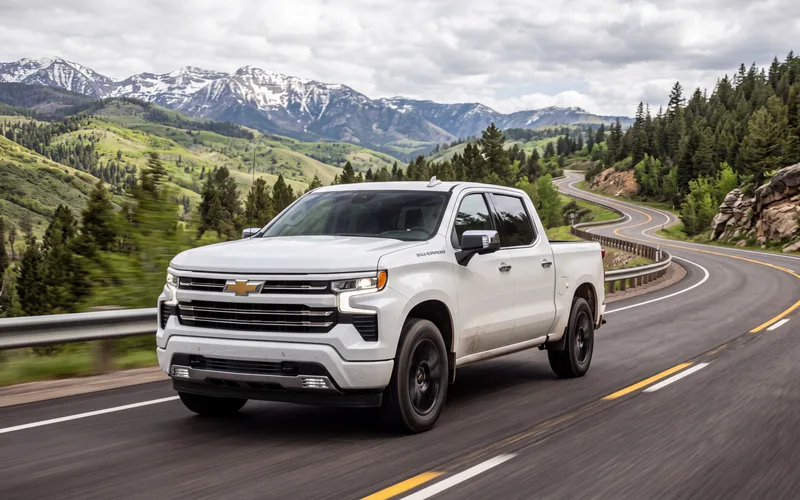
The F-150 tops the Silverado on towing (13,500 vs 13,300 lbs max), payload leadership, and configuration breadth (10+ trims vs Chevy's narrower ladder).
Compare 2.42C+
 Ram 1500Full-Size Truck
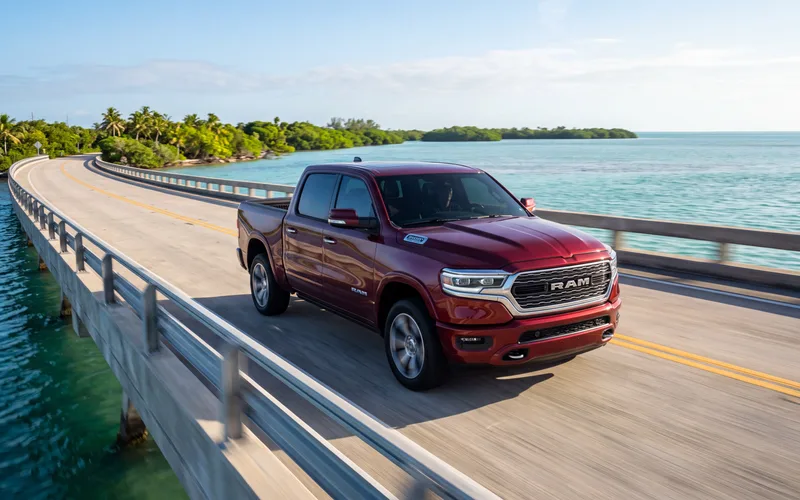
Ram beats the F-150 on ride quality (its coil-sprung rear suspension is the class ride benchmark) and on upmarket interior luxury in Limited and Tungsten trims.
Compare 2.20C
2.20C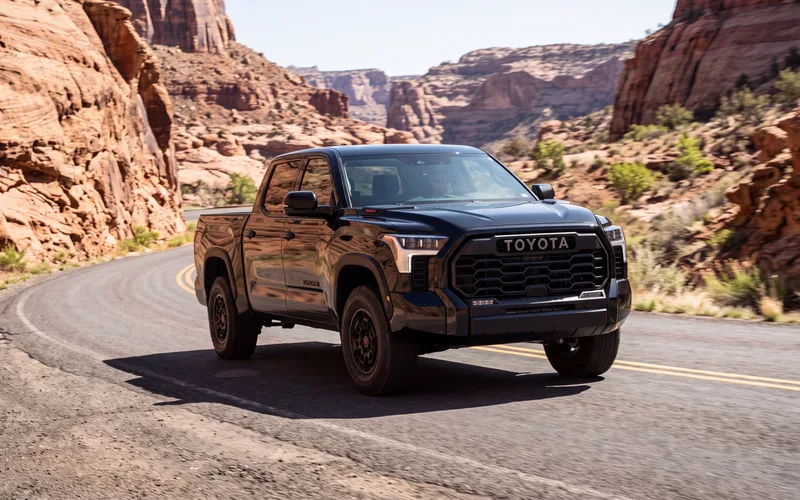 Toyota TundraFull-Size Truck
Tundra brings Toyota's warranty-plus-reliability halo and a standard i-FORCE MAX hybrid on upper trims, but the F-150 outmatches it on max towing (13,500 vs 12,000 lbs), payload, trim breadth, hands-free driving (BlueCruise vs no Toyota equivalent), and Pro Power Onboard exportable power.
CompareHow it's evolved
10 scored model years · 2017–2026
Subject scores by year
Hover or tap a score to see what moved it versus the year before. A corner mark flags a big swing.
| Year | Performance | Efficiency | Safety | Space | Cost | Reliability | Tech | Use-case | Driving | Value |
|---|---|---|---|---|---|---|---|---|---|---|
| 2026 | 64 | 52 | 72 | 69 | 47 | 67 | 72 | 73 | 65 | 75 |
| 2025 | 64 | 68 | 76 | 72 | 52 | 59 | 76 | 73 | 64 | 72 |
| 2024 | 69 | 50 | 76 | 65 | 55 | 50 | 75 | 71 | 64 | 72 |
| 2023 | 69 | 50 | 68 | 65 | 56 | 55 | 64 | 69 | 60 | 65 |
| 2022 | 69 | 60 | 68 | 65 | 58 | 56 | 67 | 69 | 61 | 63 |
| 2021 | 70 | 68 | 73 | 68 | 54 | 56 | 67 | 68 | 63 | 76 |
| 2020 | 68 | 60 | 61 | 66 | 54 | 64 | 49 | 65 | 59 | 67 |
| 2019 | 66 | 65 | 66 | 66 | 57 | 59 | 53 | 66 | 62 | 70 |
| 2018 | 64 | 67 | 49 | 65 | 58 | 58 | 53 | 60 | 62 | 68 |
| 2017 | 59 | 57 | 46 | 63 | 55 | 58 | 42 | 63 | 63 | 73 |
Compare two years
Best fit & conditions
Higher scores mean a better fit for that use case. Learn more about use-case fit →
Subject profile
Trims & configurations
8 trimsScores above reflect the volume trim. Per-trim specs and scores are rolling out — the full lineup:
Detailed scoring by subject
1Performance & PowertrainMid-pack among this car's ten categories.2.68C+
The 2.7L EcoBoost V6 is the most commonly ordered step-up engine on XLT/Lariat SuperCrew trims, the practical volume choice above the standard 3.3L V6; the 2024 model-year refresh carried the 14th-generation engine lineup over unchanged.
Peak torque of the volume 2.7L EcoBoost engine; the PowerBoost hybrid and 3.5L EcoBoost variants offer meaningfully more for buyers prioritizing towing.
Instrumented tests of 2021-2023 F-150 2.7L EcoBoost 4x4 SuperCrews have clustered around 6.0-6.3 seconds; the 2024 refresh did not change powertrain calibration.
The 2.7L EcoBoost delivers strong, mostly linear power with well-controlled turbo lag; reviewers have consistently rated it among the smoother turbocharged truck engines, though it's a step behind the effortless PowerBoost hybrid.
The 10-speed automatic (10R80, developed jointly with GM) shifts crisply across the lineup with well-tuned logic for towing and normal driving, with only occasional hunting noted on light throttle.
Ford's advertised best-in-class max conventional tow rating for the 14th-generation F-150 (introduced 2021) is achieved on a specific lightweight 3.5L EcoBoost configuration with the Max Trailer Tow Package; this figure carried through the 2024 model-year refresh unchanged.
Ford touted this class-leading payload figure at the 2021 redesign's launch on a stripped-down regular-cab configuration; it has remained the advertised max through the 2024 refresh.
The F-150 offers an integrated trailer brake controller, Pro Trailer Backup Assist, a suite of trailer cameras (including a trailer-reverse guidance view), and Ford's Smart Hitch tongue-weight/sway sensor — one of the most complete towing-tech suites in the class.
4x4 with electronic shift-on-the-fly and a 2-speed transfer case is available across nearly every trim (2WD standard, 4x4 optional), with a terrain management system and locking rear differential offered on higher trims; only the Raptor makes 4x4 standard.
The Tremor package adds a 2-inch suspension lift, 33-inch all-terrain tires, locking rear diff, and skid plates for light-duty trail work, while the F-150 Raptor delivers genuine desert-racing credibility with long-travel Fox Live Valve shocks, wide track, and available 37-inch tires — among the strongest off-road pedigree in the segment.
The lineup spans a base 3.3L V6, 2.7L and 3.5L EcoBoost turbo V6s, a naturally aspirated 5.0L V8, a 3.5L PowerBoost full-hybrid V6, and the high-output 3.5L EcoBoost in the Raptor — one of the broadest powertrain spreads of any full-size truck, including a mainstream hybrid option.
2Efficiency & RangeOne of the F-150's weakest categories.1.31D
EPA combined rating for the 2.7L EcoBoost 4x4, the practical volume step-up engine matching the 2.7L used as the cat1 representative powertrain; unchanged from the 2021 redesign through the 2024 refresh.
EPA city rating for the 2.7L EcoBoost 4x4, carried unchanged into the 2024 model year.
EPA highway rating for the 2.7L EcoBoost 4x4, carried unchanged into the 2024 model year.
Computed from the standard 23-gallon fuel tank and combined EPA rating for the volume 2.7L EcoBoost 4x4 configuration; the optional extended-range tank and hybrid variant both extend usable range meaningfully.
Estimated from the 20 MPG combined rating at 15,000 annual miles and a typical regular-gas price assumption for the period; not directly verified against a live EPA label figure this session.
Every 2024 F-150 engine, including the PowerBoost hybrid, runs on regular unleaded with no premium requirement or E85/diesel complexity; home charging is not applicable since there is no plug-in variant of the conventional F-150.
3SafetyThe F-150's best-graded category.3.17B
Government 5-star overall rating with 5-star frontal and side results; rollover star is the typical 4/5 seen across tall/heavy full-size trucks.
The refreshed 2024 F-150 (crew cab, built after Sept. 2024) earned IIHS Top Safety Pick with Good ratings in small overlap front, updated side, and front pedestrian crash prevention, plus Good on the seat belt reminder test — but it carries a Poor rating in the newer updated moderate overlap front test (rear-occupant belt/submarining issue shared industry-wide by half-ton trucks), so it falls short of TSP+ or an all-Good sweep.
Ford Co-Pilot360 (AEB with pedestrian detection, forward collision warning, lane-keeping alert, auto high beams, rearview camera) is standard on every trim including base XL, but blind-spot monitoring and adaptive cruise control are bundled into the Co-Pilot360 2.0 package that is only standard from XLT up, leaving key items optional on the entry trim.
IIHS rates the F-150's standard front crash prevention system Good for both daytime and nighttime pedestrian detection, a strong result that contributed directly to its Top Safety Pick award.
BLIS with trailer coverage (extends blind-spot monitoring to conventional trailers up to 33 ft) is a genuine truck-specific advantage, but it's alert-only (no active steering correction) and standard only from XLT up, not the base XL trim.
Lane-keeping alert is standard across the range as part of base Co-Pilot360, and reviewers describe it as functional but unremarkable — adequate warning/nudging rather than confident, hands-off-quality centering outside of the BlueCruise-enabled mode.
Adaptive cruise control is optional (bundled in Co-Pilot360 2.0 / equipment groups) rather than standard, but it integrates with BlueCruise for a well-regarded, full-speed-range highway assist experience once equipped.
BlueCruise comes standard (with a complimentary trial) on the refreshed 2024 F-150, offering true hands-free driving across more than 130,000 miles of mapped North American divided-highway 'Blue Zones' — a mature, broad-coverage system.
IIHS tested two headlight configurations: LED projector units (available on upper trims) rated Good, while the LED reflector setup found on lower/volume trims rated only Acceptable — meeting the TSP bar but not uniformly strong.
A high seating position and large glass area give typical full-size-truck sightlines, though thick rear roof pillars on SuperCrew models create some rear-quarter blind spots partially offset by an available 360-degree camera on upper trims; no direct instrumented visibility test was found.
The SuperCrew cab's wide rear doors and deep bench seating are well-suited to installing and accessing car seats, consistent with crew-cab full-size trucks generally scoring well for LATCH ease; no dedicated LATCH ease-of-use test was found for this specific model year.
4Space & ComfortMid-pack among this car's ten categories.2.41C+
SuperCrew is the volume cab and XLT the volume trim; both ship standard with the 40/20/40 front bench for 6-passenger seating, unchanged by the 2024 refresh.
Front headroom figure is shared across cab styles for this 14th-generation F-150 and is unchanged by the 2024 mid-cycle refresh.
Front legroom is identical across Regular Cab, SuperCab, and SuperCrew for this generation, sitting toward the top of the full-size-truck band.
SuperCrew's tall roofline gives it segment-competitive rear headroom; SuperCab's second row is noticeably tighter but is not the volume config.
SuperCrew's stretched wheelbase gives it near-limousine rear legroom for adults, a long-standing F-150 strength versus compact and mid-size rivals.
The volume SuperCrew configuration is paired with the shorter 5.5-ft box, trading bed length for cab room; buyers wanting the longest box must step down to Regular Cab or give up the SuperCrew's rear seat.
Bed volume tracks box length directly; the volume SuperCrew/5.5-ft pairing lands mid-pack for the segment, well below what the same truck offers with a longer box.
Pro Power Onboard (standard 2.0 kW, optional 2.4/7.2 kW with PowerBoost hybrid) turns the truck into a genuine jobsite generator, and SuperCrew's flip-up rear seat bins and large console add useful capacity, but the F-150 lacks a RamBox-style lockable bed bin or GMC's MultiPro tailgate innovation.
XLT's cloth seats are supportive enough for long stints but firmer and less adjustable than upper-trim leather with massage (Platinum/King Ranch); reviewers generally rate them competent rather than exceptional.
The F-150 is frequently cited as one of the more composed-riding gas half-tons despite its leaf-spring rear, with well-tuned dampers that control body motions better than most rivals unladen; adaptive dampers on higher trims improve this further but aren't standard on the volume trim.
Acoustic front glass and underbody sealing keep the cabin reasonably hushed for a body-on-frame truck, but wind and road noise are still noticeable at highway speed, especially with larger optional wheel/tire packages.
Heated front seats and a heated steering wheel are available on the volume trim's option packages, with ventilated front seats, heated rear seats, and remote start/preconditioning via FordPass added on Lariat and above — a solid but not class-leading spread.
5Cost of OwnershipOne of the F-150's weakest categories.1.69D
2024 brought an across-the-board price increase versus 2023; the entry XL Regular Cab 4x2 with the 2.7L EcoBoost V6 carries Ford's mandatory $1,995 destination fee on top of the $36,570 base price, one of the higher full-size-truck entry points after the MY24 hike.
XLT SuperCrew 4x4 is the volume configuration most F-150 retail buyers choose, pairing the crew cab with 4WD and the standard 2.7L EcoBoost V6; this sits mid-pack for full-size crew-cab 4x4 trucks after the MY24 price increase.
Estimates diverge across sources — CarEdge projects a combined 5-year maintenance+repair total of $3,594, while KBB's average annual maintenance figure (~$1,211/yr) implies roughly $6,055 over 5 years for maintenance alone; splitting the difference lands below the full-size-truck class midpoint, consistent with the F-150's mainstream part costs and dealer density.
iSeeCars measures 37.9% five-year depreciation for the F-150 (62.1% retention), slightly worse than the 36.6% average for the full-size pickup category as a whole; CarEdge's separate estimate of ~50% depreciation (50% retention) is more pessimistic and noted as a lower-bound alternative.
Standard Ford bumper-to-bumper coverage, the segment floor for full-size trucks, unchanged for the 2024 model year.
Standard Ford powertrain coverage, the segment floor — some rivals offer longer terms — unchanged for the 2024 model year.
New 2024 F-150 buyers earn 42,000 FordPass Rewards points on purchase, enough to cover roughly the first three scheduled maintenance visits, plus 24/7 complimentary roadside assistance (fuel delivery, flat-tire help, lockout, towing) via the FordPass app for 5 years/60,000 miles — a meaningful points-based maintenance offset rather than fully prepaid service, but with real multi-visit value beyond bare roadside coverage.
$53,950 volume-trim price minus its estimated resale value after 5 years (62% retained, or about $33,449) leaves about $20,501 in depreciation. Add the projected $4,800 in 5-year maintenance and repairs, and owning this vehicle for 5 years costs about $25,301 in total.
6Reliability & QualityThe F-150's lowest-graded category.1.31D
Consumer Reports has rated the F-150 well below average for predicted reliability across the 2022-2024 model years, driven by owner-reported problems concentrated in the in-car electronics/infotainment systems and the 3.5L PowerBoost hybrid's battery and generator hardware; J.D. Power's consumer-facing quality scores for the same generation are more middling but do not contradict the below-average read.
Ford has landed in the bottom third of Consumer Reports' brand reliability rankings in most surveys covering the 2022-2024 model years, and J.D. Power's Vehicle Dependability Study has similarly placed the brand below the industry average — a consistent, multi-year below-average standing rather than a one-year anomaly.
The current-generation (2021+) F-150 has been swept into a heavy run of recall activity: a roughly 2.9-million-vehicle Ford recall (spanning multiple nameplates, F-150 included) in early 2023 for a rearview-camera image defect, a separate 2023 door-latch recall covering roughly 125,000 F-150 trucks for doors that could open while driving, plus additional smaller campaigns touching seatbelts and powertrain control modules — a pattern well above a typical, non-systemic recall load for the segment.
The 2.7L/5.0L EcoBoost and Coyote V8 gas engines paired with the 10-speed automatic are a well-proven, decade-plus-old powertrain family shared across the Ford/GM truck and SUV lineup with no systemic failure pattern; the newer 3.5L PowerBoost hybrid, however, is a less-proven design that has drawn documented owner complaints about its battery and generator hardware, pulling the overall durability picture down from what the conventional engines alone would earn.
The 2021-refresh cabin remains competitive for the segment in 2024, with reviewers praising the available 12-inch portrait touchscreen, upgraded switchgear, and notably richer materials on King Ranch/Platinum/Limited trims, while base XL/XLT trims still lean on hard, utilitarian plastics typical of work-focused full-size trucks.
Assembly quality is generally solid and consistent with high-volume production at Ford's Dearborn and Kansas City truck plants, though owner forums and CR reliability data report a scattering of rattles, trim-fit, and infotainment-glitch complaints consistent with the broader in-car-electronics issues already reflected in this vehicle's reliability scores.
Ford operates one of the largest dealer networks of any brand sold in the US (roughly 3,000 dealers), and the F-150 has been the best-selling vehicle in America for over four decades, giving it unmatched parts stocking, service-bay availability, and technician familiarity relative to any rival in the segment.
As the highest-volume vehicle in the US market, the F-150 supports an enormous OEM and aftermarket parts ecosystem with fast, cheap parts sourcing relative to most trucks, though full-size-truck-scale components (frames, box panels, PowerBoost hybrid hardware) still carry higher repair costs than a compact or mid-size truck.
7Technology & InfotainmentOne of the F-150's strongest categories.3.07B
For 2024 Ford pushed the 12-inch SYNC 4 touchscreen down to every trim, including the base XL work truck, ending the prior 8-inch base/12-inch-upgrade split from 2021-2023 — a meaningful step for the segment even though 12 inches is mid-pack against rivals offering 13-15-inch screens.
SYNC 4 on the 2024 F-150 is quick to boot and logically laid out, and Ford kept physical climate controls rather than moving everything to the touchscreen, which reviewers credit as a daily-usability win over touch-only rivals.
Wireless Apple CarPlay and Android Auto are standard equipment across the 2024 F-150 lineup, from XL to Limited/Raptor, matching the class leaders.
SYNC 4's enhanced, cloud-connected voice recognition handles natural-language requests for climate, media, and destinations competently, and built-in nav is functional, though most owners still default to CarPlay/Android Auto maps for routing.
An 8-speaker B&O Sound System by Bang & Olufsen with HD Radio is available on mid/upper trims (stepping up to a 14-speaker B&O system on King Ranch), while base-trim audio is adequate but unremarkable.
Ford paired the standardized 12-inch touchscreen with a 12-inch fully configurable digital gauge cluster made standard across the 2024 lineup including base XL, giving even the work-truck trim a modern dual-display cockpit well ahead of segment norms.
Ford pushes scheduled over-the-air updates to SYNC 4 and a range of vehicle modules on the F-150, with FordPass notifying owners in advance — broader than maps-only OTA but not the whole-vehicle update cadence of EV-native rivals.
The FordPass app covers remote start, lock/unlock, vehicle locate, and health alerts free of charge, but the gas F-150 lacks true phone-as-key digital-key functionality and FordPass connectivity reliability has drawn recurring owner complaints.
The 2024 F-150 offers USB-A/USB-C ports, available wireless charging, and available Pro Power Onboard exportable power (standard 2.0 kW on XLT+ gas trims, 7.2 kW standard on the PowerBoost hybrid) — a standout for the segment even though the biggest generator output is hybrid-exclusive.
Proximity keyless entry with SecuriCode keypad and push-button/FordPass remote start are widely available across the lineup, though full phone-as-key convenience isn't offered on the gas-powered F-150.
An available 360-degree camera plus Pro Trailer Backup Assist with a hitch-angle graphic gives the F-150 strong, useful parking and trailering visibility, though the surround view remains an upper-trim option rather than standard.
A configurable head-up display projecting speed, speed limit, and driver-assist info is available on the F-150 but limited to upper trims rather than offered broadly across the lineup.
8Use-Case FitGrades above the middle of the scale.2.79B-
SuperCrew rear seat offers a class-leading 43.6 in of rear legroom and 40.4 in headroom — more usable space than most 3-row SUVs — plus multiple LATCH lower-anchor positions and a flip-up rear bench with underseat storage for gear and car-seat accessories.
Ford Co-Pilot360 2.0 (automatic emergency braking, blind-spot monitoring with trailer coverage, lane-keeping, auto high-beams) is standard fleet-wide including base XL/XLT, and the refreshed 2024 crew cab earned an IIHS Top Safety Pick for builds after September 2024 plus a 5-star NHTSA overall rating — but like every current half-ton crew cab it rated 'Poor' on IIHS's updated moderate-overlap front test over rear-occupant belt/submarining risk, a real gap for families.
Best-in-class SuperCrew rear-seat room (43.6 in legroom) and available second-row climate/USB-C outlets make multi-hour trips comfortable for four-plus occupants, though gear and luggage are limited to the open bed with no enclosed/weatherproof trunk space.
Independent rear suspension (since the 2021 redesign) and smooth 2.7L EcoBoost/5.0L V8 powertrains give a composed, car-like ride for a body-on-frame truck, but its 228.1 in length and 79.9 in width (excluding mirrors) make it noticeably bulkier to place in traffic and tight lanes than mid-size or compact trucks.
The PowerBoost hybrid returns an EPA-rated 22 city/24 hwy/23 combined mpg in 4x4 SuperCrew trim — a modest gain over the base 2.7L EcoBoost's roughly 20/24/22 mpg — putting per-mile running costs squarely at the full-size-truck average rather than genuinely cheap.
At 228.1 in long and nearly 80 in wide, the SuperCrew is a large vehicle to thread through city streets and parking garages, though a 360-degree camera is standard on XLT and above for MY2024, meaningfully easing tight-space parking versus prior years when it was a paid option.
Configuration-dependent capability spans 5,000-13,500 lbs towing and 1,400-2,445 lbs payload, with the 3.5L EcoBoost/Max Trailer Tow package delivering a best-in-class 13,500 lb max tow rating — genuine heavy-duty-adjacent capacity for a half-ton, well ahead of most direct rivals.
The F-Series has been the best-selling US truck for decades and is the default fleet/commercial workhorse nationwide, with a high-strength aluminum-alloy body that resists corrosion and saves weight, though aluminum panel repairs can run costlier at body shops than steel rivals.
MY2024 adds a standard right-side bed storage box (plus a left-side box on trucks without Pro Power Onboard) and a Pro Access tailgate opening to 37/70/100 degrees, on top of segment-leading Pro Power Onboard (2.0/2.4/7.2 kW onboard power) and the largest aftermarket upfit ecosystem of any pickup.
A quiet, well-isolated cabin, standard adaptive-cruise-capable Co-Pilot360 driver-assist suite, and large 23-36 gallon fuel tank options (depending on configuration) support long highway stints between stops, with the generous rear seat room (8.1.3) extending the benefit to all occupants.
The Tremor off-road package brings 9.7 in of ground clearance, 33 in all-terrain tires, a locking rear differential, skid plates, and a 27.6-degree approach/24.3-degree departure angle geometry that beats even the Raptor's departure angle — genuine trail capability well beyond gravel-road duty, with the even more extreme Raptor available above it.
A choice of 5.5, 6.5, and 8-ft beds, the new multi-position Pro Access tailgate, standard bed storage boxes for tie-downs and tools, and best-in-class tow ratings for toy haulers give it exceptional flexibility for bulky gear, though the bed remains open with no covered/lockable cargo area.
9Driving ExperienceMid-pack among this car's ten categories.2.30C+
The 2024 refresh carries the 14th-gen chassis unchanged dynamically — reviewers split on it: Consumer Reports calls the handling 'fairly clumsy' though 'very secure' at the limit, while Edmunds/Motor1 find it feels smaller and more nimble than its footprint suggests; net it's competent but trails the coil-spring Ram 1500 and GM twins for body control.
Quick-ratio electric power steering makes the full-size truck easy to place and park, but Consumer Reports specifically flags it as slow-witted relative to rivals, and genuine road feedback remains limited as on most trucks in this class.
Braking was improved for the 2024 refresh and testers describe stopping performance as strong and confidence-inspiring, though pedal feel drew some criticism as soft/numb underfoot.
For 2024 Ford simplified the lineup by replacing the base 3.3L V6 with the 2.7L EcoBoost turbo V6 (325 hp/400 lb-ft) paired to the 10-speed automatic on the volume XLT trim, delivering smooth, well-timed shifts and strong low-end response; the 3.5L PowerBoost hybrid (now a no-cost option on 3.5L EcoBoost trucks) adds seamless electric-assist transitions with no notable drivability complaints reported for the model year.
Consumer Reports' 2024 road test found the cabin exceptionally quiet, rivaling luxury vehicles for isolation from road and wind noise; a small number of individual owner complaints/TSB activity around highway-speed vibration exist but do not reflect a systemic pattern for the model year.
The 2024 refresh made no dimensional or steering-ratio changes versus the surrounding model years of this generation; the volume XLT SuperCrew 5.5 ft box configuration carries the same 47.8 ft curb-to-curb turning diameter published for adjacent model years, with shorter/longer cab-box combinations turning tighter or wider.
A wide range of seat, steering wheel and pedal adjustment makes it easy to find a comfortable driving position for drivers of all sizes, the cabin is well-built with no rattles, and controls are intuitive and usable with gloves on despite the large number of options available across trims.
The 2024 refresh earned Car and Driver's Editors' Choice and a 9/10 rating for being an even more modern, well-rounded truck, but the volume XLT configuration remains a capable, easy-to-live-with workhorse rather than an outright engaging drive — enjoyment comes from strong EcoBoost response and quick steering rather than any 'take the long way home' character.
10Value & Market PositionOne of the F-150's strongest categories.2.85B-
The 2024 refresh made a new 12-inch touchscreen with SYNC 4 standard across the entire range and added Ford Co-Pilot360 driver-assist as standard, a real step up, but base XL and STX trims still ride on work-truck cloth/vinyl interiors and steel wheels, so parity with rivals rather than a giveaway.
Strong towing/payload capability, a standard turbo V6, and available PowerBoost hybrid keep capability-per-dollar competitive with Silverado 1500 and Ram 1500, but pricing (roughly $38K-$85K+ across trims) climbs quickly on upper trims, so it's solid rather than a standout bargain.
One of the widest lineups in the segment: XL, STX, XLT, Lariat, King Ranch, Platinum, plus off-road Tremor, Raptor and Raptor R, across Regular/SuperCab/SuperCrew bodies, multiple bed lengths, 4x2/4x4, and gas/hybrid powertrains — spans work-truck to luxury to high-performance off-road.
F-Series remained America's best-selling truck nameplate and best-selling vehicle overall in 2024 (765,649 units, +23% in Q4), leading every individual rival nameplate including Silverado and Ram, even though GM's combined Silverado+Sierra volume edged it out at the corporate level.
The F-150 carries decades of brand equity as America's top-selling vehicle with strong owner loyalty and a broad enthusiast/commercial following, though it competes with equally strong Ram and Silverado brand loyalists rather than standing alone.
As 2025 models arrived, 2024 F-150s carried real incentives (2.9% APR for 60 months plus $500 bonus cash, and sub-$500/month lease offers on SuperCrew STX), giving buyers meaningful negotiating room without the truck being a distress sale.
The current 14th-generation F-150 launched for 2021 and received a mid-cycle refresh for 2024 (new fascia, standard 12-inch screen, 2.7L EcoBoost as the standard engine, foldaway gear selector, tailgate workbench, optional onboard generator) — current and updated, but riding on a platform now several years old with a redesign eventually due.
Widely praised for 2024: Car and Driver rated it 9/10 and named it to its Editors' Choice list, Edmunds ranked it No. 1 in the large-truck category, the extended cab earned an IIHS Top Safety Pick, and the F-150 Hybrid XLT took first place among pickups in AAA's Car Guide.