

The verdict
A mixed-report full-size truck, strong on value and held back by ownership.
Overall 2.54 (C+) across 10 graded subjects. Its strongest is value & market position at 3.18 (B), its weakest cost of ownership at 1.63 (D). 9 of 10 subjects grade at C− or better.
Jump to scoresStrengths
- Value & Market Position
- Safety
- Performance & Powertrain
What holds it back
- Cost of Ownership
- Reliability & Quality
- Driving Experience
Top alternatives
Cars shoppers cross-shop with the Ford F-150 2.41C+
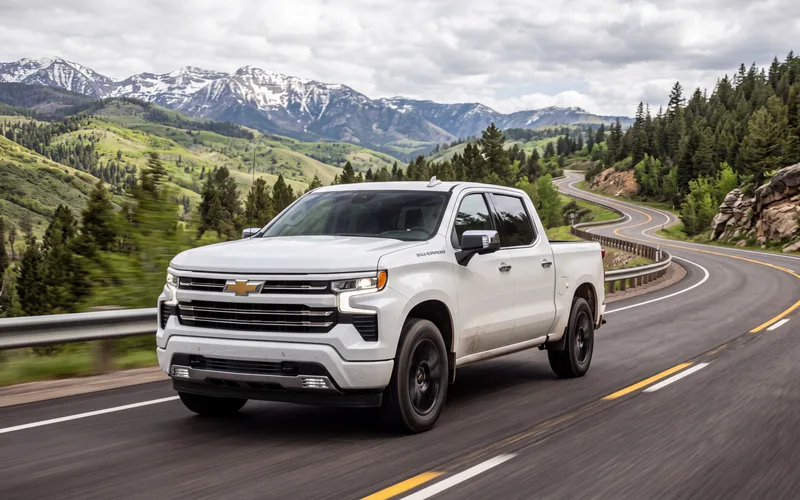 Chevrolet Silverado 1500Full-Size Truck
The F-150 tops the Silverado on towing (13,500 vs 13,300 lbs max), payload leadership, and configuration breadth (10+ trims vs Chevy's narrower ladder).
Compare 2.42C+
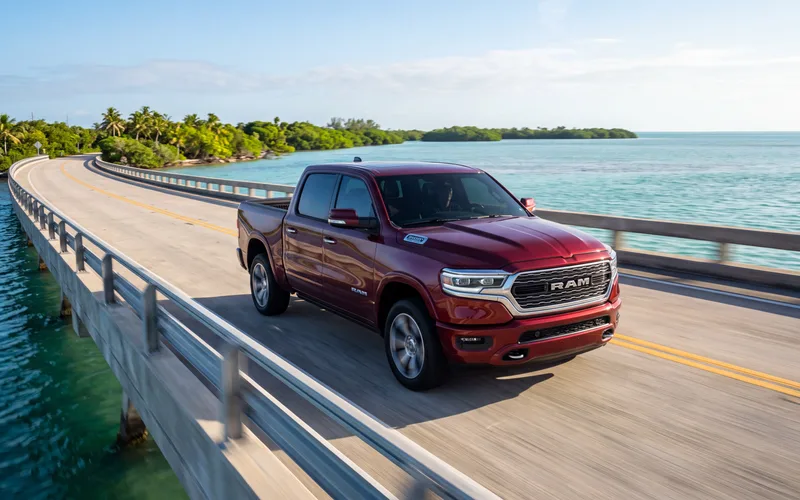 Ram 1500Full-Size Truck
Ram beats the F-150 on ride quality (its coil-sprung rear suspension is the class ride benchmark) and on upmarket interior luxury in Limited and Tungsten trims.
Compare 2.20C
2.20C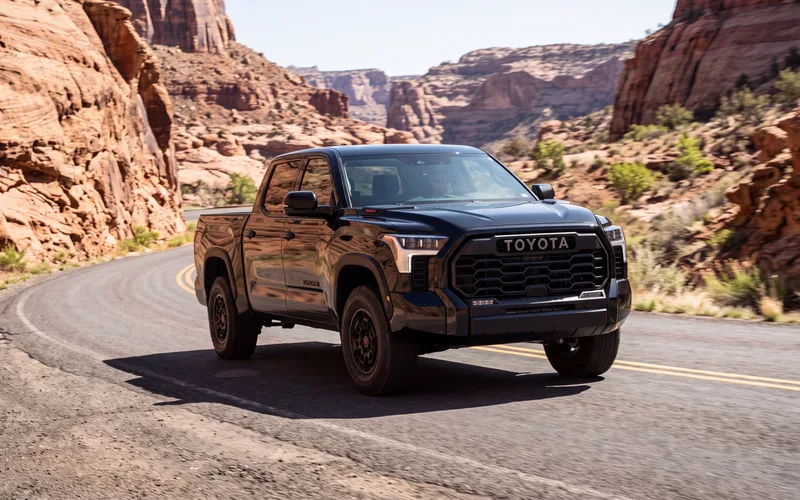 Toyota TundraFull-Size Truck
Tundra brings Toyota's warranty-plus-reliability halo and a standard i-FORCE MAX hybrid on upper trims, but the F-150 outmatches it on max towing (13,500 vs 12,000 lbs), payload, trim breadth, hands-free driving (BlueCruise vs no Toyota equivalent), and Pro Power Onboard exportable power.
CompareHow it's evolved
10 scored model years · 2017–2026
Subject scores by year
Hover or tap a score to see what moved it versus the year before. A corner mark flags a big swing.
| Year | Performance | Efficiency | Safety | Space | Cost | Reliability | Tech | Use-case | Driving | Value |
|---|---|---|---|---|---|---|---|---|---|---|
| 2026 | 64 | 52 | 72 | 69 | 47 | 67 | 72 | 73 | 65 | 75 |
| 2025 | 64 | 68 | 76 | 72 | 52 | 59 | 76 | 73 | 64 | 72 |
| 2024 | 69 | 50 | 76 | 65 | 55 | 50 | 75 | 71 | 64 | 72 |
| 2023 | 69 | 50 | 68 | 65 | 56 | 55 | 64 | 69 | 60 | 65 |
| 2022 | 69 | 60 | 68 | 65 | 58 | 56 | 67 | 69 | 61 | 63 |
| 2021 | 70 | 68 | 73 | 68 | 54 | 56 | 67 | 68 | 63 | 76 |
| 2020 | 68 | 60 | 61 | 66 | 54 | 64 | 49 | 65 | 59 | 67 |
| 2019 | 66 | 65 | 66 | 66 | 57 | 59 | 53 | 66 | 62 | 70 |
| 2018 | 64 | 67 | 49 | 65 | 58 | 58 | 53 | 60 | 62 | 68 |
| 2017 | 59 | 57 | 46 | 63 | 55 | 58 | 42 | 63 | 63 | 73 |
Compare two years
Best fit & conditions
Higher scores mean a better fit for that use case. Learn more about use-case fit →
Subject profile
Trims & configurations
8 trimsScores above reflect the volume trim. Per-trim specs and scores are rolling out — the full lineup:
Detailed scoring by subject
1Performance & PowertrainOne of the F-150's strongest categories.2.71B-
The 2.7L EcoBoost V6 is the most commonly ordered step-up engine on XLT/Lariat SuperCrew trims for the all-new 14th-generation F-150's launch model year.
Peak torque of the volume 2.7L EcoBoost engine; the new-for-2021 3.5L PowerBoost full-hybrid tops the lineup at 570 lb-ft.
Car and Driver's instrumented test of a 2021 F-150 XLT 2.7L EcoBoost 4x4 recorded 5.7 seconds to 60 mph, representative of the volume powertrain in the redesigned generation's launch year.
The 2.7L EcoBoost delivers strong, mostly linear power with well-controlled turbo lag; reviewers of the redesigned 2021 F-150 consistently praised the engine's responsiveness, a step behind the effortless PowerBoost hybrid's electric assist.
The 10-speed automatic (10R80) shifts crisply across the lineup with well-tuned logic for towing and normal driving, with only occasional hunting noted on light throttle.
Ford's headline class-leading max conventional tow rating for the all-new 14th-generation F-150, announced ahead of the 2021 model year launch.
Ford's advertised max payload figure for the redesigned F-150 at its 2021 launch, achieved on a stripped-down configuration with the Heavy Duty Payload Package.
The redesigned 2021 F-150 introduced an integrated trailer brake controller, Pro Trailer Backup Assist, a suite of trailer cameras, onboard scales, and the new Smart Hitch tongue-weight/sway sensor — one of the most complete towing-tech suites in the class at launch.
4x4 with electronic shift-on-the-fly and a 2-speed transfer case is available across nearly every trim (2WD standard, 4x4 optional), with a terrain management system and locking rear differential offered on higher trims; only the Raptor makes 4x4 standard.
2021 introduced both the new Tremor package (2-inch suspension lift, 33-inch all-terrain tires, locking rear diff, skid plates) and the redesigned F-150 Raptor with Fox Live Valve shocks and available 37-inch tires — a strong, freshly expanded off-road lineup at the generation's launch.
The 2021 lineup spans a base 3.3L V6, 2.7L and 3.5L EcoBoost turbo V6s, a naturally aspirated 5.0L V8, a 3.0L Power Stroke diesel, and the all-new 3.5L PowerBoost full-hybrid — one of the broadest powertrain spreads of any full-size truck, headlined by the segment's first mainstream hybrid pickup option.
2Efficiency & RangeMid-pack among this car's ten categories.2.57C+
2021 was the launch year of this 14th-generation F-150; the 2.7L EcoBoost 4x4 SuperCrew is the best-selling configuration and the appropriate volume-trim baseline.
City rating for the volume 2.7L EcoBoost 4x4 configuration in this generation's debut model year.
Highway rating for the volume 2.7L EcoBoost 4x4 configuration in this generation's debut model year.
Estimated from the SuperCrew's standard 26-gallon fuel tank multiplied by the EPA combined rating; Ford does not publish an EPA range figure directly for gas trucks.
Derived from Ford Authority's reporting of the official EPA annual fuel cost for the 2021 PowerBoost hybrid ($1,300 at 24 combined MPG), scaled to the 2.7L EcoBoost's 21 combined MPG using the same EPA fuel-price assumption; MY2021 stickers used a notably lower gas-price forecast than later model years amid pandemic-era low fuel prices.
Every 2021 F-150 gas and hybrid powertrain (3.3L V6, 2.7L/3.5L EcoBoost, 5.0L V8, 3.5L PowerBoost) runs on regular-grade 87-octane fuel with no premium requirement, keeping running costs simple across the lineup; premium is only ever recommended (not required) for maximum performance when towing in hot weather.
3SafetyOne of the F-150's strongest categories.2.96B-
NHTSA's overall rating for the redesigned 14th-generation 2021 F-150 (SuperCrew and other cab configs, gas and hybrid powertrains) is the top 5-star mark.
The redesigned 2021 F-150 (crew and extended cab) earned Good ratings across all six IIHS crashworthiness tests (small overlap front driver/passenger, moderate overlap front, side, roof strength, head restraints) and won IIHS Top Safety Pick — joining the Ram 1500 as the only large pickups to earn a 2021 award. It fell just short of Top Safety Pick+ because the standard halogen headlights on lower trims rated Poor.
Ford Co-Pilot360 (Pre-Collision Assist with AEB and pedestrian detection, forward collision warning, lane-keeping system, auto high-beams) is standard across every trim including base XL, but blind-spot monitoring and adaptive cruise control are optional on XL and only become standard from XLT up.
IIHS rated the standard camera-only Co-Pilot360 2.0 front crash prevention system Superior for vehicle-to-vehicle and Superior for pedestrian detection, with the optional camera-and-radar Co-Pilot360 Assist 2.0 rated Advanced — both strong results for the class.
BLIS blind-spot monitoring with rear cross-traffic alert is standard from XLT up (optional on base XL) and an available trailer-coverage package extends detection along an attached trailer, but the system is alert-only with no automatic braking intervention.
Standard lane-keeping assist (XLT and up) is functional but basic warn-and-nudge intervention rather than true centering; the Co-Pilot360 Active 2.0/BlueCruise package that adds smooth lane centering was ordered on 2021 trucks but its hands-free centering feature did not actually activate via OTA update until Q1 2022, so most 2021-model-year buyers only had conventional lane-keep assist.
Adaptive cruise control with stop-and-go (part of Co-Pilot360 2.0, standard XLT and up) works smoothly for a full-size truck, but the combined highway-assist/lane-centering behavior tied to Active 2.0 was not yet functional for most of the 2021 model year pending the BlueCruise OTA rollout.
BlueCruise was announced for the 2021 F-150 and buyers could order the Active 2.0 Prep Package (standard Limited, optional Lariat/King Ranch/Platinum), but the actual hands-free driving feature was delayed from its planned Q3 2021 launch and only reached Prep Package trucks via over-the-air update starting Q1 2022 — so it was effectively unavailable for most of the 2021 model year.
IIHS rated the standard halogen headlights (base XL/XLT, and standard on Tremor) Poor for inadequate visibility; only the optional adaptive LED projector headlights (built after June 2021) rated Good, with LED reflector units rating Acceptable — the volume trim's default lighting is well below the class-leading options.
Consumer Reports and reviewers praised the redesigned F-150's upright seating position and relatively low beltline for good outward sightlines, typical of a full-size truck's high driving position, though the thick A-pillars and long hood still create some blind zones.
The SuperCrew's rear doors open wide and the bench seat can accommodate two car seats, but as with prior generations the LATCH lower anchors sit in firm bench-seat cushions, requiring some digging to buckle in securely.
4Space & ComfortMid-pack among this car's ten categories.2.62C+
The redesigned 2021 F-150 SuperCrew, the volume configuration, seats six with the standard 40/20/40 split-bench front seat; buyers who option front buckets with a console drop to five.
Front headroom sits mid-band for full-size trucks; the panoramic Vista Roof option trims it slightly on equipped trims.
Front legroom is above mid-pack for the segment, aided by the redesigned interior's longer cab.
SuperCrew rear headroom is toward the top of the full-size truck band, a benefit of the 2021 redesign's taller greenhouse.
SuperCrew rear legroom is a class strength, near the top of the full-size truck normalization band and routinely cited by reviewers as among the roomiest rear seats in the segment.
The 5.5-ft box standard on SuperCrew, the volume cab/bed pairing, is the shortest bed Ford offers on the F-150, trading cargo length for cab room; the optional 6.5-ft box narrows that gap.
Bed volume on the standard SuperCrew 5.5-ft box is mid-pack for the segment.
The redesigned 2021 F-150 introduced a gear-shift lever that folds flat into the center console to create a large work surface, paired with a segment-leading console bin big enough for a laptop, available under-seat storage, and standard Pro Power Onboard 120V outlets — widely called out by reviewers as a class-leading interior redesign.
Front and rear seats are comfortable for most trips on the volume XLT cloth buckets; higher trims (Lariat/Platinum/Limited) add more cushioning and adjustability, but base-trim seats drew some criticism for flat cushioning on long hauls.
The F-150 retains a leaf-spring solid rear axle for 2021, giving a composed but occasionally firm unladen ride over broken pavement — reviewers consistently rank it behind the coil-spring Ram 1500 for ride comfort despite class-competitive body control.
Ford added extra sound deadening and acoustic glass options in the 2021 redesign, and reviewers noted a noticeably quieter cabin than the outgoing generation, though wind noise around the mirrors persists at highway speed on some trims.
Standard Pro Power Onboard (2.0 kW on most trims, 7.2 kW optional) is a segment differentiator, and heated/ventilated front seats, a heated steering wheel, and heated rear seats are available from mid-trims up, with massaging front seats on Limited — though the richest comfort kit is concentrated on upper trims rather than broadly standard.
5Cost of OwnershipThe F-150's lowest-graded category.1.63D
2021 F-150 XL Regular Cab 4x2 6.5-ft box carried a base price of $28,940 before the $1,695 destination charge, one of the lowest entry points in the full-size truck class.
XLT SuperCrew 4x4 was the volume cab/drivetrain configuration for 2021 F-150 buyers; adding the popular 302A High equipment group ($5,730 — 12-in touchscreen, heated front seats, remote start, LED lighting) on top of the ~$45,490 base SuperCrew 4x4 price reflects a typically-equipped truck.
The 2021 F-150 (14th-generation, first model year of the redesign) shares its running gear with subsequent model years; class-projection data points to slightly-above-segment-median but still moderate upkeep costs, blended between CarEdge's cumulative estimate and RepairPal's annualized figure.
No single authoritative 2021-specific 5-year retention study was found; blended from iSeeCars (37.9% depreciation → 62.1% retention) and CarEdge (50% depreciation → 50% retention), landing in the middle of the full-size truck retention band consistent with the F-150's reputation for solid but not class-leading resale strength.
Standard Ford bumper-to-bumper coverage, the segment floor for full-size trucks, unchanged across the F-150 lineup.
Standard Ford powertrain coverage, the segment floor — several rivals (Hyundai, Ram-adjacent brands) offer longer terms.
New 2021 F-150 buyers received FordPass Rewards points (historically ~42,000 pts on purchase, enough to offset roughly the first two to three scheduled service visits) plus complimentary 5-year/60,000-mile roadside assistance (fuel delivery, flat-tire help, lockout, jump-start) via the FordPass app — a points-based perk rather than fully prepaid maintenance.
$51,220 volume-trim price minus its estimated resale value after 5 years (58% retained, or about $29,708) leaves about $21,512 in depreciation. Add the projected $3,767 in 5-year maintenance and repairs, and owning this vehicle for 5 years costs about $25,279 in total.
6Reliability & QualityOne of the F-150's weakest categories.1.77C-
The all-new 14th-generation F-150 launched for 2021 with mixed signals: J.D. Power's predicted reliability index sat at 77/100 (average), while Consumer Reports flagged the debut-year gas F-150 as below its historical average amid first-year redesign issues.
Ford's multi-year dependability standing in CR and J.D. Power VDS studies has been consistently mid-pack over the early 2020s, neither a top-tier nor bottom-tier brand.
NHTSA lists roughly 26-28 recalls against the 2021 F-150, including a serious drivetrain issue (10-speed transmission able to unexpectedly shift to neutral) and a seat belt recall — an unusually high count for a single model year, typical of an all-new redesign's teething problems.
The volume gas engines (2.7L EcoBoost V6, 5.0L V8) and 10-speed automatic carry over largely proven hardware from the prior generation with no systemic red flags; the optional PowerBoost hybrid, by contrast, drew persistent owner complaints (driveshaft separation, charging/software glitches) and is excluded from the volume-trim assessment.
Reviewers praised the redesigned cabin's styling and use of soft-touch materials on higher trims, well ahead of the contemporary Silverado/Sierra, but noted the tactile feel still falls short of a truly premium cabin.
The redesigned truck showed improved noise isolation and tighter assembly versus the outgoing generation, with no widespread rattle or panel-gap complaints reported by reviewers.
Ford operates the largest dealer network of any full-line automaker in the US, and as the perennial best-selling vehicle in America the F-150 benefits from dense service coverage and well-stocked parts departments nationwide.
As the highest-volume vehicle in the US market, the F-150 enjoys an enormous aftermarket parts ecosystem and generally reasonable repair costs for its conventional gas powertrains, though hybrid-specific components run pricier.
7Technology & InfotainmentMid-pack among this car's ten categories.2.52C+
The all-new 2021 F-150 launched SYNC 4 with a split-screen strategy: high-volume XL/XLT trims get an 8-inch portrait touchscreen standard, while a 12-inch unit is an XLT package option and standard from Lariat up.
SYNC 4 debuted for 2021 with a noticeably faster, better-organized interface than SYNC 3 and Ford retained physical climate controls, but the base 8-inch screen on volume trims feels smaller than the 12-inch unit reserved for higher trims and than some newer rivals' standard displays.
The 2021 F-150 was the vehicle that brought wireless Apple CarPlay and Android Auto to Ford's lineup, standard across the entire trim walk from XL through Limited/Raptor on both the 8-inch and 12-inch SYNC 4 screens.
SYNC 4's new cloud-connected voice recognition and available TomTom-based navigation handle common requests capably, though as with most trucks most owners default to CarPlay/Android Auto for routing rather than the embedded system.
Base audio on XL/XLT is unremarkable, but the 2021 redesign introduced an available 8/12-speaker Bang & Olufsen system on King Ranch/Lariat and a standard 18-speaker, 1080-watt B&O Unleashed system with headrest speakers and an external subwoofer on the range-topping Limited.
Volume trims (XL/XLT) use a small partial-digital productivity screen flanked by analog gauges, while the fully configurable 12-inch digital cluster designed by Visteon is reserved for Lariat and above in this launch model year.
The 2021 redesign introduced Ford's Power-Up over-the-air update system, capable of updating dozens of vehicle computer modules (not just infotainment) automatically in the background — a genuine step up from prior-generation trucks, if still short of an EV-native cadence.
FordPass Connect comes standard via an embedded modem and provides free remote start, lock/unlock, vehicle locate, health alerts, and remote control of the available Pro Power Onboard generator — solid core functionality, though contemporary reviews noted a ~24-second remote-start delay over cellular.
The 2021 F-150 introduced Pro Power Onboard exportable AC power in three tiers (2.0 kW, 2.4 kW, and a segment-first 7.2 kW on PowerBoost hybrid, the latter with four 120V outlets plus a 240V outlet), on top of USB ports and a 400W cabin outlet — a genuine differentiator versus rivals of the era, though USB-C wasn't yet broadly standard.
Proximity keyless entry, push-button start, SecuriCode keypad, and free FordPass app remote start are widely available across the 2021 lineup, but phone-as-key convenience was not offered on the gas F-150 for this launch model year.
A standard backup camera is joined by an available 360-degree camera — for the first time offered on the volume XLT trim in this generation, standard on Limited, and package-available on Lariat/King Ranch/Platinum/Raptor — plus Pro Trailer Backup Assist for trailering visibility.
The redesigned 2021 F-150 introduced an available head-up display, standard on Raptor and offered as an option on Lariat, King Ranch, Platinum, and Limited — a genuine new feature for the truck but reached mainly through upper trims or added packages rather than broad availability.
8Use-Case FitMid-pack among this car's ten categories.2.60C+
The redesigned SuperCrew cab's four full-size doors open wide and nearly flat, and segment-benchmark rear legroom makes rear-facing seat installs and stroller/gear loading easy, with new lockable under-seat storage freeing the rear footwell.
Ford Co-Pilot360 (AEB with pedestrian detection, blind-spot monitoring with trailer coverage, lane-keeping, rear camera) is standard on every 2021 trim including base XL, NHTSA rates the redesigned crew cab 5 stars overall, and IIHS scored it Good across crashworthiness tests for a Top Safety Pick nod in the truck's first model year on this platform.
SuperCrew's near-identical front/rear dimensions (43.9 in front legroom vs 43.6 in rear, 40.8/40.4 in headroom) give the new-for-2021 generation segment-benchmark all-row space, and higher trims add rear climate vents, a panoramic sunroof, and heated rear seats for long hauls.
The redesigned chassis, standard 10-speed automatic, and torquey EcoBoost powertrains make around-town acceleration and highway merging effortless with a compliant ride, but the F-150's full-size footprint and wide turning radius add real fatigue navigating tight streets and garages compared with smaller trucks.
The volume 2.7L EcoBoost trim returns an EPA-estimated 20/24/22 MPG city/highway/combined (2WD) — average for a full-size truck — but 2021 marks the debut of the PowerBoost hybrid, which reaches 25/26/25 MPG (2WD), a class-leading efficiency option for commuting-focused buyers unmatched by V8-only full-size rivals at the time.
A 360-degree camera, front/rear parking sensors, and Pro Trailer Backup Assist are available to ease tight maneuvers, but they're optional above base trims, and the F-150's full-size length and width (up to nearly 232 in with the 8-ft box) make it inherently harder to park and thread through cities than smaller trucks.
A segment-leading 14,000 lbs max tow (3.5L EcoBoost with Max Trailer Tow) and 3,325 lbs max payload give the all-new 2021 F-150 real headroom over most gas rivals, and three bed lengths — 5.5-ft, 6.5-ft, and a genuine 8-ft box (77.4 cu ft) — cover everything from daily jobsite runs to full-size cargo, backed by new onboard scales and Smart Hitch tech debuting this generation.
The F-150 carries a long fleet-proven reputation and broad Ford Pro commercial support network, but 2021 is the first model year of an all-new frame, powertrain lineup, and hybrid system with no track record yet — the debut PowerBoost hybrid battery drew a 2021 fire-risk recall/stop-sale, and owners reported harsh-shift complaints with the new 10-speed calibration, leaving real first-year-platform uncertainty.
Pro Power Onboard debuts for 2021 with 2.0 kW standard on select gas trims, 2.4 kW standard on the new PowerBoost hybrid, and an optional 7.2 kW generator output that can run job-site tools directly from bed and cab outlets, paired with standard box tie-downs, an available tailgate work surface/step, LED bed lighting, and Ford Pro's commercial upfit ecosystem.
A quiet, well-isolated cabin and a 26-gallon tank on EcoBoost/PowerBoost configurations deliver 500+ mile highway range, but the 2021 F-150 launches with Ford Co-Pilot360 Assist 2.0's adaptive cruise and lane-centering only — hands-free BlueCruise highway driving would not arrive on the F-150 until the 2022 model year, leaving 2021 a step behind where the nameplate would soon be.
4x4 is available across nearly every trim, the new-for-2021 Tremor off-road package (available on XLT and Lariat) adds a 2-inch suspension lift, 33-in all-terrain tires, a locking rear diff, and skid plates for light trail work, and the redesigned third-generation Raptor — also new for 2021 — adds Fox Live Valve suspension and a high-output twin-turbo V6 for genuine desert-running capability.
Three bed-length choices topping out at a genuine 8-ft box (77.4 cu ft) beat most full-size rivals' single or dual bed options, and standard tie-downs, an available spray-in bedliner, and the new Pro Power Onboard outlets make hauling and securing bulky gear straightforward.
9Driving ExperienceOne of the F-150's weakest categories.2.26C
The redesigned 14th-gen F-150 is secure and composed when pushed, an improvement over the outgoing truck, but agility is unremarkable rather than engaging for a full-size half-ton.
Steering is precise enough to place the truck confidently but slow-geared and largely numb, prioritizing secure on-center feel over driver feedback.
Brakes are strong and fade-resistant even under trailer/payload loads, with 60-0 mph stops in the 118-140 ft range typical for the segment, though pedal feel draws some criticism.
The EcoBoost/10-speed powertrains (and the PowerBoost hybrid) are well-calibrated with strong low-end response; the hybrid's engine start/stop and EV-to-gas handoff show occasional shudder.
Turbocharged EcoBoost V6s and the hybrid system are quiet under normal driving with added sound insulation for the redesign; some coarseness surfaces under hard throttle.
Official Ford technical specs list curb-to-curb turning diameter varying by cab, box length, and drivetrain; the volume 4x4 SuperCrew short-box configuration is used as representative.
The redesigned cabin offers a commanding view out, wide adjustment range, and a well-organized dash with the optional 12-inch touchscreen alongside real climate buttons, among the best driving environments in the segment.
The PowerBoost hybrid's instant torque delivers genuinely quick, engaging acceleration for a work truck, though the F-150 overall remains more competent appliance than back-road plaything.
10Value & Market PositionThe F-150's best-graded category.3.18B
Base XL is a stripped work-truck spec (vinyl floors, manual windows on lower configs), but the volume XLT adds SYNC 3, cruise control, power accessories, and AdvanceTrac/trailer sway control standard fleet-wide — competitive but not class-leading generosity at the base.
The redesigned 14th-gen truck brought segment-first content (PowerBoost hybrid, 12-in touchscreen, onboard generator, fold-flat gear-shift work surface) into a mainstream price ladder, giving strong capability and tech per dollar versus rivals still on older platforms.
Widest lineup in the segment: three cab styles, three bed lengths, six engines (including the new hybrid), and roughly eight trims from work-spec XL to luxury Limited, plus off-road Tremor and performance Raptor variants.
Not just segment-leading but the single best-selling vehicle of any kind in the US for the year, extending Ford's multi-decade truck sales dominance by a wide margin over the Ram 1500 and Silverado.
Ford's truck brand carries deep loyalty and heritage credibility with F-150 buyers, but the mainstream Ford badge lacks the premium halo of GMC Denali or Ram Limited trims in the same full-size class.
Some meaningful cash-back offers existed on carryover-heavy configs, but as the top-selling vehicle in the country with tight new-generation supply through 2021, popular trims and the hybrid saw little discounting.
2021 is the launch year of the all-new 14th-generation F-150 — as fresh as a model year can be, with a new hybrid powertrain, new interior/tech, and no imminent redesign risk.
Won the 2021 North American Truck of the Year over the Ram TRX and Jeep Gladiator Mojave, and was broadly praised by reviewers for ride, tech, and payload/towing capability at launch.