

The verdict
A mixed-report hot hatch, strong on driving and held back by efficiency.
The 2020 Civic Type R is the refreshed FK8 and one of the best front-drive driver's cars ever sold. It pairs a 306-hp turbo four and a superb 6-speed manual with a chassis critics still treat as the benchmark. It is also unusually practical, with a 25.7 cu ft hatch, and it has held its value remarkably well: used examples still list near the $37,950 original sticker. The trade-offs are a firm, noisy ride, premium fuel at about 25 MPG, a dated 7-inch screen, no blind-spot monitoring, room for only four, and no automatic or AWD.
Jump to scoresStrengths
- Benchmark front-drive handling
- A great manual gearbox and an eager engine
- Exceptional resale value
What holds it back
- Thirsty and premium-only
- Dated cabin tech
- Gaps in driver assistance and visibility
Top alternatives
Cars shoppers cross-shop with the Honda Civic Type R 2.69C+
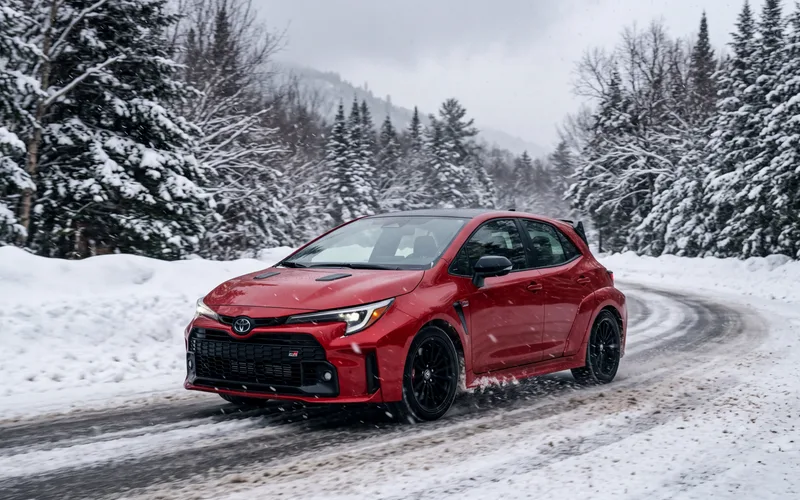 Toyota GR CorollaHot HatchBetter at: All-weather grip
It offers the same manual hot-hatch thrills as the Type R, plus all-wheel drive for buyers who face snow or rough roads.
Compare 2.63C+
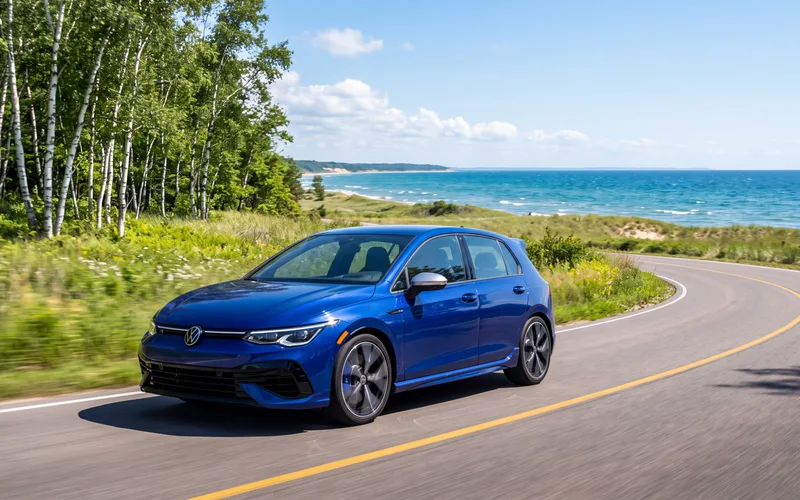 Volkswagen Golf RHot HatchBetter at: Daily livability
It pairs an automatic with all-wheel drive and calmer manners, making it the more livable everyday performance hatch.
Compare 2.72B-
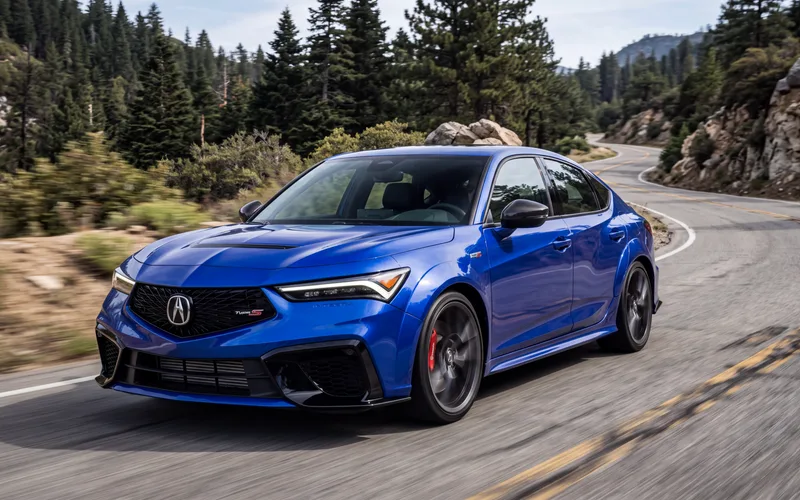 Acura Integra Type SSport CompactBetter at: Comfort
It shares the Type R's engine and hardware but wraps them in a softer, more premium package for buyers who'll drive it every day.
CompareHow it's evolved
9 scored model years · 2017–2026
Subject scores by year
Hover or tap a score to see what moved it versus the year before. A corner mark flags a big swing.
| Year | Performance | Efficiency | Safety | Space | Cost | Reliability | Tech | Use-case | Driving | Value |
|---|---|---|---|---|---|---|---|---|---|---|
| 2026 | 56 | 16 | 74 | 55 | 53 | 79 | 59 | 46 | 78 | 74 |
| 2025 | 57 | 13 | 75 | 54 | 46 | 79 | 57 | 43 | 80 | 74 |
| 2024 | 57 | 13 | 71 | 55 | 56 | 79 | 60 | 46 | 78 | 76 |
| 2023 | 57 | 13 | 73 | 55 | 59 | 77 | 59 | 46 | 78 | 76 |
| 2021 | 53 | 15 | 65 | 53 | 76 | 77 | 40 | 42 | 78 | 69 |
| 2020 | 53 | 15 | 65 | 53 | 76 | 77 | 40 | 42 | 78 | 71 |
| 2019 | 53 | 15 | 38 | 53 | 75 | 75 | 40 | 40 | 77 | 70 |
| 2018 | 53 | 15 | 22 | 53 | 75 | 74 | 38 | 40 | 77 | 71 |
| 2017 | 53 | 15 | 22 | 53 | 76 | 75 | 38 | 40 | 77 | 72 |
Compare two years
Best fit & conditions
Higher scores mean a better fit for that use case. Learn more about use-case fit →
Subject profile
Academic Probation · NHTSA safety recalls
Dec 18, 2023Fuel system, gasoline: delivery: fuel pumpThe fuel pump inside the fuel tank may fail.
Defect
Honda (American Honda Motor Co.) is recalling certain 2013-2023 Honda Accord, Civic Coupe, Civic Sedan, Civic Hatchback, Civic Type R, CR-V, HR-V, Ridgeline, Odyssey, Acura ILX, MDX, MDX Hybrid, RDX, RLX, TLX, 2019-2022 Honda Insight, Passport, 2020 Honda CR-V Hybrid, 2018-2019 Honda Clarity PHEV, Fit, and 2015-2020 Honda Accord Hybrid, Pilot, Acura NSX vehicles. The fuel pump inside the fuel tank may fail.
Risk
Fuel pump failure can cause an engine stall while driving, increasing the risk of a crash.
Remedy
Dealers will replace the fuel pump module, free of charge. Owner letters were mailed September 6, 2024. Owners may contact Honda customer service at 1-888-234-2138. Honda's numbers for this recall are KGC and KGD. This recall is an expansion of NHTSA recall numbers 21V-215 and 20V-314.
NHTSA campaign 23V858000 ↗Manufacturer no. KGC, KGD2,490,460 vehicles potentially affected (all models in the campaign)Owners notified Mar 29, 2024Filed by Honda (American Honda Motor Co.)Filed as CIVIC TYPE R
5 recalls on other model years of the Civic Type R (2017–2019, 2021, 2023–2025)
May 21, 2026Air bags: sensor: occupant classification: front passengerThe front passenger seat weight sensor may crack and short circuit, which can cause the air bags to deploy unintentionally during a crash.
Defect
Honda (American Honda Motor Co.) is recalling certain 2018-2021, 2023 Acura TLX, 2019-2024 RDX, 2017-2020, 2022-2026 MDX, 2017-2021, 2023, 2025 Honda Ridgeline, 2017-2022 Pilot, 2019-2021 Passport, 2018-2026 Odyssey, 2019-2022 Insight, 2019-2021 HR-V, 2018-2020 Fit, 2020-2022 CR-V Hybrid, 2017-2022 CR-V, 2017-2018, 2021 Civic Type R, 2017-2021 Civic hatchback, 2016-2020 Civic coupe, 2016-2022 Civic, 2017-2022 Accord Hybrid, and 2016-2022 Accord vehicles. The front passenger seat weight sensor may crack and short circuit, which can cause the air bags to deploy unintentionally during a crash.
Risk
Air bags that deploy unintentionally during a crash increase the risk of injury.
Remedy
Dealers will replace the seat weight sensors, free of charge. Owner notification letters were mailed July 7, 2026. Owners may contact Honda's customer service at 1-888-234-2138. Honda's numbers for this recall are BOL, WO9, OOA, WOM, XOH, NOC, POD, BOE, UOF, POB, EOG, AOI, QO8, TOJ, DO7, and SOK. This recall expands previous NHTSA recall number 24V064. Vehicle Identification Numbers (VINs) involved in this recall will be searchable on NHTSA.gov beginning May 29, 2026.
NHTSA campaign 26V332000 ↗Manufacturer no. Refer to Comments98,892 vehicles potentially affected (all models in the campaign)Owners notified Jul 6, 2026Filed by Honda (American Honda Motor Co.)Filed as CIVIC TYPE ROct 3, 2024SteeringThe steering gearbox assembly may have been manufactured incorrectly, which can cause excessive internal friction and lead to difficulty steering the vehicle.
Defect
Honda (American Honda Motor Co.) is recalling certain 2023-2025 Acura Integra, Civic Type R, CR-V Hybrid, CR-V, HR-V, 2022-2025 Civic, Civic Hatchback, 2024-2025 Acura Integra Type S, 2025 CR-V Fuel Cell EV, Civic Hybrid, and Civic Hatchback Hybrid vehicles. The steering gearbox assembly may have been manufactured incorrectly, which can cause excessive internal friction and lead to difficulty steering the vehicle.
Risk
Difficulty steering can increase the risk of a crash.
Remedy
Dealers will replace the worm gear spring and redistribute or add grease as necessary, free of charge. Owner notification letters were mailed November 18, 2024. Owners may contact Honda Customer Service at 1-888-234-2138. Honda's numbers for this recall are SJS, MJU, QJT and VJV.
NHTSA campaign 24V744000 ↗Manufacturer no. SJS, MJU, QJT, VJV1,693,199 vehicles potentially affected (all models in the campaign)Owners notified Nov 18, 2024Filed by Honda (American Honda Motor Co.)Filed as CIVIC TYPE RFeb 1, 2024Air bags: sensor: occupant classification: front passengerThe front passenger seat weight sensor may crack and short circuit, failing to suppress the air bag as intended.
Defect
Honda (American Honda Motor Co.) is recalling certain 2020-2022 Pilot, Accord, Civic sedan, HR-V, Odyssey, 2020 Civic coupe, Fit, 2021-2022 Civic hatchback, 2021 Civic Type R, Insight, 2020-2021 CR-V, CR-V Hybrid, Passport, Ridgeline, Accord Hybrid, 2020 Acura MDX, 2022 Acura MDX, 2020-2022 Acura RDX, and 2020-2021 Acura TLX vehicles. The front passenger seat weight sensor may crack and short circuit, failing to suppress the air bag as intended.
Risk
An air bag that deploys unintentionally during a crash can increase the risk of injury.
Remedy
Dealers will replace the seat weight sensors, free of charge. Owner notification letters were mailed March 28, 2024. This is a phased recall. Owners may contact Honda customer service at 1-888-234-2138. Honda's numbers for these recalls are XHP and VHQ.
NHTSA campaign 24V064000 ↗Manufacturer no. XHP, VHQ750,114 vehicles potentially affected (all models in the campaign)Owners notified Mar 28, 2024Filed by Honda (American Honda Motor Co.)Filed as CIVIC TYPE RMar 30, 2023SeatsThe driver's seat frame may not have been welded properly, which can cause the seat cushion frame to break. As such, these vehicles fail to comply with the requirements of Federal Motor Vehicle Safety Standard number 207, "Seating Systems."
Defect
Honda (American Honda Motor Co.) is recalling certain 2023 Civic Type R vehicles. The driver's seat frame may not have been welded properly, which can cause the seat cushion frame to break. As such, these vehicles fail to comply with the requirements of Federal Motor Vehicle Safety Standard number 207, "Seating Systems."
Risk
A broken seat cushion frame may not adequately restrain the driver during a crash, increasing the risk of injury.
Remedy
Dealers will replace the front driver seat cushion frame assembly, free of charge. Owner notification letters were mailed May 10, 2023. Owners may contact Honda customer service at 1-888-234-2138. Honda's number for this recall is TDY.
NHTSA campaign 23V229000 ↗Manufacturer no. TDY640 vehicles potentially affected (all models in the campaign)Owners notified May 10, 2023Filed by Honda (American Honda Motor Co.)Filed as CIVIC TYPE RMar 25, 2021Fuel system, gasoline: delivery: fuel pumpThe low-pressure fuel pump inside the fuel tank may fail.
Defect
Honda (American Honda Motor Co.) is recalling certain 2019-2020 Acura MDX, MDX Sport Hybrid, RDX, TLX, Honda Accord, Civic Hatchback, Insight, 2019 Acura ILX, Honda Accord Hybrid, Civic Coupe, Civic Coupe Si, Civic Sedan, Civic Sedan Si, Civic Type R, Fit, HR-V, Odyssey, Passport, Pilot and Ridgeline, and 2018-2019 CR-V vehicles. The low-pressure fuel pump inside the fuel tank may fail.
Risk
Fuel pump failure can cause an engine stall while driving, increasing the risk of a crash.
Remedy
Honda will notify owners, and dealers will replace the fuel pump assembly, free of charge. Owner letters were mailed May 18, 2021. Owners may contact Honda customer service at 1-888-234-2138. Note: This recall is an expansion of recall 20V-314.
NHTSA campaign 21V215000 ↗Manufacturer no. Multiple Codes624,552 vehicles potentially affected (all models in the campaign)Owners notified May 18, 2021Filed by Honda (American Honda Motor Co.)Filed as CIVIC TYPE R
Source: NHTSA Office of Defects Investigation recall database, model years 2017–2026. Recalls are listed by model year as the manufacturer filed them; whether a specific car is affected depends on its VIN — check a VIN at nhtsa.gov ↗. NHTSA model names matched to this page: CIVIC TYPE R.
Detailed scoring by subject
1Performance & PowertrainGrades below the middle of the scale.1.55D
The FK8 K20C1 turbo four makes 306 hp in the 2020 Type R, which was sold in a single Touring trim; there is no other engine.
Broad 295 lb-ft plateau from the turbo four, strong for a front-drive hatchback.
Instrumented tests of the FK8 Type R land around 5.0 s to 60 mph, limited by front-drive traction; Honda publishes no official figure and the 2020 refresh did not change engine output.
Reviewers praise the K20C1's eager, linear pull and minimal lag above ~2,500 rpm, though there is some softness off boost at very low revs and exhaust drone at highway cruise.
The 6-speed manual with adjustable rev-matching is widely rated among the best shifters in production; the 2020 refresh added a shorter-throw shifter with a new aluminum knob.
Front-wheel drive only (with a helical limited-slip differential); no AWD, unlike the Golf R or Focus RS of the period.
A single powertrain — 2.0L turbo with a 6-speed manual — in a single trim; no automatic, hybrid or alternative engine.
2Efficiency & RangeThe Civic Type R's lowest-graded category.0.00F
EPA 25 mpg combined for the only 2020 configuration (2.0L turbo, 6-speed manual) — low against the gas-hatchback band, typical for a 300-hp hot hatch.
22 mpg city from a high-output turbo four with no hybrid assist.
28 mpg highway trails efficiency-oriented hatchbacks by a wide margin.
The 12.4-gallon tank and 25 mpg combined give roughly 310 miles, near the bottom of the hatchback band.
EPA's annual fuel cost at its current reference premium price is $3,300 — past the worst end of the hatchback band, driven by 25 mpg and premium fuel.
Premium unleaded is required for the high-boost 2.0L turbo, with no flex-fuel or electrified alternative.
3SafetyMid-pack among this car's ten categories.2.36C+
The 2020 Civic Hatchback, which shares the 10th-gen (FK) body, is rated 5 stars overall by NHTSA. Secondary summaries list the Type R at 5 stars overall, side and rollover (9.5% rollover risk), but NHTSA did not clearly publish a separate Type R frontal or overall rating, so confidence is reduced.
The shared Civic hatchback structure rated Good in every IIHS crashworthiness test, including both small-overlap sides. IIHS explicitly excludes the Type R from the hatchback's Top Safety Pick, so the car has all-Good crash results but no award.
Honda Sensing became standard on the single-trim Type R with the MY2020 refresh: CMBS AEB, FCW, LDW, LKAS, Road Departure Mitigation and ACC, plus Auto High-Beam. Blind-spot monitoring and rear cross-traffic alert are not offered at all.
The Type R uses the same CMBS camera/radar system as the Civic hatchback, which IIHS rated Superior for both vehicle-to-vehicle and daytime pedestrian crash prevention. No nighttime pedestrian test existed for this generation, and IIHS did not test the Type R separately.
The 2020 Type R offers neither blind-spot monitoring nor rear cross-traffic alert. It also lacks the LaneWatch camera that other Civic trims used as a substitute.
LDW, LKAS and Road Departure Mitigation are standard. The 10th-gen Civic's LKAS is a hands-on, mild-torque system that works only above about 45 mph and tends to wander rather than truly center.
ACC is standard, but the Type R comes only with the 6-speed manual, so it has no Low-Speed Follow. ACC cancels at low speed and cannot handle stop-and-go traffic.
Honda offered no hands-free driving system on the 2020 Type R or on any other Civic.
IIHS rates the Type R's LED reflector headlights with high-beam assist Good for vehicles built after December 2019, which covers the MY2020 Type R launched in early 2020. Earlier builds of the same lights were rated Poor for glare.
The FK8's split rear glass and tall rear wing block the rear view, and thick C-pillars create blind zones. With no blind-spot monitor or surround camera, the multi-angle rearview camera is the only aid.
The Type R seats four: two outboard rear seats with LATCH and no center seat, so it takes at most two child seats. IIHS rated the Civic hatchback's LATCH only Acceptable.
4Space & ComfortGrades below the middle of the scale.1.54D
The FK8 Type R seats four, one fewer than the five-seat Civic Hatchback it is built on. MY2020 is the mid-cycle refresh year of the 2017–2021 FK8 generation, and seating did not change.
No moonroof is offered, so the car keeps the full 39.3 in of front headroom, near the top of the hatchback band.
Front legroom is 42.3 in, the same as the regular Civic Hatchback and mid-pack for a compact hatch.
Rear headroom of 37.4 in is mid-band for hatchbacks and enough for average-height adults under the fastback roofline.
Rear legroom of 35.9 in is adequate rather than generous. Adults fit for shorter trips, but the high-backed front buckets eat into knee room.
The Type R keeps the 10th-gen Civic Hatchback's 25.7 cu ft cargo area. That is exceptional for a hot hatch and well ahead of the Golf GTI/R.
Storage follows the 10th-gen Civic layout: a large configurable center console with a sliding armrest, door bins and a wide hatch with a split-fold rear seat. There is no wireless charger and only two front USB ports, so storage is competitive but has no clever extras.
Reviewers praise the deeply bolstered suede-effect sport buckets for support on track and on long drives. However, the bolsters pinch wider occupants, adjustment is manual only, and the two-place rear bench is flat.
Adaptive dampers with a Comfort mode make the FK8 surprisingly livable, and the 2020 refresh gave them a higher sampling rate and retuned bushings. Even so, 20-inch wheels on 245/30 tires keep the ride firm over sharp impacts.
Road roar from the wide, low-profile summer tires is the main highway complaint, and Active Sound Control, new for 2020, amplifies engine noise in the cabin. The car is clearly louder than a regular Civic Hatchback.
The single Touring trim gets dual-zone automatic climate control. It has no heated or ventilated seats, no heated steering wheel, no power seats and no remote start, which is thin for a car near $37k.
5Cost of OwnershipOne of the Civic Type R's strongest categories.3.16B
MY2020 was the mid-cycle refresh of the FK8 Type R, sold in the US as one fully equipped 6-speed manual trim. The Limited Edition did not arrive until 2021.
There was only one 2020 configuration, so the volume trim is the base car.
Upkeep runs well above a regular Civic because of the 20-inch summer tires, Brembo brake service, manual-clutch wear and the required premium fuel, but Honda parts pricing keeps it under European hot hatches. No FK8-specific CarEdge figure exists, so this estimate brackets the published Type R figures for later years.
Six years on, 2020 FK8s still list close to their original sticker, helped by the 2021–22 used-car spike and enthusiast demand for the last manual-only, pre-FL5 Type R. The figure is recorded conservatively at 92%, because asking prices run ahead of transaction prices.
This is Honda's standard New Vehicle Limited Warranty with no Type R enhancement. It matches the GTI and Golf R and trails the Veloster N's 5/60k.
Standard Honda 5/60k powertrain coverage, well short of Hyundai's 10/100k on the Veloster N.
2020 Honda models came with no complimentary scheduled maintenance, because Honda Service Pass only started with eligible 2023 models. The perks are limited to 3 yr/36k roadside assistance and a HondaLink trial.
$37,950 volume-trim price minus its estimated resale value after 5 years (92% retained, or about $34,914) leaves about $3,036 in depreciation. Add the projected $6,400 in 5-year maintenance and repairs, and owning this vehicle for 5 years costs about $9,436 in total.
6Reliability & QualityOne of the Civic Type R's strongest categories.3.22B+
The 2020 Type R is the fourth model year of the FK8 generation (2017–2021) and the mid-cycle refresh year, so the core platform is mature while the refresh changes (larger grille opening and radiator, revised brakes and dampers) are mostly cooling and chassis tweaks rather than new risk; neither Consumer Reports nor J.D. Power publishes a Type R-specific figure, and the 2020 Civic line rates about average-to-good, with the high-stress, often-tracked Type R a notch below the mainstream Civic Hatchback.
Around 2020 Honda sat in the upper tier of mainstream brands for dependability — behind Toyota/Lexus and alongside Mazda and Subaru in Consumer Reports' brand rankings, and at or near industry average in J.D. Power VDS.
One NHTSA campaign reaches the 2020 Type R: the industry-wide Denso low-pressure fuel pump recall, where an impeller can swell and the engine can stall — safety-relevant but a straightforward pump replacement. The occupant-classification sensor campaigns that hit the 2021 and 2017–2018 Type R do not list the 2020 model year, and nothing touches the engine internals or transmission.
The K20C1 2.0L turbo (306 hp) and 6-speed manual have a solid durability record when maintained, and 2020 is the year Honda addressed the FK8's track-day heat soak with a larger grille opening and radiator plus a lighter aluminum shift knob/revised linkage; known complaints (rev-hang, clutch wear under hard use) are behavioral rather than failure-prone, though boost and track use keep it below mainstream Civic drivetrains.
The 10th-gen Civic cabin is solid but heavier on hard plastics than the 11th-gen successor; the Type R's red-and-black suede buckets, serialized plaque and the 2020 refresh's Alcantara-wrapped wheel and teardrop aluminum shift knob lift it, while the dated 7-inch infotainment and busy trim draw criticism at its price.
The US-market FK8 was built at Honda's Swindon, UK plant, and test cars report generally tight assembly; owner forums cite occasional interior rattles and paint chips on the aggressive aero.
Honda's ~1,000-store US network makes warranty and routine service widely accessible, but Type R-specific expertise and stocked performance parts vary by dealer, and widespread dealer markups marred the buying experience.
Body, electrical and many chassis parts are shared with the high-volume 10th-gen Civic and the K20C1/FK8 aftermarket is enormous, but Type R-only brakes (two-piece rotors from 2020), dampers, 20-inch wheels, aero pieces and UK-sourced body panels carry premium prices.
7Technology & InfotainmentOne of the Civic Type R's weakest categories.0.64F
A 7-inch touchscreen is standard on the single 2020 Touring trim. That is the bottom of the hatchback band.
The MY2020 refresh added a physical volume knob and hard buttons to Display Audio, which fixed the worst complaint about the 2017–2019 interface. The software is still dated, laggy and low-resolution next to VW's.
Apple CarPlay and Android Auto are standard but wired only; wireless projection was never offered on the FK8.
Garmin-based navigation with voice recognition is standard. It works, but most owners bypass it for phone projection.
A 540-watt, 12-speaker system with a subwoofer is standard. It is decent but unbranded, and the loud cabin blunts it at highway speeds.
A full-TFT gauge display is standard, and its layout changes with drive mode; +R mode shows a race-style rev bar, shift lights, boost and G-meter. It is less configurable and less crisp than VW's Digital Cockpit.
The 10th-gen Civic has no over-the-air vehicle or infotainment updates. Map and software updates go through a dealer or USB.
There are no connected-car remote functions such as remote start or remote lock. The only notable phone tie-in is the Honda LogR performance datalogger app, new for 2020, which is a track toy rather than remote control.
There are only two USB-A ports, rated 1.0 A and 1.5 A, both up front. There is no USB-C, no wireless charging and no rear ports.
Smart Entry with Walk Away Auto Lock and push-button start are standard. There is no remote start and no phone-as-key.
Only a multi-angle rearview camera with dynamic guidelines is fitted. There are no parking sensors, no surround view and no LaneWatch.
No head-up display is offered.
8Use-Case FitOne of the Civic Type R's weakest categories.0.78F
It has four doors, LATCH in both rear seats and a big 25.7 cu ft hatch for strollers. But it seats only four, rear legroom is a modest 35.9 in, and the low ride height makes loading car seats awkward.
Honda Sensing became standard for 2020, and the shared body scored Good in every IIHS crash test. But there is no blind-spot or cross-traffic monitoring, and IIHS excludes the Type R from the hatchback's Top Safety Pick.
Luggage space is excellent for the class. However, the firm ride, tire roar, lack of rear USB ports and four-seat limit make long family trips tiring.
A light clutch, slick rev-matched shifter and Comfort damper mode make it docile in town. But the manual-only gearbox in stop-and-go traffic, the firm ride and the wide turning circle add fatigue.
EPA 22/28/25 mpg is reasonable for 306 hp. Premium fuel and short-lived 20-inch summer tires still push per-mile costs above a regular compact.
The compact footprint helps. But the 39.5 ft turning circle is large for a compact, there are no parking sensors, the wing cuts rear visibility, and the low front lip must be watched on curbs.
There is no tow rating, and the car is front-drive on track tires. Only the large hatch gives it any light-hauling use.
The K20C1 drivetrain is robust, but the low suspension, aero splitters, suede-effect seats and expensive 20-inch wheels and tires do not suit hard use.
There is no power outlet beyond 12V, no hitch and no roof-rail provision.
Supportive seats plus adaptive cruise and lane-keep, both newly standard for 2020, help on long drives. A 12.4-gallon tank gives about 340 highway miles, but tire roar and the firm ride limit endurance.
It is a low-slung front-drive car on summer tires with no tow rating or roof rails, so it is pavement-bound. The hatch can still hold camping gear.
With 25.7 cu ft seats up and 46.2 cu ft folded, plus a 60/40 split seat, it hauls bulky luggage better than most hot hatches. It has no roof rails or hitch.
9Driving ExperienceThe Civic Type R's best-graded category.3.28B+
The FK8 is widely regarded as the benchmark front-drive chassis. Its dual-axis strut front suspension kills torque steer, and the helical LSD and adaptive dampers give huge grip. The 2020 refresh added stiffer bushings and faster damper sampling.
The dual-pinion variable-ratio steering is quick, precise and free of torque steer, though electric assist filters some feedback.
Brembo four-piston front calipers now clamp two-piece front rotors, new for 2020, which cut weight and improve cooling and fade resistance. The pedal is firm and the stops are strong.
The 306-hp K20C1 turbo four pulls hard from low revs with little lag. The close-ratio 6-speed with rev-matching is among the best shifters on sale, and for 2020 it gained a shorter-throw shifter and a weighted teardrop knob.
The triple-outlet exhaust is subdued, and reviewers find the engine note uninspiring. Active Sound Control, new for 2020, adds synthetic sound in Sport and +R. The powertrain is audible but not coarse.
The wide 245-section tires and dual-axis front strut limit steering lock, giving a 39.5 ft turning diameter near the worst of the hatchback band.
The low-mounted bucket seat, tilt/telescopic Alcantara wheel and well-placed shifter and pedals give an excellent driving position. The big rear wing and thick pillars hurt rearward visibility.
Enthusiasts and the press widely rank the FK8 as the best hot hatch of its era, and the 2020 refresh sharpened an already benchmark car.
10Value & Market PositionGrades above the middle of the scale.2.79B-
The single trim came fully loaded: adaptive dampers (revised for 2020), Brembo front brakes with new two-piece rotors, a helical LSD, 20-inch wheels on summer tires, dual-zone climate, a 7-inch touchscreen with CarPlay/Android Auto, and Honda Sensing, which was newly standard for 2020. Paint is the only option. The small screen and wired-only phone mirroring are the weak spots.
At $37,950 it delivered 306 hp, class-leading chassis dynamics and track ability, and a full standard spec. That undercut the Golf R by several thousand dollars while matching or beating it on track, making it standout bang for the buck in the hot-hatch class.
There was exactly one configuration: FWD, a 6-speed manual and a single trim. No automatic, no AWD and no cheaper entry point were offered, and the Limited Edition did not arrive until 2021.
This is a niche, enthusiast-volume model selling a few thousand units a year. Demand stayed healthy through the refresh, but the regular Civic, GTI and Golf R sell in far greater numbers.
The Type R badge carries deep enthusiast heritage, and the FK8 held the FWD Nürburgring lap record. The halo is visible in its near-MSRP resale years later.
Honda offered no Type R-specific incentives, and the car typically sold at or near MSRP. Some dealers discounted modestly during the 2020 pandemic slowdown, before the late-2020/2021 inventory shortage pushed prices back to or above sticker.
MY2020 was the FK8's mid-cycle refresh, adding Honda Sensing, chassis and brake revisions and cooling changes, so it was current but not new. It sat on the 10th-gen Civic platform, which the regular Civic would replace for 2022, with the FK8 ending after 2021.
Critics widely rated it the best-driving FWD car on sale and a regular hot-hatch comparison winner, and the refresh was praised for sharper brakes and steering feel. It was off Car and Driver's 10Best list for 2020, having last appeared in 2019.