
The verdict
A struggling subcompact suv, strong on ownership and held back by performance.
The 2018 Honda HR-V is a budget-minded subcompact SUV that trades power and tech for efficiency, clever cargo packaging, and Honda's trademark low running costs. The EX trim runs $23,360, returns 31 MPG combined, and carries a RepairPal-best $301/year repair bill, but the 141-hp engine needs 9.7 seconds to hit 60 mph and no Honda Sensing driver-assist suite was offered at any trim this model year. It's an easy recommendation for a cheap-to-own city runabout, and a poor one for anyone shopping on acceleration, modern safety tech, or outright cargo space.
Jump to scoresStrengths
- Among the cheapest subcompact SUVs to own
- Strong fuel economy for a gas crossover
- Segment-leading sales and brand desirability
What holds it back
- No driver-assist safety tech at any trim
- Slow, unrefined powertrain
- No bumper-to-bumper warranty advantage
Top alternatives
Cars shoppers cross-shop with the Honda HR-V 1.93C-
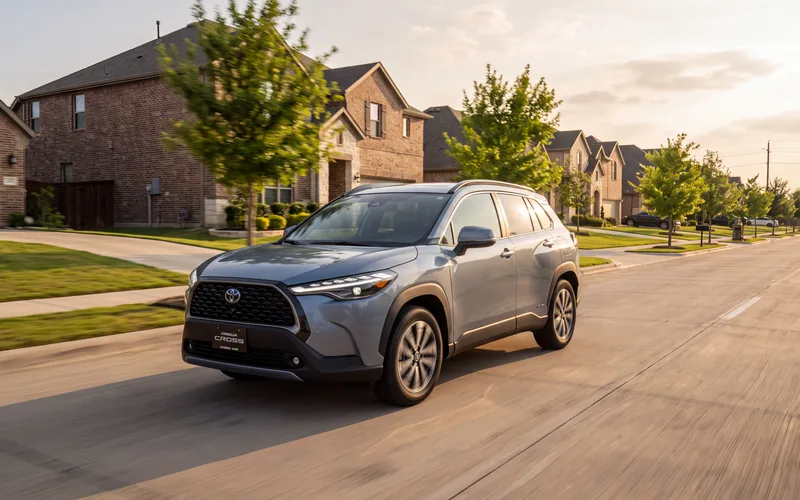 Toyota Corolla CrossSubcompact SUVBetter at: Fuel economy
Its hybrid version returns roughly 42 mpg versus the HR-V's 28 and includes two years of scheduled maintenance, which erases the Honda's ownership-cost edge.
Compare 2.13C
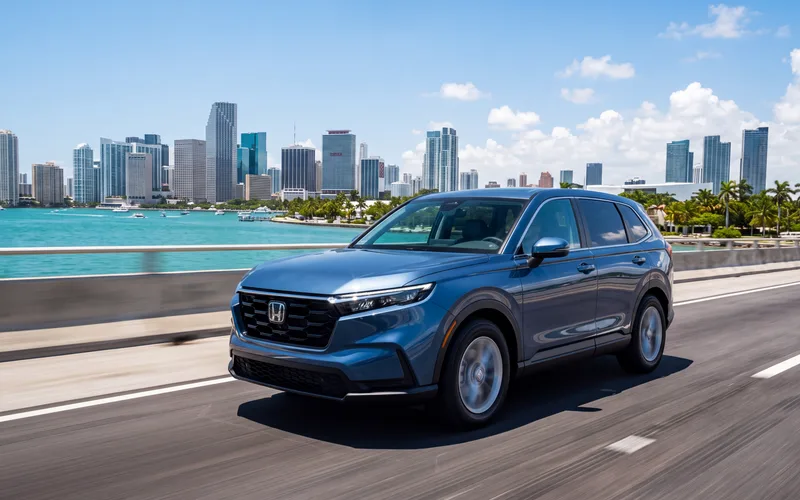 Honda CR-VCompact SUVBetter at: Space and power
A few thousand dollars more buys substantially more cargo room, a hybrid option, a 9-inch screen, and an actual tow rating.
Compare 1.52D
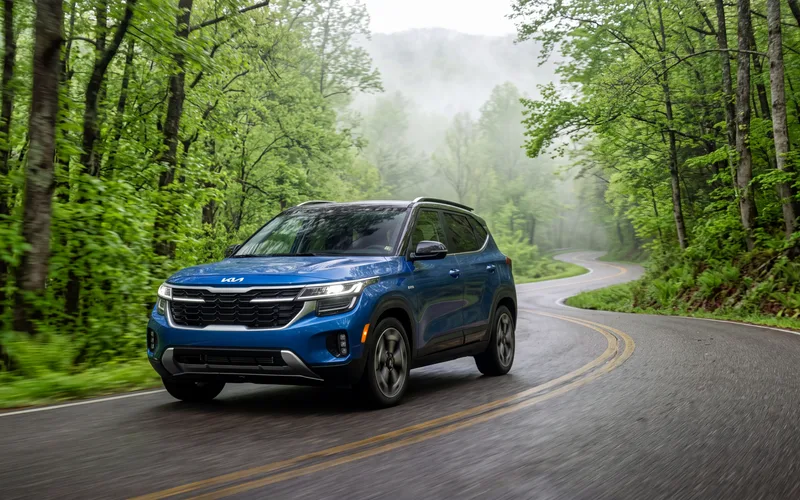 Kia SeltosSubcompact SUVBetter at: Tech and warranty
It matches the HR-V on price while adding a bigger touchscreen, an available turbo engine, and a 10-year/100,000-mile powertrain warranty.
CompareHow it's evolved
10 scored model years · 2017–2026
Subject scores by year
Hover or tap a score to see what moved it versus the year before. A corner mark flags a big swing.
| Year | Performance | Efficiency | Safety | Space | Cost | Reliability | Tech | Use-case | Driving | Value |
|---|---|---|---|---|---|---|---|---|---|---|
| 2026 | 18 | 64 | 60 | 40 | 65 | 76 | 43 | 57 | 62 | 62 |
| 2025 | 18 | 60 | 72 | 40 | 65 | 76 | 42 | 55 | 59 | 63 |
| 2024 | 18 | 60 | 71 | 40 | 66 | 74 | 43 | 56 | 62 | 65 |
| 2023 | 18 | 60 | 72 | 40 | 71 | 68 | 43 | 57 | 62 | 64 |
| 2022 | 14 | 67 | 52 | 37 | 66 | 67 | 30 | 47 | 52 | 37 |
| 2021 | 15 | 67 | 53 | 41 | 75 | 72 | 32 | 46 | 53 | 54 |
| 2020 | 12 | 68 | 48 | 36 | 67 | 65 | 27 | 44 | 51 | 48 |
| 2019 | 16 | 73 | 59 | 35 | 79 | 65 | 37 | 46 | 46 | 63 |
| 2018 | 14 | 71 | 32 | 38 | 78 | 65 | 24 | 45 | 53 | 60 |
| 2017 | 16 | 71 | 38 | 38 | 78 | 69 | 24 | 44 | 53 | 65 |
Compare two years
Best fit & conditions
Higher scores mean a better fit for that use case. Learn more about use-case fit →
Subject profile
Trims & configurations
3 trimsScores above reflect the volume trim. Per-trim specs and scores are rolling out — the full lineup:
Academic Probation · NHTSA safety recalls
Dec 18, 2023Fuel system, gasoline: delivery: fuel pumpThe fuel pump inside the fuel tank may fail.
Defect
Honda (American Honda Motor Co.) is recalling certain 2013-2023 Honda Accord, Civic Coupe, Civic Sedan, Civic Hatchback, Civic Type R, CR-V, HR-V, Ridgeline, Odyssey, Acura ILX, MDX, MDX Hybrid, RDX, RLX, TLX, 2019-2022 Honda Insight, Passport, 2020 Honda CR-V Hybrid, 2018-2019 Honda Clarity PHEV, Fit, and 2015-2020 Honda Accord Hybrid, Pilot, Acura NSX vehicles. The fuel pump inside the fuel tank may fail.
Risk
Fuel pump failure can cause an engine stall while driving, increasing the risk of a crash.
Remedy
Dealers will replace the fuel pump module, free of charge. Owner letters were mailed September 6, 2024. Owners may contact Honda customer service at 1-888-234-2138. Honda's numbers for this recall are KGC and KGD. This recall is an expansion of NHTSA recall numbers 21V-215 and 20V-314.
NHTSA campaign 23V858000 ↗Manufacturer no. KGC, KGD2,490,460 vehicles potentially affected (all models in the campaign)Owners notified Mar 29, 2024Filed by Honda (American Honda Motor Co.)Filed as HR-VMay 28, 2020Fuel system, gasoline: delivery: fuel pumpThe low-pressure fuel pump inside the fuel tank may fail.
Defect
Honda (American Honda Motor Co.) is recalling certain 2018-2019 Acura NSX, 2019 Acura RDX, RLX and RLX Sport Hybrid, 2018-2019 Honda Accord, Civic Hatchback, Civic Type R and HR-V, 2019-2020 Insight and 2019 Fit vehicles. The low-pressure fuel pump inside the fuel tank may fail.
Risk
If the fuel pump fails, the engine can stall while driving, increasing the risk of a crash.
Remedy
Honda will notify owners and dealers will replace the fuel pump assembly, free of charge. The recall began July 22, 2020. Owners may contact Honda customer service at 1-888-234-2138.
NHTSA campaign 20V314000 ↗135,995 vehicles potentially affected (all models in the campaign)Owners notified Jul 22, 2020Filed by Honda (American Honda Motor Co.)Filed as HR-VNov 1, 2018Service brakes, hydraulic: foundation components: disc: caliperThe rear brake caliper pistons may have an insufficient coating, causing gas pockets to form, reducing brake performance. As such, these vehicles fail to comply with the requirements of Federal Motor Vehicle Safety Standard (FMVSS) number 135, "Light Vehicle Brake Systems."
Defect
Honda (American Honda Motor Co.) is recalling certain 2017-2019 Acura MDX, 2017-2018 Acura MDX Sport Hybrid, 2018-2019 Honda HR-V and Honda Odyssey, and 2016 Honda HR-V vehicles. The rear brake caliper pistons may have an insufficient coating, causing gas pockets to form, reducing brake performance. As such, these vehicles fail to comply with the requirements of Federal Motor Vehicle Safety Standard (FMVSS) number 135, "Light Vehicle Brake Systems."
Risk
A reduction of braking performance increases the risk of a crash.
Remedy
Owners will be notified, and Honda or Acura dealers will bleed the brakes, free of charge. The recall began December 11, 2018. Owners may contact Honda customer service at 1-888-234-2138. Honda's numbers for this recall are C31 and L30.
NHTSA campaign 18V777000 ↗Manufacturer no. C31, L3064,785 vehicles potentially affected (all models in the campaign)Owners notified Dec 11, 2018Filed by Honda (American Honda Motor Co.)Filed as HR-V
9 recalls on other model years of the HR-V (2019–2025)
May 21, 2026Air bags: sensor: occupant classification: front passengerThe front passenger seat weight sensor may crack and short circuit, which can cause the air bags to deploy unintentionally during a crash.
Defect
Honda (American Honda Motor Co.) is recalling certain 2018-2021, 2023 Acura TLX, 2019-2024 RDX, 2017-2020, 2022-2026 MDX, 2017-2021, 2023, 2025 Honda Ridgeline, 2017-2022 Pilot, 2019-2021 Passport, 2018-2026 Odyssey, 2019-2022 Insight, 2019-2021 HR-V, 2018-2020 Fit, 2020-2022 CR-V Hybrid, 2017-2022 CR-V, 2017-2018, 2021 Civic Type R, 2017-2021 Civic hatchback, 2016-2020 Civic coupe, 2016-2022 Civic, 2017-2022 Accord Hybrid, and 2016-2022 Accord vehicles. The front passenger seat weight sensor may crack and short circuit, which can cause the air bags to deploy unintentionally during a crash.
Risk
Air bags that deploy unintentionally during a crash increase the risk of injury.
Remedy
Dealers will replace the seat weight sensors, free of charge. Owner notification letters were mailed July 7, 2026. Owners may contact Honda's customer service at 1-888-234-2138. Honda's numbers for this recall are BOL, WO9, OOA, WOM, XOH, NOC, POD, BOE, UOF, POB, EOG, AOI, QO8, TOJ, DO7, and SOK. This recall expands previous NHTSA recall number 24V064. Vehicle Identification Numbers (VINs) involved in this recall will be searchable on NHTSA.gov beginning May 29, 2026.
NHTSA campaign 26V332000 ↗Manufacturer no. Refer to Comments98,892 vehicles potentially affected (all models in the campaign)Owners notified Jul 6, 2026Filed by Honda (American Honda Motor Co.)Filed as HR-VJan 29, 2026Seats: critical fastenersThe driver's seat cushion frame may not have been tightened properly, which can result in a loose seat. As such, these vehicles fail to comply with the requirements of Federal Motor Vehicle Safety Standard number 207, "Seating Systems."
Defect
Honda (American Honda Motor Co.) is recalling certain 2023 Honda Accord, Accord Hybrid, and 2024 HR-V, Pilot, and Acura Integra vehicles. The driver's seat cushion frame may not have been tightened properly, which can result in a loose seat. As such, these vehicles fail to comply with the requirements of Federal Motor Vehicle Safety Standard number 207, "Seating Systems."
Risk
A loose driver's seat may not adequately restrain the driver during a crash, increasing the risk of injury.
Remedy
Dealers will replace the driver's seat cushion frame, free of charge. Owner notification letters were mailed March 10, 2026. Owners may contact Honda's customer service at 1-888-234-2138. Honda's numbers for this recall are ONC, KND, BNE and ZNF. Vehicle Identification Numbers (VINs) involved in this recall will become searchable on NHTSA.gov beginning February 5, 2026. This recall expands previous NHTSA recall number 24V859.
NHTSA campaign 26V054000 ↗Manufacturer no. ONC, KND, BNE, ZNF32 vehicles potentially affected (all models in the campaign)Owners notified Mar 9, 2026Filed by Honda (American Honda Motor Co.)Filed as HR-VNov 14, 2024Seats: critical fastenersThe driver's seat cushion frame may not have been tightened properly, which can result in an unsecured seat. As such, these vehicles fail to comply with the requirements of Federal Motor Vehicle Safety Standard number 207, "Seating Systems."
Defect
Honda (American Honda Motor Co.) is recalling certain 2023-2024 Honda Accord, Accord Hybrid, Civic Sedan, Civic Hatchback, Pilot, and 2024 HR-V, Acura Integra and Acura Integra Type S vehicles. The driver's seat cushion frame may not have been tightened properly, which can result in an unsecured seat. As such, these vehicles fail to comply with the requirements of Federal Motor Vehicle Safety Standard number 207, "Seating Systems."
Risk
An unsecured driver's seat may not adequately restrain the driver during a crash, increasing the risk of injury.
Remedy
Dealers will replace the driver's seat cushion frame, free of charge. Owner notification letters were mailed January 6, 2025. Owners may contact Honda customer service at 1-888-234-2138.
NHTSA campaign 24V859000 ↗121 vehicles potentially affected (all models in the campaign)Owners notified Jan 6, 2025Filed by Honda (American Honda Motor Co.)Filed as HR-VOct 3, 2024SteeringThe steering gearbox assembly may have been manufactured incorrectly, which can cause excessive internal friction and lead to difficulty steering the vehicle.
Defect
Honda (American Honda Motor Co.) is recalling certain 2023-2025 Acura Integra, Civic Type R, CR-V Hybrid, CR-V, HR-V, 2022-2025 Civic, Civic Hatchback, 2024-2025 Acura Integra Type S, 2025 CR-V Fuel Cell EV, Civic Hybrid, and Civic Hatchback Hybrid vehicles. The steering gearbox assembly may have been manufactured incorrectly, which can cause excessive internal friction and lead to difficulty steering the vehicle.
Risk
Difficulty steering can increase the risk of a crash.
Remedy
Dealers will replace the worm gear spring and redistribute or add grease as necessary, free of charge. Owner notification letters were mailed November 18, 2024. Owners may contact Honda Customer Service at 1-888-234-2138. Honda's numbers for this recall are SJS, MJU, QJT and VJV.
NHTSA campaign 24V744000 ↗Manufacturer no. SJS, MJU, QJT, VJV1,693,199 vehicles potentially affected (all models in the campaign)Owners notified Nov 18, 2024Filed by Honda (American Honda Motor Co.)Filed as HR-VMay 31, 2024Back over prevention: display function · Back over prevention: softwareThe rearview camera image may not display when the engine is started with a key, due to a design error in the audio display power circuit. As such, these vehicles fail to comply with the requirements of Federal Motor Vehicle Safety Standard number 111, "Rear Visibility."
Defect
Honda (America Honda Motor Co.) is recalling certain 2018-2020 Fit and 2019-2022 HR-V vehicles that were previously recalled under NHTSA recall number 23V-046. The rearview camera image may not display when the engine is started with a key, due to a design error in the audio display power circuit. As such, these vehicles fail to comply with the requirements of Federal Motor Vehicle Safety Standard number 111, "Rear Visibility."
Risk
An inoperative rearview camera display can reduce the driver's rear visibility, increasing the risk of a crash.
Remedy
Dealers will update the display audio unit software, free of charge. Owner notification letters were mailed July 8, 2024. Owners may contact Honda service at 1-888-234-2138. Honda's numbers for this recall are TIQ and DIR. Vehicles previously repaired under recall 23V-046 will need to have the new remedy completed.
NHTSA campaign 24V384000 ↗Manufacturer no. TIQ, DIR114,686 vehicles potentially affected (all models in the campaign)Owners notified Jul 8, 2024Filed by Honda (American Honda Motor Co.)Filed as HR-VFeb 1, 2024Air bags: sensor: occupant classification: front passengerThe front passenger seat weight sensor may crack and short circuit, failing to suppress the air bag as intended.
Defect
Honda (American Honda Motor Co.) is recalling certain 2020-2022 Pilot, Accord, Civic sedan, HR-V, Odyssey, 2020 Civic coupe, Fit, 2021-2022 Civic hatchback, 2021 Civic Type R, Insight, 2020-2021 CR-V, CR-V Hybrid, Passport, Ridgeline, Accord Hybrid, 2020 Acura MDX, 2022 Acura MDX, 2020-2022 Acura RDX, and 2020-2021 Acura TLX vehicles. The front passenger seat weight sensor may crack and short circuit, failing to suppress the air bag as intended.
Risk
An air bag that deploys unintentionally during a crash can increase the risk of injury.
Remedy
Dealers will replace the seat weight sensors, free of charge. Owner notification letters were mailed March 28, 2024. This is a phased recall. Owners may contact Honda customer service at 1-888-234-2138. Honda's numbers for these recalls are XHP and VHQ.
NHTSA campaign 24V064000 ↗Manufacturer no. XHP, VHQ750,114 vehicles potentially affected (all models in the campaign)Owners notified Mar 28, 2024Filed by Honda (American Honda Motor Co.)Filed as HR-VNov 21, 2023Seat belts: frontThe front seat belt pretensioners may be missing the rivet that secures the quick connector and wire plate. As such, these vehicles fail to comply with the requirements of Federal Motor Vehicle Safety Standard numbers 208, "Occupant Crash Protection," 209, "Seat Belt Assembles," and 210, "Seat Belt Assembly Anchorages."
Defect
Honda (American Honda Motor Co.) is recalling certain 2023-2024 Accord and HR-V vehicles. The front seat belt pretensioners may be missing the rivet that secures the quick connector and wire plate. As such, these vehicles fail to comply with the requirements of Federal Motor Vehicle Safety Standard numbers 208, "Occupant Crash Protection," 209, "Seat Belt Assembles," and 210, "Seat Belt Assembly Anchorages."
Risk
A seat belt pretensioner missing a rivet will not properly restrain the occupant, increasing the risk of injury during a crash.
Remedy
Dealers will inspect and replace the seat belt pretensioner assemblies as necessary, free of charge. Owner notification letters were mailed January 8, 2024. Owners may contact Honda customer service at 1-888-234-2138. Honda's numbers for this recall are MG7 and NG5.
NHTSA campaign 23V782000 ↗Manufacturer no. MG7, NG5303,770 vehicles potentially affected (all models in the campaign)Owners notified Jan 8, 2024Filed by Honda (American Honda Motor Co.)Filed as HR-VFeb 2, 2023Back over prevention: sensing system: camera · Back over prevention: display functionThe rearview camera image may not display when the engine is started with a key, due to a design error in the audio display power circuit. As such, these vehicles fail to comply with the requirements of Federal Motor Vehicle Safety Standard number 111, "Rear Visibility."
Defect
Honda (American Honda Motor Co.) is recalling certain 2018-2020 Fit and 2019-2022 HR-V vehicles. The rearview camera image may not display when the engine is started with a key, due to a design error in the audio display power circuit. As such, these vehicles fail to comply with the requirements of Federal Motor Vehicle Safety Standard number 111, "Rear Visibility."
Risk
An inoperative rearview camera display can reduce the driver's rear visibility, increasing the risk of a crash.
Remedy
Dealers will update the display audio unit software, free of charge. Owner notification letters were mailed March 13, 2023. Owners may contact Honda customer service at 1-888-234-2138. Honda's number for this recall is 6DW. This recall has been superseded by NHTSA recall number 24V-384. Vehicles previously repaired under recall 23V-046 will need to have the new remedy completed under recall 24V-384.
NHTSA campaign 23V046000 ↗Manufacturer no. 6DW114,686 vehicles potentially affected (all models in the campaign)Owners notified Mar 13, 2023Filed by Honda (American Honda Motor Co.)Filed as HR-VMar 25, 2021Fuel system, gasoline: delivery: fuel pumpThe low-pressure fuel pump inside the fuel tank may fail.
Defect
Honda (American Honda Motor Co.) is recalling certain 2019-2020 Acura MDX, MDX Sport Hybrid, RDX, TLX, Honda Accord, Civic Hatchback, Insight, 2019 Acura ILX, Honda Accord Hybrid, Civic Coupe, Civic Coupe Si, Civic Sedan, Civic Sedan Si, Civic Type R, Fit, HR-V, Odyssey, Passport, Pilot and Ridgeline, and 2018-2019 CR-V vehicles. The low-pressure fuel pump inside the fuel tank may fail.
Risk
Fuel pump failure can cause an engine stall while driving, increasing the risk of a crash.
Remedy
Honda will notify owners, and dealers will replace the fuel pump assembly, free of charge. Owner letters were mailed May 18, 2021. Owners may contact Honda customer service at 1-888-234-2138. Note: This recall is an expansion of recall 20V-314.
NHTSA campaign 21V215000 ↗Manufacturer no. Multiple Codes624,552 vehicles potentially affected (all models in the campaign)Owners notified May 18, 2021Filed by Honda (American Honda Motor Co.)Filed as HR-V
Source: NHTSA Office of Defects Investigation recall database, model years 2017–2026. Recalls are listed by model year as the manufacturer filed them; whether a specific car is affected depends on its VIN — check a VIN at nhtsa.gov ↗. NHTSA model names matched to this page: HR-V.
Detailed scoring by subject
1Performance & PowertrainThe HR-V's lowest-graded category.0.00F
Single powertrain across the 2018 HR-V lineup: 1.8L SOHC i-VTEC inline-4, unchanged from the car's 2016 US launch. Output is well below the subcompact SUV norm.
Modest torque for a crossover; the engine is shared with the Fit/Civic-derived GCS platform rather than tuned for low-end pull.
One of the slowest vehicles in the subcompact SUV class to 60 mph; the CVT and modest output combine to make acceleration the HR-V's weakest performance trait.
The 1.8L four is adequately smooth at light throttle but becomes coarse and vocal when worked hard to merge or pass, a trait reviewers consistently flagged for the 2016-2018 first-generation HR-V.
The CVT (with Sport mode and paddle shifters on EX/EX-L) is generally smooth around town but drones audibly under hard acceleration; a 6-speed manual is offered on base 2WD trims for buyers who want to avoid it.
Honda does not certify the US-market first-generation HR-V (2016-2022) for towing at all; the owner's manual states the vehicle is not designed to tow a trailer. The first and only towing-rated HR-V in the US is the facelifted 2023-2024 generation, and only on AWD trims.
Real Time AWD with Intelligent Control System is available on CVT-equipped EX and EX-L trims only (not on the base LX manual), and is a basic reactive on-demand system with no low range, locking modes, or terrain settings.
Pavement-oriented crossover with roughly 6.7 in (FWD) / 6.3 in (AWD) of ground clearance and no skid plates, lockers, or dedicated off-road trim.
Single engine (1.8L I4) across the entire 2018 lineup with no turbo, hybrid, or electrified variant; the only choices are manual vs. CVT and FWD vs. AWD.
2Efficiency & RangeOne of the HR-V's strongest categories.2.78B-
FWD CVT is the volume configuration for the US 2018 HR-V and posts the best combined figure in the lineup; AWD costs roughly 2 MPG combined.
City figure for the volume FWD CVT trim.
Highway figure for the volume FWD CVT trim.
Computed from the EPA combined rating and Honda's published 13.2-gallon fuel tank capacity for the volume FWD CVT trim.
EPA estimate at standard 15,000 mi/yr assumptions and regular-gas pricing for the volume FWD CVT trim.
Runs on regular unleaded across every trim and drivetrain; no premium recommendation or special fueling requirement.
3SafetyOne of the HR-V's weakest categories.0.06F
NHTSA's full 5-star program test of the 2018 HR-V awarded the top overall rating, with a 4-star rollover result the only sub-5 component.
IIHS rated the 2018 HR-V Good on moderate overlap front, original-protocol side, roof strength and head restraints, but only Acceptable on small overlap front and Poor on the updated side-impact test — the Poor result in a key current-protocol test disqualifies it from any Top Safety Pick award.
Honda Sensing was not introduced to the HR-V until the 2019 model-year refresh; the 2018 LX, EX and EX-L Navi all ship with no forward collision warning, AEB, lane-keeping, adaptive cruise, blind-spot monitoring or rear cross-traffic alert at any price point.
No forward collision warning or automatic emergency braking system is offered on any 2018 HR-V trim, so IIHS lists no front crash prevention rating for the vehicle at all.
The only blind-zone aid is Honda LaneWatch, a passive camera feed in the right door mirror available on EX and EX-L Navi; there is no radar-based blind-spot monitoring or rear cross-traffic alert anywhere in the lineup, and LX gets neither feature.
No lane departure warning or lane-keeping assist of any kind is offered on the 2018 HR-V.
Every 2018 HR-V trim is limited to conventional fixed-speed cruise control; adaptive cruise and any highway-assist function arrived only with the Honda Sensing option on the 2019 refresh.
No hands-free or supervised-autonomy highway system exists for the first-generation HR-V in any model year, 2018 included.
IIHS tested the 2018 HR-V's headlights and rated them Poor, with no auto high-beam or adaptive function offered on any trim.
Contemporary reviews praised the HR-V's slim front pillars and large glass area for a wide forward view; the thick rear roof pillars create a real rear blind zone, but long rear side windows and a standard rearview camera meaningfully offset it.
IIHS rated the HR-V's LATCH ease-of-use Marginal, citing anchors that are harder to locate and maneuver around than in class leaders, consistent with the subcompact SUV's tight rear-seat footwell.
4Space & ComfortGrades near the bottom of the scale.0.48F
The HR-V is a strict 5-seat subcompact SUV across its entire 2018 lineup, with no 7-seat option.
The volume EX trim's standard moonroof trims front headroom versus the moonroof-less LX.
Consistent across the 2018 lineup.
Honda's Magic Seat packaging preserves rear headroom even with the panoramic greenhouse styling.
A genuine class strength — reviewers consistently cite generous rear-seat legroom for adults despite the HR-V's compact footprint.
The HR-V is a strict two-row subcompact SUV in every 2018 configuration; no third row is offered.
Behind-the-second-row volume sits below the normal SUV normalization floor — the HR-V trades cargo depth for its sloped, coupe-like roofline.
The Magic Seat's flat-fold flexibility helps, but max volume still lands near the bottom of the segment band.
Honda's second-row Magic Seat (fold-flat, tall-mode, and utility-mode configurations carried over from the Fit) is a genuine segment differentiator even though front-cabin console storage is unremarkable.
Owner and reviewer feedback is split: front cushions are frequently described as flat and firm with a driving position that's hard to dial in, while rear seats draw more consistent praise for space and comfort.
Reviewers are mixed — Honda's tuning absorbs most road imperfections and the chassis feels composed, but several note a busier, firmer ride over broken pavement and potholes than segment leaders.
No instrumented noise data found for 2018 specifically; the 1.8L engine drones under load via the CVT and road/wind noise is typical for an unrefined, low-cost subcompact SUV platform of this era.
Heated front seats are available starting at EX, but there's no heated steering wheel, no rear climate vents, and no ventilated seats at any trim — sparse even on the range-topping EX-L w/Navi.
5Cost of OwnershipThe HR-V's best-graded category.3.32B+
Entry LX trim with the volume-take CVT, including Honda's 2018 destination charge.
EX 2WD CVT is the best-selling configuration for 2018, adding alloy wheels, Apple CarPlay-less touchscreen, heated mirrors and remote start over LX.
RepairPal's HR-V-wide average (not 2018-specific) puts annual maintenance+repair cost well below the subcompact-SUV norm, consistent with Honda's reliability reputation.
Long-run HR-V depreciation studies cluster in the 69-71% retention range, well ahead of the ~61.6% subcompact-SUV-category average implied by its ~38.4% typical 5-year loss.
Honda's standard 3-year/36,000-mile basic warranty is the floor of the segment band; rivals like Hyundai Kona (5yr/60k) and Kia Soul (5yr/60k) beat it outright.
Standard 5-year/60,000-mile powertrain coverage sits at the bottom of the segment band; Kia and Mitsubishi rivals offer 10yr/100k.
No complimentary scheduled maintenance for 2018 (Honda Service Pass did not begin until MY2023), but the warranty bundles 3-year/36,000-mile roadside assistance, matching the 'basic roadside only' band.
$23,360 volume-trim price minus its estimated resale value after 5 years (70% retained, or about $16,352) leaves about $7,008 in depreciation. Add the projected $2,350 in 5-year maintenance and repairs, and owning this vehicle for 5 years costs about $9,358 in total.
6Reliability & QualityOne of the HR-V's strongest categories.2.42C+
The 2018 HR-V is a carry-over of the first-generation (2016+), Fit-platform crossover; Consumer Reports has historically predicted above-average reliability for this generation, and it avoided the electronics/infotainment problems that dragged down newer-for-2018 Honda models like Odyssey and Clarity.
Honda's own brand standing dipped specifically around the 2018 model year — Consumer Reports dropped Honda to 15th among automakers for 2018 (driven by new/redesigned models' problems), and J.D. Power's dependability studies covering this era placed Honda mid-to-lower-pack rather than top-5, a departure from the brand's historical reputation.
This generation carries three NHTSA recalls touching the 2018 model year (rear brake caliper piston coating, 18V-777, begun Dec 2018; two separate low-pressure fuel-pump recalls, 20V-314 and 23V-858, that can cause engine stall), plus a notable non-recall TSB pattern: Honda issued PCM reprogramming guidance (TSB 21-046) and extended CVT warranty coverage to 7yr/150k miles for 2016-2020 HR-V due to accelerated primary-belt wear. Not catastrophic or safety-systemic, but more than a clean track record.
The 1.8L/CVT pairing in this generation has a documented weak point: Honda acknowledged CVT calibration that allowed hydraulic pressure behavior accelerating primary-belt wear, with failures concentrated between 60,000-120,000 miles and owner reports of 'catastrophic transmission failure' on forums — serious enough that Honda extended the CVT warranty rather than treating it as isolated.
Reviewers give the HR-V's cabin mixed marks: competitive soft-touch coverage on upper dash/doors but a noticeable amount of hard, lower-grade plastic lower in the cabin, typical for a mainstream subcompact rather than class-leading.
Assembly quality is generally solid with good panel gaps and finish for the class; no systemic rattle/squeak complaints pattern beyond scattered individual reports typical of the segment.
Honda maintains one of the largest, most geographically dense dealer networks in the US with consistently solid service-satisfaction scores, a long-standing brand strength independent of the 2018 reliability dip.
RepairPal ranks the HR-V 1st of 7 subcompact SUVs on ownership cost with a $301 average annual repair bill and a 5.0/5.0 reliability rating, reflecting cheap, widely available parts and a large independent-shop/aftermarket base typical of Honda products.
7Technology & InfotainmentOne of the HR-V's weakest categories.0.00F
7 inches sits at the very bottom of the SUV normalization band, and the base LX trim doesn't even get a touchscreen.
Honda's first-generation capacitive-touch Display Audio (pre-refresh, no physical volume knob) drew consistent criticism in period reviews for laggy response and a frustrating touch-only volume slider.
Apple CarPlay and Android Auto — wired or wireless — were not offered on any 2018 HR-V trim; the feature didn't arrive on the HR-V until the 2019 model year.
EX-L w/Navi adds Honda's Satellite-Linked Navigation with basic voice commands, but the system is dated and most owners would bypass it for phone-based navigation if CarPlay/Android Auto were available (it isn't).
No branded premium audio system was offered on any 2018 HR-V trim; speaker counts and output are unremarkable for the segment.
All 2018 HR-V trims use analog gauges with a small monochrome multi-information display; no configurable digital cluster is offered at any trim level.
No over-the-air update capability of any kind — infotainment, maps, or vehicle software — existed on the 2018 HR-V.
HondaLink connected-app functionality on the 2018 HR-V is minimal compared to later model years; remote start was a dealer-installed accessory rather than a factory app-based feature on most trims.
LX gets a single USB port; EX and EX-L w/Navi get two. No USB-C, no wireless charging pad, and no rear-row charging on any trim.
Smart Entry proximity access and push-button start are available starting at EX, but the base LX trim retains a traditional key — no phone-as-key at any trim.
A multi-angle rearview camera with guidelines is standard across the lineup, and Honda LaneWatch's passenger-side camera is standard on EX and EX-L w/Navi — but there's no front camera, no parking sensors, and no 360-degree view at any trim.
No head-up display was offered on any 2018 HR-V trim.
8Use-Case FitGrades near the bottom of the scale.0.99F
LATCH anchors and the flexible Magic Seat help with car-seat installation and stroller loading, but the HR-V's narrow rear door openings and subcompact footprint make daily family logistics more of a squeeze than class leaders.
The 2018 HR-V earned a 5-star NHTSA overall rating and mostly Good IIHS scores, but an Acceptable small-overlap driver-side rating cost it a Top Safety Pick award, and — critically — Honda Sensing (automatic emergency braking, adaptive cruise, lane keeping) was not offered on any 2018 trim, including the range-topping EX-L w/Navi.
Rear legroom is genuinely generous for the segment, but firm seat cushions, no rear climate vents, no rear USB ports, and modest cargo-behind-seats volume limit multi-hour family trip comfort.
Light, well-weighted steering, a compact footprint, and a high seating position make the HR-V easy to place in traffic, though the CVT's drone under harder throttle inputs detracts from refinement.
28/34 mpg city/highway (FWD CVT) is solid for a gas subcompact SUV of this era, and Honda's reputation for low running costs and strong resale further helps per-mile economics.
A small overall footprint, a 37.4 ft turning diameter, and a standard multi-angle rearview camera make the HR-V easy to park and thread through tight urban spaces.
Honda does not publish a tow rating for the HR-V and the 141-hp 1.8L/CVT combination has no reserve capacity for towing or hauling heavy loads — this is not a work-capable vehicle.
Honda's general reputation for mechanical durability applies, but the HR-V is a passenger-oriented crossover with no fleet/commercial-use track record or hardened running gear for abusive work duty.
No onboard power outlets, no tie-down provisions, and no upfit ecosystem exist for the HR-V — it has essentially no jobsite-use features.
A roughly 13.2-gallon tank and 34-mpg highway rating yield a usable touring range, but firm seats, no adaptive cruise control (no Honda Sensing on any 2018 trim), and modest sound isolation limit true long-haul comfort.
Honda's Real Time AWD with Intelligent Control System is available (standard on EX-L w/Navi) and roof rails come on the top trim, giving the HR-V light gravel/trail and gear-hauling competence typical of a subcompact crossover, without serious off-road hardware.
The Magic Seat's multiple fold/flip configurations (including tall-mode for upright bulky items) are a genuine practicality advantage, partially offsetting the HR-V's below-average raw cargo volume.
9Driving ExperienceGrades below the middle of the scale.1.57D
Reviewers consistently praised the HR-V's stiffer-than-expected suspension tuning and composed body control through corners for a tall, affordable crossover — a genuine strength relative to segment rivals.
Reviewers called the steering nicely weighted and precise for a subcompact crossover, though it doesn't deliver notable feedback.
No instrumented stopping-distance data specific to the 2018 model was found; pedal feel and stopping power are described as adequate but unremarkable, consistent with the segment norm.
The 141-hp 1.8L engine paired with a CVT produces a notably sluggish ~9.7-second 0-60 time and the flared-rpm 'rubber-band' sensation typical of CVTs under hard acceleration — modest throttle response is a consistent criticism.
The 1.8L engine drones audibly under load as the CVT holds high RPM during acceleration — a common complaint in period reviews of this powertrain.
A mid-pack turning diameter for the subcompact SUV class.
A tall seating position and good outward visibility aid ergonomics, but some reviewers note it's tough to dial in a fully comfortable driving position due to firm, limited-adjustment seats.
The chassis and steering are genuinely engaging for the class, but the modest 141-hp CVT powertrain caps overall driving enjoyment — net result is 'pleasant but unremarkable' rather than a true enthusiast pick.
10Value & Market PositionMid-pack among this car's ten categories.2.05C
Base LX includes power windows/locks, a 160-watt 4-speaker audio system, TPMS and VSA, but lacks any driver-assistance tech or a touchscreen — rivals like the 2018 Toyota C-HR included Toyota Safety Sense (adaptive cruise, lane departure alert) as standard at a similar price.
Segment-leading Magic Seat cargo flexibility and class-competitive fuel economy offset a weak 141-hp engine and the lack of standard driver-assist tech that some cheaper rivals (C-HR, Soul) already included; Edmunds' 8.5/10 Utility score vs. 7.0 Driving score reflects this trade-off.
Three trims (LX, EX, EX-L w/Navi) each offered with 2WD or AWD, and a 6-speed manual on LX/EX 2WD — a workable spread but narrower than rivals offering a dedicated sport/off-road variant.
The HR-V was America's retail best-selling subcompact SUV and segment-leading in 2018 despite an 8.8% YoY volume dip from a lower-competition peak.
Honda carries a strong mainstream reliability and resale halo that directly supports the HR-V's own above-average depreciation performance, without being an aspirational premium brand.
As the segment's retail sales leader with limited YoY softening, Honda had little incentive pressure to discount the HR-V in 2018, consistent with the brand's generally thin incentive posture versus domestic and Korean rivals.
2018 is the third model year of the second-generation (RU) HR-V launched for 2016, with only minor running changes — a styling refresh and Honda Sensing availability arrived the following year (2019), so a known update was imminent.
Reviewers consistently praised HR-V utility and efficiency but faulted acceleration and cabin refinement, landing it as well-regarded but not the comparison-test winner of its class in 2018.