

The verdict
A struggling mid-size truck, strong on value and held back by performance.
Overall 1.75 (C-) across 10 graded subjects. Its strongest is value & market position at 2.83 (B-), its weakest performance & powertrain at 0.28 (F). 6 of 10 subjects grade at C− or better.
Jump to scoresStrengths
- Value & Market Position
- Use-Case Fit
- Driving Experience
What holds it back
- Performance & Powertrain
- Technology & Infotainment
- Efficiency & Range
Top alternatives
Cars shoppers cross-shop with the Honda Ridgeline 2.12C
2.12C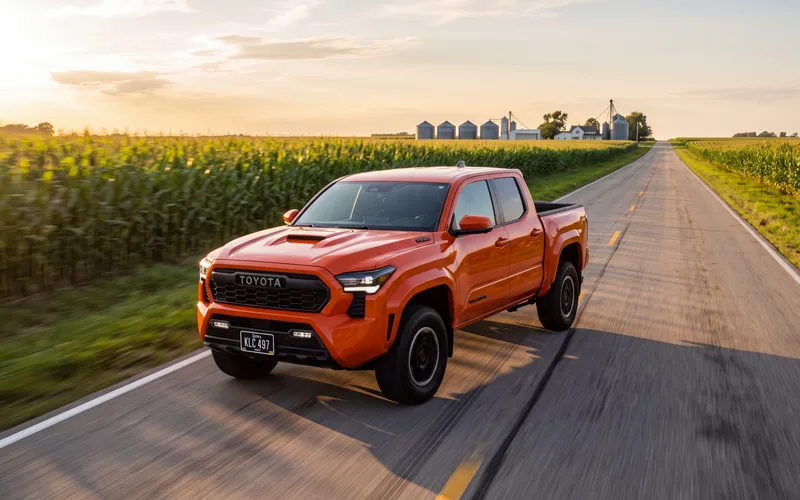 Toyota TacomaMid-Size TruckBetter at: Capability & resale
The default mid-size cross-shop: more towing, a hybrid option, better resale, and modern tech — at the cost of a rougher ride.
Compare 1.99C-
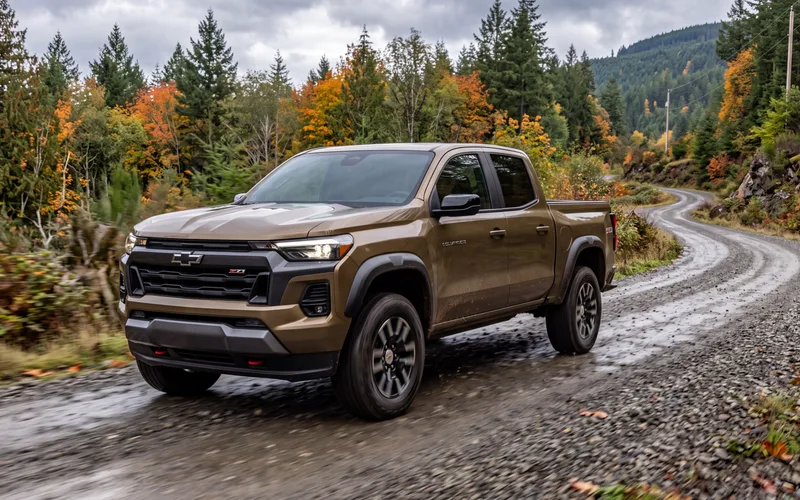 Chevrolet ColoradoMid-Size TruckBetter at: Towing & tech
A turbo four with 430 lb-ft and up to 7,700 lbs of towing, plus the modern screen and camera tech the Ridgeline doesn't offer.
Compare 1.81C-
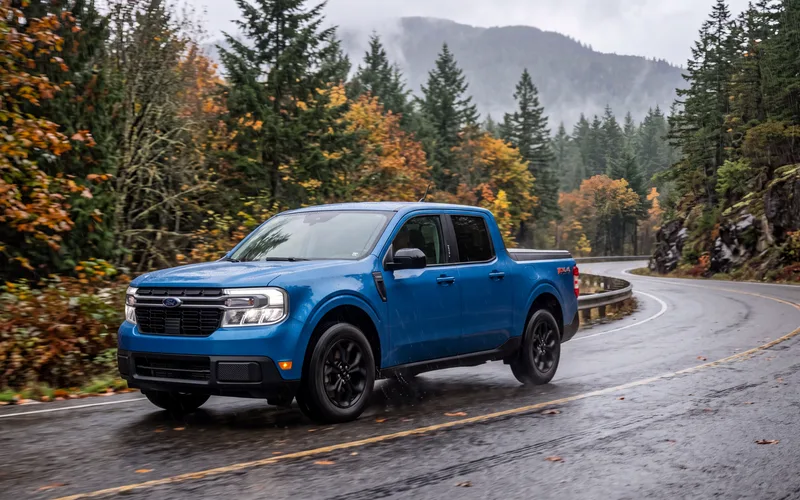 Ford MaverickCompact TruckBetter at: Fuel economy
For buyers who mostly need a bed and a commuter, the hybrid Maverick's ~37 mpg and much lower price make the Ridgeline hard to justify.
CompareHow it's evolved
6 scored model years · 2017–2026
Subject scores by year
Hover or tap a score to see what moved it versus the year before. A corner mark flags a big swing.
| Year | Performance | Efficiency | Safety | Space | Cost | Reliability | Tech | Use-case | Driving | Value |
|---|---|---|---|---|---|---|---|---|---|---|
| 2026 | 37 | 51 | 78 | 50 | 51 | 75 | 51 | 70 | 69 | 64 |
| 2021 | 35 | 48 | 69 | 54 | 64 | 73 | 43 | 69 | 73 | 66 |
| 2020 | 34 | 49 | 66 | 54 | 64 | 68 | 41 | 71 | 69 | 67 |
| 2019 | 34 | 49 | 58 | 54 | 66 | 63 | 39 | 68 | 70 | 66 |
| 2018 | 34 | 49 | 58 | 54 | 67 | 66 | 39 | 68 | 72 | 66 |
| 2017 | 35 | 49 | 59 | 54 | 67 | 63 | 39 | 70 | 70 | 71 |
Compare two years
Best fit & conditions
Higher scores mean a better fit for that use case. Learn more about use-case fit →
Subject profile
Trims & configurations
4 trimsScores above reflect the volume trim. Per-trim specs and scores are rolling out — the full lineup:
Detailed scoring by subject
1Performance & PowertrainThe Ridgeline's lowest-graded category.0.28F
The all-new second-generation Ridgeline launched for 2017 with one engine: a 3,471 cc direct-injected SOHC i-VTEC V6 with Variable Cylinder Management, rated 280 hp @ 6,000 rpm identically on RT through Black Edition. Against a truck band reaching 800 hp it normalizes low, though 280 hp led the mid-size class on paper in 2017.
The naturally aspirated V6 makes 262 lb-ft peaking high at 4,700 rpm, the same on every trim. The truck torque band runs to 800 lb-ft, and a peak that far up the rev range is exactly the wrong character for hauling, so this normalizes near the floor.
Instrumented tests of the 2017 Ridgeline cluster tightly around 6.4–6.9 seconds, with Car and Driver at 6.6 s and Edmunds recording 6.9 s in a long-term RTL-E AWD. That made it one of the quickest mid-size trucks of its year, but it is unremarkable against a band anchored by 2.5-second electric pickups.
The 3.5L V6 was the most-praised part of the 2017 Ridgeline: linear throttle response, no turbo lag, a smooth top-end pull and transparent VCM cylinder deactivation, delivered in a unibody chassis that isolates it far better than a body-on-frame rival. It falls short of the top band because a high-revving naturally aspirated V6 has no low-end shove — the torque peak at 4,700 rpm means it must be wound out under load rather than leaning on midrange thrust.
Every 2017 Ridgeline used a 6-speed automatic — not the 9-speed that arrived with the 2020 refresh — and it earned few complaints: smooth, unobtrusive shifts and sensible logic in ordinary driving, with an available heavy-duty transmission cooler on AWD configurations. What holds it back is a lack of driver control: there are no paddle shifters or a true manual gate, only a 'D4' button that locks out top gear and an 'L' position for engine braking, which reviewers flagged as a real limitation when towing or descending grades.
Maximum conventional towing is 5,000 lbs and only with the i-VTM4 all-wheel-drive system — front-drive Ridgelines are capped at 3,500 lbs. That was the lowest rating in the 2017 mid-size class, where the Tacoma reached 6,800 lbs and the Colorado 7,700 lbs with the diesel; the unibody structure and the high-revving naturally aspirated V6 set the ceiling.
Best-case payload is 1,584 lbs on the lightest AWD configuration, sliding to 1,499 lbs on the heavier RTL-E and Black Edition that buyers actually ordered. Honda marketed this as class-leading for 2017 and within the mid-size field it was competitive, but against a truck band topping out at 3,400 lbs — which has to cover half-tons — it normalizes low.
Towing support is close to bare minimum. AWD models get a standard integrated trailer hitch with a 7-pin connector and an available heavy-duty transmission cooler, plus trailer sway mitigation folded into Vehicle Stability Assist and a multi-angle rearview camera that helps at hookup. But there is no factory integrated trailer brake controller — the single most-cited omission in period towing reviews — no tow/haul mode (just the D4 top-gear lockout), no trailer backup or steering assist, and no dedicated trailer cameras or onboard scales.
Honda's i-VTM4 all-wheel drive was offered on every 2017 trim and standard on RTL-E and Black Edition, and it is genuinely sophisticated for a car-based system — rear torque vectoring that can route effectively all rear drive torque to a single wheel, paired with Intelligent Traction Management offering Snow/Sand/Mud modes (front-drive trucks get a Snow mode only). It sits below the top band on two counts: AWD is a cost option on the five volume trims rather than standard equipment, and there is no two-speed transfer case or low range, so it cannot match the part-time 4WD of body-on-frame rivals for deliberate low-speed work.
The 2017 Ridgeline is a pavement-and-gravel truck. AWD models offer 7.87 in of ground clearance with 20.1/19.6/22.1-degree approach/breakover/departure angles and Snow/Sand/Mud traction modes, which covers a forest road or a muddy launch ramp. But this is a unibody with MacPherson-strut front and multi-link rear suspension, and 2017 had no off-road trim at all — the TrailSport package was still years away — so there are no skid plates, no underbody protection, no locking differential and no low range on any configuration.
One powertrain, no alternatives: the 3.5L V6 and 6-speed automatic are shared by all seven 2017 trims, with the only driveline choice being front- versus all-wheel drive. There was no turbo, diesel, hybrid, plug-in or electric option — a narrower offering than the 2017 Colorado, which paired its V6 with a 2.8L Duramax diesel and a four-cylinder.
2Efficiency & RangeOne of the Ridgeline's weakest categories.1.27D
The all-new second-generation Ridgeline's 3.5L direct-injected V6 with Variable Cylinder Management and a six-speed automatic returns 21 MPG combined in the representative AWD configuration — class-leading for a 2017 mid-size truck, but still low against the absolute truck normalization band.
Cylinder deactivation helps at steady speeds but does little in stop-and-go driving, leaving city economy just seven MPG above the bottom of the truck band.
The unibody platform's lower mass and better aerodynamics versus body-on-frame rivals show up most on the highway, where the Ridgeline is mid-pack against the truck band rather than near the floor.
A 19.5-gallon tank shared across all seven trims combines with 21 MPG to give roughly 410 miles between fills — adequate but well short of the long-legged full-size trucks with 26-gallon-plus tanks.
Regular-grade fuel keeps the per-gallon cost down, but 21 MPG combined still puts annual fuel spending in the upper half of the truck cost band.
The Ridgeline requires only regular unleaded on every trim including the top Black Edition, with no premium requirement and no diesel or E85 complications — the cheapest and most widely available fuel in the segment.
3SafetyMid-pack among this car's ten categories.1.97C-
The all-new second-generation 2017 Ridgeline earned NHTSA's maximum five-star Overall Vehicle Score, with five stars in both frontal and side crash and four stars in rollover — the top NCAP result among 2017 pickups.
The 2017 Ridgeline was the first pickup ever to earn IIHS Top Safety Pick+, with Good results in driver small overlap, moderate overlap, side, roof strength and head restraints. Only the later-added passenger-side small overlap test came back Acceptable, and the award required the optional CMBS and the LED headlights fitted only to RTL-E and Black Edition.
Honda Sensing — CMBS/AEB, forward collision warning, adaptive cruise, lane keeping assist and road departure mitigation — was confined to the RTL-E and Black Edition, the top two of seven trims. Blind Spot Information and Rear Cross Traffic Monitor came with the same pair, so a volume RTL/RTL-T buyer got no AEB, no ACC and no lane keeping at all. A multi-angle rearview camera was the only driver-assist feature standard fleet-wide.
Where fitted, the Collision Mitigation Braking System earned IIHS's top Superior front crash prevention rating, avoiding collisions outright in both the 12 mph and 25 mph vehicle-to-vehicle runs. It carried no pedestrian-detection credit — day or night — and it was optional rather than standard, both of which cap it below the modern top band.
Radar Blind Spot Information plus Rear Cross Traffic Monitor appeared only on RTL-E and Black Edition; RTL-T made do with the single-camera LaneWatch on the passenger side, and RT through RTL got nothing. Both systems are alert-only, with no braking intervention, safe-exit warning or trailer-aware coverage.
LKAS with lane departure warning and road departure mitigation is genuine centering assistance and reviewers found it capable on marked highways, but it was restricted to the top two trims and testers repeatedly described it as intrusive — tugging hard against the wheel rather than blending with driver input.
The Ridgeline's adaptive cruise operates only between roughly 25 and 90 mph — Honda did not fit the Low-Speed Follow version used in the Accord and CR-V, so the system drops out entirely in stop-and-go traffic. Combined with availability on just the RTL-E and Black Edition, it is highway-only convenience rather than an integrated highway assist.
No hands-free highway driving system was offered on any 2017 Ridgeline trim. Honda Sensing's LKAS requires continuous hands-on steering and warns the driver when torque is not detected.
IIHS rated the LED projector low beams with high-beam assist Good — but they were fitted only to the RTL-E and Black Edition. The halogen projectors on the other five trims, including the volume ones, rated Poor, so most Ridgeline buyers got the worst headlight grade IIHS awards.
The unibody Ridgeline sits lower and glassier than body-on-frame rivals, with large windows, a modest beltline and decent mirrors giving a clear view forward and to the sides. Rearward sightlines are hemmed in by rear head restraints and the bed, and no surround-view camera was offered — only the standard multi-angle rearview camera compensates.
The crew-cab rear bench takes three child seats across and has three sets of lower anchors — unusually generous for a mid-size truck. The compromise is the tether hardware: the outboard tether anchors sit low on the side of the seat base near the door and must be routed through a guide bar, and Cars.com's technician found a standard tether strap came up about seven inches short.
4Space & ComfortGrades below the middle of the scale.1.60D
The second-generation Ridgeline launched for 2017 in a single crew-cab, short-box body style seating five across every trim from RT to Black Edition; no regular or extended cab is offered.
Mid-pack for the truck band. The Pilot-derived unibody cabin sits lower than a body-on-frame mid-sizer but the tall greenhouse preserves usable front headroom; the standard moonroof on the top two trims costs 0.6 in.
The Ridgeline's weakest interior dimension and a direct consequence of its crossover packaging — 40.9 in sits below the bottom of the truck normalization band (41 in), trailing the GM mid-sizers (44.9 in) by four inches. In practice the low, car-like seating position makes it feel roomier than the number, but the measured figure is the measured figure.
Low-mid in the truck band. The flat roof carries all the way back over the rear bench, so unlike the front figure the moonroof trims lose nothing, but the unibody's lower overall height caps the number below the full-size trucks.
Comfortably ahead of the GM mid-size twins (34.7 in) and the Ranger SuperCrew, though well short of the Frontier and Tacoma crew cabs. Reviewers consistently note the rear bench is set at a more reclined, less upright angle than a body-on-frame rival's, which flatters the raw figure.
Low in the truck band but the longest box among mid-size crew cabs — 64.0 in beats the Colorado/Canyon (61.7 in) and the Tacoma short bed (60.5 in). There is no long-bed option, since the unibody body style is fixed.
Near the floor of the truck band: the bed is long and unusually wide but shallow-walled, so measured volume trails the Colorado (41.9 cu ft) and Ranger. Honda counts the 7.3 cu ft In-Bed Trunk separately, and it is credited under in-cabin storage rather than double-counted here.
The segment's benchmark for storage innovation, and the reason the Ridgeline is the truck other scorecards get compared against. Standard on every trim: the 7.3 cu ft lockable, drainable In-Bed Trunk (usable as a cooler), a dual-action tailgate that swings sideways or folds down, a 60/40 lift-up rear seat opening 2.9 cu ft of flat underseat space, and a deep multi-functional center console with a removable tray. RTL-E and Black Edition add a 400-watt bed power outlet and the truck-bed audio exciter system.
Praised front and rear, which is rare in this segment. Edmunds describes front seats with 'thin-yet-supportive padding that provides long-distance comfort,' broad enough for larger frames but with real bolstering, and calls out the rear bench as comfortable and set at a pleasing recline rather than the flat, upright plank typical of mid-size trucks. The volume RTL trim brings a 10-way power driver's seat with power lumbar and leather trim; the base RT makes do with manual adjustment.
The Ridgeline's single strongest attribute and the clear class leader for 2017 — it was the only pickup in the segment with fully independent rear suspension, riding on a modified version of the third-generation Pilot's unibody platform with 28% more torsional rigidity than the first generation. Reviewers report it shrugs off broken pavement with very little head toss and none of the unladen rear-axle patter that defines a leaf-sprung mid-sizer. The trade-off is the towing and payload ceiling scored in cat1, not the ride.
Consumer Reports called it by far the quietest interior of any pickup in its class. Active Noise Cancellation is standard on every trim — unusual at this price in 2017 — and an acoustic windshield is fitted from RTL up on AWD models. Wind and engine noise are admirably suppressed at highway speed; the one recurring complaint is road roar over coarse surfaces, which is what holds this below the 90s.
Key comfort equipment arrives at mid trims and up, which is exactly the 50-79 band. Tri-zone automatic climate control with humidity control and air filtration is standard from RTS upward (the base RT gets manual air conditioning), heated front seats and leather trim start at the volume RTL, and a heated steering wheel is reserved for RTL-E and Black Edition. No ventilated front seats, heated rear seats or remote pre-conditioning were offered on any 2017 trim, which caps the score below the loaded top trims of full-size rivals.
5Cost of OwnershipMid-pack among this car's ten categories.2.53C+
The second-generation Ridgeline launched for 2017 with the RT 2WD as its entry configuration at $29,475 plus Honda's $900 destination charge, undercutting most crew-cab mid-size rivals on a like-for-like body basis since every Ridgeline is a crew cab.
RTL AWD is used as the representative volume configuration — it is the most common 2017 trim in used inventory and RTL/RTL-E have each accounted for roughly 30% of Ridgeline sales in the years Honda's mix has been reported. Edmunds' TMV data instead flags the loaded RTL-E AWD ($42,370 with destination) as 2017's most popular single trim, so the real volume band spans roughly $36,600–$42,400.
The Pilot-derived unibody drivetrain has no transfer case, no turbochargers and no CVT, and the J35 V6's timing belt interval falls outside the first five years — CarEdge's nameplate projection and RepairPal's model-year figure both land well under the mid-size-truck average. The estimate is set modestly above CarEdge's number because 2017 was the first year of the YK2 generation, and RepairPal flags above-average problem severity for it (fourth-gear shift faults, tailgate sensor failures, a fuel-pump stall recall).
Strong retention for the segment: the 2017 Ridgeline was named to Kelley Blue Book's overall Top 10 Best Resale Value list, and both major depreciation datasets put the nameplate around 36–38% loss at 60 months. Its five-year mark also landed in 2022, when the pandemic inventory shortage inflated used-truck values above normal curves, so the outcome sits at the optimistic end of what was projected in 2017.
Honda's 3/36 bumper-to-bumper coverage is the mainstream minimum — matching Ford, GM and Toyota for 2017 but trailing Hyundai's 5-year basic term.
Baseline 5/60 powertrain coverage on the 3.5L V6 and six-speed automatic — the segment floor for 2017, against Hyundai/Kia's 10-year/100,000-mile terms.
No complimentary scheduled maintenance was offered — 2017 buyers paid for every service from the first oil change, while ToyotaCare gave Tacoma buyers 2 years/25,000 miles and GM covered the first maintenance visits on the Colorado/Canyon. Honda did include 24-hour roadside assistance for the 3-year/36,000-mile basic-warranty term, and RTL-E and Black Edition added a HondaLink connected-services trial, which places this at the bottom of the basic-roadside-only band.
$36,580 volume-trim price minus its estimated resale value after 5 years (62% retained, or about $22,680) leaves about $13,900 in depreciation. Add the projected $3,000 in 5-year maintenance and repairs, and owning this vehicle for 5 years costs about $16,900 in total.
6Reliability & QualityMid-pack among this car's ten categories.2.28C
Sources split sharply on the 2017 model year: J.D. Power predicted 4.5/5, but Consumer Reports rated it only about average for the model year with fuel system/emissions as the flagged trouble spot, and RepairPal ranks it 6th of 7 mid-size trucks. As the launch year of the second generation (on sale June 2016), it carries the highest complaint volume of the whole 2G run.
Honda's long-run dependability standing is upper-tier, but the 2016–2018 redesign wave (Ridgeline, Pilot, CR-V, Civic) was a weak patch specifically — Consumer Reports dropped Honda to roughly 15th of ~30 brands in that period, passed by Porsche, Mazda and Hyundai, citing new and redesigned models.
Nine NHTSA recalls for the 2017 model year, and the serious ones cluster on powertrain and fire risk rather than trim: two separate fuel-pump campaigns and a connecting-rod-bearing campaign that can require engine replacement. That is repeated powertrain/fire recall activity, not routine segment noise.
The architecture is the safe pick — the 3.5L J35 V6 (280 hp) paired with Honda's proven 6-speed automatic across every 2017 trim, so this year sidesteps the 9-speed automatic entirely. The discount is year-specific: recall 23V751 names the 2017 Ridgeline for out-of-spec connecting rod journal dimensions causing bearing wear and seizure, and owners report transmission metal shavings and 4th-gear shift faults.
Against the 2017 mid-size truck field the Ridgeline's cabin was genuinely class-leading, with soft-touch surfaces on the armrests, wheel and elbow rests and hard-wearing plastics confined to the rear doors and lower panels. Reviewers treated it as a different tier from the Tacoma, Colorado and Frontier of that year.
Launch-year assembly quality was the 2017's weak point: owners documented door and dash rattles, a steering creak, misaligned doors, a loose tailgate cap and wind noise, and Consumer Reports logged squeaks, rattles, weatherstrip and air/water leak complaints. The J.D. Power APEAL segment win is an owner-appeal measure, not a build-quality one, so it doesn't offset this.
Honda runs one of the densest non-domestic US franchise networks at roughly 1,000+ dealers, so parts and warranty work are reachable almost anywhere, and service satisfaction sits at or above industry average. A nine-year-old Ridgeline is also serviceable at any independent shop that handles Honda V6s.
Running costs come in under the segment because the mechanical hardware is shared with the high-volume Pilot and Odyssey, so wear items are cheap and everywhere. Two caveats keep it out of the top band: repairs skew more severe than average when they happen, and Ridgeline-specific bed, tailgate and in-bed-trunk parts have a far thinner aftermarket than the Tacoma's.
7Technology & InfotainmentOne of the Ridgeline's weakest categories.0.56F
The second-generation launch year tops out at an 8-inch capacitive Display Audio touchscreen, standard on RTL-T and above; the lower four trims have no touchscreen at all, only a 5-inch color LCD with knobs and buttons. Eight inches sits exactly on the floor of the truck normalization band, so it earns no points on today's absolute scale.
The 8-inch Android-based Display Audio system was the 2017 Ridgeline's most-criticized feature: Honda deleted the physical volume knob in favor of a touch-sensitive slider, response lag ran 1–2 seconds, and changing an audio source took multiple steps. The irony reviewers kept noting is that the cheaper 5-inch system with real knobs is the easier one to live with, which is a UX indictment rather than a defense.
Wireless phone projection did not exist on this vehicle — CarPlay and Android Auto are wired-only, over a specific 1.5-amp front USB port (the center-console port explicitly will not run CarPlay). They are also not standard across the range: the lower four of seven trims get no projection at all. Having both platforms in 2017 was ahead of most mid-size truck rivals, which is why this lands at the boundary rather than deep in the bottom band.
The Garmin-developed Honda Satellite-Linked Navigation System is a genuinely complete native nav — subscription-free HD Digital Traffic, five years of free map updates, speed-limit display, 3D buildings — and the voice engine accepts loosely-phrased commands rather than only rigid ones. It stays mid-band because it is standard only on RTL-T and above (no nav whatsoever on the lower four trims) and the voice system is command-and-control, not natural language, so owners with a phone tended to default to Google or Apple Maps.
Audio is the strongest part of this truck's tech story. Even the base 200-watt system carries seven speakers including a subwoofer, the premium step is a 540-watt eight-speaker setup, and the world-first Truck Bed Audio System — six weatherproof exciters turning the bed walls into speakers, able to run about three hours on accessory power — has no rival equivalent. It is held out of the top band only because there is no branded audiophile system (no Bose, JBL or Harman option) at any price.
Partial digital, standard everywhere: a 4.2-inch full-color Multi-Information Display sits between analog gauges on all seven trims, with a digital speedometer above it, and it will mirror turn-by-turn directions from the embedded nav or Android Auto. There is no full-digital configurable cluster on any trim, which puts it at the bottom of the partial-digital band by current standards.
No over-the-air update capability of any kind. The 2017 Ridgeline has no embedded cellular modem — HondaLink connects through the driver's paired phone over Bluetooth — so there is no channel for vehicle or infotainment software updates. Even the free five-year map updates are dealer or USB-download affairs, not OTA.
The HondaLink app of this era is an information companion, not a remote-control app: location search, weather, messaging, Maintenance Minder alerts, phone-based service scheduling and the owner's guide. Without telematics hardware the truck cannot receive remote commands, so there is no app remote start, lock/unlock, or vehicle locate — remote engine start is key-fob-only. That is barebones by the item's definition.
Era-typical USB-A only — no USB-C anywhere and no wireless charging pad on any trim — but the port count is respectable for 2017: a 1.5-amp front port plus two 2.5-amp second-row charging ports on RTL-T and above, a 1.0-amp console port, and two 12-volt outlets. What pulls it up to mid-band is genuine onboard AC power: the 150-watt/400-watt truck-bed power outlet on RTL-E and Black Edition, which most mid-size rivals of the year did not offer.
Keyless convenience is broad rather than gated to the top: Smart Entry with pushbutton start and fob remote engine start are both standard on six of seven trims (only the base RT does without), and RTL-T and above add Walk-Away Auto Lock. It falls short of the top band because there is no phone-as-key and no power or hands-free tailgate — the dual-action tailgate is manual.
Better than bare minimum but short of the mid-band definition: a multi-angle rearview camera offering three views is standard on every trim (with dynamic guidelines from RTL-T up), and Honda LaneWatch adds a right-side blind-spot camera on RTL-T. Against that, front/rear parking sensors are restricted to the two most expensive trims, there is no surround-view camera at any price, and no automated parking of any kind.
No head-up display was offered on the 2017 Ridgeline at any trim level, including the range-topping Black Edition, and none was available as a factory or dealer accessory. The item scores in the bottom band because the feature is simply absent.
8Use-Case FitOne of the Ridgeline's strongest categories.2.77B-
The 2017 Ridgeline is the segment benchmark for family logistics: crew cab is the only body style, so every buyer gets four full doors, and the rear bench takes three child seats across with three sets of lower LATCH anchors — unusual in a mid-size truck. The 60/40 lift-up rear seat opens 2.9 cu ft of flat floor for a folded stroller or diaper bag inside the cabin, and the lockable, drainable 7.3 cu ft In-Bed Trunk swallows the muddy gear that would otherwise ride in the passenger space. It sits at the low end of the top band because the tether hardware is genuinely awkward — outboard anchors sit low on the seat base behind a guide bar, and Cars.com's technician found a standard 3-foot strap fell about seven inches short.
The crash credentials are the best any 2017 pickup could offer — a five-star NHTSA Overall Vehicle Score and the first Top Safety Pick+ ever awarded to a pickup. The problem is exactly the one the middle band describes: the equipment that earns those results costs extra. Honda Sensing (AEB/CMBS, adaptive cruise, lane keeping, road departure mitigation), blind-spot monitoring and rear cross-traffic alert were confined to the RTL-E and Black Edition, the top two of seven trims, and IIHS rated the halogen headlights on the other five trims — including the volume RT through RTL-T — Poor. There is no rear-occupant reminder on any trim.
For four or five people over a long day, no 2017 pickup was better. The Pilot-derived unibody with independent rear suspension gives a genuinely settled ride, Active Noise Cancellation is standard on every trim and Consumer Reports called the cabin by far the quietest in the class, and the rear bench is set at a reclined angle reviewers repeatedly singled out rather than the flat upright plank typical of the segment. Tri-zone automatic climate control with rear heating ducts is standard from RTS up, with two 2.5-amp second-row USB charging ports on RTL-T and above. It stays out of the top band on amenities and weather protection: 38.8 in of rear headroom is only adequate, there is no rear-seat entertainment, no rear sunshades and no rear-seat outlets, and family luggage either fills the open bed — which needs an accessory tonneau to stay dry — or the 7.3 cu ft In-Bed Trunk, because there is no enclosed cargo hold behind the seats.
In traffic the Ridgeline behaves like the Pilot it shares 73% of its parts with rather than like a truck: the naturally aspirated 3.5L V6 has no turbo lag and linear throttle response, the six-speed automatic shifts unobtrusively, the independent rear suspension keeps an unladen bed from skipping over broken pavement, and the low beltline and tall glass give a clear view out. Two things keep it just under the top band. The adaptive cruise has no Low-Speed Follow — it drops out below roughly 25 mph, so it is useless in exactly the stop-and-go a commute is made of — and it is restricted to the top two trims anyway. And the 8-inch Display Audio system was the truck's most-criticized feature, with a touch-sensitive volume slider in place of a knob and 1–2 second response lag on tasks a driver performs daily.
Within its class this was the cheap option: 21 MPG combined on AWD and 22 on 2WD led the 2017 mid-size truck field, it drinks regular unleaded on every trim including the Black Edition, and the Pilot-derived drivetrain — no transfer case, no turbos, no CVT, timing belt interval beyond five years — produces the lowest projected maintenance bill in the segment at roughly $3,000 over five years. Against the absolute cost of commuting, though, it is still a 4,400 lb truck: the EPA puts annual fuel spend at $2,950 for AWD at 15,000 miles a year, several times what a hybrid sedan costs to run, which is what holds this to the middle band rather than the top.
The footprint is the easy part — because Honda only ever built the Ridgeline as a crew cab with a 5-ft-4-in box, it is 210.0 in long, shorter than a Tacoma double cab with the long bed, and the low cowl and large glass give better sightlines than any body-on-frame rival. What drags it down is the turning circle: 44.4 ft curb-to-curb is poor even for a mid-size truck and is felt in every parking-garage ramp and three-point turn. Camera support is adequate rather than good — a multi-angle rearview camera is standard on all seven trims and LaneWatch arrives at RTL-T, but front and rear parking sensors are restricted to the RTL-E and Black Edition and no surround-view system was offered on any trim.
The bed itself is better than the class assumes — 64.0 in long (the longest box among 2017 mid-size crew cabs), 50 in between the wheel wells so a 4x8 sheet lies flat with the tailgate down, and 1,584 lbs of payload at best, which Honda marketed as class-leading. Capacity to spare is what it lacks. Maximum towing is 5,000 lbs and only on AWD — 3,500 on front-drive, the lowest rating in the 2017 mid-size class against 6,800 for a Tacoma and 7,700 for a diesel Colorado — and the naturally aspirated V6 makes its 262 lb-ft at 4,700 rpm, so it must be wound out under load instead of leaning on midrange torque. There is no factory trailer brake controller, no tow/haul mode beyond a D4 top-gear lockout, and payload drops to 1,499 lbs on the loaded trims most buyers ordered. This is light-to-moderate work duty, competently done.
The mechanical case for longevity is strong — the J35 V6 and six-speed automatic are high-volume Pilot and Odyssey hardware, this year predates the troublesome 9-speed, the composite bed cannot dent or rust, and iSeeCars data ranks the nameplate the longest-lasting truck and the one most likely to reach 200,000 miles. The case against is specific to hard use and to this model year. Second-generation launch-year build quality was the weak point, with owners and Consumer Reports logging rattles, misaligned doors and weatherstrip leaks, and NHTSA carries nine 2017 recalls including two fuel-pump campaigns and a connecting-rod-bearing campaign that can require engine replacement. There is also no work-spec configuration — every trim is carpeted, there is no vinyl floor or rubber-mat option — and a unibody with independent rear suspension has no fleet track record of surviving jobsite abuse.
This is where the Ridgeline out-thinks the segment. Eight tie-down cleats rated 350 lbs each are standard, the dual-action tailgate either drops conventionally or swings sideways like a door so you can reach into the bed without climbing over it, and the 7.3 cu ft In-Bed Trunk is lockable, weather-tight and drain-plugged — secure tool storage no rival offered. The bed floor is a UV-stable composite that shrugs off dropped tools and hoses out through the drain, and RTL-E and Black Edition add a 115-volt outlet good for 400 watts with the engine running plus LED bed lighting. It falls short of the top band on two counts: the useful 400-watt outlet is confined to the top two of seven trims (lower trims get a 150-watt cabin outlet), and a unibody pickup has effectively no upfit ecosystem — no service body, no flatbed, no factory ladder-rack provision.
As a highway tourer this was the best pickup of its year: the class's only fully independent rear suspension over a unibody with 28% more torsional rigidity than the first generation, standard Active Noise Cancellation and an acoustic windshield on AWD models from RTL up, and front seats reviewers specifically credited for long-distance support. Range is the limiting factor rather than comfort — the 19.5-gallon tank shared by every trim gives roughly 410 miles at 21 MPG combined on AWD, adequate but well short of a full-size truck's 26-gallon reach. Fatigue-reducing driver assistance is thin too: adaptive cruise and lane keeping exist only on the RTL-E and Black Edition, and testers found the LKAS tugged against the wheel rather than blending with driver input.
Solidly in the gravel-road-and-bike-rack band, with real camp-site advantages. The i-VTM4 all-wheel-drive system can vector effectively all rear torque to one wheel and adds Snow/Sand/Mud traction modes, ground clearance is 7.87 in on AWD with 20.1/19.6/22.1-degree approach/breakover/departure angles, the 400-watt bed outlet runs camp gear off the truck, the drainable In-Bed Trunk doubles as a 82-quart cooler, and the 5,000 lb AWD tow rating covers the boat or teardrop trailer that Honda's own research says 84% of truck buyers stay under. What it cannot do is the hard stuff: there was no off-road trim in 2017 — the TrailSport package was years away — so no skid plates, no locking differential, no low range and no all-terrain tires on any configuration, and front-drive trucks drop to 3,500 lbs and 7.28 in of clearance.
Exceptional, and the clearest reason to buy this truck over any rival of its year. Three separate cargo volumes stack: a 64.0 in bed that extends past seven feet with the dual-action tailgate down and measures 50 in between the wheel wells, the 7.3 cu ft lockable weather-tight In-Bed Trunk for anything that must stay dry or secure, and a 60/40 lift-up rear seat that opens 2.9 cu ft of flat floor tall enough for a bike wheel or a dog crate inside the cabin. Eight 350-lb cleats tie it all down, an integrated hitch with 7-pin connector is standard on AWD, and Honda sold roof rails with adjustable crossbars, bed netting and tonneau covers as accessories. The only real limits are that the bed is open to the weather without a tonneau and the box is short — there is no long-bed option, because the unibody body style is fixed.
9Driving ExperienceOne of the Ridgeline's strongest categories.2.73B-
Handling is the second-generation Ridgeline's signature advantage and the clearest payoff of its unibody, Pilot-derived platform: MacPherson-strut front and multi-link rear suspension with 28% more torsional rigidity than the first generation, giving body control and cornering composure no body-on-frame mid-size rival of 2017 could approach. It stops short of the top band because the competence is reassuring rather than engaging — this is a 4,500-lb truck on all-season tires whose limits arrive early and safely, not a chassis that rewards being pushed.
The electric power steering is well judged for a truck — naturally weighted and accurate, without the artificial heaviness or the over-boosted lightness that afflicted the segment in 2017, and alert enough to place the Ridgeline confidently in a lane. It sits in the middle band because weighting is the extent of the achievement: like most Honda EPS of the era it transmits little genuine road feedback through the rim.
Braking is the weakest part of how the 2017 Ridgeline drives, and it is a genuine instrumented shortfall rather than a matter of taste: Car and Driver measured 195 ft from 70 mph, ten feet longer than its last Tacoma result and further still behind the Colorado, and explicitly criticized a soft pedal. Edmunds' 125-ft stop from 60 mph in its long-term truck is more ordinary, so the hardware is adequate rather than dangerous — but long stops paired with a vague, long-travel pedal are the opposite of confidence-inspiring, and second-generation owners widely reported spongy pedal feel from new, some traced to faulty factory master cylinders.
Drivability calibration is close to the top of the 2017 mid-size field. The naturally aspirated 3.5L i-VTEC V6 has no turbo lag to mask, so tip-in is linear and predictable; the 6-speed automatic shifts smoothly and unobtrusively; Variable Cylinder Management transitions are transparent in normal driving; and there is no auto stop/start system on any 2017 trim, removing the single most common source of driveline shudder in the class. It falls short of the top band because the 262 lb-ft torque peak sits at 4,700 rpm, so under load the truck must downshift and rev rather than answer with midrange thrust — a response gap no amount of calibration polish hides.
The unibody structure and added cabin isolation keep the V6 well suppressed at cruise, and there is no diesel clatter or four-cylinder thrash to contend with — reviewers repeatedly singled out cabin quietness as a strength versus body-on-frame rivals. It stays in the middle band because the engine's character is peaky: worked hard up an on-ramp or with a trailer it has to spin toward its 6,000-rpm power peak, and the V6 becomes clearly audible in a way it is not at part throttle.
Honda's own published figure is 44.4 ft curb-to-curb, consistent across trims and drivelines. Note a documented discrepancy: the 2017 press kit claimed 40.8 ft, derived from a stated 1.8-ft improvement over the first generation's 42.6 ft, but Honda's owner-facing specifications, KBB, J.D. Power and The Car Connection all publish 44.4 ft, and owners who measured the truck sided with the larger figure. 44.4 ft is also what the geometry predicts — the Ridgeline stretches the Pilot's platform by roughly 14 in of wheelbase at a similar steering angle. Respectable for a crew-cab pickup against a truck band running 40–54 ft, but not tight in absolute terms.
This is the Ridgeline's strongest everyday-driving trait: an upright, commanding seating position high enough to satisfy truck buyers, a steering wheel with generous tilt and telescoping range, 8-way power adjustment with two-position memory on upper trims, and genuinely superb outward visibility from tall glass and large mirrors — helped by a hood and beltline far lower than any body-on-frame rival. Controls are logically placed and easy to reach. It is held out of the very top of the band by one well-documented ergonomic misstep of this Honda era: the 7-inch Display Audio touchscreen on RTL-T and above has no physical volume knob, only a touch slider that reviewers and owners criticized as a step backward.
The 2017 Ridgeline is competent, easy and pleasant to drive, and quick enough at roughly 6.6 s to 60 mph — but nothing about it invites the long way home. There is one powertrain with no manual control at all (no paddles, only a D4 top-gear lockout), a smooth but characterless V6 note, no performance or off-road variant in the 2017 range, and styling and image that the automotive press treated as the truck's central liability. It is deliberately the sensible choice in a segment where rivals sell on attitude, and reviewers who praised it praised its practicality rather than its character.
10Value & Market PositionThe Ridgeline's best-graded category.2.83B-
Because the 2017 Ridgeline was crew-cab-only, its $29,475 base RT bought a genuine four-door with the signature bed hardware — Dual-Action Tailgate, In-Bed Trunk and eight heavy-duty tie-down cleats are standard on all seven trims — where a Tacoma or Colorado at that money bought an extended cab. What holds it to the middle band is where the electronics sit: the entire Honda Sensing suite (CMBS, RDM, FCW, LDW, LKAS, adaptive cruise) and Blind Spot Information are confined to the RTL-E and Black Edition at $41,370 and up, the 8-inch Display Audio with Apple CarPlay/Android Auto and navigation starts at the $35,930 RTL-T, and RT through RTL make do with a 5-inch LCD and a 200-watt seven-speaker system. Base equipment is solid rather than generous, and the safety tech a buyer would most want costs $12,000.
On paper the 2017 Ridgeline was one of the better buys in the mid-size class: $29,475 for a crew cab with 280 hp (the class horsepower leader), a class-best 1,584 lb payload, class-best non-diesel fuel economy at 20 mpg overall, and standard bed features nobody else offered at any price. Two things keep it out of the top band — the 5,000 lb AWD tow rating was the worst in the segment, so capability-per-dollar suffers for anyone who actually tows, and a $42,870 Black Edition was half-ton money in 2017, where an F-150 XLT SuperCrew bought vastly more truck.
Seven trims — RT, RTS, Sport, RTL, RTL-T, RTL-E, Black Edition — spread evenly from $29,475 to $42,870, with front- or all-wheel drive selectable on the first five, is real choice on price and equipment, and notably more breadth than the four-trim AWD-only Ridgeline of later years. Mechanically, though, it is one truck: a single crew cab, a single 5.3-ft composite bed, one 3.5L V6 and one 6-speed automatic. The 2017 Colorado offered extended and crew cabs, two bed lengths and three engines including a Duramax diesel; the Tacoma offered Access and Double Cab, two beds, two engines and a manual gearbox. There was also no work-grade or off-road variant at all in 2017.
2017 was the second-generation Ridgeline's best year and the nameplate's second-best ever: 34,749 US units, up roughly 47% on 2016's 23,665 as the new truck reached full availability. That is a genuinely rising trajectory, which lifts it above a flat mid-pack seller. But the absolute numbers put it fourth or fifth in the segment — the Tacoma sold 198,124 and the Colorado 112,996 the same year, so the Ridgeline moved about one truck for every six Tacomas, and the decline to 30,592 in 2018 shows 2017 was the peak rather than the start of a climb.
Honda brought first-tier brand equity in reliability, resale and owner satisfaction to the segment, and the Ridgeline cashed it in directly — KBB named it a 2017 Top Ten Best Resale Value model with a predicted 64.3% of MSRP retained at 36 months, and it took the J.D. Power APEAL award for 2017. Against that, the truck's own image was its documented weak point: the unibody, crew-cab-only shape drew open skepticism from traditional truck buyers, with the press summarizing it as scoring "high on practicality but very low on image" and noting the 2017 "still won't get respect but should." Strong brand, polarizing product.
As an all-new, award-winning model in its launch year the 2017 Ridgeline was in short supply and most examples transacted at or near MSRP, with some dealers adding markup — the worst case for a buyer looking for a deal. Honda has never been a heavy cash-rebate brand the way GM was on Colorado/Canyon in this period, and it leaned on Honda Financial Services special APR instead. Negotiability improved late in the model year as 2018s arrived and leftover 2017s had to move, with buyers reporting discounts of several thousand dollars off sticker by then, but for most of the year the buyer benefit was thin.
2017 is as fresh as a model year gets: after a full one-year production hiatus, the all-new second-generation Ridgeline went on sale in June 2016 as a 2017, on Honda's new global light-truck platform shared with the third-generation Pilot. Roughly half the chassis components were new or strengthened, the front structure was 17% stronger, the rear 31% sturdier, torsional rigidity rose 28%, and it shed 78 lb versus the first generation. Zero redesign risk for a 2017 buyer — the next refresh was four years out and the third generation nine. It falls just short of a perfect score only because the powertrain carried a naturally aspirated V6 and a 6-speed automatic into an era where rivals were moving to more gears and turbocharging.
The 2017 Ridgeline swept its model year about as thoroughly as a mid-size truck can. It was named 2017 North American Truck of the Year by a jury of 50-plus journalists, beating the Ford Super Duty and Nissan Titan; Car and Driver ranked it the #1 mid-size truck for 2017 (first, with the Colorado second); Consumer Reports called it the most civilized pickup it had ever tested; and it collected the J.D. Power APEAL award, Green Car Journal's 2017 Green Truck of the Year, Auto123's 2017 Pickup of the Year, a Consumer Guide Best Buy, a KBB Top Ten Best Resale Value award, and IIHS Top Safety Pick+ as the first pickup ever to earn it. It stops short of the ceiling only because the acclaim was consistently qualified — reviewers who wanted body-on-frame capability, a low range or a real tow rating still sent buyers to the Tacoma or Colorado.