

The verdict
A struggling mid-size truck, strong on driving and held back by performance.
The 2019 Ridgeline is the mid-size pickup for people who mostly need an SUV with a bed. It rides like a family crossover, has the quietest cabin in its class and the cleverest cargo tricks of any truck, and it is cheap to keep running. The trade-offs are real, though. Towing tops out at 5,000 lbs, and the key safety tech is locked to the two priciest trims. This is also the one Ridgeline year named in both engine recalls (connecting-rod bearings and timing belt), so check that recall work was done before you buy.
Jump to scoresStrengths
- Rides and sounds like a luxury crossover
- The cleverest bed and cabin storage in the segment
- Cheap to buy into and cheap to keep
What holds it back
- Light-duty towing and high-revving torque
- Safety tech reserved for the top two trims
- Frustrating, dated infotainment
Top alternatives
Cars shoppers cross-shop with the Honda Ridgeline 2.12C
2.12C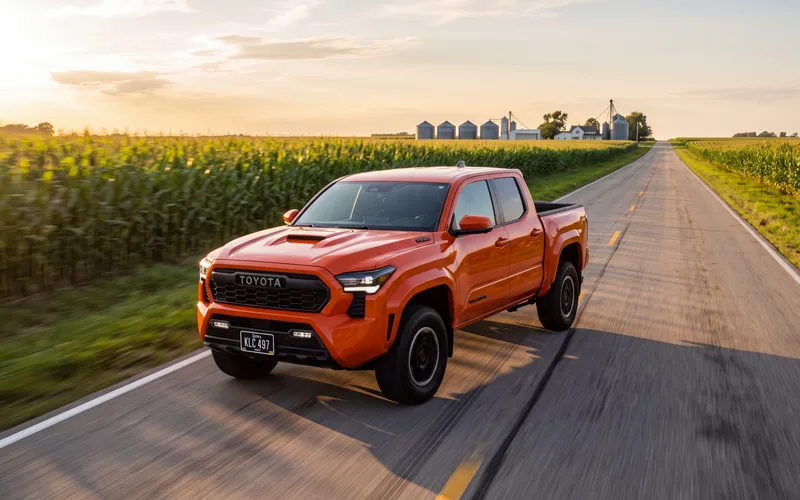 Toyota TacomaMid-Size TruckBetter at: Capability & resale
The default mid-size cross-shop: more towing, a hybrid option, better resale, and modern tech — at the cost of a rougher ride.
Compare 1.99C-
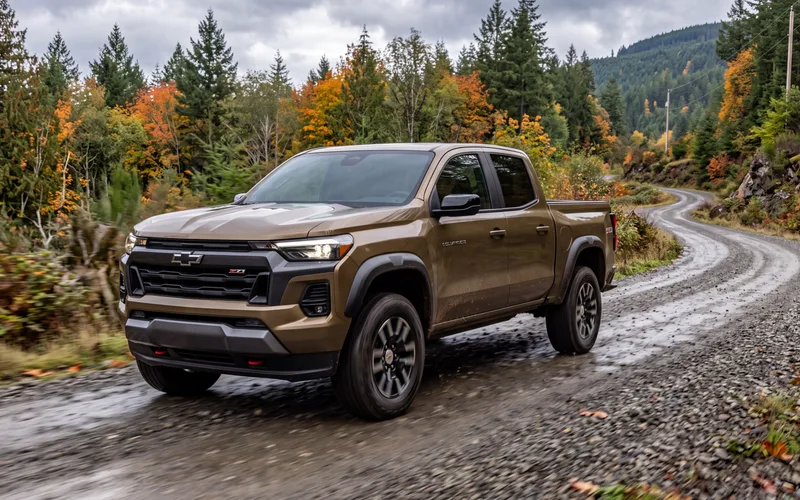 Chevrolet ColoradoMid-Size TruckBetter at: Towing & tech
A turbo four with 430 lb-ft and up to 7,700 lbs of towing, plus the modern screen and camera tech the Ridgeline doesn't offer.
Compare 1.81C-
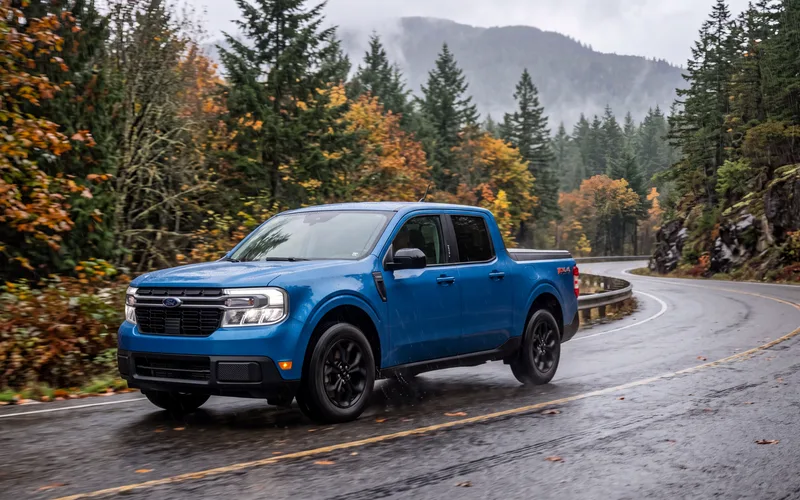 Ford MaverickCompact TruckBetter at: Fuel economy
For buyers who mostly need a bed and a commuter, the hybrid Maverick's ~37 mpg and much lower price make the Ridgeline hard to justify.
CompareHow it's evolved
10 scored model years · 2017–2026
Subject scores by year
Hover or tap a score to see what moved it versus the year before. A corner mark flags a big swing.
| Year | Performance | Efficiency | Safety | Space | Cost | Reliability | Tech | Use-case | Driving | Value |
|---|---|---|---|---|---|---|---|---|---|---|
| 2026 | 37 | 51 | 78 | 50 | 51 | 75 | 51 | 70 | 69 | 64 |
| 2025 | 37 | 47 | 64 | 50 | 54 | 71 | 54 | 68 | 68 | 65 |
| 2024 | 37 | 46 | 66 | 49 | 54 | 75 | 52 | 67 | 68 | 65 |
| 2023 | 35 | 47 | 69 | 49 | 56 | 73 | 44 | 65 | 68 | 62 |
| 2022 | 35 | 47 | 68 | 54 | 59 | 72 | 43 | 68 | 73 | 63 |
| 2021 | 35 | 48 | 69 | 54 | 64 | 73 | 43 | 69 | 73 | 66 |
| 2020 | 34 | 49 | 66 | 54 | 64 | 68 | 41 | 71 | 69 | 67 |
| 2019 | 34 | 49 | 58 | 54 | 66 | 63 | 39 | 68 | 70 | 66 |
| 2018 | 34 | 49 | 58 | 54 | 67 | 66 | 39 | 68 | 72 | 66 |
| 2017 | 35 | 49 | 59 | 54 | 67 | 63 | 39 | 70 | 70 | 71 |
Compare two years
Best fit & conditions
Higher scores mean a better fit for that use case. Learn more about use-case fit →
Subject profile
Trims & configurations
4 trimsScores above reflect the volume trim. Per-trim specs and scores are rolling out — the full lineup:
Academic Probation · NHTSA safety recalls
Jun 4, 2026Structure: frame and members · Suspension: rearThe rear subframe may corrode at the suspension mounting points, which can result in rear suspension component failure.
Defect
American Honda Motor Company (Honda) is recalling certain 2016-2022 Honda Pilot, 2017-2023 Ridgeline, 2019-2023 Passport, and 2014-2020 Acura MDX vehicles that were sold in Connecticut, Delaware, District of Columbia, Illinois, Indiana, Iowa, Kentucky, Maine, Maryland, Massachusetts, Michigan, Minnesota, Missouri, New Hampshire, New Jersey, New York, Ohio, Pennsylvania, Rhode Island, Vermont, Virginia, West Virginia, or Wisconsin. The rear subframe may corrode at the suspension mounting points, which can result in rear suspension component failure.
Risk
Failure of rear suspension components, such as the rear control arm, can cause a loss of vehicle handling and control, increasing the risk of a crash or injury.
Remedy
Dealers will inspect the rear subframe and install a rear subframe reinforcement kit and, as necessary, repair or replace the rear subframe components, free of charge. Interim letters notifying owners of the safety risk were mailed July 27, 2026. Additional letters will be sent once the final remedy is available, anticipated in the fall of 2026. Owners may contact Honda's customer service at 1-888-234-2138. Honda's numbers for this recall are AOU and AOT. Vehicle Identification Numbers (VINs) involved in this recall will become searchable on NHTSA.gov beginning June 10, 2026.
NHTSA campaign 26V365000 ↗Manufacturer no. AOU, AOT965,561 vehicles potentially affected (all models in the campaign)Filed by Honda (American Honda Motor Co.)Filed as RIDGELINEMay 21, 2026Air bags: sensor: occupant classification: front passengerThe front passenger seat weight sensor may crack and short circuit, which can cause the air bags to deploy unintentionally during a crash.
Defect
Honda (American Honda Motor Co.) is recalling certain 2018-2021, 2023 Acura TLX, 2019-2024 RDX, 2017-2020, 2022-2026 MDX, 2017-2021, 2023, 2025 Honda Ridgeline, 2017-2022 Pilot, 2019-2021 Passport, 2018-2026 Odyssey, 2019-2022 Insight, 2019-2021 HR-V, 2018-2020 Fit, 2020-2022 CR-V Hybrid, 2017-2022 CR-V, 2017-2018, 2021 Civic Type R, 2017-2021 Civic hatchback, 2016-2020 Civic coupe, 2016-2022 Civic, 2017-2022 Accord Hybrid, and 2016-2022 Accord vehicles. The front passenger seat weight sensor may crack and short circuit, which can cause the air bags to deploy unintentionally during a crash.
Risk
Air bags that deploy unintentionally during a crash increase the risk of injury.
Remedy
Dealers will replace the seat weight sensors, free of charge. Owner notification letters were mailed July 7, 2026. Owners may contact Honda's customer service at 1-888-234-2138. Honda's numbers for this recall are BOL, WO9, OOA, WOM, XOH, NOC, POD, BOE, UOF, POB, EOG, AOI, QO8, TOJ, DO7, and SOK. This recall expands previous NHTSA recall number 24V064. Vehicle Identification Numbers (VINs) involved in this recall will be searchable on NHTSA.gov beginning May 29, 2026.
NHTSA campaign 26V332000 ↗Manufacturer no. Refer to Comments98,892 vehicles potentially affected (all models in the campaign)Owners notified Jul 6, 2026Filed by Honda (American Honda Motor Co.)Filed as RIDGELINEDec 18, 2023Fuel system, gasoline: delivery: fuel pumpThe fuel pump inside the fuel tank may fail.
Defect
Honda (American Honda Motor Co.) is recalling certain 2013-2023 Honda Accord, Civic Coupe, Civic Sedan, Civic Hatchback, Civic Type R, CR-V, HR-V, Ridgeline, Odyssey, Acura ILX, MDX, MDX Hybrid, RDX, RLX, TLX, 2019-2022 Honda Insight, Passport, 2020 Honda CR-V Hybrid, 2018-2019 Honda Clarity PHEV, Fit, and 2015-2020 Honda Accord Hybrid, Pilot, Acura NSX vehicles. The fuel pump inside the fuel tank may fail.
Risk
Fuel pump failure can cause an engine stall while driving, increasing the risk of a crash.
Remedy
Dealers will replace the fuel pump module, free of charge. Owner letters were mailed September 6, 2024. Owners may contact Honda customer service at 1-888-234-2138. Honda's numbers for this recall are KGC and KGD. This recall is an expansion of NHTSA recall numbers 21V-215 and 20V-314.
NHTSA campaign 23V858000 ↗Manufacturer no. KGC, KGD2,490,460 vehicles potentially affected (all models in the campaign)Owners notified Mar 29, 2024Filed by Honda (American Honda Motor Co.)Filed as RIDGELINENov 13, 2023Engine and engine cooling: engine: hard parts internal/mechanicalDue to a manufacturing error, the connecting rod bearing in the engine may wear and seize, damaging the engine.
Defect
Honda (American Honda Motor Co.) is recalling certain 2015-2020 Acura TLX, 2016-2020 Acura MDX, 2016 and 2018-2019 Pilot, 2017 and 2019 Ridgeline, and 2018-2019 Odyssey vehicles. Due to a manufacturing error, the connecting rod bearing in the engine may wear and seize, damaging the engine.
Risk
A damaged engine may run improperly or stall while driving, increasing the risk of a fire, crash, or injury.
Remedy
Dealers will inspect and repair, or replace the engine as necessary, free of charge. Owner letters were mailed March 28, 2024. 2016-2017 Acura MDX owner letters were mailed November 1, 2024. 2016-2020 Acura MDX owner letters are expected to be mailed in mid-December 2024. Honda began mailing owner notification letters as of March 18, 2024. 2015-2016 Acura owner letters are expected to be mailed mid-December 2024, 2018 Acura TLX owner letters are expected to be mailed the end of March/early April 2024, 2019 Acura TLX owner letters are expected to be mailed mid-May 2024, 2020 Acura TLX owner letters are expected to be mailed mid-June 2024, and 2016-2020 Acura MDX owner letters are expected to be mailed January 27, 2025. Owners may contact Honda customer service at 1-888-234-2138. Honda's numbers for these recalls are XG1 and GG0.
NHTSA campaign 23V751000 ↗Manufacturer no. XG1, GG0248,999 vehicles potentially affected (all models in the campaign)Owners notified Mar 28, 2024Filed by Honda (American Honda Motor Co.)Filed as RIDGELINENov 23, 2022Back over prevention: sensing system: cameraOpening and closing the tailgate may break the rearview camera wiring harness, causing the rearview camera to fail.
Defect
Honda (American Honda Motor Co.) is recalling certain 2017-2019 Ridgeline vehicles. Opening and closing the tailgate may break the rearview camera wiring harness, causing the rearview camera to fail.
Risk
An inoperative rearview camera can reduce the driver's rear visibility, increasing the risk of a crash.
Remedy
Dealers will replace the rearview camera wiring harness, free of charge. Owner notification letters were mailed August 31, 2023. Owners may contact Honda's customer service at 1-888-234-2138. Honda's number for this recall is 6RW.
NHTSA campaign 22V867000 ↗Manufacturer no. 6RW117,445 vehicles potentially affected (all models in the campaign)Owners notified Aug 31, 2023Filed by Honda (American Honda Motor Co.)Filed as RIDGELINENov 29, 2021Latches/locks/linkages: hood: latch · Structure: body: hoodThe hood latch striker may become damaged and separate from the hood, which can result in the hood opening while driving.
Defect
Honda (American Honda Motor Co.) is recalling certain 2019 Passport, 2016-2019 Pilot, and 2017-2020 Ridgeline vehicles. The hood latch striker may become damaged and separate from the hood, which can result in the hood opening while driving.
Risk
A hood that opens while driving can obstruct the driver's view and increase the risk of a crash.
Remedy
Dealers will either repair the hood latch striker, or replace the hood if necessary, free of charge. Owner notification letters were mailed January 18, 2022. Owners may contact Honda customer service at 1-888-234-2138. Honda's number for this recall is PBV.
NHTSA campaign 21V932000 ↗Manufacturer no. PBV724,826 vehicles potentially affected (all models in the campaign)Owners notified Jan 18, 2022Filed by Honda (American Honda Motor Co.)Filed as RIDGELINEMar 25, 2021Fuel system, gasoline: delivery: fuel pumpThe low-pressure fuel pump inside the fuel tank may fail.
Defect
Honda (American Honda Motor Co.) is recalling certain 2019-2020 Acura MDX, MDX Sport Hybrid, RDX, TLX, Honda Accord, Civic Hatchback, Insight, 2019 Acura ILX, Honda Accord Hybrid, Civic Coupe, Civic Coupe Si, Civic Sedan, Civic Sedan Si, Civic Type R, Fit, HR-V, Odyssey, Passport, Pilot and Ridgeline, and 2018-2019 CR-V vehicles. The low-pressure fuel pump inside the fuel tank may fail.
Risk
Fuel pump failure can cause an engine stall while driving, increasing the risk of a crash.
Remedy
Honda will notify owners, and dealers will replace the fuel pump assembly, free of charge. Owner letters were mailed May 18, 2021. Owners may contact Honda customer service at 1-888-234-2138. Note: This recall is an expansion of recall 20V-314.
NHTSA campaign 21V215000 ↗Manufacturer no. Multiple Codes624,552 vehicles potentially affected (all models in the campaign)Owners notified May 18, 2021Filed by Honda (American Honda Motor Co.)Filed as RIDGELINESep 17, 2020EquipmentHonda (American Honda Motor Co.) is recalling all Honda Genuine Accessory Tonneau Covers, part number 08Z07-T6Z-100F, sold for installation on 2017-2020 Ridgeline trucks. If the tonneau cover is not properly secured in the open or closed position, wind resistance may cause the cover to flip and buckle. If this occurs, the hinges between the center and rear panel may deform, possibly allowing the rear panel to separate from the vehicle.
Defect
Honda (American Honda Motor Co.) is recalling all Honda Genuine Accessory Tonneau Covers, part number 08Z07-T6Z-100F, sold for installation on 2017-2020 Ridgeline trucks. If the tonneau cover is not properly secured in the open or closed position, wind resistance may cause the cover to flip and buckle. If this occurs, the hinges between the center and rear panel may deform, possibly allowing the rear panel to separate from the vehicle.
Risk
A separated panel may become a road hazard, increasing the risk of crash or injury.
Remedy
Honda will notify all registered owners of 2017-2020 Honda Ridgelines, and dealers will install tethers onto any Honda Genuine Accessory Tonneau Cover to prevent panel separation and apply warning labels, free of charge. In addition, an updated accessory user's information manual will be provided. The recall began October 26, 2020. Owners may contact Honda customer service at 1-888-234-2138. Honda's number for this recall is F8M.
NHTSA campaign 20E068000 ↗Manufacturer no. F8M151,343 vehicles potentially affected (all models in the campaign)Owners notified Oct 26, 2020Filed by Honda (American Honda Motor Co.)Filed as RIDGELINEApr 12, 2019Engine and engine cooling: engine: gasoline: belts and associated pulleysThe timing belt teeth may separate from the belt.
Defect
Honda (American Honda Motor Co.) is recalling certain 2018-2019 Acura MDX and Honda Pilot vehicles and 2019 Acura RLX, RLX Sport Hybrid, TLX and Honda Odyssey and Ridgeline vehicles. The timing belt teeth may separate from the belt.
Risk
Teeth separation from the timing belt may result in an engine stall, increasing the risk of crash.
Remedy
Honda will notify owners, and dealers will inspect the vehicle and replace any affected timing belt free of charge. Vehicles receiving a replacement timing belt will also have the engine inspected and any damaged components will be replaced for free. The recall began June 7, 2019. Honda owners may contact customer service at 1-888-234-2138. Honda's number for this recall is L4M. Acura owners may contact customer service at 1-888-234-2138. Acura's number for this recall is Z4L.
NHTSA campaign 19V298000 ↗Manufacturer no. L4M, Z4L93,946 vehicles potentially affected (all models in the campaign)Owners notified Jun 7, 2019Filed by Honda (American Honda Motor Co.)Filed as RIDGELINEJan 24, 2019Fuel system, gasoline: delivery: fuel pumpExposure to acids, such as from car wash soaps, can result in the fuel pump feed port cracking.
Defect
Honda (American Honda Motor Co.) is recalling certain 2017-2019 Ridgeline trucks. Exposure to acids, such as from car wash soaps, can result in the fuel pump feed port cracking.
Risk
A crack in the fuel pump feed port can allow pressurized fuel to leak out, increasing the risk of a fire.
Remedy
Honda will notify owners, and dealers will replace the fuel pump, if necessary, and install a fuel pump cover, free of charge. The recall began March 14, 2019. Owners may contact Honda customer service at 1-888-234-2138. The recall number for this recall is Q3V.
NHTSA campaign 19V053000 ↗Manufacturer no. Q3V106,683 vehicles potentially affected (all models in the campaign)Owners notified Mar 14, 2019Filed by Honda (American Honda Motor Co.)Filed as RIDGELINENov 28, 2018Structure: body: roof and pillarsThe mounting holes for the clip that secures the right center pillar trim panel may be larger than intended. In the event of a crash necessitating right side curtain air bag deployment, the clip may not hold the center pillar trim panel in position and it may potentially interfere with the curtain air bag deployment. As such, these vehicles fail to comply with the requirements of Federal Motor Vehicle Safety Standard (FMVSS) number 214, "Side Impact Protection," and 226, "Ejection Mitigation."
Defect
Honda (American Honda Motor Co.) is recalling certain 2019 Honda Ridgeline and Pilot vehicles. The mounting holes for the clip that secures the right center pillar trim panel may be larger than intended. In the event of a crash necessitating right side curtain air bag deployment, the clip may not hold the center pillar trim panel in position and it may potentially interfere with the curtain air bag deployment. As such, these vehicles fail to comply with the requirements of Federal Motor Vehicle Safety Standard (FMVSS) number 214, "Side Impact Protection," and 226, "Ejection Mitigation."
Risk
In the event of a crash, if the curtain air bag does not deploy as intended, it can increase the risk of injury.
Remedy
Honda will notify owners, and dealers will install a bracket on the right center pillar that will securely hold the center pillar trim clip, free of charge. The recall began January 22, 2019. Owners may contact Honda customer service at 1-888-234-2138. Honda's number for this recall is D3D.
NHTSA campaign 18V848000 ↗Manufacturer no. D3D404 vehicles potentially affected (all models in the campaign)Owners notified Jan 22, 2019Filed by Honda (American Honda Motor Co.)Filed as RIDGELINESep 27, 2018Air bags · Air bags: air bag/restraint control module · Seat belts: pretensionerThe Supplemental Restraint System (SRS) control unit may have a manufacturing error, possibly resulting in the air bags or seatbelt pretensioners not deploying in the event of a crash.
Defect
Honda (American Honda Motor Co.) is recalling certain 2019 Honda Insight, Odyssey, and Ridgeline vehicles. The Supplemental Restraint System (SRS) control unit may have a manufacturing error, possibly resulting in the air bags or seatbelt pretensioners not deploying in the event of a crash.
Risk
In the event of a crash, if the air bags or seatbelt pretensioners do not function as intended, there would be an increased risk of injury.
Remedy
Honda will notify owners, and dealers will replace the SRS unit, free of charge. The recall began November 8, 2018. Owners may contact Honda customer service at 1-888-234-2138. Honda's numbers for this recall are B2R, C2P, and Z2Q.
NHTSA campaign 18V664000 ↗Manufacturer no. B2R, C2P, Z2Q118 vehicles potentially affected (all models in the campaign)Owners notified Nov 8, 2018Filed by Honda (American Honda Motor Co.)Filed as RIDGELINE
8 recalls on other model years of the Ridgeline (2017–2018, 2020–2025)
May 9, 2024Back over prevention: sensing system: cameraThe rearview camera (RVC) tailgate wire harness may fatigue and break, which can prevent the rearview camera image from displaying.
Defect
Honda (America Honda Motor Co) is recalling certain 2020-2024 Ridgeline vehicles. The rearview camera (RVC) tailgate wire harness may fatigue and break, which can prevent the rearview camera image from displaying.
Risk
A rearview camera that does not display an image can reduce the driver's rear view, increasing the risk of a crash.
Remedy
Dealers will replace the RVC tailgate wire harness, free of charge. Owner letters were mailed November 8, 2024. Owners may contact Honda service at 1-888-234-2138. Honda's number for this recall is YI7.
NHTSA campaign 24V321000 ↗Manufacturer no. YI7187,290 vehicles potentially affected (all models in the campaign)Owners notified Nov 8, 2024Filed by Honda (American Honda Motor Co.)Filed as RIDGELINEMar 7, 2024Steering: rack and pinionThe inner ball joint housing in the steering gearbox assembly may loosen and detach from the steering rack and result in a loss of steering control.
Defect
Honda (American Honda Motor Co.) is recalling certain 2023 Passport and Ridgeline vehicles. The inner ball joint housing in the steering gearbox assembly may loosen and detach from the steering rack and result in a loss of steering control.
Risk
A loss of steering control increases the risk of a crash.
Remedy
Dealers will inspect and replace the steering gearbox as necessary, free of charge. Owner notification letters were mailed April 11, 2024. Owners may contact Honda customer service at 1-888-234-2138. Honda's number for this recall is LHY.
NHTSA campaign 24V184000 ↗Manufacturer no. LHY245 vehicles potentially affected (all models in the campaign)Owners notified Apr 11, 2024Filed by Honda (American Honda Motor Co.)Filed as RIDGELINEFeb 1, 2024Air bags: sensor: occupant classification: front passengerThe front passenger seat weight sensor may crack and short circuit, failing to suppress the air bag as intended.
Defect
Honda (American Honda Motor Co.) is recalling certain 2020-2022 Pilot, Accord, Civic sedan, HR-V, Odyssey, 2020 Civic coupe, Fit, 2021-2022 Civic hatchback, 2021 Civic Type R, Insight, 2020-2021 CR-V, CR-V Hybrid, Passport, Ridgeline, Accord Hybrid, 2020 Acura MDX, 2022 Acura MDX, 2020-2022 Acura RDX, and 2020-2021 Acura TLX vehicles. The front passenger seat weight sensor may crack and short circuit, failing to suppress the air bag as intended.
Risk
An air bag that deploys unintentionally during a crash can increase the risk of injury.
Remedy
Dealers will replace the seat weight sensors, free of charge. Owner notification letters were mailed March 28, 2024. This is a phased recall. Owners may contact Honda customer service at 1-888-234-2138. Honda's numbers for these recalls are XHP and VHQ.
NHTSA campaign 24V064000 ↗Manufacturer no. XHP, VHQ750,114 vehicles potentially affected (all models in the campaign)Owners notified Mar 28, 2024Filed by Honda (American Honda Motor Co.)Filed as RIDGELINEJun 29, 2023Service brakes, hydraulic: foundation components: master cylinderThe tie rod fastener that connects the brake booster and the brake master cylinder may have been improperly assembled during manufacturing, which can cause the brake master cylinder to separate from the booster assembly.
Defect
Honda (American Honda Motor Co.) is recalling certain 2020-2021 Civic, 2020-2023 Ridgeline, 2021-2023 Passport, 2021-2022 Pilot, and 2020 Acura MDX vehicles. The tie rod fastener that connects the brake booster and the brake master cylinder may have been improperly assembled during manufacturing, which can cause the brake master cylinder to separate from the booster assembly.
Risk
Brake master cylinder separation can cause a loss of brake function and increase the risk of a crash.
Remedy
Dealers will inspect and repair the brake booster assembly as necessary, free of charge. Owner notification letters were mailed August 7, 2023. Owners may contact Honda customer service at 1-888-234-2138. Honda's numbers for this recall are VEU, AEV, and ZET.
NHTSA campaign 23V458000 ↗Manufacturer no. VEU, AEV, ZET124,077 vehicles potentially affected (all models in the campaign)Owners notified Aug 7, 2023Filed by Honda (American Honda Motor Co.)Filed as RIDGELINEMar 16, 2023Visibility: rearview mirrors/devices: exteriorThe heating pads behind both side-view mirrors may not be bonded properly, allowing the mirror glass to detach. As such, these vehicles fail to comply with the requirements of Federal Motor Vehicle Safety Standard number 111, "Rear Visibility."
Defect
Honda (American Honda Motor Co) is recalling certain 2020-2021 Pilot and Ridgeline, and 2020-2022 Passport and Odyssey vehicles. The heating pads behind both side-view mirrors may not be bonded properly, allowing the mirror glass to detach. As such, these vehicles fail to comply with the requirements of Federal Motor Vehicle Safety Standard number 111, "Rear Visibility."
Risk
Detached mirror glass can reduce driver visibility, increasing the risk of a crash.
Remedy
Dealers will replace both left and right side-view mirrors, free of charge. Owner letters were mailed January 17, 2024. Owners may contact Honda customer service at 1-888-234-2138. Honda's number for this recall is FE5.
NHTSA campaign 23V174000 ↗Manufacturer no. FE5339,404 vehicles potentially affected (all models in the campaign)Owners notified Jan 17, 2024Filed by Honda (American Honda Motor Co.)Filed as RIDGELINENov 18, 2021Seat belts: rear/other: retractorThe automatic locking retractor on the second-row center seat belt assembly may deactivate improperly, which can result in an unsecured child restraint system. As such, these vehicles fail to comply with the requirements of Federal Motor Vehicle Safety Standard number 208, "Occupant Crash Protection."
Defect
Honda (American Honda Motor Co.) is recalling certain 2021 Accord Sedan, Accord Hybrid, CR-V, Ridgeline, 2022 Insight and CR-V Hybrid vehicles. The automatic locking retractor on the second-row center seat belt assembly may deactivate improperly, which can result in an unsecured child restraint system. As such, these vehicles fail to comply with the requirements of Federal Motor Vehicle Safety Standard number 208, "Occupant Crash Protection."
Risk
An unsecured child restraint system can increase the risk of injury during a crash.
Remedy
Dealers will replace the second-row center seat belt assembly, free of charge. Owner notification letters were mailed January 14, 2022. Owners may contact Honda customer service at 1-888-234-2138.
NHTSA campaign 21V900000 ↗Manufacturer no. ABS, BBT, NBQ, RBR4,346 vehicles potentially affected (all models in the campaign)Owners notified Jan 14, 2022Filed by Honda (American Honda Motor Co.)Filed as RIDGELINEApr 5, 2018SeatsThe front driver and passenger powered seats in the Honda vehicles and the driver powered seats in the Acura vehicles may have been assembled with improperly manufactured rivets. In the event of a crash, the rivets can break causing the seats not to be secured to the floor. As such, these vehicles may fail to comply with the requirements of Federal Motor Vehicle Safety Standard (FMVSS) number 207, "Seating Systems," and 210, "Seat Belt Assembly Anchorages."
Defect
Honda (American Honda Motor Co.) is recalling certain 2018 Honda Pilot and Ridgeline vehicles and 2018 Acura MDX vehicles. The front driver and passenger powered seats in the Honda vehicles and the driver powered seats in the Acura vehicles may have been assembled with improperly manufactured rivets. In the event of a crash, the rivets can break causing the seats not to be secured to the floor. As such, these vehicles may fail to comply with the requirements of Federal Motor Vehicle Safety Standard (FMVSS) number 207, "Seating Systems," and 210, "Seat Belt Assembly Anchorages."
Risk
In the event of a crash, if the seat does not remain secured to the floor, the seat occupant has an increased risk of injury.
Remedy
Honda will notify owners, and dealers will replace the driver seat frame assembly in Acura MDX vehicles, and replace the driver and front passenger seat slide rail frames in Honda Pilot and Ridgeline vehicles, free of charge. The recall began May 30, 2018. Owners may contact Honda customer service at 1-888-234-2138. Honda's numbers for this recall is D0S, and T0T.
NHTSA campaign 18V221000 ↗Manufacturer no. D0S, T0T5,810 vehicles potentially affected (all models in the campaign)Owners notified May 30, 2018Filed by Honda (American Honda Motor Co.)Filed as RIDGELINEDec 9, 2016Electrical system: wiringWater may enter the rear wiring harness through the connector located under the truck bed drain hole, possibly causing the connection terminals to corrode.
Defect
Honda (American Honda Motor Co.) is recalling certain model year 2017 Ridgeline AWD vehicles manufactured April 1, 2016, to August 11, 2016. Water may enter the rear wiring harness through the connector located under the truck bed drain hole, possibly causing the connection terminals to corrode.
Risk
Corrosion of the wiring harness can cause increased electrical resistance, unexpectedly activating the vehicle stability assist (VSA) system, increasing the risk of a crash.
Remedy
Honda will notify owners, and dealers will inspect the rear wiring harness and related components, replacing them as necessary, free of charge. Owners may contact Honda customer service at 1-888-234-2138. Honda's number for this recall is KD3.
NHTSA campaign 16V888000 ↗Manufacturer no. KD39,179 vehicles potentially affected (all models in the campaign)Owners notified Feb 3, 2017Filed by Honda (American Honda Motor Co.)Filed as RIDGELINE
Source: NHTSA Office of Defects Investigation recall database, model years 2017–2026. Recalls are listed by model year as the manufacturer filed them; whether a specific car is affected depends on its VIN — check a VIN at nhtsa.gov ↗. NHTSA model names matched to this page: RIDGELINE.
Detailed scoring by subject
1Performance & PowertrainThe Ridgeline's lowest-graded category.0.23F
2019 is a carry-over powertrain year in the second-generation (YK2/YK3) Ridgeline: one engine, a 3,471 cc direct-injected SOHC i-VTEC V6 with Variable Cylinder Management, rated 280 hp @ 6,000 rpm identically on RT through Black Edition. Against a truck band reaching 800 hp it normalizes low, even though 280 hp remained the strongest standard output in the 2019 mid-size class.
The naturally aspirated V6 makes 262 lb-ft peaking high at 4,700 rpm, the same on every 2019 trim. The truck torque band runs to 800 lb-ft, and a peak that far up the rev range is exactly the wrong character for hauling, so this normalizes near the floor — by 2019 even the single-engine Ranger's 2.3L EcoBoost beat it by 48 lb-ft at less than half the revs.
The drivetrain is unchanged from 2017–2018, and 2019-specific instrumented results scatter over roughly 6.6–7.4 seconds depending on drivetrain, surface and traction-control setting; 6.9 s is the median of the model-year-specific verified runs. That was still competitive-to-quickest in the 2019 mid-size field, but unremarkable against a truck band anchored by 2.5-second electric pickups.
The 3.5L V6 remains the most-praised part of the truck in 2019: linear throttle response through a drive-by-wire pedal, no turbo lag, a smooth top-end pull and transparent VCM cylinder deactivation, all isolated by a unibody structure that damps far better than a body-on-frame rival. It falls short of the top band because a high-revving naturally aspirated V6 has no low-end shove — with the torque peak at 4,700 rpm it must be wound out under load rather than leaning on midrange thrust.
Every 2019 Ridgeline used the wide-ratio 6-speed automatic — the 9-speed did not arrive until the 2020 model year — and it drew few complaints: smooth, unobtrusive shifts and sensible logic in ordinary driving, with a heavy-duty transmission cooler on the AWD-capable trims. Two things hold it back, and both got relatively worse in 2019: rivals moved on (the returning Ranger brought a 10-speed, the Colorado an 8-speed), and there is still no driver control — no paddle shifters and no true manual gate anywhere in the trim walk, only a top-gear lockout and an L position for engine braking, which owners who tow flag as a real limitation on grades.
Maximum conventional towing is 5,000 lbs and only with the i-VTM4 all-wheel-drive system — front-drive Ridgelines are capped at 3,500 lbs, and the base RT is 2WD-only for 2019, so the cheapest way into the 5,000 lb rating starts a trim up. That was the lowest ceiling in the 2019 mid-size class, where the Tacoma reached 6,800 lbs, the Ranger 7,500 lbs and the Colorado 7,700 lbs with the diesel; the unibody structure and high-revving naturally aspirated V6 set the limit.
Best-case payload for 2019 is 1,580 lbs on the Sport AWD per Honda's trim-by-trim table, sliding to 1,499 lbs on the RTL-E and Black Edition that buyers actually ordered. Honda's marketing copy still quotes the 1,584 lb figure from the 2017 RT AWD, a configuration no longer offered; the difference is immaterial to the score. Class-leading within the mid-size field, but against a truck band topping out at 3,400 lbs, which has to cover half-tons, it normalizes low.
Towing support is close to bare minimum and unchanged for 2019. An integrated Class III hitch is standard on every trim, AWD models get the 7-pin connector (standard on RTL-E/Black Edition) and an available heavy-duty transmission cooler, and trailer sway mitigation is folded into Vehicle Stability Assist with a multi-angle rearview camera helping at hookup. But there is no factory integrated trailer brake controller — the truck is only pre-wired for one — no tow/haul mode, no trailer backup or steering assist, and no dedicated trailer cameras or onboard scales, all of which full-size rivals and even the Colorado offered by 2019.
Honda's i-VTM4 all-wheel drive is genuinely sophisticated for a car-based system — rear torque vectoring that can route effectively all rear drive torque to a single wheel, paired with Intelligent Traction Management offering Snow/Sand/Mud modes (front-drive trucks get Snow only). Two things keep it out of the top band: for 2019 all-wheel drive is still not orderable on the base RT at all, and there is no two-speed transfer case or low range, so it cannot match the part-time 4WD of body-on-frame rivals for deliberate low-speed work.
The 2019 Ridgeline is a pavement-and-gravel truck. AWD models offer 7.87 in of ground clearance with 20.1/19.6/22.1-degree approach/breakover/departure angles and Snow/Sand/Mud traction modes, which covers a forest road or a muddy boat ramp. But this is a unibody with MacPherson-strut front and multi-link rear suspension, and 2019 offered no off-road variant — the HPD package and TrailSport were still to come — so there are no skid plates, no underbody protection, no locking differential and no low range on any configuration, against a class that by 2019 fielded the Tacoma TRD Pro, Colorado ZR2 and Gladiator Rubicon.
One powertrain, no alternatives: the 3.5L V6 and 6-speed automatic are shared by all six 2019 trims, with the only driveline choice being front- versus all-wheel drive. There was no turbo, diesel, hybrid, plug-in or electric option — narrower than the 2019 Colorado, which paired its V6 with a 2.8L Duramax diesel and a four-cylinder, and than the two-engine Tacoma and Frontier lineups.
2Efficiency & RangeOne of the Ridgeline's weakest categories.1.27D
2019 is a powertrain carry-over year within the second-generation (YK2/3) Ridgeline — the same 3.5L direct-injected i-VTEC V6 with Variable Cylinder Management and 6-speed automatic — returning 21 MPG combined in the representative AWD configuration. Class-leading among mid-size trucks but low against the absolute truck normalization band.
Cylinder deactivation saves fuel at steady cruise but contributes little in stop-and-go traffic, leaving city economy only seven MPG above the floor of the truck band and unchanged for 2019.
The unibody platform's lower mass and cleaner aerodynamics versus body-on-frame rivals pay off most at highway speed, where the Ridgeline lands mid-pack against the truck band rather than near its floor.
The 19.5-gallon tank carries over unchanged on every 2019 trim and pairs with 21 MPG combined for roughly 410 miles between fills — adequate for a mid-size truck, but well short of full-size rivals running 26-gallon-plus tanks.
Regular-grade fuel keeps the per-gallon cost down, but 21 MPG combined still puts annual fuel spending in the upper half of the truck cost band.
The Ridgeline asks for only regular unleaded on every 2019 trim including the top Black Edition, with no premium requirement and no diesel or E85 complications — the cheapest and most widely available fuel in the segment.
3SafetyMid-pack among this car's ten categories.1.89C-
The 2019 Ridgeline holds NHTSA's maximum five-star Overall Vehicle Score in both FWD and AWD form, with five stars in every frontal, side-barrier and side-pole test and four stars in rollover — still the best NCAP result on offer in a mid-size pickup.
IIHS toughened the award criteria for 2019 — plain Top Safety Pick now required an acceptable-or-good passenger-side small overlap result — and the Ridgeline was the only pickup of any size to clear the new bar, on Good ratings in all five other crashworthiness tests plus its Acceptable passenger-side score. That Acceptable, where the dummy's head barely caught the airbag before sliding off, is what keeps it out of TSP+, which for 2019 demanded a Good. The award also rides on optional equipment: the Superior-rated CMBS and the Good headlights are fitted only to RTL-E and Black Edition. Two 2019-specific recalls also touch crash protection — a mis-manufactured SRS control unit that may leave airbags and pretensioners undeployed, and a right center-pillar trim clip that can foul curtain airbag deployment (an FMVSS 214/226 non-compliance).
2019 was the last year before Honda made the suite standard: Honda Sensing — CMBS/AEB, forward collision warning, adaptive cruise, lane departure warning, lane keeping assist and road departure mitigation — stayed confined to the RTL-E and Black Edition, the top two of six trims, with Blind Spot Information and Cross Traffic Monitor bundled on the same pair. An RT, Sport, RTL or RTL-T buyer got no AEB, no adaptive cruise and no lane keeping at all; the multi-angle rearview camera was the only driver-assist feature across the range.
Where fitted, the Collision Mitigation Braking System holds IIHS's top Superior front crash prevention rating, avoiding a collision outright in both the 12 mph and 25 mph vehicle-to-vehicle runs. It earns no pedestrian-detection credit — day or night — and it is optional rather than standard on the volume trims, both of which cap it below the modern top band.
Radar Blind Spot Information plus Cross Traffic Monitor appeared only on the RTL-E and Black Edition; RTL-T made do with single-camera LaneWatch on the passenger side, and RT through RTL got nothing. Both systems are alert-only — no braking intervention, no safe-exit warning and no trailer-aware coverage, which matters on a truck meant to tow.
LKAS with lane departure warning and road departure mitigation is genuine centering assistance and works dependably on well-marked highways, but for 2019 it remained restricted to the top two trims and testers of this generation consistently described the intervention as intrusive — tugging against the wheel rather than blending with driver input.
Honda still did not fit the Low-Speed Follow version of adaptive cruise used in the contemporary Accord and CR-V, so the 2019 Ridgeline's ACC switches off below roughly 22 mph and is useless in the stop-and-go traffic it would help most. Reviewers and owners also fault its behavior where it does work — large following gaps even at the closest setting and abrupt braking to open them. Availability on just RTL-E and Black Edition compounds it, and there is no combined highway-assist mode.
No hands-free highway driving system was offered on any 2019 Ridgeline trim. Honda Sensing's LKAS is the ceiling of automation and requires continuous hands-on steering, warning the driver when it detects no steering torque.
IIHS rates the LED projector low beams with high-beam assist Good — but they are fitted only to the RTL-E and Black Edition. The halogen projectors on the other four trims, including every volume configuration, rate Poor. Most 2019 Ridgeline buyers therefore got the worst headlight grade IIHS awards, and it is the reason the truck's Top Safety Pick came with an equipment caveat.
The unibody Ridgeline sits lower and glassier than body-on-frame rivals, with large windows, a modest beltline and generously sized mirrors giving a clear view forward and to the sides. Rearward sightlines are hemmed in by the rear head restraints and the bed, and no surround-view camera was offered — only the standard multi-angle rearview camera compensates, and that camera later drew a recall for a tailgate-routed wiring harness that can break and disable it.
The crew-cab rear bench has complete LATCH hardware in all three positions and swallows three child seats across — unusually generous for a mid-size truck, and a direct benefit of the Pilot-derived unibody. The compromise is the hardware itself: IIHS marks the tether anchors as hard-to-find, the lower anchors sit deep in the seat bight, and the outboard tether straps must be routed through a guide bar, which leaves a standard strap short.
4Space & ComfortGrades below the middle of the scale.1.61D
The second-generation Ridgeline is sold exclusively as a five-passenger crew cab with a short box, and 2019 carried the six-trim lineup (RT, Sport, RTL, RTL-T, RTL-E, Black Edition) forward unchanged in that respect — every trim seats five.
Mid-pack for the truck band. Per this item's rule the without-sunroof figure is used, which Honda publishes as 40.1 in. Worth flagging a genuine inconsistency inside Honda's own 2019 release: the features table makes the One-Touch Power Moonroof standard on RTL, RTL-T, RTL-E and Black Edition (the headline change for 2019), yet the measurements table still lists 40.1 in for RTL/RTL-T and the 39.5 in moonroof figure only for RTL-E/Black Edition — the dimension row was not updated to match. A moonroof-equipped 2019 RTL therefore really has 39.5 in.
The Ridgeline's weakest interior dimension and a direct consequence of its crossover packaging — 40.9 in sits just below the bottom of the truck normalization band (41 in) and trails the GM mid-size twins (44.9 in) by four inches. The low, car-like seating position makes it feel roomier than the number implies, but 2019 changed nothing structurally about the cabin.
Low-mid in the truck band. The roofline runs flat all the way back over the rear bench, so unlike the front figure the moonroof-equipped trims lose nothing — a useful detail now that the moonroof reaches down to the RTL for 2019. The unibody's lower overall height still caps the number below the full-size trucks.
Comfortably ahead of the Colorado/Canyon crew cabs (35.8 in) though short of the Tacoma and Frontier double cabs. The bench sits at a more reclined angle than a body-on-frame rival's, which flatters the raw figure, but Consumer Reports still calls rear-seat room modest and notes the rear doors don't open very far.
Low in the truck band overall, but still the longest box among mid-size crew cabs for 2019 — 64.0 in beats the Colorado/Canyon crew short box (61.7 in) and the Tacoma double cab short bed (60.5 in). No long-bed option exists because the unibody body style is fixed.
Near the floor of the truck band: the bed is long and unusually wide but shallow-walled — Consumer Reports describes it as shallow relative to its length — so measured volume trails the Colorado (41.9 cu ft). Honda publishes the 7.3 cu ft In-Bed Trunk as a separate figure, and it is credited under in-cabin storage rather than double-counted here.
Still the segment's benchmark for storage innovation in 2019, and standard on every trim rather than paywalled: the 7.3 cu ft lockable, weather-sealed In-Bed Trunk (doubles as an ice chest), the Dual-Action Tailgate that swings sideways or folds down, a 60/40 split lift-up rear seat opening 2.9 cu ft of flat underseat space, the multi-functional center console, and eight bed cleats rated 350 lbs each. RTL-E and Black Edition add the 150/400-watt bed power outlet and the Truck Bed Audio System. 2019 added only a second USB port on RT/Sport/RTL — a convenience item, not a storage change — so the hardware case is unchanged.
Praised front and rear, which is rare in this segment, and 2019 left the seating hardware untouched. Edmunds describes front seats with a nice shape and supportive padding good for long-distance comfort, and credits the Pilot-derived layout for feeling family-friendly; the rear bench sits at a more relaxed recline than the upright plank typical of mid-size trucks. Held below the 80s' upper reaches by modest rear room and by the base RT and Sport making do with manual seat adjustment and cloth.
The Ridgeline's single strongest attribute and the clear class leader for 2019 — it remained the only pickup in the segment with fully independent rear suspension, on the modified third-generation Pilot unibody platform (28% more torsional rigidity than the first generation, 50% of chassis components changed or strengthened). Reviewers report it shrugs off broken pavement and washboard with none of the unladen rear-axle patter that defines a leaf-sprung mid-sizer, and no highway bounce or sway. The trade-off shows up in the towing and payload ceilings scored in cat1, not in the ride.
Generally the quietest cabin in the mid-size pickup class. Active Noise Cancellation is standard on every 2019 trim — unusual at this price — and the acoustic windshield is fitted from RTL up, meaning the volume trims get it. Car and Driver measured a lower in-cabin decibel reading than a Mercedes S-Class at both idle and freeway cruise with the laminated windshield fitted. What holds this out of the 90s is road roar resonating up through the unibody floor over coarse surfaces, a recurring owner complaint.
Key comfort equipment still arrives at mid trims and up — squarely the 50-79 band. Tri-zone automatic climate control starts at the Sport, leaving only the base RT on manual air conditioning; heated front seats and leather start at the RTL; a heated steering wheel remains exclusive to RTL-E and Black Edition. 2019 improved availability modestly by making the power moonroof and power sliding rear window standard on RTL and RTL-T (previously top-trim items) and adding a second USB port to RT/Sport/RTL, which is why this edges above the 2018 reading. Still no ventilated front seats, heated rear seats or remote pre-conditioning on any trim — confirmed absent from the entire 2019 equipment list — which caps the score below the loaded top trims of full-size rivals.
5Cost of OwnershipMid-pack among this car's ten categories.2.44C+
2019 is the third year of the second-generation (YK2/YK3) Ridgeline and a light-content year rather than a redesign, so the RT 2WD stays the entry configuration at $29,990, up $360 on 2018's $29,630, plus Honda's destination charge, which itself rose from $1,045 at launch to $1,095 by the July 2019 pricing revision. Honda widened the lineup back out for 2019 by adding the appearance-focused Sport trim between RT and RTL, so there are nine configurations again, but RT 2WD remains the only sub-$33,000 Ridgeline. Every Ridgeline is a crew cab, so this undercuts most mid-size rivals on a like-for-like body basis even though rivals advertise cheaper extended-cab base trims.
RTL AWD is taken as the representative volume configuration, consistent with the 2017 and 2018 scorecards — Honda's reported Ridgeline mix has put RTL and RTL-E at roughly 30% each, and RTL is the most-listed 2019 trim in used inventory. Two 2019-specific wrinkles widen the real transaction band: the new Sport trim added a cheaper AWD entry point at $36,335 all-in, while RTL and RTL-T gained a moonroof and power sliding rear window as standard, pushing content (and price) up at the middle of the range. The Ridgeline still skews expensive within its own lineup — the loaded RTL-E AWD at $42,965 is a genuine volume trim rather than a halo, and RTL-E and Black Edition are AWD-only with the 9-speed automatic.
The Pilot-derived unibody drivetrain has no transfer case, no turbochargers and no CVT, and the J35 V6's timing-belt interval falls outside the first five years, so both major cost datasets land well under the mid-size-truck average — below the $3,500 floor of the segment band. The estimate is held modestly above CarEdge's nameplate figure rather than at RepairPal's lower one because the 2019-specific record is mixed: RepairPal rates the year 3.5/5, 6th of 7 mid-size trucks, with average repair frequency but higher-than-average severity, and owner complaints cluster on the ZF 9-speed automatic (fitted to RTL-E and Black Edition) for hesitation and harsh shifting between roughly 40,000 and 100,000 miles. Note that the 2019 Ridgeline is excluded from Honda's later 10-year starter-system warranty extension, which begins with 2020 trucks.
Solid retention for the segment, but a notch behind the 2018 car and well behind the class leaders. Honda's newsroom confirms the 2019 Ridgeline earned a Kelley Blue Book Best Resale Value Top 10 award, an honor scored explicitly on 60-month value retention, and KBB's 2019 mid-size-pickup set was projected to hold at least 51% of MSRP at five years — against Tacoma's 62.2%, which is why the Tacoma outscores it here. The figure is set a point below 2018's because the 2019 truck's five-year mark landed in 2024, by which point used-truck prices had come down materially from the 2022 peak that flattered the earlier model years. iSeeCars puts nameplate five-year depreciation at 37.5% (~62.5% retained) versus a 29.6% mid-size-pickup average — i.e. good in absolute terms yet worse than segment norm, though that blended figure carries the weaker-retaining first generation.
Honda's 3/36 bumper-to-bumper coverage is unchanged for 2019 and sits at the mainstream minimum — matching Ford, GM, Toyota and Nissan but trailing Hyundai's 5-year basic term. Sheet-metal corrosion coverage runs 5 years/unlimited miles.
Baseline 5/60 powertrain coverage on the 3.5L J35 V6 and both transmissions (six-speed on RT/Sport/RTL/RTL-T, nine-speed on RTL-E and Black Edition), unchanged for 2019 — the segment floor, against Hyundai/Kia's 10-year/100,000-mile terms. Given the 9-speed's complaint record, the short term matters more on the top two trims than the spec alone suggests.
No complimentary scheduled maintenance was offered for 2019 — buyers paid for every service from the first oil change, while ToyotaCare gave Tacoma buyers 2 years/25,000 miles and GM covered the first maintenance visit on the Colorado/Canyon. Honda did include 24-hour roadside assistance for the full 3-year/36,000-mile basic-warranty term, and RTL-E and Black Edition added a HondaLink connected-services trial, which places this at the bottom of the basic-roadside-only band. Nothing changed here versus 2018; Honda's dealer-sold HondaCare plans are a paid add-on, not an included benefit.
$37,815 volume-trim price minus its estimated resale value after 5 years (61% retained, or about $23,067) leaves about $14,748 in depreciation. Add the projected $3,000 in 5-year maintenance and repairs, and owning this vehicle for 5 years costs about $17,748 in total.
6Reliability & QualityMid-pack among this car's ten categories.2.24C
2019 is the weakest of the three early second-generation years on owner-reported evidence: Consumer Reports again rates it "less reliable than other cars from the same model year," and complaint volume rose to 244 from 186 for 2018 rather than continuing the improvement curve off the 2017 launch. The mix shifted rather than cleared — the transmission judder that dominated 2018 all but vanished (2 complaints), replaced by a large fuel-system cluster and two engine-internal recall campaigns.
Honda's dependability standing recovered strongly for this model year, climbing back into the CR top five after the 2016–2018 redesign-wave trough, which supports the upper-middle band. The offset is J.D. Power initial quality: Honda and Acura both landed below the 93 PP100 industry average in 2019, with the brand itself attributing the shortfall to infotainment and driver-assist usability rather than hardware defects.
This is the decisive weakness of the 2019 build and the clearest separation from 2018: the model year is named in BOTH engine-internal campaigns, the connecting-rod-bearing recall and a timing-belt recall that lists the Ridgeline for 2019 only. Either can destroy or stall the engine, which is the low-band trigger regardless of the count, and around them sit two more fuel-pump campaigns, a hood latch that can open at speed, and salt-belt subframe corrosion.
The architecture itself is the conservative choice — a carry-over 3.5L J35 i-VTEC V6 with the proven 6-speed automatic on all six trims and no 9-speed anywhere in the lineup — and the good news for 2019 is that the torque-converter judder that plagued 2018 barely registers in owner reports. That gain is more than spent on the engine bottom end and valvetrain: this is the one Ridgeline year carrying both the rod-bearing and the timing-belt recall, so two distinct manufacturing defects can take the engine out.
Unchanged from 2018 and still the class benchmark: soft-touch surfaces where hands and elbows land, hard-wearing plastics confined to rear doors and lower panels, and a design ambition the 2019 Tacoma, Colorado, Canyon, Ranger and Frontier cabins did not attempt. The only 2019 revisions were a second USB port and power rear glass/moonroof availability, so material content carries over intact.
Third-year assembly earns explicit praise for the things fit-and-finish actually measures — Edmunds calls out small panel gaps and good paint — and none of the 2019 recalls is an assembly-line miss of the kind 2018's seat-rivet campaign was. Holding it mid-band are genuine sealing and trim defects rather than ratings noise: CR documents rear-body water leaks bad enough to soak carpet and foam, plus dashboard rattles, steering-column noise and expensive sunroof failures, and the Ridgeline no longer appears among J.D. Power's APEAL winners for this year.
Honda operates one of the densest non-domestic US franchise networks at roughly 1,000+ dealers, so recall and warranty work on a seven-year-old truck is reachable almost anywhere, and service satisfaction sits at or above industry average. The practical drag specific to this model year is throughput, not coverage: the volume of fuel-pump campaigns left owners waiting on parts, and both engine recalls route through the same dealer service bays.
Routine running costs undercut the segment because the mechanical hardware is shared with the high-volume Pilot and Odyssey, making wear items cheap and universally stocked. Two things keep it out of the top band: when this truck does fail the bill skews severe — the recall-covered engine and timing-belt work would be catastrophic out of warranty — and Ridgeline-specific bed, tailgate and in-bed-trunk parts have a far thinner aftermarket than the Tacoma's.
7Technology & InfotainmentOne of the Ridgeline's weakest categories.0.57F
Carry-over hardware within the second generation (YK2/3, on sale since the 2017 model year): the ceiling is an 8-inch WVGA electrostatic Display Audio touchscreen, standard on RTL-T and above, while the lower three of six trims have no touchscreen at all — only a 5-inch color LCD run by knobs and buttons. Eight inches sits exactly on the floor of the truck normalization band, so it earns no points on today's absolute scale.
Unchanged hardware and unchanged verdict for 2019 — the 8-inch Android-based Display Audio remains the truck's weakest feature. Honda still ships no physical volume knob (a touch-sensitive slider instead), touch zones are small, and selection lag runs 1–2 seconds; a rotary volume control did not arrive on the Ridgeline until the 2021 refresh. Consumer Reports ranked the system last in its user-interface and media/connectivity scoring, and the recurring reviewer point is that the cheaper 5-inch system with real knobs is the easier one to live with — an indictment rather than a defense.
Wireless phone projection did not exist on this truck in 2019 — CarPlay and Android Auto are wired-only, over the 1.5-amp front USB Smartphone/Audio Interface (the 1.0-amp port is audio playback and the 2.5-amp ports are charge-only, so neither will run projection). Both are also gated to the top three of six trims, so half the range gets no projection at all. Offering both platforms was still ahead of several mid-size truck rivals of the year, which keeps this at the band boundary rather than deep in the bottom band.
The Garmin-developed Honda Satellite-Linked Navigation System is a genuinely complete native nav for the era — subscription-free Honda HD Digital Traffic, live search, speed-limit display — and it is bundled with voice recognition rather than sold as an option. It stays mid-band because it is standard only on RTL-T and above (no nav whatsoever on the lower three trims) and the voice engine is command-and-control rather than natural language, so owners carrying a phone defaulted to Google or Apple Maps.
Audio remains the strongest part of this truck's tech story in 2019. Even the base 200-watt system carries seven speakers including a subwoofer, the premium step is a 540-watt eight-speaker setup, and the Truck-Bed Audio System — six weatherproof exciters turning the bed walls themselves into speakers — still has no rival equivalent in the segment. It is held out of the top band only because there is no branded audiophile system (no Bose, JBL or Harman option) at any price.
Partial digital, standard everywhere: a 4.2-inch full-color Multi-Information Display sits between analog gauges on all six trims, with a digital speedometer above it, and it mirrors turn-by-turn directions from the embedded nav or Android Auto. There is no full-digital configurable cluster on any 2019 trim at any price, which puts it at the bottom of the partial-digital band by current standards.
No over-the-air update capability of any kind. The 2019 Ridgeline has no embedded cellular modem — HondaLink reaches the network through the driver's paired phone over Bluetooth — so there is no channel for vehicle or infotainment software updates. Honda was already fitting telematics hardware to the redesigned Accord and Odyssey by this point, but the Ridgeline was untouched through the end of the pre-refresh run. Even navigation map updates are dealer or USB-download affairs.
The HondaLink app of this era is an information companion, not a remote-control app: location search, weather, messaging, Maintenance Minder alerts and the owner's guide, and it is only present on RTL-T and above. With no telematics hardware the truck cannot receive remote commands, so there is no app-based remote start, lock/unlock or vehicle locate — remote engine start is key-fob-only. That is barebones by this item's definition.
Era-typical USB-A only — no USB-C anywhere and no wireless charging pad on any trim — but 2019 is a real if modest improvement on 2018 for the cheap end of the range: RT, Sport and RTL move their 1.0-amp audio port to the front of the center stack and gain a second, 2.5-amp charge-only port in the console, so every trim now has at least two USB ports. Upper trims keep the 1.0-amp console port, 1.5-amp front smartphone port and two 2.5-amp second-row ports, and two 12-volt outlets are standard across the range. What holds it to mid-band on the upside is genuine onboard AC power — the 150-watt/400-watt truck-bed outlet on RTL-E and Black Edition, which most mid-size rivals of the year did not offer.
Keyless convenience is broad rather than gated to the top: Push Button Start is standard on all six trims, and Smart Entry plus fob remote engine start are standard on five of six (only the base RT does without), with Walk-Away Auto Lock added from RTL-T up. It falls short of the top band because there is no phone-as-key and no power or hands-free tailgate — the dual-action tailgate is manual.
Better than bare minimum but short of the mid-band definition: a multi-angle rearview camera with guidelines is standard on every trim, upgraded to dynamic guidelines from RTL-T up, and Honda LaneWatch adds a right-side blind-spot camera on RTL-T specifically. Against that, front/rear parking sensors are restricted to the two most expensive trims, there is no surround-view camera at any price, and no automated parking of any kind.
No head-up display was offered on the 2019 Ridgeline at any trim level, including the range-topping Black Edition, and none was available as a factory or dealer accessory. The item scores in the bottom band because the feature is simply absent.
8Use-Case FitOne of the Ridgeline's strongest categories.2.63C+
The 2019 Ridgeline is the only mid-size pickup built on a unibody (Honda's global light truck platform, shared 73% with the third-generation Pilot), so the rear floor is flat with no driveshaft hump and the 60/40 split lift-up rear seat swings its cushions up against the bulkhead to open a tall, square well that takes a stroller, a bicycle or a rear-facing seat base without wrestling. Honda's own spec sheet lists LATCH lower anchors AND tether anchors in all three second-row positions on every trim — unusual thoroughness for a 2019 truck — and the lockable, drainable In-Bed Trunk keeps muddy gear out of the cabin. Rear legroom of 36.7 in is only mid-pack and the rear doors do not swing especially wide, which is what keeps this out of the 80s.
Crashworthiness is class-leading — NHTSA 5-star overall and the only pickup to earn an IIHS Top Safety Pick for 2019 — but the award is conditional on equipment only the top two trims carry, and that is the family problem. Honda Sensing (CMBS, adaptive cruise, road departure mitigation, lane keeping) plus the Blind Spot Information System with Cross Traffic Monitor and front/rear parking sensors are standard only on RTL-E and Black Edition, so the RT/Sport/RTL/RTL-T trims a family actually shops leave the lot with a multi-angle rearview camera and nothing else. There is no rear-seat reminder in this model year. 2019 brought no safety-content change over 2018.
Pilot-derived underpinnings give the Ridgeline the settled ride and quiet cabin no ladder-frame mid-size truck could match in 2019, the rear bench sits at a genuinely comfortable recline, and tri-zone automatic climate control with rear heater ducts covers everyone from Sport upward. 2019 is where the volume trims caught up on cabin kit: the one-touch power moonroof and power sliding rear window became standard on RTL and RTL-T rather than being RTL-E/Black Edition exclusives, and RTL-T adds two 2.5-amp second-row USB charging ports. Luggage never intrudes on passengers — the 33.9 cu ft bed plus the lockable 7.3 cu ft In-Bed Trunk carry the gear. Still short of a benchmark: no rear entertainment, and RT/Sport get no rear charging at all.
This is the Ridgeline's core argument, unchanged for 2019: the 280-hp 3.5-liter V6 and 6-speed automatic are smooth and quiet from a stop, the four-wheel independent suspension keeps the unladen rear end from skittering over broken pavement the way a leaf-sprung Tacoma, Colorado or Ranger does, and the steering and low-speed manners are car-like because the platform is a Pilot's. Commute fatigue is low. The one real omission is that adaptive cruise for stop-and-go traffic is locked to RTL-E and Black Edition.
Running costs are good for a mid-size truck and unremarkable as transport. EPA 21 MPG combined AWD (22 MPG 2WD) sat at or near the top of the 2019 mid-size class, it drinks regular 87-octane, and the projected five-year maintenance and repair bill of roughly $3,000 is among the cheapest anywhere. But about $2,950 a year in fuel is real money against any sedan or crossover a commuter could otherwise drive, insurance runs above $2,000 a year, and there is no hybrid or diesel alternative in the lineup.
A 44.4 ft curb-to-curb turning circle and a 210-in-long, 78.6-in-wide body make the Ridgeline easier to place than any full-size truck, but it is still a big object in a city garage and the single crew-cab/short-box configuration means there is no smaller version to step down to. Sightlines are genuinely good — low beltline, upright glass, low hood — and a multi-angle rearview camera with guidelines is standard on every 2019 trim, which was generous for the year. Working against it: front and rear parking sensors are RTL-E/Black Edition only, dynamic guidelines start at RTL-T, and no surround-view camera is offered at any price.
The bed is the most usable in the class — 64.0 in long (83.0 in with the tailgate down), a full 50.0 in between the wheel wells so 4x8 sheet goods lie flat, a scratch-resistant composite surface that needs no liner, and 1,447–1,580 lbs of payload that matched or beat most 2019 mid-size rivals. Towing is where it stops being a work truck: 5,000 lbs AWD and only 3,500 lbs 2WD against 6,400–7,700 lbs for a Tacoma, Colorado, Canyon or Gladiator, from a naturally aspirated V6 whose 262 lb-ft does not arrive until 4,700 rpm, with no low range and no heavy-duty tow package. Reviewers note it feels more burdened by a heavy load than a body-on-frame rival. Light-to-moderate duty only.
The J35 V6 and Honda's transverse light-truck architecture have a strong longevity record — iSeeCars has ranked the Ridgeline the truck most likely to reach 200,000 miles — and the composite bed shrugs off scrapes that would dent and rust a steel one. What holds the score down is the absence of any fleet history to point to: contractors and municipalities do not buy unibody Ridgelines, the independent rear suspension and car-derived structure are unproven under repeated overload, and Honda offered no work-grade trim, so every 2019 Ridgeline including the base RT has carpet and cloth or leather to ruin.
Per-job provisions are unusually rich for the money and every one of the important ones is standard: eight heavy-duty tie-down cleats rated 350 lbs each, an integrated Class III trailer hitch on all six trims, a dual-action tailgate hinged both at the bottom and on the left side with a 300-lb dynamic load rating, truck-bed lights with a lights-on indicator, and the lockable, drain-equipped 7.3 cu ft In-Bed Trunk no rival offers. The catch is the 150-watt/400-watt bed outlet that runs corded tools — RTL-E and Black Edition only, same as 2018. The harder limit is the upfit ecosystem: a unibody with an integrated bed cannot accept a service body, flatbed or heavy headache rack, so commercial upfitting essentially does not exist for it.
As a highway tourer the 2019 Ridgeline had no equal among mid-size trucks — quiet at speed, composed over expansion joints, and fitted with front seats reviewers single out for multi-hour comfort. Range is adequate rather than long: a 19.5-gallon tank at 21 MPG combined gives roughly 410 miles AWD (about 430 miles 2WD), so it is a two-stop day, not a one-stop day. The ceiling here is driver assistance, since adaptive cruise and lane keeping ride only on RTL-E and Black Edition and leave the volume trims with plain cruise control for an interstate haul.
The i-VTM4 all-wheel-drive system genuinely vectors torque across the rear axle and pairs with Intelligent Traction Management modes for Snow, Sand and Mud on AWD trucks, which makes the Ridgeline confident on a snowy pass, a beach or a washboard forest road. Camping is well served: the In-Bed Trunk doubles as a drainable 82-quart-cooler-sized ice chest, the 400-watt bed outlet on top trims runs a camp fridge, and the bed audio suits a trailhead. What it cannot do is rock-crawl — 7.87 in of ground clearance on AWD (7.28 in on 2WD), no low-range transfer case, modest approach and departure angles from the unibody body, and a 5,000-lb ceiling for toys. Note the 2WD volume trims get only a Snow mode.
Few vehicles at any price swallow awkward gear this well. The 60/40 lift-up rear seat opens a tall in-cabin bay that takes a bicycle or a large dog crate upright on a flat floor, the 33.9 cu ft bed handles 4-ft-wide sheet goods between its 50.0-in wheel wells, the dual-action tailgate lets bulky items slide in from the side rather than over the end, and the lockable 7.3 cu ft In-Bed Trunk hides valuables out of sight and weather — a feature genuinely unavailable on any 2019 competitor. An integrated Class III hitch on every trim plus Honda roof rails and crossbars cover racks and trailers.
9Driving ExperienceThe Ridgeline's best-graded category.2.72B-
2019 is a carry-over chassis year in the second-generation Ridgeline, and that chassis is the best-handling in the mid-size truck class: unibody construction with MacPherson-strut front and multi-link rear suspension (25.0 mm solid front and 25.4/26.5 mm tubular rear stabilizer bars) delivers minimal body lean and a settled rear axle no leaf-sprung, solid-axle rival can match, with i-VTM4 rear torque vectoring rotating AWD models into corners. It stops short of the 80+ band because composure, not engagement, is the objective — there is no sport-tuned variant and no reviewer calls it playful.
Electric power-assisted rack-and-pinion steering geared at 15.59:1 and just 3.04 turns lock-to-lock — quick for a crew-cab pickup — with effort that builds smoothly and a clear sense of straight-ahead. What it does not do is report back: reviewers praise it in relative, pickup-grade terms rather than crediting it with genuine feedback, which places it squarely in the "precise enough but numb" band.
The two credible instrumented sources disagree, and the score reflects the split rather than the flattering half. Edmunds measured 126 ft from 60 mph in an RTL-E, the shortest stop it recorded among mid-size pickups; Car and Driver, testing from 70 mph, got 195 ft, called braking "subpar" in its Lows and named it the truck's "lone dynamic blemish," faulting a pedal that "felt soft and had too much travel during normal use." Outright stopping power is therefore fine — helped by 12.6 in vented front / 13.0 in rear discs and passenger-biased 245/60R18 all-seasons — but pedal feel is a documented weakness, which is exactly the 50–79 descriptor.
The naturally aspirated 3.5L direct-injected SOHC i-VTEC V6 (280 hp, 262 lb-ft) and 6-speed automatic are unchanged for 2019 and remain the most-praised part of the truck: linear tip-in with no turbo lag, smooth part-throttle shifts, and prompt, alert kickdown. Two things cap it below the top band — Variable Cylinder Management can produce a faint transition on light throttle, and the wide-ratio 6-speed (the 9-speed did not arrive until the 2020 refresh) holds taller gears and hunts a little on grades against the 2019 Ranger's 10-speed and Colorado's 8-speed.
The V6 is distant at cruise and sounds cultured rather than coarse when extended, with no diesel clatter or four-cylinder thrash to isolate and a unibody structure that damps driveline vibration better than a body-on-frame rival. It is audible under hard acceleration and offers no sound character worth seeking, which holds it below 80. Tellingly, the noise complaints in 2019 reviews are aimed at tire and road roar, not the powertrain.
44.4 ft curb-to-curb is tight for a crew-cab pickup on a 125.2 in wheelbase — well inside the 40–54 ft truck band and better than the crew-cab Tacoma and Colorado — and it is a direct dividend of the transverse front-drive-based layout, which allows more steering lock than a longitudinal truck driveline. Honda lists the identical figure for every 2019 trim and for both front- and all-wheel drive.
The hardware is excellent: a 10-way power driver's seat with power lumbar and 4-way power passenger seat from the RTL up, standard tilt-and-telescoping wheel, an unibody floor that keeps step-in low, and tall glass with a low cowl giving genuinely good sightlines. It is dragged to mid-pack by controls rather than posture — the 8-inch HondaLink touchscreen fitted to RTL-T, RTL-E and Black Edition has no physical volume knob and was singled out as a 2019 demerit, and the climate controls use repetitive-action toggles. Buyers of RT/Sport/RTL get the simpler 5-inch non-touch display and keep a real knob.
Genuinely pleasant to cover ground in and almost entirely without character to seek out: a soft-edged V6 with no soundtrack, light-effort controls tuned for ease over involvement, and no enthusiast or off-road hero variant anywhere in the 2019 range — the Sport trim adds badging, privacy glass, foglights and painted 18s, not performance content. It is the most rational mid-size truck of 2019 to drive and the least emotive; enthusiasts respect it rather than covet it.
10Value & Market PositionOne of the Ridgeline's strongest categories.2.47C+
The $29,990 RT remains a well-stocked base pickup — 280-hp 3.5L V6, 18-in alloys, Class III hitch, the dual-action tailgate and lockable In-Bed Trunk no rival offers, push-button start, active noise cancellation and a rearview camera — and 2019 added content in the middle of the range, with the one-touch power moonroof and power sliding rear window made standard on RTL and RTL-T and a 1.0-amp USB audio interface added to RT/Sport/RTL. What still caps it mid-band is the safety-tech gap: Honda Sensing (collision mitigation braking, adaptive cruise, lane keeping) stayed restricted to the AWD RTL-E and Black Edition at $41,920 and up, and Apple CarPlay/Android Auto still waited for the RTL-T, while Toyota had made Safety Sense P standard across the Tacoma line since 2016 and the brand-new 2019 Ranger arrived with Co-Pilot360 AEB standard on every trim.
Essentially flat pricing plus real mid-trim content adds makes 2019 a slightly better deal than 2018 — the RT rose only $360 to $29,990 and the cheapest AWD Ridgeline (Sport AWD, $35,290 + $995) landed at $36,285, about $240 above 2018 — but the competitive floor moved against Honda. A 2019 Tacoma SR starts at $25,850, a Ranger XL at $25,395 delivered and a Colorado at $22,395, so the Ridgeline still asks several thousand more to get in the door, and it counters with a single 280-hp V6/6-speed drivetrain, a 5,000-lb AWD tow ceiling (3,500 FWD) that the new Ranger's 7,500 lb dwarfs, and mid-pack fuel economy. What you actually buy is refinement, rear-seat space, the bed hardware and strong resale — fair value on the merits, not a bargain.
The six-trim ladder from RT to Black Edition is reasonably spaced, but every other axis of choice is take-it-or-leave-it and unchanged for 2019: crew cab and a 5.3-ft bed only, one engine, one transmission, no manual, no diesel, no long bed, no off-road variant, and drivetrain locked at both ends (RT 2WD-only, RTL-E and Black Edition AWD-only). Against that, a 2019 Tacoma buyer picked between two cabs, two bed lengths, a four or a V6, manual or automatic and TRD Off-Road/TRD Pro variants; a Colorado buyer had three engines including a diesel plus the ZR2; and the newly arrived Ranger and Gladiator both offered configurations the Honda structurally cannot.
The trajectory reversed but the standing did not. Ridgeline sales recovered 9.0% to 33,334 in calendar 2019 after 2018's 12% slide, which is a genuine improvement — but the segment expanded around it, and with the Ranger's return (89,571) and the Gladiator's launch (40,047) the Honda fell to sixth of seven mid-size nameplates, ahead of only the GMC Canyon and running at roughly an eighth of the Tacoma's volume. Recovering while losing rank keeps this in the low band, though above 2018's outright decline.
Two forces still pulling opposite ways in 2019. Honda remained one of the strongest mainstream US brands, with reliability and resale equity that materially helps the Ridgeline's ownership case — KBB named it a Top Ten Best Resale Value winner for a third straight year. Inside the truck market, though, the nameplate carries a documented credibility problem: the unibody, transverse-V6, car-derived formula reads as "not a real truck" to the buyers who dominate the segment, and the arrival of two conspicuously image-led rivals in the Ranger and Gladiator sharpened that contrast rather than softening it. Net neutral-to-positive, not a halo.
Scored as buyer benefit, 2019 was a good year to negotiate a Ridgeline. Honda ran subvented 0.9% financing through the first part of the year, then swapped it for $1,500 of factory dealer cash in August and pushed that to $2,000 through 31 October as it cleared inventory ahead of the refreshed 2020 truck — a truck holding ~5% segment share against a Tacoma that moved near sticker. Held out of the top band because the money was dealer cash rather than a guaranteed customer rebate (dealers are not obliged to pass it on) and Honda ran no lease support on the model.
Still comfortably mid-cycle but no longer the newest thing in the room. 2019 is the third model year of the second-generation Ridgeline, which went on sale in June 2016 on Honda's global light truck platform shared with the third-generation Pilot, and 2019 itself is a carry-over year with only minor equipment shuffling. Two things pull it below 2018's score: the segment was re-baselined by the all-new 2019 Ranger and 2020 Gladiator, and a buyer choosing a 2019 was one year ahead of a meaningful refresh — the 2020 truck brought a 9-speed automatic, standard Honda Sensing and revised styling. No full redesign risk, though; the third generation is not due until 2028.
The strongest year yet for the second-generation truck's press record, and a clear top-band case: the 2019 Ridgeline won Cars.com's Mid-Size Truck Challenge outright with nine category wins — more than double the second-place Ranger — beating the two brand-new entries head to head, and took MotorWeek's four-truck comparison as well. Car and Driver named it to the 2019 10Best Trucks and SUVs for a third consecutive year and ranked it the class's best mid-size truck, Consumer Guide gave it a third straight Best Buy, and it was the only pickup on sale holding an IIHS Top Safety Pick for 2019. The honest caveat, and why this is 91 rather than higher, is that the C/D mid-size pickup slot had no other contender that year, and the standing criticisms — image and the 5,000-lb tow ceiling — are exactly the things segment buyers weight most.