

The verdict
A mixed-report mid-size truck, strong on reliability and held back by performance.
The 2021 Ridgeline is the mid-size pickup for people who want truck usefulness without truck compromises — it rides and steers like the Honda Pilot SUV it shares 73% of its parts with, earned five NHTSA stars, and is among the cheapest trucks to keep on the road. This is the year Honda restyled the nose to look more conventional and made all-wheel drive standard on every trim, so the entry Sport now starts at $37,665 delivered. The catch is the numbers truck buyers shop on: 5,000 lbs of towing is the lowest in the class, the 5.3-foot bed is the shortest, and there is no low range, no locking differential and only 7.64 inches of ground clearance. Buy it if the truck spends most of its life commuting, hauling family and carrying gear; look elsewhere if it needs to pull a big trailer or leave the pavement.
Jump to scoresStrengths
- Rides and drives like a crossover, not a pickup
- Storage tricks no other truck offers
- Five-star safety with driver aids standard on every trim
What holds it back
- Tows and hauls the least in the class
- Infotainment and cabin tech were already dated in 2021
- The shortest bed in the segment, with no alternative
Top alternatives
Cars shoppers cross-shop with the Honda Ridgeline 2.12C
2.12C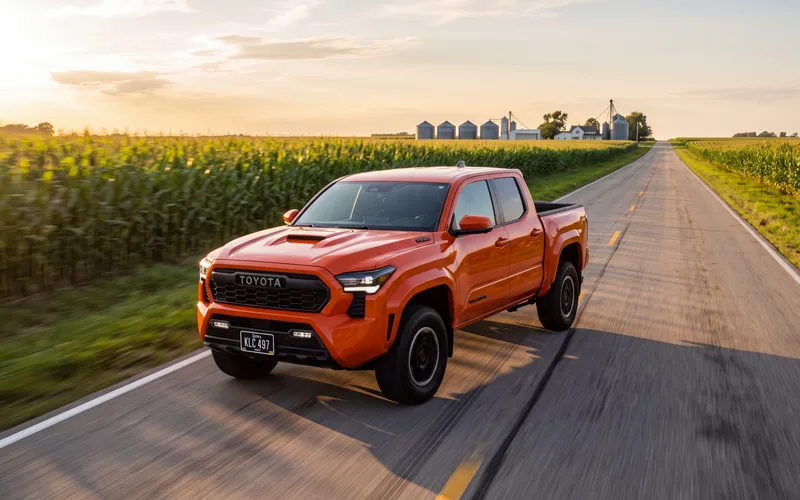 Toyota TacomaMid-Size TruckBetter at: Capability & resale
The default mid-size cross-shop: more towing, a hybrid option, better resale, and modern tech — at the cost of a rougher ride.
Compare 1.99C-
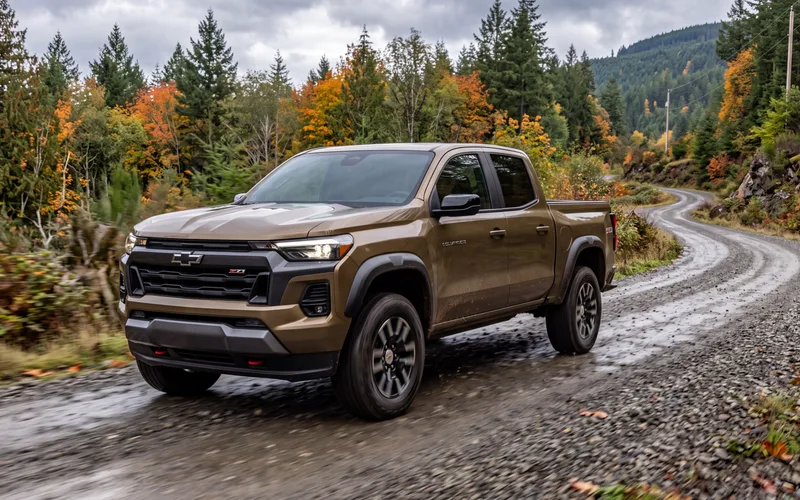 Chevrolet ColoradoMid-Size TruckBetter at: Towing & tech
A turbo four with 430 lb-ft and up to 7,700 lbs of towing, plus the modern screen and camera tech the Ridgeline doesn't offer.
Compare 1.81C-
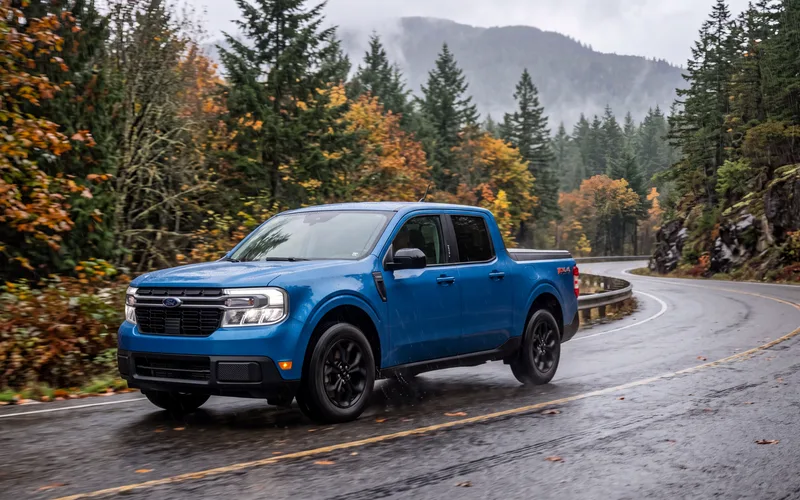 Ford MaverickCompact TruckBetter at: Fuel economy
For buyers who mostly need a bed and a commuter, the hybrid Maverick's ~37 mpg and much lower price make the Ridgeline hard to justify.
CompareHow it's evolved
6 scored model years · 2017–2026
Subject scores by year
Hover or tap a score to see what moved it versus the year before. A corner mark flags a big swing.
| Year | Performance | Efficiency | Safety | Space | Cost | Reliability | Tech | Use-case | Driving | Value |
|---|---|---|---|---|---|---|---|---|---|---|
| 2026 | 37 | 51 | 78 | 50 | 51 | 75 | 51 | 70 | 69 | 64 |
| 2021 | 35 | 48 | 69 | 54 | 64 | 73 | 43 | 69 | 73 | 66 |
| 2020 | 34 | 49 | 66 | 54 | 64 | 68 | 41 | 71 | 69 | 67 |
| 2019 | 34 | 49 | 58 | 54 | 66 | 63 | 39 | 68 | 70 | 66 |
| 2018 | 34 | 49 | 58 | 54 | 67 | 66 | 39 | 68 | 72 | 66 |
| 2017 | 35 | 49 | 59 | 54 | 67 | 63 | 39 | 70 | 70 | 71 |
Compare two years
Best fit & conditions
Higher scores mean a better fit for that use case. Learn more about use-case fit →
Subject profile
Trims & configurations
4 trimsScores above reflect the volume trim. Per-trim specs and scores are rolling out — the full lineup:
Detailed scoring by subject
1Performance & PowertrainThe Ridgeline's lowest-graded category.0.29F
2021 is the second-generation (YK2/YK3) styling refresh year — new hood, fenders, grille and lower fascia — but the engine is untouched: one 3,471 cc direct-injected 24-valve SOHC i-VTEC V6 rated 280 hp @ 6,000 rpm identically on Sport, RTL, RTL-E and Black Edition. Against a truck band reaching 800 hp it normalizes low, even though 280 hp remained the strongest standard output in the 2021 mid-size class.
The naturally aspirated V6 makes 262 lb-ft peaking high at 4,700 rpm, the same on every 2021 trim and untouched by the refresh. The truck torque band runs to 800 lb-ft, and a peak that far up the rev range is the wrong character for hauling, so this normalizes near the floor.
Mechanically identical to the 2020 truck — same V6, same 9-speed, now always AWD — but the 2021 instrumented record sits slightly quicker, with rollout-corrected magazine runs in the low 6s and untimed-rollout tests just past 7. The value is the center of that published span rather than one result. Respectable for a 2021 mid-size pickup, but unremarkable against a band anchored by 2.5-second electric trucks.
The V6 remains the best part of the truck and the 2021 refresh left it alone: linear drive-by-wire throttle, no turbo lag, an eager pull toward a 6,900-rpm redline, transparent VCM cylinder deactivation, and Active Control Engine Mounts plus Active Noise Cancellation standard on all four trims, all isolated by a unibody that damps better than a body-on-frame rival. Two things keep it out of the top band: with the torque peak at 4,700 rpm there is no low-end shove, so it must be wound out when loaded, and the standard idle-stop system restarts with a noticeable shudder.
The ZF-sourced 9-speed automatic with shift-by-wire push-button selection and standard steering-wheel paddle shifters carries into 2021 unchanged from its 2020 introduction, and the paddles remain the driver's only way to hold a gear on a grade — there is no tow/haul mode. The trade is smoothness: the 9HP's dog-clutch architecture draws well-documented complaints about hesitating to downshift on hills and occasional clunky low-speed shifts, so this lands mid-band rather than high.
Making i-VTM4 AWD standard for 2021 removed the 3,500-lb 2WD rating from the lineup entirely, so every 2021 Ridgeline tows 5,000 lbs. That is still roughly half of what body-on-frame mid-size rivals rate — the unibody structure and the transverse V6's high torque peak cap it well below the Tacoma, Colorado, Ranger and Gladiator — and against a truck band running to 14,000 lbs it normalizes low.
Payload runs 1,583 lbs on the lightest trim down to 1,509 lbs on RTL-E and Black Edition, tracking curb weights of 4,436–4,510 lbs now that every truck carries the AWD hardware. Competitive within the mid-size class and genuinely useful for the truck's intended duty, but the truck band reaches 3,400 lbs, so it normalizes low.
2021 improves the hardware without adding any actual towing technology. With AWD standard, the integrated Class III hitch, the 7-pin connector and — new this year — the heavy-duty transmission cooler are all standard on every trim rather than reserved for the top two, and trailer sway mitigation is folded into Vehicle Stability Assist. But there is still no factory integrated trailer brake controller (the truck is only pre-wired for one), no tow/haul mode, no trailer backup or steering assist, no dedicated trailer cameras and no onboard scales, so it stays in the bare-minimum band.
2021 is the year AWD stopped being a choice: i-VTM4 is standard on Sport, RTL, RTL-E and Black Edition, the 2WD variants having been dropped, so every Ridgeline gets rear torque vectoring able to route effectively all rear drive torque to one wheel plus the full Snow/Sand/Mud Intelligent Traction Management set (2WD trucks had previously been limited to Snow). What still holds it just inside the top band rather than deep into it is the absence of any two-speed transfer case or low range, so it cannot match a body-on-frame rival's part-time 4WD for deliberate low-speed work.
The rugged-looking 2021 refresh is skin-deep. Standard AWD means every truck now gets Snow/Sand/Mud modes — enough for a forest road or a muddy boat ramp — but the new front and rear fascias actually cost it geometry, dropping ground clearance to 7.64 in and the departure angle to 19.6° from the 2020 AWD truck's 7.87 in and 22.1°. Underneath it remains a unibody on MacPherson struts and a multi-link rear with no skid plates, no locking differential and no low range in any configuration, and the HPD package introduced this year is bronze wheels, fender flares, a unique grille and decals — appearance only.
One powertrain, and for 2021 one driveline too: the 3.5L V6 and 9-speed automatic are shared by all four trims, and with the 2WD models deleted there is not even a front- versus all-wheel-drive choice left. No turbo, diesel, hybrid, plug-in or electric option was offered — narrower than the 2021 Colorado, which paired its V6 with a 2.8L Duramax diesel and a four-cylinder, and narrower than the Tacoma's two-engine lineup.
2Efficiency & RangeOne of the Ridgeline's weakest categories.1.22D
2021 is the second-generation (YK2/3) styling refresh year and the year Honda made i-VTM4 AWD standard, deleting the front-drive Ridgeline entirely — so there is now a single EPA configuration at 21 MPG combined from the 280-hp 3.5L direct-injected i-VTEC V6 with Variable Cylinder Management and the 9-speed automatic. Still the best combined rating among gas mid-size trucks, but low against a truck band that reaches 40 MPG.
City economy slips one MPG versus the 2020 AWD truck's 19 — the refreshed, blunter front-end bodywork and the loss of the lighter front-drive variant leave 18 MPG as the lineup-wide city rating. Cylinder deactivation saves fuel at steady cruise but does little in stop-and-go, so this lands just seven MPG above the floor of the truck band.
Highway remains the Ridgeline's strongest EPA number — the unibody platform's lower mass and car-like aerodynamics, plus VCM cylinder deactivation at cruise, hold 24 MPG unchanged from 2020 despite AWD now being mandatory. It sits mid-band rather than near the floor, and at or above most body-on-frame mid-size rivals.
The 19.5-gallon tank carries over unchanged through the refresh and pairs with 21 MPG combined for roughly 410 miles between fills. Adequate for a mid-size truck, but well short of full-size rivals pairing 26-gallon-plus tanks with similar highway economy — and with the 2WD version gone there is no longer a slightly longer-legged configuration.
EPA puts annual fuel spending at $2,950 at standard assumptions. Regular-grade fuel keeps the per-gallon cost down, but 21 MPG combined still places the Ridgeline in the upper half of the truck cost band — better than most full-size trucks, roughly level with body-on-frame mid-size competitors.
The V6 asks for nothing but regular 87-octane unleaded on every 2021 trim including the top Black Edition — no premium requirement, no diesel or DEF complexity, the cheapest and most widely available fuel in the segment. It falls short of the top of the band only because there is no flex-fuel, diesel or home-charging path to lower running costs further.
3SafetyOne of the Ridgeline's strongest categories.2.70B-
NHTSA rated the 2021 Ridgeline crew cab five stars overall, with five stars in both the frontal and side barrier tests and four stars in the rollover calculation. The 2021 refresh reworked the hood, fenders, grille and front bumper but left the second-generation (YK2/YK3) unibody structure and restraint system unchanged, so the 5-star result carries the same structure NHTSA has rated at the top of the pickup class since 2017.
Crashworthiness is near-flawless — Good in driver small overlap, moderate overlap, side, roof strength and head restraints, with only the passenger-side small overlap at Acceptable — but the 2021 truck lost the Top Safety Pick award the 2020 model held, because the new-for-2021 LED headlights rate Marginal and IIHS requires acceptable-or-better headlights for the award. Structurally still the strongest mid-size pickup of its year; the award loss is a lighting problem, not a crash-structure one.
Honda Sensing is standard on every 2021 trim including the base Sport — CMBS with forward collision warning, Road Departure Mitigation with lane departure warning, Lane Keeping Assist and Adaptive Cruise Control — which in 2021 made AEB, LKA and ACC standard equipment on a mid-size pickup while several rivals still gated ACC behind trim walls. The one gap is blind-spot: BSI with cross traffic monitor starts at RTL, so the entry Sport goes without it (2021 did extend BSI down to the RTL, which was RTL-E/Black Edition only in 2020).
The standard Collision Mitigation Braking System earned IIHS's top Superior rating for vehicle-to-vehicle front crash prevention, avoiding the collision outright in both the 12 mph and 25 mph track runs. It falls short of the top band because IIHS published no vehicle-to-pedestrian rating for this generation of Ridgeline — so the daytime, let alone nighttime, pedestrian performance is unverified — and owners consistently report the forward collision warning firing over-eagerly in traffic.
Blind Spot Information System with cross traffic monitor is fitted from the RTL up — three of the four 2021 trims, and one trim lower than in 2020 — but it is alert-only: no steering or braking intervention, no trailer-length blind-spot coverage despite the 5,000 lb tow rating, and no safe-exit warning for rear occupants. Coverage and capability both sit mid-pack.
LKAS is standard on all four trims and does provide genuine lane centering — not just a departure bounce — on well-marked highway, which was ahead of most 2021 mid-size pickups. Execution is the limiter: the system needs clear markings, drifts between them rather than tracking centre confidently, and the separate Road Departure Mitigation is widely criticised for intervening too aggressively and scrubbing speed when it grabs.
ACC is standard on every trim, but the 2021 Ridgeline is one of the few Hondas of its era whose adaptive cruise lacks Low-Speed Follow — the truck's VSA modulator cannot support it — so the system will not creep and stop in traffic and drops out at low speed, exactly where a commuter wants it. Reviewers and owners additionally report it losing the car ahead on curves and hunting the gap with a noticeable surge-and-brake cycle, so it is a capable open-highway cruise with real rough edges rather than an integrated highway assist.
No hands-free highway driving is offered on the 2021 Ridgeline at any trim — Honda had no BlueCruise/Super Cruise equivalent in the US lineup for 2021, and Honda Sensing here requires hands on the wheel at all times. This is the class norm for a 2021 mid-size pickup, where only the full-size F-150 and Silverado were beginning to offer hands-free.
The 2021 refresh made LED headlights standard across the range and made the ratings worse: IIHS rates the single 2021 headlight configuration Marginal, with inadequate visibility on several curves and high beams that perform notably worse than the 2017–2020 LED units they replaced. Because there is only one 2021 configuration, there is no better-lit trim to escape to, and auto high-beam is restricted to RTL-E and Black Edition — this is the single failing that cost the truck its Top Safety Pick.
Being a unibody built off the Pilot pays off here: a lower beltline and greater glass area than any body-on-frame mid-size pickup, thin-enough pillars, and an unusually large rear window that lets the driver see both the bed and traffic behind. The 2021 refresh's squared-off hood and more upright nose actually improved the sense of where the front corners are. Marks come off for the absence of a 360-degree camera at any trim — the rearview camera is the only camera aid, with dynamic guidelines reserved for RTL-E and above.
IIHS rates LATCH ease of use Acceptable, and unusually for a pickup all three rear seating positions carry complete child-seat hardware, so a third seat can be anchored in the middle rather than belted. The rear doors open wide on a genuinely roomy, flat-floored crew cab — the class benchmark for fitting seats — but the anchors themselves need some digging in the seat bight, which is what keeps it out of the top band.
4Space & ComfortGrades below the middle of the scale.1.62D
The 2021 Ridgeline is offered only as a crew cab with a 5-passenger cabin across Sport, RTL, RTL-E and Black Edition.
Honda publishes 40.1 in front headroom without the moonroof and 39.5 in with it; the no-sunroof figure is used per item guidance.
At 40.9 in the Ridgeline's unibody, Pilot-derived cabin gives up front legroom to body-on-frame mid-size rivals (Tacoma 42.9 in), landing at the bottom of the truck band despite a roomy-feeling cabin.
Rear headroom is a consistent 38.8 in across the lineup — mid-pack for a mid-size crew cab, helped by the flat roofline.
36.7 in of rear legroom is among the best in the mid-size class (Tacoma Double Cab 32.6 in), and the flat floor plus 60/40 lift-up rear seat make the space unusually usable.
One bed only, and at 64.0 in it is the shortest in the mid-size segment; the dual-action tailgate extends usable length to 83.0 in but does not change the rated floor length.
The short 64-in bed yields just 33.9 cu ft, near the bottom of the truck band, though the bed is unusually wide (60.0 in between walls, 50.0 in at the wheel wells — 4x8 sheets lie flat) and the In-Bed Trunk adds 7.3 cu ft of weatherproof, lockable space no rival offers.
The Ridgeline is the segment's storage benchmark: the lockable, drainable In-Bed Trunk (with spare underneath), a dual-action tailgate that swings out or folds down, and 60/40 lift-up rear seats that expose a tall, flat load bay behind the front seats. Deep center console with a removable tray, and RTL-E/Black Edition add a 400-watt bed outlet and truck-bed audio.
Front seats draw consistent praise for broad, well-padded cushions and effective bolstering over long stints, and the rear bench benefits from the class-best 36.7 in of legroom and a reclined-enough backrest. Marked down because padding is described as thin rather than plush and the passenger seat lacks power height adjustment on lower trims.
The unibody platform with independent rear suspension gives the Ridgeline the smoothest, most composed unladen ride of any pickup sold — no axle patter over broken pavement and no rear-end float, the two failings that define body-on-frame mid-size trucks. 2021's restyle was cosmetic and did not change the chassis.
Noise and vibration are notably better isolated than in ladder-frame rivals thanks to the Pilot-based unibody structure and active noise cancellation; the 3.5L V6 stays subdued at highway cruise. Not luxury-quiet — some wind noise around the upright A-pillars after the 2021 restyle.
Tri-zone automatic climate control with rear-seat vents is standard on every 2021 trim, which is generous for the segment, and RTL adds heated leather front seats while RTL-E/Black Edition add a heated steering wheel, moonroof and wireless charging. Held below the top band because no trim offers ventilated seats, heated rear seats or remote pre-conditioning beyond basic remote start.
5Cost of OwnershipMid-pack among this car's ten categories.2.34C+
2021 is a change year, not a carry-over: within the second-generation (YK2/YK3) run Honda restyled the front end for a blunter, more truck-like look, added the HPD appearance package, and — the item that moves this number — made i-VTM4 all-wheel drive standard on every trim, deleting the front-drive Ridgeline entirely. The entry price therefore jumps $2,670 over 2020's $34,995 Sport 2WD, but against the like-for-like 2020 Sport AWD at $37,235 the increase is only $430. The Ridgeline still has no cheap regular-cab or 2WD entry point the way body-on-frame rivals do — every 2021 Ridgeline is a crew cab with AWD — so it reads expensive at the bottom of the mid-size band while actually being better equipped than the trucks it is compared against.
RTL is taken as the representative volume configuration, consistent with the 2017–2020 Ridgeline scorecards — Honda's reported mix puts RTL and RTL-E at roughly 30% each, about 60% of sales between them, with Sport the single most popular trim below them. At $40,645 all-in the volume Ridgeline crosses $40,000 for the first time, $730 above the 2020 RTL AWD, with AWD no longer an option line since it is standard. That lands it above a mid-size rival's volume crew-cab 4x4 (2021 Ranger XLT SuperCrew 4x4 ≈ $35,520) but with a substantially richer standard-equipment list — Honda Sensing, 8-inch Display Audio, the in-bed trunk and dual-action tailgate are all standard.
The Pilot-derived unibody drivetrain has no transfer case, no turbochargers and no CVT, and the J35 V6's timing-belt interval falls outside the first five years, so both major cost datasets land below the $3,500 floor of the mid-size-truck band. The figure is held level with the 2020 truck rather than lowered: 2021 carries the same ZF 9-speed automatic and auto idle stop fleet-wide, the two components that drew the generation's owner complaints (harsh/slow shifts, starter-system failures). Out-of-pocket exposure on the starter is limited because Honda's complimentary 10-year, unlimited-mileage warranty extension on starter-system parts and labor covers 2020–2023 Ridgeline, Pilot and Passport and is transferable to later owners. Standard AWD on every 2021 truck adds a rear differential and driveline fluid service that the deleted 2WD version did not need, which is why this is not scored below 2020.
Well above the industry norm in absolute terms and set two points above the 2020 truck, but still mid-pack for a mid-size pickup — the segment's benchmark is the Tacoma, which loses roughly 20% over five years to the Ridgeline's mid-30s. The 2021's five-year mark falls now, so this is measured rather than projected, and the sources bracket rather than agree: KBB values a 2021 RTL at $23,400 resale in mid-2026, i.e. 58% of its $40,645 as-new price, while real listings for the same trim run about $26,000 (64%) and the nameplate-level datasets sit at 62.5% (iSeeCars) and 65.9% (CarEdge). 61% takes the middle of that spread. It is set above 2020 because every 2021 truck is AWD — the used mix no longer contains front-drive examples that drag the average down — and because the restyled front end reads as the more current face of the generation.
Honda's 3/36 bumper-to-bumper coverage is unchanged for 2021 and sits at the mainstream minimum — matching Ford, GM, Toyota and Nissan but trailing Hyundai's 5-year basic term, which is why it lands at the floor of the framework band. Sheet-metal corrosion coverage runs 5 years/unlimited miles, and Honda Genuine Accessories fitted at the time of purchase inherit the same 3-year/36,000-mile term.
Baseline 5/60 powertrain coverage on the 3.5L J35 V6, the 9-speed automatic and the now-standard i-VTM4 all-wheel-drive hardware, unchanged for 2021 — the segment floor, against Hyundai/Kia's 10-year/100,000-mile terms. The one offsetting item is Honda's after-the-fact 10-year, unlimited-mileage extension on starter-system parts and labor for 2020–2023 trucks, which is narrower than powertrain coverage and does not lift the spec value.
No complimentary scheduled maintenance was offered for 2021 — buyers paid for every service from the first oil change, while ToyotaCare gave Tacoma buyers 2 years/25,000 miles and GM covered the first maintenance visit on the Colorado/Canyon. Honda did include 24-hour roadside assistance for the full 3-year/36,000-mile basic-warranty term, and RTL-E and Black Edition added a HondaLink connected-services trial, which places this exactly at the bottom of the "basic roadside only" band. Unchanged versus 2020; Honda's dealer-sold HondaCare plans are a purchased add-on, and the 10-year starter-system extension is a post-sale goodwill action rather than a benefit advertised at purchase, so neither is credited here.
$40,645 volume-trim price minus its estimated resale value after 5 years (61% retained, or about $24,793) leaves about $15,852 in depreciation. Add the projected $3,050 in 5-year maintenance and repairs, and owning this vehicle for 5 years costs about $18,902 in total.
6Reliability & QualityThe Ridgeline's best-graded category.2.98B-
Consumer Reports gave the 2021 Ridgeline a 4/5 predicted reliability and 5/5 predicted owner satisfaction, calling it more reliable than the average 2021 vehicle, and J.D. Power placed the Ridgeline among the highest-ranked models in the Midsize Pickup segment for dependability. Held just under the top band because 2021 layered a front-end redesign and newly across-the-board AWD/9-speed hardware onto the carry-over YK2/YK3 platform.
Honda sits consistently in the upper third of Consumer Reports brand reliability rankings around this period — it climbed five spots into the top five in the 2021 report card and ranked 4th in 2022 — though J.D. Power's 2021 VDS put Honda short of the top four brands (Lexus 81, Porsche 86, Kia 97, Toyota 98 PP100 against a 121 PP100 industry average). Strong but not the Toyota/Lexus tier.
The 2021 Ridgeline carries seven NHTSA recall campaigns to date — including a brake master-cylinder/booster tie-rod fastener that can allow the master cylinder to separate (23V458000), rear subframe corrosion at the suspension mounting points (26V365000), and the front passenger seat weight sensor recalled twice for the same crack/short-circuit defect (24V064000, then 26V332000). Nothing is a powertrain or fire campaign, but the volume and the repeat airbag-sensor remedy are above a clean record.
The 280 hp J35Y6 belongs to Honda's long-running J-series V6 family, routinely documented past 200,000 miles, and iSeeCars has named the Ridgeline the longest-lasting truck and the one most likely to reach 200,000 miles. Two caveats keep it out of the top band: the engine runs Variable Cylinder Management, whose oil consumption and spark-plug fouling history follows the J35 across Honda's lineup, and 2021 is the second year the ZF-sourced 9-speed automatic was standard on every trim — a transmission family with a troubled industry record, though Ridgeline-specific data shows roughly a 2.1% failure rate at 100,000 miles.
Sharing its cabin architecture with the Pilot gives the Ridgeline materials well above the mid-size truck norm — soft-touch surfaces at the common touch points, with hard plastics confined below dash level as is standard in the segment. For 2021 Honda added satin-silver accents on the instrument panel, wheel and shifter panel plus a redesigned audio display with a real volume knob.
Reviewers and owners describe assembly as first-rate, and the unibody structure — 28% more torsionally rigid than the first generation — yields a notably quiet, rattle-free cabin by pickup standards. Honda's APEAL and initial-quality record for the nameplate supports it; scattered complaints about lower-dash plastic choices rather than build defects keep it below the top band.
Honda runs roughly 1,000-plus US franchised dealers, one of the densest mainstream service networks in the country, so parts and warranty work are reachable almost anywhere. Service satisfaction is solid but mid-pack rather than class-leading — Honda did not appear among the leaders in J.D. Power's 2021 Customer Service Index mass-market ranking, which MINI (864), Buick (859) and Mitsubishi (857) topped.
Running costs are below the segment norm — RepairPal puts Ridgeline average annual repair and maintenance at $502 against $548 for mid-size trucks and $652 fleet-wide — and the heavy parts commonality with the Pilot and Odyssey (73% of components shared with the third-generation Pilot) keeps mechanical parts plentiful and cheap. What it lacks is the vast body/lift/accessory aftermarket a Tacoma or F-150 enjoys, and RepairPal notes that when a Ridgeline problem does occur it is more likely to be a severe one.
7Technology & InfotainmentOne of the Ridgeline's weakest categories.0.88F
The 2021 mid-cycle refresh carried over the second-generation Ridgeline's 8-inch electrostatic Display Audio unit as the only screen offered — standard on Sport, RTL, RTL-E and Black Edition alike, with no larger option anywhere in the lineup. The 9-inch unit did not arrive until the 2024 model year.
The headline 2021 fix was the return of a physical volume knob to the 8-inch Display Audio, removing the single most-criticized flaw of the touch-slider system it replaced. Underneath it is still the older Honda stack — not the newer software then in the Accord and Odyssey — and reviewers consistently flag convoluted menus, small touch targets and inconsistent response, which keeps it mid-band rather than in the 70s where the 2026 mid-size trucks sit.
Apple CarPlay and Android Auto are both standard on every 2021 trim including the base Sport, which is the credit here — but both are wired-only, requiring the USB Smartphone/Audio Interface, and no trim at any price offers wireless projection. That is exactly the 'wired standard, no wireless' case, and the lack of a wireless option even on Black Edition holds it to the lower half of the band.
Native navigation is the Honda Satellite-Linked system with a Garmin-developed interface and HD Digital Traffic, but it is restricted to RTL-E and Black Edition — the volume Sport and RTL trims have no built-in maps at all and depend entirely on phone projection. The voice assistant is command-based rather than natural-language, working reliably only with fairly specific phrasing, which is the classic 'functional but bypassed for CarPlay' profile.
The base 215-watt seven-speaker system with a subwoofer is a respectable standard fit for a mid-size truck, and the RTL-E/Black Edition step up to 540 watts and eight speakers plus the segment-unique truck-bed audio system, which uses exciters in the bed walls rather than conventional speakers. It is held under the 70s because the premium system carries no marquee audio brand and reviewers rate its actual sound quality as merely decent rather than a genuine upgrade.
Every 2021 trim gets a 4.2-inch color LCD driver information screen set between conventional analog gauges — partial digital, and a small panel by 2021 standards. No full-digital or configurable cluster is offered at any price, so even the Black Edition tops out at the same modest display, placing it at the floor of the partial-digital band.
The 2021 Ridgeline has no over-the-air update path whatsoever — no cellular or Wi-Fi updating, and in practice no USB update packages were ever issued for the head unit either. Navigation map data can be refreshed only by buying media from the Honda Navigation Store, which is a paid manual update rather than an OTA capability; the small credit above zero reflects that maps can at least be updated at all.
HondaLink's free Basic tier covers only recall notices, roadside assistance and service reminders; the useful remote functions — engine start, lock/unlock and vehicle locate — sit behind the Remote subscription at roughly $110/year after a three-month trial, and there is no digital/phone-as-key. What keeps it mid-band rather than lower is that key-fob remote engine start is standard hardware on all four trims, so an owner who declines the subscription still has remote start.
The volume Sport and RTL configurations are poorly served: two USB-A ports total (a 1.5-amp front smartphone interface and one 2.5-amp console charger), no second-row power of any kind, and no wireless charging. USB-C appears nowhere in the lineup. RTL-E and Black Edition materially improve it with two rear USB ports, a Qi/Powermat wireless charger and the genuinely useful 150-watt/400-watt truck-bed power outlet, but scoring the volume trim puts this in the outdated-ports band.
This is the category's strongest showing: Smart Entry with push-button start, key-fob remote engine start and even the HomeLink garage-door system are all standard on every trim including the base Sport, with Walk Away Auto Lock and programmable remote entry added on RTL-E and Black Edition. It stops short of the top band only because there is no phone-as-key option and the dual-action tailgate is manual rather than powered.
The multi-angle rearview camera with dynamic guidelines is standard on all trims and offers three selectable views, which is better than a plain fixed backup camera. But front and rear parking sensors are confined to RTL-E and Black Edition, no surround-view/360-degree camera is offered on any 2021 trim, and there is no automated parking assist — so the volume trims get a reversing camera and nothing else.
No head-up display is offered on the 2021 Ridgeline at any trim level or as any factory option — the feature simply does not appear in Honda's specification matrix for the model year, and no Honda-brand truck offered one at the time.
8Use-Case FitMid-pack among this car's ten categories.2.64C+
The Ridgeline is the class benchmark for family logistics because its unibody architecture removes the compromises that define every body-on-frame rival: a flat rear floor with no driveshaft tunnel, a low step-in height, wide crew-cab rear doors, and 60/40 rear seats that fold UP against the bulkhead to open a tall, dry, in-cabin bay for a stroller or a folded pack-and-play — something no other 2021 mid-size truck offers. It sits at the floor of the top band rather than higher because 36.7 in of rear legroom is merely adequate once a rear-facing seat is installed, and the 7.3 cu ft In-Bed Trunk is the only lockable weatherproof stowage since the bed itself is open.
Two credentials families actually shop on are strong and standard: 5 stars overall from NHTSA and the full Honda Sensing suite (collision-mitigation braking, lane-keeping assist, road-departure mitigation and adaptive cruise) on every trim including the base Sport, with IIHS rating the front crash prevention Superior. It is held out of the top band by two real gaps at the family price point — Marginal headlights cost the 2021 Ridgeline the Top Safety Pick award it had held in 2017–2019, and Blind Spot Information with rear cross-traffic alert is not on the Sport, so the cheapest trim is the one missing it.
The chassis does the heavy lifting — the independent rear suspension and unibody give the smoothest, quietest ride of any 2021 mid-size pickup, which is exactly what a five-hour drive with kids needs, and gear capacity is never the constraint given the bed plus the lockable In-Bed Trunk. What keeps it out of the 80s is the second row's thin amenity list: 38.8 in of rear headroom is tight under the moonroof, and the volume Sport and RTL trims have no second-row USB ports at all, with rear power and the wireless charger reserved for RTL-E and Black Edition. No rear-seat entertainment is offered at any price.
This is the Ridgeline's single strongest use case and the whole premise of the vehicle. Sharing the Pilot's unibody platform and independent rear suspension, it drives like a large crossover rather than a truck — no live-axle patter over broken pavement, no empty-bed skittishness, light steering, and a 280 hp V6 with a 9-speed that has ample low-speed torque for traffic. Reviewers who spent a week in it consistently describe it as quiet and easygoing for errands. It stops short of the very top only because the 9-speed automatic is merely good rather than seamless and there is no low-speed one-pedal or stop-and-go creep tech.
Per-mile cost is competitive within the truck class but unremarkable in absolute terms: 21 MPG combined on regular unleaded works out to roughly $2,950/yr on EPA assumptions, which is near the top of the 2021 mid-size field yet far off what a car or crossover commuter would spend. The genuine offset is consumables — projected five-year maintenance and repair of about $3,050 is among the lowest of any truck sold, and there is no premium-fuel or AdBlue requirement. Making AWD standard for 2021 removed the slightly thriftier front-drive configuration that had been the economy pick.
It is a 210-inch, 78.6-inch-wide crew cab with a 43.4 ft curb-to-curb turning circle — physically a mid-size truck, and no short-cab or long-bed variation exists to make it smaller. Two things keep it mid-band rather than lower: the low beltline and upright glass give genuinely good outward visibility for the class, and the standard multi-angle rearview camera has three selectable views. But front and rear parking sensors are RTL-E/Black Edition only, no surround-view camera is offered on any 2021 trim, and there is no park assist, so the trims most buyers take get a reversing camera and nothing else.
The Ridgeline handles light-to-moderate work and nothing beyond it. The 5,000 lb tow rating is the floor of the 2021 mid-size class — the Tacoma, Colorado, Ranger, Frontier and Gladiator all rate between 6,700 and 7,700 lbs — and there is no low range, no HD option and no bed configuration other than the single 5.3-foot short box. What earns it the band at all rather than below it is payload and bed geometry: up to 1,583 lbs is genuinely competitive, and the 50-inch flat span between the shallow wheel arches takes a 4x8 sheet of plywood lying flat, which most mid-size rivals cannot do. The V6 pulls a light trailer without drama; it simply runs out of rating early.
Longevity data is on its side — iSeeCars has repeatedly named the Ridgeline the longest-lasting truck and the one most likely to reach 200,000 miles, and the J35 V6 and Pilot-derived running gear are well-proven high-mileage hardware. The reservation is contextual rather than mechanical: it has no fleet or contractor track record, no stripped work trim with vinyl flooring or a rubber cabin floor (the base Sport is still a carpeted, cloth-seat consumer truck), and a unibody with independent rear suspension has no comparable body of evidence for sustained overloaded or rutted-jobsite abuse the way a ladder frame and leaf springs do.
The bed itself is unusually well provisioned for the class: eight tie-down cleats rated 350 lbs each, a UV-stabilized scratch-resistant composite bed that needs no spray-in liner, the drainable 7.3 cu ft lockable In-Bed Trunk (the only secure weatherproof stowage on any 2021 mid-size truck), and the dual-action tailgate that swings sideways as well as dropping, with a 300 lb dynamic load rating for walking a mower or bike up a ramp. Two things cap it: the genuinely useful 150/400-watt bed outlet is confined to RTL-E and Black Edition, so the volume Sport and RTL have no bed power, and there is no upfit ecosystem at all — no chassis cab, no factory ladder rack, no service-body provision, and roof rails are a dealer accessory rated for only 165 lbs.
As a highway tourer it is the best mid-size truck of its year — the independent rear suspension keeps it settled over expansion joints where a leaf-sprung rival hops, the cabin is quiet at speed, the front seats are comfortable over long stints, and adaptive cruise with low-speed follow plus lane-keeping assist are standard on every trim rather than optional. The limiter is fuel stops: a 19.5-gallon tank at 21 MPG combined gives roughly 410 miles, or about 468 at the highway rating, which is short enough to shape a long day's planning, and the ACC/LKAS pairing is a competent lane-keeping system rather than true centering.
For the way most owners actually use a truck outdoors — forest-service gravel, a boat ramp, a trailhead, a ski lot — the 2021 Ridgeline is well equipped: i-VTM4 torque-vectoring AWD became standard across the lineup this year, with Intelligent Traction Management adding snow, mud and sand modes, and the In-Bed Trunk doubles as a hose-out cooler while the truck-bed audio system makes it a natural tailgater. It cannot follow the class into harder terrain, though. Ground clearance is 7.64 in, there is no low range, no locking differential and no skid plating, and the HPD package is a wheel, tire and appearance treatment rather than an off-road hardware upgrade — reviewers are consistent that it 'can't touch even the more basic versions of the Ranger and Tacoma' off pavement.
Swallowing awkward gear is where the Ridgeline's odd architecture pays off most. It stacks four distinct spaces that rivals do not have together: a 33.9 cu ft bed that takes 4x8 sheets flat, the lockable drainable 7.3 cu ft In-Bed Trunk beneath it, a tall dry in-cabin bay created by the fold-up 60/40 rear seats, and a deep underseat/console storage set that scored 92 on the in-cabin storage item. A Class III hitch is standard on every trim, and the sideways-swinging tailgate makes loading long or heavy items from the curb far easier than a drop-only gate. It falls short of the very top only because the bed is the short 5.3-foot box with no longer option and roof rails are a dealer accessory rated for 165 lbs rather than standard equipment.
9Driving ExperienceOne of the Ridgeline's strongest categories.2.95B-
The 2021 refresh is cosmetic below the skin — same second-generation Pilot-derived unibody, MacPherson struts front and multi-link rear — but making torque-vectoring i-VTM4 AWD standard means every 2021 truck now gets the rear torque vectoring that sharpens turn-in, and reviewers are unanimous that nothing else in the mid-size class corners like it. It sits above every body-on-frame rival in the segment yet short of the top band: 4,436–4,510 lbs on a tall body still means real roll and a chassis tuned for composure rather than engagement, and the HPD package's all-terrain tires blunt it further.
The electric rack is quick and accurate by truck standards — 3.04 turns lock-to-lock, far tighter and more direct than a Tacoma's — and it is a large part of why the Ridgeline drives like a crossover. What keeps it mid-band is weighting and feedback: the assist is light and reviewers describe the on-center feel as numb, with the all-terrain tires on HPD-equipped trucks diluting precision further. Precise enough, but it tells the driver very little.
The hardware is competitive — 12.6-in ventilated front and 13.0-in rear discs, unchanged for 2021 — and MotorWeek's instrumented stops from 60 mph were both short for a 4,500-lb mid-size truck and repeatable with no fade. The score sits mid-band on feel rather than capability: the pedal is very soft with a lot of travel before real bite, and the nose dives more under hard braking than testers wanted, which costs confidence in exactly the emergency stop the numbers say it can make.
Untouched by the 2021 refresh and still the truck's best feature: a naturally aspirated 3.5L V6 with linear drive-by-wire tip-in, no turbo lag, transparent cylinder deactivation, and Active Control Engine Mounts standard on every trim to cancel the shake VCM would otherwise transmit. The ZF 9-speed is well matched and worth roughly a second to 60 mph over the old 6-speed. Two calibration flaws keep it out of the top band — the standard idle-stop restarts with a noticeable shudder, and the 9-speed is reluctant to downshift on grades, made worse by a 4,700-rpm torque peak that means it must be wound out when loaded.
Honda fits Active Noise Cancellation and Active Control Engine Mounts as standard on all four 2021 trims, and the unibody structure transmits far less road and driveline boom than the body-on-frame mid-size trucks it competes with — testers repeatedly single out how quiet the cabin is at speed. It falls short of the top band because the V6 has to be revved hard to deliver, and at those revs it is clearly audible; it is a clean, willing sound rather than a genuinely hushed one, and the new-for-2021 chunkier tires add some road roar.
43.4 ft curb-to-curb on every 2021 trim, unchanged by the refresh and by making AWD standard — a product of the 125.2-in wheelbase and a quick 3.04-turn rack. Tight for a crew-cab pickup and one of the reasons the Ridgeline parks like the SUV it is based on, though the truck normalization band runs down to 40 ft.
The strongest part of the driving experience. A 10-way power driver's seat with power lumbar pairs with a standard tilt-and-telescoping column for a genuinely wide fit range, the seating height gives a commanding view without the climb of a body-on-frame truck, and the low, flat unibody floor makes ingress and egress easy. 2021 specifically fixes the worst ergonomic complaint by restoring a physical volume knob to the Display Audio head unit on every trim, and adds two-position seat and mirror memory down to the RTL. Sightlines are good for the class, held just short of the ceiling by thick rear pillars and the bed's high sides.
Enjoyable in a low-key way: a willing V6 that pulls to a 6,900-rpm redline, torque-vectoring AWD that rotates the truck out of corners, and composure no rival matches, which is why testers call it the mid-size truck that is actually pleasant to live with. But the light, feedback-free steering, the soft brake pedal and the total absence of any sporting intent — no performance trim, the 2021 HPD package being decals and bronze wheels only — make it satisfying rather than involving. The press has consistently framed it as the sensible, image-poor choice rather than the enthusiast's one.
10Value & Market PositionMid-pack among this car's ten categories.2.44C+
2021 is the year the content story got materially better: i-VTM4 torque-vectoring AWD became standard on every trim (front-drive was deleted), joining Honda Sensing, tri-zone automatic climate control, an 8-inch Display Audio screen with Apple CarPlay/Android Auto and a restored physical volume knob, proximity entry with push-button start, a seven-speaker system, the integrated 5,000-lb-rated hitch, the dual-action tailgate and the in-bed trunk — all on the $36,490 Sport. It sits above mid-band because a rival needs a mid-to-upper trim and a 4WD box ticked to match that list, but not higher: the volume Sport still does without blind-spot monitoring, heated seats and leather, all of which arrive at the $39,470 RTL.
Configured like-for-like the Ridgeline is fairly priced — a $37,665 delivered crew-cab AWD truck with the full driver-assist suite lands right on a Tacoma Double Cab V6 4x4 or a Ranger SuperCrew XLT 4x4 — but it is the most expensive way into the mid-size class by a wide margin, with no work-truck or two-wheel-drive entry point beneath it after AWD went standard. What the money buys also skews toward refinement rather than capability: 5,000 lb of towing and roughly 1,580 lb of payload trail rivals that cost the same, so buyers shopping the segment on numbers rather than on ride and packaging see less per dollar.
The narrowest lineup in the segment, and 2021 narrowed it further. There is one body — crew cab with a 5.3-ft bed — one engine, one transmission, and after the refresh one drivetrain, because the front-drive versions of Sport and RTL were dropped when i-VTM4 became standard. Four trims spanning about $7,400 give reasonable price spacing, but there is no work trim below the Sport, no long bed or extended cab, and no genuine off-road variant: the new-for-2021 HPD package is bronze wheels, fender flares, a grille and decals with no hardware change. Buyers configure a Ridgeline by picking an equipment level, not a truck.
The refresh worked in trajectory terms — 41,355 US sales in 2021, up 28.6% on 2020's 32,168 and the Ridgeline's best year since the second generation launched, achieved despite severe supply constraints in the second half of the year. In absolute terms it remains near the bottom of the mid-size class, roughly a sixth of Tacoma volume and behind Ranger, Colorado and Gladiator, and Wikipedia records the nameplate's long-standing acceptance problem with traditional truck buyers. A rising mid-pack seller, not a market force.
Two forces pulling opposite ways. Honda itself is one of the strongest mainstream badges in the US — high owner loyalty, a reliability halo, and resale strong enough that the Ridgeline took KBB Top Ten Best Resale Value awards for 2017–2019 and holds roughly 62% of its value at five years, better than the mid-size truck average. Against that, the model has an acknowledged image deficit in the one market that matters: pickup buyers read the unibody and the crossover silhouette as not-a-real-truck, which is precisely what the more upright 2021 front end was drawn to address. The brand is an asset; the nameplate's standing within the segment is not.
A poor year to shop one. Honda introduced cash rebates for the first time in March 2021 and offered subsidized financing on the Ridgeline — 0% for up to 36 months early in the year — but the two are mutually exclusive, and the semiconductor shortage erased the unadvertised dealer cash the truck had previously carried. Honda then raised the Ridgeline's own financing rates to 1.9% (24–60 months) and 2.9% (61–72 months) as inventory tightened. Buyers in the first half found modest, real incentives; by the second half a freshly refreshed, supply-constrained truck left little to negotiate.
2021 is the second generation's mid-cycle refresh and the most substantial update it received: new hood, fenders, grille and bumper for a squarer, more conventional pickup face, new wheels and more rugged tires, standard AWD, memory seats down to RTL and the volume knob restored. Underneath it is the 2017 truck — same Pilot-derived unibody, same 3.5L V6 and 9-speed, same 8-inch Display Audio architecture — so a buyer in the fifth model year of the generation is getting current-looking sheetmetal over five-year-old hardware. Redesign risk was low at the time: the third generation was not confirmed until July 2026, for a 2028 release.
The critics' pick of the mid-size class, and consistently so — U.S. News ranked it #1 among 2021 mid-size pickups, Edmunds called it its top-ranked mid-size truck with steering and handling "unrivaled" in the segment, The Car Connection named it Best Pickup Truck To Buy 2021, and J.D. Power gave it a segment APEAL award. It falls short of the top band on two counts specific to this model year: the IIHS Top Safety Pick that had been a signature Ridgeline credential lapsed for 2021 on Marginal headlights, and the acclaim has never translated into comparison wins on the capability metrics truck buyers rank first, leaving it the reviewers' choice rather than the class's.