

The verdict
A struggling mid-size truck, strong on driving and held back by performance.
Overall 1.74 (C-) across 10 graded subjects. Its strongest is driving experience at 2.88 (B-), its weakest performance & powertrain at 0.25 (F). 6 of 10 subjects grade at C− or better.
Jump to scoresStrengths
- Driving Experience
- Use-Case Fit
- Cost of Ownership
What holds it back
- Performance & Powertrain
- Technology & Infotainment
- Efficiency & Range
Top alternatives
Cars shoppers cross-shop with the Honda Ridgeline 2.12C
2.12C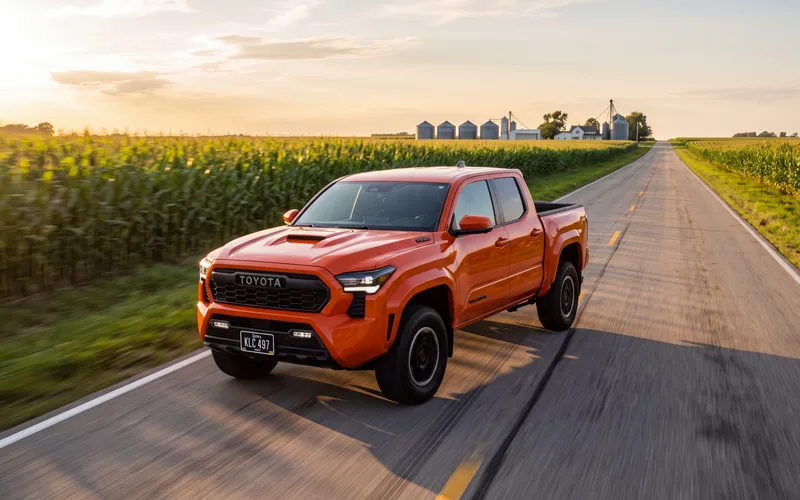 Toyota TacomaMid-Size TruckBetter at: Capability & resale
The default mid-size cross-shop: more towing, a hybrid option, better resale, and modern tech — at the cost of a rougher ride.
Compare 1.99C-
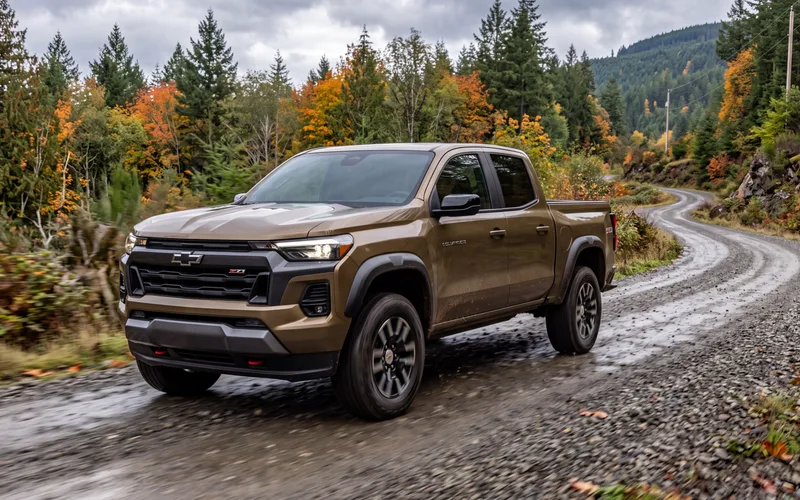 Chevrolet ColoradoMid-Size TruckBetter at: Towing & tech
A turbo four with 430 lb-ft and up to 7,700 lbs of towing, plus the modern screen and camera tech the Ridgeline doesn't offer.
Compare 1.81C-
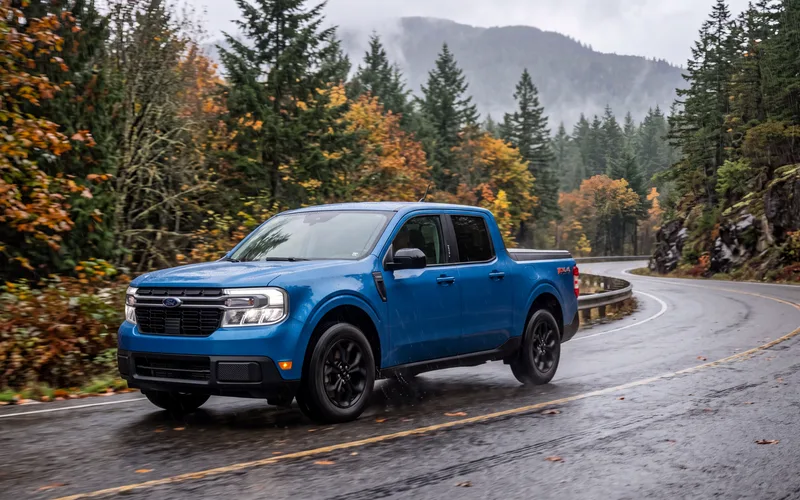 Ford MaverickCompact TruckBetter at: Fuel economy
For buyers who mostly need a bed and a commuter, the hybrid Maverick's ~37 mpg and much lower price make the Ridgeline hard to justify.
CompareHow it's evolved
6 scored model years · 2017–2026
Subject scores by year
Hover or tap a score to see what moved it versus the year before. A corner mark flags a big swing.
| Year | Performance | Efficiency | Safety | Space | Cost | Reliability | Tech | Use-case | Driving | Value |
|---|---|---|---|---|---|---|---|---|---|---|
| 2026 | 37 | 51 | 78 | 50 | 51 | 75 | 51 | 70 | 69 | 64 |
| 2021 | 35 | 48 | 69 | 54 | 64 | 73 | 43 | 69 | 73 | 66 |
| 2020 | 34 | 49 | 66 | 54 | 64 | 68 | 41 | 71 | 69 | 67 |
| 2019 | 34 | 49 | 58 | 54 | 66 | 63 | 39 | 68 | 70 | 66 |
| 2018 | 34 | 49 | 58 | 54 | 67 | 66 | 39 | 68 | 72 | 66 |
| 2017 | 35 | 49 | 59 | 54 | 67 | 63 | 39 | 70 | 70 | 71 |
Compare two years
Best fit & conditions
Higher scores mean a better fit for that use case. Learn more about use-case fit →
Subject profile
Trims & configurations
4 trimsScores above reflect the volume trim. Per-trim specs and scores are rolling out — the full lineup:
Detailed scoring by subject
1Performance & PowertrainThe Ridgeline's lowest-graded category.0.25F
2018 is a carry-over year in the second-generation (YK2/YK3) Ridgeline: one engine, a 3,471 cc direct-injected SOHC i-VTEC V6 with Variable Cylinder Management, rated 280 hp @ 6,000 rpm identically on RT through Black Edition. Against a truck band reaching 800 hp it normalizes low, even though 280 hp was still the strongest standard output in the 2018 mid-size class.
The naturally aspirated V6 makes 262 lb-ft peaking high at 4,700 rpm, the same on every 2018 trim. The truck torque band runs to 800 lb-ft, and a peak that far up the rev range is exactly the wrong character for hauling, so this normalizes near the floor.
The 2018 drivetrain is unchanged from 2017, and instrumented results cluster in the 6.6–7.0 second range depending on drivetrain and traction-control settings. That made it the quickest mid-size truck of its year on Edmunds' own testing, but it is unremarkable against a band anchored by 2.5-second electric pickups.
The 3.5L V6 remains the most-praised part of the truck in 2018: linear throttle response through a drive-by-wire pedal, no turbo lag, a smooth top-end pull and transparent VCM cylinder deactivation, all isolated by a unibody structure that damps far better than a body-on-frame rival. It falls short of the top band because a high-revving naturally aspirated V6 has no low-end shove — with the torque peak at 4,700 rpm it must be wound out under load rather than leaning on midrange thrust.
Every 2018 Ridgeline used the 6-speed automatic — the 9-speed did not arrive until the 2020 refresh — and it drew few complaints: smooth, unobtrusive shifts and sensible logic in ordinary driving, with a heavy-duty transmission cooler available on AWD trims. What holds it back is a lack of driver control: no paddle shifters and no true manual gate appear anywhere on the 2018 trim walk, only the D4 top-gear lockout and an L position for engine braking, which owners who tow flag as a real limitation on grades.
Maximum conventional towing is 5,000 lbs and only with the i-VTM4 all-wheel-drive system — front-drive Ridgelines are capped at 3,500 lbs, and for 2018 the base RT is 2WD-only, so the cheapest way into the 5,000 lb rating moved up a trim. That remained the lowest ceiling in the 2018 mid-size class, where the Tacoma reached 6,800 lbs and the Colorado 7,700 lbs with the diesel; the unibody structure and high-revving naturally aspirated V6 set the limit.
Best-case payload for 2018 is 1,580 lbs on the Sport AWD — the 1,584 lb figure Honda quoted for 2017 belonged to the RT AWD, a configuration deleted from the 2018 lineup. It slides to 1,499 lbs on the RTL-E and Black Edition that buyers actually ordered. Competitive within the mid-size field, but against a truck band topping out at 3,400 lbs, which has to cover half-tons, it normalizes low.
Towing support is close to bare minimum. An integrated Class III hitch is standard on every 2018 trim, AWD models get the 7-pin connector (standard on RTL-E/Black Edition) and an available heavy-duty transmission cooler, and trailer sway mitigation is folded into Vehicle Stability Assist with a multi-angle rearview camera helping at hookup. But there is no factory integrated trailer brake controller — the truck is only pre-wired for one — no tow/haul mode, no trailer backup or steering assist, and no dedicated trailer cameras or onboard scales.
Honda's i-VTM4 all-wheel drive is genuinely sophisticated for a car-based system — rear torque vectoring that can route effectively all rear drive torque to a single wheel, paired with Intelligent Traction Management offering Snow/Sand/Mud modes (front-drive trucks get Snow only). Two things keep it out of the top band, and the 2018 lineup change makes one slightly worse: deleting the RT AWD means all-wheel drive is no longer orderable on the base trim at all, and there is still no two-speed transfer case or low range, so it cannot match the part-time 4WD of body-on-frame rivals for deliberate low-speed work.
The 2018 Ridgeline is a pavement-and-gravel truck. AWD models offer 7.87 in of ground clearance with 20.1/19.6/22.1-degree approach/breakover/departure angles and Snow/Sand/Mud traction modes, which covers a forest road or a muddy boat ramp. But this is a unibody with MacPherson-strut front and multi-link rear suspension, and 2018 offered no off-road trim — the HPD package and TrailSport were years away — so there are no skid plates, no underbody protection, no locking differential and no low range on any configuration.
One powertrain, no alternatives: the 3.5L V6 and 6-speed automatic are shared by all six 2018 trims, with the only driveline choice being front- versus all-wheel drive. There was no turbo, diesel, hybrid, plug-in or electric option — narrower than the 2018 Colorado, which paired its V6 with a 2.8L Duramax diesel and a four-cylinder, and than the Tacoma's two-engine lineup.
2Efficiency & RangeOne of the Ridgeline's weakest categories.1.27D
2018 is a mechanical carry-over in the second-generation (YK2/3) Ridgeline: the same 3.5L direct-injected i-VTEC V6 with Variable Cylinder Management and six-speed automatic returns 21 MPG combined in the representative AWD configuration — still class-leading for a mid-size truck, but low against the absolute truck normalization band.
Cylinder deactivation helps at steady cruise but does little in stop-and-go traffic, leaving city economy only seven MPG above the bottom of the truck band and unchanged for 2018.
The unibody platform's lower mass and better aerodynamics versus body-on-frame rivals pay off most on the highway, where the Ridgeline lands mid-pack against the truck band rather than near the floor.
The 19.5-gallon tank carried over unchanged across every 2018 trim and combines with 21 MPG for roughly 410 miles between fills — adequate, but well short of full-size trucks running 26-gallon-plus tanks.
Regular-grade fuel holds the per-gallon cost down, but 21 MPG combined still puts annual fuel spending in the upper half of the truck cost band.
The Ridgeline requires only regular unleaded on every 2018 trim including the top Black Edition, with no premium requirement and no diesel or E85 complications — the cheapest and most widely available fuel in the segment.
3SafetyMid-pack among this car's ten categories.1.89C-
The 2018 Ridgeline carries NHTSA's maximum five-star Overall Vehicle Score in both FWD and AWD form, with five stars in every frontal, side-barrier and side-pole test and four stars in rollover — still the best NCAP result available in a mid-size pickup.
The 2018 Ridgeline was the only pickup of any size to earn an IIHS award, but it slipped from the 2017 model's Top Safety Pick+ to plain Top Safety Pick: for 2018 IIHS added an acceptable-or-good passenger-side small overlap result to the TSP+ requirements, and no pickup had been run in that test when the awards were announced. When IIHS did test crew-cab pickups on the passenger side in March 2019 the Ridgeline came back Acceptable — best in the mid-size class alongside the Tacoma, but short of the Good it holds everywhere else. The award also depends on optional equipment: the Superior-rated CMBS and the Good headlights fitted only to RTL-E and Black Edition.
Honda Sensing — CMBS/AEB, forward collision warning, adaptive cruise, lane departure warning, lane keeping assist and road departure mitigation — remained confined to the AWD RTL-E and Black Edition, the top two of six trims, with Blind Spot Information and Cross Traffic Monitor bundled on the same pair. An RT, Sport, RTL or RTL-T buyer got no AEB, no adaptive cruise and no lane keeping at all; the multi-angle rearview camera was the only driver-assist feature standard across the range.
Where fitted, the Collision Mitigation Braking System holds IIHS's top Superior front crash prevention rating, avoiding a collision outright in both the 12 mph and 25 mph vehicle-to-vehicle runs. It earns no pedestrian-detection credit — day or night — and it is optional rather than standard, both of which cap it below the modern top band.
Radar Blind Spot Information plus Cross Traffic Monitor appeared only on the AWD RTL-E and Black Edition; RTL-T made do with single-camera LaneWatch on the passenger side, and RT through RTL got nothing. Both systems are alert-only — no braking intervention, no safe-exit warning and no trailer-aware coverage, which matters on a truck that tows.
LKAS with lane departure warning and road departure mitigation is genuine centering assistance and works dependably on well-marked highways, but it is restricted to the top two trims and testers of this generation consistently described the intervention as intrusive — tugging against the wheel rather than blending with driver input.
Honda did not fit the Low-Speed Follow version of adaptive cruise used in the contemporary Civic and Accord, so the Ridgeline's ACC switches off below roughly 22 mph and is useless in the stop-and-go traffic it would help most. Autoblog's long-term 2018 truck also faulted its behavior where it does work — huge following gaps even at the closest setting and abrupt braking to open them. Availability on just RTL-E and Black Edition compounds it, and there is no combined highway-assist mode.
No hands-free highway driving system was offered on any 2018 Ridgeline trim. Honda Sensing's LKAS is the ceiling of automation and requires continuous hands-on steering, warning the driver when it detects no steering torque.
IIHS rates the LED projector low beams with high-beam assist Good — but they are fitted only to the AWD RTL-E and Black Edition. The halogen projectors on the other four trims, including every volume configuration, rate Poor, with inadequate illumination on the sharp right and both left curves. Most 2018 Ridgeline buyers therefore got the worst headlight grade IIHS awards.
The unibody Ridgeline sits lower and glassier than body-on-frame rivals, with large windows, a modest beltline and generously sized mirrors giving a clear view forward and to the sides. Rearward sightlines are hemmed in by the rear head restraints and the bed, and no surround-view camera was offered — only the standard multi-angle rearview camera compensates, and that camera later drew a recall for a tailgate-routed wiring harness that can break and disable it.
The crew-cab rear bench has complete LATCH hardware in all three positions and swallows three child seats across — unusually generous for a mid-size truck. The compromise is the hardware itself: IIHS marks the tether anchors as hard-to-find, the lower anchors sit deep in the seat bight, and the outboard tether straps must be routed through a guide bar, which leaves a standard strap short.
4Space & ComfortGrades below the middle of the scale.1.60D
The second-generation Ridgeline is sold exclusively as a five-passenger crew cab with a short box; for 2018 Honda simplified the lineup from twelve trim/drivetrain combinations to nine (RT, Sport, RTL, RTL-T, RTL-E, Black Edition — the RT AWD and both RTS models were dropped), but every one of them seats five.
Mid-pack for the truck band and unchanged for 2018 — the Pilot-derived unibody cabin sits lower than a body-on-frame mid-sizer, but the tall, flat greenhouse preserves usable front headroom. The power moonroof standard on the top two trims costs 0.6 in.
The Ridgeline's weakest interior dimension and a direct consequence of its crossover packaging — 40.9 in falls below the bottom of the truck normalization band (41 in) and trails the GM mid-size twins (44.9 in) by four inches. The low, car-like seating position makes it feel roomier than the number suggests, but the measured figure is what it is, and 2018 changed nothing about the cabin.
Low-mid in the truck band. The roofline runs flat all the way back over the rear bench, so unlike the front figure the moonroof-equipped trims lose nothing, but the unibody's lower overall height (70.2 in) caps the number below the full-size trucks.
Comfortably ahead of the Colorado/Canyon crew cabs (35.8 in) though short of the Tacoma and Frontier double cabs. The bench is set at a more reclined angle than a body-on-frame rival's, which flatters the raw figure, but Consumer Reports still calls rear-seat room modest and notes the rear doors don't open very far.
Low in the truck band overall, but still the longest box among mid-size crew cabs for 2018 — 64.0 in beats the Colorado/Canyon crew short box (61.7 in) and the Tacoma double cab short bed (60.5 in). No long-bed option exists because the unibody body style is fixed.
Near the floor of the truck band: the bed is long and unusually wide but shallow-walled, so measured volume trails the Colorado (41.9 cu ft). Honda publishes the 7.3 cu ft In-Bed Trunk as a separate figure, and it is credited under in-cabin storage rather than double-counted here.
Still the segment's benchmark for storage innovation in 2018, and standard on every trim rather than paywalled: the 7.3 cu ft lockable, drainable In-Bed Trunk (doubles as an ice chest), the dual-action tailgate that swings sideways or folds down, a 60/40 split lift-up rear seat opening 2.9 cu ft of flat underseat space, and the deep multi-functional center console. RTL-E and Black Edition add the 400-watt bed power outlet and the truck-bed audio exciter system.
Praised front and rear, which is rare in this segment, and the trim reshuffle for 2018 left the seating hardware untouched. Edmunds describes thin-yet-supportive front padding good for long distances, broad enough for larger frames but with real bolstering; the rear bench sits at a more relaxed recline than the upright plank typical of mid-size trucks. Held below the 80s' upper reaches by modest rear room and by the base RT and Sport making do with manual seat adjustment and cloth.
The Ridgeline's single strongest attribute and the clear class leader for 2018 — it remained the only pickup in the segment with fully independent rear suspension, on the modified third-generation Pilot unibody platform (28% more torsional rigidity than the first generation, 50% of chassis components changed or strengthened). Reviewers report it shrugs off broken pavement with very little head toss and none of the unladen rear-axle patter that defines a leaf-sprung mid-sizer. The trade-off shows up in the towing and payload ceilings scored in cat1, not in the ride.
Generally the quietest cabin in the mid-size pickup class. Active Noise Cancellation is standard on every 2018 trim — unusual at this price — and an acoustic windshield is fitted from RTL up, one trim earlier in effect now that the RTS is gone. Wind and engine noise are admirably suppressed at highway speed; what holds this out of the 90s is road roar resonating up through the unibody floor over coarse surfaces.
Key comfort equipment arrives at mid trims and up — squarely the 50-79 band. Dropping the RTS for 2018 moved tri-zone automatic climate control down to the Sport, so only the base RT is left on manual air conditioning; heated front seats and leather still start at the RTL, and a heated steering wheel remains exclusive to RTL-E and Black Edition. No ventilated front seats, heated rear seats or remote pre-conditioning were offered on any 2018 trim, which caps the score below the loaded top trims of full-size rivals.
5Cost of OwnershipOne of the Ridgeline's strongest categories.2.53C+
For 2018 — the second year of the YK2 generation and a carry-over year — the RT 2WD remains the entry configuration at $29,630 plus Honda's $975 destination charge, $230 more all-in than 2017 (MSRP up $155, destination up $75). Honda simplified the walk for 2018 by dropping RT AWD and both RTS grades, cutting 12 configurations to nine, so the RT 2WD is now the only sub-$33,000 Ridgeline. Every Ridgeline is a crew cab, so this undercuts most mid-size rivals on a like-for-like body basis even though rivals advertise cheaper extended-cab base trims.
RTL AWD is taken as the representative volume configuration, consistent with the 2017 scorecard — it is the most-listed 2018 trim in used inventory, and Honda's reported Ridgeline mix has put RTL and RTL-E at roughly 30% each. The Ridgeline skews expensive within its own lineup: the loaded RTL-E AWD at $42,595 is genuinely popular rather than a halo trim, so the real transaction band runs to about $42,600, and RTL-E and Black Edition are AWD-only.
The Pilot-derived unibody drivetrain has no transfer case, no turbochargers and no CVT, and the J35 V6's timing-belt interval falls outside the first five years, so both major cost datasets land well under the mid-size-truck average — comfortably below the $3,500 floor of the segment band. The estimate is set modestly above CarEdge's nameplate figure because RepairPal's 2018-specific data is less flattering than its 2017 record: $502/yr in repairs, a 3.5/5 reliability rating ranking 6th of 7 mid-size trucks, and above-average repair severity when something does go wrong (the fuel-pump stall recall being the headline item).
Good retention for the segment, though the sources disagree on how good. Honda's own newsroom confirms the 2018 Ridgeline made Kelley Blue Book's Top 10 for Best Overall Resale Value — an award explicitly scored on 60-month value retention — and it placed third among mid-size pickups behind the Tacoma and Colorado. Against that, iSeeCars puts nameplate five-year depreciation at 37.5% versus a 29.6% mid-size-pickup average, i.e. worse than segment norm, though that blended figure is dragged by the weaker-retaining first generation. The figure is set at the conservative end of the 62–64% range the depreciation datasets support: 2018's five-year mark landed in 2023, still inside the inflated used-truck market but past the 2022 peak that flattered the 2017 car.
Honda's 3/36 bumper-to-bumper coverage is unchanged for 2018 and sits at the mainstream minimum — matching Ford, GM, Toyota and Nissan but trailing Hyundai's 5-year basic term. Sheet-metal corrosion coverage runs 5 years/unlimited miles.
Baseline 5/60 powertrain coverage on the 3.5L J35 V6 and six-speed automatic, unchanged for 2018 — the segment floor, against Hyundai/Kia's 10-year/100,000-mile terms.
No complimentary scheduled maintenance was offered for 2018 — buyers paid for every service from the first oil change, while ToyotaCare gave Tacoma buyers 2 years/25,000 miles and GM covered the first maintenance visit on the Colorado/Canyon. Honda did include 24-hour roadside assistance for the full 3-year/36,000-mile basic-warranty term, and RTL-E and Black Edition added a HondaLink connected-services trial, which places this at the bottom of the basic-roadside-only band. Nothing changed here versus 2017.
$36,805 volume-trim price minus its estimated resale value after 5 years (62% retained, or about $22,819) leaves about $13,986 in depreciation. Add the projected $3,000 in 5-year maintenance and repairs, and owning this vehicle for 5 years costs about $16,986 in total.
6Reliability & QualityMid-pack among this car's ten categories.2.45C+
Sources are genuinely split on 2018. Consumer Reports calls it "less reliable than other cars from the same model year" — a downgrade from the 2017's "about average" — and J.D. Power's predicted reliability fell to 3/5 from 4.5/5. Against that, owner-reported problem volume roughly halved versus the launch year and 2018 is excluded from the connecting-rod-bearing recall that names 2017 and 2019, so the hard defect record is cleaner than the ratings imply.
Honda's long-run dependability standing is upper-tier, but the 2016–2018 redesign wave was a distinct weak patch: Consumer Reports dropped Honda from 9th to 15th of ~30 brands in the 2018 survey, citing new and redesigned models (Odyssey, Clarity). The brand rebounded to 5th the following year, which frames 2018 as the trough rather than a structural decline.
Eight NHTSA campaigns is elevated but the 2018 build escapes the two worst 2G actions — the connecting-rod-bearing recall (2017/2019) and the 16V888 wiring campaign — so nothing here can destroy an engine. What remains is still substantive: two separate fuel-pump campaigns with fire and stall risk, a hood latch that can release at speed, salt-belt subframe corrosion, and a 2018-specific seat-rivet assembly defect.
The architecture is the conservative choice and 2018 is its best year: the 3.5L J35 i-VTEC V6 with a proven 6-speed automatic on every trim, no 9-speed anywhere in the lineup, and — unlike 2017 and 2019 — no rod-bearing recall against it. The discount is the torque converter lock-up clutch, which Consumer Reports names as the dominant 2018 trouble spot and which reads as a genuine wear item rather than a one-off, with repair quotes running into five figures.
Against the 2018 mid-size truck field the Ridgeline's cabin remained class-leading, with soft-touch surfaces on the armrests, wheel and elbow rests and hard-wearing plastics kept to the rear doors and lower panels. Reviewers treated it as a tier above the Tacoma, Colorado, Canyon and Frontier of that year, and the trim simplification for 2018 did not touch material content.
Second-year assembly is measurably tighter than the launch build — total owner complaints fell from 376 to 186 — but real defects persist rather than disappear: excessive wind noise is a top-three reported problem, CR logs sunroof leaks and premature underbody rust, and the seat-rivet recall is itself an assembly-line miss. The repeat J.D. Power APEAL segment win measures owner appeal, not build quality, so it doesn't offset those.
Honda runs one of the densest non-domestic US franchise networks at roughly 1,000+ dealers, so warranty and parts work are reachable almost anywhere, and service satisfaction sits at or above industry average. An eight-year-old Ridgeline is also serviceable at any independent shop that handles Honda V6s, which matters more than dealer count at this age.
Routine running costs come in under the segment because the mechanical hardware is shared with the high-volume Pilot and Odyssey, so wear items are cheap and everywhere. Two caveats keep it out of the top band: when this truck does break the bill skews severe, and Ridgeline-specific bed, tailgate and in-bed-trunk parts have a far thinner aftermarket than the Tacoma's.
7Technology & InfotainmentOne of the Ridgeline's weakest categories.0.56F
Carry-over from the second generation's 2017 launch: the ceiling is an 8-inch WVGA electrostatic Display Audio touchscreen, standard on RTL-T and above, while the lower three of six trims have no touchscreen at all — only a 5-inch color LCD run by knobs and buttons. Eight inches sits exactly on the floor of the truck normalization band, so it earns no points on today's absolute scale.
Unchanged hardware and unchanged verdict — the 8-inch Android-based Display Audio remains the truck's weakest feature. Honda still ships no physical volume knob (a touch-sensitive slider instead), touch zones are small, and selection lag runs 1–2 seconds; Honda did not restore a rotary volume control on the Ridgeline until the 2021 refresh. The recurring reviewer point is that the cheaper 5-inch system with real knobs is the easier one to live with, which is an indictment rather than a defense.
Wireless phone projection did not exist on this truck — CarPlay and Android Auto are wired-only, over the 1.5-amp front USB Smartphone/Audio Interface (the 1.0-amp console USB is an audio-playback port and will not run projection). Both are also gated to the top three of six trims, so half the range gets no projection at all. Offering both platforms at all in 2018 was still ahead of most mid-size truck rivals, which keeps this at the band boundary rather than deep in the bottom band.
The Garmin-developed Honda Satellite-Linked Navigation System is a genuinely complete native nav for the era — subscription-free Honda HD Digital Traffic, live search, speed-limit display — and it comes bundled with voice recognition rather than as an option. It stays mid-band because it is standard only on RTL-T and above (no nav whatsoever on the lower three trims) and the voice engine is command-and-control rather than natural language, so owners carrying a phone defaulted to Google or Apple Maps.
Audio remains the strongest part of this truck's tech story. Even the base 200-watt system carries seven speakers including a subwoofer, the premium step is a 540-watt eight-speaker setup, and the Truck Bed Audio System — six weatherproof exciters turning the bed walls themselves into speakers — still has no rival equivalent in the segment. It is held out of the top band only because there is no branded audiophile system (no Bose, JBL or Harman option) at any price.
Partial digital, standard everywhere: a 4.2-inch full-color Multi-Information Display sits between analog gauges on all six trims, with a digital speedometer above it, and it mirrors turn-by-turn directions from the embedded nav or Android Auto. There is no full-digital configurable cluster on any trim at any price, which puts it at the bottom of the partial-digital band by current standards.
No over-the-air update capability of any kind. The 2018 Ridgeline has no embedded cellular modem — HondaLink reaches the network through the driver's paired phone over Bluetooth — so there is no channel for vehicle or infotainment software updates. Honda was fitting telematics hardware to the redesigned 2018 Accord and Odyssey that year, but the Ridgeline was untouched. Even navigation map updates are dealer or USB-download affairs.
The HondaLink app of this era is an information companion, not a remote-control app: location search, weather, messaging, Maintenance Minder alerts and the owner's guide, and it is only present on RTL-T and above. With no telematics hardware the truck cannot receive remote commands, so there is no app remote start, lock/unlock or vehicle locate — remote engine start is key-fob-only and works to roughly 400 feet. That is barebones by this item's definition.
Era-typical USB-A only — no USB-C anywhere and no wireless charging pad on any trim — but the port count is respectable for the year: a 1.0-amp console audio port on every trim, plus a 1.5-amp front smartphone port and two 2.5-amp second-row charging ports from RTL-T up, alongside two 12-volt outlets standard across the range. What pulls it to mid-band is genuine onboard AC power: the 150-watt/400-watt truck-bed outlet on RTL-E and Black Edition, which most mid-size rivals of the year did not offer.
Keyless convenience is broad rather than gated to the top: Push Button Start is standard on all six trims, and Smart Entry plus fob remote engine start are standard on five of six (only the base RT does without), with Walk-Away Auto Lock added from RTL-T up. It falls short of the top band because there is no phone-as-key and no power or hands-free tailgate — the dual-action tailgate is manual.
Better than bare minimum but short of the mid-band definition: a multi-angle rearview camera with guidelines is standard on every trim, upgraded to dynamic guidelines from RTL-T up, and Honda LaneWatch adds a right-side blind-spot camera on RTL-T specifically. Against that, front/rear parking sensors are restricted to the two most expensive trims, there is no surround-view camera at any price, and no automated parking of any kind.
No head-up display was offered on the 2018 Ridgeline at any trim level, including the range-topping Black Edition, and none was available as a factory or dealer accessory. The item scores in the bottom band because the feature is simply absent.
8Use-Case FitOne of the Ridgeline's strongest categories.2.62C+
The 2018 Ridgeline is the only mid-size pickup with a unibody crew cab, so the rear floor is completely flat with no driveshaft hump, and the 60/40 split lift-up rear seat folds the cushions upward against the bulkhead to open a tall, square well — a stroller, a bicycle or a rear-facing seat base loads without wrestling. Rear legroom of 36.7 in is only mid-pack and the rear doors do not swing especially wide, but the flat floor, three top-tether anchors and the lockable weatherproof In-Bed Trunk for muddy gear make daily family logistics easier here than in any body-on-frame rival.
Crashworthiness is class-leading — NHTSA 5-star overall and the only pickup to earn an IIHS Top Safety Pick for 2018 — but the driver-assist content sits behind the two most expensive trims. Honda Sensing (collision-mitigation braking, adaptive cruise, lane keeping) and the Blind Spot Information System with Cross Traffic Monitor are standard only on RTL-E and Black Edition, so the RT/Sport/RTL/RTL-T trims a family actually shops leave with a rearview camera and nothing else. There is no rear-seat reminder in this model year.
Pilot-derived underpinnings give the Ridgeline the settled ride and quiet cabin no ladder-frame mid-size truck could match in 2018, the rear bench is reclined at a genuinely comfortable angle, and tri-zone automatic climate control with rear vents arrives from Sport upward. Luggage capacity for four-plus is the real strength: the 33.9 cu ft bed and the lockable 7.3 cu ft In-Bed Trunk mean the cabin never has to carry gear. Rear amenities stop short of a segment benchmark — no rear entertainment, and rear USB charging only from RTL-T up.
This is the Ridgeline's core argument: the 3.5-liter V6 and 6-speed automatic are smooth and quiet from a stop, the independent rear suspension keeps the unladen back end from skittering over broken pavement the way a leaf-sprung Tacoma or Colorado does, and the steering and low-speed manners are car-like because the platform is a Pilot's. Fatigue is low over a commute; the only real omission is that adaptive cruise for stop-and-go traffic is restricted to RTL-E and Black Edition.
Running costs are good for a mid-size truck and unremarkable as transport. EPA 21 MPG combined AWD (22 2WD) was at or near the top of the 2018 mid-size class, it runs on regular 87-octane, and Honda's projected five-year maintenance and repair bill of roughly $3,000 is among the cheapest anywhere. But roughly $2,950 a year in fuel is real money next to any car or crossover a commuter could otherwise drive, and there is no hybrid or diesel option.
At 210.0 in long and 78.6 in wide with a 44.4 ft curb-to-curb turning circle, the Ridgeline is easier to place than any full-size truck but is still a big object in a city garage, and the single crew-cab/short-box body means there is no smaller configuration to step down to. Sightlines are good — low beltline, upright glass, low hood — and a multi-angle rearview camera with guidelines is standard on every trim, which was generous for 2018, but front and rear parking sensors are RTL-E/Black Edition only and there is no surround-view camera at any price.
The bed is the most usable in the class — 64.0 in long, a full 50 in between the wheel wells so 4x8 sheets lie flat, a scratch-resistant composite surface that needs no liner, and up to 1,580 lbs of payload that beat most 2018 mid-size rivals. Towing is where it stops being a work truck: 5,000 lbs AWD and just 3,500 lbs 2WD against 6,400–7,700 lbs for a Tacoma, Colorado or Canyon, with a naturally aspirated V6 whose 262 lb-ft peaks at 4,700 rpm and no low range or heavy-duty tow package. Light-to-moderate duty only.
The J35 V6 and Honda's transverse light-truck architecture have a strong longevity record — iSeeCars has ranked the Ridgeline the truck most likely to reach 200,000 miles — and the composite bed shrugs off the scrapes that dent a steel one. What holds the score back is that it has no fleet history to point to: contractors and municipalities do not buy unibody Ridgelines, the independent rear suspension and car-derived structure are unproven under repeated overload, and there is no vinyl-floor work-grade trim, so every 2018 Ridgeline has carpet and cloth or leather to ruin.
Per-job features are unusually rich for the price: eight tie-down cleats rated 350 lbs each, a dual-action tailgate hinged both at the bottom and on the left side, the lockable drain-equipped 7.3 cu ft In-Bed Trunk that no rival offers, bed lighting, and an integrated hitch pre-wired for a 7-pin connector on every trim. The 150-watt/400-watt bed outlet that runs corded tools is the catch — it is standard only on RTL-E and Black Edition. The bigger limit is the upfit ecosystem: a unibody with an integrated bed cannot take a service body, flatbed or heavy headache rack, so commercial upfitting essentially does not exist for it.
As a highway tourer the Ridgeline had no equal among 2018 mid-size trucks — quiet at speed, composed over expansion joints, and fitted with front seats reviewers repeatedly single out for multi-hour comfort. Range is adequate rather than long: a 19.5-gallon tank at 21 MPG combined gives roughly 410 miles AWD. The score is capped by driver assistance, since adaptive cruise and lane keeping ride only on RTL-E and Black Edition, leaving the volume trims with plain cruise control for an interstate day.
The i-VTM4 all-wheel-drive system genuinely vectors torque across the rear axle and pairs with Intelligent Traction Management modes for Snow, Mud and Sand on AWD trucks, which makes the Ridgeline confident on a snowy pass, a beach or a washboard forest road. Camping is well served — the In-Bed Trunk doubles as a drainable cooler, the 400-watt bed outlet (top trims) runs a camp fridge, and the bed audio suits a trailhead. What it cannot do is rock-crawl: 7.87 in of ground clearance, no low range, modest approach and departure angles from the unibody body, and a 5,000-lb tow limit for toys.
Few vehicles at any price swallow awkward gear this well. The 60/40 lift-up rear seat opens a tall in-cabin bay that takes a bicycle or a large dog crate upright on a flat floor, the 33.9 cu ft bed handles 4-ft-wide sheet goods, the dual-action tailgate lets bulky items slide in from the side, and the 7.3 cu ft In-Bed Trunk locks valuables out of sight and weather — the one feature genuinely unavailable on any competitor. A standard hitch and genuine Honda roof crossbars cover racks and trailers.
9Driving ExperienceThe Ridgeline's best-graded category.2.88B-
The second-generation Ridgeline's unibody structure and four-wheel independent suspension (front strut, rear multi-link) give it composure no body-on-frame mid-sizer can match — minimal body roll, a settled rear end unloaded, and torque-vectoring i-VTM4 AWD that rotates the truck into corners. It is not sports-car engaging, so it stops short of the 80+ band, but it is unambiguously the best-cornering pickup sold in 2018.
Electric power-assisted rack-and-pinion steering that is accurate, consistently weighted and quicker off-center than the recirculating-ball and heavy EPS setups in the Tacoma and Colorado, but it transmits little of what the front tires are doing. Precise enough, still numb — squarely the middle band.
Four-wheel discs with ABS haul the ~4,240 lb Ridgeline down from 60 mph in 125 ft — a notably short stop for a 2018 mid-size truck, where 130–140 ft was typical — helped by the car-derived platform and passenger-biased tires. Pedal feel is firm and progressive rather than the long, soft travel common in the class; it lacks the outright bite of a performance-tuned setup.
The naturally aspirated 3.5L direct-injected SOHC i-VTEC V6 (280 hp, 262 lb-ft) paired with the 6-speed automatic is one of the better-calibrated truck powertrains of the year: linear tip-in with no turbo lag, unobtrusive part-throttle shifts, and prompt kickdown. Two things keep it out of the top band — Variable Cylinder Management can produce a faint transition on light throttle, and the 6-speed (the 9-speed did not arrive until the 2020 refresh) hunts a little on grades and holds taller gears than rivals' 8- and 10-speeds.
The V6 is smooth and distant at cruise and sounds cultured rather than coarse when extended, with active noise control and active engine mounts on the electronics side and no diesel clatter or four-cylinder thrash to isolate. It is audible under hard acceleration and there is no real sound character to enjoy, which caps it below the 80+ band. Reviewers' noise complaints centre on road roar from the tires, not the drivetrain.
44.4 ft curb-to-curb is tight for a crew-cab pickup on a 125-in wheelbase — well inside the 40–54 ft truck band and better than the crew-cab Tacoma and Colorado — a direct benefit of the transverse front-drive-based layout, which permits more steering lock than a longitudinal truck driveline. The figure is unchanged between the front-drive and i-VTM4 AWD configurations.
A commanding but low-effort driving position: the unibody floor means a shorter step-in than a body-on-frame rival, the crew cab is Pilot-wide with a broad seat and wheel adjustment range, and the tall glass and low cowl give genuinely good forward sightlines. Two real demerits keep it mid-pack — the volume-knob-less touchscreen interface on RTL-E and Black Edition forces menu diving for basic audio functions, and the thick C-pillars plus high bed sides limit the over-the-shoulder view.
Competent and genuinely pleasant to cover ground in, but with almost no character to seek out: a soft-edged V6 with no memorable soundtrack, light-effort controls tuned for ease rather than involvement, and no enthusiast trim or off-road hero variant in the 2018 range. It is the most rational mid-size truck to drive and the least emotive — enthusiasts respect it, they do not covet it.
10Value & Market PositionMid-pack among this car's ten categories.2.46C+
The $29,630 RT is genuinely well-stocked for a base pickup — 18-in alloys, a Class III hitch, the dual-action tailgate and lockable in-bed trunk no rival offers, push-button start, tilt/telescoping wheel, active noise cancellation, hill-start assist, a 7-speaker/200-watt audio system with subwoofer, and a rearview camera. What holds it to the middle band is a real 2018 gap: Honda Sensing (forward-collision warning with automatic braking, adaptive cruise, lane-keeping) was standard only on the RTL-E and Black Edition at $41,620 and up, while Toyota had made Safety Sense P standard on every Tacoma trim since 2016. Apple CarPlay/Android Auto likewise waited for the RTL-T.
2018 is the year Honda's value case got materially worse: dropping the AWD option on the base RT pushed the cheapest all-wheel-drive Ridgeline from $32,315 to $36,045 delivered — a $3,695 jump, and roughly $4,000 more than a Tacoma SR 4x4 Double Cab or Colorado WT 4x4. Against that you get more truck than the price suggests in refinement, rear-seat room and clever bed hardware, plus strong resale, but only one powertrain (280-hp 3.5L V6, 6-speed auto), a 5,000-lb tow ceiling well under rivals' and 18/25/21 mpg AWD. Fair value on the merits, not the bargain the equipment list first implies.
Six well-spaced trims from RT to Black Edition is reasonable ladder breadth, but on every other axis the 2018 Ridgeline is take-it-or-leave-it: crew cab and a 5.3-ft bed only, one engine and one transmission, no manual, no diesel, no long bed, no off-road variant. Honda also deleted the RTS trim for 2018 and locked drivetrains at both ends — RT is 2WD-only, RTL-E and Black Edition AWD-only. A 2018 Tacoma buyer chose between two cabs, two beds, a four or a V6, manual or automatic and six trims including TRD Off-Road and TRD Pro; a Colorado buyer had three engines including a diesel plus the ZR2.
The Ridgeline was the one mid-size truck going backwards in a boom year: 30,592 US sales in calendar 2018, down 12% from 34,749 in 2017, while the segment as a whole grew about 16%. That left it fifth — last — of the five mid-size nameplates then on sale, at roughly an eighth of the Tacoma's volume. The truck was critically admired and commercially ignored, which is precisely the low band.
Two forces pulling opposite ways. Honda itself was among the strongest mainstream brands in the US in 2018, with a reliability and resale reputation that genuinely helps the Ridgeline's ownership case. But inside the truck market the nameplate carries a documented credibility problem — the unibody, transverse-V6, car-derived formula reads as "not a real truck" to the buyers who dominate the segment, and that gap is a large part of why the sales curve pointed down. Net neutral-to-positive rather than a halo.
Scored as buyer benefit, the Ridgeline's commercial weakness is an advantage: a truck losing share while the segment grew sat on lots and negotiated, and Honda backed it with factory dealer cash and subvented low-APR financing rather than letting inventory age. That is the opposite of the Tacoma, which moved at or near sticker through 2018. Not fire-sale pricing, but meaningful discounts were reliably there for anyone who asked — held below the top band because Honda ran no lease support on the model.
About as fresh as a buyer could get in the 2018 mid-size class. This is only the second model year of the second-generation Ridgeline, which went on sale in June 2016 on Honda's then-new global light truck platform shared with the third-generation Pilot, and there was no redesign risk anywhere on the horizon — the mid-cycle refresh (9-speed automatic, new front end) came for 2020 and the third generation not until 2028. Rivals were older: the Tacoma's generation dated to 2016 and the Frontier was running a platform from 2005.
The 2018 Ridgeline is the most decorated mid-size pickup of its year and a repeat comparison-test winner, which is the definition of the top band. Car and Driver named it to 10Best Trucks and SUVs as the mid-size pickup pick for a second consecutive year and ranked it the class's best truck 2017–2019; The Car Connection made it 2018 Best Pickup to Buy; Consumer Guide gave it a Best Buy for a second straight year; J.D. Power handed it an APEAL award; Consumer Reports rated it the most civilized pickup it had tested. It was also the only pickup on sale to hold an IIHS Top Safety Pick for 2018. The rare dissent is about image and towing ceiling, not merit.