

The verdict
A mixed-report mid-size truck, strong on safety and held back by performance.
The 2026 Ridgeline is the mid-size truck for people who want a bed but drive like they own a crossover. It rides better, handles better, and sees out better than anything else in the class, comes standard with AWD and Honda Sensing on every trim, and hides a lockable 7.3 cu-ft trunk under the bed floor. The price of that comfort is capability: 5,000 lbs of towing trails every body-on-frame rival by 1,500 to 2,700 lbs, the 64-inch bed is the shortest in class, and one 280-hp V6 is the only powertrain offered. Buy it if the truck spends 90% of its life commuting and hauling family gear, and only occasionally hauls a trailer.
Jump to scoresStrengths
- Rides and drives like a crossover, not a truck
- 5-star safety with the full driver-assist suite standard
- Storage tricks no other truck has
What holds it back
- Towing and payload trail the whole class
- One engine, one cab, one bed — take it or leave it
- Dated technology, with real gaps
Top alternatives
Cars shoppers cross-shop with the Honda Ridgeline 2.12C
2.12C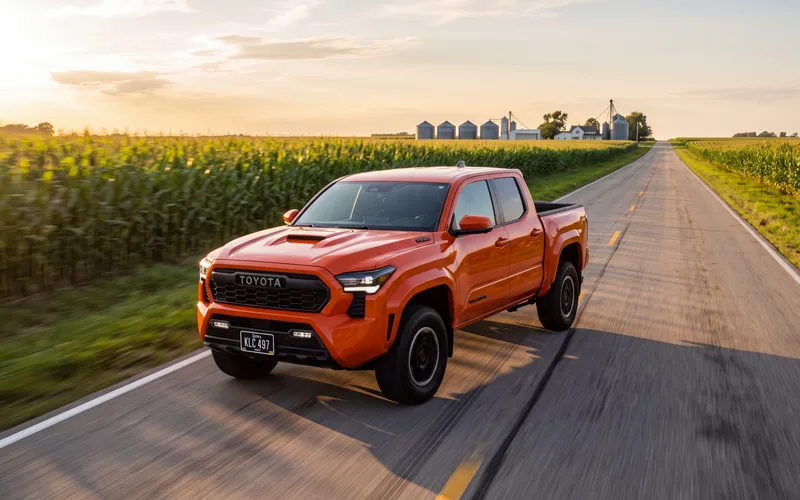 Toyota TacomaMid-Size TruckBetter at: Capability & resale
The default mid-size cross-shop: more towing, a hybrid option, better resale, and modern tech — at the cost of a rougher ride.
Compare 1.99C-
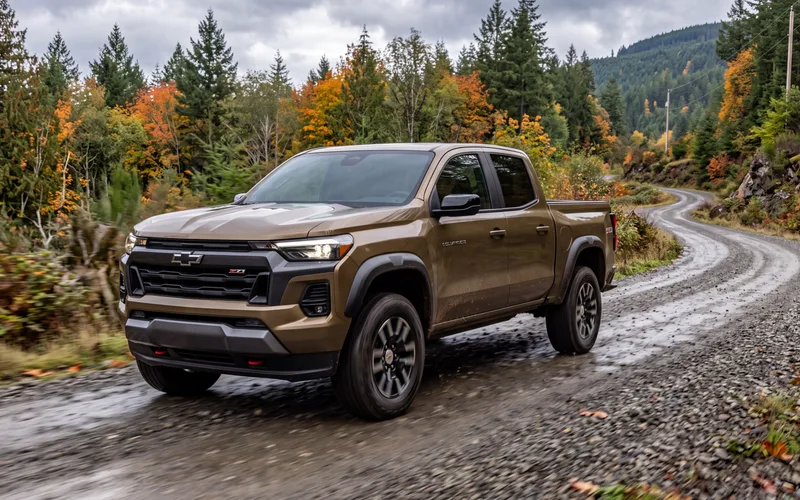 Chevrolet ColoradoMid-Size TruckBetter at: Towing & tech
A turbo four with 430 lb-ft and up to 7,700 lbs of towing, plus the modern screen and camera tech the Ridgeline doesn't offer.
Compare 1.81C-
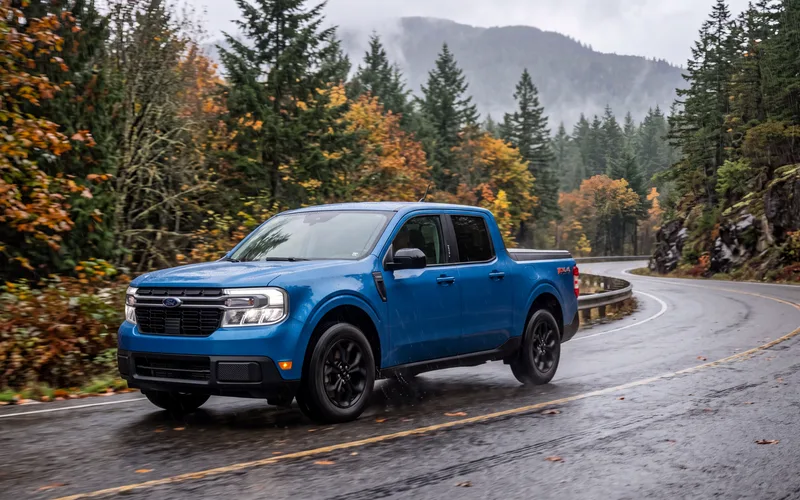 Ford MaverickCompact TruckBetter at: Fuel economy
For buyers who mostly need a bed and a commuter, the hybrid Maverick's ~37 mpg and much lower price make the Ridgeline hard to justify.
CompareHow it's evolved
10 scored model years · 2017–2026
Subject scores by year
Hover or tap a score to see what moved it versus the year before. A corner mark flags a big swing.
| Year | Performance | Efficiency | Safety | Space | Cost | Reliability | Tech | Use-case | Driving | Value |
|---|---|---|---|---|---|---|---|---|---|---|
| 2026 | 37 | 51 | 78 | 50 | 51 | 75 | 51 | 70 | 69 | 64 |
| 2025 | 37 | 47 | 64 | 50 | 54 | 71 | 54 | 68 | 68 | 65 |
| 2024 | 37 | 46 | 66 | 49 | 54 | 75 | 52 | 67 | 68 | 65 |
| 2023 | 35 | 47 | 69 | 49 | 56 | 73 | 44 | 65 | 68 | 62 |
| 2022 | 35 | 47 | 68 | 54 | 59 | 72 | 43 | 68 | 73 | 63 |
| 2021 | 35 | 48 | 69 | 54 | 64 | 73 | 43 | 69 | 73 | 66 |
| 2020 | 34 | 49 | 66 | 54 | 64 | 68 | 41 | 71 | 69 | 67 |
| 2019 | 34 | 49 | 58 | 54 | 66 | 63 | 39 | 68 | 70 | 66 |
| 2018 | 34 | 49 | 58 | 54 | 67 | 66 | 39 | 68 | 72 | 66 |
| 2017 | 35 | 49 | 59 | 54 | 67 | 63 | 39 | 70 | 70 | 71 |
Compare two years
Best fit & conditions
Higher scores mean a better fit for that use case. Learn more about use-case fit →
Subject profile
Trims & configurations
4 trimsScores above reflect the volume trim. Per-trim specs and scores are rolling out — the full lineup:
Academic Probation · NHTSA safety recalls
No NHTSA safety recall is on record for the 2026 Honda Ridgeline. Other model years of the Ridgeline have 20 — listed below.
20 recalls on other model years of the Ridgeline (2017–2025)
Jun 4, 2026Structure: frame and members · Suspension: rearThe rear subframe may corrode at the suspension mounting points, which can result in rear suspension component failure.
Defect
American Honda Motor Company (Honda) is recalling certain 2016-2022 Honda Pilot, 2017-2023 Ridgeline, 2019-2023 Passport, and 2014-2020 Acura MDX vehicles that were sold in Connecticut, Delaware, District of Columbia, Illinois, Indiana, Iowa, Kentucky, Maine, Maryland, Massachusetts, Michigan, Minnesota, Missouri, New Hampshire, New Jersey, New York, Ohio, Pennsylvania, Rhode Island, Vermont, Virginia, West Virginia, or Wisconsin. The rear subframe may corrode at the suspension mounting points, which can result in rear suspension component failure.
Risk
Failure of rear suspension components, such as the rear control arm, can cause a loss of vehicle handling and control, increasing the risk of a crash or injury.
Remedy
Dealers will inspect the rear subframe and install a rear subframe reinforcement kit and, as necessary, repair or replace the rear subframe components, free of charge. Interim letters notifying owners of the safety risk were mailed July 27, 2026. Additional letters will be sent once the final remedy is available, anticipated in the fall of 2026. Owners may contact Honda's customer service at 1-888-234-2138. Honda's numbers for this recall are AOU and AOT. Vehicle Identification Numbers (VINs) involved in this recall will become searchable on NHTSA.gov beginning June 10, 2026.
NHTSA campaign 26V365000 ↗Manufacturer no. AOU, AOT965,561 vehicles potentially affected (all models in the campaign)Filed by Honda (American Honda Motor Co.)Filed as RIDGELINEMay 21, 2026Air bags: sensor: occupant classification: front passengerThe front passenger seat weight sensor may crack and short circuit, which can cause the air bags to deploy unintentionally during a crash.
Defect
Honda (American Honda Motor Co.) is recalling certain 2018-2021, 2023 Acura TLX, 2019-2024 RDX, 2017-2020, 2022-2026 MDX, 2017-2021, 2023, 2025 Honda Ridgeline, 2017-2022 Pilot, 2019-2021 Passport, 2018-2026 Odyssey, 2019-2022 Insight, 2019-2021 HR-V, 2018-2020 Fit, 2020-2022 CR-V Hybrid, 2017-2022 CR-V, 2017-2018, 2021 Civic Type R, 2017-2021 Civic hatchback, 2016-2020 Civic coupe, 2016-2022 Civic, 2017-2022 Accord Hybrid, and 2016-2022 Accord vehicles. The front passenger seat weight sensor may crack and short circuit, which can cause the air bags to deploy unintentionally during a crash.
Risk
Air bags that deploy unintentionally during a crash increase the risk of injury.
Remedy
Dealers will replace the seat weight sensors, free of charge. Owner notification letters were mailed July 7, 2026. Owners may contact Honda's customer service at 1-888-234-2138. Honda's numbers for this recall are BOL, WO9, OOA, WOM, XOH, NOC, POD, BOE, UOF, POB, EOG, AOI, QO8, TOJ, DO7, and SOK. This recall expands previous NHTSA recall number 24V064. Vehicle Identification Numbers (VINs) involved in this recall will be searchable on NHTSA.gov beginning May 29, 2026.
NHTSA campaign 26V332000 ↗Manufacturer no. Refer to Comments98,892 vehicles potentially affected (all models in the campaign)Owners notified Jul 6, 2026Filed by Honda (American Honda Motor Co.)Filed as RIDGELINEMay 9, 2024Back over prevention: sensing system: cameraThe rearview camera (RVC) tailgate wire harness may fatigue and break, which can prevent the rearview camera image from displaying.
Defect
Honda (America Honda Motor Co) is recalling certain 2020-2024 Ridgeline vehicles. The rearview camera (RVC) tailgate wire harness may fatigue and break, which can prevent the rearview camera image from displaying.
Risk
A rearview camera that does not display an image can reduce the driver's rear view, increasing the risk of a crash.
Remedy
Dealers will replace the RVC tailgate wire harness, free of charge. Owner letters were mailed November 8, 2024. Owners may contact Honda service at 1-888-234-2138. Honda's number for this recall is YI7.
NHTSA campaign 24V321000 ↗Manufacturer no. YI7187,290 vehicles potentially affected (all models in the campaign)Owners notified Nov 8, 2024Filed by Honda (American Honda Motor Co.)Filed as RIDGELINEMar 7, 2024Steering: rack and pinionThe inner ball joint housing in the steering gearbox assembly may loosen and detach from the steering rack and result in a loss of steering control.
Defect
Honda (American Honda Motor Co.) is recalling certain 2023 Passport and Ridgeline vehicles. The inner ball joint housing in the steering gearbox assembly may loosen and detach from the steering rack and result in a loss of steering control.
Risk
A loss of steering control increases the risk of a crash.
Remedy
Dealers will inspect and replace the steering gearbox as necessary, free of charge. Owner notification letters were mailed April 11, 2024. Owners may contact Honda customer service at 1-888-234-2138. Honda's number for this recall is LHY.
NHTSA campaign 24V184000 ↗Manufacturer no. LHY245 vehicles potentially affected (all models in the campaign)Owners notified Apr 11, 2024Filed by Honda (American Honda Motor Co.)Filed as RIDGELINEFeb 1, 2024Air bags: sensor: occupant classification: front passengerThe front passenger seat weight sensor may crack and short circuit, failing to suppress the air bag as intended.
Defect
Honda (American Honda Motor Co.) is recalling certain 2020-2022 Pilot, Accord, Civic sedan, HR-V, Odyssey, 2020 Civic coupe, Fit, 2021-2022 Civic hatchback, 2021 Civic Type R, Insight, 2020-2021 CR-V, CR-V Hybrid, Passport, Ridgeline, Accord Hybrid, 2020 Acura MDX, 2022 Acura MDX, 2020-2022 Acura RDX, and 2020-2021 Acura TLX vehicles. The front passenger seat weight sensor may crack and short circuit, failing to suppress the air bag as intended.
Risk
An air bag that deploys unintentionally during a crash can increase the risk of injury.
Remedy
Dealers will replace the seat weight sensors, free of charge. Owner notification letters were mailed March 28, 2024. This is a phased recall. Owners may contact Honda customer service at 1-888-234-2138. Honda's numbers for these recalls are XHP and VHQ.
NHTSA campaign 24V064000 ↗Manufacturer no. XHP, VHQ750,114 vehicles potentially affected (all models in the campaign)Owners notified Mar 28, 2024Filed by Honda (American Honda Motor Co.)Filed as RIDGELINEDec 18, 2023Fuel system, gasoline: delivery: fuel pumpThe fuel pump inside the fuel tank may fail.
Defect
Honda (American Honda Motor Co.) is recalling certain 2013-2023 Honda Accord, Civic Coupe, Civic Sedan, Civic Hatchback, Civic Type R, CR-V, HR-V, Ridgeline, Odyssey, Acura ILX, MDX, MDX Hybrid, RDX, RLX, TLX, 2019-2022 Honda Insight, Passport, 2020 Honda CR-V Hybrid, 2018-2019 Honda Clarity PHEV, Fit, and 2015-2020 Honda Accord Hybrid, Pilot, Acura NSX vehicles. The fuel pump inside the fuel tank may fail.
Risk
Fuel pump failure can cause an engine stall while driving, increasing the risk of a crash.
Remedy
Dealers will replace the fuel pump module, free of charge. Owner letters were mailed September 6, 2024. Owners may contact Honda customer service at 1-888-234-2138. Honda's numbers for this recall are KGC and KGD. This recall is an expansion of NHTSA recall numbers 21V-215 and 20V-314.
NHTSA campaign 23V858000 ↗Manufacturer no. KGC, KGD2,490,460 vehicles potentially affected (all models in the campaign)Owners notified Mar 29, 2024Filed by Honda (American Honda Motor Co.)Filed as RIDGELINENov 13, 2023Engine and engine cooling: engine: hard parts internal/mechanicalDue to a manufacturing error, the connecting rod bearing in the engine may wear and seize, damaging the engine.
Defect
Honda (American Honda Motor Co.) is recalling certain 2015-2020 Acura TLX, 2016-2020 Acura MDX, 2016 and 2018-2019 Pilot, 2017 and 2019 Ridgeline, and 2018-2019 Odyssey vehicles. Due to a manufacturing error, the connecting rod bearing in the engine may wear and seize, damaging the engine.
Risk
A damaged engine may run improperly or stall while driving, increasing the risk of a fire, crash, or injury.
Remedy
Dealers will inspect and repair, or replace the engine as necessary, free of charge. Owner letters were mailed March 28, 2024. 2016-2017 Acura MDX owner letters were mailed November 1, 2024. 2016-2020 Acura MDX owner letters are expected to be mailed in mid-December 2024. Honda began mailing owner notification letters as of March 18, 2024. 2015-2016 Acura owner letters are expected to be mailed mid-December 2024, 2018 Acura TLX owner letters are expected to be mailed the end of March/early April 2024, 2019 Acura TLX owner letters are expected to be mailed mid-May 2024, 2020 Acura TLX owner letters are expected to be mailed mid-June 2024, and 2016-2020 Acura MDX owner letters are expected to be mailed January 27, 2025. Owners may contact Honda customer service at 1-888-234-2138. Honda's numbers for these recalls are XG1 and GG0.
NHTSA campaign 23V751000 ↗Manufacturer no. XG1, GG0248,999 vehicles potentially affected (all models in the campaign)Owners notified Mar 28, 2024Filed by Honda (American Honda Motor Co.)Filed as RIDGELINEJun 29, 2023Service brakes, hydraulic: foundation components: master cylinderThe tie rod fastener that connects the brake booster and the brake master cylinder may have been improperly assembled during manufacturing, which can cause the brake master cylinder to separate from the booster assembly.
Defect
Honda (American Honda Motor Co.) is recalling certain 2020-2021 Civic, 2020-2023 Ridgeline, 2021-2023 Passport, 2021-2022 Pilot, and 2020 Acura MDX vehicles. The tie rod fastener that connects the brake booster and the brake master cylinder may have been improperly assembled during manufacturing, which can cause the brake master cylinder to separate from the booster assembly.
Risk
Brake master cylinder separation can cause a loss of brake function and increase the risk of a crash.
Remedy
Dealers will inspect and repair the brake booster assembly as necessary, free of charge. Owner notification letters were mailed August 7, 2023. Owners may contact Honda customer service at 1-888-234-2138. Honda's numbers for this recall are VEU, AEV, and ZET.
NHTSA campaign 23V458000 ↗Manufacturer no. VEU, AEV, ZET124,077 vehicles potentially affected (all models in the campaign)Owners notified Aug 7, 2023Filed by Honda (American Honda Motor Co.)Filed as RIDGELINEMar 16, 2023Visibility: rearview mirrors/devices: exteriorThe heating pads behind both side-view mirrors may not be bonded properly, allowing the mirror glass to detach. As such, these vehicles fail to comply with the requirements of Federal Motor Vehicle Safety Standard number 111, "Rear Visibility."
Defect
Honda (American Honda Motor Co) is recalling certain 2020-2021 Pilot and Ridgeline, and 2020-2022 Passport and Odyssey vehicles. The heating pads behind both side-view mirrors may not be bonded properly, allowing the mirror glass to detach. As such, these vehicles fail to comply with the requirements of Federal Motor Vehicle Safety Standard number 111, "Rear Visibility."
Risk
Detached mirror glass can reduce driver visibility, increasing the risk of a crash.
Remedy
Dealers will replace both left and right side-view mirrors, free of charge. Owner letters were mailed January 17, 2024. Owners may contact Honda customer service at 1-888-234-2138. Honda's number for this recall is FE5.
NHTSA campaign 23V174000 ↗Manufacturer no. FE5339,404 vehicles potentially affected (all models in the campaign)Owners notified Jan 17, 2024Filed by Honda (American Honda Motor Co.)Filed as RIDGELINENov 23, 2022Back over prevention: sensing system: cameraOpening and closing the tailgate may break the rearview camera wiring harness, causing the rearview camera to fail.
Defect
Honda (American Honda Motor Co.) is recalling certain 2017-2019 Ridgeline vehicles. Opening and closing the tailgate may break the rearview camera wiring harness, causing the rearview camera to fail.
Risk
An inoperative rearview camera can reduce the driver's rear visibility, increasing the risk of a crash.
Remedy
Dealers will replace the rearview camera wiring harness, free of charge. Owner notification letters were mailed August 31, 2023. Owners may contact Honda's customer service at 1-888-234-2138. Honda's number for this recall is 6RW.
NHTSA campaign 22V867000 ↗Manufacturer no. 6RW117,445 vehicles potentially affected (all models in the campaign)Owners notified Aug 31, 2023Filed by Honda (American Honda Motor Co.)Filed as RIDGELINENov 29, 2021Latches/locks/linkages: hood: latch · Structure: body: hoodThe hood latch striker may become damaged and separate from the hood, which can result in the hood opening while driving.
Defect
Honda (American Honda Motor Co.) is recalling certain 2019 Passport, 2016-2019 Pilot, and 2017-2020 Ridgeline vehicles. The hood latch striker may become damaged and separate from the hood, which can result in the hood opening while driving.
Risk
A hood that opens while driving can obstruct the driver's view and increase the risk of a crash.
Remedy
Dealers will either repair the hood latch striker, or replace the hood if necessary, free of charge. Owner notification letters were mailed January 18, 2022. Owners may contact Honda customer service at 1-888-234-2138. Honda's number for this recall is PBV.
NHTSA campaign 21V932000 ↗Manufacturer no. PBV724,826 vehicles potentially affected (all models in the campaign)Owners notified Jan 18, 2022Filed by Honda (American Honda Motor Co.)Filed as RIDGELINENov 18, 2021Seat belts: rear/other: retractorThe automatic locking retractor on the second-row center seat belt assembly may deactivate improperly, which can result in an unsecured child restraint system. As such, these vehicles fail to comply with the requirements of Federal Motor Vehicle Safety Standard number 208, "Occupant Crash Protection."
Defect
Honda (American Honda Motor Co.) is recalling certain 2021 Accord Sedan, Accord Hybrid, CR-V, Ridgeline, 2022 Insight and CR-V Hybrid vehicles. The automatic locking retractor on the second-row center seat belt assembly may deactivate improperly, which can result in an unsecured child restraint system. As such, these vehicles fail to comply with the requirements of Federal Motor Vehicle Safety Standard number 208, "Occupant Crash Protection."
Risk
An unsecured child restraint system can increase the risk of injury during a crash.
Remedy
Dealers will replace the second-row center seat belt assembly, free of charge. Owner notification letters were mailed January 14, 2022. Owners may contact Honda customer service at 1-888-234-2138.
NHTSA campaign 21V900000 ↗Manufacturer no. ABS, BBT, NBQ, RBR4,346 vehicles potentially affected (all models in the campaign)Owners notified Jan 14, 2022Filed by Honda (American Honda Motor Co.)Filed as RIDGELINEMar 25, 2021Fuel system, gasoline: delivery: fuel pumpThe low-pressure fuel pump inside the fuel tank may fail.
Defect
Honda (American Honda Motor Co.) is recalling certain 2019-2020 Acura MDX, MDX Sport Hybrid, RDX, TLX, Honda Accord, Civic Hatchback, Insight, 2019 Acura ILX, Honda Accord Hybrid, Civic Coupe, Civic Coupe Si, Civic Sedan, Civic Sedan Si, Civic Type R, Fit, HR-V, Odyssey, Passport, Pilot and Ridgeline, and 2018-2019 CR-V vehicles. The low-pressure fuel pump inside the fuel tank may fail.
Risk
Fuel pump failure can cause an engine stall while driving, increasing the risk of a crash.
Remedy
Honda will notify owners, and dealers will replace the fuel pump assembly, free of charge. Owner letters were mailed May 18, 2021. Owners may contact Honda customer service at 1-888-234-2138. Note: This recall is an expansion of recall 20V-314.
NHTSA campaign 21V215000 ↗Manufacturer no. Multiple Codes624,552 vehicles potentially affected (all models in the campaign)Owners notified May 18, 2021Filed by Honda (American Honda Motor Co.)Filed as RIDGELINESep 17, 2020EquipmentHonda (American Honda Motor Co.) is recalling all Honda Genuine Accessory Tonneau Covers, part number 08Z07-T6Z-100F, sold for installation on 2017-2020 Ridgeline trucks. If the tonneau cover is not properly secured in the open or closed position, wind resistance may cause the cover to flip and buckle. If this occurs, the hinges between the center and rear panel may deform, possibly allowing the rear panel to separate from the vehicle.
Defect
Honda (American Honda Motor Co.) is recalling all Honda Genuine Accessory Tonneau Covers, part number 08Z07-T6Z-100F, sold for installation on 2017-2020 Ridgeline trucks. If the tonneau cover is not properly secured in the open or closed position, wind resistance may cause the cover to flip and buckle. If this occurs, the hinges between the center and rear panel may deform, possibly allowing the rear panel to separate from the vehicle.
Risk
A separated panel may become a road hazard, increasing the risk of crash or injury.
Remedy
Honda will notify all registered owners of 2017-2020 Honda Ridgelines, and dealers will install tethers onto any Honda Genuine Accessory Tonneau Cover to prevent panel separation and apply warning labels, free of charge. In addition, an updated accessory user's information manual will be provided. The recall began October 26, 2020. Owners may contact Honda customer service at 1-888-234-2138. Honda's number for this recall is F8M.
NHTSA campaign 20E068000 ↗Manufacturer no. F8M151,343 vehicles potentially affected (all models in the campaign)Owners notified Oct 26, 2020Filed by Honda (American Honda Motor Co.)Filed as RIDGELINEApr 12, 2019Engine and engine cooling: engine: gasoline: belts and associated pulleysThe timing belt teeth may separate from the belt.
Defect
Honda (American Honda Motor Co.) is recalling certain 2018-2019 Acura MDX and Honda Pilot vehicles and 2019 Acura RLX, RLX Sport Hybrid, TLX and Honda Odyssey and Ridgeline vehicles. The timing belt teeth may separate from the belt.
Risk
Teeth separation from the timing belt may result in an engine stall, increasing the risk of crash.
Remedy
Honda will notify owners, and dealers will inspect the vehicle and replace any affected timing belt free of charge. Vehicles receiving a replacement timing belt will also have the engine inspected and any damaged components will be replaced for free. The recall began June 7, 2019. Honda owners may contact customer service at 1-888-234-2138. Honda's number for this recall is L4M. Acura owners may contact customer service at 1-888-234-2138. Acura's number for this recall is Z4L.
NHTSA campaign 19V298000 ↗Manufacturer no. L4M, Z4L93,946 vehicles potentially affected (all models in the campaign)Owners notified Jun 7, 2019Filed by Honda (American Honda Motor Co.)Filed as RIDGELINEJan 24, 2019Fuel system, gasoline: delivery: fuel pumpExposure to acids, such as from car wash soaps, can result in the fuel pump feed port cracking.
Defect
Honda (American Honda Motor Co.) is recalling certain 2017-2019 Ridgeline trucks. Exposure to acids, such as from car wash soaps, can result in the fuel pump feed port cracking.
Risk
A crack in the fuel pump feed port can allow pressurized fuel to leak out, increasing the risk of a fire.
Remedy
Honda will notify owners, and dealers will replace the fuel pump, if necessary, and install a fuel pump cover, free of charge. The recall began March 14, 2019. Owners may contact Honda customer service at 1-888-234-2138. The recall number for this recall is Q3V.
NHTSA campaign 19V053000 ↗Manufacturer no. Q3V106,683 vehicles potentially affected (all models in the campaign)Owners notified Mar 14, 2019Filed by Honda (American Honda Motor Co.)Filed as RIDGELINENov 28, 2018Structure: body: roof and pillarsThe mounting holes for the clip that secures the right center pillar trim panel may be larger than intended. In the event of a crash necessitating right side curtain air bag deployment, the clip may not hold the center pillar trim panel in position and it may potentially interfere with the curtain air bag deployment. As such, these vehicles fail to comply with the requirements of Federal Motor Vehicle Safety Standard (FMVSS) number 214, "Side Impact Protection," and 226, "Ejection Mitigation."
Defect
Honda (American Honda Motor Co.) is recalling certain 2019 Honda Ridgeline and Pilot vehicles. The mounting holes for the clip that secures the right center pillar trim panel may be larger than intended. In the event of a crash necessitating right side curtain air bag deployment, the clip may not hold the center pillar trim panel in position and it may potentially interfere with the curtain air bag deployment. As such, these vehicles fail to comply with the requirements of Federal Motor Vehicle Safety Standard (FMVSS) number 214, "Side Impact Protection," and 226, "Ejection Mitigation."
Risk
In the event of a crash, if the curtain air bag does not deploy as intended, it can increase the risk of injury.
Remedy
Honda will notify owners, and dealers will install a bracket on the right center pillar that will securely hold the center pillar trim clip, free of charge. The recall began January 22, 2019. Owners may contact Honda customer service at 1-888-234-2138. Honda's number for this recall is D3D.
NHTSA campaign 18V848000 ↗Manufacturer no. D3D404 vehicles potentially affected (all models in the campaign)Owners notified Jan 22, 2019Filed by Honda (American Honda Motor Co.)Filed as RIDGELINESep 27, 2018Air bags · Air bags: air bag/restraint control module · Seat belts: pretensionerThe Supplemental Restraint System (SRS) control unit may have a manufacturing error, possibly resulting in the air bags or seatbelt pretensioners not deploying in the event of a crash.
Defect
Honda (American Honda Motor Co.) is recalling certain 2019 Honda Insight, Odyssey, and Ridgeline vehicles. The Supplemental Restraint System (SRS) control unit may have a manufacturing error, possibly resulting in the air bags or seatbelt pretensioners not deploying in the event of a crash.
Risk
In the event of a crash, if the air bags or seatbelt pretensioners do not function as intended, there would be an increased risk of injury.
Remedy
Honda will notify owners, and dealers will replace the SRS unit, free of charge. The recall began November 8, 2018. Owners may contact Honda customer service at 1-888-234-2138. Honda's numbers for this recall are B2R, C2P, and Z2Q.
NHTSA campaign 18V664000 ↗Manufacturer no. B2R, C2P, Z2Q118 vehicles potentially affected (all models in the campaign)Owners notified Nov 8, 2018Filed by Honda (American Honda Motor Co.)Filed as RIDGELINEApr 5, 2018SeatsThe front driver and passenger powered seats in the Honda vehicles and the driver powered seats in the Acura vehicles may have been assembled with improperly manufactured rivets. In the event of a crash, the rivets can break causing the seats not to be secured to the floor. As such, these vehicles may fail to comply with the requirements of Federal Motor Vehicle Safety Standard (FMVSS) number 207, "Seating Systems," and 210, "Seat Belt Assembly Anchorages."
Defect
Honda (American Honda Motor Co.) is recalling certain 2018 Honda Pilot and Ridgeline vehicles and 2018 Acura MDX vehicles. The front driver and passenger powered seats in the Honda vehicles and the driver powered seats in the Acura vehicles may have been assembled with improperly manufactured rivets. In the event of a crash, the rivets can break causing the seats not to be secured to the floor. As such, these vehicles may fail to comply with the requirements of Federal Motor Vehicle Safety Standard (FMVSS) number 207, "Seating Systems," and 210, "Seat Belt Assembly Anchorages."
Risk
In the event of a crash, if the seat does not remain secured to the floor, the seat occupant has an increased risk of injury.
Remedy
Honda will notify owners, and dealers will replace the driver seat frame assembly in Acura MDX vehicles, and replace the driver and front passenger seat slide rail frames in Honda Pilot and Ridgeline vehicles, free of charge. The recall began May 30, 2018. Owners may contact Honda customer service at 1-888-234-2138. Honda's numbers for this recall is D0S, and T0T.
NHTSA campaign 18V221000 ↗Manufacturer no. D0S, T0T5,810 vehicles potentially affected (all models in the campaign)Owners notified May 30, 2018Filed by Honda (American Honda Motor Co.)Filed as RIDGELINEDec 9, 2016Electrical system: wiringWater may enter the rear wiring harness through the connector located under the truck bed drain hole, possibly causing the connection terminals to corrode.
Defect
Honda (American Honda Motor Co.) is recalling certain model year 2017 Ridgeline AWD vehicles manufactured April 1, 2016, to August 11, 2016. Water may enter the rear wiring harness through the connector located under the truck bed drain hole, possibly causing the connection terminals to corrode.
Risk
Corrosion of the wiring harness can cause increased electrical resistance, unexpectedly activating the vehicle stability assist (VSA) system, increasing the risk of a crash.
Remedy
Honda will notify owners, and dealers will inspect the rear wiring harness and related components, replacing them as necessary, free of charge. Owners may contact Honda customer service at 1-888-234-2138. Honda's number for this recall is KD3.
NHTSA campaign 16V888000 ↗Manufacturer no. KD39,179 vehicles potentially affected (all models in the campaign)Owners notified Feb 3, 2017Filed by Honda (American Honda Motor Co.)Filed as RIDGELINE
Source: NHTSA Office of Defects Investigation recall database, model years 2017–2026. Recalls are listed by model year as the manufacturer filed them; whether a specific car is affected depends on its VIN — check a VIN at nhtsa.gov ↗. NHTSA model names matched to this page: RIDGELINE.
Detailed scoring by subject
1Performance & PowertrainThe Ridgeline's lowest-graded category.0.42F
The 3.5L SOHC i-VTEC V6 is the sole engine across Sport, RTL, TrailSport, and Black Edition trims; peak output at 6,000 rpm is unchanged for 2026.
Naturally aspirated V6 makes 262 lb-ft peaking at 4,700 rpm — same across every trim. Well below turbo-4 and turbo-6 mid-size rivals like the Colorado (430) and Tacoma (317).
Car and Driver clocked a 2024 Ridgeline TrailSport at 6.0 s to 60 mph with the same 280-hp V6 / 9-speed / AWD combination unchanged for 2026; independent estimates put the RTL volume trim around 6.0–6.5 s.
The naturally aspirated 3.5L V6 is widely praised for smoothness with no turbo lag or coarse notes; VCM cylinder deactivation is transparent, and throttle response is linear and predictable. Falls short of top marks because it lacks the low-end shove of a turbo or hybrid setup.
The 9-speed automatic shifts smoothly and decisively in mixed driving with paddle-shifter manual mode available; owners consistently praise its behavior. Occasional busy shifting on grades is the main knock.
Every 2026 Ridgeline is rated at 5,000 lbs — trailing all body-on-frame mid-size rivals (Tacoma up to 6,500, Colorado up to 7,700, Ranger up to 7,500). Unibody construction and NA V6 cap the rating.
RTL volume trim carries 1,544 lbs of payload; Sport is highest at 1,583 lbs and TrailSport lowest at 1,521 lbs. Sits in the lower half of the mid-size class.
Standard integrated Class III hitch with 7-pin connector, trailer sway control via VSA, tow/haul-style shift logic, and multi-angle rearview camera with top-down view help with hookup. But no factory integrated trailer brake controller, no trailer backup assist / steering guidance, and no dedicated trailer cameras — features that half-ton and higher-tier mid-size rivals now offer.
Honda's i-VTM4 torque-vectoring AWD is standard on every 2026 Ridgeline (no 2WD offered) with Intelligent Traction Management modes (Normal, Snow, Sand, Mud, plus Trail on TrailSport). Falls short of the top band only because the system lacks a low-range transfer case, unlike body-on-frame rivals' 4WD.
TrailSport adds an extra ~1 in. of ground clearance, off-road-tuned suspension, General Grabber A/T tires, steel skid plate, recovery points, and Trail-mode torque logic. But the unibody chassis, absence of a low-range transfer case, and no locking differentials keep it well shy of dedicated hardware like Tacoma TRD Pro, Colorado ZR2, or Gladiator Rubicon.
Single 3.5L V6 / 9-speed AWD powertrain across every trim — no turbo, hybrid, PHEV, or EV variant. Notably narrower than Ford Maverick (hybrid + turbo), Tacoma (i-Force + i-Force Max hybrid), or Ranger (turbo + Raptor).
2Efficiency & RangeGrades below the middle of the scale.1.40D
EPA combined rating for the AWD-only 3.5L V6 / 9AT volume trims (Sport, RTL, Black Edition). TrailSport is 1 MPG lower on all-terrain tires.
EPA city rating for the 3.5L V6 AWD across the lineup; TrailSport shares the same city rating.
EPA highway rating for the volume Sport/RTL/Black Edition AWD trims; TrailSport drops 1 MPG on all-terrain tires.
Computed from EPA combined fuel economy and the published 19.5-gallon fuel tank; volume-trim figure.
Approximates EPA's 15k-mi/yr estimate at prevailing regular-unleaded prices (~$3.30-3.50/gal) against 21 MPG combined; consistent with published owner-cost estimates for the 2026 Ridgeline.
Runs on regular 87-octane unleaded across every trim - no premium recommended, no diesel/E85 complexity, and no charging infrastructure needed. Straightforward, low-friction fueling.
3SafetyThe Ridgeline's best-graded category.3.28B+
Current-generation Ridgeline (2021+, refreshed 2024) carries NHTSA's 5-star overall rating with 5 stars in frontal and side crash and 4 stars rollover — best-in-class among mid-size trucks.
Ridgeline earns IIHS Top Safety Pick with Good ratings across moderate overlap front, updated side, and roof strength; the updated side test (a common downgrade point) is Good. Falls short of TSP+ due to headlight ratings on lower trims.
Honda Sensing is standard on every Ridgeline trim: CMBS (AEB with pedestrian detection), LKAS, Road Departure Mitigation, ACC with Low-Speed Follow, Traffic Sign Recognition, and auto high beams. The 2024 refresh also made Blind Spot Information and Cross Traffic Monitor standard across the range.
Honda's CMBS earns IIHS Advanced/Superior ratings for vehicle-to-vehicle and daytime pedestrian front crash prevention on the current generation; nighttime pedestrian performance is competent but not class-leading.
Blind Spot Information and Cross Traffic Monitor are standard on all trims from Sport up after the 2024 refresh, but coverage is alert-only (no active steering or braking intervention). Adequate but not class-leading versus systems with active correction.
LKAS and Road Departure Mitigation are standard and generally functional on gentle curves, but reviewers commonly note ping-ponging on tighter interstate curves and less-refined centering than newer competitors' systems.
Honda Sensing ACC with Low-Speed Follow covers full stop-and-go and integrates with LKAS for a traffic-jam-assist-style behavior. Braking is generally smooth but can be late/hard in aggressive merge scenarios; resume from stop is prompt.
Honda does not offer a hands-free highway driving system on any Ridgeline trim. Nothing analogous to BlueCruise, Super Cruise, or FSD Supervised is available.
LED reflector low/high beams are standard with auto high-beam assist. IIHS rates the volume Sport/RTL trims Acceptable and the upper Black Edition Good; this trim split is what keeps the Ridgeline out of TSP+ territory.
Ridgeline has notably better outward visibility than body-on-frame mid-size trucks: lower beltline, thinner pillars, unibody proportions, and a shorter hood. A multi-angle rearview camera is standard; a 360-degree camera is available on higher trims.
Crew-cab-only body with wide-opening rear doors, flat floor, and generous rear legroom accommodates rear-facing seats and can fit three across in a pinch. IIHS rates LATCH ease of use as generally good with clearly marked anchors.
4Space & ComfortOne of the Ridgeline's weakest categories.1.36D
Ridgeline is offered exclusively as a crew cab with 5-passenger seating across all trims.
Honda-published front headroom for the current-gen Ridgeline is 40.1 in without moonroof; drops to 38.8 in on trims with moonroof (Sport and above).
Front legroom of 40.9 in sits just below the mid-size truck segment norm — a byproduct of the shared Pilot/Passport unibody platform.
Rear headroom of 38.8 in is competitive but not class-leading; body-on-frame rivals like Tacoma and Colorado offer slightly more.
36.7 in of rear legroom is mid-pack for mid-size crew-cab trucks — adequate for adults on short-to-medium trips but trails Tacoma double cab and Frontier crew cab.
Ridgeline offers one bed length only — 64 in (5' 4") — placing it near the shorter end of mid-size truck beds; no long-bed variant is available.
Bed volume alone is 33.9 cu ft; the lockable, drainable in-bed trunk adds another 7.3 cu ft, but primary bed capacity is modest by segment standards.
Segment-standout storage: lockable drainable in-bed trunk, dual-action tailgate (swings out or drops down), deep center console with sliding tray, and flat-folding rear seat cushions revealing underseat bins with tie-downs. Available 400W bed outlet and truck-bed audio round out class-leading utility touches.
Front seats are well-shaped with 10-way power adjustment on Sport and above; rear bench is flatter but usable for adults. Reviewers describe seats as comfortable but not exceptional versus better-bolstered Tacoma TRD or Frontier PRO-X seats.
Unibody construction shared with Pilot/Passport delivers the smoothest, most car-like ride in the mid-size truck segment. Broken pavement is absorbed without the head-toss common to body-on-frame rivals, and unladen ride quality is consistently rated best-in-class.
Wind and road noise are well-suppressed for the segment thanks to Honda's acoustic underbody treatments, but the 3.5L V6 gets audibly coarse under hard acceleration and highway tire drone is present on the standard all-terrain tires.
Heated front seats and heated steering wheel are standard on Sport and above; ventilated front seats and heated rear outboard seats are limited to Black Edition and TrailSport trims. Dual-zone climate is standard fleet-wide, but rear climate controls are absent — a segment gap versus Tacoma Limited and Frontier PRO-4X.
5Cost of OwnershipOne of the Ridgeline's weakest categories.1.40D
Base Sport trim carries a modest 2026 MY increase over 2025's $42,145; standard AWD keeps entry price above body-on-frame rivals' 2WD starting points.
RTL is the volume seller, positioned between Sport and TrailSport; every Ridgeline includes AWD, i-VTM4, and the in-bed trunk as standard.
Unibody Pilot-derived platform with the reliable J35 3.5L V6 keeps maintenance below body-on-frame mid-size truck averages; no CVT or turbo complexity.
Solid retention driven by Honda reliability reputation and used-truck demand, but trails Tacoma's class-leading residuals and the traditional body-on-frame appeal.
Honda's 3/36 basic coverage matches Ford, GM, and Toyota but falls well short of Hyundai/Kia (5 yr) and Nissan Frontier (5 yr).
Baseline 5/60 powertrain coverage; Hyundai/Kia offer 10/100k and Nissan Titan offers 5/100k, so Honda is at the segment minimum here.
Honda provides 3-year/36,000-mile roadside assistance and complimentary HondaLink trial services, but offers NO complimentary scheduled maintenance in the U.S. — Toyota's ToyotaCare (2 yr) and GM's first-visit coverage beat this.
$46,695 volume-trim price minus its estimated resale value after 5 years (58% retained, or about $27,083) leaves about $19,612 in depreciation. Add the projected $6,000 in 5-year maintenance and repairs, and owning this vehicle for 5 years costs about $25,612 in total.
6Reliability & QualityOne of the Ridgeline's strongest categories.3.08B
Ridgeline has historically been among the more reliable mid-size trucks in Consumer Reports predicted reliability, benefiting from a mature unibody platform and the proven Honda drivetrain. J.D. Power VDS places Honda mid-pack, tempering the top-end.
Honda consistently ranks in the top tier of Consumer Reports brand reliability studies (typically top 5–8 of ~30 brands), though JDP VDS has been mid-pack in recent years.
This-generation Ridgeline (2G, refreshed for 2021 and 2024) has had scattered recalls (fuel pump, rear-view camera software) but no systemic fire/powertrain safety issues on the scale seen at Ram or Ford. TSB activity is typical for the segment.
The 3.5L J35 V6 is one of the most proven powertrains on sale — the same family has racked up hundreds of thousands of miles in Pilots, Odysseys, and Accords. The 9AT (ZF-based) had some early-generation shift-quality complaints but has been refined and shows no major durability red flags.
Ridgeline cabin is car-like with a mix of soft-touch upper surfaces and hard plastics on lower panels. Reviewers rate it competitive with Frontier/Colorado but a step below Tacoma and Canyon's higher trims.
Honda's assembly quality is generally strong with tight panel gaps and few rattle/squeak complaints reported for the current Ridgeline generation.
Honda has one of the densest US dealer networks (~1,000+ franchise dealers) with generally strong service satisfaction scores in JDP's Customer Service Index.
Honda mechanical parts are widely available and reasonably priced. Ridgeline-specific body/bed parts have a smaller aftermarket than Tacoma or Colorado, but core wear items share with high-volume Honda models.
7Technology & InfotainmentGrades below the middle of the scale.1.44D
The 2026 Ridgeline carries over the refreshed 2024+ interior: a 9-inch color touchscreen is standard from RTL up (the volume trim); base Sport keeps a 7-inch unit. Small versus Tacoma (up to 14 in) and Canyon (11.3 in).
Honda's 9-inch HondaLink system (pre-Google Built-in — that stack currently lives only in the new-gen 2026 Passport/Pilot Prologue) is reviewed as logical and easy to learn with physical volume/tune knobs and hard shortcut keys, but graphics and animations trail Toyota's 14-inch Tacoma system and Chevy/GMC's 11.3-inch Google Built-in setup.
Wireless Apple CarPlay and wireless Android Auto are standard on RTL, TrailSport, and Black Edition — three of four trims and every trim from the volume RTL up. The base Sport is wired-only.
Honda's older command-based voice assistant (not natural-language) is carried over, and factory HD Digital Traffic navigation is limited to the Black Edition. Most owners will bypass it for CarPlay/Android Auto.
Sport and RTL use a 7-speaker system; TrailSport and Black Edition step up to an 8-speaker premium audio system with subwoofer. Honda does not offer a branded (Bose / Harman Kardon) premium option on the Ridgeline — a gap versus Tacoma (JBL) and Frontier (Fender).
The Ridgeline retains a traditional analog gauge cluster flanking a 7-inch color driver information display on all trims — no full-digital, configurable cluster available even on Black Edition. Well behind Tacoma, Canyon, and Frontier.
Ridgeline still relies on the older HondaLink stack, which offers navigation map updates and limited telematics-side updates but no full-vehicle OTA that adds features. Trails Ford (with periodic Power-Up updates on newer models), Tesla, and GM.
HondaLink app provides remote start, lock/unlock, locate, and vehicle status, but the richer remote features sit behind a paid subscription after the trial and there is no phone-as-key/digital key on the Ridgeline. App reliability is rated average by owners.
USB-C and USB-A ports in the first and second rows on all trims, wireless phone charging on Black Edition, plus a truck-segment-standout 400-watt bed-mounted 115V AC outlet standard on RTL, TrailSport, and Black Edition — actually useful for jobsite tools and tailgating. Only the Maverick Hybrid and select Tacoma trims have a comparable bed outlet.
Smart Entry with push-button start and remote engine start via key fob are standard on RTL and above — the volume trim and up. Base Sport uses a conventional key with push-button start. No hands-free tailgate (a truck has a manual tailgate, not applicable) and no phone-as-key.
Multi-angle rear camera is standard on all trims and front/rear parking sensors are standard on RTL and above, but Honda offers no 360-degree surround-view camera on any Ridgeline trim — a real gap versus Tacoma, Canyon, Colorado, and Frontier, which all offer multi-view cameras on upper trims. Trailering camera views are limited.
Honda does not offer a head-up display on any 2026 Ridgeline trim, including Black Edition. A clear competitive gap versus Chevy Colorado (available), GMC Canyon (available), and Toyota Tacoma (available on top trims).
8Use-Case FitOne of the Ridgeline's strongest categories.2.72B-
Crew-cab-only body with wide-opening rear doors, a flat rear floor, and 36.7 in of rear legroom makes rear-facing car-seat installs and daily kid loading noticeably easier than body-on-frame mid-size rivals. IIHS rates LATCH ease-of-use favorably, and the low step-in relative to the segment plus dual-action tailgate simplifies stroller/gear handling.
NHTSA 5-star overall and IIHS Top Safety Pick on the trims families buy, plus Honda Sensing (AEB with pedestrian detection, ACC with Low-Speed Follow, LKAS, RDM) and Blind Spot Info + Cross Traffic Monitor standard from Sport up. Only misses TSP+ due to headlight ratings on lower trims.
Best-in-segment unibody ride quality and quiet cabin at cruise plus a lockable in-bed trunk and dual-action tailgate for road-trip gear make it a genuine family tourer. Held back by a flatter rear bench than rivals, no rear climate controls or rear entertainment, and an aging infotainment stack — otherwise a top-band mid-size truck for family miles.
The unibody Pilot-derived chassis, smooth 3.5L V6 with 9AT, and light-effort steering make the Ridgeline drive more like a large crossover than a body-on-frame truck. Standard Honda Sensing ACC with Low-Speed Follow handles stop-and-go traffic well; outward visibility is a genuine segment strength.
EPA 21 MPG combined on regular unleaded and ~$2,600/yr fuel cost is average for the mid-size truck class but well behind hybrid options (Maverick Hybrid ~37 mpg, Tacoma i-Force Max hybrid). Standard AWD-only and no hybrid variant cap real per-mile savings.
A 45.9 ft turning circle and a ~210 in overall length make it a big vehicle in urban parking, but a lower beltline, thinner pillars, standard multi-angle rear camera, and available parking sensors help. Notably lacks a 360-degree surround-view camera on any trim — a real gap versus Tacoma/Colorado/Canyon.
5,000-lb max tow rating trails every mid-size body-on-frame rival (Tacoma 6,500, Colorado/Ranger 7,500+), and the 64-in bed with 33.9 cu ft volume is the shortest in class. Payload of 1,521–1,583 lbs is competitive but the naturally aspirated V6 lacks the low-end torque of turbo/hybrid rivals when loaded.
The J35 V6 is a proven high-mileage powertrain and Ridgeline has a strong Consumer Reports reliability record, but the unibody chassis and independent rear suspension are less forgiving under sustained heavy loads than body-on-frame rivals. Not a fleet-proven work truck like Tacoma or F-Series.
Class-leading built-in work features: lockable/drainable 7.3 cu ft in-bed trunk, dual-action tailgate (swing-out or drop-down), 400W 115V AC bed outlet standard on RTL and above, integrated bed lighting, 8 fixed tie-down cleats, and a composite bed with dent-resistant surface. Aftermarket upfit ecosystem is smaller than Tacoma/Colorado but factory equipment is exceptional.
~410 mi combined range, unibody ride quality that reviewers consistently rank #1 in mid-size trucks, a quiet cabin at cruise, and Honda Sensing ACC + LKAS provide a fatigue-friendly highway experience. Not top-band because LKAS ping-pongs on tighter curves, no hands-free driving option, and the V6 gets vocal above 4,000 rpm.
Standard i-VTM4 torque-vectoring AWD with Intelligent Traction Management (Snow/Sand/Mud, plus Trail mode on TrailSport) and 5,000-lb tow rating handles bike/kayak trailers and toy haulers. TrailSport adds A/T tires, skid plate, recovery points, and extra clearance. But no low-range transfer case, no locking differentials, and modest clearance keeps it well behind Tacoma TRD Pro, Colorado ZR2, and Gladiator Rubicon for serious trails.
Uniquely flexible cargo strategy for a truck: lockable weatherproof 7.3 cu ft in-bed trunk for valuables, dual-action tailgate for awkward long items, flat-folding rear seat cushions revealing underseat bins with tie-downs, and 8 fixed bed cleats. Roof rails available and integrated Class III hitch is standard for hitch-mounted racks/carriers.
9Driving ExperienceMid-pack among this car's ten categories.2.67C+
Unibody construction on the Pilot platform gives the Ridgeline the most composed, planted handling in the mid-size truck class; noticeably less body roll and more predictable cornering than any body-on-frame rival.
Electric power steering is accurate and appropriately weighted for a truck but light and numb on-center, delivering little road feedback — a typical Honda EPS trait.
Four-wheel discs with a firm, linear pedal; stopping distances are competitive for the class, aided by lower curb weight than BOF rivals and the unibody structure's rigidity.
The 3.5L naturally aspirated V6 is smooth and linear with no turbo lag, but lacks the low-end torque of the Tacoma i-Force Max or Colorado 2.7T; the 9-speed automatic can occasionally hunt between gears under partial throttle.
Better isolated than any body-on-frame mid-size truck thanks to unibody NVH tuning; V6 has a pleasant, refined tone under load without the coarseness of four-cylinder turbo rivals.
42.5 ft curb-to-curb turning diameter — very tight for a mid-size truck, aided by the unibody platform's steering geometry.
Car-like seating position with excellent forward sightlines, well-placed physical controls, generous seat/wheel adjustment range, and the easiest ingress/egress in the segment due to the lower unibody floor.
Competent and refined but rarely called fun — the Ridgeline is engineered as a comfortable hauler, not an enthusiast pick; no manual option, muted V6 soundtrack, and the TrailSport trim is mild versus Tacoma TRD Pro/Colorado ZR2 rivals.
10Value & Market PositionMid-pack among this car's ten categories.2.33C+
Ridgeline includes standard i-VTM4 AWD across every trim and the full Honda Sensing ADAS suite (adaptive cruise, lane-keep, collision mitigation, blind-spot) even on the base Sport — content most mid-size rivals reserve for higher trims or option packages. 8-inch touchscreen with wireless CarPlay/Android Auto is standard; 9-inch Google-built-in system on RTL and up. Content is generous, but base Sport MSRP (~$41K) reflects that content vs a Tacoma SR (~$32K).
Value is fair rather than standout: standard AWD, refinement, and unique features (in-bed trunk, dual-action tailgate) offset the higher entry price, but shoppers cross-shopping Tacoma, Colorado, Frontier, or Maverick can get more capability (V6/turbo diesel options, higher tow ratings) for less. Ridgeline's 5,000-lb tow rating trails the mid-size class average, dampening capability-per-dollar.
Ridgeline offers only four trims (Sport, RTL, TrailSport, Black Edition) and a single mechanical configuration — one crew cab, one 5.3-ft bed, one 3.5L V6, one 9-speed auto, AWD only. No extended/regular cab, no long bed, no alternate powertrain (no hybrid, no turbo four). Rivals like Colorado/Canyon, Tacoma, and Ranger cover multiple cabs, beds, and powertrains, so the Ridgeline is genuinely take-it-or-leave-it on configuration.
Ridgeline is a steady mid-pack seller in the mid-size truck class, running roughly 40,000–55,000 US units annually — well behind segment leaders Tacoma and Colorado, and typically behind Frontier and Ranger, but ahead of Gladiator and Santa Cruz in some quarters. Broad acceptance among pragmatic and family truck buyers; limited traction with traditional truck shoppers.
Honda enjoys a strong brand halo built on reliability, resale, and satisfaction — assets the Ridgeline directly inherits. Ridgeline itself is polarizing among truck purists (unibody design draws skepticism), but it carries above-average brand equity for the mid-size class overall thanks to Honda's reputation.
Honda typically runs modest but steady incentives on Ridgeline — better dealer negotiability than Toyota Tacoma (which frequently transacts at or near MSRP) but less aggressive than GM Colorado/Canyon or Nissan Frontier discounting. Sales financing offers are periodically available; volume-trim buyers can generally find something off MSRP without waiting for a rare promotion.
Second-generation Ridgeline launched for MY 2017 (nine years old in 2026) with a 2021 styling refresh and a 2025 TrailSport hardware upgrade (real off-road wheels/tires, retuned suspension). Platform and powertrain are unchanged from launch; a third-generation redesign is anticipated within the next two model years, giving late-cycle Ridgelines a modest depreciation and freshness risk.
Ridgeline is well-reviewed by mainstream outlets (Car and Driver, MotorTrend, Edmunds, KBB) for on-road ride quality, cabin refinement, storage cleverness, and everyday usability, and it won NACTOY 2017 for the current generation. It rarely wins modern comparison tests against traditional mid-size trucks because capability metrics (payload, towing, off-road) trail rivals, so it lands in the well-regarded-but-not-class-of-the-field tier.