
The verdict
A struggling off-road suv, strong on value and held back by technology.
The 2019 Wrangler Unlimited is bought for one reason: nothing else sold new can match its factory off-road hardware, removable doors/top, and trail-ready confidence. That focus comes at a real daily-driving cost — 20 MPG combined, a busy highway ride, wandery on-center steering, and driver-assist tech that's optional at best and absent (no hands-free system, no standard AEB) on cheaper trims. It holds its value better than almost anything in the class and remains one of the most awarded, most desired nameplates on sale, but shoppers who won't actually use a low-range transfer case will find more comfort and tech per dollar elsewhere.
Jump to scoresStrengths
- Class-benchmark off-road capability
- Exceptional resale value keeps long-term cost in check
- Cavernous headroom despite a compact footprint
What holds it back
- Thirsty for the segment
- Driver-assist tech is thin and often a paid option
- Below-average predicted reliability
Top alternatives
Cars shoppers cross-shop with the Jeep Wrangler 1.95C-
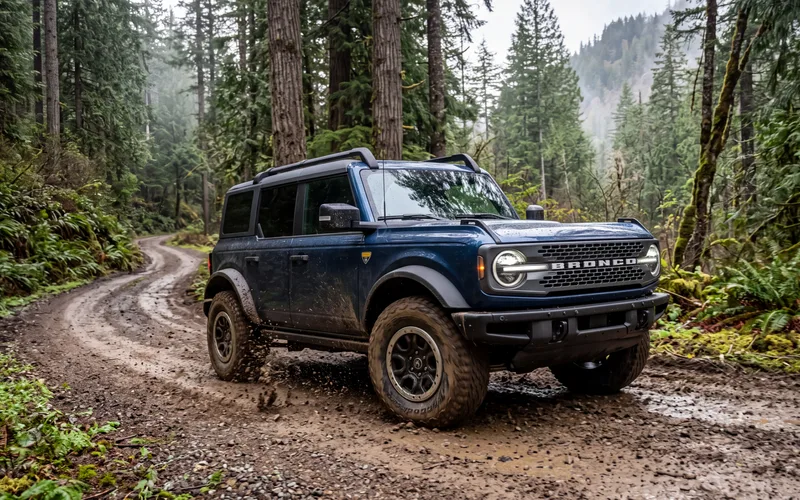 Ford BroncoOff-Road SUVBetter at: On-road manners
Nearly the same off-road brief with independent front suspension, better steering and a quieter cabin, so it survives the commute far better between trail weekends.
Compare 2.38C+
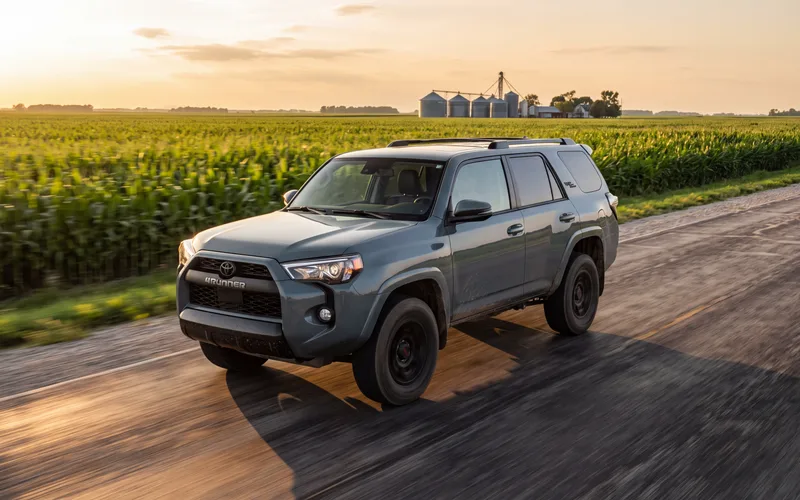 Toyota 4RunnerOff-Road SUVBetter at: Towing & reliability
Tows 6,000 lb, offers a third row, includes its full safety suite as standard, and carries a reliability reputation the Wrangler can't claim.
Compare 2.43C+
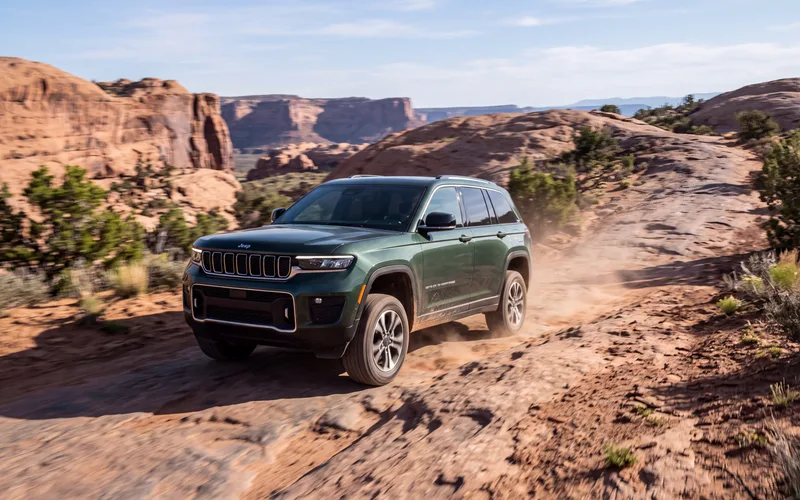 Jeep Grand CherokeeMid-Size SUVBetter at: Comfort & towing
The Jeep to buy when the trail hardware isn't essential — double the tow rating, real ride comfort and a modern driver-assist suite.
CompareHow it's evolved
10 scored model years · 2017–2026
Subject scores by year
Hover or tap a score to see what moved it versus the year before. A corner mark flags a big swing.
| Year | Performance | Efficiency | Safety | Space | Cost | Reliability | Tech | Use-case | Driving | Value |
|---|---|---|---|---|---|---|---|---|---|---|
| 2026 | 53 | 37 | 55 | 47 | 59 | 62 | 68 | 55 | 54 | 65 |
| 2025 | 58 | 35 | 42 | 44 | 62 | 46 | 64 | 55 | 49 | 68 |
| 2024 | 58 | 35 | 46 | 45 | 60 | 52 | 63 | 55 | 52 | 67 |
| 2023 | 54 | 35 | 41 | 43 | 60 | 53 | 44 | 52 | 51 | 60 |
| 2022 | 52 | 41 | 41 | 43 | 69 | 52 | 45 | 53 | 51 | 64 |
| 2021 | 53 | 41 | 41 | 41 | 52 | 45 | 40 | 46 | 46 | 65 |
| 2020 | 54 | 35 | 40 | 42 | 65 | 56 | 32 | 48 | 48 | 71 |
| 2019 | 49 | 36 | 44 | 44 | 66 | 45 | 34 | 47 | 45 | 72 |
| 2018 | 55 | 38 | 38 | 42 | 66 | 52 | 34 | 51 | 48 | 74 |
| 2017 | 47 | 26 | 14 | 36 | 65 | 57 | 18 | 34 | 38 | 59 |
Compare two years
Best fit & conditions
Higher scores mean a better fit for that use case. Learn more about use-case fit →
Subject profile
Trims & configurations
6 trimsScores above reflect the volume trim. Per-trim specs and scores are rolling out — the full lineup:
Detailed scoring by subject
1Performance & PowertrainOne of the Wrangler's strongest categories.1.28D
Standard 3.6L Pentastar V6 across Sport/Sahara/Rubicon trims for MY2019; the 2.0L turbo I4 (270 hp) was the optional engine.
Peak torque of the standard 3.6L Pentastar V6.
Instrumented test figure for the volume Unlimited 4-door V6 automatic configuration; independent tests vary roughly 6.3-7.6s depending on body style and test conditions.
The Pentastar V6 delivers smooth, linear power delivery adequate for daily driving, but reviewers consistently describe it as unremarkable and occasionally coarse at higher RPM under hard acceleration compared to segment rivals.
The ZF-derived 8-speed automatic (standard pairing with the V6 on most volume trims) shifts smoothly and decisively with well-chosen ratios; the available 6-speed manual is direct but heavy-clutched and typical of body-on-frame off-roaders.
Maximum tow rating for the 4-door Unlimited with either available engine when equipped with the Trailer Tow Group; the 2-door is rated lower.
Part-time 4WD is standard on every 2019 Wrangler trim (no 2WD offering exists) — Command-Trac (2-speed transfer case) on Sport/Sahara, and Rock-Trac (4.0:1 low range, locking front/rear diffs, disconnecting front sway bar) on Rubicon.
The Wrangler is the class benchmark for off-road credibility: high ground clearance and generous approach/departure/breakover angles across all trims, with the Rubicon adding locking diffs, a disconnecting sway bar, Dana 44 axles and 33-inch tires from the factory.
For MY2019 the US lineup offered only two gasoline powertrains (3.6L Pentastar V6 and 2.0L turbo I4); the EcoDiesel joined for 2020 and the 4xe plug-in hybrid didn't arrive until 2021, so 2019 predates any electrified or diesel option.
2Efficiency & RangeOne of the Wrangler's weakest categories.0.36F
EPA combined rating for the volume configuration: 4-door Unlimited, 3.6L Pentastar V6, 8-speed automatic, 4WD.
EPA city rating for the same configuration.
EPA highway rating for the same configuration.
Calculated total range from EPA combined MPG and the Unlimited's 21.5-gallon fuel tank.
EPA estimated annual fuel cost at standard assumptions (15,000 mi/yr, 45% highway).
Both available engines (3.6L V6 and 2.0L turbo I4) run on regular 87-octane unleaded with no premium requirement.
3SafetyGrades near the bottom of the scale.0.95F
NHTSA's removable-door exemption excludes the JL Wrangler from its side-impact barrier test, so no comprehensive overall rating exists for MY2019 — only the individual frontal (4-star) and rollover (3-star) results are published.
No Top Safety Pick. The 4-door JL tipped onto its side in the driver-side small overlap front test (Marginal) and also rated Marginal in IIHS's updated side test; moderate overlap front, roof strength, and head restraints all rated Good, but headlights rated Poor across both halogen and optional LED units.
Nothing beyond a standard backup camera comes on the volume trim. Blind-spot monitoring/RCTA require the $995 Active Safety Group (Sport S and up), while forward-collision warning, adaptive cruise, and automatic emergency braking are bundled into the Advanced Safety Group and the separate $795 AEB option — both restricted to Sahara and Rubicon only, unavailable at any price on Sport/Sport S.
When equipped with the optional Full-Speed Forward Collision Warning Plus, IIHS rated front crash prevention Superior, successfully avoiding both the 12 mph and 25 mph vehicle-to-vehicle tests — but the system is a paid option restricted to Sahara/Rubicon and has no pedestrian-detection capability at all in this generation-launch year.
Radar-based blind-spot monitoring with rear cross-path detection is available via the $995 Active Safety Group starting at Sport S, so it reaches most trims for a fee, but it is alert-only with no active braking/steering intervention, and BSM is inoperable whenever the doors are removed.
LaneSense lane-departure warning with a mild steering nudge is available as an option, but there is no lane-centering function, and the Wrangler's solid front axle and quick steering ratio make even the warning-level assist feel crude versus mainstream SUVs.
Radar-based Adaptive Cruise Control is optional (Advanced Safety Group, Sahara/Rubicon automatic; Enhanced ACC on manual) and will bring the Jeep to a full stop in traffic but will not resume automatically — the driver must tap the accelerator to move off again — and there is no integrated highway/lane-centering assist.
No hands-free highway driving system of any kind is offered on the 2019 Wrangler — FCA had not brought any Level 2+ hands-free feature to the Wrangler by this model year.
IIHS rated both the standard halogen and optional LED headlight units Poor for the 2019 model year — among the weakest headlight results in the class, with no adaptive or automatic high-beam system offered to compensate.
Upright seating, tall glass, thin A-pillars, and the boxy JL greenhouse give excellent forward and side sightlines — a longstanding Wrangler strength — and doors/roof panels can be removed entirely for full open-air visibility. The rear-mounted spare tire blocks some straight-back view, but a backup camera is standard on every 2019 trim to compensate.
The 4-door Unlimited has two outboard LATCH lower-anchor positions plus a center tether-only position, with anchors set between seat cushions requiring some digging to find; rear door openings are narrower than most mainstream SUVs, though the tall roofline and upright seatbacks ease loading once anchors are located. The 2-door body style is markedly worse for child seats and is excluded from this volume-trim assessment.
4Space & ComfortOne of the Wrangler's weakest categories.0.90F
The 2019 Wrangler Unlimited (4-door JL) seats five in a single bench-plus-front-buckets layout; no third-row option exists on this nameplate.
Boxy body-on-frame cabin gives generous headroom on the softtop/hardtop without Sky One-Touch; the optional sunroof reduces this figure.
Consistent across multiple spec aggregators for the 2019 JL Wrangler Unlimited.
Upright rear seating with a tall roofline gives class-leading rear headroom on the volume roof configuration.
Consistent across multiple sources for the 2019 JL Wrangler Unlimited four-door.
No third row is offered on the Wrangler in any configuration for 2019 — it is strictly a two-row, five-seat SUV.
Standard published figure for the 2019 four-door Wrangler Unlimited behind the second row.
Widely cited maximum cargo figure with the 60/40 rear seat folded on the four-door Unlimited.
Basic center console/door-pocket storage with no under-floor bins or novel storage solutions; the tradeoff for removable doors/top is a simpler, drainable interior rather than clever cubbies.
Front seats are supportive enough for daily use but firmer and less contoured than mainstream SUV competitors; rear bench is upright and flat.
Solid front and rear axles on leaf/coil suspension give a busy, harsh ride over rough pavement despite JL-era improvements over the JK; reviewers note it doesn't approach crossover-smooth ride quality.
Removable soft/hard top and doors, plus a boxy shape and all-terrain tires, produce significant wind and road noise at highway speed relative to unibody SUVs.
Heated front seats and heated steering wheel are optional (Sahara/Rubicon and above), remote start is auto-transmission-only and optional; no rear climate vents or seat cooling offered on the volume trim.
5Cost of OwnershipOne of the Wrangler's strongest categories.2.48C+
Entry trim is the two-door Sport; four-door Unlimited Sport starts at $31,545.
The four-door Unlimited outsells the two-door roughly 3:1 in this generation, and Sport S is the common as-equipped volume trim between base Sport and Sahara/Rubicon.
RepairPal cites ~$694/yr average annual repair cost for the Wrangler; CarEdge reports 5-year maintenance+repair spend running below the SUV-segment average, offset by known JL first-generation electrical/infotainment gremlins.
The Wrangler is consistently ranked among the best resale-value vehicles in the US market; iSeeCars/CarEdge depreciation studies put 5-year depreciation around 29-32%, versus a mid-size SUV class average near 46%.
Standard FCA basic limited warranty for the era, the minimum end of the segment band and behind Hyundai/Kia's longer coverage.
Standard FCA powertrain warranty, the minimum end of the segment band.
No complimentary scheduled maintenance was included on 2019-model FCA vehicles (that perk arrived with 2024+ models); owners get standard 5-year/60,000-mile roadside assistance (towing, lockout, flat tire, fuel delivery), which is table stakes rather than a differentiator.
$34,745 volume-trim price minus its estimated resale value after 5 years (70% retained, or about $24,322) leaves about $10,424 in depreciation. Add the projected $5,800 in 5-year maintenance and repairs, and owning this vehicle for 5 years costs about $16,224 in total.
6Reliability & QualityGrades below the middle of the scale.1.00D
Consumer Reports gave the 2019 Wrangler JL a Predicted Reliability of 2/5 (an overall reliability score of 12/100), despite very high predicted owner satisfaction (5/5) — a car people love but expect to have problems with. This is a below-average predicted-reliability outcome, consistent across the JL's first two model years.
Jeep has ranked near the bottom of Consumer Reports' brand reliability rankings (around #24 of 25+ brands tested) across the late-2010s, and J.D. Power's Vehicle Dependability Study has consistently placed the brand below the industry average in this period. This is a bottom-third brand standing, not a mid-pack one.
The 2019 Wrangler carries two safety-critical recalls specific to this model year/generation: an improperly machined steering column stub shaft that could break and detach the steering wheel from the column (NHTSA campaign, began April 2019), and a faulty front track-bar-bracket weld on 2018-2019 JL Wranglers that could detach from the frame and cause steering problems (~18,000 units, began November 2018). A separate TSB covers coolant inlet tube fasteners loosening on 2.0L turbo units built before Nov 30, 2019, risking a coolant leak and potential engine damage. Multiple recalls touching steering is more than typical/nothing-systemic activity.
The 2019 Wrangler's volume gas engine is the 3.6L Pentastar V6 (standard on Sport and Rubicon trims), a powertrain family in production across the Chrysler/Jeep/Dodge lineup since 2011 with a solid high-mileage track record and no systemic red flags. The optional 2.0L turbo-four (standard on Sahara) is newer and more polarizing — owner forums report both trouble-free examples past 100,000 miles and a documented coolant-leak/overheating pattern serious enough to draw an NHTSA bulletin. Weighing the proven V6 as the more common configuration against the less-proven turbo-four option nets a modest-but-not-strong score.
Reviewers describe the JL cabin as a mix of soft-touch plastics and upholstered surfaces alongside plenty of hard, wipeable plastic in lower-touch and lower-trim areas — materials chosen for durability and easy cleaning (removable doors/roof) rather than perceived richness. Upper trims (Sahara with available leather) narrow the gap but the base Sport remains a plastic-and-rubber interior. This is competitive-for-purpose rather than class-leading.
The JL improved over the outgoing JK but carries a persistent, documented wind-noise issue at highway speed caused by a body-side gap around the door opening lacking a matching weatherstrip, plus scattered owner reports of interior rattles (freedom-panel hardware, engine-bay fluid bottle). These are minor-but-frequent complaints rather than major misalignment, landing this in the middling band.
Jeep benefits from Fiat Chrysler's large, long-established US dealer network with broad geographic coverage, but the brand's dependability and satisfaction studies through this period place it below industry-average, implying service experience is mixed rather than a standout strength — adequate coverage with a middling reputation rather than dense-and-excellent.
The Wrangler has one of the largest aftermarket ecosystems of any vehicle sold in the US, with multiple major suppliers (Bestop, Quadratec, ExtremeTerrain, DV8 Offroad and others) offering everything from replacement parts to full off-road builds, and dealer/OEM parts are widely stocked given the model's volume and decades of continuous production. This keeps parts cheap and abundant relative to most SUVs.
7Technology & InfotainmentThe Wrangler's lowest-graded category.0.23F
The 7-inch Uconnect 4 touchscreen with Apple CarPlay/Android Auto is the common volume upgrade over the base 5-inch unit; the 8.4-inch nav-equipped screen tops the range.
Uconnect 4 is one of the better-regarded systems of its era for responsiveness and menu logic, even though the Wrangler's screen size trails size-focused rivals.
The 2019 Uconnect 4/4C systems support Apple CarPlay and Android Auto only via wired USB connection; wireless projection did not arrive on Wrangler until a later Uconnect update.
Integrated Voice Command and native navigation are available on the 8.4-inch Uconnect 4C NAV package with a competent, if unremarkable, voice assistant; base 7-inch trims lack native nav.
Standard 8-speaker setup is adequate; the 9-speaker Alpine premium audio available with the 8.4-inch package is a solid step up but not segment-leading.
Base and mid trims use analog gauges with a small monochrome/color trip computer; a configurable 7-inch full-color driver information display is available mainly on Rubicon and higher-content trims, not standard across the range.
2019-era FCA Uconnect systems supported only limited map/software updates via USB or dealer visit; true whole-vehicle over-the-air updates arrived with later Uconnect generations.
The Uconnect smartphone app supports remote start (auto trans only), lock/unlock, and vehicle locate/horn-and-lights, but the remote-start feature requires a paid subscription after a one-year trial.
Two USB-A ports and a 12V outlet are standard; no wireless phone charging pad or household AC outlet is offered on the 2019 Wrangler.
Remote keyless entry and push-button start are standard from Sport S up, with remote start available as an option on automatic-transmission models; no phone-as-key capability.
A standard rearview camera and optional rear parking sensors cover the basics, but no 360-degree camera or parking automation is offered on the Wrangler.
No head-up display was offered on any 2019 Wrangler trim.
8Use-Case FitGrades below the middle of the scale.1.12D
Four-door layout and rear doors make car-seat installation workable, but a tall step-in height, narrow door openings versus crossovers, and a firm rear bench make it more effort than a typical family SUV; removable doors/top add novelty but no everyday family benefit.
IIHS/NHTSA had not published full crash-test results for the redesigned JL as of 2019, and key ADAS (forward-collision warning w/ auto braking, blind-spot monitoring, adaptive cruise) are optional extras rather than standard on the family-friendly Sport/Sahara trims.
Elevated wind/road noise, a firm ride over broken pavement, and no rear entertainment or climate vents limit comfort on longer family trips despite decent rear headroom and legroom.
Heavy, vague recirculating-ball steering and reported highway wander make daily commuting more effortful than in a typical crossover, though the 8-speed automatic is smooth in town.
Both available gas engines (2.0L turbo I4, 3.6L V6) return EPA figures in the high teens/low 20s combined, well below efficient commuter SUVs, driven up further by the boxy shape and knobby tires.
A large turning circle (roughly 39-40 ft for the four-door) and higher stance work against it in tight lots, but a compact overall footprint versus three-row SUVs and a standard backup camera help.
3,500 lb max tow rating and no cargo bed limit its use as a dedicated work vehicle relative to trucks or larger SUVs, though tow hooks and skid plates are standard.
Body-on-frame construction, solid axles, and a decades-long reputation for surviving abusive off-road and fleet/utility use give it strong durability credentials even though it isn't marketed as a work truck.
One of the largest aftermarket ecosystems of any vehicle (racks, tie-downs, auxiliary switches, winches) offsets the lack of a bed or factory onboard power; washable rubberized flooring is available.
Elevated cabin noise, a busy highway ride, and below-average fuel economy (shorter range between fill-ups) work against long highway stints despite improved seat comfort versus the prior generation.
Removable doors, roof and windshield, standard tow hooks and skid plates, best-in-class approach/departure angles and ground clearance, and available Rubicon off-road hardware make this the segment benchmark for adventure use.
60/40 folding rear seats, a large 72.4 cu ft max cargo hold, and a wide factory/aftermarket roof-rack and hitch ecosystem handle bulky gear well, even though the cargo opening shape is less van-like than rivals.
9Driving ExperienceGrades below the middle of the scale.1.00D
Solid front and rear axles, a high center of gravity, and a body-on-frame chassis prioritize off-road articulation over on-road cornering composure; body roll and float are noticeable versus unibody SUV rivals.
Recirculating-ball steering (retained for off-road durability) is vague on-center and requires frequent correction at highway speed; some owners reported a pronounced wander that Jeep addressed with running changes.
Braking performance is adequate for the class but unremarkable; no instrumented stopping-distance data specific to the 2019 model year was found, so this is inferred from segment norms for solid-axle body-on-frame SUVs of the era.
The redesigned 8-speed automatic (shared with both the 3.6L V6 and optional 2.0L turbo-four) shifts smoothly and was a notable refinement over the outgoing JK's transmission.
Engine noise under load is more noticeable than in unibody SUVs due to thinner sound insulation and the removable-top design, though improved over the prior generation.
Four-door Unlimited's longer wheelbase increases turning diameter versus the two-door (34.5 ft); figure aggregated from multiple owner/spec sources.
A commanding, upright seating position and good outward visibility are strengths, offset by a stiff manual steering effort and a boxy dash layout that trails newer crossover ergonomics.
On pavement it's more character than precision, but its open-air top-off/doors-off experience and genuine off-road ability give it a distinctive, enthusiast-favored personality unmatched by mainstream SUVs.
10Value & Market PositionThe Wrangler's best-graded category.2.90B-
Base Sport trim is fairly spartan (available crank windows, manual locks, basic cloth seats) with the bulk of tech/comfort features reserved for Sport S and above, though standard 4WD, skid plates and Uconnect are strong for the money versus non-off-road rivals.
No mainstream rival matches the Wrangler's open-air/removable-top, solid-axle off-road capability at any price, and its class-leading resale value offsets a purchase price that runs higher than most compact/mid-size SUVs.
Wide lineup spanning Sport, Sport S, Sahara and Rubicon, in both 2-door and 4-door Unlimited body styles, with manual or automatic transmission and multiple top/door configurations.
The redesigned JL posted record sales through 2019, with the Wrangler nameplate moving roughly 200,000 units for the year and its strongest-ever fourth quarter.
The Wrangler is one of the most recognizable and aspirational nameplates on sale, with a loyal owner/enthusiast community and direct lineage to the WWII Jeep.
As a newly redesigned, high-demand model in its second model year, the 2019 Wrangler carried minimal factory incentives beyond occasional 0% financing offers, with buyers often paying at or near MSRP.
2019 is the second model year of the all-new fourth-generation JL Wrangler (introduced for 2018), putting it at the freshest point of its cycle with current platform tech and no imminent redesign.
The 2019 Wrangler swept major SUV-of-the-year honors and was Kelley Blue Book's single most-awarded vehicle of the year, on top of a Best Resale Value Award.