
The verdict
A struggling off-road suv, strong on value and held back by technology.
The 2020 Jeep Wrangler is the benchmark off-road SUV: 4WD is standard on every trim, the Rubicon adds locking front/rear differentials and 33-inch tires, and it holds resale value (~70% after 5 years) that beats almost the entire midsize SUV class. That trail-ready hardware — solid axles, removable doors, roof and windshield — comes at a real on-road cost: a brittle ride, a loud cabin, just 20 MPG combined, and driver-assist safety tech that's an option rather than standard. It's the right call for a buyer who actually wants to leave the pavement and loves the open-air lifestyle, and the wrong one for someone who mainly needs a quiet, efficient, tech-loaded daily commuter.
Jump to scoresStrengths
- Benchmark off-road capability
- Class-leading resale value
- Genuinely roomy second row for the segment
What holds it back
- Driver-assist safety tech is optional, not standard
- Outdated infotainment on the volume trim
- Weak fuel economy for the money
Top alternatives
Cars shoppers cross-shop with the Jeep Wrangler 1.95C-
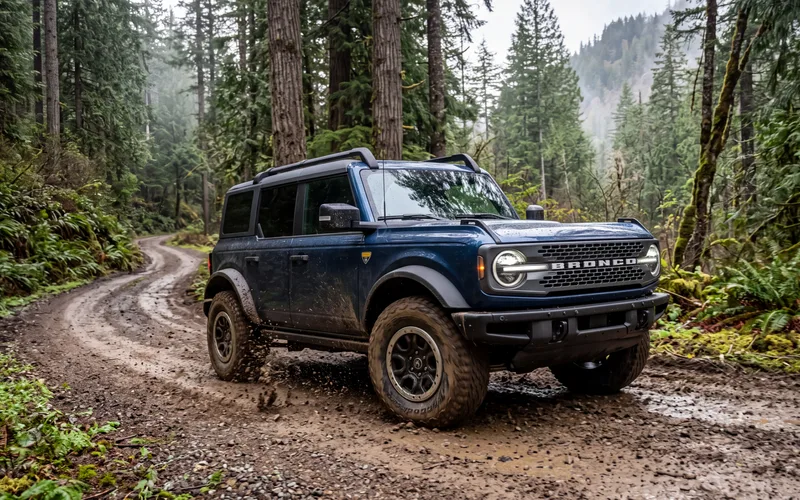 Ford BroncoOff-Road SUVBetter at: On-road manners
Nearly the same off-road brief with independent front suspension, better steering and a quieter cabin, so it survives the commute far better between trail weekends.
Compare 2.38C+
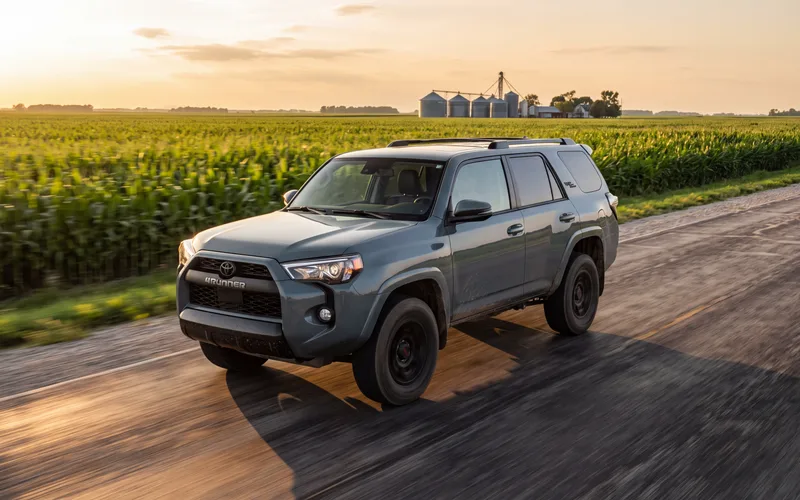 Toyota 4RunnerOff-Road SUVBetter at: Towing & reliability
Tows 6,000 lb, offers a third row, includes its full safety suite as standard, and carries a reliability reputation the Wrangler can't claim.
Compare 2.43C+
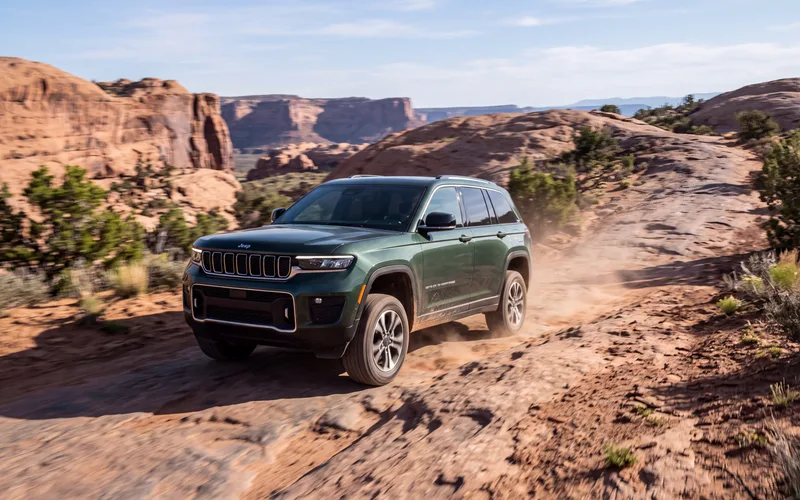 Jeep Grand CherokeeMid-Size SUVBetter at: Comfort & towing
The Jeep to buy when the trail hardware isn't essential — double the tow rating, real ride comfort and a modern driver-assist suite.
CompareHow it's evolved
10 scored model years · 2017–2026
Subject scores by year
Hover or tap a score to see what moved it versus the year before. A corner mark flags a big swing.
| Year | Performance | Efficiency | Safety | Space | Cost | Reliability | Tech | Use-case | Driving | Value |
|---|---|---|---|---|---|---|---|---|---|---|
| 2026 | 53 | 37 | 55 | 47 | 59 | 62 | 68 | 55 | 54 | 65 |
| 2025 | 58 | 35 | 42 | 44 | 62 | 46 | 64 | 55 | 49 | 68 |
| 2024 | 58 | 35 | 46 | 45 | 60 | 52 | 63 | 55 | 52 | 67 |
| 2023 | 54 | 35 | 41 | 43 | 60 | 53 | 44 | 52 | 51 | 60 |
| 2022 | 52 | 41 | 41 | 43 | 69 | 52 | 45 | 53 | 51 | 64 |
| 2021 | 53 | 41 | 41 | 41 | 52 | 45 | 40 | 46 | 46 | 65 |
| 2020 | 54 | 35 | 40 | 42 | 65 | 56 | 32 | 48 | 48 | 71 |
| 2019 | 49 | 36 | 44 | 44 | 66 | 45 | 34 | 47 | 45 | 72 |
| 2018 | 55 | 38 | 38 | 42 | 66 | 52 | 34 | 51 | 48 | 74 |
| 2017 | 47 | 26 | 14 | 36 | 65 | 57 | 18 | 34 | 38 | 59 |
Compare two years
Best fit & conditions
Higher scores mean a better fit for that use case. Learn more about use-case fit →
Subject profile
Trims & configurations
6 trimsScores above reflect the volume trim. Per-trim specs and scores are rolling out — the full lineup:
Detailed scoring by subject
1Performance & PowertrainGrades below the middle of the scale.1.66D
3.6L V6 is the standard, volume engine across all 2020 Wrangler trims.
Peak torque for the standard V6 volume powertrain.
Instrumented test results for the V6 automatic 4-door vary slightly by publication and options.
The Pentastar V6 is adequate and predictable but unremarkable at highway speed with noticeable wind/road noise typical of the boxy JL body; reviewers note the EcoDiesel and turbo I4 deliver smoother, more relaxed low-end response than the V6.
The ZF-sourced 8-speed automatic (standard pairing for most V6 trims) shifts smoothly and is well regarded; a 6-speed manual remains available and is more deliberate but not sloppy.
Volume trim is the 4-door Wrangler Unlimited, rated 3,500 lbs max tow when properly equipped.
4WD is standard across every 2020 Wrangler trim, with a three-tier system: Command-Trac (Sport/Sahara), Selec-Trac full-time (Sahara option), and Rock-Trac with locking front/rear diffs and disconnecting sway bar on Rubicon.
The JL-generation Wrangler, especially Rubicon, is a benchmark off-roader: solid front/rear axles, front and rear locking differentials, electronic sway-bar disconnect, 33-inch tires standard on Rubicon, and best-in-class approach/departure/breakover angles.
2020 is the model year the Wrangler lineup expanded to three distinct engines: the standard 3.6L V6, an optional 2.0L turbo I4 with 48V eTorque mild-hybrid assist, and the newly-launched 3.0L EcoDiesel V6 — paired with 6-speed manual or 8-speed automatic.
2Efficiency & RangeOne of the Wrangler's weakest categories.0.30F
EPA combined rating for the volume V6-automatic 4-door configuration; the turbo I4 eTorque and EcoDiesel options score higher.
EPA city rating for the volume V6-automatic configuration.
EPA highway rating for the volume V6-automatic configuration.
EPA-derived total range figure for the volume V6-automatic configuration; the EcoDiesel variant offers meaningfully longer range.
EPA annual fuel cost estimate at standard 15,000 mi/yr assumptions for the volume configuration.
The standard V6 and optional turbo I4/EcoDiesel all run on regular-grade fuel (diesel for the EcoDiesel), with no premium requirement across the lineup.
3SafetyOne of the Wrangler's weakest categories.0.65F
NHTSA never published a full 5-star overall rating for the JL-generation Wrangler (2018-2020 unchanged); only frontal and rollover sub-scores are on file, so the frontal figure is used as the best available proxy for 'overall'.
Good ratings in moderate overlap front, original-protocol side, roof strength and head restraints, but the vehicle tipped onto its passenger side in both driver-side small overlap tests -- a rollover risk IIHS treats as disqualifying regardless of other results -- and the updated side test rated rear-passenger head protection Poor from contact with the soft-top support structure. No Top Safety Pick award.
The volume Sport/Sport S and Sahara/Rubicon trims ship with none of AEB, adaptive cruise, blind-spot monitoring or rear cross-traffic alert as standard equipment -- all of it sits behind the optional Safety Group and Advanced Safety Group packages, or is standard only on the low-volume High Altitude trim.
IIHS rated the optional Full-Speed Forward Collision Warning Plus system Superior for vehicle-to-vehicle front crash prevention, avoiding collisions at both 12 and 25 mph, but the system is optional (not standard) and has no pedestrian detection at all, so real-world coverage is narrower than the top-tier V2V result implies.
Blind spot monitoring and rear cross-path detection are alert-only (no active steering/braking intervention) and are only offered as an option on Sahara/Rubicon, standard on the limited-run High Altitude trim -- unavailable at any price on the base Sport/Sport S.
LaneSense lane departure warning with lane keep assist is bundled into the optional Advanced Safety Group; owner and reviewer reports describe it as a basic warning/nudge system rather than smooth lane centering, and it is not available at all on the Sport/Sport S volume trims.
Adaptive cruise control is optional on Sahara/Rubicon and standard only on High Altitude, with no combined highway-assist/lane-centering integration; the Wrangler's solid front axle and slow, numb steering are widely noted by reviewers as making even a well-functioning ACC feel disconnected on the highway.
No hands-free highway driving system (BlueCruise/Super Cruise/FSD-class) is offered on the 2020 Wrangler at any trim or option level.
IIHS rated both the standard halogen and optional LED headlights Poor across the board, the worst possible outcome and the same result regardless of trim or headlight upgrade.
The Wrangler's upright windshield, boxy greenhouse and large glass area give strong forward and side sightlines that reviewers consistently praise, though the tailgate-mounted spare tire and rear roll-bar/headrests create real rear blind spots that the standard backup camera only partly offsets.
IIHS rated the Wrangler's LATCH hardware Good with extra lower-anchor positions, a strong hardware result, but the Wrangler's narrow rear doors and tight rear-seat footprint (even on the four-door Unlimited volume trim) make maneuvering a car seat into place more effortful than in a typical mid-size SUV.
4Space & ComfortGrades near the bottom of the scale.0.78F
The volume 4-door Unlimited body seats five on a 2/3 split; no 2020 Wrangler trim, body style or powertrain offers a six- or seven-seat configuration, and the 2-door drops to four.
Jeep publishes front headroom separately by roof — 40.7 in under the hardtop, 42.6 in under the soft top. The hardtop figure is the representative reading for the volume 4-door and is the conservative one.
41.2 in is modest for a mid-size SUV and identical on the 2-door and 4-door — the JL's front footwell is bounded by the transmission tunnel and front wheel housings rather than by overall vehicle length.
The upright boxy body is at its best here — 40.2 in of second-row headroom under a hardtop tops the SUV normalization band outright, and the soft top adds another 1.5 in.
The 4-door's 38.3 in is genuinely competitive for the class — the extra wheelbase over the 2-door goes almost entirely into the rear seat, and 55.7 in of rear shoulder room backs it up.
No 2020 Wrangler offers a third row in any body, trim or powertrain — the seating chart is 2/3 for the 4-door and 2/2 for the 2-door, so a buyer needing more than five seats cannot be served at any price.
31.7 cu ft is well down the SUV band — the swing-gate hold is tall but narrow (41.1 in minimum width at the opening), and while the full-size spare hangs outside on the gate rather than eating into the load space, the space still trails most mid-size crossovers.
Folding the 4-door's rear bench opens 72.4 cu ft — mid-pack for a mid-size SUV — and the removable roof panels let taller loads exceed what the number implies.
Conventional storage is thin — a small glovebox, two front cupholders and a dual-level center armrest bin — but the Wrangler answers with provisions no crossover has: a washout interior with factory floor drain plugs, standard 12-volt sockets throughout, an available 115-volt console outlet, and cargo tie-down anchors. Held out of the top band because none of the AMPS accessory-mount dash brackets or additional dashboard cubbies Jeep introduced with the 2024 interior revision exist for 2020.
Front seats are reasonably well shaped and livable on medium trips, but the volume Sport S is manually adjusted with only 8.1 in of seat travel, the rear bench is flatter and firmer with only a slight recline, and heated/ventilated or power-adjustable seating is not on offer anywhere for 2020 — the 12-way power front seats that later addressed the adjustability complaint arrived only with the 2024 model year.
Solid Dana axles front and rear on five-link coil springs are the price of the off-road hardware: reviewers consistently report a brittle, jittery ride on anything but the smoothest pavement, with the body-on-frame construction and off-road focus costing steering, handling and ride quality alike. The 4-door's longer wheelbase helps somewhat, but this trails almost every independently sprung SUV in the segment.
One of the loudest cabins on sale: a removable roof and doors, a near-vertical windshield, a boxy body and 245/75R17-to-LT285/70R17 on/off-road tires make wind and road noise unavoidable, and reviewers call the intrusion pervasive even with the hardtop fitted. 2020 has no acoustic-glass or added-sound-deadening premium cabin option, which Jeep introduced on upper trims only for 2024.
For 2020, heated front seats and a heated steering wheel are Cold Weather Group option-package content rather than standard anywhere, ventilated seats are not offered at any price, there are no second-row climate controls, and rear comfort content stops at vents. Dual-zone automatic climate control is bundled into the optional Technology Group on Sport S in 2020 (it did not become standard until later), and is available on Sahara.
5Cost of OwnershipOne of the Wrangler's strongest categories.2.36C+
Entry trim is the two-door Sport, essentially flat versus 2019's $28,045 starting price.
The four-door Unlimited outsells the two-door by a wide margin in this generation, and Sport S — adding power windows/locks and A/C over base Sport — is the common as-equipped volume trim between base Sport and Sahara/Rubicon.
CarEdge's cumulative 5-year scheduled-maintenance figure for the Wrangler nameplate is a modest $3,505, but RepairPal's $694/yr average annual repair cost (driven by the JL's known electrical/infotainment gremlins and body-on-frame drivetrain wear items) adds meaningfully on top, putting a blended 5-year total in the mid-$6,000s.
The Wrangler is a perennial resale-value leader, and because this is a 2020 model year, real 2025 realized depreciation is now available rather than a projection: CarEdge and KBB both show 29-32% five-year depreciation, versus a mid-size SUV class average near 46%.
Standard FCA basic limited warranty for the era, the floor of the segment band and behind Hyundai/Kia's longer coverage.
Standard FCA powertrain warranty, the floor of the segment band, half the 10-year term Hyundai/Kia offer.
Jeep Wave existed for the 2020 model year primarily as a 5-year/60,000-mile roadside assistance and trip-interruption program; automatic enrollment with complimentary oil changes and tire rotations across the whole lineup didn't become standard until the 2021 model year, so a 2020 buyer's included-maintenance benefit was thinner than what followed just one year later.
$36,490 volume-trim price minus its estimated resale value after 5 years (70% retained, or about $25,543) leaves about $10,947 in depreciation. Add the projected $6,200 in 5-year maintenance and repairs, and owning this vehicle for 5 years costs about $17,147 in total.
6Reliability & QualityOne of the Wrangler's strongest categories.1.75C-
Sources genuinely disagree on the 2020 JL. Aggregator/JD-Power-style scores read as decent (jdpower.com lists an 81/100 'Great' predicted-reliability figure; carcomplaints.com computes 61/100 'good'), but Consumer Reports and multiple outlets flagged the 2020 model year specifically as one of the least reliable vehicles CR tested that year, driven by electrical/Uconnect gremlins and the steering 'death wobble' defect. Mixed signals between sources, weighted down by the concrete defect history below.
Jeep sits near the bottom of brand-level dependability studies rather than mid-pack — Consumer Reports' brand reliability rankings have repeatedly placed Jeep in the bottom few of ~30+ brands, and J.D. Power's Vehicle Dependability Study data shows Jeep well above the industry-average problems-per-100-vehicles figure. This is a multi-year brand pattern, not a one-off.
NHTSA lists roughly 11-12 recalls against the 2020 Wrangler, including a left-side lower control-arm weld/bracket recall and a rearview-camera/center-brake-light wiring short. More significantly, MY2018-2020 Wranglers (plus MY2020 Gladiator) were the subject of the well-known steering-damper 'death wobble' class-action lawsuit, settled in 2023 with an 8-year/90,000-mile warranty extension for ~1.1 million affected vehicles — a safety-relevant, repeated-complaint defect specific to this exact model year, not a minor administrative recall.
The 3.6L Pentastar V6 paired with the ZF-derived 8-speed automatic is a proven, high-mileage powertrain family used across the Chrysler/Jeep/Dodge lineup since 2011, with a generally solid long-term reputation. Owner forums do report isolated 8-speed issues in early 2020 JL units (slipping, delayed 3-4 shifts, a few outright transmission replacements), but these read as scattered rather than systemic/epidemic.
The JL generation was a marked step up from the outgoing JK — lower dash, better switchgear, more soft-touch surfaces on higher trims — but reviewers still note hard, dreary-feeling plastics in places on what has become an expensive SUV, and it doesn't approach a Grand Cherokee's cabin. Competitive for the segment/price rather than class-leading.
Assembly and panel consistency are generally solid for the JL generation, and cabin refinement (sound deadening, dash design) improved meaningfully over the JK. Wind noise at highway speed remains a recurring complaint, largely inherent to the removable-door/top design rather than a build defect, and scattered owner reports of rattles/squeaks persist alongside the steering and electrical complaint volume noted above.
Jeep rides on Stellantis/FCA's large, long-established nationwide dealer network, giving Wrangler owners broad geographic access to service — adequate coverage with a mixed-to-average service-satisfaction reputation typical of a mainstream domestic brand rather than a standout.
The Wrangler has arguably the largest aftermarket support of any vehicle sold in the US — established names like AEV, Bestop, WeatherTech, ExtremeTerrain and countless off-road specialty shops sell JL-specific parts, on top of wide Mopar OEM availability through the dealer network. Abundant and comparatively affordable parts, both OEM and aftermarket.
7Technology & InfotainmentThe Wrangler's lowest-graded category.0.11F
The volume Sport S ships with a 5.0-inch Uconnect 3 touchscreen standard for 2020; the 7.0-inch Uconnect 4 (with Apple CarPlay/Android Auto) requires the optional $995 Technology Group, and the 8.4-inch Uconnect 4C NAV is available on Sahara/Rubicon through a separate radio/premium-audio package. 2020 is the last model year before Jeep standardized the 7.0-inch screen on Sport S for 2021.
Uconnect is well regarded even at entry level: menus are logical and response is quick for the hardware, and Jeep retains physical climate, volume and 4WD controls below the screen regardless of which head unit is fitted. What holds it out of the top band is that the standard 5.0-inch screen on the volume trim is small and basic by class standards, with the more capable Uconnect 4 experience gated behind an option package.
Apple CarPlay and Android Auto are not available at all on the volume trim's standard 5.0-inch screen — they only arrive with the optional $995 Technology Group's 7.0-inch Uconnect 4, or standard on Sahara/Rubicon's larger screens. Even where present, projection is wired only; wireless CarPlay/Android Auto did not arrive on the Wrangler until the Uconnect 5 update with the 2024 model year.
The standard 5.0-inch Uconnect 3 head unit on the volume trim has no voice command or embedded navigation at all — both require stepping up to the optional 7.0-inch Uconnect 4 (basic voice, no nav) or the 8.4-inch Uconnect 4C NAV (voice plus embedded Garmin-based navigation), which is standard only on Sahara/Rubicon through a paid radio package.
Base audio on the volume trim is a basic speaker set paired with the 5.0-inch head unit; the 9-speaker Alpine premium system with subwoofer and overhead soundbar is bundled only with the 8.4-inch Radio & Premium Audio Group ($1,595) available on Sahara/Rubicon, not standard equipment anywhere in the 2020 lineup.
No full-digital cluster exists on any 2020 Wrangler at any price — analog gauges flank a small monochrome trip-computer window on the volume Sport S, stepping up to a 7.0-inch color TFT display only via the optional Technology Group (paired with the 7-inch touchscreen) or standard on Sahara/Rubicon.
Effectively none for the volume trim. The Uconnect 3/4-generation hardware in the 2020 Wrangler predates the Android-based Uconnect 5 platform Jeep built for meaningful over-the-air delivery. Stellantis's own guidance is that these model years' systems are updated over the air (for map/software patches) or at a dealership only — not a whole-vehicle feature-adding OTA capability.
The Uconnect app with SiriusXM Guardian covers core functions — remote lock/unlock, vehicle locate, remote start where hardware is fitted, and a 4G LTE Wi-Fi hotspot tied to the 8.4-inch head unit — but it is subscription-gated past an initial trial, there is no digital key or phone-as-key, and remote start itself is Cold Weather Group/Convenience Group content rather than standard on the volume trim.
Adequate but basic: the volume trim gets a USB-A port and 12-volt accessory outlets standard, with an available 115-volt household outlet in the console. There is no USB-C anywhere in the 2020 lineup and no factory wireless charging pad on the gas Wrangler.
Push-button start and remote keyless entry are standard, but Remote Proximity Keyless Entry did not move to standard fitment on Sahara/Rubicon until the 2022 model year, remote start requires the optional Convenience or Cold Weather Group, and there is no phone-as-key or hands-free/power liftgate at any price — the side-hinged swing gate with flip-up glass remains entirely manual.
A ParkView rear backup camera is standard, but no 360-degree surround-view system is offered at any price — a notable gap given the sport bars and tailgate-mounted full-size spare that already block the view. ParkSense front/rear sensors are bundled in the optional Safety Group ($895) on the volume trim rather than standard, and the forward-facing TrailCam off-road camera requires the pricier 8.4-inch screen.
No head-up display is offered on any 2020 Wrangler trim or in any option package — unsurprising for a vehicle whose windshield folds down, but a total absence of the feature this item measures.
8Use-Case FitGrades below the middle of the scale.1.24D
The hardware is genuinely good — IIHS rates the 4-door's LATCH system 'Good' with extra usable anchor positions, and 38.3 in of rear legroom is competitive — but daily logistics are not: a high step-in with no standard running boards, small rear doors, a narrow body that makes three-across a squeeze, a fixed bench that neither slides nor reclines meaningfully, and only 31.7 cu ft behind it for a stroller.
A weak family-safety year: the 4-door tipped onto its passenger side in IIHS's driver-side small overlap front test (Marginal overall), the updated side-impact protocol rates rear-passenger head protection Poor, every headlight configuration tested (LED and halogen) rates Poor with no curve-adaptive or high-beam-assist function, and NHTSA never published a combined overall rating (4-star frontal, side not tested, 3-star rollover). Nothing this item measures is standard on the trims families actually buy — forward collision warning and adaptive cruise sit in the optional $795 Advanced Safety Group, itself gated behind the $895 Safety Group.
The second row has class-leading headroom and workable legroom, but a long day in it means a loud cabin with no acoustic-glass option at any price, a brittle solid-axle ride, no second-row climate controls, no rear entertainment, and only 31.7 cu ft of luggage space with all five seats occupied.
The 8-speed automatic and the lag-free Pentastar make low-speed progress manageable, but almost everything else about daily use is effortful: a brittle ride, wind and road noise reviewers rank among the segment's worst, vague electro-hydraulic steering, a high awkward step-in with no running boards standard, and adaptive cruise with stop-and-go gated behind the optional Advanced Safety Group rather than standard.
18/22/20 mpg city/highway/combined for the volume 4-door automatic V6 puts per-mile running costs near the bottom of the SUV field. Consumables are heavy — on/off-road tires up to LT285/70R17 on Rubicon and a 21.5-gallon fill — though the saving graces are regular 87-octane fuel and a well-proven, inexpensive-to-service Pentastar/8-speed drivetrain.
Better in town than its image suggests: the body is narrow, the hood is short, and the near-vertical windshield with tall commanding seating gives outstanding forward and lateral sightlines. What costs it is the rear — sport bars and the tailgate-mounted full-size spare block the view, ParkSense sensors are bundled in the optional Safety Group rather than standard, no surround-view camera is offered at any price, and the 39.4-ft curb-to-curb turning diameter on the 4-door is wider than most crossovers.
Light work duty only: every 4-door Wrangler tows 3,500 lbs regardless of engine, the 2-door tows 2,000 lbs, there is no bed, cargo behind the second row is 31.7 cu ft, and the naturally aspirated V6's 260 lb-ft peaking at 4,800 rpm is short of torque for pulling — payload tops out around 1,351 lbs on a manual Rubicon.
The hardware is built to be abused — body-on-frame ladder frame, solid Dana axles front and rear, skid plates, tow hooks, four-wheel discs, and a long-proven Pentastar V6/850RE automatic. What holds the score back is the JL generation's rocky early ownership record: Consumer Reports rated 2020 Wrangler predicted reliability low (around 2 out of 5), even as J.D. Power-sourced predicted-reliability scoring for the model year reads considerably higher; contemporary owner and forum reports through this period cite driveline 'death wobble', electrical and TCS/ESC software complaints and multiple NHTSA recalls.
Unusually strong for an SUV. The interior is designed to be hosed out via factory floor drain plugs, there is a heavy-duty electrical group and an available 115-volt outlet, cargo tie-downs are standard, and the Wrangler has arguably the largest factory-and-aftermarket upfit ecosystem of any vehicle sold. Held back by structural limits (no bed, no onboard generator on the gas model, modest 31.7 cu ft enclosed cargo space) and by the absence of the factory-backed Dual-Door Group and AMPS dash-mount system that arrived in 2022 and 2024 respectively.
A below-average mile-eater by segment standards. Roughly 430 miles of range from the 21.5-gallon tank at 20 mpg combined is a genuine strength, but the loud cabin, brittle ride, vague steering, no lane-centering at any price and adaptive cruise only as an option gated behind the Safety Group make hours behind the wheel tiring rather than restful.
The segment benchmark by a wide margin: four-wheel drive with low range is standard on every trim, Rubicon carries Dana 44 axles with front and rear Tru-Lok electric lockers and a front sway-bar disconnect, ground clearance runs up to 10.8 in with a 43.9°/44° approach angle and 37° departure angle on Rubicon, and removable doors, roof panels and a fold-down windshield give an open-air/off-road versatility no rival matches. Scored slightly below later model years because the Xtreme Recon package (35-inch tires, 12.9 in clearance, 47.4° approach) and the 4.88 axle/100:1 crawl-ratio option did not exist until 2022.
Flexible in ways a single cargo number cannot capture: 72.4 cu ft with the bench folded, a hosed-out floor, and removable roof panels or a full soft top that let loads stand taller than any fixed-roof SUV allows, plus a deep factory-and-aftermarket catalog of racks, hitches and cargo trays. The constraints are a 31.7 cu ft hold with the seats up, a narrow 41.1 in minimum liftgate opening, a side-hinged swing gate that needs clearance to open, and the absence of the factory-backed Dual-Door Group (mix-and-match full/half doors) that arrived for 2022.
9Driving ExperienceGrades below the middle of the scale.1.23D
Solid Dana axles front and rear on a five-link coil setup are the price of the off-road hardware, and on pavement they cost dearly: reviewers explicitly attribute compromised steering, handling and ride quality to the SUV's off-road focus, with a high center of gravity and on/off-road tires capping cornering grip well short of the class. Better than the pre-JL Wranglers, still behind every independently sprung SUV in the segment.
Consistently one of the most criticized single aspects of driving a 2020 Wrangler on-road: the electro-hydraulic rack ahead of a solid front axle is light, slow to respond and short on feedback, requiring small constant corrections at highway speed. It is precise enough to place the car and free of the wander older Wranglers suffered, which keeps it out of the bottom band, but numb is the kindest description.
Four-wheel discs are standard on every trim and outright stopping power is adequate, but the pedal is the weak point: long travel and a soft, two-stage response calibrated for off-road modulation does not inspire confidence in traffic, and stopping distances are long for the class given curb weights up to roughly 4,650 lbs (EcoDiesel) on knobby on/off-road rubber.
The naturally aspirated 3.6L Pentastar is smooth and lag-free, and the optional 850RE 8-speed automatic shifts unobtrusively and picks sensible gears. What limits it is that 260 lb-ft peaking at 4,800 rpm in a roughly 4,200-to-4,650-lb body means frequent downshifts under load, the standard engine stop-start restart is not perfectly seamless, and the 6-speed manual (standard on the V6) demands more driver effort than most rivals' automatics.
The Pentastar is inoffensive at cruise but has to be revved to make progress and grows coarse toward redline, and the solid-axle driveline plus on/off-road tires contribute a constant hum that the removable-panel body does little to keep out. 2020 has no acoustic-glass or added-sound-deadening package on any trim to help.
39.4 ft is on the wide side for a mid-size SUV; the 2-door's 34.5 ft is considerably tighter. The relatively quick 15.6:1 steering ratio makes the most of it, but the 4-door's figure trails most crossover rivals.
The commanding upright position over a short narrow hood, the near-vertical windshield and retained physical controls for climate, volume and 4WD are real ergonomic strengths. Against that: the volume Sport S has manually adjusted seats with only 8.1 in of travel and 41.2 in of legroom, leaving tall drivers short, and the high step-in through small doors is awkward without running boards standard — the 12-way power front seats with lumbar and cushion-tilt adjustment that address the complaint are 2024 content.
This is the Wrangler's whole argument, and it wins on character rather than pace: doors, roof panels and the windshield all come off, giving an open-air experience nothing else in the segment offers, backed by genuine trail capability that makes the vehicle feel purposeful rather than just novel. Held below the top band because the fun is atmospheric rather than dynamic — it is slow to moderately quick, loud, and clumsy in corners on pavement.
10Value & Market PositionThe Wrangler's best-graded category.2.79B-
Base 2020 Sport trim is spartan (crank windows, manual door locks, basic cloth seats and 5-in Uconnect) with most tech/comfort content reserved for Sport S and above, though standard part-time 4WD, skid plates and removable doors/top are strong inclusions relative to non-off-road rivals.
No mainstream rival matches the Wrangler's open-air/removable-top, solid-axle off-road capability at any price, and class-leading resale value offsets a purchase price that runs above most compact/mid-size SUVs.
Wide lineup spanning Sport, Sport S, Sahara and Rubicon across 2-door and 4-door Unlimited body styles, manual or automatic transmission, multiple top/door configurations, several special editions (Willys Sport, Freedom Edition, Black and Tan), and — new for 2020 — a 3.0L EcoDiesel V6 option on Sahara/Rubicon Unlimited.
The Wrangler posted 201,311 US sales in 2020, a 12% decline from 2019's 228,032 driven mainly by the spring COVID-19 production shutdown at Toledo Assembly rather than falling demand, and it remained comfortably the best-selling body-on-frame SUV in the country.
The Wrangler remained one of the most recognizable and aspirational nameplates on sale in 2020, with a loyal owner/enthusiast community and direct lineage to the WWII Jeep, though the broader Jeep brand's decline that year keeps it just under the very top of the band.
FCA's spring 2020 'Drive Forward' COVID relief program put real financing benefits on the table (0% APR for 72 months or 0.9% for 84 months, plus up to 120 days of deferred first payments) alongside occasional dealer discounts, but Toledo's multi-week shutdown then tightened Wrangler inventory through the back half of the year, limiting how much buyers could negotiate off sticker on a vehicle already in high demand.
2020 is the third model year of the fourth-generation JL Wrangler (introduced for 2018), still current with no imminent redesign, and gains a genuinely new powertrain option (3.0L EcoDiesel V6) rather than being a pure carryover year.
The 2020 Wrangler collected real hardware — Four Wheeler SUV of the Year for a second straight year, Best Value awards in both compact and midsize utility segments, and Best Resale Value/5-Year Cost to Own recognition — but mainstream road-test reviewers stayed lukewarm on everyday livability (The Car Connection scored it just 5.4/10, citing on-road manners), keeping it short of a consistent class-winner reception.