
The verdict
A struggling off-road suv, strong on value and held back by efficiency.
The 2025 Wrangler is the most capable rock-crawler you can buy at a dealership — a 100:1 crawl ratio, front and rear electronic lockers, a disconnecting sway bar, a class-best 47.4-degree approach angle, and doors and a roof that come off entirely. Nothing else on sale does that, and best-in-industry resale (about 68% retained after five years) plus $4,000–$9,000 off sticker make the ownership math far kinder than the $44,690 volume-trim price suggests. The costs are equally blunt: 20 MPG combined and roughly $3,100 a year in fuel, a cabin reviewers call deafening above 60 mph, no standard automatic emergency braking, Marginal-or-Poor IIHS headlights across the whole range, and Jeep sitting dead last in Consumer Reports' brand rankings for a third straight year. Buy it for the hardware and the fun; do not buy it expecting a comfortable, safe, cheap-to-run family SUV.
Jump to scoresStrengths
- The off-road benchmark, with no asterisks
- Best resale value in the industry
- Nobody pays sticker, and you can build it any way you like
What holds it back
- 20 MPG and about $3,100 a year in fuel
- Automatic emergency braking is an option, and there is no lane keeping at all
- Loud and bouncy — a bad long-distance car
Top alternatives
Cars shoppers cross-shop with the Jeep Wrangler 1.95C-
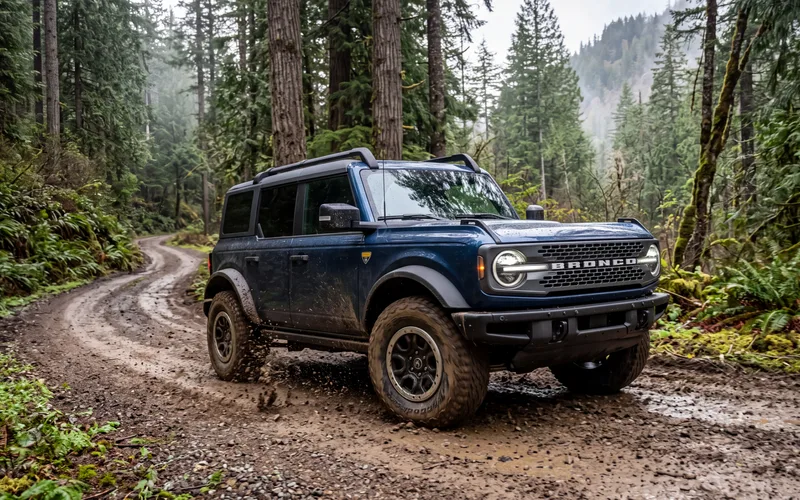 Ford BroncoOff-Road SUVBetter at: On-road manners
Nearly the same off-road brief with independent front suspension, better steering and a quieter cabin, so it survives the commute far better between trail weekends.
Compare 2.38C+
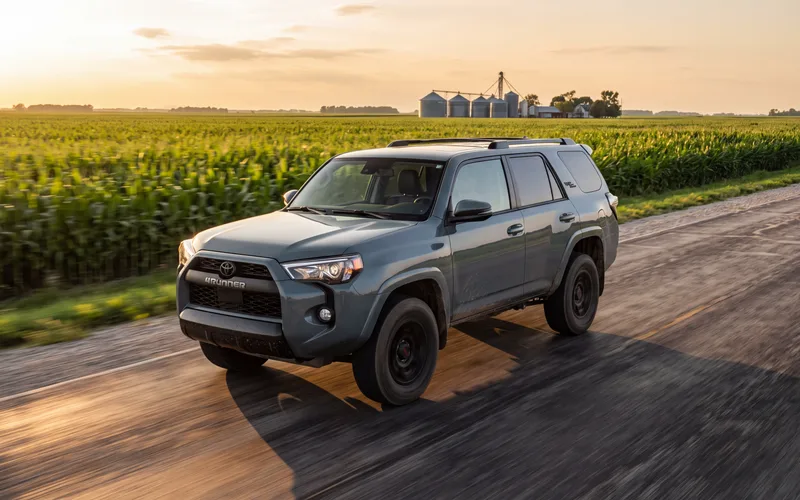 Toyota 4RunnerOff-Road SUVBetter at: Towing & reliability
Tows 6,000 lb, offers a third row, includes its full safety suite as standard, and carries a reliability reputation the Wrangler can't claim.
Compare 2.43C+
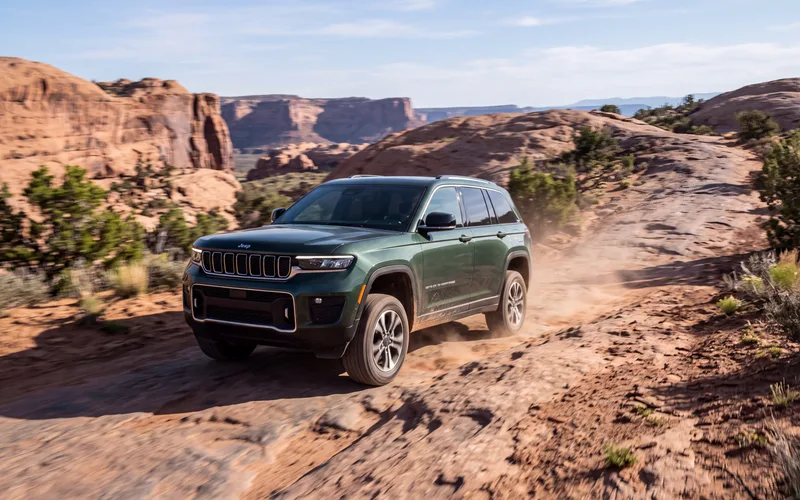 Jeep Grand CherokeeMid-Size SUVBetter at: Comfort & towing
The Jeep to buy when the trail hardware isn't essential — double the tow rating, real ride comfort and a modern driver-assist suite.
CompareHow it's evolved
10 scored model years · 2017–2026
Subject scores by year
Hover or tap a score to see what moved it versus the year before. A corner mark flags a big swing.
| Year | Performance | Efficiency | Safety | Space | Cost | Reliability | Tech | Use-case | Driving | Value |
|---|---|---|---|---|---|---|---|---|---|---|
| 2026 | 53 | 37 | 55 | 47 | 59 | 62 | 68 | 55 | 54 | 65 |
| 2025 | 58 | 35 | 42 | 44 | 62 | 46 | 64 | 55 | 49 | 68 |
| 2024 | 58 | 35 | 46 | 45 | 60 | 52 | 63 | 55 | 52 | 67 |
| 2023 | 54 | 35 | 41 | 43 | 60 | 53 | 44 | 52 | 51 | 60 |
| 2022 | 52 | 41 | 41 | 43 | 69 | 52 | 45 | 53 | 51 | 64 |
| 2021 | 53 | 41 | 41 | 41 | 52 | 45 | 40 | 46 | 46 | 65 |
| 2020 | 54 | 35 | 40 | 42 | 65 | 56 | 32 | 48 | 48 | 71 |
| 2019 | 49 | 36 | 44 | 44 | 66 | 45 | 34 | 47 | 45 | 72 |
| 2018 | 55 | 38 | 38 | 42 | 66 | 52 | 34 | 51 | 48 | 74 |
| 2017 | 47 | 26 | 14 | 36 | 65 | 57 | 18 | 34 | 38 | 59 |
Compare two years
Best fit & conditions
Higher scores mean a better fit for that use case. Learn more about use-case fit →
Subject profile
Trims & configurations
6 trimsScores above reflect the volume trim. Per-trim specs and scores are rolling out — the full lineup:
Detailed scoring by subject
1Performance & PowertrainMid-pack among this car's ten categories.1.89C-
The 3.6L Pentastar V6 remains the standard engine on every volume gas trim of the 2025 Wrangler (JL, 2018– generation) at 285 hp; the optional 2.0L turbo four is slightly down on peak power at 270 hp, and 2025 was the final year the 470 hp 6.4L V8 topped the range (Rubicon 392 / 392 Final Edition).
The naturally-aspirated V6's 260 lb-ft peak arrives high in the rev range and is modest for a 4,200+ lb body-on-frame 4x4 — the optional 2.0L turbo actually out-torques it by 35 lb-ft and does so from ~3,000 rpm.
Published figures for the 4-door V6 automatic cluster around 6.8–7.2 s; the heavier Rubicon on 33-inch all-terrains sits at the slow end of that spread and the 6-speed manual is slower still. Adequate but unremarkable for the segment.
The Pentastar V6 pulls willingly but is thrashy and coarse near redline and has to be revved to move the Wrangler's mass, a criticism levelled at it in essentially every JL review; the optional 2.0L turbo is quieter and more relaxed in daily use but adds a beat of turbo lag off the line.
The TorqueFlite 8-speed automatic itself is a good unit — smooth and decisive, and standard behind the 2.0L turbo and the V8 — but 2025 is the one model year where Jeep launched the V6 as manual-only and then reinstated the automatic as a costly ($4,500) 4-door option after customer backlash, so the volume engine's standard gearbox is the deliberate but long-throw, notchy 6-speed manual.
The 4-door Rubicon's full-float Dana 44 rear axle lifts the properly-equipped maximum to 5,000 lbs — a genuine capability step above the 3,500 lbs the rest of the 4-door range and the 4xe carry — though it still trails ladder-frame rivals like the 4Runner (6,000 lbs). The 8-speed automatic is a prerequisite for the top rating.
Four-wheel drive with a two-speed transfer case and low range is standard on every single 2025 Wrangler trim — there is no FWD, RWD or on-demand-only variant in the lineup. Sport/Willys use part-time Command-Trac, Sahara adds full-time Selec-Trac, and Rubicon gets Rock-Trac with a 4:1 low gear for a 100:1 crawl ratio.
The Wrangler Rubicon is the reference point for showroom-stock off-road capability: front and rear electronic lockers, electronic front sway-bar disconnect, 33-inch tires (35s with the Xtreme 35 package), skid plates, and a best-in-class 47.4° approach angle. Nothing else in the segment ships this hardware suite, and removable doors and roof add visibility no rival offers.
2025 is the broadest the Wrangler lineup ever got — four genuinely distinct powertrains: the 3.6L V6 (with a manual option almost no rival still offers), the 2.0L turbo four, the 470 hp 6.4L V8 in its final year, and the class-exclusive 4xe plug-in hybrid. Only the absence of a full EV keeps this out of the top band.
2Efficiency & RangeThe Wrangler's lowest-graded category.0.32F
A boxy body-on-frame 4x4 on solid axles and all-terrain tires is near the bottom of the gas-SUV band: the volume 4-door with the Pentastar V6 and 8-speed automatic is EPA-rated 20 MPG combined. Notably the optional 2.0L turbo is the more efficient choice at 21 MPG combined.
Roughly 4,250 lb of curb weight with permanently installed 4WD hardware and no hybrid assist makes stop-and-go the Wrangler's worst environment; the turbo four's 20 MPG city is a full 2 MPG better than the standard V6.
The Wrangler's brick aerodynamics cap highway economy near the bottom of the segment even at steady cruise — 23 MPG is the best figure in the gas lineup and still sits in the lowest quintile of gas SUVs.
The 4-door's unusually large 21.5-gallon tank rescues what the fuel economy loses — roughly 430 miles per fill is mid-pack for the segment despite very high consumption per mile. The 2-door's smaller tank drops it to about 330 miles.
EPA's own annual-cost estimate for the volume configuration is $3,100 — near the top of the gas-SUV band and a real running-cost penalty against segment rivals. The 6.4L V8's $5,450 (premium required) is in a different league entirely.
Every mainstream 2025 Wrangler powertrain — the 3.6L V6, the 2.0L turbo four and the 4xe — runs on 87-octane regular unleaded, so the fuel grade adds no cost penalty on top of the consumption. Only the 6.4L V8 Rubicon 392 requires premium, and it is a low-volume halo trim.
3SafetyOne of the Wrangler's weakest categories.0.80F
NHTSA has never published a combined overall star rating for any JL-generation Wrangler because it never ran the side-impact test; the value reflects the 4-star frontal result, the only completed crash test. The 3-star rollover is the lowest published figure and is a real structural characteristic of a short-wheelbase, high-CG body-on-frame SUV.
No Top Safety Pick. The small overlap front rating is Marginal and explicitly covers 2022-25 models: the Wrangler tipped onto its passenger side after striking the barrier, which IIHS calls 'not an acceptable outcome for a frontal crash' and treats as an injury risk beyond the standard criteria. That Marginal result in a key test caps the score in the low band, but the 2024 refresh earned genuine Good ratings in both the updated moderate overlap and updated side tests, which holds it at the top of that band.
Standard content on the volume trim is a rearview camera plus stability/roll-mitigation electronics — no AEB, no blind-spot monitoring, no adaptive cruise. Every one of those is optional package content, and lane keeping is not offered at any price. Having AEB off the standard-equipment list is unusual for a 2025 vehicle and is the single largest gap in this category.
Pedestrian detection is absent from the vehicle entirely, which IIHS scores Poor, and the vehicle-to-vehicle system is optional rather than standard. The equipped Full-Speed Forward Collision Warning with Active Braking is a competent radar-based system in car-to-car use, which keeps this above the floor, but a system that cannot see pedestrians and is not fitted to a base car belongs in the low band.
Blind Spot Monitoring with Rear Cross Path Detection is available across most of the range via the Safety Group but is alert-only — no active steering or braking intervention and no safe-exit warning. Coverage is useful and the radar-based system is well regarded by owners, but it is optional content rather than standard, which holds it mid-band.
No lane departure warning, lane keep assist or centering appears to be offered on the JL Wrangler at any trim or package level — Stellantis fits LaneSense to the Grand Cherokee, Compass and Cherokee but not to this platform. Scored near the floor as absent rather than crude. Confidence is MEDIUM rather than HIGH because owner-forum threads referencing lane departure warning on Wranglers conflict with the official sources, though those may concern other Jeep models.
Adaptive Cruise Control with Stop and Go is a genuine full-speed-range system and the strongest driver-assistance feature on the vehicle, but it is optional package content and there is no lane centering for it to combine with, so there is no highway assist in any integrated sense. Capable ACC with real gaps around it.
No hands-free highway driving is offered. Stellantis has not deployed its Active Driving Assist hands-free system to the Wrangler platform, which lacks the lane-centering foundation such a system requires.
IIHS rates four headlight variations and the best of them is only Marginal; the Sport trim's halogen reflectors are Poor. None are curve-adaptive and high-beam assist is optional package content. Marginal-or-worse across the entire range, including the volume trims, is squarely the bottom band.
The upright greenhouse, low beltline, tall flat glass and near-vertical windshield give forward and three-quarter sightlines that are among the best of any SUV, and the doors-off design keeps pillars slim. The rear view is the offsetting weakness: a small backlight, thick rear quarters with the hardtop, and the tailgate-mounted spare sitting directly in the mirror's line of sight. Camera compensation is minimal — a rearview camera is standard but no surround-view system is offered, only a forward off-road camera.
IIHS awards the 4-door its top LATCH result — Good with extra anchor positions across three rear seating positions — so the hardware itself is easy to reach and use. Held below the top band by the practical constraints around it: narrow rear door apertures and a high step-in versus a conventional crossover, and a rear bench that is tight for three seats across.
4Space & ComfortOne of the Wrangler's weakest categories.0.92F
The volume configuration is the 4-door Wrangler, which seats five on a 2/3 layout; the 2-door carries only four. There is no seven-seat or third-row Wrangler in the JL lineup.
The Wrangler's tall, upright greenhouse gives it class-leading front headroom, and the soft top that is standard equipment on Sport/Sport S/Willys/Sahara measures 42.6 in — above the top of the SUV normalization band even before the roof comes off entirely.
Front legroom of 41.2 in is modest for a mid-size SUV — the Wrangler trades fore-aft stretch-out room for its short dash-to-axle packaging, and tall drivers notice the limited seat travel more than the abundant headroom.
Second-row headroom of 41.7 in clears the top of the SUV band by nearly two inches — the flat roof runs level to the tailgate rather than tapering, so back-seat passengers sit as tall as those up front.
The 4-door's 118.4-in wheelbase buys a genuinely usable 38.3 in of rear legroom — better than most compact SUVs and enough for adults, though the upright, low-mounted bench means thighs get little support.
There is no third row in any Wrangler — the JL is a strict two-row vehicle in both 2-door and 4-door form, and no third-row option has ever been offered. Buyers needing seven seats are pushed to the Grand Cherokee L or Wagoneer.
At 31.7 cu ft the 4-door's hold is small for a 188-in SUV — the boxy shape helps with bulky items but the spare tire hangs off the tailgate rather than under the floor, and the load floor sits high at 30 in. A RAV4 carries more behind its second row.
Folding the 60/40 bench opens 72.4 cu ft — mid-pack for a mid-size SUV, but the square walls, 47.9-in liftgate opening and 45 in between the wheelhouses make the space unusually easy to fill with awkward objects.
The Wrangler's storage is purpose-built rather than voluminous: a lockable center console, lockable under-rear-seat bin, removable carpet over a washdown floor with drain plugs, available Trail Rail cargo management, four factory auxiliary switches and an available 115-volt outlet. Against that, the console and door pockets are small and there is no underfloor or frunk-style stowage.
Front buckets are supportive enough for a day on the trail and 12-way power Nappa leather seats are available on upper trims, but the volume-trim cloth seats are flat with limited adjustment, and the rear bench sits low and upright with short cushions that tire adults on long stints.
Solid axles front and rear, tall sidewalls and off-road spring rates make the ride the Wrangler's weakest on-road trait: reviewers describe constant short vertical motions even on smooth pavement and an unsettled, bouncy feel over broken surfaces at highway speed. The 2018 JL improved on the JK but remains stiffer than a coil-sprung Bronco.
The removable roof and doors, upright windshield and near-absent headliner make this one of the loudest cabins on sale — wind roar dominates above 60 mph even with the hardtop, and off-road tires add tread drone. The Rubicon X's premium cabin package with acoustic glass helps only at the margins.
Dual-zone automatic climate control, heated front seats, a heated steering wheel and remote start are all available from Sport S upward, and 2025 adds app-triggered Active Cabin Ventilation to pre-cool the cabin — genuinely useful in a black-topped Jeep. There is no rear climate zone, no ventilated seats, and the key comfort items are option-package items rather than standard fare.
5Cost of OwnershipOne of the Wrangler's strongest categories.2.17C
The entry point to the 2025 Wrangler line is the two-door Sport with the 3.6L V6, which for 2025 is manual-transmission-only at this price. Sources differ by $100 on the pre-destination MSRP ($32,095 vs $32,195).
KBB names Sport S and Sahara as the most popular trims; the four-door body accounts for the bulk of Wrangler sales, and for 2025 an automatic requires stepping up to the $2,500 2.0L turbo on Sport S, which most buyers take. Sahara-equipped examples run to roughly $51,265.
Edmunds' TCO for the closely related 2025 Wrangler 4xe splits out $4,189 maintenance + $1,188 repairs = $5,377 over five years; CarEdge's Wrangler figure of $3,505 covers scheduled service and wear items but understates the repair side for a nameplate with below-average reliability. $5,200 sits between them for the gas V6, whose service intervals are conventional but whose repair record is worse than the SUV norm.
Resale is the Wrangler's defining ownership advantage and the single biggest reason it is cheap to own despite a premium sticker: it retains roughly 68–71% at five years against a mid-size SUV average near 54%.
Stellantis' Basic Limited Warranty is 3 years/36,000 miles across the Jeep line — the industry floor, and well short of the 5-year bumper-to-bumper Hyundai/Kia rivals offer.
5 years/60,000 miles on engine, transmission and drivetrain — again the segment floor, against 10/100,000 from the Korean brands. (The 4xe adds separate 8-year/100,000-mile battery coverage, but this scorecard grades the gas V6.)
Jeep includes no complimentary scheduled maintenance at all on the gas Wrangler — every oil change is out of pocket from day one, where Toyota bundles 2 years/25,000 miles of ToyotaCare and BMW/Genesis go further still. What is included is a genuinely long 5-year/60,000-mile roadside assistance term (matched to the powertrain warranty, not the 3-year basic) plus a Jeep Connect connected-services trial; that keeps this out of the bottom band but no higher.
$44,690 volume-trim price minus its estimated resale value after 5 years (68% retained, or about $30,389) leaves about $14,301 in depreciation. Add the projected $5,200 in 5-year maintenance and repairs, and owning this vehicle for 5 years costs about $19,501 in total.
6Reliability & QualityGrades below the middle of the scale.1.03D
Consumer Reports flags the 2025 Wrangler as less reliable than the average 2025 vehicle (its per-trouble-spot chart is still NA for the fresh model year, so the verdict rests on JL-generation owner data), and RepairPal ranks the nameplate 25th of 26 compact SUVs at 3.5/5. J.D. Power's 86/100 Quality & Reliability figure for the JL generation is the lone favorable signal, so this is a below-average prediction with one dissenting source rather than a clean mixed read.
Jeep is the bottom-ranked brand in Consumer Reports' latest Automotive Brand Report Card for the third consecutive year, and sits fourth from last in J.D. Power's 2026 U.S. Vehicle Dependability Study at 267 problems per 100 vehicles. Both major studies place the brand in the bottom third year after year, which is the definition of the 0-49 band.
The 2025 Wrangler carries six NHTSA recalls, headlined by a 1,076,999-unit electric hydraulic power-steering-pump wiring recall covering 2021-2025 Wrangler and Gladiator with 51 known fires, one injury, and a park-outside advisory — a fire risk present with the ignition off, and one that applies to the gas trims being scored here, not just the 4xe. Alongside it sit a 2024-2025 rearview-camera blank-display recall and the generation-long 'death wobble' front-end oscillation issue, which drew an NHTSA investigation into stock 2018-and-newer JLs and an FCA class settlement. Breadth across fire, steering and visibility in one model year reads as systemic.
The volume gas configuration is the naturally aspirated 3.6L Pentastar V6 (285 hp), in Wrangler service since 2012 and widely documented reaching 250,000-300,000 miles on routine maintenance, behind either the NSG370 six-speed manual or the ZF-derived 850RE eight-speed automatic — both long-running units. It is a genuinely proven family rather than a new design, with the caveat of recurring oil-filter-housing leaks and rocker-arm/lifter wear that keep it short of the top band.
The 2024-on refresh added soft-touch dash surfaces and richer trim choices, and the wipe-down plastics are a deliberate design answer to removable doors and roof. But reviewers still describe the cabin as bare-bones and rugged rather than plush, which lands it mid-band against the Premium price class it is sold in.
The bolt-together body — removable Freedom Top panels, removable doors, folding windshield — makes wind noise, rattles and water intrusion chronic owner complaints rather than isolated defects, and squeaks and clunks from the solid-axle suspension accumulate with age. Jeep is not among J.D. Power's 2025 IQS leaders (the Gladiator was a segment winner, but the brand does not appear near the top of the mass-market table against a 192 PP100 industry average).
Coverage is genuinely dense — roughly 2,360 Jeep dealerships nationwide, one of the larger mainstream networks, so parts and warranty work are reachable almost anywhere. Service satisfaction is the weak half: Jeep does not place near the top of J.D. Power's Customer Service Index among mass-market brands (Subaru led the 2025 study), and Stellantis service reputation is a common owner complaint, so this is 'adequate coverage, mixed reputation'.
The Wrangler has arguably the deepest aftermarket of any vehicle sold in America, and the 3.6L Pentastar's twenty-year service base means independent shops know it well — parts are abundant, cross-generational and cheap. The offset is that RepairPal puts average annual repair and maintenance at $694 against $521 for compact SUVs, and off-road use, oversized tires and lift kits push real-world costs higher still.
7Technology & InfotainmentOne of the Wrangler's strongest categories.2.35C+
Since the 2024 refresh the 12.3-inch Uconnect 5 touchscreen is standard across the entire lineup, base Sport included — a rarity in this segment, where large screens are usually reserved for upper trims.
Uconnect 5 is among the better mainstream systems: quick to respond, logically laid out, with five user profiles and a customizable home screen — and crucially Jeep kept physical climate knobs and volume/tuning controls below the display, so the big screen didn't cost usability. Off-Road Pages showing pitch, roll, steering angle and drivetrain status are a genuine differentiator.
Wireless Apple CarPlay and wireless Android Auto are both standard on every 2025 Wrangler trim, not bundled into a tech package — the best case the framework recognizes short of also offering a wireless charge pad as standard (that pad remains an option).
TomTom-based native navigation with live traffic and over-the-air map updates comes with the standard Uconnect 5 head unit, and Jeep layers on Trails Offroad guides for 62-plus Badge of Honor trails plus Alexa Home-to-Car — trail navigation nothing else in the segment matches. The voice assistant itself is competent command-and-control rather than true natural language, and most owners default to Siri or Google through projection.
The available premium Alpine system with subwoofer and removable/all-weather sound-bar speakers is well judged for a vehicle driven with its roof off, but it is a step below the branded flagship systems (Harman Kardon, Meridian, Bowers & Wilkins) rivals offer, and the base audio is fighting a cabin with almost no sound insulation.
The Wrangler keeps analog speedometer and tachometer dials flanking a driver-information display — 3.5-inch on base trims, with a 7-inch configurable color Digital Cluster Display available higher up. Configurable and clear, but this is partial digital, not the full-width digital cluster common at this price.
Uconnect 5 vehicles receive over-the-air software and map updates over home Wi-Fi or the embedded connection, so infotainment fixes and navigation data arrive without a dealer visit. It is not whole-vehicle OTA: Jeep does not push new powertrain, chassis or driver-assist capability to a parked Wrangler the way Tesla, Rivian or Ford's BlueCruise-equipped models do.
The Jeep app covers the core set — remote start, lock/unlock, vehicle locate, vehicle health reports, send-to-nav — and 2025 adds remote Active Cabin Ventilation, which is a genuinely Wrangler-specific use of the app. It falls short of the top band because there is no phone-as-key, and the connected services that power it revert to a paid subscription after the trial.
Up to seven USB ports — a mix of USB-A and USB-C serving both rows — plus an available wireless charging pad, standard 12-volt outlets and an available 115-volt household outlet make this well provisioned for a vehicle used as a basecamp. Four factory auxiliary switches for accessory wiring are a bonus nothing in the segment except the Gladiator matches.
Keyless Enter-n-Go proximity entry with push-button start and remote start are available from Sport S upward and standard on Sahara and Rubicon, and 2025 finally makes power locks and power windows standard on every model — the base Sport had manual cranks until this year. There is no phone-as-key, and no hands-free tailgate (the swing gate and separate glass make one impractical).
A ParkView rear camera is standard and Jeep's forward-facing TrailCam with washer is one of the most useful off-road cameras sold — but there is no 360-degree surround-view system on any Wrangler trim, front parking sensors are absent, rear ParkSense sensors are optional, and no automated parking is offered. For a 188-inch vehicle with thick pillars that is a real gap in town.
No head-up display is offered on any 2025 Wrangler trim, including the $80,000-plus Rubicon 392 — the fold-down windshield architecture makes a projection HUD impractical, so this is a design consequence rather than a cost saving, but the item measures availability and there is none.
8Use-Case FitGrades below the middle of the scale.1.69D
The 4-door has square door openings, 38.3 in of rear legroom and three sets of LATCH anchors, so seats fit and kids can climb in — but the step-in height is high for small children, the rear head restraints stop child seats sitting flush against the seatback, and 31.7 cu ft behind the bench swallows a stroller only just. The 2-door is effectively unusable for this duty.
This is the Wrangler's weakest case. Forward collision warning with active braking, blind-spot monitoring and adaptive cruise are all optional rather than standard on the trims families buy, there is no lane-centering, the IIHS small-overlap and headlight results are marginal-to-poor, and NHTSA gives it three stars for rollover — the worst combination in the segment at any price.
Four adults fit, and headroom is generous everywhere, but a six-hour drive is punishing: reviewers call the highway noise deafening and the ride bouncy, there is no rear climate zone, no rear entertainment or rear USB-C fast charging worth the name, and luggage room with the bench occupied is small for a family of four.
As a commuter the Wrangler asks for constant small corrections — twitchy recirculating-ball steering, a jittery ride and wind noise at any speed — and for 2025 the volume 3.6L V6 launched manual-only, with the 8-speed automatic reinstated mid-year as a $4,500 option on 4-doors. The commanding seating position and light controls are the redeeming features.
20 MPG combined and roughly $3,100 a year in fuel put this near the bottom of the SUV field for per-mile cost. Offsetting factors are real but partial: regular unleaded rather than premium, cheap and universally available parts, and best-in-industry resale that recovers much of the depreciation a commuter would otherwise eat.
Better than its reputation: the 4-door's 38.8-ft turning diameter is tighter than most mid-size SUVs, the flat hood and squared-off corners make the extremities easy to place, and outward visibility is good. Working against it are the 188.4-in length, the tailgate-mounted spare that needs clearance behind, and the absence of any surround-view camera or front sensors.
Light-duty only. A properly equipped 4-door Rubicon with the automatic and Trailer Tow tows 5,000 lbs, but the volume 4-doors are rated at 3,500 lbs and the 2-door at 2,000 — versus 6,000 for a 4Runner and 7,700 for the mechanically related Gladiator. There is no bed, cargo behind the seats is 31.7 cu ft, and the V6 has to be worked hard under load.
The hardware is built for abuse — high-strength steel ladder frame, solid Dana axles, skid plates, removable carpet over a washdown floor with drain plugs and marine-grade upholstery options — and the Pentastar V6 is a known, serviceable quantity that survives hard use. What keeps it out of the top band is Stellantis's broader quality record: heavy recall activity and below-average predicted reliability mean downtime risk, not structural fragility.
Four factory-wired auxiliary switches, an available 115-volt outlet, standard 12-volt outlets, drain-plugged washable floors, available Trail Rail cargo management and the largest accessory catalogue of any 4x4 (Mopar plus a vast aftermarket) make it easy to kit out for trades and field work. The ceiling is the missing bed and modest payload — this equips well but carries little.
Range is a strength — roughly 430 miles from the 4-door's tank on regular fuel — and adaptive cruise with stop-and-go is available, but everything else about a long highway day works against it: deafening wind and tire noise, a jittery ride, twitchy straight-line tracking and no lane-centering to share the workload.
The reference point for the entire category. Standard two-speed transfer case with low range on every trim, Rubicon's 4:1 Rock-Trac with a 100:1 crawl ratio, front and rear electronic lockers, electronic sway-bar disconnect, up to 12.9 in of ground clearance, a best-in-class 47.4-degree approach angle, and removable doors, roof and fold-down windshield that no rival offers.
Cargo volume is only average, but flexibility is exceptional: 72.4 cu ft with the 60/40 bench folded, square walls and a 47.9-in liftgate opening, a rear seat that can be removed outright, a washdown floor with drain plugs for wet and muddy gear, roof-rack and hitch provisions, and an accessory ecosystem that mounts anything from rooftop tents to jerry cans.
9Driving ExperienceGrades below the middle of the scale.1.29D
Solid axles front and rear, tall off-road tires and a high centre of gravity produce pronounced body lean and modest grip — the JL is meaningfully better resolved than the JK it replaced, with quicker steering and less roll, but it has none of the composure of a modern crossover and rewards a deliberate, slow-hands driving style.
The recirculating-ball setup is the single most criticised part of driving a Wrangler on pavement: vague and slack on-center, so the vehicle wanders and needs continuous correction at highway speed, and it transmits ruts and camber changes as tugs at the wheel rather than useful feedback.
Pedal feel is firm and easy to modulate and the four-wheel discs never faded in testing, but the stopping distances are long — around 145–150 ft from 60 mph against roughly 120–130 ft for a mainstream crossover — because of the mass, the ride height and the all-terrain rubber. Confidence-inspiring off-road, noticeably short of rivals on pavement.
The Pentastar V6 is smooth enough in its mid-range but has to be revved to move 4,500 lbs, and for 2025 it launched paired exclusively with a long-throw 6-speed manual on the volume trims (the TorqueFlite 8-speed returned mid-year as a costly 4-door option). The 8-speed itself is decisive and well calibrated; the 2.0L turbo is more relaxed in traffic but adds a beat of lag off the line.
The V6 turns thrashy and coarse in the upper half of the rev range, exactly where the Wrangler's weight and gearing keep it during highway merges and grades, and the solid-axle driveline adds gear whine and a low-frequency hum through the floor that the near-absent sound deadening does nothing to mask.
The 4-door's 38.8-ft turning circle is respectable for a 188-in body on a 118.4-in wheelbase — mid-pack in the SUV band — while the short-wheelbase 2-door's 32.7 ft is genuinely tight. Figure is the JL-generation official specification, carried into 2025 unchanged (2025 brought no chassis, wheelbase or steering revisions).
The upright chair-height seating, flat hood and huge glass area give one of the best sightlines on sale, and Uconnect 5 sits alongside retained physical climate and volume controls plus grab handles everywhere. Against that: a high step-in without side steps, limited seat travel and no ventilated or extensively powered seat on volume trims, and a wheel that adjusts through a narrow range.
Judged as character rather than cornering, nothing in the segment comes close: the doors come off, the roof comes off, the windshield folds down, low range and lockers turn a fire road into an event, and the manual gearbox is a real choice rather than a relic. It is an enthusiast object that owners drive for the sake of driving — the exact quality this item measures — even though it is slow, loud and imprecise.
10Value & Market PositionThe Wrangler's best-graded category.2.57C+
The 2024 refresh carried into 2025 gives every Wrangler — base Sport included — a 12.3-inch Uconnect 5 touchscreen and first/second-row side-curtain airbags, and 2025 finally makes power windows and door locks standard across the whole line. But driver-assist content is still gated: adaptive cruise control and forward-collision warning start at Sport S, so a $34,090 base Sport ships without the AEB and blind-spot monitoring a base Ford Bronco includes in Co-Pilot360, and a Premium-priced Wrangler still leaves an automatic transmission as a paid extra.
Judged on cabin content and refinement per dollar the Wrangler is poor value — a four-door Sahara lands near $51,265 with equipment a $45,000 Bronco or 4Runner matches, and for 2025 the V6 automatic became a $2,500 engine upgrade rather than a transmission option. Judged on hardware capability per dollar it is unmatched: dual solid axles, factory lockers and a disconnecting sway bar on Rubicon, removable doors and roof. Deep transaction discounts (see 10.2.3) pull the real-world figure up further.
Nothing in the segment is configurable like this: two- and four-door bodies; Sport, Sport S, Willys, Willys '41, Sahara, Rubicon, Rubicon X, High Altitude and the 392 Final Edition; 3.6L V6 (manual, with the 8-speed restored on four-doors), 2.0L turbo, 4xe plug-in hybrid and a 470-hp 6.4L V8; soft top, Freedom hard top or Sky One-Touch. The ladder runs from $34,090 to $101,990 with few gaps.
The Wrangler is the off-road SUV segment's outright volume leader and it grew in 2025 while the Jeep brand as a whole was roughly flat — 167,322 units, up 11% year over year, comfortably ahead of the Bronco and 4Runner.
The Wrangler is one of the few genuinely iconic nameplates in the US market — a direct lineal descendant of the WWII Jeep, with a loyal owner culture, an enormous aftermarket and the best five-year resale in the industry, which is the market pricing that desirability directly. It is marked down from the top band only because the wider Jeep brand carried a quality-and-value image problem and six consecutive years of sales decline into 2024.
Scored on buyer benefit, this is excellent: nobody pays sticker. KBB's Fair Purchase data puts real transactions $4,165–$9,090 below MSRP on the four-door and $4,290–$6,150 below on the two-door, with factory cash back running as high as $6,500 and stackable $500 military/first-responder bonuses. It reads partly as slow-moving inventory, but the discount is real and consistently available rather than one-off desperation pricing.
2025 is year eight of the JL generation (launched for 2018), which puts the underlying platform well past mid-cycle — but the substantial 2024 facelift (new grille, Uconnect 5, added airbags) is recent, and 2025 layers on standard power windows/locks, the '41 paint, optional Active Cabin Ventilation and the returning 392 Final Edition. Redesign risk for a 2025 buyer is low, since Jeep has kept the JL running rather than replacing it.
Reviewers respect the capability and consistently dock the road manners: Edmunds' three-way against the Bronco and 4Runner went to the Bronco ("of the three, the one we'd drive home is the Bronco") with the Wrangler second, and The Car Connection scores it 5.4/10 on the strength of "vast" off-road ability undercut by a lack of on-road refinement. No 2025 headline award — notably no IIHS Top Safety Pick, with Poor front crash prevention and Marginal/Poor headlights. Owner sentiment and J.D. Power APEAL standing are the counterweight.