
The verdict
A struggling off-road suv, strong on value and held back by efficiency.
The 2024 Wrangler is the most capable off-road vehicle you can buy at a mainstream dealership, and 2024's mid-cycle refresh finally gave it a modern cabin — a 12.3-inch touchscreen with wireless CarPlay is standard on every trim, even the base Sport. Everything else about it is a trade you make on purpose: 20 MPG combined and roughly $3,100 a year in fuel, a jittery solid-axle ride, the loudest cabin in the segment, no lane-departure warning at any price, and an IIHS small-overlap crash test the four-door failed by tipping onto its side. It holds value like almost nothing else — about 64% of MSRP after five years against a segment norm near 54% — which softens a volume-trim sticker that lands around $46,500 and can pass $52,000 with common options. Buy it for what it does off pavement and with the roof off; if you mostly commute, almost any crossover on this list will treat you better.
Jump to scoresStrengths
- Genuinely unbeatable off-road hardware
- Resale value that offsets the sticker
- A cabin tech suite that finally caught up
What holds it back
- It costs a lot to feed
- Safety gaps you cannot buy your way out of
- Loud, stiff and tiring on pavement
Top alternatives
Cars shoppers cross-shop with the Jeep Wrangler 1.95C-
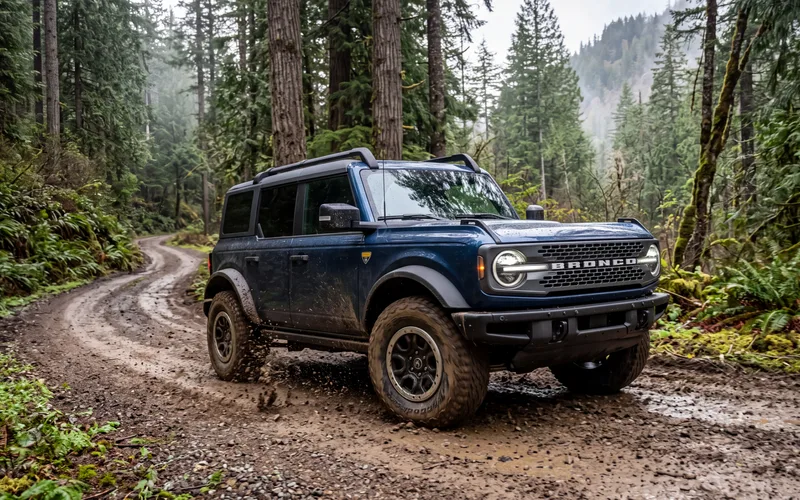 Ford BroncoOff-Road SUVBetter at: On-road manners
Nearly the same off-road brief with independent front suspension, better steering and a quieter cabin, so it survives the commute far better between trail weekends.
Compare 2.38C+
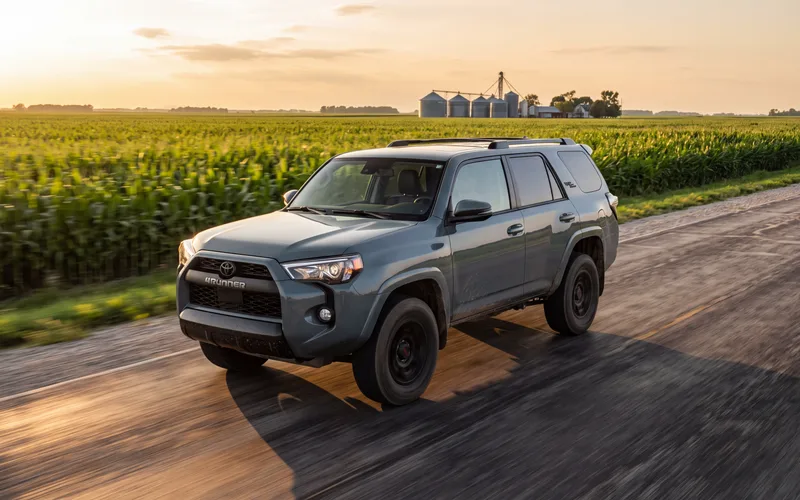 Toyota 4RunnerOff-Road SUVBetter at: Towing & reliability
Tows 6,000 lb, offers a third row, includes its full safety suite as standard, and carries a reliability reputation the Wrangler can't claim.
Compare 2.43C+
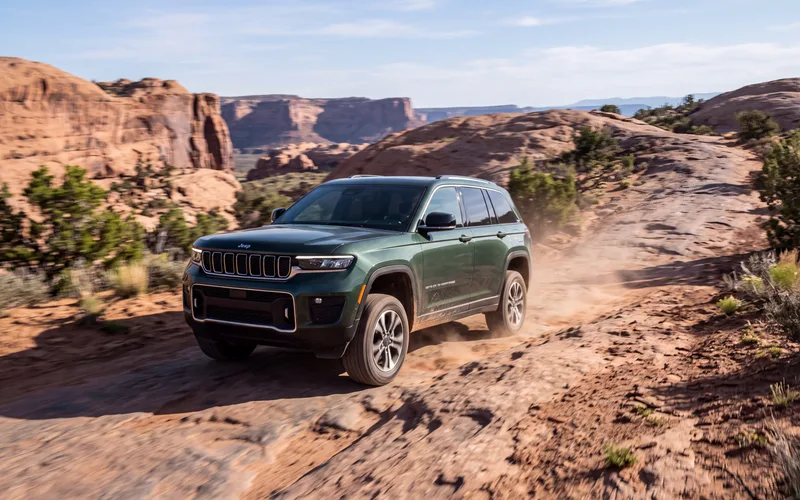 Jeep Grand CherokeeMid-Size SUVBetter at: Comfort & towing
The Jeep to buy when the trail hardware isn't essential — double the tow rating, real ride comfort and a modern driver-assist suite.
CompareHow it's evolved
10 scored model years · 2017–2026
Subject scores by year
Hover or tap a score to see what moved it versus the year before. A corner mark flags a big swing.
| Year | Performance | Efficiency | Safety | Space | Cost | Reliability | Tech | Use-case | Driving | Value |
|---|---|---|---|---|---|---|---|---|---|---|
| 2026 | 53 | 37 | 55 | 47 | 59 | 62 | 68 | 55 | 54 | 65 |
| 2025 | 58 | 35 | 42 | 44 | 62 | 46 | 64 | 55 | 49 | 68 |
| 2024 | 58 | 35 | 46 | 45 | 60 | 52 | 63 | 55 | 52 | 67 |
| 2023 | 54 | 35 | 41 | 43 | 60 | 53 | 44 | 52 | 51 | 60 |
| 2022 | 52 | 41 | 41 | 43 | 69 | 52 | 45 | 53 | 51 | 64 |
| 2021 | 53 | 41 | 41 | 41 | 52 | 45 | 40 | 46 | 46 | 65 |
| 2020 | 54 | 35 | 40 | 42 | 65 | 56 | 32 | 48 | 48 | 71 |
| 2019 | 49 | 36 | 44 | 44 | 66 | 45 | 34 | 47 | 45 | 72 |
| 2018 | 55 | 38 | 38 | 42 | 66 | 52 | 34 | 51 | 48 | 74 |
| 2017 | 47 | 26 | 14 | 36 | 65 | 57 | 18 | 34 | 38 | 59 |
Compare two years
Best fit & conditions
Higher scores mean a better fit for that use case. Learn more about use-case fit →
Subject profile
Trims & configurations
6 trimsScores above reflect the volume trim. Per-trim specs and scores are rolling out — the full lineup:
Detailed scoring by subject
1Performance & PowertrainMid-pack among this car's ten categories.1.87C-
The 2024 volume gas configuration is the 3.6L Pentastar V6 at 285 hp, unchanged through the JL refresh; the 2.0L turbo (270 hp), 4xe PHEV (375 hp) and 6.4L V8 392 (470 hp) sit above and below it.
The naturally aspirated Pentastar's 260 lb-ft arrives high in the rev range (4,800 rpm), which is the weak point of the volume powertrain against turbo and electrified rivals.
No 2024-specific instrumented test of the V6 automatic 4-door exists; The Drive's 2024 first drive of a 4,604-lb four-door V6 reports a mid-seven-second run, bracketed by Car and Driver's 6.8 s on the lighter 2018 JLU Sahara and Edmunds' 7.6 s.
The Pentastar is smooth and lag-free but dated and output-limited for a 4,600-lb body-on-frame SUV — reviewers describe it as adequate rather than eager, needing revs to make progress, and it grows coarse near redline.
The 8-speed TorqueFlite automatic on the volume trim shifts smoothly and picks gears sensibly, though it downshifts often to compensate for the V6's high torque peak; the still-available 6-speed manual is notchy with long throws.
2024 is the change year for this item: the Rubicon's new Dana 44 HD full-float solid rear axle raised the manufacturer maximum from 3,500 to 5,000 lbs. The volume Sport S/Sahara 4-door still rates 3,500 lbs.
Four-wheel drive with a two-speed transfer case and low range is standard on every 2024 Wrangler — there is no 2WD variant — and four distinct systems are offered, topping out at Rock-Trac with a 4:1 low range and a 100:1 crawl ratio.
The benchmark for factory off-road hardware, and 2024 widened the lead: a factory-installed 8,000-lb Warn winch option, the Willys gaining a standard Tru-Lok rear locker and 33-inch tires, and Rubicon X adding steel bumpers, beadlock-capable wheels and 35-inch tires.
2024 is one of the broadest years in the nameplate's history: four distinct powertrains — 3.6L V6, 2.0L turbo I4, 4xe plug-in hybrid and 6.4L V8 — with a manual available on both gas four-cylinder and V6. The only subtraction is the 3.0L EcoDiesel, dropped after 2023.
2Efficiency & RangeThe Wrangler's lowest-graded category.0.32F
A boxy, solid-axle, permanently four-wheel-drive body-on-frame SUV pays for its capability here — 20 MPG combined lands near the bottom of the gas SUV field even against other off-roaders.
No hybrid assist, no cylinder deactivation and 4,600 lb of curb weight leave city economy poor, though the 8-speed automatic gains 2 MPG over the manual.
Highway economy is the Wrangler's worst relative showing — the aerodynamics of a removable-roof brick cap it at 23 MPG where most SUVs of this size clear 28.
The 4-door's large 21.5-gallon tank partly redeems the poor economy, giving a mid-pack total range despite being one of the thirstiest SUVs in the segment.
$3,100 a year is well above the gas SUV norm; running costs are the clearest recurring penalty for choosing a Wrangler, and the 5-cost spread across the lineup is unusually wide.
The volume V6 runs on regular 87-octane with no premium requirement, so the high fuel bill is purely a consumption problem, not a grade problem; only the 6.4L V8 392 asks for premium.
3SafetyOne of the Wrangler's weakest categories.1.08D
NHTSA has never published a combined overall star rating for the JL-generation Wrangler because it never ran the side-impact tests; the 4-door's only crash result is a 4-star frontal, alongside a 3-star rollover rating. The 2-door and 4xe carry rollover ratings only.
2024 is a real improvement year — standard first- and second-row side curtain airbags, rear-seat belt pretensioners and load limiters, and side-impact structural work earn Good in both the updated moderate overlap front and updated side tests — but the Wrangler still tipped onto its passenger side in the driver-side small overlap front test, holding that key result at Marginal and disqualifying it from any Top Safety Pick.
The volume Sport S/Sahara gets forward collision warning with active braking and full-speed adaptive cruise with stop as standard for 2024, but blind-spot and cross-path detection cost extra on every trim below High Altitude, and two of the five features this item measures — lane keeping and pedestrian AEB — cannot be bought at any price.
Radar-based full-speed forward collision warning with active braking is standard on Sport S and above, but IIHS has published no vehicle-to-vehicle front crash prevention rating for the 2024 Wrangler and rated it Poor for pedestrian front crash prevention because pedestrian detection is simply not offered — so there is no nighttime or pedestrian capability to grade.
Blind Spot Monitoring with Rear Cross Path detection is offered on every trim but is optional on the volume Sport S and Sahara, standard only from High Altitude up; it is alert-only with no braking or steering intervention and no safe-exit warning. The Wrangler's small door-mounted mirrors make it more necessary here than in most SUVs.
The 2024 gas Wrangler offers no lane departure warning, no lane keep assist and no lane centering on any trim or in any package — a gap almost unique in the segment, where rivals like the Bronco and 4Runner include at least a departure warning as standard.
Full-speed-range adaptive cruise with stop-and-go became standard on Sport S and above for 2024, which is capable hardware for the class, but reviewers fault it for braking too hard when a car cuts into the gap, and there is no highway assist or lane centering for it to integrate with.
No hands-free highway driving system is offered on any 2024 Wrangler trim. Stellantis's hands-on Active Driving Assist is not fitted to the Wrangler, and without any lane-centering hardware at all a hands-free system is not possible on this platform.
Every 2024 Wrangler headlight configuration IIHS tested rated Marginal or Poor. The best available — LED projectors with high-beam assist on High Altitude, Rubicon 392, or a Sahara/Rubicon with the Safety Group — is only Marginal; the volume Sport and Sport S on halogen reflectors, and even LED-equipped Sport/Sahara/Rubicon without high-beam assist, are Poor.
Forward and lateral sightlines are among the best of any SUV — a near-vertical windshield, tall commanding seating, a short narrow hood and generous side glass — but rearward vision is genuinely compromised by the sport bars and tailgate-mounted full-size spare, the door-mounted mirrors are small, and no surround-view camera is offered to compensate.
IIHS rates the 4-door Wrangler's LATCH hardware Good+ — its top grade — crediting easy-access anchors plus extra LATCH positions, and the boxy cabin gives tall rear-door openings. What holds it back is the narrow body, which makes three seats across a squeeze, and a high step-in height that makes lifting a child into a seat harder than in a crossover.
4Space & ComfortOne of the Wrangler's weakest categories.1.03D
The volume 4-door body seats five and there is no third-row or six-seat configuration in any 2024 Wrangler trim; the 2-door drops to four.
Jeep publishes front headroom separately by roof: 40.8 in under a hardtop and 42.6 in under the soft top. The hardtop figure is used as the representative configuration since it is the more commonly ordered and stocked roof, and it is the conservative reading.
41.2 in is modest for a mid-size SUV and is the same on 2-door and 4-door — the JL's front footwell is constrained by the transmission tunnel and front wheel housings rather than by overall length.
The upright boxy body is at its best here — 40.3 in of second-row headroom under a hardtop tops the SUV normalization band outright, and the soft top adds another 1.4 in.
The 4-door's 38.3 in is genuinely competitive for the class and better than the direct rival Bronco 4-door — the extra wheelbase over the 2-door goes almost entirely into the rear seat.
No 2024 Wrangler offers a third row in any body, trim or powertrain — the seating chart is 2/3 for the 4-door and 2/2 for the 2-door, so a buyer needing more than five seats cannot be served at any price.
31.7 cu ft is well down the SUV band — the swing-gate hold is tall but narrow (41.1 in minimum width at the opening) and the full-size spare hangs on the outside of the gate rather than eating into it.
Folding the 4-door's rear bench opens 72.4 cu ft — mid-pack for a mid-size SUV — and the removable roof panels let taller loads exceed what the number implies.
Conventional storage is thin — reviewers single out a small glovebox and just two front cupholders — but the Wrangler answers with genuinely clever provisions no crossover has: a washout interior with floor drain plugs, water-resistant Addax cloth trim, new-for-2024 dashboard cubbies and AMPS accessory-mount brackets on top of the instrument panel, and a deep dual-level center armrest bin.
2024 is a real step forward — 12-way power front seats with multiway lumbar and cushion-tilt adjustment arrive on the Wrangler for the first time (standard High Altitude/Rubicon X/392, available on Sahara and Rubicon) and testers find the cloth seats comfortable with ample legroom — but the rear bench stays upright and flat, and 8.1 in of front seat travel with limited wheel adjustment leaves tall drivers short on headroom.
Solid axles front and rear on coil springs are the price of the off-road hardware: reviewers consistently report a stiff, jittery ride with constant short vertical motions even on smooth pavement. The 4-door's longer wheelbase helps, and shock tuning is decent for the architecture, but this trails almost every independently sprung SUV in the segment.
The loudest cabin in the segment and one of the loudest on sale: a removable roof and doors, near-vertical windshield and boxy body make wind and road noise unavoidable. Critically for the volume trim, the premium cabin package that fixes some of it — acoustic front glass, thicker carpet and sound-deadening foam in the windshield header, cowl and B-pillars, worth up to 5 dB by Jeep's own claim — is standard only on High Altitude, Rubicon X and Rubicon 392, not on Sport S or Sahara.
2024 made heated front seats and a heated steering wheel standard on Sahara and above, and the Convenience Group bundles them with automatic temperature control and remote start on lower trims — but ventilated seats are not offered at any price, there are no second-row climate controls, and there is no rear-seat comfort content beyond vents.
5Cost of OwnershipOne of the Wrangler's strongest categories.2.03C
The cheapest way into a 2024 Wrangler is the 2-door Sport, and both the base price and the destination charge crept up ~$100 during the model year. Jeep's launch announcement quoted $31,895 + $1,795 destination; a February 2024 Monroney shows the destination charge at $1,895 and Cars.com lists the 2-door floor at $31,995.
The volume Wrangler is the 4-door Sport S with the 3.6L V6 and the 8-speed automatic — the configuration this nameplate's other 2024 category scorecards describe — and the automatic alone is a $4,500 option on the V6, which is a large share of why a mainstream Wrangler prices like a premium SUV. Every line in this build comes off a real 2024 Monroney.
Estimates split by basis: CarEdge's owner-cost model says $3,505 across five years while Edmunds' dealer-retail True Cost to Own for the 2024 Wrangler 4xe totals $5,974, so the midpoint is the honest figure for the gas 4-door. RepairPal's $694/yr — a third above the compact-SUV average — argues against the low end, and notes that Wrangler repairs are infrequent but unusually severe when they land.
Resale is the Wrangler's single strongest ownership argument — iSeeCars measures 32.0% five-year depreciation against 46.3% for its class, and CarEdge is more optimistic still at 29%. I've marked it down from those published figures because 2024 cars specifically were sold into a Stellantis inventory glut at 10–15% off sticker, and retention here is measured against MSRP rather than what buyers actually paid.
$46,490 volume-trim price minus its estimated resale value after 5 years (64% retained, or about $29,754) leaves about $16,736 in depreciation. Add the projected $5,000 in 5-year maintenance and repairs, and owning this vehicle for 5 years costs about $21,736 in total.
Stellantis' standard Basic Limited Warranty applies to every 2024 Wrangler trim and sits at the floor of the segment band — Hyundai and Kia offer 5 years, and the Bronco matches Jeep at 3.
The 5-year/60,000-mile powertrain term covers engine, transmission and axles on all 2024 Wrangler trims and is the bottom of the segment band, half the 10-year term Hyundai and Kia advertise.
Jeep Wave is standard with automatic enrollment on the 2024 Wrangler and bundles more than bare roadside — 24/7 assistance, trip-interruption reimbursement and a no-charge same-day loaner during routine service — but the included maintenance is only the first two oil changes and tire rotations inside 24 months, down from the three-in-36-months that 2021–2023 Jeeps received and short of the two full years of scheduled service Toyota and Hyundai include.
6Reliability & QualityGrades below the middle of the scale.1.47D
Consumer Reports states flatly that the 2024 Wrangler is less reliable than other cars from the same model year, and the NHTSA complaint record backs it at scale: 680 complaints against MY2024, versus 342 for MY2023 and 383 for MY2022 — the volume roughly doubled in the first year of the JL mid-cycle refresh. Excluding every complaint that mentions the 4xe/hybrid/charging (which is not the scored configuration) still leaves 408, more than any recent Wrangler year and well above the 240 filed against the far higher-volume 2024 Grand Cherokee. The fault pattern is the electronics and driveability one CR describes — engine (238), electrical (214), powertrain (98) — with 72 complaints citing the new 12.3-inch screen/Uconnect and 21 citing power steering. First model year of a refresh, on a nameplate that was already bottom-quartile, is the wrong combination.
Jeep sits in the bottom tier of both major dependability studies and has for several consecutive years, which is a structural drag on any Jeep nameplate rather than a single-model-year artifact. Consumer Reports places the brand dead last on its most recent report card and says it cannot recommend a single Jeep model — a judgment that includes this car.
NHTSA lists 11 campaigns against the MY2024 Wrangler, of which nine reach the scored gas car (24V111 hybrid-control-processor defroster and 25V741 high-voltage battery fire are 4xe-only). Three are 2024-only assembly or build errors rather than software resets — 24V414 (power distribution center prevents trailer turn signals and taillights operating), 24V585 (incorrect taillights obstructed by the spare tire), and 24V871 (incorrect dash wiring harness installed, inoperative trailer lighting) — which is an unusual concentration of wrong-part/wrong-build campaigns for one model year. Two more are genuine fire or visibility hazards: 24V652 (instrument-panel cluster internal short, 2018-2024 Wrangler and 2020-2024 Gladiator) and 26V363 (electric hydraulic power-steering pump wiring may overheat, 2021-2025), the latter corroborated by 21 power-steering complaints in the MY2024 record. The JL generation also carries the long-running steering-damper 'death wobble' service history, still cited by 10 MY2024 complainants. Recall load is comparable to MY2023 (14) but far above MY2025 (4).
The scored configuration is the standard 3.6L Pentastar V6 (285 hp / 260 lb-ft) with the eight-speed automatic, and it is the strongest element of this car's reliability case: the Pentastar has been in production since 2011 across the Stellantis range with a documented high-mileage record, the ZF-licensed 8HP eight-speed is one of the most durable modern automatics, and solid axles with a mechanically simple part-time 4WD system present far less failure surface than a complex crossover driveline. Known Pentastar weak points — oil filter housing leaks, rocker-arm/roller-follower wear, cooling-system attrition — keep it out of the top band, and 45 non-hybrid MY2024 complaints describe stalling. Notably, the NHTSA loss-of-motive-power investigation opened in July 2024 over roughly 94,000 Wranglers targets the 2021-2024 4xe, not this gas powertrain.
2024 is the year the JL cabin was substantially reworked, and it is a real step up rather than a trim shuffle: a 12.3-inch Uconnect 5 touchscreen became standard across the range (the largest ever fitted to a Wrangler), 12-way power front seats became available, and higher trims gained acoustic glass, extra windshield-surround foam and thicker carpet. Reviewers describe the result as sturdy with more sophistication than before while still reading as deliberately washout-friendly — hard plastics remain across the lower dash and doors, which is defensible for the mission but modest against the Premium price class this car is graded in.
This is the weakest part of the build-quality picture and, as with the 2024 Grand Cherokee, there is recall evidence rather than only review anecdote: three MY2024-only campaigns are line escapes — the wrong taillights fitted (24V585), the wrong dash wiring harness installed (24V871), and a power distribution center that disables trailer lighting (24V414). On top of that the removable-door and removable-top architecture produces the wind noise and tire roar reviewers still call out as the Wrangler's defining on-road flaw despite the 2024 insulation work, and CR owners report water leaks from the removable roof sections. Body-on-frame assembly with a demountable body simply does not seal or settle like a unibody rival, and the first year of a refresh is where those errors concentrate.
Coverage is a genuine strength — roughly 2,500 US Jeep rooftops give metro and rural reach few rivals match, which matters for a vehicle sold heavily outside major markets and one that, on this complaint record, will visit the service drive more than the segment average. Service satisfaction is the offset: J.D. Power puts Jeep below the mass-market SUV/minivan average, so the network is easy to reach but not well regarded once you are in it.
The Wrangler has arguably the deepest parts ecosystem of any vehicle sold in the US, spanning OEM replacement, a vast off-road aftermarket, and a design that rewards owner servicing — bolt-on body panels, solid axles and accessible mechanicals keep labor hours and specialist dependency low. Measured repair cost lands at ordinary levels despite the fault frequency, and unscheduled shop visits run at the compact-SUV norm rather than above it. The deduction is that the 2024 car's dominant fault mode is electronic (cluster, camera, Uconnect, steering pump), and module work is dealer-priced no matter how good the aftermarket is at suspension parts.
7Technology & InfotainmentOne of the Wrangler's strongest categories.2.23C
2024 is the change year for this item: the 12.3-inch Uconnect 5 display replaced the previous 7.0/8.4-inch screens and became standard equipment across the entire lineup, including the base Sport and the 4xe, with no optional larger unit above it.
Uconnect 5 on the Android platform is among the best systems in the segment: Jeep claims five times the operating speed of the previous generation, testers praise the speed, logic and near-total absence of glare, and physical climate and 4WD controls are retained below the screen. The only recurring criticism is small type and low-contrast colors.
Wireless Apple CarPlay and wireless Android Auto are both standard on every 2024 trim with no package required, wired connection also works, and the system pairs two phones at once — top-band content, and a clear 2024 upgrade over the wired-only earlier JL.
Voice is a strength — improved hands-free recognition using microphone-array hardware is standard on all models, and Alexa is built in with natural-language capability — but embedded TomTom navigation is not available at all on Sport or Sport S, so a buyer of the volume trim relies on phone projection for maps.
The nine-speaker Alpine premium system (standard on Rubicon X, optional below) is competent but not a class benchmark, and the base setup — small dash speakers plus an overhead soundbar — is widely judged weak. An open-air body with a removable roof is acoustically hostile no matter what is fitted, and owners report the 2024 head unit is harder to upgrade than earlier JLs.
No full-digital cluster exists on any 2024 Wrangler at any price — analog gauges flank a TFT window that is only 3.5 in and monochrome on the base Sport, stepping up to a 7.0-inch color display on Sahara and Rubicon or via the Convenience Group on Sport S and Willys. The volume trim therefore gets the 7-inch partial-digital layout, which is mid-band content.
Uconnect 5 is built on Android specifically to support over-the-air delivery of new content, features and services, and map updates install at the push of a button — real capability that earlier Wranglers lacked. But the documented scope is infotainment and maps rather than whole-vehicle software that changes how the vehicle drives.
The Uconnect app with SiriusXM Guardian covers the core set — remote start where the hardware is fitted, remote lock/unlock, vehicle locate and send-to-nav, plus Alexa Home-to-Car and a 4G LTE hotspot for eight devices — but it is subscription-gated past the trial, there is no digital key or phone-as-key, and remote start itself requires the Convenience Group on the volume trim.
Port provision is generous — standard dual front USB-C rated for four-times-faster charging, up to seven USB-A and USB-C outlets across both rows, 12-volt sockets throughout and an available 115-volt AC household outlet. The gap is a factory wireless charging pad, which the 2024 gas Wrangler does not offer, and the four-outlet 120-volt Power Box is exclusive to 4xe models.
Remote keyless entry is standard, but proximity passive entry, push-button start and remote start all arrive together in the Convenience Group rather than as standard fitment on the volume trim, there is no phone-as-key, and the swing gate with flip-up glass is entirely manual — no power or hands-free liftgate exists on the model.
A rear camera with dynamic grid lines is standard on every trim, but no 360-degree surround-view system is offered at any price — a notable gap against the Bronco, and a costly one given that the sport bars and tailgate-mounted full-size spare are what block the view. ParkSense rear sensors are optional on the volume trim, the integrated front off-road camera is reserved for High Altitude and Rubicon X/392, and there is no automated parking.
No head-up display is offered on any 2024 Wrangler trim or in any option package — unsurprising for a vehicle whose windshield folds down and is offered with Gorilla Glass, but a total absence of the feature this item measures.
8Use-Case FitMid-pack among this car's ten categories.1.72C-
The hardware is genuinely good — IIHS rates the 4-door's LATCH the top Good+ grade with extra anchor positions, and 38.3 in of rear legroom beats the direct rival Bronco — but the logistics are not: a high step-in with no standard running boards, small doors, a narrow body that makes three across a squeeze, a fixed bench that neither slides nor reclines, and only 31.7 cu ft behind it for a stroller.
2024 added standard first- and second-row side curtain airbags, rear belt pretensioners and standard forward collision warning on Sport S and above — real progress — but the family-relevant gaps remain severe: the 4-door still tipped onto its side in the IIHS small overlap test (Marginal, no Top Safety Pick), headlights on the volume trims rate Poor, there is no lane departure warning or lane keeping at any price, pedestrian AEB is not offered, blind-spot monitoring costs extra on Sport S and Sahara, and there is no rear-occupant alert.
The second row has class-leading headroom and workable legroom with rear USB ports, but a long day in it means the segment's loudest cabin and a jittery solid-axle ride, and there are no second-row climate controls, no rear entertainment and no rear-seat amenities beyond vents. Luggage space with all five seats occupied is a modest 31.7 cu ft.
The 8-speed automatic and the lag-free Pentastar make low-speed progress easy, and full-speed adaptive cruise with stop became standard on Sport S for 2024, but everything else about daily use is effortful: a stiff jittery ride, the loudest cabin in the class, a high awkward step-in, adaptive cruise that brakes abruptly, and no lane centering to take any load off in traffic.
20 MPG combined and roughly $3,100 a year in fuel put per-mile running costs near the bottom of the SUV field, and consumables are heavy — chunky 32-to-33-inch all-terrain tires and a 21.5-gallon fill. The saving graces are that it takes regular unleaded and that five-year maintenance lands mid-pack rather than premium.
Better in town than its image suggests: the body is narrow, the hood is short and the near-vertical windshield with tall seating gives outstanding forward and lateral sightlines, and the 38.8-ft turning circle makes U-turns easy. What costs it is the rear — sport bars and the tailgate-mounted full-size spare block the view, ParkSense sensors are optional on the volume trim, and no surround-view camera is offered.
Light-to-moderate work duty only. The volume 4-door tows 3,500 lbs, and 2024's new Dana 44 HD full-float rear axle lifts the Rubicon automatic to 5,000 lbs — genuinely useful, and the best a Wrangler has ever managed — but there is no bed, cargo behind the second row is 31.7 cu ft, and the naturally aspirated V6's 260 lb-ft peaking at 4,800 rpm is short of torque for pulling.
The hardware is built to be abused — body-on-frame, solid Dana axles front and rear with a new full-float rear on Rubicon, four skid plates, tubular steel rock rails, a long-proven Pentastar V6, and water-resistant interior trim. What holds the score back is the ownership record rather than the engineering: the Wrangler has a below-average reliability history and the 2024 model has drawn a heavy volume of electrical and steering complaints.
Unusually strong for an SUV. The interior is designed to be hosed out — floor drain plugs and water-resistant Addax cloth — and 2024 adds AMPS accessory-mount brackets on the dash to the existing auxiliary switch bank, trailer tow and heavy-duty electrical group, an available 115-volt outlet, and arguably the largest factory-and-aftermarket upfit ecosystem of any vehicle sold. The limits are structural: no bed, no onboard generator on the gas model, and modest enclosed cargo space.
A poor mile-eater by segment standards. Roughly 430 miles of range from the 21.5-gallon tank is adequate, and adaptive cruise with stop is standard on Sport S, but the noisiest cabin in the class, a jittery ride and the complete absence of lane centering make hours behind the wheel tiring rather than restful.
The segment benchmark, and 2024 widened the lead: 12.9 in of ground clearance, 47.4/27.8/40.4-degree angles, 34 in of water fording, four 4WD systems all with low range, Tru-Lok lockers and an electronic sway-bar disconnect, a new factory 8,000-lb Warn winch, 35-inch tires on Rubicon X — plus removable doors, roof and a folding windshield, and Trails Offroad guides for 62 Badge of Honor trails built into the infotainment.
Flexible in ways a number cannot capture: 72.4 cu ft with the bench folded, a hosed-out floor, and removable roof panels or a full soft top that let loads stand taller than any fixed-roof SUV allows, plus a deep accessory catalog of racks, hitches and cargo trays. The constraints are a 31.7 cu ft hold with the seats up, a narrow 41.1 in minimum liftgate opening, and a side-hinged gate that needs clearance to swing.
9Driving ExperienceGrades below the middle of the scale.1.49D
Solid axles front and rear on a five-link coil setup are the price of the off-road hardware, and on pavement they cost dearly: reviewers report improvement over the early JL — quicker steering, less body roll — but the Wrangler still lacks the reflexes of any independently sprung SUV, and tall gearing, a high center of gravity and all-terrain tires cap cornering grip well short of the class.
Reviewers split sharply. The Drive found the electro-mechanical rack a real achievement for a solid front axle — free of the usual wander and relaying decent road information even on 33-inch tires — while Consumer Reports and Edmunds call it vague, light and disconnected on-road. Averaging the two puts it in the precise-enough-but-numb band, with the 14.9:1 ratio at least making it quick.
Four-wheel discs are standard on every trim and there is no fade complaint, but stopping distances are long for an SUV — a Rubicon needed 150 ft from 60 mph in an instrumented panic stop, well past the 120–130 ft most SUVs manage — a consequence of 4,300-to-4,600 lb curb weights on knobby all-terrain rubber, and testers also flag a two-stage pedal that takes acclimatization.
The naturally aspirated Pentastar is smooth and completely lag-free, and the 8-speed TorqueFlite shifts unobtrusively and picks sensible gears — a cleaner calibration than most turbo or hybrid rivals manage. What limits it is that 260 lb-ft peaking at 4,800 rpm in a 4,600-lb body means frequent downshifts, and the standard engine stop-start restart is not seamless.
The Pentastar is inoffensive at cruise but has to be revved to make progress and grows coarse toward redline, and the solid-axle driveline plus 32-to-33-inch all-terrain tires contribute a constant hum that the removable-panel body does little to keep out — the volume Sport S and Sahara do not get the acoustic package that would help.
38.8 ft is mid-pack for a mid-size SUV and better than the direct rival Bronco 4-door; the 2-door's 32.7 ft is genuinely tight. The quick 14.9:1 steering ratio makes the most of it.
The commanding upright position over a short narrow hood, near-vertical windshield and retained physical controls for climate and 4WD are ergonomic strengths, and 2024 finally offers 12-way power front seats with lumbar and cushion-tilt adjustment. Against that: 8.1 in of seat travel and 41.2 in of legroom leave tall drivers short — a 6'3" tester reported 'just enough headroom' — and the high step-in through small doors is awkward without running boards.
This is the Wrangler's whole argument, and it wins on character rather than pace: the doors, roof panels and windshield all come off, giving an open-air experience nothing else in the segment offers, and enthusiasts recommend it without reservation. It is held below the top band only because the fun is atmospheric rather than dynamic — it is slow, loud and clumsy in corners.
10Value & Market PositionThe Wrangler's best-graded category.2.50C+
The 2024 refresh made the Wrangler meaningfully better equipped than it had ever been — a 12.3-inch Uconnect 5 touchscreen with wireless CarPlay/Android Auto is standard on every trim, and first- and second-row side-curtain airbags finally became standard — but the base Sport still ships with manual windows, manual door locks, cloth low-back buckets and steel wheels, and the things buyers actually want are expensive add-ons rather than included content.
Content-for-price is the Wrangler's weakest commercial argument: a 4-door Sport S with the automatic and the common option groups stickers at $52,240 while still riding on cloth seats and 17-inch steel-styled wheels, and the 8-speed automatic alone is a $4,500 option on the V6. What you are buying per dollar is hardware capability — solid axles, disconnecting sway bar, 100:1 crawl ratio on Rubicon, removable doors and roof — plus class-leading resale, not equipment.
Almost nothing in any segment offers this much configurability: two body styles, nine trims, four powertrains, manual or automatic, and a roof choice that runs from a soft top through a three-piece hardtop to the power Sky One-Touch. The ladder is well spaced too, running from a $33,890 2-door Sport to a $91,545 Rubicon 392 with real steps in between.
The Wrangler sold 151,163 units in the US in 2024 — down only 3% while the Jeep brand as a whole fell 9% — and remains America's best-selling body-on-frame SUV by a wide margin over the Ford Bronco. It is not growing, and Q2 was down 17% before incentives steadied it, which is what keeps this out of the top band.
The Wrangler nameplate itself is one of the most desirable in the industry — a direct lineage to the WWII Jeep, an owner culture with its own etiquette, and the resale figures that go with genuine want. The score is held below the top band because the parent brand's standing deteriorated through 2024: six consecutive years of US sales decline, public dealer revolt over pricing, and reliability rankings near the bottom of Consumer Reports.
Scored as buyer benefit, 2024 was an unusually good year to negotiate a Wrangler: units sat 60+ days on lots and typical transactions landed roughly 10–15% under sticker, with some deals reaching $10,000 off. The factory cash was aimed mostly at the 4xe rather than the gas V6 this scorecard describes, so the discount came from dealer and inventory pressure rather than a headline rebate — real money, but you have to negotiate for it.
2024 is the JL's mid-cycle refresh year and a substantial one — new grille, all-new dashboard with the 12.3-inch Uconnect 5, standard side-curtain airbags, a Dana 44 HD full-float rear axle, new front seat frames and a stealth windshield antenna. But the underlying generation dates to 2018 and the architecture is deliberately old-school, so this is a freshened mid-cycle car rather than a new one.
The refreshed 2024 Wrangler took a genuinely significant award — Cars.com Best SUV of 2024 — and reviewers agreed the update fixed the interior and tech complaints. Reviews stay split rather than laudatory, though: expert scores sit in the high-7s, on-road manners (vague steering, highway wander, wind noise) draw consistent criticism, and Consumer Reports marks it down hard on fuel economy, comfort and reliability, which keeps it out of the class-winner band.