
The verdict
A struggling off-road suv, strong on technology and held back by efficiency.
The 2026 Wrangler is the most capable off-road SUV you can buy off a showroom floor, and it asks you to pay for that every single day you don't use it. Standard 4WD with a two-speed transfer case on every trim, 10.8 inches of ground clearance and locking Dana 44 axles on the Rubicon are hardware nothing else matches at any price — but the trade is 20 MPG combined, roughly $2,900 a year in gas, a solid-axle ride and a cabin loud enough that Consumer Reports calls it out by name. Buy it if the open-air roof, the removable doors and the trail hardware are the point; the segment-best ~65% five-year resale means the Jeep tax is cheaper to exit than most rivals. If it would mostly commute and haul kids, almost any unibody SUV at this $44,890 volume-trim price does that job better.
Jump to scoresStrengths
- Off-road hardware no rival matches
- Holds its value better than almost anything in the class
- Airy cabin and a view out that nothing boxy-shaped beats
What holds it back
- Fuel economy near the bottom of the entire SUV field
- The worst on-road manners in the class
- Crash results and driver aids both trail the segment
Top alternatives
Cars shoppers cross-shop with the Jeep Wrangler 1.95C-
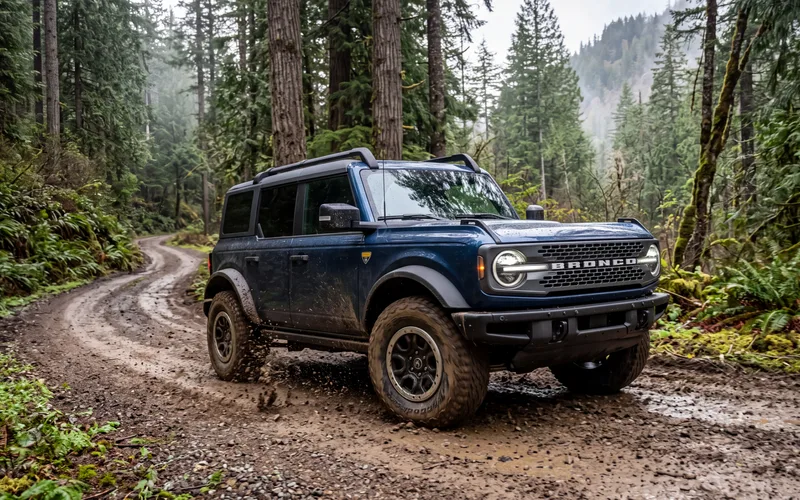 Ford BroncoOff-Road SUVBetter at: On-road manners
Nearly the same off-road brief with independent front suspension, better steering and a quieter cabin, so it survives the commute far better between trail weekends.
Compare 2.38C+
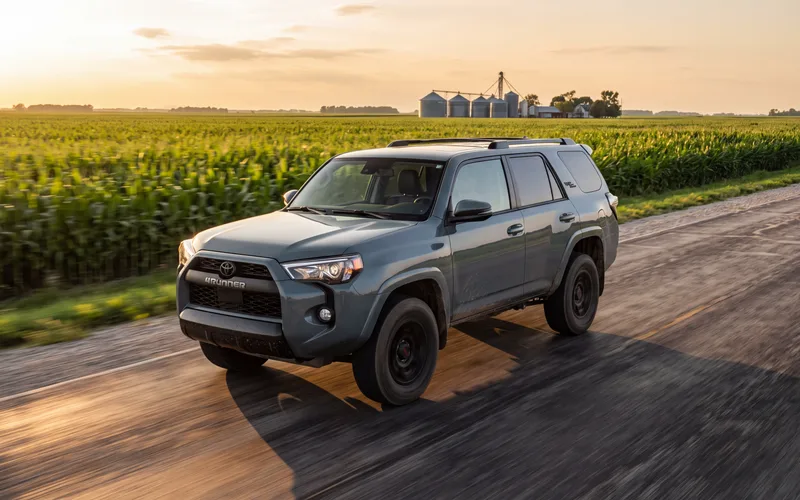 Toyota 4RunnerOff-Road SUVBetter at: Towing & reliability
Tows 6,000 lb, offers a third row, includes its full safety suite as standard, and carries a reliability reputation the Wrangler can't claim.
Compare 2.43C+
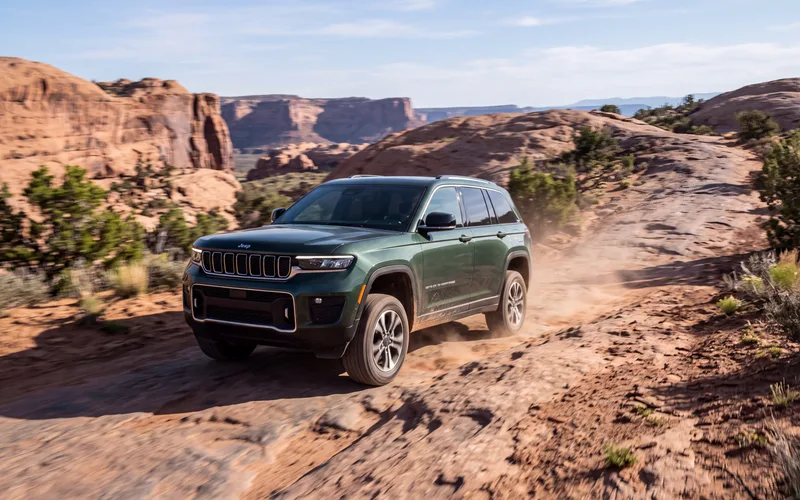 Jeep Grand CherokeeMid-Size SUVBetter at: Comfort & towing
The Jeep to buy when the trail hardware isn't essential — double the tow rating, real ride comfort and a modern driver-assist suite.
CompareHow it's evolved
10 scored model years · 2017–2026
Subject scores by year
Hover or tap a score to see what moved it versus the year before. A corner mark flags a big swing.
| Year | Performance | Efficiency | Safety | Space | Cost | Reliability | Tech | Use-case | Driving | Value |
|---|---|---|---|---|---|---|---|---|---|---|
| 2026 | 53 | 37 | 55 | 47 | 59 | 62 | 68 | 55 | 54 | 65 |
| 2025 | 58 | 35 | 42 | 44 | 62 | 46 | 64 | 55 | 49 | 68 |
| 2024 | 58 | 35 | 46 | 45 | 60 | 52 | 63 | 55 | 52 | 67 |
| 2023 | 54 | 35 | 41 | 43 | 60 | 53 | 44 | 52 | 51 | 60 |
| 2022 | 52 | 41 | 41 | 43 | 69 | 52 | 45 | 53 | 51 | 64 |
| 2021 | 53 | 41 | 41 | 41 | 52 | 45 | 40 | 46 | 46 | 65 |
| 2020 | 54 | 35 | 40 | 42 | 65 | 56 | 32 | 48 | 48 | 71 |
| 2019 | 49 | 36 | 44 | 44 | 66 | 45 | 34 | 47 | 45 | 72 |
| 2018 | 55 | 38 | 38 | 42 | 66 | 52 | 34 | 51 | 48 | 74 |
| 2017 | 47 | 26 | 14 | 36 | 65 | 57 | 18 | 34 | 38 | 59 |
Compare two years
Best fit & conditions
Higher scores mean a better fit for that use case. Learn more about use-case fit →
Subject profile
Trims & configurations
6 trimsScores above reflect the volume trim. Per-trim specs and scores are rolling out — the full lineup:
Academic Probation · NHTSA safety recalls
Aug 13, 2026Back over prevention: sensing system: cameraThe rearview camera image may fail to display when the vehicle is placed in reverse. As such, these vehicles fail to comply with the requirements of Federal Motor Vehicle Safety Standard (FMVSS) number 111, "Rear Visibility."
Defect
Chrysler (FCA US, LLC) is recalling certain 2026 Jeep Wrangler, Jeep Gladiator, Jeep Compass, Jeep Cherokee, Jeep Grand Cherokee, Jeep Grand Cherokee L, Jeep Grand Wagoneer, Jeep Grand Wagoneer L, Ram Promaster, Ram Promaster EV, Ram 1500, Ram 2500, Chrysler Pacifica Plug-In Hybrid, Chrysler Voyager, and 2026-2027 Chrysler Pacifica and Dodge Charger vehicles. The rearview camera image may fail to display when the vehicle is placed in reverse. As such, these vehicles fail to comply with the requirements of Federal Motor Vehicle Safety Standard (FMVSS) number 111, "Rear Visibility."
Risk
A rearview camera image that fails to display reduces the driver's view behind the vehicle, increasing the risk of a crash.
Remedy
Radio software will be updated by a dealer or through an over-the-air (OTA) update, free of charge. Owner notification letters were mailed beginning September 2, 2026. Owners may contact Chrysler customer service at 800-853-1403. Chrysler's number for this recall is 78D. Vehicle Identification Numbers (VINs) involved in this recall will be searchable on NHTSA.gov on August 20, 2026.
NHTSA campaign 26V531000 ↗Manufacturer no. 78D844,027 vehicles potentially affected (all models in the campaign)Owners notified Sep 2, 2026Filed by Chrysler (FCA US, LLC)Filed as WRANGLERJul 16, 2026WheelsThe walls for the steel wheels may be too thin, allowing them to crack or detach, which can result in a loss of vehicle control.
Defect
Chrysler (FCA US, LLC) is recalling certain 2026 Jeep Gladiator and Jeep Wrangler vehicles. The walls for the steel wheels may be too thin, allowing them to crack or detach, which can result in a loss of vehicle control.
Risk
Loss of vehicle control increases the risk of a crash.
Remedy
Dealers will inspect and replace the steel wheels and valve stems, as necessary, free of charge. Owner notification letters are expected to be mailed September 4, 2026. Owners may contact FCA customer service at 1-800-853-1403. FCA's number for this recall is 05D. Vehicle Identification Numbers (VINs) involved in this recall will become searchable on NHTSA.gov beginning July 23, 2026.
NHTSA campaign 26V456000 ↗Manufacturer no. 05D641 vehicles potentially affected (all models in the campaign)Owners notified Jul 30, 2026Filed by Chrysler (FCA US, LLC)Filed as WRANGLERApr 9, 2026Child seat: vehicle tether anchorThe child seat tether welds on the second-row, right-side seat frame may be insufficient, which can reduce the seat's ability to properly restrain a child during a crash. As such, these vehicles fail to comply with the requirements of Federal Motor Vehicle Safety Standard number 225, "Child Restraint Anchorage Systems."
Defect
Chrysler (FCA US, LLC) is recalling certain 2026 Jeep Wrangler vehicles. The child seat tether welds on the second-row, right-side seat frame may be insufficient, which can reduce the seat's ability to properly restrain a child during a crash. As such, these vehicles fail to comply with the requirements of Federal Motor Vehicle Safety Standard number 225, "Child Restraint Anchorage Systems."
Risk
A child that is not properly restrained during a crash can have an increased risk of injury.
Remedy
Dealers will replace the second-row, right-side seat frame, free of charge. Owner notification letters were mailed May 29, 2026. Owners may contact FCA customer service at 1-800-853-1403. FCA's number for this recall is 27D. Vehicle Identification Numbers (VINs) involved in this recall will become searchable on NHTSA.gov beginning April 16, 2026.
NHTSA campaign 26V224000 ↗Manufacturer no. 27D32 vehicles potentially affected (all models in the campaign)Owners notified May 29, 2026Filed by Chrysler (FCA US, LLC)Filed as WRANGLER
44 recalls on other model years of the Wrangler (2017–2025)
Jun 4, 2026Steering: hydraulic power assist: pumpThe electric hydraulic power steering pump wiring may overheat and cause a vehicle fire, even when the vehicle is parked with the ignition in the "Off" position.
Defect
Chrysler (FCA US, LLC) is recalling certain 2021-2025 Jeep Wrangler, Wrangler 4XE, and Jeep Gladiator vehicles. The electric hydraulic power steering pump wiring may overheat and cause a vehicle fire, even when the vehicle is parked with the ignition in the "Off" position.
Risk
A vehicle fire increases the risk of injury.
Remedy
Owners are advised to park outside and away from structures, until their vehicle is repaired. Dealers will inspect and replace the wiring and electric hydraulic power steering pump, as necessary, free of charge. Owner notification letters are expected to be mailed July 9, 2026. Owners may contact FCA US LLC customer service at 1-800-853-1403. FCA US LLC's number for this recall is 21D. The Vehicle Identification Numbers (VINs) involved in this recall will become searchable on NHTSA.gov on June 11, 2026.
NHTSA campaign 26V363000 ↗Manufacturer no. 21D1,076,999 vehicles potentially affected (all models in the campaign)Owners notified Jul 9, 2026Filed by Chrysler (FCA US, LLC)Filed as WRANGLERMay 21, 2026Back over prevention: sensing system: cameraContamination in the central vision processing module or improper programming may cause the rearview camera image not to display. As such, these vehicles fail to comply with the requirements of Federal Motor Vehicle Safety Standard (FMVSS) number 111, "Rear Visibility."
Defect
Chrysler (FCA US, LLC) is recalling certain 2019 and 2023 Chrysler Pacifica, 2024 Ram 1500, Ram 2500, and 2024-2025 Jeep Wrangler vehicles. Contamination in the central vision processing module or improper programming may cause the rearview camera image not to display. As such, these vehicles fail to comply with the requirements of Federal Motor Vehicle Safety Standard (FMVSS) number 111, "Rear Visibility."
Risk
A rearview image that does not display reduces the driver's view behind the vehicle, increasing the risk of a crash.
Remedy
Dealers will update the central vision processing module software or replace the module, as necessary, free of charge. Owner notification letters are expected to be mailed beginning July 16, 2026. Owners may contact Chrysler customer service at 800-853-1403. Chrysler's number for this recall is 46D. Vehicle Identification Numbers (VINs) involved in this recall will be searchable on NHTSA.gov on May 28, 2026.
NHTSA campaign 26V327000 ↗Manufacturer no. 46D16 vehicles potentially affected (all models in the campaign)Owners notified Jul 16, 2026Filed by Chrysler (FCA US, LLC)Filed as WRANGLEROct 30, 2025Electrical system: propulsion system: traction batteryThe high voltage battery may fail internally and lead to a vehicle fire while parked or driving.
Defect
Chrysler (FCA US, LLC) is recalling certain 2020-2025 Jeep Wrangler 4Xe and 2022-2026 Grand Cherokee 4Xe vehicles. The high voltage battery may fail internally and lead to a vehicle fire while parked or driving.
Risk
A vehicle fire can increase the risk of injury.
Remedy
Owners are advised to park outside and away from structures and not to charge their vehicles until the remedy is completed. Dealers will update the high voltage battery software, and replace the high voltage battery, as necessary, free of charge. Some owner notification letters were mailed beginning December 17, 2025. The remaining owner notification letters will be mailed at a later date. Owners may contact Chrysler customer service at 800-853-1403. Chrysler's number for this recall is 68C. Vehicle Identification Numbers (VINs) involved in this recall will be searchable on NHTSA.gov beginning November 6, 2025. Vehicles that were previously recalled for the same issue under NHTSA Recalls 24V720 and 23V787 will need to have the new remedy performed.
NHTSA campaign 25V741000 ↗Manufacturer no. 68C320,068 vehicles potentially affected (all models in the campaign)Owners notified Dec 17, 2025Filed by Chrysler (FCA US, LLC)Filed as WRANGLERAug 14, 2025Tires: pressure monitoring and regulating systemsThe remote start antenna cable may be pinched, which can cause the tire pressure monitoring system (TPMS) warning light not to illuminate as intended. As such, these vehicles fail to comply with the requirements of Federal Motor Vehicle Safety Standard number 138, "Tire Pressure Monitoring Systems."
Defect
Chrysler (FCA US, LLC) is recalling certain 2024-2025 Jeep Wrangler vehicles. The remote start antenna cable may be pinched, which can cause the tire pressure monitoring system (TPMS) warning light not to illuminate as intended. As such, these vehicles fail to comply with the requirements of Federal Motor Vehicle Safety Standard number 138, "Tire Pressure Monitoring Systems."
Risk
A TPMS warning light that fails to notify the driver of a problem increases the risk of a crash.
Remedy
Dealers will inspect and replace the remote start antenna cable as necessary, free of charge. Owner notification letters were mailed September 2, 2025. Owners may contact FCA US, LLC customer service at 1-800-853-1403. FCA US, LLC's number for this recall is 56C.
NHTSA campaign 25V527000 ↗Manufacturer no. 56C22,906 vehicles potentially affected (all models in the campaign)Owners notified Sep 2, 2025Filed by Chrysler (FCA US, LLC)Filed as WRANGLERNov 19, 2024Electrical system: wiring · Exterior lightingThe incorrect dash wiring harness was installed, which can result in inoperative trailer lighting. As such, these vehicles fail to comply with the requirements of Federal Motor Vehicle Safety Standard number 108, "Lamps, Reflective Devices, and Associated Equipment."
Defect
Chrysler (FCA US, LLC) is recalling certain 2024 Jeep Wrangler vehicles. The incorrect dash wiring harness was installed, which can result in inoperative trailer lighting. As such, these vehicles fail to comply with the requirements of Federal Motor Vehicle Safety Standard number 108, "Lamps, Reflective Devices, and Associated Equipment."
Risk
Trailer lights that fail to illuminate can reduce the vehicle's visibility to other drivers, increasing the risk of a crash.
Remedy
Dealers will inspect and replace the dash wiring harness as necessary, free of charge. Owner notification letters were mailed December 19, 2024. Owners may contact FCA customer service at 1-800-853-1403. FCA's number for this recall is B9B.
NHTSA campaign 24V871000 ↗Manufacturer no. B9B34 vehicles potentially affected (all models in the campaign)Owners notified Dec 19, 2024Filed by Chrysler (FCA US, LLC)Filed as WRANGLERSep 12, 2024Back over prevention: sensing system: camera · Exterior lighting: brake lightsThe wiring harness for the rearview camera and the center brake light may short circuit, which can disable the rearview camera image and center brake light. As such, these vehicles fail to comply with the requirements of Federal Motor Vehicle Safety Standard numbers 111, "Rear Visibility" and 108, "Lamps, Reflective Devices, and Associated Equipment."
Defect
Chrysler (FCA US, LLC) is recalling certain 2018-2024 Jeep Wrangler vehicles. The wiring harness for the rearview camera and the center brake light may short circuit, which can disable the rearview camera image and center brake light. As such, these vehicles fail to comply with the requirements of Federal Motor Vehicle Safety Standard numbers 111, "Rear Visibility" and 108, "Lamps, Reflective Devices, and Associated Equipment."
Risk
A rearview camera image that does not display decreases the driver's visibility, increasing the risk of a crash. Additionally, a center brake light that fails to illuminate can fail to indicate to other drivers that the vehicle is slowing down, increasing the risk of a crash.
Remedy
Dealers replaced the harness for the center brake light and rearview camera and/or the spare tire carrier/harness assembly, as necessary, free of charge. All vehicles were repaired by January 15, 2024. Owner notification letters were mailed September 26, 2024. Owners may contact FCA US, LLC customer service at 1-800-853-1403. FCA US, LLC's number for this recall is 77B.
NHTSA campaign 24V676000 ↗Manufacturer no. 77B46 vehicles potentially affected (all models in the campaign)Owners notified Sep 26, 2024Filed by Chrysler (FCA US, LLC)Filed as WRANGLERSep 5, 2024Electrical system: instrument cluster/panelThe instrument panel cluster may experience an internal short circuit and fail. As such, these vehicles fail to comply with the requirements of Federal Motor Vehicle Safety Standard number 101, "Controls and Displays."
Defect
Chrysler (FCA US, LLC) is recalling certain 2020-2024 Jeep Gladiator and 2018-2024 Jeep Wrangler vehicles. The instrument panel cluster may experience an internal short circuit and fail. As such, these vehicles fail to comply with the requirements of Federal Motor Vehicle Safety Standard number 101, "Controls and Displays."
Risk
An instrument panel that fails to display critical safety information, such as the speedometer or warning lights, can increase the risk of a crash.
Remedy
Dealers will replace the instrument panel cluster, free of charge. Owner notification letters were mailed between October 3, 2024, and January 23, 2025. Owners may contact FCA customer service at 1-800-853-1403. FCA's number for this recall is 30B.
NHTSA campaign 24V652000 ↗Manufacturer no. 30B32,863 vehicles potentially affected (all models in the campaign)Owners notified Oct 3, 2024Filed by Chrysler (FCA US, LLC)Filed as WRANGLERAug 8, 2024Exterior lighting: tail lightsAs such, these vehicles fail to comply with the requirements of Federal Motor Vehicle Safety Standard number 108, "Lamps, Reflective Devices, and Associated Equipment."
Defect
Chrysler (FCA US, LLC) is recalling certain 2024 Jeep Wrangler vehicles. The vehicles are equipped with incorrect tail lights that may be obstructed by the spare tire. As such, these vehicles fail to comply with the requirements of Federal Motor Vehicle Safety Standard number 108, "Lamps, Reflective Devices, and Associated Equipment."
Risk
Obstructed tail lights can reduce the vehicle's visibility to other drivers, increasing the risk of a crash.
Remedy
Dealers will replace the tail lights, free of charge. Owner notification letters were mailed August 29, 2024. Owners may contact FCA customer service at 1-800-853-1403. FCA's number for this recall is 90B.
NHTSA campaign 24V585000 ↗Manufacturer no. 90B27 vehicles potentially affected (all models in the campaign)Owners notified Aug 29, 2024Filed by Chrysler (FCA US, LLC)Filed as WRANGLERAug 1, 2024Power train: manual transmission: control module: softwareThe software for the powertrain control module may cause an engine stall, which can result in a loss of drive power.
Defect
Chrysler (FCA US, LLC) is recalling certain 2021 Jeep Wrangler and Jeep Gladiator vehicles that were previously remedied under NHTSA recall number 23V-116. The software for the powertrain control module may cause an engine stall, which can result in a loss of drive power.
Risk
A loss of drive power increases the risk of a crash.
Remedy
Dealers will update the powertrain control module software, free of charge. Owner notification letters were mailed August 15, 2024. Owners may contact FCA US, LLC customer service at 1-800-853-1403. FCA US LLC's number for this recall is 92B. Vehicles previously repaired under recall 23V-116 will need to have the new remedy completed.
NHTSA campaign 24V572000 ↗Manufacturer no. 92B94 vehicles potentially affected (all models in the campaign)Owners notified Aug 15, 2024Filed by Chrysler (FCA US, LLC)Filed as WRANGLERJun 6, 2024Exterior lighting: tail lights · Exterior lighting: turn signalThe power distribution center may prevent the trailer turn signal lights and taillights from operating as intended. As such, these vehicles fail to comply with the requirements of Federal Motor Vehicle Safety Standard number 108, "Lamps, Reflective Devices, and Associated Equipment."
Defect
Chrysler (FCA US, LLC) is recalling certain 2024 Jeep Wrangler vehicles. The power distribution center may prevent the trailer turn signal lights and taillights from operating as intended. As such, these vehicles fail to comply with the requirements of Federal Motor Vehicle Safety Standard number 108, "Lamps, Reflective Devices, and Associated Equipment."
Risk
Trailer taillights and turn signal lights that do not illuminate as intended can increase the risk of a crash.
Remedy
Dealers will replace the power distribution center, free of charge. Owner notification letters were mailed July 2, 2024. Owners may contact FCA US, LLC customer service at 1-800-853-1403. FCA US, LLC's number for this recall is 57B.
NHTSA campaign 24V414000 ↗Manufacturer no. 57B4 vehicles potentially affected (all models in the campaign)Owners notified Jul 2, 2024Filed by Chrysler (FCA US, LLC)Filed as WRANGLERMar 14, 2024Air bags: frontal: driver clockspring/spiral cassette · Steering: columnThe steering column control module may not be welded properly, which can prevent the driver's air bag from deploying in a crash. As such, these vehicles fail to comply with the requirements of Federal Motor Vehicle Safety Standard number 208, "Occupant Crash Protection."
Defect
Chrysler (FCA US, LLC) (Stellantis) is recalling certain 2023-2024 Ram 1500, Jeep Wrangler, Jeep Wagoneer, Jeep Grand Wagoneer, Chrysler Pacifica, Ram 3500, Ram 3500 cab chassis, Ram 2500, Ram 4500 cab chassis, Ram 5500 cab chassis, 2023 Jeep Gladiator, Jeep Grand Cherokee, Jeep Grand Cherokee L, Ram 3500 Cab Chassis with a GVWR less than 10,000 lbs., and Chrysler Voyager vehicles. The steering column control module may not be welded properly, which can prevent the driver's air bag from deploying in a crash. As such, these vehicles fail to comply with the requirements of Federal Motor Vehicle Safety Standard number 208, "Occupant Crash Protection."
Risk
An air bag that does not deploy in a crash can increase the risk of injury.
Remedy
Dealers will inspect and replace the steering column control module, as necessary free of charge. Some owner notification letters were mailed April 11, 2024 through June 20, 2024. Owners may contact FCA US, LLC customer service at 1-800-853-1403. FCA US, LLC's numbers for this recall are 14B, 33B, 34B, 35B, 36B.
NHTSA campaign 24V199000 ↗Manufacturer no. 14B,33B,34B,35B,36B38,164 vehicles potentially affected (all models in the campaign)Owners notified Apr 11, 2024Filed by Chrysler (FCA US, LLC) (Stellantis)Filed as WRANGLERFeb 15, 2024Visibility: defroster/defogger/hvac systemA hybrid control processor (HCP) software error may cause the defrosting and defogging system to be inoperative. As such, these vehicles fail to comply with the requirements of Federal Motor Vehicle Safety Standard number 103, "Windshield Defrosting and Defogging Systems."
Defect
Chrysler (FCA US, LLC) is recalling certain 2021-2024 Jeep Wrangler and 2022-2024 Jeep Grand Cherokee vehicles. A hybrid control processor (HCP) software error may cause the defrosting and defogging system to be inoperative. As such, these vehicles fail to comply with the requirements of Federal Motor Vehicle Safety Standard number 103, "Windshield Defrosting and Defogging Systems."
Risk
An inoperative windshield defrosting and defogging system may decrease the driver's visibility, increasing the risk of a crash.
Remedy
Dealers will update the HCP software, free of charge. Owner notification letters were mailed February 29, 2024. Owners may contact Chrysler customer service at 1-800-853-1403. Chrysler's number for this recall is 04B.
NHTSA campaign 24V111000 ↗Manufacturer no. 04B199,143 vehicles potentially affected (all models in the campaign)Owners notified Feb 29, 2024Filed by Chrysler (FCA US, LLC)Filed as WRANGLERNov 22, 2023Electrical system: propulsion system: traction batteryThe high voltage battery may fail internally and lead to a vehicle fire while parked or driving.
Defect
Chrysler (FCA US, LLC) is recalling certain 2021-2023 Jeep Wrangler Plug-In Hybrid Electric (PHEV) vehicles. The high voltage battery may fail internally and lead to a vehicle fire while parked or driving.
Risk
A vehicle fire while parked or driving can increase the risk of injury.
Remedy
Owners are advised not to recharge their vehicles, and to park outside and away from structures, until they are repaired. Dealers will update the high voltage battery pack software and replace the battery pack assembly if necessary, free of charge. Owner notification letters were mailed March 7, 2024. Owners may contact FCA US, LLC customer service at 1-800-853-1403. FCA US, LLC's number for this recall is 89A. This recall is superseded by NHTSA Recall 24V-720.
NHTSA campaign 23V787000 ↗Manufacturer no. B9A32,125 vehicles potentially affected (all models in the campaign)Owners notified Mar 7, 2024Filed by Chrysler (FCA US, LLC)Filed as WRANGLERSep 18, 2023Power train: manual transmissionThe rearview camera may fail to display the rearview image and the reverse lights may not illuminate when the vehicle is placed in reverse. As such, these vehicles fail to comply with the requirements of Federal Motor Vehicle Safety Standard numbers 111, "Rear Visibility" and 108, "Lamps, Reflective Devices, and Associated Equipment."
Defect
Chrysler (FCA US), LLC is recalling certain 2022-2023 Jeep Wrangler and Gladiator vehicles equipped with a manual transmission. The rearview camera may fail to display the rearview image and the reverse lights may not illuminate when the vehicle is placed in reverse. As such, these vehicles fail to comply with the requirements of Federal Motor Vehicle Safety Standard numbers 111, "Rear Visibility" and 108, "Lamps, Reflective Devices, and Associated Equipment."
Risk
A disabled rearview image can decrease the driver's visibility of the rear view, and disabled reverse lights may not alert others that the vehicle is reversing, increasing the risk of injury or crash.
Remedy
Dealers will replace the gear position sensor, free of charge. Owner notification letters were mailed November 16, 2023. Owners may contact FCA US, LLC customer service at 1-800-853-1403. FCA US, LLC's number for this recall is 92A.
NHTSA campaign 23V641000 ↗Manufacturer no. 92A6,298 vehicles potentially affected (all models in the campaign)Owners notified Nov 16, 2023Filed by Chrysler (FCA US, LLC)Filed as WRANGLERAug 10, 2023Exterior lighting: brake lightsThe spare tire may obstruct the view of the center high-mount brake light. As such, these vehicles fail to comply with the requirements of Federal Motor Vehicle Safety Standard number 108, "Lamps, Reflective Devices, and Associated Equipment."
Defect
Chrysler (FCA US, LLC) is recalling certain 2023 Jeep Wrangler vehicles. The spare tire may obstruct the view of the center high-mount brake light. As such, these vehicles fail to comply with the requirements of Federal Motor Vehicle Safety Standard number 108, "Lamps, Reflective Devices, and Associated Equipment."
Risk
A brake light that is obstructed may not be visible to other drivers to indicate the intention to slow or stop, increasing the risk of a crash.
Remedy
Dealers will replace the spare tire carrier assembly, free of charge. Owner notification letters were mailed September 28, 2023. Owners may contact FCA US, LLC customer service at 1-800-853-1403. FCA US, LLC's number for this recall is 84A.
NHTSA campaign 23V565000 ↗Manufacturer no. 84A16 vehicles potentially affected (all models in the campaign)Owners notified Sep 28, 2023Filed by Chrysler (FCA US, LLC)Filed as WRANGLERApr 27, 2023Electrical system: propulsion system: traction batteryThe high voltage (HV) battery pack assembly was built with incorrect fasteners to secure the 200-amp fuse, which can generate excessive heat.
Defect
Chrysler (FCA US, LLC) is recalling certain 2022-2023 Jeep Wrangler Plug-In Hybrid Electric vehicles (PHEV). The high voltage (HV) battery pack assembly was built with incorrect fasteners to secure the 200-amp fuse, which can generate excessive heat.
Risk
Excessive heat may cause the fuse to fail and result in a loss of drive power, increasing the risk of a crash.
Remedy
Dealers will inspect and replace the HV battery fuse, as necessary. Dealers will also inspect the battery assembly for damage and replace it, if necessary. Repairs will be performed free of charge. Owner notification letters were mailed May 23, 2023. Owners may contact Chrysler customer service at 1-800-853-1403. Chrysler's number for this recall is 53A. This recall is an expansion of previous recall 22V-768.
NHTSA campaign 23V303000 ↗Manufacturer no. 53A2,564 vehicles potentially affected (all models in the campaign)Owners notified May 23, 2023Filed by Chrysler (FCA US, LLC)Filed as WRANGLERApr 13, 2023Fuel system, diesel: delivery: fuel pumpThe high pressure fuel pump (HPFP) may fail.
Defect
Chrysler (FCA US, LLC) is recalling certain 2021-2023 Jeep Wrangler, Gladiator, and 2022-2023 Ram 1500 vehicles equipped with a 3.0L diesel engine. The high pressure fuel pump (HPFP) may fail.
Risk
Fuel pump failure can result in an engine stall, increasing the risk of a crash.
Remedy
Dealers will replace the HPFP and replace additional fuel system components, as necessary, free of charge. Owner notification letters were mailed October 17, 2023. Owners may contact FCA US, LLC customer service at 1-800-853-1403. FCA US, LLC's number for this recall is 01A.
NHTSA campaign 23V263000 ↗Manufacturer no. 01A45,832 vehicles potentially affected (all models in the campaign)Owners notified Oct 17, 2023Filed by Chrysler (FCA US, LLC)Filed as WRANGLERMar 23, 2023Structure: frame and membersA stud on the frame assembly may puncture the fuel tank in a crash, which can result in a fuel leak.
Defect
Chrysler (FCA US, LLC) is recalling certain 2020-2022 Jeep Wrangler vehicles. A stud on the frame assembly may puncture the fuel tank in a crash, which can result in a fuel leak.
Risk
A fuel leak in the presence of an ignition source increases the risk of a fire.
Remedy
Dealers will inspect and, if necessary, remove the frame stud and apply paint, free of charge. Owner notification letters were mailed April 6, 2023. Owners may contact FCA US, LLC customer service at 1-800-853-1403. FCA US, LLC's number for this recall is 28A.
NHTSA campaign 23V191000 ↗Manufacturer no. 28A35,829 vehicles potentially affected (all models in the campaign)Owners notified Apr 6, 2023Filed by Chrysler (FCA US, LLC)Filed as WRANGLERFeb 23, 2023Power train: clutch assemblyThe clutch pressure plate may overheat and fracture.
Defect
Chrysler (FCA US, LLC) is recalling certain 2018-2023 Jeep Wrangler, and 2020-2023 Jeep Gladiator vehicles equipped with manual transmissions. The clutch pressure plate may overheat and fracture.
Risk
Overheated clutch components may increase the risk of a fire. Additionally, damage to other nearby components can result in debris falling onto the road or a loss of drive, increasing the risk of a crash.
Remedy
Dealers will replace the clutch assembly and update the software, free of charge. Owner notification letters were mailed from November 16, 2023 through July 25, 2024. Owners may contact (FCA US, LLC) customer service at 1-800-853-1403. FCA US LLC's number for this recall is 19A. This recall expands and replaces previous recall 21V-028. Vehicles previously repaired under recall 21V-028 will need to have the new remedy completed.
NHTSA campaign 23V116000 ↗Manufacturer no. 19A69,201 vehicles potentially affected (all models in the campaign)Owners notified Nov 16, 2023Filed by Chrysler (FCA US, LLC)Filed as WRANGLERNov 23, 2022EngineA loss of communication may cause an engine shutdown.
Defect
Chrysler (FCA US, LLC) is recalling certain 2021-2023 Jeep Wrangler 4xe vehicles equipped with 2.0L Plug-In Hybrid Electric Vehicle engines. A loss of communication may cause an engine shutdown.
Risk
An engine shutdown can cause a loss of drive power, increasing the risk of a crash.
Remedy
There is more than one involved component and calibration software. Updating the calibration software in the Transmission Control Module, Hybrid Control Processor and Auxiliary Hybrid Control Processor that changes fail safe from shut down to limp home. Dealers will update the transmission control module software, Hybrid Control Processor and Auxiliary Hybrid Control Processor, free of charge. Owner notification letters were mailed December 22, 2022. Owners may contact FCA US, LLC customer service at 1-800-853-1403. FCA US, LLC's number for this recall ZB7.
NHTSA campaign 22V865000 ↗Manufacturer no. ZB762,909 vehicles potentially affected (all models in the campaign)Owners notified Dec 22, 2022Filed by Chrysler (FCA US, LLC)Filed as WRANGLEROct 13, 2022Electrical system: propulsion system: traction batteryThe high voltage (HV) battery pack assembly was built with incorrect fasteners to secure the 200-amp fuse, which can generate excessive heat.
Defect
Chrysler (FCA US, LLC) is recalling certain 2022-2023 Jeep Wrangler Plug-In Hybrid Electric (PHEV) vehicles. The high voltage (HV) battery pack assembly was built with incorrect fasteners to secure the 200-amp fuse, which can generate excessive heat.
Risk
Excessive heat may cause the fuse to fail and result in a loss of drive power, increasing the risk of a crash.
Remedy
Dealers will inspect and replace the HV battery fuse, as necessary. Dealers will also inspect the battery assembly for damage and replace it, if necessary. Repairs will be performed free of charge. Owner notification letters were mailed December 8, 2022. Owners may contact Chrysler customer service at 1-800-853-1403. Chrysler's number for this recall is Z71.
NHTSA campaign 22V768000 ↗Manufacturer no. Z7113,722 vehicles potentially affected (all models in the campaign)Owners notified Dec 8, 2022Filed by Chrysler (FCA US, LLC)Filed as WRANGLEROct 13, 2022Engine · Fuel system, gasoline: delivery: fuel pumpThe high pressure fuel pump (HPFP) may fail, causing an engine stall.
Defect
Chrysler (FCA US, LLC) is recalling certain 2020-2022 Jeep Wrangler, Ram 1500, and 2021-2022 Jeep Gladiator vehicles equipped with 3.0L diesel engines. The high pressure fuel pump (HPFP) may fail, causing an engine stall.
Risk
An engine stall can increase the risk of a crash.
Remedy
Dealers will replace the HPFP and inspect and replace additional fuel system components, as necessary, free of charge. Owner notification letters were mailed October 17, 2023. Owners may contact Chrysler customer service at 1-800-853-1403. Chrysler's number for this recall is Z96.
NHTSA campaign 22V767000 ↗Manufacturer no. Z9660,413 vehicles potentially affected (all models in the campaign)Owners notified Oct 17, 2023Filed by Chrysler (FCA US, LLC)Filed as WRANGLEROct 13, 2022Seat belts: pretensionerThe front seat belt retractors may have an improperly welded micro gas generator, which can result in seat belt pretensioner failure.
Defect
Chrysler (FCA US, LLC) is recalling certain 2022 Ram 1500, Jeep Gladiator, and 2021 Jeep Wrangler vehicles. The front seat belt retractors may have an improperly welded micro gas generator, which can result in seat belt pretensioner failure.
Risk
A seat belt with pretensioner failure may not properly restrain an occupant during a crash, increasing the risk of injury.
Remedy
Dealers will replace the front seat belt retractors. free of charge. Owner notification letters were mailed December 8, 2022. Owners may contact Chrysler customer service at 1-800-853-1403. Chrysler's number for this recall is Z95.
NHTSA campaign 22V766000 ↗Manufacturer no. Z952,802 vehicles potentially affected (all models in the campaign)Owners notified Dec 8, 2022Filed by Chrysler (FCA US, LLC)Filed as WRANGLERAug 25, 2022Back over prevention: display functionA radio software error may prevent the rearview image from displaying. As such, these vehicles fail to comply with the requirements of Federal Motor Vehicle Safety Standard number 111, "Rear Visibility."
Defect
Chrysler (FCA US, LLC) is recalling certain 2020-2021 Jeep Wrangler, RAM 1500 and 2021 Jeep Gladiator vehicles. A radio software error may prevent the rearview image from displaying. As such, these vehicles fail to comply with the requirements of Federal Motor Vehicle Safety Standard number 111, "Rear Visibility."
Risk
A rearview camera that does not display an image reduces the driver's rear view, increasing the risk of a crash.
Remedy
Dealers will update the radio software, free of charge. Owner notification letters were mailed October 6, 2022. Owners may contact FCA US, LLC customer service at 1-800-853-1403. FCA, LLC's number for this recall is Z86.
NHTSA campaign 22V638000 ↗Manufacturer no. Z867,895 vehicles potentially affected (all models in the campaign)Owners notified Oct 6, 2022Filed by Chrysler (FCA US, LLC)Filed as WRANGLERMay 12, 2022Exterior lightingThe side marker lights may not function due to an incompatible tail light assembly wiring harness. As such, these vehicles fail to comply with the requirements of Federal Motor Vehicle Safety Standard number 108, "Lamps, Reflective Devices, and Associated Equipment."
Defect
Chryler (FCA US, LLC) is recalling certain 2022 Jeep Wrangler vehicles. The side marker lights may not function due to an incompatible tail light assembly wiring harness. As such, these vehicles fail to comply with the requirements of Federal Motor Vehicle Safety Standard number 108, "Lamps, Reflective Devices, and Associated Equipment."
Risk
Nonfunctional side marker lights may reduce vehicle visibility to other drivers, increasing the risk of a crash.
Remedy
FCA will replace the tail light assemblies, free of charge. Owner notification letters were mailed on May 26, 2022 and August 3, 2023. Owners may contact FCA US, LLC customer service at 1-800-853-1403. FCA US, LLC's number for this recall is Z43.
NHTSA campaign 22V326000 ↗Manufacturer no. Z4316 vehicles potentially affected (all models in the campaign)Owners notified May 26, 2022Filed by Chrysler (FCA US, LLC)Filed as WRANGLERAug 26, 2021Fuel system, gasoline: delivery: hoses, lines/piping, and fittingsA cracked fuel supply line connector may leak fuel into the engine compartment.
Defect
Chrysler (FCA US, LLC) is recalling certain 2020 Jeep Wrangler vehicles equipped with the 2.0 Liter engine. A cracked fuel supply line connector may leak fuel into the engine compartment.
Risk
A fuel leak in the presence of an ignition source increases the risk of fire.
Remedy
Dealers will inspect and replace the fuel supply line as needed, free of charge. Owner notification letters were mailed on September 10, 2021. Owners may contact FCA US LLC customer service at 1-800-853-140. FCA US LLC's number for this recall is Y10.
NHTSA campaign 21V665000 ↗Manufacturer no. Y1014,410 vehicles potentially affected (all models in the campaign)Owners notified Sep 10, 2021Filed by Chrysler (FCA US, LLC)Filed as WRANGLERJan 28, 2021Power train: clutch assemblyThe clutch pressure plate may overheat and fracture.
Defect
Chrysler (FCA US, LLC) is recalling certain 2018-2021 Jeep Wrangler and 2020-2021 Jeep Gladiator vehicles equipped with manual transmissions. The clutch pressure plate may overheat and fracture.
Risk
Overheated clutch components may increase the risk of a fire. Additionally, damage to other nearby components can result in debris falling onto the road or a loss of drive, increasing the risk of a crash.
Remedy
FCA US LLC will notify owners, and dealers will add software to reduce engine torque capability when clutch assembly temperatures rise to a level that may damage the inner pressure plate, free of charge." FCA has ordered a stop sale for the affected vehicles as of February 25, 2021. Owner notification letters were mailed on March 4, 2021.
NHTSA campaign 21V028000 ↗Manufacturer no. Y0142,887 vehicles potentially affected (all models in the campaign)Owners notified Mar 4, 2021Filed by Chrysler (FCA US, LLC)Filed as WRANGLERSep 24, 2020Seat belts · Seat belts: front: retractorIn the event of a crash, a front seat belt retractor may not properly slow the occupant's forward movement after locking.
Defect
Chrysler (FCA US LLC) is recalling certain 2019 Jeep Wrangler and Ram 2500, 2019-2020 Ram 1500 and 2020 Jeep Gladiator vehicles. In the event of a crash, a front seat belt retractor may not properly slow the occupant's forward movement after locking.
Risk
In the event of a crash, if the front seat belts fail to lock, there is an increased risk of injury.
Remedy
Chrysler will notify owners, and dealers will replace the front seat belt retractors, free of charge. The recall began November 12, 2020. Owners may contact Chrysler customer service at 1-800-853-1403. Chrysler's number for this recall is W67.
NHTSA campaign 20V580000 ↗Manufacturer no. W672,114 vehicles potentially affected (all models in the campaign)Owners notified Nov 12, 2020Filed by Chrysler (FCA US LLC)Filed as WRANGLERSep 10, 2020Back over prevention: sensing system: cameraA software error can cause the rearview camera image to remain displayed after the vehicle has been shifted out of reverse. As such, these vehicles fail to comply with the requirements of Federal Motor Vehicle Safety Standard (FMVSS) number 111, "Rearview Mirrors."
Defect
Chrysler (FCA US LLC) is recalling certain 2020 Jeep Gladiator and Jeep Cherokee, 2019-2020 Ram 1500 Pickup, Ram 2500 Pickup, Ram 3500 Pickup, Chrysler Pacifica, Dodge Durango, Jeep Grand Cherokee, Jeep Wrangler, and Jeep Renegade and 2019 Dodge Challenger vehicles equipped with 8.4" or 12" radio displays. A software error can cause the rearview camera image to remain displayed after the vehicle has been shifted out of reverse. As such, these vehicles fail to comply with the requirements of Federal Motor Vehicle Safety Standard (FMVSS) number 111, "Rearview Mirrors."
Risk
The lingering rearview image can distract the driver, increasing the risk of a crash.
Remedy
Chrysler has notified owners, and dealers will update the radio display software, free of charge. Optionally, owners can choose to remotely update their software via an Over-The-Air (OTA) update available as of May 1, 2020. The recall began April 27, 2020. Owners may contact Chrysler customer service at 1-800-853-1403. Chrysler's number for this recall is W30-W37.
NHTSA campaign 20V191000 ↗Manufacturer no. W30-W37319,610 vehicles potentially affected (all models in the campaign)Owners notified Apr 27, 2020Filed by Chrysler (FCA US LLC)Filed as WRANGLERMar 3, 2020Power train: clutch assemblyThe clutch pressure plate may overheat and fracture.
Defect
Chrysler (FCA US LLC) is recalling certain 2018-2020 Jeep Wrangler and 2020 Gladiator vehicles equipped with manual transmissions. The clutch pressure plate may overheat and fracture.
Risk
The overheated clutch components may increase the risk of a fire. Additionally, damage to other nearby components can result in debris falling onto the road or a loss of drive, increasing the risk of a crash.
Remedy
Chrysler will notify owners, and dealers will reroute a wire harness and inspect the clutch system, and replace components as needed. The recall began April 30, 2020. Owners may contact Chrysler customer service at 1-800-853-1403. Chrysler's number for this recall is W12.
NHTSA campaign 20V124000 ↗Manufacturer no. W1233,237 vehicles potentially affected (all models in the campaign)Owners notified Apr 30, 2020Filed by Chrysler (FCA US LLC)Filed as WRANGLERJan 24, 2020Suspension: front: control arm: lower armThe left side lower control arm bracket and weld may not be correctly positioned.
Defect
Chrysler (FCA US LLC) is recalling certain 2020 Jeep Wrangler vehicles. The left side lower control arm bracket and weld may not be correctly positioned.
Risk
The improper weld may allow the lower control arm to separate from the axle which can increase the risk of a crash.
Remedy
Chrysler will notify owners, and dealers will inspect the front axles, replacing them as necessary, free of charge. The recall began February 27, 2020. Owners may contact Chrysler customer service at 1-800-853-1403. Chrysler's number for this recall is W01.
NHTSA campaign 20V042000 ↗Manufacturer no. W013,005 vehicles potentially affected (all models in the campaign)Owners notified Feb 27, 2020Filed by Chrysler (FCA US LLC)Filed as WRANGLERSep 26, 2019Seat belts: front: anchorageThe driver's seat belt buckle mounting strap may fracture and separate from the seat frame.
Defect
Chrysler (FCA US LLC) is recalling certain 2011-2018 Jeep Wrangler right hand drive vehicles. The driver's seat belt buckle mounting strap may fracture and separate from the seat frame.
Risk
A separated or severed seat belt buckle strap will result in an inoperable seat belt, increasing the risk of injury in the event of a crash.
Remedy
FCA US will notify owners, and dealers will replace the driver's seat belt buckle, free of charge. Interim notices informing owners of the safety risk were mailed November 19, 2019. Owners will received a second letter and the recall began March 26, 2020. Owners may contact FCA customer service at 1-800-853-1403. FCA's number for this recall is VA6.
NHTSA campaign 19V680000 ↗Manufacturer no. VA611,463 vehicles potentially affected (all models in the campaign)Owners notified Mar 26, 2020Filed by Chrysler (FCA US LLC)Filed as WRANGLERApr 23, 2019EquipmentThe top cover of the roof top tent may crack or break, possibly resulting in the cover detaching from the vehicle while moving.
Defect
Erwin Hymer Group USA LP dba American Fastbacks (EHGUSA-AF) is recalling certain 2018 Jeep Wrangler vehicles sold with a roof top tent installed. The top cover of the roof top tent may crack or break, possibly resulting in the cover detaching from the vehicle while moving.
Risk
If the roof top tent cover detaches from the vehicle while moving, it can create a road hazard, increasing the risk of a crash.
Remedy
The remedy for this recall is still under development. The recall began May 9, 2019. Owners may contact American Fastbacks customer service at 1-844-533-7997 extension 301. Note: Vehicles in this recall are also included in recall 19V-190.
NHTSA campaign 19V320000 ↗94 vehicles potentially affected (all models in the campaign)Owners notified May 9, 2019Filed by EHG USA LP dba American FastbacksFiled as WRANGLERMar 14, 2019SteeringThese vehicles have improperly machined steering column stub shafts that may break, possibly causing the steering wheel to detach from the steering column.
Defect
Chrysler (FCA US LLC) is recalling certain 2019 Jeep Wrangler and 2019 Ram 1500 vehicles. These vehicles have improperly machined steering column stub shafts that may break, possibly causing the steering wheel to detach from the steering column.
Risk
If the steering wheel detaches from the steering column, the driver may lose control of the vehicle, increasing the risk of crash.
Remedy
Chrysler will notify owners, and dealers will inspect the steering column, replacing it, as necessary, free of charge. The recall began April 5, 2019. Owners may contact FCA US customer service at 1-800-853-1403. Chrysler's number for this recall is V29.
NHTSA campaign 19V201000 ↗Manufacturer no. V2952 vehicles potentially affected (all models in the campaign)Owners notified Apr 5, 2019Filed by Chrysler (FCA US LLC)Filed as WRANGLERNov 8, 2018Latches/locks/linkages: doors: latchThe right rear passenger door latch may not be in the correct location, possibly preventing the door from latching properly.
Defect
Chrysler (FCA US LLC) is recalling certain 2018 Jeep Wrangler four-door vehicles. The right rear passenger door latch may not be in the correct location, possibly preventing the door from latching properly.
Risk
If the right rear passenger door opens unexpectedly, it can increase the risk of injury.
Remedy
Chrysler will notify owners, and dealers will repair the right rear door latch reinforcement, free of charge. The recall begin December 6, 2018. Owners may contact Chrysler customer service at 1-800-853-1403. Chrysler's number for this recall is UB6.
NHTSA campaign 18V786000 ↗Manufacturer no. UB652 vehicles potentially affected (all models in the campaign)Owners notified Dec 6, 2018Filed by Chrysler (FCA US LLC)Filed as WRANGLERSep 28, 2018Structure: frame and membersThe front track bar brackets may be improperly welded, which can cause the bracket to separate from the frame, reducing steering capability.
Defect
Chrysler (FCA US LLC) is recalling certain 2018-2019 Jeep Wrangler vehicles. The front track bar brackets may be improperly welded, which can cause the bracket to separate from the frame, reducing steering capability.
Risk
An unexpected reduction in steering ability, can increase the risk of a crash.
Remedy
Chrysler will notify owners, and dealers will inspect and repair the track bar bracket welds, as necessary, free of charge. The recall is expected to begin November 17, 2018. Owners may contact Chrysler customer service at 1-800-853-1403. Chrysler's number for this recall is UA5.
NHTSA campaign 18V675000 ↗Manufacturer no. UA518,055 vehicles potentially affected (all models in the campaign)Owners notified Oct 24, 2018Filed by Chrysler (FCA US LLC)Filed as WRANGLERAug 9, 2018Electrical system: wiring: front underhoodThe powertrain control module may be equipped with a voltage regulator chip in the circuit board that may fail, causing a stall or a no start condition.
Defect
Chrysler (FCA US LLC) is recalling certain 2018 Jeep Renegade, Compass and Grand Cherokee, RAM 1500 and Promaster, Fiat 500x, Dodge Journey, Challenger, Charger and Durango and Chrysler 300x vehicles, 2017-2018 Jeep Wrangler, Dodge Grand Caravan and Chrysler Town and Country vehicles and 2018-2019 Jeep Cherokee and 2018 Chrysler Pacifica and Pacifica Hybrid vehicles. The powertrain control module may be equipped with a voltage regulator chip in the circuit board that may fail, causing a stall or a no start condition.
Risk
A vehicle stall can increase the risk of a crash.
Remedy
Chrysler will notify owners, and dealers will replace the powertrain control module, free of charge. The recall began October 2, 2018. Owners may contact Chrysler customer service at 1-800-853-1403. Chrysler's number for this recall is U87.
NHTSA campaign 18V524000 ↗Manufacturer no. U8712,779 vehicles potentially affected (all models in the campaign)Owners notified Oct 2, 2018Filed by Chrysler (FCA US LLC)Filed as WRANGLERMay 25, 2018SteeringThe intermediate steering shaft may not have been properly welded causing a split where the external spline is formed.
Defect
Chrysler (FCA US LLC) is recalling certain 2018 Jeep Wrangler vehicles. The intermediate steering shaft may not have been properly welded causing a split where the external spline is formed.
Risk
If the weld seam splits, the steering wheel may lose center positioning causing a loss of steering responsiveness and increasing the risk of a crash.
Remedy
Chrysler will notify owners, and dealers will inspect and, as necessary, replace the intermediate steering shaft, free of charge. The recall began June 21, 2018. Owners may contact Chrysler customer service at 1-800-853-1403. Chrysler's number for this recall is U48.
NHTSA campaign 18V343000 ↗Manufacturer no. U48539 vehicles potentially affected (all models in the campaign)Owners notified Jun 21, 2018Filed by Chrysler (FCA US LLC)Filed as WRANGLERMay 17, 2018Electrical system: software · Electrical system: wiring · Vehicle speed control: cruise controlThese vehicles are being recalled to address a defect that could prevent the cruise control system from disengaging. If, when using cruise control, there is a short circuit within the vehicle's wiring, the driver may not be able to shut off the cruise control either by depressing the brake pedal or manually turning the system off once it has been engaged, resulting in either the vehicle maintaining its current speed or possibly accelerating.
Defect
Chrysler (FCA US LLC) is recalling certain 2014-2018 Dodge Journey, Charger and Durango, RAM 2500, 3500, 3500 Cab Chassis (more than 10,000lb), 4500 Cab Chassis and 5500 Cab Chassis, Jeep Cherokee and Grand Cherokee and Chrysler 300, 2014-2019 RAM 1500, 2015-2018 Dodge Challenger, 2015-2017 Chrysler 200, 2016-2018 RAM 3500 Cab Chassis (less than 10,000 lb), 2017-2018 Chrysler Pacifica and 2018 Jeep Wrangler vehicles. These vehicles are being recalled to address a defect that could prevent the cruise control system from disengaging. If, when using cruise control, there is a short circuit within the vehicle's wiring, the driver may not be able to shut off the cruise control either by depressing the brake pedal or manually turning the system off once it has been engaged, resulting in either the vehicle maintaining its current speed or possibly accelerating.
Risk
If the vehicle maintains its speed or accelerates despite attempts to deactivate the cruise control, there would be an increased risk of a crash.
Remedy
Chrysler will notify owners, and dealers will inspect the software, and perform a software flash on the engine or powertrain control module, free of charge. The recall began June 4, 2018. Owners may contact Chrysler customer service at 1-800-853-1403. Note: Owners are advised to stop using cruise control until the software update has been performed. In the event that cruise control cannot be disengaged while driving, owners should firmly and steadily apply the brakes and shift the transmission to neutral, placing the vehicle in park once it has stopped.
NHTSA campaign 18V332000 ↗Manufacturer no. U49,U59-U65,U68,U734,815,661 vehicles potentially affected (all models in the campaign)Owners notified Jun 4, 2018Filed by Chrysler (FCA US LLC)Filed as WRANGLERMay 1, 2018Power train: automatic transmissionAn incorrect transmission park lock rod may have been installed in the transmission.
Defect
Chrysler (FCA US LLC) is recalling certain 2018 Dodge Charger, Durango and Challenger, Jeep Grand Cherokee and Wrangler, Chrysler 300, and RAM 1500 vehicles. An incorrect transmission park lock rod may have been installed in the transmission.
Risk
If the incorrect park lock rod is installed, the transmission may not shift into 'PARK' and keep the vehicle from moving, increasing the risk of unintended vehicle movement and the risk of a crash.
Remedy
Chrysler will notify owners, and dealers will install the correct park lock rod, free of charge. The recall began June 28, 2018. Owners may contact Chrysler customer service at 1-800-853-1403. Chrysler's number for this recall is U43.
NHTSA campaign 18V280000 ↗Manufacturer no. U4371 vehicles potentially affected (all models in the campaign)Owners notified Jun 28, 2018Filed by Chrysler (FCA US LLC)Filed as WRANGLERApr 12, 2018Seats: mid/rear assembly · Structure: frame and membersThe rear under body ladder rail may corrode, possibly reducing the strength of the rear floor pan and causing the left rear seat mount to become loose.
Defect
Chrysler (FCA US LLC) is recalling certain 2018 Jeep Wrangler vehicles. The rear under body ladder rail may corrode, possibly reducing the strength of the rear floor pan and causing the left rear seat mount to become loose.
Risk
If the floor pan strength is reduced and/or the rear seat mount becomes loose, the rear seat may detach in a crash, increasing the risk of injury.
Remedy
Chrysler will notify owners, and dealers will inspect and, as necessary, coat the interior and exterior of the driver's side rear underbody ladder rail with three-part rust protection. The recall began September 11, 2018. Owners may contact Chrysler customer service at 1-800-853-1403. Chrysler's number for this recall is U27.
NHTSA campaign 18V231000 ↗Manufacturer no. U27106 vehicles potentially affected (all models in the campaign)Owners notified Sep 11, 2018Filed by Chrysler (FCA US LLC)Filed as WRANGLERFeb 8, 2018Exterior lighting: brake lights: switchThe brake switches on these vehicles may malfunction, keeping the brake lights illuminated and/or allowing the vehicle to be shifted out of the PARK position without the brake pedal being pushed.
Defect
Chrysler (FCA US LLC) is recalling certain 2017 Dodge Caravan and Jeep Wrangler vehicles. The brake switches on these vehicles may malfunction, keeping the brake lights illuminated and/or allowing the vehicle to be shifted out of the PARK position without the brake pedal being pushed.
Risk
Having the brake lamps continuously illuminated or being able to shift the vehicle out of PARK when the brake pedal is not pressed (and the ignition is in the RUN mode) can increase the risk of a crash.
Remedy
Chrysler will notify owners, and dealers will replace the brake switches, free of charge. The recall began March 22, 2018. Owners may contact Chrysler customer service at 1-800-853-1403. Chrysler's number for this recall is U09.
NHTSA campaign 18V098000 ↗Manufacturer no. U0939,456 vehicles potentially affected (all models in the campaign)Owners notified Mar 22, 2018Filed by Chrysler (FCA US LLC)Filed as WRANGLERNov 23, 2016Fuel system, gasoline: storage: tank assemblyThe affected vehicles may have a fuel tank that has a cracked or broken control valve, possibly resulting in a fuel leak in a rollover event, debris in the fuel tank and/or the potential of over fueling the vehicle.
Defect
Chrysler (FCA US LLC) is recalling certain model year 2017 Jeep Wrangler vehicles manufactured November 1, 2016, to November 3, 2016. The affected vehicles may have a fuel tank that has a cracked or broken control valve, possibly resulting in a fuel leak in a rollover event, debris in the fuel tank and/or the potential of over fueling the vehicle.
Risk
A fuel leak in the presence of an ignition source can increase the risk of a fire.
Remedy
Chrysler will notify owners, and Jeep dealers will inspect the fuel tank and replace fuel tank and sending unit, as necessary, free of charge. The recall began January 12, 2017. Owners may contact Chrysler customer service at 1-800-853-1403. Chrysler's number for this recall is S90.
NHTSA campaign 16V849000 ↗Manufacturer no. S90359 vehicles potentially affected (all models in the campaign)Owners notified Jan 12, 2017Filed by Chrysler (FCA US LLC)Filed as WRANGLEROct 13, 2016Air bags: frontal: sensor/control module-inactiveIn certain crash conditions, the front impact sensor wiring may be pulled until it detaches before a signal can be received by the Occupant Restraint Controller (ORC).
Defect
Chrysler (FCA US LLC) is recalling certain model year 2016-2017 Jeep Wrangler vehicles manufactured June 16, 2015, to August 14, 2016. In certain crash conditions, the front impact sensor wiring may be pulled until it detaches before a signal can be received by the Occupant Restraint Controller (ORC).
Risk
If the ORC module does not receive a signal from the front impact sensor, both frontal air bags and the seat belt pretensioners will not deploy in the event of a crash, increasing the risk of injury.
Remedy
Chrysler will notify owners, and dealers will reroute the front impact sensor wiring and relocate the impact sensor branch, free of charge. The recall began on November 10, 2016. Owners may contact Chrysler customer service at 1-800-853-1403. Chrysler's number for this recall is S76.
NHTSA campaign 16V734000 ↗Manufacturer no. S76182,743 vehicles potentially affected (all models in the campaign)Owners notified Nov 10, 2016Filed by Chrysler (FCA US LLC)Filed as WRANGLER
Source: NHTSA Office of Defects Investigation recall database, model years 2017–2026. Recalls are listed by model year as the manufacturer filed them; whether a specific car is affected depends on its VIN — check a VIN at nhtsa.gov ↗. NHTSA model names matched to this page: WRANGLER.
Detailed scoring by subject
1Performance & PowertrainOne of the Wrangler's weakest categories.1.52D
The 3.6L Pentastar V6 remains the standard powertrain on volume Sport/Willys/Sahara trims for 2026 at 285 hp; the plug-in 4xe combined output tops the line at 375 hp after the Rubicon 392 6.4L V8 was discontinued following the 2024 model year.
V6 peak torque is a modest 260 lb-ft, arriving at ~4,800 rpm; the 4xe's electric-assist bumps combined torque to 470 lb-ft, one of the highest figures in the off-road SUV segment.
The brick-shaped, 4,300 lb V6 4-door tests in the low 7s in most published instrumented runs; the 4xe's electric torque cuts that to about 6 seconds flat.
The naturally-aspirated Pentastar V6 is willing but coarse under load, with an audible thrash near redline that reviewers consistently flag; the 4xe adds smooth EV take-off but has notable engagement clunks when the gas engine spools up.
The ZF-derived 8-speed automatic is a strong unit — smooth, decisive, quick to kick down — and remains standard on V6 and 4xe. The optional 6-speed manual (still offered on gas V6 trims) is deliberate but old-school with a long, notchy throw.
Max tow rating is capped at 3,500 lbs on the 4-door regardless of engine (V6 or 4xe) — even with the Trailer Tow package. Short wheelbase and body-on-frame architecture are optimized for off-road, not trailering, leaving the Wrangler well below segment rivals like the 4Runner (6,000 lbs).
Genuine part-time 4WD with a two-speed transfer case is standard on EVERY Wrangler trim — no FWD or on-demand-only variants exist. Rubicon adds Rock-Trac with 4:1 low range; Sport/Sahara use Command-Trac/Selec-Trac.
The Wrangler Rubicon remains the gold standard of showroom-stock off-road capability: front and rear electronic lockers, electronic sway-bar disconnect, 33-inch tires (35s on Rubicon X/392-Xtreme carryover packages), 10.8 in ground clearance, 44° approach angle, and removable doors/roof for visibility. No other production SUV matches this hardware suite.
Two distinct powertrains for 2026 — the 3.6L V6 gas engine (with optional manual) and the 4xe PHEV — provide gas and electrified choices, but the shrinkage of the lineup after the 2.0L turbo I4 and 6.4L V8 exits leaves fewer options than the 2022–2024 peak. No full-EV Wrangler yet (Recon nameplate expected on separate platform).
2Efficiency & RangeThe Wrangler's lowest-graded category.0.41F
Body-on-frame off-road SUV with a boxy shape and permanent 4WD posts among the worst combined MPG in the segment. The volume 4-door Sport S with the 3.6L Pentastar V6 and 8-speed automatic returns 20 MPG combined per EPA — near the bottom of the SUV band (18–45).
Heavy solid-axle 4x4 with tall gearing and permanent 4WD hardware — city driving is the Wrangler's worst environment.
Brick-shaped aerodynamics and low-rolling-resistance–unfriendly all-terrain tires keep highway MPG near the bottom of the SUV band even at cruise.
The 4-door's larger 21.5-gallon tank offsets the poor MPG, delivering middle-of-the-pack cruising range for the SUV segment despite very high consumption per mile.
At 20 MPG combined and 15,000 mi/yr on regular unleaded, EPA methodology yields roughly $2,900 in annual fuel — near the high end of the SUV band and well above segment average. Manual and 2-door variants are worse; 4xe PHEV is materially cheaper if charged regularly.
Every gas Wrangler trim — Sport, Sport S, Willys, Rubicon, Rubicon X, Sahara, and Rubicon 392 exception aside — is engineered for 87-octane regular unleaded, keeping per-gallon cost at the lowest tier. Only the high-performance V8 variant requires premium.
3SafetyMid-pack among this car's ten categories.1.70C-
NHTSA gives the 4-door Wrangler 4 stars overall, with 5-star side, 4-star frontal, and 3-star rollover — carried forward for 2026 since no crash-relevant structural changes since the 2024 refresh.
No IIHS Top Safety Pick. The Wrangler is infamous for having tipped on its side in the small-overlap crash test on introduction; current-generation ratings remain a mix of Acceptable and Marginal, with no Good result across the updated moderate-overlap and side tests.
2024 refresh made forward-collision warning and Active Braking standard on Sport S and above (volume trims), with rear park assist. Blind-spot monitoring, rear cross-path detection, adaptive cruise, and lane departure warning are bundled in the optional Advanced Safety Group — meaningful gaps versus Bronco/4Runner where these are standard.
Radar-based FCW with Active Braking meets NHTSA's voluntary commitment; adequate daytime vehicle-to-vehicle performance in reviewer testing but no published IIHS Superior/Advanced pedestrian result for the current generation.
Blind-spot monitoring with rear cross-path detection is available but locked to the optional Advanced Safety Group on Sport/Sport S; standard on Sahara/Rubicon and higher. Alert-only, no active steering intervention. Removable doors negate BSM operation when detached.
LaneSense lane departure warning with mild steering nudge is available via Advanced Safety Group; there is no true lane-centering system, and reviewers describe the intervention as basic. Solid-axle suspension and quick steering ratio make highway tracking demanding even with assistance active.
Full-speed adaptive cruise with stop-and-go is available in the Advanced Safety Group and works acceptably in highway use; there is no integrated highway assist combining ACC with lane centering — significantly behind Ford's Co-Pilot360 or Toyota's TSS 3.0.
Jeep offers no hands-free highway system (no BlueCruise, Super Cruise, or equivalent) on any 2026 Wrangler trim.
Base Sport/Sport S uses halogen headlights that IIHS has historically rated Marginal on the JL generation. LED headlights are optional on Sport S and standard on Sahara/Rubicon and above, with better reviewer illumination scores; no matrix or adaptive-beam system.
Upright seating, tall glass, thin A-pillars, and the boxy greenhouse deliver excellent forward and side sightlines — a defining Wrangler strength. The spare tire limits rear visibility somewhat, but the standard backup camera compensates and doors/roof can be removed entirely for open-air visibility.
The 4-door Wrangler has two outboard LATCH positions and a tether-only center position, with anchors buried between seat cushions requiring some digging. Rear door openings are narrow versus mainstream SUVs, but the tall roofline and upright seatbacks make loading rear-facing seats manageable. Two-door variant is far less child-seat friendly (excluded from volume-trim scoring).
4Space & ComfortOne of the Wrangler's weakest categories.1.11D
Volume trim is the 4-door Unlimited, which seats five across two rows. The 2-door body seats four.
Tall boxy roof and upright seating deliver best-in-class front headroom; roof-off configurations add another two-plus inches.
Front legroom is modest for the SUV band despite the boxy body, reflecting the Wrangler's upright cab-forward footwell geometry.
Boxy roofline yields class-leading rear headroom, well above the SUV band ceiling.
Unlimited's stretched wheelbase provides competitive second-row legroom; the 2-door is significantly tighter.
No third row is offered on any Wrangler configuration.
Behind-rear-seat cargo is modest against the SUV band because tall boxy walls waste horizontal capacity and the swing gate limits floor length.
Max cargo is mid-pack against the SUV band; wheel-well intrusion and upright seatbacks trim usable volume versus similarly sized unibody rivals.
Solid everyday storage — waterproof center console with locking bin, drain plugs in the floor, removable-carpet rear cargo area — but no standout innovation like an in-bed trunk or gigantic console.
Upright, flat cushions with limited thigh support are widely cited as tiring on long trips; Sahara and Rubicon add heated leather-trimmed seats that improve short-trip comfort but don't fix the underlying cushion geometry.
Solid live axles front and rear deliver the segment's roughest on-pavement ride — head-toss over expansion joints, bounce over broken pavement, wander at highway speed. It's the defining compromise of the platform.
Among the loudest cabins in the SUV class — removable-top seams, boxy shape, and knobby tires (Rubicon) generate significant wind and road noise at highway speed even with the hardtop installed.
Heated front seats and heated steering wheel are standard on Sahara and Rubicon and optional lower; dual-zone automatic climate is available from Sport S upward. Ventilated seats and rear climate controls are not offered, and remote pre-conditioning requires the 4xe.
5Cost of OwnershipMid-pack among this car's ten categories.1.94C-
Entry 2-door Sport starts at $34,895 MSRP plus $1,995 destination. Competitive against off-road rivals (Bronco 2-door ~$41k, 4Runner ~$43k).
The 4-door Sport S is the volume trim, typically equipped around $44–46k with destination. Sahara 4-door is $49,880 pre-destination (~$51,875 delivered); Rubicon and 4xe push higher.
Body-on-frame construction and simpler drivetrain keep scheduled maintenance moderate, though solid axles and off-road wear items add repair exposure. CarEdge's 10-year projection (~$10.7k) implies about $5.3k over 5 years.
The Wrangler is a segment-leading value retainer thanks to iconic status, enthusiast demand, and limited direct competitors. It won the 2026 ALG Residual Value Award in the compact SUV segment.
Standard Jeep bumper-to-bumper coverage: 3 years or 36,000 miles. Trails Hyundai/Kia (5 yr) but matches most mainstream competitors.
Standard Jeep powertrain coverage: 5 years or 60,000 miles. Well behind Hyundai/Kia (10 yr/100k) and Mitsubishi (10 yr/100k).
No complimentary scheduled maintenance from the factory. Included perks are limited to 5-year/60,000-mile roadside assistance and a short Uconnect connected-services trial — thinner than Toyota's 2-year ToyotaCare or luxury-brand programs.
$44,890 volume-trim price minus its estimated resale value after 5 years (65% retained, or about $29,179) leaves about $15,712 in depreciation. Add the projected $5,300 in 5-year maintenance and repairs, and owning this vehicle for 5 years costs about $21,012 in total.
6Reliability & QualityOne of the Wrangler's strongest categories.2.20C
Consumer Reports has ranked the Wrangler among the least-reliable vehicles in its class for multiple recent model years, though J.D. Power dependability results run closer to segment average. The 2024 refresh carries into 2026 without major mechanical changes, so predicted reliability is not expected to swing materially.
Jeep consistently finishes in the bottom third of Consumer Reports brand reliability rankings and below the industry average in J.D. Power's Vehicle Dependability Study, reflecting persistent electrical and build issues across the Stellantis lineup.
The JL-generation Wrangler has accumulated multiple recalls (steering damper/'death wobble' TSB, fuel pump, airbag, clutch pressure plate), but the standard gas variant has avoided the fire-related recall issues that hit the 4xe. Recall cadence is elevated versus the segment norm without being catastrophic.
The standard 3.6L Pentastar V6 has a proven high-mileage track record dating to 2011, and the ZF 8HP eight-speed automatic is an industry benchmark for durability. Solid axles and a mechanically simple 4WD system further reduce failure surface area versus more complex crossovers.
The 2024 refresh (carried into 2026) upgraded the cabin with more soft-touch surfaces, a 12.3-inch Uconnect 5 display, and improved switchgear. Materials remain purposeful and wash-out-friendly rather than luxurious, with hard plastics still visible in lower zones.
The removable-door and removable-top architecture inherently produces wind noise and occasional rattles that reviewers routinely flag. Overall panel alignment is acceptable but body-on-frame assembly does not match unibody rivals for tightness.
Jeep operates one of the largest US dealer networks with roughly 2,500 rooftops, giving strong coverage in both metro and rural markets. Service satisfaction, however, ranks below the industry average in J.D. Power's customer service surveys.
The Wrangler enjoys arguably the deepest aftermarket parts ecosystem of any current vehicle, spanning OEM replacement, off-road upgrades, and DIY-friendly service. Owner-serviceability and cheap consumables keep repair costs modest despite dealer labor rates.
7Technology & InfotainmentThe Wrangler's best-graded category.2.61C+
The 2024 refresh made the 12.3-inch Uconnect 5 touchscreen standard on every Wrangler trim, and 2026 carries it over unchanged — the largest screen ever offered in the model.
Uconnect 5 is consistently praised by reviewers for snappy response, clean menu logic, and — importantly for a Wrangler — retention of physical HVAC and volume knobs alongside the big screen.
Wireless Apple CarPlay and wireless Android Auto are standard on every 2026 Wrangler trim — Sport, Sport S, Willys, Sahara, Rubicon — a rare 'standard on base' configuration in the off-road segment.
Uconnect 5 offers natural-language voice recognition with Amazon Alexa Built-in and TomTom-based native navigation on Sahara/Rubicon trims; base Sport lacks embedded nav and leans on phone projection.
Base 8-speaker Alpine setup is competent; the optional 9-speaker Alpine premium with subwoofer and 552-watt amp is acceptable but not class-leading — a soft-top open-air cabin inherently limits fidelity versus rivals like the Bronco's optional B&O system.
A 10.25-inch full-color digital gauge cluster is available on Sahara, Rubicon, and higher trims; volume Sport S retains a partial-digital 7-inch driver information display flanked by analog gauges.
Uconnect 5 supports over-the-air updates for the infotainment system and connected services (maps, apps), but not full-vehicle software or powertrain updates in the Tesla/Rivian sense.
The Jeep app supports remote start, lock/unlock, locate, and vehicle status; a 12-month connected-services trial ships with the vehicle, after which most remote functions move behind a paid subscription and there is no phone-as-key.
Multiple USB-C and USB-A ports front and rear on Sport S and above, wireless charging pad optional on Sahara/Rubicon, and a 400-watt AC inverter available — solid but not class-leading versus the Bronco's more generous standard USB-C count.
Passive/proximity entry and push-button start are standard on Sport S and above; base Sport still ships with traditional key entry. Remote start is available via Jeep app but no phone-as-key or hands-free tailgate (removable-panel design precludes power liftgate).
Wrangler includes a rear backup camera standard, a lens-washing off-road TrailCam facing forward — genuinely useful over obstacles — and a surround-view camera bundled in the Convenience Group on Sahara/Rubicon. Parking sensors are optional, not standard.
The Wrangler does not offer a head-up display at any trim level — the foldable-windshield/removable-top architecture makes HUD infeasible, so buyers must rely on the digital cluster.
8Use-Case FitGrades below the middle of the scale.1.68D
Volume 4-door Unlimited seats five with 38.3 in rear legroom and wide-opening rear doors that ease car-seat installation, and LATCH anchors are accessible in the outboard positions. But the 9.7-in ride height (Rubicon 10.8 in) makes lifting toddlers and gear over the sill a daily chore, the rear bench is flat and firm, no third row is offered, and 31.7 cu ft behind the rear seat is well below unibody family SUVs of similar length.
Not an IIHS Top Safety Pick and has historically earned Marginal/Poor results on the updated moderate-overlap front and updated side tests due to the removable-roof/removable-door architecture, plus a 3-star NHTSA rollover rating. Side-curtain airbags, blind-spot monitoring, and rear cross-path became standard from the 2024 refresh, but forward collision warning with AEB and adaptive cruise remain optional in the Advanced Safety Group — a real safety gap at the family-friendly Sport S trim.
The solid-axle ride, flat firm seats, and among-the-loudest cabins in the SUV field (cat4 rated ride 40, quietness 33, seat comfort 54) make multi-hour trips genuinely tiring for occupants of all ages. No rear climate zone or entertainment amenities, and 31.7 cu ft cargo behind the rear seat is a tight squeeze for a family-of-four luggage load.
The Wrangler is widely reviewed as the worst-in-class daily driver in the SUV field: solid front axle wander at highway speed, vague steering feel, harsh impact behavior over broken pavement, tall step-in, and a loud cabin that tires drivers on the commute. Uconnect 5 is snappy and the 8-speed is smooth, but there is no standard lane centering and the base cruise is not adaptive.
EPA 19 MPG combined (17/23) on the volume 3.6L Pentastar V6 with 8AT, or 21 MPG combined on the 2.0T — both on regular unleaded — yields roughly $2,650/yr in fuel at 15k mi, materially worse than hybrid crossovers dominating the class. Insurance runs about $2,000/yr with elevated theft claims in some markets; a partial offset comes from a deep DIY aftermarket that keeps out-of-warranty repair costs manageable.
The 4-door Unlimited is a long 188.4 in with a ~41.2 ft turning circle, but the boxy body, upright greenhouse, low beltline, and short front overhang give unusually good sightlines and easy corner placement in tight parking. Rear camera is standard; the 360-degree surround view lives in the Convenience Group on Sahara/Rubicon and front/rear parking sensors are optional rather than standard.
Max 3,500 lb tow rating with the factory tow package (both 2-door and 4-door with V6 or 2.0T) is enough for a small utility trailer or a pair of jet skis but well short of the Grand Cherokee (7,200 lb). No pickup bed limits it to enclosed cargo of 72.4 cu ft max, payload is ~1,000 lb, and the Pentastar V6 (285 hp / 260 lb-ft) works honestly under load without being a workhorse.
Genuine body-on-frame architecture with Dana 44 solid axles (Rubicon), the 15-year-in-production Pentastar V6, and the industry-benchmark ZF 8HP eight-speed automatic combine to make the Wrangler one of the toughest passenger vehicles sold, with a well-documented enthusiast/utility track record of hard-use ownership. Optional all-weather rubber flooring with drain plugs in the tub floor completes a legitimately abuse-tolerant package — the offsetting weakness is Jeep's below-average brand reliability rankings.
Optional 400W AC inverter with 115V outlets, plentiful USB-A/USB-C ports front and rear, roof-rack systems and factory hitch availability, wash-out floors with drain plugs on the optional rubber-floor group, and arguably the deepest work/upfit aftermarket ecosystem of any current vehicle (Quadratec, Mopar Performance, Rough Country). The absent bed limits utility versus a Gladiator or midsize truck, and 360-view/parking sensors are gated to option packages.
Rough live-axle ride, flat firm seats, and a very loud cabin (cat4 ride 40, quietness 33) make the Wrangler a poor mile-eater; range is decent at ~408 mi from the 21.5-gal tank × 19 MPG on the V6. Adaptive cruise and lane departure warning are optional rather than standard, and no lane centering is offered — a real fatigue disadvantage on multi-hour drives versus mainstream SUV rivals with hands-off assist.
Segment-defining off-road hardware: standard 4WD on every trim, Rubicon adds Rock-Trac 4:1 low range, front + rear electronic-locking Dana 44 axles, front sway-bar disconnect, 33-inch KO2 all-terrains, skid plates, and 10.8 in ground clearance with 44°/22.6°/37.5° approach/breakover/departure and 30-in wading depth. Removable top, removable doors, and a fold-down windshield make it the only mainstream SUV built for open-air adventure — tow rating (3,500 lb) covers small trailers, dirt bikes, and utility toys.
The removable top and doors let owners haul odd-shaped cargo that no other SUV can accommodate, and the swing tailgate with folding rear bench opens 72.4 cu ft of enclosed cargo. Standard tie-downs, optional roof racks, optional tow hitch, drain plugs in the floor, and wash-out surfaces round out a very flexible gear-hauler package — the absolute cargo box is modest at 31.7 cu ft behind the rear seat, so long-day family gear can still crowd.
9Driving ExperienceGrades below the middle of the scale.1.64D
Unique in the segment for retaining solid axles front AND rear on a body-on-frame chassis — significant body roll, high center of gravity, and float over undulations. Bronco (IFS) and every unibody SUV out-handle it on pavement, though the Wrangler is class-benchmark once off-road.
Recirculating-ball steering (rather than rack-and-pinion used by nearly every rival including Bronco and 4Runner) — vague on-center, requires constant small corrections at highway speed. Consistently the most-criticized on-road attribute across reviews.
Four-wheel disc brakes are adequate but stopping distances are long for a modern SUV — ~4,500 lb curb weight, tall stance, and knobbier off-road-oriented tires (especially on Rubicon) extend stops. Pedal feel is firm and consistent.
Volume 2.0L turbo I4 with eTorque mild-hybrid and 8-speed ZF automatic is well-calibrated — smooth shifts, minor turbo lag from a stop but strong midrange (295 lb-ft). Optional 3.6L V6 is smoother in character but slower to respond.
Loud by class standards — wind noise from removable top/doors, tire roar from off-road-biased rubber, and audible engine drone under load. Refinement improved with JL versus JK but still trails Bronco (better sealed) and every unibody rival.
4-door Unlimited (volume config) turns in 41.0 ft curb-to-curb; Rubicon's larger tires push that to 42.7 ft. The short-wheelbase 2-door is far tighter at 34.6 ft but is not the volume seller.
Commanding upright seating with excellent forward visibility, but pedals are offset toward center of the footwell, dead-pedal is cramped, and rear-quarter visibility with the hardtop is poor. Ingress/egress requires a real step-up. Removable top and doors are unique but add hardware clutter around the driver.
The Wrangler's on-road dynamics are compromised, but its character is a genuine strength — open-air motoring with doors and top off is unmatched at any price, and its off-road capability is a source of daily enjoyment for enthusiasts. Owner passion and resale reflect this.
10Value & Market PositionOne of the Wrangler's strongest categories.2.37C+
Base Sport is famously spartan for the price — cloth seats, manual A/C, and even Sport S lacks features rivals include standard. Removable roof/doors and part-time 4WD are the standout inclusions, but content-for-price at base lags most SUVs at this MSRP.
Rubicon at ~$52K delivers class-benchmark hardware (Dana 44 axles, electronic lockers, sway-bar disconnect, 4:1 low range) that no rival matches at any price; but mid-trim Sahara feels overpriced for on-road content, and 4xe carries a $10K+ PHEV premium. Off-road bang-for-buck is strong; refinement-per-dollar is weak.
Among the widest ranges in the US SUV market: 2-door and 4-door bodies; Sport, Sport S, Willys, Sahara, Rubicon, and Rubicon X trims; hard top, soft top, and Sky One-Touch power top; 3.6L V6, 2.0L turbo-4, and 4xe PHEV powertrains; countless factory and Mopar option packages.
Still the top-selling body-on-frame off-road SUV in the US, but sales have fallen sharply from a 2018 peak of ~240K to roughly 155K in 2024, with the Ford Bronco and revived 4Runner/Land Cruiser eating share. Trajectory is soft heading into a next-gen replacement.
The Wrangler nameplate is one of the most iconic in the auto industry — 80+ years of continuous CJ/YJ/TJ/JK/JL heritage, exceptionally loyal owner base, and one of the strongest aftermarket/lifestyle ecosystems of any vehicle sold in the US.
With volume softening and Stellantis aggressively clearing inventory, sub-MSRP transactions and dealer discounts of $2K–$5K on Sport S/Sahara are now routine — a meaningful shift from the near-MSRP Wrangler market of a few years ago. 4xe still qualifies for the $7,500 federal PHEV credit via lease pass-through.
JL generation launched for the 2018 model year, mid-cycle refresh in 2024 (revised grille, 12.3-in Uconnect 5, rear side-curtain airbags, revised steering, standard 8-speed auto). By 2026 the platform is 8+ years old and a next-generation replacement is widely reported for the 2027–2028 model years.
Reviews are polarized: universal praise for off-road capability and character, but consistent criticism for on-road ride/handling/wind noise, weak IIHS small-overlap performance, and a dated interior versus 4Runner and Defender. Rarely wins modern comparison tests outside of pure off-road shootouts.