

The verdict
A struggling sports car, strong on driving and held back by use-case.
The 2017 MX-5 Miata is the cheapest way ever devised to own a genuinely great-driving convertible: $25,790 delivered for a 2,332-lb rear-drive roadster with the best manual shifter on sale, and Car and Driver put both the soft top and the new RF fastback on its 2017 10Best list. It is also the least practical car in its class by a wide margin — two seats, no rear seat of any kind, a 4.59 cu ft trunk, and in 2017 specifically no rearview camera, no Apple CarPlay or Android Auto, and no automatic emergency braking at any price. Buy it as a second car for the joy of driving it and it is close to unbeatable; ask it to be your only car and every one of those omissions becomes a daily annoyance. If the tech and safety gaps bother you, the 2019-and-later cars fix most of them and add 26 hp.
Jump to scoresStrengths
- The best-driving car at anywhere near the price
- A six-speed manual worth the price of admission
- Cheap to buy, cheap to keep, and it barely depreciates
What holds it back
- Two seats, no rear seat, and a 4.59 cu ft trunk
- No backup camera, no automatic emergency braking, no crash-test data
- No CarPlay, no Android Auto, no app — and the base car has no screen
Top alternatives
Cars shoppers cross-shop with the Mazda MX-5 Miata 2.48C+
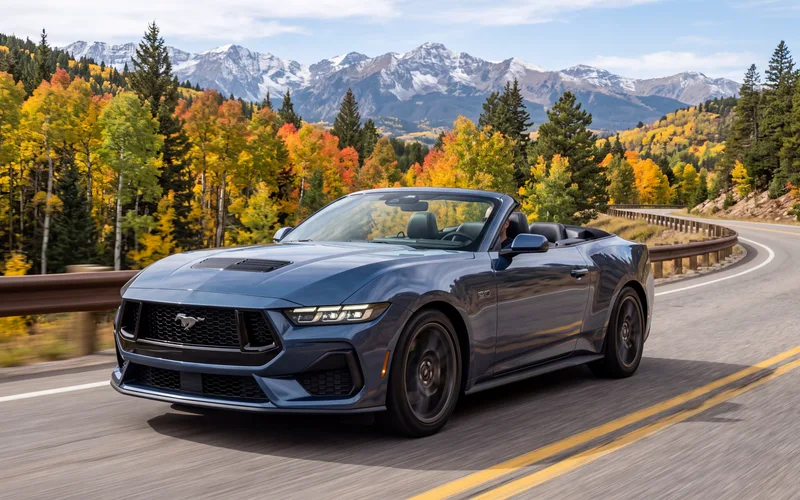 Ford Mustang ConvertibleSports CarBetter at: Practicality
If you need four seats, an 11.4 cu ft trunk and modern screens in an affordable drop-top, the Mustang delivers all three where the Miata delivers none.
Compare 1.82C-
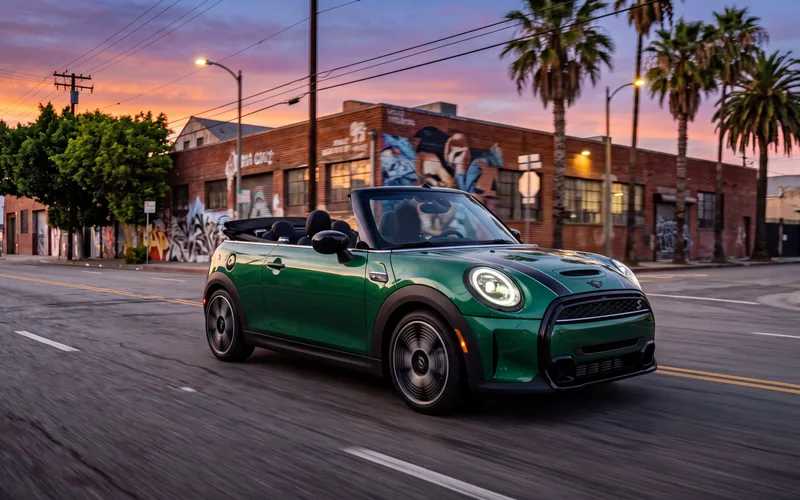 Mini Cooper ConvertibleSubcompact ConvertibleBetter at: Everyday comfort
Similar money with occasional rear seats, a bigger trunk and a more comfortable everyday cabin — at the cost of front-wheel drive and pricier service.
Compare 2.48C+
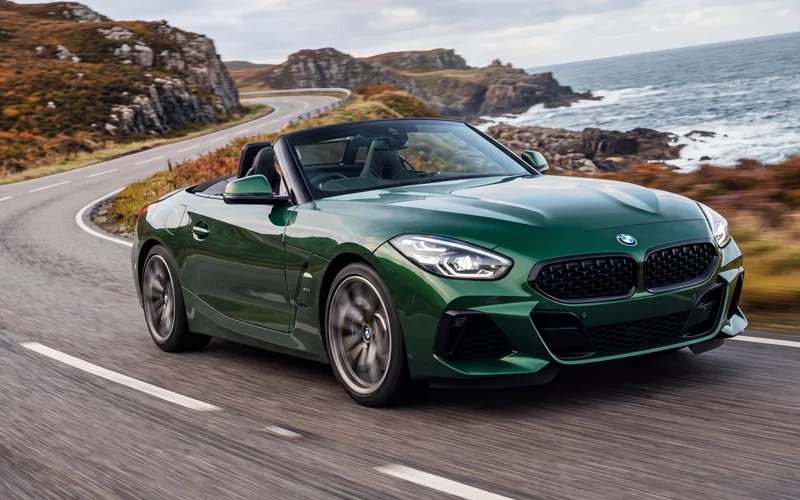 BMW Z4Sports CarBetter at: Refinement
A shopper willing to spend roughly $23,000 more gets real power, a far nicer interior and a proper two-seat roadster with luggage space that actually works.
CompareHow it's evolved
10 scored model years · 2017–2026
Subject scores by year
Hover or tap a score to see what moved it versus the year before. A corner mark flags a big swing.
| Year | Performance | Efficiency | Safety | Space | Cost | Reliability | Tech | Use-case | Driving | Value |
|---|---|---|---|---|---|---|---|---|---|---|
| 2026 | 40 | 40 | 57 | 37 | 58 | 82 | 54 | 30 | 88 | 71 |
| 2025 | 38 | 35 | 44 | 35 | 64 | 83 | 53 | 29 | 87 | 73 |
| 2024 | 38 | 32 | 49 | 36 | 67 | 82 | 51 | 30 | 88 | 74 |
| 2023 | 40 | 35 | 39 | 34 | 66 | 78 | 35 | 26 | 83 | 69 |
| 2022 | 40 | 35 | 39 | 33 | 67 | 81 | 35 | 26 | 83 | 67 |
| 2021 | 39 | 35 | 39 | 34 | 68 | 83 | 34 | 26 | 83 | 73 |
| 2020 | 40 | 35 | 39 | 34 | 66 | 84 | 33 | 26 | 83 | 74 |
| 2019 | 40 | 35 | 34 | 34 | 68 | 82 | 28 | 25 | 83 | 73 |
| 2018 | 37 | 34 | 30 | 34 | 67 | 77 | 26 | 24 | 80 | 73 |
| 2017 | 37 | 34 | 30 | 33 | 71 | 75 | 25 | 24 | 80 | 74 |
Compare two years
Best fit & conditions
Higher scores mean a better fit for that use case. Learn more about use-case fit →
Subject profile
Academic Probation · NHTSA safety recalls
Sep 18, 2024Air bags: air bag/restraint control module: softwareA software error in the air bag control module may cause the front air bags to deploy with excessive force during a crash. As such, these vehicles fail to comply with the requirements of Federal Motor Vehicle Safety Standard number 208, "Occupant Crash Protection."
Defect
Mazda North American Operations (Mazda) is recalling certain 2016-2023 MX-5 Miata vehicles. A software error in the air bag control module may cause the front air bags to deploy with excessive force during a crash. As such, these vehicles fail to comply with the requirements of Federal Motor Vehicle Safety Standard number 208, "Occupant Crash Protection."
Risk
An air bag that deploys with excessive force can increase the risk of injury during a crash.
Remedy
Dealers will update the Sophisticated Air Bag Sensor (SAS) control module software, free of charge. Owner notification letters were mailed November 7, 2024. Owners may contact Mazda customer service at 1-800-222-5500. Mazda's number for this recall is 6924I.
NHTSA campaign 24V695000 ↗Manufacturer no. 6924I77,670 vehicles potentially affected (all models in the campaign)Owners notified Nov 7, 2024Filed by Mazda North American OperationsFiled as MX-5Feb 1, 2019Power train: automatic transmission: control module (tcm/pcm/tecm)Due to incorrect programming of the Transmission Control Module (TCM), certain conditions may cause the vehicle to unexpectedly downshift and abruptly decelerate.
Defect
Mazda North American Operations (Mazda) is recalling certain 2016-2019 MX-5 (Miata) vehicles with automatic transmissions. Due to incorrect programming of the Transmission Control Module (TCM), certain conditions may cause the vehicle to unexpectedly downshift and abruptly decelerate.
Risk
If the vehicle abruptly downshifts, the driver may lose control of the vehicle, increasing the risk of a crash.
Remedy
Mazda will notify owners, and dealers will reprogram the TCM with corrected software, free of charge. The recall began March 14, 2019. Owners may contact Mazda customer service at 1-800-222-5500, option 4. Mazda's number for this recall is 3019A.
NHTSA campaign 19V072000 ↗Manufacturer no. 3019A14,370 vehicles potentially affected (all models in the campaign)Owners notified Mar 14, 2019Filed by Mazda North American OperationsFiled as !MX-5, MX-5
2 recalls on other model years of the MX-5 Miata (2018–2019, 2024–2025)
May 22, 2025Electronic stability control (esc): control module · Traction control systemThe Traction Control System (TCS) and Dynamic Stability Control (DSC) indicator light may fail to illuminate as intended due to a software error. As such, these vehicles fail to conform to Federal Motor Vehicle Safety Standard number 126, "Electronic Stability Control Systems."
Defect
Mazda North American Operations (Mazda) is recalling certain 2024-2025 Mazda MX-5 vehicles. The Traction Control System (TCS) and Dynamic Stability Control (DSC) indicator light may fail to illuminate as intended due to a software error. As such, these vehicles fail to conform to Federal Motor Vehicle Safety Standard number 126, "Electronic Stability Control Systems."
Risk
An indicator light that does not illuminate may fail to warn the driver of a TCS or DSC system issue, increasing the risk of a crash.
Remedy
Dealers will replace the DSC unit, free of charge. Owner notification letters were mailed July 18, 2025. Owners may contact Mazda customer service at 1-800-222-5500 Option 6. Mazda's number for this recall is 7425E.
NHTSA campaign 25V336000 ↗Manufacturer no. 7425E12,244 vehicles potentially affected (all models in the campaign)Owners notified Jul 18, 2025Filed by Mazda North American OperationsFiled as MX-5Nov 12, 2021Fuel system, gasoline: delivery: fuel pumpThe impeller inside the low-pressure fuel pump may crack and deform, potentially causing the fuel pump to fail.
Defect
Mazda North American Operations (Mazda) is recalling certain 2018 Mazda3, Mazda6, 2019 CX-3, 2018-2019 MX-5, CX-5, CX-9, and 2019-2020 Mazda2 vehicles. The impeller inside the low-pressure fuel pump may crack and deform, potentially causing the fuel pump to fail.
Risk
Fuel pump failure may cause an engine stall, increasing the risk of a crash.
Remedy
Dealers will replace the fuel pumps, free of charge. Owner notification letters were mailed July 18, 2022. Owners may contact Mazda customer service at 1-800-222-5500 Option 4. Mazda's number for this recall is 5321K.
NHTSA campaign 21V875000 ↗Manufacturer no. 5321K121,038 vehicles potentially affected (all models in the campaign)Owners notified Jul 18, 2022Filed by Mazda North American OperationsFiled as MX-5
Source: NHTSA Office of Defects Investigation recall database, model years 2017–2026. Recalls are listed by model year as the manufacturer filed them; whether a specific car is affected depends on its VIN — check a VIN at nhtsa.gov ↗. NHTSA model names matched to this page: !MX-5, MX-5.
Detailed scoring by subject
1Performance & PowertrainGrades near the bottom of the scale.0.44F
2017 sits in the pre-facelift ND1 phase of the ND generation that began in 2016, so the 2.0L naturally aspirated Skyactiv-G makes 155 hp at 6,000 rpm with a 6,800-rpm redline — NOT the 181 hp / 7,500 rpm ND2 figures that arrive for 2019, and this is exactly the year where carrying a later number forward would be wrong. The same engine is fitted to Sport, Club and Grand Touring and to the new RF, so the model-range maximum is also 155 hp; against the convertible band (130–520 hp) that sits near the floor because the framework measures absolute output while the MX-5's premise is a 2,332-lb curb weight.
Peak torque is 148 lb-ft at 4,600 rpm, identical across trims, both roofs, and either transmission. It is the MX-5's weakest hard number — a 1,998cc naturally aspirated four with a 13:1 compression ratio makes its case at the top of the tachometer rather than in the midrange — and 148 lb-ft sits just above the convertible band floor of 120.
Instrumented tests of the 155-hp soft-top manual cluster tightly around 5.8–6.2 s (Car and Driver 5.8/5.9/6.2, Motor Trend 5.8/6.0/6.1, MotorWeek 5.9, Road & Track 6.1), so 5.9 s is the fair representative figure for the scored configuration — the soft-top manual, the volume choice in this segment. That is quick for 155 hp only because the car weighs 2,332 lbs; it is roughly two tenths off the 181-hp ND2 cars from 2019 onward. The heavier 2,445-lb RF manual runs about 6.1 s and automatics fall to the mid-6s.
Naturally aspirated with no turbo in the way, the Skyactiv-G gives essentially instant, linear throttle response — the benchmark for delivery among these convertible peers, ahead of the turbocharged BMW Z4 and the Mustang on responsiveness alone. Rated a notch below the post-2019 ND2 cars because this ND1 engine signs off at a 6,800-rpm redline and audibly flattens in the last 500–1,000 rpm, so the reward for revving it out is smaller, and with 148 lb-ft peaking at 4,600 rpm there is very little to lean on below 3,000.
The standard Skyactiv-MT 6-speed manual with its short-throw shifter is widely treated as the best gearbox on sale at any price — very short throws, a light precise gate, closely stacked ratios — placing it above every convertible peer in the set. Kept short of the mid-90s because the optional 6-speed automatic is a dated design with only six ratios and unremarkable responses, and for 2017 it was still offered across the soft-top range rather than confined to the top trim as Mazda later did.
Rear-wheel drive only, with no all-wheel-drive option on any 2017 trim, either roof, or anywhere in the nameplate's history — the bottom band by the item's own definition. Club and Grand Touring manuals add a torque-sensing limited-slip differential, which helps put 148 lb-ft down, but an LSD is not AWD.
One engine, full stop: the 155-hp 2.0L Skyactiv-G is the only powertrain across the entire 2017 range, with no turbo alternative, no hybrid, no PHEV and no EV variant. What 2017 added was a body style — the Retractable Fastback — not a powertrain, and the only drivetrain decision a buyer makes is manual versus automatic, which is a transmission choice. That sits well below peers like the Z4 and Mustang, each of which offers two or three distinct engines.
2Efficiency & RangeGrades near the bottom of the scale.0.25F
The 2017 MX-5 runs the ND1 155-hp 2.0L Skyactiv-G with no electrification, EPA-rated 29 MPG combined with the 6-speed manual — the volume configuration — and coincidentally the same 29 combined with the automatic. That is genuinely frugal for a rear-drive sports car and sits mid-band against other gas convertibles, which is what carries this category for the MX-5.
26 MPG city reflects a 2,332-lb curb weight and a small-displacement engine, but with no hybrid assist and no stop-start system there is no stop-and-go advantage, so it lands mid-band rather than near the top of the gas-convertible range.
Highway is the MX-5's strongest efficiency figure — light weight and a 1.000:1 top gear on a 2.866 final drive yield 33 MPG for the manual, 35 for the taller-geared automatic — and it is where the car most clearly beats the larger, heavier convertibles in the peer set. Note this is a genuine year difference rather than a carry-forward: the manual's highway rating is 33 MPG for 2017, not the 34 MPG the later 181-hp ND2 cars post.
Good economy is offset by a very small 11.89-gallon tank dictated by the packaging of a 154-inch roadster, so total range lands near the bottom of the convertible band (300–650 mi) despite the car's efficiency — a real touring limitation, not a rounding artifact. The RF carries the identical tank, so the heavier body style gives up nothing here.
The EPA's published annual cost is $2,600 at 15,000 mi/yr, and it is the premium-fuel assumption rather than consumption that drives the figure — at 29 MPG combined the MX-5 burns only about 517 gallons a year, but the EPA prices every one of them as 91-octane. That is why a car cheap to run in absolute terms still scores low on this item.
Mazda recommends 91-octane premium for the 13:1-compression Skyactiv-G to reach its rated 155 hp, but explicitly permits 87-octane regular with reduced output — a real yet avoidable cost penalty, which places it squarely in the 'premium recommended, not required' middle band. No E85, diesel or charging considerations apply.
3SafetyOne of the MX-5 Miata's weakest categories.0.00F
NHTSA carries a 2017 MX-5 record but every crash field reads "Not Rated" — no frontal, side, pole or rollover test was run, which is routine for a low-volume two-seat convertible outside NCAP's test priorities. The framework has no encoding for "untested," so the value is held at the same mid-band placeholder every untested convertible peer received (Z4, Mustang Convertible, Mini Convertible, and the 2020–2026 MX-5 scorecards, all at 4 stars / 50) rather than crediting or penalizing the car on absent data.
The MX-5 has no IIHS crashworthiness ratings at all — not merely no award. IIHS's 2017 Mazda winners were the CX-5, CX-3, Mazda3 and Mazda6; the MX-5 is absent because it was never run, so there is no moderate-overlap, small-overlap, side or roof result to lean on. That places it in the untested band, pulled below the untested-but-larger Z4 by two compounding factors: an open FMVSS 208 non-compliance recall for front airbags that deploy with excessive force, covering 2016–2023 MX-5s and therefore this exact model year, and the unavoidable mass-disparity exposure of a ~2,332-lb two-seater in multi-vehicle crashes. Euro NCAP's 2015 5-star result for the ND is a different test protocol against a different fleet and is not transferable.
The 2017 MX-5's standard driver-assistance content is close to nil and what exists is trim-locked. No automatic emergency braking is offered on any trim, in any package — NHTSA's own 2017 MX-5 record lists Forward Collision Warning as "No" and Lane Departure Warning as merely "Optional." There is no adaptive cruise control anywhere in the line and, unusually for 2017, no rearview camera at all. The volume MX-5 Sport ($24,915) leaves the showroom with airbags, ESC and nothing else; the 2017 packaging change moved Blind Spot Monitoring and Rear Cross-Traffic Alert down from Grand Touring to Club, and Grand Touring adds Lane Departure Warning, High Beam Control and the Adaptive Front-lighting System. Against the item's guidance that is squarely the 0–49 band: the significant features are locked to upper trims and the two heaviest ones (AEB, ACC) are unavailable at any price.
There is nothing to rate: the 2017 MX-5 offers no automatic emergency braking, no forward-collision warning and no pedestrian detection on any trim or in any option package. Mazda's Smart City Brake Support did not reach the US-market MX-5 until later in the ND run (it is standard on the 2020–2023 cars, which score 30 here for a low-speed-only system), and IIHS never ran front crash prevention on the MX-5 because it never tested the car. A vehicle with no AEB at all sits at the floor of the 0–49 band.
Blind Spot Monitoring and Rear Cross-Traffic Alert are alert-only (no steering or braking intervention) and reach two of the three trims: 2017 was the year they became standard on Club, joining Grand Touring, but the volume-priced Sport still cannot get them at any price. That is the "available on most trims, alert-only" middle band, docked from the 75 the 2020–2023 cars earn for the same hardware standard across the entire line. The systems themselves are genuinely useful here — a top-up ND has thick rear quarters and no rearview camera in 2017, so RCTA is doing real work backing out of a parking space.
The most the 2017 MX-5 offers is a Lane Departure Warning System — audible/visual alert above roughly 40 mph, with no lane-keep assist and no lane centering anywhere in the range — and even that is trim-restricted rather than standard, which NHTSA's record confirms by listing LDW as "Optional" for this model year. Mazda's own 2017 pricing release puts LDW in the Grand Touring standard list only, though Edmunds reports the 2017 Club safety bundle picked it up alongside BSM/RCTA; the manufacturer document is taken as authoritative, so the item is scored as warning-only on upper trims. Crude-or-absent lane assistance is the 0–49 band, and this lands below the 22 the 2020–2023 cars earn for the same warning-only system standard across every trim.
Plain fixed-speed cruise control is standard from Sport upward and that is the entire story — Mazda Radar Cruise Control was not offered on the US MX-5 for 2017 on any trim or transmission (it does not arrive until the 2024 refresh, and then only on automatics), and there is no highway-assist function of any kind. "Basic cruise only" is the explicit bottom-band description, matching the 8 the 2020–2023 MX-5 scorecards carry for the same absence.
No hands-free highway driving system is offered on the 2017 MX-5, and none existed anywhere in Mazda's global lineup at the time. With no adaptive cruise control as a foundation the car has no path to hands-free operation, so this is the floor of the 0–49 "no hands-free option" band.
LED headlights and taillights are standard on every 2017 MX-5 including Sport, which is genuinely good hardware for a $24,915 car and better than the halogen units on much of the 2017 field. The credit stops there: automatic on/off headlights, High Beam Control (auto high beam) and the Adaptive Front-lighting System are Grand Touring exclusives, so the two volume trims get no adaptive or automatic function at all, and IIHS never rated MX-5 headlights so there is no Good/Acceptable/Marginal result to anchor on. Good standard hardware with the smart functions locked to the top trim and no independent verification sits just below the middle of the range.
Top down, the ND is close to a best case — a 48.6-in roofline, a low cowl, slim A-pillars and no roof at all give sightlines almost nothing else on the road matches. Top up it inverts: the fabric roof's rear quarters are near-opaque, the glass rear window is small, and the RF introduced for 2017 is worse still because its fixed buttresses create a permanent rear three-quarter blind zone in every roof position. What separates 2017 from the later ND years is that there is no camera compensation whatsoever — no rearview camera on any trim, no parking sensors, no 360-degree monitor — so backing out of a space relies on the mirrors, the over-shoulder view and, on Club/Grand Touring only, rear cross-traffic alert. Average-with-blind-zones, docked from the 62 the camera-equipped 2020–2023 cars carry.
4Space & ComfortGrades near the bottom of the scale.0.17F
The MX-5 is a strict two-seater: two buckets, a bulkhead behind them, and no rear seat offered on any 2017 trim or body style, including the Retractable Fastback introduced this model year. Against the convertible band, whose floor is 4 seats, that is below the floor and scores zero — the framework measures absolute capacity, and every four-seat convertible peer (Mustang, Mini, 4 Series, CLE) carries two more places.
Mazda publishes 37.4 inches of front headroom for all three soft-top trims — the volume body style — with the RF losing just over half an inch to its hard roof panel and fixed buttresses. That is a little above the convertible band floor of 36 in, but the on-paper figure overstates the reality: the seat has no height adjustment, so an occupant cannot trade headroom against seat position, and reviewers consistently report six-footers reaching the limit of head- and legroom roof-up.
43.1 inches is genuinely good for a 154-inch car — near the top of the convertible band (40–44 in) and the one interior dimension where the MX-5 beats its reputation, because Mazda spent the ND's packaging budget on the driver's footwell rather than on cargo. The 2017 caveat is sharper than in later years: the steering column tilts but does not telescope (telescoping arrives with the 2019 ND2), so a tall driver who slides the seat back to use the legroom cannot bring the wheel with him.
4.59 cubic feet sits effectively on the floor of the convertible band (4–14 cu ft) and is the smallest trunk in this comparison set — roughly two soft weekend bags, with no seat-folding, no pass-through and no underfloor well to extend it. The one mitigation is that the figure does not shrink when the top goes down, because the ND's roof stows in its own well rather than eating the trunk.
The ND MX-5 has no glovebox at all — a genuine omission, not a small one — and no door pockets. Mazda's own 2017 STORAGE block lists exactly three items on every trim: a locking console box mounted behind and between the seatbacks (awkward to reach while belted), two covered back-panel cubbies, and a two-piece removable cupholder set that mounts either side of the transmission tunnel and fouls a knee or the shifter wherever it goes. One 12-volt outlet, no wireless charging tray, no underfloor storage, no fold-flat surface. That is the sparse-and-poorly-designed band by definition, and it sits below every four-seat peer, all of which at least have a glovebox and rear seatbacks to throw things on.
The buckets are well shaped and properly bolstered for the way the car is driven, and the scored Grand Touring gets leather trim and heated seats. But 2017 is the ND at its least accommodating: adjustment is limited to recline, fore/aft slide and a driver's-side seat tilt — no power seats, no height adjustment and no lumbar at any trim or price — and unlike the 2019-on cars the steering column tilts but does not telescope, so a driver cannot resolve a bad wheel-to-seat relationship at all. Reviewers report six-footers running out of room, and the commander knob sits low and behind the shifter where long-limbed drivers must bend a wrist to reach it. That combination puts 2017 below the 2019-on ND2 cars and below the Z4 and 4 Series, which offer power seats with lumbar.
Better than the spec sheet suggests, and 2017 is the softer end of the ND range. Mazda gave the ND unusually long suspension travel for a sports car — four-wheel independent, double wishbone front and multi-link rear on aluminum control arms — and the scored Grand Touring runs plain monotube dampers with no Bilstein hardware and no front shock-tower brace, both of which were Club-manual-only in 2017 and did not reach Grand Touring until 2020. The result is a more compliant car than the later GT. Held to the middle band because the 90.9-inch wheelbase still pitches over expansion joints and reviewers of the 2017 cars describe a busy ride that becomes tiresome on a daily commute.
The clearest comfort weakness. A cloth convertible top (a cloth liner is Grand Touring only), no acoustic glass and minimal underbody deadening mean tire roar and wind noise dominate at highway speed. The RF added for 2017 does not fix it — reviewers found it carries just as much wind and road noise as the soft top despite the solid roof, with complaints of noise arriving right at ear level, and Mazda's response to owner reports was that the RF's wind noise is normal. Roof down the car is well managed by the windshield header and the standard mesh aero board, but that is aerodynamic design rather than quietness. Firmly in the notably-loud band and the loudest car in this peer set.
Sparse, and in 2017 the good items are locked to the single top trim more tightly than in later years. The scored Grand Touring gets automatic climate control, heated seats and heated power mirrors — but heated seats are Grand Touring exclusive this year, where by 2020 they had spread down to Club, so two of the three 2017 trims have no heated seat at any price. Nothing above that exists anywhere in the range: no ventilated seats, no heated steering wheel, no rear climate zone (there is no rear), and no remote start or app pre-conditioning, because the ND MX-5 is not a Mazda Connected Services vehicle. What is standard is the convertible-specific kit — front side-window demisters, glass rear window with defogger, the mesh wind blocker — which genuinely extends the top-down season. Low band, below every peer here.
5Cost of OwnershipGrades above the middle of the scale.2.78B-
Mazda's own 2017 MX-5 soft-top pricing release held the Sport manual at $24,915 — unchanged from 2016 — with an $875 destination charge, so $25,790 delivered. That made the 2017 MX-5 the cheapest genuine two-seat rear-drive convertible sold in the US by a very wide margin and puts it near the favorable end of the framework's $22K–$55K convertible band.
MX-5 buyers skew well above the stripped Sport, which in 2017 shipped without a touchscreen or any active-safety content, so the Grand Touring soft top with the manual at $30,940 delivered is the fair representative configuration — consistent with how later ND model years are scored here. It still sits below the midpoint of the framework's $24K–$58K convertible band, and the Club at $29,675 is the enthusiast alternative at nearly the same money.
The ND MX-5 is about as mechanically simple as a modern car gets — a naturally aspirated 2.0L Skyactiv-G four with no turbo or hybrid hardware, a hand-operated cloth top with no motor or hydraulics on the soft-top cars, and a curb weight around 2,330 lb that is easy on brakes and tires — and it draws on mainstream Mazda parts and dealer labor rates rather than premium ones. The figure is set below the later ND model years scored here because a 2017 car's five-year service window (2017–2022) is denominated in pre-inflation parts and labor prices.
For a 2017 car the five-year point has long passed, and it landed squarely on the 2021–2022 used-vehicle price spike, so a 2017 MX-5 held value even better than the nameplate's already-strong norm. Persistent enthusiast demand, low production volume, a heavy manual-transmission mix and the complete absence of a direct rival in the affordable-roadster space keep used prices firm, and the ND's minimal year-to-year change means a 2017 car does not look obsolete beside a newer one. This sits above the top of the framework's 35–65% convertible band, so the item maxes out.
Mazda's New Vehicle Limited Warranty for 2017 is the industry-floor 36-month/36,000-mile term — level with Ford and a year short of the four-year coverage the German droptops offered in 2017. It sits at the very bottom of the framework's 3–5 year band.
60 months / 60,000 miles is the floor of the framework's 5–10 year powertrain band — competitive with Ford and better than BMW's four-year term, but nowhere near the 10-year coverage Hyundai and Kia advertised in 2017.
Mazda included no complimentary scheduled maintenance in the US for 2017 — every oil change is out of pocket from day one, and the warranty booklet instead carries a Scheduled Maintenance Record the owner must have filled in at their own expense to preserve coverage. That leaves 24-hour Emergency Roadside Assistance as essentially the whole package, running for the 3-year/36,000-mile basic term and extending to the 5-year/60,000-mile powertrain term for tows caused by a warranted powertrain failure. There are no connected-service trials or charging credits to add, so this lands just below the mid-band 'basic roadside only' tier and well under what BMW and Mini offered droptop buyers in 2017.
$30,940 volume-trim price minus its estimated resale value after 5 years (68% retained, or about $21,039) leaves about $9,901 in depreciation. Add the projected $3,100 in 5-year maintenance and repairs, and owning this vehicle for 5 years costs about $13,001 in total.
6Reliability & QualityOne of the MX-5 Miata's strongest categories.3.11B
Structurally this is the easy-to-be-reliable formula the nameplate is known for — a naturally aspirated four, a conventional manual, no turbo, no dual-clutch, no air suspension — and the nine-year field record is good. But 2017 is only the second year of the ND generation and it does NOT carry the top-of-industry rating the later ND years earned: Consumer Reports rates this specific model year merely 'about average' and logs real trouble spots (manual-transmission synchro failures, ABS wheel-speed sensors, rear hub corrosion, in-car electronics). That combination — good nameplate, average model year — puts it above the convertible median without approaching the 2020 car's score.
The 2017 model year lands in Mazda's weakest stretch of the last decade for measured quality, which is the single biggest reason this category scores well below the later ND years. Consumer Reports dropped Mazda six places to 12th in its October 2017 survey, and J.D. Power's initial-quality study of 2017-model-year cars put the brand roughly 28 PP100 worse than the industry average. What rescues it to mid-pack rather than bottom-third is that the same cars aged well: the 2020 Vehicle Dependability Study, which surveys exactly these 2017 vehicles at three years, found Mazda above average — so the complaints were front-loaded and largely infotainment-shaped rather than durability failures.
Nine model years on, the 2017 MX-5 carries only two safety recalls and both are remedied by a software flash — nothing touching the engine, structure, fuel system or restraint hardware, and the TCM campaign only reaches cars with the optional automatic. It also sits outside the Denso low-pressure fuel-pump campaign that hit 2018-2019 MX-5s. Two campaigns rather than one, plus a genuine TSB/warranty pattern around early-ND manual gearbox grinding, is what holds this below the 2020 car's cleaner record.
The engine is the strong half: the 2017 car runs the pre-revision 155-hp Skyactiv-G 2.0L, a naturally aspirated PE-series four in continuous production since 2011 with no forced induction and no high-pressure pump of the kind that generated the later fuel-pump campaign — proven hardware with nine further years of field time since. The gearbox is the weak half and is the reason this scores nine points under the 2020 read: the early ND six-speed manual has a documented synchro and second-gear failure pattern, Consumer Reports flags 'transmission major' as a 2017 trouble spot, and NHTSA carries an owner report of outright manual failure at 55,000 miles. The optional automatic drew its own TCM software recall.
The cabin is thoughtfully executed rather than rich — body-color painted door tops, a clean symmetric dash, well-bolstered seats — and the 2017 price flatters it more than any later ND year, since the same interior cost roughly $1,700 less than in 2020 and several thousand less than today. Against the premium price class it is graded in, though, there is visible hard plastic in the door lowers and console, and the 7-inch Mazda Connect screen of this era is both washed out in direct sun in an open car and the specific thing owners complained about.
Low-volume Hiroshima assembly and a well-sealing soft top are real strengths, but this is the model year where the brand's initial-quality standing was at its worst and the generation was still young — 2017 is only ND year two, before the running fixes that made the 2019-2020 cars tidy. Owner-reported soft-top headliner detachment and a cluster of glass-cracking complaints are body-hardware items rather than infotainment gripes, so the deduction here is larger than the brand-level IQS number alone would suggest.
Network density is the clearest ownership weakness in this category and it is brand-level, applying to the MX-5 exactly as to the rest of the range. Mazda runs roughly half the US storefronts Honda does and well under half Toyota's, so rural and small-metro owners drive materially further for warranty work — a real cost on a car usually bought as a second vehicle. Major-metro coverage is adequate and dealer service reputation is mid-pack rather than poor, which keeps this out of the bottom band; in 2017 Mazda was in the first year of a three-year program to upgrade rather than expand the network, so density was not improving.
The best ownership line in the category and a genuine outlier for a car in the premium price class. The Miata carries one of the largest enthusiast aftermarkets of any modern vehicle, and at nine years old the 2017 car's parts have fully entered the used, reconditioned and third-party channels while still sharing a bin with a decade of ND production. Routine service is cheap because the mechanicals are simple and normally aspirated, and independent shops will work on it — nothing here is dealer-only. It scores marginally above the newer ND years for exactly that age reason.
7Technology & InfotainmentOne of the MX-5 Miata's weakest categories.0.00F
The scored Grand Touring carries MAZDA CONNECT's 7-inch full-color touchscreen, which is the largest and only display offered anywhere in the 2017 range — there is no upgrade at any price. That sits exactly on the floor of the convertible band (7–15.5 in) and therefore scores zero. Worth recording separately: the entry Sport has no center display whatsoever in 2017, running a plain AM/FM/CD head unit, so a third of the lineup is below even this figure.
MAZDA CONNECT's ergonomic idea is sound and ages well — a rotary Commander knob on the console means the driver is not stabbing at a screen, and Mazda deliberately locks out touch input above walking pace so the knob is the only route on the move. The execution in 2017 is the weak part: this is an early CMU software generation with sluggish menu transitions, a cluttered tile layout and a well-documented history of reboots and ghost-touch faults on this display. The knob itself is also badly placed in this car specifically, sitting low and behind the shifter. Usable with real lag and clutter — mid-band, and below the later ND years running more mature CMU builds.
Neither Apple CarPlay nor Android Auto is offered on the 2017 MX-5 in any form — not wireless, not wired, not as a factory option on any trim. This is the single largest technology gap between 2017 and the later ND years, which have wired projection standard. Mazda's answer arrived only afterwards, as a retrofit: a dealer- or owner-installed USB hub (part TK78-66-9U0C / accessory 00008FZ34) that requires the CMU to be flashed to software v70.00.21 or later, which is a paid aftermarket exercise rather than a feature of the car as sold. "Not offered" is the explicit bottom band; scored just off the floor only because the retrofit path exists and is well supported.
The scored Grand Touring is the one 2017 trim with the Mazda Navigation System fitted from the factory rather than sold as an SD card over the parts counter, and MAZDA CONNECT includes an infotainment voice command function. Both are dated: the voice system is a rigid command-grammar assistant rather than natural language, and the maps are a static SD-card database with no live traffic worth the name. The aggravating factor unique to 2017 is that there is no phone projection to escape to — owners of later ND cars simply use CarPlay maps instead, and 2017 owners cannot. Functional but bypassed-if-possible, and here it cannot be bypassed.
The strongest item in this category and genuinely well matched to the car. Bose's 9-speaker system is standard — not optional — on both Club and Grand Touring, and it is engineered around the roadster's actual problem: speakers built into each headrest keep dialogue and music intelligible with the roof down, and AudioPilot raises output as ambient noise climbs, which in a car this loud is doing constant work. A subwoofer and SiriusXM round it out. Held below the top band because the base Sport system is a plain six-speaker AM/FM/CD unit, there is no step above the Bose at any price, and the whole thing is fed by a dated head unit with no phone projection.
There is no digital instrument cluster on any 2017 MX-5. Every trim runs the same three analog dials — a central tachometer flanked by speedometer and fuel/coolant gauges, black faces with white lettering — with a small monochrome trip-computer readout for range, average and instantaneous economy and average speed. The layout is handsome and legible, and a big central tach is arguably the right answer in a car like this, but the item measures the availability and quality of a configurable digital display and the answer is that none is offered at any price. Analog-only is the 0–49 band by definition; scored above the floor because the trip computer supplies basic reconfigurable data and the analog instruments themselves are well executed.
The 2017 MX-5 has no over-the-air update capability of any kind — no embedded modem, no Wi-Fi, no connected-services subscription, and therefore no path for software to reach the car remotely. The CMU is updated by downloading a firmware image, writing it to a USB stick and flashing it at the car, or by a dealer visit; map data is a physical SD card. That is the floor of the no-meaningful-OTA band, and it is the same answer the whole ND generation gives.
There is no companion app for the 2017 MX-5, because the ND is not a Mazda Connected Services vehicle: no remote start, no remote lock/unlock, no vehicle locate, no digital key, no status reporting. The car cannot be reached from a phone at all. Mazda Connected Services existed on other nameplates in this era but never reached the MX-5, and the 2017 trim tables carry no remote-function line of any kind. This is the floor of the barebones band — not a thin app but the absence of one.
Thin, and 2017-dated. The scored Grand Touring carries two USB-A audio inputs and exactly one 12-volt outlet; the Sport gets a single USB. There is no USB-C anywhere, no wireless charging pad, no household AC outlet and no second row to serve. The ports are also low-current audio inputs rather than fast-charge sockets, so a phone running navigation over Bluetooth drains while plugged in. With no glovebox and no door pockets there is nowhere tidy to put a tethered device either. Few and outdated ports is the bottom band.
Push-button ignition is standard on every 2017 trim, which is the good half. The catch is specific to the configuration actually scored: Mazda Advanced Keyless Entry — the proximity system that lets you leave the fob in a pocket — is standard only on automatic cars and is a cost option on every manual, so the volume Grand Touring 6MT leaves the showroom with a conventional remote-keyless fob and must be optioned up to proximity entry. There is no remote start at any trim, no hands-free trunk and no phone-as-key. Proximity entry available but not standard on the manual, plus push-button start, lands mid-band and below the later ND years where it became standard equipment.
The 2017 MX-5 has no rearview camera on any trim, at any price — not on the $30,940 Grand Touring, not as a factory option, not in a package. It also has no front or rear parking sensors, no surround-view system and no parking automation. The only reversing aid in the car is Rear Cross Traffic Alert, a radar warning fitted to Club and Grand Touring. This is the last ND model year that could ship this way: the federal FMVSS 111 backup-camera mandate took effect in May 2018, and the later ND cars carry a camera as standard equipment. Against an item whose bottom band is "rear camera only, low quality," a car with no camera at all sits below it.
No head-up display is offered on the 2017 MX-5 on any trim or in any package. Mazda's Active Driving Display existed in the 2017 lineup on the Mazda3, Mazda6 and CX-5, but it was never fitted to the ND MX-5 — the low cowl and shallow windscreen leave nowhere to put the combiner or the projector. "No HUD offered" is the bottom band.
8Use-Case FitThe MX-5 Miata's lowest-graded category.0.00F
The 2017 MX-5 is a two-seater with no rear seat, so there is no LATCH anchorage anywhere in the car and a child seat can only go in the front passenger position — against a live passenger airbag, which is exactly where a rear-facing seat must never be placed. There is no back door, no seat flexibility, and 4.59 cu ft of trunk will not take a folded stroller alongside anything else. This is not a compromised family car; it is a car that cannot perform the task, which is the floor of the band.
Weak on the merits and weaker still for 2017 specifically. There is no automatic emergency braking or forward-collision warning at any trim or price, no adaptive cruise, and — unique to the pre-2018 ND cars — no rearview camera anywhere in the range. Neither IIHS nor NHTSA ever crash-tested the MX-5, so there are no ratings for a family to weigh, and an open FMVSS 208 recall covers 2016–2023 cars for front airbags that may deploy with excessive force. Blind Spot Monitoring and Rear Cross Traffic Alert reached Club for 2017 and Lane Departure Warning is Grand Touring-only, but alert-only aids on the upper trims do not offset the absence of AEB, a camera, crash data and any rear seat to put a family in. Below the 2020-onward cars, which at least add standard AEB and a camera.
A family road trip in a 2017 MX-5 means two people and 4.59 cubic feet. There are no rear seats to be comfortable in, no rear climate zone, no rear entertainment, no rear amenities of any kind because there is no rear. Two adults and a weekend's luggage already exceed the trunk, and the cabin is among the loudest in the segment at highway speed. Scored just off the floor only because the two people who do fit sit in decent seats.
Genuinely mixed rather than simply poor. The car is tiny, light at 2,332 lb, has excellent forward sightlines and a clutch and shifter light and precise enough that stop-and-go traffic is not the chore it is in most sports cars. Against that, 2017 is the least commuter-friendly ND year: the ride is busy enough that reviewers call it tiresome on a daily commute, cabin noise is high, there is no adaptive cruise, no rearview camera to help at every parking maneuver, and a steering column that tilts but does not telescope means some drivers never find a comfortable position at all. Fine daily manners with real annoyances — mid-band, and a notch below the later ND cars.
Respectable rather than cheap. EPA rates the manual at 29 MPG combined, which is good for a rear-drive sports car but only average against the wider commuting field, and Mazda recommends premium fuel — the manual does permit 87 octane as a minimum, which is a real saving lever most sports cars do not offer. Consumables are the strong point: 195/50 R16 or 205/45 R17 tires are small, common and inexpensive, brakes are modest single-piston units, and the car's 2,332 lb does little damage to either. The drag on the score is the 11.89-gallon tank, which turns a ~345-mile range into more fill-ups than the MPG figure implies. Average-for-class, mid-band.
Close to best-in-class on the hard numbers and held back only by 2017's missing camera. At 154.1 inches long and 68.3 wide the MX-5 fits gaps nothing else in the peer set will take, and the 30.8-foot curb-to-curb turning circle — with 2.7 turns lock-to-lock — means it turns around where a Mustang Convertible needs a three-point turn. Top-down visibility is exceptional. What costs it the top band is that 2017 offers no rearview camera and no parking sensors on any trim, so reversing into a tight space relies on mirrors and an over-shoulder look past near-opaque rear quarters when the roof is up; Rear Cross Traffic Alert on Club and Grand Touring is the only electronic help.
The 2017 MX-5 has no tow rating, no hitch offered, no bed, no cargo area worth the name and a 413-lb difference between curb weight and GVWR that two adults and full fuel largely consume. Mazda publishes no towing or payload figure because the car is not engineered to carry or pull anything. There is nothing here to score above the floor.
The MX-5's mechanical reputation is genuinely good — the naturally aspirated Skyactiv-G 2.0 and the Skyactiv-MT gearbox are simple, understressed and long-lived, and the nameplate has decades of evidence behind it. But this item measures toughness under work abuse, and almost nothing about the car qualifies: an aluminum hood and trunk lid, a cloth roof, leather trim on the scored Grand Touring, carpet floors, 4.92–5.32 inches of ground clearance and no washable or wear-friendly interior option anywhere. There is no fleet history because no fleet buys one. Scored in the low band as a durable but entirely non-work-oriented vehicle.
Nothing in the 2017 MX-5 is oriented toward work. There is one 12-volt outlet and no AC inverter or onboard power, no tie-downs, no roof rails, no hitch, no bed access features and no upfit ecosystem — Mazda's accessory catalogue for the car runs to spoilers, car covers, strut braces, alloy pedals and license-plate frames. The nearest thing to a cargo provision is an optional cargo net and tray for a 4.59 cu ft trunk. Floor of the band.
A poor mile-eater and 2017 is the weakest ND year for it. Range is roughly 345 miles from an 11.89-gallon tank, so stops come often; the cabin is loud enough that reviewers of the 2017 RF concluded it is "not a good highway car"; there is no adaptive cruise or any fatigue-reducing driver assistance beyond fixed-speed cruise; the trunk holds 4.59 cu ft for two people's luggage; and the steering column tilts but does not telescope, which is precisely the adjustment that matters over a six-hour stint. The counterweights are real but small — supportive seats, a comfortable-enough ride on the non-Bilstein Grand Touring, and a roof that makes a good day genuinely memorable. Low band, below the 2019-on cars that gained the telescoping column.
Pavement-bound by design. The 2017 MX-5 is rear-wheel drive with no AWD offered on any trim — and the scored Grand Touring does not even get the torque-sensing limited-slip differential, which is Club-manual-only this year — with 4.92 to 5.32 inches of ground clearance, summer performance tires, no roof rails or roof rating, no tow rating and no onboard power for camping. A gravel forest road is the outer limit. The only genuine outdoor credit is the roof itself, which makes the car a fine way to reach a trailhead you could equally reach in anything.
4.59 cubic feet, and that is the whole story — there are no rear seats to fold, no pass-through to the cabin, no underfloor well, no roof rails and no hitch, so the trunk cannot be extended in any direction. Nor is there anywhere to overflow into: the ND has no glovebox and no door pockets, leaving only a small locking console box and two back-panel cubbies. Two soft weekend bags fit and a hard suitcase generally does not. Restrictive is the bottom band.
9Driving ExperienceThe MX-5 Miata's best-graded category.3.45B+
The reference point for this category. A 2,332-lb curb weight with 53/47 front/rear distribution, four-wheel independent suspension (double wishbone front, multi-link rear) on aluminium control arms and a front-midship layout produce cornering composure that instrumented testing puts at 0.90 g on the skidpad — remarkable on 205-section street tires. Scored a shade below the 2020 car for a configuration reason rather than a chassis one: in 2017 the Bilstein dampers, front shock-tower brace and torque-sensing limited-slip differential are Club-manual-only, so the scored Grand Touring runs plain monotube dampers with an open differential and gives up some body control and corner-exit traction. Still comfortably above every convertible peer here.
Among the best electrically assisted racks on sale at any price, and unchanged in 2017 from the setup the ND launched with. Mazda's double-pinion EPAS system is geared at 15.5:1 with only 2.7 turns lock-to-lock, which makes the car respond to wrist movements rather than arm movements, and reviewers consistently describe the steering as both light and precise with genuine build-up of effort as the front loads. Short of a perfect score because it is still electric assistance — the fine-grained texture of the NA and NB hydraulic racks is not fully there, and a few testers find the effort a touch light on center.
The weakest of the dynamics items, and the one place the volume car is under-specified for its ability. The standard system is an 11-inch vented front and 11-inch solid rear disc with single-piston calipers at both ends — adequate hardware that stops a 2,332-lb car well in absolute terms, but a figure that reflects low mass more than braking capability. Pedal feel is firm and progressive in normal use, while repeated hard stops bring noticeable fade because there is little thermal mass to work with. Genuine brakes exist only through the Club's Brembo/BBS package, which is manual-only and not available on the scored Grand Touring at all. Comfortably mid-band.
Naturally aspirated with nothing in the way, the Skyactiv-G gives essentially instant tip-in and linear delivery — the benchmark for response among these convertible peers and ahead of the turbocharged Z4 on that measure alone. There is no stop/start hesitation, no hybrid handover and no turbo lag to calibrate around, and 13:1 compression keeps throttle response crisp. Scored below the 2019-on ND2 cars for a reason specific to this year: the ND1 makes 155 hp at 6,000 rpm against a 6,800-rpm redline, so it audibly flattens in the last several hundred rpm rather than pulling to 7,500, and with 148 lb-ft arriving at 4,600 rpm there is very little to lean on below 3,000. The driver works the gearbox to keep it in its window.
Pleasant where it matters and coarse where it does not. The Skyactiv-G's induction and exhaust note is deliberately tuned to be part of the experience, and there is no diesel clatter, motor whine or three-cylinder thrum to isolate. But this is a naturally aspirated four rather than a six, and the ND1 in particular turns audibly harsh rather than sonorous as it approaches its 6,800-rpm limit — the reward for revving it out is smaller than in the later 7,500-rpm cars. With very little sound deadening, gearbox and driveline noise carry into the cabin roof-up, and 2017 reviewers report road noise booming in from the back of the car alongside a whistle from the door seals. Mid-band: audible and mostly pleasant, not near-silent.
Mazda's own figure is 30.8 feet curb-to-curb, comfortably below the convertible band floor of 34 ft, where lower is better — so the item scores out. This is not a rounding artifact: a 90.9-inch wheelbase, a 68.3-inch width and a 15.5:1 rack with 2.7 turns lock-to-lock mean the car turns around in spaces that need a three-point turn in anything else in the peer set.
The relationship between wheel, pedals and shifter is close to ideal — everything falls to hand and the shifter is exactly where it should be — but 2017 is the ND at its least adjustable, and that is what the score reflects. The steering column tilts but does not telescope, the fix that arrives only with the 2019 ND2 and the generation's single worst fit complaint; the seat offers recline, fore/aft slide and a driver's-side tilt with no height adjustment and no lumbar at any trim; the Commander knob sits low and behind the shifter where long-limbed drivers must bend a wrist to reach it; and the seat sits very low in a 48.8-inch-tall car, making ingress and egress a deliberate act. Reviewers report six-footers reaching the limits of head- and legroom. Comfortable for most drivers with real reaches and compromises — mid-band, and clearly below the telescoping-column ND2 cars.
This is what the car is for, and in 2017 it is the best answer in the segment at any price. Light weight, near-perfect balance, a rev-hungry naturally aspirated engine, the best manual shifter on sale, a roof that opens with one hand from the driver's seat, and modest enough grip that the limit is reachable on a public road rather than theoretical. Car and Driver gave both the 2017 soft top and the new RF places on its 2017 10Best list — the nameplate's fifteenth win and a back-to-back defence — and paired them against a Porsche 718 costing twice as much. Scored just below the 181-hp ND2 cars only because 155 hp means this one needs a road to come alive and is merely pleasant in a straight line.
10Value & Market PositionOne of the MX-5 Miata's strongest categories.3.04B
This is the MX-5's weakest year on content in the range scored here. The $25,790 Sport shipped with no touchscreen at all — MAZDA CONNECT starts at Club — no blind-spot monitoring, no rear cross-traffic alert and no automatic emergency braking at any price, and no MX-5 trim offered Apple CarPlay or Android Auto in 2017 (Mazda did not add them until 2019). What 2017 did add was narrow: BSM and RCTA became standard on Club, having previously been Grand Touring-only. Rivals at twice the money were no better equipped on driver assistance, but judged against the wider market a base spec with no screen and no active safety is sparse.
Judged on what the money actually buys in this segment the 2017 MX-5 is the benchmark: $25,790 delivered put a rear-drive roughly 2,330 lb roadster with a 155-hp naturally aspirated 2.0L, a short-throw six-speed manual and a double-wishbone front end in the driveway, and Mazda's own release for the year was literally titled "Retaining Unbeatable Performance Value" because the Sport's price did not move. Every other genuine two-seat convertible on sale cost roughly double, and the cheaper drop-tops were front-drive. Content per dollar is only average — see standard equipment above — but engineering and driving capability per dollar are class-defining, and that is what this segment is bought on.
2017 is the year the ND lineup roughly doubled: the Retractable Fastback arrived as a second body style alongside the soft top, giving three soft-top trims (Sport, Club, Grand Touring) plus two RF trims and the 1,000-unit RF Launch Edition, with the six-speed automatic genuinely available on every one of them and the manual-only Brembo/BBS package on top. It remains one engine deep with no AWD and few standalone options beyond paint, leather and keyless entry, which keeps it out of the upper band, but this is the broadest configuration choice the generation ever offered.
In absolute terms the MX-5 is a small-volume car, but 2017 is its high-water mark for the ND generation in the US: 11,294 units, up 19.3% year over year, in a calendar year when Mazda's overall US volume fell 2.8% — the RF's arrival added a whole second body style's worth of buyers. It effectively owns the affordable-roadster segment outright, with the Fiat 124 Spider its only mechanical relative and the BRZ/86 pair being coupes. Small scale keeps it out of the upper band; growing 19% against a declining parent brand keeps it well clear of the lower one.
Mazda carries unusual enthusiast credibility for a mainstream badge and rates near the top of brand reliability tables, and the MX-5 nameplate is its halo — a genuinely beloved icon with an enormous owners-club and aftermarket ecosystem, and residuals to match. The ND was still riding the 2016 World Car of the Year and World Car Design of the Year double when the 2017 cars went on sale. It lacks the status cachet a Porsche crest brings to a drop-top, which holds it below the premium rivals, but as a nameplate people aspire to own it clearly outperforms its parent brand's tier.
Judged on buyer benefit, 2017 was a poor year to hunt for a deal on an MX-5. The RF was brand new and supply-constrained — the Launch Edition allocation sold out in hours — so the fastback traded at or near sticker for most of the model year, and Mazda's low-volume halo car has never carried the hood cash its crossovers do. Soft tops, particularly the slower-selling Sport and automatics, were negotiable and Mazda ran periodic subvented APR offers through Mazda Financial Services, which is enough to place this in the 'occasional modest incentives' band rather than the no-deals-to-be-had floor beneath it.
2017 is the ND generation's second US model year, and it is also a genuine change year rather than a carry-over: the Retractable Fastback launched as an entirely new body style with a power targa roof, and Club gained standard BSM and RCTA. A buyer in 2017 was purchasing near the front of a generation that would run at least through 2026, with the ND2 powertrain update two years out and the ND3 refresh seven — replacement risk was effectively nil. Only the fact that the underlying car had already been on sale a year keeps this out of the very top.
2017 is one of the MX-5's strongest award years on record. Car and Driver put both the Miata and the new RF on its 2017 10Best list — a back-to-back win for the ND — Cars.com named it Play Car of the Year, and AutoWeb's Buyer's Choice picked it Best Convertible, with reviewers treating the car as the reference point for affordable driving pleasure. It is held just short of a perfect showing because the RF drew consistent, specific criticism for wind and road noise, which MotorWeek and several first-drive reviews flagged as the fastback's real cost.