

The verdict
A struggling sports car, strong on driving and held back by use-case.
The 2025 MX-5 Miata is the cheapest genuine two-seat rear-drive roadster in America at $30,515 delivered, and it spends every dollar on the driving. A 2,366 lb curb weight, a 181-hp naturally aspirated 2.0-liter, the best six-speed manual on sale and a 30.8 ft turning circle add up to the most fun-to-drive car in the segment by a wide margin, backed by top-of-class reliability and roughly 68% resale value at five years. The catch is that it is a two-seater with a 4.59 cu ft trunk, a loud cabin, no adaptive cruise on any manual, and no crash-test rating from either NHTSA or IIHS. Buy it as a second car or as a deliberate choice to own something joyful — not as the only vehicle in the driveway.
Jump to scoresStrengths
- The most fun-to-drive car in the segment, full stop
- A benchmark manual gearbox, standard on every trim
- Genuinely dependable, and cheap to keep running
What holds it back
- Two seats and a 4.59 cu ft trunk — that is the whole car
- No crash-test data from anyone
- Manual buyers cannot get adaptive cruise at any price
Top alternatives
Cars shoppers cross-shop with the Mazda MX-5 Miata 2.48C+
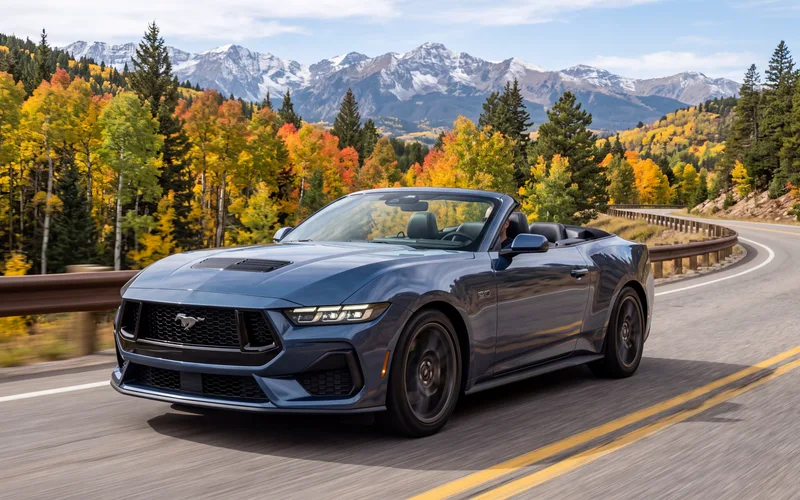 Ford Mustang ConvertibleSports CarBetter at: Practicality
If you need four seats, an 11.4 cu ft trunk and modern screens in an affordable drop-top, the Mustang delivers all three where the Miata delivers none.
Compare 1.82C-
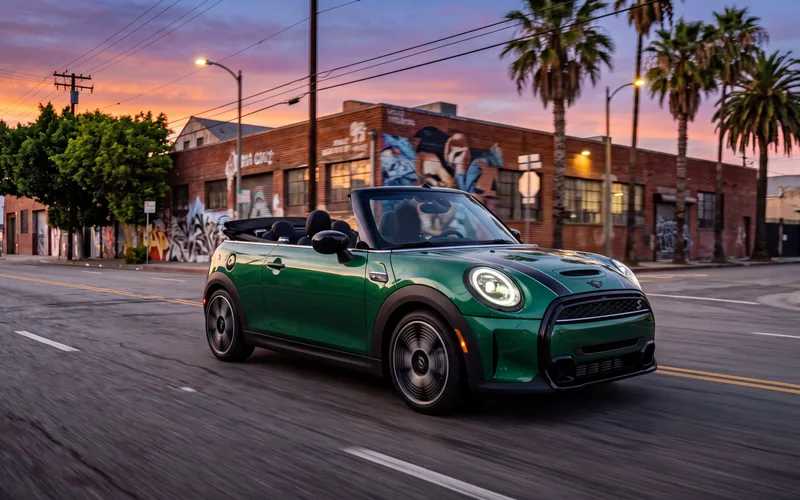 Mini Cooper ConvertibleSubcompact ConvertibleBetter at: Everyday comfort
Similar money with occasional rear seats, a bigger trunk and a more comfortable everyday cabin — at the cost of front-wheel drive and pricier service.
Compare 2.48C+
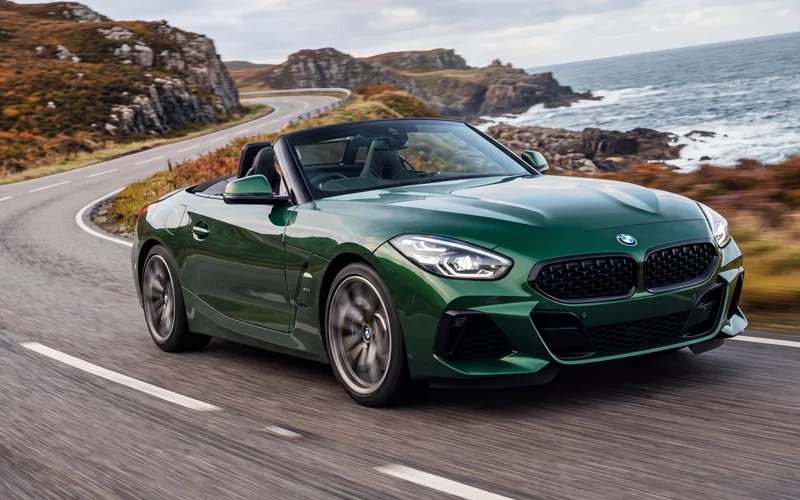 BMW Z4Sports CarBetter at: Refinement
A shopper willing to spend roughly $23,000 more gets real power, a far nicer interior and a proper two-seat roadster with luggage space that actually works.
CompareHow it's evolved
10 scored model years · 2017–2026
Subject scores by year
Hover or tap a score to see what moved it versus the year before. A corner mark flags a big swing.
| Year | Performance | Efficiency | Safety | Space | Cost | Reliability | Tech | Use-case | Driving | Value |
|---|---|---|---|---|---|---|---|---|---|---|
| 2026 | 40 | 40 | 57 | 37 | 58 | 82 | 54 | 30 | 88 | 71 |
| 2025 | 38 | 35 | 44 | 35 | 64 | 83 | 53 | 29 | 87 | 73 |
| 2024 | 38 | 32 | 49 | 36 | 67 | 82 | 51 | 30 | 88 | 74 |
| 2023 | 40 | 35 | 39 | 34 | 66 | 78 | 35 | 26 | 83 | 69 |
| 2022 | 40 | 35 | 39 | 33 | 67 | 81 | 35 | 26 | 83 | 67 |
| 2021 | 39 | 35 | 39 | 34 | 68 | 83 | 34 | 26 | 83 | 73 |
| 2020 | 40 | 35 | 39 | 34 | 66 | 84 | 33 | 26 | 83 | 74 |
| 2019 | 40 | 35 | 34 | 34 | 68 | 82 | 28 | 25 | 83 | 73 |
| 2018 | 37 | 34 | 30 | 34 | 67 | 77 | 26 | 24 | 80 | 73 |
| 2017 | 37 | 34 | 30 | 33 | 71 | 75 | 25 | 24 | 80 | 74 |
Compare two years
Best fit & conditions
Higher scores mean a better fit for that use case. Learn more about use-case fit →
Subject profile
Academic Probation · NHTSA safety recalls
May 22, 2025Electronic stability control (esc): control module · Traction control systemThe Traction Control System (TCS) and Dynamic Stability Control (DSC) indicator light may fail to illuminate as intended due to a software error. As such, these vehicles fail to conform to Federal Motor Vehicle Safety Standard number 126, "Electronic Stability Control Systems."
Defect
Mazda North American Operations (Mazda) is recalling certain 2024-2025 Mazda MX-5 vehicles. The Traction Control System (TCS) and Dynamic Stability Control (DSC) indicator light may fail to illuminate as intended due to a software error. As such, these vehicles fail to conform to Federal Motor Vehicle Safety Standard number 126, "Electronic Stability Control Systems."
Risk
An indicator light that does not illuminate may fail to warn the driver of a TCS or DSC system issue, increasing the risk of a crash.
Remedy
Dealers will replace the DSC unit, free of charge. Owner notification letters were mailed July 18, 2025. Owners may contact Mazda customer service at 1-800-222-5500 Option 6. Mazda's number for this recall is 7425E.
NHTSA campaign 25V336000 ↗Manufacturer no. 7425E12,244 vehicles potentially affected (all models in the campaign)Owners notified Jul 18, 2025Filed by Mazda North American OperationsFiled as MX-5
3 recalls on other model years of the MX-5 Miata (2017–2023)
Sep 18, 2024Air bags: air bag/restraint control module: softwareA software error in the air bag control module may cause the front air bags to deploy with excessive force during a crash. As such, these vehicles fail to comply with the requirements of Federal Motor Vehicle Safety Standard number 208, "Occupant Crash Protection."
Defect
Mazda North American Operations (Mazda) is recalling certain 2016-2023 MX-5 Miata vehicles. A software error in the air bag control module may cause the front air bags to deploy with excessive force during a crash. As such, these vehicles fail to comply with the requirements of Federal Motor Vehicle Safety Standard number 208, "Occupant Crash Protection."
Risk
An air bag that deploys with excessive force can increase the risk of injury during a crash.
Remedy
Dealers will update the Sophisticated Air Bag Sensor (SAS) control module software, free of charge. Owner notification letters were mailed November 7, 2024. Owners may contact Mazda customer service at 1-800-222-5500. Mazda's number for this recall is 6924I.
NHTSA campaign 24V695000 ↗Manufacturer no. 6924I77,670 vehicles potentially affected (all models in the campaign)Owners notified Nov 7, 2024Filed by Mazda North American OperationsFiled as MX-5Nov 12, 2021Fuel system, gasoline: delivery: fuel pumpThe impeller inside the low-pressure fuel pump may crack and deform, potentially causing the fuel pump to fail.
Defect
Mazda North American Operations (Mazda) is recalling certain 2018 Mazda3, Mazda6, 2019 CX-3, 2018-2019 MX-5, CX-5, CX-9, and 2019-2020 Mazda2 vehicles. The impeller inside the low-pressure fuel pump may crack and deform, potentially causing the fuel pump to fail.
Risk
Fuel pump failure may cause an engine stall, increasing the risk of a crash.
Remedy
Dealers will replace the fuel pumps, free of charge. Owner notification letters were mailed July 18, 2022. Owners may contact Mazda customer service at 1-800-222-5500 Option 4. Mazda's number for this recall is 5321K.
NHTSA campaign 21V875000 ↗Manufacturer no. 5321K121,038 vehicles potentially affected (all models in the campaign)Owners notified Jul 18, 2022Filed by Mazda North American OperationsFiled as MX-5Feb 1, 2019Power train: automatic transmission: control module (tcm/pcm/tecm)Due to incorrect programming of the Transmission Control Module (TCM), certain conditions may cause the vehicle to unexpectedly downshift and abruptly decelerate.
Defect
Mazda North American Operations (Mazda) is recalling certain 2016-2019 MX-5 (Miata) vehicles with automatic transmissions. Due to incorrect programming of the Transmission Control Module (TCM), certain conditions may cause the vehicle to unexpectedly downshift and abruptly decelerate.
Risk
If the vehicle abruptly downshifts, the driver may lose control of the vehicle, increasing the risk of a crash.
Remedy
Mazda will notify owners, and dealers will reprogram the TCM with corrected software, free of charge. The recall began March 14, 2019. Owners may contact Mazda customer service at 1-800-222-5500, option 4. Mazda's number for this recall is 3019A.
NHTSA campaign 19V072000 ↗Manufacturer no. 3019A14,370 vehicles potentially affected (all models in the campaign)Owners notified Mar 14, 2019Filed by Mazda North American OperationsFiled as !MX-5, MX-5
Source: NHTSA Office of Defects Investigation recall database, model years 2017–2026. Recalls are listed by model year as the manufacturer filed them; whether a specific car is affected depends on its VIN — check a VIN at nhtsa.gov ↗. NHTSA model names matched to this page: !MX-5, MX-5.
Detailed scoring by subject
1Performance & PowertrainGrades near the bottom of the scale.0.48F
Every 2025 MX-5 Miata trim — Sport, Club, Grand Touring, RF and the 35th Anniversary Edition — uses the same naturally aspirated Skyactiv-G 2.0-liter four rated 181 hp at 7,000 rpm; there is no optional engine, so the volume trim figure is also the range maximum. The framework's 130–520 hp convertible band spans turbo and V8 drop-tops, so a 181-hp figure scores low in absolute terms even though the ~2,445 lb curb weight makes it feel quick.
151 lb-ft at 4,000 rpm from the naturally aspirated 2.0-liter, identical across the lineup. Peak torque arrives high and there is no forced induction to fill in below it, so the car is driven on revs rather than torque — a deliberate character choice, but a low number against the 120–450 lb-ft convertible band.
Instrumented tests of the ND3 (2024–2025) manual cluster tightly at 5.5–5.7 s, so 5.6 s represents the volume manual trim. The optional six-speed automatic — Grand Touring only — is roughly a second slower, which is why the manual is the representative configuration. Only 181 hp, but a ~2,445 lb curb weight keeps the figure competitive with far more powerful drop-tops.
Naturally aspirated means zero turbo lag and linear, immediate throttle response — the trait reviewers most consistently praise, and the ND3 revisions (2024, carried into 2025) sharpened it further. Held back from the top band by the flip side of the same engine: thin low-end torque means real progress requires wringing it out, and the four-cylinder turns coarse and buzzy in the last 1,500 rpm before the 7,500 rpm limiter rather than rewarding it the way a great high-revving engine does.
The standard six-speed manual is a genuine benchmark — short, precise, mechanically direct throws that reviewers routinely call one of the best gearboxes on sale at any price, and it is standard on every trim including the base Sport. The ND3 update revised the shifter and gearing further. Kept just below the ceiling because the alternative is an aging six-speed automatic offered only on Grand Touring, which is slower and much less suited to the car.
Rear-wheel drive only on every 2025 trim — AWD has never been offered on any MX-5 in any generation, and there is no torque-vectoring or terrain-mode hardware to soften that. Front-engine RWD with a near-50/50 balance is the entire design premise, but by the item's criterion (availability and sophistication of AWD/4WD) it sits at the floor, below even AWD-optional rivals like the BMW 4 Series and Mercedes CLE convertibles.
One engine, take it or leave it: the 181-hp Skyactiv-G 2.0 across Sport, Club, Grand Touring, RF and 35th Anniversary. No turbo option, no hybrid, no PHEV, no EV variant — the only powertrain-adjacent choice is the transmission, and that is limited to Grand Touring. Squarely in the 0–49 'single powertrain' band and at the bottom of it, since there is not even a second engine tune.
2Efficiency & RangeOne of the MX-5 Miata's weakest categories.0.30F
EPA rates the 2025 MX-5 at 29 MPG combined with the standard six-speed manual, and the Grand Touring automatic returns the same 29 MPG combined — so the volume-trim figure holds across the lineup. Good for a rear-drive sports car but only mid-pack against the gas-convertible band, which runs to 42 MPG on the strength of small-displacement turbo four hatchback-derived drop-tops.
26 MPG city per EPA, identical for both transmissions. No start-stop system and no electrification to help in traffic — the naturally aspirated 2.0 relies on low mass rather than any efficiency hardware, which shows most in the city cycle.
34 MPG highway for the volume six-speed manual; the Grand Touring automatic edges it to 35 MPG on taller gearing. The best of the car's three EPA figures — a light car with a small naturally aspirated engine cruises efficiently, though a soft top's aerodynamics cap how far that goes.
The MX-5's 11.9-gallon fuel tank is the binding constraint, not its efficiency: at 29 MPG combined that is roughly 345 miles, near the floor of the 300–650 mi convertible band. Packaging a larger tank in a car this small was never on the table, so respectable MPG still yields short legs and frequent fuel stops on a road trip.
EPA puts annual fuel cost at $2,600 and notes the car spends about $2,000 more on fuel over five years than the average new vehicle. The penalty is the fuel grade, not the consumption: 29 MPG combined is well above the 28 MPG average, but paying premium prices erases that advantage and then some.
Premium 91-octane is recommended, not required — Mazda's owner's manual permits 87–90 octane with a noted reduction in performance, and EPA classifies the car as "Premium Gasoline (recommended)". That flexibility places it in the middle band rather than the bottom: owners can run regular in a pinch without risking the engine, but the recommended grade is what the 13:1-compression Skyactiv-G is tuned for and what the $2,600/yr EPA estimate assumes.
3SafetyGrades near the bottom of the scale.0.92F
NHTSA has never published an overall star rating for the ND-generation MX-5 (2016–2025) — normal for a low-volume two-seat roadster. Value held at the segment-midpoint convention used for untested convertibles rather than an observed result.
IIHS has no crashworthiness result of any kind for the MX-5 — moderate overlap, small overlap and side are all unrated, and the car appears nowhere in Mazda's own 2025 Top Safety Pick+ announcement despite the brand leading the industry in awards that year. Scored in the bottom band as untested with a structural concern the tests would probe: a 2,341 lb curb weight and no fixed roof give it a real mass and rollover-structure disadvantage in multi-vehicle crashes.
The $29,330 Sport base trim does include Smart Brake Support (forward AEB), Blind Spot Monitoring with Rear Cross-Traffic Alert, Lane Departure Warning and Secondary Collision Reduction — standard BSM/RCTA on the cheapest trim is better than several convertible rivals. Two holes hold it to mid-band: adaptive cruise is confined to the Grand Touring automatic (one of five configurations), and lane-keep assist is not offered on any MX-5 at any price.
Smart Brake Support - Forward is standard, but it is the older single-function Mazda system carried on the ND platform — no pedestrian-detection claim, no intersection turn assist, and no rear automatic braking, all of which Mazda fits to its newer CX architectures. IIHS has never run front crash prevention on the MX-5, so there is no vehicle-to-vehicle or day/night pedestrian result to credit.
Blind Spot Monitoring with Rear Cross-Traffic Alert is standard on every trim from the base Sport up, which is the strong end of the alert-only band and genuinely valuable in a car whose rear three-quarter view is compromised with the top up. Held out of the top band because it is warning-only — no active blind-spot steering intervention, no safe-exit alert, and no 360-degree camera anywhere in the range.
The MX-5 offers Lane Departure Warning only — an audible/visual alert active above 40 mph — with no lane-keep assist and no lane centering on any trim or option package. Scored just above the floor because a functioning departure warning is standard rather than absent entirely.
Adaptive cruise is unavailable on the volume configurations: Sport and Club are manual-only and the Grand Touring manual is excluded too, so Mazda Radar Cruise Control reaches only the Grand Touring six-speed automatic. The representative MX-5 therefore has conventional fixed-speed cruise via the steering-wheel buttons and nothing else, and there is no highway-assist function anywhere in the range even on the automatic.
No hands-free highway system is offered on the MX-5 or anywhere in Mazda's US lineup — there is no BlueCruise/Super Cruise equivalent, and with no lane centering at all the car lacks the underlying capability a hands-free mode would build on.
LED headlights, taillights and DRLs are standard from the Sport up, but the useful adjuncts are locked to the top trim: automatic on/off, High Beam Control and the Adaptive Front-lighting System that pivots the beam into curves are Grand Touring equipment, so Sport and Club buyers get no auto high beam and no cornering light. IIHS has never rated MX-5 headlights, and the very low mounting height on a 48.6-inch-tall car limits downroad reach.
Best-in-peer-group and the one safety dimension the car wins on: a very low cowl, short hood, slim A-pillars and 154-inch overall length give an unusually clear view out for a sports car, and with the soft top folded the all-round view is effectively unobstructed. Kept below the top band because top-up the cloth roof leaves a small rear window and a genuine over-the-shoulder blind zone on the left, and the compensation is a standard backup camera only — no 360-degree view is offered.
4Space & ComfortOne of the MX-5 Miata's weakest categories.0.32F
The MX-5 is a strict two-seater across every 2025 trim — Sport, Club, Grand Touring, RF Club, RF Grand Touring — with a locking bin and covered back-panel storage where a rear bench would sit. Two seats falls below the 4-5 convertible normalization band, so the item scores 0 by design.
37.4 in with the soft top raised sits in the lower third of the convertible band, and the RF's fixed roof panel cuts it to 36.8 in. Consumer Reports explicitly advises taller drivers to test-fit the 2025 car before buying; top-down driving removes the constraint entirely.
At 43.1 in the MX-5 is genuinely competitive on leg extension — the cabin is narrow and low rather than short, and it beats the BMW Z4's 42.2 in. Tilt-and-telescoping steering is standard on all 2025 trims, which widens the range of drivers who can reach a good position.
4.59 cu ft is roughly two soft carry-ons and effectively the floor of the convertible band — less than half the BMW Z4's 9.9 cu ft. The one saving grace is that neither the fabric top nor the RF's hardtop stows in the trunk, so the figure holds whether the roof is up or down.
Among the sparsest cabins on sale: no dash glovebox and no door pockets (the door trim carries a padded armrest and nothing else), leaving a lockable bin between the seatbacks, small covered back-panel cubbies and two removable cupholders. Consumer Reports found the cupholders sit awkwardly behind the driver's right elbow, and the console-mounted Commander knob is close enough to the shifter to be bumped while changing gear.
The buckets are well shaped and hold occupants without pinching, and heated seats with three settings are standard from Club up — but adjustment is minimal: manual recline and fore/aft with driver-side tilt only, no height or lumbar adjustment on any trim. Reviewer opinion splits, with Edmunds calling them supportive and Consumer Reports calling the Club's 'rudimentary... designed for weight savings, not comfort, with minimal padding and adjustability'.
Mazda tuned real suspension travel into the double-wishbone/multi-link chassis and the 2025 car's revised spring rates and damper valving tighten body control further, so it breathes with pavement rather than crashing. What holds it down is physics: a 90.9 in wheelbase at 2,366 lb pitches and gets busy over broken surfaces, and Consumer Reports rates the ride stiff enough to warn prospective commuters off.
Genuinely loud at highway speed and the car's most consistent comfort criticism — the single-layer cloth roof carries little acoustic insulation, road roar dominates on coarse surfaces, and the 2.0-liter drones at cruise. Reviewers report having to raise their voices to hold a conversation top-up; the RF's hardtop measurably helps but does not close the gap to a Z4 or a 4 Series.
Sparse even at the top of the range. Heated seats arrive on Club, but automatic climate control, heated mirrors, rain-sensing wipers and an auto-dimming mirror are all Grand Touring items — Sport and Club make do with manual A/C. Ventilated seats, a heated steering wheel and remote preconditioning are unavailable at any price, and remote engine start is restricted to the Grand Touring automatic, excluding every manual car.
5Cost of OwnershipMid-pack among this car's ten categories.2.34C+
For 2025 the Sport soft top rose $345 over 2024 ($28,985 → $29,330) with destination unchanged at $1,185, and it remains the cheapest way into a two-seat rear-drive roadster sold in the US — roughly $6K under a Mustang EcoBoost Convertible and more than $20K under a BMW Z4. Sport is soft-top-only; there is no RF Sport.
Volume sits in the Club/Grand Touring soft-top band rather than the stripped Sport, and a Grand Touring 6MT as typically equipped lands at $35,815 delivered — comfortably below the midpoint of the convertible price band. Every 2025 trim is up $345 on 2024 and the RF power hardtop still commands roughly $2,700 over the equivalent soft top.
Mechanically the MX-5 is about as simple as a modern car gets — a naturally aspirated 2.0L Skyactiv-G with no turbo or hybrid hardware, conventional dampers, a manual soft top with no motor to fail, and a sub-2,400 lb curb weight that is easy on brakes and tires — and per-incident repair costs run well under the all-vehicle average. The estimators disagree by nearly 4×, so this figure sits between RepairPal's implied ~$2,100 and Edmunds' $5,590, closer to Edmunds because that projection covers dealer-rate scheduled service, tires and wear items that the annual repair averages exclude.
Resale is the MX-5's strongest ownership-cost card and it clears the top of the convertible band outright — enthusiast demand, low volume, a large share of manual cars and no direct replacement in the segment keep used prices firm. The figure is nameplate-level and drawn from cars already five years old, and Edmunds' own TCO model is far more pessimistic ($15,977 of depreciation on a ~$35.8K car, i.e. ~55% retained), so it is trimmed slightly below the published residual.
Mazda's New Vehicle Limited Warranty is the industry-floor 3-year/36,000-mile term, unchanged for 2025 and for well over a decade — level with Ford but short of the 4-year coverage the German droptops carry. It sits at the very bottom of the framework's 3–5 year band.
5 years / 60,000 miles is the floor of the framework's 5–10 year powertrain band — competitive with Ford and better than BMW's 4-year term, but nowhere near the 10-year/100,000-mile coverage Hyundai and Kia sell on. Unchanged for 2025.
Mazda includes no complimentary scheduled maintenance in the US, so every oil change and service interval is out of pocket from day one. What is included is 24-hour emergency roadside assistance for 3 years/36,000 miles (5 years/60,000 miles for powertrain-related towing) — shorter than Ford's 5-year/60,000-mile program — plus Mazda Connected Services with the standard 8.8-inch Mazda Connect system and a 3-month SiriusXM trial from Club up. That lands just below the mid-band 'basic roadside only' tier and well under the BMW and Mercedes packages on rival cabriolets.
$35,815 volume-trim price minus its estimated resale value after 5 years (68% retained, or about $24,354) leaves about $11,461 in depreciation. Add the projected $4,800 in 5-year maintenance and repairs, and owning this vehicle for 5 years costs about $16,261 in total.
6Reliability & QualityOne of the MX-5 Miata's strongest categories.3.63A-
Consumer Reports predicts the 2025 MX-5 will be more reliable than the average new car — its top predicted-reliability band — and RepairPal rates the 2025 car 4.0/5.0, 8th of 21 subcompact cars. The structural reasons are the real story: 2025 is model year 10 of the ND generation and a carry-over year behind the 2024 ND3 update, so nothing is new, and the car carries the least failure-prone hardware in the segment — one naturally aspirated 2.0L four, no turbo, no hybrid system, no adaptive suspension, and a manually latched fabric roof with no motors or hydraulics. Scored at the top of the convertible set, above the Z4 (80) and the Mustang Convertible (75), which both carry forced induction and powered or more complex roof mechanisms.
Mazda's dependability standing at the 2025 model year is genuinely top-tier rather than merely good. The 2025 J.D. Power Vehicle Dependability Study placed Mazda third overall at 161 PP100 — behind only Lexus (140) and Buick (143), second among mass-market brands ahead of Toyota — an improvement of 24 PP100 and four positions year over year. Consumer Reports ranked Mazda sixth of ~24 brands for new-car predicted reliability and third for long-term/used-car reliability over the same period. Held at 85 rather than higher because the two studies do not fully agree on placement and because Mazda's initial-quality standing is poor (see 6.2.2), which is a separate measure but the same brand. Brand-level judgment, so scored identically to the 2025 Mazda3 and CX-5 already in this dataset.
The 2025 MX-5 carries exactly one NHTSA recall, and it is close to the least severe kind: campaign 25V336000 (Mazda 7425E), 12,244 units across 2024-2025, in which the TCS/DSC indicator lamp may fail to illuminate when the stability-control unit detects abnormal yaw — an FMVSS 126 non-compliance with no effect on drivability or braking and no reported accidents or injuries. For context the Mustang Convertible's S650 generation has accumulated ten-plus campaigns over the same span. The ND generation's one notable earlier campaign, the industry-wide Denso low-pressure fuel-pump impeller recall, covered 2018-2020 production and does not touch 2025. Held out of the high 80s by two things: the remedy was not ready at notification — owners received 'no parts available' phased letters in July 2025 with full remedy availability estimated at Q2 2026, roughly a year's wait — and the 2024 ND3 update's new 8.8-inch infotainment unit reset the software-bulletin clock, with ND TSB traffic skewing toward infotainment and i-Activsense software.
The strongest line in the category and the clearest durability advantage in the segment. The 2.0L Skyactiv-G (PE-VPS) has been in continuous production since 2012 across the Mazda3 and CX-5 with a high-mileage reputation, and the 2025 MX-5 pairs it with either Mazda's own 6-speed manual — a robust unit with no failure pattern — or a conventional 6-speed torque-converter automatic on Grand Touring. There is no turbocharger, no CVT, no dual-clutch and no hybrid battery anywhere in the 2025 range, so every high-risk driveline component the Z4, Mustang and Mini each carry in some form is simply absent, and a sub-2,400-lb curb weight keeps clutch, brake and driveline loads low. Held just below 90 by the 2019 high-revving revision — 181 hp at 7,000 rpm with a 7,500-rpm redline on lighter internals, a higher-stress state of tune than the passenger-car version of the same engine — and by scattered ND-generation transmission complaints in owner-survey problem-area data.
Judged against price this is the MX-5's softest quality line, and reviewers genuinely split on it. The execution is thoughtful — body-color painted door tops, a clean symmetric dash, well-damped switchgear, the 2024-onward high-contrast gauge cluster and extra center-console padding, Nappa leather on Grand Touring and the 300-unit 35th Anniversary Edition, Recaros available on Club — and U.S. News credits the cabin with soft plastics and synthetic leather that read upscale. But other reviewers of the same car report that most surfaces are hard to the touch, and the cabin is small and simply trimmed at a $33-41K premium-class price where the German droptops deliver broadly soft-touch interiors. Scored well above the Mustang Convertible (65) and Mini (72) on material honesty and switchgear feel, but clearly below the Z4 and 4 Series (both 84) and below the cheaper Mazda3 (88), whose larger cabin carries far more soft-touch coverage for the money.
Assembly quality is a real strength held back by a brand-level initial-quality problem. The MX-5 is built in low volume at Mazda's Hiroshima operations and reviewers describe a car that, despite its size, 'isn't flimsy' and feels solidly put together, with the manually latched soft top a standout — single-latch, one-handed operation with sealing and wind-noise control widely rated better than powered fabric roofs costing far more, and a harder result to achieve in an open body than a fixed-roof one. Against that, Mazda placed poorly in the 2025 J.D. Power Initial Quality Study at roughly 225 PP100, well behind the mass-market leaders, with software glitches and minor interior fit-and-finish among the recurring complaints, and a 2025 press car was reported with a gear lever rattling in its gate. Scored in line with the 2025 Mazda3 (78) and just under the CX-5 (80), below the Z4's 83 and above the Mustang Convertible's 65.
Network density is the clearest ownership weakness and it is brand-level, so it applies to the MX-5 exactly as to the rest of the Mazda range. Mazda operated about 545 US dealers in January 2025 against roughly 2,900 Ford, 1,200-plus Toyota and about 1,000 Honda stores, and the company has said explicitly that it intends to grow through existing dealers rather than add points — so the thin coverage across rural and smaller-metro markets is a deliberate strategy, not a gap closing over time. A buyer outside a major metro can face a materially longer drive for warranty work than a Mustang owner with Ford's near-ubiquitous network behind them, which matters more than usual here given the recall remedy noted in 6.1.3 required a second dealer visit. Facility quality has improved — the Retail Evolution program passed 354 upgraded stores in 2025 — and service satisfaction sits near the mainstream average, but coverage is what sets the score.
The best ownership line in the category and a genuine outlier for a premium-priced sports car. RepairPal puts the 2025 MX-5's average annual repair-and-maintenance cost at $429 — below the $456 subcompact average and a third under the $652 all-vehicle average — and notes repairs are both less frequent and less severe than average. The mechanical package is cheap to work on: naturally aspirated with no turbo plumbing, no hybrid hardware, a manual roof with no motors or hydraulics, and small, light consumables. On top of that the Miata carries one of the largest enthusiast aftermarkets of any modern car, with a deep independent-specialist and performance-parts ecosystem and decades of continuity behind it. Kept below the Mustang Convertible's 92 because Mazda's US volume is far smaller than Ford's, so ND-specific body panels, lighting and trim have a thinner supply chain and stay closer to dealer-only pricing.
7Technology & InfotainmentGrades below the middle of the scale.1.53D
The ND3 refresh raised the center display to 8.8 inches and that is the only size offered for 2025, standard on Sport, Club and Grand Touring alike. It is the smallest screen in the convertible set — the Z4 runs 10.25 in and the Mustang 13.2 in — so it normalizes near the bottom of the band.
Mazda Connect suits a roadster better than it suits a crossover — the rotary Commander dial, real volume knob and separate climate switchgear keep eyes up in a car bought for driving, and response is quick with clean graphics. It loses ground on absolute capability and on one real ergonomic flaw: the console knob sits close enough to the shifter that Consumer Reports logged accidental radio changes while changing gear, and knob-only control makes working through projected phone menus slower than on any rival here.
Wireless Android Auto is new for 2025, joining wireless Apple CarPlay, and both are standard on Club and Grand Touring — the two trims that account for most sales. Sport is wired-only, which keeps this out of the top band, but wireless projection now covers the volume configurations rather than the top trim alone.
Alexa Built-in is standard on every trim and is a genuine natural-language assistant for media, calls and smart-home control, which lifts this above Mazda's own rigid fixed-command system. Native navigation is the weak half: the Mazda Navigation System is a Grand Touring exclusive, so Sport and Club buyers rely on connected services and phone projection for guidance.
The nine-speaker Bose system on Club and Grand Touring puts speakers in both headrests and adds a subwoofer with AudioPilot noise compensation — a more useful answer to open-air wind noise than raw speaker count, and a real strength given how loud this cabin is. It is held out of the top band by the modest six-speaker base setup on Sport and by acoustics no convertible system fully overcomes.
The soft-top MX-5 keeps a conventional three-dial binnacle built around a central analog tachometer with a small trip-computer display — the ND3 refresh brought no reconfigurable cluster. RF models add a 4.6-inch full-color LCD carrying trip data and roof status, which is the best the line offers and still well short of the Z4's 12.3-inch digital cluster or the Mustang's 12.4-inch unit.
Mazda Connected Services covers infotainment-level updating — an online-update channel and map refresh — but not whole-vehicle over-the-air software that adds features, and map updating is still documented as a PC-sourced operation. Rivals are ahead: Ford ships Power-Up OTA on the Mustang and BMW pushes full remote software upgrades to the Z4.
MyMazda with Connected Services is reasonably broad on paper — remote lock/unlock, remote hazard lights, vehicle status alerts, vehicle finder, send-to-car, in-vehicle Wi-Fi, automatic 911 and a health report — and is subscription-gated after the included trial. The MX-5-specific deduction is remote engine start: it is offered only on the Grand Touring automatic, which excludes every manual car, and there is no phone-as-key.
Two USB-C inputs and a 12V outlet are standard on every trim; in a strict two-seater that is one USB-C per occupant, so the cabin is covered more completely than the raw count suggests. No wireless charging pad is offered at any price and there is no household outlet or onboard power, which holds it mid-band.
Better equipped than the segment stereotype: Mazda Advanced Keyless Entry and push-button ignition are standard on all three trims, not upsold, and a remote trunk release is included. What is missing keeps it out of the top band — no phone-as-key, a manually operated trunk lid with no power or hands-free function, and no remote start on the manual cars most MX-5 buyers choose.
A rear-view camera is standard on every trim and Blind Spot Monitoring with Rear Cross-Traffic Alert is too — genuinely useful in a car whose roof-up rear three-quarter visibility is poor. But the 2025 equipment list carries no parking sensors at all, front or rear, no 360-degree surround view on any trim and no automated parking. The 154.1-inch footprint makes those omissions easier to live with than the score alone implies.
Mazda's windshield-projected Active Driving Display is fitted across the Mazda3 and CX-series but has never been offered on the MX-5, and 2025 is no exception — no head-up display on any trim, soft top or RF. The low, close windshield and driving-focused cockpit are the usual rationale, but this item measures availability and there is none.
8Use-Case FitThe MX-5 Miata's lowest-graded category.0.00F
A strict two-seater with no rear bench, no LATCH anchors and no legal place to install a child seat — the front passenger airbag cannot be switched off for a rear-facing seat. Daily family logistics are not merely compromised here, they are impossible.
The standard driver-assist baseline is decent for the price — Smart Brake Support, Blind Spot Monitoring, Rear Cross-Traffic Alert and Lane Departure Warning on every trim — but the family case collapses on the fundamentals: no rear seat, no rear-occupant alert, radar cruise restricted to the Grand Touring automatic, and neither an NHTSA overall star rating nor an IIHS award for the 2025 car.
Nothing to score in the family sense: two seats, no rear amenities, no rear climate or entertainment, and a 4.59 cu ft trunk that will not hold luggage for two adults and a child even if a child could ride along. This item measures multi-hour comfort for four-plus occupants, and the car cannot carry four.
Light controls, an easy clutch, a 30.8 ft turning circle and a body you can place to the inch make the MX-5 genuinely unintimidating in traffic, and standard tilt-and-telescoping steering helps most drivers get comfortable. Fatigue is what costs it: Consumer Reports rates the ride stiff enough to warn commuters off, the cabin is loud at highway speed, and adaptive cruise is unavailable on any manual — the configuration most buyers choose.
29 MPG combined from a 181 hp rear-drive sports car is a real efficiency achievement, and consumables are cheap — 205/45R17 tires and Mazda's low routine-service costs. Two things cap it: the Skyactiv-G 2.0 is rated on premium fuel, pushing EPA's annual bill to about $2,600, and the 11.9-gallon tank means frequent stops.
One of the easiest cars sold in America to park: 154.1 in long and 68.3 in wide with a 30.8 ft curb-to-curb turning circle and 2.7 turns lock-to-lock — the Z4 needs 35.8 ft. Sightlines are excellent top-down. The only deductions are poor roof-up rear three-quarter visibility and the complete absence of parking sensors, which a car this small largely shrugs off.
No tow rating is published for the US-market MX-5 and Mazda does not offer a factory hitch; payload is roughly 380 lb — two adults and little else — and the 4.59 cu ft trunk is the entire cargo provision. There is no meaningful work capability to measure.
The Skyactiv-G 2.0 and the ND chassis have a strong reliability record and the car is famously robust under track abuse, which is the one point in its favour here. But it has no fleet or work history, the interior is cloth and leather rather than washable, and low ground clearance and a soft top rule out jobsite environments entirely.
No bed, no tie-downs, no onboard power beyond a single 12V socket, no roof rails and no factory upfit ecosystem. Whatever rack or hitch solutions exist for the MX-5 are aftermarket and aimed at bikes and track tires, not work.
A cult road-trip car on the right road and a poor one on the interstate. Range is only about 345 miles from an 11.9-gallon tank, the cabin is loud enough that Consumer Reports flags conversation difficulty, the ride is stiff, seats have no lumbar or height adjustment, and adaptive cruise is unavailable on manuals — so the fatigue-reducing tech that lifts the Z4 here simply is not on offer.
Rear-wheel drive only with no AWD offered, summer performance tires as standard fitment, minimal ground clearance, no tow rating and no roof rails. It is pavement-bound by design; a gravel forest road is about the limit, and camping provisions amount to a 12V socket.
4.59 cu ft is two soft carry-ons and nothing bulky, with no seats to fold, no underfloor storage and no pass-through. The one genuine merit is that the figure is constant — neither the fabric top nor the RF hardtop eats into the trunk — so unlike most convertibles you do not lose your luggage by lowering the roof.
9Driving ExperienceThe MX-5 Miata's best-graded category.3.90A+
The reference point the rest of the segment is measured against, and the ND3 hardware carried into 2025 sharpens it further: new spring rates and damper valving, and an asymmetric limited-slip differential on manual cars that locks harder under braking for stability and less under power to cut understeer. At 2,366 lb on a 90.9 in wheelbase with double wishbones up front, it changes direction with an immediacy nothing else here approaches.
The ND3 revision — a new rack, reduced internal friction and recalibrated electric assist — is the single biggest improvement of the refresh and directly addresses the one dynamic criticism the earlier ND attracted. A 15.5:1 ratio and 2.7 turns lock-to-lock make it quick without being nervous, and reviewers single out the added heft and the natural off-centre response.
Modest hardware doing easy work: 11-inch vented front and 11-inch solid rear discs on single-piston calipers would be marginal on a heavier car, but at 2,366 lb they deliver short, repeatable road stops with a firm, well-modulated pedal. Front Brembos are available in the Club package for buyers who track the car, where the base setup can be worked into fade.
The naturally aspirated Skyactiv-G 2.0 is the antithesis of a laggy turbo — throttle response is immediate and linear all the way to a 7,500 rpm limiter with peak power at 7,000, and the six-speed manual's short, precise throw is widely held up as the best shifter on sale at any price. It gives up points only for needing revs to make progress and for the low-rpm flat spot that comes with the territory.
The 2.0-liter has genuine character as it climbs toward the limiter and the sound is part of the appeal top-down, but it is not a refined noise: the four-cylinder is coarse and boomy near redline and drones at highway cruise in a lightly insulated shell. Enjoyable when you are driving, wearing when you are just travelling.
30.8 ft curb-to-curb is below the bottom of the convertible band and among the tightest of any car sold in the US — the BMW Z4 needs 35.8 ft. Combined with a 154.1-inch length it makes U-turns and tight parking structures trivial.
The relationship between wheel, pedals and shifter is close to perfect and the low cowl gives superb forward sightlines, with tilt-and-telescoping steering now standard on all trims. What drags it down is fit and reach: no seat height or lumbar adjustment on any trim, a cabin Consumer Reports advises tall drivers to test before buying, low-slung ingress and egress, and cupholders that sit behind the driver's right elbow.
The benchmark for the entire measure. Low mass, rear drive, a rev-happy naturally aspirated engine, the best manual shifter on sale and a roof that drops in seconds by hand from the driver's seat — the ND3's sharper rack and new LSD only widen the gap. Nothing else in the segment, at any price, is more consistently recommended by enthusiasts.
10Value & Market PositionOne of the MX-5 Miata's strongest categories.2.95B-
The base Sport carries real content for a $30.5K sports car: the 8.8-inch Mazda Connect system with Apple CarPlay/Android Auto and Alexa Built-in, LED head- and taillights, climate control, advanced keyless entry, six-speaker audio, and — unusually for an entry sports car — Blind Spot Monitoring, Rear Cross-Traffic Alert, Lane Departure Warning, Smart Brake Support and Secondary Collision Reduction as standard. What holds it to mid-band is unchanged for 2025: Mazda Radar Cruise Control is automatic-only, so a manual buyer cannot get adaptive cruise at any price, and heated seats, leather, Bose audio and navigation are all Club/Grand Touring content. Against a Mustang Convertible EcoBoost's 12.4-inch cluster plus 13.2-inch center screen and full Co-Pilot360 suite, the list reads competitive rather than generous.
On what the money actually buys in this segment the MX-5 is the benchmark: $30,515 delivered puts a rear-drive, roughly 2,340 lb roadster with a 181-hp/151 lb-ft Skyactiv-G 2.0L and a short-throw six-speed manual in the driveway, and $34,015 adds Bilstein dampers, a front shock-tower brace, induction sound enhancer and the asymmetric conical-clutch LSD with DSC-Track — hardware the 2025 Grand Touring 6MT also carries. Every genuine two-seat roadster rival costs far more (a Z4 opens in the mid-$50Ks, a 718 Boxster past $70K) and the cheaper drop-tops are front-drive. Content per dollar is modest and prices rose $345 for 2025; engineering and capability per dollar are class-defining, which is what this segment is bought on.
Three soft-top trims (Sport, Club, Grand Touring) plus RF Club and RF Grand Touring hardtops give five well-spaced configurations from stripped-and-eager to leather-lined, with the $4,900 Brembo/BBS/Recaro package as a genuine track-leaning option and the 350-unit 35th Anniversary Edition as a 2025-only halo. But the lineup is one engine deep with no AWD and no powertrain choice, standalone options amount to leather, four paint colors and accessories, and the transmission split is trim-constrained — the automatic is confined to Grand Touring, and RF Club is manual-only with the performance package mandatory. Reasonable choice with real gaps; the limited edition adds cachet, not breadth.
In absolute terms this is a low-volume car, but the 2025 trajectory is up, not down: 8,727 US deliveries in calendar 2025, roughly +7.7% on 2024's 8,103 and the best result since 2021 — in a segment that has been shrinking around it, with the Fiat 124 gone and the BRZ/GR86 pair being coupes. It outsold the Mazda3 hatchback. Steady, mildly rising niche leadership at small scale keeps it above the mid-band floor but well short of a volume story.
Mazda carries unusual enthusiast credibility for a mainstream badge, ranks at or near the top of recent Consumer Reports brand reliability tables, and has pushed hard upmarket on interior quality and design. The MX-5 is the halo — a genuinely beloved icon with an enormous owners-club and aftermarket ecosystem and the best residuals in the Mazda range; the 35th Anniversary run selling out and being extended from 300 to 350 cars is a direct read on desirability. It lacks the status cachet a BMW or Mercedes roundel brings to a drop-top, which keeps it out of the top band.
Support is real but a step down from 2024, when Mazda Financial Services ran 0% APR on the MX-5 plus $1,000 in APR cash. The 2025 car instead drew subvented rates in the 3.9%–4.9% range for well-qualified buyers, a $500 Military Appreciation bonus and a $500 Donation bonus, with $1,000 in Genuine Mazda Accessories appearing on leftover RF stock — meaningful money on a $30–36K car, and financing support rather than desperation pricing. Straight dealer discounting off MSRP stays modest and lease value is widely rated poor, which caps it in the middle-upper band.
2025 is a carry-over year immediately after the substantive ND3 update: Mazda's own pricing release details no mechanical or technology changes for 2025, listing only Deep Crystal Blue becoming available on Grand Touring and the 350-unit 35th Anniversary Edition, and framing the year in terms of kaizen refinement 'since its debut for the 2016 model year'. That makes 2025 the tenth model year on the same ND platform, engine and cabin architecture — extraordinary longevity in a segment that usually turns over in six or seven years — with the Iconic SP concept already signposting a successor. Current and well-sorted, but late-cycle with redesign risk for a buyer.
Few cars in any class carry a stronger critical record. U.S. News scores the 2025 MX-5 Miata 9.3/10, KBB calls it 'the pinnacle of simple, inexpensive sports car bliss' with owners at 4.7/5, both the MX-5 and MX-5 RF took a 2025 Car and Driver Editors' Choice award, and reviewers still treat it as the reference point for affordable driving pleasure. The nameplate has 19 Car and Driver 10Best wins, among the most of any model, and the ND generation swept 2016 World Car of the Year and World Car Design of the Year. It falls short of the top band on one specific 2025 fact: it did not make the 2025 10Best list, where the Porsche 718 Boxster/Cayman and Subaru BRZ/Toyota GR86 took the sports-car slots — its most recent win remains 2023.