

The verdict
A struggling sports car, strong on driving and held back by use-case.
The 2023 MX-5 Miata is the cheapest genuine two-seat rear-drive roadster you could buy new — $29,325 delivered for a 2,341-lb car with the best manual shifter on sale — and it drives better than anything near the price. It is also a car that says no to almost everything else: two seats, a 4.59 cu ft trunk, no glovebox, no adaptive cruise control at any trim, a 7-inch screen, and a cabin that gets loud above 75 mph. Reliability and resale are genuine strengths (roughly 67% of MSRP retained at five years, about $4,000 in five-year upkeep), so the running costs stay honest. Buy it as a second car for the joy of driving; do not ask it to be your only one.
Jump to scoresStrengths
- It is one of the most enjoyable cars on sale, at any price
- The best six-speed manual you can buy
- Holds its value better than almost anything, and is cheap to keep
What holds it back
- Two seats and a 4.59 cu ft trunk — that is the whole car
- No adaptive cruise control, no lane-keep assist — at any price
- The technology is a generation behind
Top alternatives
Cars shoppers cross-shop with the Mazda MX-5 Miata 2.48C+
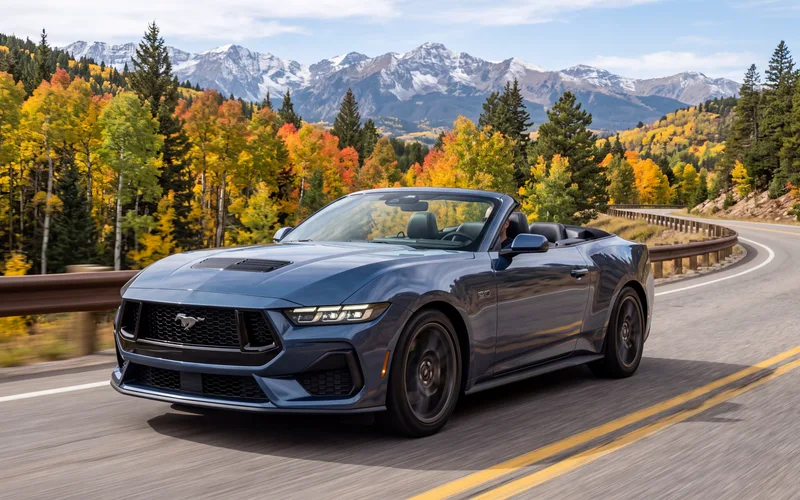 Ford Mustang ConvertibleSports CarBetter at: Practicality
If you need four seats, an 11.4 cu ft trunk and modern screens in an affordable drop-top, the Mustang delivers all three where the Miata delivers none.
Compare 1.82C-
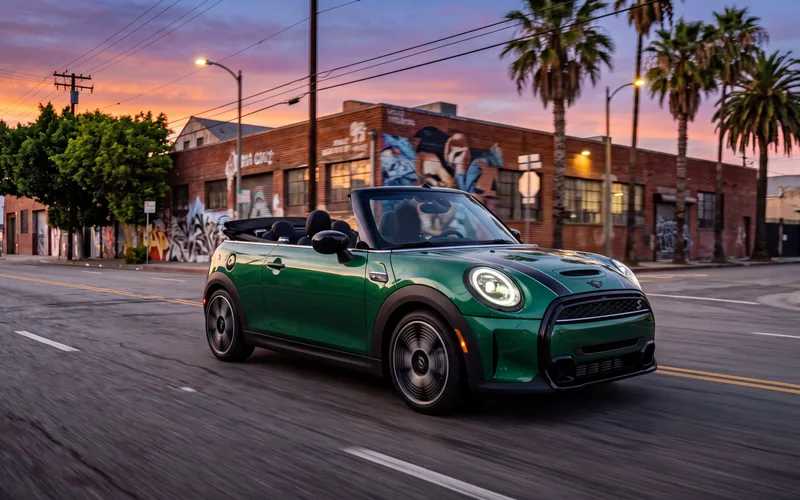 Mini Cooper ConvertibleSubcompact ConvertibleBetter at: Everyday comfort
Similar money with occasional rear seats, a bigger trunk and a more comfortable everyday cabin — at the cost of front-wheel drive and pricier service.
Compare 2.48C+
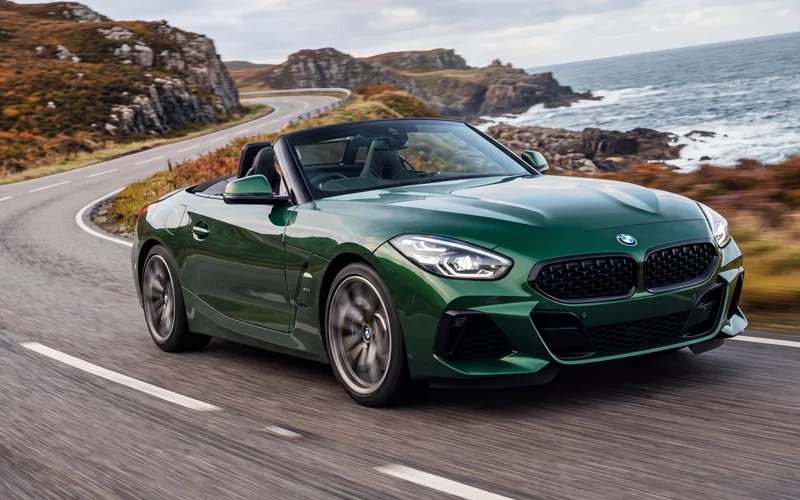 BMW Z4Sports CarBetter at: Refinement
A shopper willing to spend roughly $23,000 more gets real power, a far nicer interior and a proper two-seat roadster with luggage space that actually works.
CompareHow it's evolved
10 scored model years · 2017–2026
Subject scores by year
Hover or tap a score to see what moved it versus the year before. A corner mark flags a big swing.
| Year | Performance | Efficiency | Safety | Space | Cost | Reliability | Tech | Use-case | Driving | Value |
|---|---|---|---|---|---|---|---|---|---|---|
| 2026 | 40 | 40 | 57 | 37 | 58 | 82 | 54 | 30 | 88 | 71 |
| 2025 | 38 | 35 | 44 | 35 | 64 | 83 | 53 | 29 | 87 | 73 |
| 2024 | 38 | 32 | 49 | 36 | 67 | 82 | 51 | 30 | 88 | 74 |
| 2023 | 40 | 35 | 39 | 34 | 66 | 78 | 35 | 26 | 83 | 69 |
| 2022 | 40 | 35 | 39 | 33 | 67 | 81 | 35 | 26 | 83 | 67 |
| 2021 | 39 | 35 | 39 | 34 | 68 | 83 | 34 | 26 | 83 | 73 |
| 2020 | 40 | 35 | 39 | 34 | 66 | 84 | 33 | 26 | 83 | 74 |
| 2019 | 40 | 35 | 34 | 34 | 68 | 82 | 28 | 25 | 83 | 73 |
| 2018 | 37 | 34 | 30 | 34 | 67 | 77 | 26 | 24 | 80 | 73 |
| 2017 | 37 | 34 | 30 | 33 | 71 | 75 | 25 | 24 | 80 | 74 |
Compare two years
Best fit & conditions
Higher scores mean a better fit for that use case. Learn more about use-case fit →
Subject profile
Academic Probation · NHTSA safety recalls
Sep 18, 2024Air bags: air bag/restraint control module: softwareA software error in the air bag control module may cause the front air bags to deploy with excessive force during a crash. As such, these vehicles fail to comply with the requirements of Federal Motor Vehicle Safety Standard number 208, "Occupant Crash Protection."
Defect
Mazda North American Operations (Mazda) is recalling certain 2016-2023 MX-5 Miata vehicles. A software error in the air bag control module may cause the front air bags to deploy with excessive force during a crash. As such, these vehicles fail to comply with the requirements of Federal Motor Vehicle Safety Standard number 208, "Occupant Crash Protection."
Risk
An air bag that deploys with excessive force can increase the risk of injury during a crash.
Remedy
Dealers will update the Sophisticated Air Bag Sensor (SAS) control module software, free of charge. Owner notification letters were mailed November 7, 2024. Owners may contact Mazda customer service at 1-800-222-5500. Mazda's number for this recall is 6924I.
NHTSA campaign 24V695000 ↗Manufacturer no. 6924I77,670 vehicles potentially affected (all models in the campaign)Owners notified Nov 7, 2024Filed by Mazda North American OperationsFiled as MX-5
3 recalls on other model years of the MX-5 Miata (2017–2019, 2024–2025)
May 22, 2025Electronic stability control (esc): control module · Traction control systemThe Traction Control System (TCS) and Dynamic Stability Control (DSC) indicator light may fail to illuminate as intended due to a software error. As such, these vehicles fail to conform to Federal Motor Vehicle Safety Standard number 126, "Electronic Stability Control Systems."
Defect
Mazda North American Operations (Mazda) is recalling certain 2024-2025 Mazda MX-5 vehicles. The Traction Control System (TCS) and Dynamic Stability Control (DSC) indicator light may fail to illuminate as intended due to a software error. As such, these vehicles fail to conform to Federal Motor Vehicle Safety Standard number 126, "Electronic Stability Control Systems."
Risk
An indicator light that does not illuminate may fail to warn the driver of a TCS or DSC system issue, increasing the risk of a crash.
Remedy
Dealers will replace the DSC unit, free of charge. Owner notification letters were mailed July 18, 2025. Owners may contact Mazda customer service at 1-800-222-5500 Option 6. Mazda's number for this recall is 7425E.
NHTSA campaign 25V336000 ↗Manufacturer no. 7425E12,244 vehicles potentially affected (all models in the campaign)Owners notified Jul 18, 2025Filed by Mazda North American OperationsFiled as MX-5Nov 12, 2021Fuel system, gasoline: delivery: fuel pumpThe impeller inside the low-pressure fuel pump may crack and deform, potentially causing the fuel pump to fail.
Defect
Mazda North American Operations (Mazda) is recalling certain 2018 Mazda3, Mazda6, 2019 CX-3, 2018-2019 MX-5, CX-5, CX-9, and 2019-2020 Mazda2 vehicles. The impeller inside the low-pressure fuel pump may crack and deform, potentially causing the fuel pump to fail.
Risk
Fuel pump failure may cause an engine stall, increasing the risk of a crash.
Remedy
Dealers will replace the fuel pumps, free of charge. Owner notification letters were mailed July 18, 2022. Owners may contact Mazda customer service at 1-800-222-5500 Option 4. Mazda's number for this recall is 5321K.
NHTSA campaign 21V875000 ↗Manufacturer no. 5321K121,038 vehicles potentially affected (all models in the campaign)Owners notified Jul 18, 2022Filed by Mazda North American OperationsFiled as MX-5Feb 1, 2019Power train: automatic transmission: control module (tcm/pcm/tecm)Due to incorrect programming of the Transmission Control Module (TCM), certain conditions may cause the vehicle to unexpectedly downshift and abruptly decelerate.
Defect
Mazda North American Operations (Mazda) is recalling certain 2016-2019 MX-5 (Miata) vehicles with automatic transmissions. Due to incorrect programming of the Transmission Control Module (TCM), certain conditions may cause the vehicle to unexpectedly downshift and abruptly decelerate.
Risk
If the vehicle abruptly downshifts, the driver may lose control of the vehicle, increasing the risk of a crash.
Remedy
Mazda will notify owners, and dealers will reprogram the TCM with corrected software, free of charge. The recall began March 14, 2019. Owners may contact Mazda customer service at 1-800-222-5500, option 4. Mazda's number for this recall is 3019A.
NHTSA campaign 19V072000 ↗Manufacturer no. 3019A14,370 vehicles potentially affected (all models in the campaign)Owners notified Mar 14, 2019Filed by Mazda North American OperationsFiled as !MX-5, MX-5
Source: NHTSA Office of Defects Investigation recall database, model years 2017–2026. Recalls are listed by model year as the manufacturer filed them; whether a specific car is affected depends on its VIN — check a VIN at nhtsa.gov ↗. NHTSA model names matched to this page: !MX-5, MX-5.
Detailed scoring by subject
1Performance & PowertrainGrades near the bottom of the scale.0.64F
The 2023 MX-5 is a carry-over year in the ND generation (ND2 hardware, introduced for 2019), using the 2.0L naturally aspirated Skyactiv-G rated 181 hp at 7,000 rpm on Sport, Club and Grand Touring alike — there is no optional engine to raise the model-range maximum. Against the convertible band (130–520 hp) that sits near the floor, because the framework measures absolute output while the MX-5's premise is a ~2,350-lb curb weight rather than power.
Peak torque is 151 lb-ft at 4,000 rpm, unchanged for 2023 and the same figure whether the car has the 6-speed manual or the 6-speed automatic. This is the MX-5's weakest hard number — the engine makes its case at the top of the tachometer, not in the midrange — and 151 lb-ft sits just above the convertible band floor of 120.
Instrumented testing of the 181-hp manual soft-top clusters at 5.7 seconds, with the heavier RF at 5.8 — quick in absolute terms despite modest output, because the car weighs roughly 2,350 lbs. The manual is scored as the volume configuration since it is standard on Sport and Club and the automatic was restricted to Grand Touring for 2023.
Naturally aspirated with no turbo in the way, the Skyactiv-G gives essentially instant throttle response and a linear pull to its 7,500-rpm redline — the benchmark for delivery among these convertible peers, ahead of the turbocharged BMW Z4 and the Mustang on responsiveness alone. Held below the top of the band because the four turns audibly coarse in the last 1,000 rpm and there is little to lean on below 3,000 rpm.
The standard 6-speed manual is widely treated as the best shifter on sale at any price — very short throws, a light and precise gate, well-matched ratios — placing it above every convertible peer in the set. Kept short of the mid-90s because the optional 6-speed automatic is an old design with only six ratios and unremarkable responses; for 2023 Mazda narrowed it to Grand Touring only, so the great majority of cars sold are the manual.
Rear-wheel drive only, with no all-wheel-drive option on any 2023 trim and none anywhere in the nameplate's history — the bottom band by the item's own definition. Manual Club and Grand Touring cars add an asymmetric limited-slip differential, which helps put power down but is not AWD.
One engine, full stop: the 2.0L Skyactiv-G is the only powertrain across the entire 2023 range, with no turbo alternative, no hybrid, no PHEV and no EV variant. The only drivetrain decision a buyer makes is manual versus automatic, which is a transmission choice rather than a powertrain one — well below peers like the Z4 and Mustang that each offer two or three distinct engines.
2Efficiency & RangeGrades near the bottom of the scale.0.28F
The 2023 MX-5 carries over the ND2 2.0L Skyactiv-G with no electrification, EPA-rated 29 MPG combined with the 6-speed manual — the volume configuration, standard on Sport and Club. That is genuinely frugal for a rear-drive sports car and sits mid-band against other gas convertibles.
26 MPG city reflects a roughly 2,350-lb curb weight and a small-displacement engine, but with no hybrid assist there is no stop-and-go advantage, so it lands mid-band rather than near the top of the gas-convertible range.
Highway is the MX-5's strongest efficiency figure — light weight and a tall top gear yield 34 MPG with the manual, 35 with the automatic — and it is the number where the car most clearly beats the larger, heavier convertibles in the peer set.
Good economy is offset by a very small 11.9-gallon tank dictated by the packaging of a 154-inch roadster, so total range lands near the bottom of the convertible band despite the car's efficiency — a real touring limitation, not a rounding artifact.
The EPA's published annual cost for the manual car is $2,600 at 15,000 mi/yr, and it is the premium-fuel requirement rather than consumption that drives the figure — at 29 MPG combined the MX-5 burns only about 517 gallons a year, but every one of them is 91-octane.
Mazda recommends 91-octane premium for the high-compression Skyactiv-G to reach its rated 181 hp, but regular unleaded is permitted with reduced output — a real yet avoidable cost penalty, which places it in the 'premium recommended, not required' middle band. No E85, diesel or charging considerations apply.
3SafetyGrades near the bottom of the scale.0.60F
NHTSA has a 2023 MX-5 entry in its safety-ratings database but every field reads "Not Rated" — no frontal, side, pole or rollover test was run, which is normal for a low-volume two-seat convertible outside NCAP's test priorities. The framework has no encoding for "untested," so the value is held at the same mid-band placeholder every untested convertible peer received (Z4, Mustang Convertible, Mini Convertible all at 4 stars / 50) rather than being credited or penalized on absent data.
The MX-5 has no IIHS crashworthiness ratings at all — not merely no award. Mazda's own 2023 award release is titled "Every Mazda Vehicle Tested Earns 2023 IIHS TOP SAFETY PICK" and lists Mazda3, CX-30, CX-5, CX-50 and CX-9; the MX-5 is absent because it was never run. That places it in the untested band, and it sits below untested peers like the Z4 because of a compounding documented concern: an open FMVSS 208 non-compliance recall for front airbags that deploy with excessive force, covering 2016–2023 MX-5s. A ~2,340-lb two-seater also carries unavoidable mass-disparity exposure in multi-vehicle crashes.
Mazda standardizes a genuinely useful core on the base Sport trim — Blind Spot Monitoring, Rear Cross Traffic Alert, Lane Departure Warning, Smart City Brake Support and a rearview camera are all Std across Sport, Club and Grand Touring. But two of the five features this item names are not merely trim-locked, they are unavailable at any price for 2023: there is no adaptive cruise control anywhere in the lineup and no lane-keep steering assist anywhere. The AEB is also the low-speed city system rather than full-range. Standard-on-base breadth pulls it well above the 2019 Mustang Convertible (28); the outright absence of ACC and LKA keeps it far below the 2023 Mustang (65), which offers both.
The 2023 MX-5 gets plain Smart City Brake Support, not the Advanced SCBS with pedestrian detection or the full-range Smart Brake Support fitted to Mazda's crossovers. Autonomous brake intervention operates only at roughly 2–18 mph; above that the system warns but does not brake, and it does not recognize pedestrians or cyclists at all. That is the definition of a basic system, and there is no IIHS front crash prevention rating to offset the specification. Scored above the 2017 Mustang (5, no AEB whatsoever) and clearly below peers whose AEB includes pedestrian detection.
The strongest safety item on the car. Blind Spot Monitoring and Rear Cross Traffic Alert are standard on every 2023 trim including the $28,050 base Sport — uncommon in a sports car and especially valuable here, because the roof-up rear three-quarter view is one of the MX-5's real weaknesses. Held to the middle band because coverage is alert-only: no active steering or braking intervention, and no safe-exit assist. Matched to the 2023 Mustang Convertible (75), which standardizes the same alert-only pairing.
The 2023 MX-5 offers Lane Departure Warning and nothing more — an audible/visual alert with zero steering actuation, no lane-keep assist and no lane centering at any trim or price. Warning without intervention is squarely the crude-or-absent band. Scored above the 2017 Mustang (10) because the warning system is standard rather than optional, and below the 2019 Mustang (38), which actually steers.
There is no adaptive cruise control on the 2023 MX-5 at any trim level — the car has conventional fixed-speed cruise control only, and consequently no highway-assist layer of any kind. This is a correction worth flagging: Mazda Radar Cruise Control appears nowhere in the official 2023 spec deck, and reviewers of the 2023 car confirm its absence. Scored at the floor alongside the 2017 Mustang Convertible (5), which was the same basic-cruise-only case.
Mazda sold no hands-free highway driving system on any model for 2023, and the MX-5 lacks even the lane centering such a system would have to be built on. Floor score, consistent with the Mustang Convertible (5) and Z4 (10).
LED headlamps are standard on all three trims, which is a solid baseline, but everything above that baseline is locked to Grand Touring: Adaptive Front-lighting System, High Beam Control and even auto on/off headlights are all Grand Touring only, and Sport gets bulb daytime running lights rather than LED. So the volume Sport and Club trims have no automatic high beams and no adaptive lighting at all. With no IIHS headlight rating published for the MX-5 there is also no external evidence of Good-rated performance to lean on, so it sits just below the mid-band and under the 2023 Mustang (55) and Mini (64).
Two very different cars depending on roof position. Top down the MX-5 has close to the best sightlines of anything on sale — low cowl, thin A-pillars, short hood, nothing at all behind the driver's head. Roof up it is markedly worse: a small rear window, thick fabric-covered rear quarters and a substantial over-shoulder blind zone, with only a standard rearview camera and the standard BSM/RCTA to compensate; there is no surround-view camera and no rear parking sensors in the spec deck. Averaging the two states lands it well above the much larger Mustang Convertible (42) but short of the excellent-sightlines band.
4Space & ComfortOne of the MX-5 Miata's weakest categories.0.23F
The MX-5 is a strict two-seater: two buckets, a bulkhead behind them, and no rear seat offered in any 2023 trim or body style. Against the convertible band, whose floor is 4 seats, that is below the floor and scores zero — the framework is measuring absolute capacity, and every four-seat convertible peer (Mustang, Mini, 4 Series, CLE) carries two more places.
Mazda publishes 37.4 inches of front headroom for the soft top — scored as the volume body style — and 36.8 for the RF, whose fixed buttresses and hard roof panel cost just over half an inch. That is a little above the convertible band floor of 36 in; the number is respectable on paper but reviewers still run out of room vertically, because the seat sits low and there is no height adjustment to trade headroom against.
43.1 inches is genuinely good for a car this small — near the top of the convertible band (40–44 in) and the one interior dimension where the MX-5 beats its own reputation, because Mazda spent the ND's packaging budget on the driver's footwell rather than on cargo. The caveat is that the figure is the maximum: the seat's rearward travel is limited, so drivers much over six feet exhaust it and end up reclined rather than legroom-starved.
4.59 cubic feet is effectively the floor of the convertible band (4–14 cu ft) and the smallest trunk of anything in this comparison set — roughly two soft weekend bags, with no seat-folding, no parcel pass-through and no underfloor well to extend it. The one mitigation is that the figure does not shrink when the top goes down, because the ND's roof stows in its own well rather than eating the trunk.
The ND MX-5 has no glovebox at all — a genuine omission, not a small one — and no door pockets. What remains is a locking console box mounted behind and between the seatbacks (awkward to reach while belted), two small covered back-panel cubbies, and a two-piece removable cupholder set that mounts either side of the transmission tunnel and fouls a knee or the shifter wherever it goes. One 12V outlet, no wireless charging tray, no underfloor storage, no fold-flat surface. That is the sparse-and-poorly-designed band by definition, and it sits below every four-seat peer, all of which at least have a glovebox and rear-seat backs to throw things on.
The buckets are well shaped and properly bolstered for the way the car is driven, and the 2019 ND2 addition of a telescoping column (standard on all 2023 trims) fixed the generation's worst ergonomic complaint. But adjustment is thin for a car at this price: manual-only fore/aft and recline, seatback tilt on the driver's side only, no height adjustment and no lumbar at any trim, so occupants cannot dial out a long-stint ache. Reviewers put the comfortable limit at roughly two hours for a tall driver. Heated seats arrive only on Grand Touring or Club with the Recaro package. Mid-band, and below the Z4 and 4 Series, which offer power seats with lumbar.
Better than the spec sheet suggests. Mazda gave the ND unusually long suspension travel for a sports car, and reviewers consistently report that it absorbs mid-corner bumps and poor pavement without the brittleness of a stiffly sprung rival — a real engineering achievement on a 90.9-inch wheelbase. Held to the middle band because that short wheelbase still produces noticeable pitching over expansion joints and frost heaves, the car is firm by any non-sports-car standard, and Club trims add Bilstein dampers that trade away some of the compliance.
The clearest comfort weakness. A single-layer fabric roof with a cloth headliner, no acoustic glass and minimal underbody deadening mean tire roar and wind noise dominate at highway speed; reviewers describe roof-up noise as pronounced above 75 mph, with audible gearbox whine on top of it. Roof down the car is actually well-managed — the windshield header and standard mesh wind blocker keep conversation possible at 70 mph — but that is aerodynamic design, not quietness. Firmly in the notably-loud band, and the loudest car in this peer set; the RF is somewhat better insulated without approaching quiet.
Sparse, and the good items are trim-locked. The $28,050 Sport gets manual air conditioning and unheated cloth seats; heated seats require Grand Touring or the Club Brembo/BBS Recaro package, and automatic climate control is Grand Touring only. Nothing above that exists at any price: no ventilated seats, no heated steering wheel, no rear climate zone (there is no rear), and no remote pre-conditioning, since the ND MX-5 is not compatible with Mazda Connected Services. What is standard is the convertible-specific kit — front side-window demisters, rear window defogger, the mesh wind blocker — which genuinely extends the top-down season. Low band, below every peer here.
5Cost of OwnershipMid-pack among this car's ten categories.2.49C+
Mazda's own 2023 pricing announcement puts the Sport soft top at $28,050 before a $1,275 destination charge, making the MX-5 by far the cheapest way into a genuine two-seat rear-drive convertible for 2023 — roughly $5K under a Mustang Convertible EcoBoost and under half the entry price of a 718 Boxster. That lands well toward the favorable end of the framework's $22K–$55K convertible band.
MX-5 buyers skew well above the stripped Sport, and 2023 US sales split almost evenly between the soft top (4,591) and the power-retractable RF (4,382), so the representative car is a mid-to-upper trim rather than the base. Grand Touring soft top with the manual at $34,325 delivered is the fair midpoint of where volume actually sits, still comfortably below the convertible band's $24K–$58K midpoint.
The MX-5 is about as mechanically simple as a modern car gets — a naturally aspirated 2.0L Skyactiv-G four, no turbo or hybrid hardware, a manual cloth top with no motor or hydraulics on the soft-top cars, and a curb weight under 2,400 lb that is easy on brakes and tires — and it draws on mainstream Mazda parts and dealer labor rates rather than premium ones. Published estimates disagree by more than 5x, so this is a reasoned midpoint biased toward the bottom-up sources.
This is the single strongest line in the MX-5's ownership case and it is now partly observed rather than projected: the 2023 car had given up only 24% of its value by mid-2026. Persistent enthusiast demand, low production volume, a heavy manual-transmission mix and no direct rival in the affordable-roadster space keep used prices firm, and the ND's minimal year-to-year change means an older car does not look obsolete.
Mazda's New Vehicle Limited Warranty is the industry-floor 36-month/36,000-mile term, matching Ford and trailing the four-year coverage the German droptops offer. It sits at the very bottom of the framework's 3–5 year band.
60 months / 60,000 miles is the floor of the framework's 5–10 year powertrain band — competitive with Ford and better than BMW's four-year term, but nowhere near the 10-year coverage Hyundai and Kia advertise.
Mazda included no complimentary scheduled maintenance in the US for 2023 — every oil change is out of pocket from day one — leaving 3-year/36,000-mile 24-hour emergency roadside assistance as essentially the whole package. Trim-level extras are subscriptions rather than ownership benefits (a 3-month SiriusXM trial on Club and above, a 3-year Traffic and Travel Link subscription on Grand Touring). That places it just below the mid-band 'basic roadside only' tier and well under BMW's or Mini's programs, and one notch under Ford's 5-year/60,000-mile roadside term on the Mustang.
$34,325 volume-trim price minus its estimated resale value after 5 years (67% retained, or about $22,998) leaves about $11,327 in depreciation. Add the projected $4,000 in 5-year maintenance and repairs, and owning this vehicle for 5 years costs about $15,327 in total.
6Reliability & QualityOne of the MX-5 Miata's strongest categories.3.28B+
The two authorities that matter both land the 2023 MX-5 squarely at average rather than at the top of the class, so the structural case for it (eighth model year of the ND generation, one naturally aspirated 2.0L four, no turbo, no hybrid, no motors or hydraulics in the manually latched roof) does not translate into a top-band predicted score for this specific model year. Consumer Reports calls the 2023 car "about average reliability compared to other cars from the same model year" and flags transmission as a major trouble spot, with owners reporting synchronizer failures that required a transmission replacement under warranty; J.D. Power's predicted-reliability figure for the 2023 car is 76/100, which sits in its own 70-80 "Average" band and is a clear step down from the 86/100 it gave the 2019 MX-5. RepairPal is the one source pushing the other way at 4.0/5.0 and 5th of 32 nameplates. Scored above the convertible-segment cat6 median but well below the 88 the 2026 car carries in this dataset, because that figure was written without access to these sources.
Mazda's brand standing has fallen sharply in the last two years, but almost all of the damage comes from vehicles that do not exist in the 2023 lineup, which is what keeps this in the upper-middle band for a 2023 model year rather than at the mid-pack figure the current headlines imply. J.D. Power's 2025 VDS — which surveys 2022 model-year cars at three years — put Mazda 2nd among mass-market brands at 161 PP100, a 24-PP100 improvement; the 2026 VDS, which surveys this car's 2023 model year, drops Mazda out of the top ten (below Nissan's 194) against a 204-PP100 industry average. Consumer Reports likewise has Mazda down eight places to 14th (score 43) in its current new-car brand rankings, explicitly attributing the fall to the redesigned CX-90 and CX-70 and their PHEV variants — models that launched as 2024s and share no platform, powertrain or roof mechanism with the MX-5 — while ranking Mazda 3rd for used-car reliability among 5-to-10-year-old models. Held to 78 for dataset consistency with the other 2023 Mazdas, since this is a brand-level judgment.
The recall record is genuinely close to clean and the TSB record is not, which is what places this at the bottom edge of the top band rather than in it. NHTSA's recall database returns exactly one campaign for the 2023 MX-5 Miata (and one for the RF): 24V695000, a software error in the airbag sensor control module that could deploy the front bags with more force than intended in a minor crash, remedied by a free dealer reflash with no reported accidents or injuries. One software-only campaign at three model years of exposure is a strong result — the earlier ND-era Denso low-pressure fuel-pump recall covered 2018-2020 cars and does not touch 2023. Against that, Mazda has issued a technical service bulletin for defective 2nd- and 3rd-gear synchronizers in the ND 6-speed manual covering this era, and Consumer Reports' 2023 owner data corroborates it as a pattern rather than an anecdote, with warranty transmission replacements. Scored below the 2023 Mazda3 (88) and CX-5 (90) in this dataset for exactly that reason.
The engine side is one of the safest bets in the segment and the gearbox side is the one real blemish, and the two roughly cancel into a good-but-not-class-leading score. The 2.0L Skyactiv-G (PE-series) has been in continuous production since 2012 across the Mazda3 and CX-5 with a high-mileage reputation, and in the MX-5 it carries no turbocharger, no CVT, no dual-clutch and no hybrid battery — every high-risk driveline component the Z4, Mustang and Mini each carry in some form is simply absent, and a curb weight around 2,350 lb keeps clutch, brake and driveline loads low. What pulls this down from the 89 the 2026 car carries in this dataset is that the 6-speed manual — the transmission the volume trim is bought with — has a documented synchronizer defect in this era serious enough to warrant a TSB and warranty transmission replacements. RepairPal's most-reported MX-5 complaint, valve-lash ticking, is explicitly tied to infrequent oil changes rather than a design fault, and its second, fuel-filler-pipe threads triggering a check-engine light, is trivial.
Judged against price this is the softest quality line on the car, though 2023 pricing flatters it more than later years do. The execution is thoughtful — body-color painted door tops, a clean symmetric dash, well-damped switchgear, leather-wrapped wheel, shift knob and parking-brake handle even on the $28,050 Sport, black leather standard on Grand Touring with Terracotta Nappa a $300 option, and heated Recaros available on Club — but the cabin is small, simply trimmed, and uses visible hard plastic across the lower dash, console sides and door bases. At a $33,050 volume-trim MSRP that is a fair trade; the German droptops in this segment deliver broadly soft-touch cabins but start far higher. Scored above the Mustang Convertible on material honesty and switchgear feel and a point above the 2026 MX-5's 76 in this dataset purely because the 2023 car asks about 13% less money for the same interior, but clearly below the Z4 and 4 Series (both 84) and below the roomier Mazda3, which carries far more soft-touch coverage for less.
Assembly quality is a real strength and the eighth year of a generation is where it should be at its best. The MX-5 is built in low volume at Mazda's Hiroshima operations and reviewers routinely describe tight, consistent panel gaps and a structure that stays free of squeaks and rattles despite being an open car — a harder result to achieve than in a fixed-roof body. The manually operated soft top is the standout detail: single-latch, one-handed operation with sealing and wind-noise control widely rated better than powered fabric roofs costing far more, and with no motors, hydraulics or sensors to misalign. Held out of the high 80s by Mazda's persistently below-average J.D. Power Initial Quality standing, which is attributed largely to infotainment and controls complaints rather than build defects — and Consumer Reports' 2023 owner data does list in-car electronics (CarPlay/Bluetooth dropouts) and body-hardware reports — plus the cowl shake and trim noise any convertible structure eventually develops.
Network density is the clearest ownership weakness in the whole category and it is brand-level, so it applies to the MX-5 exactly as to the rest of the Mazda range. Mazda operates roughly 545-550 US dealers — against about 1,200-plus for Toyota, roughly 1,000 for Honda and nearly 2,900 for Ford — and the count has been deliberately flat, with the brand growing volume per store rather than adding stores. That leaves thin coverage outside major metros: a buyer in a smaller market can face a materially longer drive for warranty work than a Mustang owner with Ford's near-ubiquitous network behind them, and that matters more than usual here because the one documented defect on this car, the manual-transmission synchro TSB, is a dealer warranty job. Service satisfaction itself sits near the mainstream average and the Retail Evolution program has improved facility quality, but coverage is what sets the score.
The best ownership line in the category and a genuine outlier for a premium-priced sports car. The Miata carries one of the largest enthusiast aftermarkets of any modern car — a deep independent-specialist and performance-parts ecosystem with three decades of continuity behind it — and the mechanical package is cheap to work on: naturally aspirated, no turbo plumbing, no hybrid hardware, a manual roof with no motors or hydraulics, and small, light consumables. RepairPal puts average annual repair and maintenance at $429 against a roughly $650 all-vehicle average, with only 0.4 unscheduled shop visits a year and a 10% chance any given repair is severe — a fraction of what a Z4 or 4 Series costs to keep. Kept below the Mustang Convertible's 92 because Mazda's US volume is far smaller than Ford's, so ND-specific body panels, lighting and soft-top trim have a thinner supply chain and stay closer to dealer-only pricing.
7Technology & InfotainmentOne of the MX-5 Miata's weakest categories.0.27F
The 2023 MX-5 uses a 7-inch Mazda Connect display on every trim, with no larger screen offered anywhere in the range — this is the smallest center display in the segment and sits exactly on the convertible band floor of 7 in, so it scores zero. Mazda had already moved its crossovers to 8.8- and 10.25-inch panels by 2023; the MX-5 was left on the older, smaller unit.
A dated system saved by excellent hardware discipline. Mazda Connect's graphics and menu structure are a generation behind, the 7-inch panel is small, and touch input is locked out above walking pace so the rotary Multi Function Commander Control is the only way to drive it while moving — a control most reviewers come to prefer, alongside real HVAC and volume knobs that rivals have deleted. Against that, at least one 2023 road test had the unit freeze twice during navigation, and the display generation used from 2018–2023 has a documented ghost-touch and reboot failure history. Usable with clutter and occasional lag — mid-band, and clearly behind iDrive 7 in the Z4 or SYNC in the Mustang.
Both projection systems are standard on every trim, which is the important part — the base $28,050 Sport gets Apple CarPlay and Android Auto, not just the upper cars. But wireless operation is only half-delivered: wireless CarPlay is a Club-and-above feature, and Android Auto is wired-only at every trim and price for 2023. That is squarely the "wired standard, wireless on upper trims" band, and it lands below peers such as the Mustang Convertible and Z4, which had both projections working wirelessly.
Mazda Connect's built-in voice command is a fixed-phrase command system rather than a natural-language assistant, useful for a radio station or a phone contact and little else. Native navigation is worse positioned: the Mazda Navigation System is Grand Touring only on the soft top, so the Sport and Club trims that make up the volume of sales have no built-in maps at all and depend entirely on a phone. Even on Grand Touring the system is SD-card-based with dated rendering, and the SiriusXM Traffic and Travel Link layer is a three-year subscription. Below the mid-band because the capability is both weak and largely unavailable.
The best-resolved technology item on the car. From Club up the MX-5 gets a Bose 9-speaker system with a subwoofer and — the part that matters in a roadster — speakers built into both headrests, which keeps vocals and midrange intelligible top-down at speed where a conventional door-mounted layout washes out. It is a system engineered around the convertible problem rather than badged onto it. Held out of the top band because the base Sport is stuck with a plain 6-speaker AM/FM head unit and no SiriusXM, so a third of the range gets none of it.
There is no configurable digital cluster on the 2023 MX-5 at any trim. The instrument binnacle is analog — a central mechanical tachometer with black faces and white lettering, flanked by analog gauges — supplemented by a small color multi-information display carrying trip-computer data (4.6 inches in the RF, where it also reports roof status). That combination is a partial digital readout attached to an analog cluster, not a digital cluster, and it scores in the low band. Mazda only fitted the MX-5 a proper TFT meter display in a later model year; for 2023 every four-seat peer here offers a full-digital option the MX-5 does not.
None, and not merely limited. The ND MX-5 carries no embedded telematics unit, which is the precondition for over-the-air updating — it is absent from Mazda's Connected Services vehicle list entirely for 2022 and 2023. Mazda Connect firmware for this car is refreshed by downloading a package to a USB stick from Mazda's infotainment update site or having a dealer do it, and map data is an SD-card swap. Floor score: no whole-vehicle OTA, no infotainment OTA, not even maps.
The 2023 MX-5 has no working companion-app relationship at all. Because it is not a Mazda Connected Services vehicle, the MyMazda app cannot pair with it for remote start, remote lock/unlock, vehicle locate, vehicle-status alerts or health reports — the whole feature set other Mazdas get complimentary for three years. There is no digital key and no remote start of any kind, at any trim, even as a dealer accessory on the manual cars. Floor score; every peer in this set ships a functioning connected app.
Two USB-A audio inputs and a single 12V socket, and that is the entire provision. No USB-C anywhere in the car for 2023, no wireless charging pad at any trim, no household outlet, and — because there is no second row — no rear-row ports to add. The count is at least adequate for two occupants, which keeps it off the absolute floor, but the connector standard was already obsolete for new phones in 2023 and the missing wireless tray is a daily annoyance in a cabin with nowhere convenient to wedge a phone.
The strongest convenience item, because Mazda did not trim-lock it: Mazda Advanced Keyless Entry and push-button ignition are both standard on the base Sport, so every 2023 MX-5 unlocks and starts without touching the fob. Remote trunk release is standard too. What is missing keeps it out of the top band — no remote engine start at any trim, and no phone-as-key, both consequences of the car having no connected-services hardware. Comfortably above the segment floor, short of the peers that offer a digital key.
A standard rearview camera is the whole of it. The 2023 MX-5 offers no front or rear parking sensors, no surround-view monitor and no parking automation at any trim or in any package — the sole option on the car, the Brembo/BBS Recaro package, adds brakes, wheels, aero and seats. The camera itself is a low-resolution feed on the small 7-inch screen. That is the rear-camera-only band. Genuine mitigation, reflected in the score sitting above the floor: the car is 154 inches long with a 30.8-foot turning circle, and standard Blind Spot Monitoring plus Rear Cross Traffic Alert cover the roof-up rear quarter that the camera cannot.
No head-up display is offered on the 2023 MX-5 at any trim or in any package. Mazda's Active Driving Display was fitted broadly across the Mazda3 and CX-series by 2023 but never to this car, and the official spec deck carries no such line for either the soft top or the RF. Floor score; owners who want one buy an aftermarket OBD unit.
8Use-Case FitThe MX-5 Miata's lowest-graded category.0.00F
Structurally incapable of family logistics. There is no rear seat, therefore no LATCH position anywhere in the car — the framework's own seating discriminator omits the child-seat item from this vehicle for exactly that reason. A child seat can only ever go in the front passenger seat, in front of a live airbag, which is contrary to standard guidance for children under 13. Add a 4.59 cu ft trunk that will not take a stroller and a low sill that requires lowering a toddler nearly to the ground, and the answer is that the MX-5 is not a family car in any configuration. Floor score.
Weak on the terms a family would judge it by, though not for lack of standard equipment. Mazda does standardize Blind Spot Monitoring, Rear Cross Traffic Alert, Lane Departure Warning and Smart City Brake Support on the base Sport — creditable at $28,050. But there is no adaptive cruise control and no lane-keep assist anywhere in the 2023 range, the AEB is the low-speed city system with no pedestrian detection, and the car carries neither an NHTSA overall rating nor any IIHS crashworthiness result because it was never tested. A 2,341-lb two-seater also carries unavoidable mass-disparity exposure, and there is an open FMVSS 208 non-compliance recall for front airbags deploying with excessive force covering 2016–2023 cars. Low band.
The item asks about multi-hour comfort for four-plus occupants, and the MX-5 seats two. There are no rear amenities to assess, no rear climate zone, no entertainment provision, and luggage space with both seats occupied is the 4.59 cu ft trunk — two soft bags. Loud above 75 mph with the roof up and short on seat adjustment for long stints. Floor score by construction; this is the item the car is furthest from being designed for.
Genuinely mixed rather than simply bad. In its favour: the car is tiny and trivially easy to place, the clutch is light and the shifter is the best on sale, outward visibility with the roof down is close to the best of any car, and reviewers report low-speed traffic is more pleasant than the spec sheet implies. Against it: the volume configuration is a manual, so stop-and-go means constant shifting with only 151 lb-ft to lean on below 3,000 rpm; there is no adaptive cruise control at any trim to take the edge off a jam; the ride is firm and the cabin loud on a commute; ingress and egress is a drop-and-climb; and roof-up over-shoulder blind zones are significant. Mid-band, below the four-seat peers that offer ACC and an automatic as standard fare.
Average-to-decent, with the premium-fuel requirement doing most of the damage. 26/34/29 MPG is respectable for a rear-drive sports car and reviewers see about 30 mpg in mixed use, but EPA puts annual fuel cost at roughly $2,600 because the Skyactiv-G asks for premium — a Corolla-sized economy figure paid at a premium price per gallon. The consumables side is genuinely cheap for the class: modest 195/50R16 tires on Sport (205/45R17 on Club and Grand Touring), a simple naturally aspirated engine with no turbo or hybrid hardware, and around $4,000 of maintenance and repair over five years. Mid-band.
The best use-case item on the car and close to best-in-market. At 154.1 inches long and 68.3 wide it is smaller than almost anything else on sale, and Mazda publishes a 30.8-foot curb-to-curb turning circle — well inside the 34-foot floor of the convertible normalization band, meaning it out-turns every peer in this set. Roof down the sightlines are effectively unobstructed in every direction. The only deductions are the absence of any parking sensor at any trim and the roof-up rear three-quarter blind zone, which the standard rearview camera and Rear Cross Traffic Alert only partly offset.
Not work-capable in any sense the item measures. Mazda publishes no tow rating for the MX-5 in the US market — towing is not approved at all — and there is no bed, no cargo bay and no meaningful payload beyond two occupants and 4.59 cu ft of trunk. The 181-hp engine makes its power at 7,000 rpm with 151 lb-ft at 4,000, which is the opposite of a load-hauling character. Floor score.
The mechanical package is genuinely robust — a simple naturally aspirated Skyactiv-G with no turbo, the MX-5's strong reliability record, roughly 67% five-year value retention, and a chassis proven by thousands of Spec Miata race seasons. But the item measures toughness under work abuse and fleet reputation, and on those terms the car is a leisure vehicle: cloth or leather trim with nothing washable, a fabric roof, 5.3 inches of ground clearance, aluminum body panels on the hood, fenders and trunk lid that dent easily, and no fleet or commercial presence whatsoever. Low band, credited above the floor only for the drivetrain's proven robustness.
Effectively nil. One 12V outlet is the entire onboard power provision — no inverter, no AC outlet, no exportable power. There are no cargo tie-downs, no bed and no bed-access features, no factory roof rails or crossbar provision (the soft top cannot carry a rack), no hitch or hitch receiver offered, and no washable interior surfaces. Mazda's MX-5 accessory catalogue is cosmetic and enthusiast-oriented rather than an upfit ecosystem. Floor score.
A wonderful car for a scenic two-hour drive and a poor one for a 600-mile interstate day, which is what this item measures. The specifics all point the same way: about 345 miles of range from an 11.9-gallon tank, so more fuel stops than a rival; manual seats with no lumbar that reviewers find go numb after roughly two hours; pronounced roof-up noise above 75 mph; a firm ride on a 90.9-inch wheelbase; and no adaptive cruise control at any trim, so there is no driver-assist layer at all to reduce highway fatigue. Low band, though above the floor because the seats are well shaped and the drivetrain is unstressed at a cruise.
Pavement-bound. Rear-wheel drive with no all-wheel-drive option anywhere in the nameplate's history, roughly 5.3 inches of ground clearance, a front air dam that grounds on a steep driveway, no tow rating for a trailer or toy hauler, no roof-rack provision on the soft top, no flat-folding surface to sleep on or load through, and one 12V socket for camp power. The limited-slip differential on manual Club and Grand Touring cars helps on a wet gravel road, and a dry forest-service road is well within the car's ability, but nothing here makes it an adventure enabler. Low band.
The most restrictive cargo proposition in the segment. 4.59 cubic feet is a fixed, unexpandable box: there are no seats to fold, no pass-through to the cabin, no underfloor well, no roof rails and no hitch for a carrier. Two soft weekend bags is the realistic limit, and hard-sided luggage largely does not fit. The single redeeming detail is that the volume does not shrink when the roof is stowed, because the top folds into its own well above the trunk floor — so the number is at least honest in both roof positions. Low band.
9Driving ExperienceThe MX-5 Miata's best-graded category.3.67A-
The reason the car exists, and the top of this peer set. A 2,341-lb curb weight with 52:48 front-to-rear distribution, double-wishbone front and multi-link rear suspension, and Kinematic Posture Control standard since 2022 lightly braking the inside rear wheel to check roll — the result is a chassis reviewers describe as composed over mid-corner bumps and entertaining at any speed, not just at the limit. Held below the mid-90s deliberately: absolute grip is modest on 195/50R16 (Sport) or 205/45R17 rubber, and Mazda tunes in visible body roll on purpose, so a Z4 or a Mustang GT will carry more speed through the same corner. The item rewards composure and body control, which the MX-5 leads, while the raw-grip half of it does not favour a car this softly sprung.
Among the best electrically assisted racks on sale at any price, and the single item where the MX-5 most clearly beats far more expensive machinery. Reviewers report genuine road-surface feedback arriving through the rim rather than the synthesized weight most EPAS systems substitute for it, with directness off-center that makes the car feel keyed to the driver's fingertips. Short of the ceiling only because the assistance is fixed with no adjustable modes and the rack is deliberately quick enough that it can feel nervous to a newcomer at highway speed.
Strong on the road, marginal on a track day. Low mass does the work: instrumented testing of the same hardware stopped from 60 mph in 113 feet, an excellent figure, and pedal feel is firm and progressive in normal use. The deduction is fade resistance — the standard single-piston calipers and roughly 11-inch rotors were reported going soft after about twenty minutes of hard canyon driving, and the fix (Brembo four-piston front calipers) is locked to the Club trim's Brembo/BBS Recaro package on manual cars only. Upper-middle band: confident stopping power with a documented endurance limit.
Exceptionally clean calibration, largely because there is so little between the pedal and the crank. The 2.0L Skyactiv-G is naturally aspirated with no turbo lag to mask, no hybrid handoff to blend and — in the US-market car — no idle stop-start system to shudder on restart, so throttle response is essentially immediate and the pull to the 7,500-rpm redline is linear. Reviewers single this out as segment-best delivery, ahead of the turbocharged Z4. Kept out of the top band by genuinely thin torque below 3,000 rpm, which means the calibration is only as smooth as the driver's gear selection is correct.
Pleasant more often than not, and deliberately so — the ND2's revised intake and exhaust give the four a hard-edged induction note that is a genuine part of the experience with the roof down, and reviewers describe the engine as notably quiet at a cruise despite how close the exhaust sits to the occupants. Two things keep it out of the top band: the engine turns audibly coarse and thrashy in the last thousand rpm before the 7,500 limiter, and gearbox whine becomes noticeable with the roof closed, where there is no insulation to hide it. Upper-middle band.
Mazda publishes a 30.8-foot curb-to-curb turning diameter, which is below the 34-foot floor of the convertible normalization band and therefore tops out the score — legitimately, because this is one of the tightest turning circles of any car on sale and a direct product of the 90.9-inch wheelbase and 154.1-inch overall length. It is the practical benefit that most offsets the car's other everyday compromises: U-turns and parking-garage ramps that require a three-point turn in a peer are single moves here.
The core relationship is close to perfect: wheel, shifter, pedals and driver are aligned on a single axis with a low hip point and a proper driver's footrest, and the 2019 addition of a telescoping column — standard on every 2023 trim — removed the ND's one serious ergonomic flaw. Real control placement is a strength too, with physical HVAC dials and a rotary infotainment knob rather than everything buried in a screen. What holds it to the upper-middle band is fit range and access: manual seats with driver-side tilt only, no height adjustment and limited rearward travel, so drivers over about 6-foot-2 run out of room; ingress and egress is a genuine drop-and-climb; the removable cupholders foul either a knee or the shift hand; and roof-up over-shoulder sightlines are poor.
The archetype against which this item is judged. The MX-5 is the car enthusiasts name reflexively when asked what to buy for driving pleasure, and it earns it through accessibility rather than capability — modest grip and 181 hp mean the whole of the car's ability is available at legal speeds, so the reward does not require a track or a licence risk. The manual shifter, the steering, the naturally aspirated top end and the open roof compound into something reviewers describe as immense fun at any speed. Near the ceiling; the only reason it is not at it is that the car asks the driver to accept real compromises in noise, space and equipment to get there.
10Value & Market PositionOne of the MX-5 Miata's strongest categories.2.67C+
The $29,325 Sport is honest but thin on comfort content: manual air conditioning, black cloth seats, 16-inch alloys, a 7-inch Mazda Connect touchscreen with CarPlay/Android Auto, six speakers, keyless entry with push-button start, and halogen daytime running lights. Heated seats and Bose arrive only at Club, leather and automatic climate only at Grand Touring, and no MX-5 trim offered adaptive cruise control at any price in 2023. What lifts it above the segment's stripped base cars is that the active-safety basics — blind-spot monitoring, rear cross-traffic alert, lane-departure warning and Smart City Brake Support — were all standard on the cheapest trim, which is not true of the Boxster at more than twice the money.
Judged on what the money actually buys in this segment, the 2023 MX-5 is the benchmark. Under $30K delivered puts a rear-drive, roughly 2,340 lb roadster with a 181-hp naturally aspirated 2.0L and a short-throw six-speed manual in the driveway, and $32,825 for the Club adds a limited-slip differential, Bilstein dampers, a front shock-tower brace and nine-speaker Bose. Every other genuine two-seat convertible on sale in 2023 cost far more — a 718 Boxster opened at $66,950 — and the cheaper drop-tops were front-drive. Content per dollar is only average; engineering and driving capability per dollar are class-defining, which is what this segment is bought on.
Six orderable configurations for 2023 — Sport, Club, Club with the Brembo/BBS/Recaro package, and Grand Touring soft tops, plus RF Club (package-mandatory) and RF Grand Touring — give a reasonable ladder from stripped-and-eager to leather-lined. But the lineup is one engine deep with no AWD and almost no standalone options, and the transmission choice is trim-locked: the automatic was available only on Grand Touring, so a Sport or Club buyer had no choice at all. Reasonable choice with real gaps rather than genuine breadth.
In absolute terms the MX-5 is a small-volume car, but 2023 was one of its best years of the generation: 8,973 US sales, up 45.4% year over year in the eighth model year of the ND, with the soft top alone up 77.4%. That is a rising niche leader rather than a fading one — it effectively owns the affordable-roadster segment outright with the Fiat 124 gone and the BRZ/GR86 pair being coupes. Small scale keeps it out of the upper band; the trajectory keeps it well clear of the lower one.
Mazda carries unusual enthusiast credibility for a mainstream badge and rates near the top of brand reliability tables, and the MX-5 nameplate is its halo — a genuinely beloved icon with an enormous owners-club and aftermarket ecosystem and residuals to match. It lacks the status cachet a Porsche crest or BMW roundel brings to a drop-top, which keeps it below the premium rivals, but as a nameplate people aspire to own it clearly outperforms its parent brand's tier.
2023 was a poor year to negotiate on this car. The MX-5 is a low-volume, seasonally demanded enthusiast model that Mazda has little reason to discount, and it transacted close to sticker through a still-tight new-car market with demand tightening every spring. What was on offer was thin and conditional — a Mazda Loyalty Reward for existing owners, occasional subvented APR, and mobility reimbursement — rather than broad customer cash. Better for buyers than the no-deals-ever premium sports cars, but well short of the discount environment on a mass-market convertible.
This is the 2023 car's weakest commercial card. The ND generation went on sale for MY2016, making 2023 its eighth model year on the same platform, engine and cabin architecture, and 2023 itself was a near-empty year — a new Zircon Sand Metallic paint colour, wireless CarPlay on Club, and an optional Terracotta Nappa interior on Grand Touring. Worse for a 2023 buyer specifically, the substantive ND3 update landed the very next model year with new headlights and taillights, a larger 8.8-inch infotainment system and a revised steering rack, so this car is the last of the pre-facelift ND.
Few cars in any class have a stronger critical record, and the 2023 car was still winning its class outright: Kelley Blue Book named it the best convertible of 2023 at 4.8 out of 5, ranking both the soft top and the RF first. Reviewers continued to treat it as the reference point for affordable driving pleasure. It is held just below the top band on one specific fact — the MX-5's long 10Best streak ended after the 2021 list, and it did not appear on Car and Driver's 10Best for 2022, 2023, 2024 or 2025, so the 2023 model year has an excellent but no longer trophy-collecting record.