

The verdict
A struggling sports car, strong on reliability and held back by use-case.
The 2020 MX-5 Miata is the cheapest way to buy a genuinely great driving experience, and almost nothing else. A 2,341-lb rear-drive roadster with a 181-hp engine that revs to 7,500 rpm and what most reviewers call the best manual shifter on sale started at $27,525 delivered — roughly half the price of a Porsche 718 Boxster. The bill comes due everywhere else: two seats, a 4.59 cu ft trunk, no glovebox, a 7-inch screen with no phone mirroring at all on the base Sport, no adaptive cruise control at any price, and a cabin loud enough that you raise your voice at highway speed. Buy it as a second car for the joy of driving it; it cannot be your only car unless you live alone and pack light.
Jump to scoresStrengths
- The best driving experience at anything like this money
- One of the most reliable cars of its model year, period
- Cheap to own for a sports car, and it barely depreciates
What holds it back
- Two seats, a 4.59 cu ft trunk, and no glovebox
- The technology is a decade behind
- Untested in crash tests, with big driver-assist holes
Top alternatives
Cars shoppers cross-shop with the Mazda MX-5 Miata 2.48C+
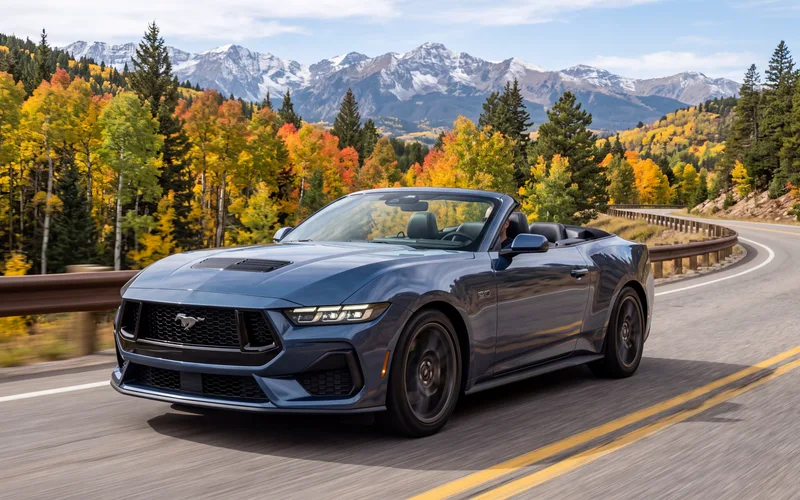 Ford Mustang ConvertibleSports CarBetter at: Practicality
If you need four seats, an 11.4 cu ft trunk and modern screens in an affordable drop-top, the Mustang delivers all three where the Miata delivers none.
Compare 1.82C-
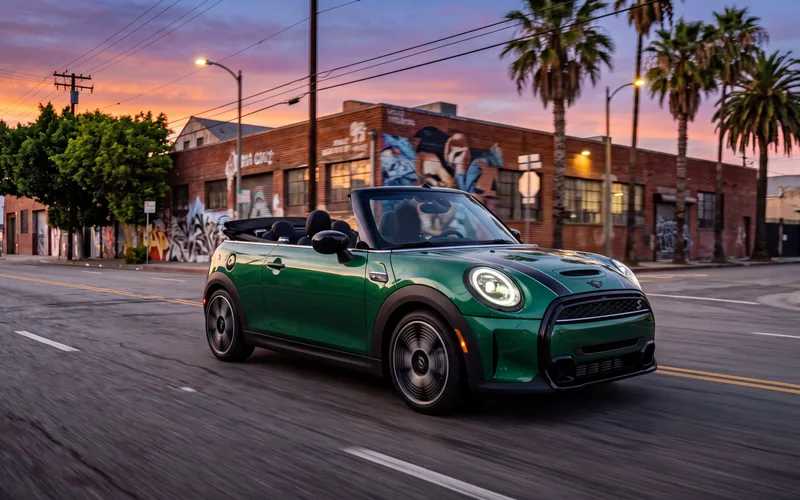 Mini Cooper ConvertibleSubcompact ConvertibleBetter at: Everyday comfort
Similar money with occasional rear seats, a bigger trunk and a more comfortable everyday cabin — at the cost of front-wheel drive and pricier service.
Compare 2.48C+
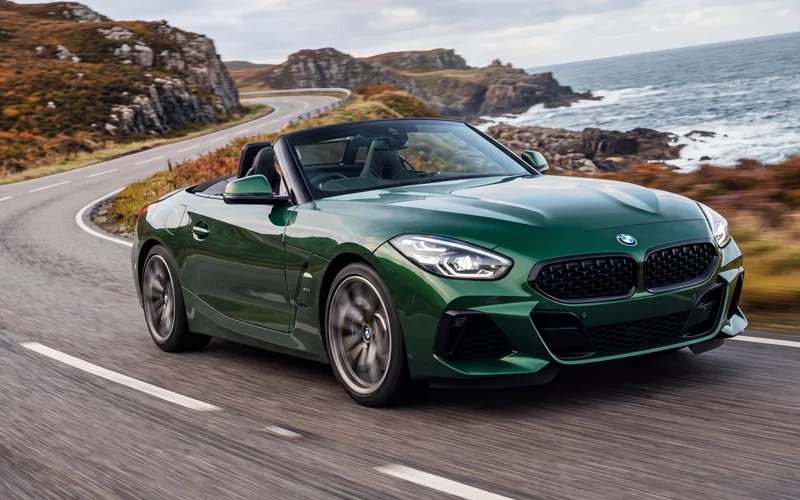 BMW Z4Sports CarBetter at: Refinement
A shopper willing to spend roughly $23,000 more gets real power, a far nicer interior and a proper two-seat roadster with luggage space that actually works.
CompareHow it's evolved
10 scored model years · 2017–2026
Subject scores by year
Hover or tap a score to see what moved it versus the year before. A corner mark flags a big swing.
| Year | Performance | Efficiency | Safety | Space | Cost | Reliability | Tech | Use-case | Driving | Value |
|---|---|---|---|---|---|---|---|---|---|---|
| 2026 | 40 | 40 | 57 | 37 | 58 | 82 | 54 | 30 | 88 | 71 |
| 2025 | 38 | 35 | 44 | 35 | 64 | 83 | 53 | 29 | 87 | 73 |
| 2024 | 38 | 32 | 49 | 36 | 67 | 82 | 51 | 30 | 88 | 74 |
| 2023 | 40 | 35 | 39 | 34 | 66 | 78 | 35 | 26 | 83 | 69 |
| 2022 | 40 | 35 | 39 | 33 | 67 | 81 | 35 | 26 | 83 | 67 |
| 2021 | 39 | 35 | 39 | 34 | 68 | 83 | 34 | 26 | 83 | 73 |
| 2020 | 40 | 35 | 39 | 34 | 66 | 84 | 33 | 26 | 83 | 74 |
| 2019 | 40 | 35 | 34 | 34 | 68 | 82 | 28 | 25 | 83 | 73 |
| 2018 | 37 | 34 | 30 | 34 | 67 | 77 | 26 | 24 | 80 | 73 |
| 2017 | 37 | 34 | 30 | 33 | 71 | 75 | 25 | 24 | 80 | 74 |
Compare two years
Best fit & conditions
Higher scores mean a better fit for that use case. Learn more about use-case fit →
Subject profile
Academic Probation · NHTSA safety recalls
Sep 18, 2024Air bags: air bag/restraint control module: softwareA software error in the air bag control module may cause the front air bags to deploy with excessive force during a crash. As such, these vehicles fail to comply with the requirements of Federal Motor Vehicle Safety Standard number 208, "Occupant Crash Protection."
Defect
Mazda North American Operations (Mazda) is recalling certain 2016-2023 MX-5 Miata vehicles. A software error in the air bag control module may cause the front air bags to deploy with excessive force during a crash. As such, these vehicles fail to comply with the requirements of Federal Motor Vehicle Safety Standard number 208, "Occupant Crash Protection."
Risk
An air bag that deploys with excessive force can increase the risk of injury during a crash.
Remedy
Dealers will update the Sophisticated Air Bag Sensor (SAS) control module software, free of charge. Owner notification letters were mailed November 7, 2024. Owners may contact Mazda customer service at 1-800-222-5500. Mazda's number for this recall is 6924I.
NHTSA campaign 24V695000 ↗Manufacturer no. 6924I77,670 vehicles potentially affected (all models in the campaign)Owners notified Nov 7, 2024Filed by Mazda North American OperationsFiled as MX-5
3 recalls on other model years of the MX-5 Miata (2017–2019, 2024–2025)
May 22, 2025Electronic stability control (esc): control module · Traction control systemThe Traction Control System (TCS) and Dynamic Stability Control (DSC) indicator light may fail to illuminate as intended due to a software error. As such, these vehicles fail to conform to Federal Motor Vehicle Safety Standard number 126, "Electronic Stability Control Systems."
Defect
Mazda North American Operations (Mazda) is recalling certain 2024-2025 Mazda MX-5 vehicles. The Traction Control System (TCS) and Dynamic Stability Control (DSC) indicator light may fail to illuminate as intended due to a software error. As such, these vehicles fail to conform to Federal Motor Vehicle Safety Standard number 126, "Electronic Stability Control Systems."
Risk
An indicator light that does not illuminate may fail to warn the driver of a TCS or DSC system issue, increasing the risk of a crash.
Remedy
Dealers will replace the DSC unit, free of charge. Owner notification letters were mailed July 18, 2025. Owners may contact Mazda customer service at 1-800-222-5500 Option 6. Mazda's number for this recall is 7425E.
NHTSA campaign 25V336000 ↗Manufacturer no. 7425E12,244 vehicles potentially affected (all models in the campaign)Owners notified Jul 18, 2025Filed by Mazda North American OperationsFiled as MX-5Nov 12, 2021Fuel system, gasoline: delivery: fuel pumpThe impeller inside the low-pressure fuel pump may crack and deform, potentially causing the fuel pump to fail.
Defect
Mazda North American Operations (Mazda) is recalling certain 2018 Mazda3, Mazda6, 2019 CX-3, 2018-2019 MX-5, CX-5, CX-9, and 2019-2020 Mazda2 vehicles. The impeller inside the low-pressure fuel pump may crack and deform, potentially causing the fuel pump to fail.
Risk
Fuel pump failure may cause an engine stall, increasing the risk of a crash.
Remedy
Dealers will replace the fuel pumps, free of charge. Owner notification letters were mailed July 18, 2022. Owners may contact Mazda customer service at 1-800-222-5500 Option 4. Mazda's number for this recall is 5321K.
NHTSA campaign 21V875000 ↗Manufacturer no. 5321K121,038 vehicles potentially affected (all models in the campaign)Owners notified Jul 18, 2022Filed by Mazda North American OperationsFiled as MX-5Feb 1, 2019Power train: automatic transmission: control module (tcm/pcm/tecm)Due to incorrect programming of the Transmission Control Module (TCM), certain conditions may cause the vehicle to unexpectedly downshift and abruptly decelerate.
Defect
Mazda North American Operations (Mazda) is recalling certain 2016-2019 MX-5 (Miata) vehicles with automatic transmissions. Due to incorrect programming of the Transmission Control Module (TCM), certain conditions may cause the vehicle to unexpectedly downshift and abruptly decelerate.
Risk
If the vehicle abruptly downshifts, the driver may lose control of the vehicle, increasing the risk of a crash.
Remedy
Mazda will notify owners, and dealers will reprogram the TCM with corrected software, free of charge. The recall began March 14, 2019. Owners may contact Mazda customer service at 1-800-222-5500, option 4. Mazda's number for this recall is 3019A.
NHTSA campaign 19V072000 ↗Manufacturer no. 3019A14,370 vehicles potentially affected (all models in the campaign)Owners notified Mar 14, 2019Filed by Mazda North American OperationsFiled as !MX-5, MX-5
Source: NHTSA Office of Defects Investigation recall database, model years 2017–2026. Recalls are listed by model year as the manufacturer filed them; whether a specific car is affected depends on its VIN — check a VIN at nhtsa.gov ↗. NHTSA model names matched to this page: !MX-5, MX-5.
Detailed scoring by subject
1Performance & PowertrainGrades near the bottom of the scale.0.64F
2020 is a carry-over powertrain year inside the ND generation that began in 2016, running the ND2 hardware introduced for 2019: a 2.0L naturally aspirated Skyactiv-G rated 181 hp at 7,000 rpm on Sport, Club and Grand Touring alike, soft top and RF. There is no optional engine, so the model-range maximum is the same 181 hp; against the convertible band (130–520 hp) that sits near the floor because the framework measures absolute output while the MX-5's premise is a roughly 2,340-lb curb weight.
Peak torque is 151 lb-ft at 4,000 rpm, identical across trims and whether the car has the 6-speed manual or the 6-speed automatic. This is the MX-5's weakest hard number — the engine makes its case at the top of the tachometer rather than in the midrange — and 151 lb-ft sits just above the convertible band floor of 120.
Car and Driver's instrumented test of the 181-hp soft top returned 5.7 seconds to 60 mph, with the heavier RF at 5.8 — quick in absolute terms on modest output, because the car weighs roughly 2,340 lbs. The manual is the scored configuration as the volume choice in this segment; automatic cars test around 6.3 s.
Naturally aspirated with no turbo in the way, the Skyactiv-G gives essentially instant throttle response and a linear pull to its 7,500-rpm redline — the benchmark for delivery among these convertible peers, ahead of the turbocharged BMW Z4 and the Mustang on responsiveness alone. Held below the top of the band because the four turns audibly coarse in the last 1,000 rpm and there is little to lean on below 3,000 rpm.
The standard 6-speed Skyactiv-MT manual is widely treated as the best shifter on sale at any price — very short throws, a light precise gate, well-matched ratios — placing it above every convertible peer in the set. Kept short of the mid-90s because the optional 6-speed automatic is an old design with only six ratios and unremarkable responses, and for 2020 it was still offered across all three trims rather than confined to Grand Touring as Mazda later did.
Rear-wheel drive only, with no all-wheel-drive option on any 2020 trim and none anywhere in the nameplate's history — the bottom band by the item's own definition. Manual Club cars, and for 2020 manual Grand Touring cars too, add a torque-sensing limited-slip differential, which helps put power down but is not AWD.
One engine, full stop: the 2.0L Skyactiv-G is the only powertrain across the entire 2020 range, with no turbo alternative, no hybrid, no PHEV and no EV variant. The only drivetrain decision a buyer makes is manual versus automatic, which is a transmission choice rather than a powertrain one — well below peers like the Z4 and Mustang that each offer two or three distinct engines.
2Efficiency & RangeGrades near the bottom of the scale.0.28F
The 2020 MX-5 runs the ND2 2.0L Skyactiv-G with no electrification, EPA-rated 29 MPG combined with the 6-speed manual — the volume configuration. That is genuinely frugal for a rear-drive sports car and sits mid-band against other gas convertibles.
26 MPG city reflects a roughly 2,340-lb curb weight and a small-displacement engine, but with no hybrid assist there is no stop-and-go advantage, so it lands mid-band rather than near the top of the gas-convertible range.
Highway is the MX-5's strongest efficiency figure — light weight and a tall top gear yield 34 MPG with the manual, 35 with the automatic — and it is the number where the car most clearly beats the larger, heavier convertibles in the peer set.
Good economy is offset by a very small 11.89-gallon tank dictated by the packaging of a 154-inch roadster, so total range lands near the bottom of the convertible band despite the car's efficiency — a real touring limitation, not a rounding artifact.
The EPA's published annual cost for the manual car is $2,600 at 15,000 mi/yr, and it is the premium-fuel assumption rather than consumption that drives the figure — at 29 MPG combined the MX-5 burns only about 517 gallons a year, but the EPA prices every one of them as 91-octane.
Mazda recommends 91-octane premium for the high-compression Skyactiv-G to reach its rated 181 hp, but explicitly permits 87-octane regular with reduced output — a real yet avoidable cost penalty, which places it in the 'premium recommended, not required' middle band. No E85, diesel or charging considerations apply.
3SafetyGrades near the bottom of the scale.0.60F
NHTSA carries a 2020 MX-5 record but every crash field reads "Not Rated" — no frontal, side, pole or rollover test was run, which is routine for a low-volume two-seat convertible outside NCAP's test priorities. The framework has no encoding for "untested," so the value is held at the same mid-band placeholder every untested convertible peer received (Z4, Mustang Convertible, Mini Convertible all at 4 stars / 50) rather than crediting or penalizing the car on absent data.
The MX-5 has no IIHS crashworthiness ratings at all for 2020 — not merely no award, but no tests run. Mazda's own award releases from this period tout "Every Mazda Vehicle Tested" earning Top Safety Pick and list the Mazda3, CX-3, CX-5, CX-9 and CX-30; the MX-5 is absent because it was never tested. That places it in the untested band, and it sits below untested peers like the Z4 because of a compounding documented defect: an FMVSS 208 non-compliance recall for front airbags that deploy with excessive force, covering 2016–2023 MX-5s and therefore this car. A ~2,341-lb two-seater also carries unavoidable mass-disparity exposure in multi-vehicle crashes.
2020 is the model year Mazda moved the i-Activsense core onto the base Sport trim rather than a package: Blind Spot Monitoring, Rear Cross Traffic Alert, Lane Departure Warning, Smart City Brake Support and a rearview camera are standard on Sport, Club and Grand Touring alike. But two of the five features this item names are not merely trim-locked, they are unavailable at any price for 2020 — there is no adaptive cruise control anywhere in the lineup and no lane-keep steering assist anywhere — and the AEB is the low-speed city system rather than full-range. Standard-on-base breadth pulls it well above the 2019 Mustang Convertible (28); the outright absence of ACC and LKA keeps it far below convertibles that offer both.
The 2020 MX-5 gets plain Smart City Brake Support, not the Advanced SCBS with pedestrian detection or the full-range Smart Brake Support fitted to Mazda's crossovers. Autonomous brake intervention operates only at roughly 2–18 mph; above that the system warns but does not brake, and it does not recognize pedestrians or cyclists at all. That is the definition of a basic system, and there is no IIHS front crash prevention rating to offset the specification. Scored above the 2017 Mustang (5, no AEB whatsoever) and clearly below peers whose AEB includes pedestrian detection.
The strongest safety item on the car, and new to the base trim for 2020. Blind Spot Monitoring and Rear Cross Traffic Alert are standard on every 2020 trim including the $26,580 Sport — uncommon in a sports car at that price and especially valuable here, because the roof-up rear three-quarter view is one of the MX-5's real weaknesses. Held to the middle band because coverage is alert-only: no active steering or braking intervention, and no safe-exit assist.
The 2020 MX-5 offers Lane Departure Warning and nothing more — an audible/visual alert with zero steering actuation, no lane-keep assist and no lane centering at any trim or price. Warning without intervention is squarely the crude-or-absent band. Scored above the 2017 Mustang (10) because the warning system is standard rather than optional, and below the 2019 Mustang (38), which actually steers.
There is no adaptive cruise control on the 2020 MX-5 at any trim level — the car has conventional fixed-speed cruise control only, and consequently no highway-assist layer of any kind. Mazda Radar Cruise Control appears nowhere in the official 2020 spec deck, and contemporary reviewers of the 2020 car singled out its absence as a notable omission given how much else Mazda standardized that year. Scored at the floor alongside the 2017 Mustang Convertible (5), the same basic-cruise-only case.
Mazda sold no hands-free highway driving system on any model for 2020, and the MX-5 lacks even the lane centering such a system would have to be built on. Floor score, consistent with the Mustang Convertible (5) and Z4 (10).
LED headlamps are standard on all three trims, a solid baseline, but everything above that baseline is locked to Grand Touring: Adaptive Front-lighting System, High Beam Control and even auto on/off headlights are Grand Touring only, and Sport gets bulb daytime running lights rather than LED. So the volume Sport and Club trims have no automatic high beams and no adaptive lighting at all. With no IIHS headlight rating published for the MX-5 there is no external evidence of Good-rated performance to lean on, so it sits just below the mid-band.
Two very different cars depending on roof position. Top down the MX-5 has close to the best sightlines of anything on sale — low cowl (48.6 in overall height), thin A-pillars, short hood, nothing at all behind the driver's head. Roof up it is markedly worse: a small glass rear window, thick fabric-covered rear quarters and a substantial over-shoulder blind zone, with only the standard rearview camera and standard BSM/RCTA to compensate; there is no surround-view camera and no parking sensors at any trim. Averaging the two states lands it well above the much larger Mustang Convertible (42) but short of the excellent-sightlines band.
4Space & ComfortOne of the MX-5 Miata's weakest categories.0.23F
The MX-5 is a strict two-seater: two buckets, a bulkhead behind them, and no rear seat offered on any 2020 trim or body style. Against the convertible band, whose floor is 4 seats, that is below the floor and scores zero — the framework measures absolute capacity, and every four-seat convertible peer (Mustang, Mini, 4 Series, CLE) carries two more places.
Mazda publishes 37.4 inches of front headroom for all three soft-top trims — the volume body style — with the RF losing just over half an inch to its hard roof panel and fixed buttresses. That is a little above the convertible band floor of 36 in, but the on-paper figure overstates the reality: the seat has no height adjustment, so an occupant cannot trade headroom against seat position, and reviewers consistently run out of vertical room roof-up above roughly six feet.
43.1 inches is genuinely good for a 154-inch car — near the top of the convertible band (40–44 in) and the one interior dimension where the MX-5 beats its reputation, because Mazda spent the ND's packaging budget on the driver's footwell rather than on cargo. The caveat is that this is the maximum: seat rearward travel is limited, so tall drivers exhaust it and end up over-reclined rather than legroom-starved.
4.59 cubic feet sits effectively on the floor of the convertible band (4–14 cu ft) and is the smallest trunk in this comparison set — roughly two soft weekend bags, with no seat-folding, no pass-through and no underfloor well to extend it. The one mitigation is that the figure does not shrink when the top goes down, because the ND's roof stows in its own well rather than eating the trunk.
The ND MX-5 has no glovebox at all — a genuine omission, not a small one — and no door pockets. Mazda's own 2020 STORAGE block lists exactly three items on every trim: a locking console box mounted behind and between the seatbacks (awkward to reach while belted), two covered back-panel cubbies, and a two-piece removable cupholder set that mounts either side of the transmission tunnel and fouls a knee or the shifter wherever it goes. One 12-volt outlet, no wireless charging tray, no underfloor storage, no fold-flat surface. That is the sparse-and-poorly-designed band by definition, and it sits below every four-seat peer, all of which at least have a glovebox and rear seatbacks to throw things on.
The buckets are well shaped and properly bolstered for the way the car is driven, and the 2019 ND2 telescoping column (standard on all 2020 trims) fixed the generation's worst ergonomic complaint. But adjustment is thin for a car at this price: Mazda's own spec sheet lists only reclining, fore/aft slide and a driver's-side seat tilt adjustment — no power seats, no height adjustment and no lumbar at any trim or price, so occupants cannot dial out a long-stint ache. Heated seats arrive on Club and Grand Touring, and the optional Recaros are praised for support but sit higher still, ruling them out for anyone over six feet. Mid-band, and below the Z4 and 4 Series, which offer power seats with lumbar.
Better than the spec sheet suggests. Mazda gave the ND unusually long suspension travel for a sports car — four-wheel independent, double wishbone front and multi-link rear on aluminum control arms — and reviewers consistently report that it absorbs poor pavement without the brittleness of a stiffly sprung rival, a real achievement on a 90.9-inch wheelbase. Held to the middle band because that short wheelbase still pitches over expansion joints, the car is firm by any non-sports-car standard, and 2020 is the year Mazda extended the Bilstein dampers and front shock-tower brace to manual Grand Tourings, so the scored volume trim now trades away some compliance for body control.
The clearest comfort weakness. A single-layer black cloth convertible top (a cloth liner is Grand Touring only), no acoustic glass and minimal underbody deadening mean tire roar and wind noise dominate at highway speed — reviewers report having to raise your voice to talk to a passenger. Roof down the car is actually well-managed: the windshield header and the standard mesh aero board wind blocker keep conversation possible at 70 mph, but that is aerodynamic design rather than quietness. Firmly in the notably-loud band and the loudest car in this peer set; the RF is marginally better insulated roof-up without approaching quiet.
Sparse, and the good items are trim-locked. The $27,525-delivered Sport gets plain air conditioning and unheated cloth seats; heated seats require Club or Grand Touring, and automatic climate control is Grand Touring only. Nothing above that exists at any price for 2020: no ventilated seats, no heated steering wheel, no rear climate zone (there is no rear), and no remote pre-conditioning, because the ND MX-5 is not a Mazda Connected Services vehicle. What is standard is the convertible-specific kit — front side-window demisters, glass rear window with defogger, the mesh wind blocker — which genuinely extends the top-down season, and Grand Touring adds heated power mirrors. Low band, below every peer here.
5Cost of OwnershipMid-pack among this car's ten categories.2.49C+
Mazda's own 2020 MX-5 pricing release puts the Sport soft top with the six-speed manual at $26,580, and the same release carries the notice that destination rose from $920 to $945 for every 2020 MX-5 released from port after February 3, 2020 — so $27,525 delivered is the figure that applied to essentially the whole model year. That made the 2020 MX-5 the cheapest genuine two-seat rear-drive convertible on sale in the US by a wide margin, landing well toward the favorable end of the framework's $22K–$55K convertible band.
MX-5 buyers skew well above the stripped Sport, and 2020 gave the Grand Touring manual the Club's chassis hardware (limited-slip differential, Bilstein dampers, front brace) at no extra cost, which made it the sweet spot of the range rather than merely the plush trim. Grand Touring soft top with the manual at $32,615 delivered is the fair representative price, still comfortably below the midpoint of the convertible band's $24K–$58K range.
The MX-5 is about as mechanically simple as a modern car gets — a naturally aspirated 2.0L Skyactiv-G four with no turbo or hybrid hardware, a hand-operated cloth top with no motor or hydraulics on the soft-top cars, and a curb weight under 2,400 lb that is easy on brakes and tires — and it draws on mainstream Mazda parts and dealer labor rates rather than premium ones. The figure is set below the later ND model years scored here because it is denominated in 2020 service prices, ahead of the parts-and-labor inflation of 2021–2025.
For a 2020 car the five-year mark has already passed, so this is measured rather than forecast: KBB data has the 2020 MX-5 holding roughly 64% of its original value after five years of typical ownership, near the top of the framework's 35–65% convertible band. Persistent enthusiast demand, low production volume, a heavy manual-transmission mix and the absence of any direct rival in the affordable-roadster space keep used prices firm, and the ND's minimal year-to-year change means a 2020 car does not look obsolete next to a newer one.
Mazda's New Vehicle Limited Warranty for 2020 is the industry-floor 36-month/36,000-mile term — level with Ford and a year short of the four-year coverage the German droptops offered. It sits at the very bottom of the framework's 3–5 year band.
60 months / 60,000 miles is the floor of the framework's 5–10 year powertrain band — competitive with Ford and better than BMW's four-year term, but nowhere near the 10-year coverage Hyundai and Kia advertised in 2020.
Mazda included no complimentary scheduled maintenance in the US for 2020 — every oil change is out of pocket from day one — leaving 3-year/36,000-mile 24-hour emergency roadside assistance as essentially the whole package, with roadside towing extended to the 5-year/60,000-mile powertrain term when a warranted powertrain part is the cause. Trim extras are subscriptions rather than ownership benefits. The pandemic-era offers Mazda ran in 2020 (deferred first payment, a healthcare-worker discount, free oil changes for first responders) were conditional relief programs aimed at specific buyers or booked as financing, not standing ownership coverage, and are credited under Deals & incentive availability instead. That places this just below the mid-band 'basic roadside only' tier and well under BMW's or Mini's programs.
$32,615 volume-trim price minus its estimated resale value after 5 years (64% retained, or about $20,874) leaves about $11,741 in depreciation. Add the projected $3,400 in 5-year maintenance and repairs, and owning this vehicle for 5 years costs about $15,141 in total.
6Reliability & QualityThe MX-5 Miata's best-graded category.3.71A
This is the strongest predicted-reliability case in the convertible set and the best of any MX-5 model year, because the 2020 car is the one Consumer Reports put at the very top of the entire industry rather than merely near it. The structural reasons hold — a naturally aspirated four, a conventional manual, no turbo, no air suspension, no dual-clutch, and the fifth year of a generation whose faults were found and fixed years earlier — and the field data now agrees with the prediction six years on.
The two authorities disagree about Mazda in exactly this period, which caps the score just under the top-5 band even though one of them had the brand at number one. Consumer Reports was at its most favorable toward Mazda around the 2020 model year, while J.D. Power had the brand above average on three-year dependability but below average on initial quality — and the IQS gap was driven largely by the Mazda Connect controller interface, a usability complaint rather than a durability one.
Six model years on, the 2020 MX-5 carries exactly one safety recall, remedied by a software flash, with nothing touching the powertrain, structure, fuel system or restraints hardware — that is close to the cleanest campaign record obtainable. It also sits just outside the one significant defect that hit this generation: the Denso low-pressure fuel-pump recall covered 2018-2019 MX-5s and does not reach the 2020 car. Field complaint volume is negligible even allowing for low sales. TSB traffic across the ND generation is ordinary rather than clean, which is what keeps this out of the very top of the band.
The 2.0L Skyactiv-G is a naturally aspirated PE-series four that has been in continuous production since 2011, and the 2020 car runs the 181-hp high-revving revision introduced for 2019 — new pistons, lighter connecting rods and revised valvetrain on a proven block, not a new engine. In 2020 that revision was only in its second year and unproven; from here it has six years of field time with no systemic failure pattern, which is why this scores above the 2023 read of the same hardware. The six-speed manual is a long-lineage unit and the alternative is the older, conventional Skyactiv-Drive six-speed automatic — no dual-clutch, no turbo, no high-pressure direct-injection fuel pump of the kind that generated the 2018-2019 campaign.
Judged against price this is the car's softest quality line, but 2020 pricing flatters it more than later model years do — the same cabin cost several thousand dollars less than it does now. Execution is thoughtful rather than rich: body-color painted door tops, a clean symmetric dash, well-shaped seats with real bolstering, and a leather-wrapped wheel standard even on Sport. Against the premium price class it is judged in, though, there is visible hard plastic in the door lowers and console, and the 7-inch screen is criticized for washing out in direct sun in an open car.
Assembly quality is a genuine strength: the MX-5 is built in low volume at Mazda's Hiroshima operations, 2020 is the fifth year of the generation, and reviewers consistently describe tight, consistent panel work and a soft top that seals and latches well by class standards. What holds it a point under the later model years is that the brand's contemporaneous initial-quality standing was below average, and a fabric-roof roadster inevitably draws more wind-noise and creak reports than a fixed-roof car.
Network density is the clearest ownership weakness in this category and it is brand-level, applying to the MX-5 exactly as to the rest of the Mazda range. Mazda runs roughly half the US storefronts Honda does and well under half Toyota's, so rural and small-metro owners routinely drive materially further for warranty work — a real cost on a car often bought as a second vehicle. Coverage in major metros is adequate and individual dealer service reputation is mid-pack rather than poor, which keeps this out of the bottom band.
The best ownership line in the category and a genuine outlier for a premium-priced sports car. The Miata carries one of the largest enthusiast aftermarkets of any modern vehicle, and the 2020 car is now old enough that its parts have fully entered the used, reconditioned and third-party channels while still sharing a bin with ten model years of ND production. Routine service is cheap because the mechanicals are simple and normally aspirated, and independent shops will work on it — nothing here is dealer-only.
7Technology & InfotainmentOne of the MX-5 Miata's weakest categories.0.16F
The 2020 MX-5 uses a 7-inch Mazda Connect display on every trim, with no larger screen offered anywhere in the range — the smallest center display in the segment, sitting exactly on the convertible band floor of 7 in, so it scores zero. Mazda had already moved the 2019 Mazda3 and 2020 CX-30 to 8.8-inch panels; the MX-5 was left on the older, smaller unit and stayed there until the 2024 ND3 refresh.
A dated system saved by excellent hardware discipline. Mazda Connect's graphics and menu structure are a generation behind by 2020 — the streaming partners it advertises are Aha, Pandora and Stitcher, two of which were already moribund — and touch input is locked out above walking pace, so the rotary Multi Function Commander Control is the only way to drive it while moving. Most reviewers come to prefer that knob, and real HVAC and volume controls survive alongside it. Against that, the knob sits directly beside the shifter and owners report bumping it with a forearm while changing gear, menu depth draws steady criticism, and the display generation used from 2018–2020 has a documented ghost-touch and reboot failure history. Usable with clutter and occasional lag — mid-band, and behind iDrive in the Z4 or SYNC 3 in the Mustang.
2020 is the model year Mazda finally fitted phone projection to the MX-5 from the factory, but only from Club up: Apple CarPlay and Android Auto are standard on Club and Grand Touring and appear nowhere in the base Sport's equipment table, so the $27,525 volume-entry car shipped with no mirroring at all (owners retrofit it with Mazda's own TK78-66-9U0C hub). Both are wired-only — there is no wireless CarPlay and no wireless Android Auto on any 2020 trim at any price. That is the very bottom of the wired-standard band, below the 2023 car where projection had reached every trim and wireless CarPlay had arrived on Club, and well below the Z4 and Mustang Convertible.
Mazda Connect's built-in voice command is a fixed-phrase command system rather than a natural-language assistant — useful for a radio station or a phone contact and little else. Native navigation is worse positioned: the Mazda Navigation System is Grand Touring only, so the Sport and Club trims have no built-in maps and depend entirely on a phone, and for Sport in 2020 there is not even CarPlay to fall back on. Even on Grand Touring the system is SD-card-based with dated rendering, though Mazda does bundle a genuinely useful three-year SiriusXM Traffic and Travel Link layer. Below the mid-band because the capability is both weak and largely unavailable.
The best-resolved technology item on the car. From Club up the 2020 MX-5 gets a Bose nine-speaker system with AudioPilot, a subwoofer and — the part that matters in a roadster — speakers built into both headrests, which keeps vocals and midrange intelligible top-down at speed where a conventional door-mounted layout washes out. It is a system engineered around the convertible problem rather than badged onto it. Held out of the top band because the base Sport is stuck with a six-speaker AM/FM head unit that has a driver's-side headrest speaker only and no SiriusXM, so a third of the range gets none of it.
There is no configurable digital cluster on the 2020 MX-5 at any trim. The soft-top binnacle is entirely analog — a central mechanical tachometer with black faces and white lettering, flanked by analog coolant and fuel gauges — with a small monochrome trip-computer readout for distance-to-empty and fuel economy. That is a partial digital readout attached to an analog cluster, not a digital cluster, and it scores in the low band. Only the RF body adds a 4.6-inch color LCD, and Mazda did not fit the MX-5 a proper TFT meter display until a later model year; every four-seat peer here offered a full-digital option in 2020 that the MX-5 did not.
None, and not merely limited. The ND MX-5 carries no embedded telematics unit, which is the precondition for over-the-air updating — it is absent from Mazda's Connected Services vehicle list entirely, in 2020 and after. Mazda Connect firmware for this car is refreshed by downloading a package to a USB stick from Mazda's infotainment update site or having a dealer do it, and map data is an SD-card swap. Floor score: no whole-vehicle OTA, no infotainment OTA, not even maps.
The 2020 MX-5 has no working companion-app relationship at all. Because it is not a Mazda Connected Services vehicle, the MyMazda app cannot pair with it for remote start, remote lock/unlock, vehicle locate, status alerts or health reports — the whole feature set other 2020 Mazdas got complimentary. There is no digital key and no remote engine start of any kind, at any trim, even as a factory accessory; owners who want it fit third-party kits. Floor score; every peer in this set shipped a functioning connected app in 2020.
Two USB-A audio inputs on Club and Grand Touring — and only one on the base Sport — plus a single 12-volt socket, and that is the entire provision. No USB-C anywhere in the car, no wireless charging pad at any trim, no household outlet, and, because there is no second row, no rear ports to add. Two ports for two occupants keeps it off the absolute floor, but the single-port Sport is genuinely thin, and the missing wireless tray is a daily annoyance in a cabin with nowhere convenient to wedge a phone.
The strongest convenience item, because Mazda did not trim-lock it: Mazda Advanced Keyless Entry and push-button ignition are both standard on the base Sport, so every 2020 MX-5 unlocks and starts without touching the fob, and remote trunk release is standard too. What is missing keeps it out of the top band — no remote engine start at any trim and no phone-as-key, both consequences of the car having no connected-services hardware. Comfortably above the segment floor, short of the peers that offered a digital key.
A standard rearview camera is the whole of it. The 2020 MX-5 offers no front or rear parking sensors, no surround-view monitor and no parking automation at any trim or in any package — the only package on the car, Club's Brembo/BBS RECARO kit, adds brakes, wheels, aero and seats. The camera itself is a low-resolution feed on the small 7-inch screen. That is the rear-camera-only band. Genuine mitigation, reflected in the score sitting above the floor: the car is 154.1 inches long with a 30.8-foot turning circle, and Blind Spot Monitoring plus Rear Cross Traffic Alert are standard on every trim for 2020, covering the roof-up rear quarter the camera cannot.
No head-up display is offered on the 2020 MX-5 at any trim or in any package. Mazda's Active Driving Display was already fitted broadly across the Mazda3 and CX-series by 2020 but was never engineered into this car — there is no room above the low cowl and no windshield provision. Floor score; owners who want one buy an aftermarket OBD unit.
8Use-Case FitThe MX-5 Miata's lowest-graded category.0.00F
A strict two-seater with no rear seat, no LATCH anchors and no lower anchors of any kind — there is physically nowhere legal to put a child seat, since a rear-facing seat cannot go in front of an active passenger airbag and there is no second row to move it to. Add a 4.59 cu ft trunk that will not take a folded stroller, doors that open onto a seat mounted inches off the ground, and no fold-flat surface anywhere. This is not a compromised family car; it is a car families cannot use for children at all. Floor score.
2020 is genuinely the year the cheapest MX-5 stopped being an active-safety penalty box — Blind Spot Monitoring, Rear Cross Traffic Alert, Smart City Brake Support and Lane Departure Warning all became standard on the base Sport, which the far more expensive 2020 Porsche 718 did not match. But the family proposition is still poor on every other axis: there are no NHTSA and no IIHS crash results at all for the 2020 MX-5 (not a bad rating, an untested car), the AEB is low-speed-only Smart City Brake Support with no pedestrian detection, there is no adaptive cruise control at any trim and any price, no rear-occupant alert, and two seats. Low band; the standard-ADAS credit is what lifts it off the floor.
The item asks about multi-hour comfort for four-plus occupants; this car carries two. There are no rear amenities because there is no rear, no entertainment provision, a single climate zone (manual A/C on Sport and Club), and 4.59 cu ft of luggage space for two people — enough for two soft weekend bags and nothing more. Cabin noise compounds it: reviewers report having to raise your voice to converse at highway speed. Floor band, kept marginally above zero only because two adults on a weekend trip is a scenario the car does serve.
Genuinely better as a daily driver than its reputation, and reviewers of the 2020 car say so — light controls, a superb short-throw shifter, a 30.8-foot turning circle, standard blind-spot monitoring for the roof-up rear quarter, and 26 MPG city. The offsets are real and daily: a firm ride over city pavement, a loud cabin in traffic, an unusually low seat with no height adjustment that makes repeated ingress and egress a chore, no adaptive cruise control to take the sting out of a jam, and a commander knob positioned where a shifting forearm keeps nudging it. Solid mid-band with minor annoyances rather than a relaxing commuter.
Cheap to run for a rear-drive sports car, and unusually cheap in absolute terms too: EPA 26/34/29 MPG with the manual, and Consumer Guide's testers observed 31.3 MPG overall with one recording 34.9. Consumables are inexpensive — 205/45 R17 tires, an 11-inch single-piston disc at each corner, a naturally aspirated 2.0-litre with no turbo or hybrid hardware. The offsets keeping it mid-band are that Mazda recommends 91-octane premium to reach the rated 181 hp (87 is permitted with reduced output), and the EPA prices every one of the roughly 517 gallons a year at premium, producing a $2,600 annual fuel bill that a 29-MPG regular-fuel car would beat.
The car's outright best use-case item and a real strength, not a consolation. At 154.1 inches long and 68.3 wide it is shorter than almost anything on a US road, and Mazda's own 30.8-foot curb-to-curb turning circle with 2.7 turns lock-to-lock means it turns around in spaces that need a three-point turn in anything else; roof down the sightlines are close to the best on sale over a 48.6-inch cowl. Held below the top of the band by the roof-up case, where a small glass rear window, thick fabric quarters and a substantial over-shoulder blind zone leave only a low-resolution reverse camera and no parking sensors of any kind to work with.
Not work-capable in any sense the item measures. There is no factory tow rating and no hitch provision, payload is two people and a weekend bag, the cargo hold is 4.59 cu ft with a small lid opening, and the powertrain is a 151 lb-ft naturally aspirated four in a 2,341-lb rear-drive chassis with 4.92 inches of ground clearance. Nothing here is a compromise to work around; the capability is simply absent. Floor score.
The mechanical package underneath is genuinely durable and simple — a naturally aspirated Skyactiv-G 2.0 with a timing chain and no turbo, a proven six-speed manual, an aluminium-intensive unibody with a backbone frame — and the MX-5 has a strong reputation for taking hard track use, which is the closest thing to abuse this car sees. But the item is about work duty, and nothing about the car is specified for it: no wear-friendly interior option (cloth or leather only, carpet floor mats, no rubber flooring), no fleet history of any kind, a hand-operated fabric roof exposed to weather and vandalism, and low-slung bodywork that a jobsite would destroy. Low band on fitness for purpose rather than on build quality.
Essentially none of what this item measures exists. One 12-volt socket is the entire onboard power provision — no inverter, no AC outlet, no auxiliary battery. There are no cargo tie-downs, no bed, no roof rails or crossbar mounting points, no hitch, no washable surfaces, and no upfit ecosystem: the MX-5 aftermarket is track and styling parts, not work equipment. Floor score.
A car that is a delight for 200 miles and a chore for 500. The hard limit is range: an 11.89-gallon tank at 29 MPG combined gives roughly 345 miles, so stops come sooner than in anything else in the peer set despite the good economy. Around that sit a cabin loud enough to force raised voices at highway speed, seats with no height or lumbar adjustment that reviewers put at a roughly two-hour comfortable limit for a tall driver, and no adaptive cruise control at any trim to reduce fatigue. What keeps it out of the bottom band is that the chassis is stable and unfussy at speed, sixth gear is a genuine 1.000:1 overdrive-style cruiser paired with a 2.866 final drive, and the standard mesh wind blocker makes top-down highway running practical rather than punishing.
Pavement-bound by design. Rear-wheel drive with no AWD offered on any 2020 trim or anywhere in the nameplate's history, 4.92–5.32 inches of laden ground clearance, 205/45 R17 high-performance summer-biased tires, no tow rating, no roof rails and no roof load rating, no skid plates, no drive modes for loose surfaces, and a 12-volt socket as the only camping-relevant power. A well-maintained gravel road is the practical limit. Low band; scored marginally above the floor because the car itself is a recreational object and the standard limited-slip differential on manual Club and Grand Touring cars does help on loose surfaces.
The most restrictive cargo arrangement in the segment. 4.59 cubic feet is a fixed volume with no way to expand it: no rear seats to fold, no pass-through, no underfloor well, no roof rails or crossbar points to mount a box or bike carrier, and no hitch for a rack. A bulky item is not a squeeze here, it simply does not go in. The one credit is that the volume does not shrink when the roof is lowered, because the ND's top stows in its own well above the trunk floor — so unlike some convertibles the car does not lose its luggage space to go open. Floor band.
9Driving ExperienceOne of the MX-5 Miata's strongest categories.3.67A-
The reference point for this category, and 2020 is a good year for it: a 2,341-lb curb weight with 52/48 front/rear distribution, four-wheel independent suspension (double wishbone front, multi-link rear) on aluminium control arms, and a front-midship layout produce cornering composure that instrumented testing puts at 0.90 g on the skidpad — remarkable on 205-section street tires. 2020 specifically extends the Bilstein dampers, front shock-tower brace and torque-sensing limited-slip differential to manual Grand Touring cars, so the scored volume trim now has the Club's full chassis hardware at no extra cost. Held just below the top of the band because grip is modest in absolute terms and the short 90.9-inch wheelbase makes the car lively rather than planted at the limit — which enthusiasts count as the point, not a fault.
Among the best electrically assisted racks on sale at any price. Mazda's double-pinion EPAS system is geared at 15.5:1 with only 2.7 turns lock-to-lock, which makes the car respond to wrist movements rather than arm movements, and reviewers of the 2020 model consistently describe the steering as both light and precise with genuine build-up of effort as the front loads. Short of a perfect score because it is still electric assistance — the fine-grained texture of the NA and NB hydraulic racks is not fully there, and a few testers find the effort a touch light on center.
The weakest of the dynamics items, and the one place the volume car is under-specified for its ability. The standard system is an 11-inch vented front and 11-inch solid rear disc with single-piston calipers at both ends — adequate hardware that stops the 2,341-lb car from 70 mph in about 170 feet, a good figure in absolute terms but not a standout for a sports car, and one that reflects low mass more than braking capability. Pedal feel is firm and progressive in normal use, but repeated hard stops bring noticeable fade because there is little thermal mass to work with. Genuine brakes exist only through Club's Brembo/BBS RECARO package, which is manual-only, costs roughly $4,500, and is not fitted to the scored Grand Touring. Comfortably mid-band.
Naturally aspirated with nothing in the way, the 181-hp Skyactiv-G gives essentially instant tip-in and a linear pull to a 7,500-rpm redline — the benchmark for delivery among these convertible peers and ahead of the turbocharged Z4 on responsiveness alone. There is no stop/start hesitation, no hybrid handover and no turbo lag to calibrate around, and 13:1 compression on premium fuel keeps throttle response crisp. Held below the top of the band because there is genuinely little to lean on below 3,000 rpm — 151 lb-ft arrives at 4,000 — so the driver works the gearbox to keep it in its window rather than being carried by the engine.
Pleasant where it matters and coarse where it does not. The Skyactiv-G's induction and exhaust note is deliberately tuned to be part of the experience — reviewers of the 2020 car single out the sport exhaust as satisfying — and there is no diesel clatter, motor whine or three-cylinder thrum to isolate. But it is still a naturally aspirated four rather than a six: the last 1,000 rpm to the 7,500 redline turns audibly harsh rather than sonorous, and with the roof up owners report gearbox whine and drivetrain noise carrying into a cabin with very little sound deadening. Mid-to-upper band — audible and mostly pleasant, not near-silent.
Mazda's own figure is 30.8 feet curb-to-curb, comfortably below the convertible band floor of 34 ft, where lower is better — so the item scores out. This is not a rounding artifact: a 90.9-inch wheelbase, a 68.3-inch width and a 15.5:1 rack with 2.7 turns lock-to-lock mean the car turns around in spaces that need a three-point turn in anything else in the peer set, and reviewers reliably call it out as a daily-driving advantage.
The relationship between wheel, pedals and shifter is close to ideal — everything falls to hand, the shifter is exactly where it should be, and the 2019 ND2 telescoping column (standard on all 2020 trims) fixed the generation's worst fit problem. The problems are adjustability and packaging: Mazda's spec sheet lists only recline, fore/aft slide and a driver's-side tilt adjustment, so there is no seat-height adjustment and no lumbar at any trim, the seat sits very low in a 48.6-inch-tall car which makes ingress and egress a deliberate act, the footwell is narrow enough to crowd wide feet, and the commander knob sits close enough to the shifter that owners report nudging it with a forearm while changing gear. Comfortable for most drivers with real reaches and compromises — mid-band, and notably worse for anyone much over six feet.
This is what the car is for, and it is the best answer in the segment at any price. Light weight, near-perfect balance, a 7,500-rpm naturally aspirated engine, the best manual shifter on sale, a roof that opens with one hand from the driver's seat, and modest enough grip that the limit is reachable on a public road rather than theoretical — the combination is why the MX-5 collected a Car and Driver Editors' Choice for 2020 and why enthusiasts recommend it without qualification. Just short of a perfect score only because 181 hp means the car needs a road to come alive and is merely pleasant in a straight line.
10Value & Market PositionOne of the MX-5 Miata's strongest categories.3.02B
2020 was the year the cheapest MX-5 stopped being an active-safety penalty box: Sport gained standard blind-spot monitoring, rear cross-traffic alert, Smart City Brake Support and lane-departure warning, which the 2020 Porsche 718 at more than twice the money did not match. The comfort and infotainment side is still thin, though, and one gap is specifically a 2020 problem — Apple CarPlay and Android Auto were standard only on Club and above, so the $27,525 Sport still shipped without phone mirroring, and heated seats, Bose, leather and automatic climate all remained trim upgrades. No MX-5 trim offered adaptive cruise control at any price.
Judged on what the money actually buys in this segment, the 2020 MX-5 is the benchmark and 2020 is one of its better value years: $27,525 delivered put a rear-drive roughly 2,340 lb roadster with a 181-hp naturally aspirated 2.0L and a short-throw six-speed manual in the driveway, and Mazda handed the Grand Touring manual the Club's limited-slip differential, Bilstein dampers and front brace for 2020 at no price increase for that hardware. Every other genuine two-seat convertible on sale cost roughly double — the 2020 718 Boxster opened around $60K — and the cheaper drop-tops were front-drive. Content per dollar is only average; engineering and driving capability per dollar are class-defining, which is what this segment is bought on.
2020 is the broadest the ND lineup gets in the years scored here: three soft-top trims and two RF trims, the six-speed automatic genuinely available on every trim including the base Sport (unlike 2023, when it was locked to Grand Touring), the manual-only Brembo/BBS/Recaro package on top, and the limited 100th Anniversary Special Edition marking Mazda's centenary. It is still one engine deep with no AWD and almost no standalone options beyond paint and leather, which keeps it out of the upper band.
In absolute terms the MX-5 is a small-volume car, but 2020 was a genuinely strong year for it in context: 8,807 US sales, up 13.6% in a pandemic year when the overall US market fell sharply, and the only Mazda car line to grow at all. It effectively owns the affordable-roadster segment outright — the Fiat 124 Spider was in its final year and the BRZ/GR86 pair are coupes. Small scale keeps it out of the upper band; growing against a shrinking market keeps it well clear of the lower one.
Mazda carries unusual enthusiast credibility for a mainstream badge and rates near the top of brand reliability tables, and the MX-5 nameplate is its halo — a genuinely beloved icon with an enormous owners-club and aftermarket ecosystem, and residuals to match. 2020 leaned into that directly, being Mazda's centenary year and the occasion for the 100th Anniversary Special Edition. It lacks the status cachet a Porsche crest brings to a drop-top, which keeps it below the premium rivals, but as a nameplate people aspire to own it clearly outperforms its parent brand's tier.
Judged on buyer benefit, 2020 was by far the best year of the ND generation to buy an MX-5. Mazda's pandemic response extended 0% APR for up to 60 months to every new 2020 model — the MX-5 explicitly included, which almost never happens on a low-volume enthusiast car — stacked on top of a 90-day first-payment deferral, a healthcare-worker discount and free oil changes for first responders. That is meaningful, broadly available financing support rather than desperation pricing on an unwanted car, which is exactly the upper band's description; it is held short of the top only because the support was subvented finance and relief programs rather than large customer cash on the hood.
2020 is the fifth model year of the ND generation, which launched for MY2016 — squarely mid-cycle. What keeps it out of the lower band is that the substantive hardware work had just happened and kept happening: 2019 raised the 2.0L to 181 hp with a higher rev limit, and 2020 itself added standard active safety on Sport, CarPlay/Android Auto on Club and up, the Club chassis hardware on manual Grand Tourings, a new Polymetal Gray colour and the centenary special edition. Nor was replacement looming — the ND3 facelift was still four model years away, so a 2020 buyer was not buying the last of anything.
Reviewers continued to treat the 2020 MX-5 as the reference point for affordable driving pleasure, and it collected a Car and Driver Editors' Choice in sports cars and a runner-up placing among KBB's best 2020 convertibles. It is held out of the top band on one specific 2020 fact: this is the model year the MX-5's long 10Best run ended. Car and Driver merged its cars list with trucks and SUVs beginning with the 2020 list, cutting the field to ten slots for the whole market, and the Miata — on every list through 2019 — did not make it, with the 718 Boxster/Cayman and GR Supra taking the sports-car places instead.