

The verdict
A struggling full-size van, strong on driving and held back by ownership.
The 2026 Ram ProMaster is the cheapest way to buy a huge, square, standing-height box on wheels — up to 524 cu ft of cargo, roughly 56 inches between the wheel housings so 4x8 sheets lie flat, the lowest load floor in the class and a best-in-class 36-foot turning circle. That front-wheel-drive layout is also its ceiling: there is no AWD, no diesel, no factory passenger seating and just one 276-hp V6 that returns about 17 mpg. Underneath, this is a Fiat Ducato whose bones date to 2006, and it carries the segment's weakest resale (~43% after five years) and shakiest reliability outlook. Buy it as a work tool or a conversion platform where cargo width and maneuverability matter most — not as a people mover, a long-haul cruiser, or a long-term value play.
Jump to scoresStrengths
- The biggest, squarest cargo box for the money
- Easiest full-size van to maneuver and park
- Low floor and upfit-friendly bones for working days
What holds it back
- No factory passenger seating at all
- Front-wheel drive only — no AWD, no 4x4, no diesel
- Thirsty, and the worst resale in the class
Top alternatives
Cars shoppers cross-shop with the Ram ProMaster 1.82C-
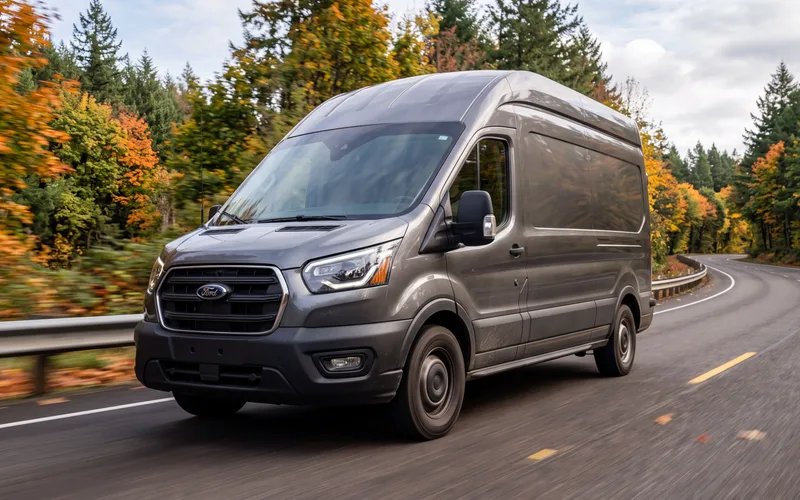 Ford TransitFull-Size VanBetter at: All-around value
Same base price but with three engines, available AWD, real passenger-wagon configurations, better tech and materially stronger resale — the default choice unless you specifically need the ProMaster's wider box or tighter turning circle.
Compare 2.22C
2.22C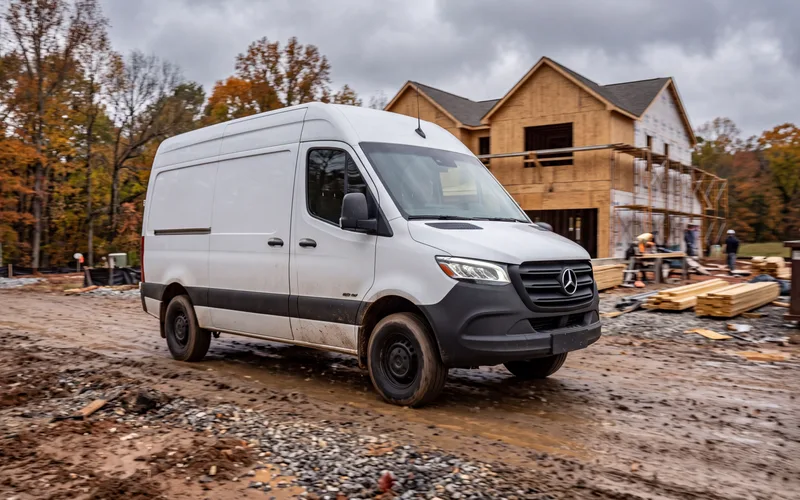 Mercedes-Benz SprinterFull-Size VanBetter at: Resale value
Costs more to buy and service, but the diesel's range and towing, optional 4x4, far better ride and seats, and ~62% five-year resale make it the smarter long-haul and long-term buy.
Compare 2.04C
2.04C Volkswagen ID. BuzzMinivanBetter at: Passenger comfort
The right pick if you actually need to carry people rather than pallets — real seats, modern cabin and electric running costs, at the cost of nearly all the ProMaster's cargo and towing capability.
CompareHow it's evolved
10 scored model years · 2017–2026
Subject scores by year
Hover or tap a score to see what moved it versus the year before. A corner mark flags a big swing.
| Year | Performance | Efficiency | Safety | Space | Cost | Reliability | Tech | Use-case | Driving | Value |
|---|---|---|---|---|---|---|---|---|---|---|
| 2026 | 43 | 40 | 52 | 45 | 32 | 51 | 56 | 53 | 63 | 59 |
| 2025 | 42 | 42 | 51 | 38 | 33 | 50 | 55 | 53 | 55 | 60 |
| 2024 | 42 | 42 | 51 | 38 | 33 | 52 | 53 | 53 | 55 | 61 |
| 2023 | 38 | 31 | 51 | 38 | 36 | 53 | 56 | 53 | 53 | 62 |
| 2022 | 40 | 28 | 33 | 38 | 51 | 52 | 57 | 51 | 52 | 58 |
| 2021 | 39 | 39 | 15 | 38 | 50 | 54 | 24 | 38 | 29 | 47 |
| 2020 | 33 | 32 | 13 | 38 | 45 | 51 | 23 | 39 | 32 | 57 |
| 2019 | 40 | 28 | 14 | 33 | 58 | 39 | 21 | 40 | 44 | 56 |
| 2018 | 39 | 20 | 11 | 29 | 59 | 62 | 25 | 43 | 46 | 60 |
| 2017 | 37 | 42 | 11 | 34 | 49 | 58 | 21 | 48 | 51 | 56 |
Compare two years
Best fit & conditions
Higher scores mean a better fit for that use case. Learn more about use-case fit →
Subject profile
Academic Probation · NHTSA safety recalls
Sep 29, 2026Steering: electric power assist systemWater may enter the electric power steering wiring harness, which can disable power steering assist.
Defect
Chrysler (FCA US, LLC) is recalling certain 2022-2026 Ram 1500 Promaster, Ram 2500 Promaster, Ram 3500 Promaster, and 2024-2026 Ram 3500 Electric (EV) vehicles. Water may enter the electric power steering wiring harness, which can disable power steering assist.
Risk
A loss of power steering assist can increase the risk of a crash.
Remedy
Dealers will inspect and replace the wiring harness and electronic power steering gear, as necessary, free of charge. Interim notification letters, notifying owners of the safety risk, are expected to be mailed November 17, 2026. Additional letters will be sent once the final remedy is available. Owners may contact Chrysler customer service at 800-853-1403. Chrysler's number for this recall is 92D. Vehicle Identification Numbers (VINs) involved in this recall will became searchable on NHTSA.gov on October 6, 2026.
NHTSA campaign 26V621000 ↗Manufacturer no. 92D265,512 vehicles potentially affected (all models in the campaign)Filed by Chrysler (FCA US, LLC)Filed as PROMASTER, PROMASTER BEVAug 13, 2026Back over prevention: sensing system: cameraThe rearview camera image may fail to display when the vehicle is placed in reverse. As such, these vehicles fail to comply with the requirements of Federal Motor Vehicle Safety Standard (FMVSS) number 111, "Rear Visibility."
Defect
Chrysler (FCA US, LLC) is recalling certain 2026 Jeep Wrangler, Jeep Gladiator, Jeep Compass, Jeep Cherokee, Jeep Grand Cherokee, Jeep Grand Cherokee L, Jeep Grand Wagoneer, Jeep Grand Wagoneer L, Ram Promaster, Ram Promaster EV, Ram 1500, Ram 2500, Chrysler Pacifica Plug-In Hybrid, Chrysler Voyager, and 2026-2027 Chrysler Pacifica and Dodge Charger vehicles. The rearview camera image may fail to display when the vehicle is placed in reverse. As such, these vehicles fail to comply with the requirements of Federal Motor Vehicle Safety Standard (FMVSS) number 111, "Rear Visibility."
Risk
A rearview camera image that fails to display reduces the driver's view behind the vehicle, increasing the risk of a crash.
Remedy
Radio software will be updated by a dealer or through an over-the-air (OTA) update, free of charge. Owner notification letters were mailed beginning September 2, 2026. Owners may contact Chrysler customer service at 800-853-1403. Chrysler's number for this recall is 78D. Vehicle Identification Numbers (VINs) involved in this recall will be searchable on NHTSA.gov on August 20, 2026.
NHTSA campaign 26V531000 ↗Manufacturer no. 78D844,027 vehicles potentially affected (all models in the campaign)Owners notified Sep 2, 2026Filed by Chrysler (FCA US, LLC)Filed as PROMASTER, PROMASTER BEVJun 2, 2026Seat belts: critical fastenersThe wheelchair seat belts may have incompatible connectors and fail to properly restrain occupants.
Defect
Braun Corporation (Braun) is recalling certain 2026 Ram ProMaster vehicles equipped with Q'Straint's One-Combo Belt, with part number TX11258-BA. The wheelchair seat belts may have incompatible connectors and fail to properly restrain occupants.
Risk
Improperly restrained occupants have an increased risk of injury during a crash.
Remedy
Dealers will replace the seat belt, free of charge. Owners may contact Braun's customer service at 1-800-488-0359.
NHTSA campaign 26V357000 ↗15 vehicles potentially affected (all models in the campaign)Filed by Braun CorporationFiled as PROMASTERMay 1, 2026Seats: mid/rear assemblyThe rear bench may have only two of four seat legs installed. As such, these vehicles fail to comply with Federal Motor Vehicle Safety Standard number 207, "Seating Systems."
Defect
Braun Corporation (Braun) is recalling certain 2026 Ram ProMaster vehicles. The rear bench may have only two of four seat legs installed. As such, these vehicles fail to comply with Federal Motor Vehicle Safety Standard number 207, "Seating Systems."
Risk
An incomplete seat may not properly restrain an occupant, increasing risk of injury during a crash.
Remedy
Dealers will install two additional seat legs, free of charge. Owners may contact Braun customer service at 1-800-488-0359.
NHTSA campaign 26V280000 ↗14 vehicles potentially affected (all models in the campaign)Filed by Braun CorporationFiled as PROMASTEROct 23, 2025Engine and engine cooling: cooling system: radiator assemblyThe electrical circuit for the radiator fan may overheat.
Defect
Chrysler (FCA US, LLC) is recalling certain 2018-2026 Ram ProMaster vehicles. The electrical circuit for the radiator fan may overheat.
Risk
Electrical circuits that overheat increase the risk of a fire.
Remedy
Dealers will replace the cooling fan module and fuse. In addition dealers will provide an addendum for the manual and label for the power distribution center. Some interim notification letters, notifying owners of the safety risk, were mailed December 11, 2025. Some owner notification letters were mailed beginning December 11, 2025. Additional owner notification letters were mailed in January, March, and June 2026. Remaining owner notification letters are expected to be mailed July 2026. Owners may contact Chrysler customer service at 800-853-1403. Chrysler's numbers for this recall are 67C, B3C, and C9C. Vehicle Identification Numbers (VINs) involved in this recall became searchable on NHTSA.gov beginning October 30, 2025.
NHTSA campaign 25V720000 ↗Manufacturer no. 67C, B3C, C9C300,691 vehicles potentially affected (all models in the campaign)Owners notified Dec 11, 2025Filed by Chrysler (FCA US, LLC)Filed as PROMASTER
29 recalls on other model years of the ProMaster (2017–2025)
Dec 17, 2025Equipment adaptive/mobility: wheelchair restraints/securement: latch/anchorPlease refer to Rollx's recall report for specific model year information. The retractors may not lock, preventing the wheelchair from being properly secured.
Defect
Rollx Vans (Rollx) is recalling certain GMC Yukon, Sierra, Chevrolet Express 2500, Ford Transit, E-250, Toyota Sienna, Sienna Hybrid, Honda Odyssey, Chrysler Town and Country, Voyager, Pacifica, Dodge Grand Caravan, and Ram Promaster vehicles equipped with QRT-Deluxe and QRT-Max wheelchair restraints. Please refer to Rollx's recall report for specific model year information. The retractors may not lock, preventing the wheelchair from being properly secured.
Risk
An unsecured wheelchair can move during transit, increasing the risk of injury.
Remedy
Rollx will work with Q'Straint to inspect and replace the retractors as necessary, free of charge. Owner notification letters were mailed February 5, 2026. Owners may contact Rollx's customer service at 1-800-956-6668.
NHTSA campaign 25V876000 ↗86 vehicles potentially affected (all models in the campaign)Owners notified Feb 5, 2026Filed by Rollx VansFiled as PROMASTEROct 6, 2025Electrical system: propulsion system: traction motor: controller: softwareThe electric drive module software may not effectively manage torque, which can result in a loss of drive power.
Defect
Chrysler (FCA US, LLC) is recalling certain 2024-2025 Ram ProMaster battery electric (BEV) vehicles. The electric drive module software may not effectively manage torque, which can result in a loss of drive power.
Risk
A loss of drive power increases the risk of a crash.
Remedy
Dealers will update the software for the motor control processor, battery processor control module, integrated dual charge module, and electric vehicle control unit. Additionally, dealers will inspect and replace the electric drive module, as necessary. All repairs will be performed free of charge. Owner notification letters were mailed October 30, 2025. Owners may contact Chrysler customer service at 800-853-1403. Chrysler's number for this recall is 98C. Vehicle Identification Numbers (VINs) involved in this recall will be searchable on NHTSA.gov beginning October 16, 2025.
NHTSA campaign 25V665000 ↗Manufacturer no. 98C790 vehicles potentially affected (all models in the campaign)Owners notified Oct 30, 2025Filed by Chrysler (FCA US, LLC)Filed as PROMASTERAug 26, 2025Back over prevention: sensing system: cameraCracks in the microprocessor may cause the vehicle's rearview camera image not to display properly. As such, these vehicles fail to comply with the requirements of Federal Motor Vehicle Safety Standard (FMVSS) number 111, "Rear Visibility.
Defect
Chrysler (FCA US, LLC) is recalling certain 2019-2021 Ram ProMaster and 2019-2020 Dodge Journey vehicles. Cracks in the microprocessor may cause the vehicle's rearview camera image not to display properly. As such, these vehicles fail to comply with the requirements of Federal Motor Vehicle Safety Standard (FMVSS) number 111, "Rear Visibility.
Risk
A rearview image that does not display properly reduces the driver's view behind the vehicle, increasing the risk of a crash.
Remedy
Dealers will replace the rearview camera, free of charge. Interim notification letters, notifying owners of the safety risk, were mailed beginning September 30, 2025. A second notice will be sent once the final remedy is available, anticipated July 2026. Owners may contact Chrysler customer service at 800-853-1403. Chrysler's number for this recall is 59C.
NHTSA campaign 25V552000 ↗Manufacturer no. 59C219,577 vehicles potentially affected (all models in the campaign)Owners notified Jul 21, 2026Filed by Chrysler (FCA US, LLC)Filed as PROMASTERMay 21, 2025Back over prevention: sensing system: cameraA software error in the security gateway module may cause the rearview camera image not to display. As such, these vehicles fail to comply with the requirements of Federal Motor Vehicle Safety Standard (FMVSS) number 111, "Rear Visibility."
Defect
Chrysler (FCA US, LLC) is recalling certain 2022-2025 Ram ProMaster vehicles. A software error in the security gateway module may cause the rearview camera image not to display. As such, these vehicles fail to comply with the requirements of Federal Motor Vehicle Safety Standard (FMVSS) number 111, "Rear Visibility."
Risk
A rearview image that does not display reduces the driver's view of what is behind the vehicle, increasing the risk of a crash.
Remedy
Dealers will update the security gateway module software, free of charge. Owner notification letters were mailed June 12, 2025. Owners may contact Chrysler customer service at 800-853-1403. Chrysler's number for this recall is 40C.
NHTSA campaign 25V330000 ↗Manufacturer no. 40C235,640 vehicles potentially affected (all models in the campaign)Owners notified Jun 12, 2025Filed by Chrysler (FCA US, LLC)Filed as PROMASTERSep 26, 2024Electrical system: propulsion system: inverter · Electrical system: propulsion system: traction motor: controller: softwareIncorrect software in the motor control processor module (MCPA) may cause a loss of drive power.
Defect
Chrysler (FCA US, LLC) is recalling certain 2024 Ram Promaster Battery Electric (BEV) vehicles. Incorrect software in the motor control processor module (MCPA) may cause a loss of drive power.
Risk
A loss of drive power can increase the risk of a crash.
Remedy
Dealers will update the MCPA software, free of charge. Owner notification letters were mailed October 31, 2024. Owners may contact Chrysler customer service at 1-800-853-1403. Chrysler's number for this recall is 99B.
NHTSA campaign 24V715000 ↗Manufacturer no. 99B336 vehicles potentially affected (all models in the campaign)Owners notified Oct 31, 2024Filed by Chrysler (FCA US, LLC)Filed as PROMASTER BEVJun 13, 2024Back over prevention: sensing system: cameraThe radio software may prevent the rearview image from displaying. As such, these vehicles fail to comply with the requirements of Federal Motor Vehicle Safety Standard number 111, "Rear Visibility."
Defect
Chrysler (FCA US, LLC) is recalling certain 2021-2022 Dodge Durango, 2021-2023 Chrysler Pacifica, Jeep Grand Cherokee L, 2022 Ram 1500, 2500, 3500, Chrysler Voyager, 2022-2023 Jeep Compass, Grand Cherokee, Wagoneer, Grand Wagoneer, and Ram Promaster vehicles. The radio software may prevent the rearview image from displaying. As such, these vehicles fail to comply with the requirements of Federal Motor Vehicle Safety Standard number 111, "Rear Visibility."
Risk
A rearview camera image that does not display decreases the driver's visibility, increasing the risk of a crash.
Remedy
Dealers will update the radio software or the software will be OTA, "Over-The-Air," free of charge. Owner notification letters were mailed beginning July 9, 2024. Owners may contact FCA US, LLC customer service at 1-800-853-1403. FCA US, LLC's numbers for this recall are 66B and 79B.
NHTSA campaign 24V436000 ↗Manufacturer no. 66B, 79B1,033,433 vehicles potentially affected (all models in the campaign)Owners notified Jul 9, 2024Filed by Chrysler (FCA US, LLC)Filed as PROMASTERJun 6, 2024Equipment: other: labels · Seats: mid/rear assembly · Structure: body: doorThe vehicles are missing a side door beam, and the tire placard contains incorrect seating capacity information. As such, these vehicles fail to comply with the requirements of Federal Motor Vehicle Safety Standard numbers 214, "Side Impact Protection" and 110, "Tire Selection and Rims."
Defect
Chrysler (FCA US, LLC) is recalling certain 2021-2024 Ram Promaster vehicles. The vehicles are missing a side door beam, and the tire placard contains incorrect seating capacity information. As such, these vehicles fail to comply with the requirements of Federal Motor Vehicle Safety Standard numbers 214, "Side Impact Protection" and 110, "Tire Selection and Rims."
Risk
A missing side door beam may not provide adequate occupant protection in a crash, increasing the risk of injury. Incorrect seating capacity information can result in an improperly loaded vehicle, increasing the risk of injury in a crash.
Remedy
Dealers will install a door beam and apply an overlay label, free of charge. Owner notification letters were mailed August 1, 2024. Owners may contact FCA US, LLC customer service at 1-800-853-1403. FCA US, LLC's number for this recall is 53B.
NHTSA campaign 24V416000 ↗Manufacturer no. 53B266 vehicles potentially affected (all models in the campaign)Owners notified Aug 1, 2024Filed by Chrysler (FCA US, LLC)Filed as PROMASTERApr 25, 2024Electronic stability control (esc)An insecure ground connection may cause the electronic stability control (ESC) to be inoperative. As such, these vehicles fail to comply with the requirements of Federal Motor Vehicle Safety Standard number 126, "Electronic Stability Control Systems."
Defect
Chrysler (FCA US, LLC) is recalling certain 2021 Ram Promaster vehicles. An insecure ground connection may cause the electronic stability control (ESC) to be inoperative. As such, these vehicles fail to comply with the requirements of Federal Motor Vehicle Safety Standard number 126, "Electronic Stability Control Systems."
Risk
Driving with an inoperative electronic stability control system can increase the risk of a crash.
Remedy
Dealers will tighten the ground nut assembly, free of charge. All affected vehicles have been remedied. Owners may contact FCA US, LLC customer service at 1-800-853-1403. FCA US, LLC's number for this recall is 43B.
NHTSA campaign 24V290000 ↗Manufacturer no. 43B2 vehicles potentially affected (all models in the campaign)Owners notified Jan 27, 2021Filed by Chrysler (FCA US, LLC)Filed as PROMASTERMar 14, 2024Electrical system: wiring · Exterior lightingThe wiring harness may have a poor connection, which can cause the left taillight and left turn signal to become inoperative. As such, these vehicles fail to comply with the requirements of Federal Motor Vehicle Safety Standard number 108, "Lamps, Reflective Devices, and Associated Equipment."
Defect
Chrysler (FCA US, LLC) (Stellantis) is recalling certain 2021-2022 Ram ProMaster vehicles. The wiring harness may have a poor connection, which can cause the left taillight and left turn signal to become inoperative. As such, these vehicles fail to comply with the requirements of Federal Motor Vehicle Safety Standard number 108, "Lamps, Reflective Devices, and Associated Equipment."
Risk
An inoperative left turn signal may not notify other drivers of a turning vehicle, and an inoperative left taillight can reduce the vehicle's visibility to other drivers. Both scenarios can increase the risk of a crash.
Remedy
Dealers will inspect and replace the harness, as necessary free of charge. Owner notification letters were mailed February 20, 2025. Owners may contact FCA US, LLC customer service at 1-800-853-1403. FCA US, LLC's number for this recall is 21B.
NHTSA campaign 24V197000 ↗Manufacturer no. 21B12,375 vehicles potentially affected (all models in the campaign)Owners notified Feb 20, 2025Filed by Chrysler (FCA US, LLC) (Stellantis)Filed as PROMASTERFeb 22, 2024Seat belts: front: buckle assemblyThe driver seat belt warning light and audible chime may not activate as intended. As such, these vehicles fail to comply with the requirements of Federal Motor Vehicle Safety Standard number 208, "Occupant Crash Protection."
Defect
Chrysler (FCA US, LLC) is recalling certain 2022-2023 Ram Promaster vehicles. The driver seat belt warning light and audible chime may not activate as intended. As such, these vehicles fail to comply with the requirements of Federal Motor Vehicle Safety Standard number 208, "Occupant Crash Protection."
Risk
A malfunctioning seat belt warning system can result in improper seat belt use, increasing the risk of injury in a crash.
Remedy
Dealers will inspect and replace the driver seat belt buckle as necessary, free of charge. Owner notification letters were mailed April 9, 2024. Owners may contact FCA US, LLC customer service at 1-800-853-1403. FCA US, LLC's number for this recall is 02B.
NHTSA campaign 24V129000 ↗Manufacturer no. 02B27,744 vehicles potentially affected (all models in the campaign)Owners notified Apr 9, 2024Filed by Chrysler (FCA US, LLC)Filed as PROMASTERApr 27, 2023Power train: automatic transmission: internal: park pawlThe park pawl may not fully engage the park gear due to debris inside the transmission.
Defect
Chrysler (FCA US, LLC) is recalling certain 2019-2021 Ram ProMaster vehicles equipped with a 62TE transmission. The park pawl may not fully engage the park gear due to debris inside the transmission.
Risk
A partially engaged park pawl can result in a vehicle rollaway, increasing the risk of a crash or injury.
Remedy
Dealers will update the powertrain control module software, and inspect and replace, as necessary, the transmission or components within the transmission, free of charge. Owner notification letters were mailed June 22, 2023. Owners may contact FCA US, LLC customer service at 1-800-853-1403. FCA US, LLC's number for this recall is 44A.
NHTSA campaign 23V301000 ↗Manufacturer no. 44A165,503 vehicles potentially affected (all models in the campaign)Owners notified Jun 22, 2023Filed by Chrysler (FCA US, LLC)Filed as PROMASTERDec 22, 2022Back over prevention: sensing system: cameraThe analog rearview camera is the incorrect type of camera and cannot be installed. As such, these vehicles fail to comply with the requirements of Federal Motor Vehicle Safety Standard number 111, "Rear Visibility."
Defect
Chrysler (FCA US, LLC) is recalling certain 2022 Ram Promaster Chassis Cab and incomplete vehicles equipped with an analog rearview camera. The analog rearview camera is the incorrect type of camera and cannot be installed. As such, these vehicles fail to comply with the requirements of Federal Motor Vehicle Safety Standard number 111, "Rear Visibility."
Risk
An inoperative rearview camera can reduce the driver's rear visibility, increasing the risk of a crash.
Remedy
Dealers will supply a digital rearview camera, free of charge. Owner notification letters were mailed February 7, 2023. Owners may contact FCA US, LLC customer service at 1-800-853-1403. FCA US, LLC's number for this recall is ZC5
NHTSA campaign 22V947000 ↗Manufacturer no. ZC538 vehicles potentially affected (all models in the campaign)Owners notified Feb 7, 2023Filed by Chrysler (FCA US, LLC)Filed as PROMASTERSep 9, 2021Seat belts · Seat belts: front: retractor · Seat belts: rear/other: retractorThe seat belt automatic locking retractors may deactivate early, which can prevent the child restraint system from securing properly. As such, these vehicles fail to comply with the requirements of Federal Motor Vehicle Safety Standard number 208, "Occupant Crash Protection."
Defect
Chrysler (FCA US, LLC) is recalling certain 2021 Ram ProMaster City and Ram ProMaster vehicles. The seat belt automatic locking retractors may deactivate early, which can prevent the child restraint system from securing properly. As such, these vehicles fail to comply with the requirements of Federal Motor Vehicle Safety Standard number 208, "Occupant Crash Protection."
Risk
An unsecured child restraint system can increase the risk of injury during a crash.
Remedy
Dealers will inspect and replace the seat belt retractors as necessary, free of charge. Owner notification letters were mailed October 28, 2021. Owners may contact FCA US LLC customer service at 1-800-853- 1403. FCA US LLC's number for this recall is Y61.
NHTSA campaign 21V699000 ↗Manufacturer no. Y6110,372 vehicles potentially affected (all models in the campaign)Owners notified Oct 28, 2021Filed by Chrysler (FCA US, LLC)Filed as PROMASTEROct 15, 2020Power train: automatic transmission: lever and linkage: column shiftThe transmission shifter cable may separate and disconnect from the transmission, causing the vehicle to not perform shifts intended by the driver and the gear shift lever position not matching the actual transmission gear.
Defect
Prime-Time Specialty Vehicles (Prime-Time) is recalling certain 2014-2019 Paratransit vehicles equipped with 3.6L engines. The transmission shifter cable may separate and disconnect from the transmission, causing the vehicle to not perform shifts intended by the driver and the gear shift lever position not matching the actual transmission gear.
Risk
The driver may be unaware of the actual gear position and unintended vehicle movement can occur, increasing the risk of a crash.
Remedy
Prime-Time will notify owners instructing them to take their vehicles to Ram dealers for the necessary repairs, free of charge. Owners may contact Prime-Time customer service at 1-574-293-9191. Prime-Time's number for this recall is W00.
NHTSA campaign 20V582000 ↗Manufacturer no. W0020 vehicles potentially affected (all models in the campaign)Filed by Prime-Time Specialty VehiclesFiled as PROMASTERJun 25, 2020Air bagsThe affected vehicles may have an improperly crimped diffuser in the side curtain airbag which may result in the diffuser detaching from the inflator in the event of an air bag deployment.
Defect
Chrysler (FCA US LLC) is recalling certain 2020 Ram Promaster vans and 1500 pickups. The affected vehicles may have an improperly crimped diffuser in the side curtain airbag which may result in the diffuser detaching from the inflator in the event of an air bag deployment.
Risk
In the event of a crash, if the diffuser detaches from the inflator during air bag deployment, the air bag may not inflate properly, increasing the risk of injury.
Remedy
FCA US will notify owners, and dealers will replace the side curtain air bag assemblies, free of charge. The recall began July 16, 2020. Owners may contact FCA US customer service at 1-800-853-1403. FCA US's number for this recall is W52.
NHTSA campaign 20V374000 ↗Manufacturer no. W52114 vehicles potentially affected (all models in the campaign)Owners notified Jul 16, 2020Filed by Chrysler (FCA US LLC)Filed as PROMASTERMay 5, 2020Seat belts: front: retractorThe seat belt retractor block out zone may have not been set correctly, potentially resulting in a seat belt that may not properly secure the occupant. As such, these vehicles fail to comply with the requirements of Federal Motor Vehicle Safety Standard (FMVSS) number 209, "Seat Belt Assemblies."
Defect
National Van Builders, Inc. (National Van Builders) is recalling certain vehicles based on 2019-2020 Ford Transit and 2019 Ram Promaster vans equipped with Freedman GO-ES foldaway seats. The seat belt retractor block out zone may have not been set correctly, potentially resulting in a seat belt that may not properly secure the occupant. As such, these vehicles fail to comply with the requirements of Federal Motor Vehicle Safety Standard (FMVSS) number 209, "Seat Belt Assemblies."
Risk
An unsecured occupant has an increased risk of injury in the event of a crash.
Remedy
National Van Builders will notify owners, and dealers will replace the retractors, free of charge. The recall began May 19, 2020. Owners may contact Freedman customer service at 1-800-443-4540 or National Van Builders customer service at 1-800-527-7477.
NHTSA campaign 20V250000 ↗Manufacturer no. 20E-0045 vehicles potentially affected (all models in the campaign)Owners notified May 19, 2020Filed by National Van Builders, Inc.Filed as PROMASTERApr 20, 2020Seat belts: front: retractorThe seat belt retractor block out zone may have not been set correctly, potentially resulting in a seat belt that may not properly secure the occupant. As such, these vehicles fail to comply with the requirements of Federal Motor Vehicle Safety Standard (FMVSS) number 209, "Seat Belt Assemblies."
Defect
TransitWorks is recalling certain Driverge vehicles based on 2019-2020 Ford Transit vans equipped with Freedman Seating Company (FSC) PT Foldaway and GO-ES 3-point Foldaway seats. The seat belt retractor block out zone may have not been set correctly, potentially resulting in a seat belt that may not properly secure the occupant. As such, these vehicles fail to comply with the requirements of Federal Motor Vehicle Safety Standard (FMVSS) number 209, "Seat Belt Assemblies."
Risk
An unsecured occupant has an increased risk of injury in the event of a crash.
Remedy
TransitWorks will notify owners, and dealers will replace the retractors, free of charge. The recall began May 13, 2020. Dealers can contact Freedman Seating Company for parts and reimbursement information at 1-800-443-4540.
NHTSA campaign 20V222000 ↗205 vehicles potentially affected (all models in the campaign)Owners notified May 13, 2020Filed by TransitWorksFiled as PROMASTERJan 23, 2020Power train: automatic transmission: lever and linkage: column shiftThe transmission shifter cable may separate and disconnect from the transmission, causing the vehicle to not perform shifts intended by the driver and the gear shift lever position not matching the actual transmission gear.
Defect
Chrysler (FCA US LLC) is recalling certain 2014-2019 Ram ProMaster vehicles equipped 3.6L engines. The transmission shifter cable may separate and disconnect from the transmission, causing the vehicle to not perform shifts intended by the driver and the gear shift lever position not matching the actual transmission gear.
Risk
The driver may be unaware of the actual gear position and unintended vehicle movement can occur, increasing the risk of a crash.
Remedy
Chrysler will notify owners, and dealers will replace the transmission shift cable, free of charge. The recall began May 26, 2020. Owners may contact Ram Trucks at 1-866-726-4636. Chrysler's number for this recall is W00.
NHTSA campaign 20V036000 ↗Manufacturer no. W00222,207 vehicles potentially affected (all models in the campaign)Owners notified May 26, 2020Filed by Chrysler (FCA US LLC)Filed as PROMASTERNov 15, 2019Engine and engine cooling: cooling system: fan · Equipment: appliance: air conditionerThe engine cooling fan may seize which can cause the cooling fan motor to overheat.
Defect
Chrysler (FCA US LLC) is recalling certain 2015-2018 Ram ProMaster vehicles equipped with 3.0L diesel or 3.6L gasoline engines and air conditioning (A/C). The engine cooling fan may seize which can cause the cooling fan motor to overheat.
Risk
An overheated fan motor increases the risk of a fire.
Remedy
Chrysler will inform owners, and dealers will replace the engine cooling fan module, free of charge. Interim owner notifications informing owners of the safety risk were mailed December 10, 2019. Owners will receive a second notice when the remedy becomes available. The recall began July 7, 2020. Owners may contact Chrysler customer service at 1-800-853-1403. Chrysler's number for this recall is VB2.
NHTSA campaign 19V818000 ↗Manufacturer no. VB299,128 vehicles potentially affected (all models in the campaign)Owners notified Jul 7, 2020Filed by Chrysler (FCA US LLC)Filed as PROMASTERJun 11, 2019EquipmentThe affected monitors may revert back to the factory default settings which may cause the camera image to be reversed.
Defect
Unicell Body Company Inc. (Unicell) is recalling certain 2017-2019 Chevrolet Express and GMC Savanna, 2018-2019 Hino 155, Ford Econoline and Transit and Isuzu NPR, and 2018 Ram ProMaster-based vehicles equipped with ASA Electronics Voyager monitors used to display the back-up camera image. The affected monitors may revert back to the factory default settings which may cause the camera image to be reversed.
Risk
The driver may inadvertently turn the wrong direction to avoid an object behind the vehicle, increasing the risk of a crash.
Remedy
Unicell will work with ASA Electronics to notify owners and offer a remedy, free of charge. The recall began May 9, 2019. Owners may contact ASA Electronics customer service 1-800-384-4400 or Unicell at 1-716-853-8628.
NHTSA campaign 19V428000 ↗325 vehicles potentially affected (all models in the campaign)Owners notified May 9, 2019Filed by Unicell Body Company Inc.Filed as PROMASTERApr 29, 2019SeatsWhen the back seat cushion is rotated from the stowed position to the upright position, the seat cushion may not remain locked into place when under load, such as in a crash or a sudden stop.
Defect
New England Wheels (New England) is recalling certain 2014-2018 Ford Transit and 2014-2019 Ram Promaster 2500 and 3500 vehicles modified to be equipped with Freedman Go-ES Foldaway seats. When the back seat cushion is rotated from the stowed position to the upright position, the seat cushion may not remain locked into place when under load, such as in a crash or a sudden stop.
Risk
In the event of a crash, if the seat back moves, the seat occupant has an increased risk of injury.
Remedy
New England has notified owners, directing them to contact Freedman for repairs to the foldaway seats, free of charge. The recall began May 27, 2019. Owners may contact Freedman customer service at 1-800-443-4540 or New England at 1-800-886-9247.
NHTSA campaign 19V333000 ↗Manufacturer no. 18E-076544 vehicles potentially affected (all models in the campaign)Owners notified May 27, 2019Filed by New England WheelsFiled as PROMASTERApr 18, 2019SeatsWhen the back seat cushion is rotated from the stowed position to the upright position, the seat cushion may not remain locked into place when under load, such as in a crash or a sudden stop.
Defect
Mobility Transportation Services (MobilityTrans) is recalling certain 2014-2018 Ford Transit and Ram Promaster vehicles and 2014-2015 Ford Econoline vehicles modified to be equipped with Freedman GO-ES Foldaway Seats, part numbers 43705, 45467, 48923, and 75719. When the back seat cushion is rotated from the stowed position to the upright position, the seat cushion may not remain locked into place when under load, such as in a crash or a sudden stop.
Risk
In the event of a crash, if the seat back moves, the seat occupant has an increased risk of injury.
Remedy
MobilityTrans will notify owners and Freedman Seating dealers will inspect and repair the foldaway seat, free of charge. The recall began May 19, 2019. Owners may contact Mobility Transportation Services customer service at 1-734-453-6452.
NHTSA campaign 19V313000 ↗2,080 vehicles potentially affected (all models in the campaign)Owners notified May 19, 2020Filed by Mobility Transportation ServicesFiled as PROMASTERMar 1, 2019SeatsWhen the seat back cushion is rotated from the stowed position to the upright position, the seat cushion may not remain locked into place when under load, such as in a crash or a sudden stop.
Defect
Prime-Time Specialty Vehicles (Prime-Time) is recalling certain 2016-2018 Ram ProMaster and Ford Transit vehicles modified to be equipped with Freedman GO-ES Foldaway Seats. When the seat back cushion is rotated from the stowed position to the upright position, the seat cushion may not remain locked into place when under load, such as in a crash or a sudden stop.
Risk
In the event of a crash, if the seat back moves, the seat occupant has an increased risk of injury.
Remedy
Prime-Time Specialty Vehicles has notified owners, and Freedman dealers have inspected and repaired the foldaway seats, free of charge. The recall began November 16, 2018. Owners may contact Freedman customer service at 1-800-443-4540 or Prime-Time Specialty Vehicles at 1-574-293-9191.
NHTSA campaign 19V332000 ↗90 vehicles potentially affected (all models in the campaign)Owners notified Nov 16, 2018Filed by Prime-Time Specialty VehiclesFiled as PROMASTERAug 9, 2018Electrical system: wiring: front underhoodThe powertrain control module may be equipped with a voltage regulator chip in the circuit board that may fail, causing a stall or a no start condition.
Defect
Chrysler (FCA US LLC) is recalling certain 2018 Jeep Renegade, Compass and Grand Cherokee, RAM 1500 and Promaster, Fiat 500x, Dodge Journey, Challenger, Charger and Durango and Chrysler 300x vehicles, 2017-2018 Jeep Wrangler, Dodge Grand Caravan and Chrysler Town and Country vehicles and 2018-2019 Jeep Cherokee and 2018 Chrysler Pacifica and Pacifica Hybrid vehicles. The powertrain control module may be equipped with a voltage regulator chip in the circuit board that may fail, causing a stall or a no start condition.
Risk
A vehicle stall can increase the risk of a crash.
Remedy
Chrysler will notify owners, and dealers will replace the powertrain control module, free of charge. The recall began October 2, 2018. Owners may contact Chrysler customer service at 1-800-853-1403. Chrysler's number for this recall is U87.
NHTSA campaign 18V524000 ↗Manufacturer no. U8712,779 vehicles potentially affected (all models in the campaign)Owners notified Oct 2, 2018Filed by Chrysler (FCA US LLC)Filed as PROMASTERDec 21, 2017EquipmentChrysler (FCA US LLC) is recalling various Dodge, Chrysler, and RAM vehicles equipped with Kidde Plastic-Handle or Push Button 'Pindicator' Fire Extinguishers. A list of the affected trailer models is available at: https://static.nhtsa.gov/odi/rcl/2017/RMISC-17V824-0103.pdf. These extinguishers may become clogged, preventing the extinguisher from discharging as expected or requiring excessive force to activate the extinguisher. Additionally, in certain models, the nozzle may detach from the valve assembly with enough force that it could cause injury and also render the product inoperable. For a full list of the affected fire extinguisher models visit: https://static.nhtsa.gov/odi/rcl/2017/RMISC-17E062-5427.pdf
Defect
Chrysler (FCA US LLC) is recalling various Dodge, Chrysler, and RAM vehicles equipped with Kidde Plastic-Handle or Push Button 'Pindicator' Fire Extinguishers. A list of the affected trailer models is available at: https://static.nhtsa.gov/odi/rcl/2017/RMISC-17V824-0103.pdf. These extinguishers may become clogged, preventing the extinguisher from discharging as expected or requiring excessive force to activate the extinguisher. Additionally, in certain models, the nozzle may detach from the valve assembly with enough force that it could cause injury and also render the product inoperable. For a full list of the affected fire extinguisher models visit: https://static.nhtsa.gov/odi/rcl/2017/RMISC-17E062-5427.pdf
Risk
If the fire extinguisher does not function properly, it can increase the risk of injury in the event of a fire.
Remedy
Chrysler will notify owners instructing them to contact Kidde for a replacement fire extinguisher, free of charge. The recall began February 14, 2018. Owners may contact Chrysler customer service at 1-800-853-1403 or Kidde customer service service toll-free at 1-855-262-3540, or online at www.kidde.com and click on "Product Safety Recall" for more information. Chrysler's number for this recall is T82.
NHTSA campaign 17V824000 ↗Manufacturer no. T8261,791 vehicles potentially affected (all models in the campaign)Owners notified Feb 14, 2018Filed by Chrysler (FCA US LLC)Filed as PROMASTERDec 8, 2017EquipmentThese vehicles are equipped with Kidde Plastic-Handle or Push Button 'Pindicator' fire extinguishers that may become clogged, preventing the extinguisher from discharging as expected or excessive force may be needed to activate the extinguisher. Additionally, in certain models, the nozzle may detach from the valve assembly with enough force that it could cause injury and also render the product inoperable. For a full list of the affected fire extinguisher models visit: https://static.nhtsa.gov/odi/rcl/2017/RMISC-17E062-5427.pdf
Defect
Midwest Automotive Designs, LLC (Midwest) is recalling certain Custom Vans and Camper Van recreational vehicles built on 2014-2017 Mercedes Benz Sprinter chassis and 2016-2017 RAM Promaster chassis. These vehicles are equipped with Kidde Plastic-Handle or Push Button 'Pindicator' fire extinguishers that may become clogged, preventing the extinguisher from discharging as expected or excessive force may be needed to activate the extinguisher. Additionally, in certain models, the nozzle may detach from the valve assembly with enough force that it could cause injury and also render the product inoperable. For a full list of the affected fire extinguisher models visit: https://static.nhtsa.gov/odi/rcl/2017/RMISC-17E062-5427.pdf
Risk
In the event of a fire, if the fire extinguisher does not function properly, it can increase the risk of injury.
Remedy
Midwest will notify owners, and dealers will replace the fire extinguisher with a different brand, free of charge. The recall began on December 11, 2017. Owners may contact Kidde customer service for their replacement extinguisher at 1-855-262-3540, or online at www.kidde.com and click on "Product Safety Recall" for more information.
NHTSA campaign 17V786000 ↗550 vehicles potentially affected (all models in the campaign)Owners notified Dec 11, 2017Filed by Midwest Automotive Designs, LLCFiled as PROMASTERNov 14, 2017Air bags: side/windowAn incorrect rivet may have been used to attach the front door impact sensor which can cause the sensor housing to fracture.
Defect
Chrysler (FCA US LLC) is recalling certain 2018 Ram ProMaster vehicles. An incorrect rivet may have been used to attach the front door impact sensor which can cause the sensor housing to fracture.
Risk
A fractured sensor could affect the deployment of the standard supplemental side airbags during certain side impact crashes, increasing the risk of injury.
Remedy
Chrysler will notify owners, and dealers will replace both front door impact pressure sensors, securing them with the correct rivets, free of charge. The recall began January 11 2018. Owners may contact Chrysler customer service at 1-800-853-1403. Chrysler's number for this recall is T64.
NHTSA campaign 17V712000 ↗Manufacturer no. T643,514 vehicles potentially affected (all models in the campaign)Owners notified Jan 11, 2018Filed by Chrysler (FCA US LLC)Filed as PROMASTERApr 25, 2017Equipment: other: labelsThe sun visor, dashboard labels, and owner's manuals incorrectly state that the vehicles are equipped with frontal driver and passenger advanced air bags when they are not. As such, these vehicles fail to comply with the requirements of Federal Motor Vehicle Safety Standard (FMVSS) number 208, "Occupant Crash Protection."
Defect
Chrysler (FCA US LLC) is recalling certain 2014-2017 Ram ProMaster vehicles. The sun visor, dashboard labels, and owner's manuals incorrectly state that the vehicles are equipped with frontal driver and passenger advanced air bags when they are not. As such, these vehicles fail to comply with the requirements of Federal Motor Vehicle Safety Standard (FMVSS) number 208, "Occupant Crash Protection."
Risk
The incorrect information may change how close the occupants position themselves to the air bags, increasing the risk of injury in the event of a crash.
Remedy
Chrysler will notify owners, and dealers will correct the sun visor labels, the dashboard (hangtag) label, and the owner's manual and user guide information, free of charge. The recall began June 14, 2017. Owners may contact Chrysler customer service at 1-800-853-1403. Chrysler's number for this recall is T24.
NHTSA campaign 17V273000 ↗Manufacturer no. T24113,896 vehicles potentially affected (all models in the campaign)Owners notified Jun 14, 2017Filed by Chrysler (FCA US LLC)Filed as PROMASTERDec 16, 2016Air bags: frontalThe seat mounted side air bag inflator initiator may fail to ignite during a crash.
Defect
Chrysler (FCA US LLC) is recalling certain model year 2017 RAM ProMaster vehicles manufactured October 1, 2016, to December 7, 2016. The seat mounted side air bag inflator initiator may fail to ignite during a crash.
Risk
If the air bag inflator initiator fails to ignite, the air bag will not deploy, increasing the risk of injury.
Remedy
Chrysler will notify owners, and dealers will replace the seat mounted side air bags, free of charge. The recall began February 7, 2017. Owners may contact Chrysler customer service at 1-800-853-1403. Chrysler's number for this recall is S96.
NHTSA campaign 16V910000 ↗Manufacturer no. S9625 vehicles potentially affected (all models in the campaign)Owners notified Feb 7, 2017Filed by Chrysler (FCA US LLC)Filed as PROMASTER
Source: NHTSA Office of Defects Investigation recall database, model years 2017–2026. Recalls are listed by model year as the manufacturer filed them; whether a specific car is affected depends on its VIN — check a VIN at nhtsa.gov ↗. NHTSA model names matched to this page: PROMASTER, PROMASTER BEV.
Detailed scoring by subject
1Performance & PowertrainOne of the ProMaster's weakest categories.0.88F
The 3.6L Pentastar V6 is the sole gas powertrain across every 2026 ProMaster configuration (1500/2500/3500, Cargo, Window, Chassis Cab, Cutaway), so the volume trim and the range maximum are the same engine; the battery-electric ProMaster EV's 200 kW motor is close behind at 268 hp.
Peak torque of the standard naturally aspirated V6, and the weakest point of the gas powertrain — it trails the Transit's base V6 (262 lb-ft) and falls far short of the Sprinter's diesel and the Transit's EcoBoost option, with the peak arriving high at 4,000 rpm in a vehicle that spends its life loaded.
Ram publishes no 0–60 figure for the ProMaster and no current instrumented test exists; the estimate reflects roughly 276 hp against a ~4,900 lb empty curb weight, improved modestly over the pre-2022 six-speed van by the 9-speed automatic's shorter lower gears.
The naturally aspirated Pentastar is smooth and lag-free with predictable throttle response, but it makes its torque high in the rev range, so it becomes audibly strained and buzzy when hauling a full load or climbing grades; front-wheel drive also lets torque steer intrude under hard acceleration, a trait the rear-drive rivals avoid.
The 948TE nine-speed automatic replaced the old six-speed in MY2022 and is a clear improvement in ratio spread and cruising refinement, but it retains the family's tendency toward occasional hesitancy and gear hunting on rolling grades plus a slightly indecisive part-throttle downshift.
Maximum conventional trailer rating for the gas ProMaster when factory-equipped for towing — competitive with the Ford Transit's 6,900 lbs but short of the Sprinter diesel's 7,500 lbs; the electric ProMaster EV is rated far lower and is not the configuration that earns this number.
The ProMaster is front-wheel drive only — no factory AWD or 4WD is offered on any 2026 configuration, unlike the Transit's optional Intelligent AWD and the Sprinter's optional mechanical 4x4. Front drive with the engine mass over the driven wheels does give the empty van better wet and snow traction than an unladen rear-drive van, which is why this sits at the top of the FWD-only band rather than the bottom.
The least off-road-capable full-size van sold in the US: front-wheel drive only, low ride height, no skid plates, no locking differential, no terrain modes and no dedicated off-road trim or package anywhere in the 2026 lineup. It is a purely pavement and jobsite-yard vehicle.
Two distinct powertrains for 2026 — the 3.6L Pentastar V6 and the battery-electric ProMaster EV (110 kWh, roughly 162 miles of range) — which does include an electrified option but offers no diesel, no turbo gas alternative and no hybrid, leaving the narrowest lineup of the three full-size vans.
2Efficiency & RangeOne of the ProMaster's weakest categories.0.67F
Every ProMaster 1500/2500/3500 configuration exceeds 8,500 lbs GVWR, so the van is exempt from EPA fuel-economy certification and carries no window-sticker rating; owner-logged and fleet real-world data for the 276-hp 3.6L Pentastar V6 with the ZF 9-speed cluster in the mid-to-high teens, a step ahead of the RWD gas Transit thanks to front-wheel drive and lower curb weight, but well short of the 2.0L diesel Sprinter.
No official EPA city figure exists for the same GVWR-exemption reason; a tall, boxy 5,000+ lb van with a naturally aspirated V6 loses meaningful ground in stop-and-go work, and owner logs on urban delivery duty typically land in the low-to-mid teens.
The 9-speed automatic's tall top gears help the ProMaster cruise more efficiently than its city figure suggests, but the high-roof body's frontal area caps highway returns near 19 MPG — better than the gas Transit's instrumented 17 MPG, still far behind the diesel Sprinter's mid-20s.
The gas ProMaster's 24-gallon fuel tank at roughly 17 MPG combined yields about 408 miles between fills — mid-pack for the segment, ahead of the standard-tank Transit (~375 mi) but short of the diesel Sprinter's ~540 mi. The battery-electric ProMaster EV is a different proposition entirely at roughly 162 miles.
With no EPA fuel-cost estimate available, the figure is derived at the standard 15,000 mi/yr assumption: roughly 880 gallons of regular unleaded a year. That is cheaper to run than the gas Transit (~$3,500) because the ProMaster burns less fuel and takes regular rather than diesel, but it still sits near the expensive end of the van cost band.
The sole gas engine — the 3.6L Pentastar V6 — runs on regular 87-octane unleaded, and unlike the Sprinter there is no diesel anywhere in the lineup, so there is no price premium at the pump and no DEF or ULSD sourcing to manage; the ProMaster EV charges on standard J1772 Level 2 or CCS DC fast charging. Simple, cheap energy requirements across the board.
3SafetyGrades below the middle of the scale.1.49D
NHTSA has never published an overall star rating for the Ram ProMaster; every 1500/2500/3500 configuration exceeds 8,500 lbs GVWR and full-size cargo vans fall outside routine NCAP testing. Held at the same segment-norm estimate used for the Ford Transit and Mercedes-Benz Sprinter so the three vans are not differentiated on a number none of them actually has.
No IIHS Top Safety Pick status and no published crashworthiness results — IIHS does not run its passenger-vehicle crash program on full-size commercial vans, and its newer commercial-vehicle evaluation work has not produced ProMaster crashworthiness ratings. With no positive test signal to credit and the oldest structure in the segment (the Fiat Ducato architecture underneath is a 2006-vintage design; the MY2022 update was a fascia, interior and electronics refresh rather than a structural one), this sits at the bottom of the 'untested' band, just under the Transit.
The MY2022 update made a genuinely broad set of aids standard on every 2026 ProMaster including base cargo vans — Full-Speed Forward Collision Warning-Plus with active braking, Lane Departure Warning, Traffic Sign Recognition, Drowsy Driver Detection, automatic high beams and a rear backup camera. What keeps it just below the Transit and Sprinter is that the two aids a van driver most needs, blind-spot monitoring and adaptive cruise, are both optional, and the lane system is warning-only with no assist function.
Full-Speed Forward Collision Warning-Plus with active braking is standard across the range and operates over the full speed range rather than at city speeds only, which is the right specification for a van that spends its life in traffic. No IIHS front-crash-prevention result exists for the ProMaster, so day/night and pedestrian-detection performance are unverified and the score cannot be pushed into the Superior/Advanced band.
Blind-Spot Monitoring with Rear Cross Path detection is optional rather than standard, is alert-only with no active intervention, and offers no trailer-length coverage of the kind the Transit's BLIS and the Sprinter's Blind Spot Assist extend when towing. That matters more here than in most vehicles: a windowless ProMaster cargo van has no rear glass at all, so an unequipped van leaves the driver entirely dependent on mirrors.
The weakest lane system of the three full-size vans: the ProMaster's standard Lane Departure Warning is not paired with a lane-centering function, and there is no equivalent of the Transit's Lane-Keeping System with optional centering or the Sprinter's optional Lane Keeping Assist. Scored at the top of the 'crude assistance' band because a warning does exist and is standard on every van, not withheld for upper trims.
Adaptive Cruise Control with Stop and Go is available and covers the full speed range, which is the useful specification for delivery and highway work, but it is an option rather than standard equipment and there is no lane-centering function to combine with it, so the ProMaster has adaptive cruise without any true highway-assist mode.
No hands-free highway driving system is offered on the ProMaster. Stellantis' hands-free driving assist has been developed for its full-size SUV and light-duty truck platforms, not for the commercial van line, and the ProMaster has no lane-centering function to build such a system on in the first place.
Halogen headlamps remain the standard fitment on the 2026 ProMaster, where both the Sprinter and Transit have moved to standard LEDs, and no IIHS headlight rating exists to argue the output is better than the hardware suggests. Automatic high-beam control is standard, which is the one bright spot and keeps this off the floor of the band.
Front-wheel drive and a cab-forward body give the ProMaster the shortest nose and the most upright, deepest windshield in the segment, so the driver sees the pavement closer to the bumper than in a Transit or Sprinter — a real advantage in loading yards and tight urban work. Large dual-element mirrors with integrated convex spotters cover the flanks, and the optional digital rearview mirror is the most effective answer in the class to a windowless cargo body. Thick A-pillars and the big mirror housings still create forward-quarter blind spots, and rear vision on cargo variants is camera-dependent.
The volume ProMaster is a two- or three-seat cargo van with no rear seating and therefore no LATCH anchors at all, and unlike Ford and Mercedes-Benz, Ram no longer fields a factory passenger wagon — the Window Van adds glass, not seats, so rear seating and any child-seat provision come from an upfitter rather than from the factory. Where a converter does fit a rear bench, the sliding side door aperture and standing-height interior make installing and buckling a seat easier than in almost any passenger vehicle, which is the only reason this is not in the bottom band.
4Space & ComfortGrades below the middle of the scale.1.01D
The 2026 US ProMaster line is Cargo Van, Window Van, Chassis Cab, Cutaway and Rapid Delivery Van — Ram no longer sells a passenger/wagon ProMaster, so maximum factory seating is 3 with the dual passenger seat. That sits below the 4-seat floor of the van band, unlike the Transit (up to 15 seats) and Sprinter (up to 15) passenger versions.
The Ducato-derived cab is exceptionally tall and upright, with front headroom far beyond the 37–42 in van normalization band, so the item clamps to 100 regardless of roof choice.
Front legroom sits in the lower third of the van band — the flat-nose cab-forward layout puts the pedals close to the front axle, trading legroom for the short front overhang that gives the ProMaster its tight turning circle.
There is no second row to measure: every 2026 US ProMaster body style is a two-/three-seat cab with an open cargo box behind it. Per scoring rules the item is scored in the low band rather than omitted. High Roof builds do offer roughly 76 in of standing height back there, but that is cargo space, not passenger headroom, and is credited under 4.2.
Same structural reason as rear headroom — the ProMaster is sold only as a commercial cargo/chassis platform in the US, so there is no second-row seating position and no published legroom figure. The rivals scored here (Transit 15-passenger wagon, Sprinter Passenger Van) are measured in their factory passenger configurations.
No third row, and no second row either — the ProMaster has no factory passenger seating behind the front seats, placing it at the bottom of the 0–49 'no third row' band. The Transit (82) and Sprinter (88) both offer genuine multi-row adult transport straight from the factory.
With no rear seats in the way, the whole box behind the front row is cargo space — several times the 25–80 cu ft van band, so the item clamps to 100. This is the ProMaster's defining strength and the direct flip side of its zero passenger-space scores.
Maximum cargo volume is among the highest in the full-size van class — above the Transit's 487.3 cu ft ceiling and just under the Sprinter's 533 cu ft, and far past the 55–100 cu ft band, so the item clamps to 100.
The 2023-refresh cab is genuinely well stocked for a work van — a deep full-width upper dash shelf, multiple lidded dash bins, large bottle-capable door pockets, under-seat storage and a fold-flat passenger seatback that doubles as a desk. It lands just under the Transit (68) because Ram offers no exportable onboard power equivalent to Pro Power Onboard and the materials are plain.
Commercial-grade front buckets with a flat, bus-like wheel angle and short cushions; the upright cab-forward posture and excellent forward visibility suit stop-and-go delivery work better than long highway stints. Below the Transit's more car-like driving position (56) and well short of the Sprinter's widely praised seats (80).
The front-drive layout with a stiff leaf-sprung rear beam rides busily and skips over broken pavement when empty — a common complaint — though it settles noticeably under load, and the FWD packaging keeps the floor low and the van stable. Behind the Transit (64) and the Sprinter (74).
A bare, unlined cargo box open to the cab resonates badly at highway speed and the tall flat windshield generates real wind noise; the 3.6L Pentastar itself is smooth. Noisier than the Transit (54) and clearly behind the Sprinter (68), which gets more acoustic treatment.
The 2023 refresh brought a modern Uconnect 5 cab with available heated front seats and a heated steering wheel, but climate control is manual single-zone, there are no ventilated seats, and rear climate is an upfitter item since there are no rear passengers. Ahead of a bare work van but below the Transit (66) and Sprinter (82).
5Cost of OwnershipThe ProMaster's lowest-graded category.0.09F
The cheapest 2026 ProMaster configuration is the 1500 Cargo Van Low Roof on the 136-inch wheelbase; estimated from the model's recent model-year price walk (2024 entry high-$40Ks, 2025 ~$50K incl. destination) with the ProMaster carrying over unchanged for 2026. Prices slightly above the entry Transit but well under a Sprinter.
The 2500 High Roof 159-inch cargo van is the ProMaster's best-selling configuration — the standard base for commercial upfits and camper conversions — and lands in the low-to-mid $50Ks as typically equipped. Standing-height cargo room is cheaper to buy here than in any rival, which is the ProMaster's core value argument.
The 3.6L Pentastar V6 is a high-volume, inexpensive-to-service engine and Ram's dealer/parts network is dense, but Stellantis van reliability and shop-visit frequency trail Ford's, so projected upkeep sits above the Transit and well below the premium-labor Sprinter.
The ProMaster is the depreciation laggard among full-size vans: a heavy fleet-sales mix, persistent factory discounting, and weaker brand equity than Ford or Mercedes push residuals below both rivals. DIY camper-conversion demand provides some floor, but not enough to close the gap.
Ram's standard basic coverage on the ProMaster is 3 years/36,000 miles — the segment floor, matching both the Ford Transit and the Mercedes-Benz Sprinter, and unchanged for 2026.
The gas ProMaster's 5-year/60,000-mile powertrain term sits at the bottom of the normalization band and is capped lower on mileage than the Sprinter's 100,000-mile term — a real weakness for a van that accumulates commercial miles fast. The battery-electric ProMaster EV carries 8-year/100,000-mile high-voltage battery coverage, but the volume seller is the V6.
No complimentary scheduled maintenance is included on the ProMaster. Buyers get roadside assistance bundled with the 5-year/60,000-mile powertrain coverage plus a Uconnect connected-services trial, and commercial purchasers can tap Ram Professional's On the Job upfit and cash allowances — meaningful money, but those are purchase incentives rather than ownership coverage. Lands in the basic-roadside-only band, marginally under the Transit (55) because the roadside term is mileage-capped where the Sprinter's is unlimited-mile.
$54,000 volume-trim price minus its estimated resale value after 5 years (43% retained, or about $23,220) leaves about $30,780 in depreciation. Add the projected $6,000 in 5-year maintenance and repairs, and owning this vehicle for 5 years costs about $36,780 in total.
6Reliability & QualityGrades below the middle of the scale.1.42D
Consumer Reports and J.D. Power VDS do not systematically rate full-size commercial cargo vans, so there is no direct predicted-reliability grade for the ProMaster; the available signal is Stellantis's persistently weak brand-level reliability plus a long-running owner-complaint pattern around electrical faults, sensor/module failures and front-drive wear under load, which places it below the segment midpoint.
Ram sits in the bottom third of Consumer Reports brand reliability rankings, consistent with Stellantis brands generally, though J.D. Power's Vehicle Dependability Study has been more variable for Ram — occasionally mid-pack on the strength of the 1500 pickup rather than the commercial line.
The ProMaster carries a high recall count across its long 2014-onward run, consistent with Stellantis's industry-leading recall volume, with repeat campaigns clustered on wiring/electrical, braking and camera/visibility systems; severity has generally stayed below the catastrophic engine-failure and 'Do Not Drive' campaigns that hit the Transit, but the sheer frequency is a real ownership cost.
The 3.6L Pentastar V6 is one of the most widely deployed engines in North America with a genuine high-mileage record and no catastrophic failure mode in ProMaster duty — its known weak points (plastic oil filter housing/cooler leaks, occasional rocker-arm and lifter wear) are annoyances rather than engine-killers; the 948TE nine-speed is the softer link, carrying the Stellantis nine-speed family's mixed shift-quality and durability reputation, and the ProMaster EV's battery pack remains unproven in the US market.
The MY2022 update brought a redesigned dash and Uconnect 5 with a 7" or 10.1" touchscreen, which modernized the ProMaster's cabin considerably, but the materials remain the most utilitarian in the segment — hard, thin plastics throughout, commercial-grade switchgear and Fiat Ducato-derived ergonomics including the awkward dash-mounted shifter.
Assembly at Saltillo, Mexico is adequate but the ProMaster is the least solid-feeling of the three full-size vans in reviews — more cabin rattles and buzzes over rough surfaces, looser interior trim fits, and noticeably higher road and wind noise than the Transit or Sprinter, a trait the tall boxy body and unibody structure amplify.
Ram's nationwide Stellantis dealer footprint is one of the densest in the segment and the Ram Professional / BusinessLink program adds commercial-specific service priority, so coverage is a genuine strength versus the Sprinter's small dedicated network; the offset is Stellantis's persistently mediocre dealer service-satisfaction scores and the fact that not every dealer has bays tall enough for high-roof vans.
Mechanical parts are a strong point — the Pentastar V6 is shared across millions of Stellantis vehicles, so engine consumables and wear items are cheap and abundant through Mopar and the aftermarket; the weakness is that the ProMaster is a rebadged Fiat Ducato, and body panels, glass, trim and some chassis-specific components are Europe-sourced with a documented history of long backorders that can sideline a working van for weeks.
7Technology & InfotainmentOne of the ProMaster's strongest categories.1.80C-
The volume ProMaster order is a base cargo van, which carries the 7-inch Uconnect 5 head unit introduced with the 2022 refresh and carried into 2026; the 10.1-inch screen remains a paid upgrade. That leaves the ProMaster at the very bottom of the van band now that Transit ships a 12-inch screen as standard.
Uconnect 5 is one of the better software platforms in the segment — quick, logically laid out, with physical climate and volume controls retained — but the base 7-inch screen and dated Ducato-derived dash limit how modern the ProMaster feels next to the 12-inch Transit and MBUX Sprinter.
Uconnect 5 supports wireless Apple CarPlay and Android Auto on the ProMaster including the standard 7-inch head unit, so phone projection is effectively standard equipment across the lineup — a genuine strength versus the Sprinter's wired-only base radio.
Uconnect 5 voice recognition handles media, phone and climate commands competently but is not a natural-language assistant on the level of 'Hey Mercedes'; built-in navigation is tied to the optional 10.1-inch system, so most volume-trim owners route through CarPlay/Android Auto.
No branded premium audio system is offered on the ProMaster at any trim; the cargo van ships with a basic multi-speaker setup tuned for an uninsulated metal box, which is function-first rather than good.
The ProMaster retains analog gauges flanking a color driver-information display, with a larger color cluster display available — not a configurable full-digital cluster, and behind the 8-inch digital display Ford now makes standard on every 2026 Transit.
Uconnect 5 supports over-the-air updates for infotainment software and maps, which is meaningful but stops well short of the whole-vehicle Power-Up style updates the 2026 Transit gained with Ford's FNV architecture; the ProMaster's underlying electrical architecture is Ducato-derived and not update-centric.
Uconnect/Ram connected services cover the core remote set — lock/unlock, vehicle locate, remote start on gas models, and charge status on the ProMaster EV — plus fleet telematics for commercial buyers, but the app is subscription-gated after the trial and there is no phone-as-key.
The front cab offers a usable mix of USB-A and USB-C ports and 12V outlets aimed at working occupants, but there is no wireless charging pad and household AC power depends on an upfit rather than a factory outlet — adequate for a two-seat work cab, not generous.
Volume cargo ProMasters still leave the factory with a conventional key and remote keyless entry; Keyless Enter 'n Go with push-button start and remote start are optional, so the ProMaster sits behind the 2026 Transit, which made push-button start standard fleet-wide.
A rear camera is standard and the ProMaster's optional kit is unusually good for the class — 360-degree surround view, front and rear ParkSense sensors, and the full-screen digital rearview mirror that restores rearward vision in a windowless cargo van. The catch is that nearly all of it is optional.
No head-up display is offered on the ProMaster in any configuration — consistent with the full-size commercial van class, where neither the Transit nor the Sprinter offers one either.
8Use-Case FitGrades below the middle of the scale.1.55D
The 2026 ProMaster has no factory rear seating of any kind — the US lineup is Cargo Van, Window Van, Chassis Cab, Cutaway and Rapid Delivery Van, with 2 front seats standard (3 with the optional dual passenger seat), so there are no LATCH positions and no place to put a child seat behind the front row. Carrying kids at all requires a second-stage upfitter conversion, which is a different purchase than the van Ram sells.
Full-Speed Forward Collision Warning-Plus with active braking, lane departure warning, traffic sign recognition, drowsy driver detection and a rear camera are standard, but there is no NHTSA or IIHS rating for the nameplate, headlamps are halogen, blind-spot monitoring costs extra, there is no lane centering, and rear-occupant alert is moot because there are no rear seats.
With no factory second row there is nothing to assess for rear-occupant comfort — a family of four cannot ride in a 2026 ProMaster as delivered. Even for the two or three people up front, flat seat cushions, a booming unlined cargo bay, manual single-zone A/C and no rear climate or entertainment provision make multi-hour trips tiring.
The cab-forward front-drive layout is the ProMaster's real everyday advantage: a very short nose, near-vertical windshield, the lowest step-in and load height in the class, and light low-speed steering make it the least intimidating full-size van in traffic. Against that, the 276-hp Pentastar is revvy under load, the 9-speed shifts less decisively than the Transit's 10-speed, the unladen ride is jittery, and the standard 7-inch screen is small.
Regular unleaded and mainstream Ram service rates keep running costs under a Sprinter's, but roughly 17 mpg combined works out to about $3,090 a year at 15,000 miles, and the ProMaster carries the weakest residual value of the full-size van class, which dominates true cost per commuting mile.
This is the ProMaster's standout everyday quality: the front-drive cab-forward package gives it the tightest turning circle and shortest overhang in the full-size van class, with excellent forward sightlines and a standard rear camera plus available 360-degree view, park sensors and digital rearview mirror. High-roof builds still clear no normal parking garage and the 159-inch extended body is unwieldy in city lots.
The load box is the best in the class for tradespeople — up to 524 cu ft, roughly 56 inches between the wheel housings so 4x8 sheet goods lie flat, and the lowest load floor of any full-size van for repeated in-and-out work — backed by a 6,800-lb tow rating and 3500-series payload in the mid-4,000-lb range. The ceiling is the powertrain: one 276-hp gas V6, no diesel or high-output option, and front-wheel drive that loses traction on grades and unpaved sites when loaded.
The Pentastar V6 has a long high-mileage record and the underlying Fiat Ducato platform is one of the most-produced commercial vans in the world, but the US fleet reputation trails the Transit: Ram sits in the lower third of brand reliability rankings, Stellantis leads the industry in recall volume, and Ducato-specific imported parts are a recurring source of downtime complaints from fleets and upfitters.
A genuinely upfit-friendly van: near-vertical sidewalls and a flat, low floor make shelving and racking straightforward, factory floor tie-downs and upfitter wiring/prep provisions are offered, rear doors swing far clear of the opening, and Ram sells a factory Rapid Delivery Van with partition and shelving for last-mile work. It falls short of Ford Pro's factory trade packages and telematics depth, and there is no factory 120V cargo-area outlet.
About 400 miles from the 24-gallon tank is workable but unremarkable, and the fatigue-reduction tools are thin — adaptive cruise with stop-and-go is optional and there is no lane centering anywhere in the range. Flat seats, a jittery unladen ride and pronounced cargo-bay boom and wind noise make it the least restful of the three full-size vans over a long day.
The ProMaster is one of the two dominant North American camper-conversion platforms — its unusually wide, square cargo box lets a bed sit crosswise without an extended body, which is exactly why DIY builders and Class B makers favor it — and the 6,800-lb tow rating handles most toys. But it is front-wheel drive only with no factory AWD, no off-road package and no raised suspension, so anything past a maintained gravel road is a gamble that a Transit AWD or Sprinter AWD would take in stride.
As a pure gear hauler the ProMaster is near the top of the market: up to 524 cu ft with nothing to fold or remove, the widest floor between the wheel housings in the class, the lowest lift-over height of any full-size van, a wide sliding side door and rear doors that swing back against the body for dock and forklift loading, plus a hitch rated to 6,800 lbs.
9Driving ExperienceThe ProMaster's best-graded category.2.27C
The ProMaster's Fiat Ducato-derived, front-drive, leaf-sprung-rear architecture is the least composed of the three full-size vans: soft body control, noticeable lean, a busy empty ride, and real crosswind sensitivity in the tall-roof bodies that dominate the mix. Secure and predictable, but clearly behind the rear-drive Transit (68) and Sprinter (70) benchmarks.
Steering is geared for maneuverability rather than feedback — very light effort with a large lock and a vague on-center zone that needs regular correction at highway speed. The trade is deliberate and it buys the class-leading turning circle, but as a feel item it lands below the Transit and Sprinter (both 68).
Four-wheel discs with standard ABS/ESC and standard forward-collision warning with active braking stop the van adequately, but pedal travel is long and progression is soft — confidence-inspiring when loaded, less crisp than the Sprinter's well-modulated pedal (76) or the Transit's (70).
The 3.6L Pentastar V6 (276 hp / 250 lb-ft) is the strongest and smoothest base engine in the class and makes the van genuinely brisk unladen, but the nine-speed automatic is the weak link — hunting between ratios and occasionally hesitant or abrupt at low-speed part throttle, exactly the stop-and-go duty cycle these vans live in. The battery-electric ProMaster EV is smoother still, but the gas van is the volume configuration.
The gas V6 is inherently quieter and smoother at idle and cruise than the Sprinter's four-cylinder diesel, with no diesel clatter through the controls, but it revs loudly under load and the uninsulated cargo box behind the bulkhead amplifies driveline noise. Audible but inoffensive — just under Transit and Sprinter (both 74).
Maneuverability is the ProMaster's clearest dynamic advantage: Ram publishes a best-in-class 36-foot curb-to-curb turning diameter on the 118-inch wheelbase, well inside the 34-42 ft van band and far tighter than the Transit's 43 ft or the Sprinter's 45 ft on their base wheelbases. Longer 136-in and 159-in bodies give some of this back.
Cab-forward packaging gives a commanding upright seat, a very short nose and excellent forward sightlines, and the front-drive layout yields a notably low step-in and load floor — a real advantage for multi-stop work. Held back by the classic Ducato compromises: an offset pedal box crowded by the front wheel arch and a bus-like, near-horizontal steering wheel with limited adjustment.
An unambiguous appliance. The Pentastar gives it some punch when empty and the tight turning circle makes tight urban work satisfying, but vague steering, soft body control and crosswind wander leave nothing an enthusiast would seek out — below the Transit (60) and Sprinter (55), both of which reviewers credit with more composure.
10Value & Market PositionOne of the ProMaster's strongest categories.1.94C-
The MY2022 update made an unusually broad driver-assist set standard on every 2026 ProMaster including base cargo vans — Full-Speed Forward Collision Warning-Plus with active braking, Lane Departure Warning, Traffic Sign Recognition, Drowsy Driver Detection, automatic high beams and a rear camera — which is genuinely generous for a work van. Everything else is thin: halogen headlamps, a 7-inch Uconnect 5 screen, analog gauges and a conventional key, where the 2026 Transit now ships a 12-inch touchscreen, an 8-inch digital cluster and push-button start as standard at a nearly identical base price.
The ProMaster's value case is capability-shaped rather than content-shaped: front-wheel drive buys the widest cargo box in the class (pallets fit crosswise between the wheel housings), the lowest load floor and a best-in-class 36-ft turning circle, and it remains the cheapest route to standing-height cargo space — which is why it dominates the budget upfit and camper-conversion trade. What has eroded is the price advantage that used to carry it: at roughly $50.5K base and $54K for the volume 2500 High Roof it no longer meaningfully undercuts the Transit, and the money buys one gas engine, no AWD, no diesel, older cabin tech and weaker reliability prospects.
The body matrix is respectable — 1500/2500/3500 and 3500 Extended series, 118/136/159-inch and extended wheelbases, low/high/super-high roofs, and Cargo Van, Window Van, Chassis Cab and Cutaway bodies, plus the battery-electric ProMaster EV alongside the gas V6. The gaps are structural rather than cosmetic: one gas engine, front-wheel drive only with no AWD or RWD alternative, no diesel, and no factory passenger wagon at all (the Window Van adds glass, not seats), so people-moving and foul-weather buyers have to go elsewhere.
The ProMaster is the settled number two in US full-size vans — comfortably ahead of the Sprinter on volume but a long way behind the Transit — and the wind-down of the Chevrolet Express has consolidated the segment into three nameplates, leaving the ProMaster as the default alternative when a fleet does not buy Ford. Strong, stable acceptance rather than a rising trajectory, with the volume concentrated in commercial fleets and the conversion trade.
Ram carries real credibility as a truck brand and the ProMaster has an authentic following in the DIY camper-conversion world, where the wide, low, cheap box is the enthusiast's practical choice. But it is a value badge rather than an aspirational one — none of the Sprinter's premium halo in lifestyle and high-end upfit work — and Stellantis's persistently weak reliability reputation is an active drag on how buyers and the used market read the nameplate.
This is the ProMaster's strongest showing in the category and a real buyer benefit: Stellantis is the industry's most aggressive discounter, and Ram routinely layers cash allowances and subsidized APR onto commercial vans, with Ram Professional / BusinessLink fleet programs and upfit allowances stacking on top for business buyers. Inventory has run heavy across Stellantis showrooms, so ProMasters transact well below sticker with genuine negotiating room — the discounting signals a model under sales pressure, but scored on what the buyer gets, it beats anything on a Transit or Sprinter lot.
The oldest architecture in the segment by a clear margin. The ProMaster is a rebadged Fiat Ducato whose underlying platform dates to 2006 and which has been sold in the US since MY2014; the MY2022 update (new fascia, 9-speed automatic, Uconnect 5, standard ADAS) was a mid-cycle refresh, not a redesign, and it is now four model years old with 2026 arriving essentially unchanged. The ProMaster EV added for 2023-24 is a new powertrain in an old body rather than a new generation, and no US replacement has been announced.
Reviewers consistently place the ProMaster third of three in full-size van comparisons. It earns real credit for the widest and lowest cargo box in the class, the tightest turning circle, easy step-in and the cheapest standing-height space, and its class-leading standard safety kit has been noted approvingly since 2022 — but the same tests mark it down for front-drive-only traction, no diesel or AWD, the least composed ride and highest noise levels, the most utilitarian cabin and Stellantis reliability doubts. It picks up occasional fleet-value recognition rather than marquee awards, and it is almost never the outright pick.