
The verdict
A struggling subcompact suv, strong on efficiency and held back by performance.
The 2020 Crosstrek is the used subcompact SUV to buy if you want all-wheel drive, 8.7 inches of ground clearance and 30 MPG combined without paying extra for any of it — and it holds its money better than anything else in the class (50.4% of sticker after five years, versus 41.9% for an HR-V). The trade is straightforward and permanent: 152 horsepower and a 10.3-second 0–60 make merging a planning exercise, the cabin is loud under throttle, and 20.8 cu ft behind the rear seats is small even for a subcompact. Tech is the other soft spot — a 6.5-inch screen and wired-only CarPlay on the volume Premium trim, no wireless charging, no parking sensors. Buy it for the traction, the running costs and the clean recall record; skip it if you spend real time at highway speeds or haul much.
Jump to scoresStrengths
- Cheap to buy and cheap to keep
- A genuine 5-star crash record with strong standard braking tech
- 30 MPG combined while still driving all four wheels
What holds it back
- 152 horsepower is not enough, and you'll feel it every merge
- Dated infotainment, even by 2020 standards
- Bottom-of-the-class warranty with nothing thrown in
Top alternatives
Cars shoppers cross-shop with the Subaru Crosstrek 2.26C
2.26C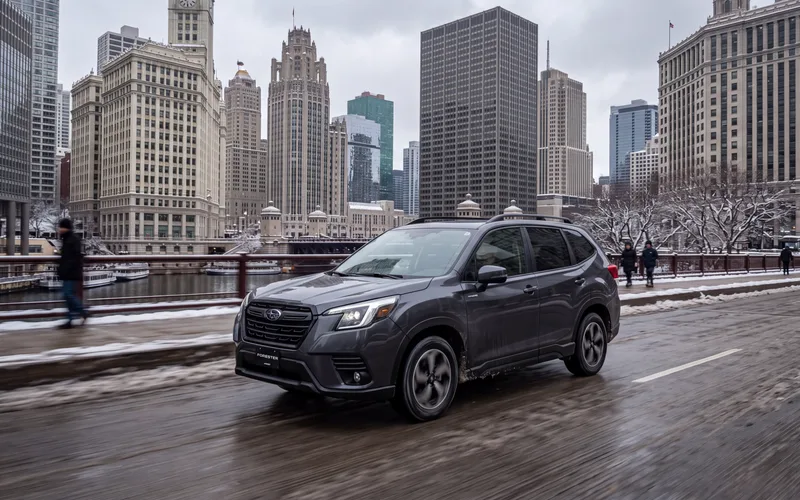 Subaru ForesterCompact SUVBetter at: Cargo space
Same standard AWD, X-MODE and Subaru dealer, but with 74.4 cu ft of cargo instead of 54.7 and a back seat adults can live in.
Compare 1.93C-
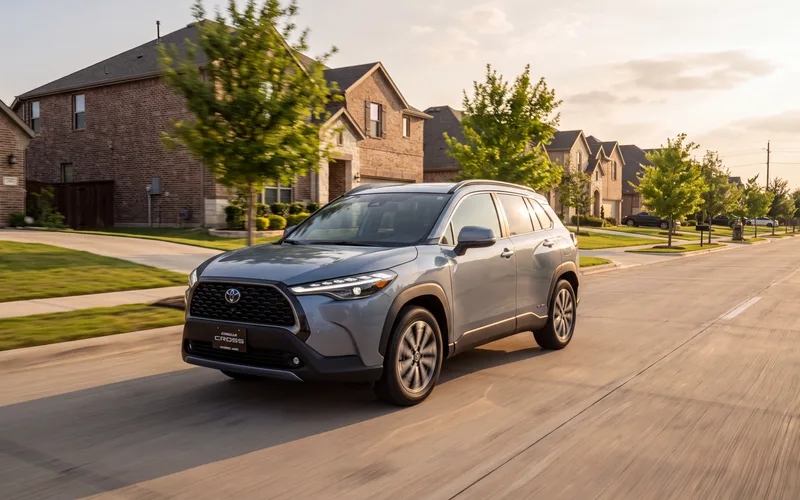 Toyota Corolla CrossSubcompact SUVBetter at: Efficiency
The hybrid version is quicker and thriftier than any gas Crosstrek, with a quieter cabin and two years of included maintenance.
Compare 1.71C-
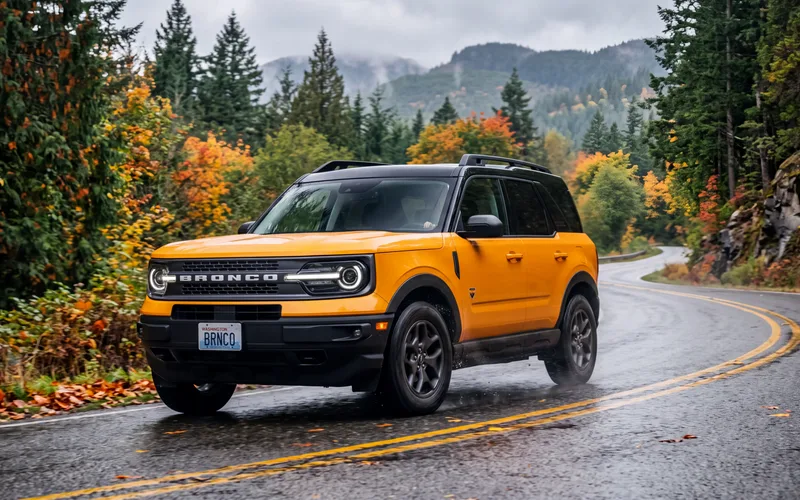 Ford Bronco SportSubcompact SUVBetter at: Off-road
For buyers who actually use the trail, the Badlands trim brings a turbo engine and real off-road hardware the Wilderness can't match.
CompareHow it's evolved
10 scored model years · 2017–2026
Subject scores by year
Hover or tap a score to see what moved it versus the year before. A corner mark flags a big swing.
| Year | Performance | Efficiency | Safety | Space | Cost | Reliability | Tech | Use-case | Driving | Value |
|---|---|---|---|---|---|---|---|---|---|---|
| 2026 | 36 | 76 | 77 | 43 | 63 | 70 | 53 | 67 | 64 | 73 |
| 2025 | 38 | 72 | 74 | 43 | 68 | 80 | 54 | 61 | 66 | 75 |
| 2024 | 31 | 73 | 74 | 42 | 68 | 74 | 52 | 63 | 64 | 75 |
| 2023 | 28 | 76 | 66 | 42 | 69 | 79 | 34 | 61 | 63 | 66 |
| 2022 | 28 | 76 | 68 | 42 | 70 | 75 | 34 | 60 | 63 | 66 |
| 2021 | 28 | 76 | 69 | 41 | 69 | 68 | 30 | 52 | 53 | 63 |
| 2020 | 26 | 76 | 67 | 40 | 70 | 74 | 35 | 51 | 55 | 70 |
| 2019 | 26 | 72 | 66 | 40 | 71 | 74 | 35 | 54 | 54 | 66 |
| 2018 | 26 | 73 | 62 | 41 | 72 | 61 | 34 | 53 | 56 | 67 |
| 2017 | 26 | 70 | 59 | 37 | 79 | 62 | 20 | 47 | 54 | 57 |
Compare two years
Best fit & conditions
Higher scores mean a better fit for that use case. Learn more about use-case fit →
Subject profile
Trims & configurations
5 trimsScores above reflect the volume trim. Per-trim specs and scores are rolling out — the full lineup:
Academic Probation · NHTSA safety recalls
Feb 14, 2023Electrical system: 12v/24v/48v batteryThe harness terminal that supplies low-voltage power from the converter to the 12-Volt battery may corrode and break, preventing the 12-Volt battery from charging.
Defect
Subaru of America, Inc. (Subaru) is recalling certain 2019-2022 Crosstrek Hybrid vehicles. The harness terminal that supplies low-voltage power from the converter to the 12-Volt battery may corrode and break, preventing the 12-Volt battery from charging.
Risk
A 12-Volt battery that is unable to recharge can cause a loss of drive power, increasing the risk of a crash.
Remedy
Dealers will replace the converter terminal mounting bracket. If corrosion is found on the terminals, the 12-Volt output harness and terminals will also be replaced. Repairs will be performed free of charge. Owner notification letters were mailed May 12, 2023. Owners may contact Subaru's customer service at 1-844-373-6614. Subaru's number for this recall is WRD-23.
NHTSA campaign 23V080000 ↗Manufacturer no. WRD-238,413 vehicles potentially affected (all models in the campaign)Owners notified May 12, 2023Filed by Subaru of America, Inc.Filed as CROSSTREK HYBRID
15 recalls on other model years of the Crosstrek (2017–2019, 2021, 2024, 2026)
Jul 7, 2026Equipment: other: labelsThese vehicles were manufactured with an incorrect Gross Axle Weight Rating (GAWR) on the certification label. As such, these vehicles fail to comply with the requirements of Federal Motor Vehicle Safety Standard (FMVSS) 110, "Tire selection and rims."
Defect
Subaru of America, Inc. (Subaru) is recalling certain 2026 Crosstrek Hybrid, 2025-2026 Forester Hybrid, Forester, and 2019-2026 Ascent vehicles. These vehicles were manufactured with an incorrect Gross Axle Weight Rating (GAWR) on the certification label. As such, these vehicles fail to comply with the requirements of Federal Motor Vehicle Safety Standard (FMVSS) 110, "Tire selection and rims."
Risk
An incorrect GAWR label may lead to an overloaded vehicle, increasing the risk of a crash.
Remedy
Subaru will mail a new certification label to owners, free of charge. Owners may also choose to have a dealer install the new label, free of charge. Letters informing owners of the safety risk were mailed August 27, 2026. Additional letters will be mailed once the remedy is available. Owners may contact Subaru customer service at 1-844-373-6614. Subaru's number for this recall is WRH-26.
NHTSA campaign 26V436000 ↗Manufacturer no. WRH-26541,237 vehicles potentially affected (all models in the campaign)Filed by Subaru of America, Inc.Filed as CROSSTREK HYBRIDFeb 23, 2026Fuel system, gasoline: storage: tank assembly: filler pipe and capWhen the fuel tank is near full capacity, an increase in ambient temperature may cause the fuel to expand and spill out of the filler neck due to an insufficient seal on the fuel cap.
Defect
Subaru of America, Inc. is recalling certain 2026 Crosstrek hybrid, and 2025 Forester hybrid vehicles. When the fuel tank is near full capacity, an increase in ambient temperature may cause the fuel to expand and spill out of the filler neck due to an insufficient seal on the fuel cap.
Risk
A fuel leak in the presence of an ignition source increases the risk of a fire.
Remedy
Owners are advised to park outside and away from structures, and to limit the fuel level to 50% until the remedy is completed. Dealers will replace the fuel filler cap gasket, free of charge. Owner notification letters were mailed March 25, 2026. Owners may contact Subaru customer service at 1-844-373-6614. Subaru's number for this recall is WRD-26. Vehicle Identification Numbers (VINs) involved in this recall became searchable on NHTSA.gov on February 16, 2026.
NHTSA campaign 26V106000 ↗Manufacturer no. WRD-2669,870 vehicles potentially affected (all models in the campaign)Owners notified Mar 25, 2026Filed by Subaru of America, Inc.Filed as CROSSTREK HYBRIDNov 9, 2023Power train: automatic transmission: park/neutral start interlock switchAn insufficient weld may allow water to enter the inhibitor switch, causing it to fail.
Defect
Subaru of America, Inc. is recalling certain model year 2021 Crosstrek, 2022 Forester, 2021-2023 Legacy, and Outback vehicles. An insufficient weld may allow water to enter the inhibitor switch, causing it to fail.
Risk
An inoperative inhibitor switch may prevent the reverse lights from illuminating and the rearview camera image from displaying, increasing the risk of a crash.
Remedy
Dealers will replace the inhibitor switch, free of charge. Owner notification letters were mailed January 8, 2024. Owners may contact Subaru customer service at 1-800-782-2783. Subaru's number for this recall is WRQ-23.
NHTSA campaign 23V755000 ↗Manufacturer no. WRQ-2395,830 vehicles potentially affected (all models in the campaign)Owners notified Jan 8, 2024Filed by Subaru of America, Inc.Filed as CROSSTREKNov 9, 2023Power train: driveline: driveshaftThe front driveshaft assemblies' outer race may develop cracks and break.
Defect
Subaru of America, Inc. (Subaru) is recalling certain 2024 Crosstrek, Impreza, 2023-2024 Forester, and 2023 WRX vehicles. The front driveshaft assemblies' outer race may develop cracks and break.
Risk
A broken driveshaft can cause a loss of drive power while driving or vehicle rollaway when the vehicle is in park without the parking brake engaged. Either of these scenarios can increase the risk of a crash.
Remedy
Dealers will inspect and replace the left and right front driveshafts as necessary, free of charge. Owner notification letters were mailed January 8, 2024. Owners may contact Subaru's customer service at 1-844-373-6614. Subaru's number for this recall is WRP-23.
NHTSA campaign 23V754000 ↗Manufacturer no. WRP-234,701 vehicles potentially affected (all models in the campaign)Owners notified Jan 8, 2024Filed by Subaru of America, Inc.Filed as CROSSTREKAug 4, 2023Electrical system: instrument cluster/panelDue to insufficient clearance, the instrument panel harness may contact the steering beam bracket, damaging the wire insulation and causing a short circuit.
Defect
Subaru of America, Inc. (Subaru) is recalling certain 2024 Crosstrek and Impreza vehicles. Due to insufficient clearance, the instrument panel harness may contact the steering beam bracket, damaging the wire insulation and causing a short circuit.
Risk
A short circuit may cause a loss of drive power, increasing the risk of a crash.
Remedy
Dealers will inspect the harness and install an additional clamp on the steering beam bracket. If damage is found, dealers will add protective tape or replace the instrument panel harness, as necessary. Repairs will be performed free of charge. Owner notification letters are expected to be mailed October 3, 2023. Owners may contact Subaru customer service at 1-844-373-6614. Subaru's number for this recall is WRL-23.
NHTSA campaign 23V551000 ↗Manufacturer no. WRL-2335,357 vehicles potentially affected (all models in the campaign)Owners notified Oct 3, 2023Filed by Subaru of America, Inc.Filed as CROSSTREKApr 15, 2021Electrical system: ignition · Electrical system: software · Engine and engine cooling: engine: engine control module (ecu/ecm): software · Engine and engine cooling: exhaust system: manifold/header/muffler/tail pipeThe Engine Control Module (ECM) may continue to power the ignition coil after the engine is shut off, causing a short circuit.
Defect
Subaru of America, Inc. (Subaru) is recalling certain 2017-2019 Subaru Impreza and 2018-2019 Crosstrek vehicles. The Engine Control Module (ECM) may continue to power the ignition coil after the engine is shut off, causing a short circuit.
Risk
A short circuit in the ignition coils may cause a stall, increasing the risk of a crash.
Remedy
Subaru will notify owners, and dealers will update the ECM software, replace the ignition coils and, if necessary, the front exhaust pipe, free of charge. Owner notification letters were mailed beginning June 1, 2021. Owners can contact Subaru customer service at 1-844-373-6614. Subaru's number for this recall is WRE-21. Note: This recall includes all vehicles previously repaired under Recall 19V743.
NHTSA campaign 21V264000 ↗Manufacturer no. WRE-21466,205 vehicles potentially affected (all models in the campaign)Owners notified Jun 1, 2021Filed by Subaru of America, Inc.Filed as CROSSTREKApr 15, 2021Suspension: rearThe rear stabilizer bracket bolts may loosen and detach.
Defect
Subaru of America, Inc. (Subaru) is recalling certain 2018-2019 Subaru Crosstrek, 2019 Crosstrek Hybrid, and 2019 Forester vehicles. The rear stabilizer bracket bolts may loosen and detach.
Risk
Missing bolts may allow the rear stabilizer bracket to shift, increasing the risk of a crash.
Remedy
Subaru will notify owners, and dealers will retorque and replace any missing bolts, free of charge. Owner notification letters were mailed May 17, 2021. Owners may contact Subaru customer service at 1-844-373-6614. Subaru's number for this recall is WRD-21.
NHTSA campaign 21V263000 ↗Manufacturer no. WRD-21408,271 vehicles potentially affected (all models in the campaign)Owners notified May 17, 2021Filed by Subaru of America, Inc.Filed as CROSSTREKMar 31, 2020Seat belts: rear/otherThe seat belt webbing sensor locking mechanism may not lock as intended.
Defect
Subaru of America, Inc. (Subaru) is recalling certain 2019 Crosstrek vehicles with rear seat belt assemblies with a dual-mode locking mechanism. The seat belt webbing sensor locking mechanism may not lock as intended.
Risk
In the event of a crash involving multiple impacts, the seat belt may not properly restrain the occupant, increasing the risk of injury.
Remedy
Subaru will notify owners, and dealers will replace rear seat belt assemblies, free of charge. The began April 15, 2020. Owners may contact Subaru customer service at 1-844-373-6614. Subaru's number for this recall is WRC-20.
NHTSA campaign 20V189000 ↗Manufacturer no. WRC-204,862 vehicles potentially affected (all models in the campaign)Owners notified Apr 15, 2020Filed by Subaru of America, Inc.Filed as CROSSTREKDec 2, 2019Engine and engine cooling: exhaust system: emission control: crankcase (pcv)The aluminum Positive Crankcase Ventilation (PCV) valve can separate, allowing the separated components to enter the engine, resulting in a loss of power while driving.
Defect
Subaru of America, Inc. (Subaru) is recalling certain 2019 Crosstrek, Forester, and Ascent vehicles. The aluminum Positive Crankcase Ventilation (PCV) valve can separate, allowing the separated components to enter the engine, resulting in a loss of power while driving.
Risk
An unexpected loss of power while driving can increase the risk of a crash.
Remedy
Subaru will notify owners, and dealers will inspect and replace the PCV valve, free of charge. If the PCV valve has separated and the components cannot be found, the short block engine will be replaced, free of charge. The recall began January 31, 2020. Owners may contact Subaru customer service at 1-844-373-6614. Subaru's number for this recall is WUW-08.
NHTSA campaign 19V856000 ↗Manufacturer no. WUW-0851,613 vehicles potentially affected (all models in the campaign)Owners notified Jan 31, 2020Filed by Subaru of America, Inc.Filed as CROSSTREKOct 18, 2019Electrical system: ignition · Electrical system: softwareThe Engine Control Module (ECM) may continue to power the ignition coil after the engine is shut off, which could result in a short circuit and blown fuse.
Defect
Subaru of America, Inc. (Subaru) is recalling certain 2017-2019 Impreza and 2018-2019 Crosstrek vehicles. The Engine Control Module (ECM) may continue to power the ignition coil after the engine is shut off, which could result in a short circuit and blown fuse.
Risk
If a short circuit occurs while driving, the vehicle may stall, increasing the risk of a crash.
Remedy
Subaru will notify owners, and dealers will update the ECM software and inspect and replace the ignition coil, as necessary, free of charge. In addition, on vehicles with confirmed ignition coil damage and a certain stored diagnostic trouble code (DTC), Subaru will replace the front exhaust pipe, free of charge. The recall began December 4, 2019. Owners may contact Subaru customer service at 1-844-373-6614. Subaru's number for this recall is WUQ-02.
NHTSA campaign 19V743000 ↗Manufacturer no. WUQ-02466,205 vehicles potentially affected (all models in the campaign)Owners notified Dec 4, 2019Filed by Subaru of America, Inc.Filed as CROSSTREKOct 17, 2019Engine and engine cooling: exhaust system: emission control: crankcase (pcv)The PCV valve may come apart, allowing the separated components to enter the engine, possibly resulting in a loss of power while driving.
Defect
Subaru of America, Inc. (Subaru) is recalling certain 2017-2018 Impreza and 2018 Crosstrek vehicles equipped with an aluminum Positive Crankcase Ventilation (PCV) valve. The PCV valve may come apart, allowing the separated components to enter the engine, possibly resulting in a loss of power while driving.
Risk
An unexpected loss of power while driving can increase the risk of a crash.
Remedy
Subaru will notify owners, and dealers will inspect and, if necessary, replace the PCV valve, free of charge. If the PCV valve has separated and the components cannot be found, the engine will be replaced, free of charge. The recall began December 2, 2019. Owners may contact Subaru customer service at 1-844-373-6614. Subaru's number for this recall is WUP-01.
NHTSA campaign 19V744000 ↗Manufacturer no. WUP-01205,000 vehicles potentially affected (all models in the campaign)Owners notified Dec 2, 2019Filed by Subaru of America, Inc.Filed as CROSSTREKMay 30, 2019Visibility · Visibility: glass, side/rearThe driver's side rear-door window glass may be improperly tempered. As such, these vehicles fail to comply with the requirements of Federal Motor Vehicle Safety Standard (FMVSS) number 205, "Glazing Materials."
Defect
Subaru of America, Inc. (Subaru) is recalling certain 2019 Crosstrek vehicles. The driver's side rear-door window glass may be improperly tempered. As such, these vehicles fail to comply with the requirements of Federal Motor Vehicle Safety Standard (FMVSS) number 205, "Glazing Materials."
Risk
Improperly tempered glass can shatter into large pieces, increasing the risk of injury.
Remedy
Subaru will notify owners, and dealers will replace the driver's side rear-door window glass, free of charge. The recall began June 11, 2019. Owners may contact Subaru customer service at 1-844-373-6614. Subaru's number for this recall is WUG-92.
NHTSA campaign 19V404000 ↗Manufacturer no. WUG-92256 vehicles potentially affected (all models in the campaign)Owners notified Jun 11, 2019Filed by Subaru of America, Inc.Filed as CROSSTREKFeb 28, 2019Exterior lighting: brake lights: switchExposure to certain contaminants may cause the brake light switch to malfunction, preventing the brake lights from illuminating and also preventing keyless ignition vehicles from starting and CVT/automatic transmissions from being able to be shifted out of Park.
Defect
Subaru of America, Inc. (Subaru) is recalling certain 2014-2016 Forester, 2008-2016 Impreza sedans, 2012-2016 Impreza station wagons, 2008-2014 WRX sedans (including STI), and 2013-2017 Crosstrek vehicles. Exposure to certain contaminants may cause the brake light switch to malfunction, preventing the brake lights from illuminating and also preventing keyless ignition vehicles from starting and CVT/automatic transmissions from being able to be shifted out of Park.
Risk
Brake lights that do not illuminate properly will not alert other drivers that the vehicle is slowing or stopping, increasing the risk of crash.
Remedy
Subaru will notify owners, and dealers will replace the brake light switch, free of charge. The recall began April 15, 2019. Owners may contact Subaru customer service at 1-844-373-6614. Subaru's number for this recall is WUE-90.
NHTSA campaign 19V149000 ↗Manufacturer no. WUE-901,303,530 vehicles potentially affected (all models in the campaign)Owners notified Apr 15, 2019Filed by Subaru of America, Inc.Filed as CROSSTREKFeb 6, 2019Steering: electric power assist systemA connector inside the Electronic Power Steering (EPS) unit may short circuit resulting in a loss of electric power steering assistance.
Defect
Subaru of America, Inc. (Subaru) is recalling certain 2019 Forester and Crosstrek vehicles. A connector inside the Electronic Power Steering (EPS) unit may short circuit resulting in a loss of electric power steering assistance.
Risk
Loss of power steering assist would require higher steering effort, increasing the risk of a crash.
Remedy
None of the affected vehicles have been sold yet. Subaru has notified dealers and they will inspect the steering gearbox, replacing it as necessary, free of charge. The recall began February 7, 2019. Owners may contact Subaru customer service at 1-844-373-6614. Subaru's number for this recall is WUC-88.
NHTSA campaign 19V065000 ↗Manufacturer no. WUC-8810,417 vehicles potentially affected (all models in the campaign)Owners notified Feb 7, 2019Filed by Subaru of America, Inc.Filed as CROSSTREKNov 7, 2017Service brakes · Vehicle speed control: accelerator pedalThese vehicles may be equipped with an incorrect floor mat retention bracket, allowing the floor mat to move out of position and interfere with the accelerator or brake pedal operation.
Defect
Subaru of America, Inc. (Subaru) is recalling certain 2018 Crosstrek vehicles. These vehicles may be equipped with an incorrect floor mat retention bracket, allowing the floor mat to move out of position and interfere with the accelerator or brake pedal operation.
Risk
If the floor mat moves out of position and interferes with the accelerator or brake pedal operation, it can increase the risk of a crash.
Remedy
Subaru has notified owners, and dealers will inspect the floor mat retention bracket and replace it if necessary, free of charge. The recall began November 14, 2017. Owners may contact Subaru customer service at 1-800-782-2783. Subaru's number for this recall is WTR-77.
NHTSA campaign 17V701000 ↗Manufacturer no. WTR-772,367 vehicles potentially affected (all models in the campaign)Owners notified Nov 14, 2017Filed by Subaru of America, Inc.Filed as CROSSTREK
Source: NHTSA Office of Defects Investigation recall database, model years 2017–2026. Recalls are listed by model year as the manufacturer filed them; whether a specific car is affected depends on its VIN — check a VIN at nhtsa.gov ↗. NHTSA model names matched to this page: CROSSTREK, CROSSTREK HYBRID.
Detailed scoring by subject
1Performance & PowertrainThe Crosstrek's lowest-graded category.0.00F
2020 is a carry-over year within the second generation (GT, 2018–2023): the sole gas engine across the range is the naturally aspirated 2.0L FB20 boxer-four at 152 hp — the 2.5L option and Sport trim are still a model year away (2021). Sits at the floor of the SUV horsepower band.
Peak torque of the FB20 fitted across every 2020 gas trim, unchanged from surrounding model years. Near the floor of the SUV torque band, and the whole reason the CVT has to work the engine hard for merging and grades.
Edmunds' instrumented test of the CVT-equipped 2020 Crosstrek recorded 10.3 seconds to 60 mph, beyond the slow end of the SUV band — consistent with the 152-hp engine and standard AWD's curb weight. Aggregated tests of the same generation's 2.0L CVT across nearby model years average closer to 9.7 s.
The naturally aspirated boxer delivers its power cleanly at light throttle — no turbo lag, no hybrid handover — but the 152-hp 2.0L has to be worked hard for merging, passing and grades, where it turns audibly strained. 2020 predates the 2021 suspension/chassis refresh, so nothing about the powertrain calibration itself changed from the prior year.
The Lineartronic CVT is smooth and unobtrusive in normal driving and steps through simulated ratios under harder throttle rather than flaring to redline and holding, addressing the worst complaint of earlier CVTs — but paired with the low-output 2.0L it still spends more time at high revs than a stepped automatic would, and engine drone under load is the recurring criticism. A genuine 6-speed manual remains standard-fit on Base and Premium.
Every 2020 gas Crosstrek is rated at 1,500 lbs maximum with the available hitch — near the floor of the SUV towing band. No Wilderness variant exists yet (introduced 2024), so nothing in the 2020 range approaches a higher rating.
Symmetrical full-time AWD is standard on every 2020 US trim, not an option or a top-trim upsell. CVT-equipped Base, Premium and Limited all add single-function X-MODE with Hill Descent Control; manual-transmission cars get none at all, and the dual-mode X-MODE (separate Snow/Dirt and Deep Snow/Mud settings) doesn't arrive until the 2021 Sport trim. No low range or true torque-vectoring rear differential.
8.7 inches of ground clearance standard on every 2020 trim beats most subcompact crossovers outright, and single-function X-MODE with Hill Descent Control on CVT trims makes it genuinely useful on forest roads and light snow. But 2020 predates the Wilderness by four model years — no dedicated off-road variant, no lockers, no low range, no all-terrain tire option. Light-duty trail hardware only.
The 2020 range covers two distinct powertrains: the 152-hp 2.0L (choice of 6-speed manual or CVT) and the Crosstrek Hybrid, a plug-in hybrid with roughly 17 miles of electric-only range. Squarely in the middle band — a real electrified option available, but only one gas engine and no turbo or larger-displacement choice (those arrive in 2021).
2Efficiency & RangeThe Crosstrek's best-graded category.3.13B
EPA rates the volume 2.0L CVT configuration at 30 MPG combined — a strong figure for a subcompact SUV carrying full-time symmetrical AWD as standard, matching the 2021/2022 model years on either side despite 2020 lacking their auto stop-start system.
EPA city rating of 27 MPG for the 2.0L CVT volume trim — one point behind the 2021+ CVT figure because the 2020 car doesn't yet carry the auto engine stop-start system Subaru added the following model year. Still comfortably mid-band for an AWD-standard SUV.
The 2.0L CVT volume trim posts 33 MPG highway, unchanged from the surrounding model years and among the stronger highway figures in the subcompact SUV class.
The 16.6-gallon fuel tank shared across the 2020 Crosstrek gas range, at the EPA combined 30 MPG, covers roughly 498 miles per fill — solidly above the middle of the SUV range band, limited by the subcompact-sized tank rather than by efficiency.
EPA's published annual fuel cost for the 2020 Crosstrek AWD 2.0L CVT is $2,050 at standard assumptions — a low absolute running cost driven by 30 MPG combined on the cheapest fuel grade.
The 2020 Crosstrek's 2.0L FB20 runs on 87-octane regular unleaded, with no premium recommendation, no turbocharger to feed and no special fuel handling — no ongoing grade penalty relative to any rival in the class.
3SafetyMid-pack among this car's ten categories.2.56C+
NHTSA's full 5-star crash test program covered the 2020 Crosstrek, with 4-star frontal and 4-star rollover results combining with a 5-star side result for a 5-star overall rating.
The 2020 Crosstrek earned IIHS Top Safety Pick with Good ratings across every crashworthiness test — small overlap front (both sides), moderate overlap front, side, roof strength, and head restraints/seats — falling short of the Plus tier only because the award requires the optional front crash prevention plus the Limited trim's Good-rated LED headlights rather than the halogen units on the volume trims.
EyeSight (AEB, adaptive cruise, lane-keep assist, lane departure/sway warning) is standard on every CVT-equipped Crosstrek but entirely unavailable on the 6-speed manual offered on Base and Premium, and blind-spot/rear-cross-traffic coverage is absent on Base, only a paid option on Premium, and standard solely on the range-topping Limited.
IIHS rated the EyeSight-equipped Crosstrek's front crash prevention Superior for both vehicle-to-vehicle scenarios (avoiding collisions at 12 and 25 mph) and daytime pedestrian scenarios; no separate nighttime pedestrian figure was published for this generation.
Blind-spot detection with rear cross-traffic alert is standard only on the Limited trim, a paid option on Premium, and not offered at all on Base — the volume of the lineup ships with no coverage unless the buyer pays extra or steps up to Limited.
The 2020 EyeSight suite offers only lane-keep assist and lane departure/sway warning — true lane-centering assistance was not added to the Crosstrek until the 2021 model year, so drivers get corrective nudges rather than continuous centering on the highway.
EyeSight's adaptive cruise covers full-speed-range stop-and-go on CVT models, but with no lane-centering to pair with it there is no combined 'highway assist' experience — just a capable but stand-alone ACC, which period reviews describe as adequate rather than refined.
The 2020 Crosstrek offers no hands-free highway driving system of any kind — EyeSight is a hands-on driver-assist suite only.
IIHS rated the LED headlights on the low-volume Limited trim Good, but the halogen reflector units on Base and Premium — the volume of the lineup — scored the bottom rating of Poor, a real everyday-visibility shortfall for most buyers.
Reviewers consistently single out the Crosstrek for best-in-class outward visibility among small SUVs — thin pillars, low-mounted mirrors and generous glass area give excellent front/side sightlines, with only rear visibility being merely average and compensated by the standard rearview camera.
IIHS gave the Crosstrek's LATCH setup its top Good+ rating, citing extra LATCH positions and accessible anchors that make installing infant, rear-facing and forward-facing seats straightforward in the rear doors.
4Space & ComfortOne of the Crosstrek's weakest categories.0.63F
Standard 5-passenger subcompact SUV configuration across all 2020 Crosstrek trims.
Manufacturer-published front headroom figure for the 2020 Crosstrek.
Manufacturer-published front legroom figure for the 2020 Crosstrek.
Manufacturer-published second-row headroom figure for the 2020 Crosstrek.
Manufacturer-published second-row legroom figure for the 2020 Crosstrek; on the tighter end for the subcompact SUV class.
The Crosstrek is a strict two-row subcompact SUV with no third-row option in any trim for 2020.
Manufacturer-published cargo volume behind the second row for the 2020 Crosstrek.
Manufacturer-published maximum cargo volume with the 60/40 rear seat folded for the 2020 Crosstrek.
Standard console, door bins, and a 60/40-split fold-down rear seat with a low, wide cargo opening cover competitive but unremarkable everyday storage for the segment; no standout innovations like a giga-console or onboard power.
Reviewers describe adequate front and rear seat comfort for daily use with easy ingress/egress from the raised ride height, though some owners flag flatter cushioning versus rivals; heated front seats available on Premium and up.
Consumer Reports and Edmunds describe a composed but stiffer-than-average ride over rough pavement, a step up from the prior generation but not class-leading plushness.
Multiple reviewers specifically flag above-average cabin noise, including engine drone under acceleration and insufficient sound insulation, placing it below segment average.
Automatic climate control is standard fleet-wide for 2020, but heated front seats/steering wheel/mirrors are gated behind the Premium All-Weather Package or standard on Limited, and no rear climate vents or remote pre-conditioning are offered.
5Cost of OwnershipOne of the Crosstrek's strongest categories.2.73B-
Base 2.0i starts near the bottom of the subcompact SUV price band despite standard AWD, which most rivals charge extra for.
Premium CVT is the best-selling configuration, adding heated seats, extra USB port and foglights over base for roughly $1,000 before destination.
Subaru's naturally aspirated 2.0L flat-four and CVT are mechanically simple and well-proven, keeping projected 5-year upkeep well below the class average.
The Crosstrek was named Kelley Blue Book's Best Resale Value winner in the subcompact SUV class for 2020, well ahead of the runner-up Honda HR-V (41.9%).
Industry-standard 3/36 coverage, at the bottom of the segment band — Hyundai/Kia rivals in this class offer longer basic coverage.
Standard 5/60 powertrain coverage sits at the low end of the band; Hyundai/Kia offer 10/100 in the same segment.
No complimentary scheduled maintenance is included; Subaru bundles 3-year/36,000-mile roadside assistance (towing, jump-start, fuel delivery) with the basic warranty and a short Starlink connected-safety-services trial, but there is no free-service program like some Asian rivals offer.
$25,555 volume-trim price minus its estimated resale value after 5 years (50.4% retained, or about $12,880) leaves about $12,675 in depreciation. Add the projected $2,643 in 5-year maintenance and repairs, and owning this vehicle for 5 years costs about $15,318 in total.
6Reliability & QualityOne of the Crosstrek's strongest categories.3.00B
Consumer Reports rated the 2020 Crosstrek among the strongest predicted-reliability performers in the compact SUV class for that model year, and J.D. Power's model-level predicted reliability score sits in the higher end of the Average band. This was before the 2021 introduction of the optional 2.5L engine, so the 2020 model carries the well-established 2.0L/CVT combination with several prior production years of owner data behind it.
Contemporary to model year 2020, J.D. Power's Initial Quality Study placed Subaru 7th from the bottom among all brands (187 PP100 vs. 166 industry average) — below-average initial quality despite the model-level reliability strength above. Subaru's rise to top-tier Consumer Reports brand-dependability rankings happened in later years, well after MY2020.
The 2020 Crosstrek (gas model) carries zero NHTSA recalls — a clean record, distinct from the Crosstrek Hybrid's separate multi-recall history (12V harness corrosion, ECM software, brake light switch) that applies only to that powertrain variant and this vehicle is not scored as. No systemic TSB pattern turned up in owner/reviewer sources.
The 2020 Crosstrek uses the 2.0L FB20 four-cylinder paired with Subaru's Lineartronic CVT, a combination in production since this generation's 2013 launch — a proven long-block architecture shared across the Subaru lineup. Lineartronic's early-generation (2010–2015) CVT problems that drove extended warranty coverage were largely addressed by design and software updates post-2015, so by 2020 the pairing has a multi-year track record without the new-application uncertainty the 2021 model year's added 2.5L engine option introduced.
Reviewers describe the 2020 Crosstrek's cabin as attractive and well-built with soft-touch materials on the dash and doors and durable, good-looking cloth upholstery, calling build quality "a little better than average" for the class — competitive with expectations for a mainstream compact SUV rather than class-leading against pricier rivals.
Reviewers note the interior pieces are well-made with nothing rattling or loose in motion, and the clean recall record corroborates a lack of systemic assembly defects for the model year — a solid, consistent baseline for the class.
Subaru distributes through roughly 630-640 US retailers, giving it dense nationwide coverage, and Subaru of America has repeatedly placed at or near the top of J.D. Power's Customer Service Index among mass-market brands across the surrounding model years — a well-supported ownership network.
RepairPal rates the Crosstrek specifically at 4.5/5.0 reliability with an average annual repair cost of $492, well below both the Subaru brand average ($617) and the all-model average ($652) — cheap, widely available parts aided by shared AWD/flat-four components across the Subaru lineup, though the AWD driveline keeps a few jobs from being as cheap as a mainstream FWD compact.
7Technology & InfotainmentOne of the Crosstrek's weakest categories.0.28F
Volume trim (Premium) carries the 6.5-inch STARLINK Multimedia Plus touchscreen; the 8.0-inch unit with optional TomTom navigation is Limited-only.
Subaru's STARLINK system of this era is generally rated as functional but dated, with lower-resolution graphics and less fluid response than rivals' latest units; reviewers and owners note occasional connectivity glitches.
Apple CarPlay and Android Auto are standard across all 2020 Crosstrek trims but require a wired USB connection; Subaru did not add wireless smartphone projection to Crosstrek until later model years.
Voice control handles basic phone/audio commands adequately; native TomTom navigation is an optional add-on only on the top Limited trim's 8-inch screen, so most owners rely on phone projection instead.
Base/Premium use a standard 6-speaker system; an 8-speaker, 432-watt Harman Kardon premium system is available as part of the Limited's optional Moonroof Package, giving a real but trim-gated upgrade path.
Base and Premium get only a small 4.2-inch color LCD within an otherwise analog gauge cluster; Limited gets a higher-grade multifunction display, but neither is a full configurable digital cluster.
The 2020 Crosstrek's STARLINK system predates Subaru's later over-the-air update rollout; software and map updates of this era are handled via dealer visits or USB, not OTA.
The MySubaru app supports remote start/lock/unlock, vehicle locate, and diagnostics/maintenance reminders (with climate control on push-button-start trims), a solid if not class-leading feature set, and is subscription-gated after an initial trial via STARLINK Safety and Security.
Premium and up get dual USB ports up front; no wireless charging pad or USB-C ports are offered in 2020, and no household/AC outlet is provided — an adequate but dated setup.
Proximity keyless entry with push-button start is standard on Premium and Limited, plus automatic power door locks with collision-detection unlock new for 2020 and app-based remote start on equipped trims; no phone-as-key or hands-free liftgate.
A standard rear-view camera is present across trims, with Reverse Automatic Braking added on Limited for 2020, but there is no surround/360-degree camera system or front/rear parking sensors offered on the Crosstrek this generation.
No head-up display is offered on any 2020 Crosstrek trim; the feature is absent from Subaru's press materials and full trim breakdowns for this model year.
8Use-Case FitGrades below the middle of the scale.1.45D
Rear doors open wide enough for car-seat installs and the raised ride height eases loading, but the tight 36.5-in rear legroom and modest 20.8 cu ft cargo hold behind a rear-facing seat make it a compromise for larger families versus roomier compact SUVs.
EyeSight driver-assist (pre-collision braking, lane keep/departure warning) is standard on every CVT-equipped 2020 Crosstrek including Premium, and the CVT/LED-headlight combo earns IIHS Top Safety Pick+, but Blind Spot Detection/Rear Cross Traffic Alert are Limited-standard or Premium-optional rather than fleet-wide.
Above-average cabin noise and a stiffer ride on rough pavement (per Consumer Reports) work against multi-hour comfort, and there are no rear entertainment or rear climate vents; front-seat comfort and visibility are pluses.
Light steering, a tight-for-SUV 35.4-ft turning circle, and good outward visibility make it easy in traffic, though the CVT's slow response to throttle inputs (0-60 in ~10.3 sec) can feel labored during merges and passing.
30 mpg combined (CVT) is competitive for a standard-AWD subcompact SUV, though it trails hybrid and 2WD-only rivals; Subaru's typical maintenance costs are moderate, not class-cheapest.
Subcompact footprint and a 35.4-ft turning circle make it easy to park and thread through the city; a standard rear camera helps, though the lack of front/rear parking sensors or a surround-view camera is a step behind class leaders.
Towing is capped around 1,500 lbs and the Crosstrek has no factory bed or heavy-duty cargo provisions; it is not meaningfully work-capable beyond light hauling in the cargo area.
Subaru's Symmetrical AWD and Boxer engine have a reputation for mechanical durability and Consumer Reports rates the 2020 Crosstrek's reliability above average, but it is not fleet/work-truck-proven the way body-on-frame trucks are, and it isn't marketed or equipped for hard work use.
No onboard AC power outlet, no bed, and minimal factory tie-down or upfit ecosystem; roof rails support light racks but there is essentially no jobsite-oriented equipment.
A roughly 400+ mile highway range (33 mpg hwy on a ~16.6-gal tank) is solid for road trips, but above-average cabin noise and a stiffer ride cut into long-haul comfort, and EyeSight's adaptive cruise/lane-keep on CVT trims helps reduce driver fatigue.
Standard Symmetrical AWD, 8.7 in of ground clearance, and X-MODE with Hill Descent Control on CVT trims give genuine light off-pavement capability that is a core part of the Crosstrek's identity and marketing.
Standard roof rails and a 60/40-split folding rear seat expanding to 55.3 cu ft help swallow bulky gear, but the modest 20.8 cu ft behind the second row is below segment-leading rivals and there's no hitch/tow package for gear trailers.
9Driving ExperienceMid-pack among this car's ten categories.1.72C-
A quicker steering ratio and revised suspension for the second-generation Crosstrek deliver secure, composed handling with good body control for a raised-ride-height crossover, though it's more competent than genuinely engaging versus sportier subcompact SUV rivals.
The 2020 model's quicker steering ratio is a genuine improvement in precision, but reviewers still describe the feedback as light and safe rather than richly communicative.
Brakes are described as predictable with pedal calibration tuned for fine control off-road and on slippery surfaces; no major complaints about fade or stopping distance in reviews.
The 152-hp 2.0L Boxer paired with the CVT is notably slow (0-60 in ~10.3 sec per Edmunds testing) with weak passing/merging response, though the CVT itself shifts smoothly with SI-Drive and paddle-shift mode helping mitigate the lag somewhat.
Reviewers and owners consistently flag audible engine growl/drone under acceleration and insufficient sound insulation, placing this below segment average for refinement.
Aggregated spec sources consistently report a 35.4-ft turning circle for the 2020 Crosstrek, mid-pack for the subcompact SUV class.
Raised ride height gives good outward visibility and easy ingress/egress, with straightforward control layout; adjustability is solid on Premium/Limited (power driver's seat optional) though not class-leading in range.
Some owners enjoy its light, capable handling and standard AWD character, but the slow acceleration and CVT drone dominate professional reviews, landing it as pleasant rather than genuinely exciting to drive.
10Value & Market PositionGrades above the middle of the scale.2.72B-
Symmetrical AWD, EyeSight driver-assist (Advanced Adaptive Cruise, pre-collision braking, lane-departure warning on CVT trims), a rearview camera and keyless entry are all standard on the base 2.0i — content most subcompact-SUV rivals charge extra for or don't offer at all.
Standard AWD, standard advanced driver-assist tech, class-leading resale and a Consumer Reports-topping overall score combine for strong content-per-dollar, offset only by the segment's weakest-in-class engine output.
Just three gas trims (Base, Premium, Limited) plus the separate Hybrid, all sharing the same 152-hp 2.0L — no performance-oriented Sport trim or larger-engine option existed yet for 2020 (added for 2021), so the range is narrower than some rivals'.
The Crosstrek was the best-selling subcompact SUV in the US for 2020, ending the year ahead of the Honda HR-V, Jeep Compass and Hyundai Kona despite a pandemic-depressed sales year overall.
Subaru carries a loyal, above-average-income following built on standard AWD, safety scores and an outdoors/adventure image; the brand isn't aspirational-luxury but is well regarded and drives repeat purchases.
Subaru's incentive spend is traditionally thin and Crosstreks hold close to sticker; 2020 brought a temporary pandemic-relief 0%-for-63-months financing offer, but no meaningful cash-back culture the way domestic rivals have.
2020 is the third model year of the second-generation Crosstrek (new platform, new 2.0L engine debuted for MY2018), a carry-over year with no major changes — current but not brand-new, with the 2.5L/Sport refresh still a year away.
The 2020 Crosstrek topped Consumer Reports' subcompact SUV ranking by a wide margin, earned an IIHS Top Safety Pick, and won KBB's Best Resale Value award for the class — consistently the class benchmark despite reviewers dinging its weak engine and noisy cabin.