
The verdict
A struggling subcompact suv, strong on efficiency and held back by performance.
The 2021 Crosstrek pairs standard all-wheel drive, 8.7 inches of ground clearance, and 30 MPG combined fuel economy in a package that starts at $23,295 and holds its value better than almost anything else in the subcompact SUV class. The trade-off is real: the volume 2.0L engine needs about 9.7 seconds to reach 60 mph, cargo space tops out at 20.8 cu ft behind the rear seats, and the tech suite (6.5-inch screen, wired-only CarPlay, no HUD) feels dated even for its era. It's the right call for someone who wants genuine AWD capability and low running costs more than speed, space, or gadgets.
Jump to scoresStrengths
- Standard AWD with real off-road chops
- Strong fuel economy for a standard-AWD SUV
- Strong crash protection and child-seat compatibility
What holds it back
- The volume 2.0L engine is genuinely slow
- Small cargo hold even by subcompact-SUV standards
- Infotainment tech trails the segment
Top alternatives
Cars shoppers cross-shop with the Subaru Crosstrek 2.26C
2.26C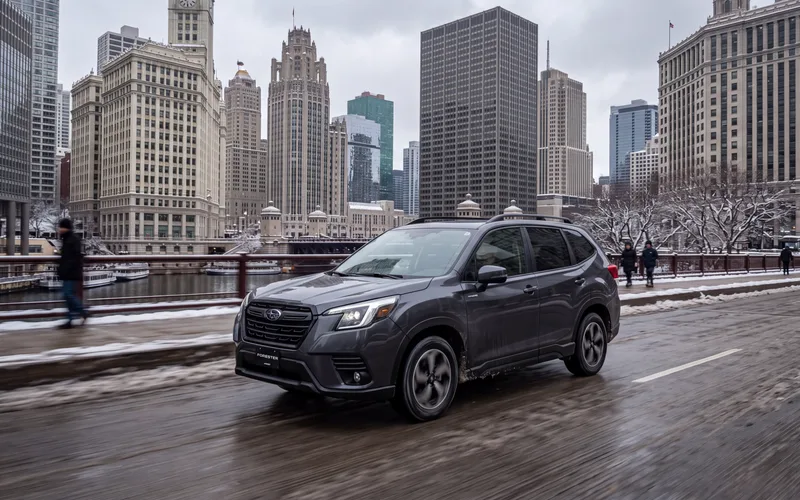 Subaru ForesterCompact SUVBetter at: Cargo space
Same standard AWD, X-MODE and Subaru dealer, but with 74.4 cu ft of cargo instead of 54.7 and a back seat adults can live in.
Compare 1.93C-
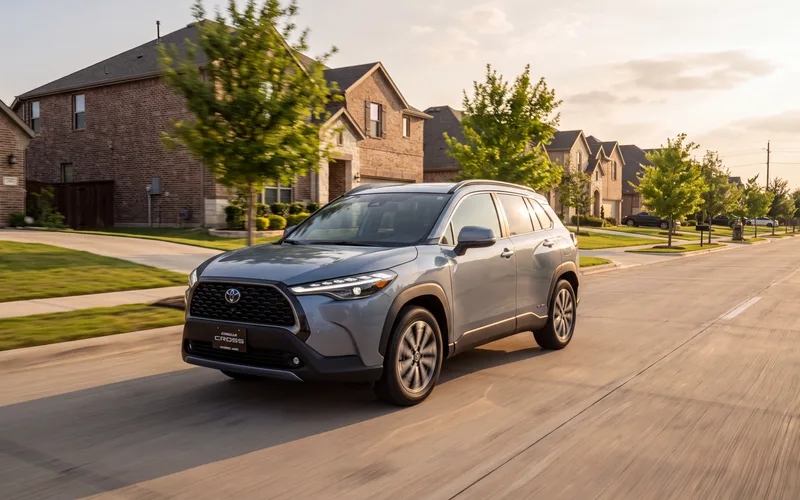 Toyota Corolla CrossSubcompact SUVBetter at: Efficiency
The hybrid version is quicker and thriftier than any gas Crosstrek, with a quieter cabin and two years of included maintenance.
Compare 1.71C-
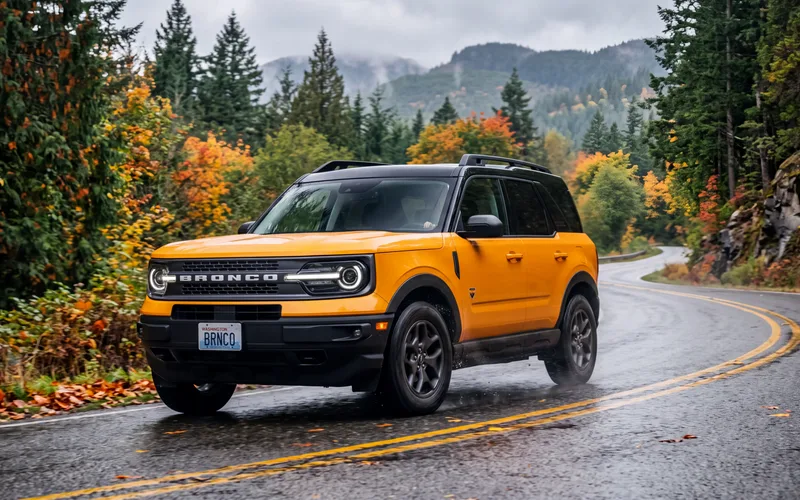 Ford Bronco SportSubcompact SUVBetter at: Off-road
For buyers who actually use the trail, the Badlands trim brings a turbo engine and real off-road hardware the Wilderness can't match.
CompareHow it's evolved
10 scored model years · 2017–2026
Subject scores by year
Hover or tap a score to see what moved it versus the year before. A corner mark flags a big swing.
| Year | Performance | Efficiency | Safety | Space | Cost | Reliability | Tech | Use-case | Driving | Value |
|---|---|---|---|---|---|---|---|---|---|---|
| 2026 | 36 | 76 | 77 | 43 | 63 | 70 | 53 | 67 | 64 | 73 |
| 2025 | 38 | 72 | 74 | 43 | 68 | 80 | 54 | 61 | 66 | 75 |
| 2024 | 31 | 73 | 74 | 42 | 68 | 74 | 52 | 63 | 64 | 75 |
| 2023 | 28 | 76 | 66 | 42 | 69 | 79 | 34 | 61 | 63 | 66 |
| 2022 | 28 | 76 | 68 | 42 | 70 | 75 | 34 | 60 | 63 | 66 |
| 2021 | 28 | 76 | 69 | 41 | 69 | 68 | 30 | 52 | 53 | 63 |
| 2020 | 26 | 76 | 67 | 40 | 70 | 74 | 35 | 51 | 55 | 70 |
| 2019 | 26 | 72 | 66 | 40 | 71 | 74 | 35 | 54 | 54 | 66 |
| 2018 | 26 | 73 | 62 | 41 | 72 | 61 | 34 | 53 | 56 | 67 |
| 2017 | 26 | 70 | 59 | 37 | 79 | 62 | 20 | 47 | 54 | 57 |
Compare two years
Best fit & conditions
Higher scores mean a better fit for that use case. Learn more about use-case fit →
Subject profile
Trims & configurations
5 trimsScores above reflect the volume trim. Per-trim specs and scores are rolling out — the full lineup:
Detailed scoring by subject
1Performance & PowertrainThe Crosstrek's lowest-graded category.0.00F
2021 is a mid-cycle refresh year for the second-generation (GT) Crosstrek — new front/rear styling, retuned suspension, and for the first time a 2.5L engine option on Sport and Limited — but the volume Premium keeps the 2.0-liter FB20 at 152 hp. That sits at the floor of the SUV horsepower band.
Peak torque of the FB20 fitted to the 2021 volume Premium, unchanged from the prior model year. The 31 lb-ft deficit to the new 2.5L option is felt whenever the 2.0L car is loaded or climbing.
Independent tests of the 2.0L Premium cluster around 9.7 seconds to 60 mph for 2021 (Subaru's own claim is a more optimistic 8.2 s), beyond the slow end of the SUV band. The new-for-2021 2.5L cars are roughly a second and a half quicker.
The naturally aspirated boxer delivers power cleanly and immediately at light throttle with no turbo lag and no hybrid handover to manage, but the 152-hp 2.0L in the volume Premium still has to be worked hard for merging and grades, where it turns audibly coarse — the 2021 suspension retune sharpens ride and handling but does nothing for the powertrain itself. A routine part of driving the 2.0L car, not an occasional one.
The Lineartronic CVT is unobtrusive around town and steps through simulated ratios rather than pinning revs, but paired with the low-output 2.0L it spends more time at high revs and drone under load is the recurring complaint. A genuine 6-speed manual remains standard on Base and Premium in 2021, with CVT trims adding an 8-speed manual mode with paddle shifters.
Every 2021 gas Crosstrek — 2.0L or the newly available 2.5L alike — is rated at 1,500 pounds maximum when fitted with the available hitch. No Wilderness variant exists yet, so nothing in the range approaches the 3,500-pound rating the 2024 car introduced. Near the floor of the SUV towing band: a small utility trailer or a pair of jet skis, not a camper.
Symmetrical full-time AWD is standard on every 2021 US trim rather than an option or a top-trim upsell — the strongest possible showing on availability. Held out of the top of the band because dual-function X-MODE with Hill Descent Control is limited to the Sport trim, other CVT trims get single-setting X-MODE, manual-transmission cars get none at all, and there is no low range or true torque-vectoring rear unit.
8.7 inches of ground clearance standard on every 2021 trim beats most subcompact crossovers outright and, with X-MODE and standard AWD, makes the Crosstrek genuinely useful on forest roads and snow. But 2021 predates the Wilderness by three model years, so there is no dedicated off-road variant, no lockers, no low range and no all-terrain tire option — light-duty trail hardware only, unchanged by the styling/suspension refresh.
2021 is the year the lineup widens to its broadest form: the existing 2.0L (manual or CVT) and Crosstrek Hybrid plug-in are joined by a newly available 2.5L on Sport and Limited — three distinct naturally aspirated/electrified powertrains and a manual gearbox choice, an electrified option the third-generation car would go without until 2026. Short of the top band because the PHEV remains a low-volume, higher-priced model and there is no turbo option anywhere in the range.
2Efficiency & RangeThe Crosstrek's best-graded category.3.18B
EPA rates the 2021 volume Premium's 2.0L CVT AWD configuration at 30 MPG combined — a strong figure for a subcompact SUV carrying full-time symmetrical AWD as standard, unchanged by the mid-cycle refresh and matching the surrounding model years.
EPA city rating of 28 MPG for the 2.0L CVT volume trim, helped by the auto start-stop system fitted to the CVT cars. Near the top of the SUV city band despite standard all-wheel drive, and the strongest city figure in the 2021 range.
The 2.0L volume trim posts 33 MPG highway. As in the surrounding model years, the new-for-2021 2.5L is a mile per gallon better on the highway cycle thanks to taller effective gearing, so the 2.0L's efficiency advantage is entirely a city-cycle one.
The 16.6-gallon tank is shared across the 2021 Crosstrek gas range, so at the EPA combined 30 MPG the volume 2.0L Premium covers roughly 498 miles per fill and about 548 on the highway cycle. Solidly above the middle of the SUV range band — capped by the small tank a subcompact carries rather than by the engine's efficiency.
EPA's published annual fuel cost for the 2021 Crosstrek AWD 2.0L CVT is $2,050 at standard assumptions. Low absolute running cost, driven by 30 MPG combined on the cheapest fuel grade.
Every 2021 Crosstrek gas powertrain — the 2.0L FB20 and the newly available 2.5L FB25 alike — runs on 87-octane regular unleaded, with no premium recommendation, no turbocharger to feed and no special fuel handling. There is no ongoing grade penalty relative to any rival in the class.
3SafetyOne of the Crosstrek's strongest categories.2.65C+
NHTSA's full 5-star crash test program covered the 2021 Crosstrek, with 4-star results in frontal and rollover pulling down an otherwise 5-star side result to a 5-star overall.
The 2021 Crosstrek earned IIHS Top Safety Pick (not the Plus tier) with all-Good results on the legacy small-overlap, moderate-overlap, roof-strength and head-restraint tests, but IIHS's newer, tougher side-impact protocol dropped it to Poor after the crash dummy's head slipped past the side curtain airbag and struck the window sill — a genuine, newsworthy structural weak point rather than a marginal miss.
EyeSight (AEB, adaptive cruise, lane-keep/centering) is standard on every CVT-equipped Crosstrek — about 90% of production — and gained lane-centering for 2021, but it is unavailable on manual-transmission base cars, and blind-spot/rear-cross-traffic coverage is absent on the base trim and merely optional on Sport and Premium, only standard on Limited and the Hybrid.
IIHS rated the EyeSight-equipped Crosstrek's front crash prevention Superior for both vehicle-to-vehicle and daytime pedestrian scenarios, the top tier of that test; no separate nighttime pedestrian figure was published for this generation.
Coverage is trim-fragmented: standard on Limited and the Hybrid, a paid option on Sport and Premium, and simply not offered on the base trim, so a meaningful share of the lineup ships with no blind-spot or rear-cross-traffic protection at all.
2021 was the model year Subaru added lane-centering assist alongside lane-keep to CVT/EyeSight Crosstreks; period reviews describe it as functional and usable on the highway but noticeably less smooth and more prone to minor corrective wander than class-leading rivals.
EyeSight's adaptive cruise gained lane-centering integration for 2021 and covers full-speed-range stop-and-go, but contemporary reviews consistently note it as capable rather than refined, with some abruptness relative to segment leaders.
The 2021 Crosstrek offers no hands-free highway driving system of any kind — EyeSight is a hands-on lane-centering/ACC suite only.
IIHS rated the LED projector headlights on the low-volume Limited trim Good, but the halogen reflector units on the base, Premium and Sport trims — the volume of the lineup — scored the bottom rating of Poor, and Poor (not merely Acceptable/Marginal) on the trims most buyers choose is a real everyday-visibility shortfall.
Reviewers consistently single out the Crosstrek for best-in-class outward visibility among small SUVs — thin pillars, low-mounted mirrors and generous glass area give excellent front/side sightlines, with only rear visibility being merely average and compensated by the standard rearview camera.
IIHS gave the Crosstrek's LATCH setup its top Good+ rating, and Cars.com's car-seat check found infant, rear-facing and forward-facing convertible seats all installed easily with clearly marked, accessible anchors; only booster seats required removing the head restraint for a flush fit.
4Space & ComfortOne of the Crosstrek's weakest categories.0.69F
The 2021 Crosstrek is a 5-door, 5-passenger subcompact SUV across all trims (Base, Premium, Sport, Limited); no 6/7-seat configuration exists.
Volume trim (Premium) figure without the optional moonroof package; moonroof reduces headroom by roughly 2.2 in.
Consistent across all trims; not moonroof-dependent.
Volume trim (Premium) figure without the optional moonroof package.
Tight for a compact-crossover-class rear seat, typical of the subcompact SUV segment the Crosstrek competes in.
The Crosstrek is a strict two-row, 5-passenger subcompact SUV in every trim for 2021 — no third-row option exists at all, so it scores at the bottom of the band per the always-score rule.
Below the segment norm for compact/mid-size SUVs the framework's suv band is calibrated to — expected for a subcompact SUV.
At the low end of the suv normalization band, consistent with the Crosstrek's subcompact footprint.
Reasonably useful door pockets, a modest center console bin and 60/40-split rear seats, but no standout storage innovation for the class.
Reviewers generally find the front seats supportive for daily use, though not standout plush; rear bench is flatter and less accommodating on longer trips.
Subaru retuned springs and shocks for the 2021 refresh, improving composure; reviewers call ride quality a strong point over broken/unpaved roads, though tall ride height brings some float and body roll.
CVT drone under acceleration and typical subcompact-SUV wind/road noise at highway speed are commonly noted; no acoustic glass or active noise cancellation on the volume trim.
Premium adds the All-Weather Package (heated front seats, heated exterior mirrors, windshield wiper de-icer) standard, and remote engine start with climate control is available via a Starlink Security Plus subscription (6-month trial from Premium up) — but no heated steering wheel or rear climate vents on the volume trim.
5Cost of OwnershipOne of the Crosstrek's strongest categories.2.68C+
Entry-trim pricing confirmed directly from Subaru's official 2021 model-year press release.
Premium is Crosstrek's best-selling trim and CVT is the overwhelming take-rate transmission; price confirmed via Subaru's official pricing release.
Edmunds' TCO tool projects combined scheduled maintenance and repair costs over 5 years/75,000 miles; consistent with Subaru's reputation for moderate ownership costs in this class.
Independent depreciation trackers put the 5-year-old Crosstrek's value loss at 33.6-34%, and KBB named it Best Resale Value in the subcompact SUV class for model year 2021, reflecting Subaru's traditionally strong residuals.
Industry-standard basic warranty length, at the low end of the segment band since rivals like Hyundai/Kia offer longer basic coverage.
Standard powertrain coverage for a mainstream Japanese brand, at the low end of the segment band since Hyundai/Kia extend to 10 years/100,000 miles.
Subaru does not include any complimentary scheduled maintenance for 2021 (unlike Toyota/Hyundai/Kia rivals); coverage is limited to standard 3-year/36,000-mile roadside assistance bundled into the basic warranty and a 3-year trial of STARLINK Safety Plus connected services.
$25,695 volume-trim price minus its estimated resale value after 5 years (66% retained, or about $16,959) leaves about $8,736 in depreciation. Add the projected $6,494 in 5-year maintenance and repairs, and owning this vehicle for 5 years costs about $15,230 in total.
6Reliability & QualityMid-pack among this car's ten categories.2.59C+
Signals are mixed for the 2021 model year specifically: Consumer Reports' owner-reported trouble spots for this year include in-car electronics (CarPlay/Android Auto dropouts, infotainment screen delamination), a radiator leak pattern, intake manifold replacements under warranty, and at least one reported CVT replacement well under 36k miles, while J.D. Power's model-level predicted reliability sits in the Average band. Subaru's Crosstrek nameplate has a generally solid long-run reputation, but 2021 (first year of the optional 2.5L engine on non-base trims) doesn't clear the top tier on the evidence available for this specific year.
Contemporary to model year 2021, J.D. Power's Initial Quality Study placed Subaru well below the industry average (182 PP100 vs. 162 industry average, ranked 9th from the bottom among brands) even though it had improved from 2020. Subaru's multi-year Consumer Reports brand standing was historically mid-pack in this era — the brand's rise to CR's #1 most-dependable-brand ranking happened years later, well after MY2021.
One NHTSA recall applies to 2021 Crosstreks built Feb–Jul 2021 (transmission inhibitor switch weld defect from a supplier tooling issue) — it can knock out the reverse lights, backup camera and gear indicator, and in some cases prevent starting, but the remedy is a free switch replacement and it's an isolated component defect rather than a systemic powertrain or fire issue. That keeps it in typical, non-systemic territory.
2021 is the first Crosstrek model year to offer the 2.5L FB25 four-cylinder (standard/optional on Premium, Sport and Limited trims, base retains the 2.0L FB20) paired with Subaru's Lineartronic CVT — the FB25 itself is a proven long-block architecture shared with Forester/Outback/Ascent, so it isn't a high-risk unproven design, but its pairing in the Crosstrek was new for this year and owner reports include scattered CVT shudder/fluid-degradation complaints and a documented early transmission replacement, so it reads as a newer application without red flags rather than a fully proven high-mileage record in this chassis.
Reviewers describe the cabin as durable and function-first rather than plush: low-budget plastics are kept out of eye-level touch points, double-stitched dash/armrest accents and a woven headliner add some richness, but the overall finish trades refinement for durability and doesn't match pricier or more upscale-feeling rivals — squarely mid-pack for the class rather than class-leading.
Reviewers generally describe assembly as solid and consistent for the class, but Consumer Reports' owner complaints for this model year include scattered paint discoloration reports alongside the electronics/suspension issues noted elsewhere — solid baseline with scattered complaints rather than a flawless record.
Subaru distributes through 630+ US retailers, giving it dense nationwide coverage, and Subaru of America has repeatedly ranked #1 among mass-market brands in J.D. Power's Customer Service Index for dealer service satisfaction — a strong, well-supported ownership network.
RepairPal rates Subaru's overall brand reliability 3.5/5.0 (mid-pack, 14th of 32 brands) with average annual repair cost of $617 (slightly below the $652 all-model average) and fewer-than-average unscheduled shop visits (0.3/yr vs. 0.4 average) — normal parts pricing and availability for the class, aided by shared AWD/flat-four components across the Subaru lineup, though the AWD driveline and boxer engine layout keep certain jobs from being as cheap as a mainstream FWD compact.
7Technology & InfotainmentOne of the Crosstrek's weakest categories.0.00F
Volume trim (Premium) gets the STARLINK 6.5-inch Multimedia Plus system standard; the 8.0-inch screen is an upgrade on Premium and standard only on Limited.
The 2021-generation STARLINK system was functional but drew criticism for sluggish response and a dated interface compared to rivals of its era, though physical volume/tune knobs remained.
Apple CarPlay and Android Auto are standard across all 2021 Crosstrek trims, but only via wired USB connection — no trim offers wireless projection in MY2021; that arrived in later model years.
Native voice control on the base Multimedia Plus system is basic, and TomTom-powered voice-activated navigation is reserved for the top 8.0-inch Multimedia with Navigation option, not the volume trim's standard 6.5-inch system.
Standard audio on Premium is adequate but unremarkable; the 8-speaker, 432-watt Harman Kardon premium system is Limited-trim exclusive, not available on the volume trim.
Analog gauges with a small monochrome multi-information display (MID) between them; no configurable full-digital cluster is offered on any 2021 Crosstrek trim.
The volume trim's standard 6.5-inch Multimedia Plus lacks over-the-air update capability; OTA updates are only added with the 8.0-inch Multimedia Plus system (Limited standard, Premium optional).
MySubaru app with STARLINK Safety Plus (3-year trial) is standard, and Security Plus (remote lock/unlock, remote start with climate control, vehicle locate) is available from Premium trim up with a 6-month trial before requiring a paid subscription.
Two front USB-A ports (dash + console) on Premium, no rear-seat USB ports, no USB-C, and no wireless charging pad offered on any 2021 trim.
Premium retains a traditional key-and-lock cylinder with remote-fob unlock; proximity keyless entry with push-button start is reserved for the Limited trim only.
A rear-view camera is standard, but no 360-degree camera system is offered on any 2021 Crosstrek trim, and front/rear parking sensors are not standard on Premium.
No head-up display is offered on any 2021 Crosstrek trim.
8Use-Case FitGrades below the middle of the scale.1.49D
Standard LATCH anchors and wide-opening rear doors ease car-seat installation, but the subcompact-class rear seat and cargo area are tighter than compact-SUV rivals for stroller/gear loading.
EyeSight driver-assist (forward collision warning, automatic emergency braking, lane-departure warning) is standard on every CVT-equipped trim including the volume Premium trim, backed by an IIHS Top Safety Pick+ and 5-star NHTSA overall rating.
Rear-seat space and cargo room are modest for multi-hour trips with four aboard and gear; no rear climate vents or rear USB ports on the volume trim compound the compromise.
Good outward visibility, a comfortable upright driving position, and standard AWD make the Crosstrek relaxed in traffic and inclement weather, tempered by a droning CVT under harder acceleration.
EPA-rated 28/33/30 mpg (2.0L CVT, volume powertrain) on regular unleaded is about average for the class — good but not segment-leading.
A compact 176.5-in overall length and tight 35.4-ft turning circle make the Crosstrek easy to place in city driving and tight parking, though front/rear parking sensors aren't standard on the volume trim.
Maximum towing capacity is just 1,500 lbs and there is no bed or dedicated cargo hauling configuration — the Crosstrek is not built for real work duty.
Subaru's AWD drivetrain has a reasonable reliability reputation (J.D. Power predicted reliability 79/100, average), but the Crosstrek is not marketed or built as a fleet/work vehicle and lacks rugged, wipe-down interior surfaces.
Standard roof rails allow basic rack mounting, but there is no onboard AC power outlet, no dedicated tie-down/cargo-management system, and essentially no aftermarket upfit ecosystem aimed at jobsite use.
A 16.6-gallon tank and 30-mpg combined rating give roughly 450+ miles of highway range, and standard adaptive cruise (EyeSight) eases fatigue, but firmer subcompact-class seats and cabin noise limit outright touring comfort.
Standard Symmetrical AWD, X-MODE with Hill Descent Control (Premium/Limited), 8.7 in of ground clearance, and class-competitive 18.0°/28.6° approach/departure angles make the Crosstrek a genuine light off-road and adventure performer for a subcompact SUV.
60/40-split folding rear seats and standard roof rails support gear-hauling, expanding cargo to 55.3 cu ft with seats down, though the load floor and liftover height are modest versus larger SUVs.
9Driving ExperienceGrades below the middle of the scale.1.53D
Reviewers found dynamics secure with AWD grip but noted moderate body roll from the tall ride height and only modest tire grip on pavement — competent but unremarkable for the class.
Steering is accurate enough for daily use and described as communicative in places, but a middling ratio and numbness keep it from standing out.
4-wheel disc brakes with EBD, ABS, Brake Assist and Active Torque Vectoring provide adequate, predictable stopping performance without complaints of fade or grabbiness in period reviews.
The volume trim's 152-hp 2.0L flat-four paired with the Lineartronic CVT feels adequate around town but strains and drones under harder acceleration; the optional 182-hp 2.5L (Sport/Limited) is notably smoother and stronger.
The 2.0L boxer engine's characteristic drone is amplified by CVT behavior under hard acceleration, a common criticism of Crosstreks on the base engine.
Tighter than the segment norm, aiding low-speed maneuverability.
An elevated seating position, good sightlines, and straightforward control layout make for easy ingress/egress and clear forward visibility, a Subaru hallmark.
Competent and secure but ultimately appliance-like on the volume 2.0L/CVT powertrain; the Crosstrek's appeal is capability and value rather than driving enjoyment.
10Value & Market PositionMid-pack among this car's ten categories.2.26C
Symmetrical All-Wheel Drive, Active Torque Vectoring, a 6.5-inch touchscreen with Apple CarPlay/Android Auto, and seven airbags are standard on every trim including base — AWD alone is a $1,000+ option or unavailable on many subcompact SUV rivals.
Standard AWD, genuine off-road capability (8.7 in ground clearance, X-MODE), and a new-for-2021 182-hp 2.5L option on Sport/Limited give strong capability-per-dollar versus front-drive-biased subcompact SUV rivals, though interior materials trail class leaders like the Mazda CX-30.
Five trims (Base, Premium, Sport, Limited, plus the separate Hybrid) span roughly $23K-$29K with a manual-transmission base option, a reasonable spread, but there is no dedicated off-road/Wilderness variant yet (that arrives in 2024) and no way to get the 2.5L engine below Sport.
The Crosstrek is described as a perennial best-seller in the subcompact SUV class; it finished 2021 with 127,466 US units sold, up 6.5% year-over-year despite industry-wide chip-shortage constraints, and was Subaru's #3 nameplate.
Subaru carries a loyal, outdoors-oriented following built on standard AWD and safety credentials, giving it a positive but not aspirational-luxury image; the Crosstrek in particular leans into that adventure identity.
2021 fell squarely in the semiconductor shortage era: dealer inventory was scarce, Subaru dealers were widely reported selling at or above sticker with 'market adjustment' markups, and negotiable incentives were essentially unavailable.
2021 is a mid-cycle refresh of the second-generation (2018-) Crosstrek: revised front fascia and wheels, retuned suspension, Enhanced EyeSight with Advanced Adaptive Cruise, and a new optional 2.5L engine — meaningful updates but on a three-year-old platform, not an all-new generation.
The 2021 Crosstrek earned an IIHS Top Safety Pick for the 10th consecutive year (Top Safety Pick+ for the Hybrid), KBB named it Best Resale Value in the subcompact SUV class, and both Edmunds and Consumer Reports gave it favorable reviews — CR ranked it at the top of the subcompact SUV standings — though it wasn't a major outright comparison-test winner over rivals like the CX-30.