
The verdict
A mixed-report subcompact suv, strong on reliability and held back by performance.
The 2025 Crosstrek is the cheapest honest way to buy real all-wheel drive and 8.7 inches of ground clearance — $27,115 delivered to start, $28,365 for the volume Premium, which for 2025 finally gets the 182-hp 2.5-liter engine and dual-function X-MODE as standard. It rides better than anything else at this price, holds roughly 65% of its value after five years, and Consumer Reports calls it the highest-scoring subcompact SUV. The catches are consistent and worth knowing before you sign: 8.1 seconds to 60 mph with a boxer-and-CVT drone that gets tiresome on the highway, only 19.9 cubic feet of cargo behind the back seat (hatchback territory, not SUV), and an IIHS Marginal in the updated moderate overlap crash test that kept it off the 2025 Top Safety Pick list. Buy it for the hardware and the running costs, not for speed, silence, or space.
Jump to scoresStrengths
- Standard all-wheel drive and genuine trail clearance
- Low cost to buy and low cost to leave
- Reliability record and the best dealer service in the mass market
What holds it back
- Slow, even with the bigger engine
- Hatchback cargo space in an SUV costume
- Noisy at highway speed
Top alternatives
Cars shoppers cross-shop with the Subaru Crosstrek 2.26C
2.26C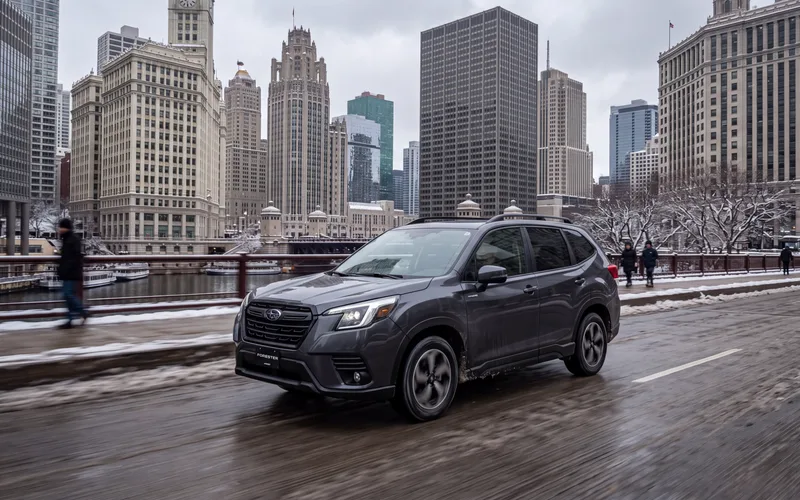 Subaru ForesterCompact SUVBetter at: Cargo space
Same standard AWD, X-MODE and Subaru dealer, but with 74.4 cu ft of cargo instead of 54.7 and a back seat adults can live in.
Compare 1.93C-
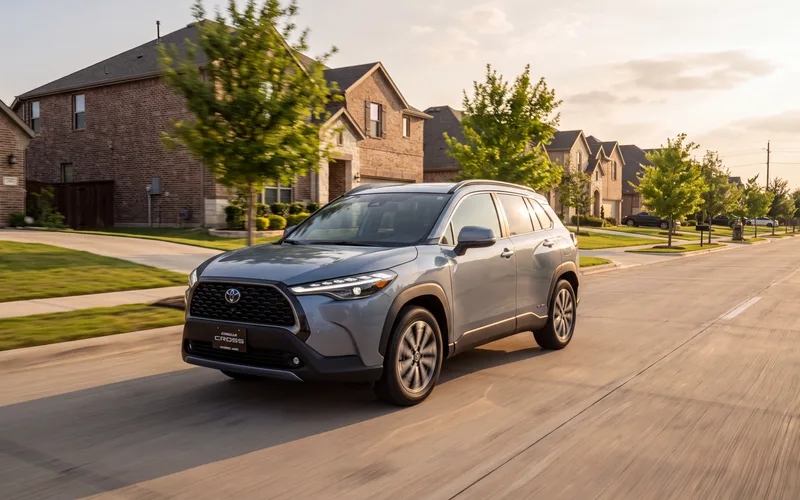 Toyota Corolla CrossSubcompact SUVBetter at: Efficiency
The hybrid version is quicker and thriftier than any gas Crosstrek, with a quieter cabin and two years of included maintenance.
Compare 1.71C-
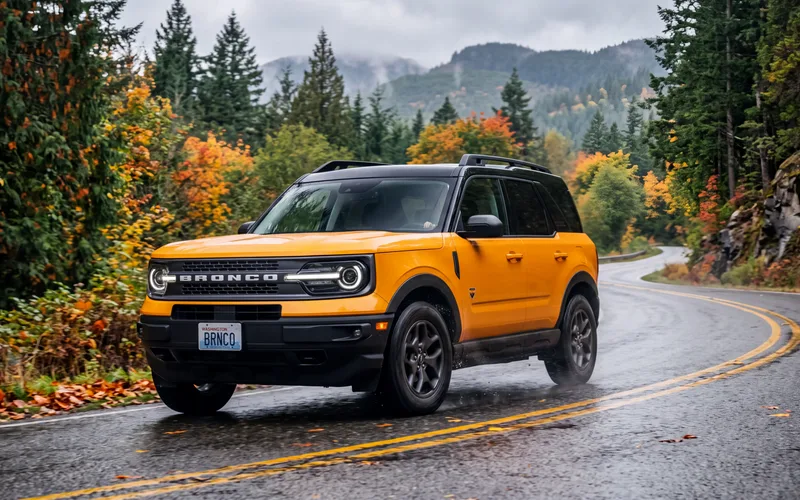 Ford Bronco SportSubcompact SUVBetter at: Off-road
For buyers who actually use the trail, the Badlands trim brings a turbo engine and real off-road hardware the Wilderness can't match.
CompareHow it's evolved
10 scored model years · 2017–2026
Subject scores by year
Hover or tap a score to see what moved it versus the year before. A corner mark flags a big swing.
| Year | Performance | Efficiency | Safety | Space | Cost | Reliability | Tech | Use-case | Driving | Value |
|---|---|---|---|---|---|---|---|---|---|---|
| 2026 | 36 | 76 | 77 | 43 | 63 | 70 | 53 | 67 | 64 | 73 |
| 2025 | 38 | 72 | 74 | 43 | 68 | 80 | 54 | 61 | 66 | 75 |
| 2024 | 31 | 73 | 74 | 42 | 68 | 74 | 52 | 63 | 64 | 75 |
| 2023 | 28 | 76 | 66 | 42 | 69 | 79 | 34 | 61 | 63 | 66 |
| 2022 | 28 | 76 | 68 | 42 | 70 | 75 | 34 | 60 | 63 | 66 |
| 2021 | 28 | 76 | 69 | 41 | 69 | 68 | 30 | 52 | 53 | 63 |
| 2020 | 26 | 76 | 67 | 40 | 70 | 74 | 35 | 51 | 55 | 70 |
| 2019 | 26 | 72 | 66 | 40 | 71 | 74 | 35 | 54 | 54 | 66 |
| 2018 | 26 | 73 | 62 | 41 | 72 | 61 | 34 | 53 | 56 | 67 |
| 2017 | 26 | 70 | 59 | 37 | 79 | 62 | 20 | 47 | 54 | 57 |
Compare two years
Best fit & conditions
Higher scores mean a better fit for that use case. Learn more about use-case fit →
Subject profile
Trims & configurations
5 trimsScores above reflect the volume trim. Per-trim specs and scores are rolling out — the full lineup:
Detailed scoring by subject
1Performance & PowertrainThe Crosstrek's lowest-graded category.0.50F
For 2025 the 2.5-liter FB25D became the standard engine on the volume Premium trim, replacing the 2.0-liter FB20D, so the representative configuration makes 182 hp; only the Base trim still carried the 152-hp 2.0L.
Peak torque of the FB25D 2.5-liter boxer fitted as standard to the 2025 Premium volume trim.
Car and Driver's instrumented run of the mechanically identical 2.5L third-generation Crosstrek returned 8.1 seconds; the 2025 Premium shares that engine, CVT and AWD hardware at a marginally lower curb weight.
The naturally aspirated 2.5-liter boxer is smooth and immediately responsive at light throttle with no turbo lag to manage, but it is audibly coarse and strained when worked hard — the long-standing "underpowered" criticism of the nameplate is only partly answered by the 2.5L. Mid-pack for a mainstream subcompact SUV; above the 2.0L cars it replaces, below turbocharged rivals.
Lineartronic CVT with eight simulated ratios and steering-wheel paddles; the manual transmission was dropped for the third generation. It is unobtrusive in normal driving and steps through its simulated ratios under hard acceleration rather than pinning revs, but sustained drone under load and at highway grades remains the recurring criticism.
Item measures the maximum rating in any configuration: the Wilderness trim's retuned CVT, added CVT cooler and 4.11 final drive raise it to 3,500 lbs, well above the 1,500 lbs the volume Premium is rated for.
Symmetrical full-time AWD is standard on every US trim, not an option or a top-trim upsell, and for 2025 the dual-function X-MODE (Snow/Dirt plus Deep Snow/Mud) spread from Sport/Limited/Wilderness down to the Premium volume trim. Held short of the top band only because there is no low range or true torque-vectoring rear unit.
8.7 inches of ground clearance on standard trims beats most subcompact crossovers outright, and the Wilderness is a genuine dedicated off-road variant with 9.3 inches, a 4.11 final drive, protective cladding and a 700-lb-rated roof rack. Short of the top band because there are no locking differentials, no low range and no crawl-control equivalent — it is capable light-duty trail hardware, not rock-crawling hardware.
For 2025 the US Crosstrek offered two naturally aspirated gas boxers only — 2.0L on the Base, 2.5L on everything above it — with no turbo, no hybrid and no PHEV. The third-generation Crosstrek Hybrid was revealed in January 2025 but did not enter production until late 2025 as a 2026 model, so no electrified option was buyable in the 2025 model year.
2Efficiency & RangeGrades above the middle of the scale.2.90B-
For 2025 the 2.5L FB25D became the standard engine on the Premium trim (the volume seller), replacing the 2.0L FB20D, and EPA rates that 2.5L AWD configuration at 29 MPG combined — identical to the carry-over 2.0L Base. Strong for a standard-AWD subcompact SUV, though the front-drive-based Corolla Cross, Taos and Kicks still rate higher.
EPA city rating is 27 MPG for both the 2.5L volume trims and the 2.0L Base, helped by the auto start-stop system standard on the GU-generation Crosstrek. Well above the SUV city band midpoint despite full-time symmetrical AWD.
EPA highway rating for the volume 2.5L AWD Crosstrek is 33 MPG — one MPG behind the smaller 2.0L Base and well ahead of the Wilderness, whose 4.11 final drive and knobbier tires cost it four MPG.
The 16.6-gallon tank is shared across every 2025 Crosstrek trim and engine, so at the EPA combined 29 MPG the volume 2.5L Premium covers roughly 481 miles per fill and about 548 on the highway cycle — respectable but limited by the small tank a subcompact carries.
EPA's published annual fuel cost for the 2025 Crosstrek AWD 2.5L is $2,100 at standard assumptions, with a $500 five-year saving versus the average new vehicle. Low absolute running cost, driven by 29 MPG combined on the cheapest fuel grade.
Every 2025 Crosstrek powertrain — the 2.0L FB20D and the naturally aspirated 2.5L FB25D alike — runs on 87-octane regular unleaded with no premium recommendation and no special fuel handling, so there is no ongoing grade penalty relative to any rival in the class.
3SafetyOne of the Crosstrek's strongest categories.3.03B
NHTSA awarded the 2025 Crosstrek AWD wagon a 5-star overall rating, with five stars in both the frontal and side barrier tests and four stars for rollover resistance.
Good in both driver- and passenger-side small overlap front, but Marginal in the updated moderate overlap front test (Marginal rear-passenger restraints/movement, Acceptable rear chest) and only Acceptable in the updated side test — enough to keep the 2025 Crosstrek off the Top Safety Pick list entirely while the Forester, Ascent and Solterra all won awards that year. A Marginal result in a core crashworthiness test caps this near the bottom of the middle band.
EyeSight is standard on every 2025 trim including the $25,695 Base — pre-collision braking, full-range adaptive cruise with lane centering, lane departure/sway warning and, new for this generation, Automatic Emergency Steering — which is broader standard content than most subcompact rivals offer at any price. What holds it out of the top band is that Blind-Spot Detection, Rear Cross-Traffic Alert and Reverse Automatic Braking are standard only from Limited up and are an option-package item on the volume Premium.
The stereo-camera EyeSight system earns Good in both of IIHS's current front crash prevention evaluations — vehicle-to-vehicle 2.0 and the night-inclusive pedestrian test — avoiding the crossing-child collision at 12 and 25 mph in daylight and the parallel-adult night collision at 25 mph on high beams. Held just short of the ceiling because at 37 mph at night it only cut impact speed by 5 mph.
Blind-Spot Detection with Lane Change Assist and Rear Cross-Traffic Alert are radar-based alert-only systems (no steering intervention), bundled with Reverse Automatic Braking, and are standard only from Limited up — the volume Premium needs an option package and the Base cannot be equipped at all. Mid-band: available on most trims, alert-only.
Lane departure and sway warning plus Advanced Adaptive Cruise Control with Lane Centering are standard across the range, and the fourth-generation wide-angle EyeSight cameras hold a lane with less of the ping-ponging that dogs cheaper systems; reviewers consistently rate it among the better mainstream implementations rather than a class-leading hands-adjacent one.
Full-speed-range adaptive cruise with stop-and-go and integrated lane centering is standard on every trim, which is unusual at this price, and the system resumes cleanly in traffic. It stops short of the top band because there is no hands-off or lane-change-assist layer above it and the CVT/2.5L combination makes uphill speed recovery leisurely.
Subaru offers no hands-free highway driving system on any 2025 Crosstrek trim; EyeSight is hands-on lane centering only, and the driver-monitoring camera used on some Subarus for DriverFocus is a distraction alert, not an enabler of hands-off operation.
IIHS rates the 2025 Crosstrek's headlights Good, and steering-responsive LED headlights with automatic high beams are fitted across the range rather than reserved for upper trims — so the volume buyer gets the same Good-rated lighting as the Limited.
A tall greenhouse, thin A-pillars with forward quarter windows, a low beltline and a near-upright rear glass give the Crosstrek genuinely good natural sightlines — a recurring point of praise in reviews and a real advantage over the wedge-profile subcompact crossovers it competes with. Camera compensation is thinner than the top band wants: a rear camera is standard but the front-view/360 monitor is not offered on the volume trim.
IIHS rates the LATCH hardware at the top of its scale, and Cars.com's car-seat test gave the 2025 Crosstrek straight A's: two full sets of lower anchors under removable fabric covers, three clearly marked top tethers, a borrowable center lower anchor, wide rear door openings and enough legroom to fit a rear-facing convertible without pushing the front seat forward.
4Space & ComfortOne of the Crosstrek's weakest categories.0.86F
Every 2025 Crosstrek trim (Base, Premium, Sport, Limited, Wilderness) is a two-row, five-passenger crossover — no third row or captain's-chair configuration is offered.
Third-generation (GU) Crosstrek dimensions carried into 2025 unchanged; the volume Premium trim ships without a moonroof unless the $2,245 option package is added, so 39.8 in is the representative figure.
Front legroom is toward the upper end of the subcompact SUV segment and is identical across all 2025 trims.
Rear headroom is mid-pack for the subcompact SUV class — the Crosstrek's tall-hatch roofline preserves second-row head space better than the sloped-roof coupe-crossovers it competes with.
Second-row legroom is average for the class — adequate for two adults, tight with three across — though reviewers report it feels more usable in practice than the number suggests.
The Crosstrek is a two-row subcompact SUV with no third-row option on any 2025 trim; buyers needing a third row must move up to the Subaru Ascent.
Cargo behind the second row falls below the bottom of the SUV normalization band (25–80 cu ft) — the Crosstrek is a lifted Impreza hatchback and carries hatchback-sized cargo room rather than SUV-sized.
Maximum cargo with the 60/40 rear seatbacks folded sits just under the low edge of the SUV band (55–100 cu ft); genuinely useful for gear but well short of a compact SUV such as the Forester (74.4 cu ft).
Serviceable but a recurring reviewer complaint rather than a strength: under-floor cargo compartments and a retractable cargo cover (Sport/Limited/Wilderness) are the useful bits, while the cupholders fail to hold larger bottles securely, the Premium's phone bin has no grip surface or wireless charging, and door pockets won't take a tall bottle. No standout innovation — no frunk, onboard power outlets, or reconfigurable console.
Front seats are well-shaped and hold up on long drives, and for the third generation a 10-way power driver's seat with lumbar became available (optional on Premium, standard on Limited/Wilderness). Held below the top band because the volume Premium trim gets a manual seat unless the $2,245 package is added, the rear bench is flat, and no ventilated or massaging option exists at any price.
The Crosstrek's strongest comfort attribute and a genuine segment leader: long-travel suspension, 8.7 in of ground clearance (9.3 in Wilderness) and tall tire sidewalls absorb broken pavement with a composure rivals in this price class don't match, with only mild float over undulations as the tradeoff.
Below segment average and the clearest weakness in the cabin. The boxer four and CVT drone loudly under acceleration, and wind noise is elevated enough at highway speed to make long trips wearing — a criticism that recurs across professional and owner reviews of the 2025 car.
Dual-zone automatic climate control is standard from the Base trim, which is a genuine strength, but the rest of the comfort roster is thin: heated front seats are a $2,245 package option on the volume Premium (standard from Sport up), no heated steering wheel is offered on any 2025 trim, no ventilated seats or heated rear seats exist, and there are no rear climate vents or remote pre-conditioning. The heated windshield and wiper de-icer bundled with the All-Weather content are the notable cold-climate extras.
5Cost of OwnershipMid-pack among this car's ten categories.2.62C+
One of the least expensive vehicles in the US with standard symmetrical AWD, well under the subcompact-SUV band midpoint even with destination included.
Premium is the volume Crosstrek trim and for 2025 it became materially better value — the 182-hp 2.5L FB25D replaced the 2.0L as standard equipment and dual-function X-MODE was added, previously Sport/Limited/Wilderness only, at a $1,250 walk over Base.
Boxer/AWD servicing runs slightly above the Toyota/Honda class benchmark but well below luxury rivals; the published estimates disagree widely, so this is a blend of the two named industry sources rather than either endpoint.
The Crosstrek is one of the strongest retainers in the segment — standard AWD, constrained supply and durable demand — with three of four industry estimates clustered at 66–71%; KBB's trim-level figure is the pessimistic outlier and pulls the estimate back to 65%.
Industry-baseline coverage at the bottom of the normalization band — no advantage over the segment and two years behind Hyundai/Kia's 5/60,000.
Baseline powertrain term at the floor of the band, half the 10 yr / 100,000 mi coverage Hyundai, Kia and Mitsubishi give original owners.
Subaru of America includes no complimentary scheduled maintenance — a standing gap against Toyota's 2-year ToyotaCare on the Corolla Cross and RAV4 — so the owner pays from the first oil change. What is included is standard roadside assistance plus Starlink connected-service trials, which is basic-roadside-only territory rather than a real perks package; any free-maintenance offer is a dealer promotion, not a factory program.
$28,365 volume-trim price minus its estimated resale value after 5 years (65% retained, or about $18,437) leaves about $9,928 in depreciation. Add the projected $4,500 in 5-year maintenance and repairs, and owning this vehicle for 5 years costs about $14,428 in total.
6Reliability & QualityThe Crosstrek's best-graded category.3.41B+
Three independent sources agree the 2025 Crosstrek is above average: Consumer Reports predicts better-than-average reliability for the 2025 car, J.D. Power gives it an 85/100 predicted-reliability score ("Great" band), and RepairPal ranks it 1st of 26 compact SUVs. The GU generation is in its second US model year with no systemic pattern emerging.
Subaru sits at the very top of Consumer Reports' rankings — No. 1 in the 2025 Auto Brand Report Card for a second consecutive year and No. 2 behind Toyota on the reliability-specific list — but J.D. Power's 2025 VDS puts the brand slightly below the industry average on 3-year-old cars, so it is not a clean sweep. Scored high on the strength of the CR standing with a haircut for the VDS disagreement.
NHTSA lists zero recall campaigns against the 2025 Crosstrek roughly 18 months into its ownership life. The generation's two early campaigns both landed on the 2024 launch year (instrument-panel harness short circuit, cracking front driveshafts) and were corrected in production; the widely reported 541,000-vehicle GAWR label recall covers 2026 Crosstrek Hybrid, Forester and Ascent, not the 2025 gas Crosstrek.
For 2025 the direct-injected 2.5-liter FB25D became standard on the volume Premium trim, replacing the 2.0-liter FB20D. The FB25 family has a solid high-mileage record (commonly 200k+ miles with maintenance) and does not share the FB20's oil-consumption reputation, but the Lineartronic CVT remains the generation's long-term watch item — shudder, valve-body and fluid-degradation complaints are the recurring theme across Subaru's CVT fleet, and this Crosstrek has no manual alternative.
Reviewers describe a durable, well-textured cabin with padding where elbows and hands land, but a large share of hard plastic elsewhere — appropriate for a $28–33k subcompact rather than class-leading. Rivals like the Mazda CX-30 and HR-V present richer surfaces for similar money.
The 2025 volume Premium trim is still built in Japan (Gunma) alongside the Base, and assembly quality reads as consistently tight — no widespread rattle or misalignment complaints for the model year, and Consumer Reports scores the Crosstrek highly on overall build quality. Solid rather than benchmark, against an industry backdrop where mass-market initial quality slipped in 2025.
Subaru's ~640 US retailers is a smaller footprint than Toyota's or Honda's and is noticeably thinner across the South and rural Midwest, but the service experience is the best in the mass market by J.D. Power's measure — No. 1 mass-market brand in the 2025 CSI study, top-rated on every customer measure. Quality of service outweighs the density gap here.
Running costs measure below the compact-SUV average and unscheduled shop visits are rare, and the Crosstrek's outdoor-accessory aftermarket is one of the largest in the segment. Held short of the top band because boxer-specific jobs (spark plugs, cam carrier seals) carry more labor than an inline-four and CVT service is dealer-oriented.
7Technology & InfotainmentOne of the Crosstrek's weakest categories.1.59D
For 2025 Subaru moved the 11.6-inch portrait STARLINK Multimedia Plus screen down to the volume Premium trim, so four of five trims carry it; only the entry Base retains the dual 7.0-inch stacked displays.
The 11.6-inch STARLINK unit has big, legible icons and keeps physical volume and temperature knobs, but reviewers consistently report menu lag and note that climate detail and vehicle settings are buried in touch menus — below the subcompact-SUV median.
Wireless Apple CarPlay and Android Auto are standard on Premium, Sport, Limited and Wilderness — including the volume trim — but the Base's dual 7.0-inch system is wired-only, so it falls short of standard-across-the-range.
Built-in navigation is not standard on any 2025 trim — TomTom-based STARLINK Multimedia Navigation is confined to a single $2,445 Limited option package — and STARLINK's voice command is command-word based rather than natural language, so most owners default to CarPlay maps.
Six speakers standard from Premium up (four on Base) is unremarkable, and the one real upgrade — a 10-speaker Harman Kardon with a 432-watt-equivalent amp — is option-package-only on Limited and Wilderness, so most Crosstreks leave the lot with the ordinary system.
Every 2025 Crosstrek keeps analog speedometer and tachometer dials with a small 4.2-inch color multi-information display between them; no full-digital or configurable cluster is offered at any price.
STARLINK supports over-the-air updates over Wi-Fi, but the scope is the multimedia head unit only — navigation map data still needs a USB transfer, and there is no whole-vehicle OTA that adds ADAS or powertrain features the way GM, Hyundai or Tesla do.
MySubaru with STARLINK Safety Plus/Security Plus covers the core set — remote engine start with climate, remote lock/unlock, vehicle locator, SOS and collision notification — but the useful remote functions sit behind a paid subscription after the trial and there is no phone-as-key.
Premium and above get USB-A plus USB-C in both the front and rear center consoles — a real 2025 improvement over the Base's lone USB-A and aux jack — and wireless charging is standard from Sport up, but no 120V household outlet is offered on any trim.
Keyless Access with Push-Button Start became standard on Premium and above for 2025 (Base still uses a keyed ignition with remote keyless entry), and remote start runs through the MySubaru app subscription; there is no power or hands-free liftgate on any Crosstrek and no phone-as-key.
Parking aid amounts to the federally mandated rear-vision camera on every trim plus Reverse Automatic Braking with rear sonar on Limited; the US third-generation Crosstrek drops the front-view monitor the prior generation offered and no 360-degree surround view or automated parking is available at any price.
No head-up display is offered on the 2025 Crosstrek, standard or optional, on any of the five trims.
8Use-Case FitMid-pack among this car's ten categories.2.12C
Car-seat logistics are a genuine strength — Cars.com's test returned straight A's and IIHS rates the LATCH hardware at the top of its ease-of-use scale, helped by wide, near-square rear door openings and enough rear legroom to take a rear-facing convertible without shoving the front seat forward. What keeps it out of the benchmark band is gear rather than kids: 19.9 cu ft behind the second row is hatchback-sized, so a full-size stroller plus a weekly shop is a real squeeze.
The standard-content case is strong for a $28k car: EyeSight with pre-collision braking, full-range adaptive cruise, lane centering and Automatic Emergency Steering is fitted to every trim including the $25,695 Base, IIHS rates front crash prevention Good in both evaluations, and NHTSA gives 5 stars overall. The offset is family-specific rather than incidental — the updated IIHS moderate overlap test returned Marginal on rear-passenger restraints and movement, which is the measure of how well the back seat protects the people families put there, and it kept the Crosstrek off the 2025 Top Safety Pick list while three other Subarus won awards. Blind-Spot Detection and Rear Cross-Traffic Alert are also an option-package item on the volume Premium.
The ride is excellent and dual-zone climate is standard from the Base, but the second row is thinly equipped for long days — no rear climate vents, no heated rear seats, no rear entertainment provision, and rear legroom of 36.5 in is only average. The bigger limiters are noise and space with the family aboard: Consumer Reports singles out elevated wind noise and CVT-amplified engine drone as what makes long trips tedious, and with four people's luggage there are only 19.9 cu ft to work with before the roof rack is doing the job.
Genuinely low-effort in traffic: the naturally aspirated 2.5L responds immediately at light throttle with no turbo lag or hesitation to manage, full-speed-range adaptive cruise with stop-and-go and lane centering is standard on every trim rather than a package item, outward visibility is a class strength, and the long-travel suspension takes the sting out of broken commuter pavement. Held to the middle-upper band by the noise floor — the boxer and CVT get coarse and loud whenever the commute demands a hard merge or a grade.
Cheap to run in absolute terms — EPA puts annual fuel cost at $2,100 on 87-octane regular, RepairPal measures $492/yr average repair cost against a below-average 0.1 unscheduled shop visits per year, and consumables are ordinary mainstream parts. It sits mid-band rather than high because 29 MPG combined is the price of standard symmetrical AWD: the front-drive-based Corolla Cross, Taos and Kicks all beat it, and a hybrid subcompact commuting rival roughly halves the fuel bill.
Easy to place and easy to park: 176.4 in long and 70.9 in wide is a genuinely small footprint, the turning circle is about 35.4 ft, and the tall greenhouse with thin A-pillars, forward quarter windows and near-upright rear glass gives sightlines most wedge-profile rivals gave up years ago. Camera assistance is the one thin spot — the rear-vision camera is standard but no front-view or 360-degree monitor is offered on any 2025 trim, and rear sonar arrives only with Limited's Reverse Automatic Braking.
Not meaningfully a work vehicle. The volume Premium is rated to tow 1,500 lbs — enough for a small utility trailer and little else — and only the Wilderness, with its CVT cooler and 4.11 final drive, reaches 3,500 lbs. There is no bed, cargo behind the second row is 19.9 cu ft, and the 182-hp naturally aspirated boxer paired to a CVT is the powertrain reviewers already describe as strained unladen, let alone under load.
The mechanical case is good — RepairPal ranks the Crosstrek 1st of 26 compact SUVs, Consumer Reports predicts better-than-average reliability with top marks for engine and powertrain, and the FB25 boxer and symmetrical AWD hardware have a solid high-mileage record. But this is a unibody crossover with no heavy-duty provisions, wear-friendly StarTex upholstery is confined to Sport and Wilderness, and the Lineartronic CVT — shudder and valve-body wear being the most-cited Subaru driveline concern — is exactly the component sustained hard-use duty punishes. Should hold up with care; unproven under abuse.
The provisions are the ones an outdoor-gear buyer gets rather than a trades buyer: cargo tie-down and grocery-bag hooks, a rear cargo tray and raised roof rails standard on the volume Premium, water-repellent StarTex seating on Sport and Wilderness, and Class III aftermarket hitches available. Against that there is no onboard 120V outlet on any trim, no bed or bed-access hardware, no factory upfitter program and no power take-off — so it covers washable surfaces and gear anchoring but nothing a jobsite actually depends on.
Three of the four ingredients are there: roughly 481 miles of combined range (about 548 on the highway cycle) from the 16.6-gal tank, a ride Consumer Reports calls excellent and near-luxury, and standard full-range adaptive cruise with lane centering on every trim doing real fatigue work on the interstate. Quietness is what caps it — CR specifically identifies elevated wind noise and CVT-amplified engine drone as making long trips tedious, and there is no heated steering wheel or ventilated seat anywhere in the 2025 range to ease a long day.
This is the mission the Crosstrek is built around and it is the segment reference for it. Symmetrical full-time AWD is standard on every trim rather than an upsell, 8.7 in of ground clearance beats essentially every subcompact crossover outright, and for 2025 the dual-function X-MODE (Snow/Dirt plus Deep Snow/Mud) moved down to the volume Premium. Raised roof rails are standard, the rack and outdoor-accessory aftermarket is among the largest in the segment, and the Wilderness adds 9.3 in of clearance with a 700-lb static roof rack for a rooftop tent. Short of the ceiling only because there is no low range, no locking differential, no 120V outlet for camp power, and the volume trim tows just 1,500 lbs.
Flexibility is good — a 60/40-split rear seat that folds near-flat to open 54.7 cu ft, under-floor cargo compartments, tie-down hooks, standard roof rails feeding an unusually deep rack ecosystem, and aftermarket hitches for a bike or cargo tray. What limits it is absolute volume rather than configurability: 19.9 cu ft behind the second row and 54.7 cu ft folded are hatchback figures that fall below the bottom of the SUV cargo bands, and a Forester offers 74.4 cu ft for not much more money. Bulky gear tends to end up on the roof.
9Driving ExperienceMid-pack among this car's ten categories.2.46C+
The third-generation chassis is genuinely secure — Consumer Reports ran the avoidance maneuver at 56.5 mph, an impressive figure for a raised subcompact crossover, helped by standard Active Torque Vectoring and a stiffer platform. It is held mid-pack because 8.7 inches of ground clearance and soft, comfort-biased damping bring real body roll and dive when pushed, and reviewers place the Mazda CX-30 clearly ahead on outright sportiness.
Subaru fits a quick-ratio rack-and-dual-pinion EPAS setup that is light, direct and easy to place, which flatters the car in town and gives it near-sporty initial responses. Feedback is the weak point: reviewers consistently describe it as vague off-center and under-weighted when driven hard, which is squarely the 50–79 "precise enough but numb" band.
Hardware is conventional and adequate: ventilated 12.4-inch front and solid 11.2-inch rear discs with 4-channel ABS, EBD and Brake Assist standard across the range. MotorWeek's instrumented panic stops averaged 125 feet from 60 mph — a middling result for the class rather than a strong one — and the soft suspension tune produces noticeable nose dive, so pedal confidence is adequate rather than reassuring.
The volume Premium's 2.5-liter FB25D is naturally aspirated, so tip-in is linear and immediate with no turbo lag or dual-clutch hesitation, and the Lineartronic CVT's eight simulated ratios step cleanly rather than pinning revs. What keeps it near the middle is the shortage of thrust — 182 hp and 8.1 seconds to 60 mph means the powertrain is frequently working near its limit on merges and grades, where the calibration feels strained rather than seamless.
The 2.5-liter is a meaningful improvement over the base 2.0-liter that Consumer Reports called "unpleasantly boomy when pushed," because it does not have to be revved as hard to keep up. It still lands in the audible-but-inoffensive band: the flat-four is coarse near its ceiling and the CVT holds revs high enough to drone on sustained highway grades, the nameplate's most persistent refinement criticism.
Subaru's official 2025 trim comparison lists a 35.44-foot curb-to-curb turning circle for the volume Premium trim (shared with Base, Sport and Limited); only the Wilderness is tighter at 34.78 feet. Tight for the class and a frequently praised trait in ownership reports.
This is the category's clear strength: an upright seating position with a deep glasshouse and slim pillars gives outward visibility most subcompact crossovers no longer offer, and Subaru kept physical volume and tuning knobs alongside the touchscreen. For 2025 the Premium volume trim gained a power driver's seat with adjustable lumbar support, closing the adjustability gap that held earlier Crosstreks back.
The Crosstrek's appeal is competence and go-anywhere confidence rather than driving pleasure — it is more willing on a mountain road than its brief suggests, but a 182-hp naturally aspirated boxer, a CVT, soft damping and vague steering do not add up to a car enthusiasts seek out for the drive. Pleasant and easy to live with, which is the middle band exactly.
10Value & Market PositionOne of the Crosstrek's strongest categories.3.06B
Every Crosstrek includes Symmetrical AWD, X-MODE, 8.7 inches of ground clearance and the latest EyeSight suite at a $27,115 delivered base price — content that costs $1,400–$1,500 extra on an HR-V, Corolla Cross or Seltos, and the single strongest value argument in the segment. For 2025 the volume Premium was upgraded substantially, gaining the 182-hp 2.5-liter, dual-function X-MODE with hill descent, the 11.6-inch Multimedia Plus screen, keyless access with push-button start, LED fog lights and roof rails as standard. It is held below the 80+ band because comfort and convenience content still lags: heated seats, blind-spot detection, rear cross-traffic alert and the power driver's seat all sit inside a $2,245 Premium option package that rivals partly include.
The money buys capability rather than gadgetry, and the market validates it: Consumer Reports rates the Crosstrek the highest-scoring subcompact SUV, and KBB has named it best-in-class for resale value six years running, so the delivered price is partly recovered at trade-in. It falls short of standout status because performance per dollar is weak — a $28,365 Premium runs 0–60 mph in roughly 8.1 seconds — and Kia's Seltos and the Corolla Cross deliver more screen, comfort and warranty content for similar money if the buyer does not need the AWD hardware.
Five well-spaced trims cover $25,695 to $32,495 — Base, Premium, Sport, Limited and the off-road Wilderness — across two engines (152-hp 2.0L on Base, 182-hp 2.5L from Premium up), which is a broader ladder than most subcompact crossovers offer and includes a genuine rugged variant rivals lack. The gaps are configuration rather than price: one body style, CVT only with no manual in this generation, and no hybrid or PHEV in the 2025 US lineup (the Crosstrek Hybrid arrived for 2026), so the drivetrain menu is single-choice.
The Crosstrek is Subaru's single best-selling vehicle in the US and posted its best year ever, 191,724 units in calendar 2025, up 5.5 percent — growth achieved while the brand overall fell 3.6 percent, so it is outperforming its own showroom as well as its segment. That is squarely a segment sales leader on a rising trajectory, the top of the band.
Subaru carries one of the strongest owner-loyalty and brand-affinity records among mainstream makes, built on standard AWD, an outdoor/adventure identity and a long safety reputation, and the Crosstrek is the nameplate most associated with that image. It sits at the bottom of the aspirational band rather than higher because the halo is affection and trust rather than prestige — a Subaru badge does not command a price premium the way a luxury or performance marque does.
Scored on buyer benefit, this is the Crosstrek's weakest value dimension: Subaru runs among the lowest incentive spends of any automaker, customer cash rebates and dealer cash are effectively never offered on this model, and strong demand keeps transactions at or very near MSRP with little room to negotiate. What buyers do get is subvented financing and lease support — roughly 1.9% APR for 75 months on 2025 stock and advertised Premium leases near $299/36 months, the latter genuinely attractive because the high residuals do the work — which lifts it out of the bottom of the band but not to average.
2025 is only the second model year of the third-generation Crosstrek, launched for 2024 on Subaru's current Global Platform, so a buyer faces no near-term redesign risk. It is not at the very top of the band only because the generation is now a year old rather than brand new — though 2025 is more than a carry-over year, adding the standard 2.5-liter, dual-function X-MODE and 11.6-inch screen to the volume Premium.
The award record is genuinely strong — Consumer Reports Top Pick and the highest-scoring subcompact SUV in its testing, KBB Best Resale Value, J.D. Power Best Small SUV, Autotrader Best New Car, NHTSA five stars and a long IIHS Top Safety Pick streak. Enthusiast-press verdicts are markedly cooler, with Edmunds scoring it 6.1 out of 10 and U.S. News summarizing the critics' rating as slightly below average for the class, mostly on acceleration, CVT refinement and interior materials. Well-decorated and widely recommended, but not a consistent comparison-test winner, which is the upper-middle band rather than 80+.