
The verdict
A struggling subcompact suv, strong on efficiency and held back by performance.
The 2018 Crosstrek is an all-new, standard-AWD subcompact SUV that trades outright power and cargo room for genuine off-pavement capability, a 5-star NHTSA rating, and a starting price of $22,710. It's efficient for a standard-AWD crossover (29 mpg combined) and cheap to own — RepairPal ranks it the most reliable compact SUV on sale and it retains resale value better than almost any rival — but the 152-hp engine feels strained, the 20.8 cu ft cargo hold is among the smallest in its class, and EyeSight driver-assist plus good headlights are locked behind the options list rather than standard. It suits a value-minded commuter or outdoor enthusiast who wants year-round grip without truck-sized pricing, and it's the wrong call for anyone chasing quick acceleration, three-row-style space, or a loaded tech suite out of the box.
Jump to scoresStrengths
- Standard AWD with genuine off-road chops
- Affordable to buy and cheap to own
- Top-tier crash safety
What holds it back
- Sluggish acceleration from a modest engine
- Tiny cargo hold for the class
- Infotainment and tech feel behind
Top alternatives
Cars shoppers cross-shop with the Subaru Crosstrek 2.26C
2.26C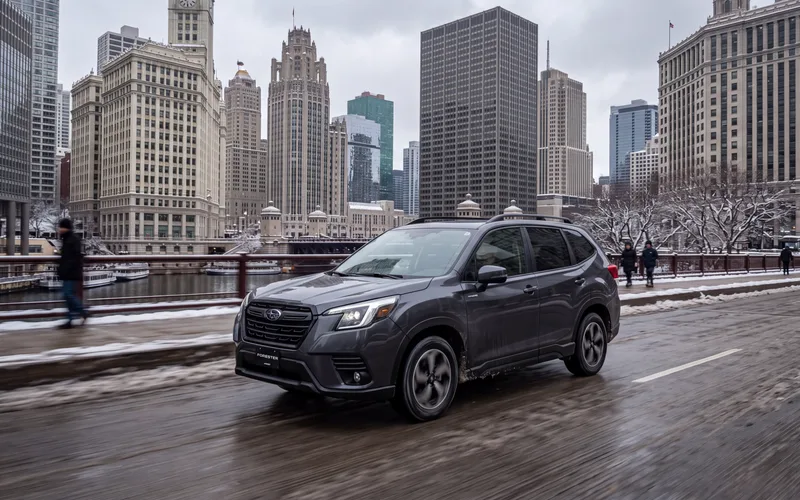 Subaru ForesterCompact SUVBetter at: Cargo space
Same standard AWD, X-MODE and Subaru dealer, but with 74.4 cu ft of cargo instead of 54.7 and a back seat adults can live in.
Compare 1.93C-
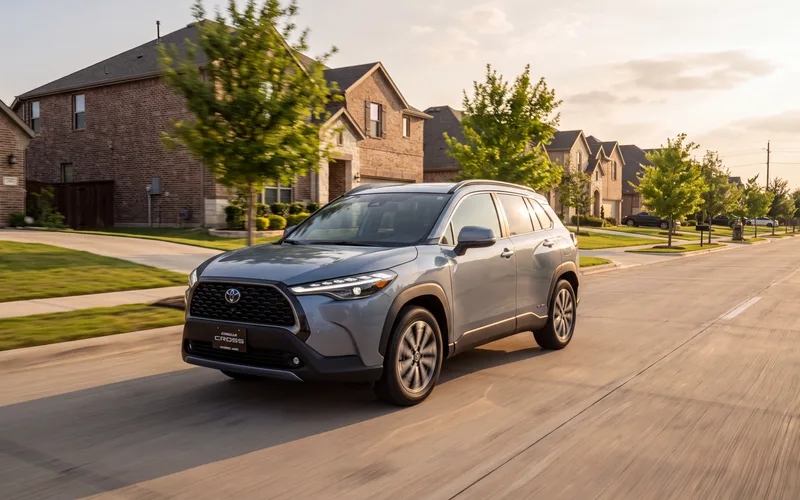 Toyota Corolla CrossSubcompact SUVBetter at: Efficiency
The hybrid version is quicker and thriftier than any gas Crosstrek, with a quieter cabin and two years of included maintenance.
Compare 1.71C-
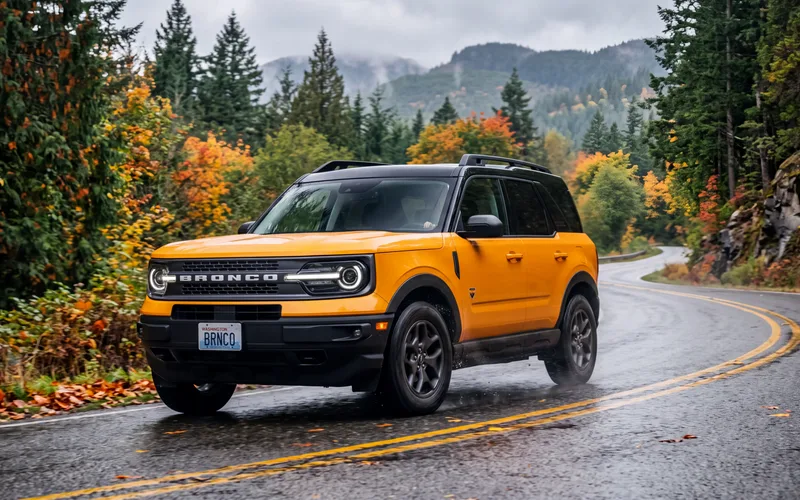 Ford Bronco SportSubcompact SUVBetter at: Off-road
For buyers who actually use the trail, the Badlands trim brings a turbo engine and real off-road hardware the Wilderness can't match.
CompareHow it's evolved
10 scored model years · 2017–2026
Subject scores by year
Hover or tap a score to see what moved it versus the year before. A corner mark flags a big swing.
| Year | Performance | Efficiency | Safety | Space | Cost | Reliability | Tech | Use-case | Driving | Value |
|---|---|---|---|---|---|---|---|---|---|---|
| 2026 | 36 | 76 | 77 | 43 | 63 | 70 | 53 | 67 | 64 | 73 |
| 2025 | 38 | 72 | 74 | 43 | 68 | 80 | 54 | 61 | 66 | 75 |
| 2024 | 31 | 73 | 74 | 42 | 68 | 74 | 52 | 63 | 64 | 75 |
| 2023 | 28 | 76 | 66 | 42 | 69 | 79 | 34 | 61 | 63 | 66 |
| 2022 | 28 | 76 | 68 | 42 | 70 | 75 | 34 | 60 | 63 | 66 |
| 2021 | 28 | 76 | 69 | 41 | 69 | 68 | 30 | 52 | 53 | 63 |
| 2020 | 26 | 76 | 67 | 40 | 70 | 74 | 35 | 51 | 55 | 70 |
| 2019 | 26 | 72 | 66 | 40 | 71 | 74 | 35 | 54 | 54 | 66 |
| 2018 | 26 | 73 | 62 | 41 | 72 | 61 | 34 | 53 | 56 | 67 |
| 2017 | 26 | 70 | 59 | 37 | 79 | 62 | 20 | 47 | 54 | 57 |
Compare two years
Best fit & conditions
Higher scores mean a better fit for that use case. Learn more about use-case fit →
Subject profile
Trims & configurations
5 trimsScores above reflect the volume trim. Per-trim specs and scores are rolling out — the full lineup:
Academic Probation · NHTSA safety recalls
Apr 15, 2021Electrical system: ignition · Electrical system: software · Engine and engine cooling: engine: engine control module (ecu/ecm): software · Engine and engine cooling: exhaust system: manifold/header/muffler/tail pipeThe Engine Control Module (ECM) may continue to power the ignition coil after the engine is shut off, causing a short circuit.
Defect
Subaru of America, Inc. (Subaru) is recalling certain 2017-2019 Subaru Impreza and 2018-2019 Crosstrek vehicles. The Engine Control Module (ECM) may continue to power the ignition coil after the engine is shut off, causing a short circuit.
Risk
A short circuit in the ignition coils may cause a stall, increasing the risk of a crash.
Remedy
Subaru will notify owners, and dealers will update the ECM software, replace the ignition coils and, if necessary, the front exhaust pipe, free of charge. Owner notification letters were mailed beginning June 1, 2021. Owners can contact Subaru customer service at 1-844-373-6614. Subaru's number for this recall is WRE-21. Note: This recall includes all vehicles previously repaired under Recall 19V743.
NHTSA campaign 21V264000 ↗Manufacturer no. WRE-21466,205 vehicles potentially affected (all models in the campaign)Owners notified Jun 1, 2021Filed by Subaru of America, Inc.Filed as CROSSTREKApr 15, 2021Suspension: rearThe rear stabilizer bracket bolts may loosen and detach.
Defect
Subaru of America, Inc. (Subaru) is recalling certain 2018-2019 Subaru Crosstrek, 2019 Crosstrek Hybrid, and 2019 Forester vehicles. The rear stabilizer bracket bolts may loosen and detach.
Risk
Missing bolts may allow the rear stabilizer bracket to shift, increasing the risk of a crash.
Remedy
Subaru will notify owners, and dealers will retorque and replace any missing bolts, free of charge. Owner notification letters were mailed May 17, 2021. Owners may contact Subaru customer service at 1-844-373-6614. Subaru's number for this recall is WRD-21.
NHTSA campaign 21V263000 ↗Manufacturer no. WRD-21408,271 vehicles potentially affected (all models in the campaign)Owners notified May 17, 2021Filed by Subaru of America, Inc.Filed as CROSSTREKOct 18, 2019Electrical system: ignition · Electrical system: softwareThe Engine Control Module (ECM) may continue to power the ignition coil after the engine is shut off, which could result in a short circuit and blown fuse.
Defect
Subaru of America, Inc. (Subaru) is recalling certain 2017-2019 Impreza and 2018-2019 Crosstrek vehicles. The Engine Control Module (ECM) may continue to power the ignition coil after the engine is shut off, which could result in a short circuit and blown fuse.
Risk
If a short circuit occurs while driving, the vehicle may stall, increasing the risk of a crash.
Remedy
Subaru will notify owners, and dealers will update the ECM software and inspect and replace the ignition coil, as necessary, free of charge. In addition, on vehicles with confirmed ignition coil damage and a certain stored diagnostic trouble code (DTC), Subaru will replace the front exhaust pipe, free of charge. The recall began December 4, 2019. Owners may contact Subaru customer service at 1-844-373-6614. Subaru's number for this recall is WUQ-02.
NHTSA campaign 19V743000 ↗Manufacturer no. WUQ-02466,205 vehicles potentially affected (all models in the campaign)Owners notified Dec 4, 2019Filed by Subaru of America, Inc.Filed as CROSSTREKOct 17, 2019Engine and engine cooling: exhaust system: emission control: crankcase (pcv)The PCV valve may come apart, allowing the separated components to enter the engine, possibly resulting in a loss of power while driving.
Defect
Subaru of America, Inc. (Subaru) is recalling certain 2017-2018 Impreza and 2018 Crosstrek vehicles equipped with an aluminum Positive Crankcase Ventilation (PCV) valve. The PCV valve may come apart, allowing the separated components to enter the engine, possibly resulting in a loss of power while driving.
Risk
An unexpected loss of power while driving can increase the risk of a crash.
Remedy
Subaru will notify owners, and dealers will inspect and, if necessary, replace the PCV valve, free of charge. If the PCV valve has separated and the components cannot be found, the engine will be replaced, free of charge. The recall began December 2, 2019. Owners may contact Subaru customer service at 1-844-373-6614. Subaru's number for this recall is WUP-01.
NHTSA campaign 19V744000 ↗Manufacturer no. WUP-01205,000 vehicles potentially affected (all models in the campaign)Owners notified Dec 2, 2019Filed by Subaru of America, Inc.Filed as CROSSTREKNov 7, 2017Service brakes · Vehicle speed control: accelerator pedalThese vehicles may be equipped with an incorrect floor mat retention bracket, allowing the floor mat to move out of position and interfere with the accelerator or brake pedal operation.
Defect
Subaru of America, Inc. (Subaru) is recalling certain 2018 Crosstrek vehicles. These vehicles may be equipped with an incorrect floor mat retention bracket, allowing the floor mat to move out of position and interfere with the accelerator or brake pedal operation.
Risk
If the floor mat moves out of position and interferes with the accelerator or brake pedal operation, it can increase the risk of a crash.
Remedy
Subaru has notified owners, and dealers will inspect the floor mat retention bracket and replace it if necessary, free of charge. The recall began November 14, 2017. Owners may contact Subaru customer service at 1-800-782-2783. Subaru's number for this recall is WTR-77.
NHTSA campaign 17V701000 ↗Manufacturer no. WTR-772,367 vehicles potentially affected (all models in the campaign)Owners notified Nov 14, 2017Filed by Subaru of America, Inc.Filed as CROSSTREK
11 recalls on other model years of the Crosstrek (2017, 2019–2022, 2024, 2026)
Jul 7, 2026Equipment: other: labelsThese vehicles were manufactured with an incorrect Gross Axle Weight Rating (GAWR) on the certification label. As such, these vehicles fail to comply with the requirements of Federal Motor Vehicle Safety Standard (FMVSS) 110, "Tire selection and rims."
Defect
Subaru of America, Inc. (Subaru) is recalling certain 2026 Crosstrek Hybrid, 2025-2026 Forester Hybrid, Forester, and 2019-2026 Ascent vehicles. These vehicles were manufactured with an incorrect Gross Axle Weight Rating (GAWR) on the certification label. As such, these vehicles fail to comply with the requirements of Federal Motor Vehicle Safety Standard (FMVSS) 110, "Tire selection and rims."
Risk
An incorrect GAWR label may lead to an overloaded vehicle, increasing the risk of a crash.
Remedy
Subaru will mail a new certification label to owners, free of charge. Owners may also choose to have a dealer install the new label, free of charge. Letters informing owners of the safety risk were mailed August 27, 2026. Additional letters will be mailed once the remedy is available. Owners may contact Subaru customer service at 1-844-373-6614. Subaru's number for this recall is WRH-26.
NHTSA campaign 26V436000 ↗Manufacturer no. WRH-26541,237 vehicles potentially affected (all models in the campaign)Filed by Subaru of America, Inc.Filed as CROSSTREK HYBRIDFeb 23, 2026Fuel system, gasoline: storage: tank assembly: filler pipe and capWhen the fuel tank is near full capacity, an increase in ambient temperature may cause the fuel to expand and spill out of the filler neck due to an insufficient seal on the fuel cap.
Defect
Subaru of America, Inc. is recalling certain 2026 Crosstrek hybrid, and 2025 Forester hybrid vehicles. When the fuel tank is near full capacity, an increase in ambient temperature may cause the fuel to expand and spill out of the filler neck due to an insufficient seal on the fuel cap.
Risk
A fuel leak in the presence of an ignition source increases the risk of a fire.
Remedy
Owners are advised to park outside and away from structures, and to limit the fuel level to 50% until the remedy is completed. Dealers will replace the fuel filler cap gasket, free of charge. Owner notification letters were mailed March 25, 2026. Owners may contact Subaru customer service at 1-844-373-6614. Subaru's number for this recall is WRD-26. Vehicle Identification Numbers (VINs) involved in this recall became searchable on NHTSA.gov on February 16, 2026.
NHTSA campaign 26V106000 ↗Manufacturer no. WRD-2669,870 vehicles potentially affected (all models in the campaign)Owners notified Mar 25, 2026Filed by Subaru of America, Inc.Filed as CROSSTREK HYBRIDNov 9, 2023Power train: automatic transmission: park/neutral start interlock switchAn insufficient weld may allow water to enter the inhibitor switch, causing it to fail.
Defect
Subaru of America, Inc. is recalling certain model year 2021 Crosstrek, 2022 Forester, 2021-2023 Legacy, and Outback vehicles. An insufficient weld may allow water to enter the inhibitor switch, causing it to fail.
Risk
An inoperative inhibitor switch may prevent the reverse lights from illuminating and the rearview camera image from displaying, increasing the risk of a crash.
Remedy
Dealers will replace the inhibitor switch, free of charge. Owner notification letters were mailed January 8, 2024. Owners may contact Subaru customer service at 1-800-782-2783. Subaru's number for this recall is WRQ-23.
NHTSA campaign 23V755000 ↗Manufacturer no. WRQ-2395,830 vehicles potentially affected (all models in the campaign)Owners notified Jan 8, 2024Filed by Subaru of America, Inc.Filed as CROSSTREKNov 9, 2023Power train: driveline: driveshaftThe front driveshaft assemblies' outer race may develop cracks and break.
Defect
Subaru of America, Inc. (Subaru) is recalling certain 2024 Crosstrek, Impreza, 2023-2024 Forester, and 2023 WRX vehicles. The front driveshaft assemblies' outer race may develop cracks and break.
Risk
A broken driveshaft can cause a loss of drive power while driving or vehicle rollaway when the vehicle is in park without the parking brake engaged. Either of these scenarios can increase the risk of a crash.
Remedy
Dealers will inspect and replace the left and right front driveshafts as necessary, free of charge. Owner notification letters were mailed January 8, 2024. Owners may contact Subaru's customer service at 1-844-373-6614. Subaru's number for this recall is WRP-23.
NHTSA campaign 23V754000 ↗Manufacturer no. WRP-234,701 vehicles potentially affected (all models in the campaign)Owners notified Jan 8, 2024Filed by Subaru of America, Inc.Filed as CROSSTREKAug 4, 2023Electrical system: instrument cluster/panelDue to insufficient clearance, the instrument panel harness may contact the steering beam bracket, damaging the wire insulation and causing a short circuit.
Defect
Subaru of America, Inc. (Subaru) is recalling certain 2024 Crosstrek and Impreza vehicles. Due to insufficient clearance, the instrument panel harness may contact the steering beam bracket, damaging the wire insulation and causing a short circuit.
Risk
A short circuit may cause a loss of drive power, increasing the risk of a crash.
Remedy
Dealers will inspect the harness and install an additional clamp on the steering beam bracket. If damage is found, dealers will add protective tape or replace the instrument panel harness, as necessary. Repairs will be performed free of charge. Owner notification letters are expected to be mailed October 3, 2023. Owners may contact Subaru customer service at 1-844-373-6614. Subaru's number for this recall is WRL-23.
NHTSA campaign 23V551000 ↗Manufacturer no. WRL-2335,357 vehicles potentially affected (all models in the campaign)Owners notified Oct 3, 2023Filed by Subaru of America, Inc.Filed as CROSSTREKFeb 14, 2023Electrical system: 12v/24v/48v batteryThe harness terminal that supplies low-voltage power from the converter to the 12-Volt battery may corrode and break, preventing the 12-Volt battery from charging.
Defect
Subaru of America, Inc. (Subaru) is recalling certain 2019-2022 Crosstrek Hybrid vehicles. The harness terminal that supplies low-voltage power from the converter to the 12-Volt battery may corrode and break, preventing the 12-Volt battery from charging.
Risk
A 12-Volt battery that is unable to recharge can cause a loss of drive power, increasing the risk of a crash.
Remedy
Dealers will replace the converter terminal mounting bracket. If corrosion is found on the terminals, the 12-Volt output harness and terminals will also be replaced. Repairs will be performed free of charge. Owner notification letters were mailed May 12, 2023. Owners may contact Subaru's customer service at 1-844-373-6614. Subaru's number for this recall is WRD-23.
NHTSA campaign 23V080000 ↗Manufacturer no. WRD-238,413 vehicles potentially affected (all models in the campaign)Owners notified May 12, 2023Filed by Subaru of America, Inc.Filed as CROSSTREK HYBRIDMar 31, 2020Seat belts: rear/otherThe seat belt webbing sensor locking mechanism may not lock as intended.
Defect
Subaru of America, Inc. (Subaru) is recalling certain 2019 Crosstrek vehicles with rear seat belt assemblies with a dual-mode locking mechanism. The seat belt webbing sensor locking mechanism may not lock as intended.
Risk
In the event of a crash involving multiple impacts, the seat belt may not properly restrain the occupant, increasing the risk of injury.
Remedy
Subaru will notify owners, and dealers will replace rear seat belt assemblies, free of charge. The began April 15, 2020. Owners may contact Subaru customer service at 1-844-373-6614. Subaru's number for this recall is WRC-20.
NHTSA campaign 20V189000 ↗Manufacturer no. WRC-204,862 vehicles potentially affected (all models in the campaign)Owners notified Apr 15, 2020Filed by Subaru of America, Inc.Filed as CROSSTREKDec 2, 2019Engine and engine cooling: exhaust system: emission control: crankcase (pcv)The aluminum Positive Crankcase Ventilation (PCV) valve can separate, allowing the separated components to enter the engine, resulting in a loss of power while driving.
Defect
Subaru of America, Inc. (Subaru) is recalling certain 2019 Crosstrek, Forester, and Ascent vehicles. The aluminum Positive Crankcase Ventilation (PCV) valve can separate, allowing the separated components to enter the engine, resulting in a loss of power while driving.
Risk
An unexpected loss of power while driving can increase the risk of a crash.
Remedy
Subaru will notify owners, and dealers will inspect and replace the PCV valve, free of charge. If the PCV valve has separated and the components cannot be found, the short block engine will be replaced, free of charge. The recall began January 31, 2020. Owners may contact Subaru customer service at 1-844-373-6614. Subaru's number for this recall is WUW-08.
NHTSA campaign 19V856000 ↗Manufacturer no. WUW-0851,613 vehicles potentially affected (all models in the campaign)Owners notified Jan 31, 2020Filed by Subaru of America, Inc.Filed as CROSSTREKMay 30, 2019Visibility · Visibility: glass, side/rearThe driver's side rear-door window glass may be improperly tempered. As such, these vehicles fail to comply with the requirements of Federal Motor Vehicle Safety Standard (FMVSS) number 205, "Glazing Materials."
Defect
Subaru of America, Inc. (Subaru) is recalling certain 2019 Crosstrek vehicles. The driver's side rear-door window glass may be improperly tempered. As such, these vehicles fail to comply with the requirements of Federal Motor Vehicle Safety Standard (FMVSS) number 205, "Glazing Materials."
Risk
Improperly tempered glass can shatter into large pieces, increasing the risk of injury.
Remedy
Subaru will notify owners, and dealers will replace the driver's side rear-door window glass, free of charge. The recall began June 11, 2019. Owners may contact Subaru customer service at 1-844-373-6614. Subaru's number for this recall is WUG-92.
NHTSA campaign 19V404000 ↗Manufacturer no. WUG-92256 vehicles potentially affected (all models in the campaign)Owners notified Jun 11, 2019Filed by Subaru of America, Inc.Filed as CROSSTREKFeb 28, 2019Exterior lighting: brake lights: switchExposure to certain contaminants may cause the brake light switch to malfunction, preventing the brake lights from illuminating and also preventing keyless ignition vehicles from starting and CVT/automatic transmissions from being able to be shifted out of Park.
Defect
Subaru of America, Inc. (Subaru) is recalling certain 2014-2016 Forester, 2008-2016 Impreza sedans, 2012-2016 Impreza station wagons, 2008-2014 WRX sedans (including STI), and 2013-2017 Crosstrek vehicles. Exposure to certain contaminants may cause the brake light switch to malfunction, preventing the brake lights from illuminating and also preventing keyless ignition vehicles from starting and CVT/automatic transmissions from being able to be shifted out of Park.
Risk
Brake lights that do not illuminate properly will not alert other drivers that the vehicle is slowing or stopping, increasing the risk of crash.
Remedy
Subaru will notify owners, and dealers will replace the brake light switch, free of charge. The recall began April 15, 2019. Owners may contact Subaru customer service at 1-844-373-6614. Subaru's number for this recall is WUE-90.
NHTSA campaign 19V149000 ↗Manufacturer no. WUE-901,303,530 vehicles potentially affected (all models in the campaign)Owners notified Apr 15, 2019Filed by Subaru of America, Inc.Filed as CROSSTREKFeb 6, 2019Steering: electric power assist systemA connector inside the Electronic Power Steering (EPS) unit may short circuit resulting in a loss of electric power steering assistance.
Defect
Subaru of America, Inc. (Subaru) is recalling certain 2019 Forester and Crosstrek vehicles. A connector inside the Electronic Power Steering (EPS) unit may short circuit resulting in a loss of electric power steering assistance.
Risk
Loss of power steering assist would require higher steering effort, increasing the risk of a crash.
Remedy
None of the affected vehicles have been sold yet. Subaru has notified dealers and they will inspect the steering gearbox, replacing it as necessary, free of charge. The recall began February 7, 2019. Owners may contact Subaru customer service at 1-844-373-6614. Subaru's number for this recall is WUC-88.
NHTSA campaign 19V065000 ↗Manufacturer no. WUC-8810,417 vehicles potentially affected (all models in the campaign)Owners notified Feb 7, 2019Filed by Subaru of America, Inc.Filed as CROSSTREK
Source: NHTSA Office of Defects Investigation recall database, model years 2017–2026. Recalls are listed by model year as the manufacturer filed them; whether a specific car is affected depends on its VIN — check a VIN at nhtsa.gov ↗. NHTSA model names matched to this page: CROSSTREK, CROSSTREK HYBRID.
Detailed scoring by subject
1Performance & PowertrainThe Crosstrek's lowest-graded category.0.00F
Sole engine offered across the 2018 Crosstrek lineup (2.0i, Premium, Limited) — no other output figure to report.
Same 2.0L naturally aspirated flat-4 across all trims.
Instrumented tests of the 2018 CVT Crosstrek cluster around 9.0-9.2s with the naturally aspirated 152-hp 2.0L; the 6-speed manual is marginally quicker.
The FB20 flat-4 is smooth-revving and free of turbo lag by nature of being naturally aspirated, but 152 hp/145 lb-ft is modest and the engine has to work hard and get vocal under full-throttle acceleration, especially paired with the CVT.
Lineartronic CVT (standard on Limited, optional on base/Premium) delivers smooth, seamless power delivery in normal driving with a simulated 7-speed manual mode and paddle shifters on Premium/Limited, but exhibits typical CVT drone under hard acceleration; the 6-speed manual is praised as notably good for the segment.
Subaru rates the 2018 Crosstrek for light trailers only, consistent across all trims; not a towing-oriented vehicle.
Subaru Symmetrical AWD is standard on every 2018 Crosstrek trim with no FWD option; CVT models add X-MODE (with Hill Descent Control) and an electronically managed active torque-split system, which is more sophisticated than a basic AWD setup though short of a true low-range transfer case.
8.7 in. ground clearance (best-in-class for the segment at the time), 18.0° approach / 29.0° departure / 19.7° breakover angles, and X-MODE with Hill Descent Control on CVT models give genuine light-duty capability, but there are no skid plates, lockers, or a dedicated off-road trim.
Just one engine (2.0L flat-4) across the entire 2018 lineup, with a choice of 6-speed manual or CVT — no turbo, hybrid, or other electrified option; the Crosstrek Hybrid did not arrive until the 2019 model year.
2Efficiency & RangeThe Crosstrek's best-graded category.2.93B-
EPA rating for the CVT, which is the volume/best-selling configuration (standard on Limited, optional and commonly chosen on base/Premium).
EPA city figure for the CVT volume trim.
EPA highway figure for the CVT volume trim.
Computed from EPA combined MPG and the manufacturer-specified 16.6-gallon fuel tank; fueleconomy.gov independently lists the same 481-mile range for this configuration.
EPA's standard annual fuel cost estimate for the CVT volume trim at 15,000 mi/yr.
Runs on regular unleaded gasoline across every trim and transmission with no premium recommendation, keeping running costs simple and low.
3SafetyMid-pack among this car's ten categories.2.16C
NHTSA tested the redesigned second-generation (2018+) Crosstrek and awarded a 5-star overall rating, with 4 stars in frontal and rollover and 5 stars in side impact.
IIHS rated the 2018 Crosstrek Good in small overlap front (driver and passenger), moderate overlap front, roof strength and head restraints, and Superior for optional EyeSight front crash prevention, earning 2017 TOP SAFETY PICK+ — but only in the optional-EyeSight-plus-specific-headlight configuration built after April 2018. On IIHS's later, tougher updated side-impact test the same structure scores Poor, a real weakness the original side test (Good) did not reveal.
EyeSight (AEB, adaptive cruise, lane-departure warning, lane-keep assist) is a $1,395 option on the volume Premium trim, not standard, and unavailable at all with the manual transmission; it is standard only on the range-topping Limited and the Hybrid. Blind-spot/cross-traffic is likewise optional on Premium and standard only on Limited.
With EyeSight optioned, IIHS rated front crash prevention Superior for vehicle-to-vehicle scenarios, and the system avoided collisions in 12 mph and 25 mph track tests. IIHS did not publish a pedestrian/nighttime AEB rating for this generation, so the strong result is vehicle-to-vehicle only and depends on the option box being checked.
Blind-spot detection and rear cross-traffic alert are alert-only (no active steering/braking intervention) and are optional on the volume Premium trim, standard only on Limited — not broadly available across the range.
EyeSight's lane-keep assist and new-for-this-generation Lane Centering Function work but owner and reviewer feedback describes occasional over-correction on curves and reliance on well-marked lanes, short of the smoothest systems in the class.
EyeSight ACC covers the full speed range down to a complete stop and can resume after a brief hold, but Subaru's own guidance says it isn't intended for stop-and-go city traffic, and some owners describe it as not smooth enough for heavy traffic fluctuation — capable but with rough edges rather than a refined highway-assist experience.
No hands-free highway driving system exists on the 2018 Crosstrek or in Subaru's lineup at this time — EyeSight is a hands-on Level 2 driver-assist suite only.
IIHS rated the halogen headlights on the volume 2.0i/2.0i Premium trims Poor across the board. Good ratings were achieved only on Limited units with LED steering-responsive headlights built after April 2018 — a configuration well above the volume trim.
The redesigned 2018 Crosstrek has a low beltline, thin A-pillars and a large greenhouse that reviewers consistently praise for excellent visibility in every direction, including over the hood off-road.
Cars.com's car-seat check found ample backseat room and easy-to-find, easy-to-connect LATCH lower and tether anchors with no fit issues, though the redesigned buckle rubber casings can interfere with adjacent belts in a center install and fitting three seats across the rear is a tight squeeze.
4Space & ComfortOne of the Crosstrek's weakest categories.0.71F
The all-new second-generation 2018 Crosstrek is a two-row, 5-passenger subcompact SUV across all three trims (2.0i, Premium, Limited); no 3-row option exists.
Standard front headroom without the optional power moonroof (Limited trim).
Front legroom is generous for a subcompact SUV, aided by the redesigned platform's longer 104.9-in wheelbase.
Rear headroom is mid-pack for the subcompact SUV segment.
Rear legroom is adequate for a subcompact SUV but noticeably tighter than compact SUV rivals, limiting multi-hour adult comfort in back.
No third row is offered on any 2018 Crosstrek trim; it is strictly a 5-seat, two-row subcompact SUV as launched for this all-new generation.
Cargo volume behind the rear seats is small even for the subcompact SUV class, at the bottom of the wider SUV normalization band.
Maximum cargo volume with the 60/40 rear seats folded sits at the low end of the SUV band, reflecting the Crosstrek's compact footprint.
Conventional console bin and door pockets, but Premium and Limited add a genuinely useful touch new for this generation: a retractable cargo cover plus a removable, washable waterproof cargo tray — a small but real storage differentiator versus segment norms.
Consumer Reports found the redesigned front seats could use more support on long drives and lack a lumbar adjustment, while the rear seat offers decent comfort and space for the class — competent but short of segment-leading.
The all-new platform brought a notably smoother, more controlled ride than the outgoing model, praised by multiple period reviewers as a segment strength for this launch generation.
The redesigned structure measurably quieted the cabin versus the previous Crosstrek, but the naturally aspirated 2.0L boxer still produces obtrusive engine drone under load through the CVT, keeping quietness mid-pack rather than class-leading.
Heated front seats arrive via the Premium's optional All-Weather Package (also adding heated mirrors and a wiper de-icer), dual-zone automatic climate control is Limited-only, and no 2018 trim offers a heated steering wheel or rear climate control.
5Cost of OwnershipOne of the Crosstrek's strongest categories.2.86B-
Well under the subcompact-SUV normalization floor even with destination included — Subaru held the all-new second-generation Crosstrek's entry price to just $100 over the outgoing model, undercutting nearly every other AWD-standard crossover on sale.
Premium with the CVT is the volume configuration — the CVT is required to option EyeSight on this generation, which most Premium buyers add, and it remains on the single base 152-hp 2.0-liter BOXER shared by every 2018 trim.
Boxer-plus-AWD servicing runs a bit above the Toyota/Honda class benchmark but comfortably below luxury rivals; this is the launch year of the second generation, mechanically near-identical to the following model year, so nothing about MY2018 shifts the maintenance schedule.
The Crosstrek is consistently the strongest resale retainer in the subcompact-SUV class — standard AWD, durable outdoor-brand demand, and best-in-class reliability scores hold used values up well above the segment's typical ~38% five-year depreciation.
Industry-baseline coverage at the floor of the normalization band — two years short of the 5 yr / 60,000 mi basic term Hyundai and Kia offered on the Kona and Soul the same model year.
Baseline powertrain term at the bottom of the band — half the 10 yr / 100,000 mi original-owner coverage Hyundai, Kia and Mitsubishi extended that model year. Subaru did separately lengthen just the CVT unit's coverage to 10 yr/100,000 mi on 2018 models, but the standard engine/drivetrain powertrain warranty itself stayed at 5/60,000.
Subaru of America included no complimentary scheduled maintenance for 2018, so owners pay from the first service — a standing gap against Toyota's ToyotaCare and Hyundai/Kia's included-maintenance plans. What is included is roadside assistance tied to the 3-year warranty term plus short STARLINK connected-service and SiriusXM trial subscriptions on Premium/Limited, which is basic-roadside territory rather than a real perks package.
$24,510 volume-trim price minus its estimated resale value after 5 years (66% retained, or about $16,177) leaves about $8,333 in depreciation. Add the projected $4,200 in 5-year maintenance and repairs, and owning this vehicle for 5 years costs about $12,533 in total.
6Reliability & QualityMid-pack among this car's ten categories.2.08C
2018 is the launch year of the redesigned second-generation Crosstrek (new FB20 engine, revised chassis), which limits long-term track record; Consumer Reports' predicted reliability for the model came in around average versus other 2018 vehicles, with owner-reported issues concentrated in transmission shudder and some cooling/paint complaints.
Subaru's multi-year dependability standing was weak around this period: J.D. Power's 2018 Vehicle Dependability Study placed the brand in the bottom quarter of all automakers (167 problems per 100 vehicles vs. a 142 industry average), ahead of only a handful of brands. This contrasts with Subaru's strong owner-satisfaction scores, but J.D. Power's dependability metric specifically was a genuine soft spot for the brand in this era.
The 2018 Crosstrek carries a handful of NHTSA recalls for its model year, including an ECM/ignition-coil short-circuit issue that could cause a stall, loosening rear stabilizer bracket bolts, and PCV valve separation on some units — typical of a newly redesigned generation's early-production shakeout rather than a systemic powertrain or fire-risk defect, but more than a trivial, clean-sheet recall record.
The 2018 model introduces the redesigned FB20 direct-injection engine (new block versus the prior FB20), so it lacks a long high-mileage track record, but carries none of the head-gasket weaknesses that plagued older EJ-series Subaru engines. The Lineartronic CVT paired with it had documented shudder/overheating problems in 2013-2015 Crosstreks that prompted an extended warranty; the updated CVT in this generation shows fewer early complaints but still limited long-term data as of this model year.
Reviewers described the redesigned interior as a significant step up from the first-generation XV/Crosstrek, with soft-touch surfaces, nicer trim, and orange contrast stitching on Premium/Limited trims giving an upscale feel relative to its mainstream subcompact-SUV price point.
Reviewers characterized assembly quality as tight and consistent for the class, a step up from the outgoing model, though Consumer Reports owner surveys flagged scattered paint-quality complaints, keeping this out of class-leading territory.
Subaru topped the 2018 American Customer Satisfaction Index for the auto industry, unseating Toyota, reflecting a well-regarded, nationwide dealer and service network even though physical dealer density trails the largest mass-market brands in some regions.
The Crosstrek has a strong ownership-cost record: RepairPal rates it 1st of 26 compact SUVs for reliability with a below-segment-average annual repair cost, and Subaru's mainstream parts network plus a large enthusiast aftermarket keep parts cheap and easy to source.
7Technology & InfotainmentOne of the Crosstrek's weakest categories.0.20F
The base 2.0i and volume Premium trim carry a 6.5-inch Starlink multimedia touchscreen; only the Limited steps up to the 8.0-inch display.
Subaru's Starlink software for this all-new generation is easy to learn with a simple menu structure, but touch response and overall polish trail the newest rivals of the era.
Apple CarPlay and Android Auto are standard across all 2018 Crosstrek trims — a strong value point for this launch year — but the connection is wired-only via USB, with no wireless projection offered.
Native TomTom-based navigation with voice-activated commands and OTA map updates is available only as part of the top-level 8.0-inch Multimedia w/ Navigation system, effectively a Limited-trim option; base/Premium buyers rely on phone-projected maps with limited built-in voice recognition.
A Harman Kardon premium audio system was offered for the first time on the Crosstrek with this 2018 redesign, but it's a Limited-trim option — the volume Premium trim still makes do with the standard, unbranded speaker system.
All 2018 Crosstrek trims retain analog gauges; the base/Premium get a small 2.4-inch monochrome multi-info display between them, with a larger 4.2-inch color display optional on Premium and standard on Limited — useful trip-computer info, but nowhere near a configurable full-digital cluster.
Only the optional top-level navigation unit receives over-the-air map updates; there is no whole-vehicle or infotainment-software OTA capability on the 2018 Crosstrek.
Starlink Safety Plus (SOS emergency assistance, enhanced roadside assistance, automatic collision notification, maintenance alerts) and Security Plus (adds stolen-vehicle recovery and remote lock/unlock) are subscription add-ons, but — unlike the following model year — 2018 Crosstreks cannot get app-based remote engine start at all; that capability didn't arrive until MY2019.
USB charging ports are fitted in the front center console, but count is limited depending on trim and all are legacy USB-A; no wireless charging pad is offered on the 2018 Crosstrek.
Keyless access with push-button start is standard on Premium CVT and Limited models; the base 2.0i uses a conventional key, and factory remote engine starter is a dealer-installed accessory rather than standard equipment on any trim.
A standard rear-vision camera with steering guidelines is fitted across the range, but no 2018 Crosstrek trim offers front or rear parking sensors, let alone a surround-view camera.
No head-up display is offered on any 2018 Crosstrek trim.
8Use-Case FitGrades below the middle of the scale.1.57D
LATCH anchors are easy to find and connect and the low ride height of the redesigned Crosstrek eases car-seat installs, but modest rear legroom (36.5 in) and narrower rear doors than a compact SUV make loading bulkier convertible seats or three-across a squeeze.
The 2018 Crosstrek earned IIHS Top Safety Pick+, but only in the optional-EyeSight-plus-LED-headlight configuration built after April 2018 — EyeSight is a $1,395 option gated to the Premium CVT and standard only on the range-topping Limited, so most family-budget buyers on 2.0i or manual-transmission cars get no EyeSight coverage at all.
The redesign improved ride and cabin quiet over the prior generation, but rear legroom is still tight for a family of four on longer trips and cargo space (20.8 cu ft behind the second row) fills quickly once luggage is loaded.
The CVT (standard on Limited, common on Premium) delivers smooth, low-fatigue low-speed manners, and Consumer Reports called the redesigned ride 'comfortable and controlled...head and shoulders above the competition,' though the 152-hp boxer four feels strained under quicker acceleration demands like merging.
27/33/29 mpg city/highway/combined with the CVT is competitive for a standard-AWD subcompact SUV, and Subaru's reputation for affordable routine maintenance (RepairPal: $492/yr average, 1st of 26 compact SUVs) helps per-mile costs.
A compact footprint (175.8 in long) and a tight 35.4-ft turning circle make the Crosstrek easy to park and thread through city streets, aided by the standard rear-view camera.
Towing capacity is a modest 1,000-1,500 lbs and there is no payload or cargo-box capability; the Crosstrek is not meaningfully work-capable beyond hauling light trailers.
RepairPal ranks the 2018 Crosstrek 1st of 26 compact SUVs for reliability at a below-average annual repair cost, suggesting strong mechanical durability in daily use, but the Crosstrek is not marketed or built for fleet/work-truck duty cycles.
Standard integrated roof rails support light racks, but there are no onboard power outlets, dedicated tie-downs, or upfit ecosystem — the Crosstrek offers little beyond a passenger-car cargo area for jobsite use.
A roughly 480-mile combined-MPG range on the 16.6-gal tank and standard AWD suit road trips, and optional EyeSight adaptive cruise (Premium CVT/Limited) reduces highway fatigue where equipped, but engine drone under load and only middling cabin quiet cap long-haul comfort.
8.7 inches of ground clearance, standard Symmetrical AWD with Active Torque Vectoring, and X-MODE with Hill Descent Control on CVT models give the Crosstrek genuine light off-pavement ability that is a segment strength and core to its adventure-oriented marketing for this all-new generation.
Standard roof rails and a 60/40-split folding rear seat (55.3 cu ft max cargo) handle typical gear loads well, and Premium/Limited add a new-for-2018 removable waterproof cargo tray for wet or muddy gear, though overall volume is modest next to larger SUVs for bulky items.
9Driving ExperienceMid-pack among this car's ten categories.1.74C-
The all-new platform brought a quicker steering ratio and a genuinely composed setup that Automobile Magazine called 'as rewarding and fun-to-drive through tight twists and turns as the best modern compact cars,' but the tall ride height and all-season tires still produce noticeable body roll when pushed hard.
A quicker 13:1 steering ratio for this redesign sharpens response versus the prior Crosstrek, with a reassuring on-center feel and no play in the wheel, but genuine road feedback remains limited — precise rather than communicative.
Edmunds' test drivers found good pedal feel with linear brake-pressure progression on the 2018 Crosstrek; no major complaints about stopping power or fade surfaced in period reviews, making it adequate and unremarkable for the segment.
The CVT masks typical stepped-shift behavior well around town, and the 152-hp boxer four has 'just enough juice for most situations,' but it 'can feel strained and gruff when it's pushed' and engine drone becomes obtrusive under harder acceleration.
The naturally aspirated boxer engine's characteristic drone becomes intrusive under load through the CVT, a noted weak point even as the redesign quieted the cabin overall versus the prior generation.
A tight turning circle for the SUV segment, aiding low-speed maneuverability.
The redesign kept Subaru's logical control layout and an upright seating position with easy step-in/step-out, and reviewers consistently praised outward visibility for this generation, making the cabin easy to get comfortable and confident in.
Launch-year reviewers found genuine enjoyment in the Crosstrek's twisty-road manners and off-pavement composure, but the modest 152-hp output and CVT keep it closer to a competent, confidence-inspiring companion than an outright engaging drive.
10Value & Market PositionOne of the Crosstrek's strongest categories.2.56C+
The all-new 2018 base 2.0i already includes standard AWD, 17-inch alloy wheels, a 6.5-inch touchscreen with Apple CarPlay/Android Auto, a rearview camera, and a 60/40 split-folding rear seat — real content most rivals charge extra for or can't match at all. Against that, EyeSight driver-assist is withheld from every manual-transmission car and only optional even on CVT trims, and the base cloth trim skips auto climate control and keyless entry, so the volume Premium reads as capable rather than generously equipped.
The money buys capability and durability rather than content: standard AWD and 8.7 in. of ground clearance from just $22,710, a low projected 5-year ownership cost, and best-in-class resale retention. It's held back from the top band by the 152-hp 2.0-liter, which reviewers of this all-new generation consistently call underpowered, and by an interior that reads plain next to segment rivals.
Just three gas trims (2.0i, Premium, Limited) at launch, with a single 2.0-liter engine across the board and a manual offered only on 2.0i and Premium — Limited is CVT-only. No electrified variant yet (the Crosstrek Hybrid PHEV didn't arrive until MY2019) and no Sport or off-road-leaning trim, making this the narrowest lineup of the generation's early years.
144,384 US units in calendar 2018, a new annual nameplate record and roughly 31% growth over 2017's 110,138 — one of Subaru's top-selling models in a year the brand itself set its tenth consecutive US sales record. A genuine fast-riser off the strength of the all-new redesign, not just a steady mid-pack seller.
Subaru carries a strong, loyal following built on standard AWD and an outdoorsy, adventure-oriented image that the Crosstrek embodies more than any other model in the lineup — not an aspirational luxury halo, but a genuinely beloved mainstream brand with above-average owner loyalty, reinforced by a decade of consecutive US sales records through this period.
Subaru historically runs thin incentive spend, and an all-new, record-selling Crosstrek in 2018 gave dealers even less reason to discount — buyers found few meaningful deals versus mainstream-brand rivals that leaned harder on rebates and dealer cash that year.
MY2018 is the launch year of the second-generation Crosstrek — an all-new platform, all-new design, revised 152-hp direct-injection BOXER engine, and EyeSight availability expanded to CVT trims. As fresh as this nameplate gets, with no redesign risk on the horizon.
The redesigned 2018 Crosstrek earned Car and Driver's Editor's Choice award in the competitive subcompact-crossover class and, when equipped with EyeSight and its specific LED headlights, IIHS Top Safety Pick+ — consistent, favorable reception for an all-new model, though not an outright comparison-test sweep against every rival.