
The verdict
A struggling subcompact suv, strong on reliability and held back by performance.
The 2019 Crosstrek is a cheap, tough, dependable little all-weather crossover that asks you to live with a genuinely slow engine. Every trim gets full-time all-wheel drive and 8.7 inches of ground clearance from $22,870, returns 29 MPG combined with the CVT, and holds roughly 65% of its value after five years — the lowest projected cost to own of any SUV in North America when it was new, per Kelley Blue Book. The catch is the 152-hp boxer four, which needs about 9.4 seconds to reach 60 mph and gets loud doing it, plus a small 20.8 cu ft cargo hold and a 6.5-inch screen that was already dated in 2019. Buy it for the traction, the reliability record and the running costs; don't buy it expecting speed, quiet or space.
Jump to scoresStrengths
- All-wheel drive and real ground clearance on every single trim
- Cheap to own, and it holds its value
- Strong reliability record from a brand at its peak
What holds it back
- It is genuinely slow, and it sounds like it
- Basic warranty and nothing included at the service counter
- Infotainment that was already behind in 2019
Top alternatives
Cars shoppers cross-shop with the Subaru Crosstrek 2.26C
2.26C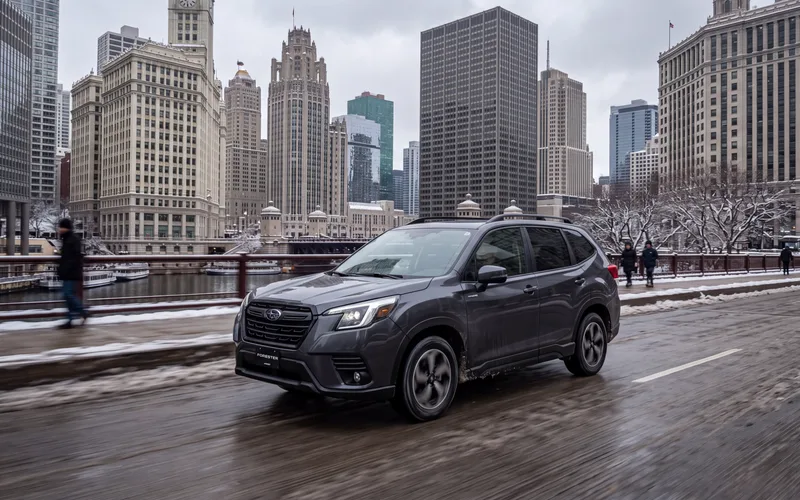 Subaru ForesterCompact SUVBetter at: Cargo space
Same standard AWD, X-MODE and Subaru dealer, but with 74.4 cu ft of cargo instead of 54.7 and a back seat adults can live in.
Compare 1.93C-
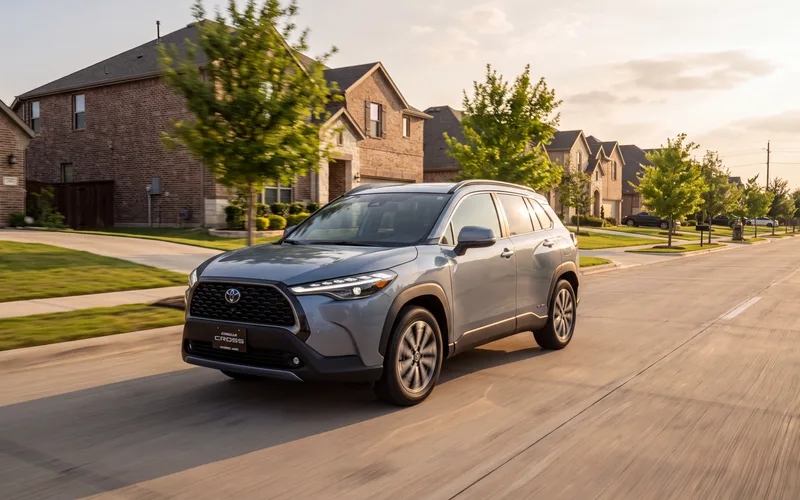 Toyota Corolla CrossSubcompact SUVBetter at: Efficiency
The hybrid version is quicker and thriftier than any gas Crosstrek, with a quieter cabin and two years of included maintenance.
Compare 1.71C-
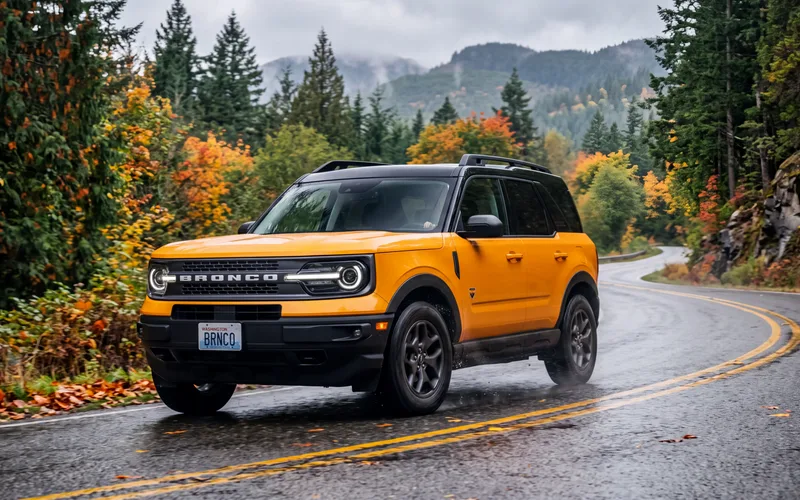 Ford Bronco SportSubcompact SUVBetter at: Off-road
For buyers who actually use the trail, the Badlands trim brings a turbo engine and real off-road hardware the Wilderness can't match.
CompareHow it's evolved
10 scored model years · 2017–2026
Subject scores by year
Hover or tap a score to see what moved it versus the year before. A corner mark flags a big swing.
| Year | Performance | Efficiency | Safety | Space | Cost | Reliability | Tech | Use-case | Driving | Value |
|---|---|---|---|---|---|---|---|---|---|---|
| 2026 | 36 | 76 | 77 | 43 | 63 | 70 | 53 | 67 | 64 | 73 |
| 2025 | 38 | 72 | 74 | 43 | 68 | 80 | 54 | 61 | 66 | 75 |
| 2024 | 31 | 73 | 74 | 42 | 68 | 74 | 52 | 63 | 64 | 75 |
| 2023 | 28 | 76 | 66 | 42 | 69 | 79 | 34 | 61 | 63 | 66 |
| 2022 | 28 | 76 | 68 | 42 | 70 | 75 | 34 | 60 | 63 | 66 |
| 2021 | 28 | 76 | 69 | 41 | 69 | 68 | 30 | 52 | 53 | 63 |
| 2020 | 26 | 76 | 67 | 40 | 70 | 74 | 35 | 51 | 55 | 70 |
| 2019 | 26 | 72 | 66 | 40 | 71 | 74 | 35 | 54 | 54 | 66 |
| 2018 | 26 | 73 | 62 | 41 | 72 | 61 | 34 | 53 | 56 | 67 |
| 2017 | 26 | 70 | 59 | 37 | 79 | 62 | 20 | 47 | 54 | 57 |
Compare two years
Best fit & conditions
Higher scores mean a better fit for that use case. Learn more about use-case fit →
Subject profile
Trims & configurations
5 trimsScores above reflect the volume trim. Per-trim specs and scores are rolling out — the full lineup:
Detailed scoring by subject
1Performance & PowertrainThe Crosstrek's lowest-graded category.0.00F
2019 is a carry-over powertrain year within the second generation (GT, 2018–2023): the sole gas engine across all three trims is the naturally aspirated 2.0L FB20 boxer-four at 152 hp, unchanged from 2018. The notable 2019 change is EyeSight driver-assist becoming available as an option package across the full model line, not any powertrain revision. Sits at the floor of the SUV horsepower band.
Peak torque of the FB20 fitted across every 2019 gas trim, unchanged from 2018 and 2020 alike. Near the floor of the SUV torque band, and the reason the CVT has to work the engine hard for merging and grades.
No 2019-specific instrumented test was found. Instrumented tests of the same-generation 2.0L CVT Crosstrek (unchanged powertrain, 2018 and 2020 model years bracketing 2019) run 9.0–10.3 s depending on test house; 9.4 s reflects the midpoint. Toward the slow end of the SUV band, consistent with the 152-hp engine and standard AWD's curb weight.
The naturally aspirated boxer delivers its power cleanly at light throttle — no turbo lag, no hybrid handover — but the 152-hp 2.0L has to be worked hard for merging, passing and grades, where it turns audibly strained. 2019 carries the same engine and calibration as 2018 and 2020; nothing about the powertrain itself changed.
The Lineartronic CVT is smooth and unobtrusive in normal driving and steps through simulated ratios (7-speed manual mode with paddle shifters on Premium and Limited) rather than flaring to redline and holding — but paired with the low-output 2.0L it still spends more time at high revs than a stepped automatic would, and engine drone under load is the recurring criticism. A genuine 6-speed manual remains standard-fit on the 2.0i and Premium.
Every 2019 gas Crosstrek is rated at 1,500 lbs maximum with the available hitch — near the floor of the SUV towing band, unchanged across the generation. The press kit itself does not list a towing figure; corroborated by dealer spec sheets and towing aggregators consistent with the surrounding 2018 and 2020 model years.
Symmetrical full-time AWD is standard on every 2019 US trim, not an option or a top-trim upsell. CVT-equipped trims add single-function X-MODE with Hill Descent Control; manual-transmission cars get none at all, and the dual-mode X-MODE (separate Snow/Dirt and Deep Snow/Mud settings) doesn't arrive until the 2021 Sport trim. No low range or true torque-vectoring rear differential.
8.7 inches of ground clearance standard on every 2019 trim beats most subcompact crossovers outright, and X-MODE with Hill Descent Control on CVT trims makes it genuinely useful on forest roads and light snow. But 2019 predates the Wilderness by five model years — no dedicated off-road variant, no lockers, no low range, no all-terrain tire option. Light-duty trail hardware only.
The 2019 range covers two distinct powertrains: the 152-hp 2.0L (choice of 6-speed manual or CVT) and the Crosstrek Hybrid, a plug-in hybrid with roughly 17 miles of electric-only range. Squarely in the middle band — a real electrified option available, but only one gas engine and no turbo or larger-displacement choice (those arrive in 2021).
2Efficiency & RangeOne of the Crosstrek's strongest categories.2.90B-
EPA rates the volume 2.0L CVT configuration at 29 MPG combined — a point behind the 2020+ CVT figure of 30, since 2019 predates the auto engine stop-start system Subaru added the following model year. Still a strong figure for a subcompact SUV carrying full-time symmetrical AWD as standard.
EPA city rating of 27 MPG for the 2.0L CVT volume trim, matching the surrounding 2018 and 2020 model years — comfortably mid-band for an AWD-standard SUV.
The 2.0L CVT volume trim posts 33 MPG highway, unchanged across the generation and among the stronger highway figures in the subcompact SUV class.
The 16.6-gallon fuel tank shared across the 2019 Crosstrek gas range, at the EPA combined 29 MPG, covers roughly 481 miles per fill — solidly above the middle of the SUV range band, limited by the subcompact-sized tank rather than by efficiency.
EPA's published annual fuel cost for the 2019 Crosstrek AWD 2.0L CVT is $2,100 at standard assumptions — a modest step up from the 2020 figure ($2,050) purely because 2019's combined rating is one MPG lower, driven on the same cheapest fuel grade.
The 2019 Crosstrek's 2.0L FB20 runs on 87-octane regular unleaded, with no premium recommendation, no turbocharger to feed and no special fuel handling — no ongoing grade penalty relative to any rival in the class.
3SafetyMid-pack among this car's ten categories.2.44C+
NHTSA's composite overall rating is 5 stars despite 4-star frontal and rollover components, consistent with NHTSA's weighted scoring methodology.
The 2019 Crosstrek earned IIHS Top Safety Pick+ with Good ratings in small/moderate overlap front, original-protocol side, roof strength, and head restraints, plus Superior front crash prevention — but the award requires optional EyeSight and the LED headlights unique to the Limited trim, and current IIHS records show a Poor result under the newer updated side-impact protocol for this platform.
EyeSight (AEB, ACC, lane departure/sway warning, lane keep assist) is standard only on the top Limited trim; on the Base and Premium trims — including the volume Premium trim — it is an option bundled with the CVT, and manual-transmission Base cars cannot get it at all. Blind-spot detection and rear cross-traffic alert follow the same pattern.
When equipped with optional EyeSight, IIHS rated front crash prevention Superior for both vehicle-to-vehicle (avoided collisions at 12 and 25 mph) and pedestrian scenarios (avoided crossing child and adult dummies) — top-tier performance, though gated behind an option rather than standard.
Blind-Spot Detection with Lane Change Assist and Rear Cross Traffic Alert are alert-only systems (no automatic braking intervention) and are optional on Base and Premium, standard only on Limited — coverage exists across the range but is paywalled below the top trim.
EyeSight's Lane Keep Assist is a lane-departure-prevention system rather than true continuous lane centering; owner and forum impressions describe it as functional on well-marked highways but noticeably reactive/imprecise compared to centering systems from rivals, with more nudging near lane edges than smooth mid-lane tracking.
EyeSight adaptive cruise control tracks lead-vehicle distance and adjusts speed on the CVT-only cars that offer it, providing usable highway assistance, but period reviews and owner reports describe conservative following-distance behavior and no dedicated hands-free highway-assist layer beyond basic ACC+LKA.
Subaru offered no hands-free highway driving system (no BlueCruise/Super Cruise/FSD-supervised equivalent) on the 2019 Crosstrek or anywhere in its 2019 lineup; EyeSight requires hands on the wheel at all times.
IIHS tested three headlight configurations: the halogen reflector units on Base and Premium (including Premium with the EyeSight package) both rated Poor, while only the LED steering-responsive headlights standard on the top Limited trim rated Good — since the volume Premium trim carries the halogen units, most Crosstreks on the road have Poor-rated headlights.
Reviewers consistently praise the Crosstrek's outward visibility — thin A- and B-pillars, a low beltline, a tall seating position, and a large rear window/quarter windows combine for excellent sightlines in every direction, a class strength for this generation.
As a subcompact SUV, the Crosstrek's rear doors and seat are class-typical rather than spacious — LATCH anchors are accessible but the tight rear-seat width and door aperture make fitting multiple child seats or working around bulky ones more of a squeeze than in larger SUVs.
4Space & ComfortOne of the Crosstrek's weakest categories.0.67F
The 2019 Crosstrek is a two-row, 5-passenger subcompact SUV across all trims (2.0i, Premium, Limited); no 3-row option exists.
Standard front headroom without the optional power moonroof (Limited trim).
Front legroom is generous for a subcompact SUV, aided by the CVT's tilt/telescoping column and seat travel.
Rear headroom is mid-pack for the subcompact SUV segment.
Rear legroom is adequate for a subcompact SUV but noticeably tighter than compact SUV rivals, limiting multi-hour adult comfort in back.
No third row is offered on any 2019 Crosstrek trim; it is strictly a 5-seat, two-row subcompact SUV.
Cargo volume behind the rear seats is small even for the subcompact SUV class, at the bottom of the wider SUV normalization band.
Maximum cargo volume with the 60/40 rear seats folded sits at the low end of the SUV band, reflecting the Crosstrek's compact footprint.
Conventional console bin, door pockets and a small tray ahead of the shifter; no standout storage innovation for the segment.
Front seats are generally well-regarded for daily comfort, but cloth upholstery and modest bolstering on lower trims keep it short of segment-leading.
Consumer Reports rated the Crosstrek's ride as comfortable and controlled relative to subcompact SUV rivals, though some testers noted a firmer edge over broken pavement.
Multiple testers flagged a noisy cabin, with the naturally aspirated 2.0L boxer engine becoming vocal under load and moderate wind/road noise at highway speed.
Heated front seats arrive on Premium trim and up, dual-zone automatic climate control is Limited-only, and there is no heated steering wheel or rear climate control on any 2019 trim.
5Cost of OwnershipOne of the Crosstrek's strongest categories.2.81B-
Under the subcompact-SUV normalization floor even with destination included — Subaru priced the entry Crosstrek only $100 above the prior model year and it remains one of the cheapest new vehicles sold with standard all-wheel drive.
Premium with the CVT is the volume configuration — the CVT is the transmission that unlocks the optional EyeSight suite, which most Premium buyers add. It still carries the base 152-hp 2.0-liter BOXER; there was no 2.5-liter step-up trim yet in this generation.
Boxer-plus-AWD servicing runs a bit above the Toyota/Honda class benchmark but comfortably below luxury rivals; nothing about the 2019 model year (second year of this generation) changes the maintenance schedule from any other year of it. Published projections for this nameplate disagree by more than 3x, so this figure is a blend weighted toward the clustered low estimates rather than either extreme.
The Crosstrek is consistently the strongest resale retainer in the subcompact-SUV class — standard AWD, durable outdoor-brand demand, and a reputation (KBB named the 2019 Crosstrek North America's lowest-projected-cost-to-own vehicle) that holds used values up.
Industry-baseline coverage at the floor of the normalization band — two years short of the 5 yr / 60,000 mi basic term Hyundai and Kia offered on the Kona and Soul the same model year.
Baseline powertrain term at the bottom of the band — half the 10 yr / 100,000 mi original-owner coverage Hyundai, Kia and Mitsubishi extended that model year, which matters more on a CVT-and-AWD driveline.
Subaru of America included no complimentary scheduled maintenance for 2019, so owners pay from the first service — a standing gap against Toyota's ToyotaCare and Hyundai/Kia's included-maintenance plans. What is included is roadside assistance tied to the 3-year warranty term plus short STARLINK connected-service and SiriusXM trial subscriptions, which is basic-roadside territory rather than a real perks package.
$24,870 volume-trim price minus its estimated resale value after 5 years (65% retained, or about $16,166) leaves about $8,705 in depreciation. Add the projected $4,300 in 5-year maintenance and repairs, and owning this vehicle for 5 years costs about $13,005 in total.
6Reliability & QualityThe Crosstrek's best-graded category.3.04B
Consumer Reports gave the 2019 Crosstrek a 4/5 predicted reliability score, and 2019 was the year CR ranked Subaru the highest-scoring overall brand (81/100) in its Annual Auto Reliability Survey. The Crosstrek carried the second-generation Global Platform introduced for 2018 with no major new-generation growing pains reported for 2019.
Subaru has been a consistent top-tier performer in both Consumer Reports and J.D. Power dependability studies through the late 2010s, the only mainstream (non-luxury) brand regularly placing in CR's top 5, backed by stablemate Forester/Outback 5/5 CR reliability scores in the same period.
NHTSA logged 7 recalls touching the 2019 Crosstrek, several safety-relevant: an aluminum PCV valve that can separate and cause sudden power loss (2019 Crosstrek/Forester/Ascent), an ECM defect that can keep powering the ignition coil after shutoff and short-circuit (shared with 2017-2019 Impreza), loosening rear stabilizer bracket bolts, and a rear seat belt webbing sensor that may not lock as intended. None are engine-out/fire-epidemic scale, but the count and mix of powertrain and restraint-system recalls is above the segment's typical few-minor-recalls bar.
The 2.0L FB20 flat-four is a well-proven naturally aspirated Subaru design with a long high-mileage track record, but it is paired with the Lineartronic CVT, a unit whose 2012-2017 versions built a reputation for shudder, hesitation and occasional stalling once out of factory warranty, prompting Subaru to extend CVT coverage to 10yr/100k miles in late 2017. The 2019 car uses the same CVT family (post-warranty-extension, and on the redesigned 2018+ global platform) with no fresh red flags reported yet, but not enough distance from the earlier generation's issues to call it fully proven.
Reviewers consistently praised the redesigned second-generation cabin for punching above its roughly $23,000 base price: soft-touch material on the dash and front doors, unfussy switchgear, and layout/material choices reviewers said rivaled class leaders in the subcompact SUV segment.
Reviewers described the redesigned 2019 Crosstrek as solidly constructed with excellent fit and finish and no notable rattle or panel-gap complaints in period reviews or owner feedback.
Subaru maintains a dense, nationwide dealer network and has ranked at or near the top of J.D. Power's Customer Service Index among mass-market brands in recent studies; while the specific 2019 CSI standing wasn't independently confirmed, Subaru's service-satisfaction reputation was already strong through this period and has only strengthened since.
RepairPal rates the Crosstrek 4.5/5 for reliability, ranking it 1st of 26 compact SUVs, with an average annual repair cost of $492 — below both the segment norm and Subaru's own brand average of $617 — and Subaru's widespread dealer footprint plus a healthy aftermarket keep parts easy to source.
7Technology & InfotainmentOne of the Crosstrek's weakest categories.0.28F
The base and Premium volume trims carry a 6.5-inch Starlink Multimedia touchscreen; only the Limited steps up to the 8.0-inch Multimedia Plus unit.
Subaru's 2019-generation Starlink software is functional but dated versus rivals of the era, with a simple menu structure but noticeably slower touch response.
Apple CarPlay and Android Auto are standard across all 2019 Crosstrek trims, a notable value point for the era, but connection is wired-only (USB) with no wireless projection offered.
Native TomTom-based navigation with voice commands is only available as an option on the Limited trim; base/Premium buyers rely on phone-projected maps with limited voice recognition.
No branded premium audio system is offered on the 2019 Crosstrek; standard/optional speaker setups are competent but unremarkable.
All 2019 Crosstrek trims use analog gauges with a small monochrome multi-info display; no configurable full-digital cluster is offered at any trim level.
Only the optional navigation unit receives OTA map updates; there is no whole-vehicle or infotainment software OTA capability in the 2019 model year.
Subaru Starlink Safety and Security services (enhanced for 2019) provide remote start/lock/locate via a smartphone app, but functionality is basic and requires a paid subscription after the trial period.
USB port count is limited (one on base, two on higher trims) and all are legacy USB-A; there is no wireless charging pad offered on the 2019 Crosstrek.
Proximity keyless entry with push-button start is standard on Premium and Limited trims; the base 2.0i uses conventional remote keyless entry with a traditional key.
A standard rear-view camera is fitted across the range, but there is no 360-degree camera and front/rear parking sensors are limited to the top Limited trim.
No head-up display is offered on any 2019 Crosstrek trim.
8Use-Case FitGrades below the middle of the scale.1.63D
LATCH anchors are easily accessible and the low, subcompact-SUV ride height eases car-seat installs, but narrower rear doors and modest rear legroom (36.5 in) make loading bulkier gear more of a squeeze than in a compact SUV.
The 2019 Crosstrek earned IIHS Top Safety Pick+ with EyeSight (pre-collision braking, adaptive cruise, lane keep) newly available even on the base CVT trim, though EyeSight remains optional rather than standard below Limited.
Rear-seat legroom and a noisy cabin at highway speed limit multi-hour comfort for four occupants, and cargo space (20.8 cu ft behind the second row) is tight once luggage is loaded for a trip.
The CVT (standard on volume trims) delivers smooth, low-fatigue low-speed driving and standard AWD adds confidence in traffic, though the 152-hp boxer four feels stretched under quicker acceleration demands.
27/33/29 mpg city/highway/combined with the CVT is competitive for a standard-AWD subcompact SUV, and Subaru's reputation for affordable routine maintenance helps per-mile costs.
A compact footprint and a tight 35.4-ft turning circle make the Crosstrek easy to park and thread through city streets; a standard rear camera aids visibility.
Towing capacity is a modest 1,000-1,500 lbs when properly equipped and there is no payload/cargo-box capability; the Crosstrek is not meaningfully work-capable beyond light hauling.
Subaru's boxer-engine/AWD drivetrain has a strong reputation for mechanical durability in daily use, but the Crosstrek is not marketed or built for fleet/work-truck duty cycles.
Standard roof rails support light racks, but there are no onboard power outlets, dedicated tie-downs, or upfit ecosystem — the Crosstrek offers little beyond a passenger-car cargo area for jobsite use.
A roughly 400-mile highway range and standard AWD suit road trips, and optional EyeSight adaptive cruise reduces fatigue, but cabin noise and firmer ride at speed cap long-haul comfort.
8.7 inches of ground clearance, standard Symmetrical AWD with X-Mode and Hill Descent Control (CVT models) give the Crosstrek genuine light off-pavement ability that is a segment strength and core to its adventure-oriented marketing.
Standard roof rails and a 60/40-split folding rear seat (55.3 cu ft max cargo) handle typical gear loads well, though overall cargo volume is modest next to larger SUVs for bulky items.
9Driving ExperienceGrades below the middle of the scale.1.64D
The Crosstrek grips well thanks to standard AWD, but its taller ride height and softer tuning produce noticeable body roll and secure-but-unremarkable cornering composure versus lower-riding subcompact SUV rivals.
Steering is smooth and precise enough for daily use with decently quick response, but offers little genuine road feedback — typical of Subaru's electric power steering tuning in this era.
No major complaints surfaced in period reviews about stopping power or pedal feel; braking is presumed adequate and unremarkable for the segment absent instrumented test data specific to the 2019 model year.
The CVT pairs smoothly with the naturally aspirated 2.0L boxer around town, but the engine has to work hard and drones under harder acceleration or highway passing.
The boxer engine's characteristic growl becomes intrusive under load, contributing to the cabin noise multiple reviewers flagged as a Crosstrek weak point.
A tight turning circle for the SUV segment, aiding low-speed maneuverability.
Good outward visibility, an upright seating position, and Subaru's typically logical control layout make the Crosstrek easy to get comfortable in, with easy step-in/step-out ingress for its class.
The Crosstrek is a competent, confidence-inspiring companion on gravel and light trails thanks to AWD grip, but on-road it is closer to appliance-like than genuinely engaging — reviewers rank performance among its weaker traits.
10Value & Market PositionMid-pack among this car's ten categories.2.46C+
Every 2019 Crosstrek includes Symmetrical AWD, Active Torque Vectoring and 8.7 inches of ground clearance from the base trim — hardware many rivals either charge extra for or can't offer at all — plus a 6.5-inch touchscreen with standard Apple CarPlay/Android Auto and a backup camera. Against that, EyeSight is withheld from every manual-transmission car, the base cloth/manual trim is fairly stripped (no auto climate, no keyless entry), and the touchscreen is small by segment standards, so the volume Premium reads as capable rather than generously equipped.
The money buys capability and durability rather than content: standard AWD and real ground clearance from under $23,000, a low projected 5-year ownership cost, and best-in-class resale retention. It's held back from the top band by the 152-hp 2.0-liter, which reviewers of this generation consistently call underpowered, and by an interior that reads plain next to segment rivals.
Three gas trims (2.0i, Premium, Limited) with a manual offered on the two lower trims, plus the all-new Crosstrek Hybrid plug-in that debuted for 2019 as a distinct top-tier variant — a reasonable spread but no Sport or off-road-leaning trim yet, and the manual's exclusion from EyeSight forces an awkward safety-versus-transmission trade-off.
131,152 US units in calendar 2019 — a steady, strong-selling nameplate and Subaru's third best-selling model — but down 21.5% from 2018's record 144,384, the brand's steepest AWD-lineup decline that year. Still comfortably a mid-pack-to-strong seller in its class, not a fast riser.
Subaru carries a strong, loyal following built on standard AWD and an outdoorsy, adventure-oriented image that the Crosstrek embodies more than any other model in the lineup — not an aspirational luxury halo, but a genuinely beloved mainstream brand with above-average owner loyalty.
Subaru historically runs thin incentive spend and the Crosstrek in particular sold close to sticker through 2019 given sustained demand — buyers found few meaningful discounts versus mainstream-brand rivals that leaned harder on rebates and dealer cash that year.
MY2019 is the second year of the second-generation Crosstrek (started 2018), current and not yet mid-cycle — the model year itself brought EyeSight availability across the full trim line and the launch of the plug-in hybrid variant, both meaningful additions rather than a carryover year.
The 2019 Crosstrek earned Car and Driver's Editor's Choice Award in the competitive subcompact-crossover class, and the Hybrid variant was separately named among Edmunds' Best Small SUVs and Best Gas Mileage SUVs — consistent, favorable reception, though not an outright comparison-test sweep against every rival.