

The verdict
A mixed-report full-size luxury suv, strong on performance and held back by ownership.
The 2021 Model X delivers genuine full-size luxury SUV space with electric-car performance that nothing at its launch price could match: 534 hp, a 3.8-second 0-60 run, and 371 miles of EPA range. But the refresh-year car carries real costs for that novelty — Consumer Reports and J.D. Power both rated this generation among the least reliable vehicles on sale, it logged 24 recalls in a single model year, and a $104,990 volume trim retains only about 34% of its value after five years. It's a compelling used buy for someone sold on the falcon-wing doors and EV ownership, not for someone shopping on dependability or resale.
Jump to scoresStrengths
- Explosive, instant power with no transmission to get in the way
- 371 miles of real range backed by Tesla's own charging network
- A perfect 5-star NHTSA crash rating
What holds it back
- Bottom-tier reliability and 24 recalls in one model year
- Steep depreciation makes for a brutal 5-year ownership cost
- Fit, finish, and interior quality trail the price tag
Top alternatives
Cars shoppers cross-shop with the Tesla Model X 2.81B-
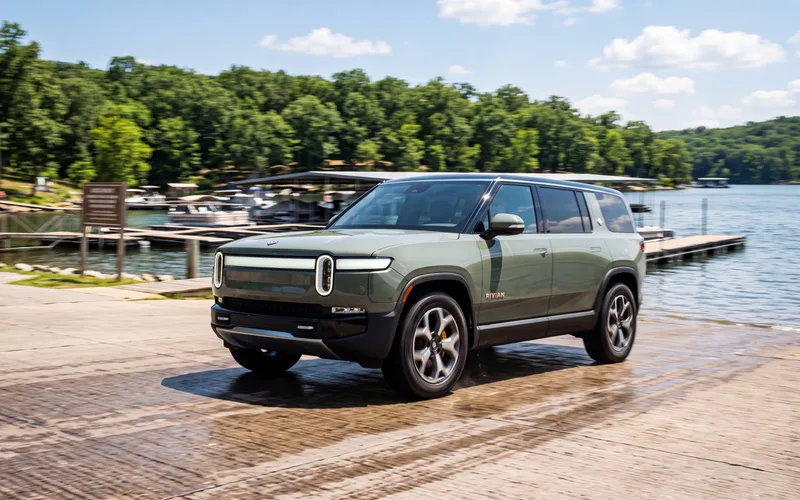 Rivian R1SFull-Size Luxury SUVBetter at: Capability
Same three-row electric SUV mission with 7,700 pounds of towing, real off-road hardware, more front legroom and a roof rack the Model X cannot offer.
Compare 3.32B+
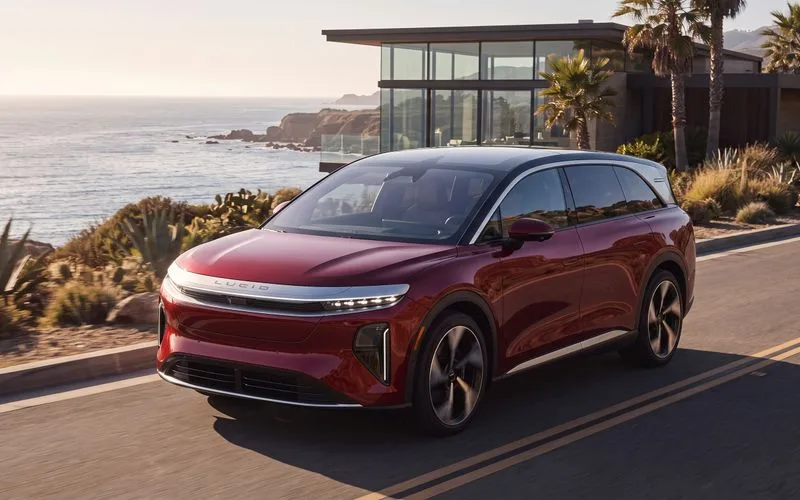 Lucid GravityFull-Size Luxury SUVBetter at: Range and interior
Similar money buys much longer range, 111.9 cu ft of cargo and a far more convincing luxury interior on a brand-new platform rather than an eleven-year-old one.
Compare 2.96B-
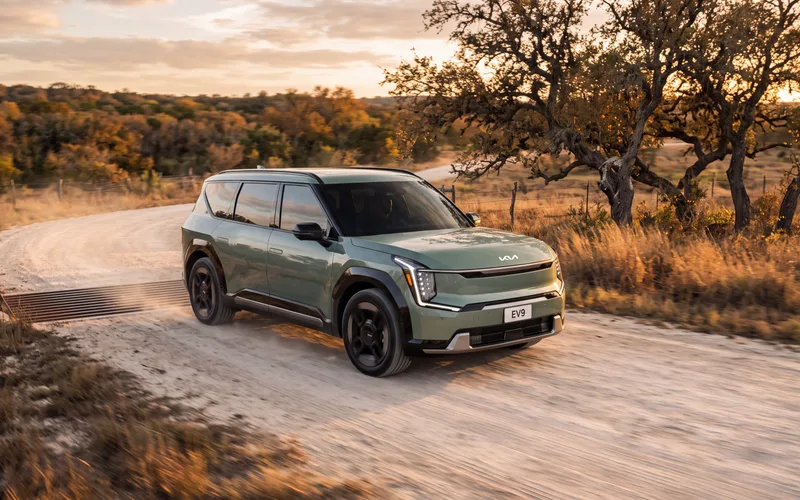 Kia EV9Mid-Size SUVBetter at: Value
Roughly half the price with a more usable third row, a long factory warranty and a real dealer network — the sensible family answer if you do not need 670 hp.
CompareHow it's evolved
10 scored model years · 2017–2026
Subject scores by year
Hover or tap a score to see what moved it versus the year before. A corner mark flags a big swing.
| Year | Performance | Efficiency | Safety | Space | Cost | Reliability | Tech | Use-case | Driving | Value |
|---|---|---|---|---|---|---|---|---|---|---|
| 2026 | 78 | 74 | 78 | 68 | 16 | 51 | 75 | 72 | 74 | 65 |
| 2025 | 78 | 72 | 77 | 61 | 17 | 55 | 74 | 70 | 73 | 66 |
| 2024 | 78 | 73 | 75 | 60 | 15 | 49 | 73 | 64 | 72 | 67 |
| 2023 | 77 | 73 | 66 | 59 | 17 | 47 | 72 | 64 | 71 | 61 |
| 2022 | 77 | 73 | 66 | 60 | 14 | 46 | 70 | 62 | 68 | 58 |
| 2021 | 76 | 73 | 63 | 67 | 16 | 35 | 69 | 65 | 74 | 59 |
| 2020 | 77 | 72 | 69 | 55 | 15 | 42 | 66 | 59 | 63 | 60 |
| 2019 | 76 | 61 | 67 | 61 | 14 | 41 | 67 | 57 | 70 | 63 |
| 2018 | 70 | 65 | 57 | 59 | 17 | 44 | 65 | 61 | 67 | 65 |
| 2017 | 59 | 58 | 57 | 62 | 15 | 31 | 62 | 63 | 70 | 67 |
Compare two years
Best fit & conditions
Higher scores mean a better fit for that use case. Learn more about use-case fit →
Subject profile
Trims & configurations
2 trimsScores above reflect the volume trim. Per-trim specs and scores are rolling out — the full lineup:
Academic Probation · NHTSA safety recalls
May 4, 2026Back over prevention: softwareThe rearview camera image may be delayed when the vehicle is placed in reverse. As such, these vehicles fail to comply with the requirements of Federal Motor Vehicle Safety Standard number 111, "Rear Visibility."
Defect
Tesla, Inc. (Tesla) is recalling certain 2017, 2021-2023 Model 3, 2020-2023 Model Y, 2021-2023 Model S, and Model X vehicles operating software version 2026.8.6. The rearview camera image may be delayed when the vehicle is placed in reverse. As such, these vehicles fail to comply with the requirements of Federal Motor Vehicle Safety Standard number 111, "Rear Visibility."
Risk
A delayed rearview image reduces the driver's view behind the vehicle, increasing the risk of a crash.
Remedy
Tesla has released an over-the-air (OTA) software update, free of charge. Owner notification letters were mailed July 3, 2026. Owners may contact Tesla customer service at 1-877-798-3752. Tesla's number for this recall is SB-26-00-001.
NHTSA campaign 26V283000 ↗Manufacturer no. SB-26-00-001218,868 vehicles potentially affected (all models in the campaign)Owners notified Jul 3, 2026Filed by Tesla, Inc.Filed as MODEL XMar 19, 2025Air bags · Electrical system: hornAn air bag with the incorrect horn pad may have been installed, preventing the horn from sounding.
Defect
Tesla, Inc. (Tesla) is recalling certain 2021-2024 Model S and 2021-2025 Model X vehicles. An air bag with the incorrect horn pad may have been installed, preventing the horn from sounding.
Risk
An inoperative horn may prevent the driver from alerting other drivers, increasing the risk of a crash.
Remedy
Tesla service will inspect and install an air bag with the correct horn pad as necessary, free of charge. Owner notification letters were mailed May 20, 2025. Owners may contact Tesla customer service at 1-877-798-3752. Tesla's number for this recall is SB-25-20-001.
NHTSA campaign 25V172000 ↗Manufacturer no. SB-25-20-00191 vehicles potentially affected (all models in the campaign)Owners notified May 20, 2025Filed by Tesla, Inc.Filed as MODEL XDec 23, 2024Air bags: frontal: driver side: cushionThe driver's air bag could tear during deployment. As such, these vehicles fail to comply with the requirements of Federal Motor Vehicle Safety Standard (FMVSS) numbers 208, "Occupant Crash Protection" and 212, "Windshield Mounting."
Defect
Tesla, Inc. (Tesla) is recalling certain 2021-2025 Model S and Model X vehicles. The driver's air bag could tear during deployment. As such, these vehicles fail to comply with the requirements of Federal Motor Vehicle Safety Standard (FMVSS) numbers 208, "Occupant Crash Protection" and 212, "Windshield Mounting."
Risk
A torn air bag may not adequately protect an occupant in a crash, increasing the risk of injury.
Remedy
Tesla service will replace the air bag assembly, free of charge. Owner notification letters were mailed February 21, 2025. Owners may contact Tesla customer service at 1-877-798-3752. Tesla's number for this recall is SB-24-20-001.
NHTSA campaign 24V967000 ↗Manufacturer no. SB-24-20-001487 vehicles potentially affected (all models in the campaign)Owners notified Feb 21, 2025Filed by Tesla, Inc.Filed as MODEL XJul 24, 2024Electrical system: software · Latches/locks/linkages: hood: latchThe hood latch assembly may fail to detect an unlatched hood condition after the hood has been opened.
Defect
Tesla, Inc. (Tesla) is recalling certain 2021-2024 Model 3, Model S, Model X, and 2020-2024 Model Y vehicles. The hood latch assembly may fail to detect an unlatched hood condition after the hood has been opened.
Risk
An unlatched hood can fully open, obstructing the driver's view and increasing the risk of a crash.
Remedy
Tesla has released an over-the-air (OTA) software update, free of charge. Owner notification letters were mailed September 24, 2024. Owners may contact Tesla customer service at 1-877-798-3752. Tesla's number for this recall is SB-24-00-012.
NHTSA campaign 24V554000 ↗Manufacturer no. SB-24-00-0121,849,638 vehicles potentially affected (all models in the campaign)Owners notified Sep 22, 2024Filed by Tesla, Inc.Filed as MODEL XMay 28, 2024Seat belts: front: warning light/devicesIn the event of an unbelted driver, the seat belt warning light and audible chime may not activate as intended. As such, these vehicles fail to comply with the requirements of Federal Motor Vehicle Safety Standard number 208, "Occupant Crash Protection."
Defect
Tesla, Inc. (Tesla) is recalling certain 2012-2024 Model S, 2015-2024 Model X, 2017-2023 Model 3, and 2020-2023 Model Y vehicles. In the event of an unbelted driver, the seat belt warning light and audible chime may not activate as intended. As such, these vehicles fail to comply with the requirements of Federal Motor Vehicle Safety Standard number 208, "Occupant Crash Protection."
Risk
A seat belt warning system that fails to alert occupants of an unbelted seat belt can increase the risk of injury during a crash.
Remedy
Tesla will release an over-the-air (OTA) software update. Owner notification letters were mailed July 26, 2024. Owners may contact Tesla customer service at 1-877-798-3752. Tesla's number for this recall is SB-24-00-008.
NHTSA campaign 24V376000 ↗Manufacturer no. SB-24-00-008125,233 vehicles potentially affected (all models in the campaign)Owners notified Jul 26, 2024Filed by Tesla, Inc.Filed as MODEL XFeb 27, 2024Electrical system: software · Forward collision avoidance: warnings: external/pedestrian alertA factory reset muted the Pedestrian Warning System (PWS) sounds. As such, these vehicles fail to comply with the requirements of Federal Motor Vehicle Safety Standard number 141, "Minimum Sound Requirements for Hybrid and Electric Vehicles."
Defect
Tesla, Inc. (Tesla) is recalling certain 2013, 2018-2021 Model S, 2020-2021 Model X, 2018-2022 Model 3, and 2020-2022 Model Y vehicles. A factory reset muted the Pedestrian Warning System (PWS) sounds. As such, these vehicles fail to comply with the requirements of Federal Motor Vehicle Safety Standard number 141, "Minimum Sound Requirements for Hybrid and Electric Vehicles."
Risk
Pedestrians may be unaware of an approaching vehicle if the PWS sounds are muted, increasing the risk of a crash.
Remedy
Tesla released an over-the-air (OTA) software update, release 2023.44.30.14, free of charge. Owner notification letters were mailed April 27, 2024. Owners may contact Tesla customer service at 1-877-798-3752. Tesla's number for this recall is SB-24-00-006.
NHTSA campaign 24V153000 ↗Manufacturer no. SB-24-00-0066,557 vehicles potentially affected (all models in the campaign)Owners notified Apr 27, 2024Filed by Tesla, Inc.Filed as MODEL XJan 30, 2024Electrical system: instrument cluster/panelAn incorrect font size is displayed on the instrument panel for the Brake, Park, and Antilock Brake System (ABS) warning lights. As such, these vehicles fail to comply with the requirements of Federal Motor Vehicle Safety Standard number 105, "Hydraulic and Electric Brake Systems" and 135, "Light Vehicle Brake Systems."
Defect
Tesla, Inc. (Tesla) is recalling certain 2012-2023 Model S, 2016-2024 Model X, 2017-2023 Model 3, 2019-2024 Model Y, and 2024 Cybertruck vehicles. An incorrect font size is displayed on the instrument panel for the Brake, Park, and Antilock Brake System (ABS) warning lights. As such, these vehicles fail to comply with the requirements of Federal Motor Vehicle Safety Standard number 105, "Hydraulic and Electric Brake Systems" and 135, "Light Vehicle Brake Systems."
Risk
Warning lights with a smaller font size can make critical safety information on the instrument panel difficult to read, increasing the risk of a crash.
Remedy
Tesla began releasing an over-the-air (OTA) software update, free of charge. Owners may contact Tesla customer service at 1-877-798-3752. Tesla's number for this recall is SB-24-00-003.
NHTSA campaign 24V051000 ↗Manufacturer no. SB-24-00-0032,193,869 vehicles potentially affected (all models in the campaign)Owners notified Feb 21, 2024Filed by Tesla, Inc.Filed as MODEL XDec 12, 2023Electrical system: adas: driver monitoring: softwareTesla, Inc. (Tesla) is recalling 2012-2023 Model S, 2016-2023 Model X, 2017-2023 Model 3, and 2020-2023 Model Y vehicles equipped with all versions of Autosteer leading up to the version(s) that contains the recall remedy. In certain circumstances when Autosteer is engaged, the prominence and scope of the feature's controls may not be sufficient to prevent driver misuse of the SAE Level 2 advanced driver-assistance feature.
Defect
Tesla, Inc. (Tesla) is recalling 2012-2023 Model S, 2016-2023 Model X, 2017-2023 Model 3, and 2020-2023 Model Y vehicles equipped with all versions of Autosteer leading up to the version(s) that contains the recall remedy. In certain circumstances when Autosteer is engaged, the prominence and scope of the feature's controls may not be sufficient to prevent driver misuse of the SAE Level 2 advanced driver-assistance feature.
Risk
In certain circumstances when Autosteer is engaged, and the driver does not maintain responsibility for vehicle operation and is unprepared to intervene as necessary or fails to recognize when Autosteer is canceled or not engaged, there may be an increased risk of a crash.
Remedy
Tesla will release an over-the-air (OTA) software update, free of charge. Owner notification letters were mailed February 10, 2024. Owners may contact Tesla customer service at 1-877-798-3752. Tesla's number for this recall is SB-23-00-008.
NHTSA campaign 23V838000 ↗Manufacturer no. SB-23-00-0082,031,220 vehicles potentially affected (all models in the campaign)Owners notified Feb 10, 2024Filed by Tesla, Inc.Filed as MODEL XNov 3, 2023Air bags: frontal · Steering: steering wheel/handle barAn incorrect air bag may have been installed when the steering yoke or round steering wheel was replaced with a different style of yoke or steering wheel.
Defect
Tesla, Inc. (Tesla) is recalling certain 2021-2024 Model S and Model X vehicles. An incorrect air bag may have been installed when the steering yoke or round steering wheel was replaced with a different style of yoke or steering wheel.
Risk
An air bag that is not designed to function with the replacement steering yoke or wheel may deploy incorrectly, increasing the risk of injury during a crash.
Remedy
Tesla Service will inspect and replace the driver air bag as necessary, free of charge. Owner notification letters were mailed January 2, 2024. Owners may contact Tesla customer service at 1-877-798-3752. Tesla's number for this recall is SB-23-20-005.
NHTSA campaign 23V743000 ↗Manufacturer no. SB-23-20-005194 vehicles potentially affected (all models in the campaign)Owners notified Jan 2, 2024Filed by Tesla, Inc.Filed as MODEL XOct 11, 2023Electrical system · Service brakes, hydraulic: brake fluid low warning: switch/sensor/floatThe vehicle controller may fail to detect low brake fluid and will not display a warning light. As such, these vehicles fail to comply with the requirements of Federal Motor Vehicle Safety Standard number 135, "Light Vehicle Brake Systems."
Defect
Tesla, Inc. (Tesla) is recalling certain 2021-2023 Model X vehicles. The vehicle controller may fail to detect low brake fluid and will not display a warning light. As such, these vehicles fail to comply with the requirements of Federal Motor Vehicle Safety Standard number 135, "Light Vehicle Brake Systems."
Risk
Without a warning light, the vehicle may be driven with low brake fluid, which can reduce braking performance and increase the risk of a crash.
Remedy
Tesla has released an over-the-air (OTA) software update, free of charge. Owner notification letters were mailed December 12, 2023. Owners may contact Tesla customer service at 1-877-798-3752. Tesla's number for this recall is SB-23-00-005.
NHTSA campaign 23V679000 ↗Manufacturer no. SB-23-00-00554,676 vehicles potentially affected (all models in the campaign)Owners notified Dec 12, 2023Filed by Tesla, Inc.Filed as MODEL XJul 14, 2023Seat belts: frontThe front-row seat belts may not be connected properly to the pretensioner anchors, which can cause the seat belts to detach.
Defect
Tesla, Inc. (Tesla) is recalling certain 2021-2023 Model S and Model X vehicles. The front-row seat belts may not be connected properly to the pretensioner anchors, which can cause the seat belts to detach.
Risk
A detached seat belt may not properly restrain an occupant during a crash, increasing the risk of injury.
Remedy
Tesla Service will inspect the front-row seat belts and connect the seat belts to pretensioner anchors, or replace the seat belt assemblies, as necessary, free of charge. Owner notification letters were mailed September 12, 2023. Owners may contact Tesla customer service at 1-877-798-3752. Tesla's number for this recall is SB-23-20-004.
NHTSA campaign 23V488000 ↗Manufacturer no. SB-23-20-00415,869 vehicles potentially affected (all models in the campaign)Owners notified Sep 12, 2023Filed by Tesla, Inc.Filed as MODEL XFeb 15, 2023Steering: automated/adaptive steeringIn addition, the system may respond insufficiently to changes in posted speed limits or not adequately account for the driver's adjustment of the vehicle's speed to exceed posted speed limits.
Defect
Tesla, Inc. (Tesla) is recalling certain 2016-2023 Model S, Model X, 2017-2023 Model 3, and 2020-2023 Model Y vehicles equipped with Full Self-Driving Beta (FSD Beta) software or pending installation. The FSD Beta system may allow the vehicle to act unsafe around intersections, such as traveling straight through an intersection while in a turn-only lane, entering a stop sign-controlled intersection without coming to a complete stop, or proceeding into an intersection during a steady yellow traffic signal without due caution. In addition, the system may respond insufficiently to changes in posted speed limits or not adequately account for the driver's adjustment of the vehicle's speed to exceed posted speed limits.
Risk
FSD Beta software that allows a vehicle to exceed speed limits or travel through intersections in an unlawful or unpredictable manner increases the risk of a crash.
Remedy
Tesla will release an over-the-air (OTA) software update, free of charge. Owner notification letters were mailed April 15, 2023. Owners may contact Tesla customer service at 1-877-798-3752. Tesla's number for this recall is SB-23-00-001.
NHTSA campaign 23V085000 ↗Manufacturer no. SB-23-00-001362,758 vehicles potentially affected (all models in the campaign)Owners notified Apr 15, 2023Filed by Tesla, Inc.Filed as MODEL XNov 15, 2022Air bags: air bag/restraint control module: software · Air bags: frontalThe restraint control module (RCM) calibration may cause the front passenger air bag to deploy incorrectly during certain low speed crashes. As such, these vehicles fail to comply with the requirements of Federal Motor Vehicle Safety Standard number 208, "Occupant Crash Protection."
Defect
Tesla, Inc. (Tesla) is recalling certain 2021-2023 Model X vehicles. The restraint control module (RCM) calibration may cause the front passenger air bag to deploy incorrectly during certain low speed crashes. As such, these vehicles fail to comply with the requirements of Federal Motor Vehicle Safety Standard number 208, "Occupant Crash Protection."
Risk
A passenger air bag that does not deploy as intended increases the risk of injury during a crash.
Remedy
Tesla has released an over-the-air (OTA) software update to recalibrate the RCM, free of charge. Owner notification letters were mailed January 14, 2023. Owners may contact Tesla customer service at 1-877-798-3752. Tesla's number for this recall is SB-22-00-015.
NHTSA campaign 22V843000 ↗Manufacturer no. SB-22-00-01529,348 vehicles potentially affected (all models in the campaign)Owners notified Jan 14, 2023Filed by Tesla, Inc.Filed as MODEL XNov 1, 2022Steering: electric power assist systemThe electronic power assist steering (EPAS) system may experience a loss of power steering assist when driving on rough roads or after hitting a pothole.
Defect
Tesla, Inc. (Tesla) is recalling certain 2017-2021 Model S and Model X vehicles. The electronic power assist steering (EPAS) system may experience a loss of power steering assist when driving on rough roads or after hitting a pothole.
Risk
A loss of power steering assist can require greater steering effort, especially at low speeds, increasing the risk of a crash.
Remedy
Tesla has released an over-the-air (OTA) software update to recalibrate the EPAS system, free of charge. Owner notification letters were mailed December 31, 2022. Owners may contact Tesla customer service at 1-877-798-3752. Tesla's number for this recall is SB-22-00-014.
NHTSA campaign 22V818000 ↗Manufacturer no. SB-22-00-01440,168 vehicles potentially affected (all models in the campaign)Owners notified Dec 31, 2022Filed by Tesla, Inc.Filed as MODEL XSep 19, 2022Visibility: power window devices and controlsThe window automatic reversal system may not react correctly after detecting an obstruction. As such, these vehicles fail to comply with the requirements of Federal Motor Vehicle Safety Standard number 118, "Power-Operated Window Systems."
Defect
Tesla, Inc. (Tesla) is recalling certain 2017-2022 Model 3, 2020-2022 Model Y, and 2021-2022 Model S and Model X vehicles. The window automatic reversal system may not react correctly after detecting an obstruction. As such, these vehicles fail to comply with the requirements of Federal Motor Vehicle Safety Standard number 118, "Power-Operated Window Systems."
Risk
A closing window may exert excessive force by pinching a driver or passenger before retracting, increasing the risk of injury.
Remedy
Tesla will perform an over-the-air (OTA) software update of the automatic window reversal system, free of charge. Owner notification letters were mailed March 31, 2032. Owners may contact Tesla customer service at 1-877-798-3752. Tesla's number for this recall is SB-22-00-013.
NHTSA campaign 22V702000 ↗Manufacturer no. SB-22-00-0131,096,762 vehicles potentially affected (all models in the campaign)Owners notified Mar 31, 2023Filed by Tesla, Inc.Filed as MODEL XMay 3, 2022Back over prevention: display function · Equipment: electrical: infotainment: video (touch)screen/monitor/unitThe infotainment central processing unit (CPU) may overheat during the preparation or process of fast-charging, causing the CPU to lag or restart.
Defect
Tesla, Inc. (Tesla) is recalling certain 2021-2022 Model S, Model X, and 2022 Model 3 and Model Y vehicles operating certain firmware releases. The infotainment central processing unit (CPU) may overheat during the preparation or process of fast-charging, causing the CPU to lag or restart.
Risk
A lagging or restarting CPU may prevent the center screen from displaying the rearview camera image, gear selection, windshield visibility control settings, and warning lights, increasing the risk of a crash.
Remedy
Tesla will perform an over-the-air (OTA) software update that will improve CPU temperature management, free of charge. Owner notification letters were mailed July 1, 2022. Owners may contact Tesla customer service at 1-877-798-3752. Tesla's number for this recall is SB-22-00-009.
NHTSA campaign 22V296000 ↗Manufacturer no. SB-22-00-009129,960 vehicles potentially affected (all models in the campaign)Owners notified Jul 1, 2022Filed by Tesla, Inc.Filed as MODEL XApr 12, 2022Electrical system: software · Forward collision avoidance: warnings: external/pedestrian alertThe Boombox function allows sounds to be played through an external speaker while the vehicle is in motion, which may obscure the Pedestrian Warning System (PWS) sounds. As such, these vehicles fail to comply with the requirements of Federal Motor Vehicle Safety Standard number 141, "Minimum Sound Requirements for Hybrid and Electric Vehicles."
Defect
Tesla, Inc. (Tesla) is recalling certain 2020-2022 Model Y, Model X, Model S, and 2017-2022 Model 3 vehicles. The Boombox function allows sounds to be played through an external speaker while the vehicle is in motion, which may obscure the Pedestrian Warning System (PWS) sounds. As such, these vehicles fail to comply with the requirements of Federal Motor Vehicle Safety Standard number 141, "Minimum Sound Requirements for Hybrid and Electric Vehicles."
Risk
Pedestrians may be unaware of an approaching vehicle if the PWS sounds are obscured, increasing the risk of a crash.
Remedy
Tesla will perform an over-the-air (OTA) software update that will disable the Boombox functionality when the vehicle is in Drive, Neutral and Reverse modes, including Summon and Smart Summon, free of charge. Owner notification letters were mailed June 6, 2022. Owners may contact Tesla customer service at 1-877-798-3752. Tesla's number for this recall is SB-22-00-003. Note: This recall supersedes recall 22V-063. Vehicles configured with Summon or Smart Summon and already remedied under 22V-063 will need to have the new remedy software installed.
NHTSA campaign 22V235000 ↗Manufacturer no. SB-22-00-003594,894 vehicles potentially affected (all models in the campaign)Owners notified Jun 6, 2022Filed by Tesla, Inc.Filed as MODEL XApr 8, 2022Air bags: side/window: curtainThe left or right front-row side curtain air bags may not deploy as intended when the windows are lowered. As such, these vehicles fail to comply with the requirements of Federal Motor Vehicle Safety Standard number 226, "Ejection Mitigation."
Defect
Tesla, Inc. (Tesla) is recalling certain 2021-2022 Model X vehicles. The left or right front-row side curtain air bags may not deploy as intended when the windows are lowered. As such, these vehicles fail to comply with the requirements of Federal Motor Vehicle Safety Standard number 226, "Ejection Mitigation."
Risk
Improper side curtain air bag deployment can increase the risk of injury during a crash.
Remedy
Tesla Service Centers will replace the left and right front-row side curtain air bags, free of charge. Owner notification letters were mailed July 16, 2022. Owners may contact Tesla customer service at 1-877-798-3752. Tesla's number for this recall is SB-22-20-003.
NHTSA campaign 22V233000 ↗Manufacturer no. SB-22-20-0037,289 vehicles potentially affected (all models in the campaign)Owners notified Aug 16, 2022Filed by Tesla, Inc.Filed as MODEL XFeb 4, 2022Electrical system: software · Forward collision avoidance: warnings: external/pedestrian alertThe Boombox function allows sounds to be played through an external speaker while the vehicle is in motion, which may obscure the Pedestrian Warning System (PWS) sounds. As such, these vehicles fail to comply with the requirements of Federal Motor Vehicle Safety Standard number 141, "Minimum Sound Requirements for Hybrid and Electric Vehicles."
Defect
Tesla, Inc. (Tesla) is recalling certain 2020-2022 Model S, Model X, Model Y, and 2017-2022 Model 3 vehicles. The Boombox function allows sounds to be played through an external speaker while the vehicle is in motion, which may obscure the Pedestrian Warning System (PWS) sounds. As such, these vehicles fail to comply with the requirements of Federal Motor Vehicle Safety Standard number 141, "Minimum Sound Requirements for Hybrid and Electric Vehicles."
Risk
Pedestrians may be unaware of an approaching vehicle if the PWS sounds are obscured, increasing the risk of a crash.
Remedy
Tesla will perform an over-the-air (OTA) software update that will disable the Boombox functionality when the vehicle is in Drive, Neutral and Reverse modes, free of charge. Owner notification letters are expected to be mailed April 5, 2022. Owners may contact Tesla customer service at 1-877-798-3752. Tesla's number for this recall is SB-22-00-003. Note: This recall has been superseded by Recall 22V-235. Tesla's number for the new recall is SB-22-00-003.
NHTSA campaign 22V063000 ↗Manufacturer no. SB-22-00-003578,607 vehicles potentially affected (all models in the campaign)Owners notified Apr 12, 2022Filed by Tesla, Inc.Filed as MODEL XFeb 2, 2022Electrical system: software · Visibility: defroster/defogger/hvac system: air handler/chamber, ducts, and valvesA software error may cause a valve in the heat pump to open unintentionally and trap the refrigerant inside the evaporator, resulting in decreased defrosting performance. As such, these vehicles fail to comply with the requirements of Federal Motor Vehicle Safety Standard number 103, "Windshield Defrosting and Defogging Systems."
Defect
Tesla, Inc. (Tesla) is recalling certain 2021-2022 Model 3, Model S, Model X, and 2020-2022 Model Y vehicles. A software error may cause a valve in the heat pump to open unintentionally and trap the refrigerant inside the evaporator, resulting in decreased defrosting performance. As such, these vehicles fail to comply with the requirements of Federal Motor Vehicle Safety Standard number 103, "Windshield Defrosting and Defogging Systems."
Risk
Decreased defrosting performance may reduce the driver's visibility, increasing the risk of a crash.
Remedy
Tesla will perform an over-the-air (OTA) software update, free of charge. Owner notification letters were mailed April 1, 2022. Owners may contact Tesla customer service at 1-877-798-3752. Tesla's number for this recall is SB-22-18-002.
NHTSA campaign 22V050000 ↗Manufacturer no. SB-22-18-00226,681 vehicles potentially affected (all models in the campaign)Owners notified Apr 1, 2022Filed by Tesla, Inc.Filed as MODEL XFeb 1, 2022Electrical system: software · Seat belts: frontThe audible chime may not activate when the vehicle starts and the driver has not buckled their seat belt. As such, these vehicles fail to comply with the requirements of Federal Motor Vehicle Safety Standard number 208, "Occupant Crash Protection."
Defect
Tesla, Inc. (Tesla) is recalling certain 2021-2022 Model S and Model X, 2017-2022 Model 3, and 2020-2022 Model Y vehicles. The audible chime may not activate when the vehicle starts and the driver has not buckled their seat belt. As such, these vehicles fail to comply with the requirements of Federal Motor Vehicle Safety Standard number 208, "Occupant Crash Protection."
Risk
The driver may be unaware that their seat belt is not fastened, increasing the risk of injury during a crash.
Remedy
Tesla will perform an over-the-air (OTA) software update, free of charge. Owner notification letters were mailed April 1, 2022. Owners may contact Tesla customer service at 1-877-798-3752. Tesla's number for this recall is SB-22-00-002.
NHTSA campaign 22V045000 ↗Manufacturer no. SB-22-00-002817,143 vehicles potentially affected (all models in the campaign)Owners notified Apr 1, 2022Filed by Tesla, Inc.Filed as MODEL XJan 27, 2022Steering: automated/adaptive steeringThe "rolling stop" functionality available as part of the Full Self-Driving (Beta) software may allow the vehicle to travel through an all-way stop intersection without first coming to a stop.
Defect
Tesla, Inc. (Tesla) is recalling certain 2016-2022 Model S and Model X, 2017-2022 Model 3, and 2020-2022 Model Y vehicles. The "rolling stop" functionality available as part of the Full Self-Driving (Beta) software may allow the vehicle to travel through an all-way stop intersection without first coming to a stop.
Risk
Failing to stop at a stop sign can increase the risk of a crash.
Remedy
Tesla will perform an over-the-air (OTA) software update that disables the "rolling stop" functionality, free of charge. Owner notification letters were mailed March 28, 2022. Owners may contact Tesla customer service at 1-877-798-3752. Tesla's number for this recall is SB-22-00-001.
NHTSA campaign 22V037000 ↗Manufacturer no. SB-22-00-00153,822 vehicles potentially affected (all models in the campaign)Owners notified Mar 28, 2022Filed by Tesla, Inc.Filed as MODEL XNov 9, 2021Air bags · Air bags: frontal: driver side: cushionThe driver's air bag cushion may tear during deployment.
Defect
Tesla, Inc. (Tesla) is recalling certain 2021 Model X and Model S vehicles. The driver's air bag cushion may tear during deployment.
Risk
A torn air bag may not adequately protect an occupant in a crash, increasing their risk of injury.
Remedy
Tesla Service will replace the driver's air bag, free of charge. Owner notification letters were mailed January 7, 2022. Owners may contact Tesla customer service at 1-877-798-3752. Tesla's number for this recall is SB-21-20-007.
NHTSA campaign 21V868000 ↗Manufacturer no. SB-21-20-0077,600 vehicles potentially affected (all models in the campaign)Owners notified Jan 7, 2022Filed by Tesla, Inc.Filed as MODEL XOct 29, 2021Forward collision avoidance: automatic emergency braking · Forward collision avoidance: sensing system: camera · Forward collision avoidance: warnings · Forward collision avoidance: softwareA communication error may cause false forward-collision warning (FCW) or unexpected activation of the automatic emergency brake (AEB) system.
Defect
Tesla, Inc. (Tesla) is recalling certain 2017-2021 Model S, Model 3, Model X, and 2020-2021 Model Y vehicles operating software version 2021.36.5.2. A communication error may cause false forward-collision warning (FCW) or unexpected activation of the automatic emergency brake (AEB) system.
Risk
Unexpected activation of the AEB system may cause the car to stop suddenly, increasing the risk of a crash.
Remedy
Tesla Service has released an over-the-air (OTA) software update, free of charge. The recall began October 25, 2021. Owners may contact Tesla customer service at 1-877-798-3752. Tesla's number for this recall is SB-21-00-004.
NHTSA campaign 21V846000 ↗Manufacturer no. SB-21-00-00411,728 vehicles potentially affected (all models in the campaign)Owners notified Oct 25, 2021Filed by Tesla, Inc.Filed as MODEL X
11 recalls on other model years of the Model X (2017–2019, 2022–2025)
Jan 6, 2025Back over prevention: software · Electrical systemThe computer circuit board may short, resulting in the loss of the rearview camera image. As such, these vehicles fail to comply with the requirements of Federal Motor Vehicle Safety Standard (FMVSS) number 111, "Rear Visibility."
Defect
Tesla, Inc. (Tesla) is recalling certain 2024-2025 Model 3, Model S, 2023-2025 Model X, and Model Y vehicles. The computer circuit board may short, resulting in the loss of the rearview camera image. As such, these vehicles fail to comply with the requirements of Federal Motor Vehicle Safety Standard (FMVSS) number 111, "Rear Visibility."
Risk
A rearview camera that does not display an image reduces the driver's rear view, increasing the risk of a crash.
Remedy
Tesla released an over-the-air (OTA) software update, free of charge. Tesla will also identify any vehicles that experienced a circuit board failure, or stress that may lead to a circuit board failure, and replace the affected computers, free of charge. Owner notification letters were mailed March 7, 2025. Owners may contact Tesla customer service at 1-877-798-3752. Tesla's number for this recall is SB-25-00-001.
NHTSA campaign 25V002000 ↗Manufacturer no. SB-25-00-001239,382 vehicles potentially affected (all models in the campaign)Owners notified Mar 7, 2025Filed by Tesla, Inc.Filed as MODEL XDec 2, 2024Exterior lighting: headlightsThe parking lights and low beam headlights may flicker. As such, these vehicles fail to comply with the requirements of Federal Motor Vehicle Safety Standard (FMVSS) number 108, "Lamps, Reflective Devices, and Associated Equipment."
Defect
Tesla, Inc. (Tesla) is recalling certain 2024 Model X vehicles. The parking lights and low beam headlights may flicker. As such, these vehicles fail to comply with the requirements of Federal Motor Vehicle Safety Standard (FMVSS) number 108, "Lamps, Reflective Devices, and Associated Equipment."
Risk
Flickering headlights or parking lights may not suffciently illuminate the roadway, increasing the risk of a crash.
Remedy
Tesla released an over-the-air (OTA) software update, free of charge. All vehicles were updated by September 17, 2024. Owners may contact Tesla customer service at 1-877-798-3752. Tesla's number for this recall is SB-24-00-017.
NHTSA campaign 24V904000 ↗Manufacturer no. SB-24-00-01725 vehicles potentially affected (all models in the campaign)Owners notified Feb 1, 2025Filed by Tesla, Inc.Filed as MODEL XJan 22, 2024Back over prevention: sensing system: cameraSoftware instability may prevent the rearview camera image from displaying.
Defect
Tesla, Inc. (Tesla) is recalling certain 2023 Model S, X, and Y vehicles equipped with full self-driving computer 4.0 and running a software release version 2023.44.30 through 2023.44.30.6 or 2023.44.100. Software instability may prevent the rearview camera image from displaying.
Risk
A rearview image that does not display while in reverse decreases the driver's visibility and increases the risk of a crash.
Remedy
Tesla has released an over-the-air (OTA) software update, free of charge. Owner notification letters were mailed March 22, 2024. Owners may contact Tesla customer service at 1-877-798-3752. Tesla's number for this recall is SB-24-00-002.
NHTSA campaign 24V035000 ↗Manufacturer no. SB-24-00-002199,575 vehicles potentially affected (all models in the campaign)Owners notified Mar 22, 2024Filed by Tesla, Inc.Filed as MODEL XDec 19, 2023Electrical system: software · Latches/locks/linkages: doors: latchThe cabin doors can be unlocked during a crash. As such, these vehicles fail to comply with the requirements of Federal Motor Vehicle Safety Standard number 214, "Side Impact Protection."
Defect
Tesla, Inc. (Tesla) is recalling certain 2021-2023 Model S and X vehicles. The cabin doors can be unlocked during a crash. As such, these vehicles fail to comply with the requirements of Federal Motor Vehicle Safety Standard number 214, "Side Impact Protection."
Risk
An unlocked door may unlatch and open during a crash, increasing the risk of injury.
Remedy
Tesla has released an over-the-air (OTA) software update, free of charge. Owner notification letters were mailed February 17, 2024. Owners may contact Tesla customer service at 1-877-798-3752. Tesla's number for this recall is SB-23-00-009.
NHTSA campaign 23V862000 ↗Manufacturer no. SB-23-00-009120,423 vehicles potentially affected (all models in the campaign)Owners notified Feb 17, 2024Filed by Tesla, Inc.Filed as MODEL XJul 14, 2023Forward collision avoidance: sensing system: cameraThe forward-facing camera may be misaligned, causing some of the active safety features such as emergency braking, forward collision warning, and lane assist to become unavailable without alerting the driver.
Defect
Tesla, Inc. (Tesla) is recalling certain 2023 Model S, Model X, and Model Y vehicles. The forward-facing camera may be misaligned, causing some of the active safety features such as emergency braking, forward collision warning, and lane assist to become unavailable without alerting the driver.
Risk
Safety features that are unavailable without any warning to the driver may increase the risk of a crash.
Remedy
Tesla Service will inspect and adjust the pitch angle, as necessary, free of charge. Owner notification letters were mailed September 12, 2023. Owners may contact Tesla customer service at 1-877-798-3752. Tesla's number for this recall is SB-23-17-006.
NHTSA campaign 23V489000 ↗Manufacturer no. SB-23-17-0061,337 vehicles potentially affected (all models in the campaign)Owners notified Sep 12, 2023Filed by Tesla, Inc.Filed as MODEL XApr 5, 2023Back over preventionWeak camera signal strength may prevent the rearview image from displaying. As such, these vehicles fail to comply with the requirements of Federal Motor Vehicle Safety Standard number 111, "Rear Visibility."
Defect
Tesla, Inc. (Tesla) is recalling certain 2023 Model X vehicles equipped with a full self-driving computer 4.0 and running software release version 2023.2.200. Weak camera signal strength may prevent the rearview image from displaying. As such, these vehicles fail to comply with the requirements of Federal Motor Vehicle Safety Standard number 111, "Rear Visibility."
Risk
A rearview image that does not display while in reverse decreases the driver's visibility, increasing the risk of injury or crash.
Remedy
Tesla has released an over-the-air (OTA) software update, free of charge. All affected vehicles have been remedied. Owners may contact Tesla customer service at 1-877-798-3752.
NHTSA campaign 23V244000 ↗38 vehicles potentially affected (all models in the campaign)Owners notified Mar 9, 2023Filed by Tesla, Inc.Filed as MODEL XApr 18, 2022Seats: mid/rear assembly · Structure: bodyTesla, Inc. (Tesla) is recalling one 2022 Model X vehicle. A body structure reinforcement bracket was not installed at the second-row seat. As such, this vehicle fails to comply with the requirements of Federal Motor Vehicle Safety Standard numbers 207, "Seating Systems" and 210, "Seat Belt Assembly Anchorages."
Defect
Tesla, Inc. (Tesla) is recalling one 2022 Model X vehicle. A body structure reinforcement bracket was not installed at the second-row seat. As such, this vehicle fails to comply with the requirements of Federal Motor Vehicle Safety Standard numbers 207, "Seating Systems" and 210, "Seat Belt Assembly Anchorages."
Risk
The second-row seat may not properly restrain occupants during a crash, increasing the risk of injury.
Remedy
Tesla will replace the vehicle, free of charge. The recall was completed April 28, 2022. Owners may contact Tesla customer service at 1-877-798-3752.
NHTSA campaign 22V264000 ↗1 vehicles potentially affected (all models in the campaign)Owners notified Apr 28, 2022Filed by Tesla, Inc.Filed as MODEL XMar 18, 2022Back over prevention: display functionThe rearview image may not immediately display when the vehicle begins to reverse. As such, these vehicles fail to comply with the requirements of Federal Motor Vehicle Safety Standard number 111, "Rear Visibility."
Defect
Tesla, Inc. (Tesla) is recalling certain 2018-2019 Model S, Model X, and 2017-2020 Model 3 vehicles equipped with Autopilot Computer 2.5 and operating certain firmware releases. The rearview image may not immediately display when the vehicle begins to reverse. As such, these vehicles fail to comply with the requirements of Federal Motor Vehicle Safety Standard number 111, "Rear Visibility."
Risk
A delayed rearview camera image reduces the driver's rear view, increasing the risk of a crash.
Remedy
Tesla will perform an over-the-air (OTA) software update, free of charge. Owner notification letters were mailed May 17, 2022. Owners may contact Tesla customer service at 1-877-798-3752. Tesla's number for this recall is SB-22-00-004.
NHTSA campaign 22V169000 ↗Manufacturer no. SB-22-00-004947 vehicles potentially affected (all models in the campaign)Owners notified May 17, 2022Filed by Tesla, Inc.Filed as MODEL XJan 29, 2021Back over prevention: software · Exterior lighting: turn signal · Visibility: defroster/defogger/hvac systemWhen the 8GB eMMC NAND flash memory device for the center display reaches lifetime wear, the eMMC controller will no longer be able to maintain the integrity of the filesystem, causing a failure in some of the center display functions.
Defect
Tesla, Inc. (Tesla) is recalling certain 2012-2018 Tesla Model S and 2016-2018 Model X vehicles with a center display equipped with a NVIDIA Tegra 3 processor and an 8GB eMMC NAND flash memory device. When the 8GB eMMC NAND flash memory device for the center display reaches lifetime wear, the eMMC controller will no longer be able to maintain the integrity of the filesystem, causing a failure in some of the center display functions.
Risk
The eMMC controller wear-out condition can cause the loss of the rearview camera display, defrost/defog control settings, and exterior turn signal lighting, reducing visibility and increasing the risk of a crash.
Remedy
Owners should ensure their vehicles are operating firmware release 2020.48.48.12 or newer, which will alert owners if the eMMC is approaching lifetime wear. Tesla will notify owners, and will replace the VCM daughterboard with one containing an enhanced eMMC controller, free of charge. The recall began March 29, 2021. Owners may contact Tesla customer service at 1-877-798-3752. Tesla's number for this recall is SB-21-21-001.
NHTSA campaign 21V035000 ↗Manufacturer no. SB-21-21-001134,951 vehicles potentially affected (all models in the campaign)Owners notified Mar 29, 2021Filed by Tesla, Inc.Filed as MODEL XOct 12, 2017Seats: mid/rear assemblyThe left-side, second row, reclining seat backs may not fully latch due to having incorrectly adjusted recliner mechanism cables. As such, these vehicles fail to comply with the requirements of Federal Motor Vehicle Safety Standard (FMVSS) number 207, "Seating Systems," and 210, "Seat Belt Assembly Anchorages."
Defect
Tesla, Inc. (Tesla) is recalling certain 2016-2017 Model X vehicles. The left-side, second row, reclining seat backs may not fully latch due to having incorrectly adjusted recliner mechanism cables. As such, these vehicles fail to comply with the requirements of Federal Motor Vehicle Safety Standard (FMVSS) number 207, "Seating Systems," and 210, "Seat Belt Assembly Anchorages."
Risk
If the seat back moves forward in the event of a crash, it can increase the risk of injury.
Remedy
Tesla will notify owners, and Tesla service technicians will correct the cable adjustment for the left-side, fold-flat, second row, seat recliner mechanism, free of charge. The recall began on November 10, 2017. Owners may contact Tesla customer service at 1-877-798-3752. Tesla's number for this recall is SB-17-13-004.
NHTSA campaign 17V639000 ↗Manufacturer no. SB-17-13-0044,582 vehicles potentially affected (all models in the campaign)Owners notified Nov 10, 2017Filed by Tesla Motors, Inc.Filed as MODEL XApr 19, 2017Parking brakeThe electric parking brake calipers have an internal gear that may be improperly manufactured, possibly resulting in the gear fracturing during parking brake application or release.
Defect
Tesla, Inc. (Tesla) is recalling certain 2016 Model S and Model X vehicles. The electric parking brake calipers have an internal gear that may be improperly manufactured, possibly resulting in the gear fracturing during parking brake application or release.
Risk
If the gear breaks during parking brake release, the vehicle will not be able to be moved. If the gear breaks during parking brake application, the parking brake may not adequately hold the vehicle, potentially resulting in the vehicle rolling, increasing the risk of a crash.
Remedy
Tesla will notify owners, and service centers will replace both the left and right electric parking brake calipers, free of charge. The recall began March 6, 2018. Owners may contact Tesla customer service at 1-877-798-3752. Tesla's number for this recall is SB-17-33-002.
NHTSA campaign 17V260000 ↗Manufacturer no. SB-17-33-00231,709 vehicles potentially affected (all models in the campaign)Owners notified Mar 6, 2018Filed by Tesla Motors, Inc.Filed as MODEL X
Source: NHTSA Office of Defects Investigation recall database, model years 2017–2026. Recalls are listed by model year as the manufacturer filed them; whether a specific car is affected depends on its VIN — check a VIN at nhtsa.gov ↗. NHTSA model names matched to this page: MODEL X.
Detailed scoring by subject
1Performance & PowertrainThe Model X's best-graded category.3.16B
Dual-motor AWD Long Range Plus is the volume trim for MY2021; Tesla does not publish an official combined hp figure, but the EPA/dyno-derived combined output is well corroborated across spec aggregators.
Combined peak torque for the dual-motor Long Range Plus powertrain carried over from 2020.
Manufacturer-quoted 0-60 time for the Long Range Plus trim, corroborated by independent instrumented tests.
Dual electric motors deliver instant, linear torque with no turbo lag, gear hunting, or hybrid-transition harshness; reviewers consistently praise the immediacy of power delivery.
Single-speed direct-drive motors with no shifting; power delivery is instantaneous and never hunts or hesitates.
Manufacturer-rated max towing capacity when equipped with Tesla's tow package, unchanged across Model X model years.
Dual-motor AWD is standard across the entire Model X trim range (Long Range Plus and Performance), with independently controlled front/rear motors providing electronic torque vectoring and adjustable air suspension.
Pavement-oriented luxury SUV; adaptive air suspension can raise ride height but there is no low-range gearing, skid plates, lockers, or dedicated off-road trim.
Model X is offered only as a battery-electric vehicle; trims (Long Range Plus, Performance) vary output and range but not powertrain type.
2Efficiency & RangeOne of the Model X's strongest categories.2.94B-
EPA combined rating for the Long Range Plus, the volume trim for MY2021 (pre-refresh carryover; refreshed Long Range/Plaid were EPA-certified under MY2022).
EPA city rating for the Long Range Plus.
EPA highway rating for the Long Range Plus.
EPA-rated range on a full charge for the volume Long Range Plus trim.
Tesla does not publish a formal peak-kW spec sheet figure, but the Long Range Plus's 100 kWh pack is corroborated across multiple sources and owner charging logs as peaking at 250 kW on V3 Superchargers.
Tesla has not published an explicit 10-80% minute figure for this trim; real-world and third-party charging-curve data converge on roughly 30-35 minutes at a 250 kW V3 Supercharger.
EPA's standard-assumption annual energy cost estimate for the Long Range Plus.
Charges on standard home Level 2 equipment or Tesla's own Supercharger network, which was already extensive by 2021; no fuel-grade concerns since it runs on electricity only.
3SafetyMid-pack among this car's ten categories.2.27C
NHTSA's 5-star overall rating for the first-generation Model X (unchanged structure for 2021) was earned across every crash mode and sub-category, making it the first SUV to do so.
IIHS has never put the Model X through its crashworthiness, headlight, or front-crash-prevention tests, so there is no award and no individual test-mode data on record — a gap, not a demonstrated weakness, given the vehicle's perfect NHTSA result.
Every 2021 Model X ships with standard Autopilot (Traffic-Aware Cruise Control + Autosteer), automatic emergency braking, forward collision warning, and blind-spot/rear cross-traffic alerts with no trim gating — only the Enhanced Autopilot/FSD add-ons (Navigate on Autopilot, auto lane change, Autopark, Summon) are optional.
The Model X's camera-and-radar AEB (radar still fitted in 2021, pre-dating Tesla Vision's radar removal) has a generally solid real-world reputation, but with no IIHS front-crash-prevention test on record there is no independent superior/advanced-rated data point to confirm day/night and pedestrian performance.
Blind-spot monitoring and rear cross-traffic alert are standard across the range, but 2021 Tesla hardware is alert-only — audible/visual warnings with no active steering or braking intervention, and no trailer-aware mode.
Autosteer generally keeps the Model X in-lane on highways, but owner reports from the 2021 model year describe a tendency to track toward the driver-side line rather than dead center and occasional abrupt 'hyper' corrections rather than smooth centering.
Traffic-Aware Cruise Control covers the full speed range including stop-and-go, but 2021 owner reports note false-positive forward-collision warnings/phantom braking, and true highway-assist features (Navigate on Autopilot, auto lane change) are gated behind the optional Enhanced Autopilot package rather than standard.
No hands-free mode existed for the 2021 Model X — both standard Autopilot and optional FSD Beta required continuous hands-on-wheel torque input, and pre-2021-built S/X units lack the cabin camera Tesla later required even to begin phasing out the torque nag.
The Model X has never received an IIHS headlight rating, so there is no Good/Acceptable/Marginal verdict on record; 2021 units carry standard LED projector headlights with auto high-beam but no adaptive matrix-beam hardware, scored as an unremarkable average in the absence of independent test data.
The full-glass panoramic windshield gives excellent upward and overhead visibility, but it's paired with unusually thick, raked A-pillars that multiple owners describe as creating real forward-corner blind spots at intersections and crosswalks — a wash between an exceptional feature and a recurring complaint.
Falcon-wing doors open vertically for extra headroom while buckling in a car seat, and second-row LATCH anchors are easy to reach, but the two third-row LATCH positions sit deep in stiff upholstery and the doors don't swing high enough to avoid head-bumping during installation back there.
4Space & ComfortMid-pack among this car's ten categories.2.51C+
The six-seat interior with second-row captain's chairs and a two-seat third row became the standard, no-cost-option Model X layout from 2021, ahead of the 5- and 7-seat alternatives. Six seats sits at the midpoint of the SUV band.
The tall body and panoramic windshield give the Model X class-leading front headroom, unchanged across this single-generation shell. Near the top of the SUV normalization band.
Front legroom is modest for a full-size SUV; the raised battery floor and dash packaging cost stretch-out room relative to body-on-frame rivals.
Second-row headroom tops the SUV normalization band — the roofline stays high over row two and the falcon-wing doors cut into the roof for a near-vertical entry, so tall adults sit upright.
Good second-row legroom for the segment; the sliding captain's chairs let occupants buy space from the third row at the cost of rear-seat kneeroom.
The third row is standard on the volume 6-seat layout and genuinely accessible — the falcon-wing doors open a huge, nearly vertical aperture and the power-folding second row clears an easy path — but with roughly 32.7 in of legroom and 37.1 in of headroom it suits kids and short teens rather than adults on a real trip.
With the third row folded, cargo space behind the second row is below par for a full-size SUV — the sloped liftgate and folding third-row mechanism eat into the load floor. The front trunk adds separate space this item does not count.
A strong maximum cargo figure for the class with all rear seats folded flat, aided by underfloor storage; the separate front trunk adds further capacity not counted here.
A large covered center console with a wireless phone charging pad, deep door and underfloor bins, a flat battery-skateboard floor, and a genuinely useful front trunk make storage a real strength, just short of the segment's very best gear-hauling tricks.
Heated, power-adjustable front seats (ventilated on upper trims) are comfortable over long stints; Edmunds rated the 2021 car 8.0/10 for comfort. Second-row captain's chairs are supportive but offer limited recline versus segment benchmarks.
Standard adaptive air suspension and a low center of gravity give a settled, well-controlled ride that absorbs bumps admirably even on 20-inch wheels, per contemporary reviews.
No engine noise and a reasonably well-insulated cabin make for a quiet highway experience, though the pre-refresh car lacks the extra acoustic glass and sound-deadening added in the later 2021 refresh.
Comfort equipment is effectively standard across the range: heated front seats, HEPA filtration with Bioweapon Defense Mode, and app-based remote climate preconditioning, Dog Mode and Camp Mode were all already available on the 2021 car.
5Cost of OwnershipThe Model X's lowest-graded category.0.00F
Tesla refreshed the Model X in early 2021, discontinuing Standard Range/Performance and narrowing the lineup to Long Range and Plaid; Long Range is the de facto entry trim.
Long Range is both the entry and volume trim in 2021 since only two trims exist; most buyers configure it with the standard 6/7-seat layout and premium interior.
Tesla's EV drivetrain needs little scheduled service, but Model X's falcon-wing doors and complex systems drive higher repair costs than typical EVs or rivals.
The 2021 Model X depreciates faster than the broader SUV market, which CarEdge attributes to rapid Tesla price cuts/increases on new units undercutting used values and the luxury EV SUV class as a whole losing over 60% in 5 years.
Standard across all Tesla passenger vehicles in 2021, in line with mainstream rivals but short of some luxury competitors' coverage.
Tesla's Battery and Drive Unit Limited Warranty on Model X is unusually long and includes an explicit minimum-capacity guarantee, a strength versus most EV rivals of the era.
Tesla offers no included scheduled-maintenance plan for Model X — owners pay out of pocket for all service — and by 2021 had ended standard free unlimited Supercharging for new orders; the only complimentary perk is roadside assistance tied to the active warranty period.
$104,990 volume-trim price minus its estimated resale value after 5 years (34.1% retained, or about $35,802) leaves about $69,188 in depreciation. Add the projected $11,032 in 5-year maintenance and repairs, and owning this vehicle for 5 years costs about $80,220 in total.
6Reliability & QualityOne of the Model X's weakest categories.0.32F
Consumer Reports' 2021 reliability survey put the Model S/X/Y generation dead last among EVs and well below the industry average, citing body hardware, climate system, and in-car electronics problems — squarely in the below-average band despite the vehicle's strong technology.
In Tesla's unofficial 2021 J.D. Power Vehicle Dependability Study debut, the brand placed 30th of 33 manufacturers at 176 problems per 100 vehicles versus a 121 industry average, beating only Jaguar, Alfa Romeo and Land Rover — a consistent bottom-tier standing, not a one-year outlier.
NHTSA logged 24 recalls touching 2021 Model X units, several of them safety-critical rather than cosmetic: a brake-fluid warning-light failure (~55,000 vehicles), a power-steering-assist dropout after pothole impacts (40,000+ Model S/X), driver airbags that could tear during deployment, an airbag horn-pad defect, rear-view camera failures (158,000+ vehicles), and a roof-panel detachment recall — a pattern of repeated, sometimes safety-system-level campaigns rather than isolated minor fixes.
Despite the Model X's broader reliability troubles, the battery and drive-unit package carries a genuinely strong long-term track record: Tesla guarantees 70% capacity retention to 8yr/150k miles, real-world packs average around 88% capacity at 200,000 miles, and documented high-mileage examples (one Model X past 400,000 miles, largely on its original pack) support a proven, high-mileage-capable EV powertrain family.
Reviewers describe the cabin as high-tech with cavernous cargo space and striking minimalist design, but note some materials don't fully justify the price point and the cabin lacks the perceived solidity of six-figure-class Audi/German luxury rivals — competitive rather than class-leading.
Owner forums and professional reviews consistently flag inconsistent assembly on the Model X: wide, uneven panel gaps, trim squeaks and rattles (particularly quarter-panel trim), and build-quality complaints described as unbecoming of a flagship-priced vehicle — placing it in the frequent-rattles/misalignment band.
Tesla's direct-sales service network is far thinner than an established luxury brand's dealer footprint, and owner forums from this period describe growing waits for service appointments and rushed, inconsistent repair experiences — adequate for Tesla's install base but below the dense, high-satisfaction network of legacy luxury SUV rivals.
Tesla tightly controls its parts supply chain, authorized body-shop capacity is limited relative to legacy brands, and collision repairs run high even for modest damage ($7,000-$15,000 for a moderate accident; a windshield alone runs over $1,300) — expensive, slow, and largely dealer/Tesla-sourced parts.
7Technology & InfotainmentGrades above the middle of the scale.2.70B-
The pre-refresh 2021 Model X carries the same 17-inch display Tesla had used since the original car, just in the portrait orientation that predates the October 2021 refresh. Well above the top of the SUV normalization band.
Tesla's infotainment was already regarded as fast and well organized by 2021, with minimal lag and broad native app support, but secondary functions like climate and some settings already lean heavily on the touchscreen versus physical controls.
Tesla has never offered Apple CarPlay or Android Auto, wired or wireless, on any model or trim — the 2021 Model X is no exception. Native streaming apps and Bluetooth audio/calling are the only alternative.
Native navigation with live traffic and Supercharger trip planning was already a genuine strength in 2021 and the one most owners actually use, since there is no CarPlay/Android Auto alternative; voice commands covered climate, media and navigation requests reliably but with a narrower vocabulary than today's assistant.
The 2021 Long Range Plus carries Tesla's premium 22-speaker audio system standard, widely rated among the best factory setups of its era despite no branded partnership.
A 12.3-inch full-digital driver display is standard, showing speed, range and driver-assist state directly in the driver's sightline; resolution (1280x480) is lower than the display introduced in the later refresh, and Tesla offers little configurability compared with rivals.
Tesla was already the OTA benchmark in 2021, pushing whole-vehicle software updates — powertrain, driver assistance, infotainment — that added functionality over the air, well ahead of rivals' maps-only update paths.
The Tesla app was already a class leader in 2021: phone-as-key, remote climate preconditioning, charge control, vehicle locate, Sentry Mode live camera view (introduced 2019), and remote operation of the falcon-wing doors, with core functions carrying no subscription.
The pre-refresh console offers a wireless phone charging pad and USB-A ports (not yet USB-C, which arrived with the later refresh), adequate but increasingly dated provisioning for the segment, and no household 120V outlet.
Phone-as-key over Bluetooth gives walk-up unlock with nothing in hand, the auto-presenting driver's door and powered falcon-wing doors operate from the app or touchscreen, and a conventional key fob became compatible with 2021-model-year cars alongside the key card.
2021 cars still carry Tesla's ultrasonic parking sensors alongside the camera suite (removed from the lineup only in 2022), giving genuine proximity sensing plus a usable surround camera view and Summon/Autopark functions — a stronger setup than the vision-only cars that followed.
No head-up display has ever been offered on any Model X trim or year, at any price, while most full-size luxury rivals fit one.
8Use-Case FitMid-pack among this car's ten categories.2.42C+
The falcon wing rear doors open a huge, nearly vertical aperture that makes buckling kids into the second or third row easier than any conventional SUV door, and the standard 6-seat layout with a walk-through to row three helps too. This is tempered by LATCH anchor usability that contemporary reviewers flagged as only middling — cat3's own child-seat item scores just 57 — and limited cargo room (13.7 cu ft) when all six seats are occupied.
Crash credentials are excellent — NHTSA 5 stars overall — and a broad ADAS suite (forward collision warning, AEB, blind-spot/cross-traffic alerts) is standard on every 2021 trim, not gated to upper options. It falls short of the best because there is no current IIHS rating, Edmunds flagged false-positive collision warnings and imprecise lane centering on the contemporary car, and true hands-free driving was not available at all in 2021.
Second-row provisioning is strong: best-in-class 40.9 in of rear headroom, sliding captain's chairs, heated seats, HEPA-filtered tri-zone-capable climate, and a panoramic windshield that gives rear passengers an unusually good view. 87.3 cu ft of maximum cargo plus a front trunk means luggage is rarely an issue with the third row folded; the limiting factors are a third row rated only 55 for usability and modest space (13.7 cu ft) with all six seats occupied.
Shift-free dual-motor delivery, one-pedal driving, standard adaptive air suspension, and a quiet cabin make for a low-fatigue daily driver; the pre-refresh car still has conventional steering-column stalks and a physical shifter rather than the screen-based controls introduced later, which keeps everyday ergonomics straightforward. The real annoyances are the complete absence of CarPlay/Android Auto, no head-up display, and a wide footprint in tight traffic.
Energy cost per mile is genuinely low — 105 MPGe combined for about $700/yr at 15,000 miles — with no oil changes and regen sparing brake wear. That strength is undercut by everything else around the electricity bill: Consumer Reports' 2021 survey rated the Model X the least reliable EV tested, parts and repair costs scored poorly, and the car's own ownership-cost items in cat5 reflect a worse-than-typical total cost of ownership for the class.
At 198.9 in long and a wide turning circle this is a big SUV to place in tight spaces, but the pre-refresh car's narrower body (78.7 in wide, excluding mirrors, versus the wider refreshed fascia) and its retained ultrasonic parking sensors alongside the camera suite make it easier to judge clearances than the vision-only cars that followed. The falcon wing doors are a genuine asset in cramped garage bays since they need only side clearance, not a full door swing, though they require overhead clearance some structures lack.
A 5,000 lb tow rating with the optional hitch and 534 hp of instant torque never run short on a grade, which beats most luxury SUVs of the era, but there is no bed, payload headroom is thin for the vehicle's mass, and towing meaningfully cuts into the 371-mile EPA range between charges.
Poorly suited to hard use in 2021 specifically: Consumer Reports' 2021 annual survey rated the Model X 'much less reliable than average' and the worst-rated EV tested, J.D. Power placed Tesla 30th of 33 brands, and the car logged 24 recalls that model year. The falcon wing doors are the most complaint-prone assembly and tolerate repeated hard-use cycling worst of all. The drive unit/battery warranty (8 yr/150,000 mi) is the one durability bright spot.
Almost nothing here serves a jobsite: no household outlet or vehicle-to-load power, no bed, and the falcon wing doors make a conventional roof rack impossible, ruling out ladders and lumber entirely. What credit exists comes from the optional 5,000 lb hitch, an underfloor cargo bin, a lockable frunk, and USB-A ports that can at least charge tools' batteries, though they are a step behind the USB-C provisioning that arrived with the later refresh.
371 miles of EPA range on the 2021 Long Range Plus is the longest range the Model X nameplate has ever posted, a genuine highway-touring asset backed by Tesla's already-extensive Supercharger network with automatic route planning. Standard Autopilot (traffic-aware cruise plus Autosteer) reduces fatigue, though Edmunds flagged false-positive collision warnings and imprecise lane centering on the contemporary car, and true hands-free driving was unavailable in 2021.
Standard dual-motor AWD and adaptive air suspension that raises ride height handle gravel roads and trailheads reasonably well, and 5,000 lbs of tow covers a small camper or boat, but there is no low range, no locker, and street-oriented tires and an expensive underbody limit anything beyond mild off-pavement use. No factory roof rack is offered, since the falcon wing doors preclude one.
87.3 cu ft with the rear rows folded, plus a separate lockable front trunk, a power liftgate, and a power-folding third row, add up to strong total volume; the falcon doors also make loading bulky items into the second row unusually easy. The constraints are only 38.9 cu ft behind the second row, a sloping tailgate that limits tall boxes, and no roof rails or rack to take overflow gear.
9Driving ExperienceOne of the Model X's strongest categories.3.02B
Standard adaptive air suspension and a floor-mounted battery pack give the Model X a center of gravity far below any combustion full-size SUV, and Edmunds specifically praised how the low center of gravity and adaptive suspension keep body motions in check — 'this sizable family SUV drives more like a car.' Mass still tells eventually in quick transitions, keeping it below the segment's sharpest dynamic benchmarks.
Edmunds specifically called out 'ultra-quick steering' that makes the Model X feel nimble for its size, and the quick ratio is accurate and easy to place — but like other Teslas of this era the weighting is synthetic and genuine road feedback is largely filtered out, keeping this in the upper half of the 'precise but numb' band rather than higher.
Edmunds rated the brakes excellent, both easy to modulate in traffic and strong and confident in a hard stop, with enough regenerative braking on lift-off that the friction pedal is rarely needed in everyday driving.
A single-speed dual-motor EV with no shifts, no stop/start, and no driveline shunt delivers instant, linear torque in a 3.8-second-to-60 package; this matches the powertrain refinement and transmission-behavior items already scored elsewhere in this run.
Near-silent in normal driving with no vibration reaching the controls — only faint inverter/motor whine intrudes under full throttle. The pre-refresh car lacks the extra sound-deadening and acoustic glazing added in the later 2021 refresh, so it trails the most hushed version of this generation slightly.
The commonly published curb-to-curb turning circle for this single-generation Model X shell is 40.3 ft, unchanged by the pre/post-refresh trim differences since wheelbase and front suspension hard points carried over. That is poor even by full-size SUV standards, near the wide end of the segment's 34-42 ft band.
A commanding hip point, wide power seat adjustment, and the panoramic windshield that sweeps overhead give excellent forward and upward sightlines, while the falcon-wing rear doors and auto-presenting driver's door make ingress and egress easy. Unlike the later refresh, the pre-refresh 2021 car retains conventional steering-column stalks for turn signals and wipers and a traditional column-stalk gear selector, keeping the control layout straightforward rather than screen-dependent.
The Long Range Plus is quick (3.8s 0-60) with clean, immediate responses that make it genuinely engaging in a straight line, but the appeal is more spectacle than involvement — numb steering, no soundtrack, and a heavy, sealed-off feel mean few owners take the long way home for the sake of it.
10Value & Market PositionOne of the Model X's weakest categories.1.99C-
The refreshed 2021 Long Range came standard with a glass roof, HEPA cabin air filtration, heated/ventilated front seats, a 17-inch center touchscreen, standard Autopilot, adaptive air suspension, and 6-seat falcon-wing configuration — features many rivals charge extra for.
Strong tech and performance per dollar versus traditional luxury SUVs, but repeated 2021 price hikes (Long Range climbing from $89,990 to $104,990) and extra-cost Full Self-Driving eroded the value proposition compared to earlier Model X pricing.
The 2021 refresh narrowed the lineup to just two trims (Long Range and Plaid), both AWD-only with no body or seating-layout alternatives beyond an optional 7-seat bench — a take-it-or-leave-it range next to rivals offering multiple engines, drivetrains, and trim ladders.
US Model X sales collapsed to roughly 7,300 units for all of 2021 as Tesla halted production for the refresh transition, well behind established full-size luxury SUV rivals like the BMW X7 and Mercedes GLS.
2021 was a high-water mark for Tesla's brand momentum — soaring stock price, long order waitlists, and an aspirational following that few rivals could match.
Tesla's direct-sales model means no dealer negotiation or discounting, and the federal EV tax credit had already phased out for Tesla by 2021 (manufacturer cap reached in 2019); the only 2021 pricing trend was repeated increases, not incentives.
2021 was the refresh year for this generation: new interior, motors, suspension, and the optional yoke steering wheel debuted, keeping the platform current-tech even though the base generation dates to 2016.
Reviewers praised acceleration and technology (Edmunds 8.1/10, US News 8.3 critics score) and KBB named it a top electric luxury SUV, but critiques of smartphone integration, practicality, and build quality kept it from sweeping comparison tests outright.