

The verdict
A struggling full-size luxury suv, strong on driving and held back by ownership.
The 2017 Model X was the first SUV to earn a perfect five-star NHTSA rating in every category, and its dual-motor EV powertrain still feels smoother and quicker than almost anything else in the full-size luxury SUV class. But this was Tesla at its most unpolished: Consumer Reports rated the car's reliability 1 out of 5, falcon-wing door and panel-fit complaints were widespread, and a $97,500 as-equipped price has since depreciated to roughly 36% of its original value. It's a compelling used buy only for someone who wants the novelty and tech first, and is prepared to budget for early-Tesla repair bills.
Jump to scoresStrengths
- First SUV ever to earn a perfect NHTSA safety score
- Seamless, instant-torque electric powertrain
- Airy, spacious cabin with class-leading cargo flexibility
What holds it back
- Steep depreciation makes total ownership cost brutal
- Below-average predicted reliability and fit & finish
- Range and charging speed trail the EV field
Top alternatives
Cars shoppers cross-shop with the Tesla Model X 2.81B-
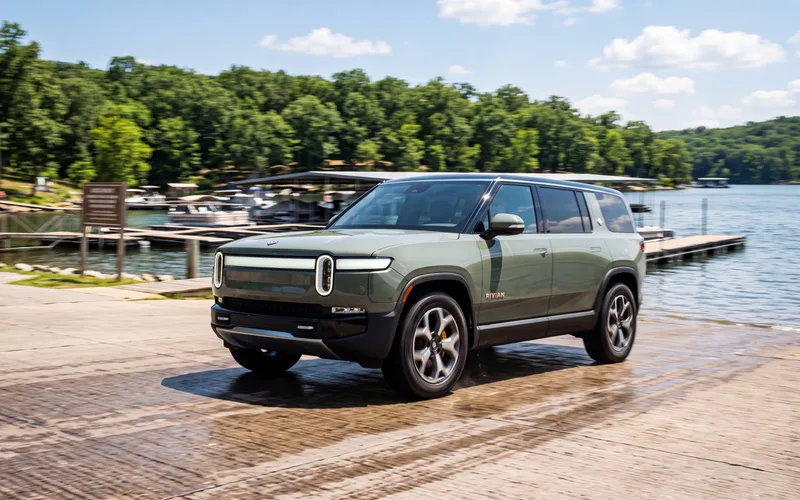 Rivian R1SFull-Size Luxury SUVBetter at: Capability
Same three-row electric SUV mission with 7,700 pounds of towing, real off-road hardware, more front legroom and a roof rack the Model X cannot offer.
Compare 3.32B+
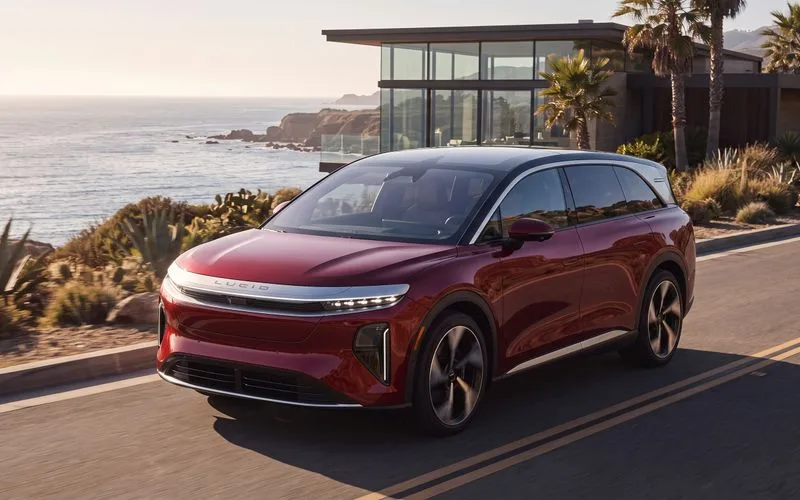 Lucid GravityFull-Size Luxury SUVBetter at: Range and interior
Similar money buys much longer range, 111.9 cu ft of cargo and a far more convincing luxury interior on a brand-new platform rather than an eleven-year-old one.
Compare 2.96B-
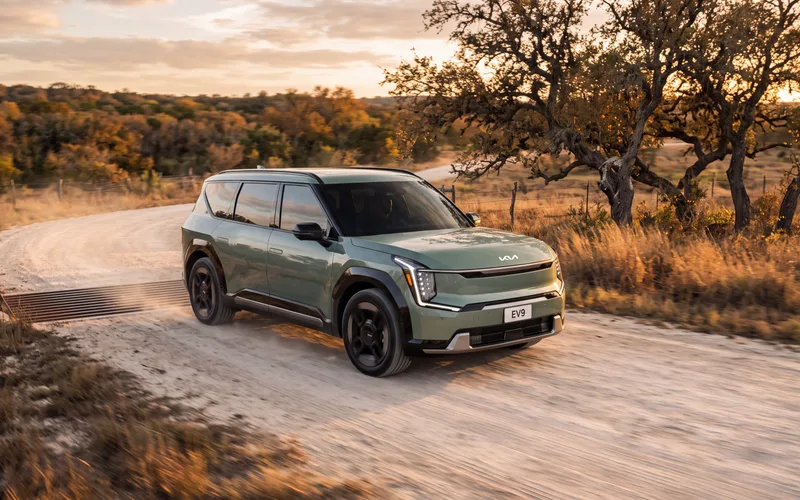 Kia EV9Mid-Size SUVBetter at: Value
Roughly half the price with a more usable third row, a long factory warranty and a real dealer network — the sensible family answer if you do not need 670 hp.
CompareHow it's evolved
10 scored model years · 2017–2026
Subject scores by year
Hover or tap a score to see what moved it versus the year before. A corner mark flags a big swing.
| Year | Performance | Efficiency | Safety | Space | Cost | Reliability | Tech | Use-case | Driving | Value |
|---|---|---|---|---|---|---|---|---|---|---|
| 2026 | 78 | 74 | 78 | 68 | 16 | 51 | 75 | 72 | 74 | 65 |
| 2025 | 78 | 72 | 77 | 61 | 17 | 55 | 74 | 70 | 73 | 66 |
| 2024 | 78 | 73 | 75 | 60 | 15 | 49 | 73 | 64 | 72 | 67 |
| 2023 | 77 | 73 | 66 | 59 | 17 | 47 | 72 | 64 | 71 | 61 |
| 2022 | 77 | 73 | 66 | 60 | 14 | 46 | 70 | 62 | 68 | 58 |
| 2021 | 76 | 73 | 63 | 67 | 16 | 35 | 69 | 65 | 74 | 59 |
| 2020 | 77 | 72 | 69 | 55 | 15 | 42 | 66 | 59 | 63 | 60 |
| 2019 | 76 | 61 | 67 | 61 | 14 | 41 | 67 | 57 | 70 | 63 |
| 2018 | 70 | 65 | 57 | 59 | 17 | 44 | 65 | 61 | 67 | 65 |
| 2017 | 59 | 58 | 57 | 62 | 15 | 31 | 62 | 63 | 70 | 67 |
Compare two years
Best fit & conditions
Higher scores mean a better fit for that use case. Learn more about use-case fit →
Subject profile
Trims & configurations
2 trimsScores above reflect the volume trim. Per-trim specs and scores are rolling out — the full lineup:
Academic Probation · NHTSA safety recalls
May 28, 2024Seat belts: front: warning light/devicesIn the event of an unbelted driver, the seat belt warning light and audible chime may not activate as intended. As such, these vehicles fail to comply with the requirements of Federal Motor Vehicle Safety Standard number 208, "Occupant Crash Protection."
Defect
Tesla, Inc. (Tesla) is recalling certain 2012-2024 Model S, 2015-2024 Model X, 2017-2023 Model 3, and 2020-2023 Model Y vehicles. In the event of an unbelted driver, the seat belt warning light and audible chime may not activate as intended. As such, these vehicles fail to comply with the requirements of Federal Motor Vehicle Safety Standard number 208, "Occupant Crash Protection."
Risk
A seat belt warning system that fails to alert occupants of an unbelted seat belt can increase the risk of injury during a crash.
Remedy
Tesla will release an over-the-air (OTA) software update. Owner notification letters were mailed July 26, 2024. Owners may contact Tesla customer service at 1-877-798-3752. Tesla's number for this recall is SB-24-00-008.
NHTSA campaign 24V376000 ↗Manufacturer no. SB-24-00-008125,233 vehicles potentially affected (all models in the campaign)Owners notified Jul 26, 2024Filed by Tesla, Inc.Filed as MODEL XJan 30, 2024Electrical system: instrument cluster/panelAn incorrect font size is displayed on the instrument panel for the Brake, Park, and Antilock Brake System (ABS) warning lights. As such, these vehicles fail to comply with the requirements of Federal Motor Vehicle Safety Standard number 105, "Hydraulic and Electric Brake Systems" and 135, "Light Vehicle Brake Systems."
Defect
Tesla, Inc. (Tesla) is recalling certain 2012-2023 Model S, 2016-2024 Model X, 2017-2023 Model 3, 2019-2024 Model Y, and 2024 Cybertruck vehicles. An incorrect font size is displayed on the instrument panel for the Brake, Park, and Antilock Brake System (ABS) warning lights. As such, these vehicles fail to comply with the requirements of Federal Motor Vehicle Safety Standard number 105, "Hydraulic and Electric Brake Systems" and 135, "Light Vehicle Brake Systems."
Risk
Warning lights with a smaller font size can make critical safety information on the instrument panel difficult to read, increasing the risk of a crash.
Remedy
Tesla began releasing an over-the-air (OTA) software update, free of charge. Owners may contact Tesla customer service at 1-877-798-3752. Tesla's number for this recall is SB-24-00-003.
NHTSA campaign 24V051000 ↗Manufacturer no. SB-24-00-0032,193,869 vehicles potentially affected (all models in the campaign)Owners notified Feb 21, 2024Filed by Tesla, Inc.Filed as MODEL XDec 12, 2023Electrical system: adas: driver monitoring: softwareTesla, Inc. (Tesla) is recalling 2012-2023 Model S, 2016-2023 Model X, 2017-2023 Model 3, and 2020-2023 Model Y vehicles equipped with all versions of Autosteer leading up to the version(s) that contains the recall remedy. In certain circumstances when Autosteer is engaged, the prominence and scope of the feature's controls may not be sufficient to prevent driver misuse of the SAE Level 2 advanced driver-assistance feature.
Defect
Tesla, Inc. (Tesla) is recalling 2012-2023 Model S, 2016-2023 Model X, 2017-2023 Model 3, and 2020-2023 Model Y vehicles equipped with all versions of Autosteer leading up to the version(s) that contains the recall remedy. In certain circumstances when Autosteer is engaged, the prominence and scope of the feature's controls may not be sufficient to prevent driver misuse of the SAE Level 2 advanced driver-assistance feature.
Risk
In certain circumstances when Autosteer is engaged, and the driver does not maintain responsibility for vehicle operation and is unprepared to intervene as necessary or fails to recognize when Autosteer is canceled or not engaged, there may be an increased risk of a crash.
Remedy
Tesla will release an over-the-air (OTA) software update, free of charge. Owner notification letters were mailed February 10, 2024. Owners may contact Tesla customer service at 1-877-798-3752. Tesla's number for this recall is SB-23-00-008.
NHTSA campaign 23V838000 ↗Manufacturer no. SB-23-00-0082,031,220 vehicles potentially affected (all models in the campaign)Owners notified Feb 10, 2024Filed by Tesla, Inc.Filed as MODEL XFeb 15, 2023Steering: automated/adaptive steeringIn addition, the system may respond insufficiently to changes in posted speed limits or not adequately account for the driver's adjustment of the vehicle's speed to exceed posted speed limits.
Defect
Tesla, Inc. (Tesla) is recalling certain 2016-2023 Model S, Model X, 2017-2023 Model 3, and 2020-2023 Model Y vehicles equipped with Full Self-Driving Beta (FSD Beta) software or pending installation. The FSD Beta system may allow the vehicle to act unsafe around intersections, such as traveling straight through an intersection while in a turn-only lane, entering a stop sign-controlled intersection without coming to a complete stop, or proceeding into an intersection during a steady yellow traffic signal without due caution. In addition, the system may respond insufficiently to changes in posted speed limits or not adequately account for the driver's adjustment of the vehicle's speed to exceed posted speed limits.
Risk
FSD Beta software that allows a vehicle to exceed speed limits or travel through intersections in an unlawful or unpredictable manner increases the risk of a crash.
Remedy
Tesla will release an over-the-air (OTA) software update, free of charge. Owner notification letters were mailed April 15, 2023. Owners may contact Tesla customer service at 1-877-798-3752. Tesla's number for this recall is SB-23-00-001.
NHTSA campaign 23V085000 ↗Manufacturer no. SB-23-00-001362,758 vehicles potentially affected (all models in the campaign)Owners notified Apr 15, 2023Filed by Tesla, Inc.Filed as MODEL XNov 1, 2022Steering: electric power assist systemThe electronic power assist steering (EPAS) system may experience a loss of power steering assist when driving on rough roads or after hitting a pothole.
Defect
Tesla, Inc. (Tesla) is recalling certain 2017-2021 Model S and Model X vehicles. The electronic power assist steering (EPAS) system may experience a loss of power steering assist when driving on rough roads or after hitting a pothole.
Risk
A loss of power steering assist can require greater steering effort, especially at low speeds, increasing the risk of a crash.
Remedy
Tesla has released an over-the-air (OTA) software update to recalibrate the EPAS system, free of charge. Owner notification letters were mailed December 31, 2022. Owners may contact Tesla customer service at 1-877-798-3752. Tesla's number for this recall is SB-22-00-014.
NHTSA campaign 22V818000 ↗Manufacturer no. SB-22-00-01440,168 vehicles potentially affected (all models in the campaign)Owners notified Dec 31, 2022Filed by Tesla, Inc.Filed as MODEL XJan 27, 2022Steering: automated/adaptive steeringThe "rolling stop" functionality available as part of the Full Self-Driving (Beta) software may allow the vehicle to travel through an all-way stop intersection without first coming to a stop.
Defect
Tesla, Inc. (Tesla) is recalling certain 2016-2022 Model S and Model X, 2017-2022 Model 3, and 2020-2022 Model Y vehicles. The "rolling stop" functionality available as part of the Full Self-Driving (Beta) software may allow the vehicle to travel through an all-way stop intersection without first coming to a stop.
Risk
Failing to stop at a stop sign can increase the risk of a crash.
Remedy
Tesla will perform an over-the-air (OTA) software update that disables the "rolling stop" functionality, free of charge. Owner notification letters were mailed March 28, 2022. Owners may contact Tesla customer service at 1-877-798-3752. Tesla's number for this recall is SB-22-00-001.
NHTSA campaign 22V037000 ↗Manufacturer no. SB-22-00-00153,822 vehicles potentially affected (all models in the campaign)Owners notified Mar 28, 2022Filed by Tesla, Inc.Filed as MODEL XOct 29, 2021Forward collision avoidance: automatic emergency braking · Forward collision avoidance: sensing system: camera · Forward collision avoidance: warnings · Forward collision avoidance: softwareA communication error may cause false forward-collision warning (FCW) or unexpected activation of the automatic emergency brake (AEB) system.
Defect
Tesla, Inc. (Tesla) is recalling certain 2017-2021 Model S, Model 3, Model X, and 2020-2021 Model Y vehicles operating software version 2021.36.5.2. A communication error may cause false forward-collision warning (FCW) or unexpected activation of the automatic emergency brake (AEB) system.
Risk
Unexpected activation of the AEB system may cause the car to stop suddenly, increasing the risk of a crash.
Remedy
Tesla Service has released an over-the-air (OTA) software update, free of charge. The recall began October 25, 2021. Owners may contact Tesla customer service at 1-877-798-3752. Tesla's number for this recall is SB-21-00-004.
NHTSA campaign 21V846000 ↗Manufacturer no. SB-21-00-00411,728 vehicles potentially affected (all models in the campaign)Owners notified Oct 25, 2021Filed by Tesla, Inc.Filed as MODEL XJan 29, 2021Back over prevention: software · Exterior lighting: turn signal · Visibility: defroster/defogger/hvac systemWhen the 8GB eMMC NAND flash memory device for the center display reaches lifetime wear, the eMMC controller will no longer be able to maintain the integrity of the filesystem, causing a failure in some of the center display functions.
Defect
Tesla, Inc. (Tesla) is recalling certain 2012-2018 Tesla Model S and 2016-2018 Model X vehicles with a center display equipped with a NVIDIA Tegra 3 processor and an 8GB eMMC NAND flash memory device. When the 8GB eMMC NAND flash memory device for the center display reaches lifetime wear, the eMMC controller will no longer be able to maintain the integrity of the filesystem, causing a failure in some of the center display functions.
Risk
The eMMC controller wear-out condition can cause the loss of the rearview camera display, defrost/defog control settings, and exterior turn signal lighting, reducing visibility and increasing the risk of a crash.
Remedy
Owners should ensure their vehicles are operating firmware release 2020.48.48.12 or newer, which will alert owners if the eMMC is approaching lifetime wear. Tesla will notify owners, and will replace the VCM daughterboard with one containing an enhanced eMMC controller, free of charge. The recall began March 29, 2021. Owners may contact Tesla customer service at 1-877-798-3752. Tesla's number for this recall is SB-21-21-001.
NHTSA campaign 21V035000 ↗Manufacturer no. SB-21-21-001134,951 vehicles potentially affected (all models in the campaign)Owners notified Mar 29, 2021Filed by Tesla, Inc.Filed as MODEL XOct 12, 2017Seats: mid/rear assemblyThe left-side, second row, reclining seat backs may not fully latch due to having incorrectly adjusted recliner mechanism cables. As such, these vehicles fail to comply with the requirements of Federal Motor Vehicle Safety Standard (FMVSS) number 207, "Seating Systems," and 210, "Seat Belt Assembly Anchorages."
Defect
Tesla, Inc. (Tesla) is recalling certain 2016-2017 Model X vehicles. The left-side, second row, reclining seat backs may not fully latch due to having incorrectly adjusted recliner mechanism cables. As such, these vehicles fail to comply with the requirements of Federal Motor Vehicle Safety Standard (FMVSS) number 207, "Seating Systems," and 210, "Seat Belt Assembly Anchorages."
Risk
If the seat back moves forward in the event of a crash, it can increase the risk of injury.
Remedy
Tesla will notify owners, and Tesla service technicians will correct the cable adjustment for the left-side, fold-flat, second row, seat recliner mechanism, free of charge. The recall began on November 10, 2017. Owners may contact Tesla customer service at 1-877-798-3752. Tesla's number for this recall is SB-17-13-004.
NHTSA campaign 17V639000 ↗Manufacturer no. SB-17-13-0044,582 vehicles potentially affected (all models in the campaign)Owners notified Nov 10, 2017Filed by Tesla Motors, Inc.Filed as MODEL XApr 19, 2017Parking brakeThe electric parking brake calipers have an internal gear that may be improperly manufactured, possibly resulting in the gear fracturing during parking brake application or release.
Defect
Tesla, Inc. (Tesla) is recalling certain 2016 Model S and Model X vehicles. The electric parking brake calipers have an internal gear that may be improperly manufactured, possibly resulting in the gear fracturing during parking brake application or release.
Risk
If the gear breaks during parking brake release, the vehicle will not be able to be moved. If the gear breaks during parking brake application, the parking brake may not adequately hold the vehicle, potentially resulting in the vehicle rolling, increasing the risk of a crash.
Remedy
Tesla will notify owners, and service centers will replace both the left and right electric parking brake calipers, free of charge. The recall began March 6, 2018. Owners may contact Tesla customer service at 1-877-798-3752. Tesla's number for this recall is SB-17-33-002.
NHTSA campaign 17V260000 ↗Manufacturer no. SB-17-33-00231,709 vehicles potentially affected (all models in the campaign)Owners notified Mar 6, 2018Filed by Tesla Motors, Inc.Filed as MODEL X
25 recalls on other model years of the Model X (2018–2025)
May 4, 2026Back over prevention: softwareThe rearview camera image may be delayed when the vehicle is placed in reverse. As such, these vehicles fail to comply with the requirements of Federal Motor Vehicle Safety Standard number 111, "Rear Visibility."
Defect
Tesla, Inc. (Tesla) is recalling certain 2017, 2021-2023 Model 3, 2020-2023 Model Y, 2021-2023 Model S, and Model X vehicles operating software version 2026.8.6. The rearview camera image may be delayed when the vehicle is placed in reverse. As such, these vehicles fail to comply with the requirements of Federal Motor Vehicle Safety Standard number 111, "Rear Visibility."
Risk
A delayed rearview image reduces the driver's view behind the vehicle, increasing the risk of a crash.
Remedy
Tesla has released an over-the-air (OTA) software update, free of charge. Owner notification letters were mailed July 3, 2026. Owners may contact Tesla customer service at 1-877-798-3752. Tesla's number for this recall is SB-26-00-001.
NHTSA campaign 26V283000 ↗Manufacturer no. SB-26-00-001218,868 vehicles potentially affected (all models in the campaign)Owners notified Jul 3, 2026Filed by Tesla, Inc.Filed as MODEL XMar 19, 2025Air bags · Electrical system: hornAn air bag with the incorrect horn pad may have been installed, preventing the horn from sounding.
Defect
Tesla, Inc. (Tesla) is recalling certain 2021-2024 Model S and 2021-2025 Model X vehicles. An air bag with the incorrect horn pad may have been installed, preventing the horn from sounding.
Risk
An inoperative horn may prevent the driver from alerting other drivers, increasing the risk of a crash.
Remedy
Tesla service will inspect and install an air bag with the correct horn pad as necessary, free of charge. Owner notification letters were mailed May 20, 2025. Owners may contact Tesla customer service at 1-877-798-3752. Tesla's number for this recall is SB-25-20-001.
NHTSA campaign 25V172000 ↗Manufacturer no. SB-25-20-00191 vehicles potentially affected (all models in the campaign)Owners notified May 20, 2025Filed by Tesla, Inc.Filed as MODEL XJan 6, 2025Back over prevention: software · Electrical systemThe computer circuit board may short, resulting in the loss of the rearview camera image. As such, these vehicles fail to comply with the requirements of Federal Motor Vehicle Safety Standard (FMVSS) number 111, "Rear Visibility."
Defect
Tesla, Inc. (Tesla) is recalling certain 2024-2025 Model 3, Model S, 2023-2025 Model X, and Model Y vehicles. The computer circuit board may short, resulting in the loss of the rearview camera image. As such, these vehicles fail to comply with the requirements of Federal Motor Vehicle Safety Standard (FMVSS) number 111, "Rear Visibility."
Risk
A rearview camera that does not display an image reduces the driver's rear view, increasing the risk of a crash.
Remedy
Tesla released an over-the-air (OTA) software update, free of charge. Tesla will also identify any vehicles that experienced a circuit board failure, or stress that may lead to a circuit board failure, and replace the affected computers, free of charge. Owner notification letters were mailed March 7, 2025. Owners may contact Tesla customer service at 1-877-798-3752. Tesla's number for this recall is SB-25-00-001.
NHTSA campaign 25V002000 ↗Manufacturer no. SB-25-00-001239,382 vehicles potentially affected (all models in the campaign)Owners notified Mar 7, 2025Filed by Tesla, Inc.Filed as MODEL XDec 23, 2024Air bags: frontal: driver side: cushionThe driver's air bag could tear during deployment. As such, these vehicles fail to comply with the requirements of Federal Motor Vehicle Safety Standard (FMVSS) numbers 208, "Occupant Crash Protection" and 212, "Windshield Mounting."
Defect
Tesla, Inc. (Tesla) is recalling certain 2021-2025 Model S and Model X vehicles. The driver's air bag could tear during deployment. As such, these vehicles fail to comply with the requirements of Federal Motor Vehicle Safety Standard (FMVSS) numbers 208, "Occupant Crash Protection" and 212, "Windshield Mounting."
Risk
A torn air bag may not adequately protect an occupant in a crash, increasing the risk of injury.
Remedy
Tesla service will replace the air bag assembly, free of charge. Owner notification letters were mailed February 21, 2025. Owners may contact Tesla customer service at 1-877-798-3752. Tesla's number for this recall is SB-24-20-001.
NHTSA campaign 24V967000 ↗Manufacturer no. SB-24-20-001487 vehicles potentially affected (all models in the campaign)Owners notified Feb 21, 2025Filed by Tesla, Inc.Filed as MODEL XDec 2, 2024Exterior lighting: headlightsThe parking lights and low beam headlights may flicker. As such, these vehicles fail to comply with the requirements of Federal Motor Vehicle Safety Standard (FMVSS) number 108, "Lamps, Reflective Devices, and Associated Equipment."
Defect
Tesla, Inc. (Tesla) is recalling certain 2024 Model X vehicles. The parking lights and low beam headlights may flicker. As such, these vehicles fail to comply with the requirements of Federal Motor Vehicle Safety Standard (FMVSS) number 108, "Lamps, Reflective Devices, and Associated Equipment."
Risk
Flickering headlights or parking lights may not suffciently illuminate the roadway, increasing the risk of a crash.
Remedy
Tesla released an over-the-air (OTA) software update, free of charge. All vehicles were updated by September 17, 2024. Owners may contact Tesla customer service at 1-877-798-3752. Tesla's number for this recall is SB-24-00-017.
NHTSA campaign 24V904000 ↗Manufacturer no. SB-24-00-01725 vehicles potentially affected (all models in the campaign)Owners notified Feb 1, 2025Filed by Tesla, Inc.Filed as MODEL XJul 24, 2024Electrical system: software · Latches/locks/linkages: hood: latchThe hood latch assembly may fail to detect an unlatched hood condition after the hood has been opened.
Defect
Tesla, Inc. (Tesla) is recalling certain 2021-2024 Model 3, Model S, Model X, and 2020-2024 Model Y vehicles. The hood latch assembly may fail to detect an unlatched hood condition after the hood has been opened.
Risk
An unlatched hood can fully open, obstructing the driver's view and increasing the risk of a crash.
Remedy
Tesla has released an over-the-air (OTA) software update, free of charge. Owner notification letters were mailed September 24, 2024. Owners may contact Tesla customer service at 1-877-798-3752. Tesla's number for this recall is SB-24-00-012.
NHTSA campaign 24V554000 ↗Manufacturer no. SB-24-00-0121,849,638 vehicles potentially affected (all models in the campaign)Owners notified Sep 22, 2024Filed by Tesla, Inc.Filed as MODEL XFeb 27, 2024Electrical system: software · Forward collision avoidance: warnings: external/pedestrian alertA factory reset muted the Pedestrian Warning System (PWS) sounds. As such, these vehicles fail to comply with the requirements of Federal Motor Vehicle Safety Standard number 141, "Minimum Sound Requirements for Hybrid and Electric Vehicles."
Defect
Tesla, Inc. (Tesla) is recalling certain 2013, 2018-2021 Model S, 2020-2021 Model X, 2018-2022 Model 3, and 2020-2022 Model Y vehicles. A factory reset muted the Pedestrian Warning System (PWS) sounds. As such, these vehicles fail to comply with the requirements of Federal Motor Vehicle Safety Standard number 141, "Minimum Sound Requirements for Hybrid and Electric Vehicles."
Risk
Pedestrians may be unaware of an approaching vehicle if the PWS sounds are muted, increasing the risk of a crash.
Remedy
Tesla released an over-the-air (OTA) software update, release 2023.44.30.14, free of charge. Owner notification letters were mailed April 27, 2024. Owners may contact Tesla customer service at 1-877-798-3752. Tesla's number for this recall is SB-24-00-006.
NHTSA campaign 24V153000 ↗Manufacturer no. SB-24-00-0066,557 vehicles potentially affected (all models in the campaign)Owners notified Apr 27, 2024Filed by Tesla, Inc.Filed as MODEL XJan 22, 2024Back over prevention: sensing system: cameraSoftware instability may prevent the rearview camera image from displaying.
Defect
Tesla, Inc. (Tesla) is recalling certain 2023 Model S, X, and Y vehicles equipped with full self-driving computer 4.0 and running a software release version 2023.44.30 through 2023.44.30.6 or 2023.44.100. Software instability may prevent the rearview camera image from displaying.
Risk
A rearview image that does not display while in reverse decreases the driver's visibility and increases the risk of a crash.
Remedy
Tesla has released an over-the-air (OTA) software update, free of charge. Owner notification letters were mailed March 22, 2024. Owners may contact Tesla customer service at 1-877-798-3752. Tesla's number for this recall is SB-24-00-002.
NHTSA campaign 24V035000 ↗Manufacturer no. SB-24-00-002199,575 vehicles potentially affected (all models in the campaign)Owners notified Mar 22, 2024Filed by Tesla, Inc.Filed as MODEL XDec 19, 2023Electrical system: software · Latches/locks/linkages: doors: latchThe cabin doors can be unlocked during a crash. As such, these vehicles fail to comply with the requirements of Federal Motor Vehicle Safety Standard number 214, "Side Impact Protection."
Defect
Tesla, Inc. (Tesla) is recalling certain 2021-2023 Model S and X vehicles. The cabin doors can be unlocked during a crash. As such, these vehicles fail to comply with the requirements of Federal Motor Vehicle Safety Standard number 214, "Side Impact Protection."
Risk
An unlocked door may unlatch and open during a crash, increasing the risk of injury.
Remedy
Tesla has released an over-the-air (OTA) software update, free of charge. Owner notification letters were mailed February 17, 2024. Owners may contact Tesla customer service at 1-877-798-3752. Tesla's number for this recall is SB-23-00-009.
NHTSA campaign 23V862000 ↗Manufacturer no. SB-23-00-009120,423 vehicles potentially affected (all models in the campaign)Owners notified Feb 17, 2024Filed by Tesla, Inc.Filed as MODEL XNov 3, 2023Air bags: frontal · Steering: steering wheel/handle barAn incorrect air bag may have been installed when the steering yoke or round steering wheel was replaced with a different style of yoke or steering wheel.
Defect
Tesla, Inc. (Tesla) is recalling certain 2021-2024 Model S and Model X vehicles. An incorrect air bag may have been installed when the steering yoke or round steering wheel was replaced with a different style of yoke or steering wheel.
Risk
An air bag that is not designed to function with the replacement steering yoke or wheel may deploy incorrectly, increasing the risk of injury during a crash.
Remedy
Tesla Service will inspect and replace the driver air bag as necessary, free of charge. Owner notification letters were mailed January 2, 2024. Owners may contact Tesla customer service at 1-877-798-3752. Tesla's number for this recall is SB-23-20-005.
NHTSA campaign 23V743000 ↗Manufacturer no. SB-23-20-005194 vehicles potentially affected (all models in the campaign)Owners notified Jan 2, 2024Filed by Tesla, Inc.Filed as MODEL XOct 11, 2023Electrical system · Service brakes, hydraulic: brake fluid low warning: switch/sensor/floatThe vehicle controller may fail to detect low brake fluid and will not display a warning light. As such, these vehicles fail to comply with the requirements of Federal Motor Vehicle Safety Standard number 135, "Light Vehicle Brake Systems."
Defect
Tesla, Inc. (Tesla) is recalling certain 2021-2023 Model X vehicles. The vehicle controller may fail to detect low brake fluid and will not display a warning light. As such, these vehicles fail to comply with the requirements of Federal Motor Vehicle Safety Standard number 135, "Light Vehicle Brake Systems."
Risk
Without a warning light, the vehicle may be driven with low brake fluid, which can reduce braking performance and increase the risk of a crash.
Remedy
Tesla has released an over-the-air (OTA) software update, free of charge. Owner notification letters were mailed December 12, 2023. Owners may contact Tesla customer service at 1-877-798-3752. Tesla's number for this recall is SB-23-00-005.
NHTSA campaign 23V679000 ↗Manufacturer no. SB-23-00-00554,676 vehicles potentially affected (all models in the campaign)Owners notified Dec 12, 2023Filed by Tesla, Inc.Filed as MODEL XJul 14, 2023Forward collision avoidance: sensing system: cameraThe forward-facing camera may be misaligned, causing some of the active safety features such as emergency braking, forward collision warning, and lane assist to become unavailable without alerting the driver.
Defect
Tesla, Inc. (Tesla) is recalling certain 2023 Model S, Model X, and Model Y vehicles. The forward-facing camera may be misaligned, causing some of the active safety features such as emergency braking, forward collision warning, and lane assist to become unavailable without alerting the driver.
Risk
Safety features that are unavailable without any warning to the driver may increase the risk of a crash.
Remedy
Tesla Service will inspect and adjust the pitch angle, as necessary, free of charge. Owner notification letters were mailed September 12, 2023. Owners may contact Tesla customer service at 1-877-798-3752. Tesla's number for this recall is SB-23-17-006.
NHTSA campaign 23V489000 ↗Manufacturer no. SB-23-17-0061,337 vehicles potentially affected (all models in the campaign)Owners notified Sep 12, 2023Filed by Tesla, Inc.Filed as MODEL XJul 14, 2023Seat belts: frontThe front-row seat belts may not be connected properly to the pretensioner anchors, which can cause the seat belts to detach.
Defect
Tesla, Inc. (Tesla) is recalling certain 2021-2023 Model S and Model X vehicles. The front-row seat belts may not be connected properly to the pretensioner anchors, which can cause the seat belts to detach.
Risk
A detached seat belt may not properly restrain an occupant during a crash, increasing the risk of injury.
Remedy
Tesla Service will inspect the front-row seat belts and connect the seat belts to pretensioner anchors, or replace the seat belt assemblies, as necessary, free of charge. Owner notification letters were mailed September 12, 2023. Owners may contact Tesla customer service at 1-877-798-3752. Tesla's number for this recall is SB-23-20-004.
NHTSA campaign 23V488000 ↗Manufacturer no. SB-23-20-00415,869 vehicles potentially affected (all models in the campaign)Owners notified Sep 12, 2023Filed by Tesla, Inc.Filed as MODEL XApr 5, 2023Back over preventionWeak camera signal strength may prevent the rearview image from displaying. As such, these vehicles fail to comply with the requirements of Federal Motor Vehicle Safety Standard number 111, "Rear Visibility."
Defect
Tesla, Inc. (Tesla) is recalling certain 2023 Model X vehicles equipped with a full self-driving computer 4.0 and running software release version 2023.2.200. Weak camera signal strength may prevent the rearview image from displaying. As such, these vehicles fail to comply with the requirements of Federal Motor Vehicle Safety Standard number 111, "Rear Visibility."
Risk
A rearview image that does not display while in reverse decreases the driver's visibility, increasing the risk of injury or crash.
Remedy
Tesla has released an over-the-air (OTA) software update, free of charge. All affected vehicles have been remedied. Owners may contact Tesla customer service at 1-877-798-3752.
NHTSA campaign 23V244000 ↗38 vehicles potentially affected (all models in the campaign)Owners notified Mar 9, 2023Filed by Tesla, Inc.Filed as MODEL XNov 15, 2022Air bags: air bag/restraint control module: software · Air bags: frontalThe restraint control module (RCM) calibration may cause the front passenger air bag to deploy incorrectly during certain low speed crashes. As such, these vehicles fail to comply with the requirements of Federal Motor Vehicle Safety Standard number 208, "Occupant Crash Protection."
Defect
Tesla, Inc. (Tesla) is recalling certain 2021-2023 Model X vehicles. The restraint control module (RCM) calibration may cause the front passenger air bag to deploy incorrectly during certain low speed crashes. As such, these vehicles fail to comply with the requirements of Federal Motor Vehicle Safety Standard number 208, "Occupant Crash Protection."
Risk
A passenger air bag that does not deploy as intended increases the risk of injury during a crash.
Remedy
Tesla has released an over-the-air (OTA) software update to recalibrate the RCM, free of charge. Owner notification letters were mailed January 14, 2023. Owners may contact Tesla customer service at 1-877-798-3752. Tesla's number for this recall is SB-22-00-015.
NHTSA campaign 22V843000 ↗Manufacturer no. SB-22-00-01529,348 vehicles potentially affected (all models in the campaign)Owners notified Jan 14, 2023Filed by Tesla, Inc.Filed as MODEL XSep 19, 2022Visibility: power window devices and controlsThe window automatic reversal system may not react correctly after detecting an obstruction. As such, these vehicles fail to comply with the requirements of Federal Motor Vehicle Safety Standard number 118, "Power-Operated Window Systems."
Defect
Tesla, Inc. (Tesla) is recalling certain 2017-2022 Model 3, 2020-2022 Model Y, and 2021-2022 Model S and Model X vehicles. The window automatic reversal system may not react correctly after detecting an obstruction. As such, these vehicles fail to comply with the requirements of Federal Motor Vehicle Safety Standard number 118, "Power-Operated Window Systems."
Risk
A closing window may exert excessive force by pinching a driver or passenger before retracting, increasing the risk of injury.
Remedy
Tesla will perform an over-the-air (OTA) software update of the automatic window reversal system, free of charge. Owner notification letters were mailed March 31, 2032. Owners may contact Tesla customer service at 1-877-798-3752. Tesla's number for this recall is SB-22-00-013.
NHTSA campaign 22V702000 ↗Manufacturer no. SB-22-00-0131,096,762 vehicles potentially affected (all models in the campaign)Owners notified Mar 31, 2023Filed by Tesla, Inc.Filed as MODEL XMay 3, 2022Back over prevention: display function · Equipment: electrical: infotainment: video (touch)screen/monitor/unitThe infotainment central processing unit (CPU) may overheat during the preparation or process of fast-charging, causing the CPU to lag or restart.
Defect
Tesla, Inc. (Tesla) is recalling certain 2021-2022 Model S, Model X, and 2022 Model 3 and Model Y vehicles operating certain firmware releases. The infotainment central processing unit (CPU) may overheat during the preparation or process of fast-charging, causing the CPU to lag or restart.
Risk
A lagging or restarting CPU may prevent the center screen from displaying the rearview camera image, gear selection, windshield visibility control settings, and warning lights, increasing the risk of a crash.
Remedy
Tesla will perform an over-the-air (OTA) software update that will improve CPU temperature management, free of charge. Owner notification letters were mailed July 1, 2022. Owners may contact Tesla customer service at 1-877-798-3752. Tesla's number for this recall is SB-22-00-009.
NHTSA campaign 22V296000 ↗Manufacturer no. SB-22-00-009129,960 vehicles potentially affected (all models in the campaign)Owners notified Jul 1, 2022Filed by Tesla, Inc.Filed as MODEL XApr 18, 2022Seats: mid/rear assembly · Structure: bodyTesla, Inc. (Tesla) is recalling one 2022 Model X vehicle. A body structure reinforcement bracket was not installed at the second-row seat. As such, this vehicle fails to comply with the requirements of Federal Motor Vehicle Safety Standard numbers 207, "Seating Systems" and 210, "Seat Belt Assembly Anchorages."
Defect
Tesla, Inc. (Tesla) is recalling one 2022 Model X vehicle. A body structure reinforcement bracket was not installed at the second-row seat. As such, this vehicle fails to comply with the requirements of Federal Motor Vehicle Safety Standard numbers 207, "Seating Systems" and 210, "Seat Belt Assembly Anchorages."
Risk
The second-row seat may not properly restrain occupants during a crash, increasing the risk of injury.
Remedy
Tesla will replace the vehicle, free of charge. The recall was completed April 28, 2022. Owners may contact Tesla customer service at 1-877-798-3752.
NHTSA campaign 22V264000 ↗1 vehicles potentially affected (all models in the campaign)Owners notified Apr 28, 2022Filed by Tesla, Inc.Filed as MODEL XApr 12, 2022Electrical system: software · Forward collision avoidance: warnings: external/pedestrian alertThe Boombox function allows sounds to be played through an external speaker while the vehicle is in motion, which may obscure the Pedestrian Warning System (PWS) sounds. As such, these vehicles fail to comply with the requirements of Federal Motor Vehicle Safety Standard number 141, "Minimum Sound Requirements for Hybrid and Electric Vehicles."
Defect
Tesla, Inc. (Tesla) is recalling certain 2020-2022 Model Y, Model X, Model S, and 2017-2022 Model 3 vehicles. The Boombox function allows sounds to be played through an external speaker while the vehicle is in motion, which may obscure the Pedestrian Warning System (PWS) sounds. As such, these vehicles fail to comply with the requirements of Federal Motor Vehicle Safety Standard number 141, "Minimum Sound Requirements for Hybrid and Electric Vehicles."
Risk
Pedestrians may be unaware of an approaching vehicle if the PWS sounds are obscured, increasing the risk of a crash.
Remedy
Tesla will perform an over-the-air (OTA) software update that will disable the Boombox functionality when the vehicle is in Drive, Neutral and Reverse modes, including Summon and Smart Summon, free of charge. Owner notification letters were mailed June 6, 2022. Owners may contact Tesla customer service at 1-877-798-3752. Tesla's number for this recall is SB-22-00-003. Note: This recall supersedes recall 22V-063. Vehicles configured with Summon or Smart Summon and already remedied under 22V-063 will need to have the new remedy software installed.
NHTSA campaign 22V235000 ↗Manufacturer no. SB-22-00-003594,894 vehicles potentially affected (all models in the campaign)Owners notified Jun 6, 2022Filed by Tesla, Inc.Filed as MODEL XApr 8, 2022Air bags: side/window: curtainThe left or right front-row side curtain air bags may not deploy as intended when the windows are lowered. As such, these vehicles fail to comply with the requirements of Federal Motor Vehicle Safety Standard number 226, "Ejection Mitigation."
Defect
Tesla, Inc. (Tesla) is recalling certain 2021-2022 Model X vehicles. The left or right front-row side curtain air bags may not deploy as intended when the windows are lowered. As such, these vehicles fail to comply with the requirements of Federal Motor Vehicle Safety Standard number 226, "Ejection Mitigation."
Risk
Improper side curtain air bag deployment can increase the risk of injury during a crash.
Remedy
Tesla Service Centers will replace the left and right front-row side curtain air bags, free of charge. Owner notification letters were mailed July 16, 2022. Owners may contact Tesla customer service at 1-877-798-3752. Tesla's number for this recall is SB-22-20-003.
NHTSA campaign 22V233000 ↗Manufacturer no. SB-22-20-0037,289 vehicles potentially affected (all models in the campaign)Owners notified Aug 16, 2022Filed by Tesla, Inc.Filed as MODEL XMar 18, 2022Back over prevention: display functionThe rearview image may not immediately display when the vehicle begins to reverse. As such, these vehicles fail to comply with the requirements of Federal Motor Vehicle Safety Standard number 111, "Rear Visibility."
Defect
Tesla, Inc. (Tesla) is recalling certain 2018-2019 Model S, Model X, and 2017-2020 Model 3 vehicles equipped with Autopilot Computer 2.5 and operating certain firmware releases. The rearview image may not immediately display when the vehicle begins to reverse. As such, these vehicles fail to comply with the requirements of Federal Motor Vehicle Safety Standard number 111, "Rear Visibility."
Risk
A delayed rearview camera image reduces the driver's rear view, increasing the risk of a crash.
Remedy
Tesla will perform an over-the-air (OTA) software update, free of charge. Owner notification letters were mailed May 17, 2022. Owners may contact Tesla customer service at 1-877-798-3752. Tesla's number for this recall is SB-22-00-004.
NHTSA campaign 22V169000 ↗Manufacturer no. SB-22-00-004947 vehicles potentially affected (all models in the campaign)Owners notified May 17, 2022Filed by Tesla, Inc.Filed as MODEL XFeb 4, 2022Electrical system: software · Forward collision avoidance: warnings: external/pedestrian alertThe Boombox function allows sounds to be played through an external speaker while the vehicle is in motion, which may obscure the Pedestrian Warning System (PWS) sounds. As such, these vehicles fail to comply with the requirements of Federal Motor Vehicle Safety Standard number 141, "Minimum Sound Requirements for Hybrid and Electric Vehicles."
Defect
Tesla, Inc. (Tesla) is recalling certain 2020-2022 Model S, Model X, Model Y, and 2017-2022 Model 3 vehicles. The Boombox function allows sounds to be played through an external speaker while the vehicle is in motion, which may obscure the Pedestrian Warning System (PWS) sounds. As such, these vehicles fail to comply with the requirements of Federal Motor Vehicle Safety Standard number 141, "Minimum Sound Requirements for Hybrid and Electric Vehicles."
Risk
Pedestrians may be unaware of an approaching vehicle if the PWS sounds are obscured, increasing the risk of a crash.
Remedy
Tesla will perform an over-the-air (OTA) software update that will disable the Boombox functionality when the vehicle is in Drive, Neutral and Reverse modes, free of charge. Owner notification letters are expected to be mailed April 5, 2022. Owners may contact Tesla customer service at 1-877-798-3752. Tesla's number for this recall is SB-22-00-003. Note: This recall has been superseded by Recall 22V-235. Tesla's number for the new recall is SB-22-00-003.
NHTSA campaign 22V063000 ↗Manufacturer no. SB-22-00-003578,607 vehicles potentially affected (all models in the campaign)Owners notified Apr 12, 2022Filed by Tesla, Inc.Filed as MODEL XFeb 2, 2022Electrical system: software · Visibility: defroster/defogger/hvac system: air handler/chamber, ducts, and valvesA software error may cause a valve in the heat pump to open unintentionally and trap the refrigerant inside the evaporator, resulting in decreased defrosting performance. As such, these vehicles fail to comply with the requirements of Federal Motor Vehicle Safety Standard number 103, "Windshield Defrosting and Defogging Systems."
Defect
Tesla, Inc. (Tesla) is recalling certain 2021-2022 Model 3, Model S, Model X, and 2020-2022 Model Y vehicles. A software error may cause a valve in the heat pump to open unintentionally and trap the refrigerant inside the evaporator, resulting in decreased defrosting performance. As such, these vehicles fail to comply with the requirements of Federal Motor Vehicle Safety Standard number 103, "Windshield Defrosting and Defogging Systems."
Risk
Decreased defrosting performance may reduce the driver's visibility, increasing the risk of a crash.
Remedy
Tesla will perform an over-the-air (OTA) software update, free of charge. Owner notification letters were mailed April 1, 2022. Owners may contact Tesla customer service at 1-877-798-3752. Tesla's number for this recall is SB-22-18-002.
NHTSA campaign 22V050000 ↗Manufacturer no. SB-22-18-00226,681 vehicles potentially affected (all models in the campaign)Owners notified Apr 1, 2022Filed by Tesla, Inc.Filed as MODEL XFeb 1, 2022Electrical system: software · Seat belts: frontThe audible chime may not activate when the vehicle starts and the driver has not buckled their seat belt. As such, these vehicles fail to comply with the requirements of Federal Motor Vehicle Safety Standard number 208, "Occupant Crash Protection."
Defect
Tesla, Inc. (Tesla) is recalling certain 2021-2022 Model S and Model X, 2017-2022 Model 3, and 2020-2022 Model Y vehicles. The audible chime may not activate when the vehicle starts and the driver has not buckled their seat belt. As such, these vehicles fail to comply with the requirements of Federal Motor Vehicle Safety Standard number 208, "Occupant Crash Protection."
Risk
The driver may be unaware that their seat belt is not fastened, increasing the risk of injury during a crash.
Remedy
Tesla will perform an over-the-air (OTA) software update, free of charge. Owner notification letters were mailed April 1, 2022. Owners may contact Tesla customer service at 1-877-798-3752. Tesla's number for this recall is SB-22-00-002.
NHTSA campaign 22V045000 ↗Manufacturer no. SB-22-00-002817,143 vehicles potentially affected (all models in the campaign)Owners notified Apr 1, 2022Filed by Tesla, Inc.Filed as MODEL XNov 9, 2021Air bags · Air bags: frontal: driver side: cushionThe driver's air bag cushion may tear during deployment.
Defect
Tesla, Inc. (Tesla) is recalling certain 2021 Model X and Model S vehicles. The driver's air bag cushion may tear during deployment.
Risk
A torn air bag may not adequately protect an occupant in a crash, increasing their risk of injury.
Remedy
Tesla Service will replace the driver's air bag, free of charge. Owner notification letters were mailed January 7, 2022. Owners may contact Tesla customer service at 1-877-798-3752. Tesla's number for this recall is SB-21-20-007.
NHTSA campaign 21V868000 ↗Manufacturer no. SB-21-20-0077,600 vehicles potentially affected (all models in the campaign)Owners notified Jan 7, 2022Filed by Tesla, Inc.Filed as MODEL X
Source: NHTSA Office of Defects Investigation recall database, model years 2017–2026. Recalls are listed by model year as the manufacturer filed them; whether a specific car is affected depends on its VIN — check a VIN at nhtsa.gov ↗. NHTSA model names matched to this page: MODEL X.
Detailed scoring by subject
1Performance & PowertrainMid-pack among this car's ten categories.1.96C-
328 hp sits mid-pack for a full-size luxury SUV; the lineup's top P100D trim is far stronger but is not the volume configuration.
Strong instant-torque figure typical of a dual-motor EV, well above the segment's gas-SUV median.
6.0 seconds is quick for a three-row luxury SUV, though well off the halo P100D trim's supercar-rivaling pace.
Dual electric motors deliver instant, seamless torque with no turbo lag or hesitation — a signature Tesla strength praised consistently in period reviews.
Single-speed direct-drive EV powertrain has no gear hunting, shift shock, or CVT drone — delivery is seamless by design.
5,000 lbs is modest for a full-size SUV class where gas rivals often exceed 7,000-8,000 lbs, though notable for an early mass-market EV.
Dual-motor AWD is standard across every 2017 trim (75D, 90D, 100D, P100D) with independently controlled front/rear motors for sophisticated torque distribution, plus adjustable air suspension ride-height modes.
Adjustable air suspension can raise ride height to roughly 8.8 in at its highest setting, but standard clearance is low (~6-7.5 in), tire/wheel packages are road-biased, and there is no low-range gearing, skid plating, or dedicated off-road trim.
Every 2017 Model X trim is the same all-electric dual-motor architecture differentiated only by battery size and tune (75D/90D/100D/P100D) — there is no gas, hybrid, or PHEV alternative within the nameplate.
2Efficiency & RangeMid-pack among this car's ten categories.1.89C-
A solid MPGe figure for an early (pre-2021-refresh) three-row EV SUV, though well behind the segment's more efficient entrants once the EV class matured.
City MPGe is in line with the combined figure, as expected for an EV with strong regenerative braking in stop-and-go driving.
Highway MPGe is slightly above the city figure, better than most EVs (which typically fall off at speed) and reflective of the Model X's aerodynamic shape for its size.
238 miles was a known weak point at launch — the Model X's extra weight versus the Model S pushed range well below rivals and below this segment's normalization floor; even the longest-range 2017 trim (P100D, ~289-295 mi) sits near the segment floor.
A respectable fast-charge rate for 2017 but far below what the EV class later reached; the smaller 75D battery pack also charges at a lower peak than the larger 90D/100D packs.
A mid-pack fast-charge time for the period; the charging curve tapers meaningfully above roughly 50% state of charge, which was typical of first-generation Supercharger hardware.
Very low running cost versus any gas or hybrid SUV in the segment, consistent with EVs generally scoring at or near the top of this item.
No gas station visits at all — home Level 2 charging covers routine use, supplemented by Tesla's then-growing Supercharger network for road trips; the main cost/complexity is the still-building national charging infrastructure in 2017.
3SafetyOne of the Model X's weakest categories.1.83C-
NHTSA tested the Model X in 2017 and awarded 5 stars across every category and subcategory, the first SUV to do so, with the lowest injury probability of any SUV tested at the time.
Tesla did not submit the Model X for IIHS testing in 2017, so there is no Top Safety Pick award and no individual crashworthiness ratings (small overlap, headlights, etc.) to cite, despite the vehicle's strong NHTSA results. The contemporaneous Model S was marked down by IIHS for small-overlap and headlight performance, which is the likely reason Tesla did not submit the related Model X.
Every 2017 Model X ships with the Hardware 2 sensor suite (8 cameras, radar, 12 ultrasonic sensors) enabling standard automatic emergency braking, forward collision warning, blind-spot warning, and lane-departure warning. But the features that actually act on that hardware — Traffic-Aware Cruise Control and Autosteer, bundled as the paid Autopilot/Enhanced Autopilot package — cost $5,000+ extra rather than coming standard.
AEB is standard on every 2017 Model X, but IIHS never ran its front crash prevention test (day/night, pedestrian) on this model, so there is no instrumented day/night or pedestrian-detection result to cite. Tesla's own radar+camera AEB was well-regarded in period reviews, but without an independent test this is scored on reputation rather than measured performance.
Blind-spot warning is standard, but it is alert-only (no steering intervention), and Tesla has never offered a rear cross-traffic alert system on any model including the 2017 Model X — a notable gap next to rivals that bundle both as a package.
2017 Model X Autosteer runs on first-generation Hardware 2 software still being rewritten after the October 2016 AP1-to-AP2 hardware transition. Owners reported pronounced 'ping-pong' lateral oscillation on straight highway stretches and curves broken into choppy straight-line segments — a known, widely-discussed rough patch for this specific hardware/software era, not yet the smooth centering later HW2.5/FSD-computer cars achieved.
Traffic-Aware Cruise Control (paid Autopilot option) handles stop-and-go reasonably well for the era, but 2017 software predates Navigate on Autopilot (2018) and shares the same rough Autosteer centering described in 3.2.4, so the combined highway-assist experience is capable but unrefined.
No hands-free driving system existed for the 2017 Model X in any form — Autopilot (base or Enhanced) requires continuous hands-on-wheel torque to stay engaged, and there is no SAE Level 2+ hands-free mode comparable to later Super Cruise/BlueCruise systems.
LED headlights are standard across the Model X range, but IIHS never ran its headlight evaluation on this model, so there is no Good/Acceptable/Marginal/Poor rating to cite; scored at a midpoint reflecting standard LED hardware without an independent quality verdict.
The panoramic windshield and tall glass area give an unusually open view overhead and to the sides, and the standard surround-view camera compensates well at low speed, but reviewers consistently flag large A-pillars creating real forward-diagonal blind spots — a mixed result rather than a strength.
LATCH lower anchors are present at all three second-row positions and both outboard third-row seats, and the power Falcon Wing doors open wide for easy stroller/car-seat access, but there is no center LATCH anchor (by Tesla's own design for structural reasons) and the tether anchors are described as buried in carpet, requiring some digging to connect — a workable but imperfect setup.
4Space & ComfortMid-pack among this car's ten categories.2.16C
2017 Model X was offered as a 5-seat base layout with 6-seat (dual second-row captain's chairs) and 7-seat (bench) options; the 6-seat layout was the most commonly ordered configuration in this generation, partly due to early complaints about the 7-seat second-row fold mechanism.
Full-length glass roof (no sunroof mechanism eating into headroom) gives generous front headroom for the segment.
Front legroom is mid-pack for a full-size luxury SUV.
Second-row headroom benefits from the panoramic windshield/glass roof and sits at the top of the full-size SUV band.
Second-row legroom is roomy, helped by the long wheelbase and flat floor (no transmission tunnel/exhaust).
Third row (29.8 in legroom, 37.2 in headroom) is kid-friendly and easier to reach than most third rows thanks to the falcon wing doors and power-folding second row, but adult legroom is tight for anything beyond short trips.
Rear cargo area behind the second row is competitive for a full-size SUV, split between a deep rear trunk and the frunk.
With all rear seats folded flat, total cargo volume including the front trunk is among the largest in the full-size luxury SUV segment.
The front trunk (frunk) is a genuine innovation for an SUV, and the glovebox-free, button-free dash frees up open storage, but the center console on early-build 2017 cars was still a simple bin rather than a configurable console.
Front seats are generally praised for long-haul support; some reviewers noted the base synthetic/microfiber upholstery and bottom cushions are flatter than rival luxury SUVs' leather thrones.
Standard adaptive air suspension gives a composed, well-damped ride for the segment, though the ~5,400 lb curb weight is noticeable over sharp impacts.
No engine noise helps, but early falcon-wing door seals and the large glass roof let in more wind noise at highway speed than a conventional luxury SUV of the era.
Heated front and rear seats, a heated steering wheel, and the standout HEPA-filtered 'Bioweapon Defense Mode' cabin air system were standard/available fleet-wide; ventilated seats were not offered in 2017.
5Cost of OwnershipThe Model X's lowest-graded category.0.00F
Tesla cut Model X pricing on April 24, 2017; the 75D was the entry trim all year, so the lower figure applies for most of the model year.
90D was the volume AWD trim for most of 2017 before Tesla introduced the 100D/P100D pack in August 2017; most buyers added Enhanced Autopilot, pushing the as-equipped price well above the $93,500 sticker.
EV drivetrains cut routine maintenance to tires, wipers and cabin filters, which is why repair-cost trackers show Model X beating the luxury-SUV average; but Model X-specific items (falcon-wing door motors/seals, active air suspension) carry above-average out-of-warranty repair bills once covered under the 4-year basic warranty expires, which the segment-wide estimate doesn't fully capture.
Tesla's frequent new-vehicle price cuts and rapid range/tech updates have historically hit Model X resale harder than the luxury-SUV norm, and early Model X build-quality concerns compound it for the 2017 model year specifically.
Standard Tesla basic warranty term for the 2017 model year, shorter than many luxury rivals' 4-yr/50k-to-unlimited offerings but in line with the segment norm.
2017 Model X battery packs (75D/90D/100D, all ≥70 kWh) qualified for Tesla's unlimited-mileage battery/drive-unit warranty in effect at the time, well ahead of the segment's typical mileage-capped powertrain coverage.
Roadside assistance is bundled into the 4-year/50,000-mile basic warranty, but Tesla had no complimentary scheduled-maintenance plan, and free unlimited Supercharging — a 2016-order perk — ended for 2017 orders; the $1,000 owner-referral discount is a modest consolation.
$97,500 volume-trim price minus its estimated resale value after 5 years (36% retained, or about $35,100) leaves about $62,400 in depreciation. Add the projected $3,200 in 5-year maintenance and repairs, and owning this vehicle for 5 years costs about $65,600 in total.
6Reliability & QualityOne of the Model X's weakest categories.0.01F
Consumer Reports' reliability history for the 2017 Model X is among the worst of any vehicle it tracks for that era, driven by falcon-wing door electronics, body hardware and trim defects — this is a below-average predicted-reliability profile, not a mixed signal.
Tesla was not yet an official J.D. Power VDS participant in 2017-2018, but the industry data gathered on the brand showed it trending toward the bottom of the pack rather than mid-pack, consistent with the brand's low standing in every later dependability study once it was formally ranked.
The Model X generation this 2017 build belongs to has accumulated roughly 10 NHTSA recalls over its life, including physical safety items from the 2017 era (third-row seat and parking-brake related campaigns) in addition to later OTA software fixes — more recall activity than a typical SUV of this period, though not dominated by powertrain-fire-class defects.
The 2016-2018 Model X drive units are specifically flagged by long-term owner data as carrying materially higher rates of premature large-drive-unit failure and battery/propulsion complaints than segment peers — this is a known-problem powertrain family for the exact years spanning the 2017 build, not merely an unproven design.
The cabin's glass roof, synthetic leather and minimalist tech-forward design were well received, putting material presentation ahead of mainstream rivals, but reviewers and owners also logged scattered complaints about interior trim-piece tolerances and switchgear feel that keep it out of class-leading territory for the price.
This is the most heavily documented weak point of the 2016-2017 Model X: uneven panel gaps, misaligned body panels, balky falcon-wing doors, and paint-spray quality complaints were widespread enough that Consumer Reports singled out paint/trim and body hardware as reliability sinkholes.
Tesla's direct-sales service network was still thin relative to delivery volume in 2017-2018: owners reported long phone hold times, difficulty scheduling, and a documented year-over-year decline in service satisfaction, which is below the 'adequate coverage, mixed reputation' midpoint for this period.
Tesla's closed parts supply chain, aluminum body construction, ban on used/aftermarket/third-party replacement parts, and small pool of certified body shops combine to make Model X collision and body repairs notably more expensive and slower than mainstream SUV rivals.
7Technology & InfotainmentMid-pack among this car's ten categories.2.21C
The signature 17-inch portrait center touchscreen was standard across all 2017 Model X trims and was the largest in the industry at the time.
The large portrait display and clean menu structure were widely praised as class-leading for responsiveness and daily usability even by 2017.
Tesla has never offered Apple CarPlay or Android Auto on any model, by design, relying entirely on its own infotainment stack.
Native navigation with live traffic (via embedded SIM) was functional and widely used, but 2017-era voice command recognition was basic and limited to a narrow set of commands compared to later Tesla software.
The standard premium sound system (multiple speakers plus subwoofer) was well-regarded, ahead of most rivals' base systems, though not yet branded with a name-brand audio partner.
A fully digital driver display behind the wheel was standard, showing speed and key info clearly, though it offered limited reconfigurability compared to true digital cluster rivals.
Tesla pioneered whole-vehicle over-the-air updates that added new features (Autopilot capability, UI changes) throughout ownership, already well established by 2017 and unmatched by any rival at the time.
The Tesla app already offered remote climate control/pre-conditioning, lock/unlock, vehicle locate, and charge management at no extra cost, well ahead of rivals' subscription-gated apps of the era.
2017 Model X offered a modest pair of USB ports (not USB-C) plus a 12V outlet and no standard wireless charging pad, leaving device power behind the segment's better-equipped rivals.
Proximity key fob entry with walk-away lock was standard, and the power falcon-wing doors (automatic open/close) were a genuine convenience differentiator, though phone-as-key support came later in Tesla's software history.
A rearview camera and ultrasonic parking sensors were standard, but a 360-degree surround camera view was not yet available on Model X in 2017 (added in later software/hardware generations).
Tesla has never offered a head-up display on the Model X.
8Use-Case FitOne of the Model X's strongest categories.2.28C
The falcon-wing doors open wide and vertically, making it unusually easy to buckle car seats in tight parking spots, and the power-folding second row speeds access to the third row — but the doors are comparatively slow to cycle and early sensor false-triggers in garages were a documented annoyance.
Standard Autopilot hardware brought automatic emergency braking, forward collision warning, and adaptive cruise/lane-keep to every 2017 Model X trim with no paywall for the core safety suite, backed by strong NHTSA results.
The panoramic windshield, glass roof, and near-silent EV cabin make multi-hour trips pleasant for front and second-row occupants, and HEPA filtration is a genuine family-health plus, but the tight third row and limited rear amenities cap comfort for larger families.
Instant, smooth EV torque and strong regenerative braking make stop-and-go traffic relaxed, though the Model X's size and door-swing/clearance needs add friction in tight garages and parking structures.
At 87 MPGe combined the Model X is less efficient than smaller EVs, but electricity costs still undercut any gas luxury SUV's per-mile running cost by a wide margin, plus minimal scheduled maintenance.
A roughly 36-foot turning circle is tight for a full-size SUV, but the vehicle's overall length/width and the falcon-wing doors' overhead clearance needs make some parking structures and tight spots awkward.
A 5,000 lb tow rating (with the factory hitch option) was class-leading among EV SUVs in 2017 and respectable even against gas-powered rivals, plus generous cargo volume, but it is not purpose-built for sustained work duty.
Early-build 2016-2017 Model X vehicles had well-documented reliability concerns centered on the falcon-wing door mechanisms and general build quality, making it a poor bet for hard, sustained work use.
There is no meaningful work/upfit ecosystem around the Model X — no onboard 120V power outlets, limited tie-down options, and a luxury-trimmed cabin not designed for washable, abuse-tolerant surfaces.
A 295-mile EPA range (100D) was among the longest of any EV in 2017, paired with Tesla's already-extensive Supercharger network and standard Autopilot to ease highway fatigue — a genuine long-distance advantage over EV rivals of the era.
Standard dual-motor AWD and adjustable air suspension give reasonable light-duty capability and a 5,000 lb tow rating for toys, but low front-fascia ground clearance and street-oriented tires limit true off-pavement use.
A frunk plus a large flat-folding rear cargo area (roughly 88 cu ft combined with seats down) handles bulky gear well, and roof rails/hitch accommodate racks and trailers, though the falcon-wing doors limit roof-rack loading height in some garages.
9Driving ExperienceThe Model X's best-graded category.2.72B-
A floor-mounted battery pack gives an unusually low center of gravity for a 3-row SUV, and standard dual-motor AWD grip lets it corner flatter than its roughly 5,400 lb curb weight suggests, even if it isn't sports-car agile.
Steering is accurate enough but widely described as light and numb, with selectable weight modes that change effort without adding genuine road feedback.
Stopping power is strong thanks to AWD and a low center of gravity, but 2017-era regenerative-to-friction brake blending was less refined than Tesla's later software, with some reviewers noting an inconsistent pedal transition.
Dual electric motors deliver instant, seamless torque with no gear shifts or turbo lag, giving the powertrain a smoothness that gas-powered rivals of the era could not match, with the range-topping P100D's Ludicrous mode as a standout.
The electric drivetrain is near-silent at low speed with minimal vibration; a faint motor whine is audible under hard acceleration but is not intrusive.
A roughly 36-foot turning circle is tight relative to the Model X's overall footprint, aided by its AWD architecture.
An elevated seating position and vast glass area give excellent outward visibility, though the minimalist dash and touchscreen-dependent controls require an adjustment period versus traditional switchgear.
Strong, instant acceleration (especially in Ludicrous-equipped P100D form) and the falcon-wing door novelty add genuine enjoyment, though the overall character leans toward quiet competence rather than engaging driver involvement.
10Value & Market PositionOne of the Model X's strongest categories.2.50C+
Every 2017 Model X trim includes dual-motor AWD, falcon-wing rear doors, a 17-inch touchscreen, panoramic windshield, premium audio, and standard Autopilot hardware — more standard content than most rivals' base trims — but Enhanced Autopilot/Full Self-Driving software and some seating configurations are costly extras, and the lineup has no lower-cost single-motor base to anchor an entry price.
Performance-per-dollar is exceptional — in 2017 the P100D was among the quickest-accelerating SUVs ever built — but the Model X's $82,500–$140,000 window runs well above comparably-equipped three-row luxury SUV rivals (Audi Q7, Mercedes GLE/GLS, Volvo XC90), so overall value lands as fair rather than a standout bargain.
Four powertrain trims (75D/90D, later 100D/P100D) and 5/6/7-seat layouts give meaningful choice, but every trim is dual-motor AWD with no lower-cost single-motor or two-row option, leaving a real gap at the bottom of the range compared with rivals that span front-drive base models to loaded flagships.
Roughly 21,600 US deliveries in 2017 made Model X the #2-selling electric vehicle in the country behind the Model S, and a strong seller against established luxury 3-row rivals despite its novelty and price.
Tesla's brand halo was at a high point in 2017 — strong waitlists, cult-like owner loyalty, and a reputation for leading-edge tech — tempered only slightly by widely reported early Model X build-quality and falcon-door teething issues.
Tesla's fixed no-haggle pricing meant no dealer-style negotiation, and free unlimited Supercharging for new orders ended in 2017, but buyers still had the full $7,500 federal EV tax credit available (Tesla's 200,000-unit phase-out didn't begin until mid-2018), plus a $1,000 owner-referral discount and occasional demo-unit discounts.
The Model X launched in September 2015, so the 2017 model year is early in its first generation with no redesign on the horizon — current platform, current tech, minimal obsolescence risk for a buyer.
Reviewers praised the Model X's acceleration, quietness, and tech, and NHTSA awarded it five stars in every category and sub-category — a first for an SUV — but reliability/build-quality criticism and the falcon-door complexity kept it off most mainstream comparison-test wins over conventional luxury 3-row rivals.