

The verdict
A mixed-report mid-size sedan, strong on reliability and held back by performance.
The 2024 Camry is the last year of a generation that started in 2018, and that age works for it as much as against it. Seven years of production have made it one of the most dependable, cheapest-to-keep and best-holding-value sedans you can buy: about 63% of its price is projected to remain after five years, and ownership costs come to roughly $15,150 over that period. You give up modern tech: the volume LE and SE trims have a 7-inch screen, wired-only CarPlay and a turn key, and the 203-hp four-cylinder needs 8.2 seconds to reach 60 mph. The gas car's 32 MPG is ordinary, but the same model year's Hybrid LE gets 52 MPG.
Jump to scoresStrengths
- Proven, low-drama reliability
- Cheap to own, strong at trade-in
- More ways to buy it than any rival
What holds it back
- Tech a generation behind
- Ordinary fuel economy unless you buy the Hybrid
- Leisurely four-cylinder
Top alternatives
Cars shoppers cross-shop with the Toyota Camry 2.89B-
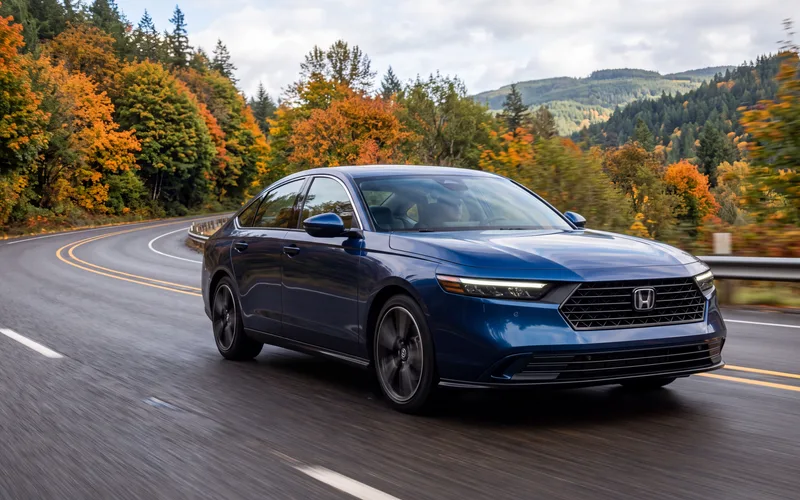 Honda AccordMid-Size SedanBetter at: Space and handling
It is the better-driving, more spacious mid-size sedan with 40.8 inches of rear legroom and a 16.7 cu ft trunk, if you can live without all-wheel drive and pay a few thousand more for the hybrid.
Compare 2.56C+
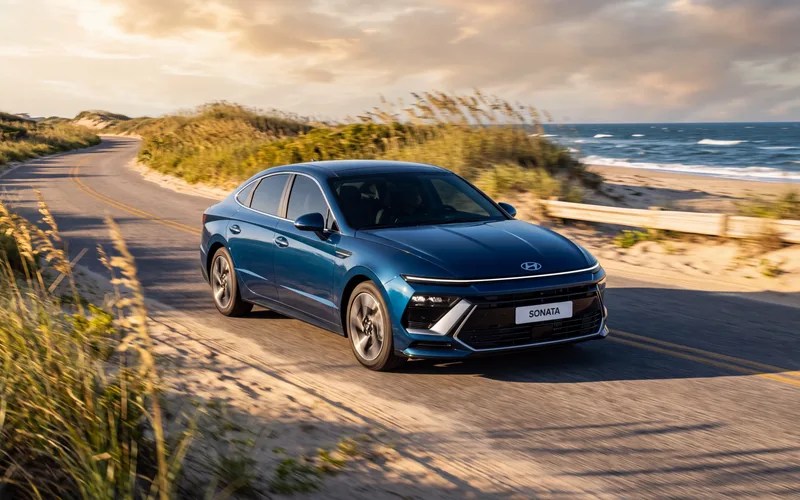 Hyundai SonataMid-Size SedanBetter at: Warranty and room
Roomier up front at 46.1 inches of legroom, a standard 12.3-inch screen and a 10-year/100,000-mile powertrain warranty for buyers who value coverage over resale.
Compare 2.44C+
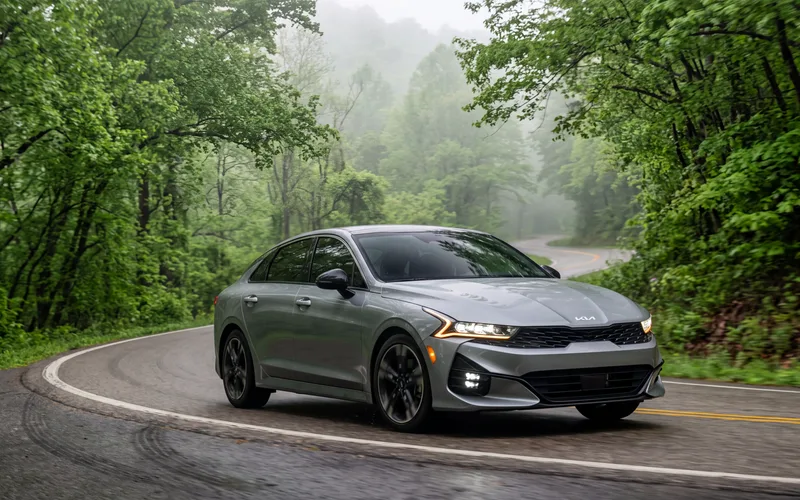 Kia K5Mid-Size SedanBetter at: Style and value
Sharper styling, a bigger 16.0 cu ft trunk and the same long Kia warranty for shoppers who do not need a hybrid's fuel economy.
CompareHow it's evolved
10 scored model years · 2017–2026
Subject scores by year
Hover or tap a score to see what moved it versus the year before. A corner mark flags a big swing.
| Year | Performance | Efficiency | Safety | Space | Cost | Reliability | Tech | Use-case | Driving | Value |
|---|---|---|---|---|---|---|---|---|---|---|
| 2026 | 42 | 93 | 83 | 69 | 67 | 81 | 67 | 60 | 68 | 83 |
| 2025 | 42 | 97 | 83 | 71 | 69 | 77 | 64 | 61 | 67 | 84 |
| 2024 | 43 | 63 | 74 | 69 | 71 | 86 | 47 | 57 | 68 | 71 |
| 2023 | 42 | 63 | 74 | 69 | 72 | 86 | 48 | 56 | 67 | 73 |
| 2022 | 44 | 97 | 74 | 68 | 70 | 87 | 48 | 59 | 66 | 72 |
| 2021 | 42 | 97 | 74 | 69 | 77 | 86 | 49 | 59 | 65 | 74 |
| 2020 | 44 | 97 | 70 | 68 | 70 | 83 | 46 | 59 | 64 | 76 |
| 2019 | 39 | 92 | 69 | 69 | 69 | 83 | 46 | 57 | 65 | 78 |
| 2018 | 39 | 97 | 69 | 69 | 69 | 83 | 38 | 57 | 63 | 78 |
| 2017 | 35 | 89 | 50 | 65 | 66 | 85 | 27 | 54 | 61 | 69 |
Compare two years
Best fit & conditions
Higher scores mean a better fit for that use case. Learn more about use-case fit →
Subject profile
Trims & configurations
4 trimsScores above reflect the volume trim. Per-trim specs and scores are rolling out — the full lineup:
Academic Probation · NHTSA safety recalls
Feb 21, 2024SeatsThe second-row center and right-side seats may have insufficiently welded head restraint brackets. As such, these vehicles fail to comply with the requirements of Federal Motor Vehicle Safety Standard number 202, "Head Restraints."
Defect
Toyota Motor Engineering & Manufacturing (Toyota) is recalling certain 2023-2024 Camry and Camry Hybrid vehicles. The second-row center and right-side seats may have insufficiently welded head restraint brackets. As such, these vehicles fail to comply with the requirements of Federal Motor Vehicle Safety Standard number 202, "Head Restraints."
Risk
A head restraint bracket that is insufficiently welded may not properly restrain an occupant during a crash, increasing the risk of injury.
Remedy
Dealers will replace the 60% rear seat-back frame sub-assembly, free of charge. Owner notification letters were mailed April 19, 2024. Owners may contact Toyota customer service at 1-800-331-4331. Toyota's numbers for this recall are 24TB04 and 24TA04.
NHTSA campaign 24V128000 ↗Manufacturer no. 24TB04 / 24TA044,212 vehicles potentially affected (all models in the campaign)Owners notified Apr 19, 2024Filed by Toyota Motor Engineering & ManufacturingFiled as CAMRY, CAMRY HYBRID
22 recalls on other model years of the Camry (2017–2023, 2025–2026)
Aug 6, 2026Electrical system: instrument cluster/panel · Exterior lighting: hazard flashing warning lights: switch · Exterior lighting: lighting control module: software · Seat belts: front: warning light/devicesThe instrument cluster display may fail during vehicle startup, deactivating the hazard lights, turn signals, seat belt warning system, and smart key reminder. As such, these vehicles fail to comply with the requirements of Federal Motor Vehicle Safety Standard (FMVSS) numbers 101, "Control and Displays," 108, "Lamps, Reflective Devices and Associated Equipment," 114, "Theft Protection and Rollaway Prevention," and 208, "Occupant Crash Protection."
Defect
Toyota Motor Engineering & Manufacturing (Toyota) is recalling certain 2025-2026 Camry Hybrid vehicles. The instrument cluster display may fail during vehicle startup, deactivating the hazard lights, turn signals, seat belt warning system, and smart key reminder. As such, these vehicles fail to comply with the requirements of Federal Motor Vehicle Safety Standard (FMVSS) numbers 101, "Control and Displays," 108, "Lamps, Reflective Devices and Associated Equipment," 114, "Theft Protection and Rollaway Prevention," and 208, "Occupant Crash Protection."
Risk
An instrument cluster that fails to display critical safety information increases the risk of a crash or injury.
Remedy
Dealers will update the display software, free of charge. Owner notification letters were mailed September 28, 2026. Owners may contact Toyota's customer service at 1-800-331-4331. Toyota's numbers for this recall are 26TB16 and 26TA16.
NHTSA campaign 26V511000 ↗Manufacturer no. 26TB16 / 26TA16508,354 vehicles potentially affected (all models in the campaign)Owners notified Sep 28, 2026Filed by Toyota Motor Engineering & ManufacturingFiled as CAMRY HYBRIDDec 16, 2025Hybrid propulsion system: inverterA bolt inside the inverter may not have been tightened properly, causing incomplete contact at the inverter terminal.
Defect
Toyota Motor Engineering & Manufacturing (Toyota) is recalling certain 2025-2026 Camry Hybrid and 2026 Corolla Cross Hybrid vehicles. A bolt inside the inverter may not have been tightened properly, causing incomplete contact at the inverter terminal.
Risk
Incomplete contact can cause a loss of motive power, increasing the risk of a crash. In addition, a loose bolt can cause an electrical short while the vehicle is powered on, increasing the risk of a fire.
Remedy
Dealers will replace the inverter assembly, free of charge. Owner letters were mailed July 23, 2026. Owners may contact Toyota customer service at 1-800-331-4331. Toyota's number for this recall is 25TB15/25TA15.
NHTSA campaign 25V869000 ↗Manufacturer no. 25TB15 / 25TA1555,405 vehicles potentially affected (all models in the campaign)Owners notified Jul 16, 2026Filed by Toyota Motor Engineering & ManufacturingFiled as CAMRY HYBRIDOct 30, 2025Back over prevention: display functionPlease see the recall report for a complete list of models. A software error may cause the rearview camera to freeze or display a blank screen when the vehicle is in reverse. As such, these vehicles fail to comply with the requirements of Federal Motor Vehicle Safety Standard (FMVSS) number 111, "Rear Visibility."
Defect
Toyota Motor Engineering & Manufacturing (Toyota) is recalling certain 2022-2026 Toyota, Lexus, and Subaru Solterra vehicles equipped with a Panoramic View Monitor (PVM) system. Please see the recall report for a complete list of models. A software error may cause the rearview camera to freeze or display a blank screen when the vehicle is in reverse. As such, these vehicles fail to comply with the requirements of Federal Motor Vehicle Safety Standard (FMVSS) number 111, "Rear Visibility."
Risk
A rearview camera that fails to display an image can reduce the driver's view behind the vehicle, increasing the risk of a crash.
Remedy
Dealers will update the parking assist software, free of charge. Owner letters were mailed January 2, 2026. Owners may contact Toyota's customer service at 1-800-331-4331. Toyota's numbers for this recall are 25TB13 and 25LB06. Subaru's number for this recall is WRE25.
NHTSA campaign 25V744000 ↗Manufacturer no. 25TB13/25LB06/WRE251,024,407 vehicles potentially affected (all models in the campaign)Owners notified Dec 5, 2025Filed by Toyota Motor Engineering & ManufacturingFiled as CAMRY HYBRIDSep 11, 2025Electrical system: instrument cluster/panelDue to an error in the instrument panel software at vehicle startup, the instrument panel may fail to display vehicle speed, brake system, and tire pressure warning lights.
Defect
Toyota Motor Engineering & Manufacturing (Toyota) is recalling certain 2023-2024 Toyota Venza, 2023-2025 RAV4 Prime, RAV4, Highlander, GR Corolla, Crown, 2024-2025 Lexus TX, LS, Toyota Tacoma, Grand Highlander, and 2025 Lexus RX, Toyota Crown Signia, Camry, RAV 4 Plug-in Hybrid (PHEV), and 4 Runner vehicles. Due to an error in the instrument panel software at vehicle startup, the instrument panel may fail to display vehicle speed, brake system, and tire pressure warning lights.
Risk
An instrument panel display that does not show critical information can increase the risk of a crash or injury.
Remedy
Dealers will update the instrument panel software over-the-air (OTA) for non-PHEV vehicles, free of charge. For PHEV vehicles, dealers will inspect the instrument panel assembly, and either replace it, or update the software, free of charge. Owner letters were mailed December 5, 2025. Additional letters will be sent, anticipated in May 2026. This is a phased recall. Owners may contact Toyota's customer service at 1-800-331-4331. Toyota's numbers for this recall are 25TB08 and 25TA08. Lexus' numbers for this recall are 25LB05 and 25LA05.
NHTSA campaign 25V595000 ↗Manufacturer no. See Part 573 Report591,377 vehicles potentially affected (all models in the campaign)Owners notified Dec 5, 2025Filed by Toyota Motor Engineering & ManufacturingFiled as CAMRY HYBRID, REDUNDANT CAMRYFeb 6, 2025Seat belts: rear/other: webbingThe second-row center seat belt webbing may be damaged. As such, these vehicles fail to comply with the requirements of Federal Motor Vehicle Safety Standard (FMVSS) number 209, "Seat Belt Assemblies."
Defect
Toyota Motor Engineering & Manufacturing (Toyota) is recalling certain 2025 Toyota Camry Hybrid, Lexus NX250, NX350, NX350 Hybrid, 2024-2025 Lexus RX350, RX350 Hybrid, and RX500 Hybrid vehicles. The second-row center seat belt webbing may be damaged. As such, these vehicles fail to comply with the requirements of Federal Motor Vehicle Safety Standard (FMVSS) number 209, "Seat Belt Assemblies."
Risk
A damaged seat belt may not adequately restrain an occupant, increasing the risk of injury during a crash.
Remedy
Dealers will inspect the seat belt webbing and replace the seat belt assembly if necessary, free of charge. Owner notification letters were mailed March 20, 2025. Owners may contact Toyota's customer service at 1-800-331-4331. Toyota's numbers for this recall are 25TA03 and 25LA03.
NHTSA campaign 25V059000 ↗Manufacturer no. 25TA03 / 25LA0340,922 vehicles potentially affected (all models in the campaign)Owners notified Mar 20, 2025Filed by Toyota Motor Engineering & ManufacturingFiled as CAMRY HYBRIDJan 22, 2025Fuel system, gasoline: delivery: fuel pumpThe low-pressure fuel pump inside the fuel tank may fail.
Defect
Toyota Motor Engineering & Manufacturing (Toyota) is recalling certain 2018 Camry, 2019 Lexus NX300, and 2019 RX350L vehicles. The low-pressure fuel pump inside the fuel tank may fail.
Risk
Fuel pump failure can cause an engine stall, increasing the risk of a crash.
Remedy
Dealers will replace the fuel pump assembly, free of charge. Owner notification letters were mailed March 12, 2025. Owners may contact Toyota's customer service at 1-800-331-4331. Toyota's numbers for this recall are 25TA01 and 25LA01.
NHTSA campaign 25V028000 ↗Manufacturer no. 25TA01 / 25LA01858 vehicles potentially affected (all models in the campaign)Owners notified Mar 12, 2025Filed by Toyota Motor Engineering & ManufacturingFiled as CAMRYJul 23, 2024Equipment: other: labelsThe load carrying capacity modification label may display inaccurate added weight values. As such, these vehicles fail to comply with the requirements of Federal Motor Vehicle Safety Standard number 110, "Tire Selection and Rims."
Defect
Gulf States Toyota, Inc. (GST) is recalling certain Toyota 2023 GR Supra, 2024 4 Runner, Corolla, Grand Highlander, Grand Highlander Hybrid, Land Cruiser Hybrid, Tacoma, Tacoma Hybrid, 2023-2024 BZ4X, Corolla Cross Hybrid, GR Corolla, GR86, Highlander, Highlander Hybrid, Prius, Prius Prime, Sequoia Hybrid, Tundra, Tundra Hybrid, Venza Hybrid, 2023-2025 Crown, and 2025 Camry Hybrid vehicles equipped with GST accessories. The load carrying capacity modification label may display inaccurate added weight values. As such, these vehicles fail to comply with the requirements of Federal Motor Vehicle Safety Standard number 110, "Tire Selection and Rims."
Risk
A vehicle with an incorrect maximum capacity weight value may be overloaded, which can increase the risk of a crash.
Remedy
GST will mail new labels to owners, free of charge. Owner notification letters were mailed September 16, 2024. Owners may contact GST customer service at 1-800-444-1074. GST's number for this recall is 24R2.
NHTSA campaign 24V548000 ↗Manufacturer no. 24R233,848 vehicles potentially affected (all models in the campaign)Owners notified Sep 16, 2024Filed by Gulf States Toyota, Inc.Filed as CAMRY HYBRIDDec 20, 2023Air bags: sensor: occupant classificationA short circuit may develop in the Occupant Classification System (OCS) sensor, preventing the front passenger air bag from deploying.
Defect
Toyota Motor Engineering & Manufacturing (Toyota) is recalling certain 2020-2021 Avalon, Avalon Hybrid, Corolla, Highlander, Highlander Hybrid, RAV4, RAV4 Hybrid, Lexus ES350, Lexus RX350, Lexus RX450H, 2021 Sienna Hybrid, Lexus ES250, 2020-2022 Camry, Camry Hybrid, and ES300H vehicles. A short circuit may develop in the Occupant Classification System (OCS) sensor, preventing the front passenger air bag from deploying.
Risk
An air bag that does not deploy during a crash increases the risk of injury.
Remedy
Dealers will inspect and replace the sensor as necessary, free of charge. Interim letters notifying owners of the safety risk were mailed in February 2024. Some final remedy owner letters were mailed October 31, 2024. Letters will continue to be mailed in phases through January 2026. Owners may contact Toyota customer service at 1-800-331-4331. Toyota's number for this recall is 23TB15/23TA15 Lexus 23LB03/23LA03.
NHTSA campaign 23V865000 ↗Manufacturer no. 23TA15, 23LA03999,901 vehicles potentially affected (all models in the campaign)Owners notified Oct 31, 2024Filed by Toyota Motor Engineering & ManufacturingFiled as CAMRY, CAMRY HYBRIDJun 15, 2023Wheels: lugs/nuts/bolts/studsThe lug nuts that attach the wheels to the vehicle may be loose, which can result in wheel detachment.
Defect
Toyota Motor Engineering & Manufacturing (Toyota) is recalling certain 2023 Camry and Camry Hybrid vehicles. The lug nuts that attach the wheels to the vehicle may be loose, which can result in wheel detachment.
Risk
A wheel that detaches from a moving vehicle can cause a loss of vehicle control, increasing the risk of a crash.
Remedy
Owners are advised not to drive their vehicles until the repair has been performed. Dealers will inspect and tighten the lug nuts, and replace any damaged components, free of charge. Owner notification letters are expected to be mailed on or before August 14, 2023. Owners may contact Toyota's customer service at 1-800-331-4331. Toyota's number for this recall is 23TA05.
NHTSA campaign 23V432000 ↗Manufacturer no. 23TA05298 vehicles potentially affected (all models in the campaign)Owners notified Jul 14, 2023Filed by Toyota Motor Engineering & ManufacturingFiled as CAMRY, CAMRY HYBRIDNov 17, 2021Service brakes, hydraulic: power assist: vacuumThe vane cap inside the vacuum pump may break, causing the pump to fail, which could result in a sudden loss of braking assist.
Defect
Toyota Motor Engineering & Manufacturing (Toyota) is recalling certain 2018-2019 Camry vehicles. The vane cap inside the vacuum pump may break, causing the pump to fail, which could result in a sudden loss of braking assist.
Risk
A sudden loss of braking assist can increase the risk of a crash.
Remedy
Dealers will repair or replace the vacuum pump, as necessary, free of charge. Owner notification letters were mailed May 16, 2022. Owners may contact Toyota customer service at 1-800-331-4331.
NHTSA campaign 21V890000 ↗Manufacturer no. 21TB09 / 21TA09227,490 vehicles potentially affected (all models in the campaign)Owners notified May 16, 2022Filed by Toyota Motor Engineering & ManufacturingFiled as CAMRYNov 4, 2020Fuel system, gasoline: delivery: fuel pumpThe low-pressure fuel pump inside the fuel tank may fail.
Defect
Toyota Motor Engineering & Manufacturing (Toyota) is recalling certain 2018-2019 4Runner, 2019-2020 Avalon, 2019 Corolla Hatchback, 2017-2019 Highlander, 2018-2020 Camry, 2020 Corolla, 2018-2019 Land Cruiser, 2017-2020 Tacoma, 2019-2020 RAV4, 2019-2020 Sequoia, 2017-2020 Sienna, 2019-2020 Tundra, 2018-2020 Lexus ES350, 2017 Lexus GS200t, 2017-2019 Lexus GS350, 2019 Lexus GS300, 2018-2020 Lexus LC500h, 2019-2020 Lexus LS500, 2018-2019 Lexus GX460, 2017 Lexus IS200t, 2019 Lexus IS300, 2019 Lexus IS350, 2018-2020 Lexus LC500, 2018 Lexus LS500, 2019 Lexus LS500h, 2018-2019 Lexus LX570, 2017 Lexus RC200t, 2019 Lexus RC300, RC350, 2017 and 2019-2020 Lexus RX350, 2018-2020 RX350L, 2019 Lexus UX200, 2018-2019 Lexus NX300 vehicles. The low-pressure fuel pump inside the fuel tank may fail.
Risk
If the fuel pump fails, the engine can stall while driving, increasing the risk of a crash.
Remedy
Toyota will notify owners, and dealers will replace the fuel pump assembly with an improved one, free of charge. Owners of specific models were notified that remedy parts were available starting January 21, 2021. Owners of other models will be notified as remedy parts become available. Remedy parts should be available for all affected vehicles by late March 2021. Owners may contact Toyota customer service at 1-888-270-9371 or Lexus customer service at 1-800-255-3987. Note: This recall is an expansion of recall 20V-012. Toyota's number for this recall is 20TA02. Lexus' number for this recall is 20LA01.
NHTSA campaign 20V682000 ↗Manufacturer no. 20TA02, 20LA011,525,742 vehicles potentially affected (all models in the campaign)Owners notified Jan 21, 2021Filed by Toyota Motor Engineering & ManufacturingFiled as CAMRYFeb 6, 2020Engine and engine coolingPorosity in the engine castings may result in cracks than can allow coolant to leak internally and/or externally.
Defect
Toyota Motor Engineering & Manufacturing (Toyota) is recalling certain 2020 Toyota Avalon Hybrid, Camry, Camry Hybrid and Lexus ES300h and 2019-2020 RAV4 and RAV4 Hybrid vehicles equipped with 2.5L 4-Cylinder engines. Porosity in the engine castings may result in cracks than can allow coolant to leak internally and/or externally.
Risk
A coolant leak can cause the engine to overheat and cause a vehicle stall in conventional gasoline vehicles, increasing the risk of a crash. Additionally, for all involved vehicles, the engine may get damaged mechanically, possibly resulting in an engine oil leak, increasing the risk of a fire.
Remedy
Toyota will notify owners, and dealers will inspect and replace the engine including the engine block, as necessary, free of charge. The recall began April 3, 2020. Owners may contact Toyota customer service at 1-888-270-9371 or Lexus at 1-800-255-3987. Toyota's number for this recall is 20TA04. Lexus' number for this recall is 20LA02.
NHTSA campaign 20V064000 ↗Manufacturer no. See report44,191 vehicles potentially affected (all models in the campaign)Owners notified Apr 3, 2020Filed by Toyota Motor Engineering & ManufacturingFiled as CAMRY, CAMRY HYBRIDJan 13, 2020Fuel system, gasoline: delivery: fuel pumpToyota Motor Engineering & Manufacturing (Toyota) recalled certain 2018-2019 4Runner, Highlander, Camry, Land Cruiser, Sequoia, Sienna, Tacoma and Tundra, and Lexus RC 300, RC 350, GS 350, GX 460, IS 300, LC 500, LS 500, LX 570, RX 350L, and 2019 Toyota Avalon and Corolla, and certain Lexus NX 300, and ES 350 vehicles on January 13, 2020. On March 4, 2020, Toyota expanded the recall to include certain 2014-2015 Toyota 4Runner and Land Cruiser, 2018 Avalon, Corolla, 2014 FJ Cruiser, 2017 Sienna and Lexus 2018 ES 350, 2018-2019 GS 300, 2013-2014 GS350, 2014-2015 GX 460, IS 350 and LX 570, 2014 IS F, 2018-2019 IS 350, LC 500H and LS 500H, 2013-2015 LS 460, 2015 NX 200T and RC350, 2017 RC 200T and RX 350. Toyota also removed the 2018-2019 Toyota 4Runner and Land Cruiser and 2018-2019 Lexus GX 460 and LX 570 and 2019 NX300 from inclusion in this recall. On March 19, 2020, Toyota expanded the recall to include 2015 Lexus GS350 vehicles. The low-pressure fuel pump inside the fuel tank may fail.
Defect
Toyota Motor Engineering & Manufacturing (Toyota) recalled certain 2018-2019 4Runner, Highlander, Camry, Land Cruiser, Sequoia, Sienna, Tacoma and Tundra, and Lexus RC 300, RC 350, GS 350, GX 460, IS 300, LC 500, LS 500, LX 570, RX 350L, and 2019 Toyota Avalon and Corolla, and certain Lexus NX 300, and ES 350 vehicles on January 13, 2020. On March 4, 2020, Toyota expanded the recall to include certain 2014-2015 Toyota 4Runner and Land Cruiser, 2018 Avalon, Corolla, 2014 FJ Cruiser, 2017 Sienna and Lexus 2018 ES 350, 2018-2019 GS 300, 2013-2014 GS350, 2014-2015 GX 460, IS 350 and LX 570, 2014 IS F, 2018-2019 IS 350, LC 500H and LS 500H, 2013-2015 LS 460, 2015 NX 200T and RC350, 2017 RC 200T and RX 350. Toyota also removed the 2018-2019 Toyota 4Runner and Land Cruiser and 2018-2019 Lexus GX 460 and LX 570 and 2019 NX300 from inclusion in this recall. On March 19, 2020, Toyota expanded the recall to include 2015 Lexus GS350 vehicles. The low-pressure fuel pump inside the fuel tank may fail.
Risk
If the fuel pump fails, the engine can stall while driving, increasing the risk of a crash.
Remedy
Toyota will notify owners, and dealers will replace the fuel pump, free of charge. The recall began May 4, 2020. Owners may contact Toyota customer service at 1-888-270-9371 or Lexus customer service at 1-800-255-3987. Toyota's numbers for this recall are 20TB02 and 20TA02 for Toyota vehicles and 20LB01 and 20LA01 for Lexus vehicles.
NHTSA campaign 20V012000 ↗Manufacturer no. 20TB02/20TA02/20LB011,830,752 vehicles potentially affected (all models in the campaign)Owners notified May 1, 2020Filed by Toyota Motor Engineering & ManufacturingFiled as CAMRYAug 1, 2019Air bags: sensor: occupant classificationThe Occupant Classification System (OCS) may have been improperly calibrated, which may prevent the proper deployment of the front passenger air bag and knee air bag, in the event of a crash. As such, these vehicles fail to comply with the requirements of Federal Motor Vehicle Safety Standard (FMVSS) number 208, "Occupant Crash Protection."
Defect
Toyota Motor Engineering & Manufacturing (Toyota) is recalling certain 2019 Camry vehicles. The Occupant Classification System (OCS) may have been improperly calibrated, which may prevent the proper deployment of the front passenger air bag and knee air bag, in the event of a crash. As such, these vehicles fail to comply with the requirements of Federal Motor Vehicle Safety Standard (FMVSS) number 208, "Occupant Crash Protection."
Risk
In the event of a crash, if the air bags do not deploy as designed, the front seat passenger has an increased risk of an injury.
Remedy
Toyota will notify owners, and dealers will recalibrate the OCS, free of charge. The recall began August 27, 2019. Owners may contact Toyota customer service at 1-888-270-9371. Toyota's number for this recall is K0M.
NHTSA campaign 19V567000 ↗Manufacturer no. K0M680 vehicles potentially affected (all models in the campaign)Owners notified Aug 27, 2019Filed by Toyota Motor Engineering & ManufacturingFiled as CAMRYJun 28, 2019Equipment: other: labelsThe load carrying capacity modification label may be incorrect. As such, these vehicles fail to comply with the requirements of Federal Motor Vehicle Safety Standard (FMVSS) number 110, "Tire Selection and Rims."
Defect
Southeast Toyota Distributors, LLC (SET) is recalling certain 2017-2019 Toyota Camry, Corolla, Rav4, Sienna, and Yaris iA vehicles equipped with factory-installed floor mats. The load carrying capacity modification label may be incorrect. As such, these vehicles fail to comply with the requirements of Federal Motor Vehicle Safety Standard (FMVSS) number 110, "Tire Selection and Rims."
Risk
An incorrect label may lead to unintentionally overloading the vehicle, increasing the risk of a crash.
Remedy
SET will notify owners and provide a corrected label for placement over the inaccurate label, free of charge. The recall began August 23, 2019. Owners may contact Toyota customer service at 1-888-270-9371. SET's number for this recall is SET19A.
NHTSA campaign 19V503000 ↗Manufacturer no. SET19A1,325 vehicles potentially affected (all models in the campaign)Owners notified Aug 23, 2019Filed by Southeast Toyota Distributors, LLCFiled as CAMRYMar 27, 2019Equipment: other: labelsThe text on the load capacity label may become illegible. As such, these vehicles fail to comply with the requirements of Federal Motor Vehicle Safety Standard (FMVSS) number 110, "Tire Selection and Rims."
Defect
Gulf States Toyota (GST) is recalling certain 2019 C-HR, 4Runner, Avalon, Avalon Hybrid, Camry, Camry Hybrid, Highlander, Land Cruiser, Prius, RAV4, Sequoia, Tacoma, Sienna, Tundra and Yaris vehicles. The text on the load capacity label may become illegible. As such, these vehicles fail to comply with the requirements of Federal Motor Vehicle Safety Standard (FMVSS) number 110, "Tire Selection and Rims."
Risk
If the driver cannot read the label, they may unknowingly overload the vehicle, increasing the risk of a crash.
Remedy
GST will notify owners, and dealers will provide corrected load carrying capacity modification labels, free of charge. The recall began May 24, 2019. Owners may contact GST customer service at 1-800-444-1074. GST's number for this recall is 19R1.
NHTSA campaign 19V244000 ↗Manufacturer no. 19R13,634 vehicles potentially affected (all models in the campaign)Owners notified May 24, 2019Filed by Gulf States Toyota, Inc.Filed as CAMRY, CAMRY HYBRIDFeb 14, 2019Fuel system, gasoline: storage: tank assembly: filler pipe and capThe fuel filler pipe may not have been properly reconnected to the fuel tank during an inspection after vehicle assembly. As such, these vehicles fail to comply with the requirements of Federal Motor Vehicle Safety Standard (FMVSS) number 301, "Fuel System Integrity."
Defect
Toyota Motor Engineering & Manufacturing (Toyota) is recalling certain 2019 Camry Hybrid and Avalon Hybrid vehicles. The fuel filler pipe may not have been properly reconnected to the fuel tank during an inspection after vehicle assembly. As such, these vehicles fail to comply with the requirements of Federal Motor Vehicle Safety Standard (FMVSS) number 301, "Fuel System Integrity."
Risk
The improperly connected filler pipe may leak fuel, which, in the presence of an ignition source can increase the risk of a fire.
Remedy
Toyota will notify owners, and dealers will inspect the fuel filler pipe, replacing it if necessary, free of charge. The recall began March 19, 2019. Owners may contact Toyota customer service at 1-888-270-9371. Toyota's number for this recall is K0I.
NHTSA campaign 19V097000 ↗Manufacturer no. K0I205 vehicles potentially affected (all models in the campaign)Owners notified Mar 19, 2019Filed by Toyota Motor Engineering & ManufacturingFiled as CAMRY HYBRIDApr 3, 2018Service brakes, hydraulic: power assist: vacuumDuring the manufacturing process, the oil galley in the rotor for the brake booster vacuum pump assembly may have been improperly machined possibly resulting in a sudden loss of brake assist.
Defect
Toyota Motor Engineering & Manufacturing (Toyota) is recalling certain 2018 Toyota Camry and Highlander vehicles, 2017 Toyota Sienna and Tacoma vehicles and 2017 Lexus RX350 vehicles. During the manufacturing process, the oil galley in the rotor for the brake booster vacuum pump assembly may have been improperly machined possibly resulting in a sudden loss of brake assist.
Risk
A sudden loss of braking assist can increase the risk of a crash.
Remedy
Toyota will notify owners, and dealers will replace the brake booster vacuum pump, free of charge. The recall began on May 9, 2018. Owners may contact Toyota customer service at 1-888-270-9371, or Lexus customer service at 1-800-255-3987. Toyota's numbers for this recall are J0K/JLD.
NHTSA campaign 18V211000 ↗Manufacturer no. J0K/JLD6,046 vehicles potentially affected (all models in the campaign)Owners notified May 9, 2018Filed by Toyota Motor Engineering & ManufacturingFiled as CAMRYMar 28, 2018Engine and engine cooling: engineThe pistons on these vehicles may be larger than specified, possibly causing the engine to stall.
Defect
Toyota Motor Engineering & Manufacturing (Toyota) is recalling certain 2018 Toyota Camry vehicles equipped with a 2.5L, four-cylinder engine. The pistons on these vehicles may be larger than specified, possibly causing the engine to stall.
Risk
An engine stall can increase the risk of a crash.
Remedy
Toyota will notify owners, and dealers will inspect the production date codes of the pistons and, if an engine contains a piston from the affected production period, the engine assembly will be replaced, free of charge. The recall is expected to begin May 25, 2018. Owners may contact Toyota customer service at 1-888-270-9371. Toyota's number for this recall is J1M/J0M.
NHTSA campaign 18V200000 ↗Manufacturer no. J1M/J0M1,730 vehicles potentially affected (all models in the campaign)Owners notified May 25, 2018Filed by Toyota Motor Engineering & ManufacturingFiled as CAMRYFeb 14, 2018Fuel system, gasoline: delivery: hoses, lines/piping, and fittingsThese vehicles have fuel delivery pipes that may not be properly connected to the fuel hoses in the engine compartment.
Defect
Toyota Motor Engineering & Manufacturing (Toyota) is recalling certain 2018 Toyota Camry vehicles equipped with V6 engines. These vehicles have fuel delivery pipes that may not be properly connected to the fuel hoses in the engine compartment.
Risk
The improperly connected hoses may leak fuel, which, in the presence of an ignition source, can increase the risk of a fire.
Remedy
Toyota will notify owners, and dealers will inspect the fuel pipes for the correct installation, correcting them as necessary, free of charge. The recall is expected to begin March 30, 2018. Owners may contact Toyota customer service at 1-888-270-9371. Toyota's number for this recall is J0G.
NHTSA campaign 18V108000 ↗Manufacturer no. J0G11,807 vehicles potentially affected (all models in the campaign)Owners notified Mar 9, 2018Filed by Toyota Motor Engineering & ManufacturingFiled as CAMRYMay 2, 2017Tires: temporary/emergency spare tireThe spare tire air pressure was not adjusted to the proper pressure as stated on the Tire Pressure Label.
Defect
Gulf States Toyota, Inc. (Gulf States) is recalling certain 2017 4Runner , 86, Avalon, Camry, Camry Hybrid, Corolla, Corolla iM, Highlander, Highlander Hybrid, Prius, Prius C, RAV4, RAV4 Hybrid, Sienna and Yaris vehicles. The spare tire air pressure was not adjusted to the proper pressure as stated on the Tire Pressure Label.
Risk
A spare tire that is not inflated to the proper value may not perform as intended, increasing the risk of a crash.
Remedy
Gulf States will notify owners, and dealers will inspect the spare tires, adjusting their pressure as necessary, free of charge. The recall began June 15, 2017. Owners may contact Gulf States customer service at 1-800-444-1074. Toyota's number for this recall is 17R2.
NHTSA campaign 17V295000 ↗Manufacturer no. 17R2409 vehicles potentially affected (all models in the campaign)Owners notified Jun 15, 2017Filed by Gulf States Toyota, Inc.Filed as CAMRY, CAMRY HYBRIDDec 16, 2016Air bags: knee bolsterThe front passenger knee air bag module may have been attached to the lower instrument panel with incorrect fasteners.
Defect
Toyota Motor Engineering & Manufacturing (Toyota) is recalling certain model year 2016 Avalon, and 2017 Camry vehicles manufactured August 3, 2016, to September 12, 2016. The front passenger knee air bag module may have been attached to the lower instrument panel with incorrect fasteners.
Risk
If the air bag was installed with incorrect fasteners, the fasteners may become loose over time, affecting the air bag deployment and increasing the risk of injury.
Remedy
Toyota will notify owners, and dealers will inspect the fasteners, and if necessary, replace the instrument panel brace and body bracket and reattach the air bag assembly, free of charge. The recall began on February 8, 2017. Owners may contact Toyota customer service at 1-800-331-4331. Toyota's number for this recall is G05.
NHTSA campaign 16V906000 ↗Manufacturer no. G0512 vehicles potentially affected (all models in the campaign)Owners notified Feb 8, 2017Filed by Toyota Motor Engineering & ManufacturingFiled as CAMRY
Source: NHTSA Office of Defects Investigation recall database, model years 2017–2026. Recalls are listed by model year as the manufacturer filed them; whether a specific car is affected depends on its VIN — check a VIN at nhtsa.gov ↗. NHTSA model names matched to this page: CAMRY, CAMRY HYBRID, REDUNDANT CAMRY.
Detailed scoring by subject
1Performance & PowertrainThe Camry's lowest-graded category.0.89F
2024 is the final model year of the eighth-generation (XV70) Camry and it carries the full three-powertrain lineup over unchanged from 2023 — the only substantive change for 2024 was the removal of Amazon Alexa from the infotainment system. The volume LE/SE grade uses the 2.5L Dynamic Force four rated 203 hp at 6,600 rpm, so that is the representative figure; the V6 and hybrid alternatives sit well above it.
The A25A-FKS 2.5L four peaks at 184 lb-ft at a high 5,000 rpm — competitive on paper for a naturally aspirated engine but well short of the turbocharged 1.5T and 2.5T fours in the Accord and Sonata/K5, and it demands revs to deliver.
Toyota publishes no 0–60 claim, and outlets disagree by roughly half a second. The value used is Edmunds' instrumented test of an actual 2024 Camry SE four-cylinder (8.2 s), which agrees with tests of the mechanically identical 2022–2023 cars; the quicker ~7.5 s figures in circulation are editorial estimates or aggregator-relayed numbers rather than directly attributed tests of this model year. The 301-hp V6 grades are roughly two seconds quicker but are low-volume.
The naturally aspirated 2.5L is smooth and completely lag-free in ordinary driving — a genuine advantage over the small turbos it competes with — but it is short on mid-range punch and reviewers consistently note it drones and gets coarse when worked hard, which is exactly mid-band behavior. It sits between the turbo-lag-prone Sonata and the seamless Accord hybrid on this dataset's sedan calibration.
The Direct Shift eight-speed automatic is the strongest single element of this powertrain: prompt, well-timed shifts, a wide ratio spread that keeps the engine in its band for passing and cruising, and none of the rev-flare or drone that CVT-equipped rivals — including the Camry's own 2025 hybrid replacement — suffer under load.
Dynamic Torque Control AWD is a standalone option on every four-cylinder grade — LE, SE, SE Nightshade, XLE and XSE — which is broad availability for a mainstream mid-size sedan, but it is a basic slip-reactive system with no low range, locking differentials or terrain modes, and it cannot be paired with the V6 or the hybrid at all. That last restriction is what keeps it below the 2025 redesign, where AWD is offered across the whole hybrid-only range.
In its send-off year the Camry offered three genuinely distinct powertrains — the 2.5L four (FWD or AWD), a 301-hp 3.5L V6 including the TRD, and the THS II hybrid — which is the widest choice in the mid-size class and clears the 80–100 'multiple distinct powertrains including electrified options' bar. The hybrid-only 2025 redesign eliminated that spread entirely.
2Efficiency & RangeMid-pack among this car's ten categories.2.22C
2024 is the final model year of the eighth-generation (XV70) Camry, and the volume LE/SE with the 2.5L Dynamic Force four and eight-speed automatic is EPA-rated 32 MPG combined — respectable for a naturally aspirated mid-size sedan but well behind the turbo and hybrid-standard competition, and only about 60% of what the optional Camry Hybrid returns.
City is the gas Camry's weakest showing — 28 MPG is where a conventional engine with only auto stop-start to help it lands, and the gap to the Hybrid LE's 51 MPG city is the single clearest argument for stepping up to the electrified powertrain in this final XV70 year.
Highway is where the Atkinson-cycle 2.5L and the tall top gears of the eight-speed automatic do their best work: 39 MPG is genuinely competitive for a non-hybrid mid-size sedan and closes much of the gap to turbocharged rivals at steady cruise.
The 15.8-gallon tank on four-cylinder FWD and V6 cars paired with 32 MPG combined works out to roughly 506 miles between fills — comfortably above the mid-size sedan norm, though AWD cars give up both tank size and economy and the hybrid stretches to nearly 690 miles.
At EPA's standard 15,000 mi/yr and 55/45 city-highway split the volume LE/SE burns about 469 gallons of regular a year — middling for the segment, and roughly $700/yr more than the Hybrid LE, which recovers much of the hybrid's price premium over a typical ownership period.
Every 2024 Camry — 2.5L four, 3.5L V6, and hybrid alike — is rated on 87-octane regular unleaded, with no premium requirement, no plug, and no charging or infrastructure to arrange. The only reason it is not higher is that the gas car's per-mile cost is ordinary; the fuel itself is as cheap and universally available as it gets.
3SafetyOne of the Camry's strongest categories.3.00B
NHTSA rates the 2024 Camry 5 stars overall with five stars in every sub-test — frontal (driver and passenger), side barrier and side pole, and rollover — for both the FWD and AWD 4-door body styles, so no configuration in the lineup scores lower.
The 2024 Camry — the final year of the XV70 generation — is an IIHS Top Safety Pick, not a TSP+, and it is not all-Good: Good in small overlap front, the original moderate overlap front and the updated side test, but Marginal in the updated moderate overlap front, where rear-passenger restraints and dummy kinematics rated Marginal and rear chest injury measures Acceptable. That single Marginal in the newest and most demanding crashworthiness evaluation is what keeps it a rung below the redesigned 2025 car, which took TSP+. Two further caveats: the small overlap and original moderate overlap ratings are carried over from 2018-model tests conducted by Toyota, and the Good updated-side rating applies only to cars built after January 2023, when Toyota revised the side sill structure, door trim and front side airbags.
Toyota Safety Sense 2.5+ is standard on every 2024 Camry trim including the base LE — pre-collision with pedestrian detection, full-speed-range dynamic radar cruise, lane departure alert with steering assist, lane tracing assist, road sign assist and automatic high beams — broader standard content than most mainstream mid-size rivals. The hole is blind-spot monitoring with rear cross-traffic alert, and it is bigger than it first looks: BSM/RCTA is standard only from XLE up and remains a roughly $680 option on BOTH volume trims, LE and SE. Two of the highest-selling configurations therefore leave the showroom without it, which is squarely the 'key items optional on lower trims' case. TSS 3.0 with BSM standard across the range arrives only with the 2025 redesign.
IIHS rates the standard TSS 2.5+ pre-collision system Good for pedestrian front crash prevention, the top rating on that scale, and the night-time runs are where it earns it: the car avoided the crossing-child collision at both 12 and 25 mph in daylight, avoided the crossing-adult night test at both speeds on high and low beams, and avoided the 25 mph parallel-adult night test on both beam settings. Only the 37 mph parallel-adult night run ended in contact, and there impact speed was cut by 30–34 mph with a warning 1.6 seconds out. Short of the top of the band only because IIHS publishes no current vehicle-to-vehicle front crash prevention rating for this model year.
Blind Spot Monitor with Rear Cross-Traffic Alert is alert-only — no active braking or steering intervention, and no safe-exit warning — and it is standard only from XLE upward. Both volume trims, LE and SE, need the roughly $680 add-on, so the two Camrys most buyers actually drive off the lot can easily have no blind-spot coverage at all. Available across the range but optional where it matters most puts this at the lower end of the mid band; the 2025 redesign makes it standard on every trim.
Lane Departure Alert with Steering Assist and Lane Tracing Assist are standard on every trim, so the hardware is there on the cheapest Camry, but this is TSS 2.5+ rather than the smoother 3.0 software that arrives with the 2025 car. Reviewers describe the centering as functional and unobtrusive rather than confident — it holds a lane on well-marked highway but wanders between the lines and hands back readily on curves and faded markings.
Full-Speed Range Dynamic Radar Cruise Control is standard on every 2024 Camry and works down to a stop in traffic, holding gaps smoothly and resuming without drama, and it pairs with the standard Lane Tracing Assist for a competent two-pedal highway assist. What holds it under 80 is the assist half of the equation — the TSS 2.5+ lane centering is the weak link, and there is no traffic-jam or hands-off layer above it.
No hands-free driving of any kind is offered on the 2024 Camry — no trim, package or subscription buys it. Toyota's Traffic Jam Assist, itself only a low-speed hands-free function, does not reach the Camry until the 2025 XV80 redesign, and nothing comparable to Ford BlueCruise or GM Super Cruise is available at any price.
Every headlight variation a normal buyer will see rates Acceptable, not Good: the LE/SE/Nightshade/TRD/Hybrid LE/Hybrid SE units, the XSE/Hybrid XSE units and the plain XLE/Hybrid XLE units all come back Acceptable, each let down by inadequate low-beam reach on the gradual left curve. Only one configuration — the Hybrid XLE with the optional Adaptive Headlights package and its curve-adaptive LED projectors — earns Good. Automatic high beams are standard on all four variations and IIHS credits them for compensating on the straightaway and both left curves, and no variation exceeded glare limits.
Forward sightlines over the low cowl are good for the class, but the XV70's high beltline, raked rear glass and thick C-pillars leave real over-the-shoulder and rearward blind zones. Camera and sensor compensation is thin exactly where it is needed: a backup camera is standard, but the Bird's Eye View Monitor is confined to upper trims and blind-spot monitoring is optional on both LE and SE, so the volume Camrys have the least help covering their worst angles.
IIHS rates LATCH ease of use Good+, the plus signifying extra usable positions. Two outboard positions carry complete hardware with visible lower anchors that need essentially no force to attach and a wide clearance angle, all three positions have easy-to-find tether anchors with nothing nearby that could be mistaken for one, and the center position can borrow lower anchors from either side. The remaining limits are packaging, not hardware: three seats will not fit across a mid-size sedan bench, and a rear-facing seat eats front-passenger legroom.
4Space & ComfortMid-pack among this car's ten categories.2.67C+
The 2024 Camry — the final model year of the eighth-generation XV70 — is a conventional five-seat mid-size sedan across LE, SE, SE Nightshade, XLE, XSE and TRD, gas, V6 and hybrid alike, with a three-place 60/40-split rear bench standard.
Front headroom is 38.3 in without the moonroof; the available tilt/slide moonroof costs 0.8 in, dropping it to 37.5 in — mid-pack against the 36–40 in sedan band.
Front legroom measures 42.1 in on every 2024 trim — squarely average for a mid-size sedan and unchanged across the XV70's seven-year run.
Rear headroom of 38.0 in is strong for a low-roof sedan and near the top of the 35–39 in band — and unlike up front, the moonroof does not cost any second-row height.
Second-row legroom is 38.0 in — enough for adults on ordinary trips but a clear step behind the 2024 Honda Accord's 40.8 in, and the Camry's weakest passenger-space dimension.
The trunk holds 15.1 cu ft with a 60/40 folding rear seatback, and — because the XV70 hybrid's battery sits under the rear seat rather than in the trunk — the hybrid gives up no cargo room; still, it trails the Accord's 16.7 cu ft.
Everyday storage is competent but dated by 2024 standards: a deep covered console bin, decent door pockets, an open tray ahead of the shifter and up to five USB ports, but Qi wireless charging is reserved for XLE/XSE and there is no genuinely clever packaging trick anywhere in the cabin.
Front seats are consistently described as large, cushy and supportive enough for long trips, and eight-way power adjustment with lumbar arrives on SE and up; the caveats are firmer, more bolstered SE/XSE/TRD sport buckets, short rear thigh support, and a meaningful minority of owners who find the cushions uncomfortable.
On the TNGA-K platform the Camry rides with composure over broken pavement on LE/SE/XLE wheel sizes and reviewers call the ride-and-handling balance agreeable, but the XSE's 19-inch wheels and the TRD's stiffer springs and dampers trade real comfort for body control, and the XLE Hybrid can feel buoyant at highway speed.
Noise isolation is this generation's clearest comfort weakness on the volume four-cylinder car — wind and road noise become prominent at highway speed and the 2.5-liter four sends coarse engine noise into the cabin under load; the hybrid is markedly quieter, and the XV80 redesign that followed added a standard acoustic windshield to address the complaint.
Dual-zone automatic climate control with rear-seat vents is standard on all 2024 trims and heated front seats plus a heated steering wheel are standard on XLE/XSE (Cold Weather Package elsewhere), but ventilated front seats require the XLE/XSE Premium Package and there is no separate rear climate zone.
5Cost of OwnershipGrades above the middle of the scale.2.80B-
2024 was the final year of the XV70 Camry, and the entry LE still used the 203-hp 2.5L four rather than the hybrid-only powertrain that arrives with the 2025 redesign — so the ladder starts about $2,000 below the car that replaces it. Roughly $1,100 under the Accord LX and near the bottom of the mid-size sedan band.
The SE has long been the Camry's best-selling configuration and lands at $29,055 delivered — the sport-styled cloth trim most mid-size buyers settle on. Even the V6 and TRD variants stay under $37,000, so the entire 2024 ladder sits in the lower half of the segment band, and the gas SE undercuts the hybrid SE by roughly $1,400.
The 2024 Camry is the last and most thoroughly de-bugged year of a platform Toyota built for seven model years, on a 2.5L four and 8-speed automatic with no turbocharger, belt-in-oil timing drive, or dual-clutch gearbox to fail expensively. Parts are as commodity as they get in the US market and ToyotaCare removes the first two years of scheduled service, so this blended figure sits near the low-middle of a wide source range.
Resale is the Camry's structural advantage — Toyota has been KBB's Best Resale Value Brand for years running, and the gas Camry depreciates markedly slower than the all-vehicle average. Corrected this cycle to the gas 2.5L car that carries the volume and that every other item in this category is scored on; the prior 61% was the Hybrid-specific iSeeCars reading. The blend still sits below the most optimistic transaction-based trackers because being the final XV70 year is a mild headwind against the freshly redesigned 2025 Camry.
Toyota's 36-month/36,000-mile basic coverage is the industry floor — level with Honda, Nissan and the domestics, but two full years and 24,000 miles short of Hyundai and Kia.
The headline term on the volume gas Camry is Toyota's standard 5 years/60,000 miles — again the segment floor against Hyundai/Kia's 10-year/100,000-mile powertrain coverage. Buyers who step up to the Camry Hybrid pick up a 10-year/150,000-mile traction-battery warranty, longer than Honda's 8-year/100,000-mile hybrid battery term, but that does not apply to the LE/SE four-cylinder cars that carry the volume.
ToyotaCare carries this item almost by itself: every factory-scheduled service covered for 2 years/25,000 miles plus 2 years of unlimited-mileage roadside assistance with 25-mile towing — genuine included maintenance, where Honda's Service Pass is comparable and Nissan offers none. Marked down this cycle after checking Toyota's MY24 applicability sheet: the 2024 Camry was never part of the up-to-10-year Safety Connect/Service Connect extension (that covered Toyota Audio Multimedia models such as Corolla, RAV4 and Highlander), and the volume LE/SE cars on the 7-inch system get only a 3-month Service Connect trial and 1-year Remote Connect. With short connected-service trials, a maintenance window that trails Hyundai/Kia's 3-year/36,000-mile plans, and no fuel or charging credits, this is solidly mid-pack rather than a segment perk leader.
$29,055 volume-trim price minus its estimated resale value after 5 years (63% retained, or about $18,305) leaves about $10,750 in depreciation. Add the projected $4,400 in 5-year maintenance and repairs, and owning this vehicle for 5 years costs about $15,150 in total.
6Reliability & QualityThe Camry's best-graded category.3.85A+
2024 is the seventh and final model year of the XV70 Camry — a carryover year on a platform, engine family and 8-speed transmission in volume production since 2018, close to the ideal risk profile. What has changed since the last review is that this is no longer a prediction: the XV70 Camry took a model-level award in the J.D. Power 2026 Vehicle Dependability Study, which surveys three-year-old (2023 MY) cars mechanically identical to the 2024, and Consumer Reports' 2026 survey singled out improved Camry reliability as one of the reasons Toyota reclaimed the top brand spot. Held below the mid-90s only because owner-side data still shows a real cluster of paint, weatherstrip and wind-noise complaints on this final-year build.
Toyota's standing is as strong as ever on the owner-survey side and slightly softer on the J.D. Power brand tables. Consumer Reports' 2026 survey put Toyota first of all brands, ahead of Subaru and Lexus, and corporate stablemate Lexus has now led the J.D. Power premium dependability ranking four years running with Toyota Motor Corp taking the most model awards. The offset is that Toyota the brand did not make the 2026 VDS mass-market top three, where Buick, MINI and Chevrolet placed — a reason to hold at 90 rather than push higher.
Still a quiet record by industry standards and dramatically cleaner than the XV80 that replaced it, but a notch below the previous review on two counts. First, the 2024 Camry has since been swept into Toyota's roughly 1,025,000-unit backup-camera campaign of December 2025 — an FMVSS 111 noncompliance requiring a dealer visit because no over-the-air remedy was available. Second, the instrument-panel software recall credited to this car in the prior review belongs to the 2025 Camry, not the 2024, so the offsetting positive was overstated. What remains against it is the second-row head-restraint bracket recall, a genuine crash-protection defect needing hardware replacement, plus persistent TSB traffic around weatherstrip peeling, wind noise and water leaks. Nothing touches the powertrain and nothing carries fire risk.
Every 2024 Camry powertrain is a known quantity with a long high-mileage record. The volume 2.5L A25A-FKS D-4S four (203-208 hp) has been in Camrys since 2018 and routinely runs past 250,000 miles; it is paired with the Aisin UA80 8-speed automatic whose early-build shift-mapping complaints were sorted years before this model year, and the 2018-19 fuel-pump recall era is behind it. The hybrid's A25A-FXS and planetary eCVT is the most durable electrified drivetrain sold in the US, and the optional 2GR-FKS 3.5L V6 — its last year in the Camry — has an unusually clean long-term reputation. Points come off only for well-documented high-mileage wear items.
The weakest part of the 2024 Camry and the clearest sign of its age — this dashboard architecture dates to 2018 and reviewers were blunt about it by the final year. Volume LE and SE trims are dominated by hard plastic on the door panels and lower dash with a coarse-grained steering wheel, and the Accord is the acknowledged material benchmark at the same money. XLE and XSE trims with their wood or metal-effect trim genuinely lift the room, but the representative volume trim does not get them, and the XV80 that replaced it improved noticeably here.
Assembly consistency is a genuine strength: the Camry ranked highest in the Midsize Car segment in the J.D. Power 2024 Initial Quality Study — exactly the measure of how well a car is screwed together leaving the factory — and Toyota's Georgetown, Kentucky plant was seven years into building this body when the 2024 cars went down the line. The 2026 VDS award for the same-generation 2023 car shows that assembly holding up at three years, a materially different story from the first-year XV80. Held to 80 rather than higher by a persistent thread of owner complaints about squeaks, rattles, wind noise, weatherstrip peeling around the panoramic roof and body/paint defects.
Toyota fields roughly 1,250 US dealerships, the densest non-domestic network in the country, so warranty work, parts and hybrid-qualified technicians are reachable almost anywhere including rural markets where import coverage thins out. A 2024 Camry also benefits from being the most familiar car in any Toyota service bay in America. Service satisfaction is good rather than category-leading — Subaru, not Toyota, tops the J.D. Power mass-market Customer Service Index, and Toyota's high-volume stores share the industry's appointment-wait complaints.
About as good as this item gets. The Camry has been America's best-selling sedan for most of four decades, and the 2024 car shares its engine, transmission and most consumables with the RAV4 and Highlander, so parts are cheap, stocked everywhere and supported by an enormous aftermarket any independent shop can source. RepairPal puts average annual repair cost at $388 against a $526 midsize-car average, with unscheduled shop visits at 0.3 per year. Unlike the hybrid-only 2025 car, the volume 2024 trim is a conventional gas sedan, so an out-of-warranty inverter or traction battery is not a universal tail risk.
7Technology & InfotainmentOne of the Camry's weakest categories.1.15D
2024 is the final year of the XV70 Camry and it still ships the volume LE and SE grades with a 7-inch floating touchscreen — the smallest standard display of any mid-size sedan on sale that year, and at the very bottom of the sedan normalization band.
The 2024 Camry carries the Entune-derived Toyota Audio system essentially unchanged from 2023 — it is quick enough and keeps real tuning/volume knobs and hard climate buttons, but the graphics, menu depth and 7-inch panel on volume grades were a generation behind the Accord, Sonata and K5 by 2024, and Toyota deleted Alexa integration for this model year.
Apple CarPlay and Android Auto are standard on every 2024 Camry grade, which is the right baseline — but they are wired only, on every trim and every head unit, with no wireless option even on the top-spec JBL Premium Audio system. The XV80 Camry that replaced it one year later made wireless standard.
Re-scored up 4 points on rubric fit: the previous 46 put the Camry in the "poor or absent" band, but command-word voice recognition and Siri Eyes Free are standard on every grade and Dynamic Navigation is genuinely orderable, which matches the "functional voice/nav that most owners bypass for phone projection" band instead. It sits at the very floor of that band because the recognition is command-word rather than natural-language — Alexa was deleted for 2024 and there is no "Hey Toyota" assistant on this generation — and embedded navigation is locked inside the JBL Premium Audio package on XLE/XSE only, so the volume LE cannot be ordered with native nav at all.
The volume grades get a plain six-speaker system, but the available JBL upgrade is a genuine 800-watt, nine-speaker setup with subwoofer and amplifier that comes standard on XSE and XLE V6 rather than sitting behind a four-figure package on every trim — better access than the 2025 car, though still fewer channels than the 12-speaker Bose systems in the K5 and Sonata.
There is no full-digital cluster anywhere in the 2024 Camry range — every grade uses analog gauges with a multi-information display between them, 4.2 inches on the volume trims and 7 inches only on XLE and XSE, which is a full generation behind the Accord's standard 10.2-inch digital cluster.
The only over-the-air capability on the 2024 Camry is map-data refresh through Dynamic Navigation, which is itself locked inside the optional JBL Premium Audio package on XLE/XSE — there is no head-unit software OTA and no whole-vehicle, feature-adding update path, so the vast majority of Camrys sold this year can receive nothing over the air.
The Toyota app covers the basics — remote start and unlock, vehicle status, guest-driver monitor, vehicle finder — but Remote Connect carries only a 1-year trial and only on the XSE and XLE grades, so LE and SE buyers get no included remote functionality at all, and this generation offers no Digital Key or phone-as-key.
The volume LE gets three USB ports — a front USB-A media/data port plus charge ports in a mix of USB-A (2.5 A) and USB-C (3.0 A) — with Qi wireless charging reserved for XLE and XSE and no household AC outlet anywhere; adequate for a commuter but thin next to the standard wireless pad and five ports of the 2025 replacement.
This is the 2024 Camry's weakest tech point: the LE and SE volume grades ship with a conventional turn-key ignition, and the Smart Key System with Push Button Start is an extra-cost Convenience Package item — while app remote start needs an active Remote Connect subscription available only on XSE/XLE, and there is no phone-as-key on this generation.
A rear camera is standard as federally required, and the Bird's Eye View / Panoramic View Monitor plus Intelligent Clearance Sonar with Rear Cross Traffic Braking are genuinely available — but only inside a Driver Assist package on the XLE and XSE, and the Camry offers no automated self-parking, so volume-grade buyers get a rear camera and nothing else.
A large 10-inch color head-up display with speed and turn-by-turn guidance is offered, which is more than the Accord or Sonata provide at all — but it is restricted to the XLE and XSE grades, so it is out of reach for the LE and SE buyers who make up the bulk of Camry sales.
8Use-Case FitOne of the Camry's weakest categories.1.80C-
The child-seat hardware on this final XV70 year is the best the nameplate has offered — IIHS rates LATCH ease of use Good+, the top rating plus a bonus for extra usable positions, with two outboard positions carrying complete visible lower anchors that need essentially no force to attach and a center position able to borrow anchors from either side. Packaging is ordinary sedan, though: three car seats will not fit across the rear bench, everything stroller-sized goes through a conventional trunk lid into 15.1 cu ft, and a rear-facing seat crowds the front passenger.
Good safety overall, but the gap sits exactly where families sit. NHTSA gives it 5 stars overall with five stars in every sub-test, and Toyota Safety Sense 2.5+ — full-speed radar cruise, pre-collision with pedestrian detection rated Good by IIHS, lane departure and lane tracing — is standard on the base LE. Against that, the 2024 Camry is only an IIHS Top Safety Pick rather than TSP+, and the one thing separating those two awards in the 2024 criteria is the updated moderate overlap front test with a dummy seated behind the driver, which the Camry does not clear; headlights rate Acceptable on every configuration a normal buyer sees, and Blind Spot Monitor with Rear Cross-Traffic Alert is a roughly $680 add-on on the LE. Scored down 4 points from the prior pass to line up with this scorecard's own safety category, where the IIHS item is 72 and blind-spot coverage 60 — a rear-passenger protection shortfall is a family deduction, not a footnote.
Comfortable for four on a medium haul, thin on rear amenities and noisier than the class benchmark. Rear legroom of 38.0 in and rear headroom of 38.0 in are adult-usable — the headroom unusually good for a low-roof sedan and unaffected by the moonroof — and dual-zone automatic climate with rear-seat vents is standard on every trim. But there is no separate rear climate zone, no rear shades or screens offered at any price, the 15.1 cu ft trunk is a real constraint once five people pack for a week, and the wind and road noise that reviewers single out as this generation's flaw is exactly what wears passengers down over hours.
A genuinely easy daily driver with dated edges. The TNGA-K chassis rides with real composure on LE/SE/XLE wheel sizes, the 203-hp 2.5L and conventional eight-speed automatic are smooth and predictable in stop-and-go without the rev-flare of a CVT, Full-Speed Range Dynamic Radar Cruise Control with stop-and-go is standard on every trim, and Toyota kept physical climate buttons and a volume knob. What costs it points is that the volume LE and SE still ship with a turn-key ignition — Smart Key with push-button start is an extra-cost Convenience Package item in 2024 — plus a 2.5L four that turns coarse and buzzy under load, TSS 2.5+ lane centering that wanders rather than holds, and firmer XSE 19-inch and TRD suspensions.
Better than class-average per commuting mile once consumables are counted, even though the volume car is not a hybrid. The volume SE 2.5L FWD returns an EPA 32 MPG combined on 87-octane regular for $1,900 a year at 15,000 miles — genuinely good for a naturally aspirated mid-size and behind only the hybrid-standard rivals, though AWD drops it to 28–29 MPG. Reinforcing that, this is the last and most de-bugged year of a seven-year platform with no turbo, belt-in-oil timing drive or dual-clutch to fail, blended five-year maintenance and repair around $4,400 near the low end of the mid-size band, and ToyotaCare covering the first two years of service. Raised 3 points from the prior pass, which leaned on the hybrid comparison and undercredited how cheap this car is to actually keep running; buyers who pay roughly $1,400 more for the Hybrid LE get 52 MPG combined and $1,200 a year, but that is the option, not the volume car.
Manageable with care rather than easy, but the hardware is better than the prior score credited. The footprint is full mid-size at 192.1–192.7 in long, yet 72.4 in wide is narrow by 2024 standards and the 38.0 ft turning circle on front-drive cars is among the tightest in the class (AWD widens it to 38.7–39.3 ft), so it threads a parking structure more readily than any crossover a shopper would cross-shop. Holding it mid-band: the XV70's high beltline, raked rear glass and thick C-pillars leave real over-the-shoulder blind zones, and camera help is thin exactly where volume buyers sit — a backup camera is all that is standard, the Bird's Eye View Monitor and Intelligent Clearance Sonar with rear cross-traffic braking live inside a Driver Assist package on XLE and XSE only, no self-parking system is offered at any price, and the LE does not even include blind-spot monitoring. Raised 3 points from the prior pass, which read as harsher than the segment evidence supports.
Not meaningfully work-capable. Toyota publishes no US towing capacity for the 2024 Camry and does not recommend towing with it; there is no bed, no factory tow package, no payload headroom beyond five occupants and their luggage, and the only cargo hold is a 15.1 cu ft trunk reached through a sedan lid. The optional 301-hp 3.5L V6 has the muscle to move a load in principle, but with no rating, no hitch and a unibody sedan structure behind it, that is academic.
About as proven as a car gets for high-mileage service duty, which is the half of this item the Camry can win. 2024 is the seventh and final year of the XV70, so the 2.5L Dynamic Force four and eight-speed automatic are thoroughly de-bugged, with no turbocharger, belt-in-oil timing drive or dual-clutch gearbox in the failure path, parts as commodity as the US market offers, and a documented habit of running past 200,000–250,000 miles — which is precisely why the Camry is the default rideshare and fleet sedan. But 'work duty' here means abuse tolerance, and a 5.7-in-clearance unibody sedan on carpeted floors with no heavy-duty option, no skid protection and no washable trim has none of that.
Essentially no work-oriented provisions. There is no 120V household AC outlet or inverter anywhere in the 2024 range, no bed or bed-access hardware, no factory tow hitch, and no factory roof rails or crossbars — the Camry leaves the plant with a bare roof and anything rack-related has to come from Thule, Inno or Rhino-Rack. Device power on the volume LE is three USB ports with Qi wireless charging reserved for XLE and XSE, flooring and trunk are carpeted with only basic anchor points, and Toyota's own accessory catalog for the car is cosmetic and protective — mats, sill plates, trunk trays — not upfit equipment.
A good tourer with clear endurance limits. The 15.8-gallon tank and 32 MPG combined give the volume FWD car roughly 506 miles between fills — comfortably above the mid-size norm and enough for most cross-state runs in one stop — front seats are consistently praised as cushy and supportive with 42.1 in of legroom, and standard full-speed radar cruise plus Lane Tracing Assist take real load off the driver. Held out of the top band by the cabin noise that is this generation's signature weakness, with no acoustic windshield standard (the 2025 redesign added one specifically to fix it), a 2.5L four that grows coarse on long climbs, TSS 2.5+ centering that drifts between the lines, and AWD cars giving up both economy and tank size for a ~418-mile range.
Gravel roads and a hitch-mounted bike rack are the ceiling. All-wheel drive is a reasonable $1,400 option — a real advantage over the Accord and Malibu, which offer none — and 5.7 in of ground clearance is ordinary but adequate, yet the AWD system is a slip-triggered rear-axle setup with no low range, locking modes or terrain settings, and in 2024 it can only be paired with the 2.5L four, so choosing AWD means giving up both the hybrid's efficiency and the V6's power. Beyond that there is nothing: no published tow or roof-load rating to hang toys from, no factory rails or hitch, no AC outlet for camp power, and a 60/40 rear seat that folds down but not flat.
Normal luggage fits; bulky gear is a squeeze. The 15.1 cu ft trunk is at least consistent — because the XV70 hybrid's battery sits beneath the rear seat rather than in the trunk, gas, V6 and hybrid Camrys all get the same hold — and the 60/40 split-fold seatback opens it up for skis or long boxes. But it is the smallest trunk among mainstream mid-size rivals, everything passes through a sedan lid rather than a hatch, the battery packaging leaves no underfloor storage, and with no factory rack or hitch there is no way to move overflow outside the car.
9Driving ExperienceMid-pack among this car's ten categories.2.58C+
The final-year XV70 Camry on the TNGA-K platform is genuinely composed — flat, secure and predictable, with the SE's firmer springs and dampers giving it a more hunkered-down stance than the LE — but it is tuned for confidence rather than engagement and does not reward being pushed. That is solid upper-middle-band behavior, a step behind the redesigned Accord that reviewers still rate as the better driver's car.
Steering weight and accuracy are a real strength — two independent outlets describe the rack as correctly weighted and accurate, with no nervousness on center, which is better than the over-light setups in the Altima and Sonata. What it lacks is genuine feedback: it is precise without telling the driver much, placing it at the top of the mid band rather than in the 80s.
Raised 3 points on Consumer Reports instrumented road-test evidence located this pass: dry panic-stop distances are competitive rather than merely class-average, and CR calls the pedal action linear and confidence-inspiring. Because the volume grade is the conventional 2.5L rather than the hybrid there is no regen-blending inconsistency to manage; long wet-surface stops are the one real deduction and keep this below the 80s.
The naturally aspirated 2.5L paired with the Direct Shift eight-speed automatic is clean off the line and completely free of turbo lag or CVT rev-flare, and shift quality is one of the car's best traits — a tangible calibration advantage over the small-turbo and CVT rivals. It is held out of the top band by thin mid-range that forces downshifts and a coarse edge when worked hard.
Quiet and unobtrusive at light throttle, but the 2.5L's need for revs to make progress means it is frequently audible, and reviewers consistently single out droning under load and at highway speed. There is no vibration problem through the controls — this is a noise-character deduction, squarely mid-band.
Confidence raised to HIGH — the per-trim breakdown that was missing last pass has now been confirmed, and the volume FWD LE's 37.4 ft is unchanged. That is mid-pack for a mid-size sedan on a 111.2-inch wheelbase against the 34-40 ft sedan band: usable in parking structures but no better than that, and the larger-wheeled and AWD grades give up nearly two more feet.
This is the category's standout: an eight-way power driver's seat with two-way power lumbar standard from the base LE up, a wide adjustment range that suits a broad range of body sizes, all-around sightlines called out as excellent by multiple outlets, easy sedan ingress/egress, and a control layout that kept real buttons and knobs for audio and climate rather than burying them in the screen.
In volume 2.5L form the Camry is competent transportation rather than a car anyone drives for pleasure — 8.2 seconds to 60 mph, a droning engine note, and comfort-first tuning add up to pleasant but forgettable. Enthusiast outlets in 2024 pointed buyers to the Accord or Mazda3 instead; the genuinely entertaining Camrys that year were the low-volume 301-hp 3.5L V6 XSE and TRD, which are not the representative trim.
10Value & Market PositionOne of the Camry's strongest categories.2.82B-
The 2024 Camry's real standard-equipment argument is price of entry rather than content: the LE opens at $26,420 with destination, roughly $2,570 under a base 2024 Accord LX, and every grade carries the full Toyota Safety Sense 2.5+ driver-assist suite. What it does not do is out-equip the segment feature-for-feature — the LE's 7-inch touchscreen, cloth seats, manual driver's seat and optional-rather-than-standard blind-spot monitor were visibly behind the redesigned Accord and Sonata by the final XV70 year. Competitive for the money, not generous.
Across the range the 2024 Camry delivers unusual capability per dollar: the cheapest entry in the mid-size class, a 301-hp 3.5L V6 available from $33,485 in the TRD when no direct rival offered a six at any price, all-wheel drive from $27,845, and a hybrid that returns an EPA 52 mpg combined from $28,855. The offset is that the money buys mechanical substance rather than showroom appeal — hard interior plastics and a dated infotainment stack against a rival set that had just been redesigned — which keeps this good rather than standout.
Configuration breadth is the 2024 Camry's outright best attribute in this category and among the widest of any mainstream sedan sold in the US that year: eight gas grades, five hybrids, three powertrains (2.5L four, 3.5L V6, hybrid), front- or all-wheel drive on the four-cylinder, and a dedicated TRD performance grade — a continuous ladder from $26,420 to $36,845 with no meaningful price gap. Only the absence of a manual or a plug-in keeps this out of the very top.
The Camry was the best-selling passenger car in the United States for the 22nd consecutive year on 2023 volume and held the title again through 2024, outselling the Accord by roughly 50,000 units. That the seventh and final year of an openly superseded generation still led the segment outright is about as strong a market-acceptance signal as exists; the only deduction is that the mid-size sedan segment itself continued shrinking against crossovers.
Toyota is among the strongest mainstream badges in the US, and the strength is financial rather than merely reputational — the brand took Kelley Blue Book's Best Resale Value: Brand award for the 2024 model year, its third consecutive and eighth overall win, which directly protects an owner's money at trade-in. It is a trusted rather than aspirational badge, which is what keeps this in the mid-80s instead of higher.
Scored on buyer benefit, the 2024 model year was the good half of the generational handover: with the ninth-generation XV80 arriving at dealers in spring 2024, remaining XV70 stock became run-out inventory subject to genuine negotiation and subsidized-APR clearance offers — the opposite of the 2025 launch cars, which sold at or near sticker on thin supply. Held below the 80s because Toyota's discipline means Camry discounting is never deep, and because the incentives were partly the tail-end effect of a car nobody would build another of.
This is the weakest item in the category and correctly so: 2024 was the seventh and final model year of the XV70 generation launched for 2018, three years past its 2021 facelift, and the replacement was not merely rumored but publicly revealed and on sale within the same calendar year. A buyer signing for a 2024 Camry was knowingly buying the outgoing car — the textbook definition of the bottom band.
Reviewers in 2024 consistently respected the Camry without picking it: it draws praise for ride comfort, hybrid efficiency, breadth of configurations and predicted reliability, but by the run-out year the freshly redesigned Accord and Sonata were the recommended choices in the comparisons buyers actually read, and the aggregate critics' verdict had settled at about class-average. Its strongest 2024 hardware is ownership-side (resale, reliability rankings) rather than comparison-test wins, which places it mid-band rather than in the 70s.